

These herb garden ideas are made for real homes. You do not need a big yard or a perfect kitchen. A sunny window, a small table, or a slim shelf can grow basil, mint, thyme, chives, and more.
This guide shows 10 simple setups you can copy. Each one matches a common space, like a narrow windowsill, a tiny balcony, open shelves, or a spot by the sink. You will also get styling ideas so the herbs look neat without feeling staged.
You will learn what to plant, where to place pots, and how to keep herbs alive with basic watering and trimming. Many tips fit renters and busy people who cook after work.
Use these examples to plan your own small herb garden, shop smarter, and set up a space you will actually use every day.
1 Sunny Windowsill Herb Garden for a Busy Apartment Kitchen

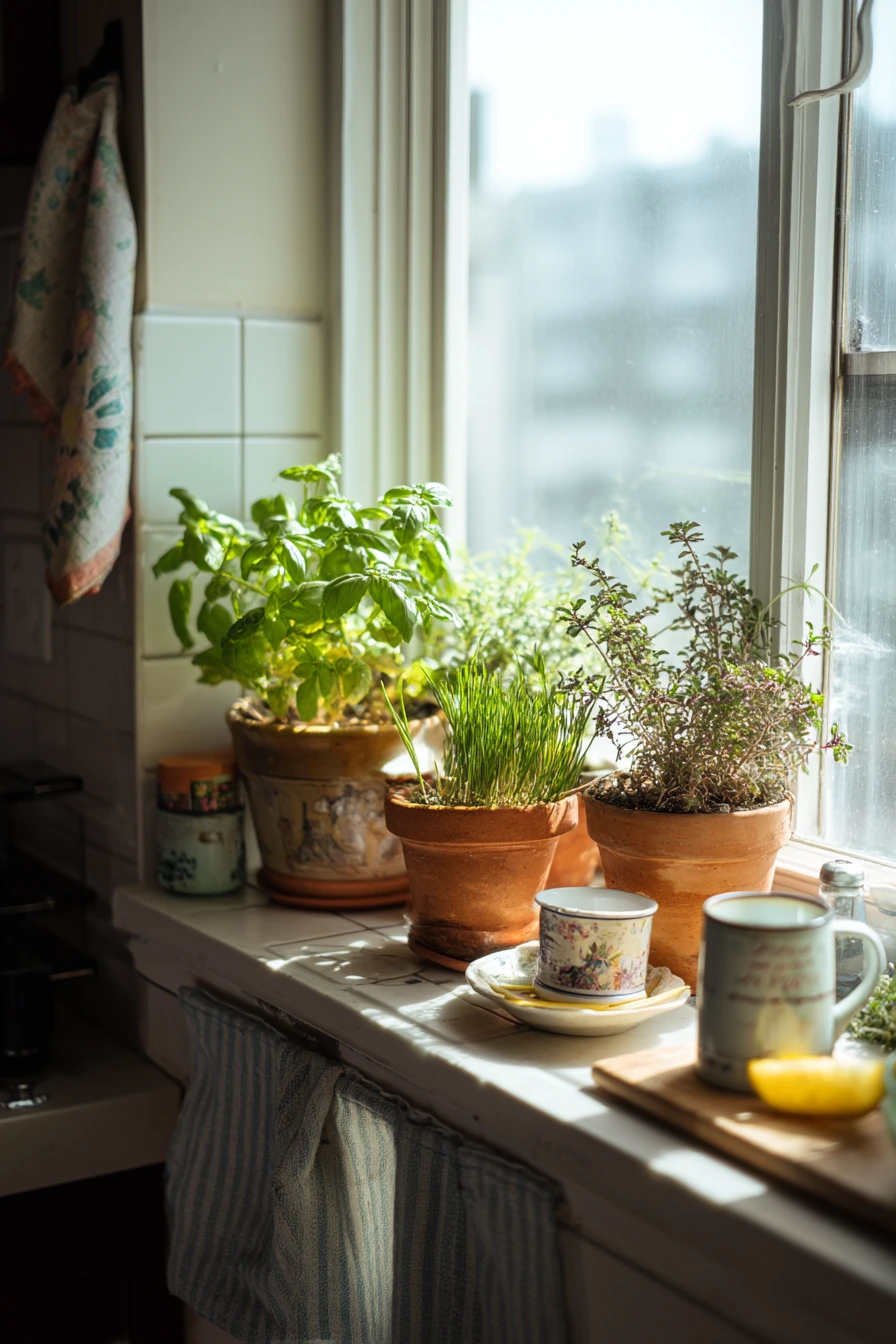
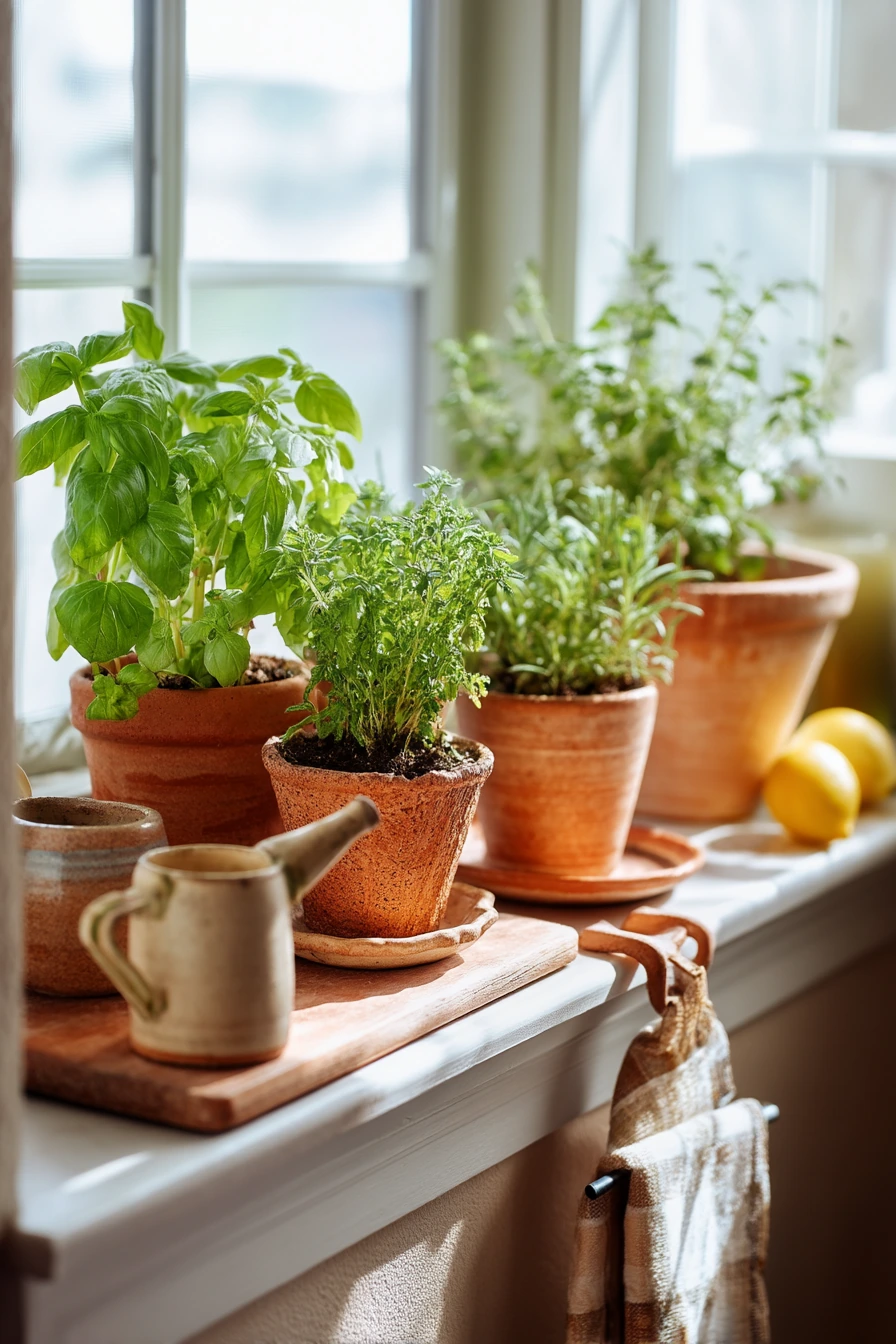
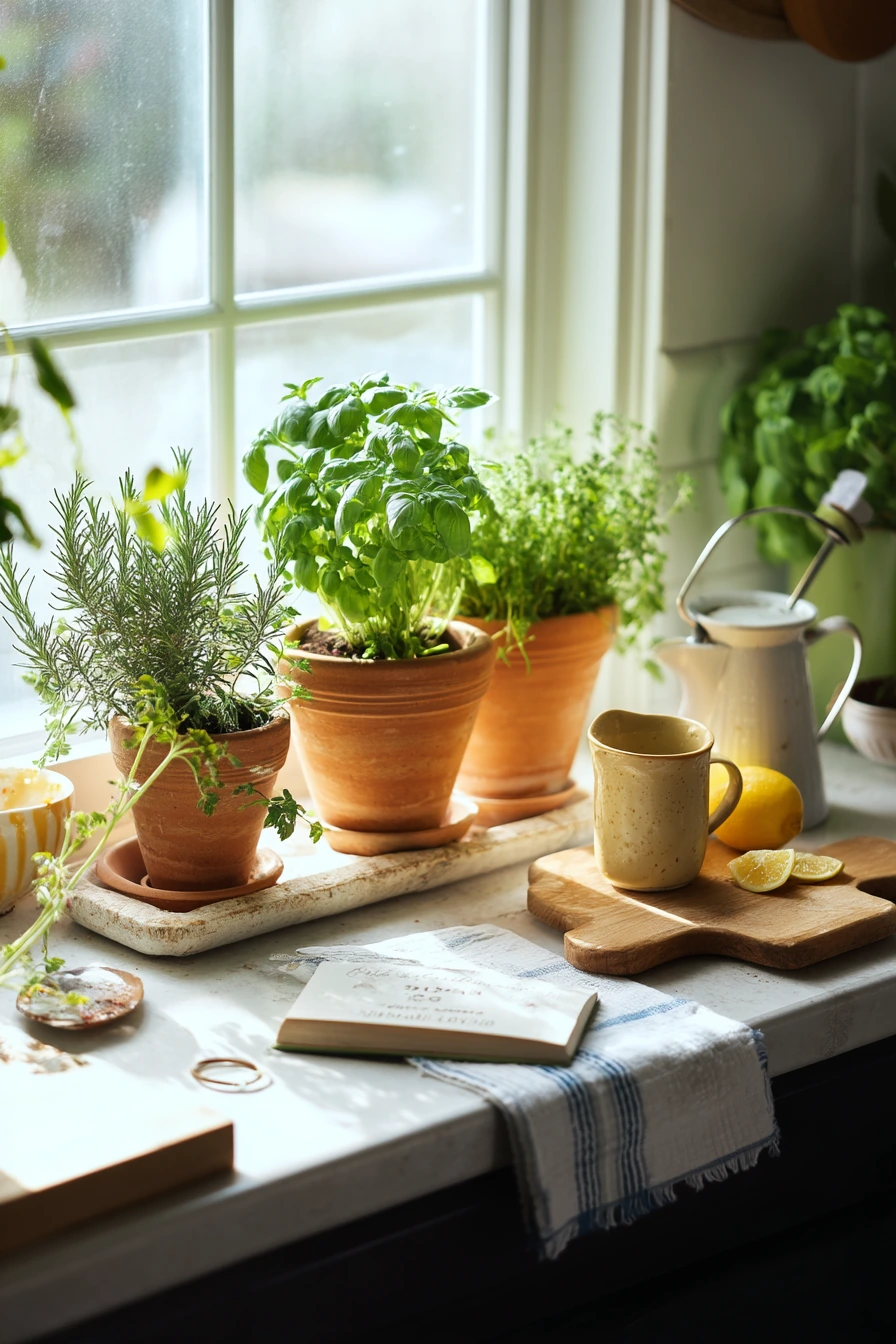
A narrow windowsill can be the best place for a simple kitchen herb garden. Line up basil, mint, thyme, and chives in mismatched terracotta pots with little saucers. This setup works well for a young renter who cooks after work because it keeps herbs close to the cutting board and stove. When you can reach for basil while you cook, you use it more often.
Keep the look lived-in and easy. A ceramic watering can on the counter, a dish towel half-hung, and a cookbook open to a pesto page make the space feel real, not like a showroom. Soft window light helps herbs stay compact. If your window is strong and hot, rotate the pots every few days so one side does not lean toward the glass.
For care, water when the top inch of soil feels dry, and always empty water that sits in saucers for too long. Snip herbs often. Cutting makes them branch out. If mint is in the group, keep it in its own pot because it grows fast and can take over if planted with others.
- Choose a bright windowsill with at least a few hours of light.
- Use terracotta pots if you tend to overwater, since they dry faster.
- Add saucers to protect the sill and catch drips.
- Group pots tightly for a tidy line and softer plant shadows.
- Style with one cutting board and a simple cookbook stand nearby.
Pro Design Tip: Keep pot colors in the same warm range, like clay and sand tones, then let the herbs add the green. This makes mismatched pots look intentional.
Budget Considerations: Buy small starter herbs from the grocery store and repot them. You can also reuse saucers from thrifted plates.
2 Compact Balcony Herb Garden with Folding Table
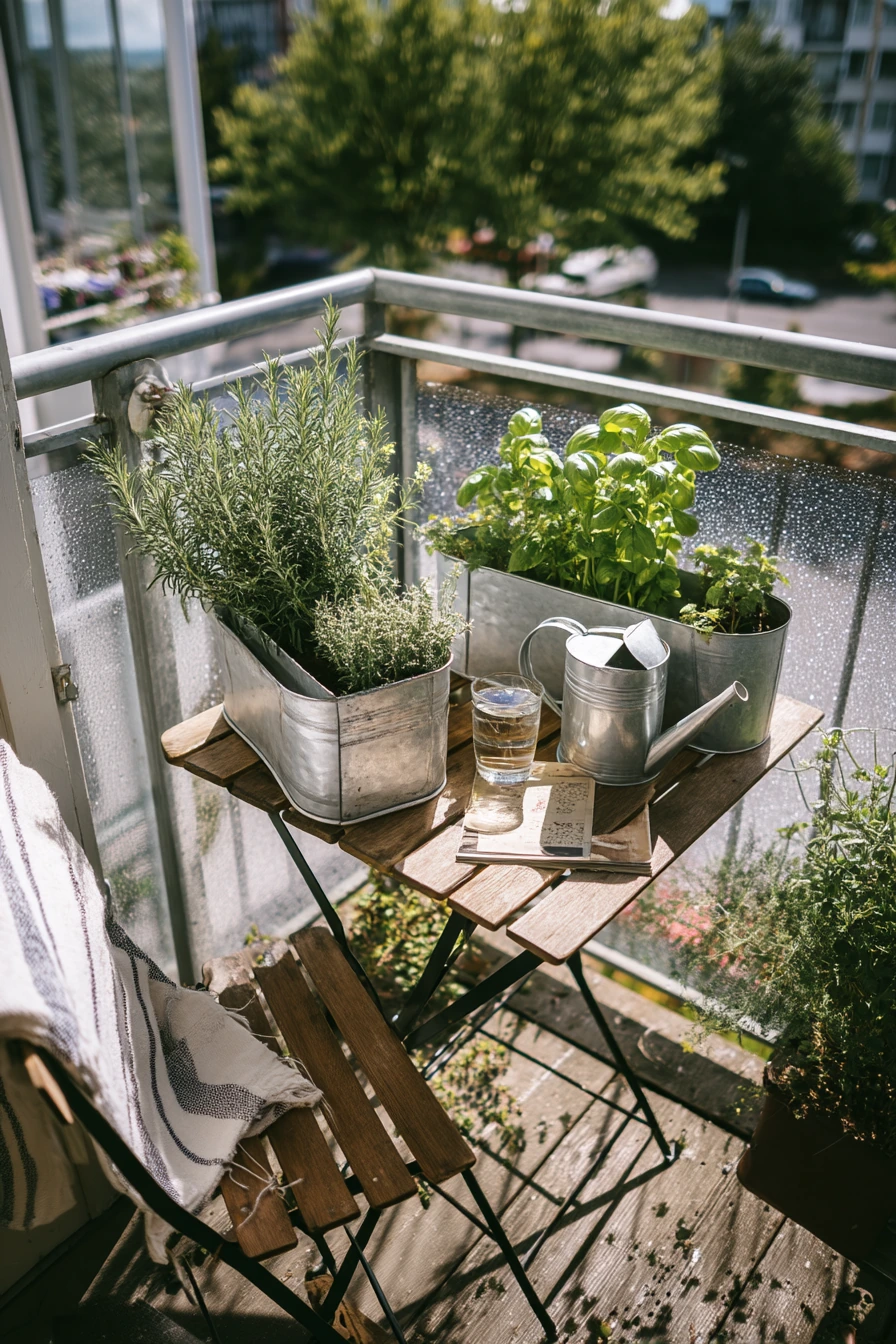
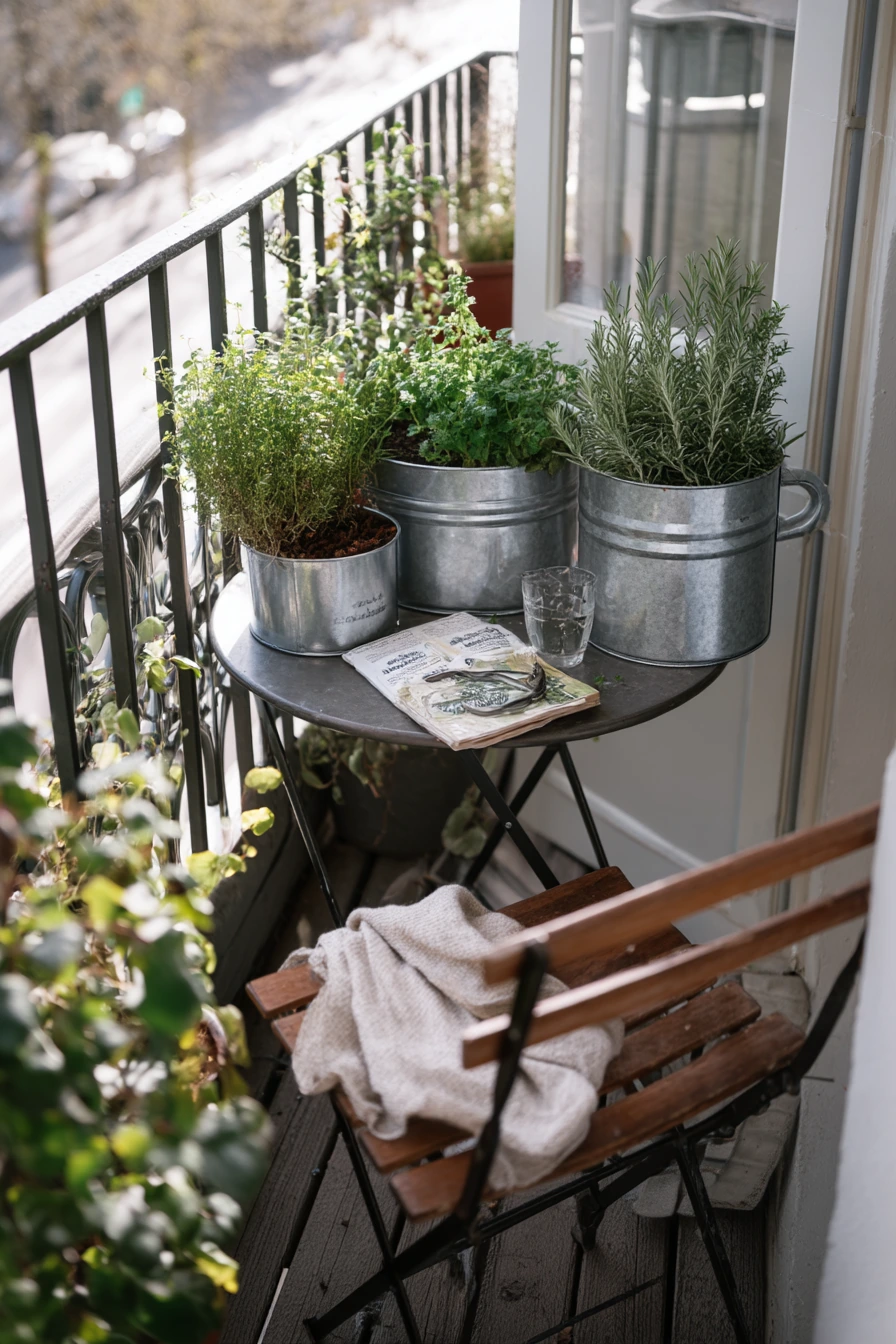
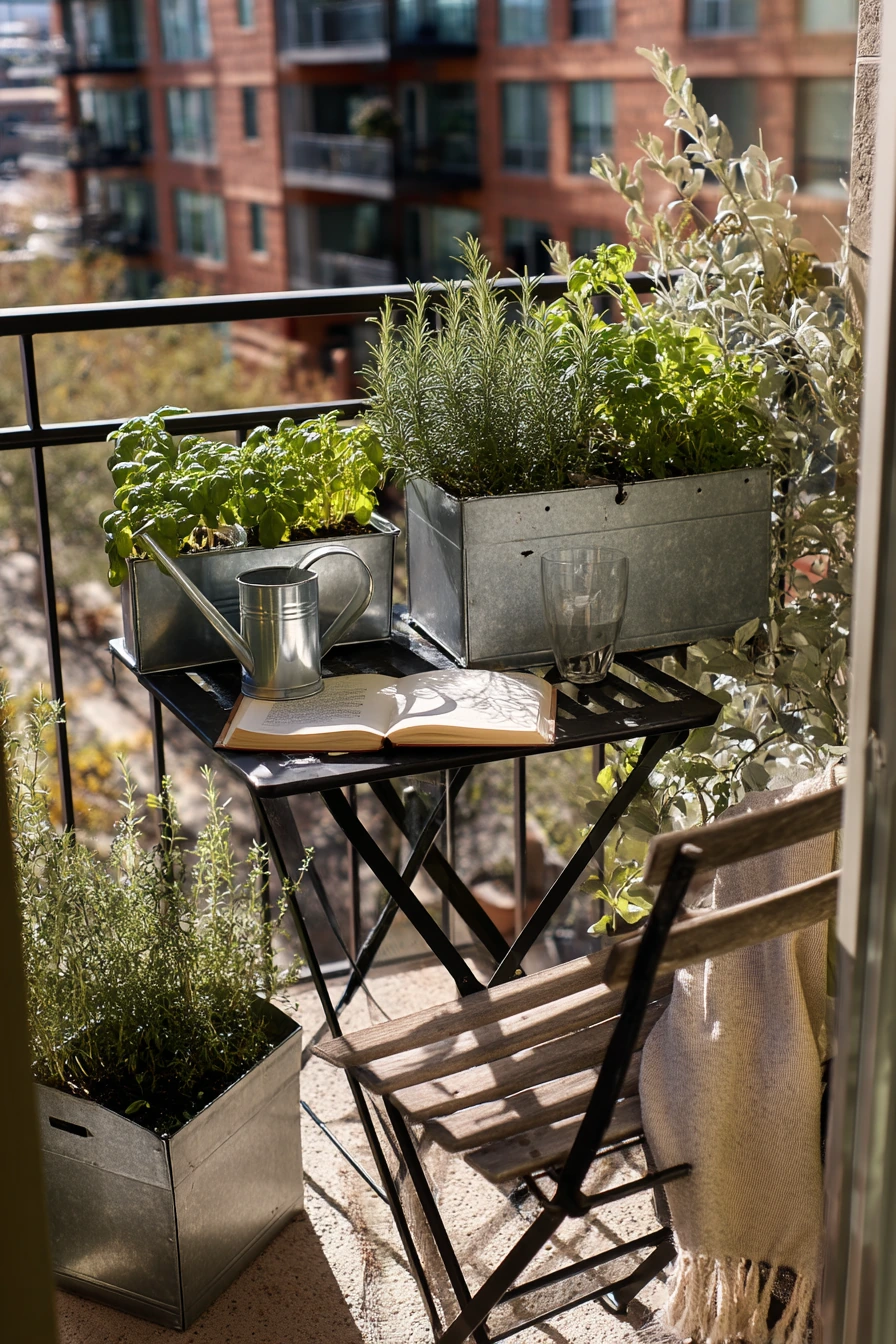
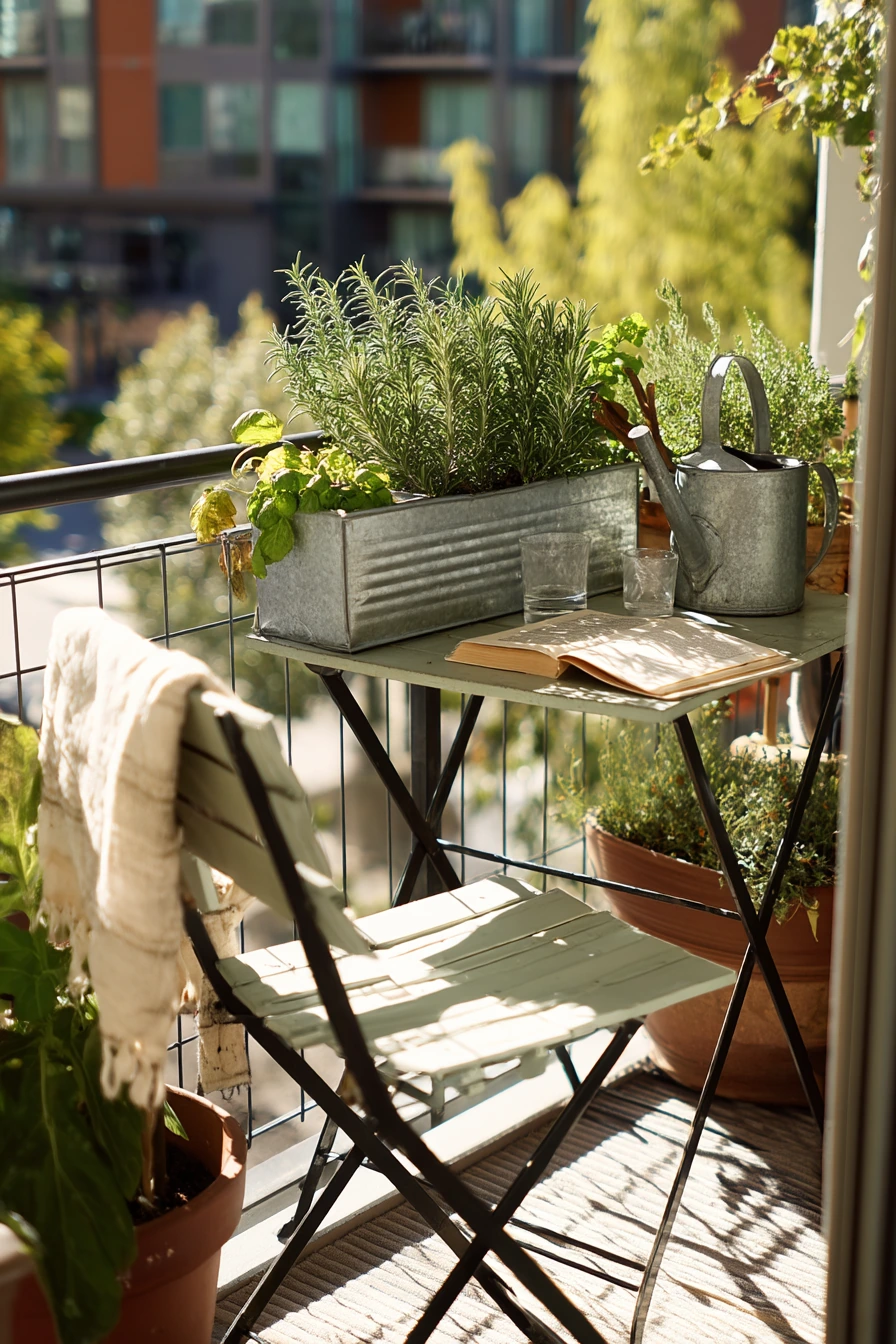
If you have a small balcony, a folding bistro table can hold a full herb garden without taking over the space. Try rosemary, oregano, parsley, and sage in galvanized planters. This is a good mix for cooking, since rosemary and sage handle sun and wind well, and parsley fills in fast after you snip it.
Make it practical, not perfect. Keep pruning snips on the table, and tuck a clay soil bag below. A watering can can sit near the railing so you remember to use it. Rain-specked railings and wind-touched leaves are normal on balconies, so choose sturdy planters that will not tip. If the balcony gets strong wind, add a small tray under the pots to keep them grouped and stable.
For styling, pull one chair out and add a slightly wrinkled throw. Set down a paperback and a water glass for a calm morning routine. These small details help the space feel like part of your home, not just storage. For care, check planters often in warm weather because balcony pots dry faster than indoor pots.
- Use galvanized planters for a clean, durable look outdoors.
- Pick herbs that like sun and can handle breezes, like rosemary and sage.
- Keep snips close so trimming becomes a habit.
- Water early in the day to reduce stress on hot afternoons.
- Hang a small hook on the railing for the watering can.
Pro Design Tip: Stick to one planter shape and finish, then mix herb heights for variety. The repeated metal texture keeps the scene calm.
Budget Considerations: Look for folding bistro sets and metal planters at secondhand stores. Simple plastic pots placed inside metal covers can also cost less.
3 Kitchen Shelf Herb Garden for a Family That Cooks Together
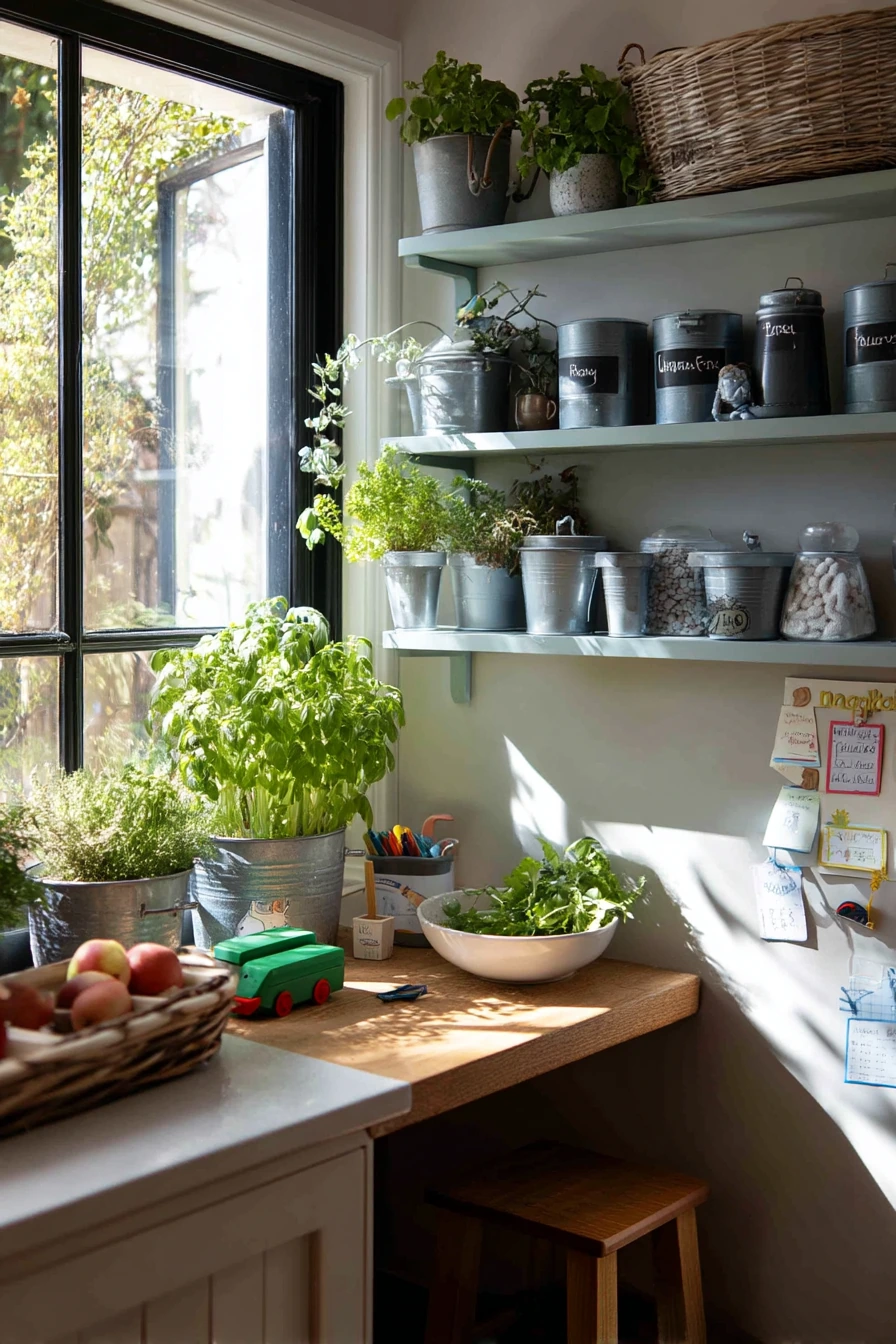
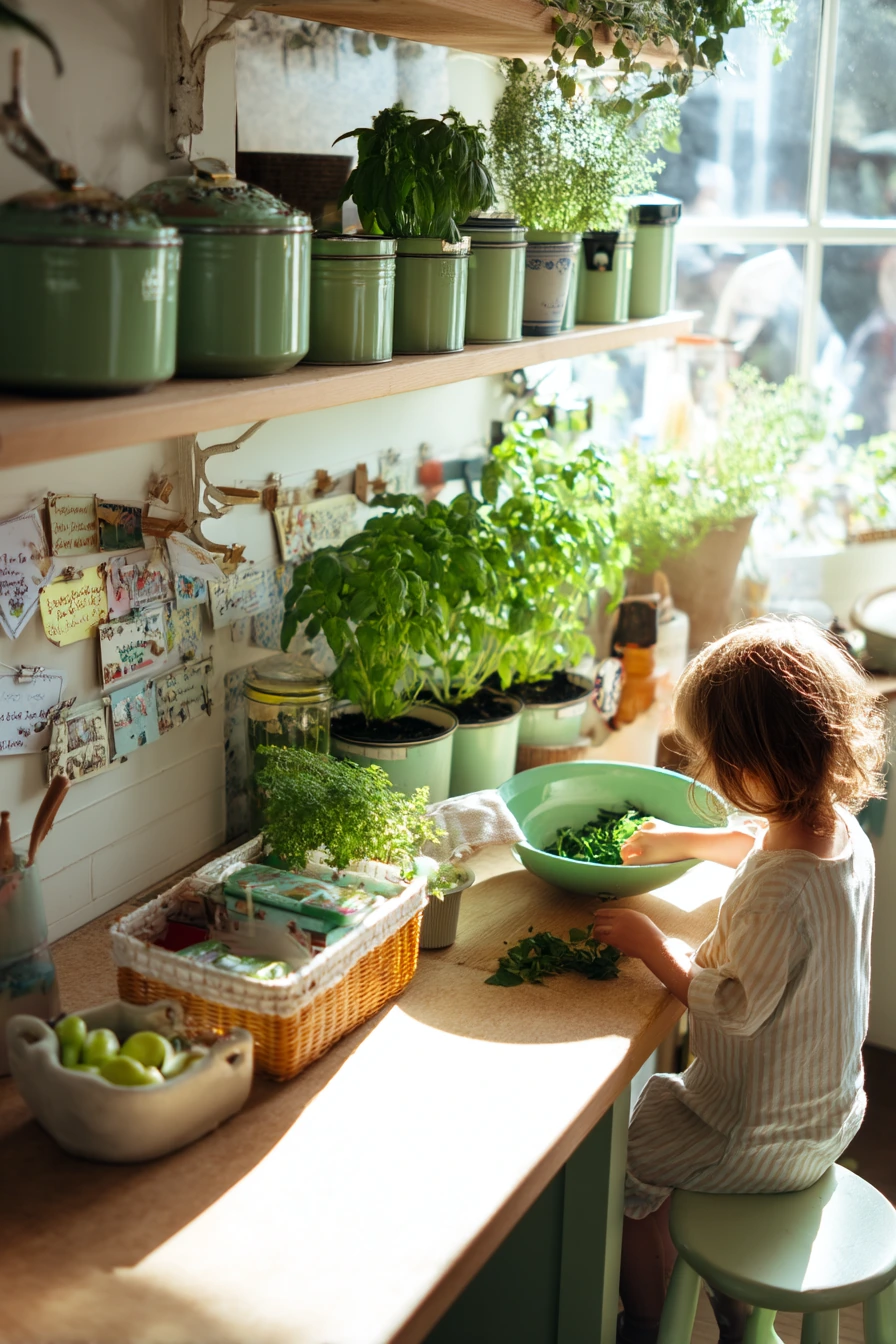
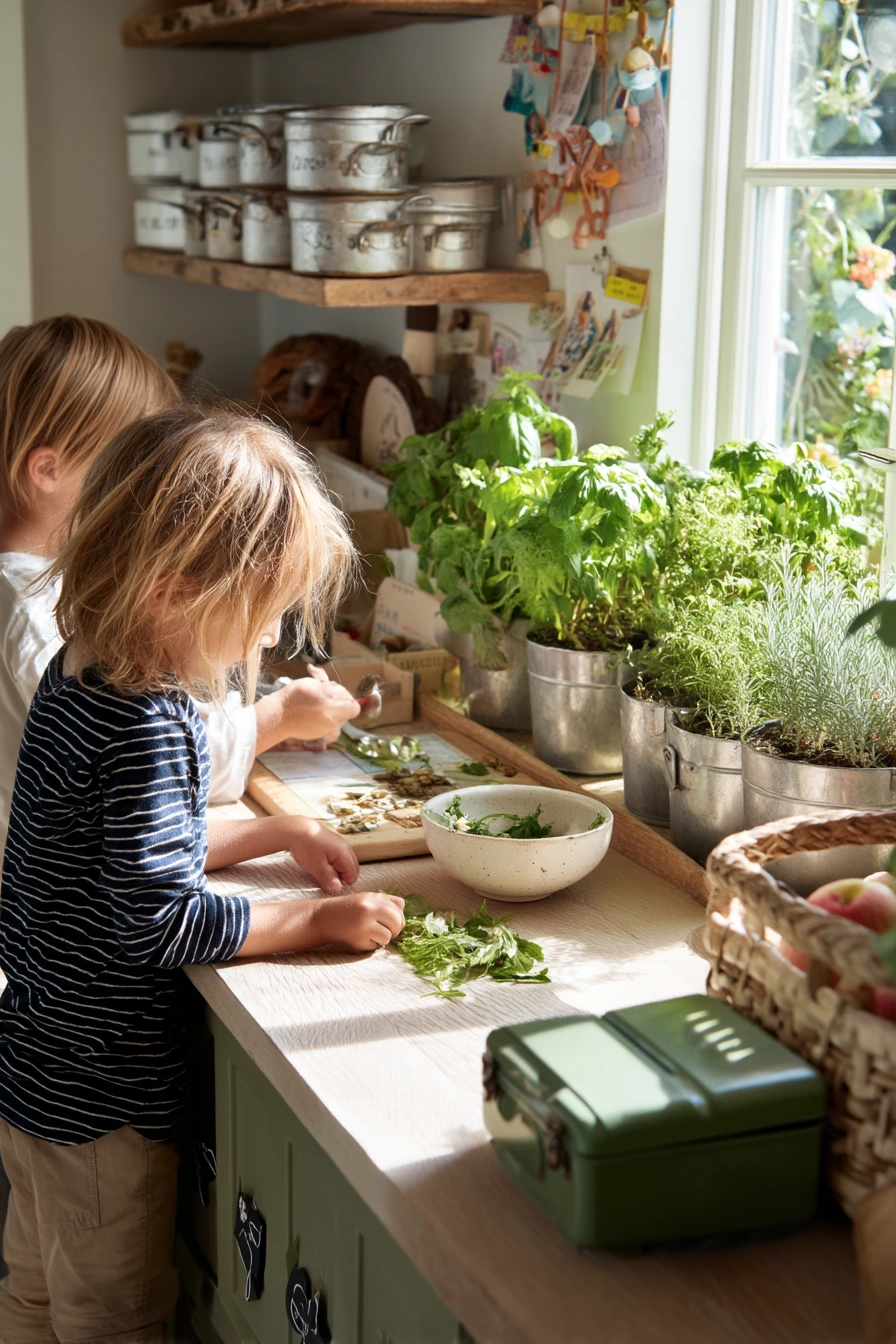
Open shelving can turn a family kitchen herb garden into something kids can help with. Place basil and cilantro in sturdy pots set inside enamel tins, and add chalk labels so everyone knows what is what. A step stool lets kids reach safely, and it signals that the herbs are part of daily cooking, not a fragile display.
Expect a busy look, and plan for it. Keep a bowl nearby for clippings, and let kids snip a few leaves into it while you prep dinner. Recipe cards pinned with magnets, lunchboxes on the counter, and a sticky note shopping list can live in the same area. The goal is a working zone that still feels warm and organized.
For safety and success, keep the heaviest items on the lowest shelf and put herbs where they get window light. Watering can be a small one that does not splash. Teach kids to pinch off leaves from the top of basil stems, not strip the whole plant. For cilantro, harvest a little at a time and reseed when it bolts, since it does not last as long indoors.
- Label each pot with chalk tags so kids can help without guessing.
- Use a step stool with a wide base and keep it in the same spot.
- Keep a small bowl ready for herb snips during prep.
- Choose sturdy containers like enamel tins to catch drips.
- Store scissors out of reach and bring them out only for cooking time.
Pro Design Tip: Use one shelf as the “green shelf” and keep the rest for dishes. A single dedicated area looks cleaner even when the kitchen is busy.
Budget Considerations: Repurpose old enamel mugs, tins, or small buckets as outer covers. Chalk labels and a marker cost little and add a lot of order.

4 Renter-Friendly Herb Garden in Reused Containers

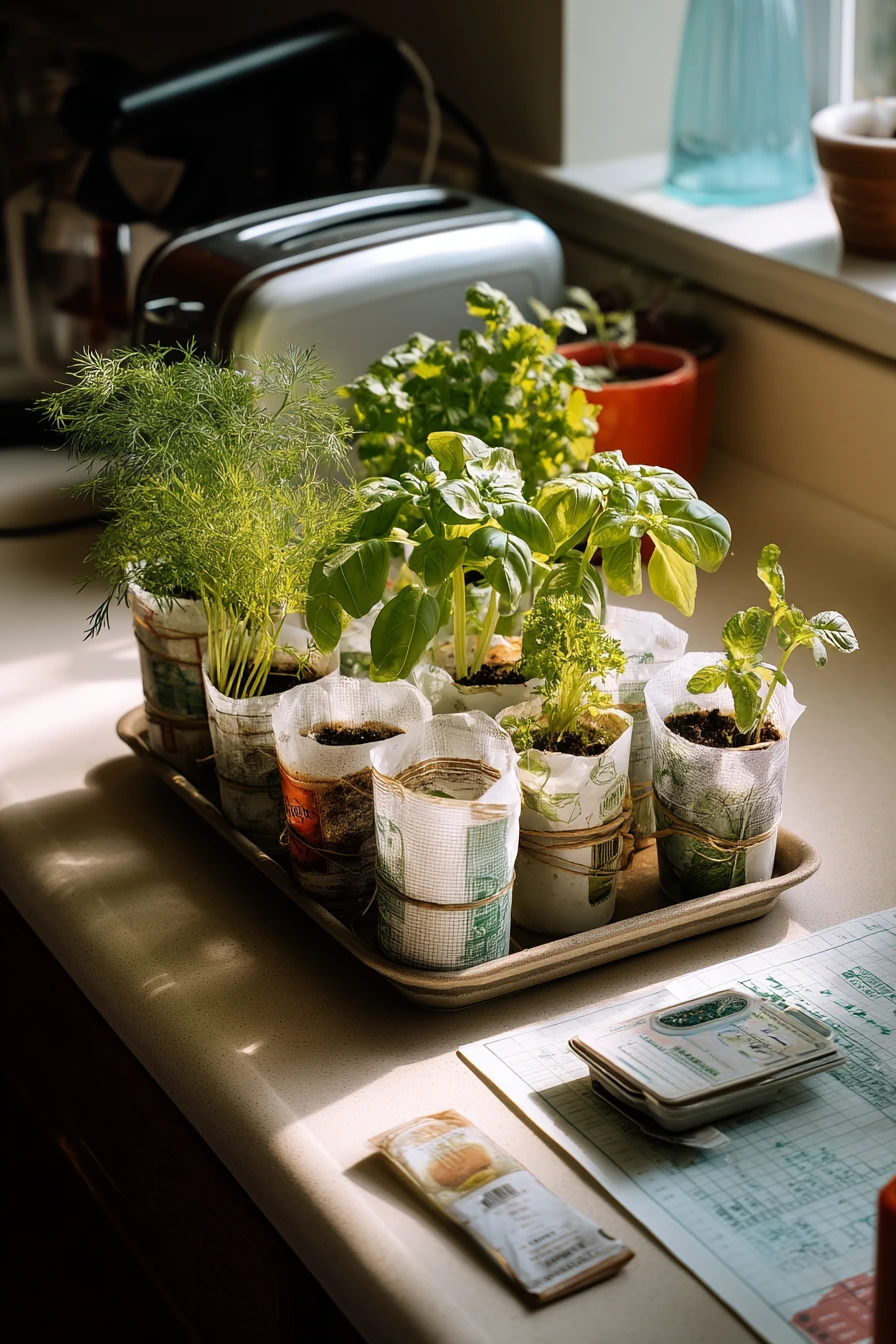
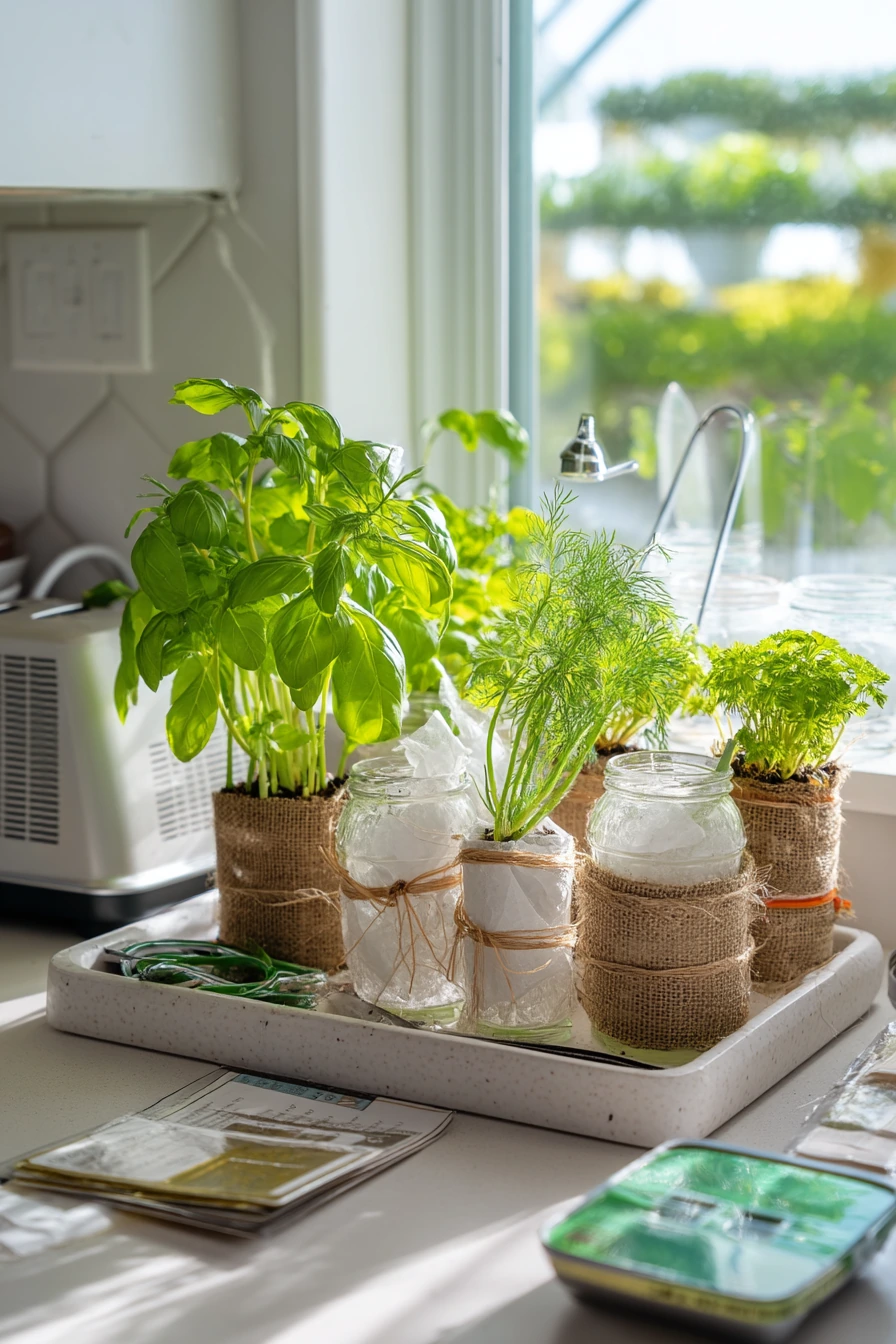
A budget-friendly herb garden can still look cute and work well. Use repurposed yogurt cups and glass jars wrapped with twine for basil, dill, and mint. Set them on a tray beside a toaster so you can move everything at once when you clean the counter. A tiny watering can helps you water without spilling in a tight rented kitchen.
To make this setup succeed, drainage matters. Yogurt cups are great because you can poke holes in the bottom. Glass jars do not drain, so use them as outer covers. Put a small plastic pot inside the jar, or add a layer of pebbles and water carefully. Keep one label crooked if that is how life is. The garden should feel functional, not fussy, even with a mail stack and a charging cable nearby.
Style it with simple kitchen items you already use. Measuring spoons, a folded grocery receipt, and a tray create a real-life scene. For herb choices, basil likes steady warmth and bright light, dill wants strong light and can get tall, and mint grows fast. Keep mint in its own container so it does not crowd the others.
- Use a tray to catch soil and water and keep the counter neat.
- Poke drainage holes in yogurt cups with a heated nail or skewer.
- Use jars as decorative sleeves, not as the planting pot.
- Rotate plants weekly so they grow straight toward the light.
- Keep twine wrapping simple so you can clean the containers easily.
Pro Design Tip: Repeat one small detail, like the same twine wrap or the same hand-written label style. Repetition makes reused containers look planned.
Budget Considerations: Save food containers and reuse them as pots. A cheap bag of potting mix and a pack of seeds can cost less than buying new plants.

5 Winter Herb Garden by a Warm Kitchen Lamp


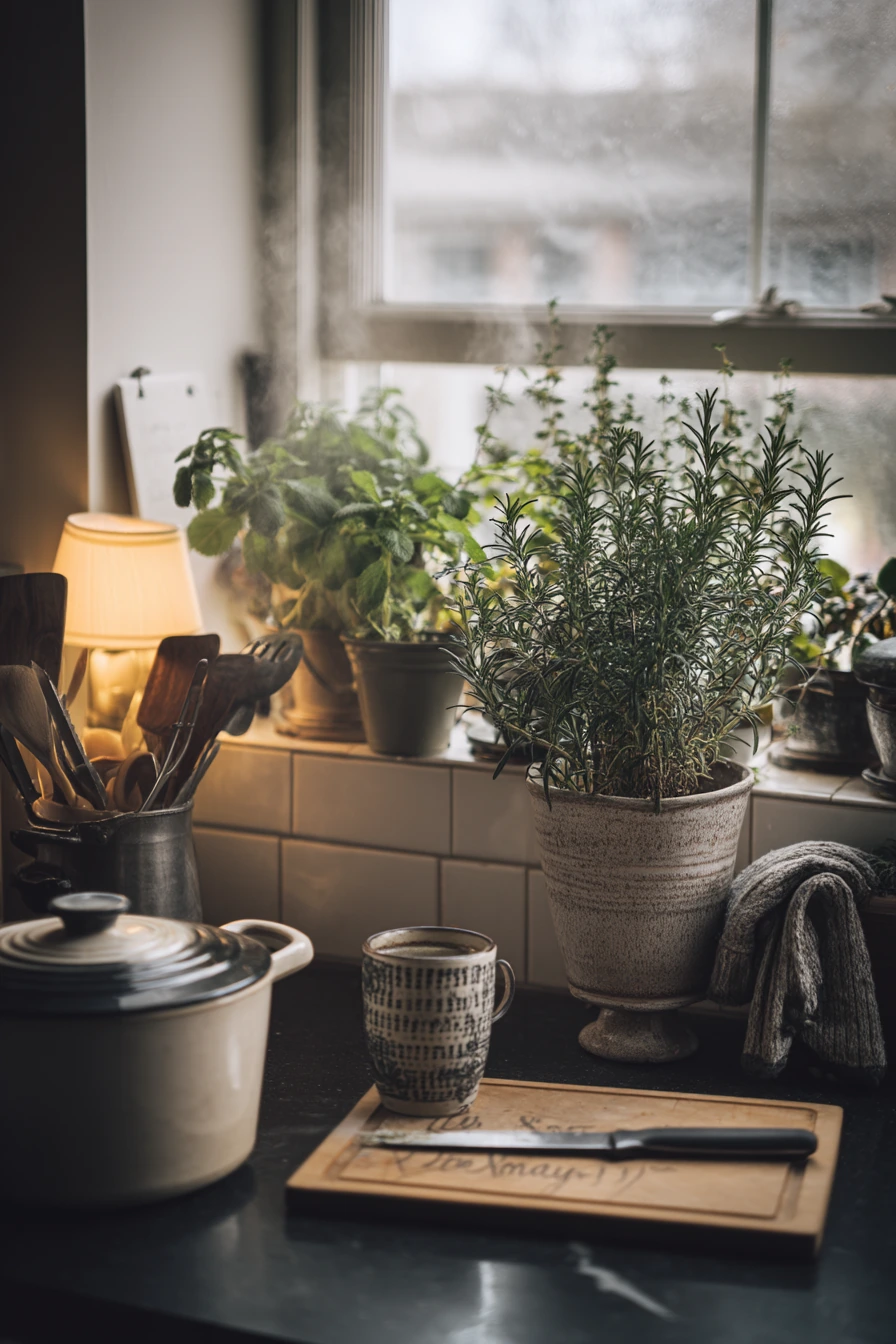
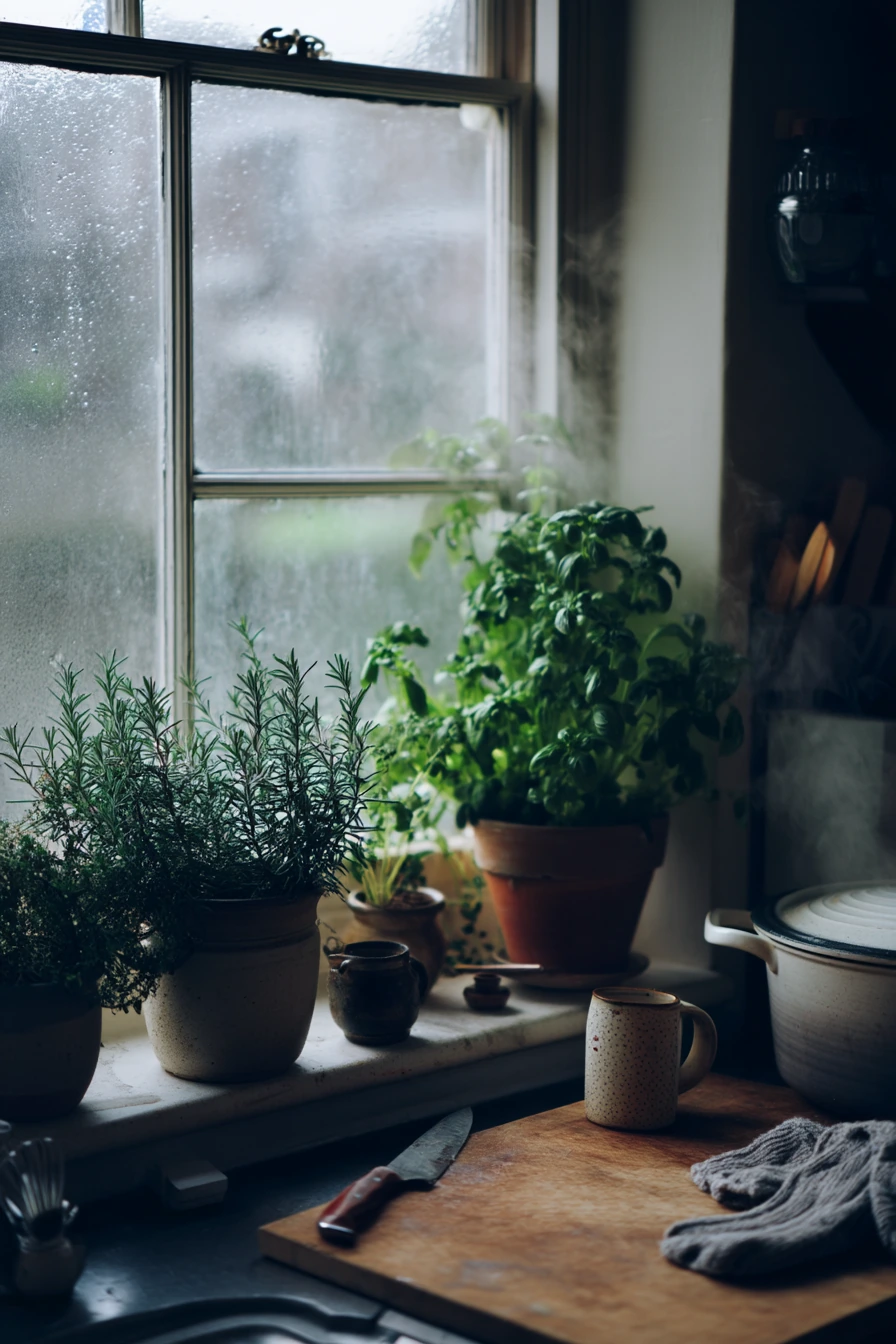
In winter, herbs can still grow in a quiet kitchen corner. Cluster rosemary, thyme, and parsley near a fogged window where they can catch daylight. If you do not want a bright grow light, use a warm practical lamp on the counter for extra help in the evening. It makes the space feel cozy while giving herbs more time under light.
This kind of setup fits the season. A tea mug, a handwritten soup recipe, and a bread knife nearby make it easy to cook with herbs when it is cold outside. Keep the pots close together so they share humidity. If your home is dry from heat, set a small dish of water near the herbs or run a kettle sometimes. Avoid placing plants right on a hot radiator, since the heat can dry them too fast.
For care, rosemary likes to dry a bit between waterings, while parsley prefers more steady moisture. Use your finger to test the soil before watering. Steam on a pot lid is fine, but do not let leaves sit in heavy condensation. Trim lightly and often. Even a few sprigs of thyme can lift a simple soup.
- Group herbs near the brightest winter window you have.
- Add a warm lamp close by to extend light in the evening.
- Keep rosemary slightly drier than parsley to avoid root rot.
- Use stoneware or neutral pots for a calm winter look.
- Place a small towel under pots to protect counters from moisture.
Pro Design Tip: Use muted greens and simple containers in winter, then add one warm element like a lamp or wooden board to balance the scene.
Budget Considerations: A basic desk lamp with an LED bulb can help in winter without buying a special grow light. Move plants closer to the window to get more free light.
6 DIY Herb Potting Setup After the Grocery Run
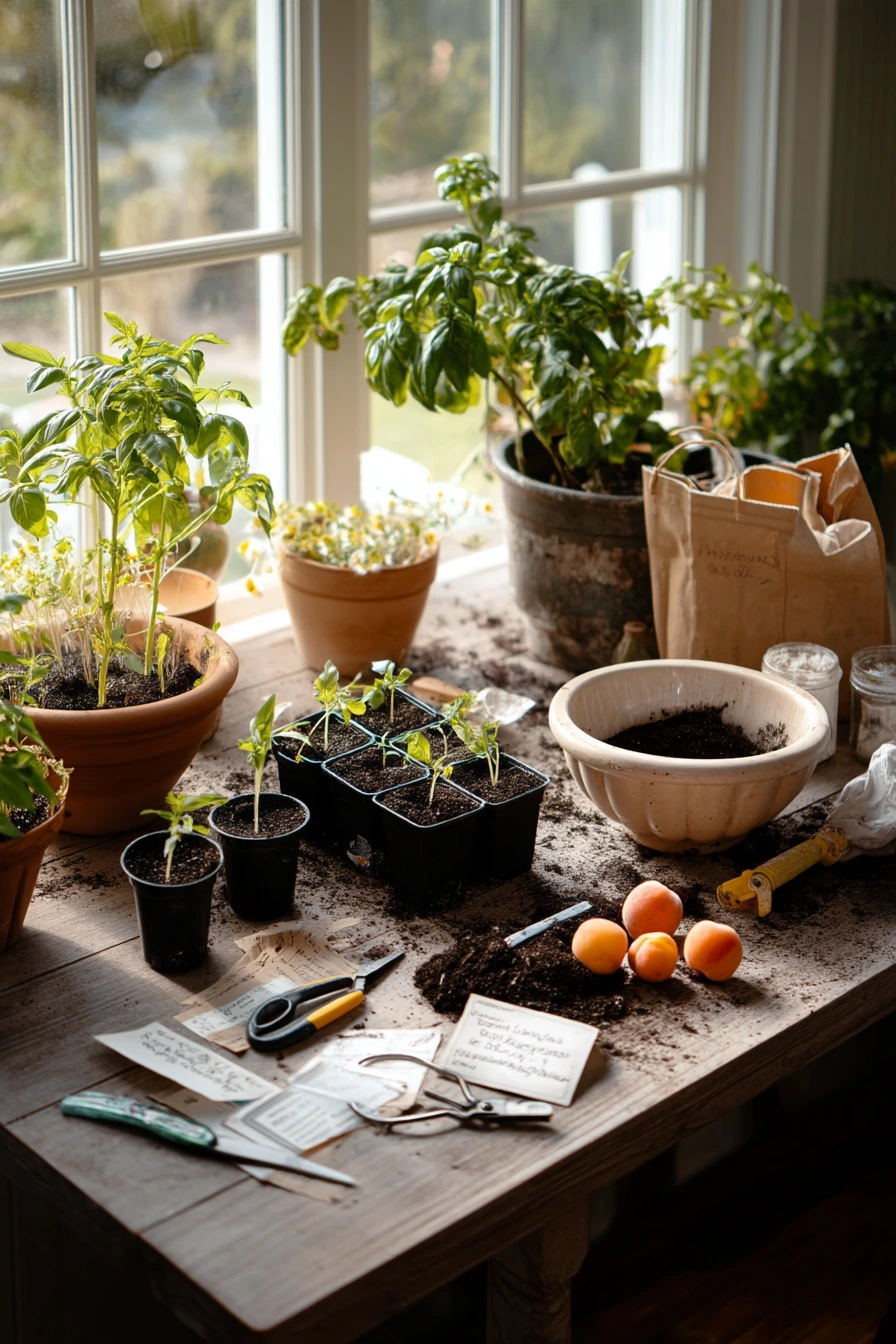
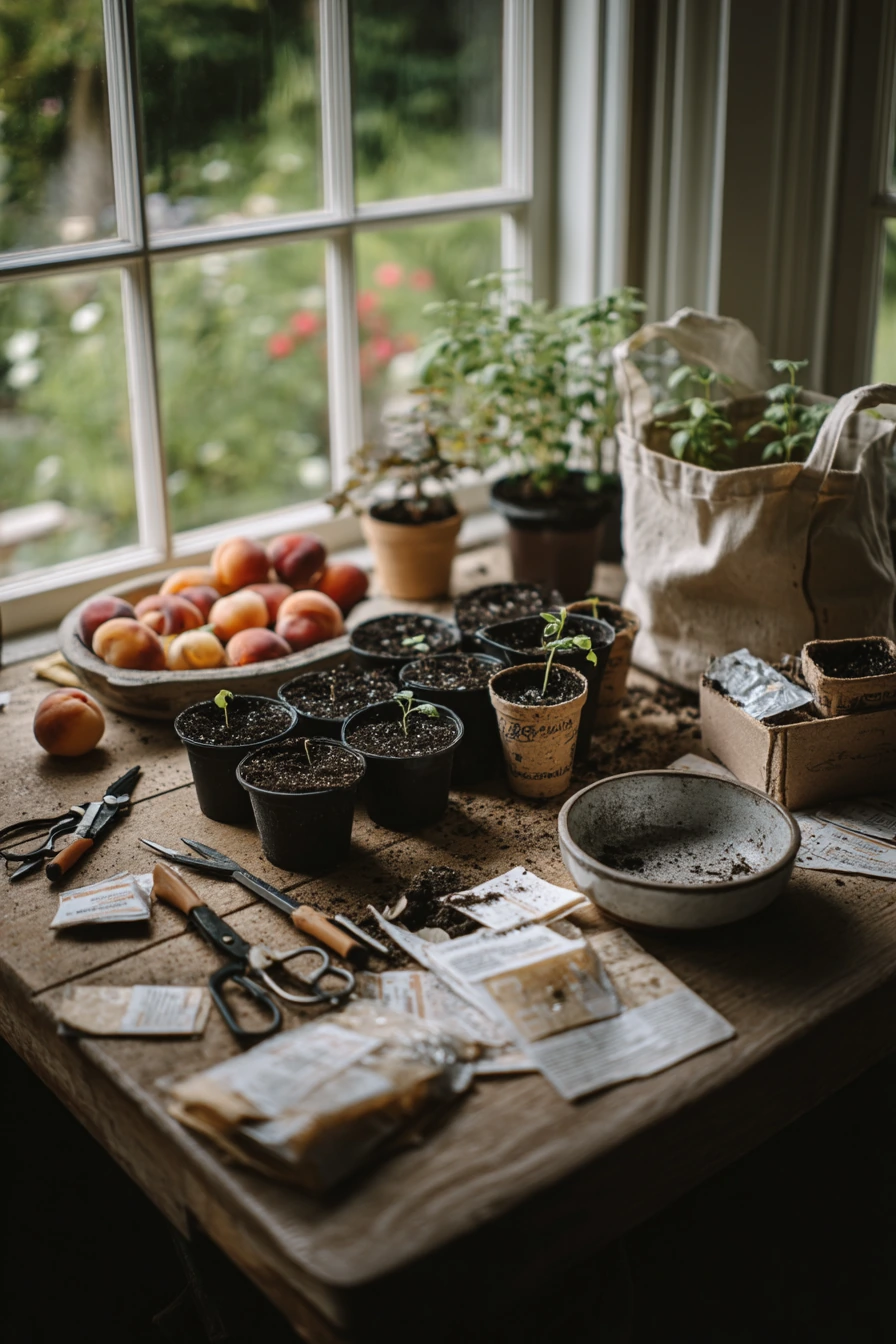
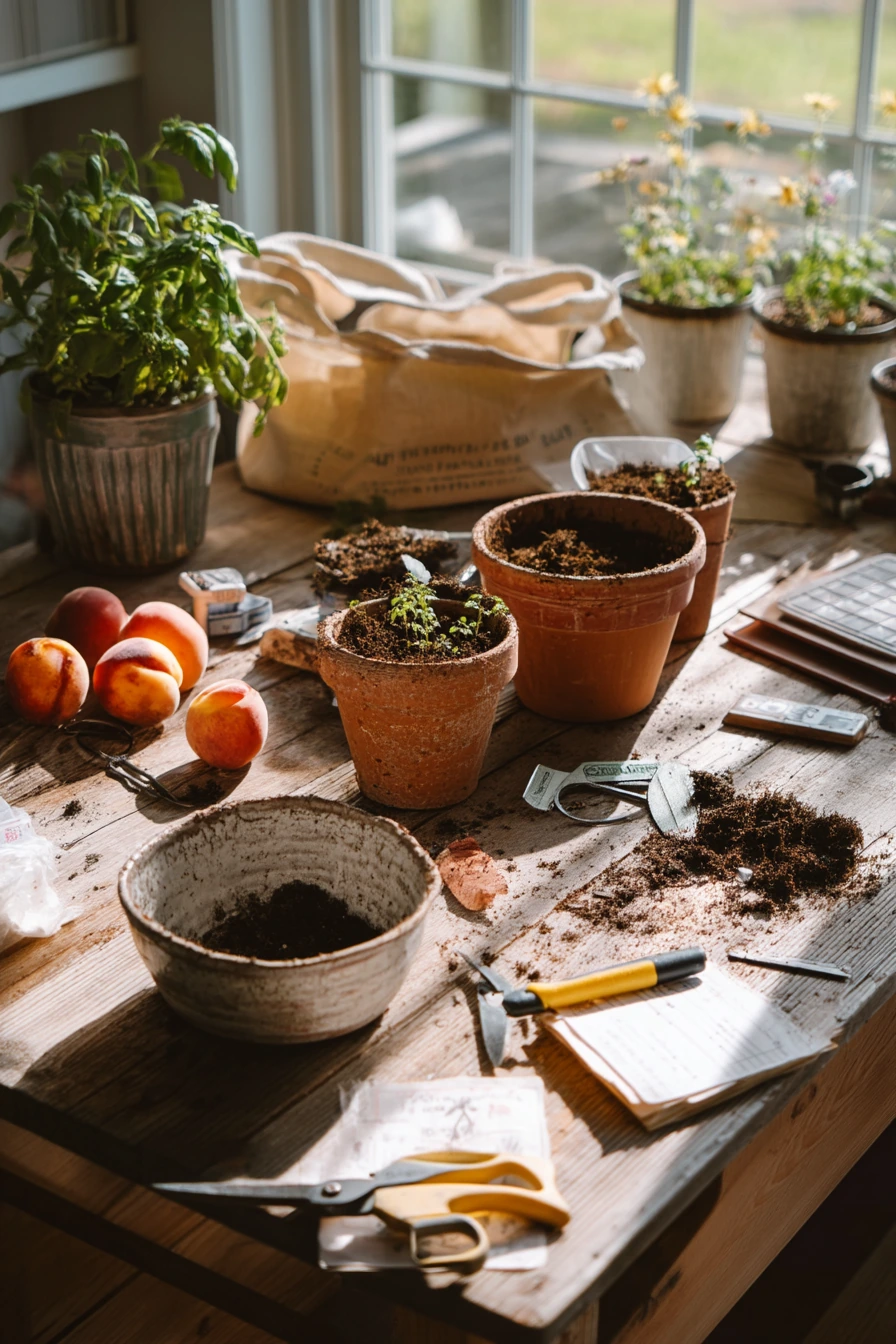
A DIY potting session after a grocery run is a simple way to start an herb garden. Put basil seedlings, potting mix, and clay pots on the kitchen table. Add plant tags, kitchen scissors, and a shallow bowl of water for rinsing tools or bottom-watering small pots. A little soil dust on the table is normal when you are working fast.
This approach is great for renters because you can do everything indoors and keep the mess contained. Lay down a paper bag or an old towel first, then place pots on top. Repot grocery store herbs as soon as you can because they are often crowded. Split one basil pot into two or three smaller pots so roots have space. Water well after potting, then let extra water drain before putting pots back on a shelf or sill.
For styling, keep it honest and useful. Leave the tote bag, keys, and receipt on the edge of the table, but clear enough space to work. Use clay pots for a natural look, and write simple labels so you remember what you planted. When you are done, keep the scissors in a small cup near the herbs. Trimming is part of the routine.
- Protect the table with a towel or paper before you open potting mix.
- Split crowded basil seedlings into smaller pots for better growth.
- Use plant tags so you do not mix up similar seedlings.
- Bottom-water new pots by setting them in a shallow bowl for a few minutes.
- Clean up with a hand broom and empty soil into a bin or bag.
Pro Design Tip: Choose one pot style, like simple clay, then use matching tag shapes. Small repeats make a messy work session look cohesive in photos.
Budget Considerations: Buy seedlings in multipacks and divide them. Basic clay pots are often cheaper than decorative planters and last for years.

7 Small Kitchen Herb Rail Above the Sink
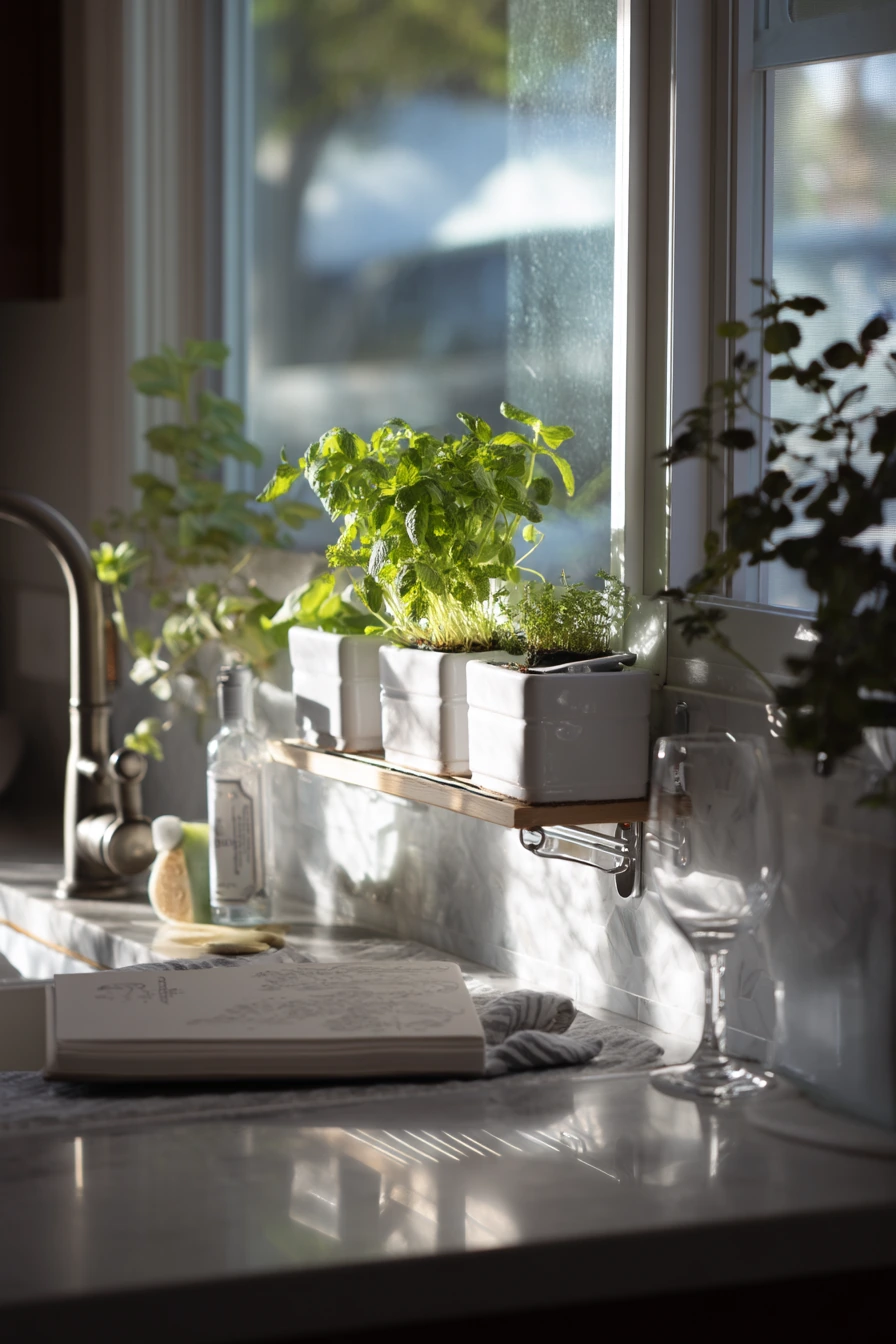

A slim rail above the sink can hold a tiny herb garden without using counter space. Use narrow white pots for mint, cilantro, and basil. This setup fits small-space living because it uses an area that is often empty. It also keeps herbs close to water, so you can rinse leaves and water pots in the same spot.
Keep the sink area tidy so it still feels fresh. A sponge holder, soap bottle, and drying rack are fine, but avoid clutter. One tea towel and a cookbook propped open can make the space feel calm and useful. Water droplets on the faucet are normal in a working kitchen, so choose pots that can handle splashes and wipe the rail often to prevent grime.
For plant health, make sure the rail gets light. Late afternoon window light can work if it is bright enough, but you may need to rotate the pots or move one plant to a brighter spot sometimes. Cilantro can be tricky indoors, so treat it as a short-term herb. Basil and mint are easier if they get steady light and regular trimming. Always use pots with drainage or place them inside a liner pot that drains into a tray.
- Use narrow pots that fit the rail and do not block the faucet.
- Choose a bright spot so herbs do not get leggy.
- Keep one small tray or liner to catch drips from watering.
- Trim often to keep plants low and bushy in a tight space.
- Style with white pots for a clean look against shiny fixtures.
Pro Design Tip: Match the pot color to your sink area, like white with chrome. The simple palette makes the space feel bigger.
Budget Considerations: Use affordable rail planters or small pots set in a simple shelf. Even a narrow wall-mounted spice rack can work as a planter ledge.

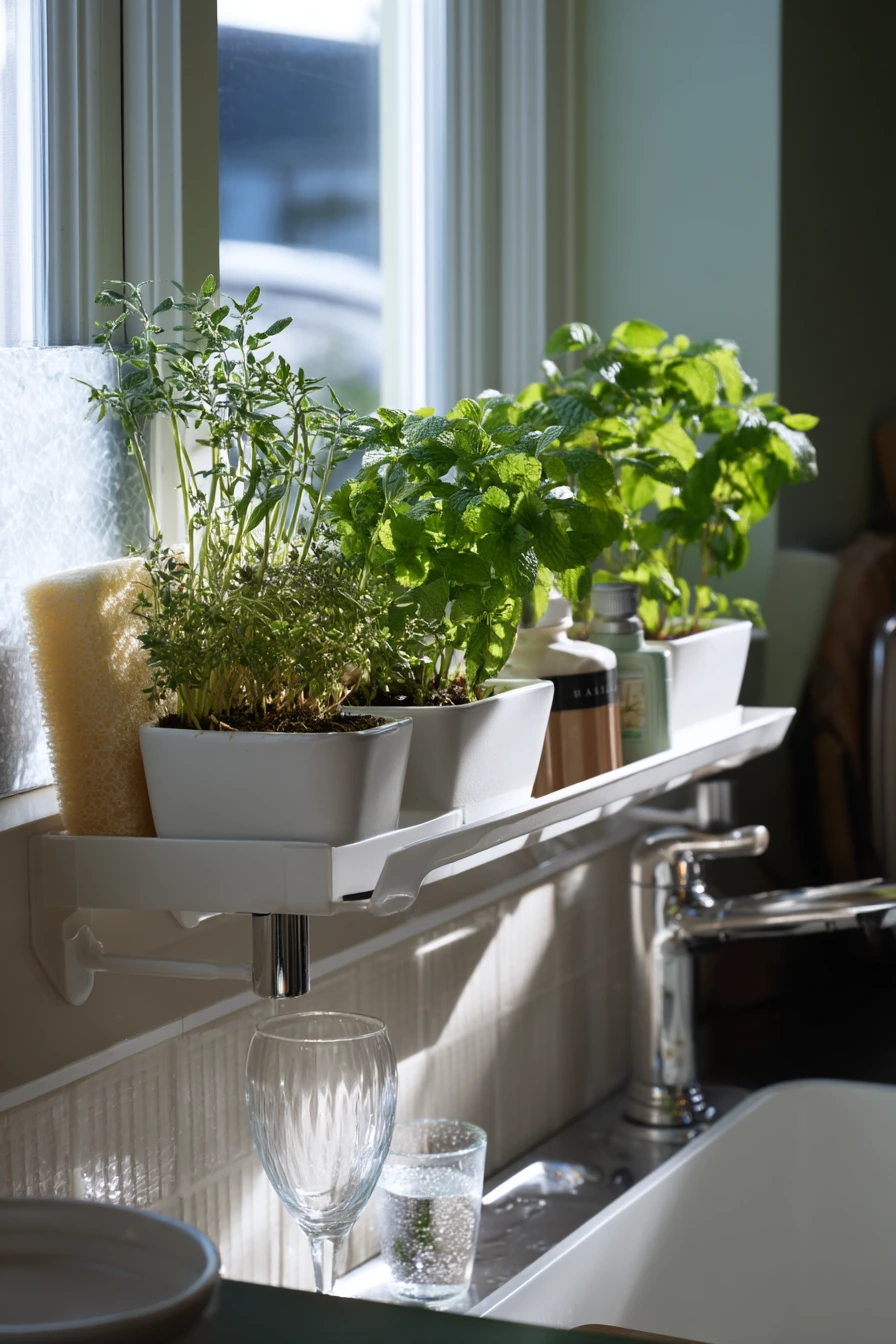
8 Indoor Herb Garden for a Meal-Prep Sunday
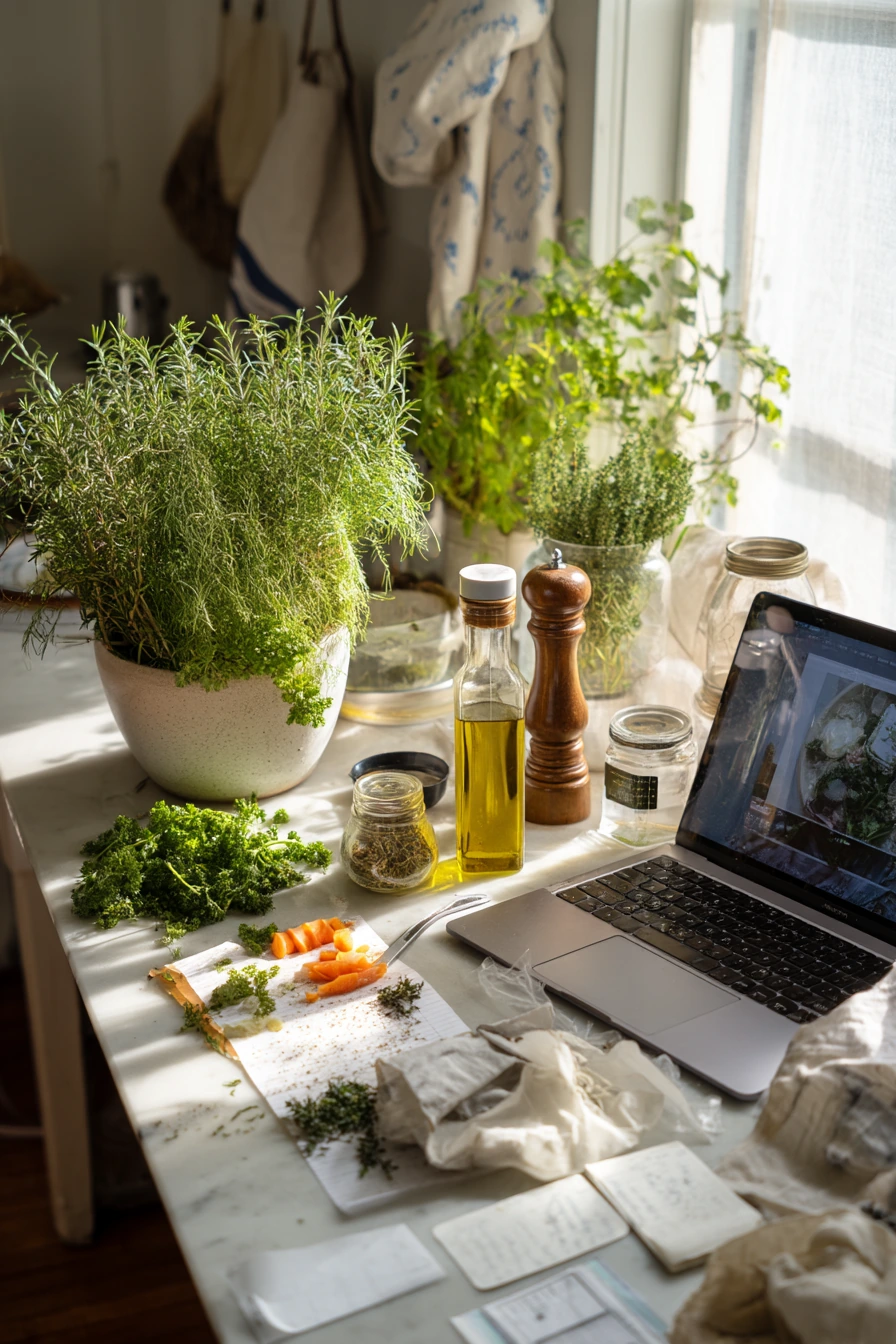
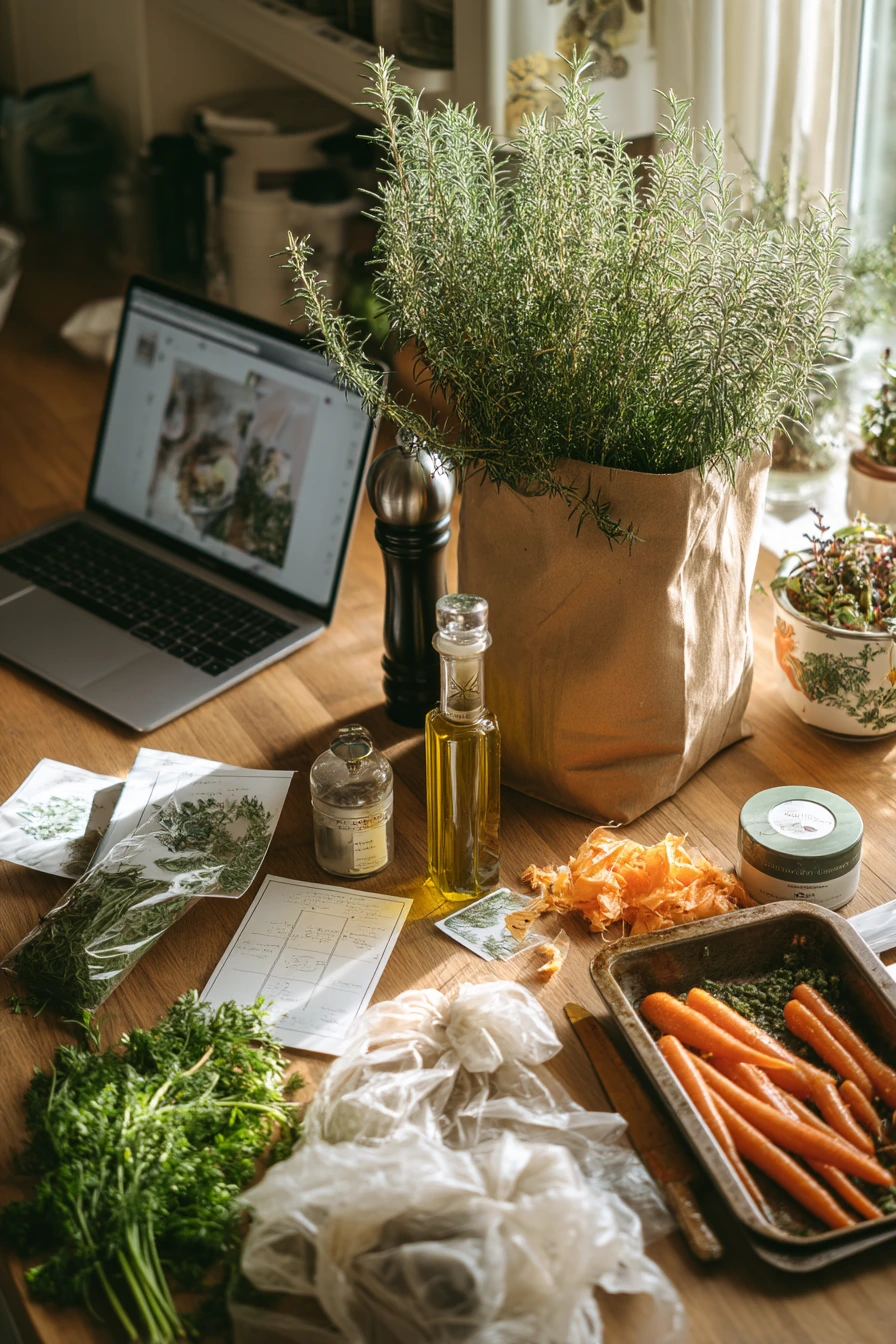
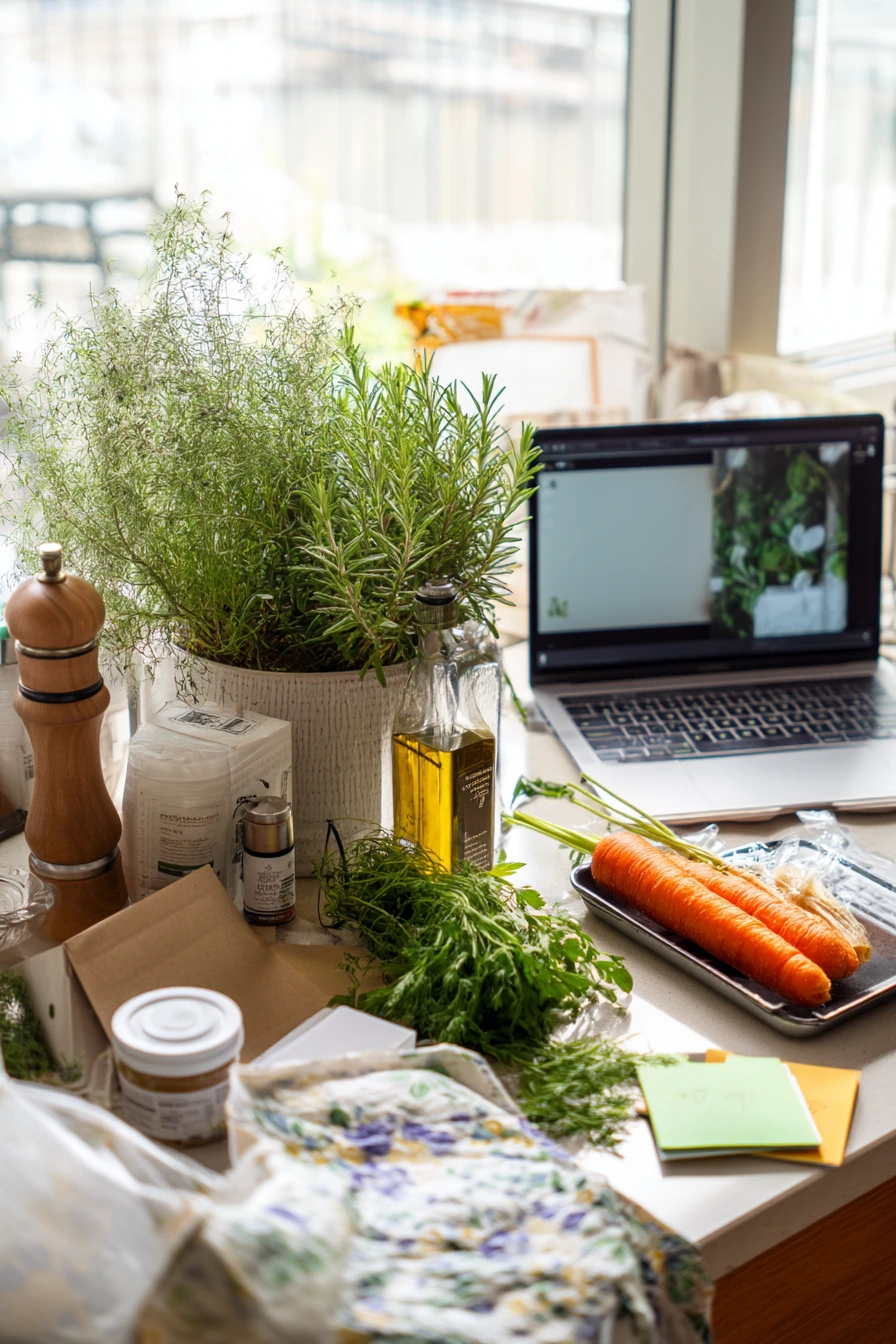
If you meal-prep on Sundays, keep herbs right on the counter where you work. A tidy cluster of rosemary, thyme, parsley, and chives fits well beside olive oil, a pepper grinder, and a sheet pan. This setup supports real routines. You grab herbs while you chop carrots, season chicken, or mix a salad.
To keep the area organized but lived-in, use one tray or shallow board under the pots. Add note cards for meals and keep reusable grocery bags nearby. A laptop with a recipe video paused is a real part of cooking now, so place it a safe distance from water. Keep one crumpled tea towel around for quick cleanup. The goal is a zone that works every week.
For care, rosemary and thyme like to dry between waterings, while parsley and chives prefer more even moisture. Group herbs with similar needs together or use separate trays so you can water differently. Snip herbs before you start cooking, then rinse and pat dry. If you have limited window light, move the cluster closer to the brightest spot during the day and back to the prep area when you cook.
- Use a tray to keep pots together and protect the counter.
- Store snips in a jar so they are always within reach.
- Group herbs by watering needs to avoid overwatering woody herbs.
- Keep herbs near your oils and spices for faster seasoning.
- Trim chives low to encourage fresh growth all week.
Pro Design Tip: Make a small “prep vignette” by pairing herbs with one wood board and one dark grinder. The mix of textures looks neat and stays practical.
Budget Considerations: Use a cheap baking tray or thrifted platter as a plant base. Buy one herb at a time and build the cluster over a few weeks.

9 Kitchen Island Herb Garden with Rustic Cutting Board Display
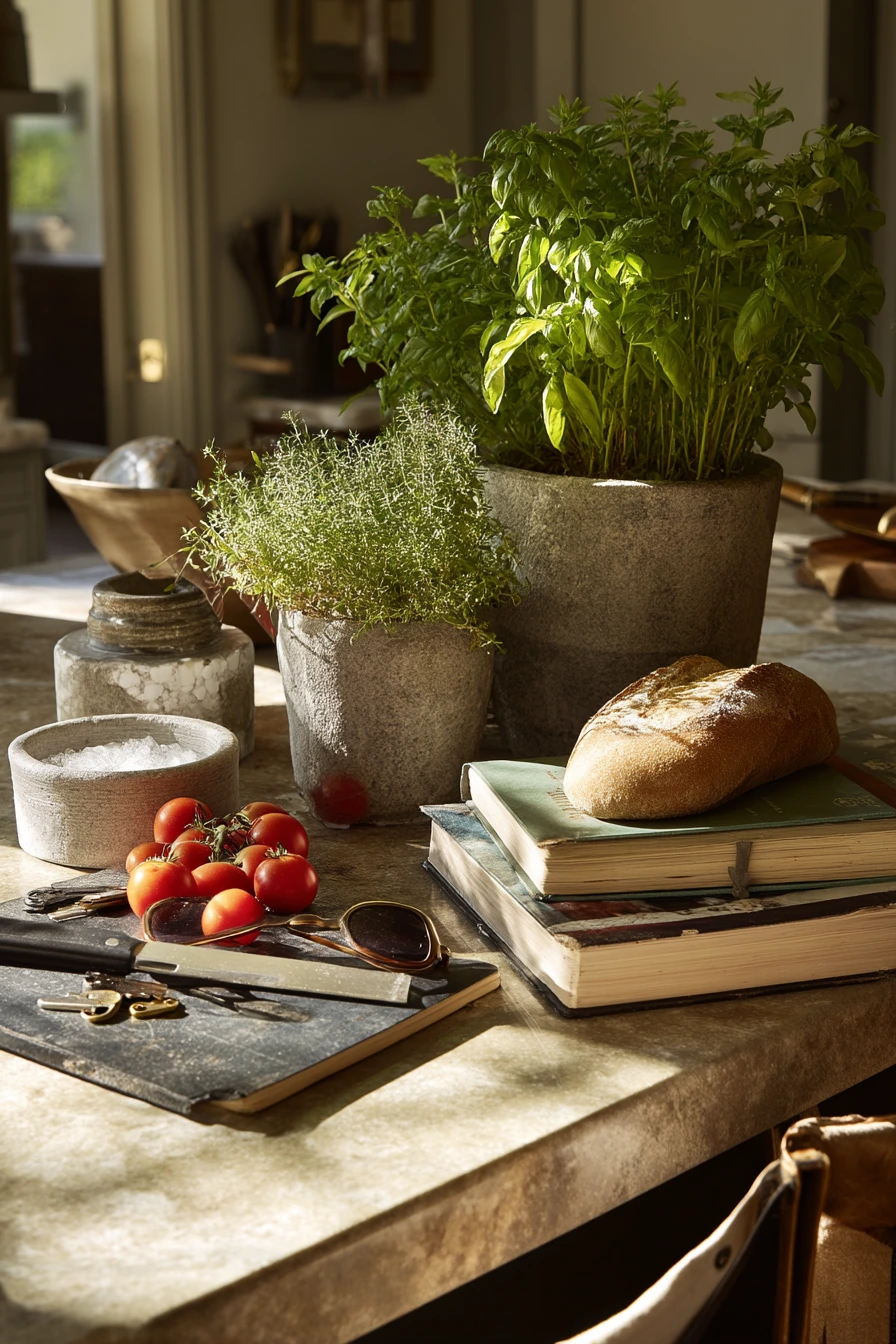
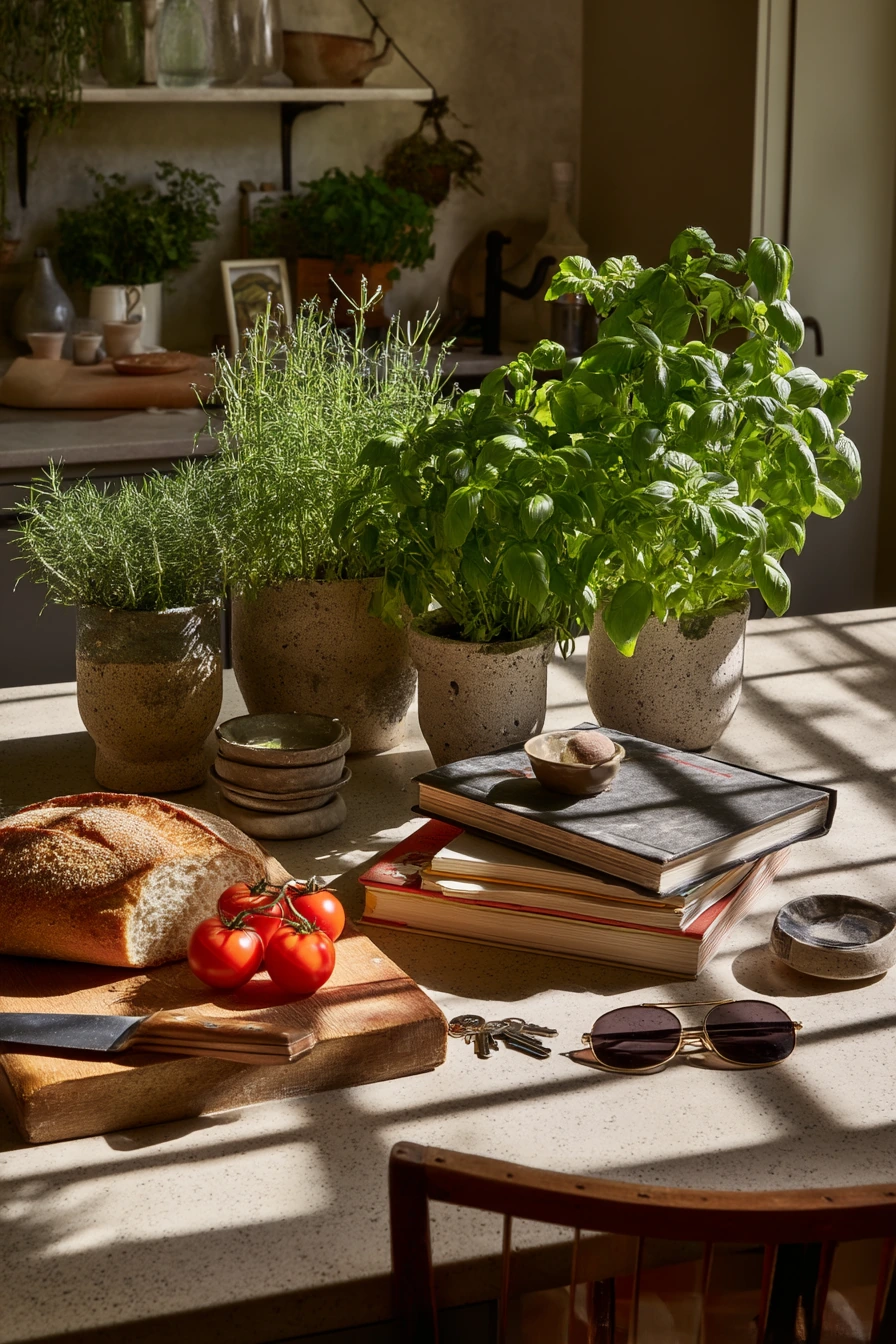
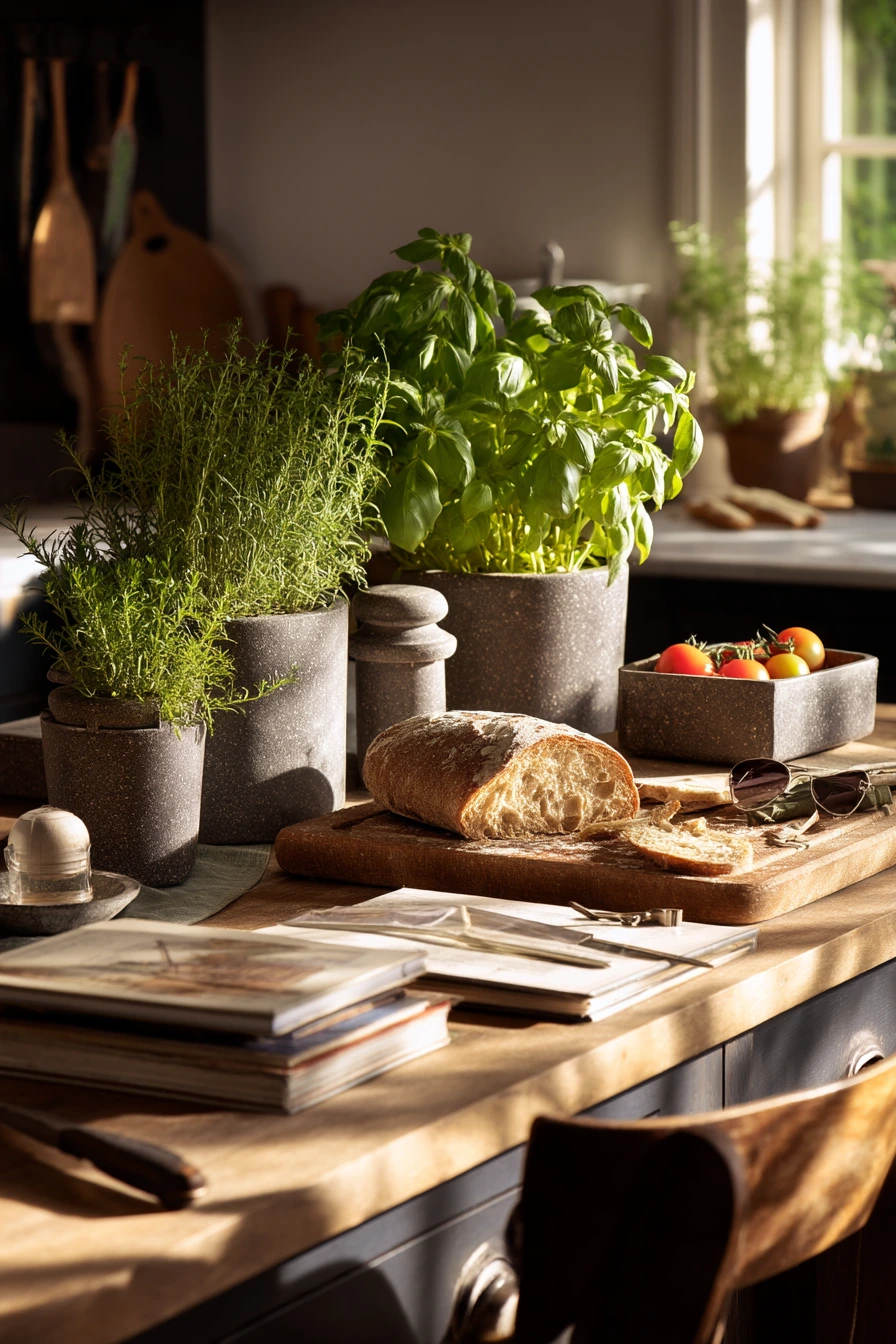
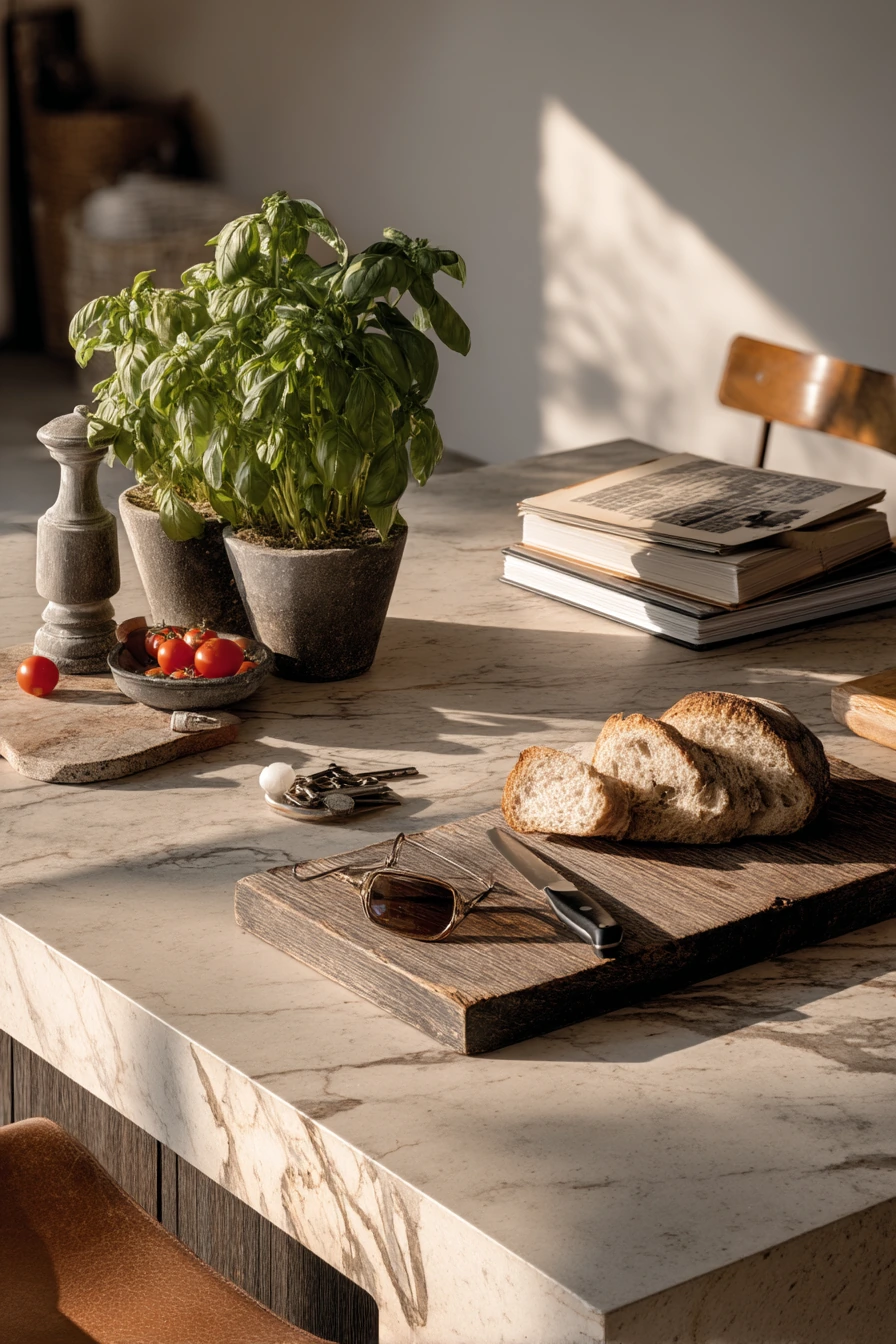
A kitchen island is a great place for an herb garden styled for everyday use. Put basil and oregano in sturdy stone pots beside a heavy cutting board, a knife, and a salt cellar. This placement makes it easy to tear basil for tomatoes or add oregano to a quick sauce. It also keeps the herbs in the center of the action, which helps you remember to water and trim.
Keep the look warm and grounded. Add fresh tomatoes and a small loaf of bread for a simple food moment. A cookbook stack can sit nearby, and real-life items like sunglasses and keys can stay on the edge. The space should still feel like a family home, not a display. If sun stripes hit the island, watch that pots do not get too hot in direct beams for hours. Move them a few inches if leaves start to wilt.
For care, basil likes steady moisture and lots of light, while oregano can handle drying out a bit more. Use separate pots and do not crowd them. Pinch basil tips to keep it bushy. For oregano, trim longer stems so new growth fills in. Wipe the island base tray often so soil does not mix with cooking crumbs.
- Choose heavy pots so they do not tip during prep.
- Place herbs near your cutting board to increase daily use.
- Use a small tray to keep soil off the island surface.
- Trim basil from the top to encourage branching.
- Keep a simple salt cellar nearby for a complete cooking station.
Pro Design Tip: Use stone or matte pots to reduce visual noise on a busy island. The calmer finish makes food and herbs stand out.
Budget Considerations: Stone planters can be pricey, so try cement-look plastic or thrifted crocks. You can also hide nursery pots inside heavier cachepots.
10 Herb Garden by the Breakfast Nook Window
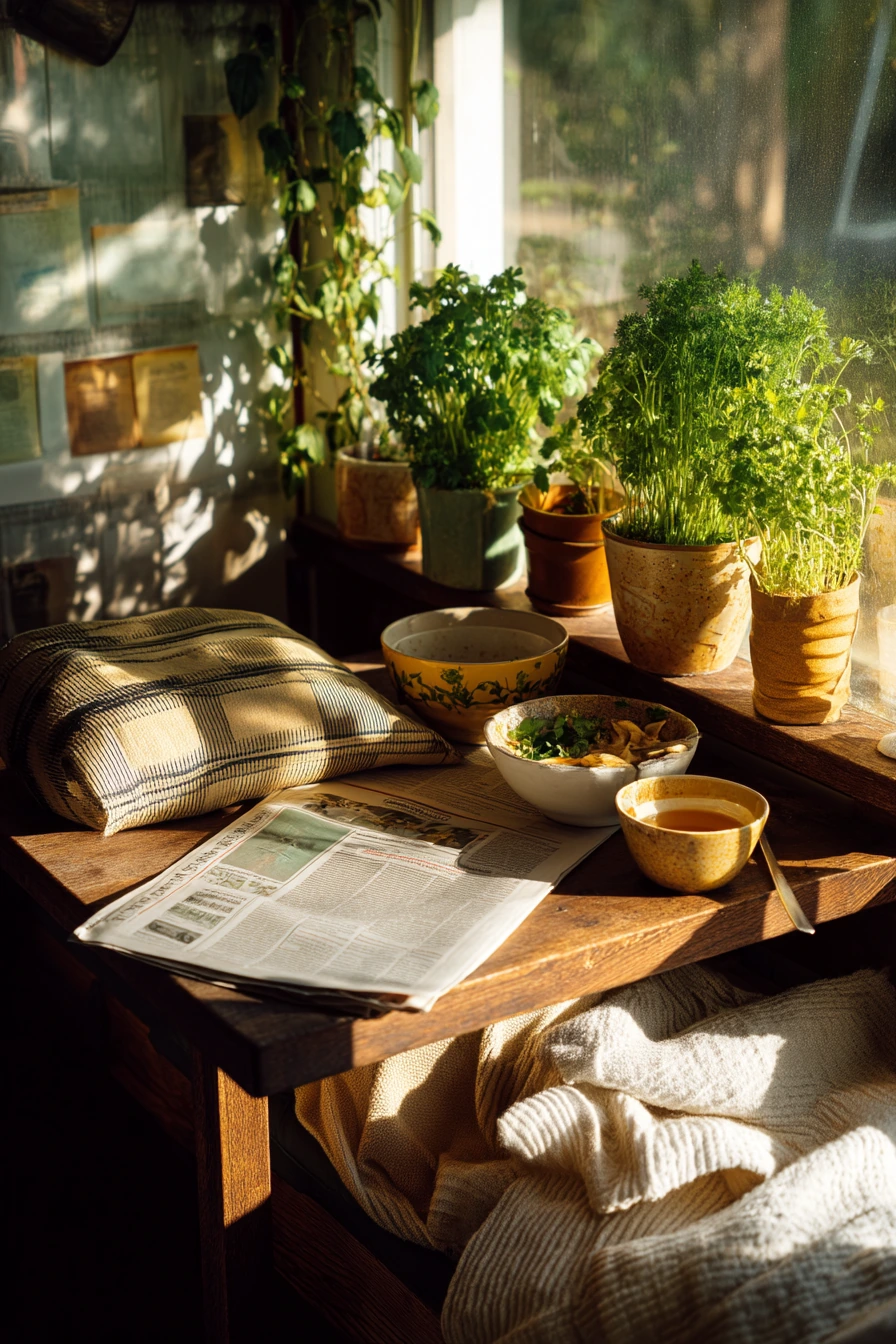
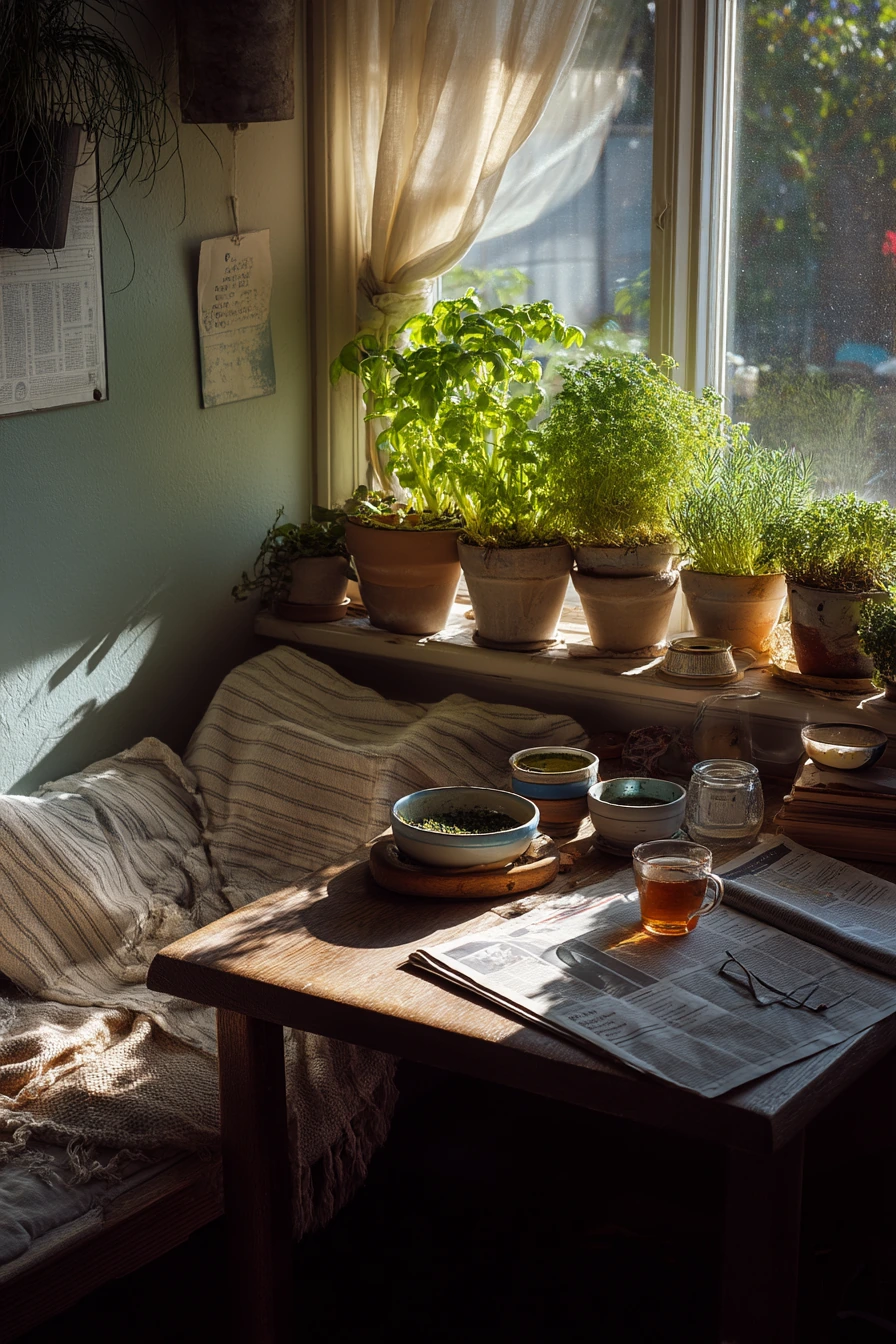
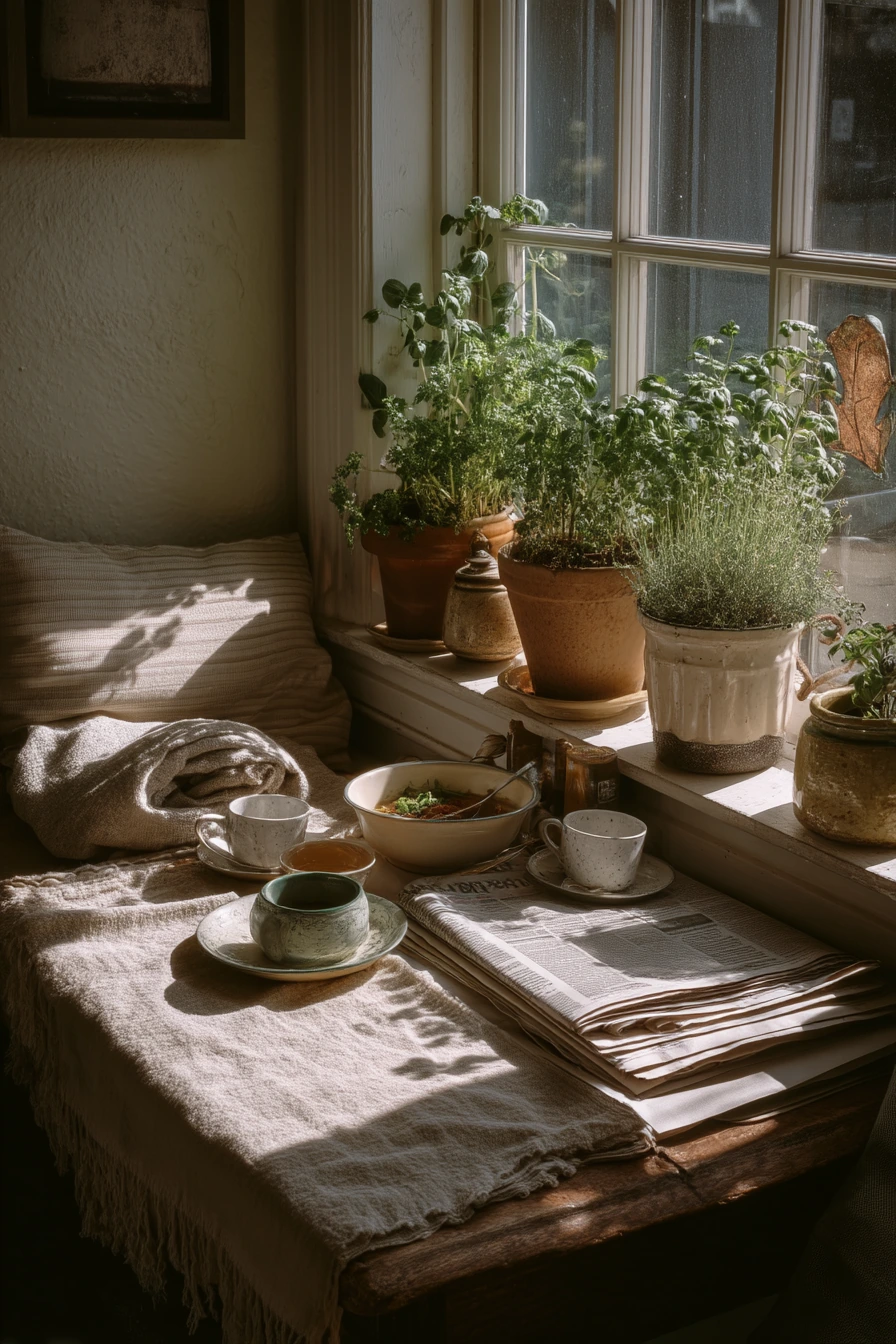
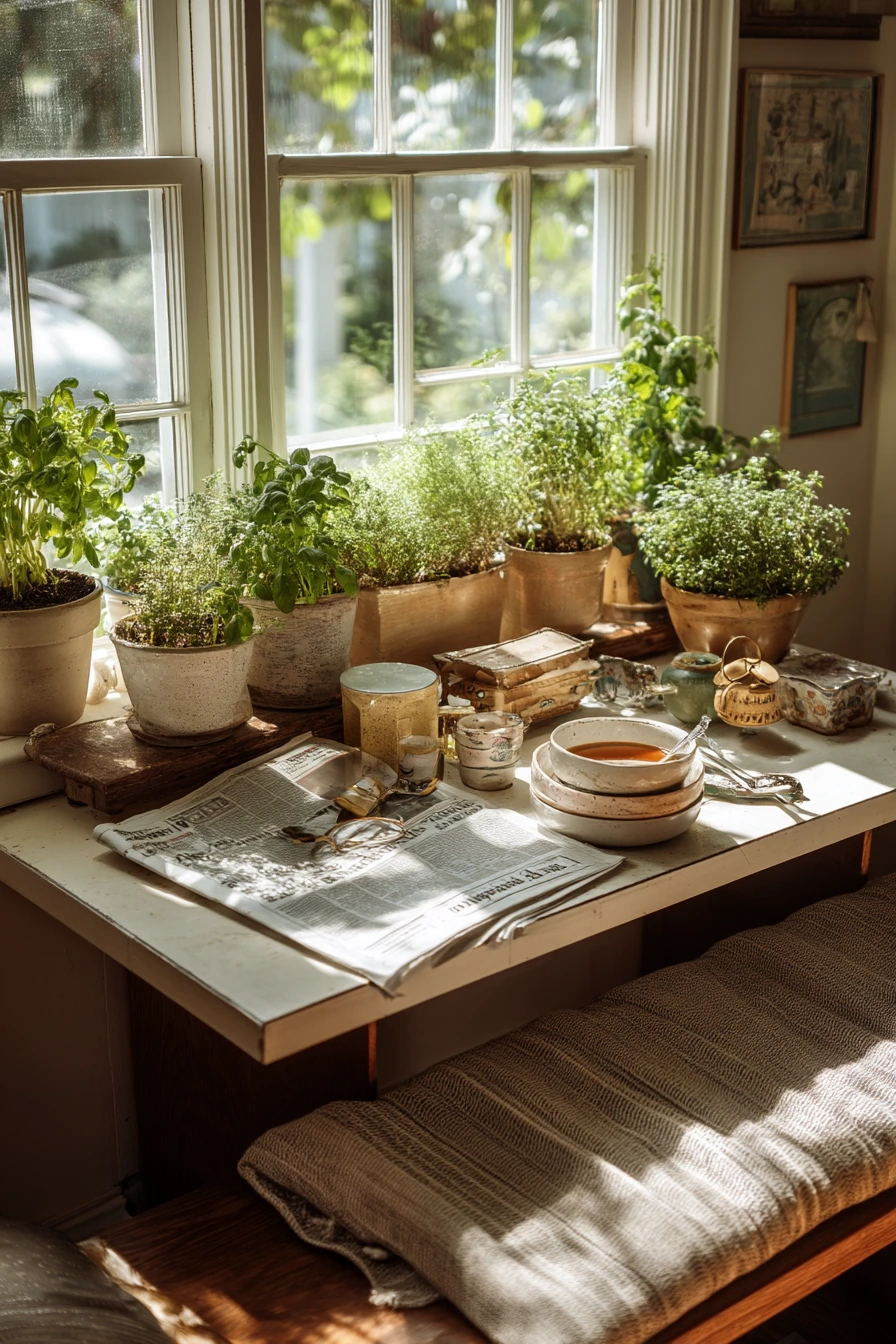
A breakfast nook is a sweet place for a small herb garden. Set sun-faded pots of parsley, mint, basil, and dill on the sill near the table. Soft plant shadows across the surface make the spot feel calm in the morning. This setup works well if you like a slow start with cereal bowls, tea, and a newspaper.
Keep it simple and lived-in. Add reading glasses, a half-finished mug, and a folded blanket on the bench. The herbs become part of the routine, not another chore. If the nook gets strong sun, turn pots every few days and watch for dry soil. Mint can handle a little less light than basil, but all herbs do better with bright window light.
For styling and use, keep a small plate or tiny bowl nearby for snipped leaves. Mint can go into tea, parsley can top eggs, basil can brighten toast with tomatoes, and dill is great with yogurt or cucumbers. Trim often so the plants stay compact and do not block the window. If you have pets, make sure pots are stable and out of reach.
- Pick sun-faded or neutral pots for a relaxed breakfast nook look.
- Keep a small dish nearby to catch herb snips.
- Rotate pots so plants grow straight and even.
- Use mint for tea and parsley for quick breakfast toppings.
- Water after breakfast so it becomes part of the routine.
Pro Design Tip: Limit the nook to one row of pots and leave open space on the sill. Negative space makes the area feel quiet and bright.
Budget Considerations: Reuse old pots and mix finishes. If you need matching, spray paint pots in one soft color for a low-cost set.
Good herb garden ideas are simple and close to where you cook. A windowsill, balcony table, open shelf, sink rail, or breakfast nook can all work if you have light and a plan for watering.
Start with a few reliable herbs like basil, parsley, thyme, and mint, then add more as you learn your space. Keep scissors nearby, trim often, and use a tray or saucers to control mess.
FAQ
What are the easiest herbs to grow indoors? Basil, mint, chives, parsley, and thyme are common starter herbs. Basil needs brighter light, while mint is more forgiving.
How much light do kitchen herbs need? Most herbs do best with 4 to 6 hours of bright light. A sunny window is often enough, and a basic lamp can help in winter.
How do I keep herbs from dying fast? Use pots with drainage, do not let them sit in water, and trim regularly. Also split crowded grocery store plants into smaller pots.
Can I grow herbs in jars? Yes, but only if you handle drainage. Use a plastic pot with holes inside the jar, or water very lightly and watch the soil.
Which herbs should not share a pot? Mint should be alone because it grows fast. Woody herbs like rosemary prefer drier soil than parsley, so separate pots make care easier.
How often should I water an indoor herb garden? Water when the top inch of soil feels dry. Frequency changes with sun, heat, and pot type, so check with your finger instead of following a strict schedule.
Pick one setup from this list and copy it with what you have. Once your herbs become part of your daily cooking, the garden stays alive and useful.