

Looking for home garden ideas that fit real life, not a perfect catalog photo. This guide shows small, doable layouts for patios, balconies, side yards, and backyards.
Each section matches a common scene you may pin on Pinterest, like terracotta herb pots on a tiny patio, a balcony with railing planters, or a backyard path lined with lavender and tomatoes on a trellis.
You will get practical planting tips, easy styling ideas, and small details that make a garden feel lived-in, such as a slim watering can by the door, a weathered outdoor rug, or a potting station with labeled seed trays.
Use these examples to copy a layout that fits your space and schedule, then adjust the plant list for your light, climate, and budget.
1 Small Patio Herb Corner
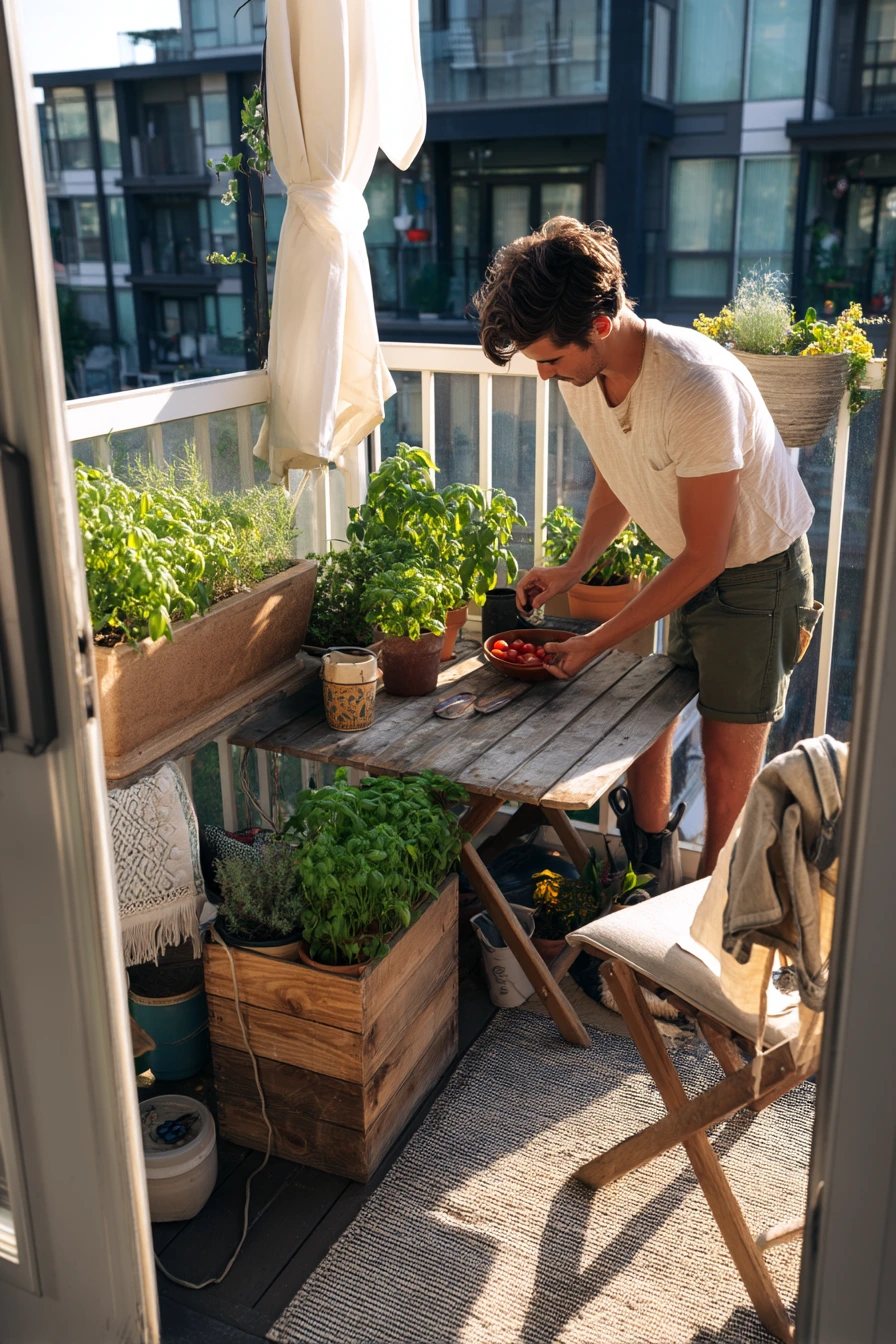
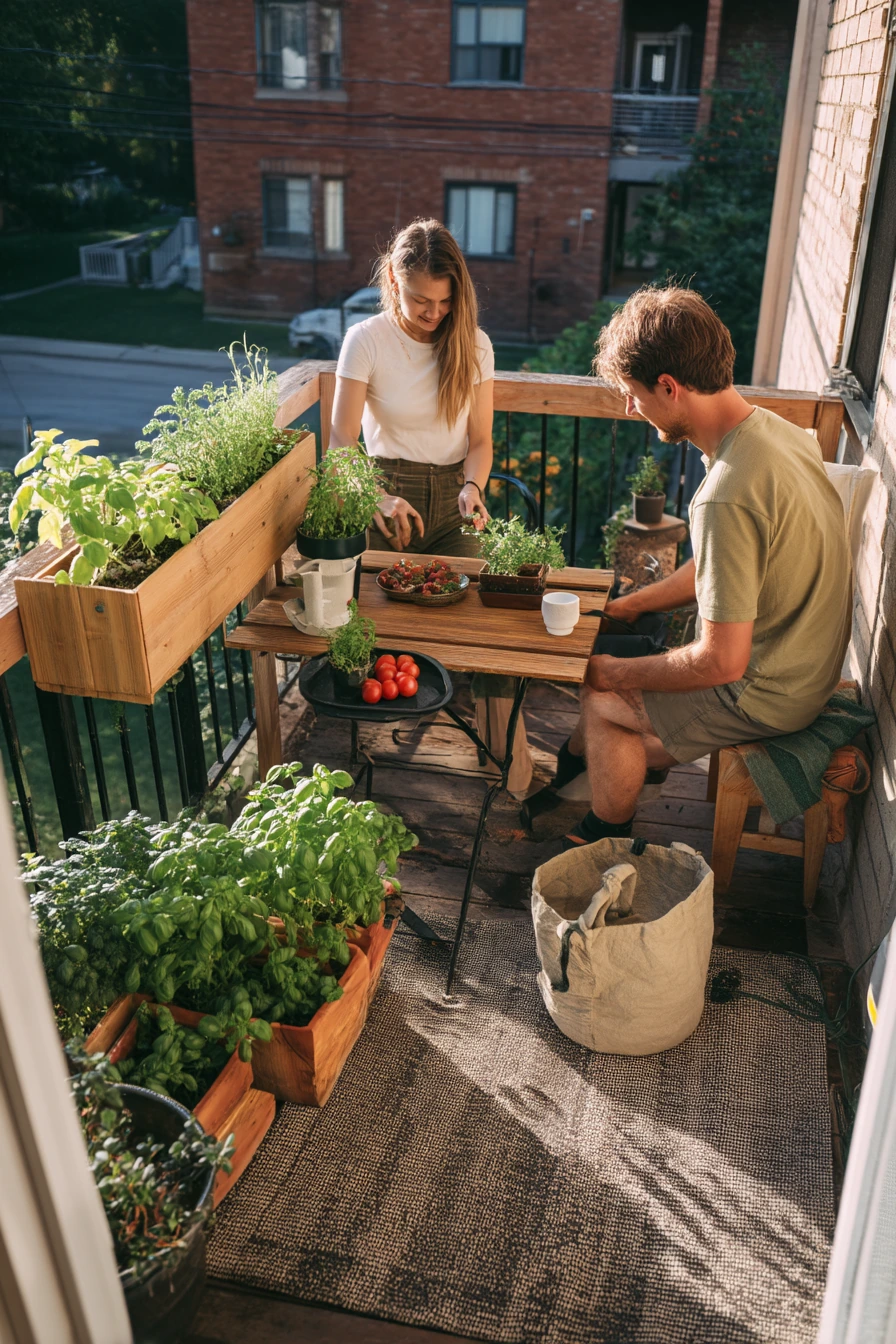
A compact patio can still grow a useful home garden. Start with terracotta herb pots and one or two cedar planter boxes. Herbs like basil, mint, and rosemary do well in containers, and they are easy to grab from the kitchen door. Keep the setup close to where you cook so you use it often.
Set up a simple work zone. Place a slim watering can near the door, and hang gardening gloves on a railing so they dry fast. A folding bistro chair gives you a place to sit for a minute and check plants. A weathered outdoor rug helps the patio feel warmer and keeps grit from tracking inside.
Style it like a real everyday space. Put a small bowl of cherry tomatoes on the table when you harvest. If you charge your phone outside, tuck the charging cable in a basket or weather-safe box so it does not look messy. Water in late afternoon so the pots can drink before night, and pinch basil often to keep it bushy.
- Group herbs by water needs: mint separate, rosemary with drier herbs
- Use saucers under terracotta pots to protect the patio surface
- Place taller rosemary at the back to avoid shading basil
- Add one trellis in a planter box for compact cherry tomatoes
- Label pots so new growth does not get mixed up
Pro Design Tip: Repeat the same pot style (all terracotta or all clay) and vary height with a small plant stand to make the tiny patio look organized, not crowded.
Budget Considerations: Terracotta pots are affordable, but cedar boxes cost more; save money by starting with one box and adding more later, or use food-safe plastic planters dressed with a simple wood screen.
2 Backyard Dining Garden
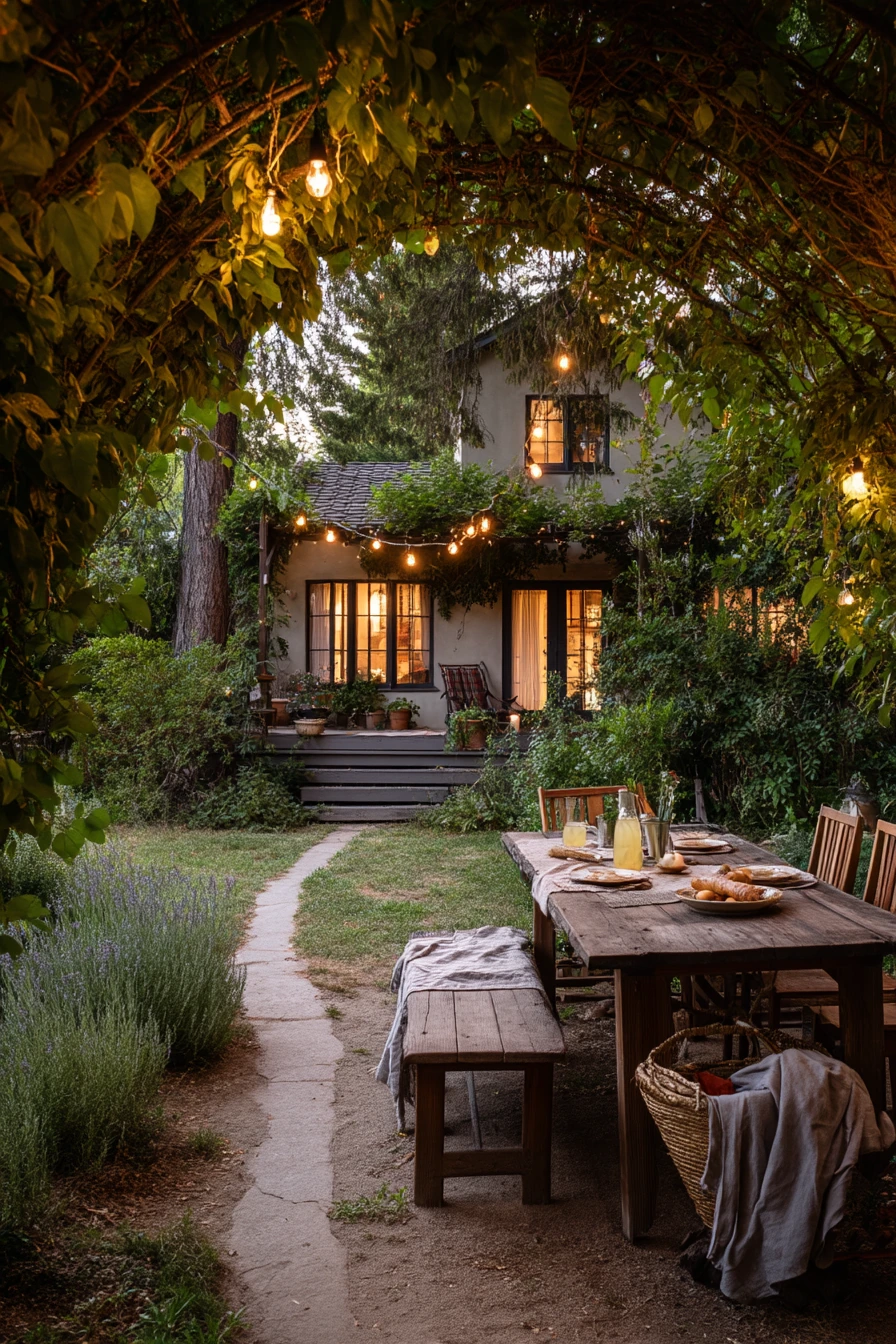
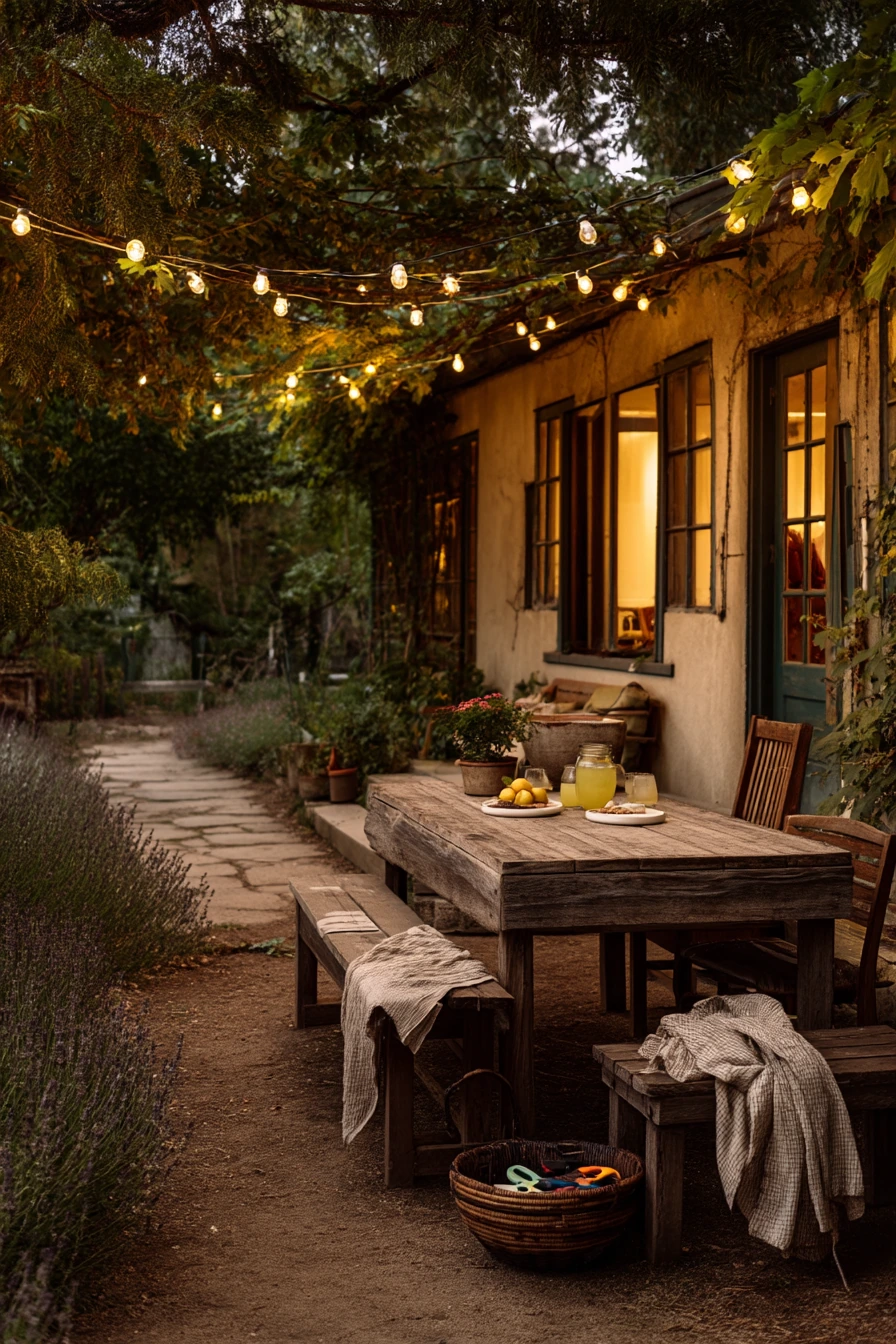
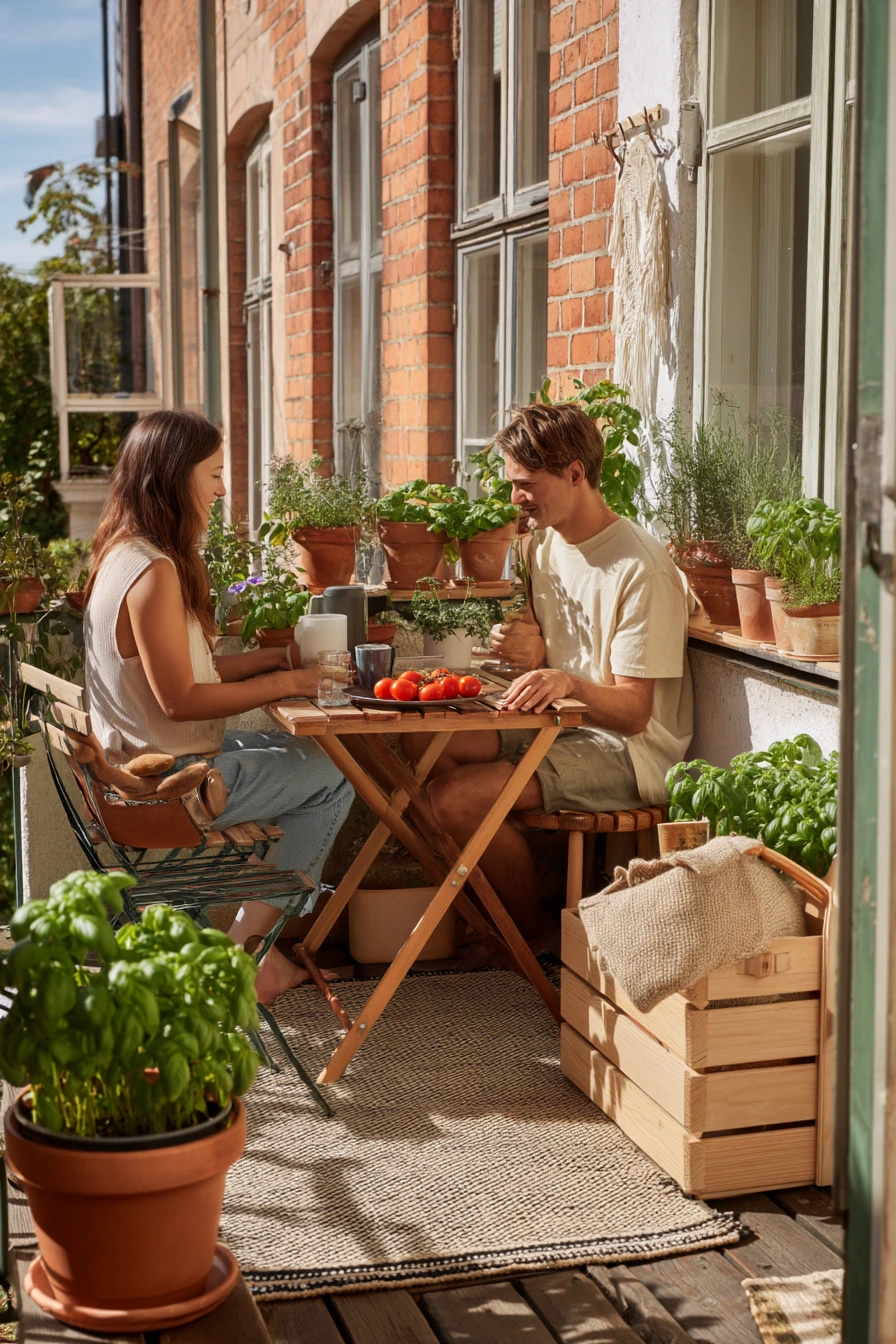
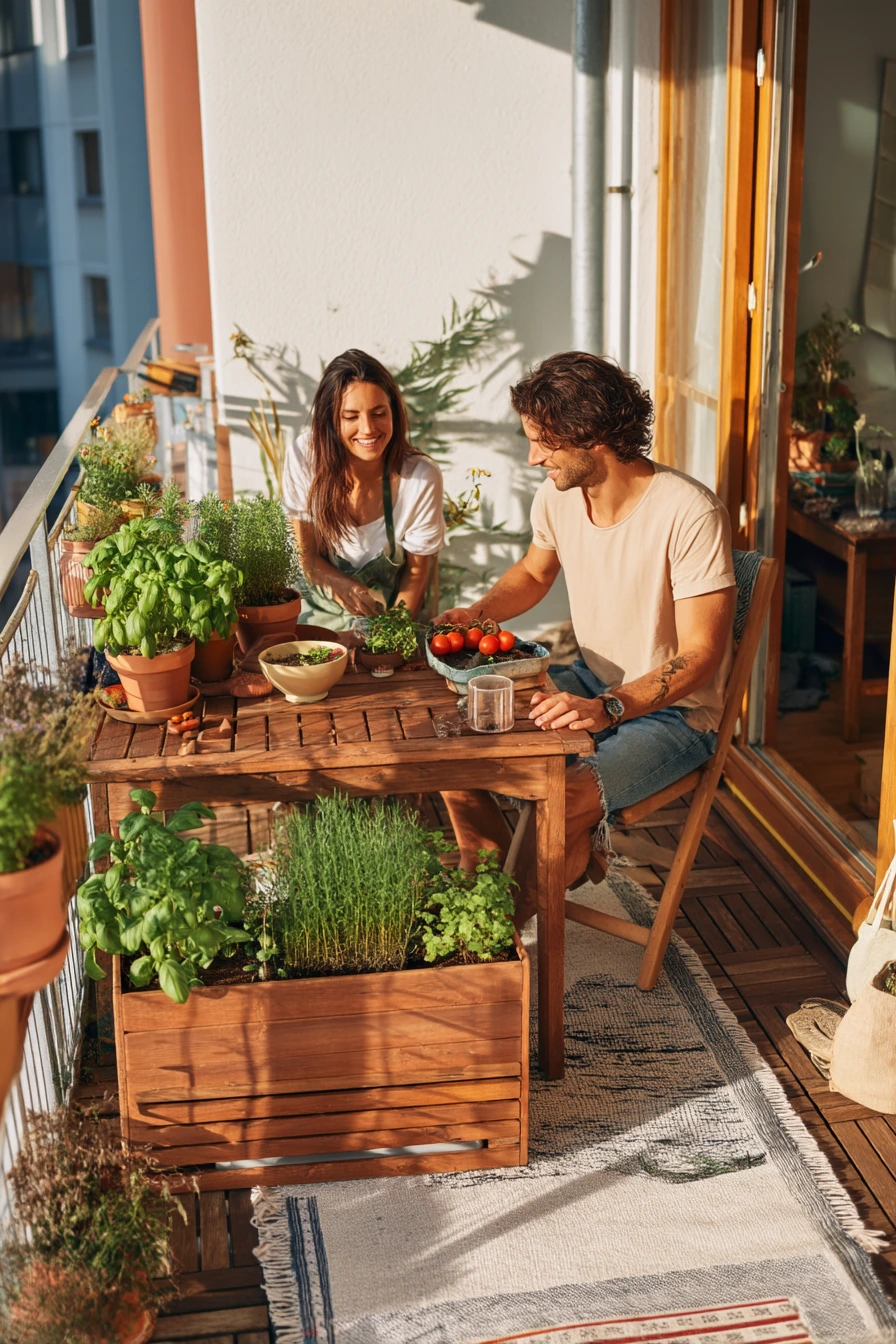
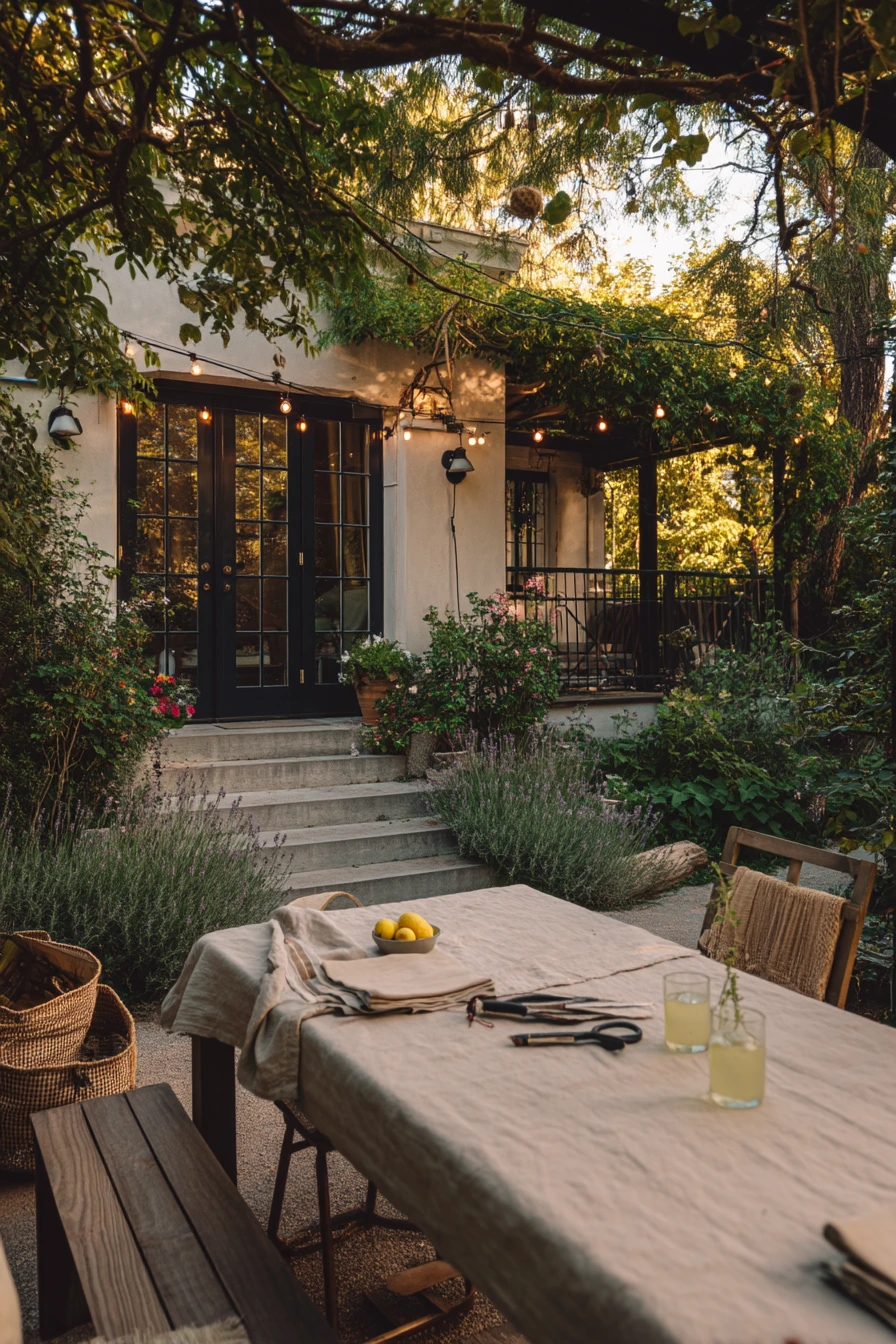
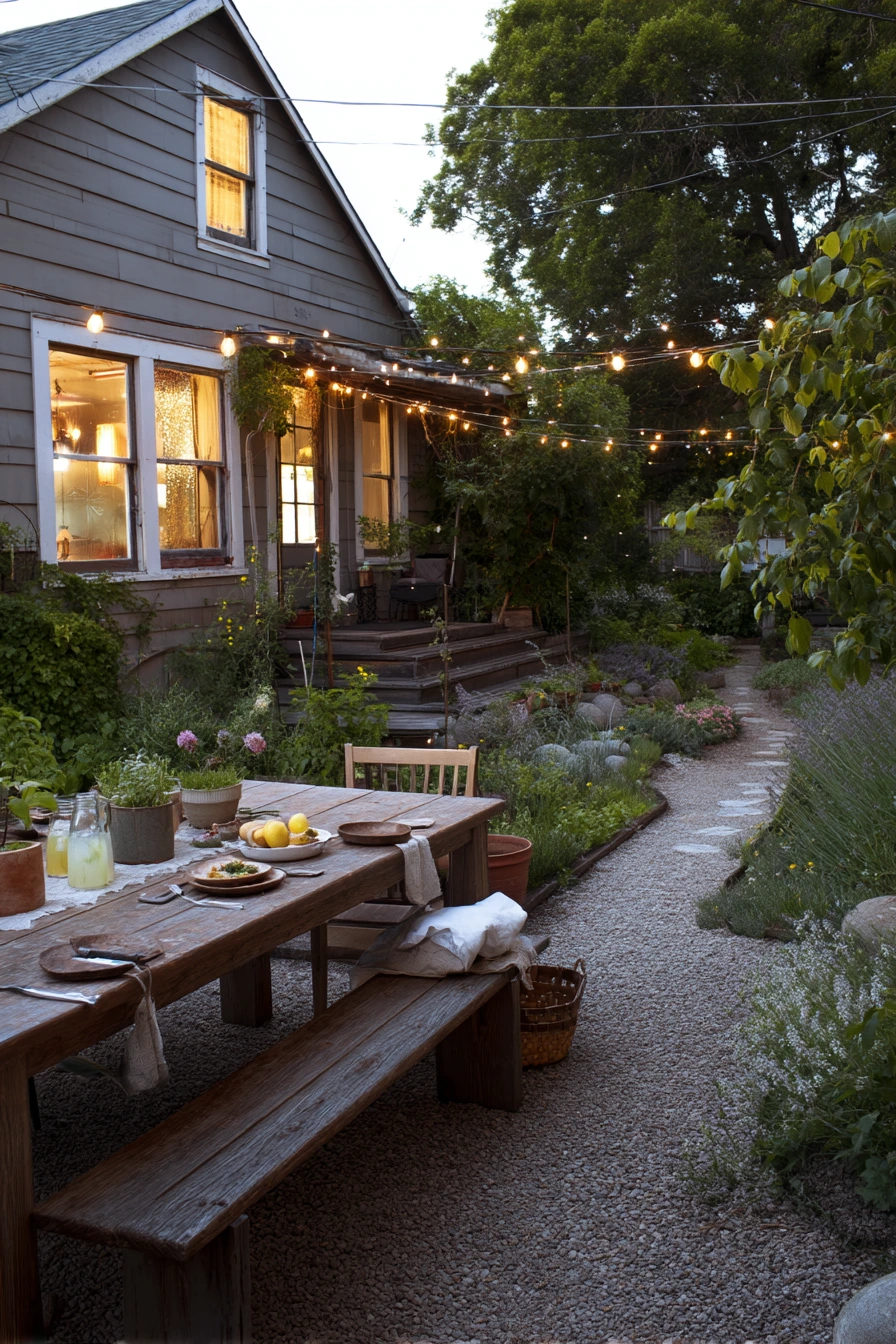
A backyard garden path can double as a dining spot when you plan for movement and light. Keep the path clear, then place a wooden dining table beside it. Tomatoes climbing a trellis add height, while lavender borders bring color and scent without taking much space. This layout works well for dusk dinners because the plants feel close, but the walkway still functions.
Use simple market lights for a warm glow and better visibility. Hang them from the house to a post or fence, and keep the cords neat. Linen napkins and a slightly wrinkled throw on a chair make the space feel relaxed and inviting. Put garden shears on a bench, but store sharp tools right after use if kids are around.
Make it practical for family life. Keep a kid toy basket near the patio steps so cleanup is quick. Set out half-finished lemonade in a sturdy pitcher that will not tip. If you garden and host in the same area, choose plants that can handle some foot traffic, and edge beds clearly so people know where to walk.
- Train tomatoes up a trellis to free up ground space
- Plant lavender along the border for a tidy, low hedge look
- Use a washable outdoor runner to define the dining zone
- Keep a lidded bin for toys so the patio looks calm fast
- Place a small tray for napkins and citronella to reduce clutter
Pro Design Tip: Line up the table edge parallel to the garden path, then repeat the same light color (warm white) in both market lights and nearby window bulbs for a cohesive evening look.
Budget Considerations: Trellis panels and string lights range widely; use cattle panel offcuts or basic wood stakes, and choose plug-in lights instead of hardwired if you want a lower-cost setup.
3 Renter-Friendly Balcony Oasis
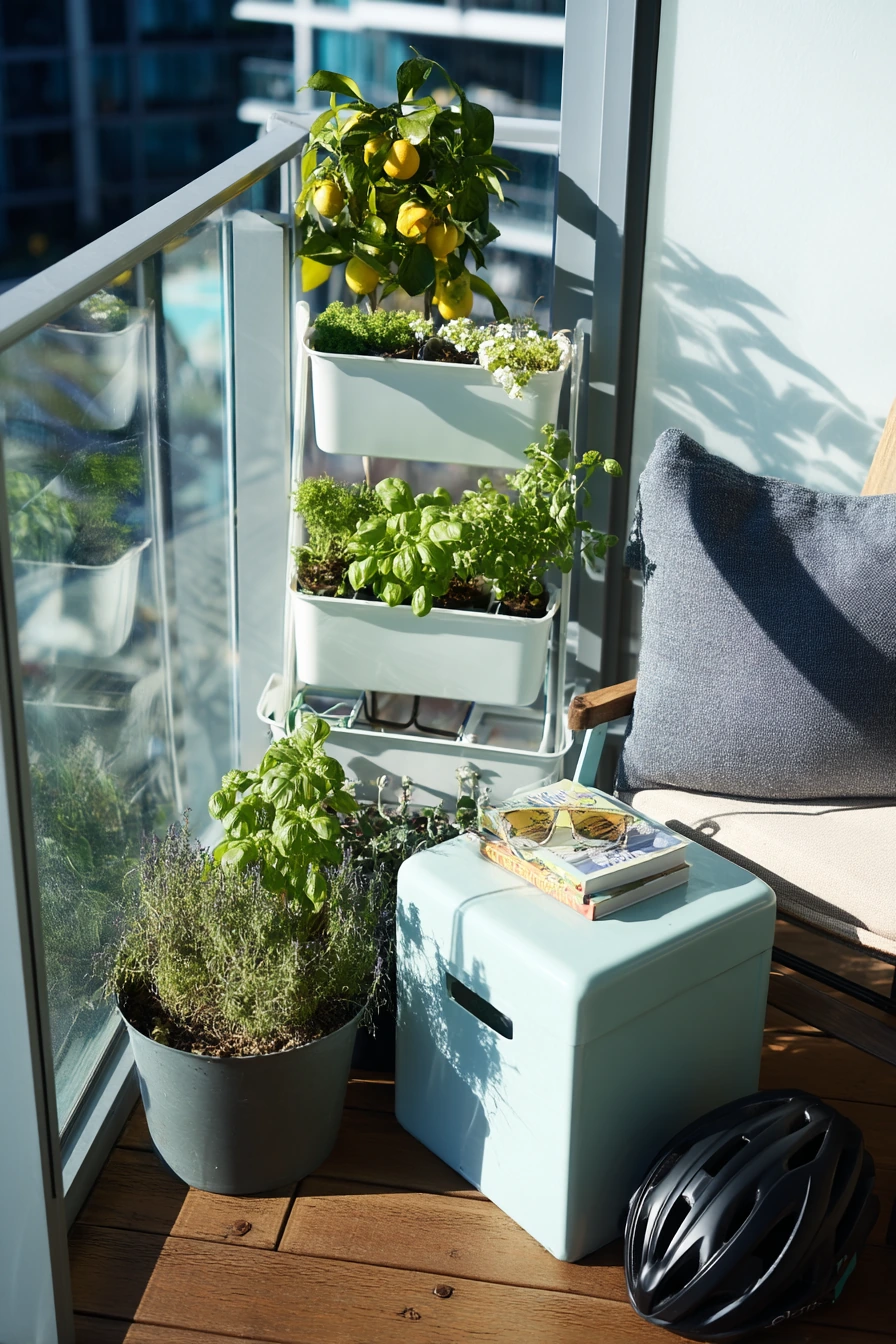

An urban renter balcony garden works best when everything can move. Use lightweight planters on casters, clip-on railing planters, and a vertical herb rack that leans or mounts with removable hardware. This gives you flexibility if your light changes through the seasons or if your building has rules about drilling.
Choose a few strong plants instead of many weak ones. A compact citrus tree in a pot is a good focal point if you have enough sun. Pair it with herbs and greens that you can cut weekly. Keep a stackable stool and a small watering can nearby so care is fast. If you read outside, a side table with one paperback and sunglasses makes the balcony feel like a real room.
Style the balcony in a clean, breezy way. Use one or two cushion covers in a calm color, even if they get slightly rumpled. Store tools in a narrow box by the door near your bike helmet. Water in the morning to avoid wet floors at night, and add trays to catch drips so neighbors below stay happy.
- Use self-watering railing planters to reduce daily chores
- Pick compact varieties: dwarf citrus, patio tomatoes, mini peppers
- Group pots on one side to keep a walking lane clear
- Add a vertical herb rack to use wall height, not floor space
- Use plant saucers and mats to protect balcony decking
Pro Design Tip: Keep the tallest plant (like a citrus tree) in a back corner, then step down in height toward the railing so every pot gets light and the view still feels open.
Budget Considerations: Clip-on planters and vertical racks can add up; start with recycled containers and one sturdy railing planter, then upgrade the pieces you touch most, like the watering can and pot trays.


4 Garden Reading Nook


A backyard garden nook can be a simple place to rest if you plan shade, comfort, and soft texture. Start with a rattan lounge chair placed where you get filtered leaf shade. Add an oversized planter with ferns for steady green, then include hydrangeas for fuller blooms in season. Keep a low stone side table nearby for a tea cup and a book.
Make the corner feel calm and used. An open book, reading glasses, and a linen blanket slipped halfway off the chair look natural and also help you stay outside longer. Place two garden catalogs or a small basket on the floor, but keep the area tidy enough that you can sweep leaves quickly. A mossy edging or low groundcover gives the nook a soft border without needing constant trimming.
For care, choose plants that match your light. Ferns like shade and moisture, while hydrangeas need steady watering and morning sun in many climates. Mulch the large planter to slow drying. If mosquitoes are a problem, add a small fan on a nearby shelf to keep air moving while you read.
- Pick one comfy chair and build the plants around it
- Use a large planter so ferns do not dry out too fast
- Add a small side table for tea, book, and glasses
- Choose a washable linen throw for easy cleanup
- Edge the nook with mossy stone or groundcover for a soft finish
Pro Design Tip: Use one oversized planter instead of many small pots to reduce visual clutter and make the nook feel like a designed outdoor room.
Budget Considerations: Large planters and hydrangeas can be pricey; save by using a simple resin pot with a textured finish and starting hydrangeas as smaller plants that grow in over time.


5 Kids’ Butterfly Garden


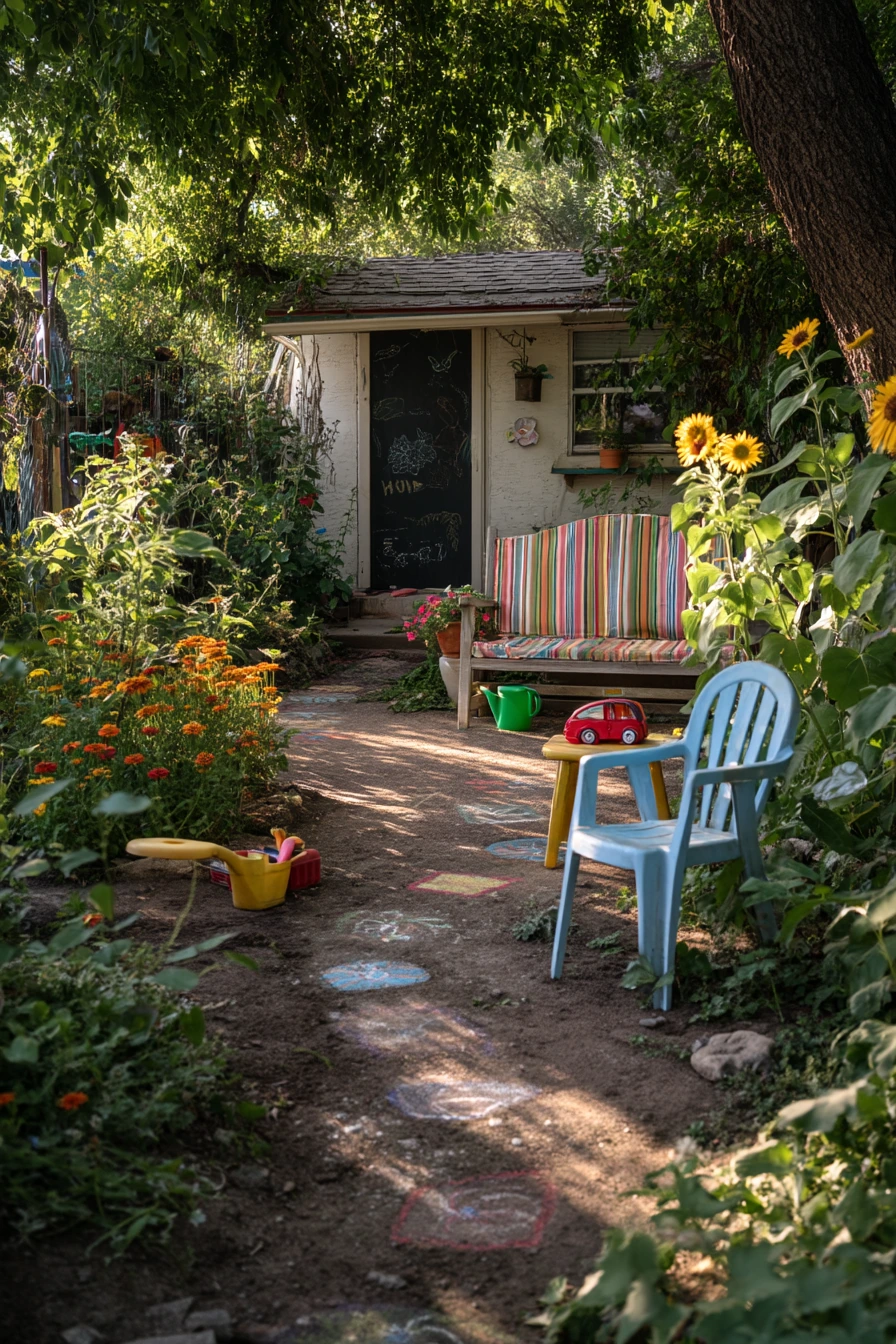
A playful home garden for butterflies can still look neat and work for kids. Focus on a few pollinator plants that are easy to grow, like zinnias, milkweed, and sunflowers. Place them in a sunny border where children can watch butterflies without stepping into the beds. Keep paths wide and clear so little feet do not crush seedlings.
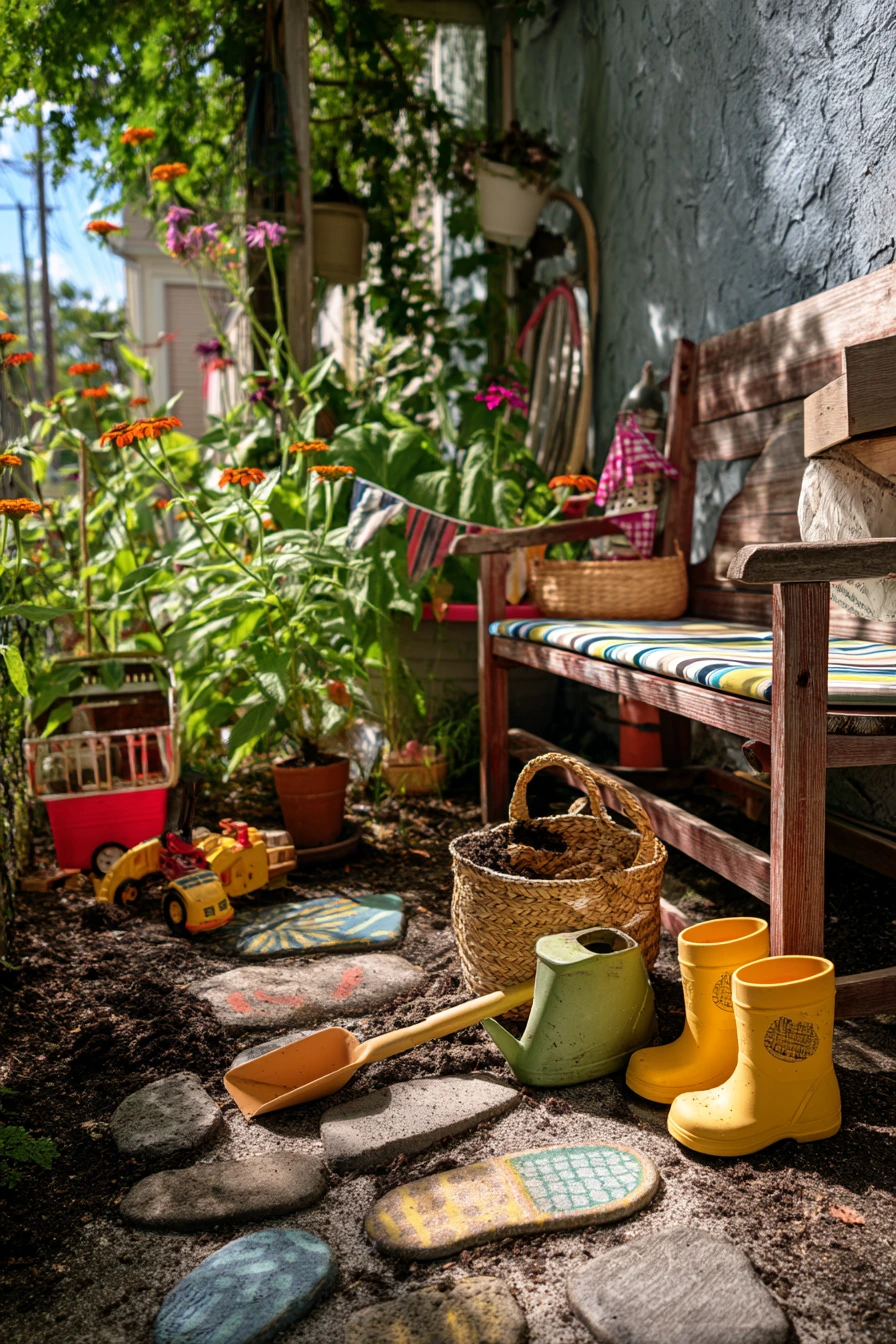
Add kid-friendly details that also help the garden. Painted stepping stones guide movement and reduce trampling. Little watering cans let kids help without overwatering large areas. Chalk marks on the patio can become a simple “garden map” so kids remember where seeds went. A basket of muddy sneakers by the door keeps dirt contained after play.
Keep tools and toys organized. Store a plastic shovel and toy truck in a bin near the border, and add a garden bench with a striped cushion for breaks. For plant care, deadhead zinnias for more blooms, and leave some milkweed seed pods if you want more plants next year. Avoid pesticide sprays so caterpillars and bees stay safe.
- Plant milkweed in a defined spot and label it for kids
- Use zinnias for fast color and easy cutting flowers
- Add sunflowers at the back for height and shade on hot days
- Make stepping stones a clear path to protect plants
- Keep a lidded tote for toys to reset the space quickly
Pro Design Tip: Repeat one bright paint color on the stepping stones and one stripe color on the bench cushion to tie the playful elements together without making the garden look busy.
Budget Considerations: Pollinator plants are often inexpensive from seed; spend more only on a few sturdy border plants, and use DIY stepping stones instead of store-bought pavers.
6 Side Yard Kitchen Garden

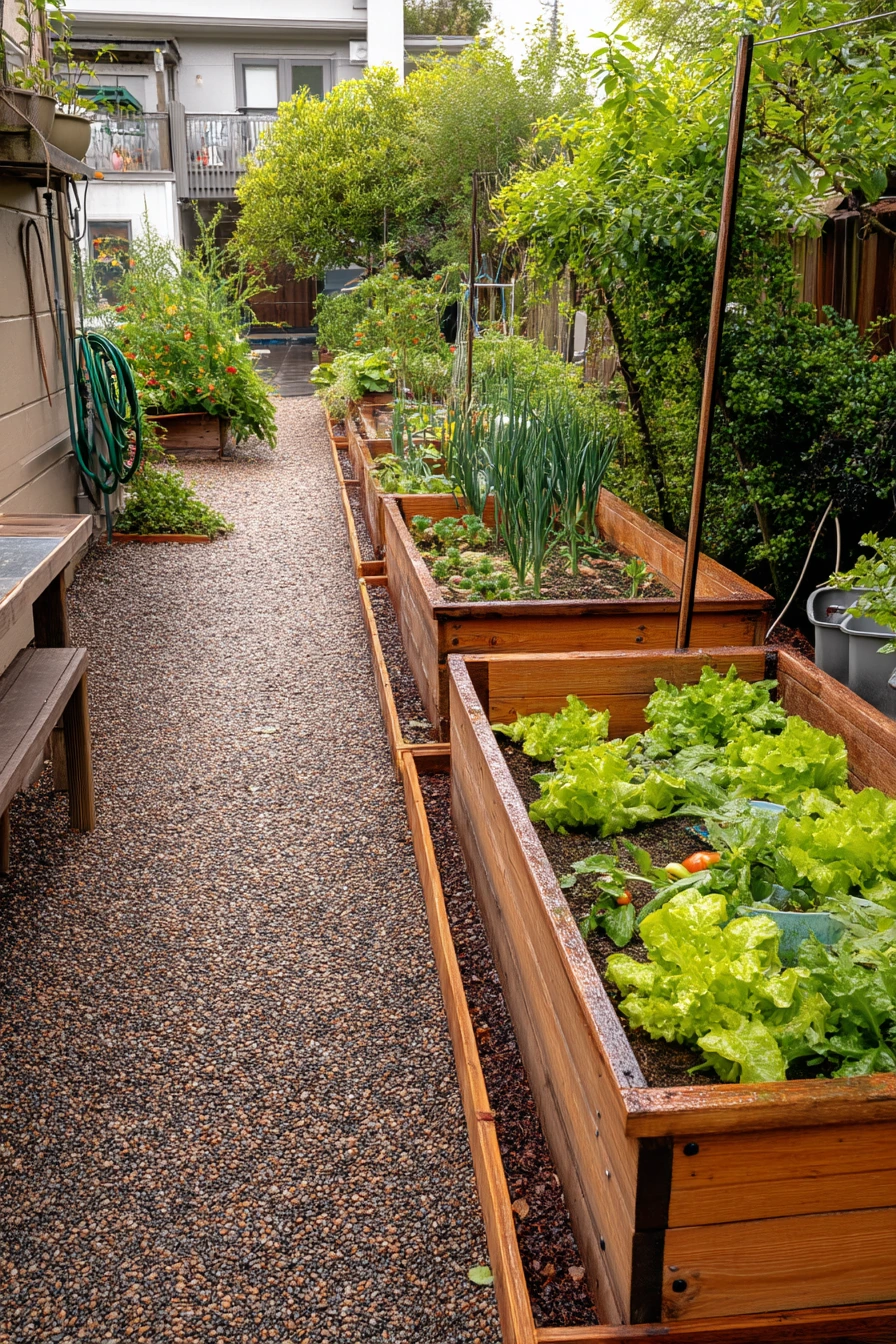
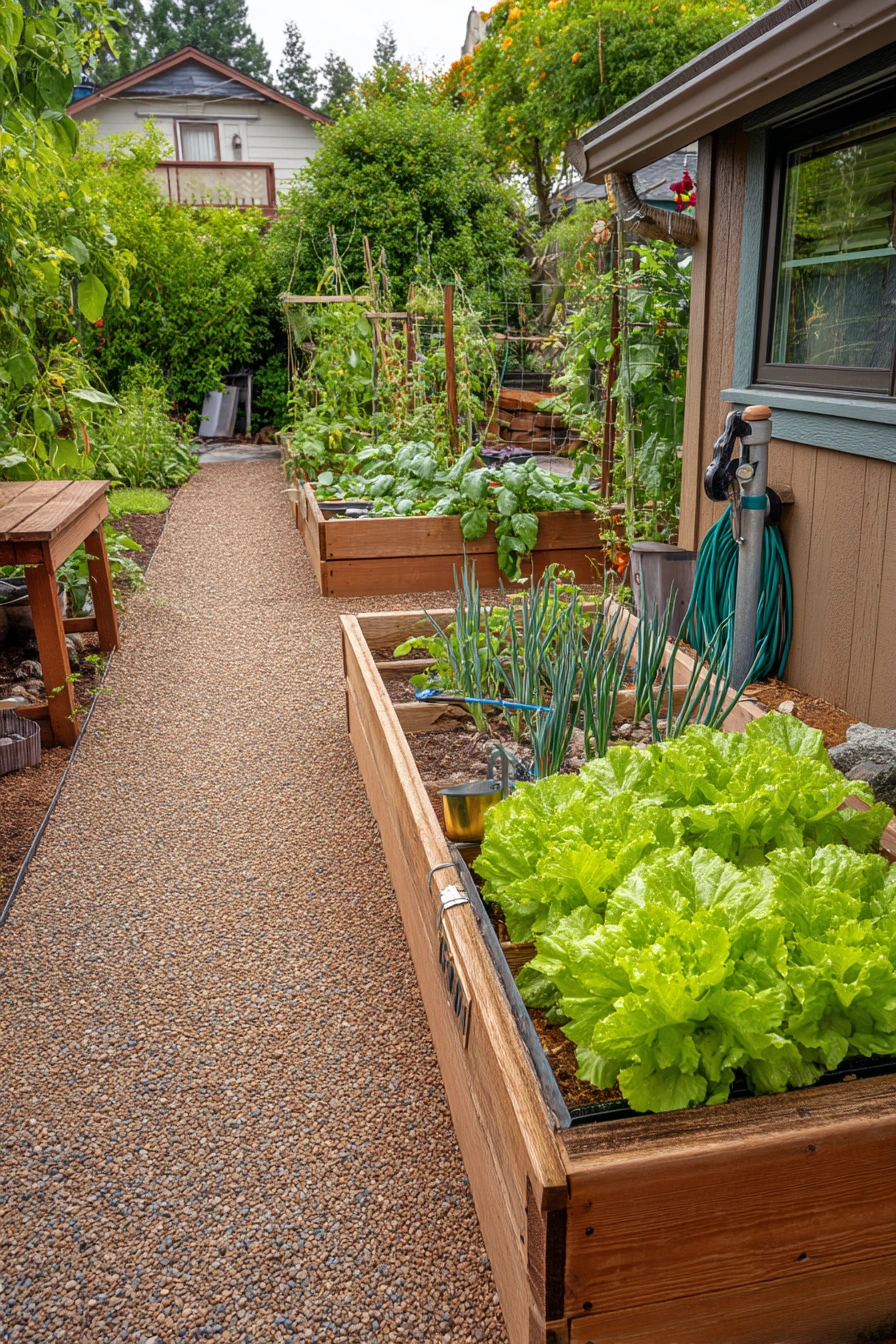
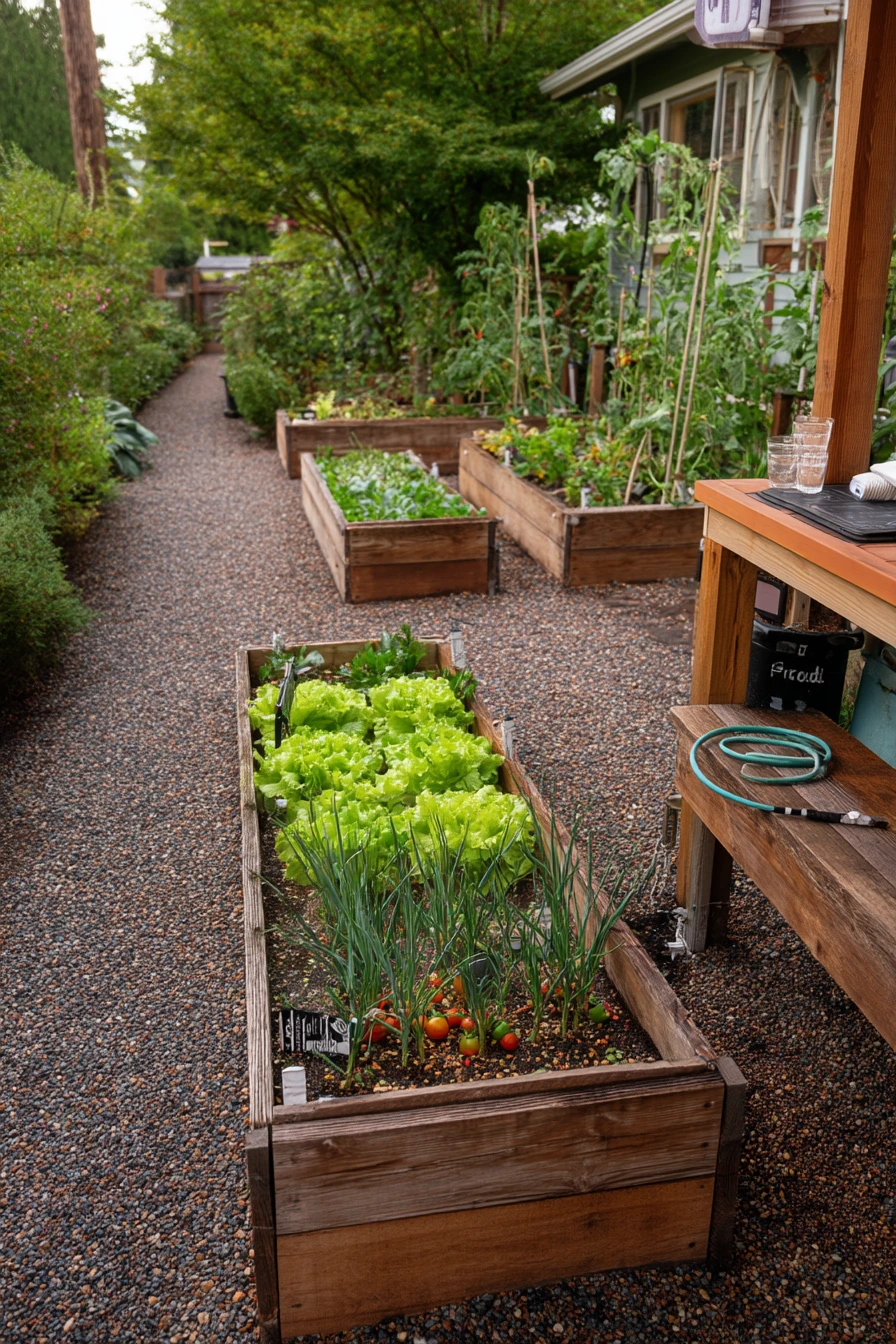
A side-yard kitchen garden is ideal when you want fresh food but do not have time for a large backyard plot. Raised cedar beds keep things tidy and make weeding faster. Plant high-use crops like lettuce, scallions, peppers, and tomatoes so the garden pays you back each week. A gravel path stays clean after rain and helps you move quickly between beds.
Set up the area for quick routines. Keep a hose coiled near a spigot and make sure it reaches every bed without dragging through plants. Add metal plant labels so you remember what is planted where, especially with repeat sowing of greens. Leave pruning snips on the edge of a bed only while you work, then store them safely to avoid rust and accidents.
Make the garden match daily life. A bench for a grocery bag and reusable tote turns the space into a staging area for harvest. A small outdoor shelf can hold a water glass and keys when you step out for a five-minute check. For success, plant lettuce in waves every two weeks, and keep tomatoes supported early so they do not sprawl into the path.
- Use raised beds to improve soil and reduce bending
- Choose a gravel path for drainage and low maintenance
- Install simple tomato supports before plants get big
- Label rows to track sowing dates and varieties
- Keep a harvest basket near the door for quick picking
Pro Design Tip: Align beds in a straight run with one consistent path width so the side yard looks intentional, and leave enough space for a wheelbarrow or a tote.
Budget Considerations: Cedar beds can be the biggest cost; start with one or two beds and expand, or use untreated pine lined with a safe barrier for a lower-cost first season.
7 Courtyard Succulent Retreat

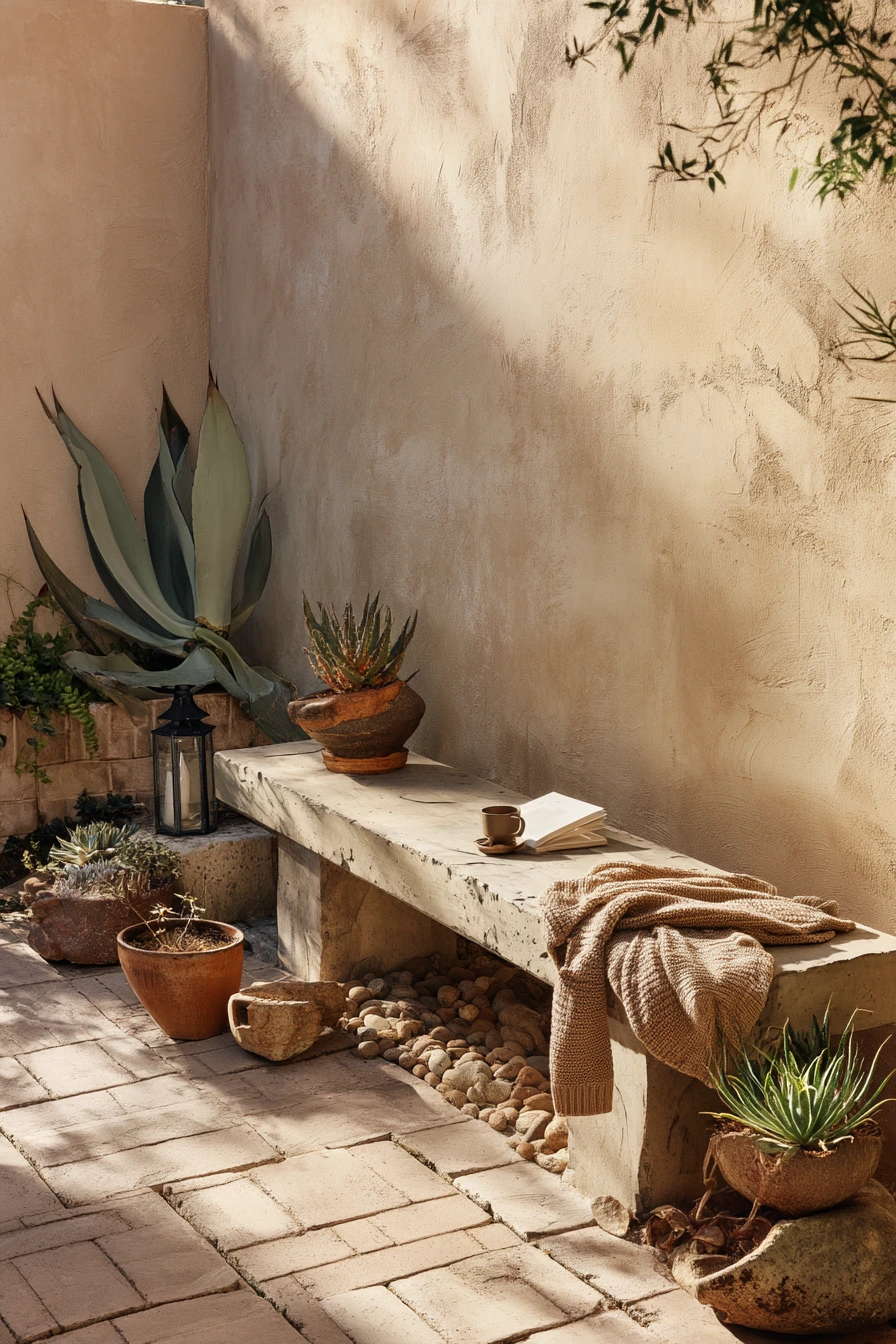
A quiet courtyard home garden can be low-water and still feel welcoming. Use sculptural succulents and agave as the main shapes, then fill around them with gravel and clay pots. This style stays clean looking, and it works well in sun-baked areas where thirsty plants struggle.
Make it feel lived-in, not stiff. Add a low concrete bench with a coffee cup and a book left open for a moment. A folded cardigan suggests the space is used in the morning. Ceramic lanterns can sit on the ground or bench for soft light at night. Faint soil marks on the paving are normal, but keep a small brush nearby to sweep gravel back into place.
For care, focus on drainage. Use gritty cactus mix in pots, and do not let water sit in saucers. Group plants by light so tender succulents are not scorched. If the courtyard is windy, choose heavier clay pots that will not tip. This garden can be almost no-maintenance once it is set up, but check for pests like mealybugs monthly.
- Use gravel mulch to reduce weeds and hold heat
- Pick one or two statement plants like agave for structure
- Choose clay pots for weight and a natural look
- Add lanterns for simple evening atmosphere
- Keep a small broom handy to tidy soil and gravel edges
Pro Design Tip: Limit your palette to three materials, such as gravel, clay, and concrete, then repeat them across the courtyard for a calm, minimalist look.
Budget Considerations: Large agave can be expensive; buy smaller plants and let them grow, and use pea gravel in bulk rather than bagged decorative stone to cut costs.


8 Front Yard Pollinator Border
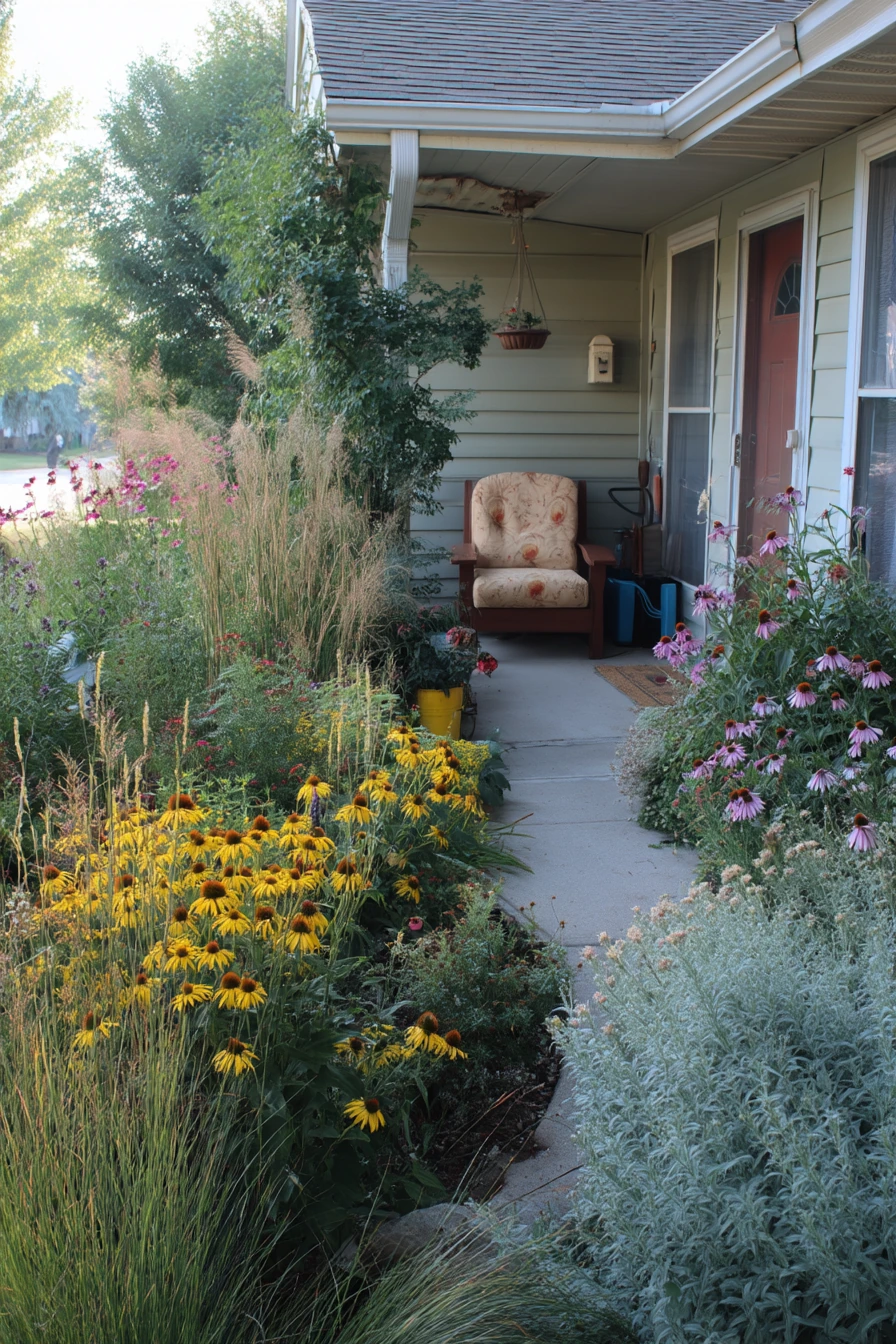

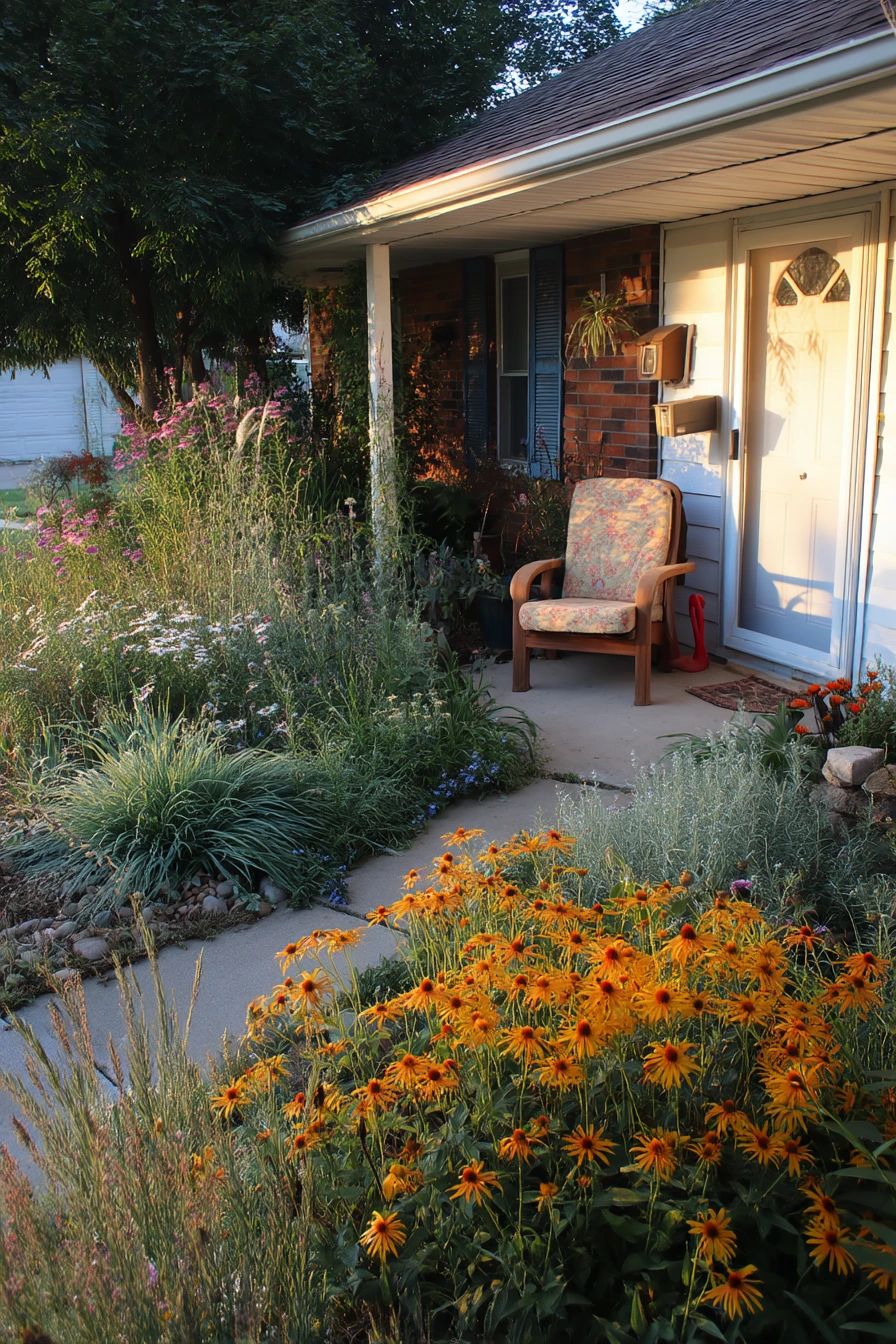
A suburban front yard garden can support pollinators and still look neat from the street. Plant in layers along the walkway with coneflowers, salvia, black-eyed Susans, and ornamental grasses. This creates a meadow-like look that feels full without being messy. Keep the mailbox and path clear so the yard stays functional.
Plan for simple upkeep. Put a gardening bucket and hose nozzle near the porch so you can do quick deadheading and spot watering. Keep boots by the door for easy access. A porch chair with a faded cushion turns the front into a place you actually sit, which helps you notice plant needs early, like drooping in heat or pests on new growth.
For a balanced design, use taller grasses behind and shorter flowers near the edge. Leave seed heads in fall for birds, then cut back in late winter. If you want fewer weeds, plant dense and add mulch around new perennials until they fill in. This kind of home garden idea works well for beginners because many of these plants are hardy.
- Layer heights: grasses back, flowers middle, low edging front
- Choose long-bloomers like salvia for steady color
- Add coneflowers for bees and easy cut flowers
- Use a simple mulch ring to reduce weeds while plants establish
- Keep tools near the porch for quick five-minute tasks
Pro Design Tip: Repeat each plant in small groups of three to five along the walkway so the garden reads as planned, not random.
Budget Considerations: Perennials cost more upfront but return each year; buy smaller starter plants or divide from neighbors, and fill gaps with inexpensive annuals the first season.

9 Greenhouse Potting Station
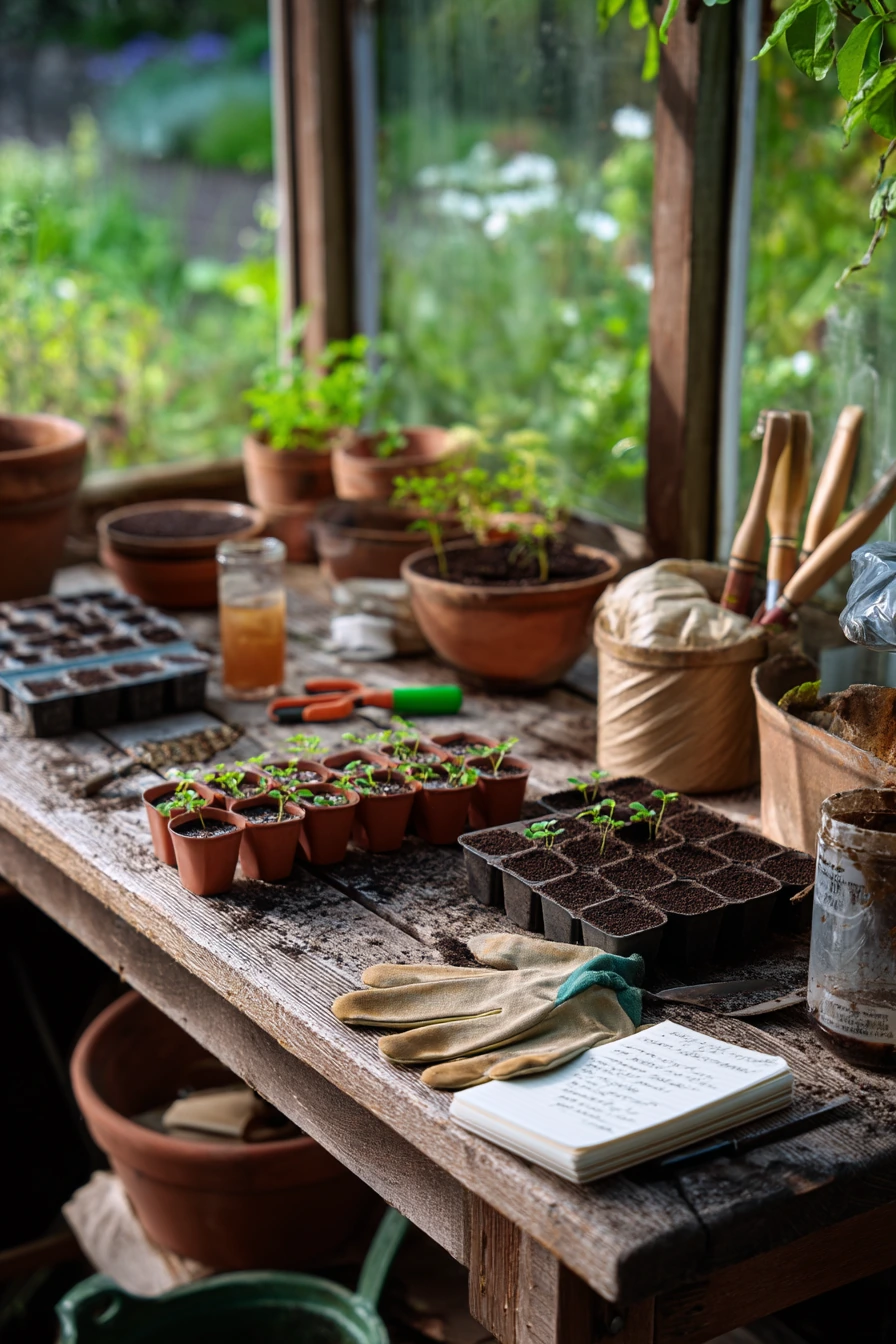
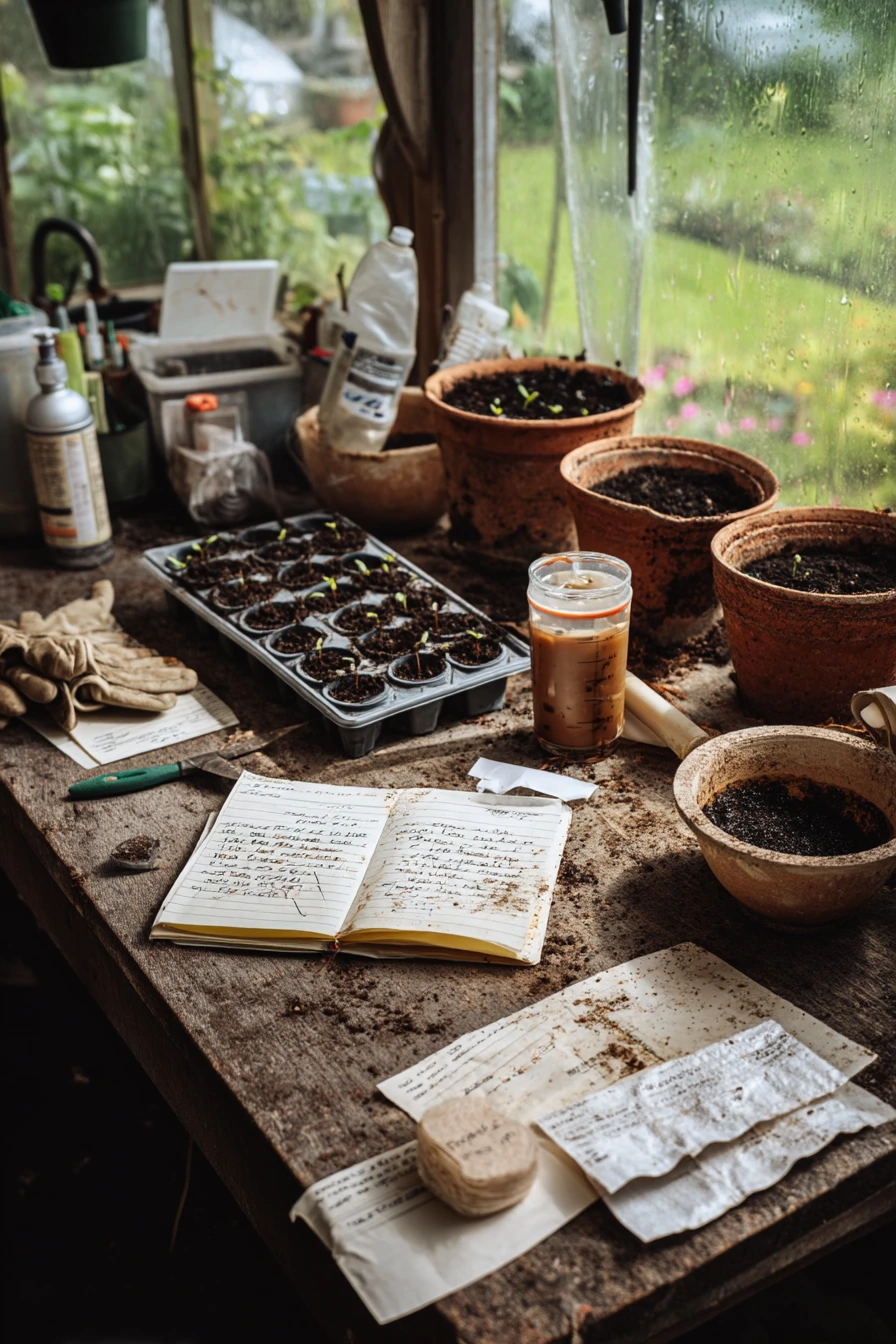
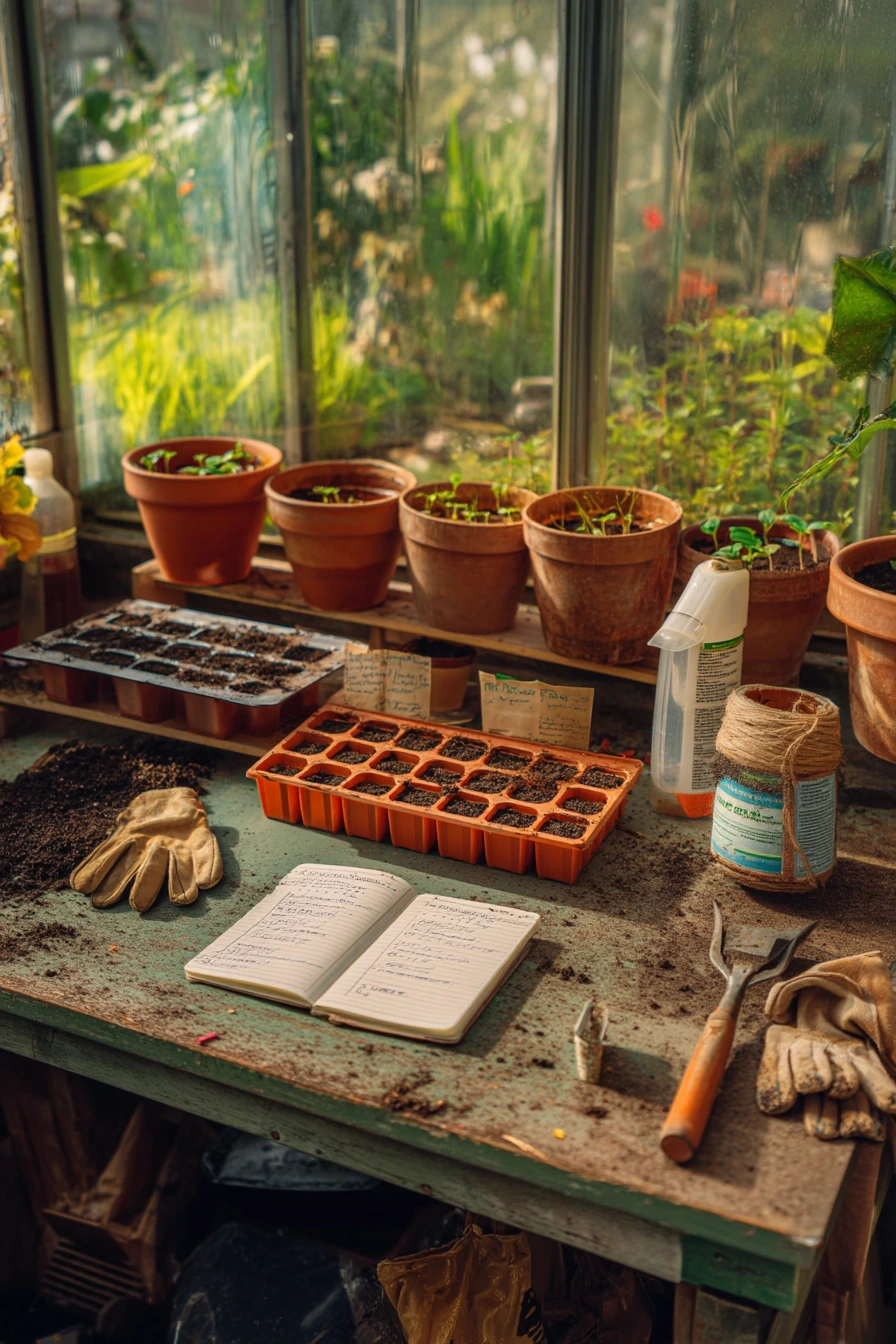
A home greenhouse potting station makes starting plants much easier. Set up a sturdy workbench with seed trays, terracotta pots, and a potting soil bag within reach. Keep a spray mister for gentle watering so seedlings do not get knocked over. Twine, a trowel, and handwritten labels help you work fast and stay organized.
Make the station practical for everyday use. An open notebook is helpful for tracking dates, varieties, and what germinated well. Water stains on the workbench are normal, but protect wood with a simple tray or a silicone mat where you mix soil. Keep slightly dusty gloves close so you can pot up quickly without bringing dirt into the house.
For a clean workflow, set up three zones: dry storage, messy mixing, and finished plants. Move seedlings from tray to pot, label them right away, then place them on a bright shelf. If humidity is high, add airflow with a small fan to reduce mold. Keep a half-drunk iced coffee on a separate shelf so soil stays out of your drink.
- Use labeled trays to avoid mixing up seedlings
- Keep a spray mister for gentle moisture control
- Store twine and tools in a small bin on the bench
- Write planting dates in a notebook for better results next season
- Add a waterproof mat to protect the work surface
Pro Design Tip: Mount a simple pegboard above the bench so trowel, pruners, and twine hang in one line, which makes the station look tidy and saves space.
Budget Considerations: A full greenhouse can be costly; start with a small shelving unit by a bright window or a mini greenhouse cover, then upgrade to glass panels when you know you will use it.

10 Evening Firepit Garden

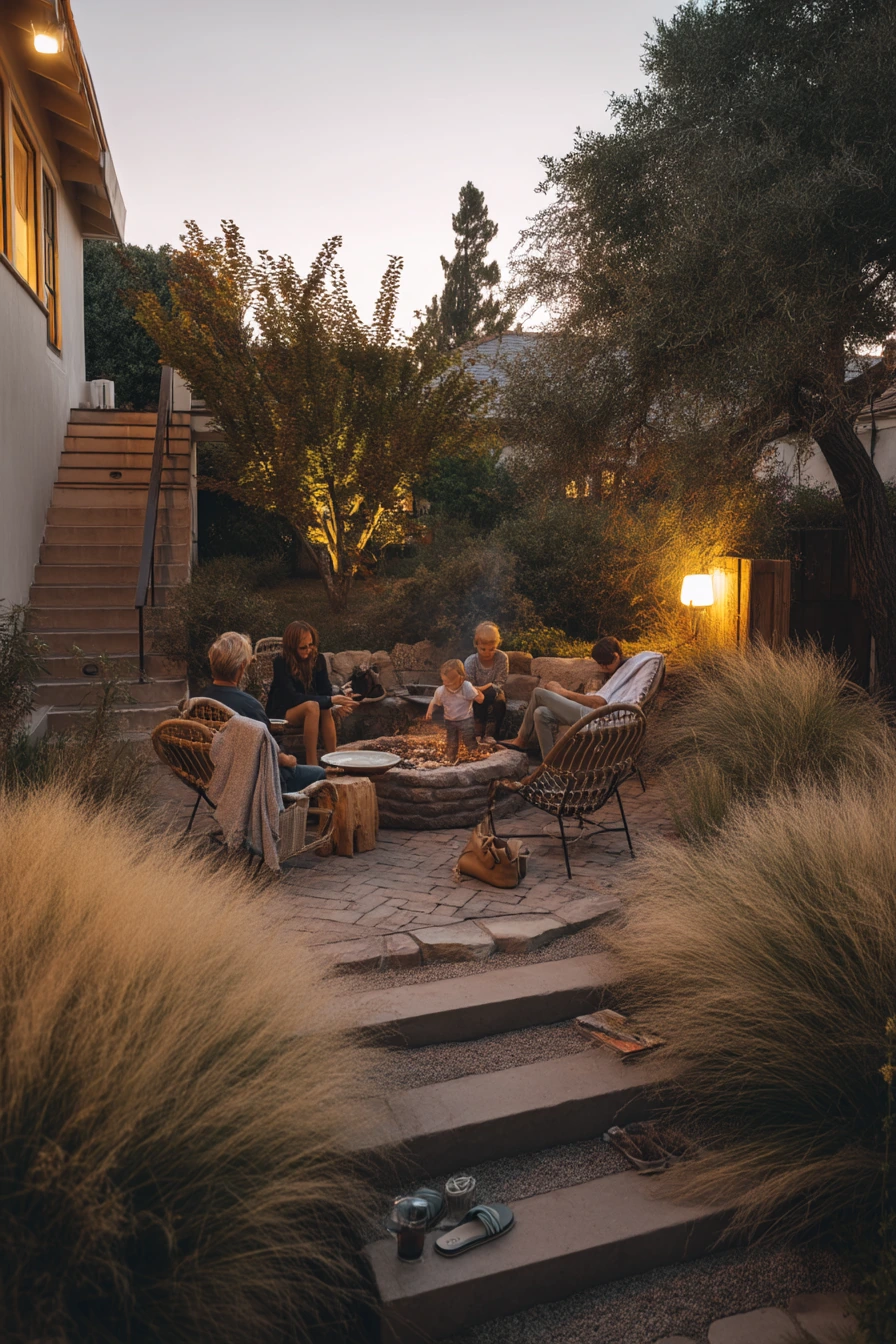
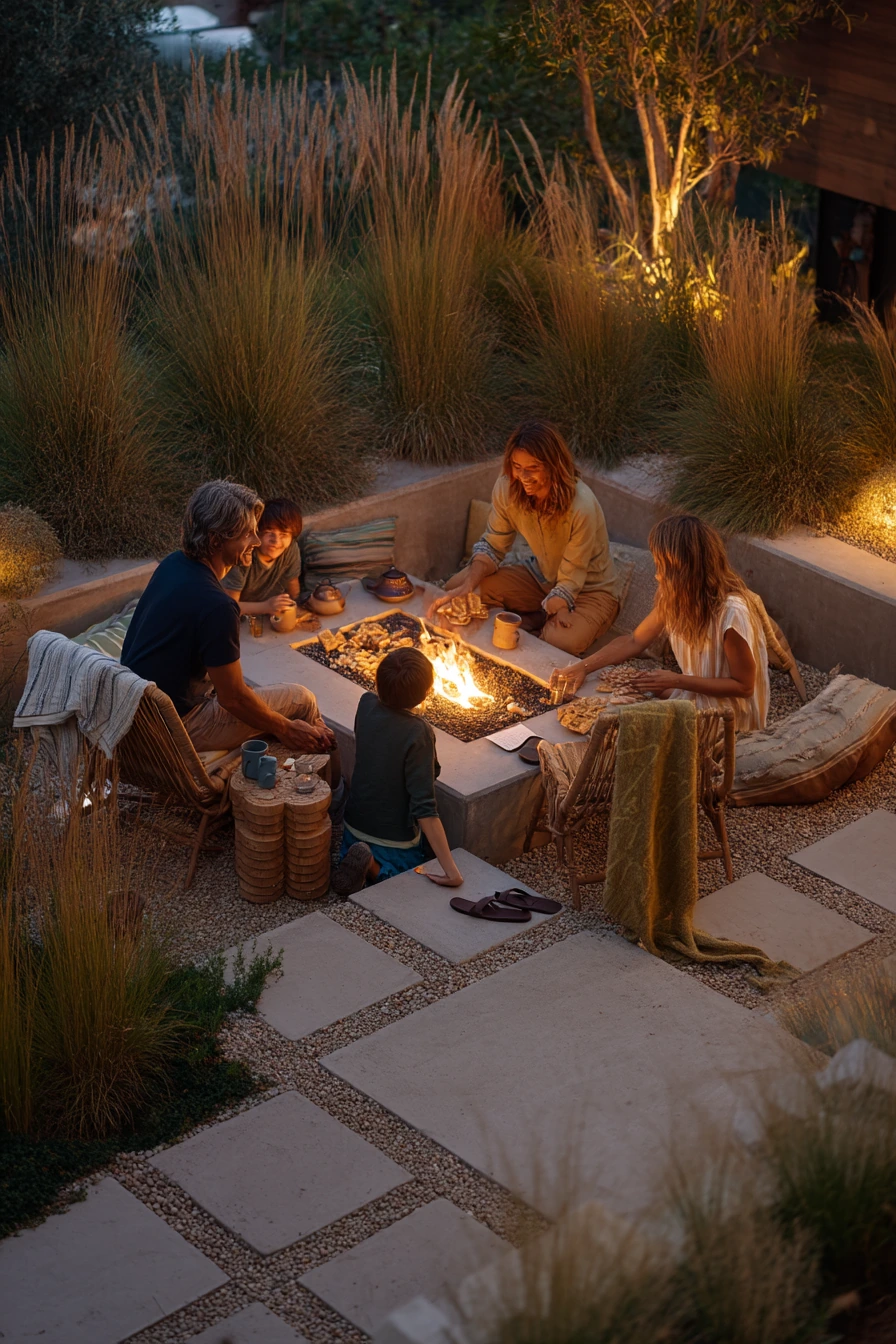
A backyard firepit area can be one of the most used home garden spaces, especially at night. Build a simple circle or square with pavers, then plant native grasses and low shrubs around the edge. These plants add movement and softness while keeping sight lines open. Two woven chairs and a small side table are enough for a functional setup.
Style it for real gatherings. Keep s’mores ingredients on a tray, and store extra skewers in a jar. A blanket draped over an armrest invites people to stay longer when the air cools. If kids are present, expect sandals near the steps and plan a spot for them so the walkway stays clear. A phone face down and a mug on the table are normal details that make the area feel lived-in.
For safety and comfort, keep plants a little back from the firepit to reduce drying and scorching. Use gravel or stone near the pit to reduce mud. Add a warm outdoor lamp or wall light so people can see without harsh glare. Choose seating materials that handle smoke and moisture, and keep a small metal bucket for ash cleanup.
- Use pavers to create a clean, stable firepit base
- Plant native grasses for low care and natural texture
- Add a small side table for drinks and snacks
- Keep a blanket basket nearby for chilly nights
- Leave a clear path from steps to seating for safety
Pro Design Tip: Place chairs in a slight curve facing the fire, then anchor the area with one outdoor rug or gravel border so the seating looks like a defined room.
Budget Considerations: Firepit kits and pavers vary in price; save by using a basic steel fire bowl and a compact paver pad, then invest later in better seating and lighting.

Good home garden ideas work because they match your space and your routine. Start with one small zone, like a patio herb corner or a raised bed in a side yard, and make it easy to water and harvest.
Use simple styling touches that also help function, such as a clear path, a small bench, or a dedicated potting spot. Over time, you can add more plants, better containers, and lighting that makes you want to be outside.
FAQ
1) What is the easiest home garden to start with?
A container herb garden with basil, mint, and rosemary is simple and gives quick rewards. Place it near the kitchen door so you remember to water and harvest.
2) How do I garden in a small space like a balcony?
Use vertical options like a herb rack and clip-on railing planters. Choose a few compact plants and keep everything movable for better light and easier cleaning.
3) How often should I water potted herbs and vegetables?
Check daily in warm weather. Water when the top inch of soil feels dry, and water deeply until it drains from the bottom.
4) What plants attract butterflies in a family garden?
Milkweed supports monarch caterpillars, and zinnias and sunflowers bring nectar for many butterflies. Avoid pesticide sprays so the insects can thrive.
5) How can I make a front yard pollinator garden look tidy?
Plant in repeated groups, layer by height, and keep a clear edge near the walkway. Add mulch until plants fill in to reduce weeds.
6) What should I keep at a potting station?
Seed trays, pots, potting mix, labels, a spray mister, and a notebook for dates. Set up a small tool bin so supplies stay in one place.
7) How close can plants be to a firepit area?
Keep plants back far enough that heat and sparks do not damage them. Use stone or gravel closest to the pit, then place grasses and shrubs around the outer edge.