
Dining room storage ideas can make your home feel calmer fast. When dishes, linens, and the daily clutter have a place, the table is easier to use and the room looks better.
This post shows storage that works in real homes, from a long built-in buffet to a slim tall cabinet in a small apartment. Each idea includes simple styling steps so your dining room still feels warm, not like a closet.
You will also get practical ways to hide bulk items, keep kid stuff contained, and set up spots for mail, chargers, and board games. These are the kinds of details that help a room stay tidy week after week.
Use the sections like a menu. Pick one project you can do this weekend, then add the next upgrade when you are ready.
1 Built-In Buffet for Busy Family Dinners

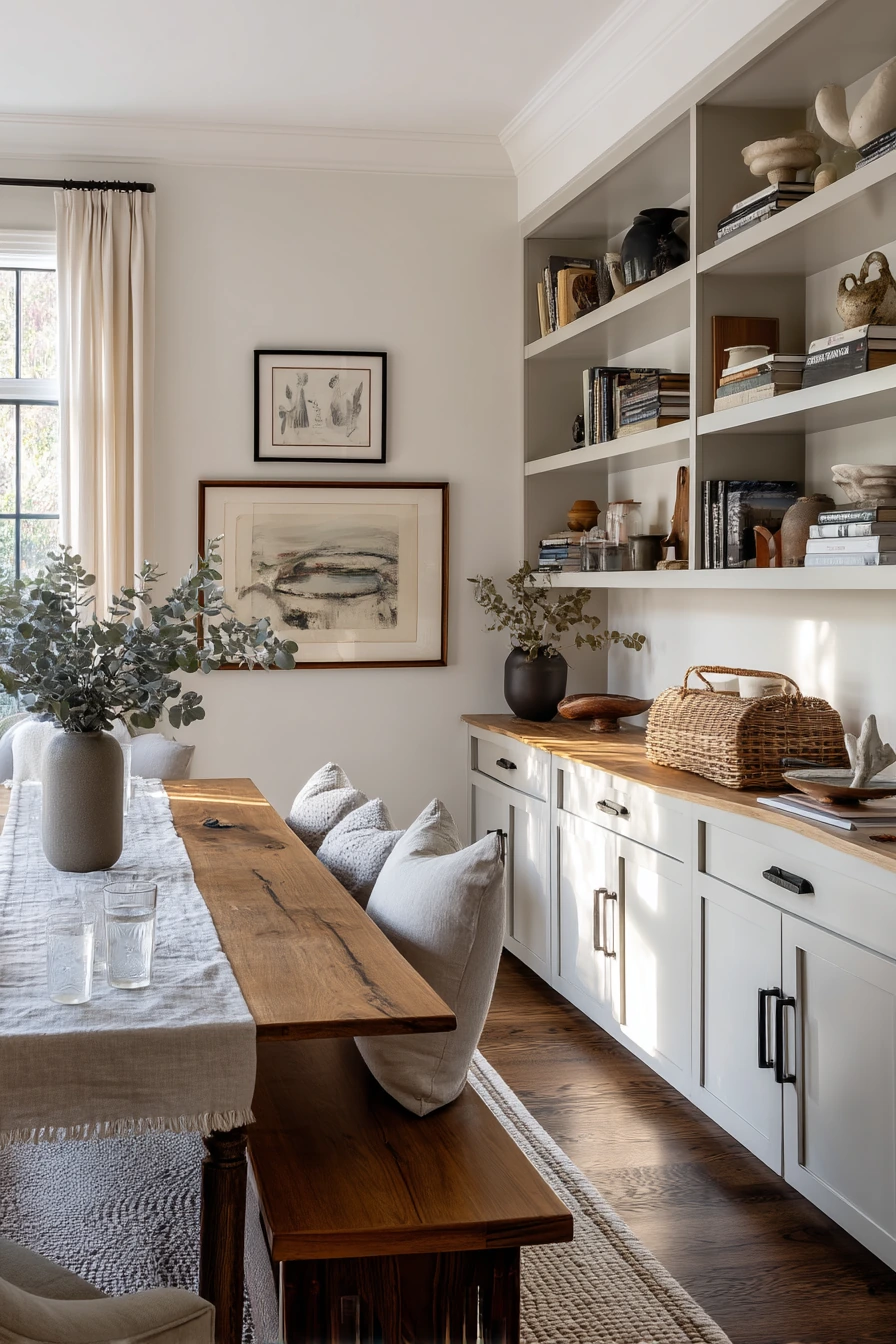
A long built-in buffet is one of the best dining room storage ideas for families because it holds a lot without taking over the room. Closed lower cabinets work well for dishes, serving pieces, and board games that look messy when they are out. If you add open shelves above, you get a place to show ceramics and cookbooks, so the wall still feels styled.
To make this setup feel lived-in but not cluttered, treat the buffet top like a simple landing zone. A slightly wrinkled linen runner is fine, and it helps protect the surface. Add one vase of eucalyptus and a piece of framed art leaned back instead of hung. That casual angle keeps it from feeling too formal.
Plan for the real-life stuff too. A kid’s homework basket near the bench keeps papers from spreading to the table. Leave a small spot for charging, so a cable near the baseboard is not a constant eyesore. If water glasses get left out, use a small tray so it looks intentional.
- Use one cabinet for everyday plates and bowls, close to the table.
- Store board games in one section with labeled bins so kids can clean up.
- Keep serving platters vertical with dividers to save space.
- Style shelves with stacks of cookbooks and a few ceramics, not everything.
- Add a basket for homework, coupons, and forms that need signing.
Pro Design Tip: Mix closed storage below with open shelves above so you can hide bulky items but still show a few favorite pieces for balance.
Budget Considerations: Built-ins cost more, but you can copy the look with stock base cabinets and a simple wood top, then add affordable wall shelves.
2 Small Apartment Dining Nook with Vertical Storage
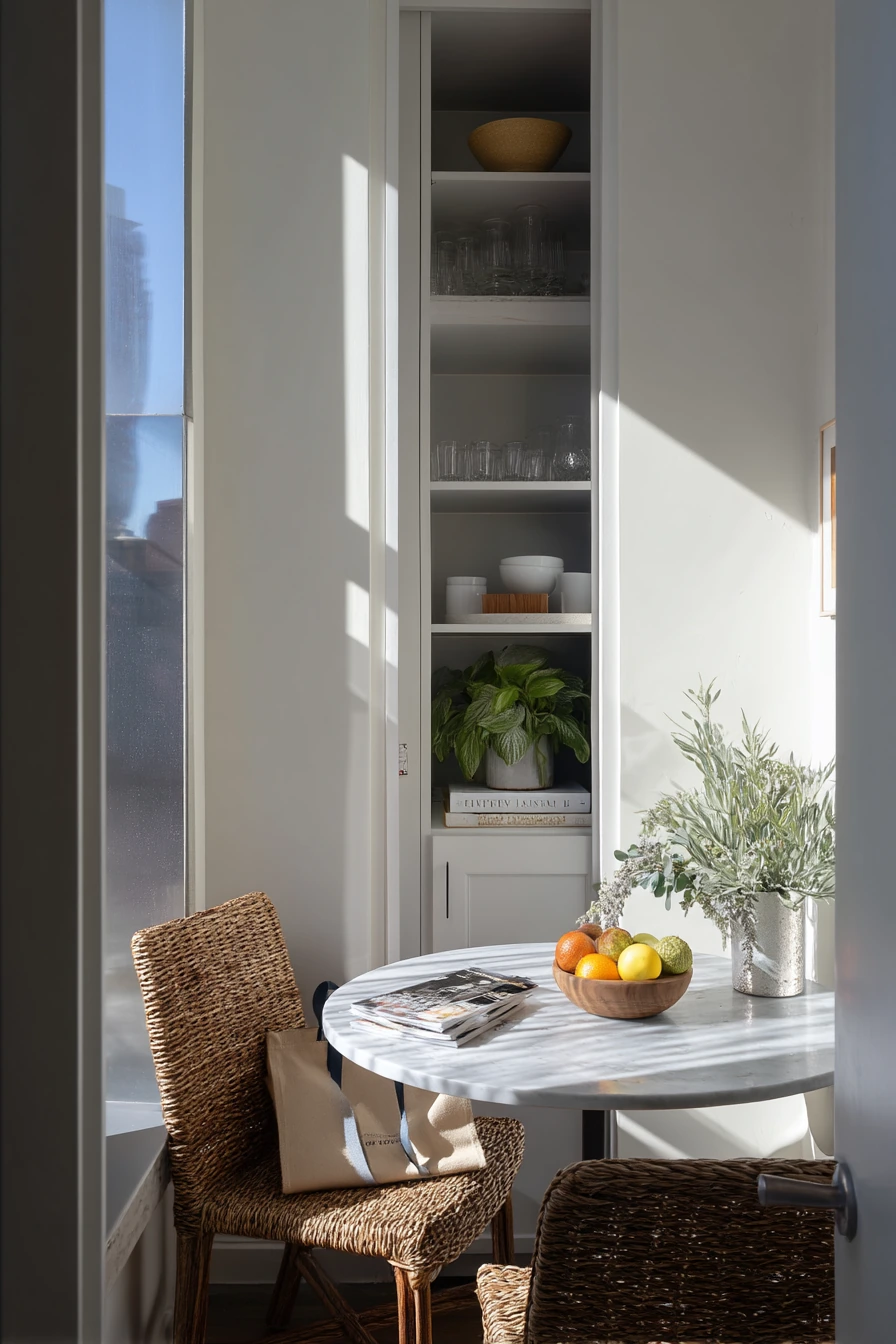
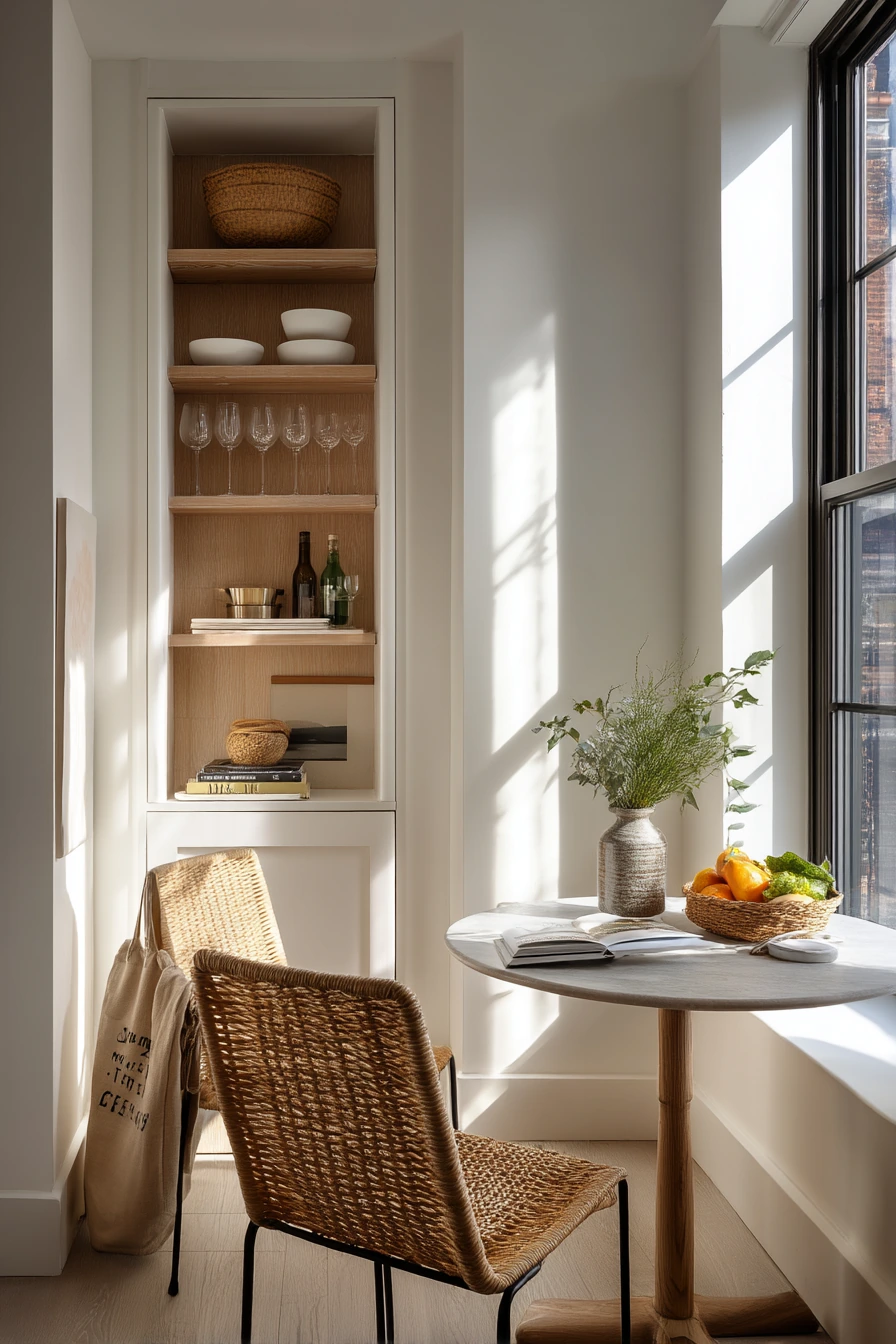
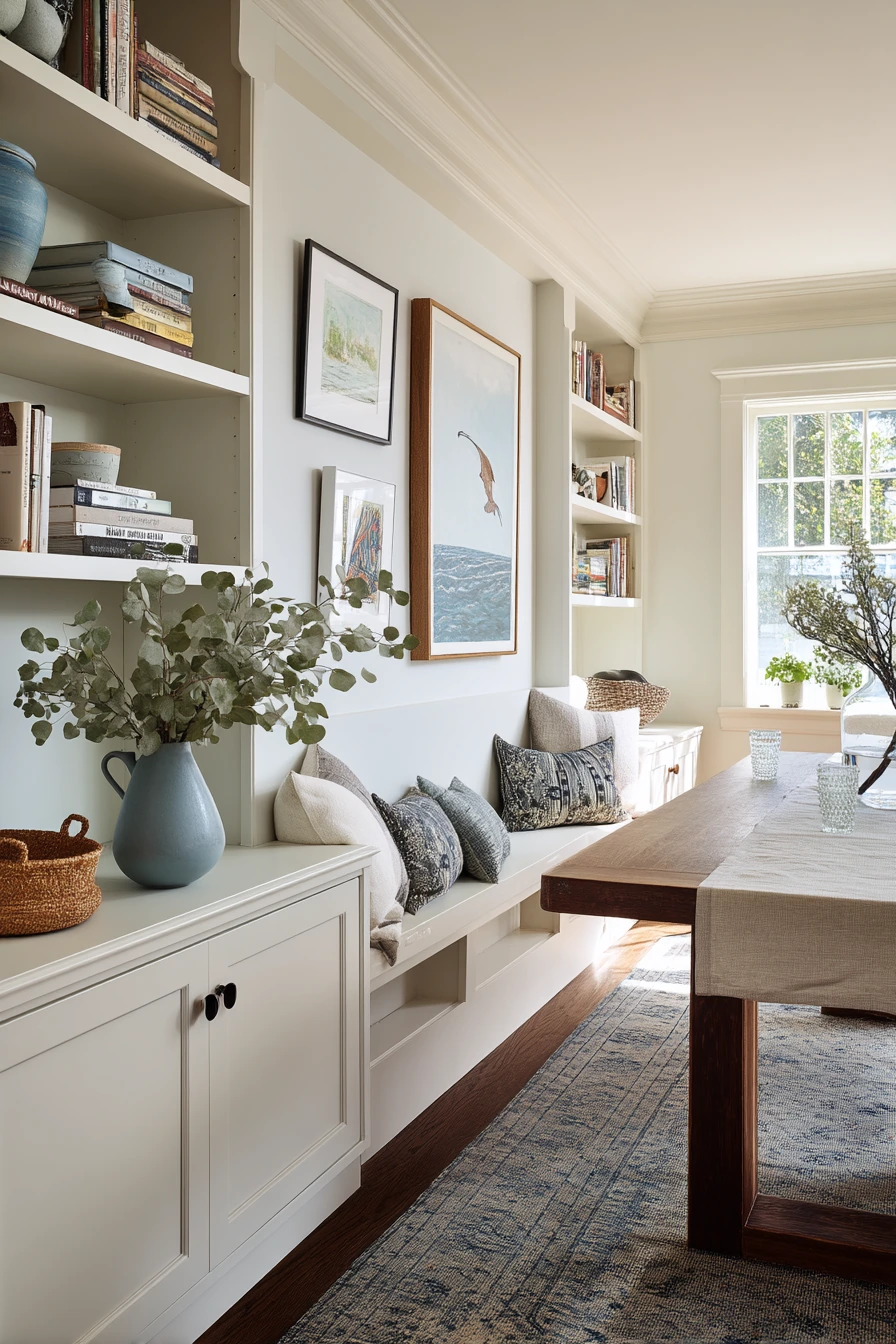
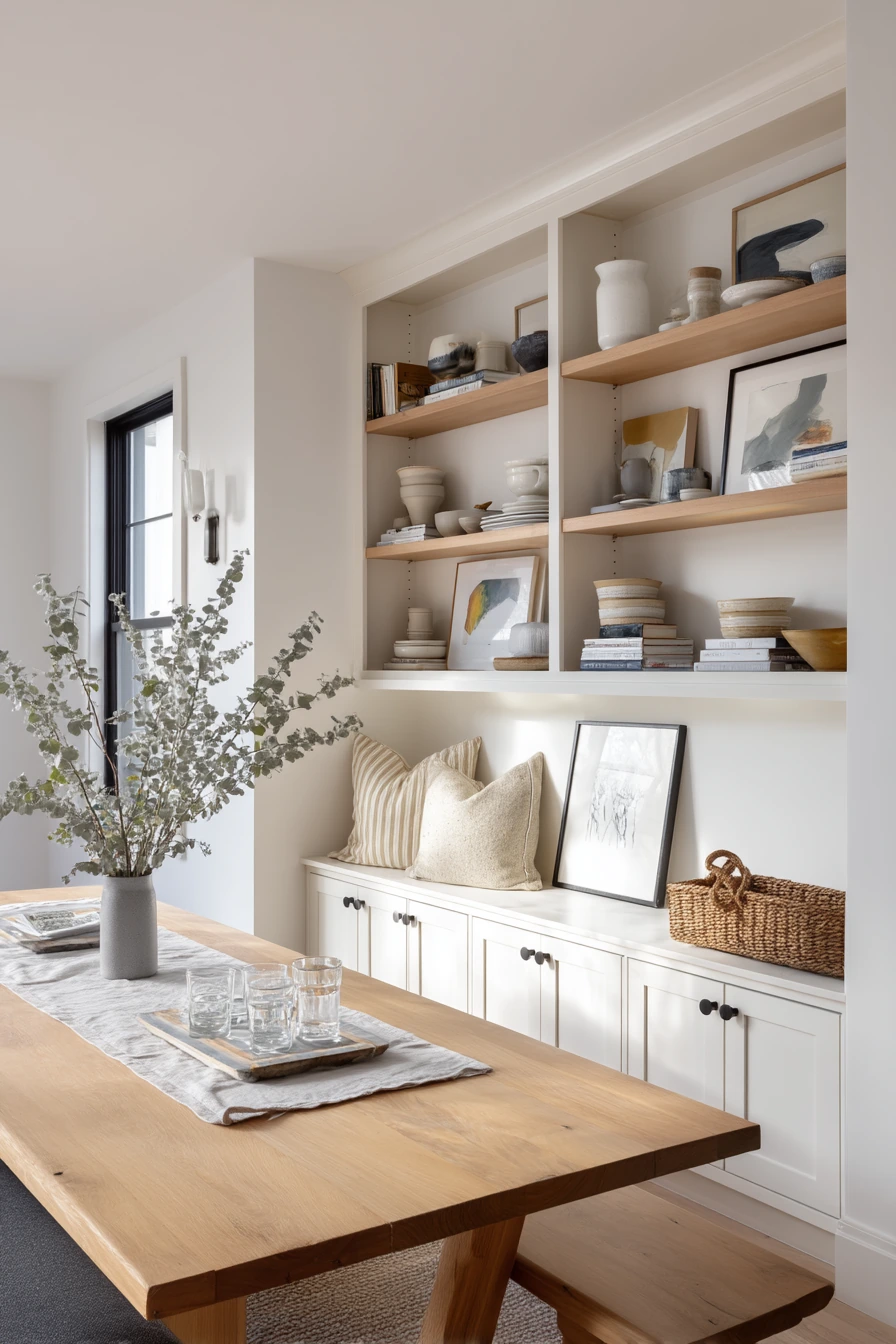
In a compact dining nook, the best storage is tall and narrow. A slim tall cabinet for glassware gives you vertical space without blocking the walkway. Add a narrow wall shelf for bowls, then keep the table light so it can still handle daily meals in a city apartment.
Make the seating work harder too. Two woven chairs pushed close to the wall save floor space, and they look relaxed. To keep the nook from becoming a dumping spot, give clutter a limit. A small fruit bowl is fine, but a mail stack needs a tray or file so it does not spread. If a tote bag lives on a chair, hang a hook nearby so the chair stays usable.
Styling matters in small rooms because everything is close. Choose one plant that casts soft shadows across the wall, then keep the rest of the surfaces simple. Inside the cabinet, use shelf risers so you can fit more glassware and still see what you have. If you rent, pick pieces that can move with you later.
- Pick a tall cabinet with doors to hide mixed glassware.
- Add a narrow ledge shelf for bowls you use every day.
- Use a tray for mail so it stays in one tidy spot.
- Store table linens in a bin on the lowest shelf.
- Hang a hook for the tote bag to free up a chair.
Pro Design Tip: Choose storage pieces that match the wall color or wood tone so the nook feels larger and less crowded.
Budget Considerations: A secondhand tall cabinet or a flat-pack pantry can work; upgrade the look with new knobs and a simple interior shelf liner.
3 Renter-Friendly Sideboard Styling

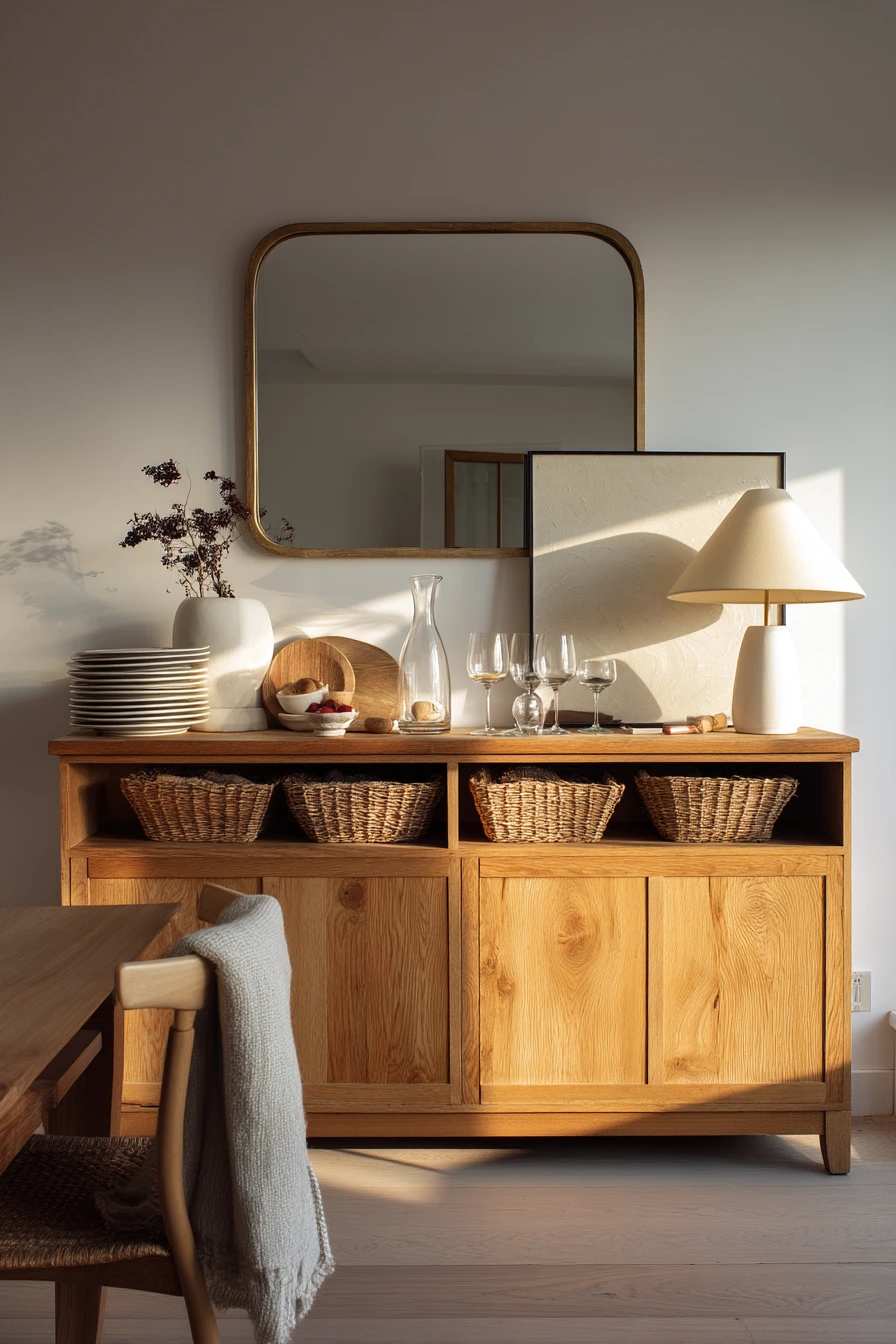
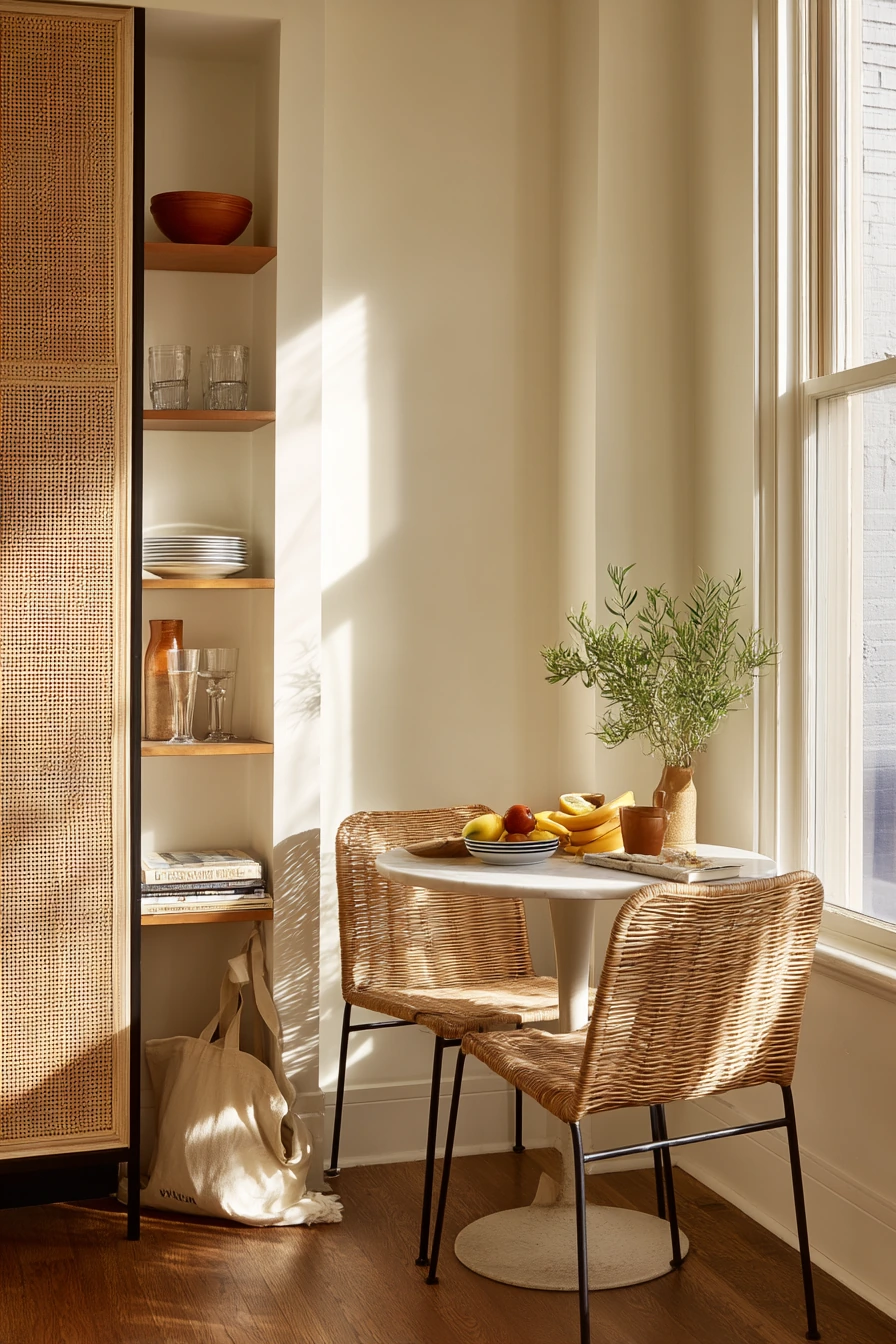
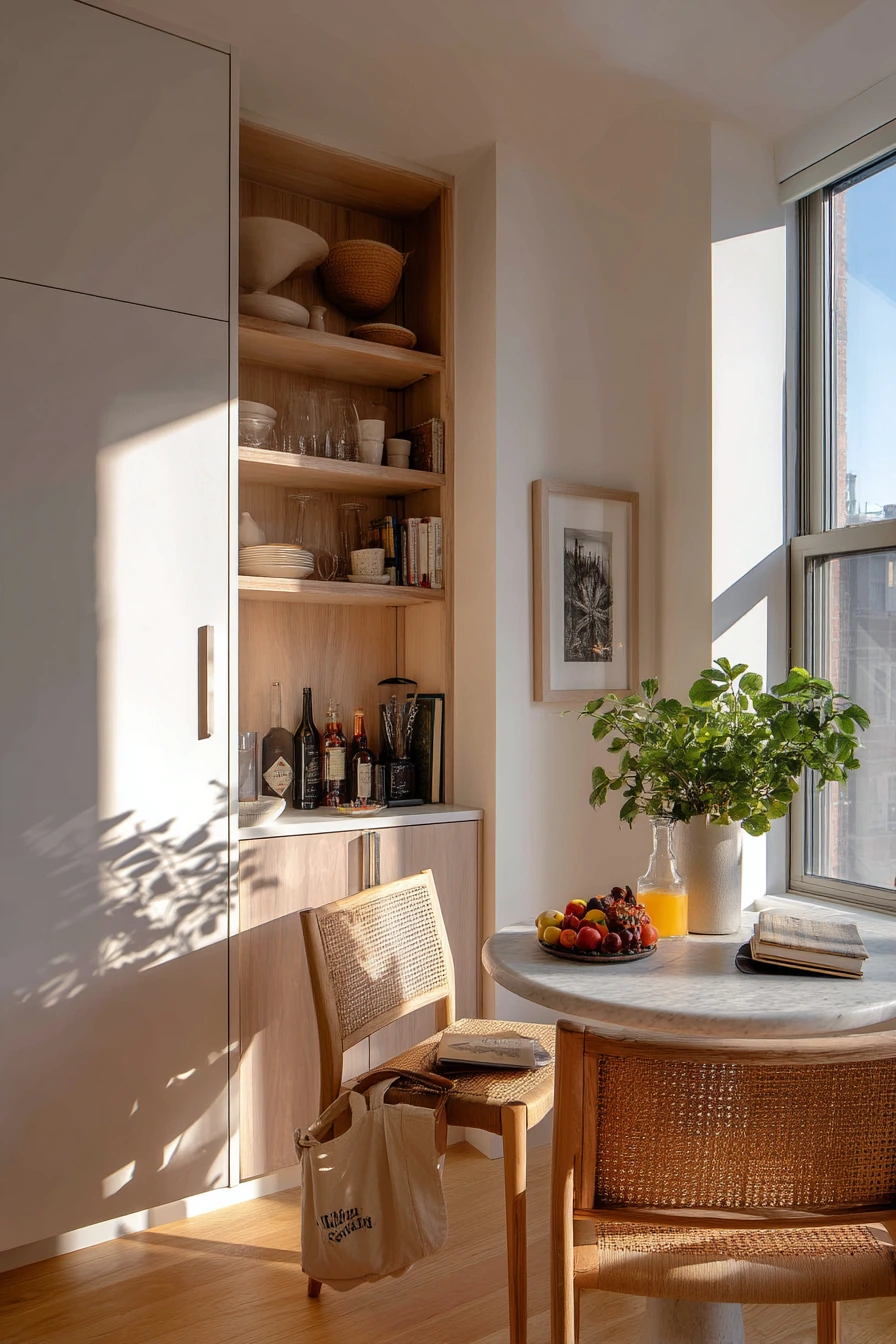
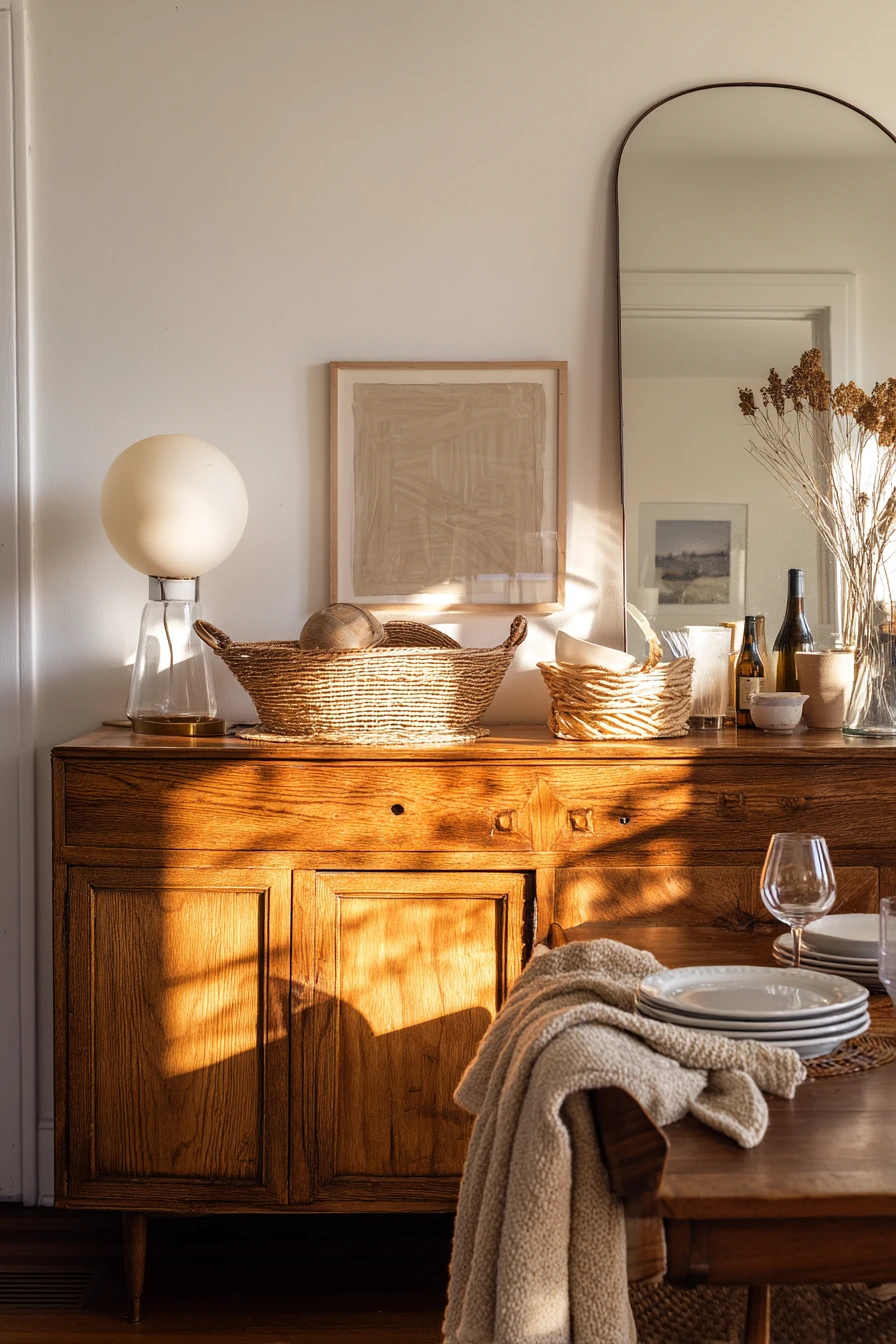
A freestanding oak sideboard is a smart dining room storage idea for rentals because it adds function without changing the walls. You can store linens, candles, and extra tableware inside, and it still feels like a furniture piece, not built-in cabinetry. Woven baskets inside help keep small items sorted and easy to grab.
For the wall above, use removable art so you can decorate without holes you cannot patch. A vintage mirror leaning casually against the wall is another renter-friendly move. It adds light and height, and it makes the sideboard area feel like a styled moment. On top, keep a small set of “always useful” items: a carafe, stacked plates, and a small lamp for evening meals.
Real life will show up here, so plan for it. If a receipt pile tends to land on the sideboard, add a small box or lidded bowl just for papers. A single wine cork on the surface is fine if the rest is tidy. A soft throw draped over the chair can tie the dining room to the living room and make the space feel comfortable.
- Use baskets to group linens, candles, and napkin rings.
- Add a small lamp to make dinner feel warm at night.
- Lean a mirror to reflect window light and widen the room.
- Keep one lidded container for receipts and random paper.
- Style the top with a tray to control visual clutter.
Pro Design Tip: Use a tray on the sideboard top to corral daily items so the surface looks styled even when it is in use.
Budget Considerations: Thrift stores often have solid wood sideboards; sand and oil the top instead of a full refinish to save money.

4 Open Shelving for Everyday Ceramics


Open shelving can be a great dining room storage idea when you want quick access to everyday ceramic bowls, mugs, and serving platters. The key is to pair it with a lower cabinet that hides bulk storage and mismatched containers. That way, the room can look calm even if your food storage collection is not perfect.
Keep open shelves functional by storing only what you use often. Group similar items, like stacks of bowls and a row of mugs, and leave some breathing space. If the shelves get packed, they start to look messy fast. Add a dining table nearby with a breadboard, folded napkins, and a half-finished vase arrangement so the room still feels like a place to eat, not just store things.
Expect signs of life. A cookbook left open is normal if you cook. A spoon resting on a saucer is fine, but give it a spot like a small dish so it does not drip. If a chair is slightly pulled out, it shows the room is used. The goal is a space that is easy to reset in two minutes.
- Limit open shelves to matching everyday dishes and mugs.
- Hide bulk items and extra containers behind cabinet doors.
- Add shelf liners to protect wood and stop sliding.
- Use one pretty bowl as a catchall for small tools.
- Leave some empty shelf space for a cleaner look.
Pro Design Tip: Make open shelves look neat by repeating shapes and colors, like all-white ceramics mixed with a few wood pieces.
Budget Considerations: Basic bracket shelves are affordable; spend a little more on sturdy anchors so the shelves can safely hold heavy plates.


5 Family Command Center Meets Dining Storage


If your dining room doubles as a family command center, storage needs to handle more than plates. A sideboard can hold placemats, serving ware, and even a small bin for school papers. Add a wall-mounted memo rail above it to catch reminders without covering the fridge in notes.
Use baskets to create clear zones: one for chargers, one for coloring supplies, and one for mail. This helps the table stay usable, even when a kid’s water bottle, a sketchbook, and a loaf of bread are part of the daily scene. Sticky note labels are not fancy, but they work, especially when kids can read them and help put things away.
Plan for the floor too. A backpack by the chair and a toy truck near the baseboard happen in real homes. Add a low hook for bags and a small basket for toys near the dining room entry. This keeps the mess contained and makes evening cleanup faster. Style the sideboard top with one tray and one plant so the space still feels like a dining room.
- Store placemats and napkins in one drawer for quick setting.
- Use labeled baskets for chargers, crayons, and mail.
- Install a memo rail for calendars, permission slips, and lists.
- Add a hook for backpacks to clear the floor.
- Keep a small “reset bin” to toss loose items before dinner.
Pro Design Tip: Create one drop zone with baskets and hooks near the dining area so clutter stops at the edge of the room instead of spreading across the table.
Budget Considerations: A simple rail and hooks cost little; repurpose matching baskets you already own and add labels made from painter’s tape.


6 Vintage Hutch with Collected Character
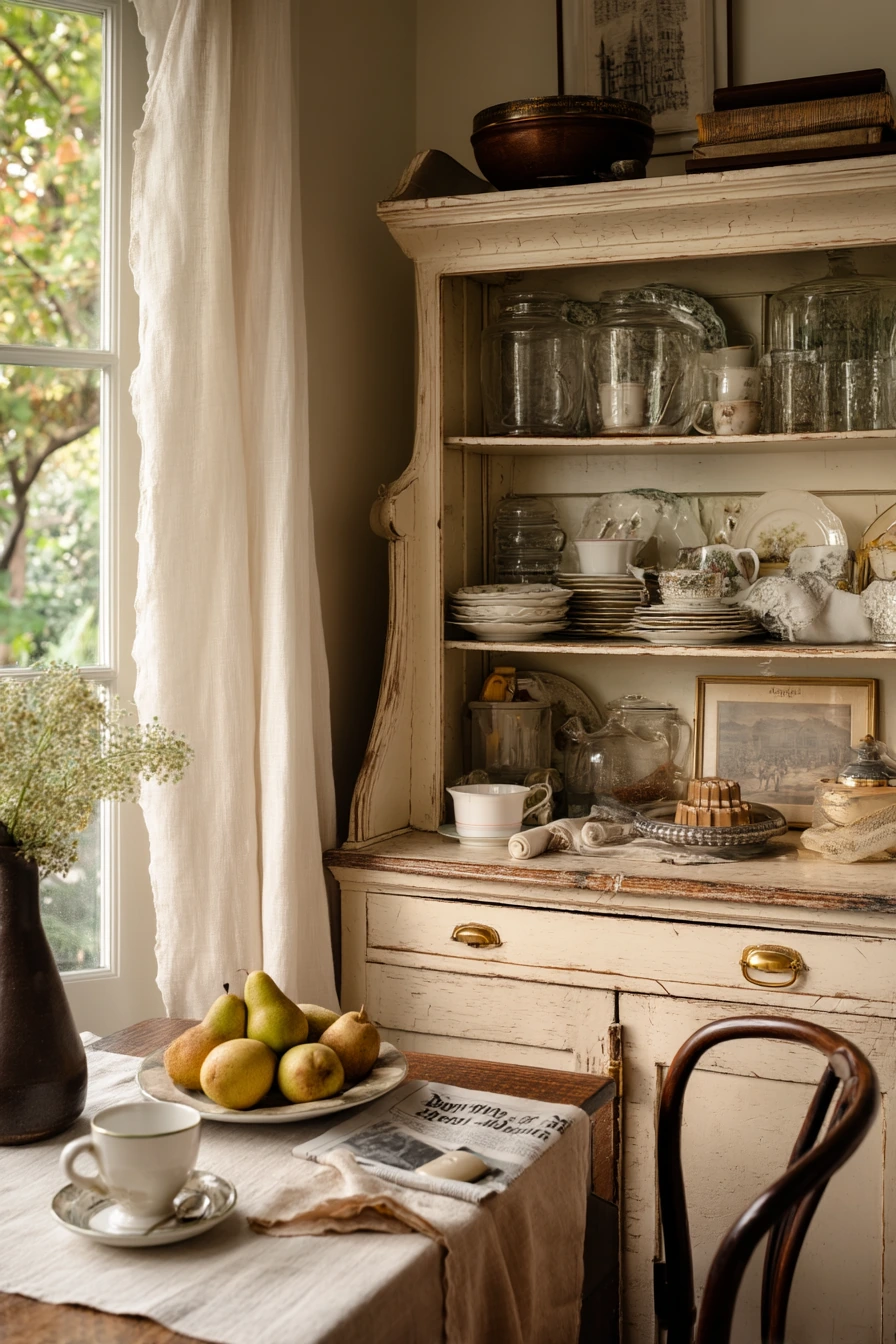
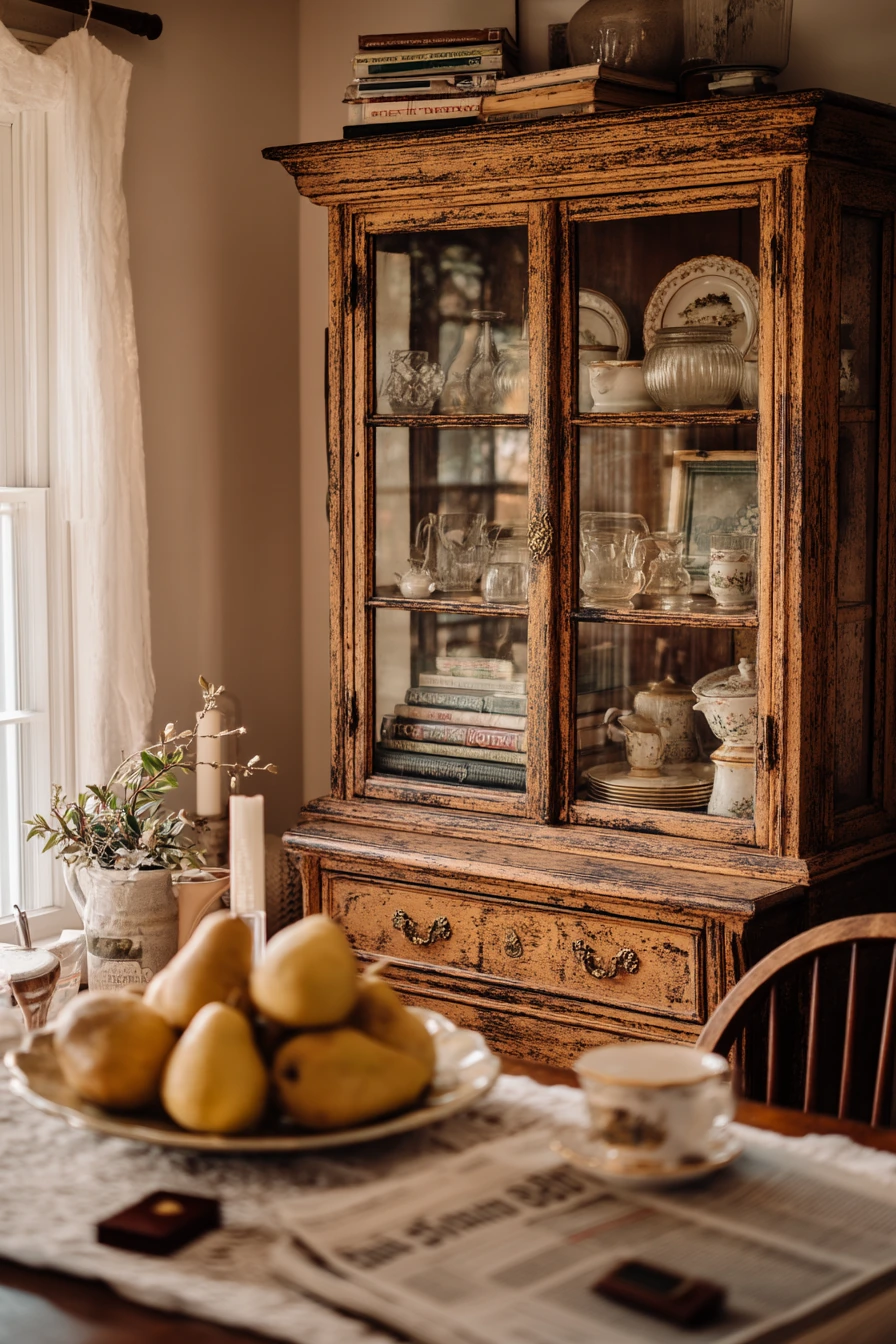
A vintage hutch is a classic dining room storage idea because it holds both practical items and meaningful ones. Use it for inherited china, glass jars, and linen tablecloths, and let the character show. Brass handles, chipped patina, and small signs of age add warmth that new furniture can feel like it lacks.
To keep a hutch from looking crowded, think in layers. Put everyday pieces at hand level, special items higher, and heavy stacks lower. Mix closed and open sections if you can. On a nearby small table, a simple bowl of pears, a tea cup, and a folded newspaper make the room feel lived-in without mess.
Add a few real-life details and you get a space that feels honest. A reading glasses case can sit in a small dish. A candle stub can go on a saucer to protect the wood. A slightly rumpled napkin is fine when the rest is tidy. For styling, group objects in threes and repeat one metal finish, like brass, so the look stays calm.
- Use lower shelves for tablecloths and heavier serving pieces.
- Store china upright with plate stands to avoid tall stacks.
- Group glass jars together for a clean, simple look.
- Keep one small dish inside for matches and small tools.
- Rotate display pieces by season to avoid overfilling.
Pro Design Tip: Light the hutch area with a small lamp nearby to highlight texture and make the dining room feel cozy at night.
Budget Considerations: Watch for hutches at estate sales and online marketplaces; a gentle clean and new knobs can refresh it without a full restoration.


7 Banquette Storage in a Narrow Dining Room
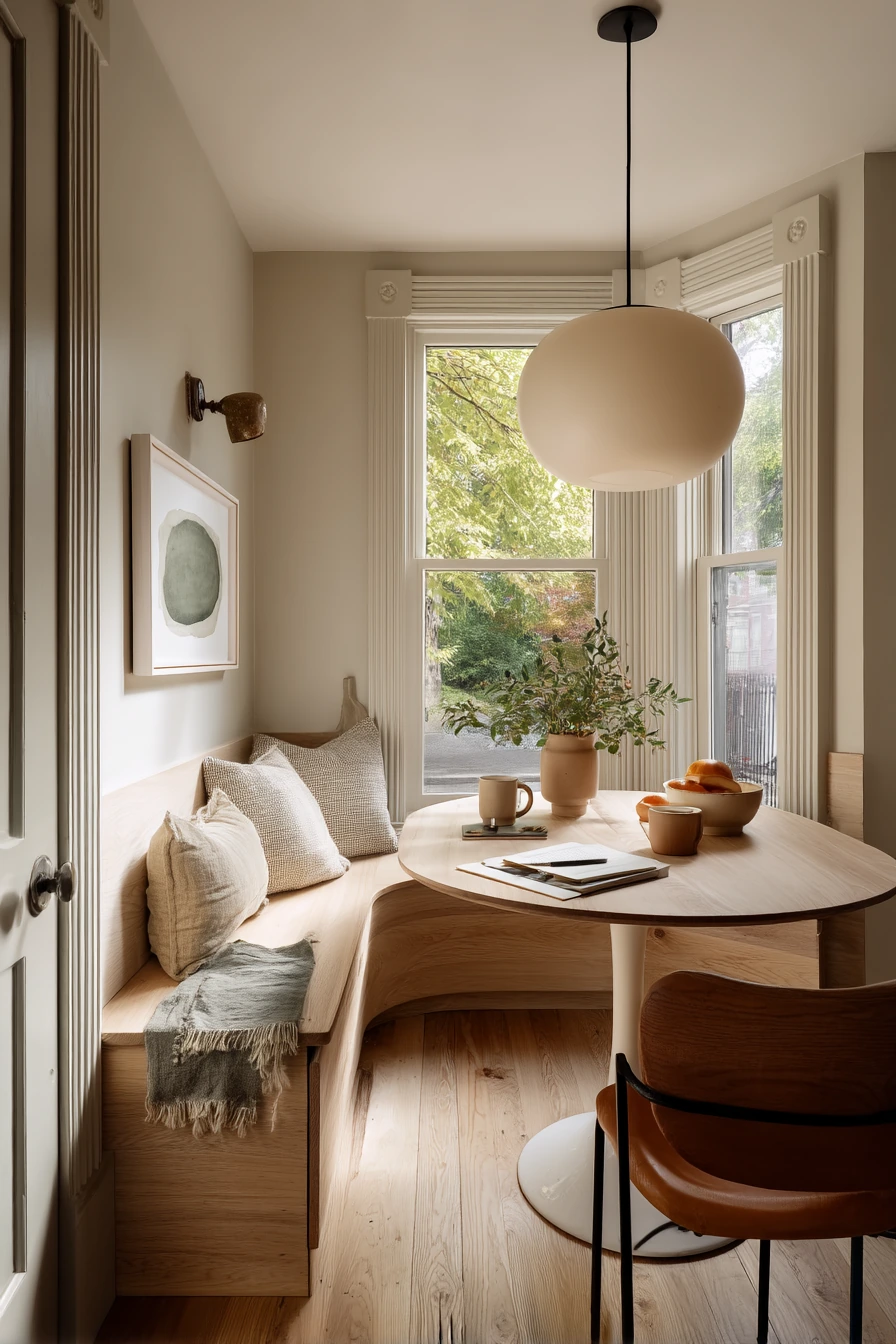
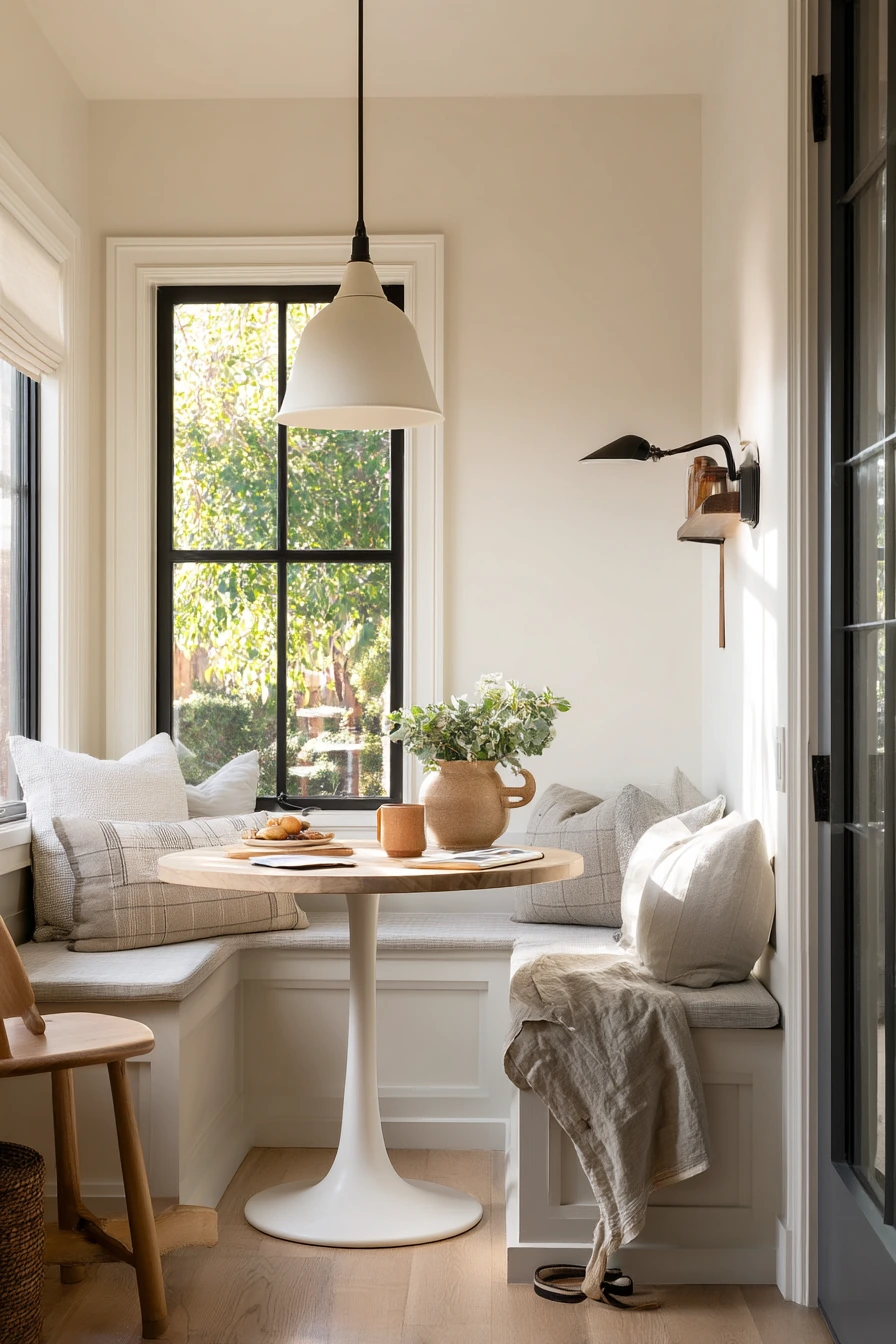
A built-in banquette that lifts for hidden storage is one of the most useful dining room storage ideas for tight layouts. It turns seating into a large, easy-to-access bin for table linens, games, and extra serving dishes. Pair it with a slim pedestal table so people can slide in and out without bumping chair legs.
To keep the bench storage working, sort items into smaller containers inside the lift-up section. Use one bin for linens, one for games, and one for seasonal items like candleholders. A simple pendant light overhead keeps the space bright without taking up wall space. If the dining room sits near the door, plan for life details like a dog leash hooked nearby.
Styling a narrow room is about keeping it light. Let the wall stay mostly clear and use soft side window light when you can. A tea towel hanging off the bench is normal, but try to limit it to one towel so it looks tidy. Add one ceramic mug and a notebook on the table to show the space is used, then clear it quickly when it is time to eat.
- Use lift-top bench storage for linens, games, and extra dishes.
- Sort the bench interior with bins so items do not mix.
- Choose a pedestal table to save knee space.
- Add hooks near the door for leashes and bags.
- Keep tabletop decor low so the room feels open.
Pro Design Tip: Add a soft seat cushion and a few lumbar pillows so the banquette feels like a true seating zone, not just storage.
Budget Considerations: If a built-in is too costly, use a storage bench with a hinged top and anchor it to the wall for a similar feel.


8 Entertaining-Ready Bar Cabinet Corner
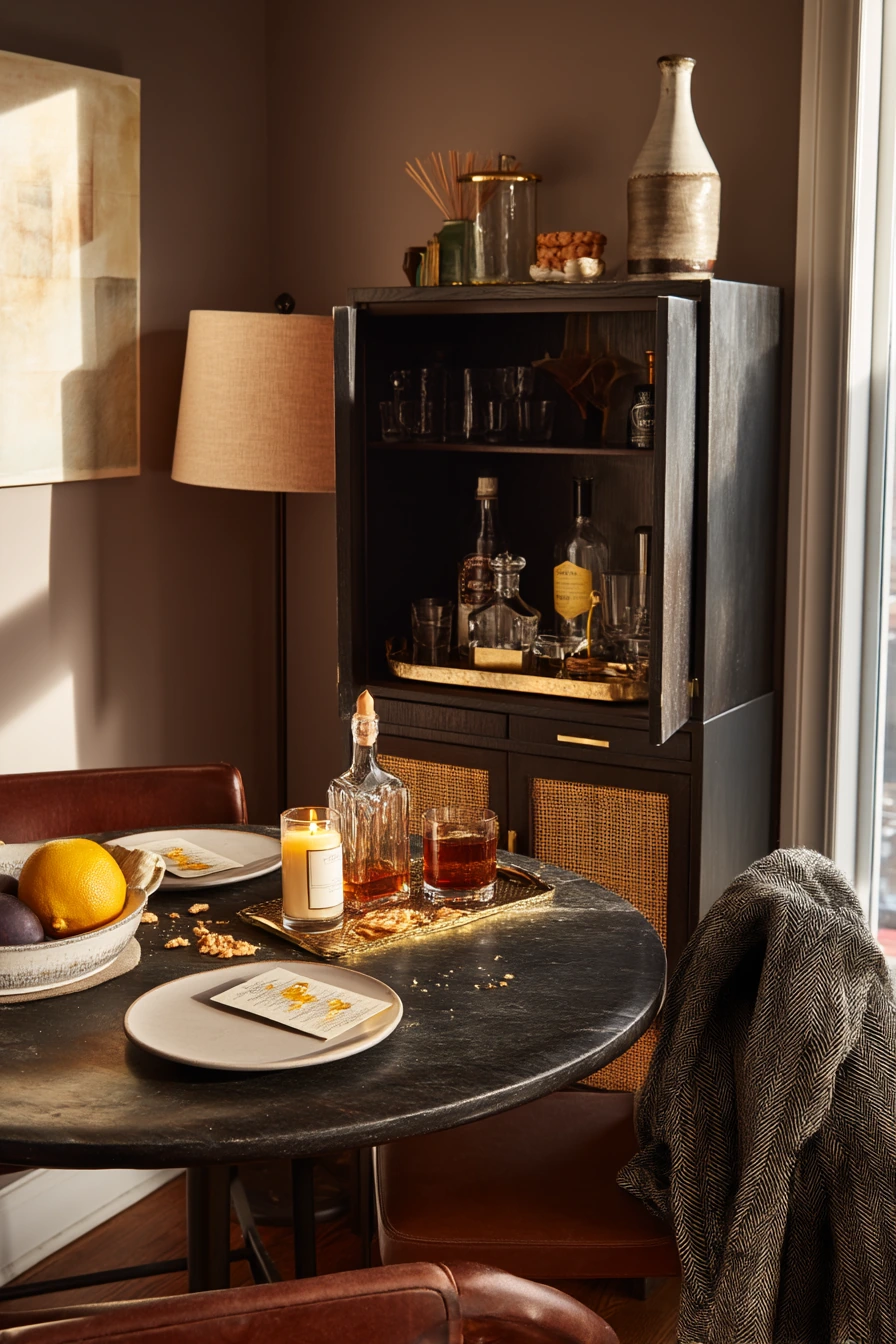

A bar cabinet is a focused dining room storage idea that keeps entertaining items organized and out of the way. Inside, store decanters, stemware, cocktail tools, and napkins so you can set up quickly. A tray on top with a bottle, citrus, and a candle makes the cabinet look styled even when the doors are closed.
Keep the nearby dining table simple and real. Two plates from last night, a spilled breadcrumb trail, and a folded menu card can happen, but you can control the mess with a quick reset routine. Keep a small crumb brush or cloth in the cabinet so cleanup takes one minute. If one coaster is out of place, that is fine, but store the rest in a small box so they do not drift around the room.
Warm lamp light works well here. It makes glassware sparkle and keeps the dining corner inviting. If a jacket gets draped on the chair, add a wall hook so there is a better option. A matchbook can live in a small dish on the tray, which looks collected instead of random.
- Store stemware upright with shelf dividers to prevent tipping.
- Keep cocktail tools in a shallow bin or drawer organizer.
- Use a tray on top for a simple bar setup.
- Place coasters in a lidded box so they stay together.
- Add a hook nearby for jackets to keep chairs clear.
Pro Design Tip: Group bar items by task, like mixing, garnishes, and serving, so you can host without pulling everything out at once.
Budget Considerations: A small cabinet or even a closed bookcase can become a bar cabinet; add glass inserts or a mirror panel later if you want an upgrade.


9 Minimal Storage for a Calm Modern Home


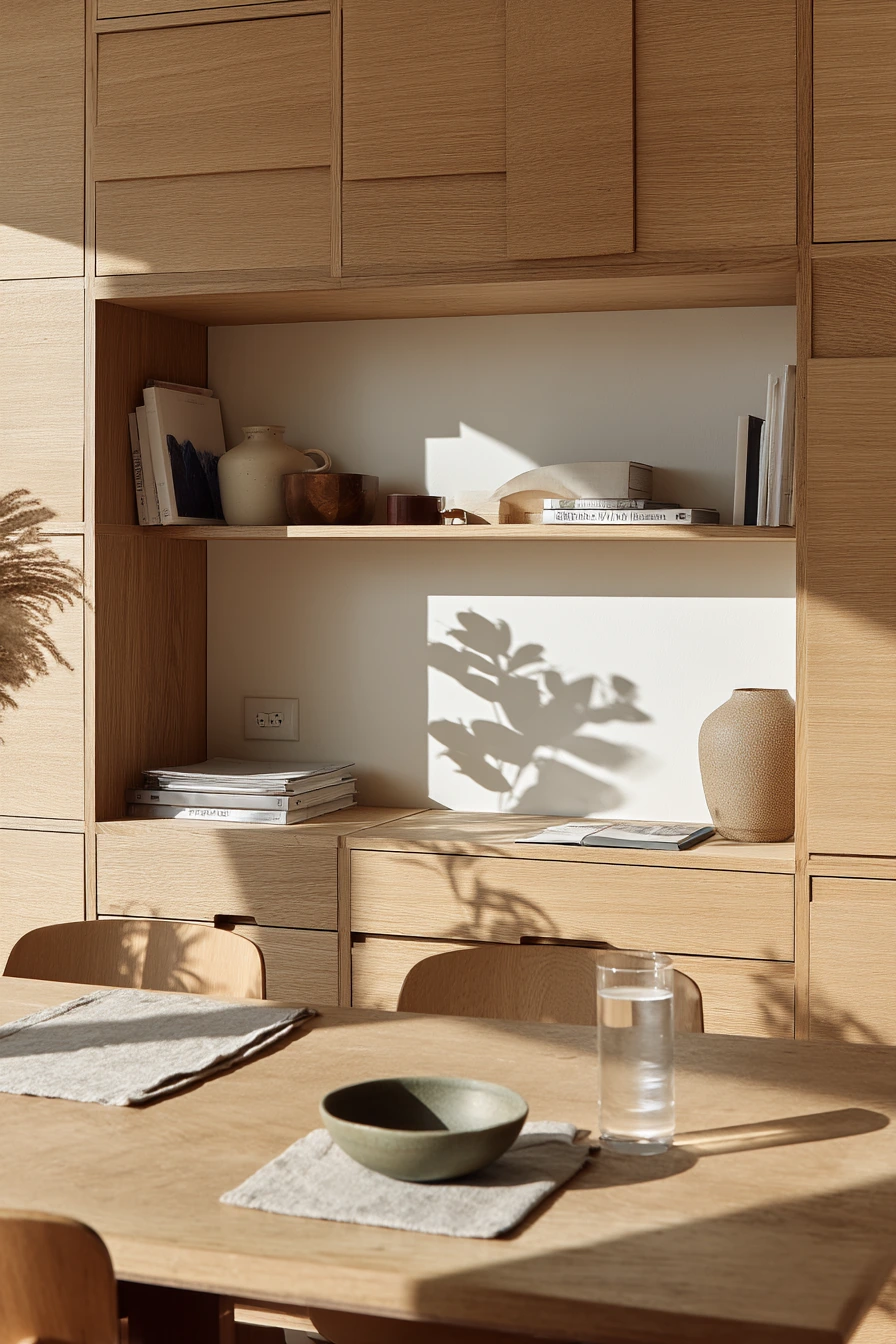
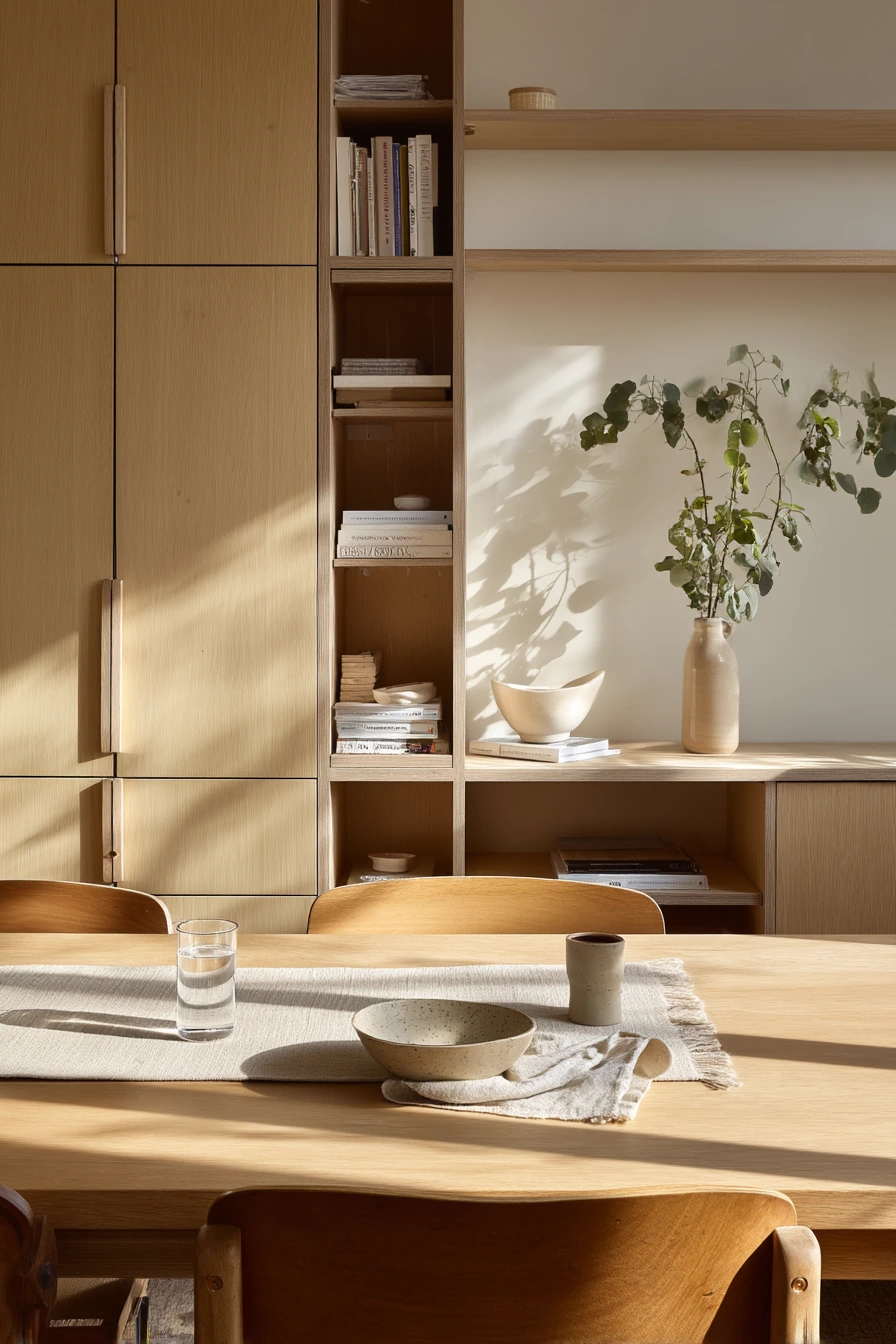
Flush cabinetry in a soft wood tone is a clean dining room storage idea for people who want fewer visual distractions. With hidden pull-out organizers for dishes and linens, everything is easy to reach, but nothing has to sit out. This approach works well if your dining room shares space with a living area and you want a quiet look.
Keep decor simple on purpose. One sculptural shelf with a few chosen objects can add warmth without clutter. On the table, a water glass, a ceramic bowl, and a folded placemat are enough. If you like a lived-in feel, small cues like a charging cable peeking from the sideboard or a paperback on the edge can make the room feel real, as long as they have a home when guests come over.
Pull-out storage helps you use deep cabinets well. Add dividers for plates and a pull-out basket for linens, so you do not have to stack everything. A plant leaf shadow on the wall is a nice detail, so keep one plant nearby and let the rest of the surfaces stay clear. This style is not cold if you add texture through wood grain, linen, and handmade ceramics.
- Use pull-out shelves for heavy stacks of plates and bowls.
- Add a pull-out bin for tablecloths and placemats.
- Keep one open shelf for a small, simple display.
- Hide chargers in a drawer with a cable hole and power strip.
- Style the table with one centerpiece that is easy to move.
Pro Design Tip: Choose organizers that fit your exact dish sizes so cabinets stay neat and you do not waste space.
Budget Considerations: Full custom cabinetry is expensive; you can add pull-out hardware to existing cabinets for a similar function at a lower cost.
10 DIY Peg Rail and Basket Storage


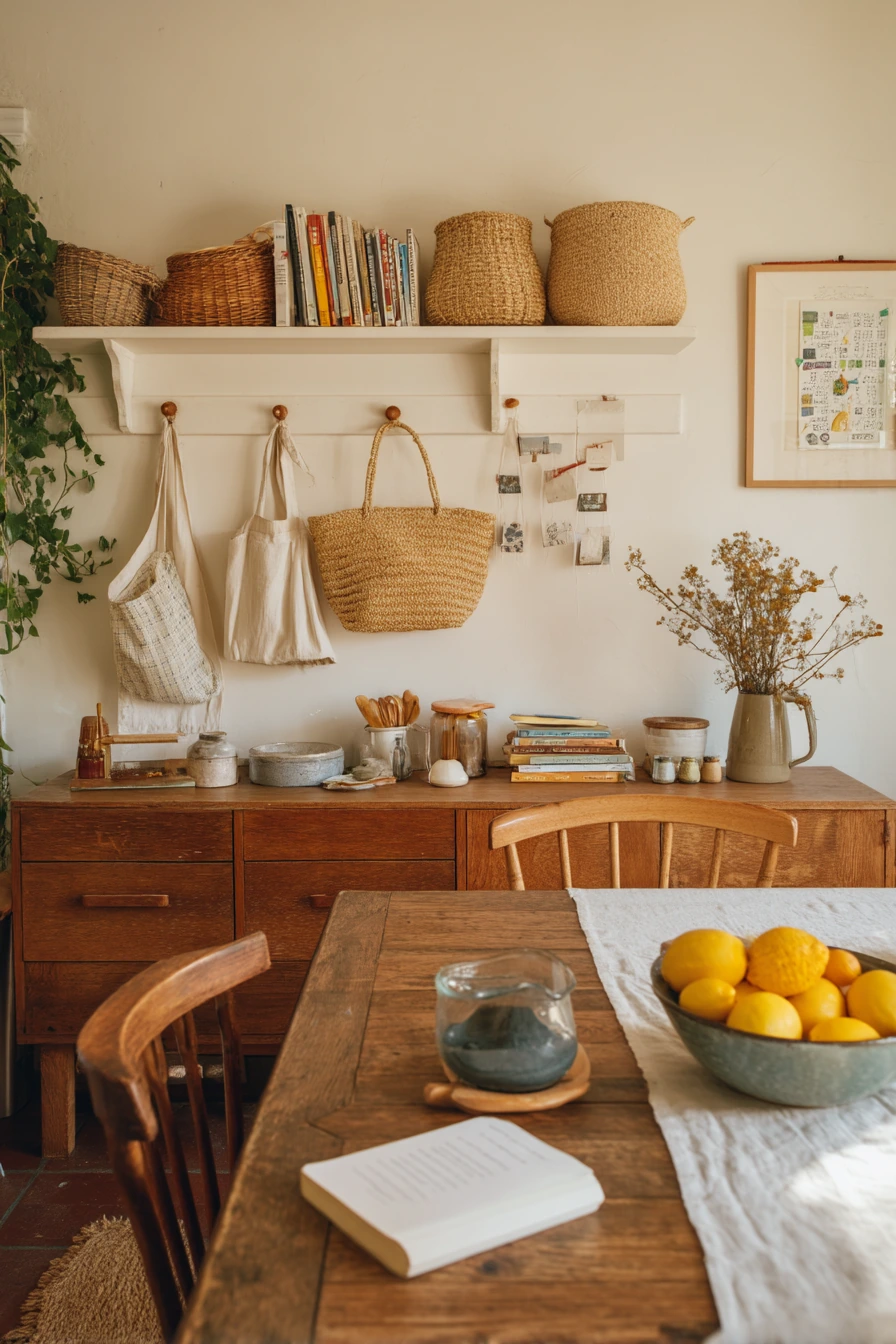
A DIY peg rail above a simple credenza is an easy dining room storage idea that adds function to a blank wall. Hang woven baskets for napkins, candles, and extra cutlery, and add hooks for aprons and market bags. This keeps daily items close, and it frees up drawers for bigger pieces.
To style it well, keep the rail layout even. Use baskets that match in size or color so the wall looks calm. Leave a little empty space so it does not feel crowded. A thrifted table set for everyday dinner can look warm and real with a bowl of lemons, a salt cellar, and an open recipe book. Small signs of life like pencil marks on a notepad make the room feel honest.
Make room for kid art and notes without letting paper take over. Pin a child’s drawing slightly crooked on purpose, then limit it to one spot. If a string bag ends up on a chair, give it a hook on the peg rail so it has a home. This setup works in rentals too if you use removable options where needed, but a peg rail is also a good weekend DIY if you can drill into studs.
- Install a peg rail above the credenza for hooks and baskets.
- Use woven baskets to store napkins, candles, and spare cutlery.
- Hang aprons and market bags so they stay off chairs.
- Add a small clip or pin area for one rotating kid drawing.
- Style the credenza with one bowl and one book to keep it simple.
Pro Design Tip: Keep the peg rail items in a tight color palette so storage looks like decor, not a tool wall.
Budget Considerations: Build a peg rail from a basic wood board and dowels; for a cheaper shortcut, use a row of sturdy hooks with matching baskets.

Good dining room storage ideas make it easier to eat, host, and clean up without stress. The right mix of closed cabinets, open shelves, baskets, and hooks can handle both dishes and daily life.
Start with the biggest pain point, like mail piles, extra linens, or kids’ supplies. Add one storage piece, then set a simple rule for what lives there so it stays useful.
FAQ
What is the best storage furniture for a dining room? A sideboard, credenza, or buffet works well because it holds dishes and linens and gives you a surface for serving.
How do I add dining room storage in a small apartment? Go vertical with a slim tall cabinet and a narrow wall shelf, and use trays to keep small items from spreading.
Should I use open shelving in the dining room? Open shelves work best for everyday dishes you use often. Pair them with closed storage to hide bulk items and mismatched containers.
How do I keep the dining table from becoming a clutter magnet? Create a drop zone on a sideboard with baskets for mail and chargers, and do a two-minute reset before meals.
What can I store in a banquette bench? Table linens, board games, kids’ art supplies, and extra serving dishes are great choices, especially when sorted in bins.
How do I style a buffet or sideboard without making it messy? Use one tray, one vase or plant, and one piece of art or a mirror. Leave some empty space so it looks calm.
How can renters add dining room storage without drilling a lot? Use freestanding furniture like a sideboard or hutch, lean a mirror, and use removable hooks and art where possible.