

Garden pond ideas can make a yard feel calmer, add wildlife, and create a place to sit outside more often. You do not need a big space or a big budget to get the sound of water and the look of clean stone and plants.
This post walks through 10 pond styles based on real home settings, like a suburban backyard with a tiny footbridge, a townhouse courtyard with cedar planters, and a renter friendly stock tank pond on a patio.
For each idea, you will get simple layout tips, plant and edging suggestions, and small styling details that make the space feel lived in. These are the kinds of touches Pinterest readers look for, but they also help the pond work better day to day.
Use the sections that match your space, then mix and match features like irregular stone edging, bamboo spouts, path lights, and safe shallow edges. You can start small and upgrade over time.
1 Backyard Pond for a Family Garden

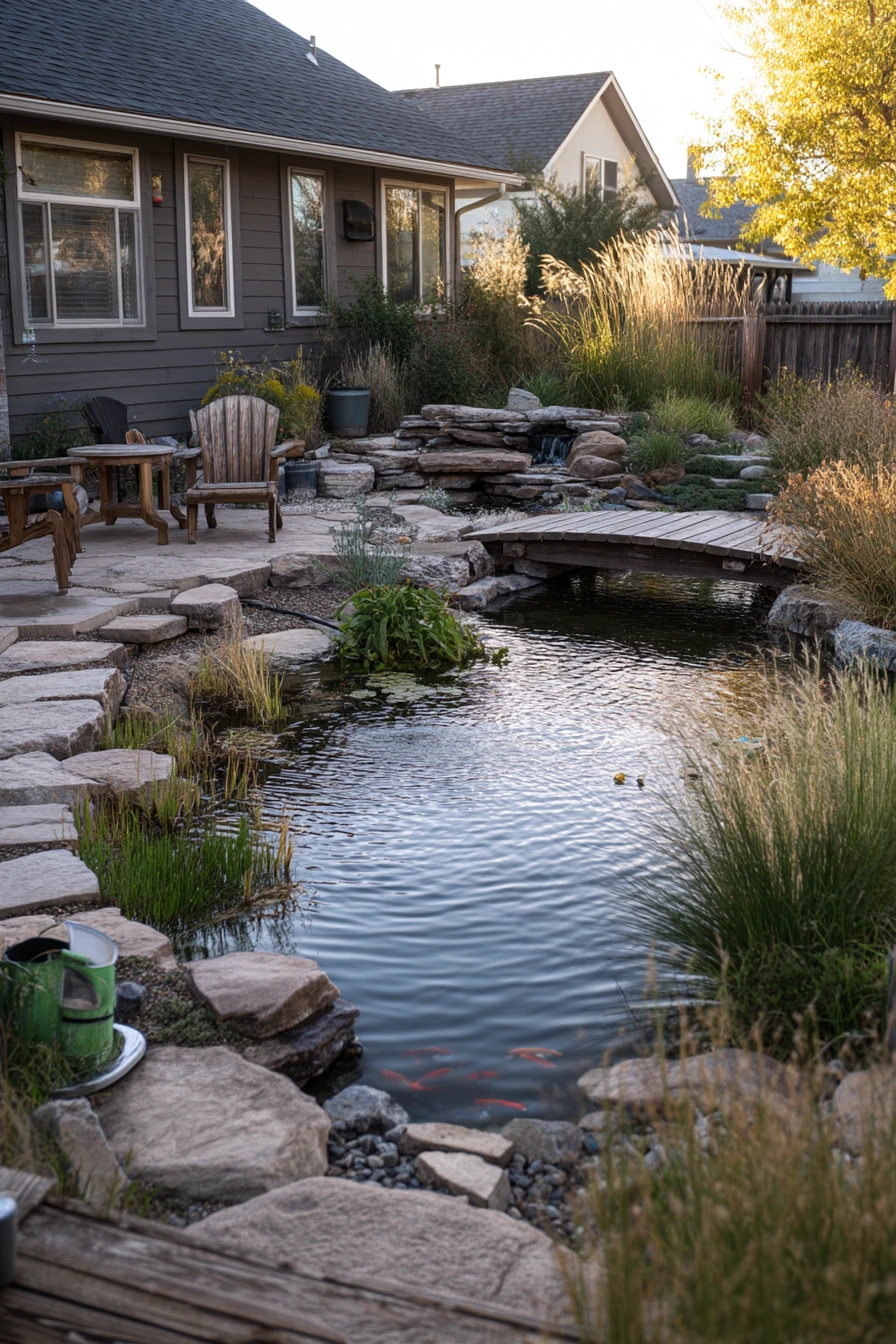
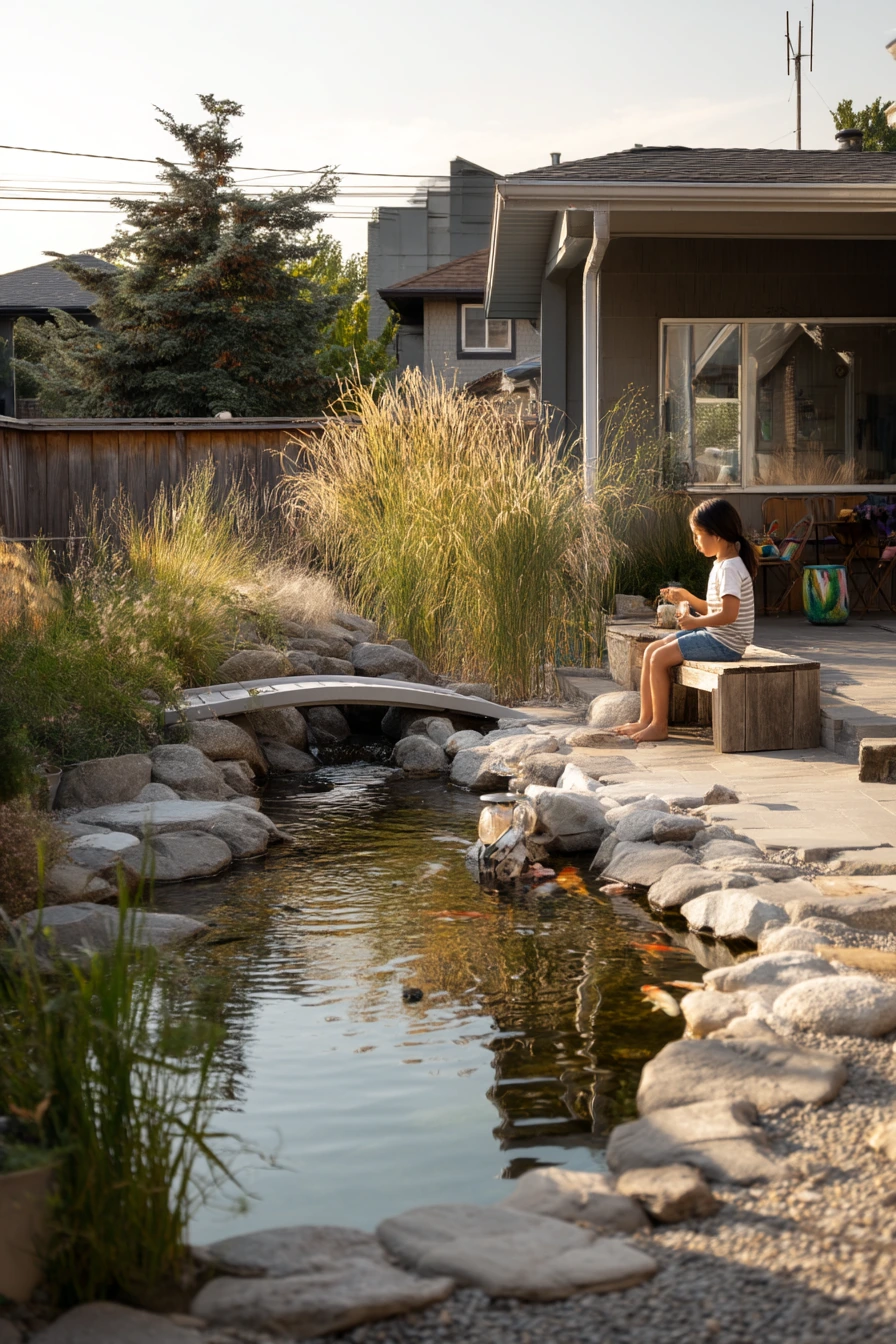
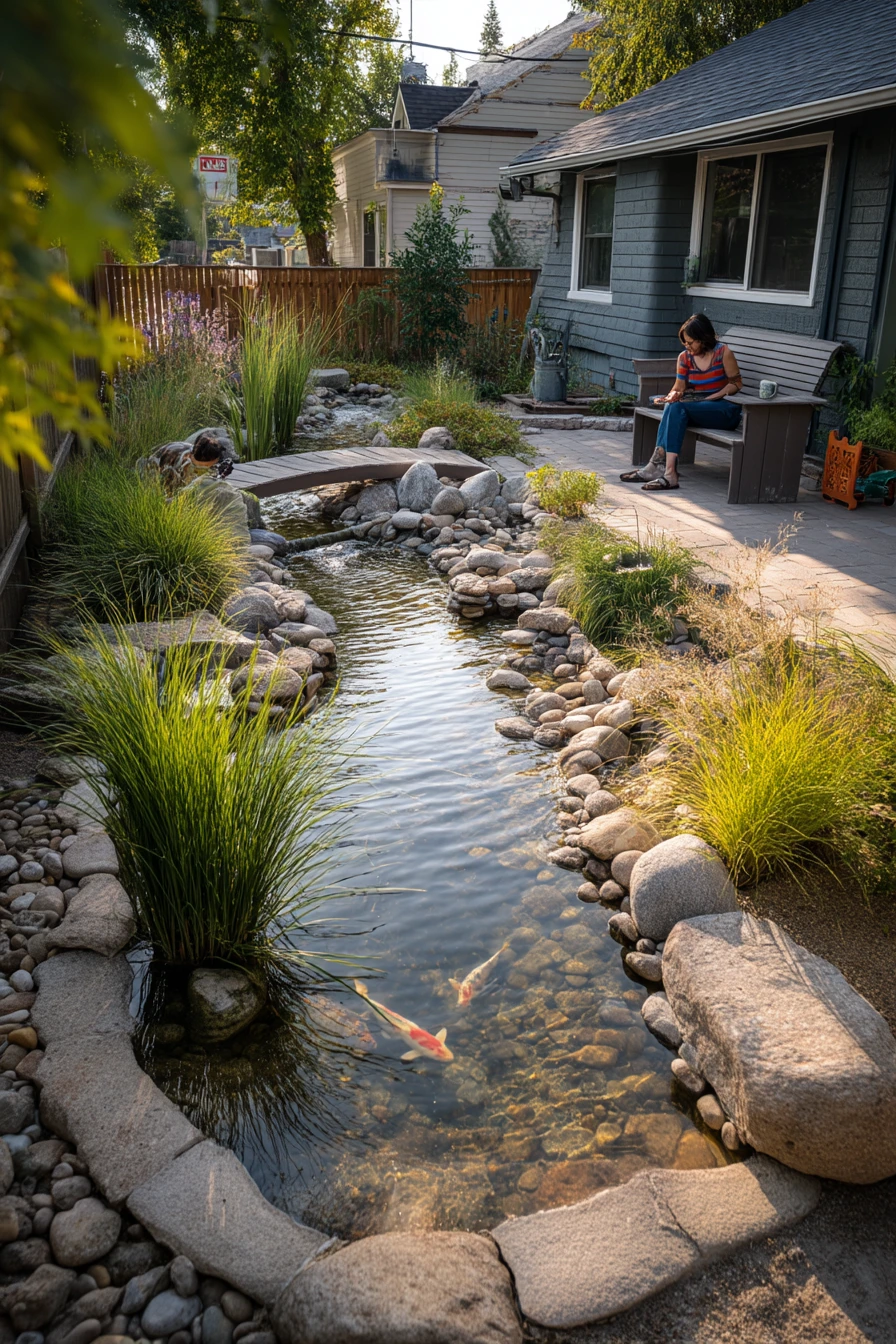
A small family friendly garden pond works best when it looks natural and still feels easy to watch. Use irregular stone edging and a few smooth river rocks so the border feels soft, not sharp. A tiny footbridge adds a fun crossing point and also keeps feet out of the planting zones.
Keep the water clear and calm with a simple pump and a filter sized for koi or goldfish. Place native grasses and low plants around the edge to hide the liner and reduce algae by shading the water. If kids like to toss pebbles, make one “rock tossing” spot with larger river stones so the rest of the edge stays clean.
Style it like a real patio hangout. A weathered bench near the pond gives a parent a comfortable seat with a coffee mug. Add a watering can and a small toy basket near the patio so cleanup is fast. Late afternoon light from the house often makes ripples and koi flashes look brighter, so leave one viewing angle open.
- Choose a shallow shelf edge for plants and safer footing.
- Use rounded stones, not jagged rock, along walking paths.
- Plant native grasses in clumps for a soft screen and fewer weeds.
- Add a low footbridge that can be removed for pond cleaning.
- Place a flat stepping stone “viewing spot” from the patio.
Pro Design Tip: Make the bench face the pond at a slight angle, not straight on, so you can watch kids and still enjoy the water view from the patio.
Budget Considerations: Local river rock and basic edging stones cost less than cut stone coping; spend more on the pump and filter since they affect water quality.
2 Small Courtyard Pond for Tight Spaces
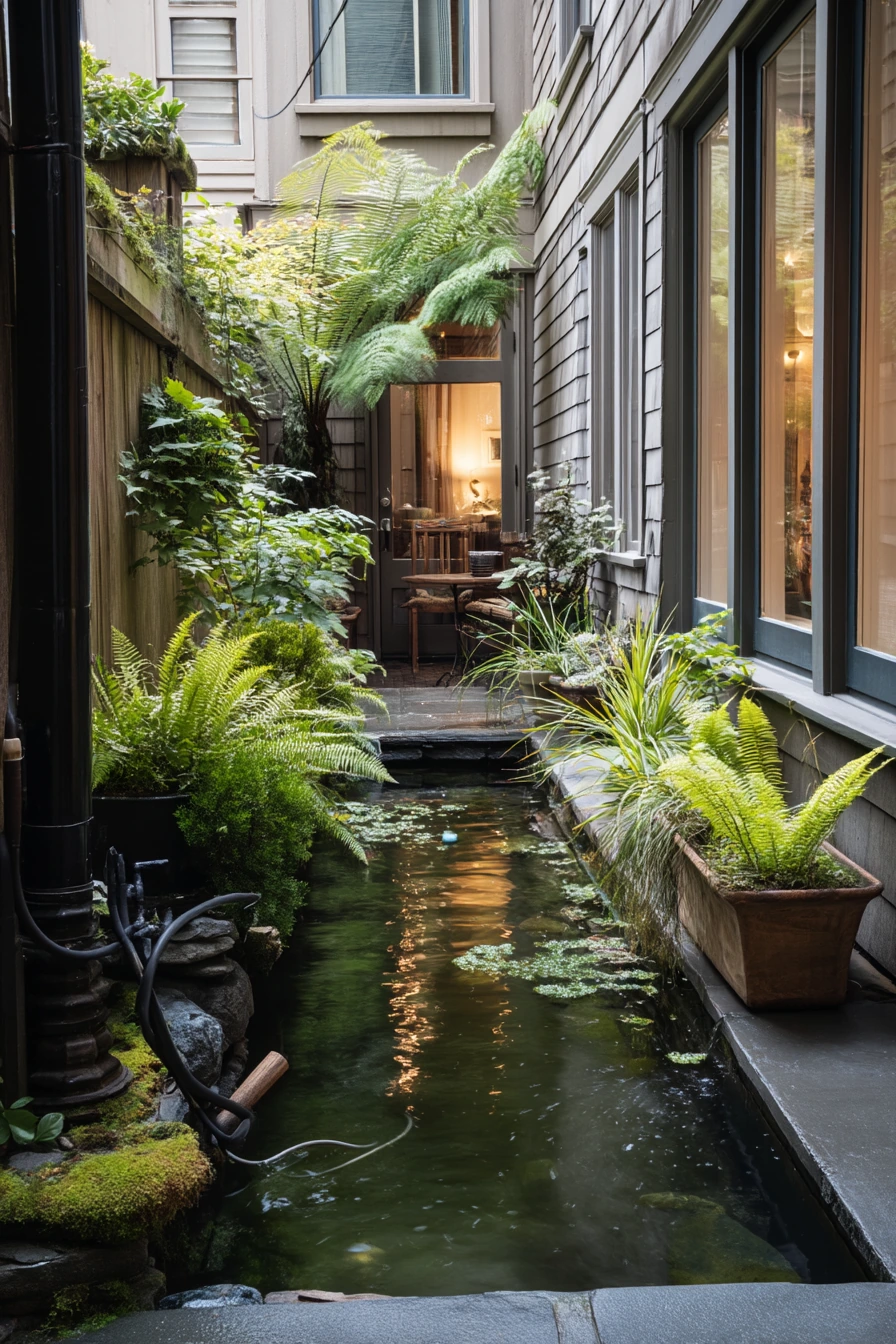
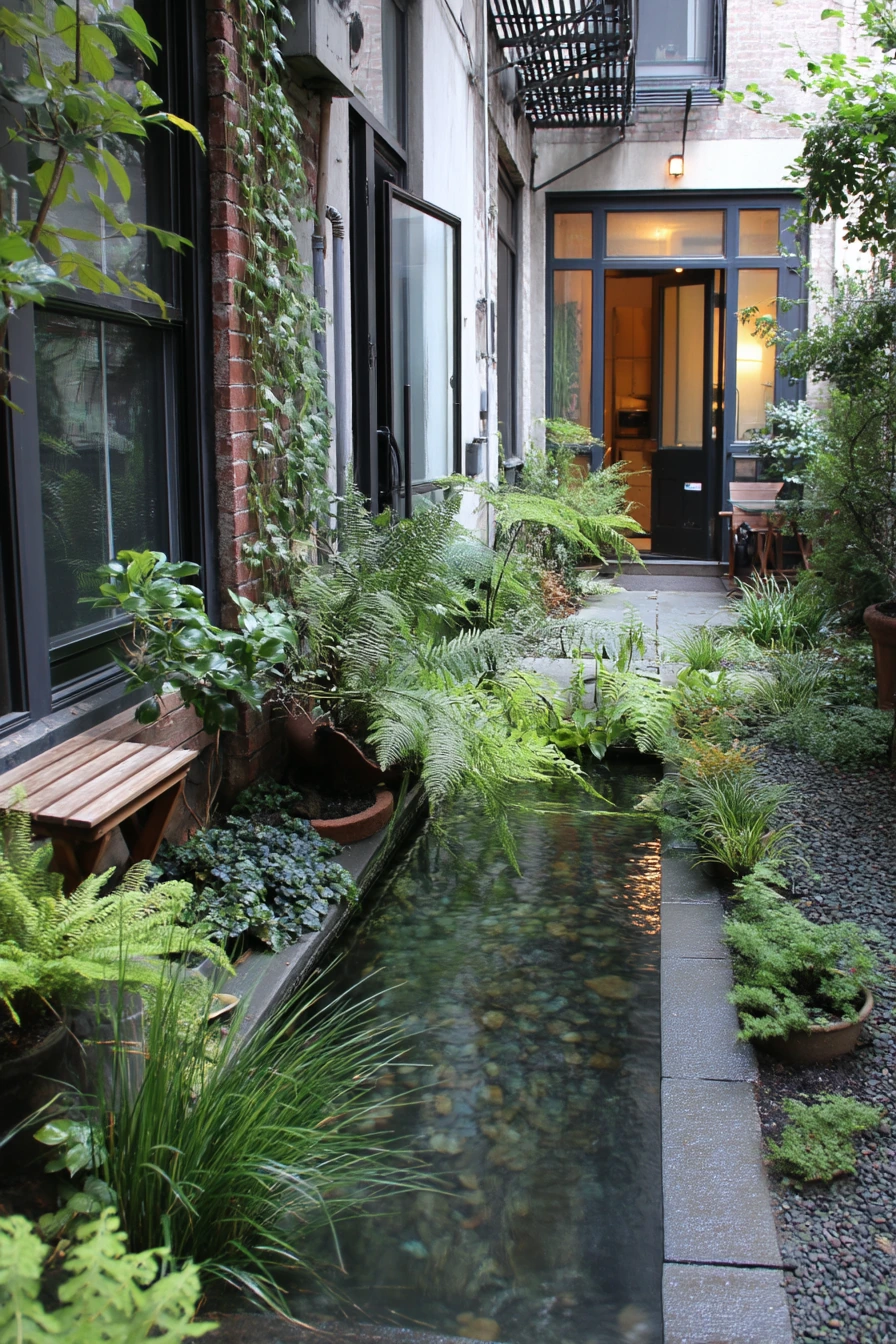
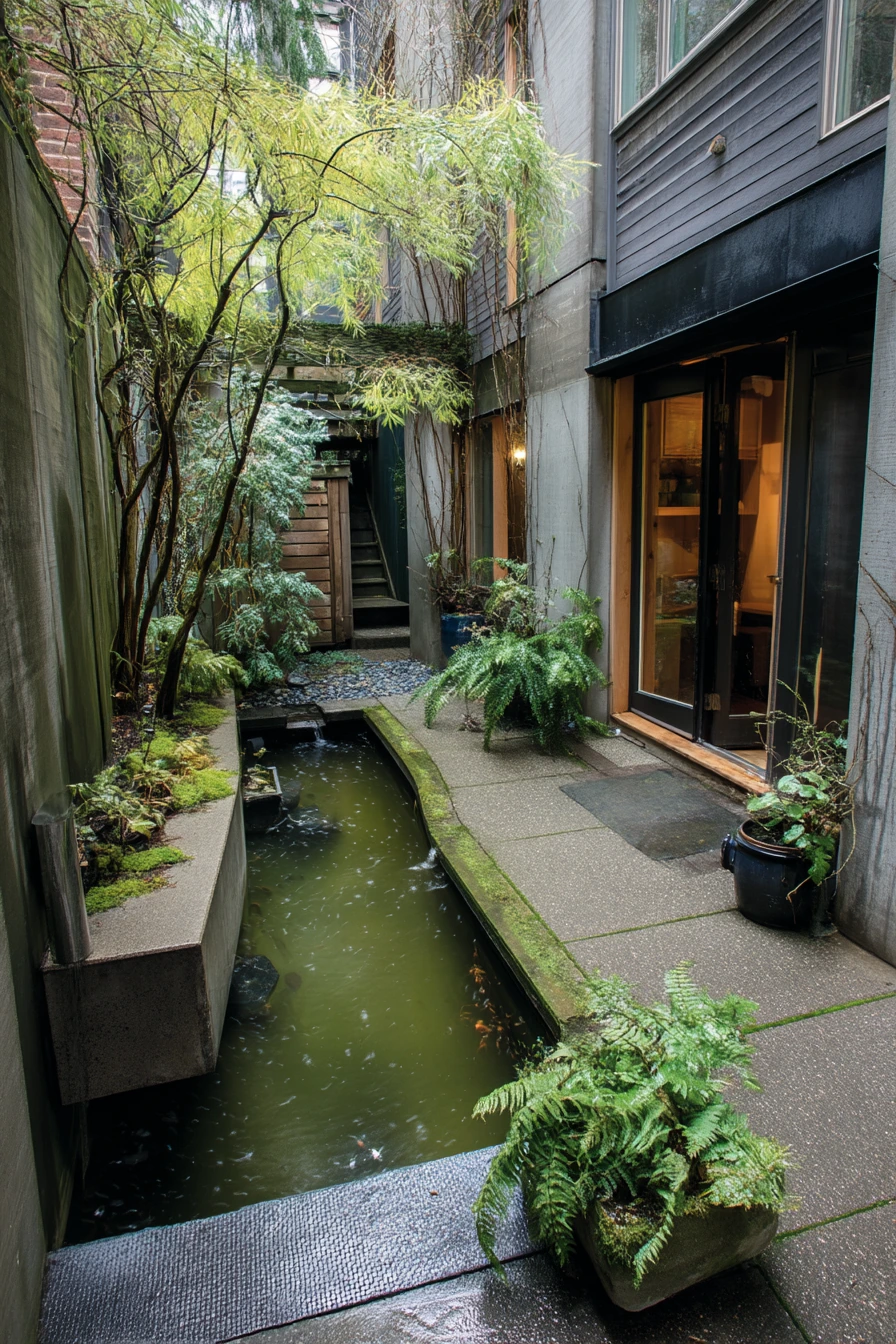
A compact townhouse courtyard can still fit a narrow pond if you keep the shape slim and place it beside planters. Cedar planters warm up hard surfaces and help the water feel more “garden” than “patio.” A bamboo spout adds gentle sound without taking much room.
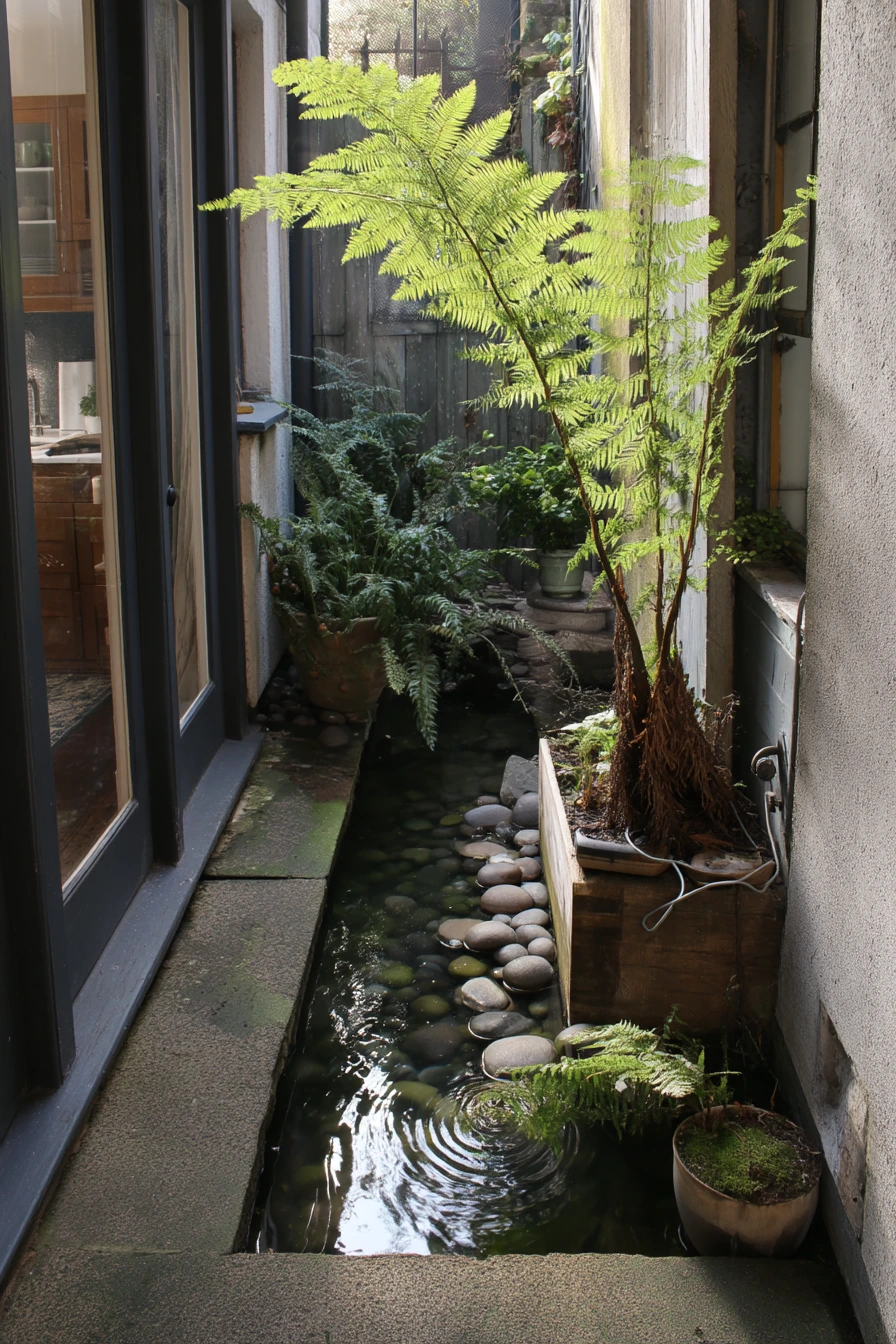
Use mossy stones and one sculptural fern that bends over the water for an instant focal point. Keep planting simple so the space does not feel crowded. In a small courtyard, every item shows, so choose a few textures: cedar, stone, and glossy green leaves.
To make the scene feel real and cozy, keep lived in cues near the door, like rain boots and a folded throw on a chair. A ceramic teacup on the ledge makes the pond feel like part of a morning routine. If you have a kitchen window near the pond, hide cords in a small outdoor cable cover so the look stays tidy while still being practical.
- Build a pond that is long and narrow to save walking space.
- Place the bamboo spout so it splashes into a rock bowl area.
- Use dark pond gravel to hide debris between cleanings.
- Add one statement plant, like a fern, then repeat small grasses.
- Leave one clear spot for sitting and viewing the water.
Pro Design Tip: Use matching cedar planter heights to frame the pond like a picture, then keep the water line even for a clean look.
Budget Considerations: A small preformed pond shell or compact liner can be cheaper than custom concrete; spend on a quiet pump so the courtyard stays peaceful.
3 DIY Pond With Natural Stone Borders
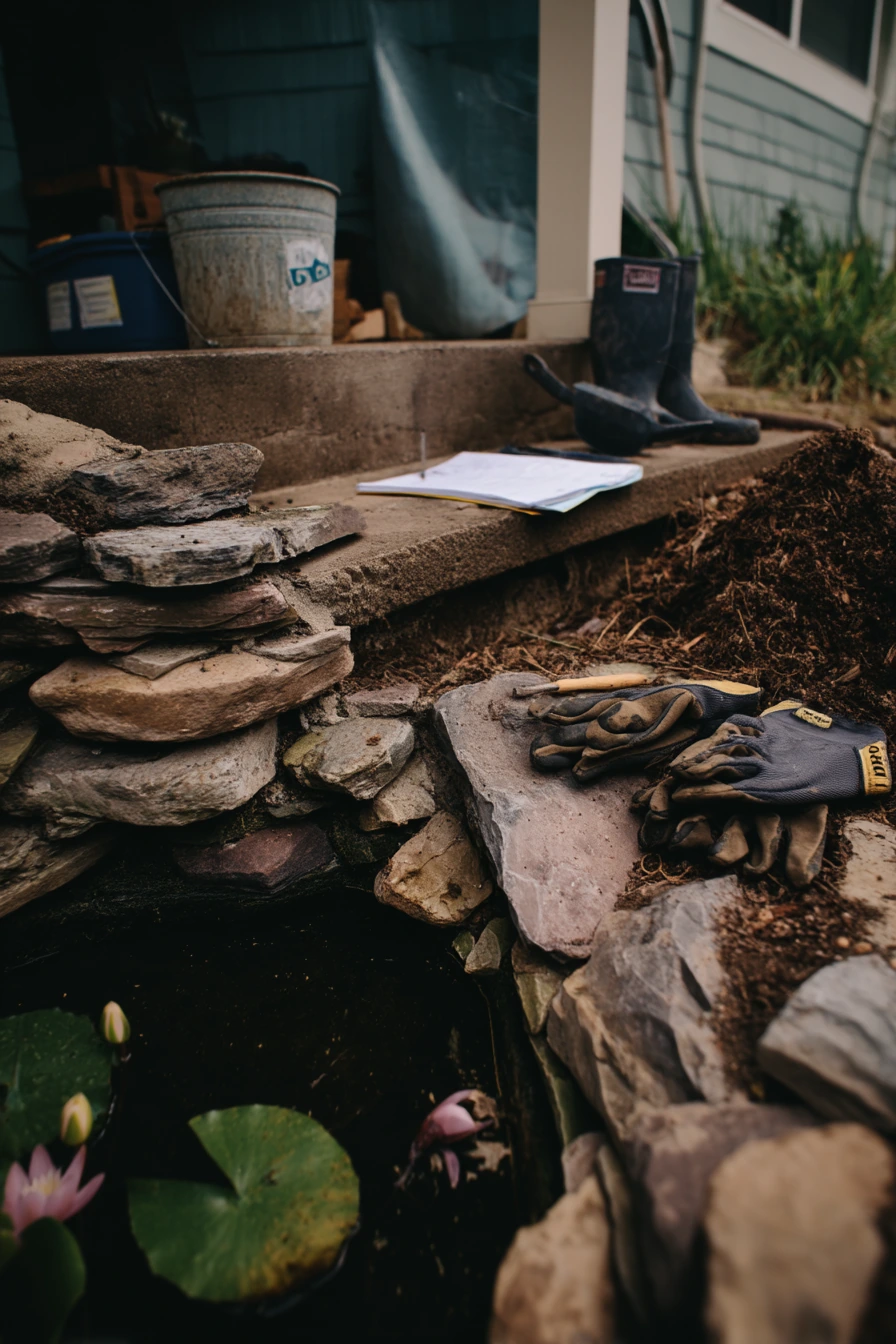
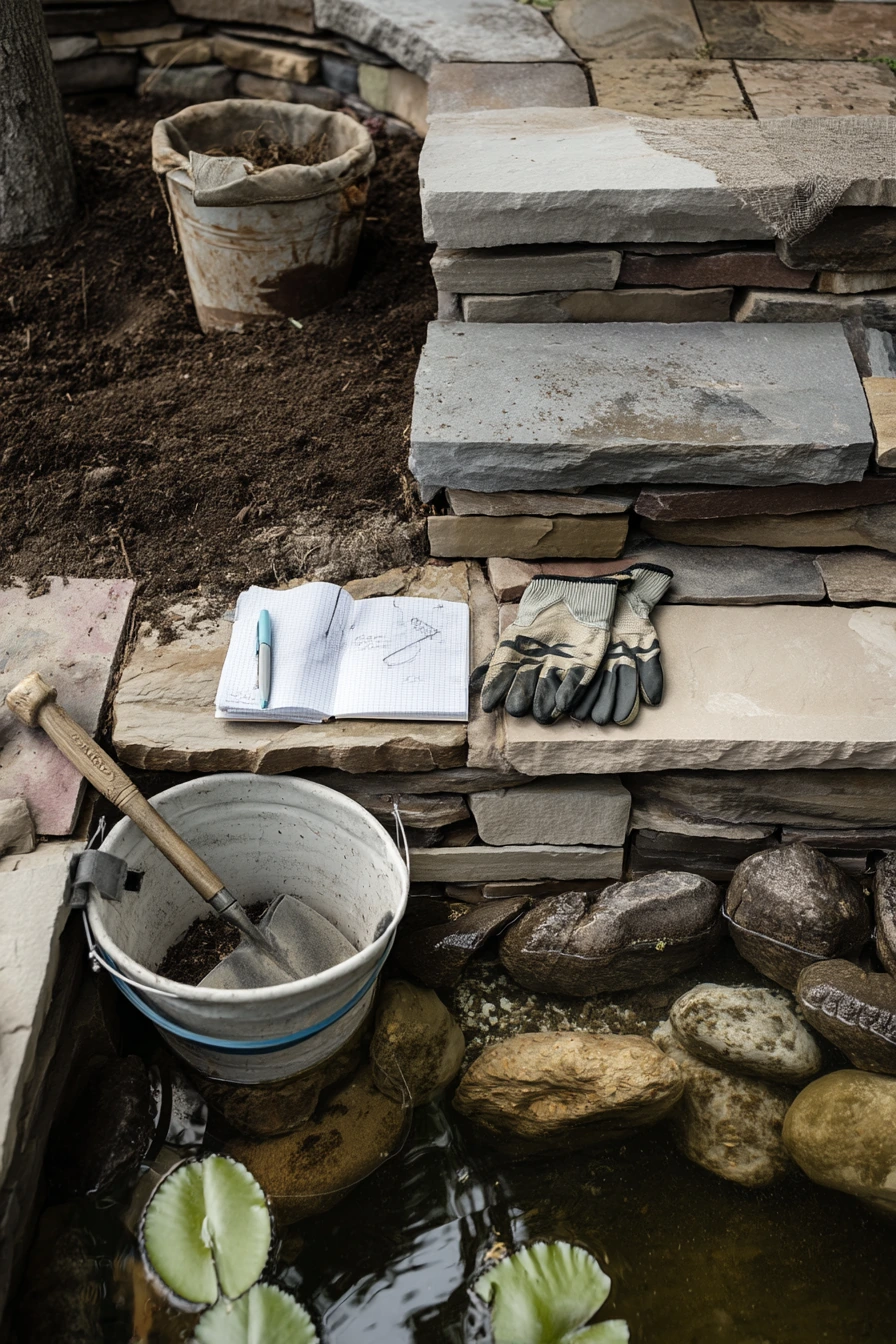
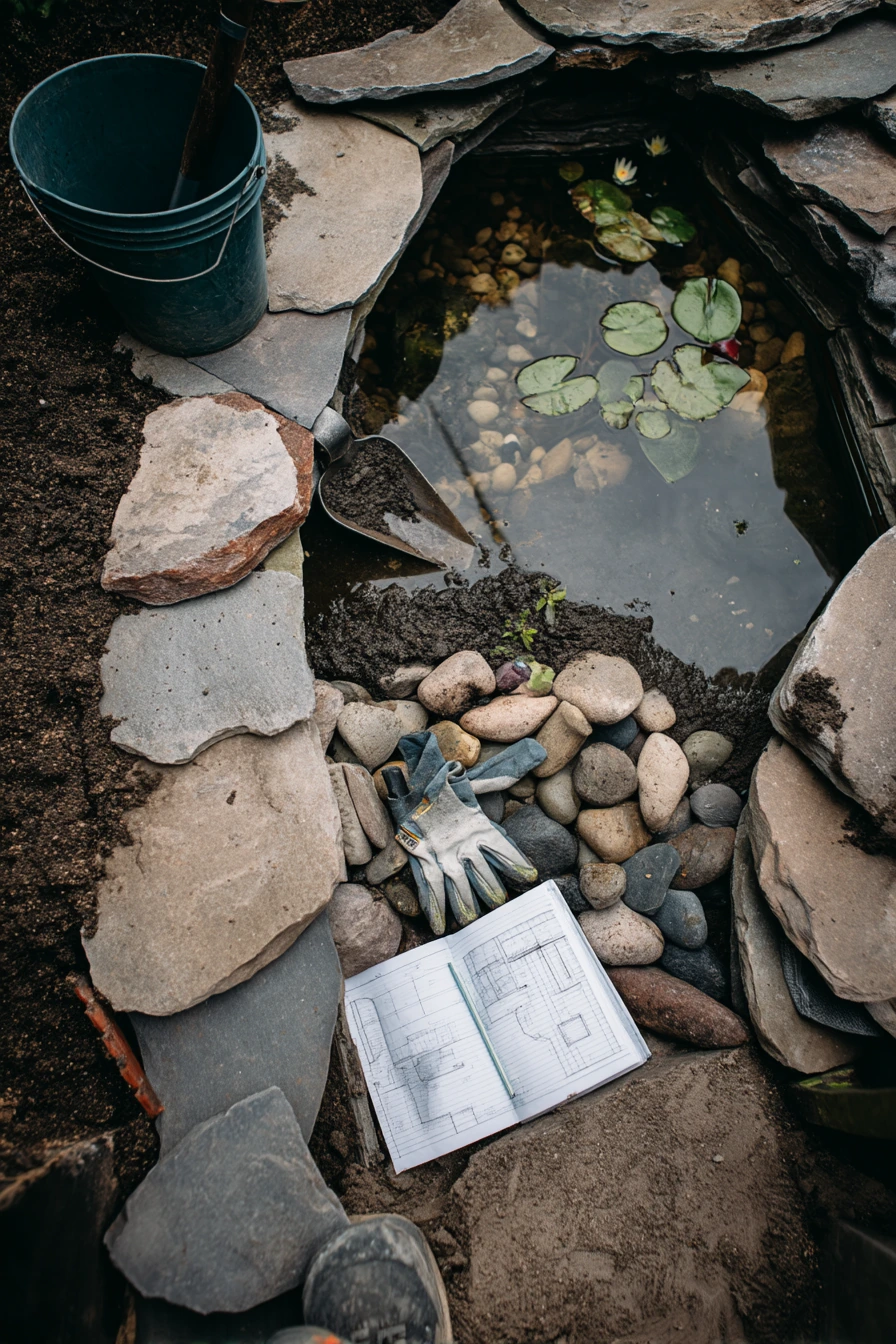
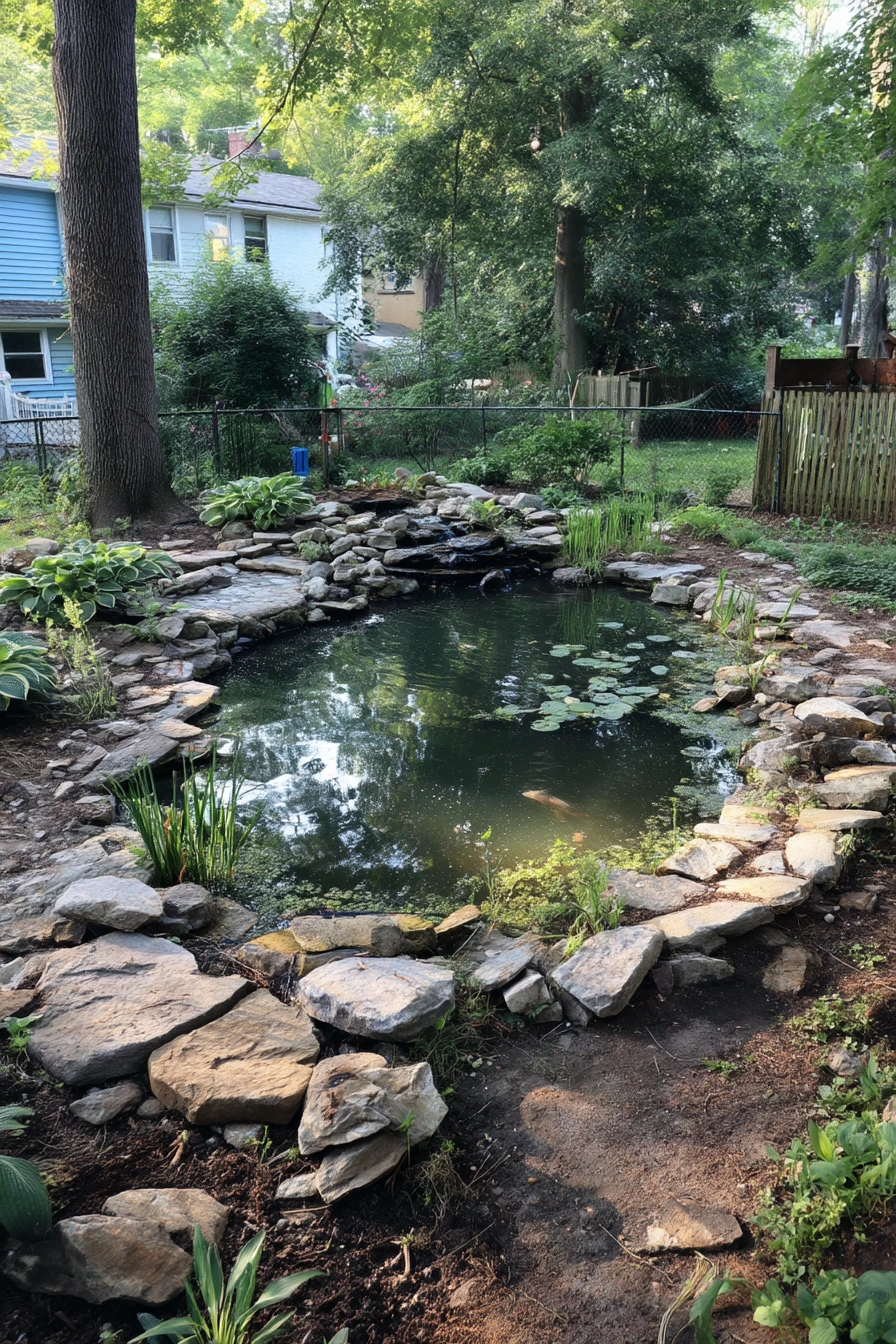
A DIY backyard pond beside a modest bungalow can look good even while it is in progress. Stacked flagstones create a sturdy edge, and a shallow liner lip is easier to adjust as you test the shape. Keep pond lilies in pots so you can move them as the light changes during the day.
For a hands on build, plan where the pump will sit before you place the rocks. Disguise the pump with river rocks, but leave a small “service gap” so you can pull it out without lifting heavy stones. If you are using a notebook with sketchy measurements, mark the shelf heights and water depth in simple numbers, then check them with a level.
Style and work at the same time. Muddy gardening gloves on a step, a trowel in a bucket, and a half finished mulch pile are normal, but keep tools in one zone so you do not step on liners. Soft overcast daylight is perfect for checking leaks because you can see the water line clearly without glare.
- Start with a small outline and expand only after the test fill.
- Use a shallow plant shelf to hold potted lilies and marginals.
- Hide the pump with rocks, but keep access for cleaning.
- Top the liner edge with flat stones to protect it from sun damage.
- Mulch nearby beds to reduce soil washing into the pond.
Pro Design Tip: Before final stone placement, run the pump for a full day and watch where splashes land so you can prevent soggy mulch and slippery spots.
Budget Considerations: A liner and simple pump are the cheapest start; buy stones in stages so you can match sizes and avoid overbuying.

4 Modern Pond With a Calm Seating Nook
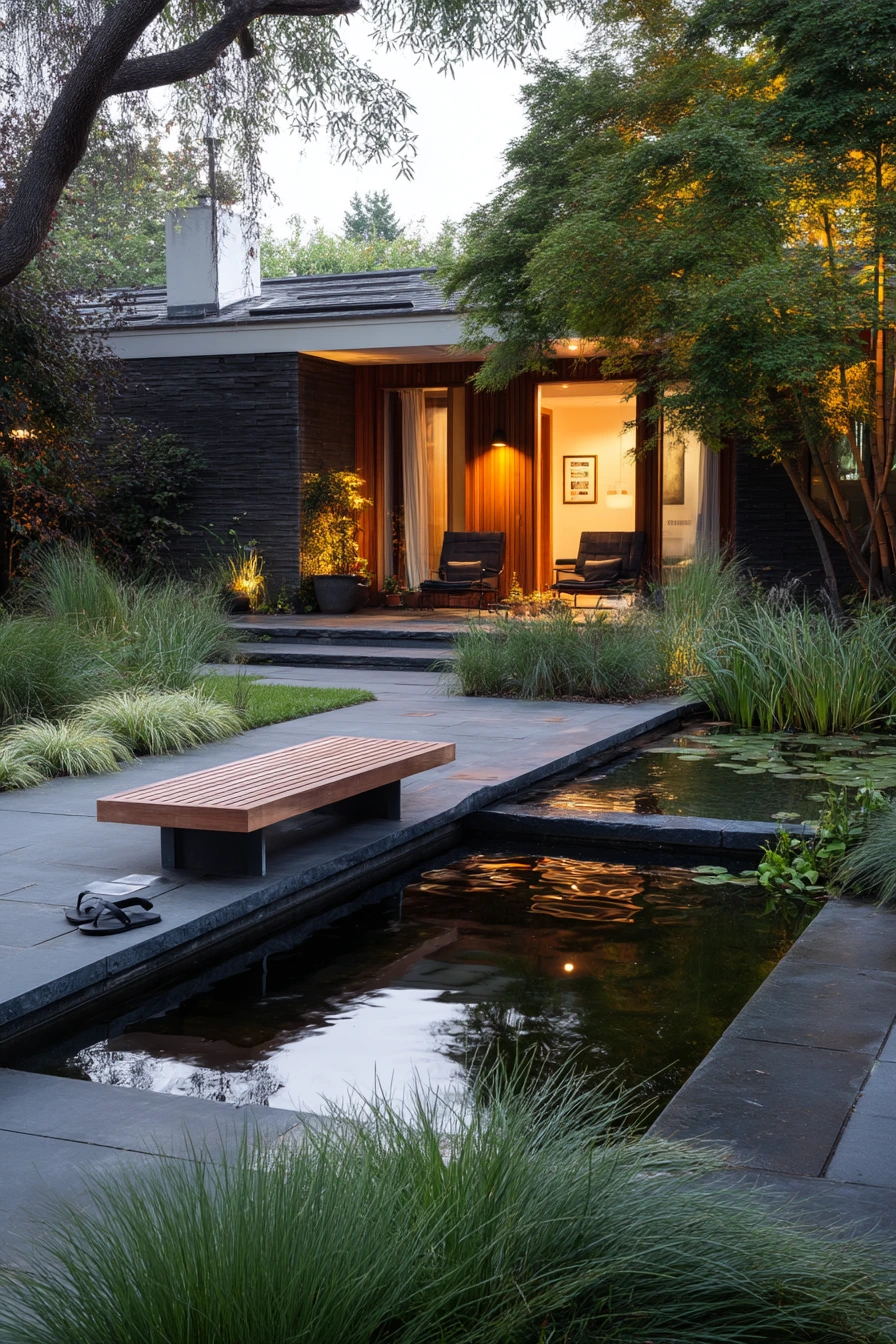

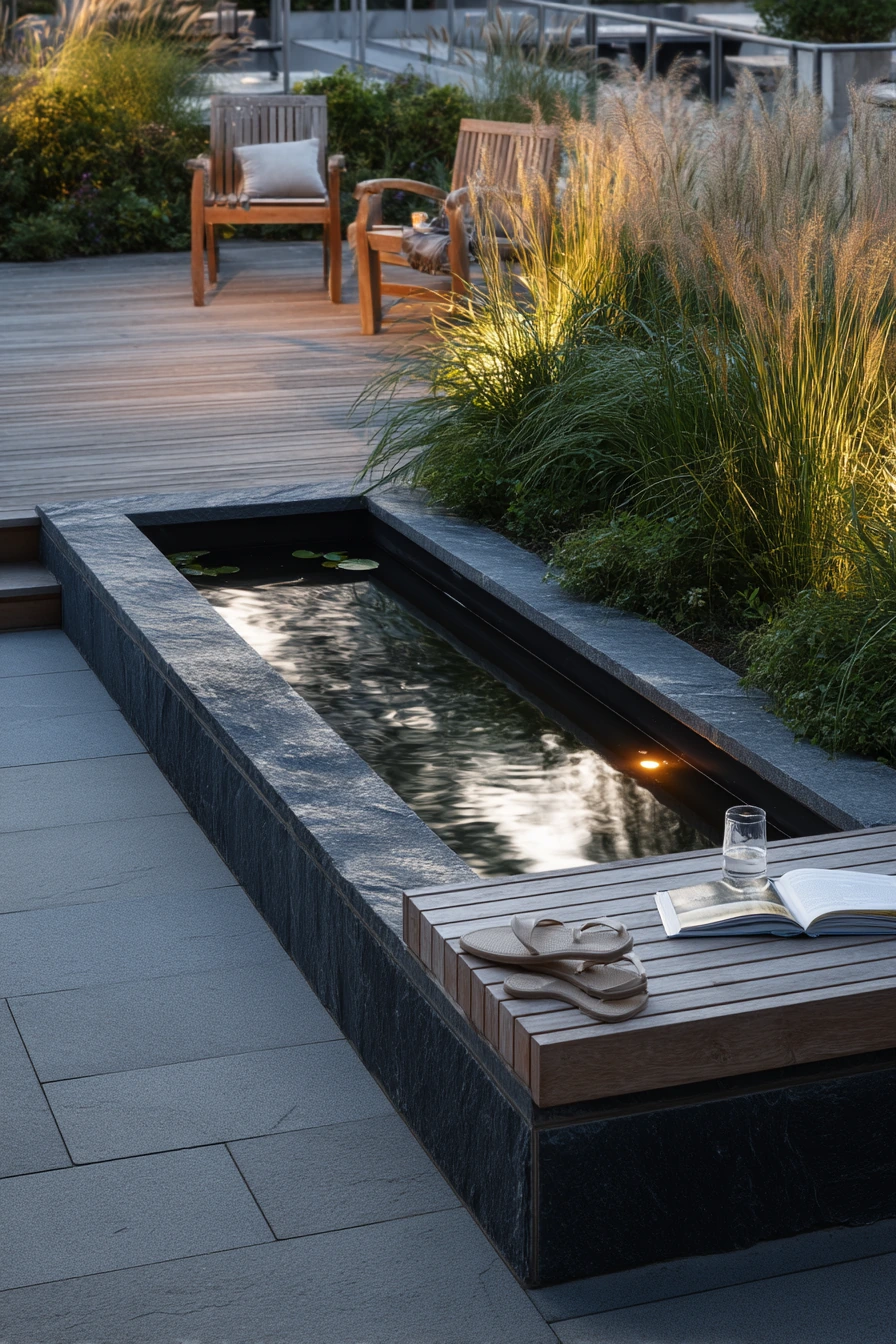
A clean lined modern garden looks best with a rectangular pond and crisp edges. Dark slate coping gives the water a sharp outline and makes reflections stronger. Keep the planting minimal, like ornamental grasses, so the shape stays the star.
Place a low teak bench facing the pond to turn it into a seating area, not just a feature. Small lived in details like two water glasses, a slightly wrinkled throw, and an open paperback help the space feel used, not staged. Warm evening light from the house can reflect on the surface, so avoid bright overhead fixtures that cause glare.
For the layout, make the pond the same width as a paver bay or align it with the home’s window lines. Use a hidden skimmer and a steady pump flow so the surface stays calm. If you want sound, add a small spillway at one end instead of a tall fountain, since modern yards often look better with quiet water.
- Keep the rectangle simple and avoid extra curves in modern spaces.
- Choose slate or dark stone to highlight reflections.
- Use grasses in repeats for a clean, rhythmic look.
- Place seating close enough to see fish and ripples.
- Use warm, low house lighting for a calm evening view.
Pro Design Tip: Match the coping thickness to nearby pavers so the pond edge feels built in, not like a separate add on.
Budget Considerations: Slate coping and straight concrete forms can add cost; a more affordable option is concrete caps stained dark with a simple rectangular liner.

5 Renter-Friendly Patio Pond in Containers


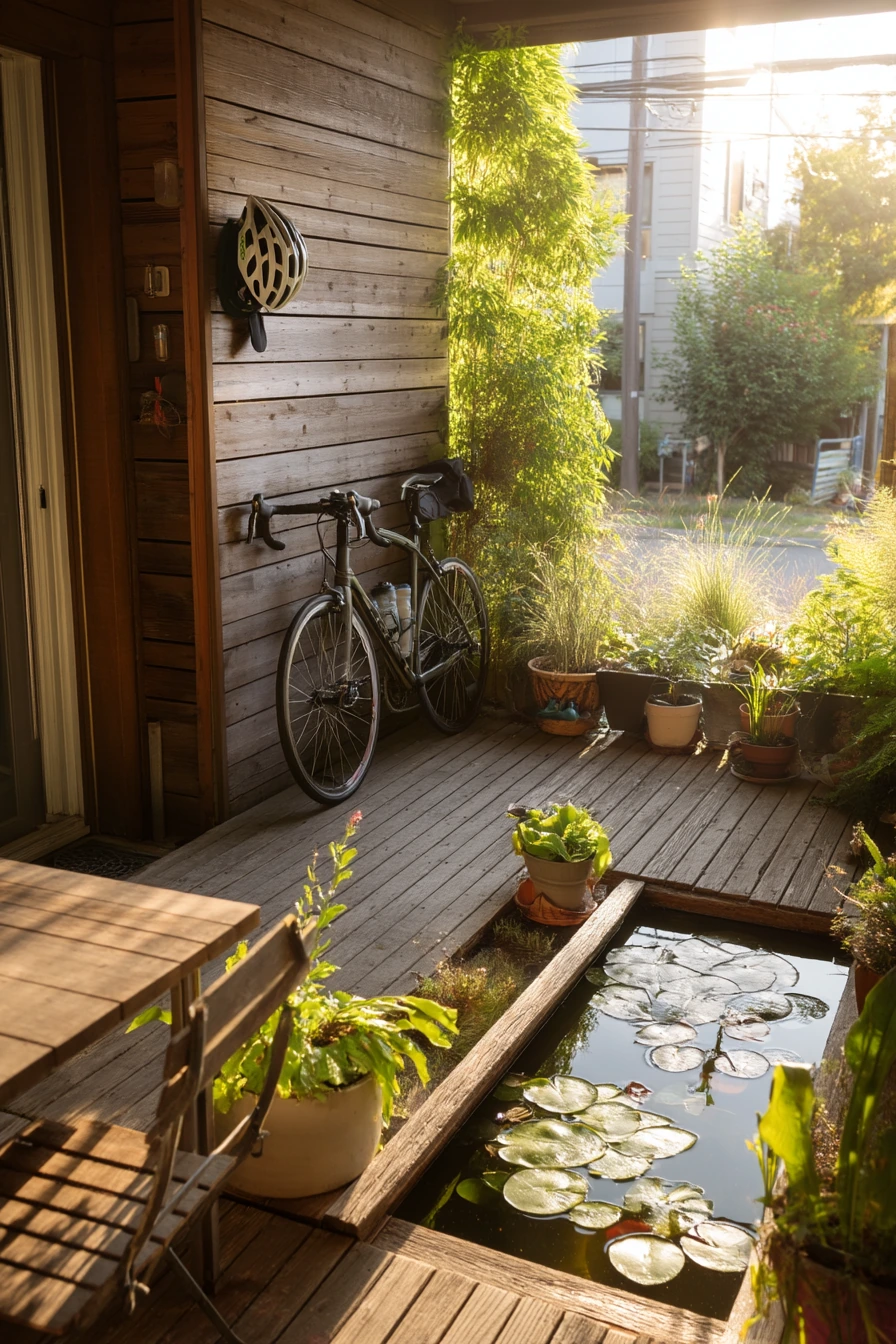
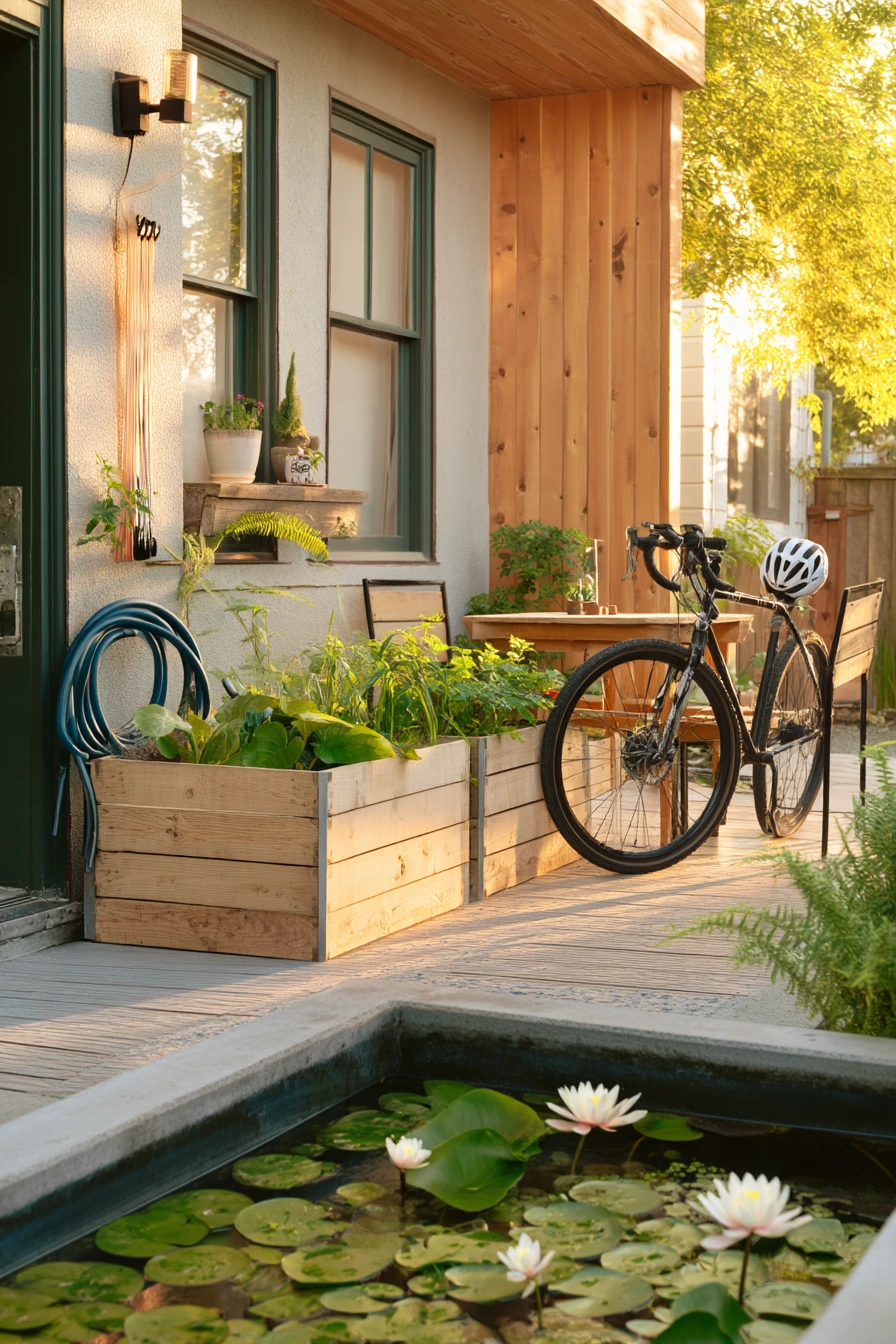
A stock tank style pond is one of the easiest renter friendly pond ideas because it does not require digging. You can place it on a patio, add container water plants, and enjoy floating lilies in a weekend. Removable timber cladding can hide the metal sides and make it feel like a built in feature, but you can take it with you later.
Start with a level base. Use pavers or a sturdy platform so the tank sits flat and the water line looks even. Add an aerator or small pump for movement, and choose plants that do well in containers, like dwarf lilies, water lettuce in warm areas, or marginal plants in pots along the rim.
Style it like a real patio corner. A bicycle helmet on a chair, herb pots by the door, and a loosely coiled hose make the space feel active. Keep a small net and a bucket nearby for leaf cleanup. Golden hour light makes the water glow, so place the tank where you will see it from the door or your main chair.
- Pick a tank size that leaves clear walking space around it.
- Use a simple pump to prevent still, green water.
- Group herb pots nearby for a lush, layered look.
- Add removable wood slats to soften the metal sides.
- Use a floating plant ring to keep lilies centered.
Pro Design Tip: Build the cladding as separate panels with small gaps for airflow so the wood dries faster and lasts longer.
Budget Considerations: Stock tanks are often cheaper than built ponds; use affordable pond baskets and local plants instead of rare water lilies.
6 Cottage Garden Pond With Wildlife Detail

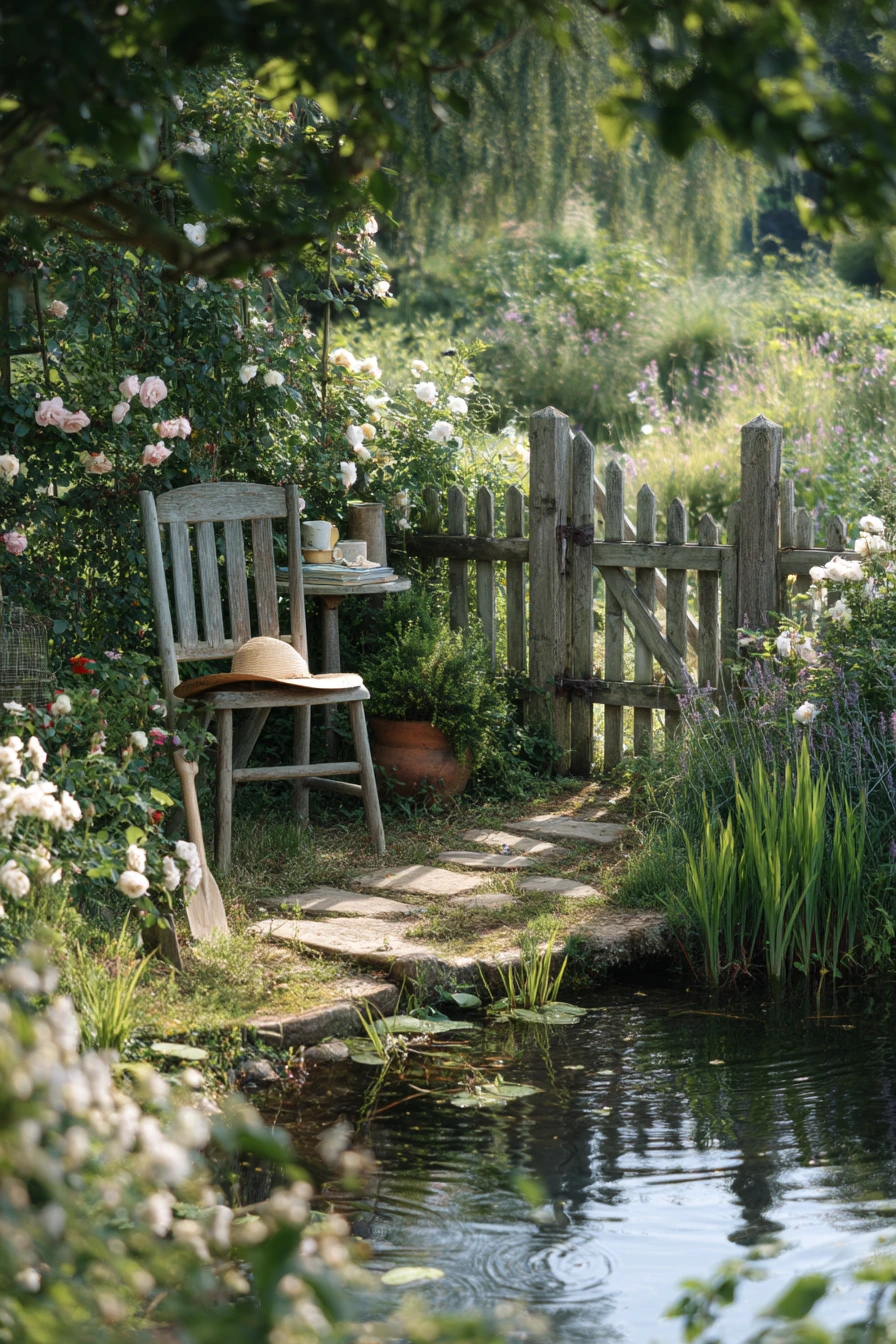
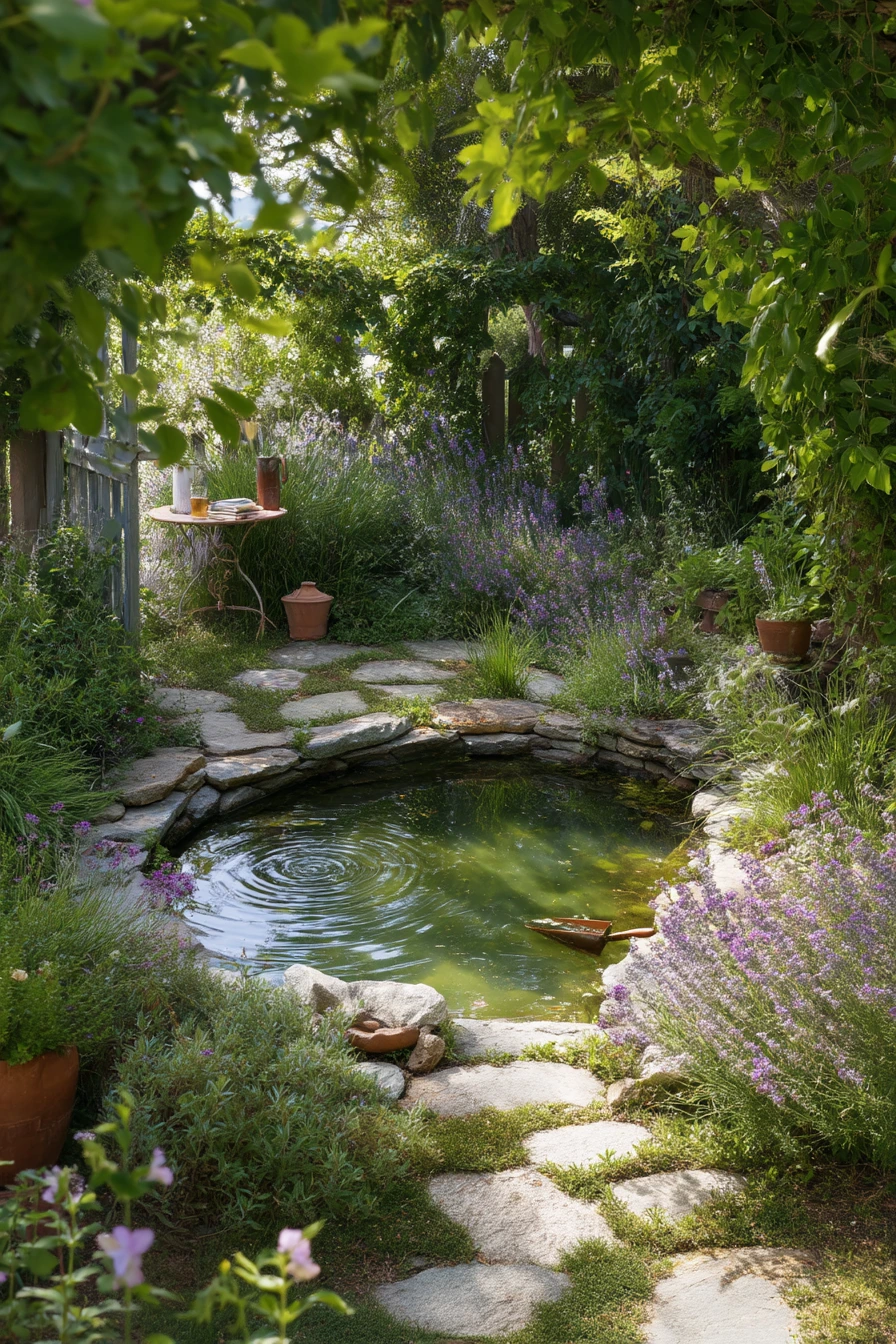
A cottage style garden pond feels best when it is tucked into fragrant planting. Place it under climbing roses and near lavender so the area smells good when you sit close to the water. Add stepping stones so you can reach the edge without crushing plants.
Use weathered terracotta pots and soft, natural colors. A small wooden scoop near the water makes fish feeding easy and adds charm without looking fake. Keep the edge slightly irregular, using stones that look like they belong in an older garden.
To style it as a lived in breakfast spot, add a sun hat on a fence post and a mug on the garden table. Leave seed packets near pruning shears so the space feels like part of daily care. Morning light through leaves is ideal here, so avoid tall, dense shrubs that block all sun, since lilies and many pond plants need some light.
- Mix lavender, roses, and soft grasses for a cottage border.
- Use stepping stones to guide feet and protect plants.
- Add terracotta pots for warm, aged texture.
- Keep a simple feeding scoop stored in a dry spot.
- Plant groundcover to reduce mud near the pond edge.
Pro Design Tip: Repeat one material, like terracotta, in three spots around the pond so the cottage look feels planned, not messy.
Budget Considerations: Cottage gardens can get pricey with lots of plants; buy small starts and let them fill in, and use basic clay pots instead of specialty aged containers.
7 Night Pond Lighting for a Cozy Backyard

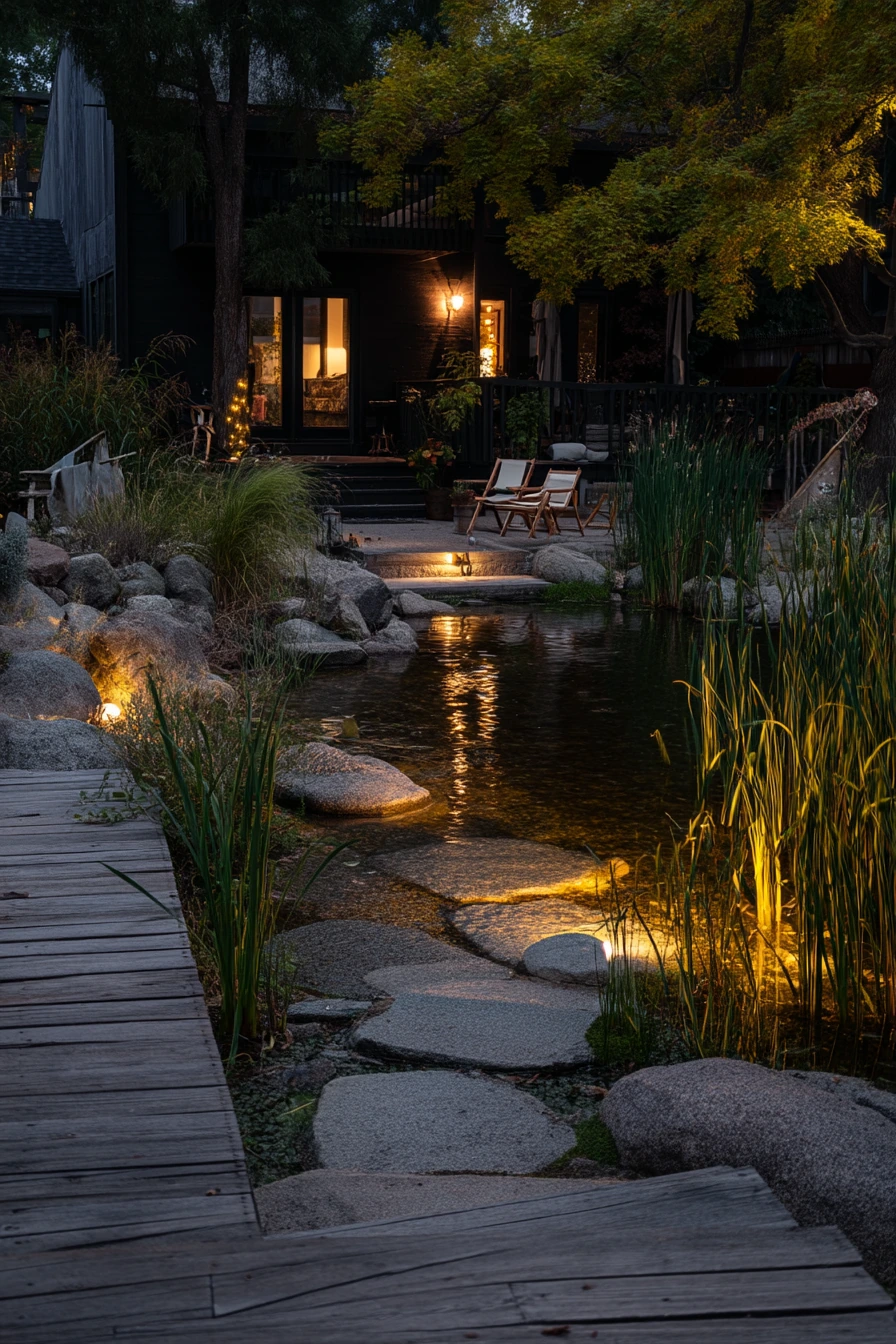
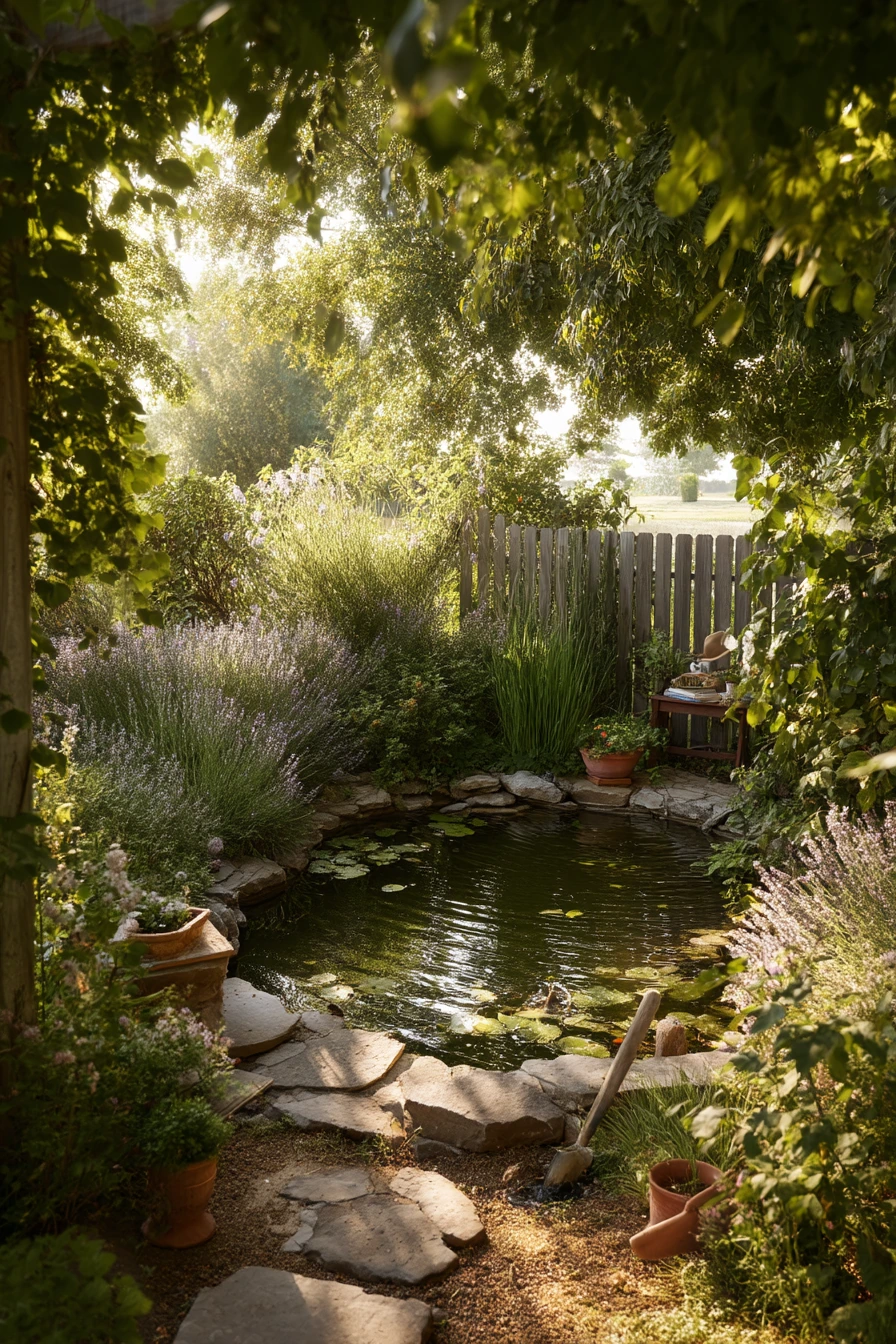
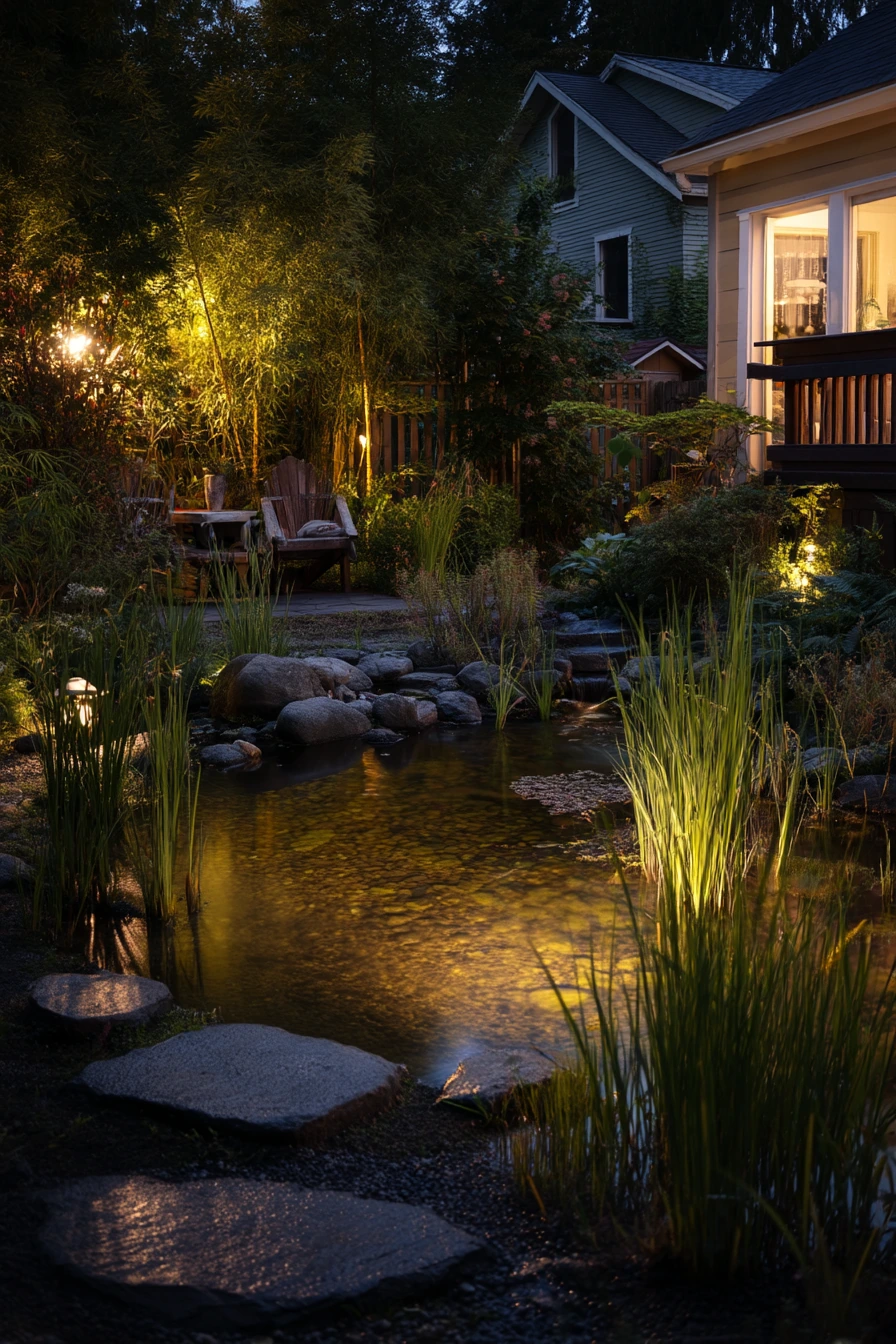
A small backyard pond after dusk can become your favorite view if the lighting is soft and low. Subtle path lights help people walk safely, while warm sconces from the house keep the scene cozy. A few submerged glows can reveal reeds and stepping stones without turning the pond into a spotlight.
Plan lighting in layers. Use low lights along the path, then add one or two underwater lights aimed across the water, not straight up. This keeps reflections calm and reduces glare from the deck. If you have kids, keep cords hidden and choose low voltage fixtures rated for wet areas.
Keep the space looking real. A child’s scooter near the gate and wet footprints on the deck make sense in an active yard. A blanket draped over a chair and a half finished glass of iced tea show the pond is part of evening time. For best effect, keep plants slightly taller behind the pond so the lit water stands out.
- Use warm color temperature bulbs for a natural evening look.
- Light the path first, then add pond accents second.
- Aim underwater lights sideways to show texture in reeds.
- Hide wires under edging stones or in conduit.
- Leave dark areas so the pond still feels restful.
Pro Design Tip: Place lights so you do not see the bulb from your main chair; you want to see the glow on water, not the fixture.
Budget Considerations: Solar path lights are low cost but can be dim; spend more on one reliable low voltage transformer and a few good fixtures for the main views.

8 Japanese-Inspired Pond for Quiet Mornings
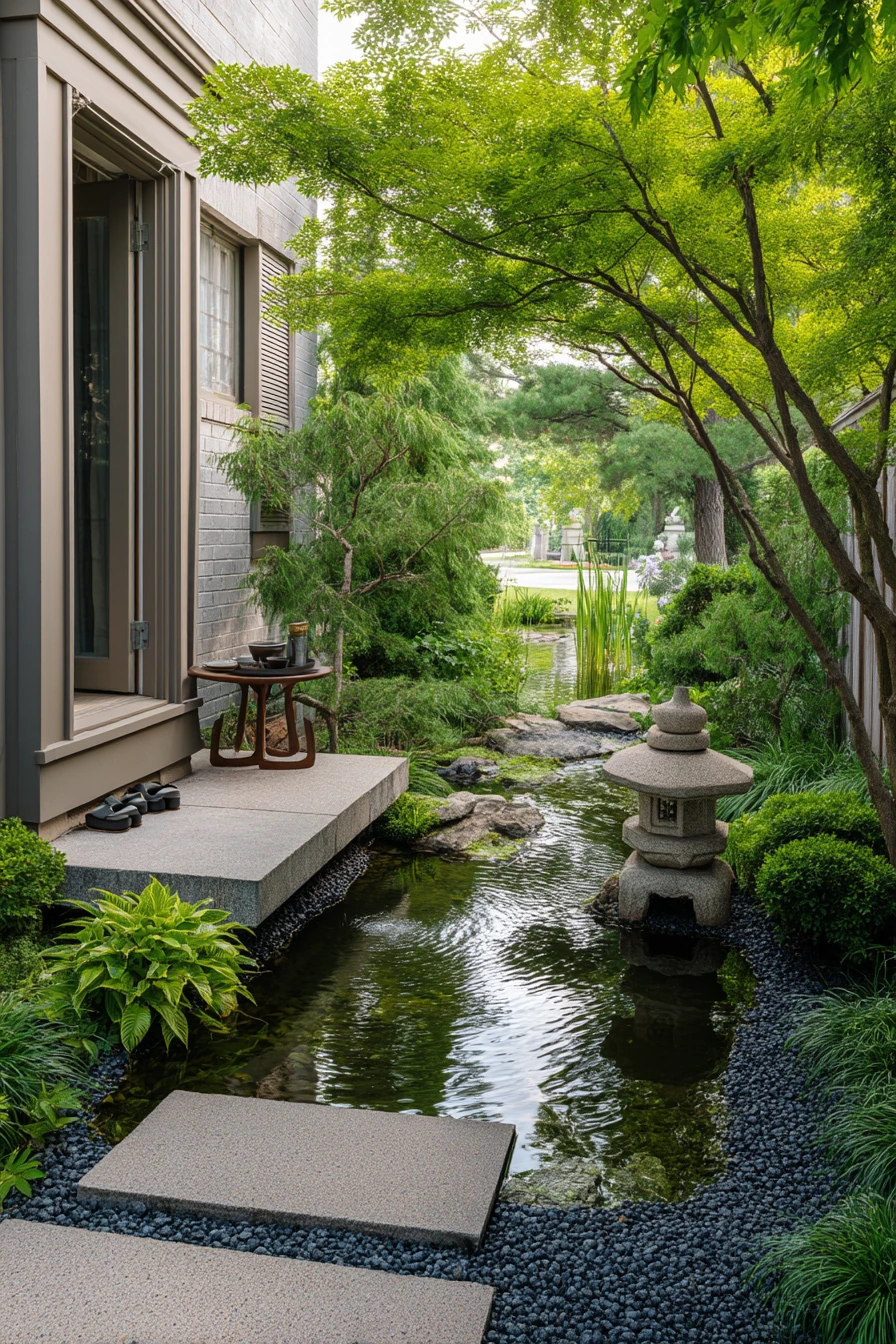
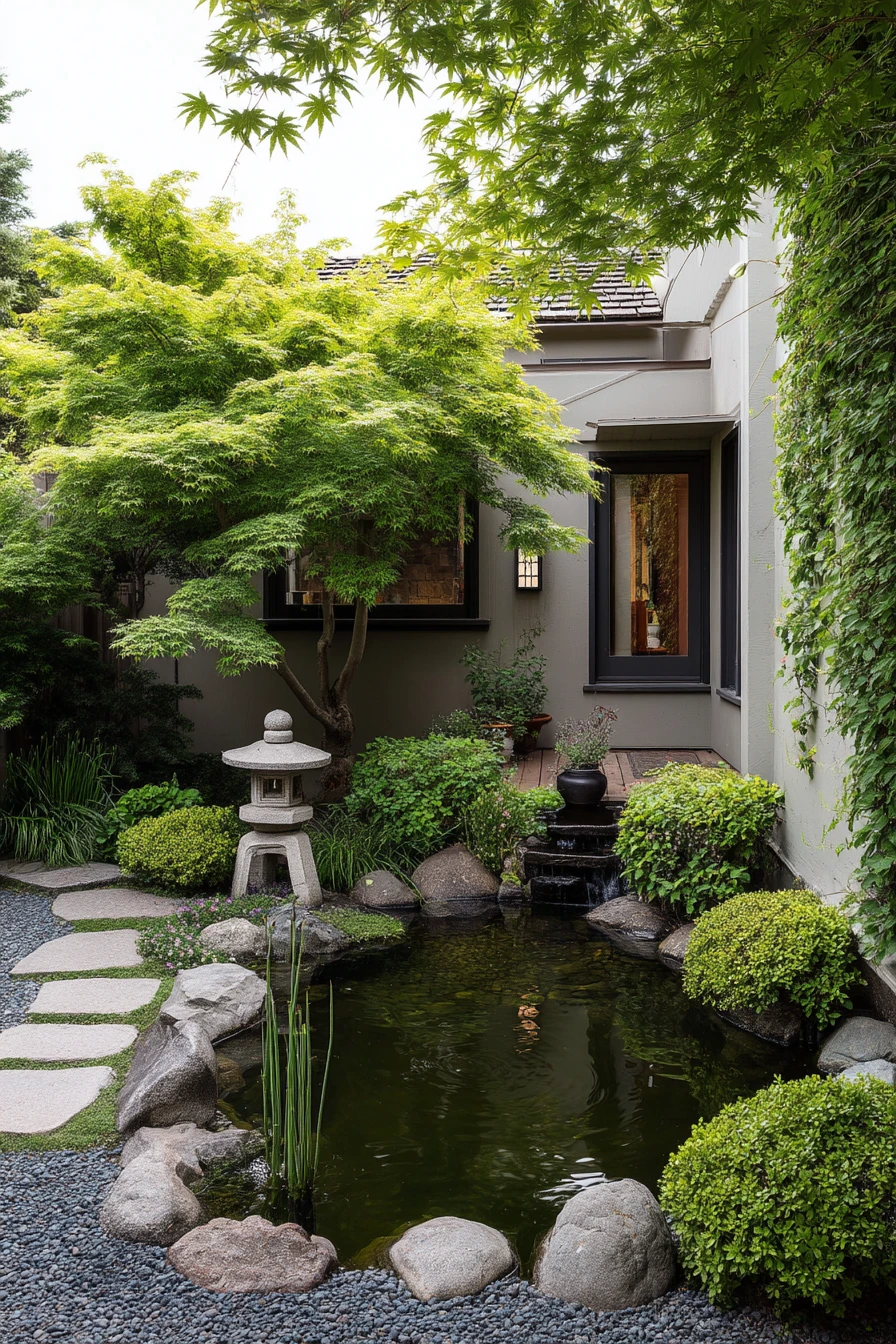
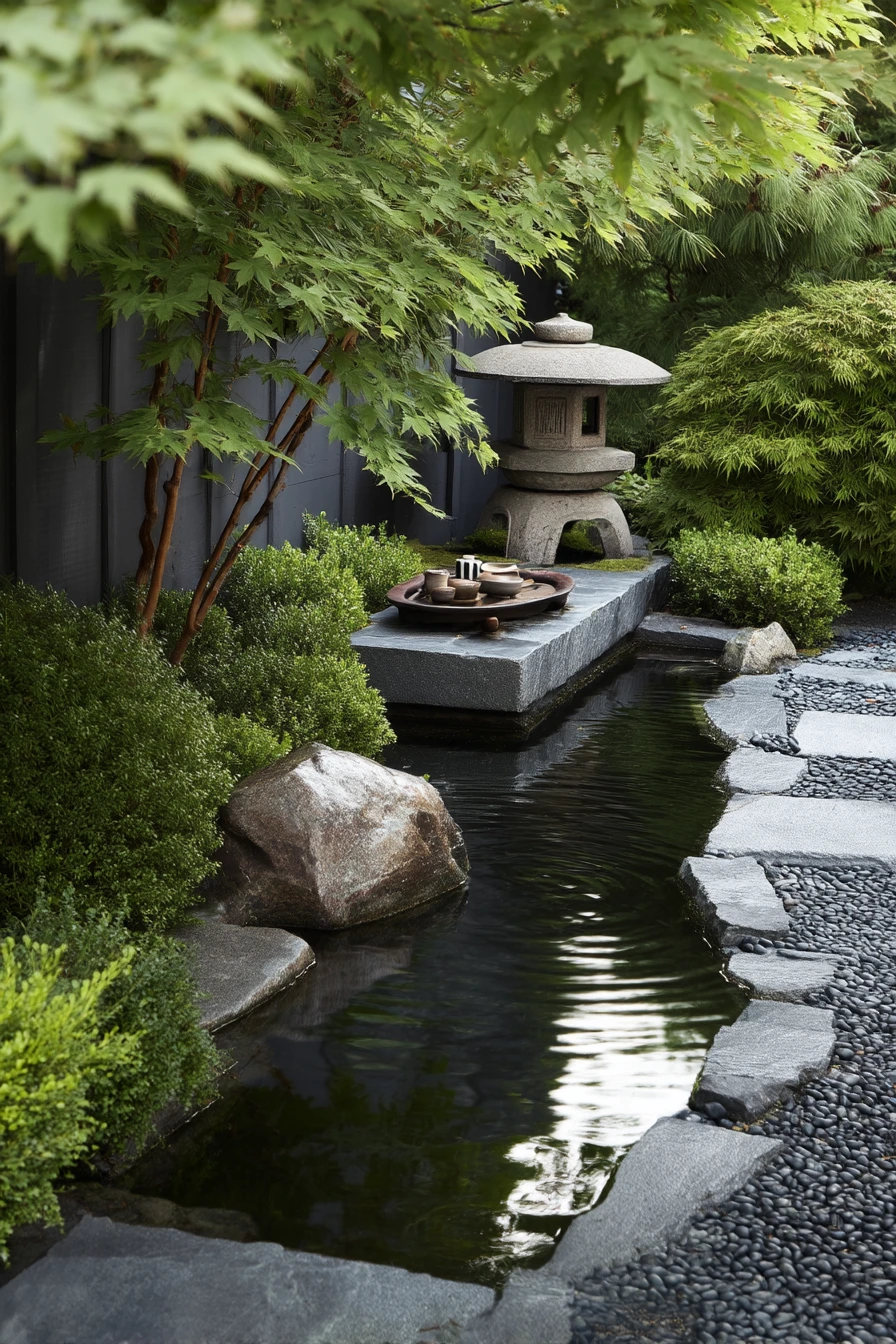
A serene residential garden pond with clipped maples and dark gravel feels calm and tidy. A stone lantern and a narrow bamboo water feature add a simple focal point without clutter. This style is built for slow mornings, so keep the layout open and easy to sweep.
Use a limited plant list. Choose one or two tree shapes, then add small grasses or low evergreens. Dark gravel hides fallen leaves better than pale stone, but you still want a net nearby. A bamboo spout can drip into a rock basin or straight into the pond, creating soft sound that fits the quiet mood.
Make it feel lived in with small daily items placed with care. Slippers by the back door, a tea tray on a low table, and a folded newspaper all match the idea of a calm routine. Hang a garden towel on a hook for quick hand drying after you trim plants or rinse a small filter.
- Keep shapes simple and repeat the same materials.
- Use dark gravel for a clean, calm ground plane.
- Add a stone lantern as a single strong accent.
- Use a slim bamboo spout for gentle sound and motion.
- Prune maples to frame the pond, not cover it.
Pro Design Tip: Line up the lantern, the bamboo feature, and your main stepping stone view so the scene feels balanced from one key angle.
Budget Considerations: Real stone lanterns can be expensive; a smaller lantern or a simple boulder accent can give a similar look for less.

9 Kid-Friendly Pond With Safe Edges
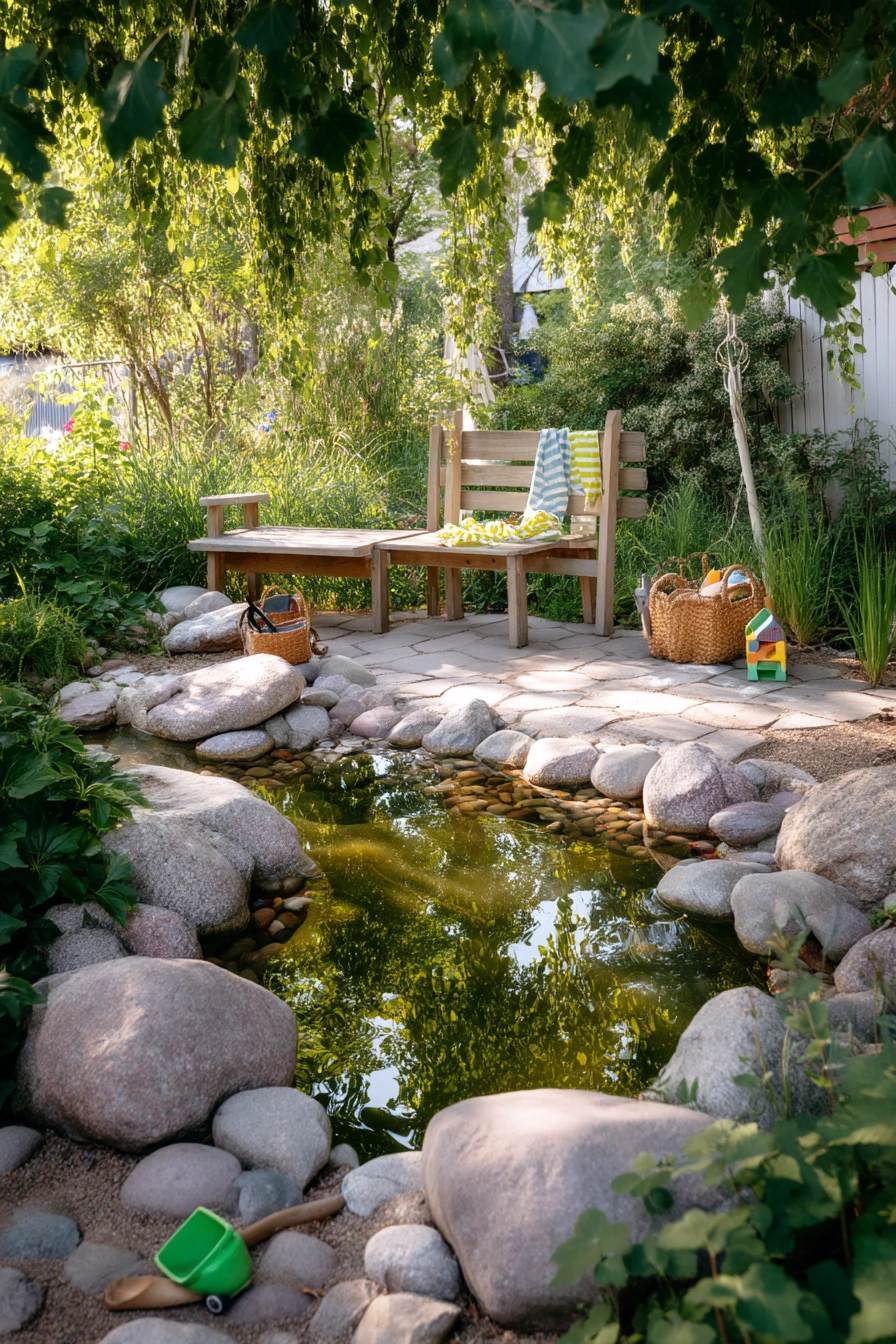
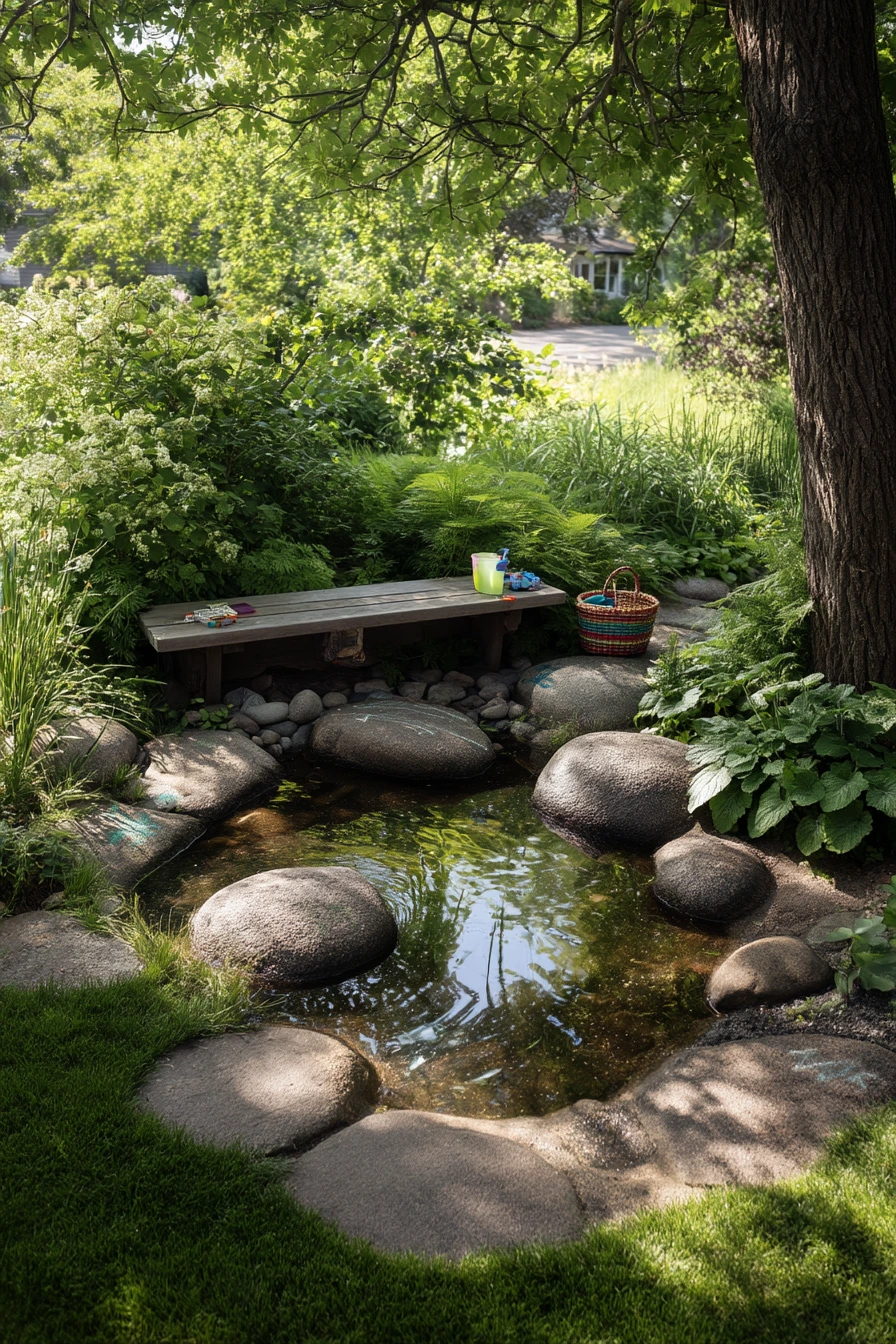
A family garden pond can be beautiful and still be built with safety in mind. Use safe, shallow edges and rounded boulders instead of sharp rock. Dense planting around the back and sides makes a soft barrier and also gives wildlife a place to hide.
Add a small viewing bench where parents can supervise. Place it close enough to see the water surface and any fish movement. Keep the edge stable so kids do not slip, and avoid loose stones right at the rim. If you want a natural look, use a gravel beach entry on one side, then keep the other sides planted.
Make room for real life. Chalk marks on the patio, a sippy cup on the bench, a basket of garden toys, and a damp towel are normal in a family yard. Plan a drying hook near the door and a small bin for pond nets and fish food so items do not pile up. Midday shade under tree cover can keep the water cooler, but skim leaves often so the pond stays clean.
- Build a wide shallow shelf around part of the pond.
- Use rounded boulders and stable flat stones for footing.
- Plant thickly to guide kids away from the deepest point.
- Add a bench with a clear view of the whole pond.
- Store toys and pond tools in one easy grab spot.
Pro Design Tip: Create one “kid safe zone” with a shallow gravel edge so children have a clear place to explore without stepping into deeper water.
Budget Considerations: Safety upgrades like stable edging and a quality pond net cost less than repairs; reuse existing boulders and add plants in phases.
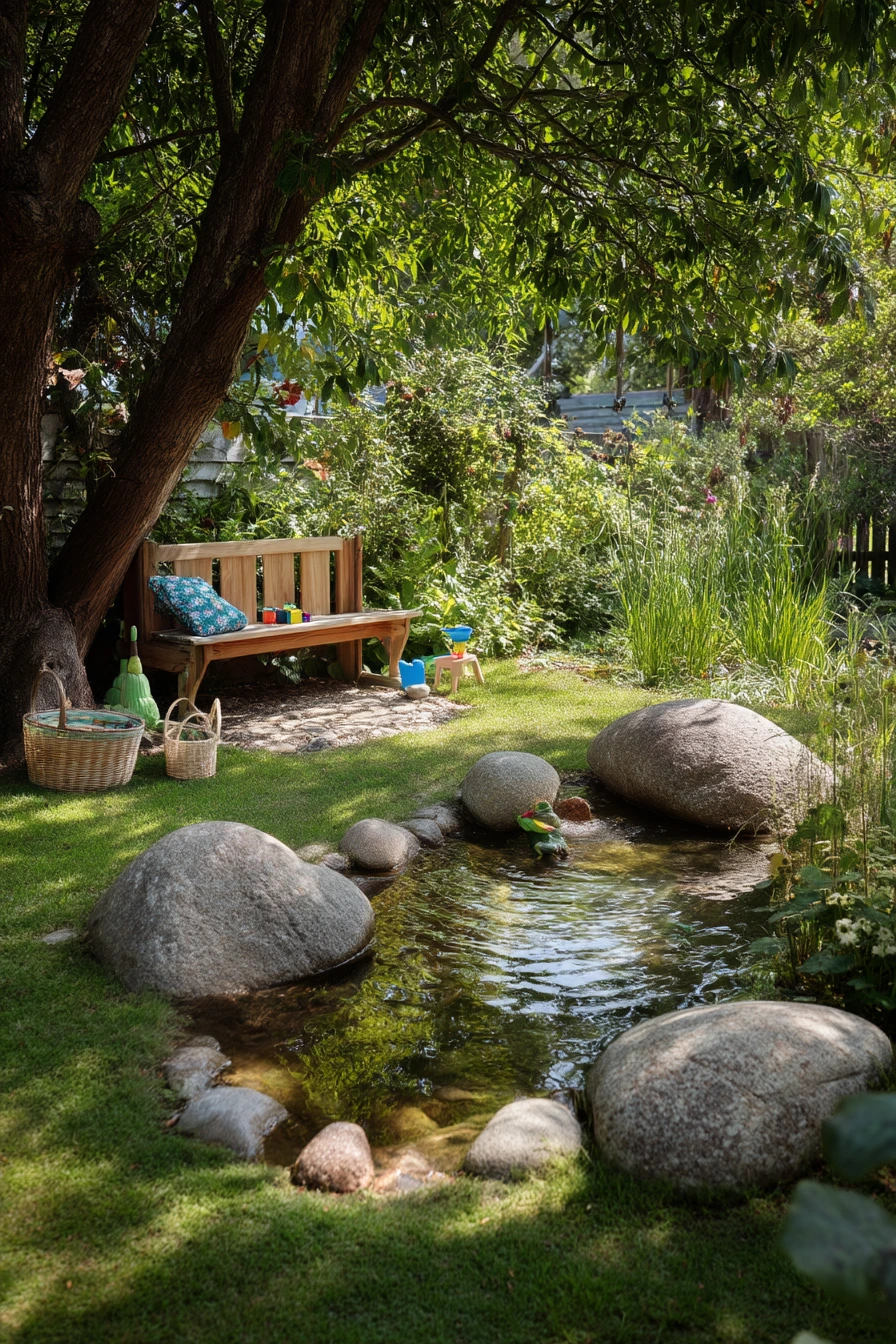

10 Before-and-After Pond Makeover Moment
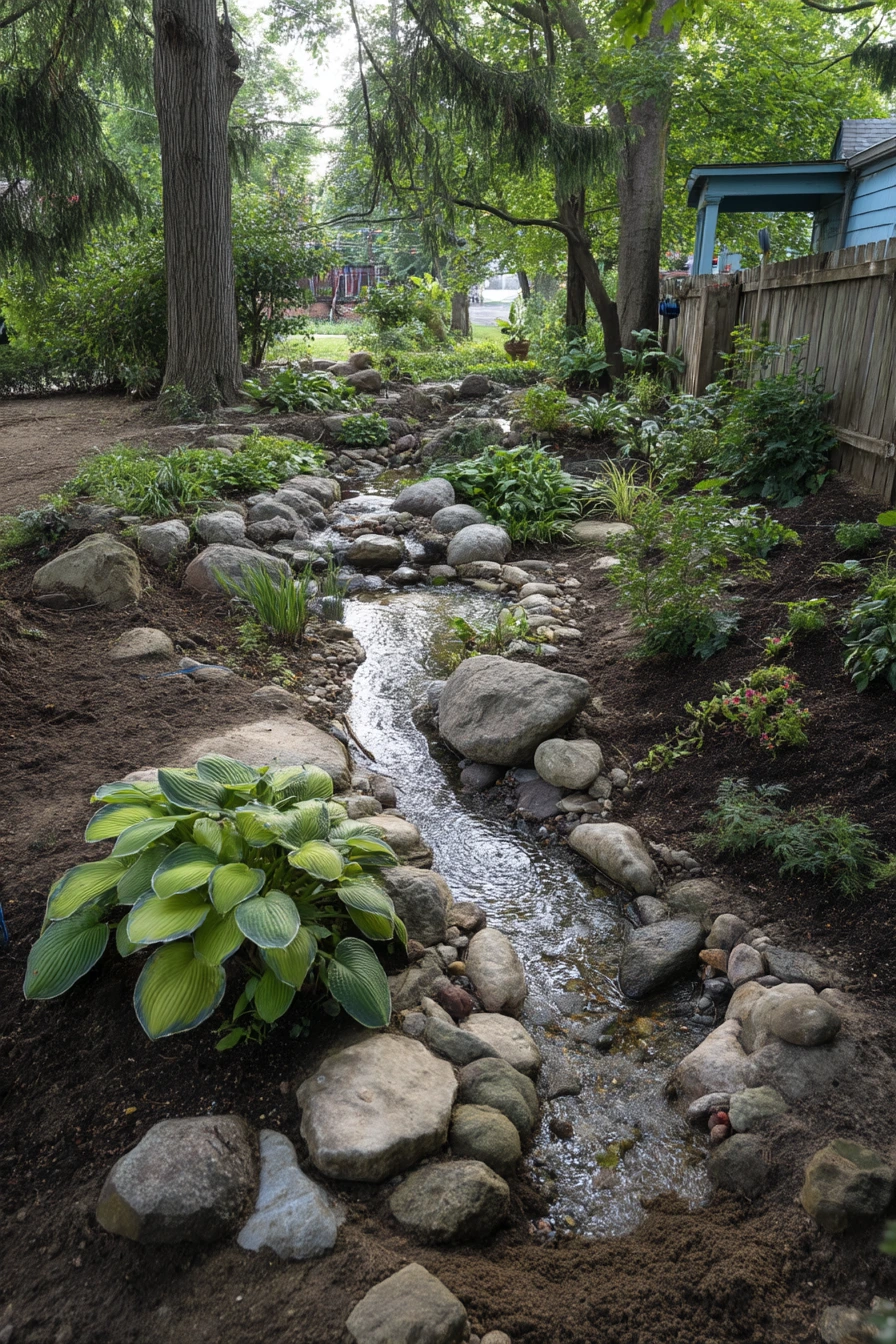

A pond makeover can refresh the whole yard without rebuilding everything. Start by cleaning the water, trimming dead growth, and resetting stones so the edge looks even. Newly edged stones make the pond look cared for right away, especially when paired with fresh hostas or other shade plants.
Do the work in steps so you do not stir up too much muck at once. Clean the pump and filter, then rinse rocks in pond water, not tap water, to protect helpful bacteria. If one area is unfinished, like bagged mulch and tools nearby, keep that zone neat and contained so the rest of the pond still feels finished.
For a realistic, recently worked on look, keep a notebook with a plant list and simple notes about sun and shade. Muddy boots and a hose running gently are common during a refresh, but watch that runoff does not flow into the pond. Late morning light is good for checking how the new plant shapes sit against the water.
- Reset edging stones for a tighter, cleaner border.
- Add a few new plants and repeat them for unity.
- Clean filters and pumps before you add more fish or plants.
- Keep mulch and soil away from the rim to prevent cloudy water.
- Test water after changes, especially if fish are present.
Pro Design Tip: After you edge the pond, add one narrow band of gravel behind the stones to stop mulch from sliding in and to create a crisp outline.
Budget Considerations: A makeover can be low cost if you reuse stone and focus on a few new plants; prioritize water testing and filter media before buying decor.

11 FAQ: Garden Pond Ideas and Easy Care Basics
These common questions help you plan a pond that looks good and stays easier to maintain. Small choices like edging, pump size, and plant placement can prevent most beginner problems.
If you are coming from Pinterest, save the idea that matches your space, then use this FAQ to pick the right materials. A simple plan makes the build feel less stressful.
Use the answers as a checklist before you buy supplies. If you start with a small pond or stock tank, you can always expand later.
- How deep should a small garden pond be? For most small backyard ponds, 18 to 24 inches works well, but check local weather and whether you want fish.
- Do I need a pump for a garden pond? A pump helps keep water moving and clearer; even a small pump can reduce mosquito issues.
- What plants are easiest for beginners? Try hardy water lilies in pots, iris, sweet flag, and other marginal plants that grow in shallow shelves.
- How do I keep pond water from turning green? Add more plant cover, reduce direct sun when possible, avoid overfeeding fish, and clean filters on a schedule.
- Can I make a pond if I rent? Yes, a stock tank or container pond with removable cladding is a good choice and can move with you.
Pro Design Tip: Take one photo from your main viewing spot and plan the pond edge and plants for that angle first, then fill in the rest.
Budget Considerations: Start with a small pond and good circulation; you can add more plants, lights, and stone later without redoing the whole build.
Garden pond ideas work best when they match how you live, not just how they look in a photo. A family pond needs safe edges and seating, while a courtyard pond needs slim shapes and tidy details.
Pick one style from the sections above, then borrow small upgrades like bamboo spouts, soft lighting, or repeated stones. Start with clean water, stable edging, and a simple plant plan, and the pond will get better each season.