

Looking for garden landscaping ideas that feel real, not staged? This guide is built around everyday spaces like a courtyard by the back door, a suburban front yard, a small patio, and even a narrow balcony.
You will get clear layout ideas, easy plant pairings, and small styling details that make a yard feel finished. Think brick paths, native grasses, lavender, raised planters, gravel strips, and simple lighting.
Each section includes a quick “how to style it” list, plus a pro design tip and budget notes. Use these ideas to plan a garden that looks good, works for your schedule, and holds up to kids, pets, and weather.
Save the sections you like, then copy one small change at a time. A better path edge, a tighter mulch border, or a few pots by the door can make a big difference.
1 Small Courtyard Path with Native Planting
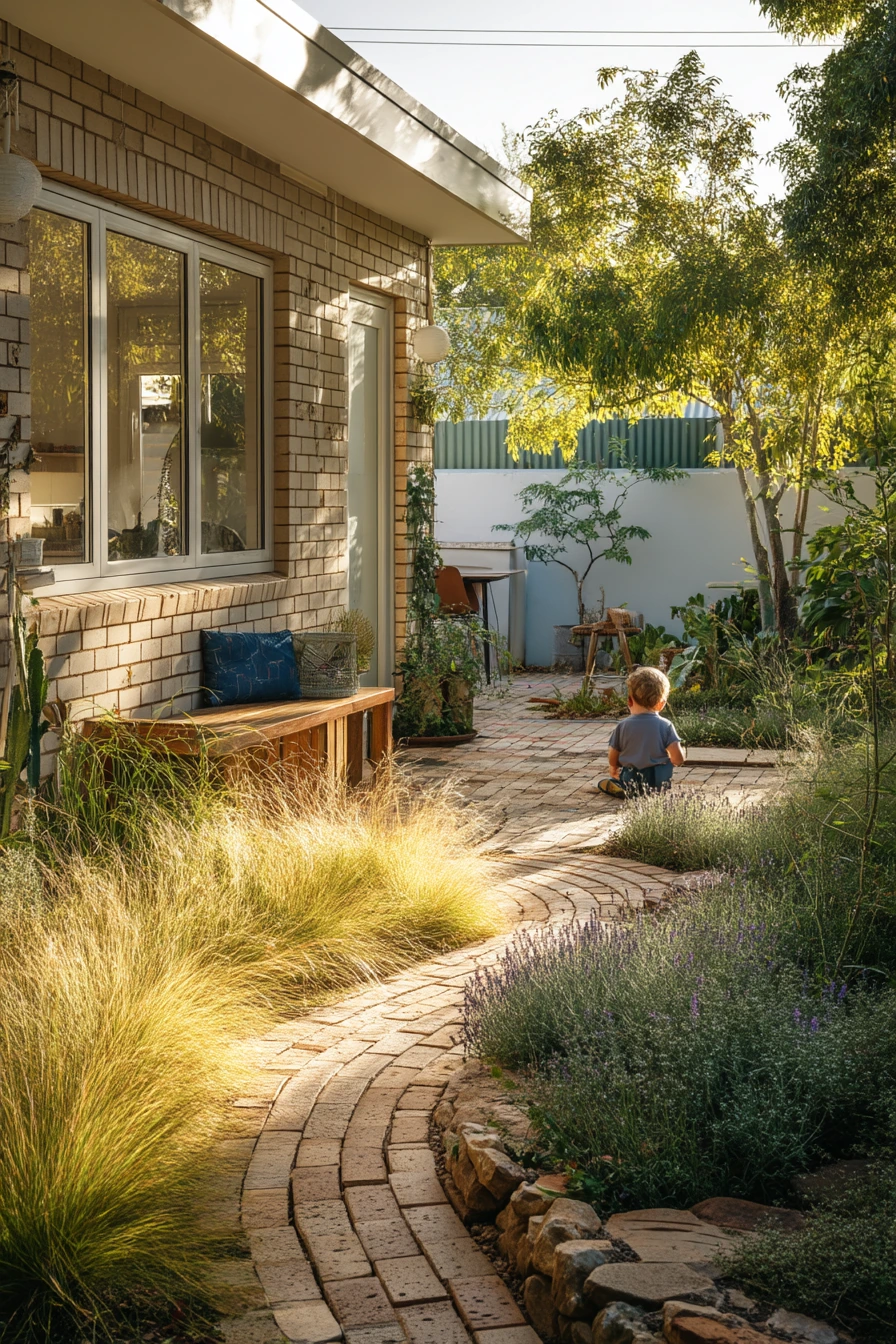
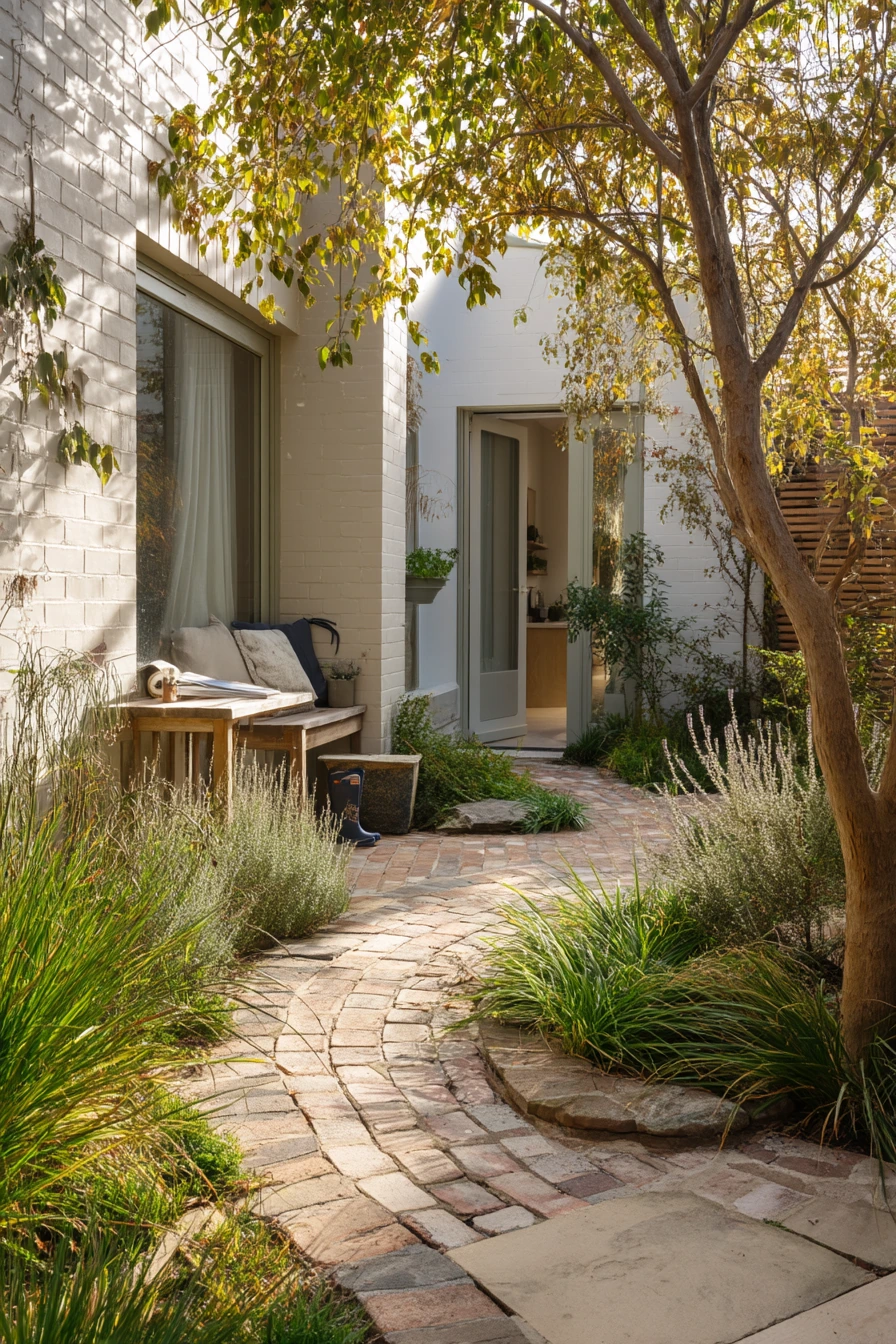
A compact courtyard is one of the best garden landscaping ideas for a busy family because it is close to the kitchen, easy to water, and simple to keep tidy. Start with a winding brick path that leads from the back door to a small bench or a watering spot. A narrow curve makes the space feel larger, and it gives you room for plants on both sides.
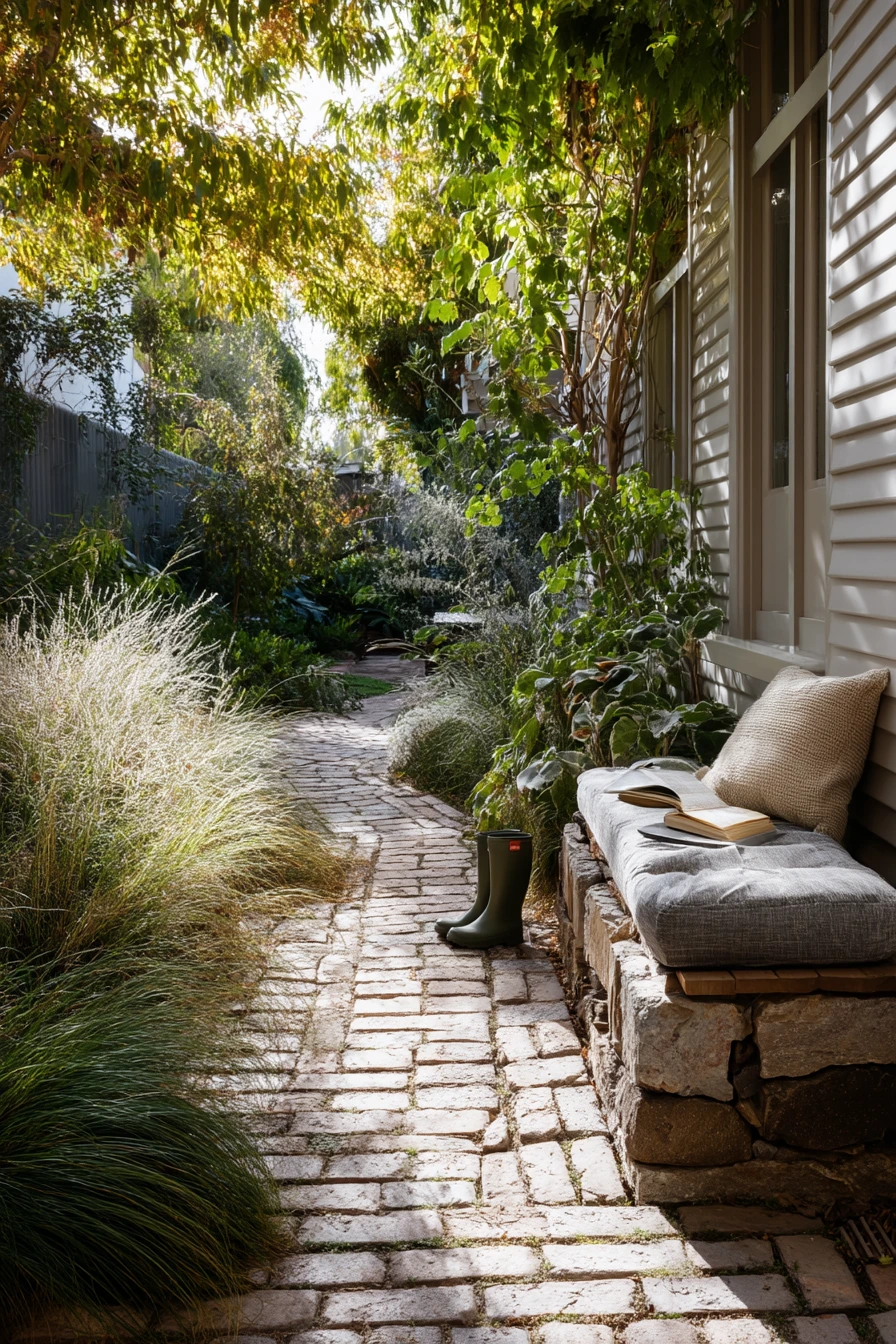
For planting, use native grasses for movement, lavender for scent, and low stone edging to keep the border neat. Keep the plant heights in layers: low edging plants near the pavers, then lavender, then taller grasses at the back. This creates a calm look even when the garden is not perfect. Leave a little “work zone” by the door for muddy boots and a watering can so dirt stays in one place.
To style it like a real family home, add one bench with an outdoor cushion and keep a small garden book nearby. Let leaf shadows and soft window light do the rest. Practical touches matter in small spaces, so choose pale pavers or light gravel that shows the path clearly at dusk. If you have kids, pick plants that can handle a bump, and keep thorny shrubs out of the walkway.
- Use a compact brick path with gentle curves to slow the walk and widen the feel.
- Plant native grasses in clumps for texture and low care.
- Add lavender near the path so you brush it as you pass.
- Install low stone edging to stop soil from spilling onto pavers.
- Place a bench close to the door for quick breaks and easy viewing.
Pro Design Tip: Keep the path width at least 30–36 inches so two people can pass, and set edging stones slightly above soil level to catch mulch before it washes onto the pavers.
Budget Considerations: Reuse old bricks for the path and source local stone offcuts for edging; small mixed bundles often cost less than full pallets.

2 Front Yard Curb Appeal with Pollinator Beds

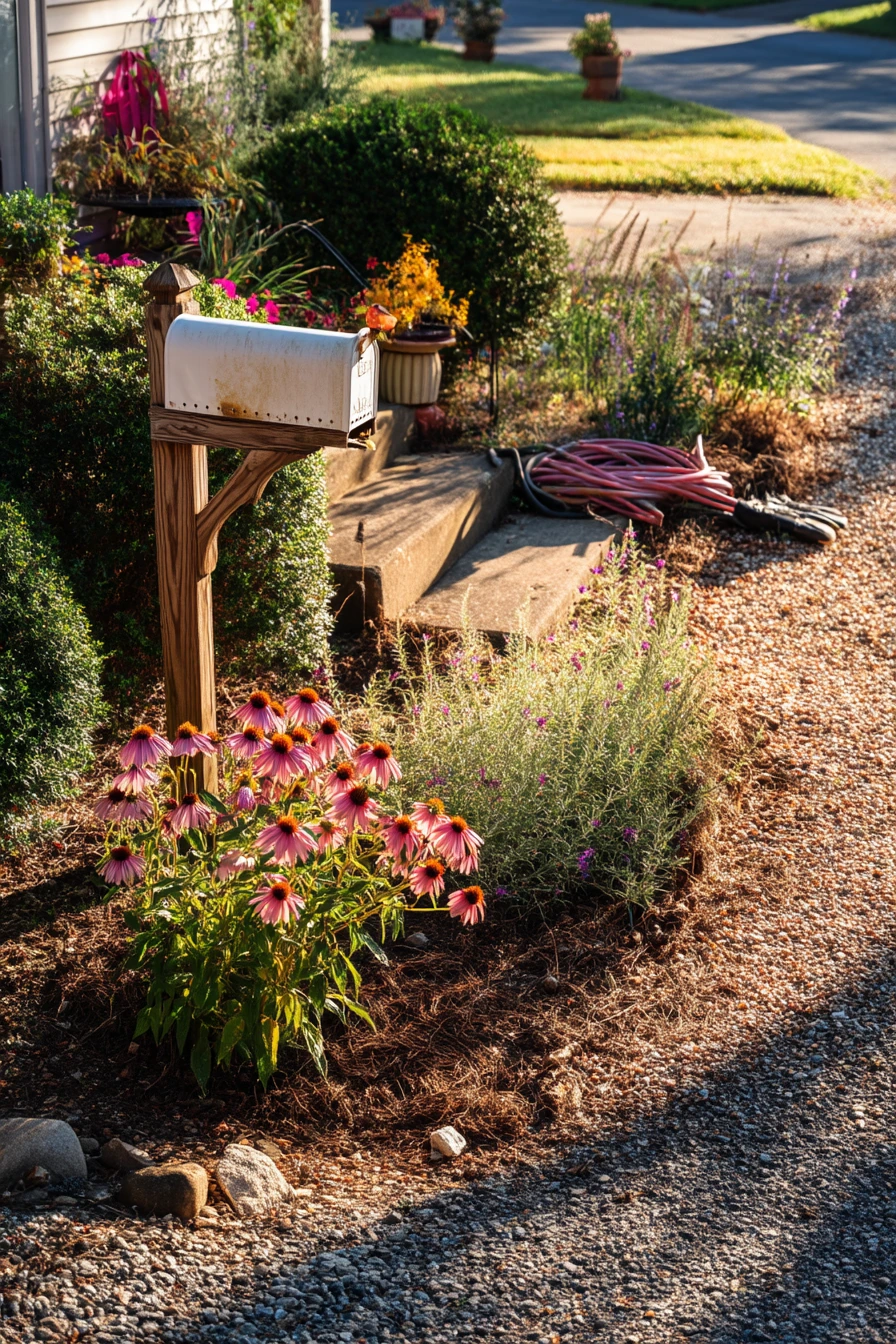
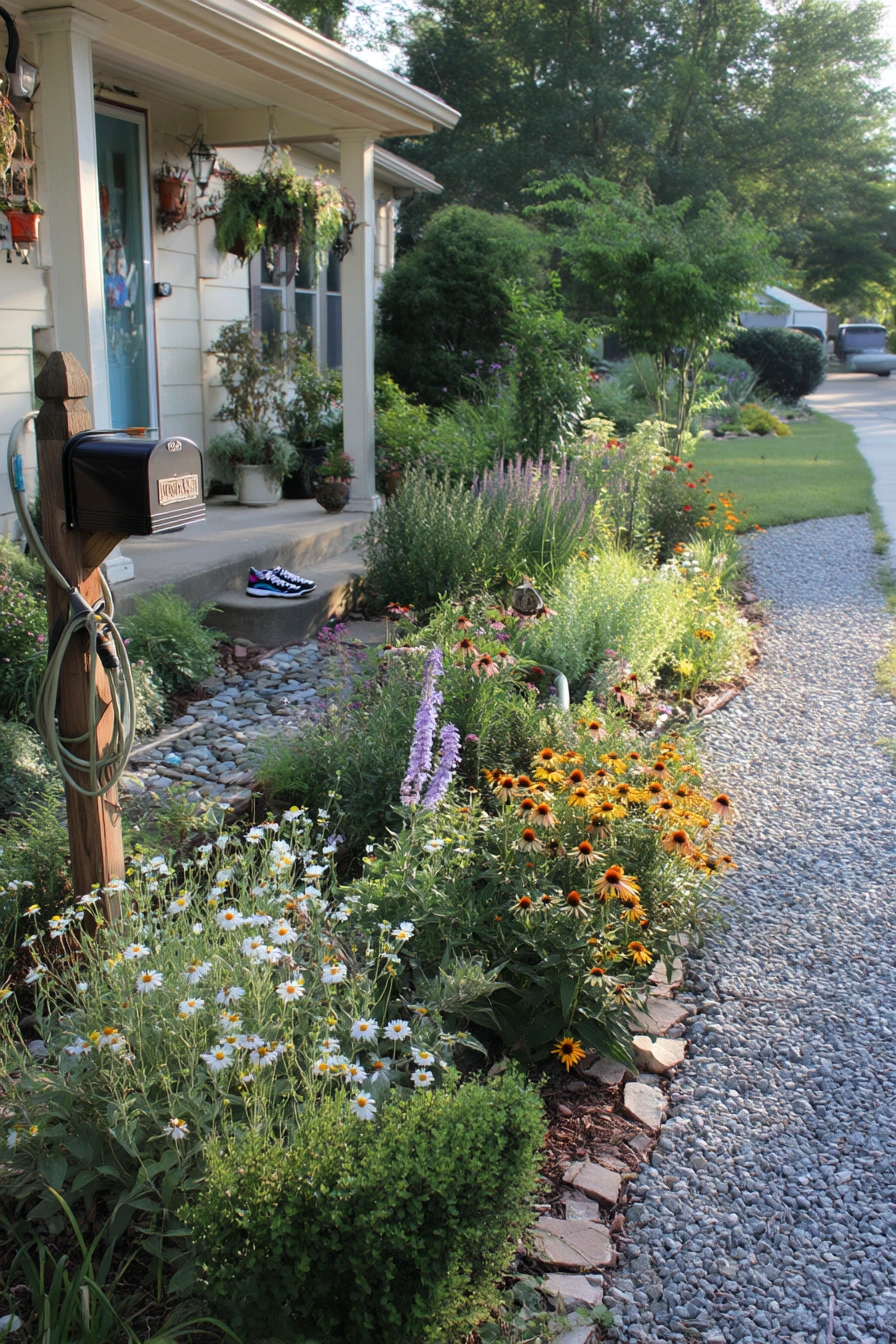
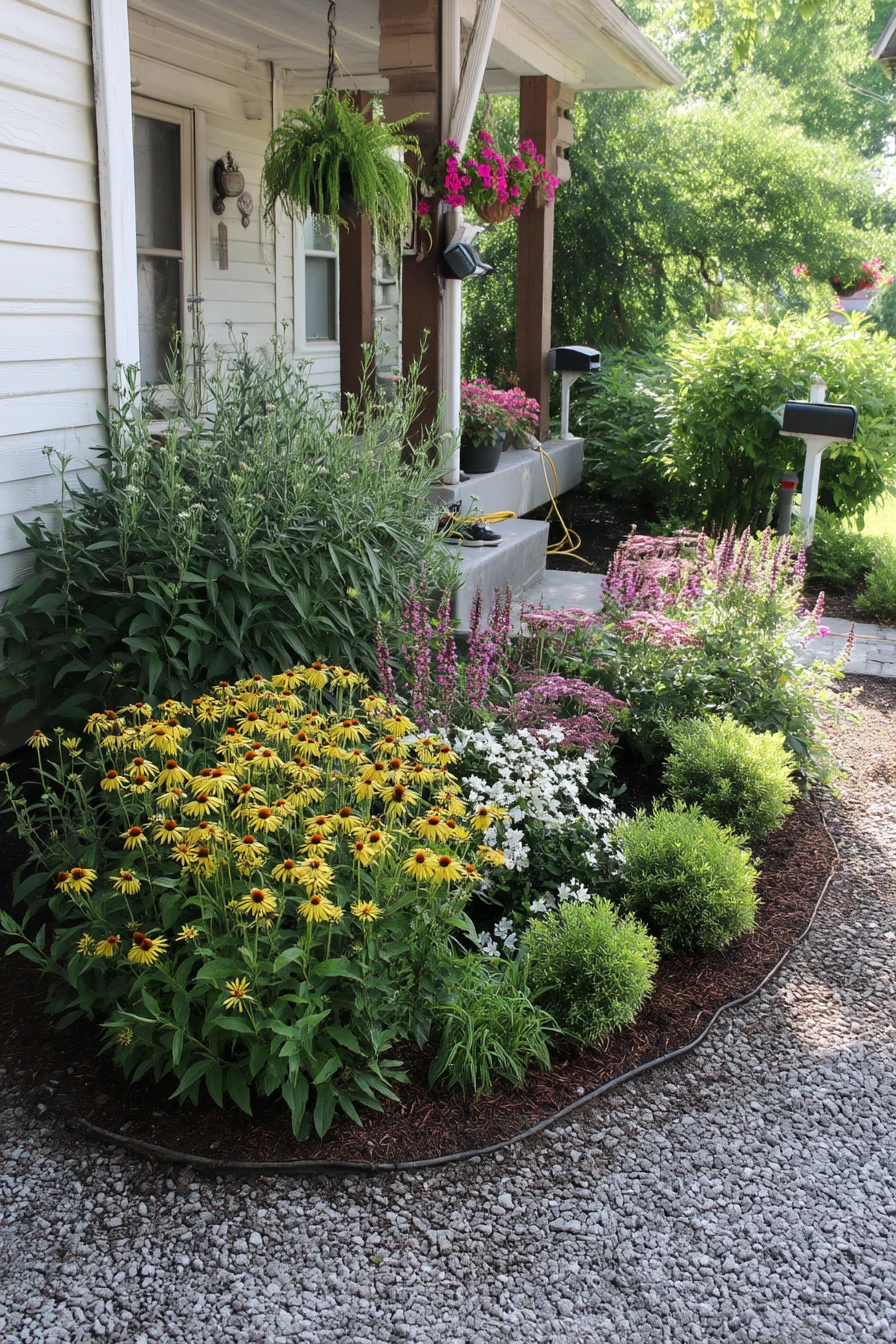
A lived-in suburban front yard can look welcoming without being fussy. The main idea is layered pollinator beds with coneflowers and salvia, plus simple boxwood shapes for year-round structure. A narrow mulch border keeps the edges crisp and helps the plants look cared for, even when you miss a week of weeding.
Start by choosing one clear bed line along the walkway or driveway. Keep the tallest flowers toward the back and the lowest plants near the edge so the bed reads well from the street. Add repeating clumps of coneflowers for color, then tuck in salvia for long blooms and a soft, full look. If you like a tidy feel, add two or three boxwood mounds spaced evenly to anchor the bed.
Small details sell the look. A mailbox with a hanging basket adds height, and it pulls attention toward the house. Keep garden gloves on the step and coil the hose neatly near the side of the porch so tools feel planned, not messy. If you have gravel, faint wheel marks will happen, so use a simple rake to smooth it once a week. Aim for “fresh and believable,” not perfect.
- Shape one main bed with a smooth curve for a clean front-yard line.
- Use coneflowers and salvia for a pollinator-friendly color mix.
- Add a few boxwood forms for structure in every season.
- Keep a narrow mulch strip to reduce weeds and sharpen edges.
- Style the entry with a hanging basket and one simple pot near the step.
Pro Design Tip: Repeat the same 2–3 plant types in groups of three or five; repetition makes a front yard look designed, not random.
Budget Considerations: Buy perennials in small sizes and let them fill in; use shredded mulch from local delivery services instead of bagged mulch.
3 Backyard Dining Patio with Raised Planters
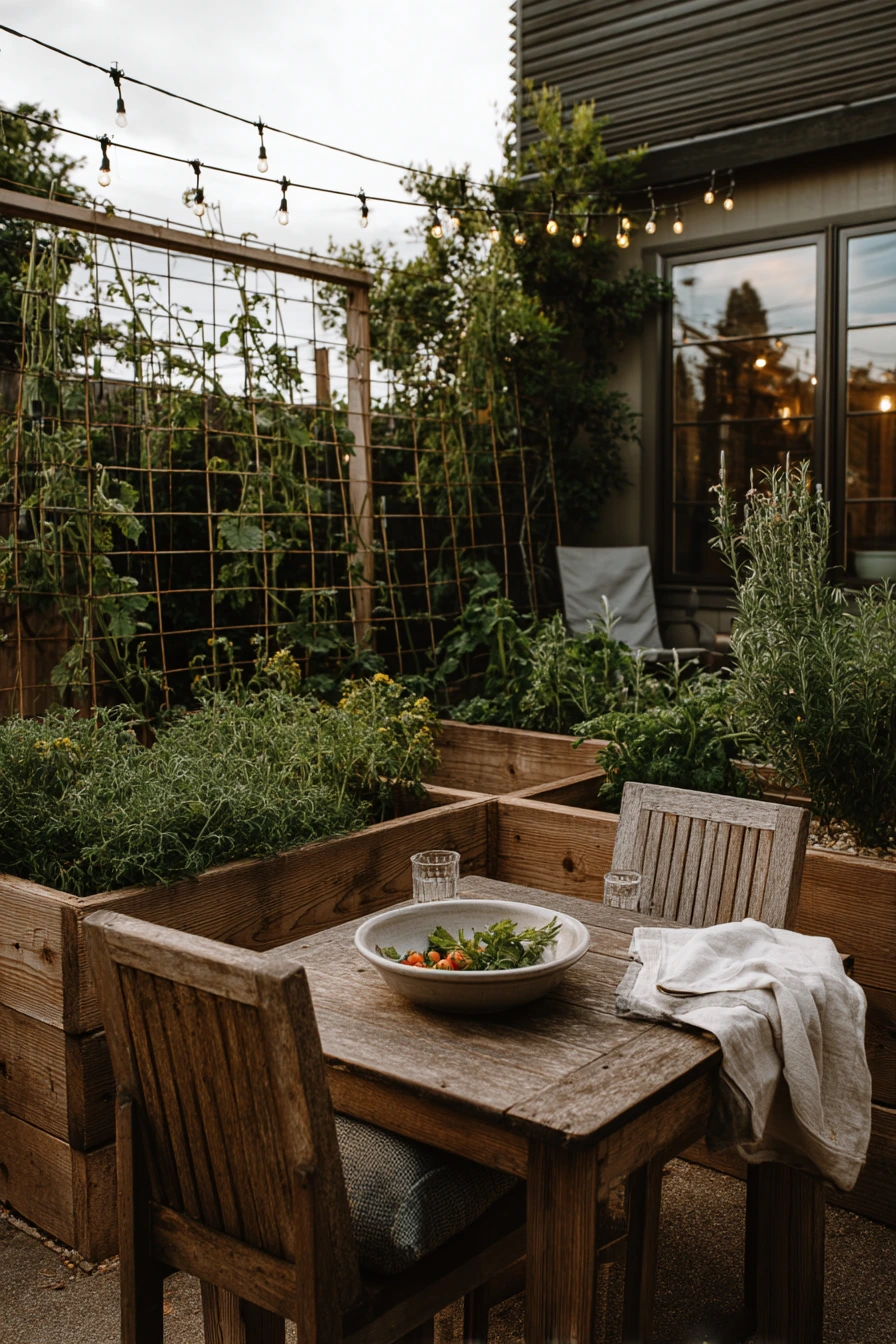

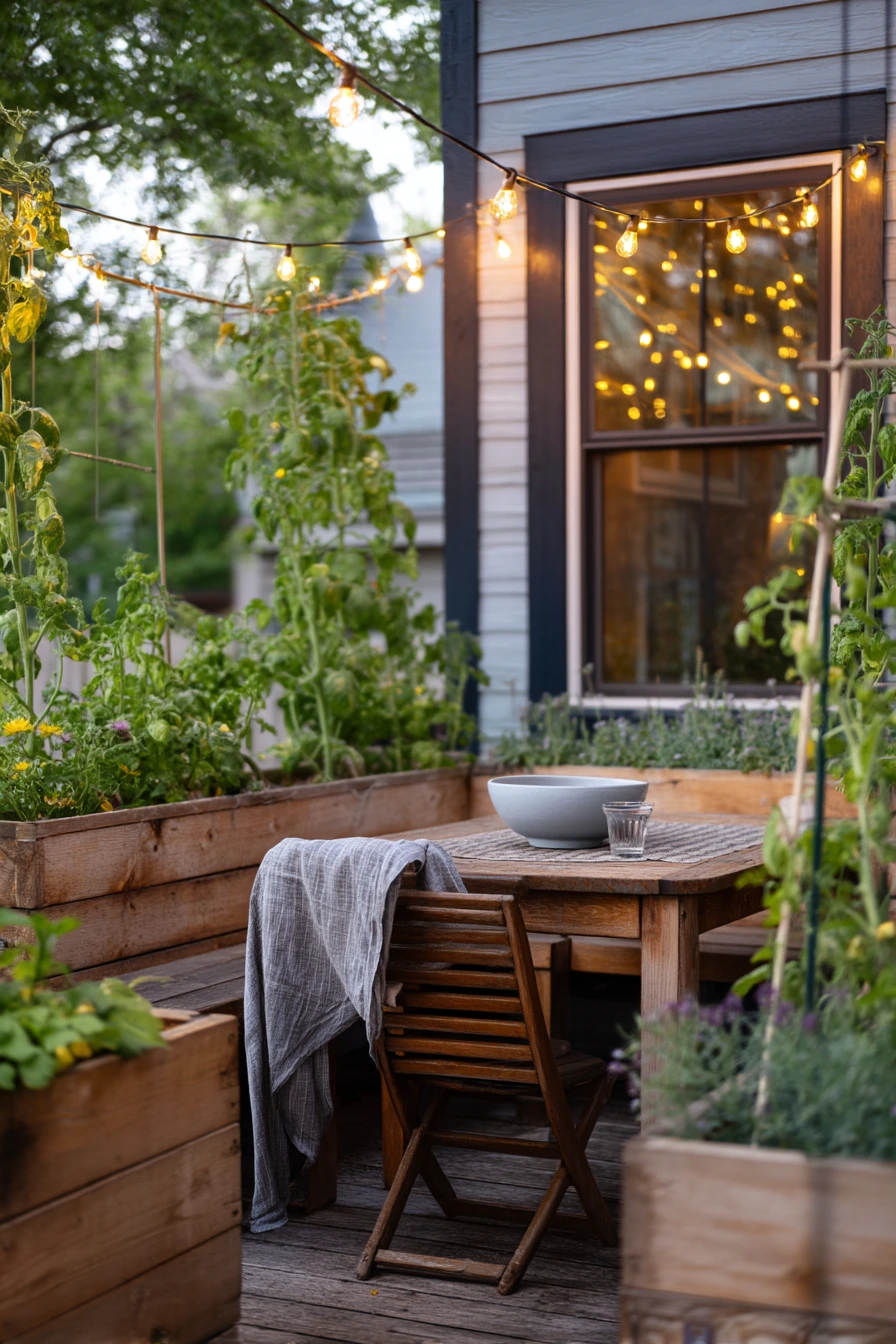
If you want practical backyard landscaping ideas for a busy couple, build the space around one small dining patio. Frame it with raised cedar planters so the garden feels close and easy to reach. This layout also keeps the planting soil contained and reduces bending, which helps you stick with it through the season.
Raised planters are perfect for tomatoes, rosemary, and other kitchen favorites. Place a trellis panel at the back of the bed for tomato vines and any climbing herbs or flowers. Keep the center of the patio clear for a table and two to four chairs, and add simple string lights for soft evening use. A chipped ceramic bowl, a water glass, and a folded dish towel on the table make the area feel lived-in, not staged.
For how to style it, think “low effort, high comfort.” One chair slightly pulled back makes the patio look inviting, and it also reminds you to actually sit down outside. Use warm light from the house windows as your main mood lighting, and keep extra planters near the door so watering is fast. If you cook often, add a small tray for herb snips and a spot to rinse produce.
- Build a small patio first, then frame it with raised cedar planters.
- Train tomatoes on trellis panels to save space and boost airflow.
- Plant rosemary at the corners for a strong scent and easy clipping.
- Hang simple string lights along the fence or eave for evening meals.
- Keep one “table basket” for towels, snips, and matches for candles.
Pro Design Tip: Set raised beds 18–24 inches high for comfort, and leave at least 36 inches of walking space between planters and the table so the patio never feels tight.
Budget Considerations: Use standard cedar fence boards or heat-treated pine for planters, and choose one trellis panel style you can repeat as you expand.

4 Renter-Friendly Balcony Garden Nook
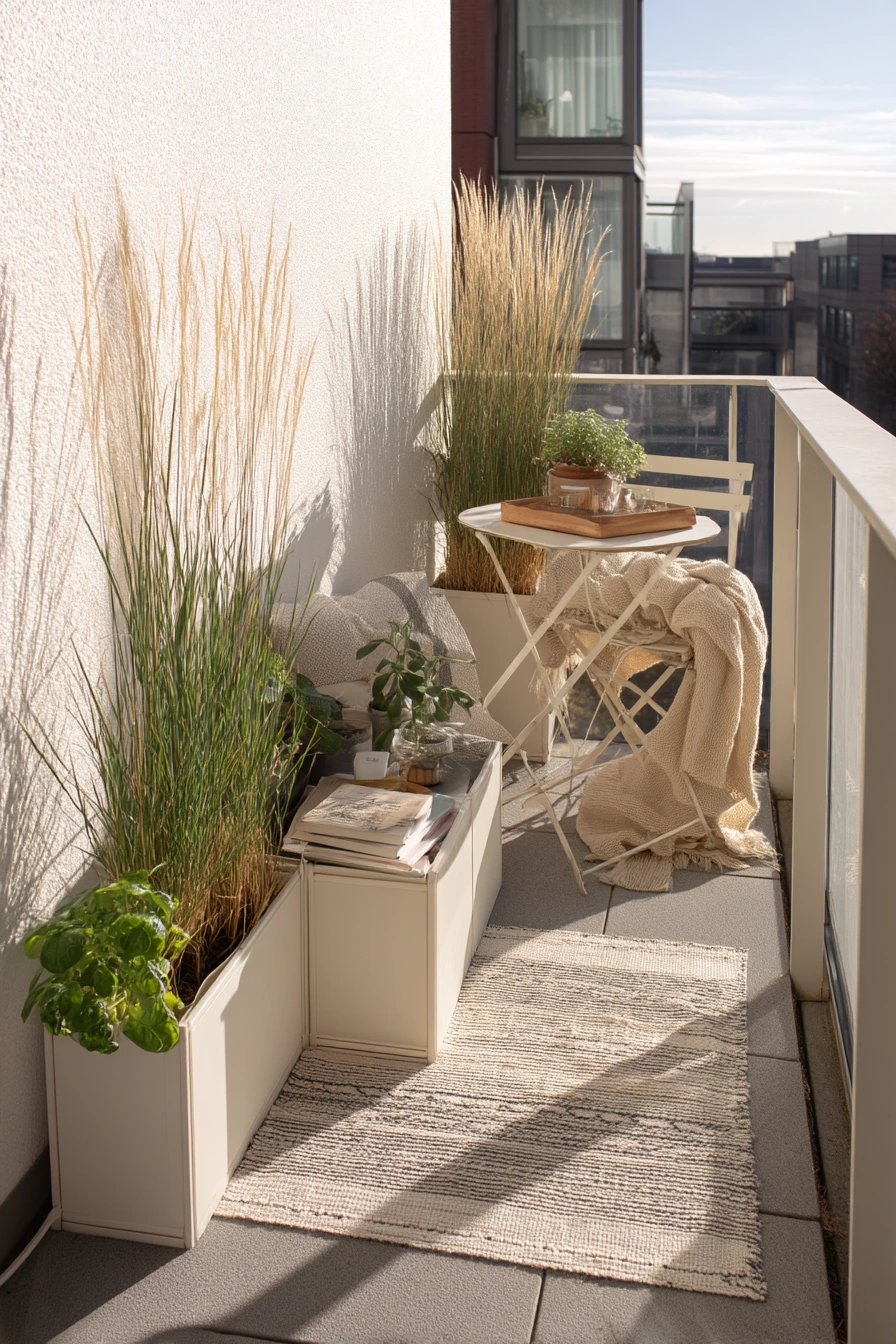
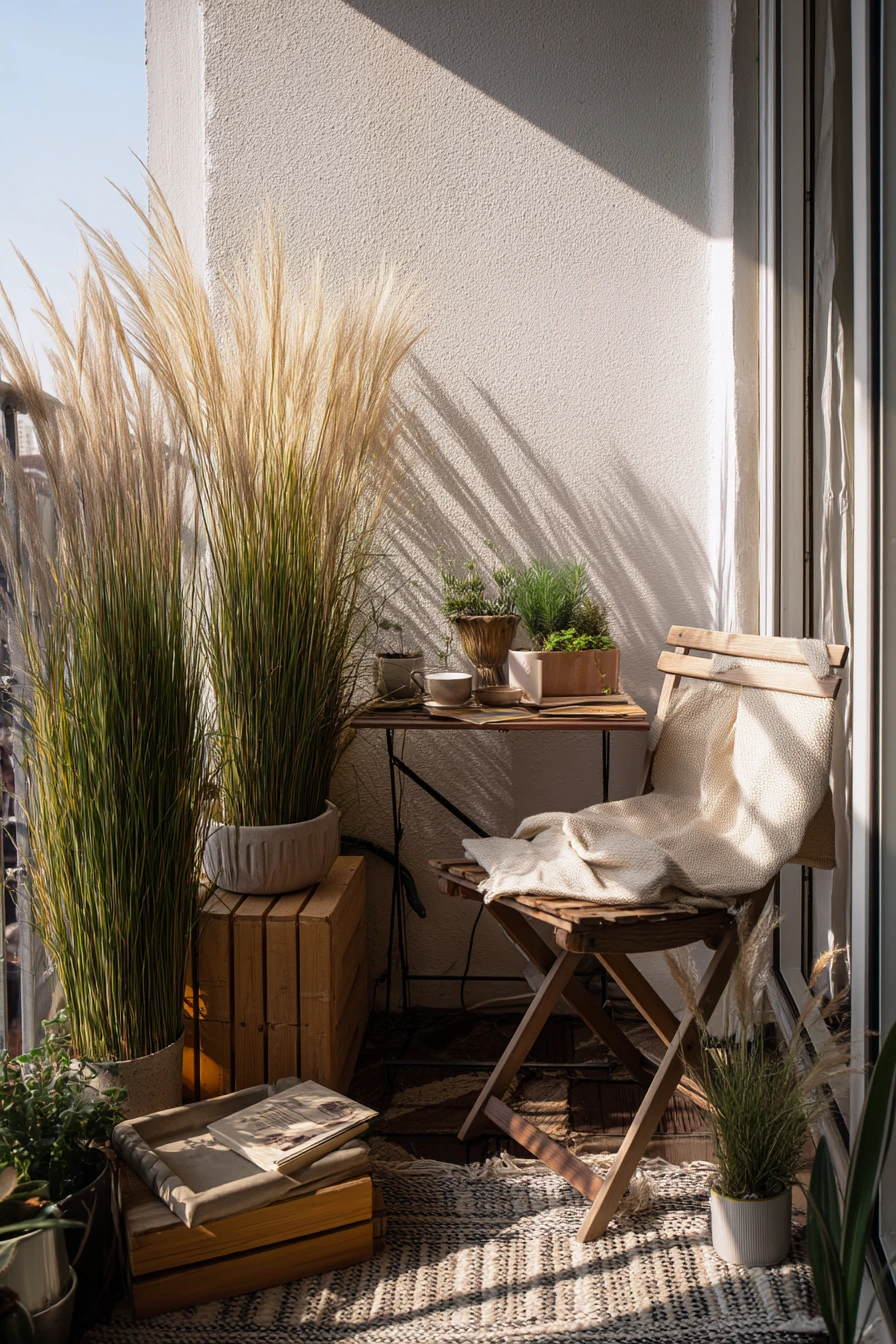
Balcony garden landscaping ideas work best when everything can move. Renters often cannot drill into walls or change flooring, so focus on modular pieces: movable planter boxes, lightweight pots with tall grasses, and a compact herb tray near the door. This gives you privacy, greenery, and fresh herbs without a permanent build.
Start with an outdoor rug to define the “room.” Place taller grasses along the railing or the side that faces neighbors to create a soft screen. Keep the center open for a folding chair and a small table. Add a simple tray of herbs like basil, parsley, thyme, and mint, but keep mint in its own pot so it does not take over. Morning light is great for herbs, so put sun-loving pots where they get the most hours.
Style the balcony like a real city-home moment. Leave a paperback on the table, and keep a phone charging cable tucked in a small basket so it does not look messy. A slightly wrinkled throw makes the space feel cozy and helps on cool mornings. Watch for plant shadows on the wall; they add depth and make a small balcony feel calmer. Watering is the main chore, so use saucers and a small watering can that fits in a closet.
- Use movable planter boxes so you can change the layout fast.
- Choose tall grasses in lightweight pots for privacy without heavy planters.
- Add a compact herb tray for daily cooking and easy care.
- Lay an outdoor rug to make the balcony feel like a room.
- Pick a folding chair and small table to keep the space flexible.
Pro Design Tip: Group pots in odd numbers and vary heights (low, medium, tall) to create a layered look that feels intentional in a narrow space.
Budget Considerations: Shop end-of-season outdoor rugs and use recycled nursery pots inside larger cache pots; it looks clean and costs less.

5 Shady Side Yard with Mossy Stepping Stones
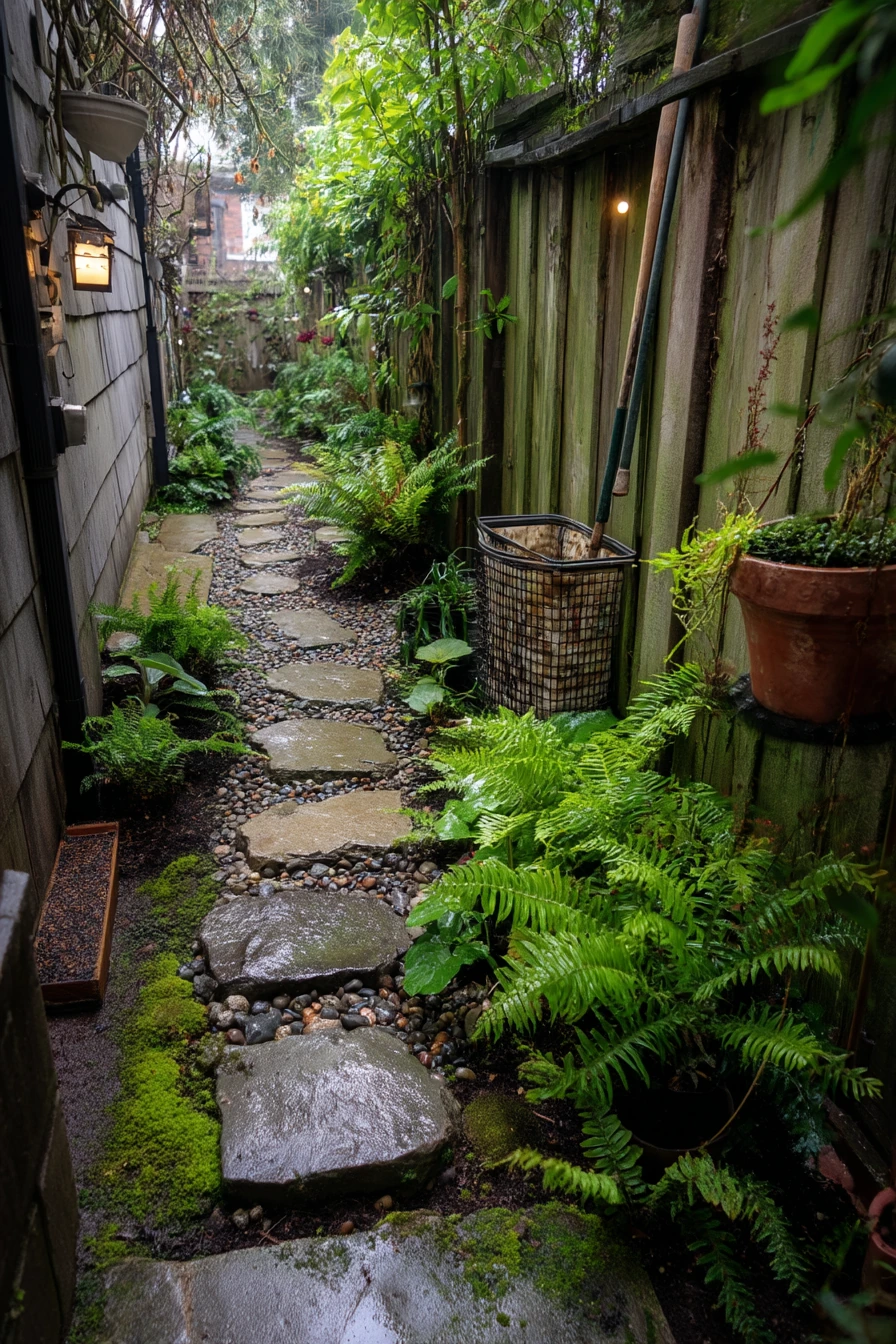

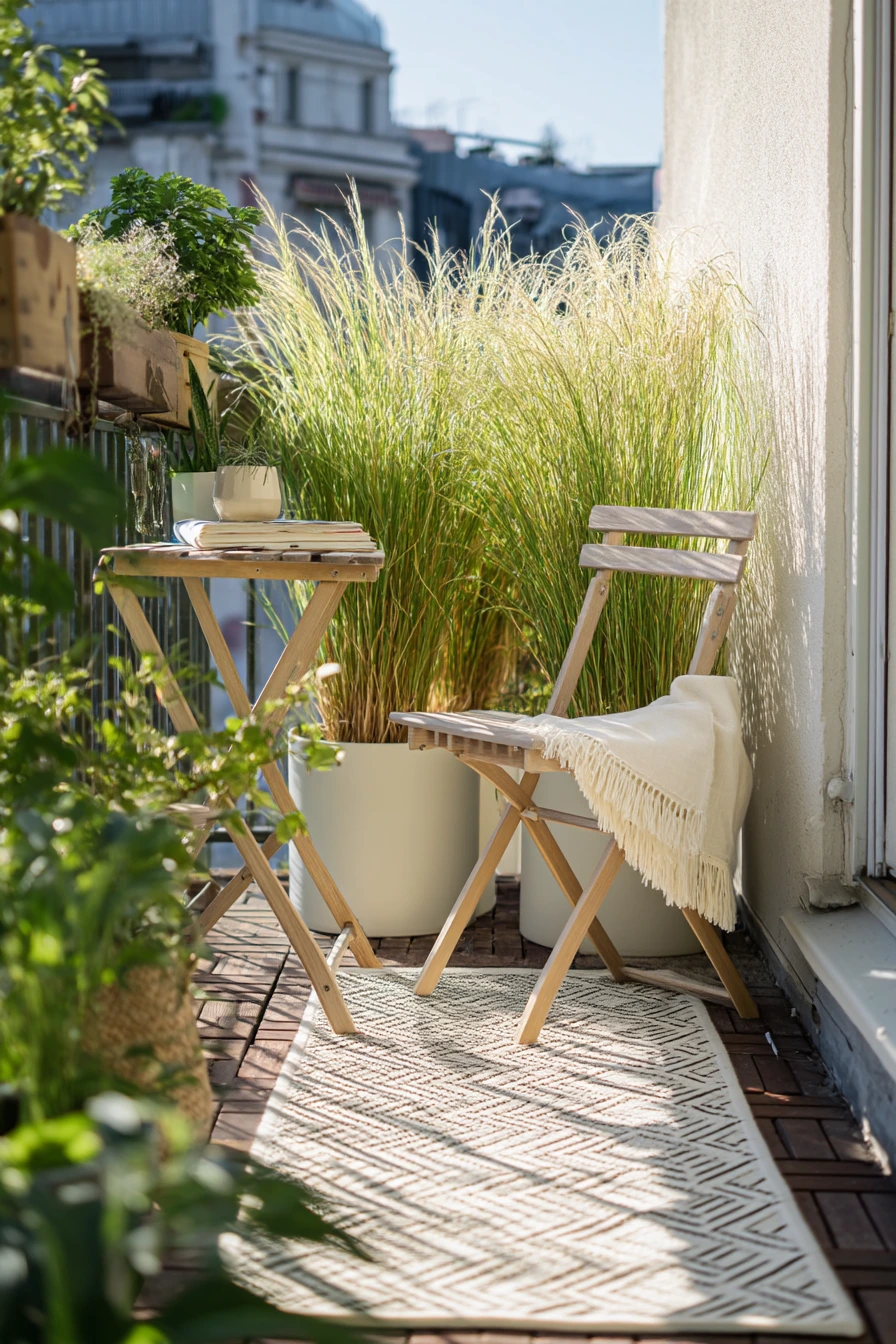
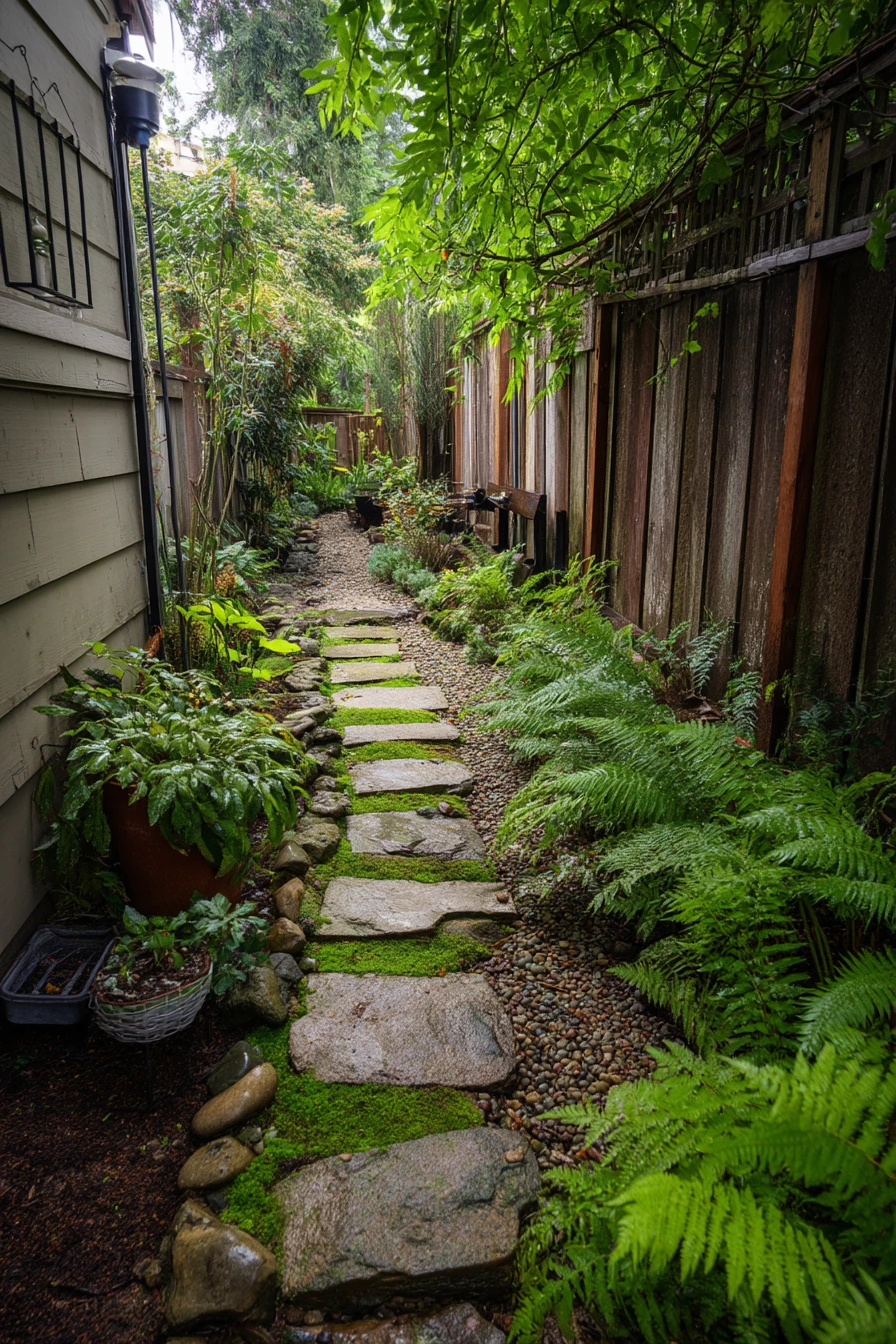
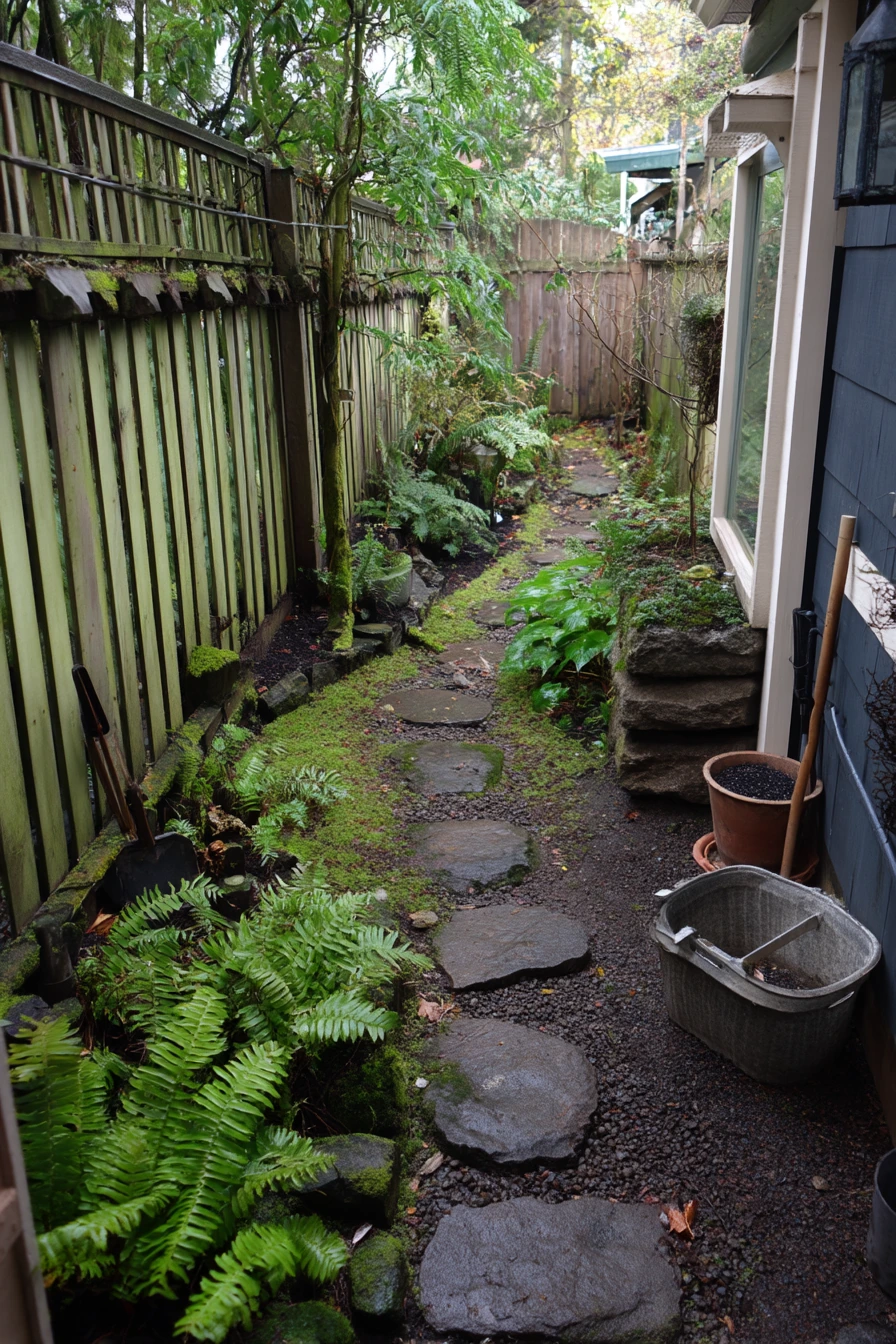
A shaded side yard often gets ignored, but it can become a quiet, functional garden path. The key is to accept the low light and lean into plants that like it. Use mossy stepping stones, ferns, and hellebores to create a cool, calm walkway beside weathered fencing. Add a narrow gravel strip to keep mud down and make the area easier to maintain.
Start by deciding what the side yard needs to do. If it is a path to the back gate, keep the stepping stones even and stable. Set them into the soil so they do not wobble, and fill gaps with gravel or shade-tolerant groundcover. Place ferns in repeating clusters for a simple rhythm, and tuck hellebores where you can see their blooms in late winter and early spring. Slender lanterns or low path lights help on dark evenings, but keep them subtle.
Because this is a working zone, plan a spot for tools and compost. A garden rake leaning near a compost bin makes sense here, and a kid toy basket by the gate keeps clutter from spreading. Pay attention to damp soil texture and drainage. If water sits after rain, add more gravel and raise the stepping stones slightly. A side yard can feel finished even with minimal decor because the plants and stones do the work.
- Lay mossy stepping stones to create a clear route in low light.
- Plant ferns in groups for fullness and easy repetition.
- Add hellebores for shade-friendly blooms and evergreen leaves.
- Use a narrow gravel strip to cut down on mud and weeds.
- Keep one tidy tool and compost area near the fence line.
Pro Design Tip: In deep shade, choose one main leaf texture (like fern fronds) and one contrasting leaf shape (like hellebore) so the planting reads well without relying on bright flowers.
Budget Considerations: Ask local stone yards for leftover stepping stones and use simple pea gravel; it is often cheaper than specialty path materials.
6 Mediterranean Terrace with Pots and Gravel

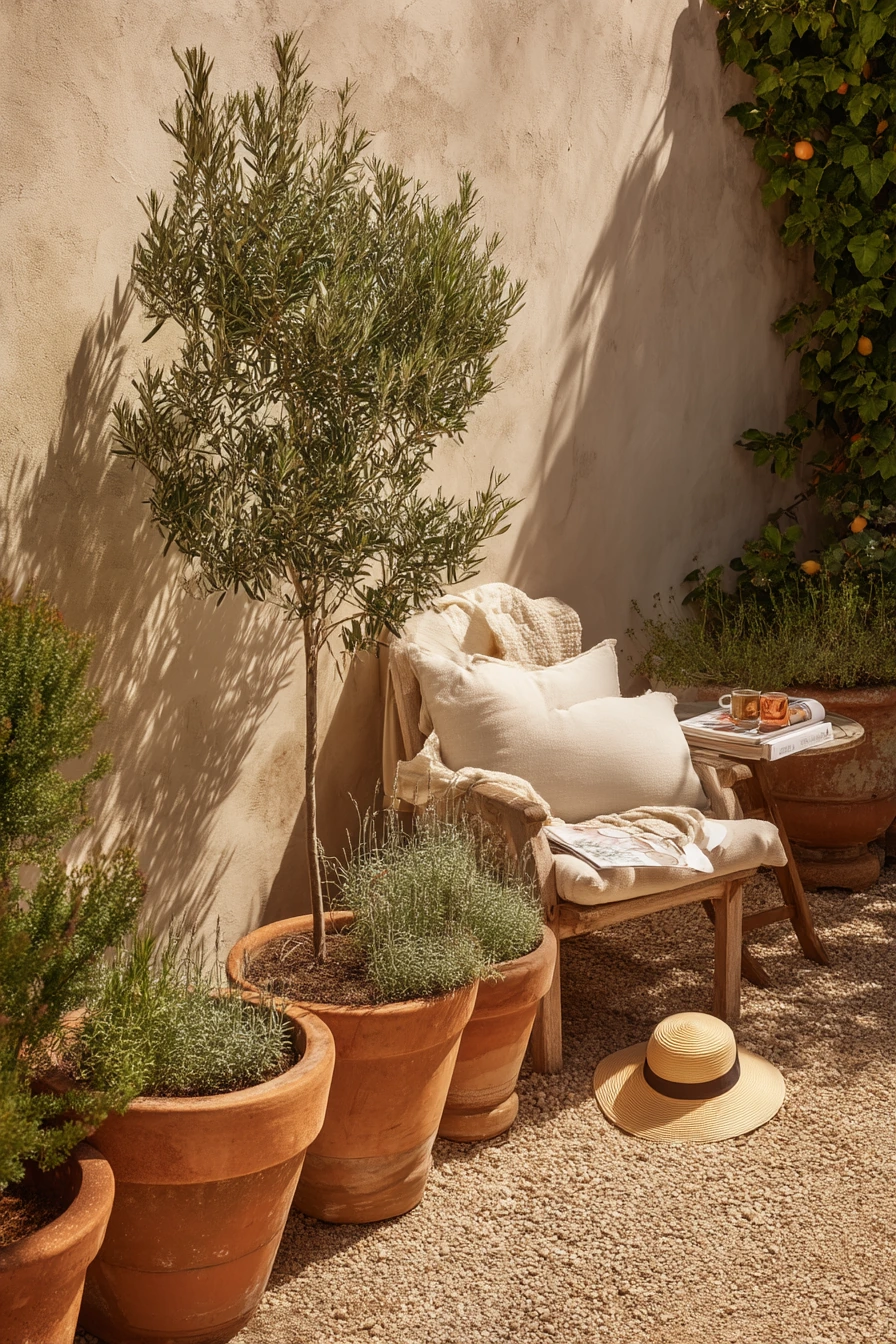
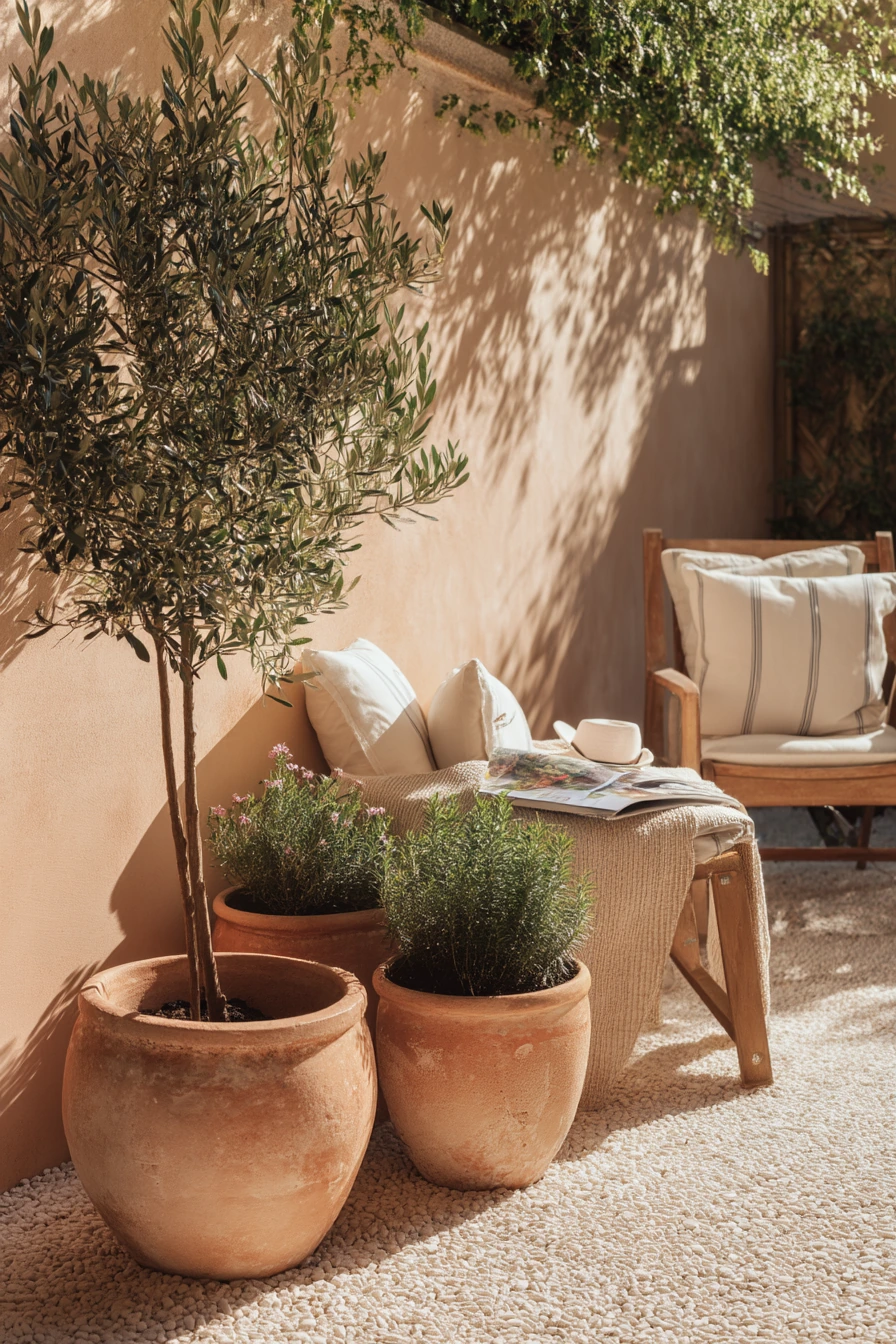
A home terrace is a great place for container-based garden landscaping ideas because you can control the look and the care. Terracotta pots bring warmth and texture, and they pair well with herbs like rosemary and thyme. Add an olive tree for height and a clipped citrus for a neat, Mediterranean feel, even in a small space.
Start with a simple ground layer, like pale gravel groundcover, to keep the terrace bright and tidy. This also helps with drainage and reduces weeds. Place the biggest pots first: olive and citrus near the low stucco wall, then medium pots of rosemary and thyme closer to seating. Use a woven chair as your main comfort piece and keep a small side table for sunscreen, a sunhat, and a half-read magazine. Slightly dusty cushions are normal outdoors, so choose covers that shake clean.
To style it, think in threes: three terracotta pots grouped at different heights, three herb varieties in one corner, and three small decor items on the table. Keep the color palette simple so the plants stand out. Water deeply, but not too often, and use saucers only if you can empty them after rain. If you cook, keep a small herb snip tool in a jar near the door so you actually use what you grow.
- Use terracotta pots for a warm, rustic look that ages well.
- Plant rosemary and thyme for scent and simple daily harvesting.
- Add a small olive tree or citrus for height and structure.
- Spread pale gravel to brighten the terrace and reduce mess.
- Style the seating with one woven chair and a small side table.
Pro Design Tip: Keep pot sizes consistent within each cluster (all large or all medium) so the terrace looks calm, then add interest with varied plant shapes instead of mixed pot styles.
Budget Considerations: Mix new terracotta with secondhand pots; worn pots often look better and cost less, and herbs are inexpensive from small starter plants.

7 Tiny Townhouse Yard with Play Zone and Green Border
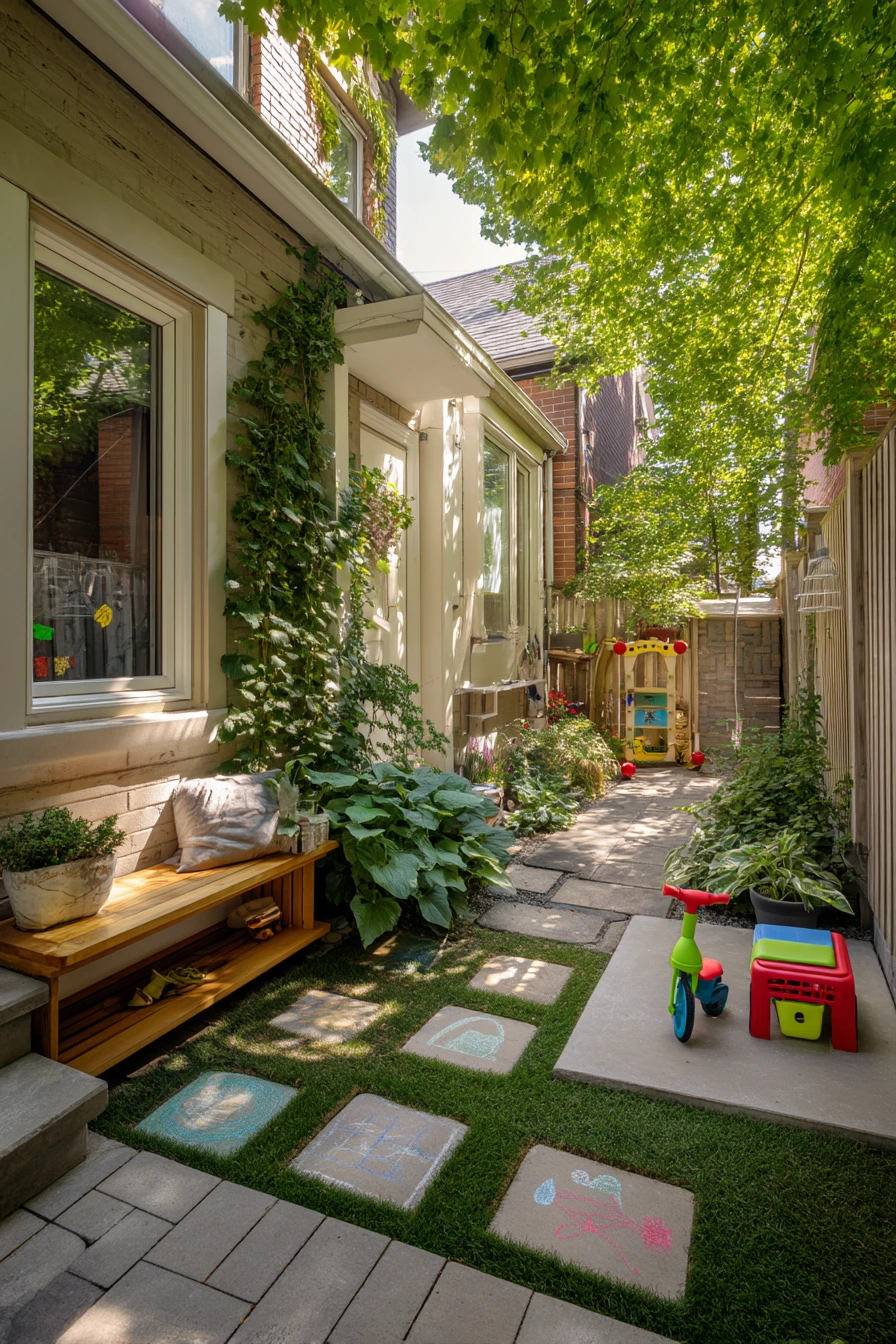

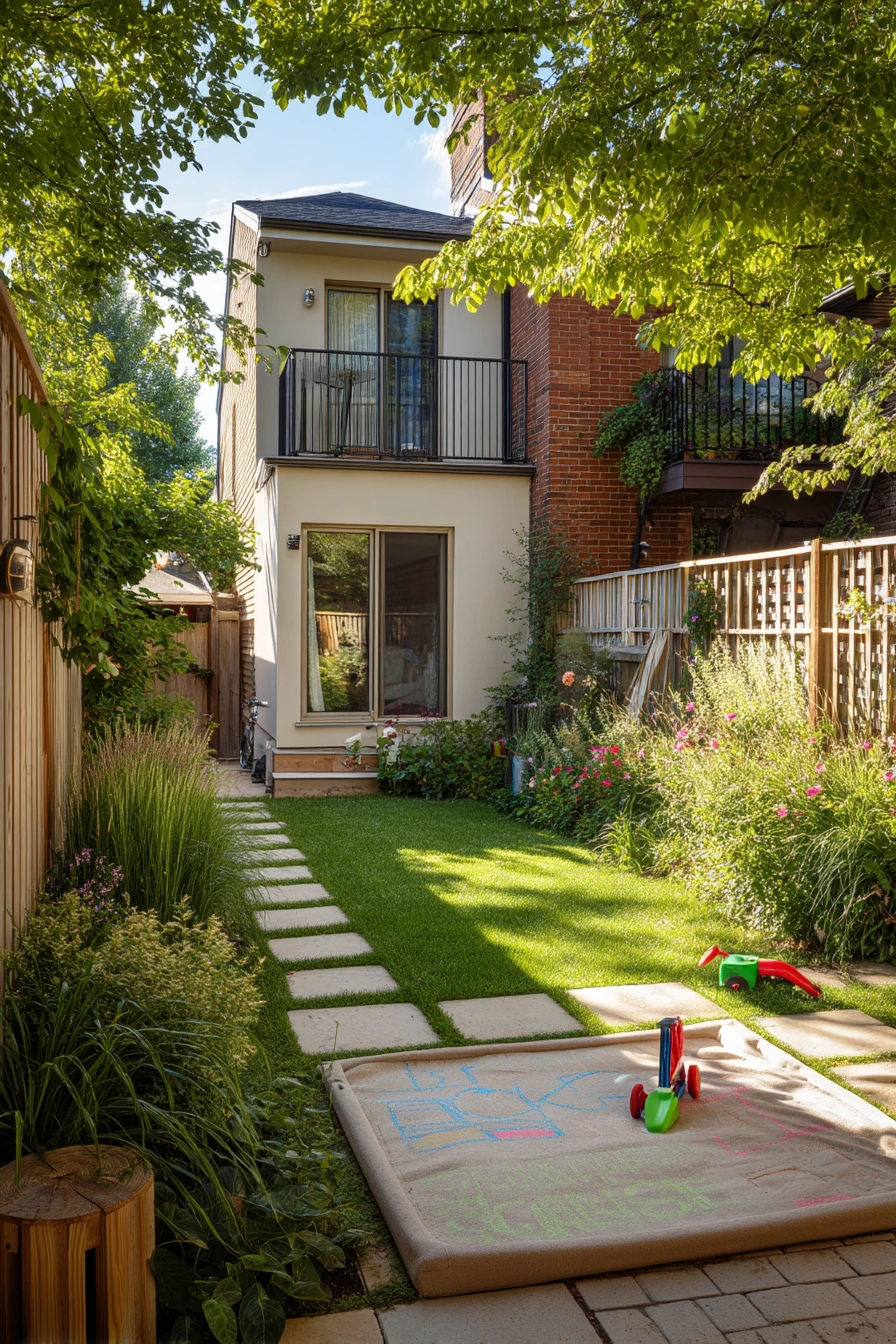
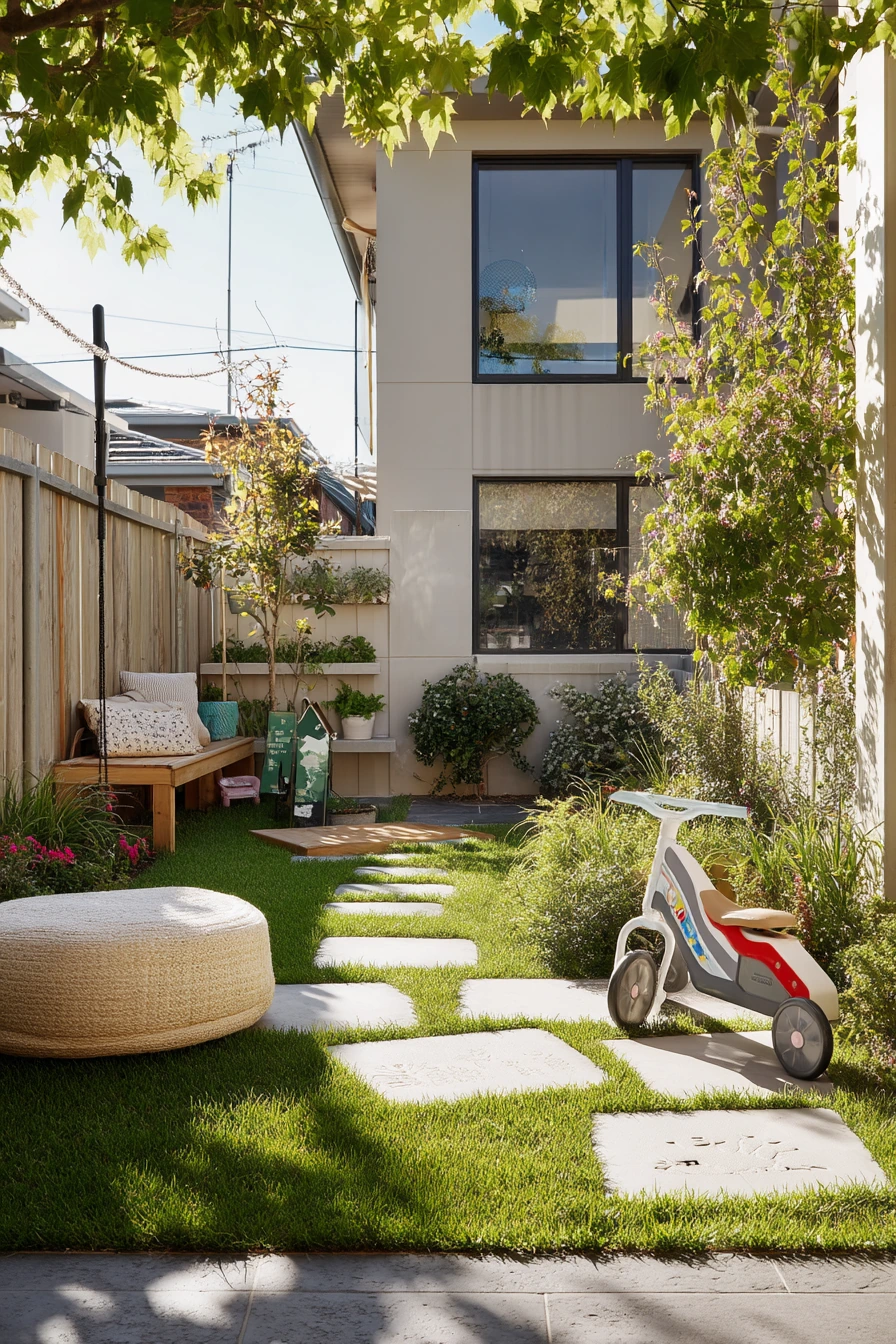
A family townhouse yard is usually compact, so every square foot needs a job. A simple split layout works well: a small lawn patch for play and a lush border planting for color and privacy. Durable stepping pads connect the back door to storage and the fence gate, so kids and adults do not wear a muddy trail into the grass.
Plan the yard around real family life. Add a small sandbox in a corner where you can see it from the kitchen window. Keep a scooter by the fence and accept that chalk marks on the pavers will happen. These lived-in details are not problems; they are proof the space gets used. To keep it looking good, choose tough plants for the border, like hardy shrubs, ornamental grasses, and long-blooming perennials that do not need daily care.
Storage is the secret to a tidy small yard. An outdoor storage bench holds toys and doubles as seating. Keep a garden trowel and a small hand broom inside so quick cleanups are easy. For style, repeat one paving material and keep the furniture simple. Soft evening sun makes a small garden feel warm, so plan one sitting spot where you catch that light. A compact yard can feel inviting when paths are clear and plants are full.
- Split the yard into a lawn zone and a planted border for balance.
- Use durable stepping pads to protect grass and guide foot traffic.
- Add a sandbox in a visible corner for easy supervision.
- Choose low-care plants that can handle kid activity near the edges.
- Use a storage bench to hide toys and keep the patio clear.
Pro Design Tip: In a small yard, keep the lawn shape simple (rectangle or soft square) and let the border do the curving; it reads larger and is easier to mow.
Budget Considerations: Start with fewer stepping pads and expand later; buy small perennials and fill gaps with mulch until plants grow in.
8 Modern Minimal Garden with Structural Grasses
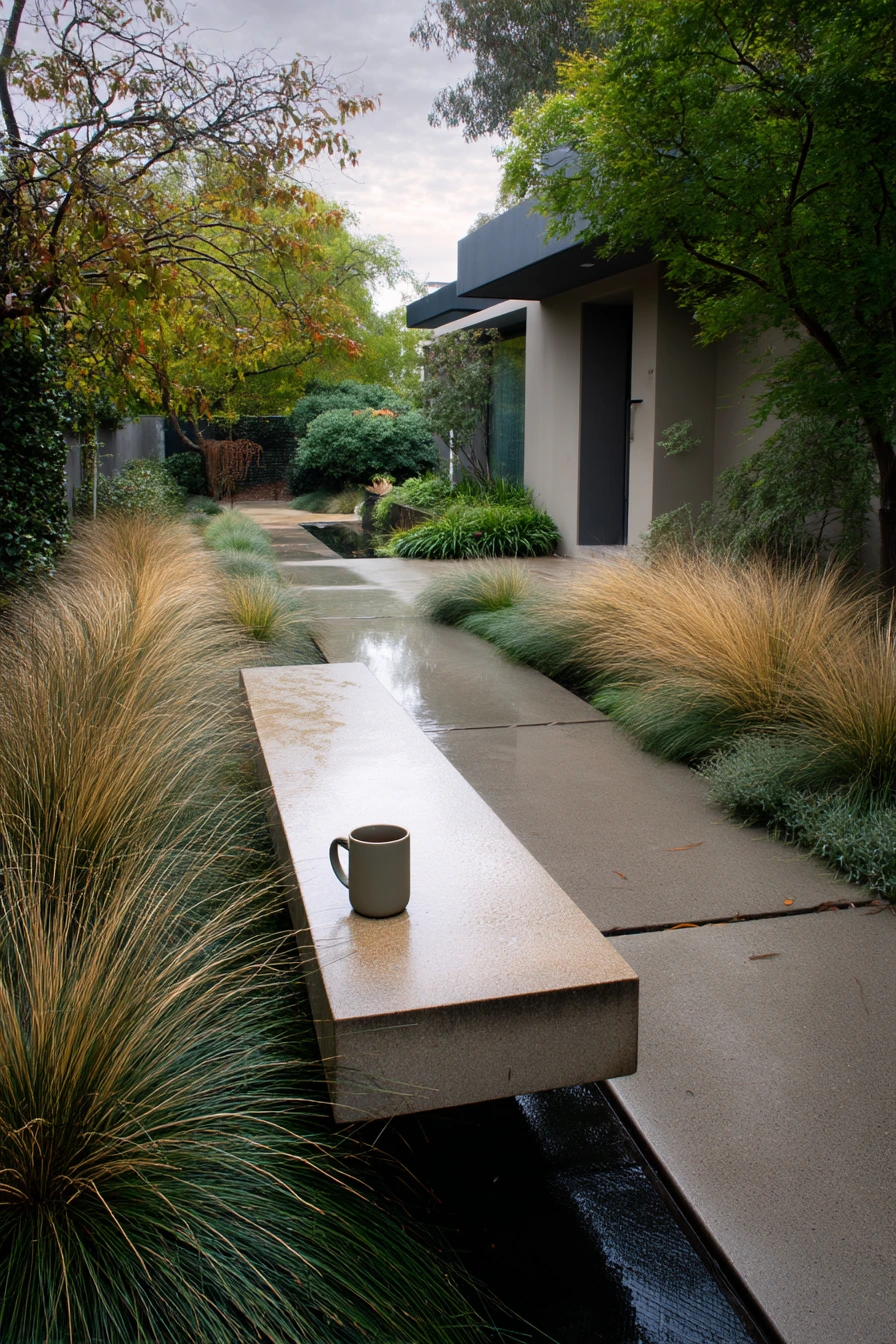
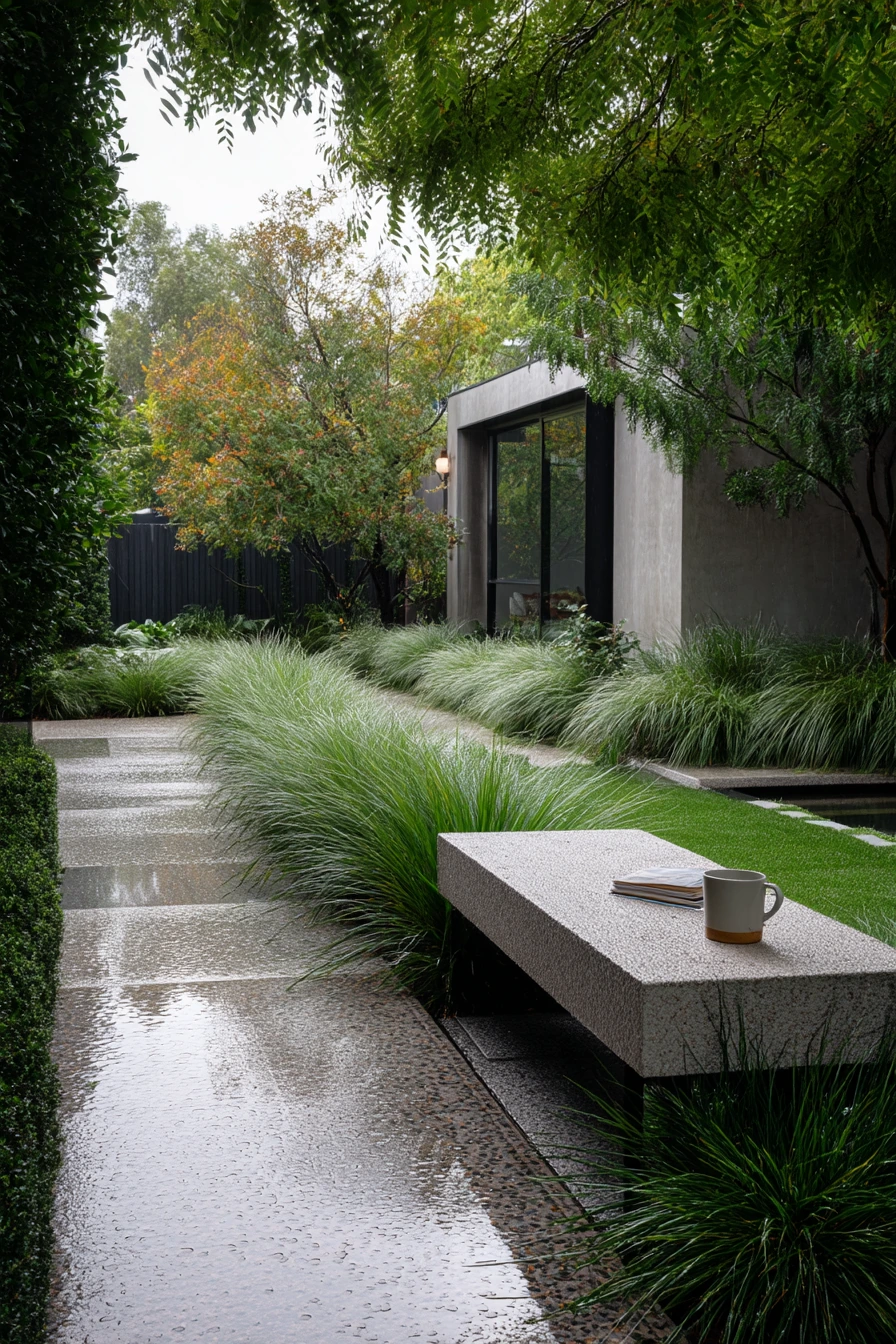
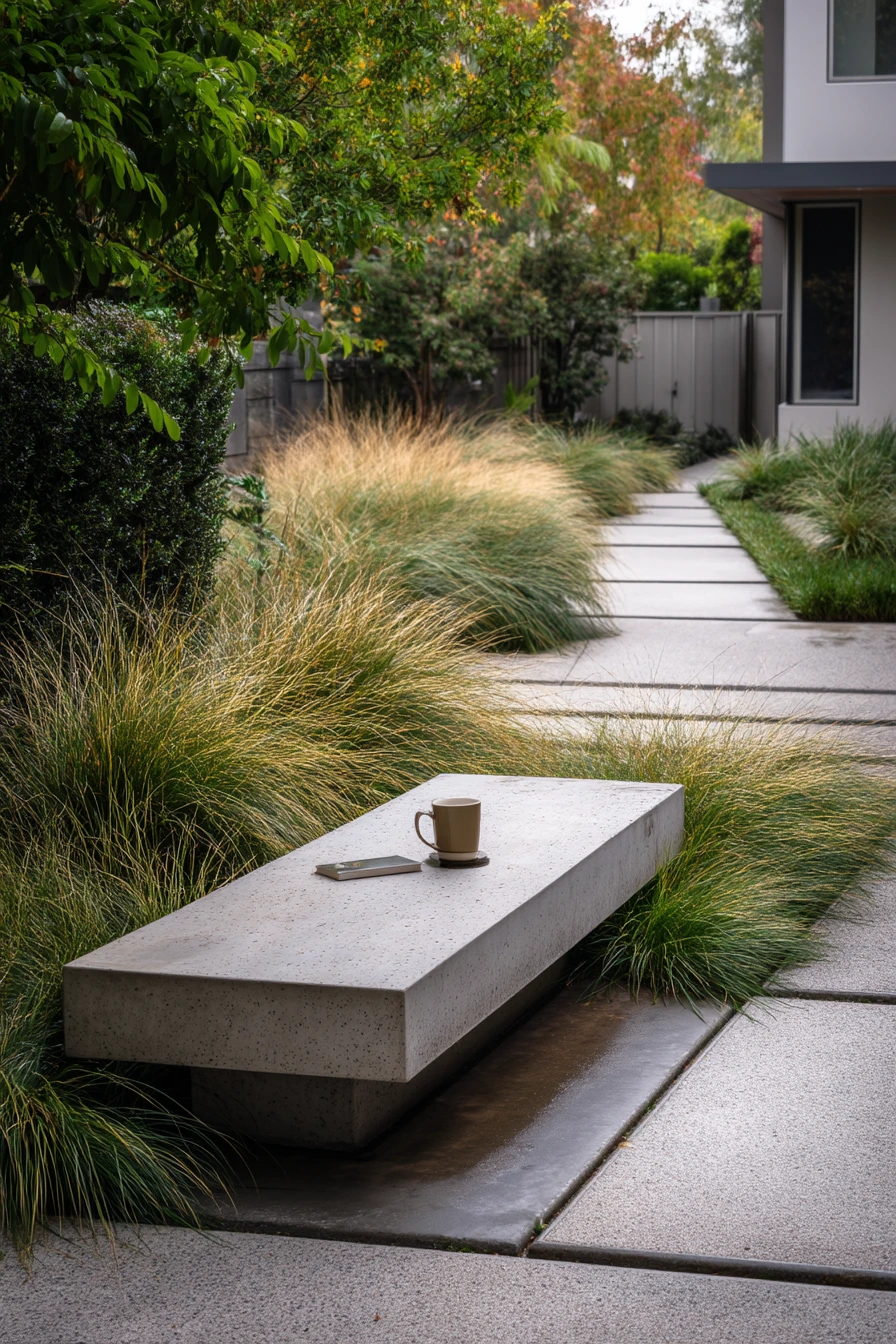
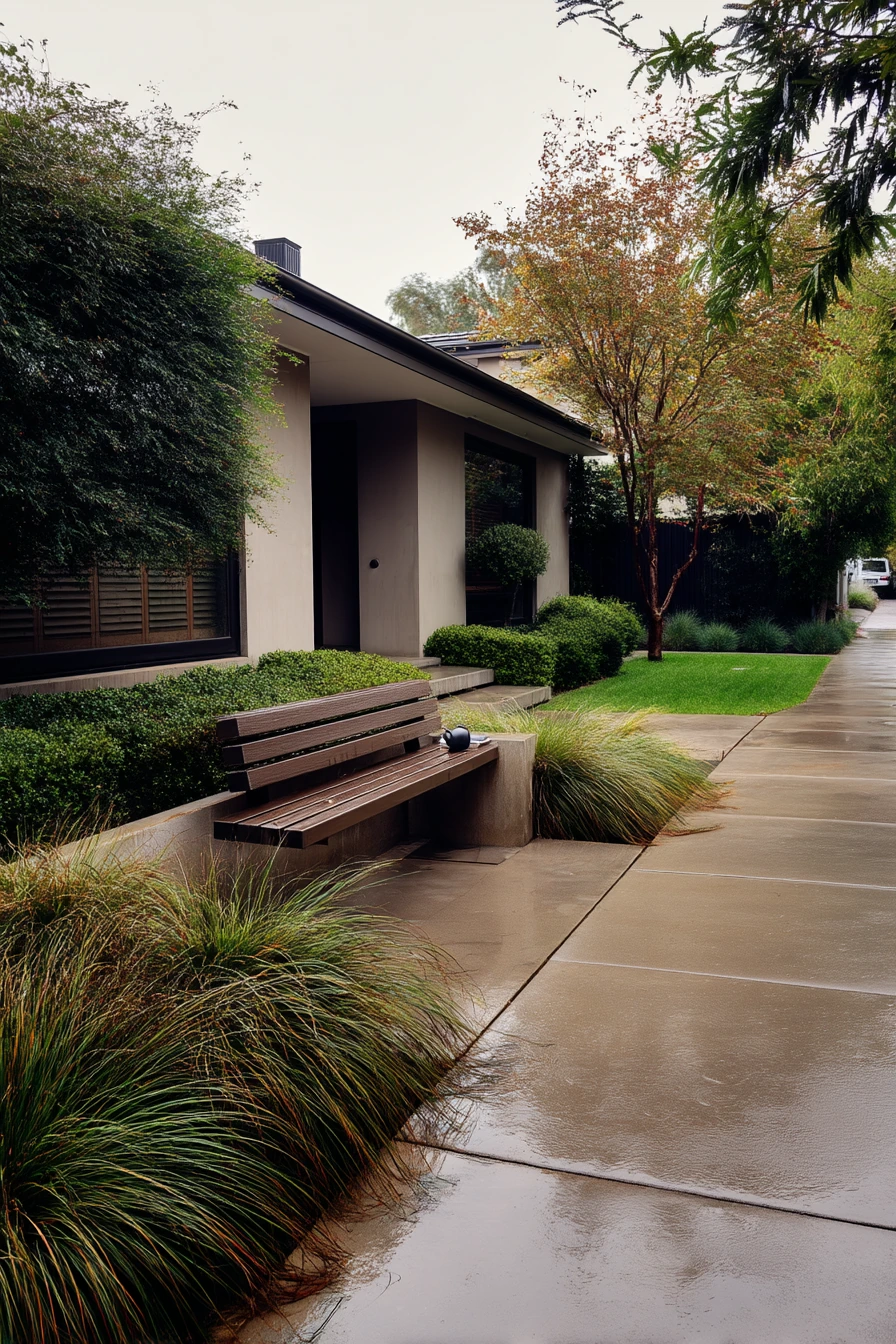
Contemporary residential landscaping ideas often look simple, but the details need to be precise. A clean mix of sculptural grasses, clipped hedges, smooth concrete pavers, and low steel edging gives a crisp, restrained feel. Add one bench for seating and a narrow reflecting basin for a calm focal point, even in a quiet home garden.
Start with the hardscape. Lay concrete pavers in a clear grid or a simple running pattern, and keep spacing consistent. Steel edging helps hold gravel or planting beds in place and makes lines look sharp after rain. For plants, use one or two grass varieties with strong shape and movement, then add clipped hedges for solid green blocks. This contrast is what makes the design work in soft cloud-filtered daylight or after a rain shower.
To style the space, keep it minimal but lived-in. Place gardening notes and a coffee mug on the bench to make the garden feel used. Rain speckles on stone and subtle plant movement add life, so you do not need a lot of decor. Maintain this style by trimming hedges on a schedule and sweeping pavers often. If you like water features but want low upkeep, keep the basin narrow and shallow so it is easy to clean.
- Use smooth concrete pavers for a clean, modern base.
- Install low steel edging to keep gravel and beds sharp.
- Plant sculptural grasses for movement and soft texture.
- Add clipped hedges to create structure and calm blocks of green.
- Include a narrow reflecting basin as a simple focal point.
Pro Design Tip: Limit the plant palette to 3–5 types and repeat them; modern gardens look best when shapes and spacing are consistent across the whole yard.
Budget Considerations: Skip custom poured concrete and use standard concrete pavers; for the basin, consider a preformed water trough to get the look for less.
9 Budget Cottage Garden with Layered Borders

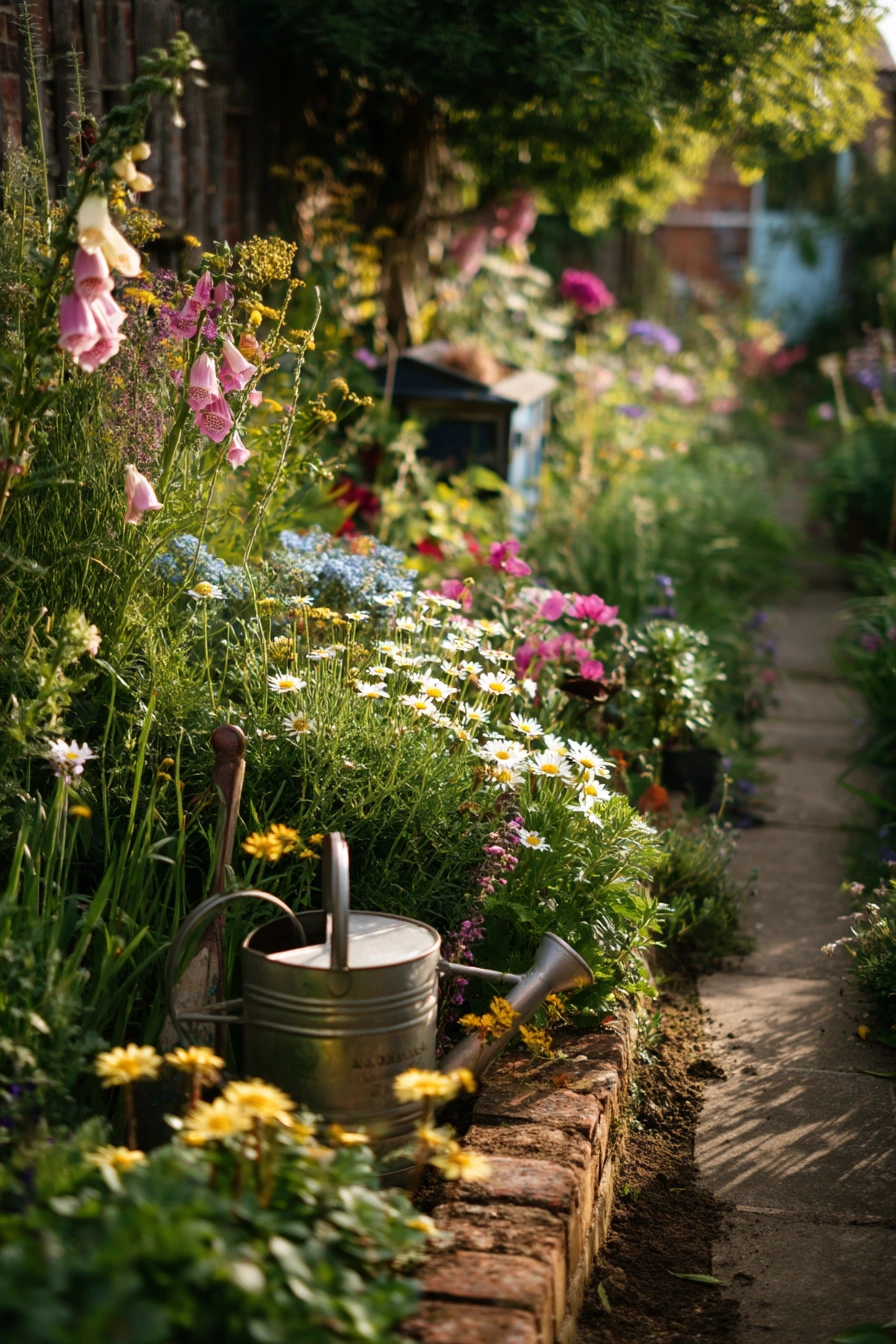
Cottage garden landscaping ideas can be budget-friendly when you lean into abundance and reuse. Dense layered borders with daisies, foxglove, alliums, and self-seeding annuals create a full look without needing perfect spacing. Reclaimed brick edging adds charm and keeps the border from spilling into the path.
Start by building the edge first. A simple reclaimed brick line helps the whole yard look organized, even when flowers are overflowing. Then plant in layers: taller foxglove and alliums toward the back, medium daisies and other perennials in the middle, and self-seeding annuals to fill gaps. The goal is steady color through the season, not one big moment. Keep a reused watering can near the shed, and store seed packets in a tin so they stay dry.
To style this garden, embrace the real-life tools. A garden kneeler and muddy clogs by the shed make sense in a working cottage border. Add a small clear path so you can reach plants for deadheading and harvesting seeds. If the border gets too wild, edit by pulling one plant type that spreads too fast and replanting it in one spot. Cottage style looks best when it is full but still walkable.
- Edge beds with reclaimed bricks to add structure and charm.
- Plant daisies, foxglove, and alliums for layered cottage color.
- Use self-seeding annuals to fill empty spots at low cost.
- Keep a simple path so you can weed and deadhead easily.
- Save seeds and replant each year to grow the garden for less.
Pro Design Tip: Pick one “anchor” plant to repeat every few feet (like daisies) so the border feels tied together, even when you add new plants over time.
Budget Considerations: Ask neighbors for plant divisions and shop local swaps; reclaimed brick prices vary, so mix brick types for a planned, thrifted look.


10 Seasonal Autumn Garden with Lantern Path


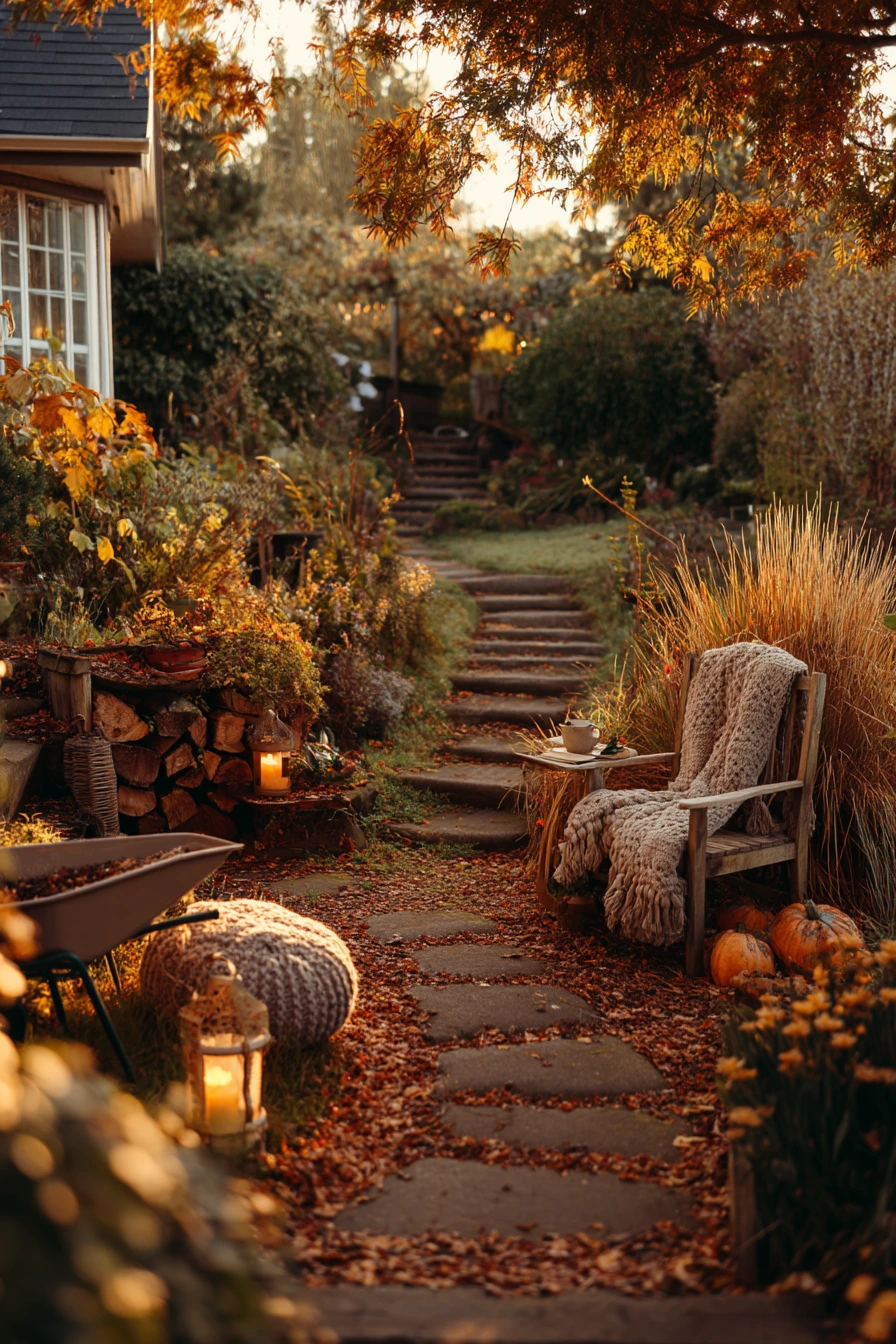
Autumn garden landscaping ideas are about texture, warm tones, and small comfort details. A curved path with scattered maple leaves already sets the mood. Add ornamental kale for bold color, amber grasses for movement, and low lanterns to guide the walk as days get shorter.
Start with cleanup that still looks natural. You do not need to remove every leaf; just clear the main path for safe footing and let leaves collect in the beds as light mulch. Place stacked firewood near a sitting area to signal cozy evenings. A knitted blanket draped over a chair and a tea mug on the step make the space feel used, not staged. Keep one wheelbarrow nearby if you are still moving mulch or planting bulbs.
For planting, focus on what lasts into cold weather. Ornamental kale holds color, and many grasses stay upright if you do not cut them back too early. Add a few lanterns or low path lights, but keep the glow soft. Golden hour light is beautiful, so choose seating where the sun hits late in the day. If you want a simple fall project, refresh the path edge, top up gravel, and add two or three seasonal pots near the door.
- Keep the path clear but let some leaves stay in beds for a natural look.
- Plant ornamental kale for strong fall color in borders and pots.
- Use amber grasses for height, movement, and winter interest.
- Add low lanterns along the curve to guide evening steps.
- Create a cozy corner with stacked firewood, a chair, and a blanket.
Pro Design Tip: Use lighting to mark changes in direction; placing a lantern at each curve makes a small path feel intentional and safer after dusk.
Budget Considerations: Choose battery or solar lanterns to avoid wiring costs, and use seasonal plants like kale and mums in pots you already own.

Good garden landscaping ideas start with real life: where people walk, where tools land, and where you sit. Choose one layout move first, like a clearer path, a raised planter frame, or a cleaner edge.
Then add plants that match your light and your schedule. Native grasses, herbs, pollinator flowers, shade ferns, and sturdy shrubs can all look great with the right spacing.
Keep styling simple and practical, and let the garden show a little use. A yard that works will always look better than one that only looks good in photos.
FAQ
1) What is the easiest garden landscaping idea for beginners?
Start with a clean edge and a simple path, then plant in repeating groups of one or two easy plants like lavender, coneflowers, or ornamental grasses.
2) How do I make a small garden look bigger?
Use a narrow winding path, limit the number of materials, and layer plants by height so the border looks deep.
3) What plants work best for a low-maintenance front yard?
Try coneflowers, salvia, ornamental grasses, and a few evergreen shrubs like boxwood for structure.
4) How can renters landscape a balcony without permanent changes?
Use movable planter boxes, lightweight pots, a folding chair, and an outdoor rug. Keep herbs in a tray for easy watering and moving.
5) What should I plant in a shaded side yard?
Ferns, hellebores, and shade groundcovers are reliable. Add gravel and stepping stones to reduce mud and make it usable.
6) How do I landscape on a tight budget?
Use reclaimed brick or stone, start with smaller plants, swap divisions with neighbors, and grow from seed for filler flowers.