

Front yard garden ideas can make your home feel more welcoming, even if you only have a small walkway and a little planting space. The right layout can boost curb appeal, help with upkeep, and give you flowers and greenery that fit your climate.
In this guide you will see front entry gardens for real homes, from a small suburban border with hydrangeas and lavender to a hot-climate gravel path with agave and river stones. Each idea includes simple ways to style it so it looks tidy but still lived-in.
You will also get practical plant lists, edging and path tips, and quick notes on what to do if you rent, have kids, or want a low-water yard. Use these sections like a menu and copy the parts that match your home.
Each front yard garden section ends with a Pro Design Tip and a Budget Consideration so you can plan fast and avoid costly mistakes.
1 Small Front Yard Pollinator Border

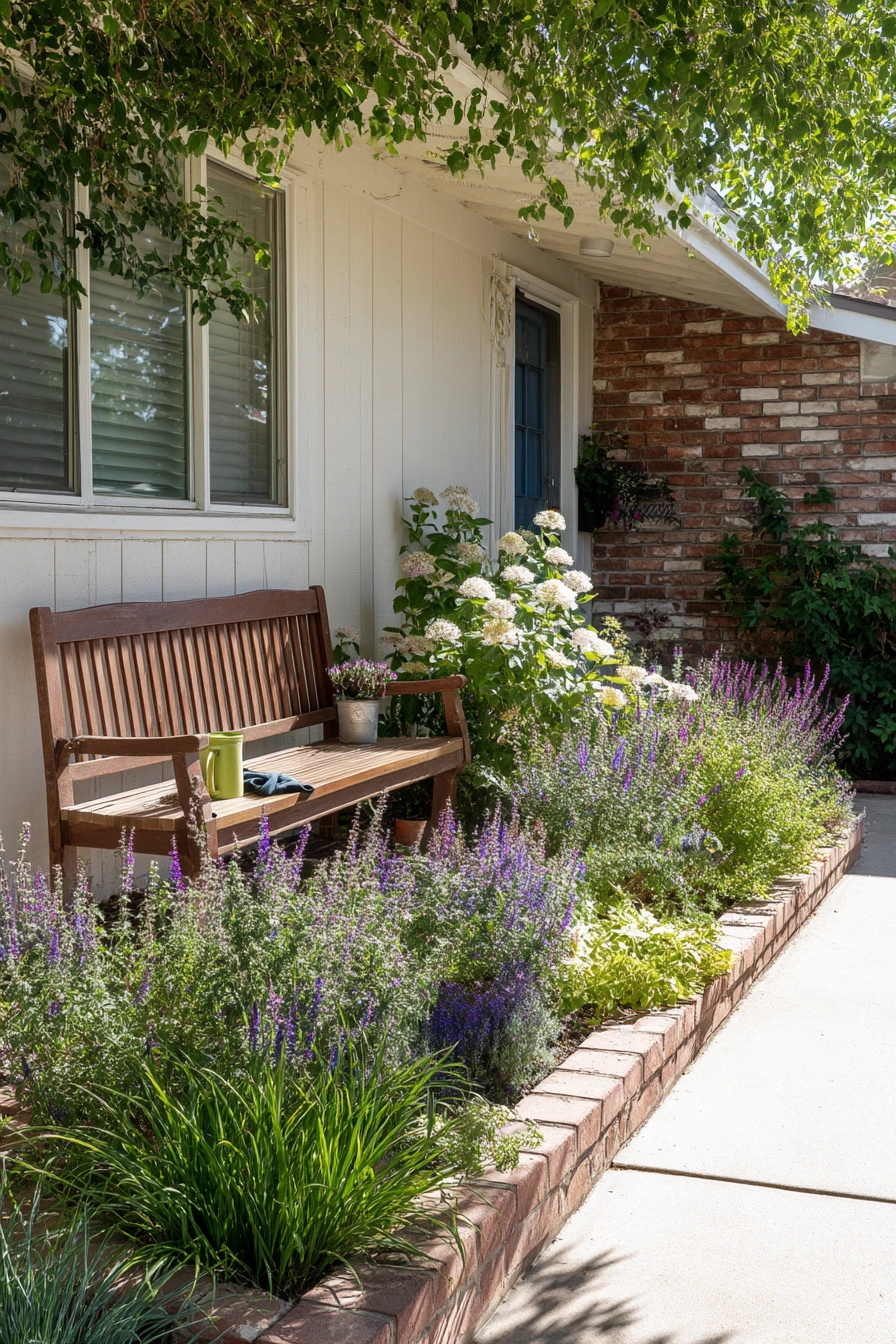
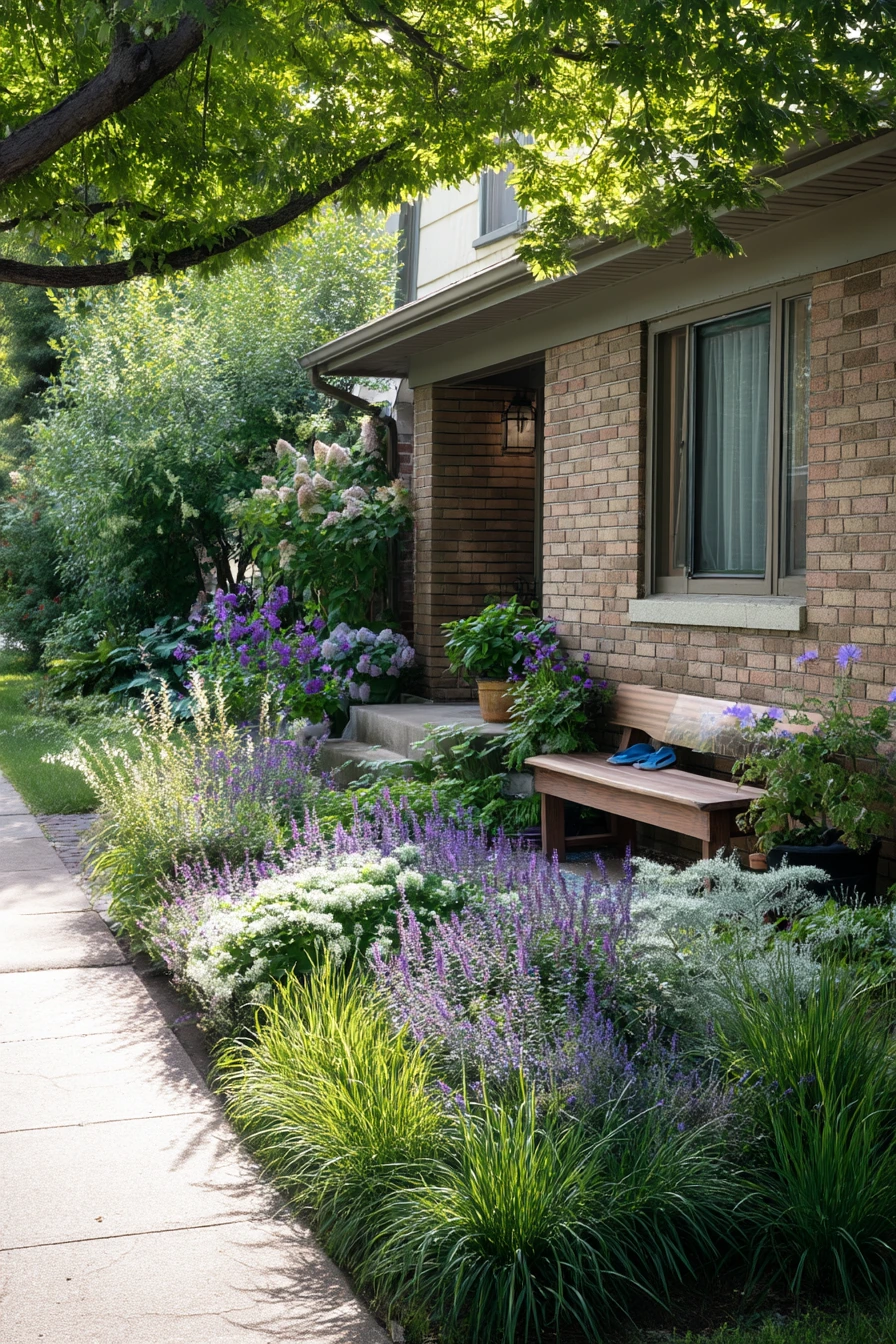
A small suburban front yard can feel bigger when the garden is layered along the walkway instead of spread out in the lawn. A pollinator border with compact hydrangeas, lavender, salvia, and dwarf grasses gives you height changes, long bloom time, and a soft, welcoming look. A tidy brick edge keeps it crisp, even when life is busy and the garden gloves end up on the bench.
Start with a simple plan: tall plants near the house, medium plants in the middle, and low edging plants by the path. Hydrangeas can anchor the bed with round shape, while lavender and salvia add color and scent. Use dwarf grasses in small clumps to break up flowers and add movement. Leave a little space near the steps for everyday items like a watering can or kids’ chalk so the entry still feels like a real home.
For a “calm morning” look, keep mulch fresh and sweep the walkway often. Choose one brick color and repeat it on both sides if you can. Add a small bench near the door for a lived-in touch, and keep one mug or small tray on the porch rail to make the space feel used, not staged.
- Plant in groups of 3 or 5 for a fuller look with fewer plant types.
- Use compact hydrangea varieties so they do not block windows or paths.
- Mix lavender and salvia for long bloom and pollinator traffic.
- Add dwarf grasses near corners to soften hard edges.
- Set a brick edge slightly above soil level to help hold mulch in place.
Pro Design Tip: Keep the tallest plants at least 12 to 18 inches back from the walkway so blooms do not flop into the path and you still have an easy place to water and weed.
Budget Considerations: Brick edging can add up; use reclaimed bricks or edge only the front curve that shows most from the street, then finish the hidden side with metal edging.

2 Drought-Tolerant Xeriscape Entry

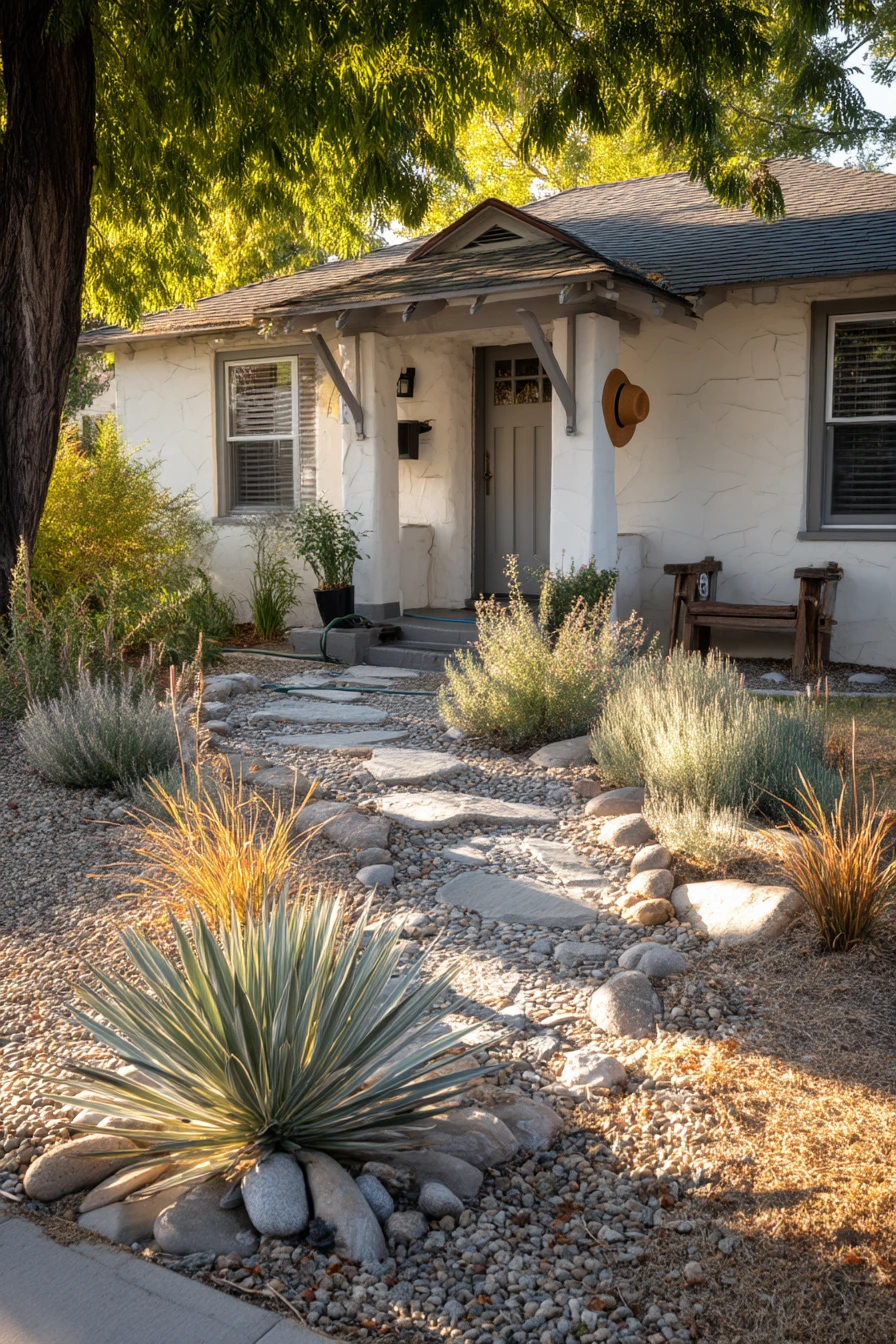
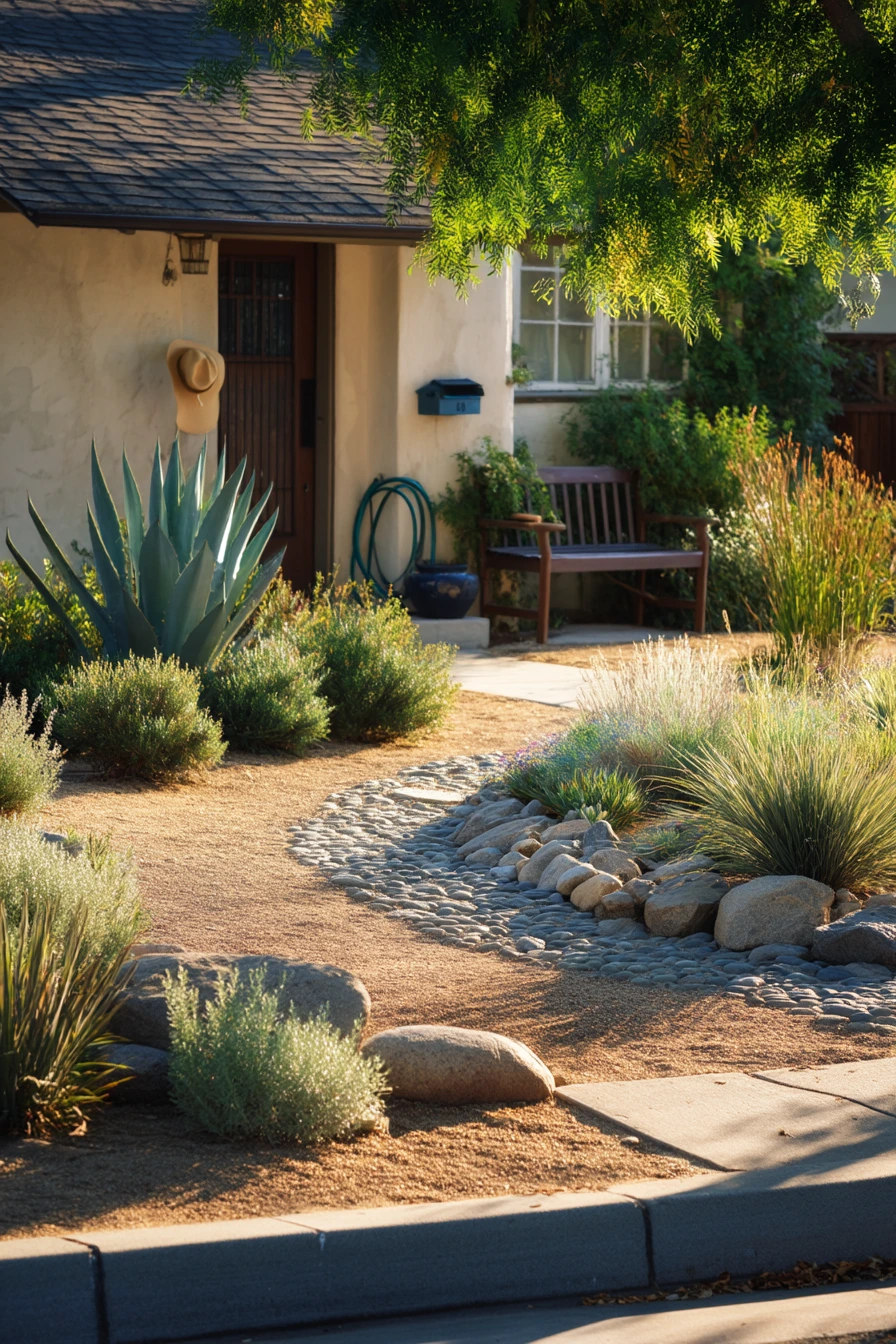
In a hot climate, a front yard garden works best when it is built around low water plants and a clean, gravel-friendly layout. Agave, ornamental grasses, and rosemary can handle heat and still look neat by the front door. River stones and a sculptural gravel path also cut down on mowing and help the space feel serene.
Begin by shaping your path first. A gentle curve in gravel can guide guests to the entry and creates a “designed” look without needing many plants. Add agave as a focal point near the corner where you see it from the curb. Place rosemary closer to the path so you can brush it and smell it when you walk in. Ornamental grasses fill gaps and hide drip lines, and they look good even in warm late-afternoon light.
Keep the area practical: leave room for a hose coiled near the spigot and make sure rocks do not pile against the house. Use steel or stone edging to keep gravel from drifting into the driveway. If you get dust or tire tracks near the curb, add a band of larger river stones to act like a buffer zone that also looks intentional.
- Use drip irrigation or a soaker line under gravel to save water.
- Choose one gravel color and one stone size for a calmer look.
- Plant agave away from walkways so the spines are not a hazard.
- Trim rosemary lightly so it stays full, not leggy.
- Add a few larger boulders to stop the garden from looking flat.
Pro Design Tip: Repeat the same plant in at least three spots, like three rosemary mounds, to make a small entry garden look cohesive and not like random single plants.
Budget Considerations: River stones and decorative gravel can be pricey; reduce cost by using basic crushed rock for the base layer and save the nicer stone for the top 1 to 2 inches where it shows.

3 Renter-Friendly Front Porch Planters
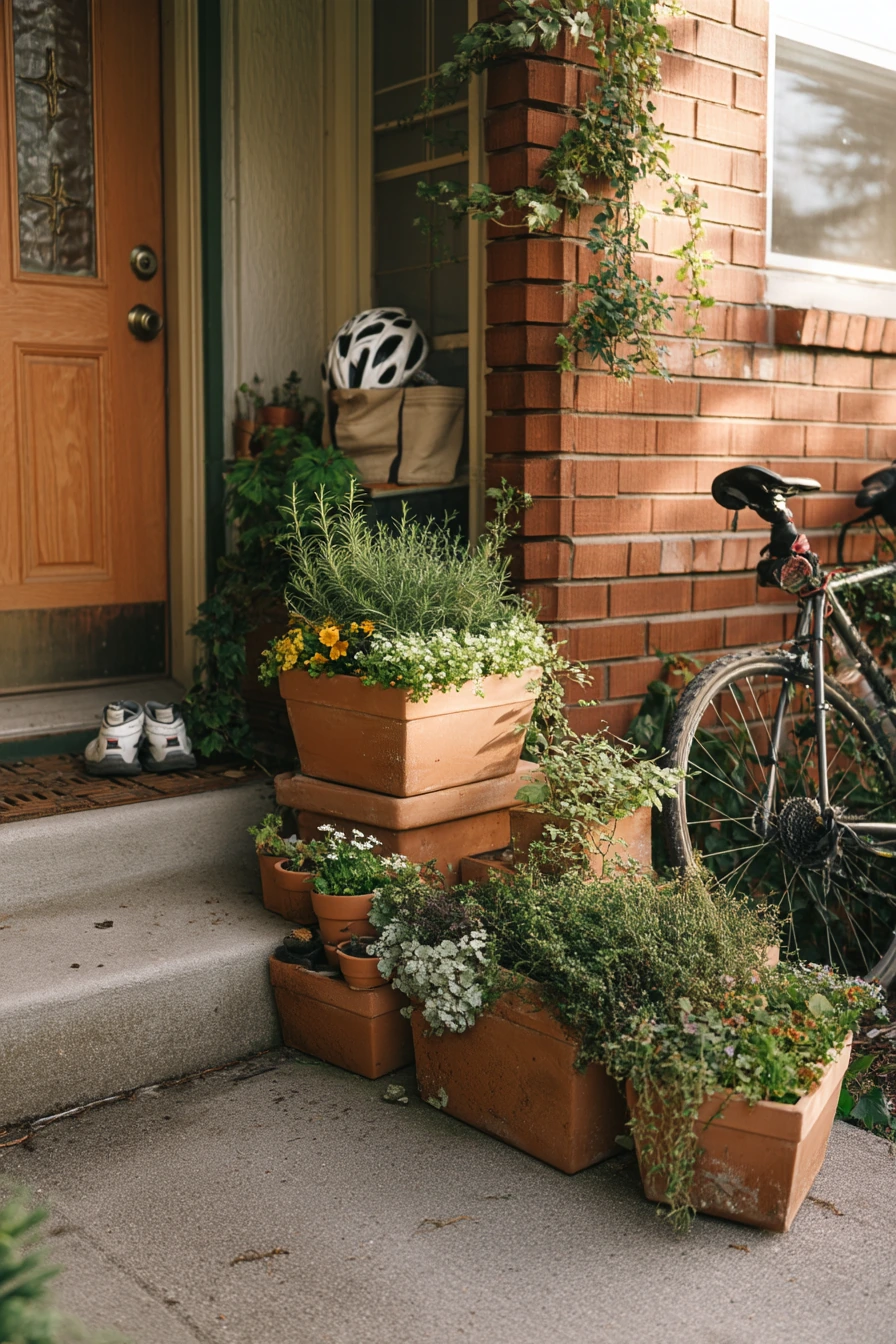

If you rent, front yard garden ideas need to be portable and easy to change. Stacked terracotta planters on a small porch can give you color and greenery without digging up the yard. Rosemary, pansies, trailing ivy, and compact citrus work well because they are attractive, smell good, and can move with you later.
Use planters to create layers like a real garden bed. Put the tallest pot in the back near the wall, then step down in height toward the porch edge. A compact citrus can be your “small tree,” while rosemary adds structure and can handle sun. Pansies fill in with quick color, and ivy trails over the pot to soften hard lines. Watering drops on the concrete are normal, but a small saucer or mat under the wettest pots can protect the surface.
Style it so it feels cheerful and lived-in. Keep a market tote by the step, a bike helmet by the door, and store your small watering can close by. Near dusk, a warm porch light makes terracotta look richer. If you have only a narrow porch, keep one clear walking lane and group pots into one strong cluster instead of spreading them out.
- Pick terracotta sizes that nest so you can move them without help.
- Use quality potting mix and add slow-release fertilizer for less work.
- Group pots by water needs so you do not overwater one plant.
- Choose trailing plants to hide pot edges and add softness.
- Rotate pots every week for even light if the porch is shaded.
Pro Design Tip: Limit your container palette to two materials, like terracotta and one simple glazed pot, so the porch looks intentional instead of cluttered.
Budget Considerations: Terracotta can crack in freezing weather; buy a few secondhand pots and seal them, or use lightweight resin pots that mimic clay for less money and easier moving.


4 Cottage Path With Raised Beds


A family cottage front yard can feel warm and useful when a narrow path is lined with raised cedar beds. This setup is great for zinnias, cosmos, herbs, and climbing roses because everything is close to reach and easy to see. It also makes the front entry feel like part garden, part outdoor room, even when there are muddy boots by the bench and a child’s small shovel in the soil.
Start with the path width. Make it wide enough for two people to pass, then place raised beds on one or both sides. Cedar looks natural and holds up well outside. Fill the beds with a mix of flowers and edible herbs so there is always something happening. Zinnias and cosmos bring quick color, while herbs add scent when you brush past. Put a trellis or simple wire panel at the bed end for climbing roses so they grow upward and do not swallow the walkway.
To keep it gently tidy, add a clear edge between path and bed, like gravel or pavers. Add a small mailbox moment with a pot of herbs nearby, and keep a porch chair with a folded dish towel for that real-home feel. Deadhead flowers once a week and cut herbs often to keep them bushy. A little untidy is fine, but keep the path clean so the garden still reads as cared for.
- Build beds 12 to 18 inches high for easier planting and weeding.
- Mix flowers and herbs so the garden looks full in every season.
- Place taller plants toward the back to prevent shading smaller plants.
- Add a trellis early so roses train neatly from the start.
- Top beds with compost each spring to refresh the soil.
Pro Design Tip: Use the same bed height and board style on both sides of the path so the entry feels balanced and the garden looks longer.
Budget Considerations: Cedar lumber costs vary; if you need to save, build fewer beds and leave extra space as mulch paths, then add more beds over time.


5 Low-Maintenance Modern Entry Garden


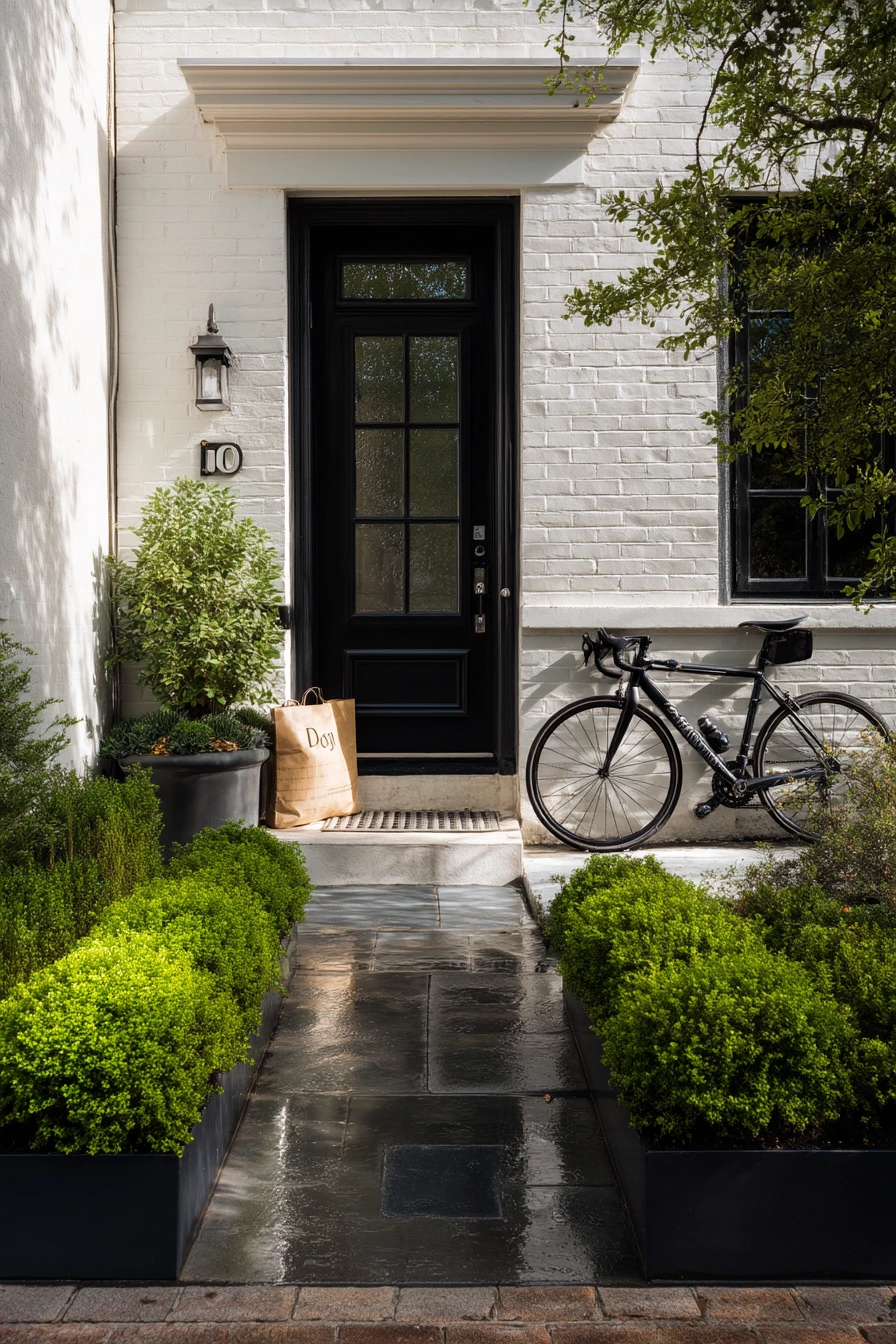
A busy townhouse needs a front yard garden that looks neat without daily work. Boxwood mounds, black mondo grass, white stone pavers, and a slim steel planter create a polished entry that still feels lived-in. This kind of layout works well when you come and go fast and there are keys on the console, a grocery bag on the step, and a bicycle leaning near the wall.
Begin with hardscape. White stone pavers make the path feel bright after rain, and they help keep shoes clean. Set them in a simple grid or straight line for a clean, architectural look. Add boxwood in rounded shapes to soften the straight lines, and use black mondo grass for contrast and texture at the border. A slim steel planter near the door can hold one strong plant choice, like a small evergreen or seasonal annuals, without taking up much space.
For an entry that stays sharp, focus on spacing and edges. Leave enough room between boxwood mounds for airflow and easy trimming. Keep mondo grass in a clear strip so it reads as a design choice, not ground cover that spread. After a shower, shake out the rain-speckled doormat and brush debris off the pavers. Simple upkeep is the secret to a “refined but real” front entry.
- Use two or three boxwood sizes to create depth without clutter.
- Set pavers on a compacted base to prevent wobble.
- Choose steel planters with drainage holes to avoid root rot.
- Keep plant colors mostly green and black for a calm look.
- Add low-voltage path lights for safe, simple night entry.
Pro Design Tip: Place the largest boxwood closest to the door and step down in size toward the curb to guide the eye and make a narrow space feel longer.
Budget Considerations: Boxwood can be expensive; use fewer shrubs and fill gaps with affordable perennials, or buy smaller plants and let them grow for a year or two.

6 Seasonal Spring Bulb Border


For a classic family home, spring bulbs are one of the easiest front yard garden ideas for instant curb appeal. Tulips, daffodils, and hyacinths create bright color along the lawn edge, and fresh mulch makes everything look clean. Small details, like gardening snips on the porch step and an open window with curtains moving, match the soft overcast daylight that makes spring flowers glow.
Plan your bulb border like a ribbon. Follow the curve of the lawn or the line of the sidewalk, then plant bulbs in clusters so the color looks full. Daffodils are great for naturalizing because animals tend to leave them alone. Tulips give strong color but may need replanting depending on your area. Hyacinths add scent near the porch. After planting, cover the bed with mulch and keep the edge crisp with a spade cut or edging strip.
To keep the garden looking good after blooms fade, add a few small shrubs or clumps of ornamental grass behind the bulbs. Let bulb leaves stay until they yellow so the plants store energy for next year. If you want less mess, hide fading bulb foliage with later-growing perennials. Keep kid boots, a small tray, and a coffee cup area off the planting strip so the border stays intact.
- Plant bulbs in groups of at least 7 for better impact.
- Mix early, mid, and late spring varieties for longer bloom time.
- Use mulch to block weeds and make colors pop.
- Add a simple lawn edge to make the bed look finished.
- Mark bulb spots so you do not dig them up later.
Pro Design Tip: Layer bulbs by depth, larger bulbs deeper and smaller bulbs above, so you get more flowers in the same space without crowding.
Budget Considerations: Bulbs are cheaper in bulk in fall; start with one color family for a strong look, then add more varieties each year as budget allows.


7 Edible Front Yard Garden


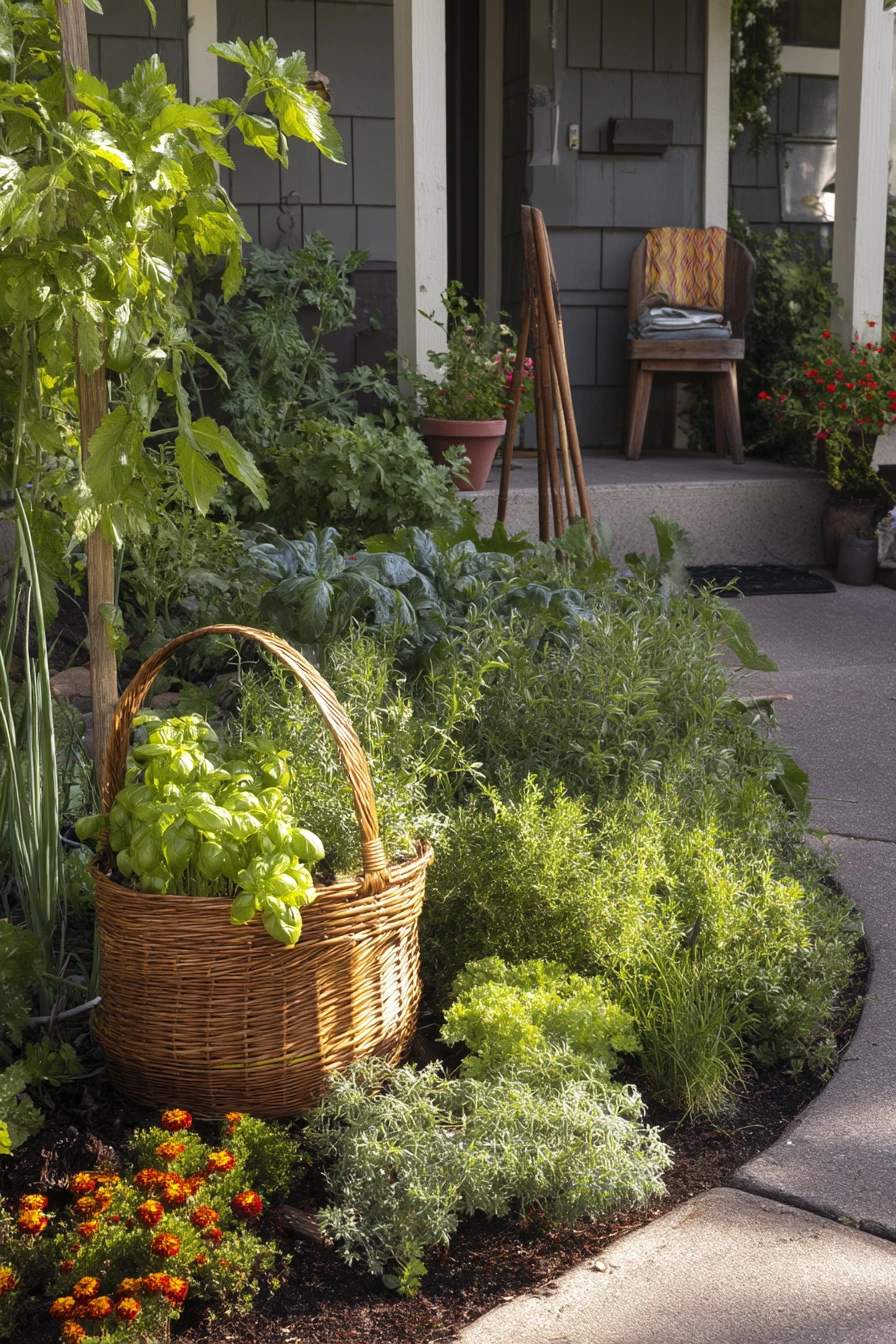
If you love cooking, an edible front yard garden can be both productive and charming. Mix basil, thyme, lettuce, strawberries, and dwarf tomatoes right in the front beds, then use marigolds at the border for color and pest help. A wicker basket with cut herbs near the door makes the garden feel useful, not just decorative.
Keep the layout simple so it does not look messy from the street. Plant dwarf tomatoes and strawberries in the sunniest spot. Use basil as a repeating plant for a clean rhythm along the path, and tuck thyme at the edge where it can spill a little. Lettuce fills gaps early in the season and can be replaced later with warm-weather plants. Marigolds make a bright, tidy border and are easy for beginners.
Style it like an entry garden first and a veggie patch second. Use matching mulch in all beds, and keep a small folding stool by the path for quick harvest. Store gloves by the spigot so watering is easy. If you have a cookbook near the front door, treat the garden like your outdoor pantry. Harvest often to keep plants compact and encourage new growth.
- Use dwarf or patio tomato varieties so plants stay neat.
- Edge the bed so soil does not spill onto the walkway.
- Plant herbs close to the path for easy snipping.
- Mulch well to reduce weeds and keep produce cleaner.
- Water in the morning to lower disease risk on leaves.
Pro Design Tip: Repeat one edible plant in a straight line, like basil every 18 inches, to give the front yard a tidy, designed look that still feeds you.
Budget Considerations: Starts from a nursery can add up; grow basil and marigolds from seed, and buy only a few strong starter plants for tomatoes and strawberries.

8 Kid-Friendly Front Yard Play Garden
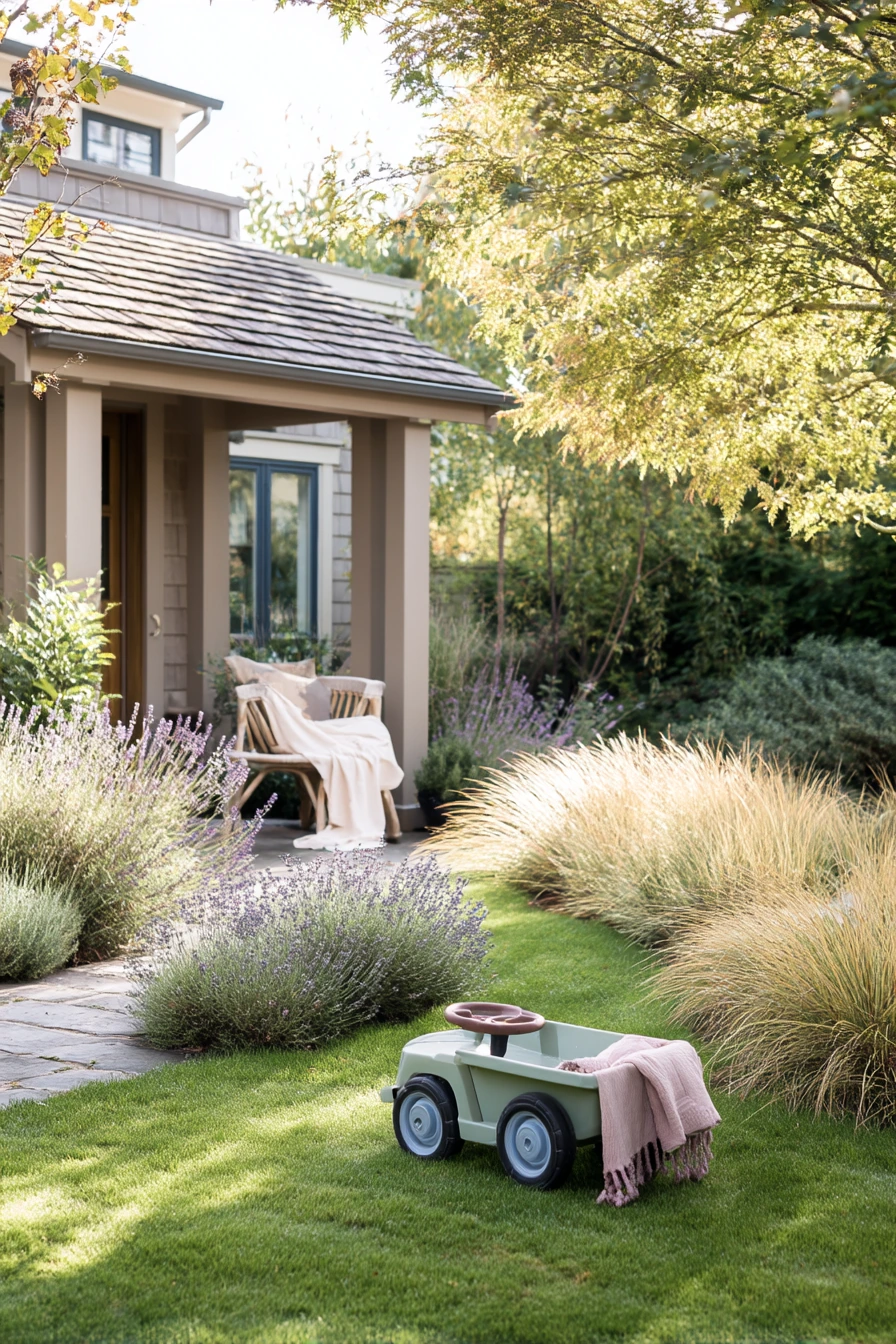

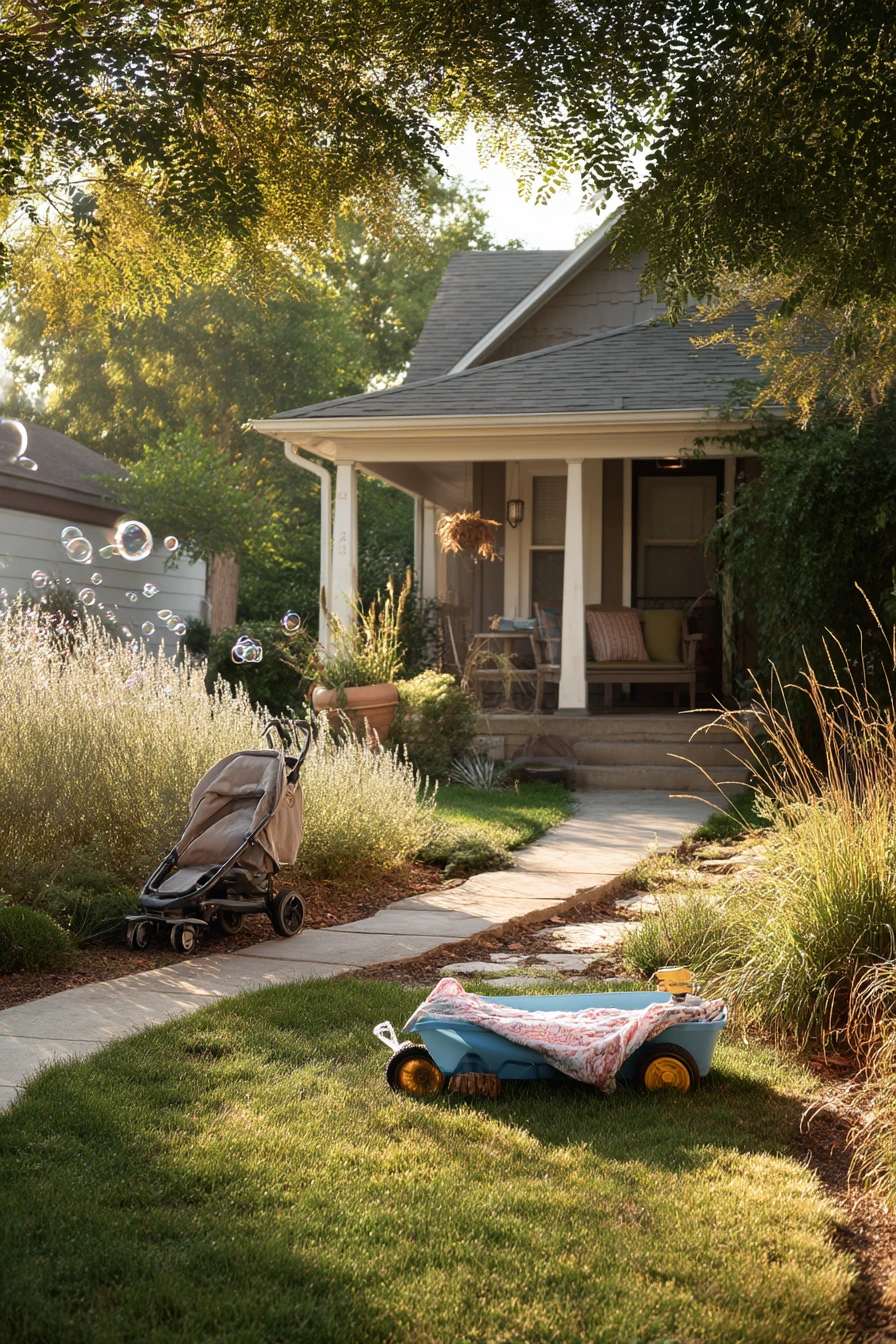
A young family front yard works best when it supports play and still looks good from the street. A soft lawn pocket beside curved planting beds can give kids a place to run while the garden stays easy to care for. Ornamental grasses, lavender, and sturdy shrubs hold up well, even when a toy dump truck ends up half buried in mulch and bubbles spill on the step.
Design the garden like a safe frame around the lawn. Curved beds feel softer than sharp corners and make mowing easier. Use shrubs as the backbone so the yard stays full year-round. Add ornamental grasses for movement and texture, and place lavender where kids are less likely to trample it, since it can be brittle. Keep mulch thick in the beds to reduce weeds and soften falls near the edge.
For a lived-in look, leave space for a stroller parking spot near the porch and a chair where a blanket can be thrown over the arm. Keep plant choices non-toxic and avoid sharp plants near play zones. Put stepping stones or a small paver strip where kids cut across the lawn most, so you do not get muddy worn paths. Simple routines, like a quick tidy of toys at dusk, help the garden stay presentable.
- Shape beds with wide curves to make edging faster.
- Use tough shrubs that handle heat and occasional bumps.
- Keep a clear lawn pocket for play to protect the planting beds.
- Add a hidden toy basket near the porch for fast cleanup.
- Use mulch or pine straw to reduce weeds and soften the bed edge.
Pro Design Tip: Place the tallest shrubs at the back and keep the front edge low so parents can see kids easily while still getting a full garden look.
Budget Considerations: Shrubs cost more upfront; buy smaller sizes and space them correctly, then fill gaps with low-cost annuals for the first year.

9 Shade-Loving Front Yard Retreat
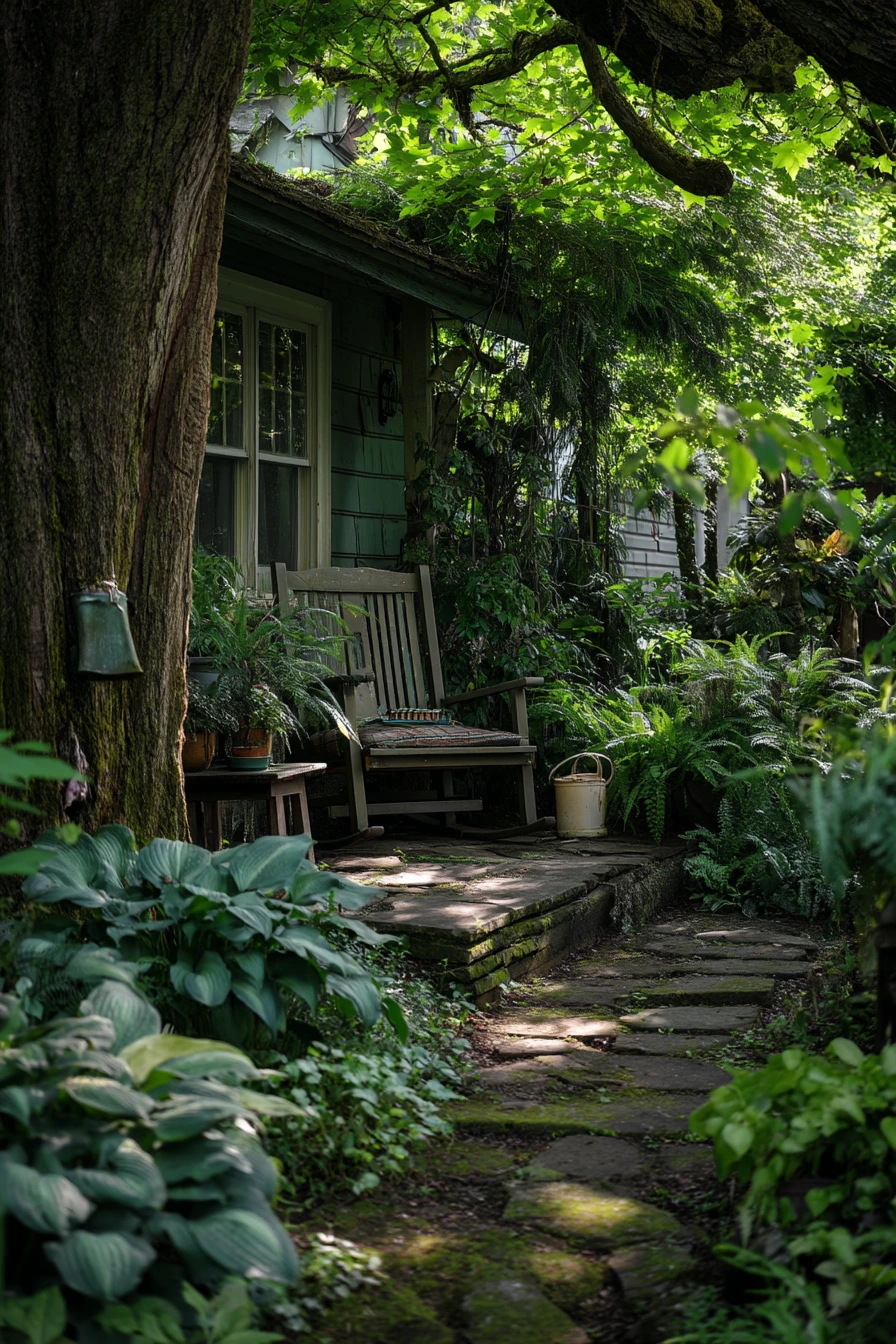
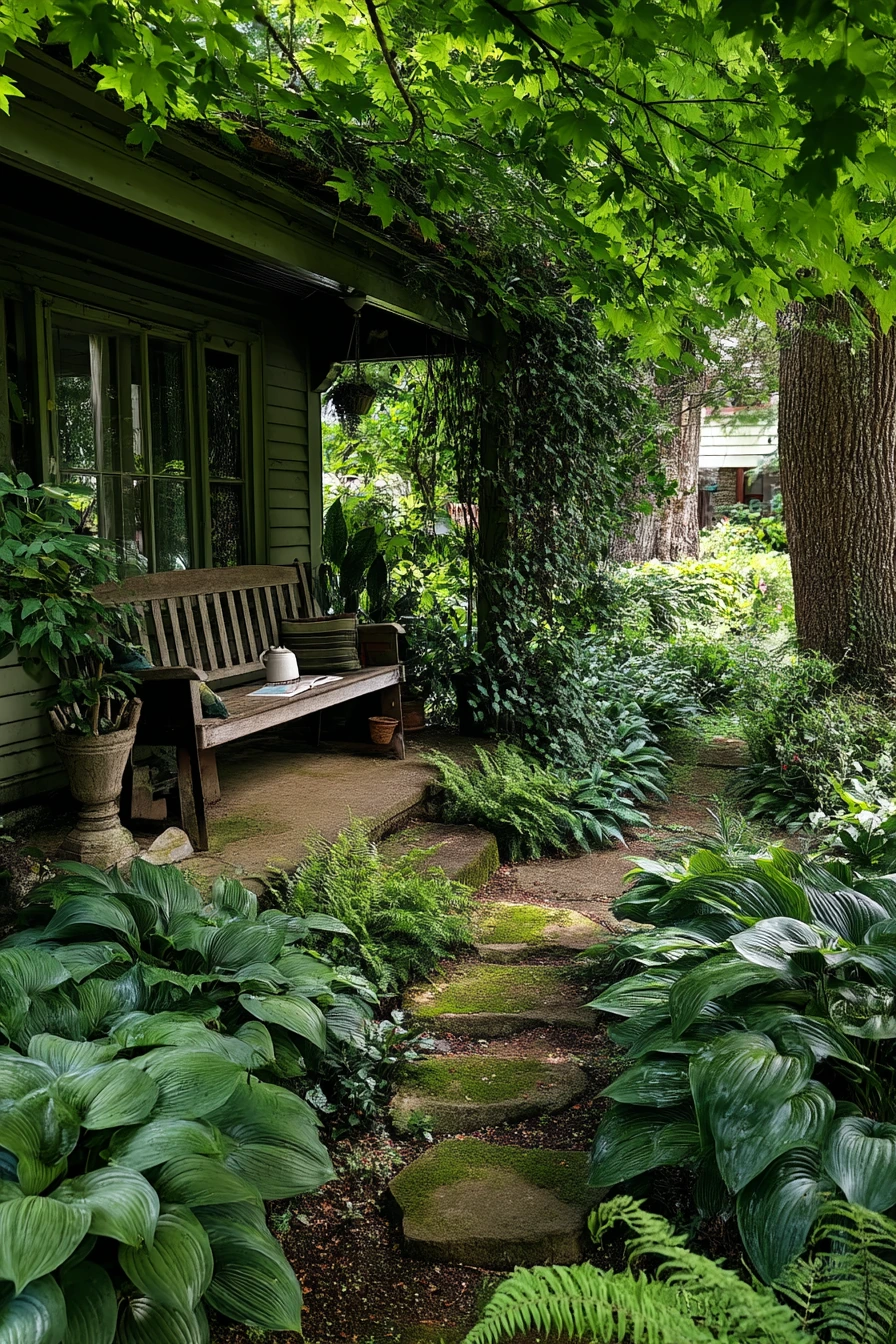
A tree-shaded older home can have a front yard garden that feels quiet and restful instead of bare. Hostas, ferns, hellebores, and mossy stepping stones thrive under a leafy canopy and look better in cool, dappled light than sun plants do. This style also fits slow mornings, with a watering jug by the bench and reading glasses on the porch table.
Start by watching the light. Many shaded yards still get a few hours of sun, which is enough for hellebores and some hostas. Ferns fill in with soft texture and can handle deeper shade. Use stepping stones to protect the soil from foot traffic and to guide guests through the garden without trampling plants. If the area stays damp, avoid piling mulch too thick against crowns, and give plants space for airflow.
To style a shade garden, focus on texture and leaf shapes. Mix large hosta leaves with fine fern fronds, and add a few dark-leaf plants for contrast. Keep the palette calm so it matches the older-home feel. A slightly wrinkled throw on a rocker and a simple bench make it inviting. Keep fallen leaves raked off the stepping stones so the path stays safe and the garden looks cared for.
- Choose shade plants with different leaf sizes for contrast.
- Use stepping stones to reduce compaction around tree roots.
- Water deeply but less often to encourage stronger roots.
- Leave space around plant crowns to prevent rot in shade.
- Add a small path light to mark stones at night.
Pro Design Tip: In shade, repeat texture more than color, like three hosta clumps and three fern clumps, to make the garden feel planned even with limited blooms.
Budget Considerations: Shade plants spread over time; buy a few strong starter clumps and divide them after a couple seasons to fill the bed without buying many new plants.


10 Budget DIY Gravel and Perennial Edge


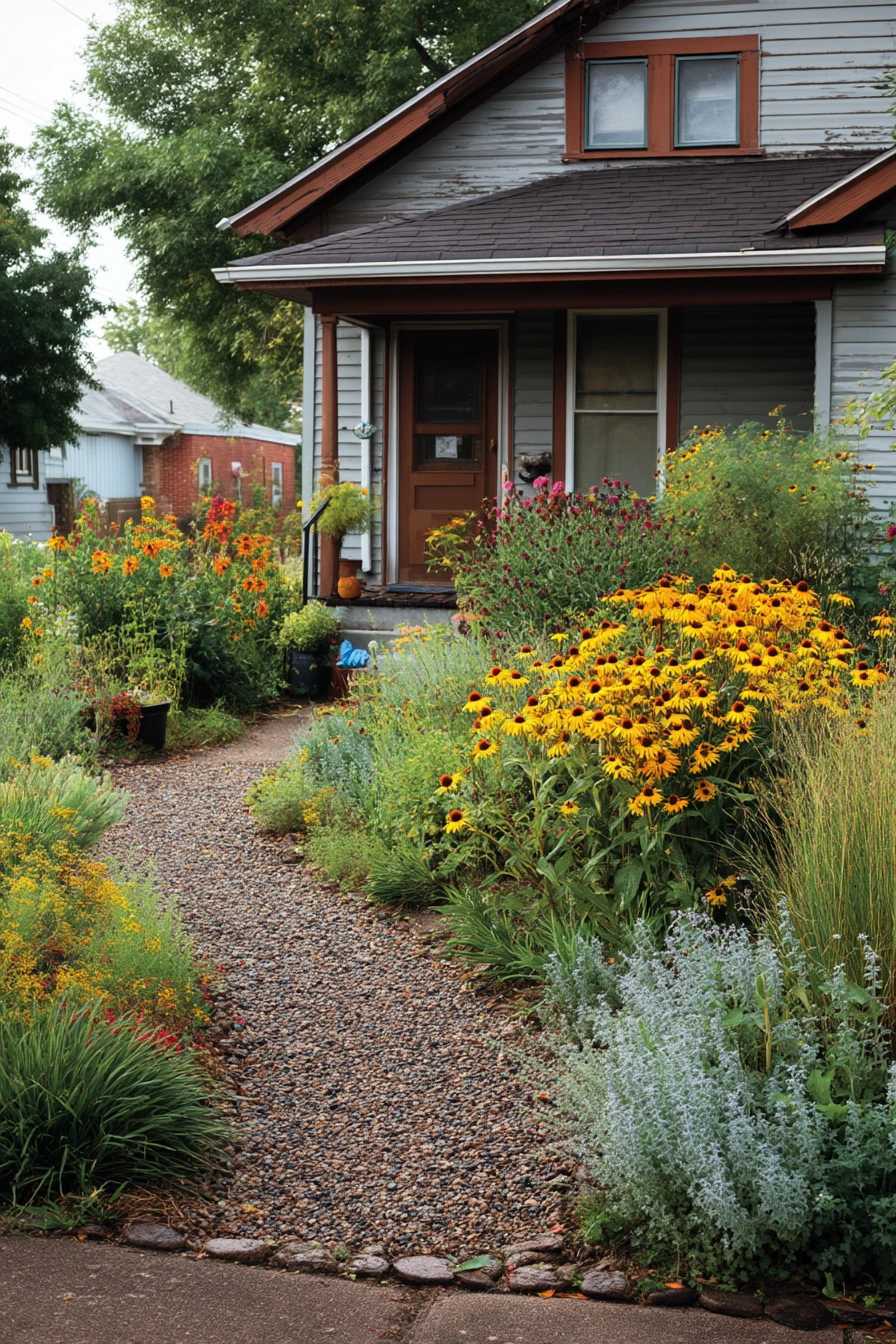
A budget-conscious front yard garden can still look finished with simple materials and tough perennials. A gravel edge with coneflowers, black-eyed susans, and catmint brings color and pollinators without high upkeep. Reclaimed pavers leading to the door add structure, and they fit the real life feel of weekend projects, like a paint can on the porch and a ladder tucked by the garage.
Begin with what you can reuse. Look for leftover pavers, bricks, or stepping stones and build a simple path. Keep the spacing even so it feels intentional. Then create a gravel strip along the bed edge to reduce weeds and keep soil from washing onto the walkway. Plant coneflowers and black-eyed susans in groups so the bed looks full. Add catmint near the front because it mounds nicely and helps soften the paver edges.
To keep it looking tidy, define the border and keep the gravel clean. Rake it once in a while and pull weeds while they are small. Use a consistent mulch in the planting area so it does not look patchy. If you are doing other curb updates, like painting trim, this garden style matches that practical, grounded look. It is also easy to expand later by adding more reclaimed pavers and a few more perennials.
- Use reclaimed pavers to save money and add charm.
- Plant drought-tough perennials that return each year.
- Add gravel edging to cut down on trimming and weeds.
- Space plants for mature size to avoid constant dividing.
- Keep a simple weeding routine, 10 minutes twice a week.
Pro Design Tip: Use one repeating shape, like the same paver size or the same gravel band width, so the garden looks planned even when materials are mixed.
Budget Considerations: Reclaimed pavers can vary in thickness; plan for extra sand and base material to level them, or use them as stepping stones in gravel instead of a full mortared path.

Good front yard garden ideas are not about perfect plants. They are about a clear path, simple layers, and choices that match your weather, time, and budget.
Pick one style from above, copy the plant mix, and start small near the entry. When the front door area looks cared for, the whole home feels more welcoming.
FAQ
Q1: What is the easiest front yard garden to maintain? A simple shrub backbone with mulch and a clean edge is usually the easiest. Add a few perennials for seasonal color.
Q2: How do I make a small front yard look bigger? Use a narrow layered bed along the walkway, repeat a few plant types, and keep the center lawn or path clear.
Q3: What are good low-water front yard plants? Agave, rosemary, many ornamental grasses, and drought-tolerant perennials like coneflower can work well, depending on your zone.
Q4: Can I do a front yard garden if I rent? Yes. Use containers, stacked planters, and portable trellises so you can take everything with you.
Q5: How do I keep my front garden from looking messy? Use a defined border, group plants, and trim or deadhead once a week. Keep the walkway swept.
Q6: Are edible plants ok in the front yard? Yes, if you keep them tidy. Choose compact varieties, edge the bed, and harvest often so plants stay neat.
Q7: What grows best in shade under trees? Hostas, ferns, and hellebores are reliable shade choices. Add stepping stones to protect soil and roots.