

Front garden ideas can make your home feel more welcoming, even if you only have a narrow strip by the path. With the right plants and a few simple upgrades, your entry can look tidy, lived-in, and easy to care for.
This guide shares front yard layouts inspired by real-life moments like muddy boots by the door, a bicycle near the gate, and a watering can left on the step. You will see how gravel paths, low brick edging, pots, benches, and hardy plants can work together.
Each section includes small how-to style ideas, plus a Pro Design Tip and a Budget Consideration. Use them to plan a quick refresh, a full makeover, or a rental-friendly setup with no digging needed.
Pick the styles that match your life, whether you have kids, a dog, busy workdays, or you want a bee and butterfly border. Then copy the details that make the space look finished.
1 Compact Front Garden for a Narrow Row House
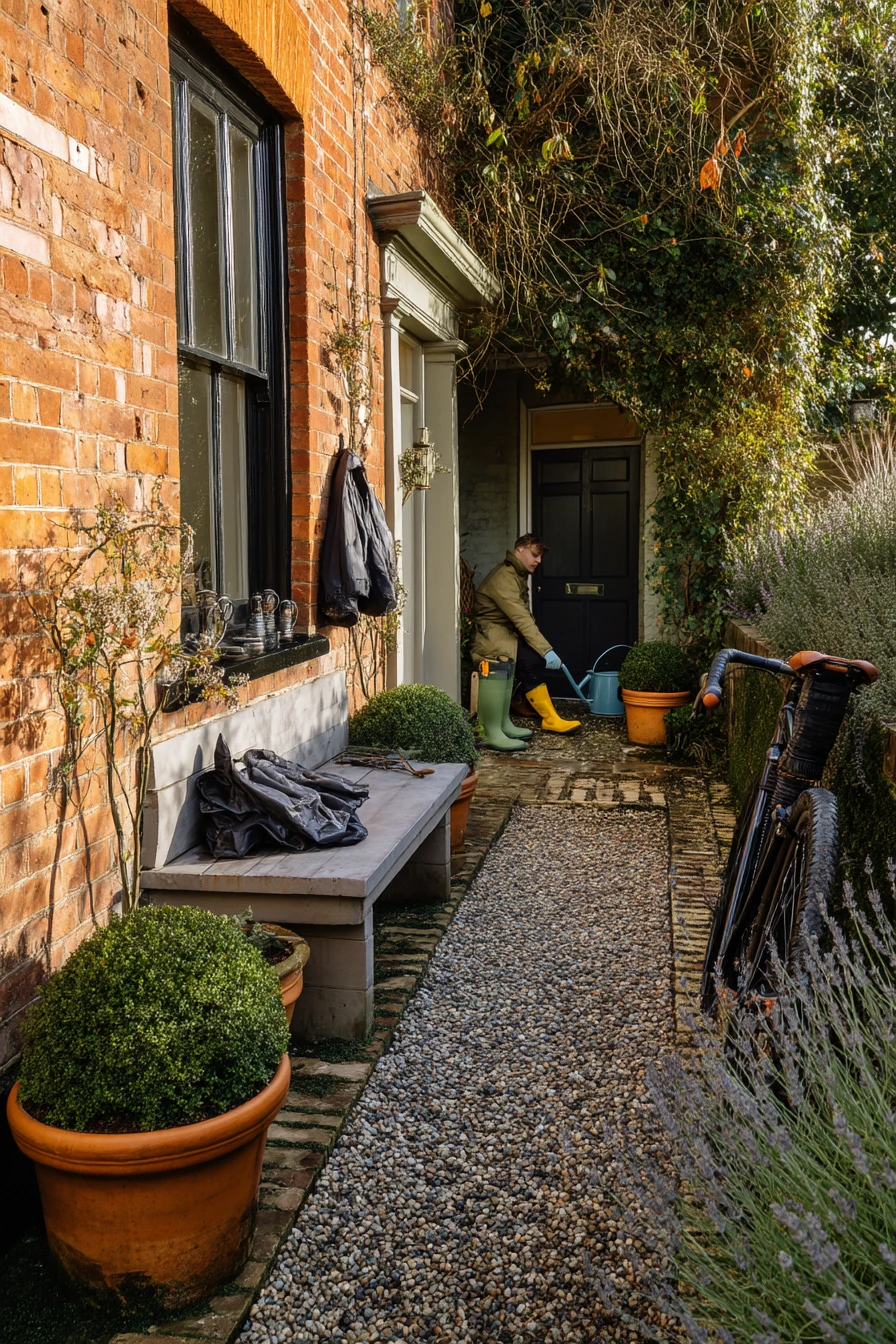
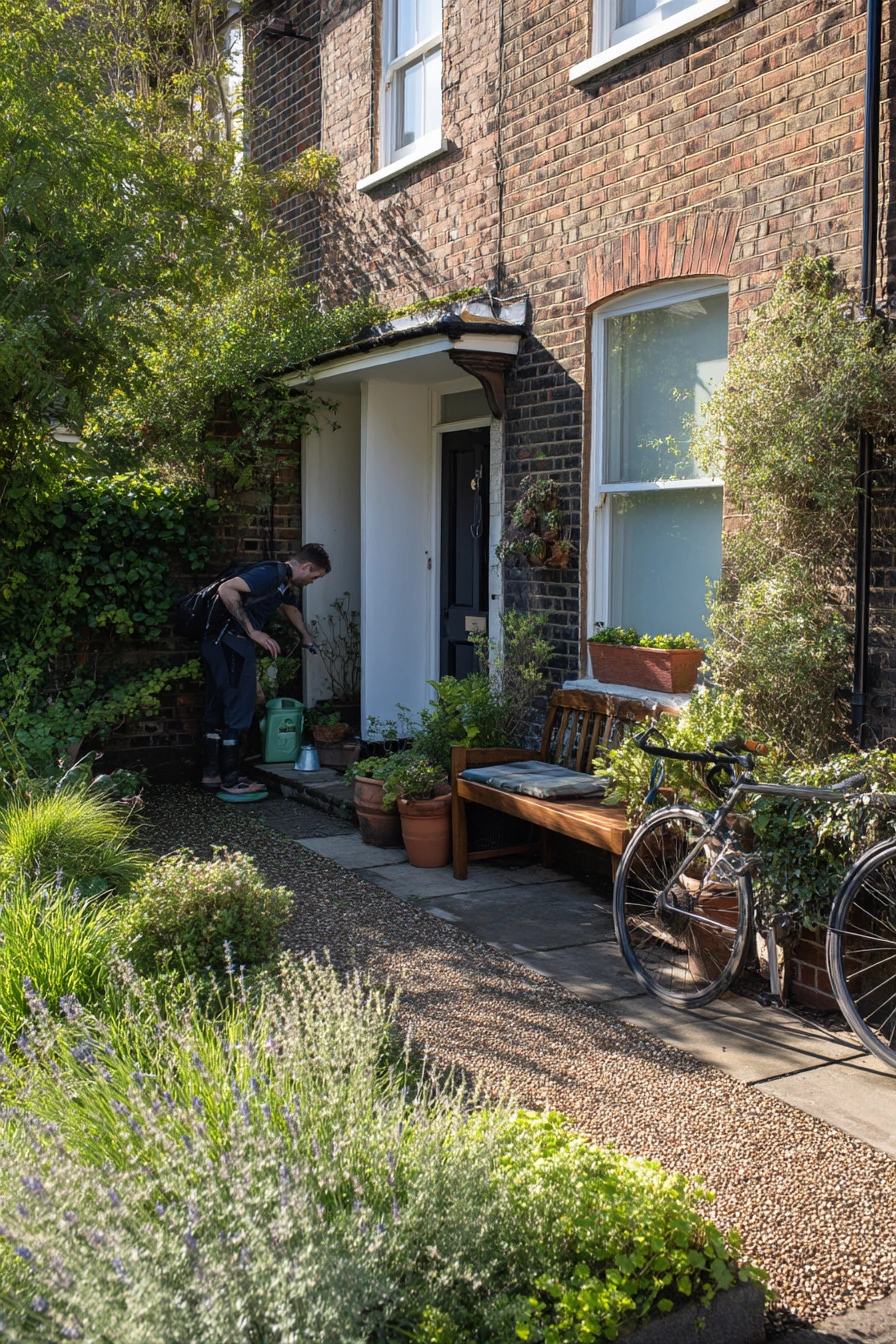
A narrow terraced front garden can still feel calm and planned when the edges are crisp. Start with a simple gravel path, then add low brick edging to keep stones in place and make the border look neat from the gate. Clipped boxwood works well here because it stays compact, looks orderly, and gives year-round shape.
Keep the planting soft so it does not feel stiff. Wind-tousled lavender beside boxwood adds movement and scent, especially in soft morning light. Two terracotta pots near the door help the entry feel warm and lived-in, and they are easy to swap by season. A slim bench is useful in a tight space and gives you one spot to add a folded raincoat or a small cushion.
Style the scene with real daily items, but keep them contained. Muddy boots by the door look fine when they are lined up on a tray. If a bicycle handlebar peeks in, make it feel intentional by keeping the path clear and the planting trimmed back. Watering is easier when you can reach everything from one path, so avoid deep beds in a small terrace.
- Lay a straight gravel path so the garden reads wider.
- Use low brick edging to stop gravel spill and define the border.
- Plant boxwood in a repeating line for structure.
- Add lavender in small clumps for softness and scent.
- Finish with two terracotta pots to frame the door.
Pro Design Tip: Repeat one shape three times, like round boxwood balls or rounded pots, so the narrow space feels planned and not crowded.
Budget Considerations: Gravel and brick edging are often cheaper than paving; look for reclaimed bricks and buy gravel in bulk bags to cut costs.
2 Budget-Friendly Curb Appeal Refresh
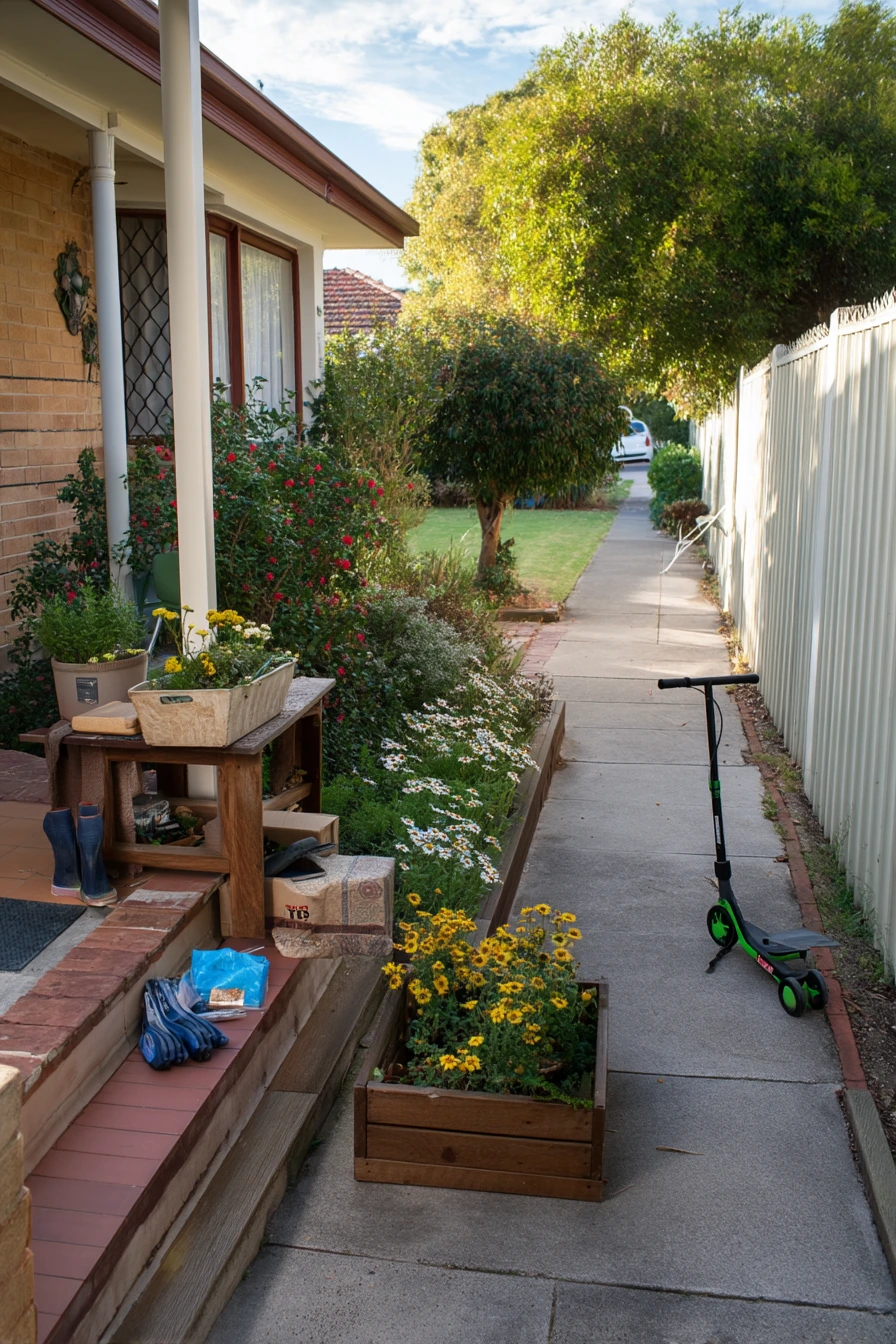
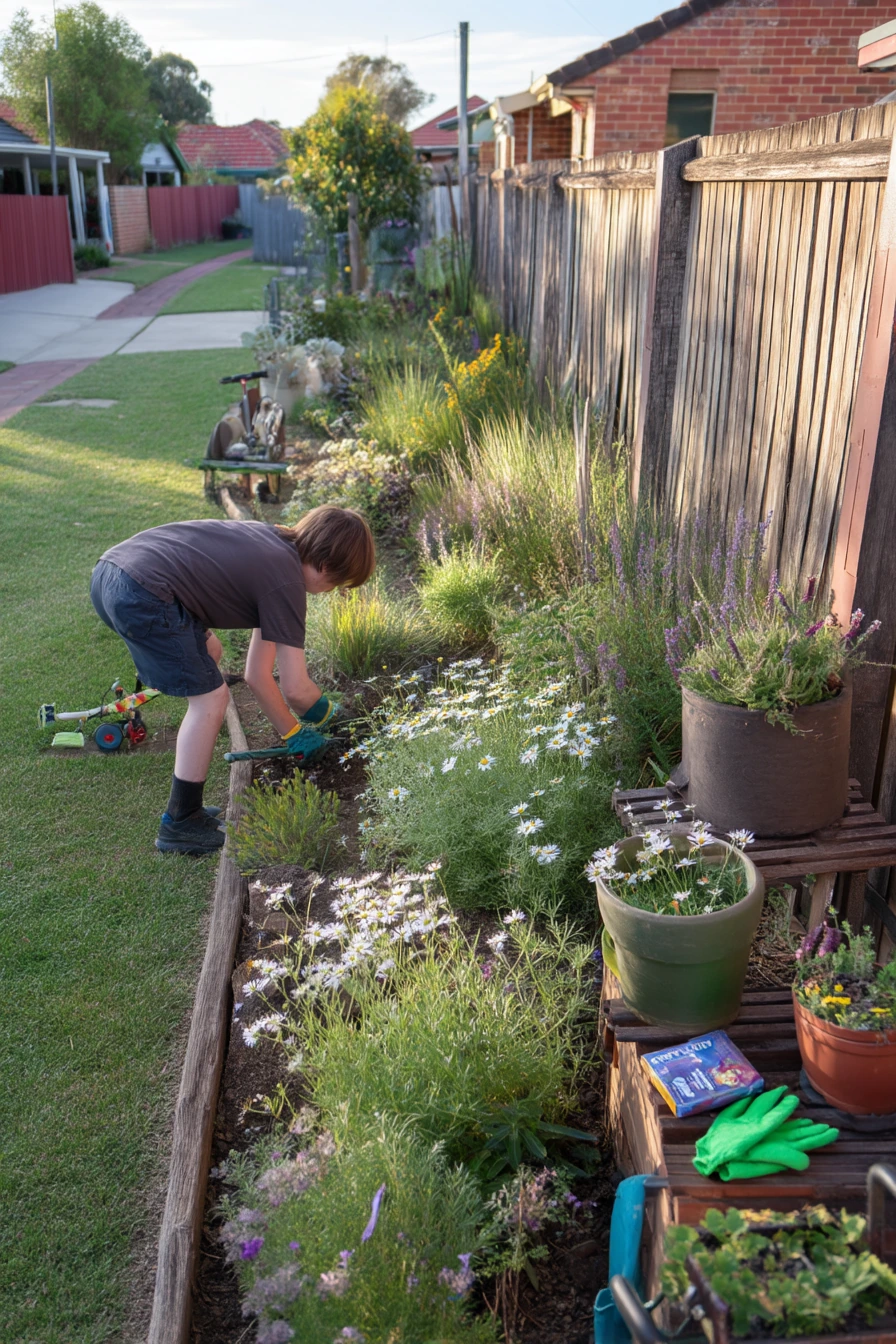
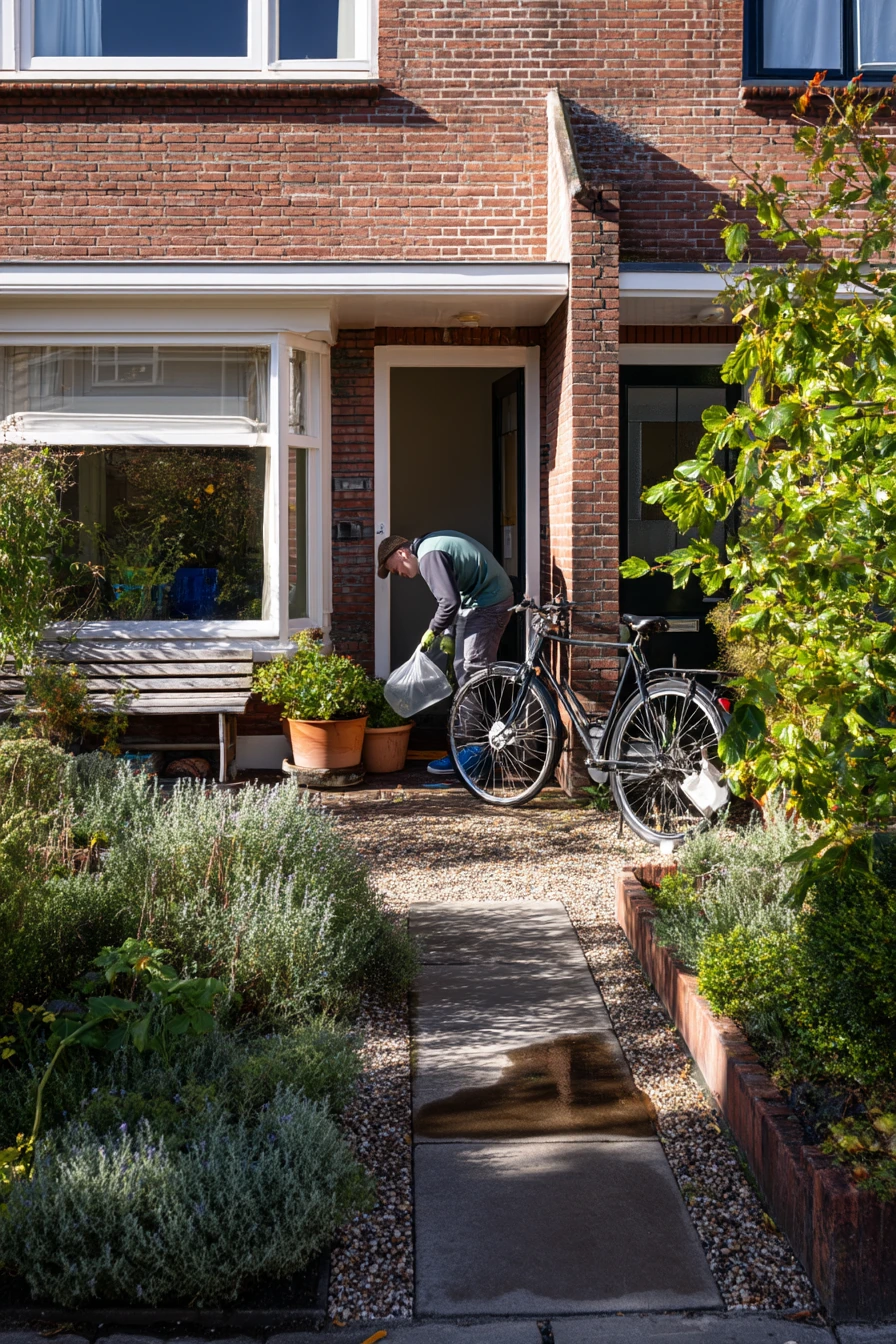
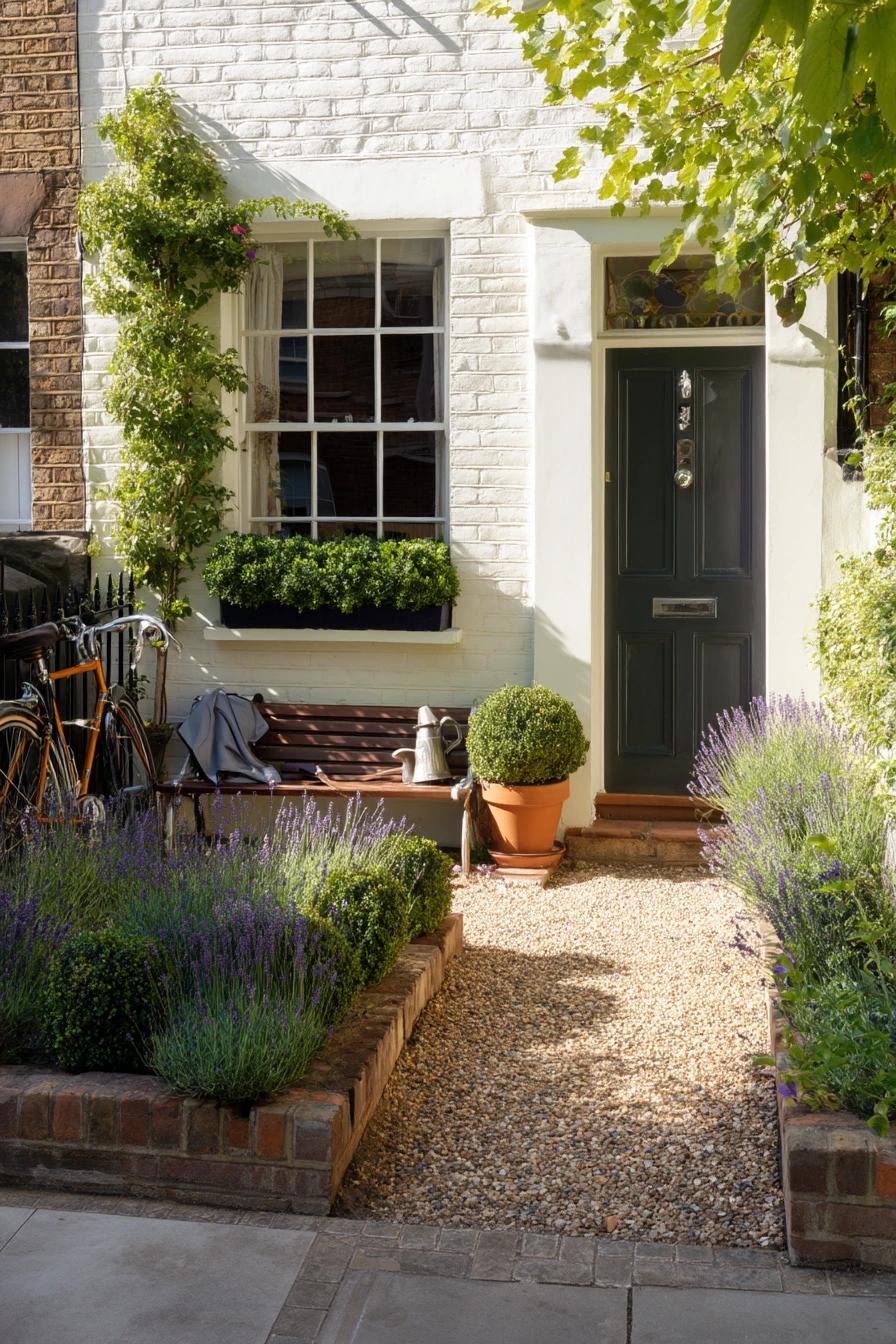
A small suburban front garden makeover does not need fancy materials to look fresh. A clean fence, reused timber edging, and thrifted planters can give you a big change with a small spend. Start by pulling weeds and clearing the border so you can see the shape of the space from the driveway.
Choose easy flowers that look cheerful fast. Daisies and salvia are simple to grow and give long color. Place planters near the step or along the path to add height without taking up planting space. A packet of seeds on a stool is a good reminder to fill gaps later, and it helps you keep the border full through the season.
Make it practical for daily life. Keep garden gloves on the step in a small box so you can weed for five minutes while the kids play. If a child’s scooter is parked near the path, leave a clear “parking spot” by the fence so the walkway stays safe. Late afternoon light can make paint and plants look warmer, so aim to finish the fence first and then plant around it.
- Paint the fence a light, calm color to brighten the entry.
- Use reused timber edging to create a clean border line.
- Plant daisies for quick, friendly color.
- Add salvia for height and pollinators.
- Group thrifted planters in sets of three for balance.
Pro Design Tip: Keep one “hero” color across pots and fence so mixed planters still look tidy, even if the shapes are different.
Budget Considerations: Thrift stores and yard sales are great for pots; if paint costs add up, paint only the street-facing panels first.
3 Renter-Friendly Pots and Portable Greenery
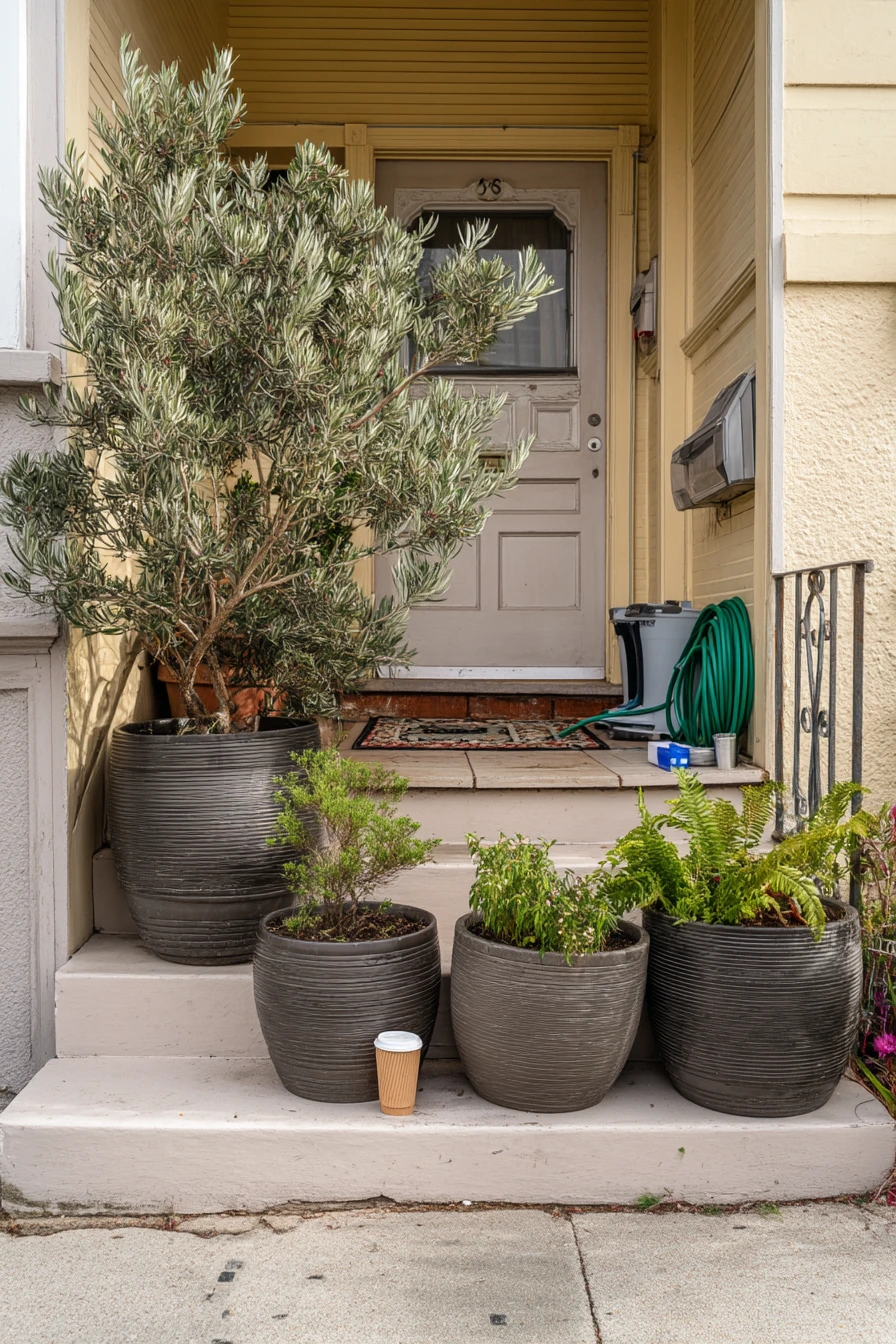
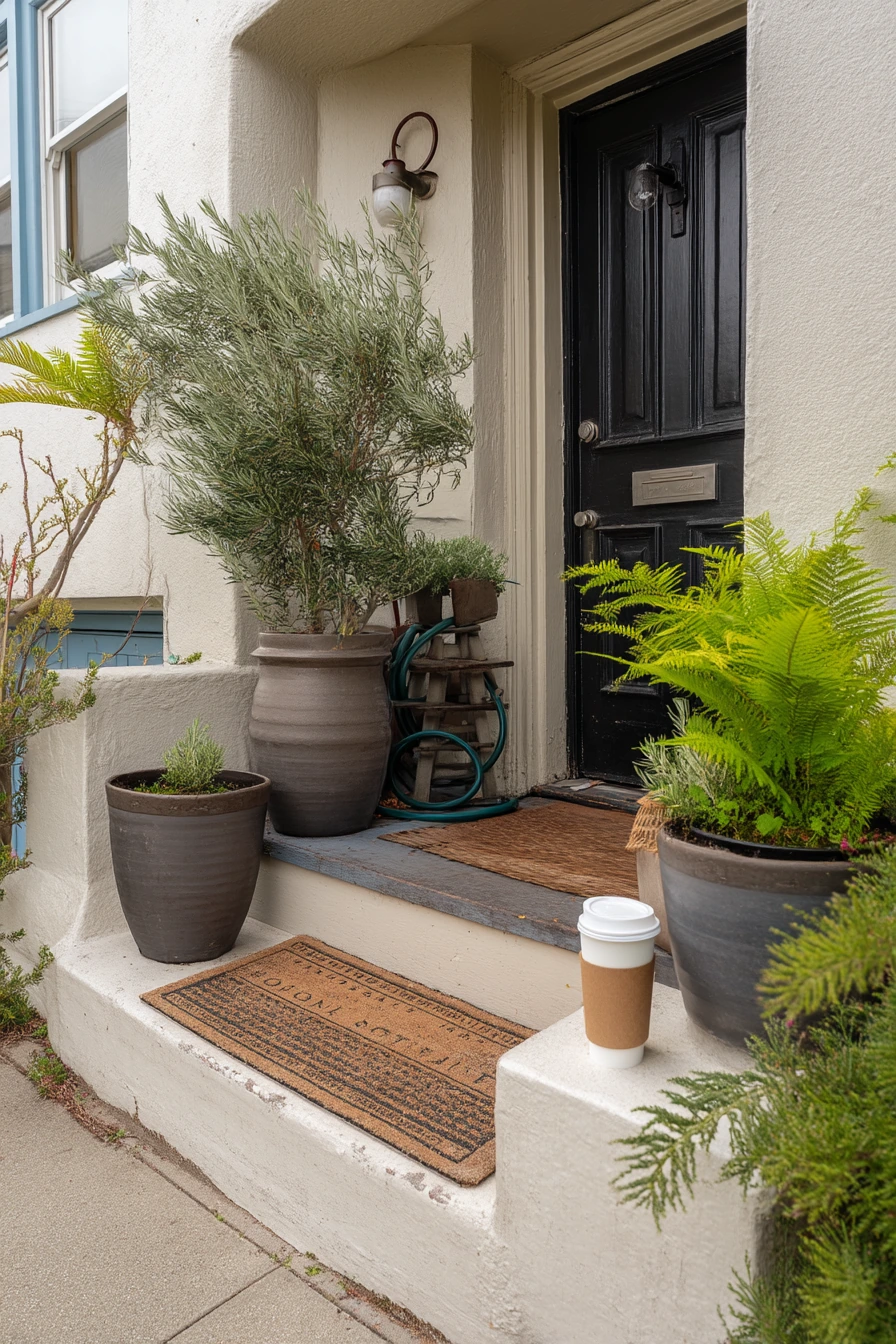
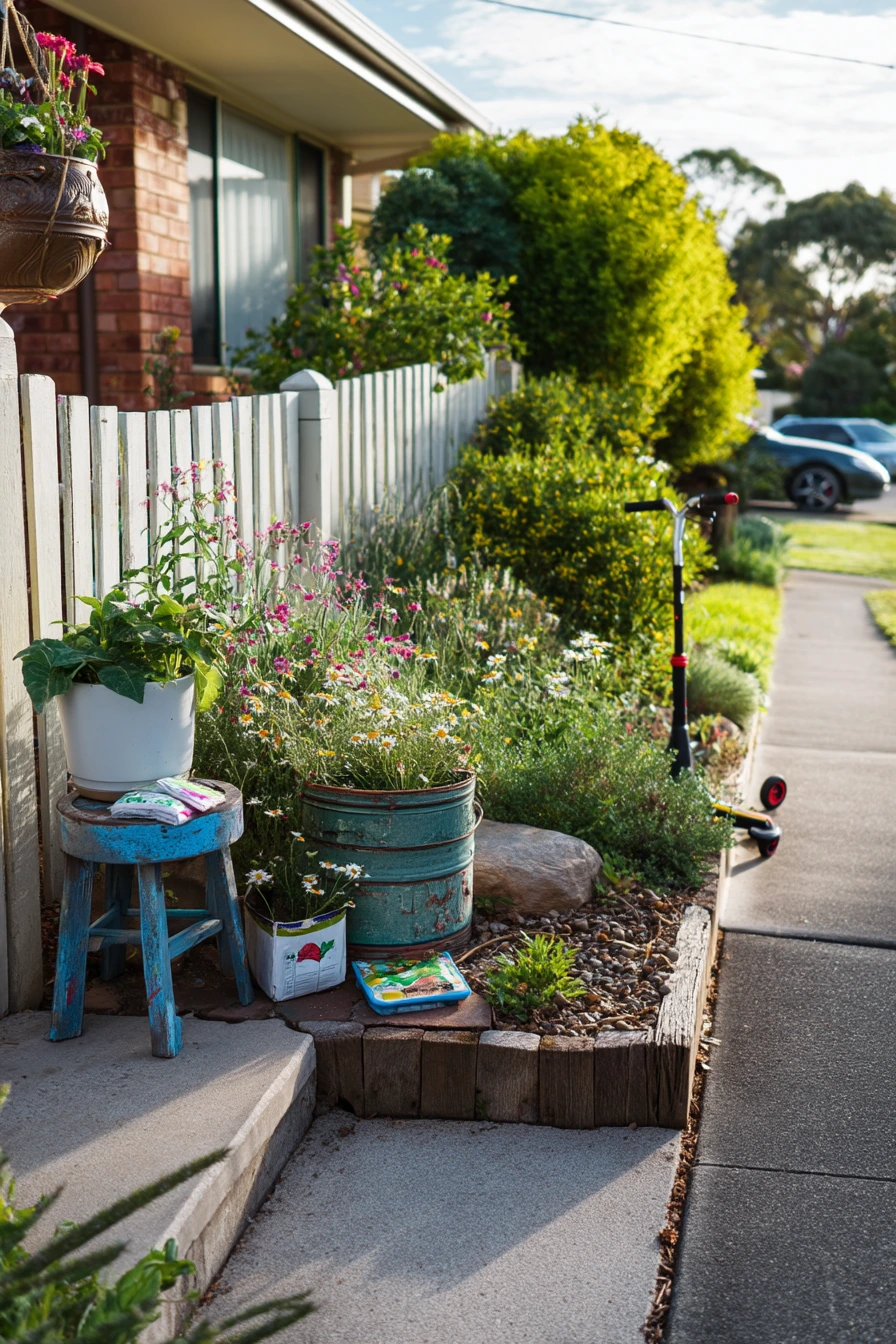
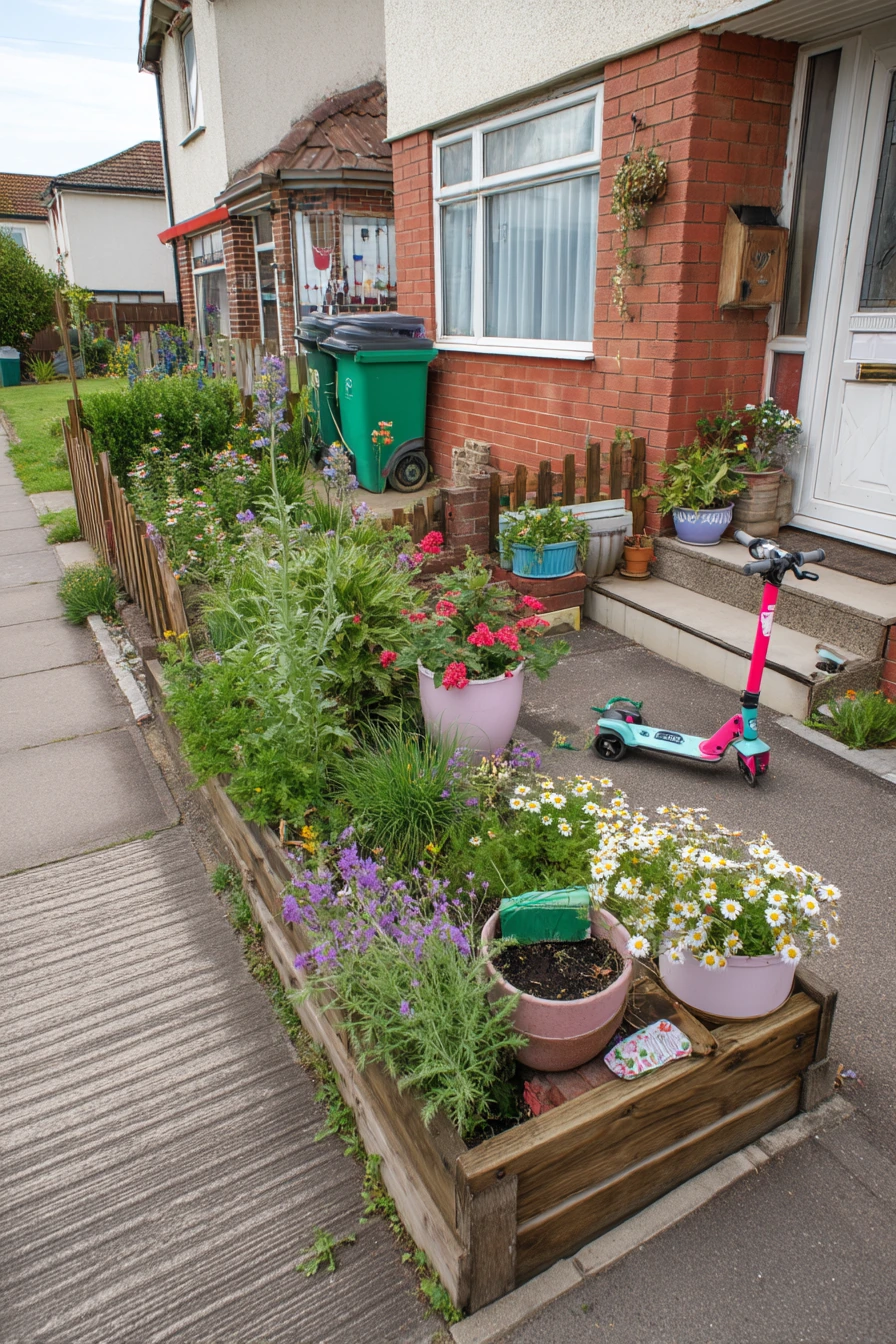
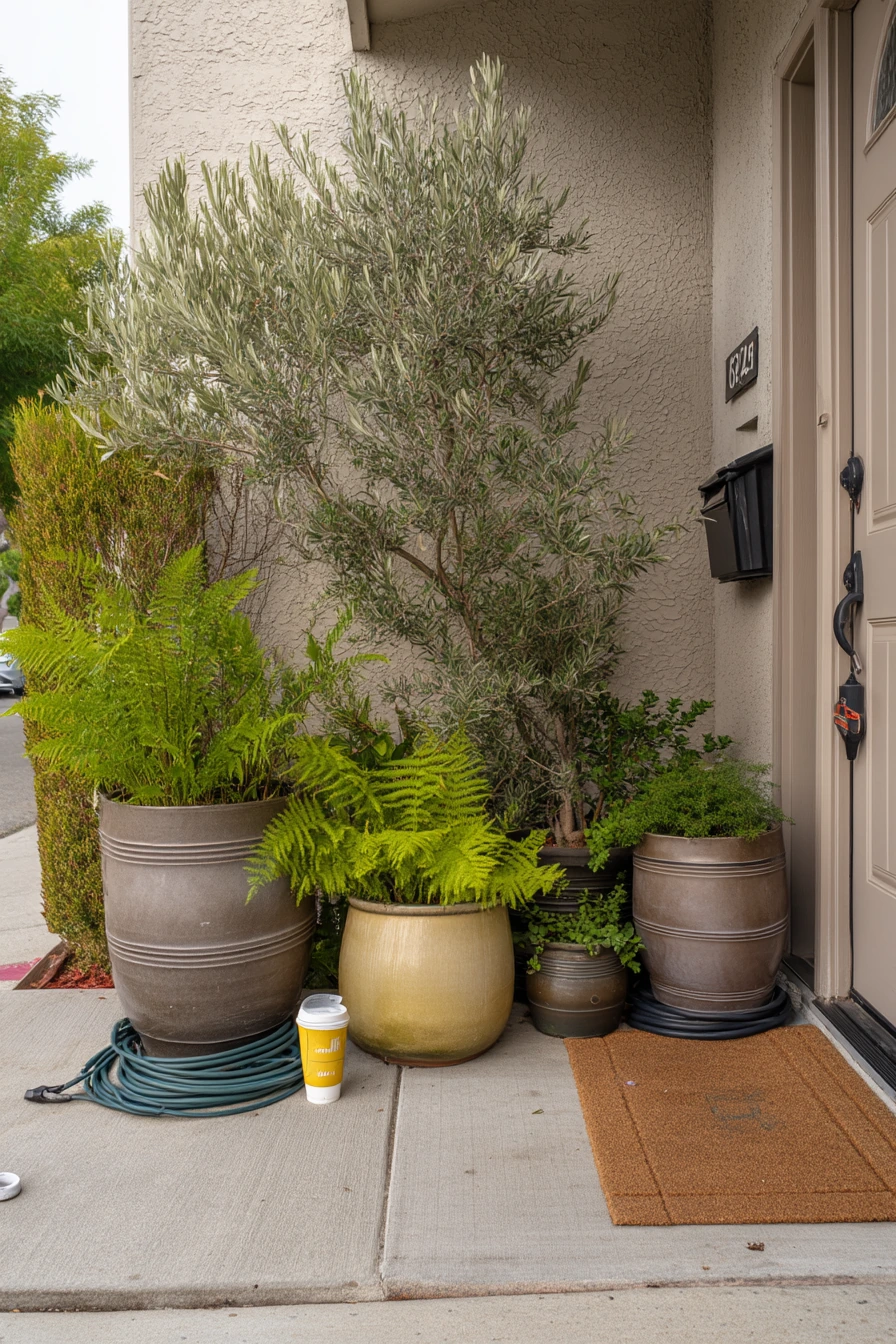
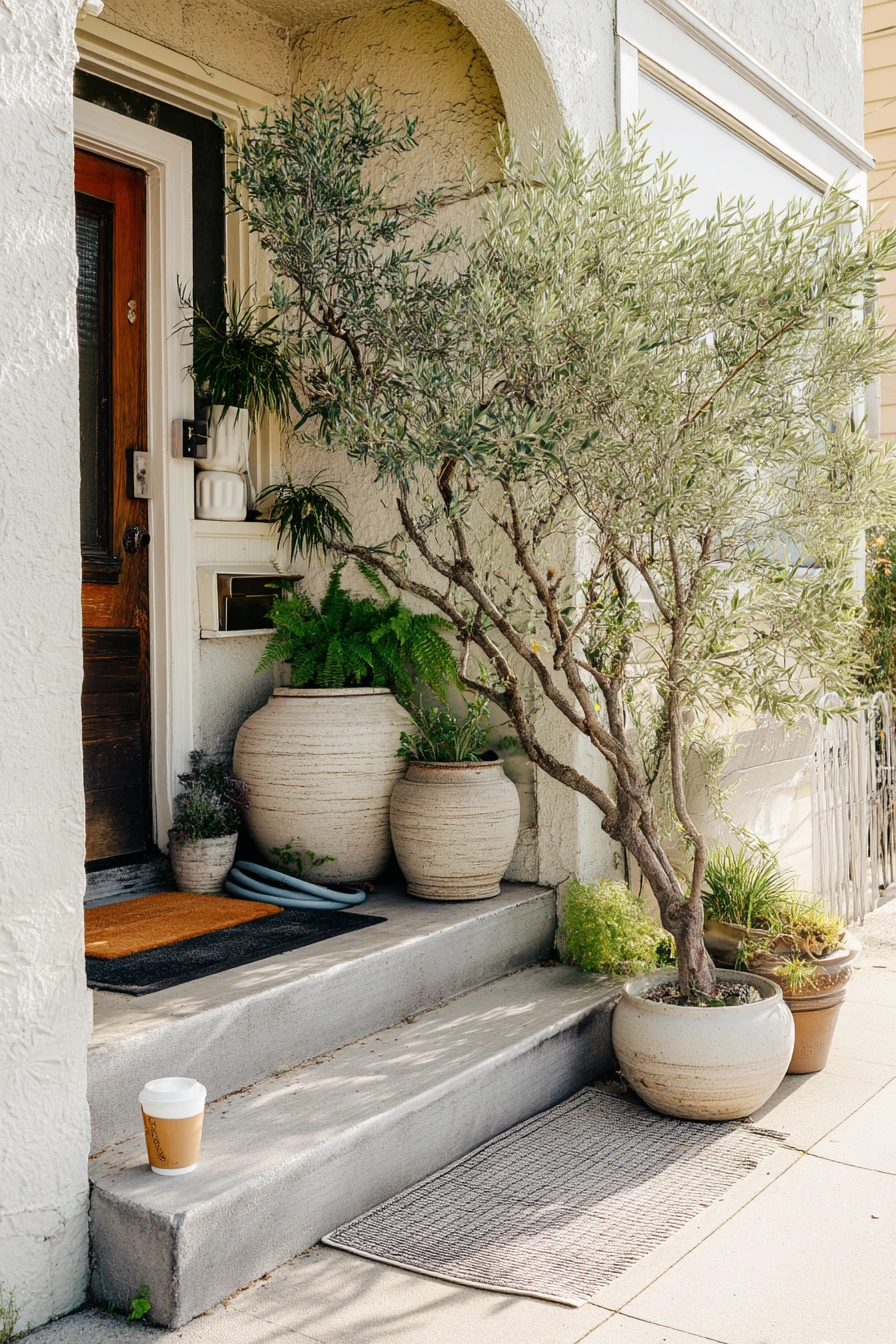
Rental front entry garden ideas work best when they are movable and easy to undo. Oversized pots let you add height and greenery without digging. A stacked pot arrangement with an olive tree on top, plus rosemary and ferns below, makes the entry feel established fast, even in a plain space.
Start with a simple layout from the sidewalk. Place the tallest pot near the door, then step down in height toward the path. Keep the hose coiled neatly so the area stays clean and you do not trip. Little signs of real life, like a takeaway coffee cup on the ledge, can look fine as long as surfaces are not cluttered.
Choose plants that handle container life well. Olive trees like sun and can handle dry soil once settled. Rosemary is tough, smells good, and looks neat when trimmed. Ferns are best for shade or part shade, so place them where the entry gets protection. Add a strong doormat so damp footprints do not make the entry look messy, and keep keys and mail in a small tray inside so the outside stays calm.
- Use one large pot as a focal point by the door.
- Layer medium and small pots to create a “mini border” look.
- Pick rosemary for scent and a tidy shape.
- Add ferns to soften corners and hide blank walls.
- Hide practical items by using a hose pot or wall hook.
Pro Design Tip: Match pot finishes, like all matte terracotta or all charcoal, so the entry looks cohesive even with mixed plants.
Budget Considerations: Large pots can be pricey; use lightweight plastic pots with a stone-look finish, or buy one premium pot and mix in cheaper sizes.
4 Pet-Friendly Path and Tough Planting
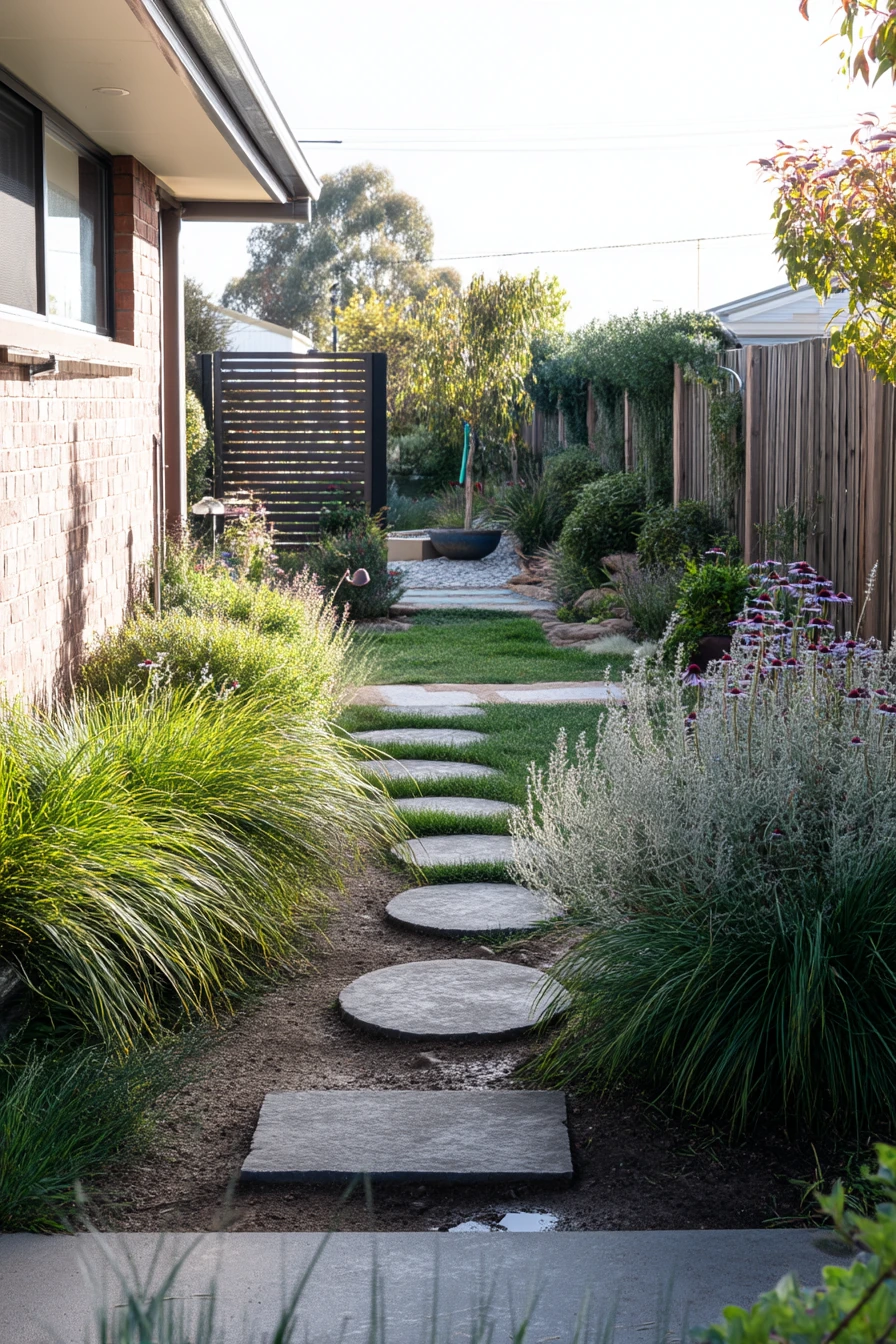
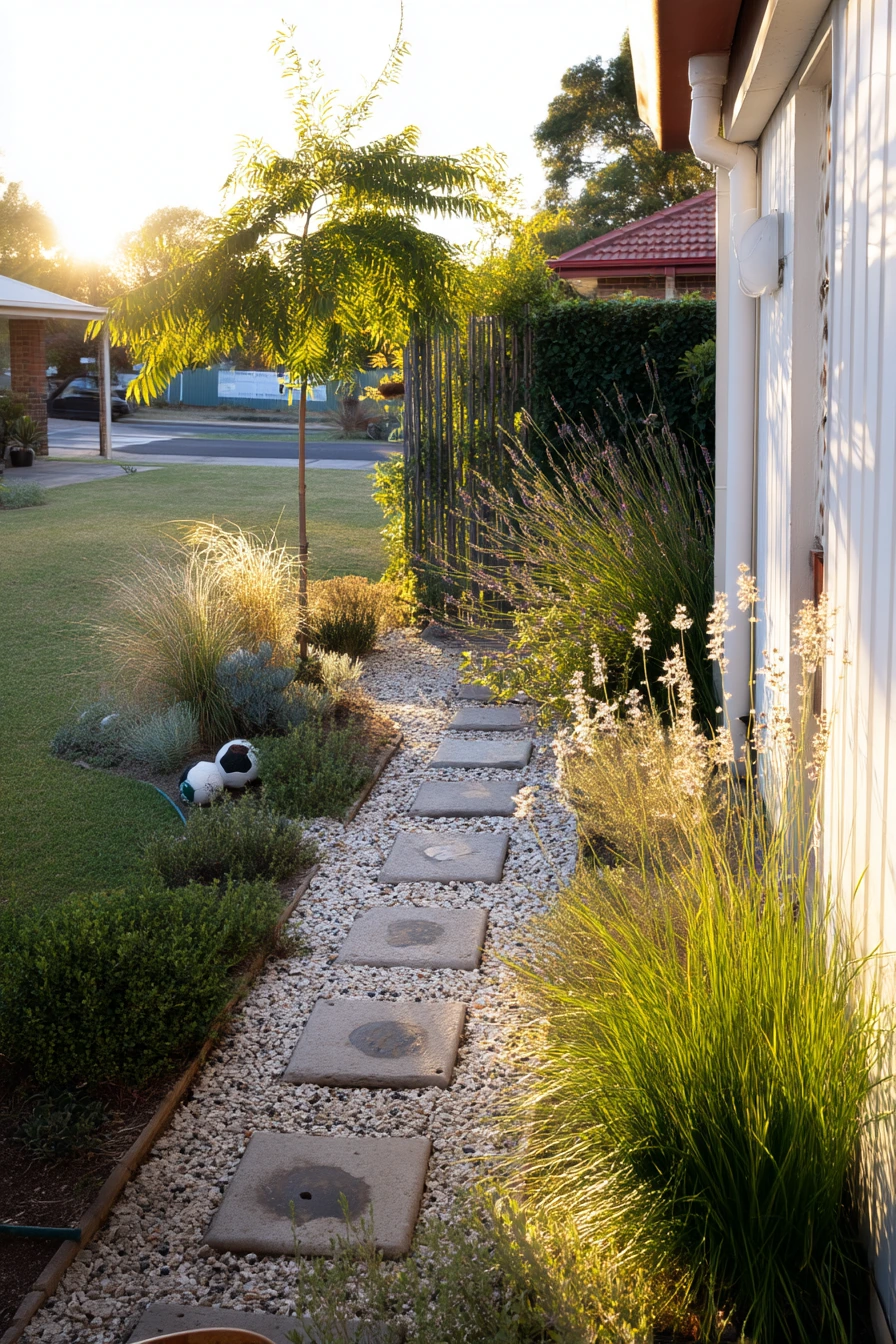
A dog-friendly front garden needs a clear route to the gate and plants that can handle movement. A compact lawn strip gives your dog a soft runway, while stepping stones protect the soil and keep paws out of muddy areas. If you notice muddy paw prints on the paving, it is a sign to strengthen the path, not to add more delicate plants.
Choose durable grasses for the borders and add reliable flowers like lavender and echinacea. Lavender is tough, smells great, and can handle some brushing past. Echinacea adds color and is sturdy, so it is less likely to flop. Keep the planting line set back from the main sprint path, so your dog is not crashing into stems.
Style the entry for daily routines. Hang the leash from a hook near the door so it is always in the same place. Add a water bowl by the entrance, but set it on a small mat so spills do not stain. If kids play outside, a football can be tucked behind a hedge, but keep the gate area open so arrivals feel relaxed and not crowded.
- Create a straight or gently curved running lane to the gate.
- Install stepping stones to reduce mud and worn grass.
- Plant lavender in clumps away from the main path.
- Use tough ornamental grasses for flexible borders.
- Add echinacea for hardy color that stands up well.
Pro Design Tip: Make the path at least two stepping-stone widths wide so a sprinting dog does not cut into the planting bed.
Budget Considerations: Concrete stepping stones are usually affordable; you can also use reclaimed pavers and lay them in sand for a low-cost upgrade.
5 Low-Maintenance Front Garden for Busy Professionals
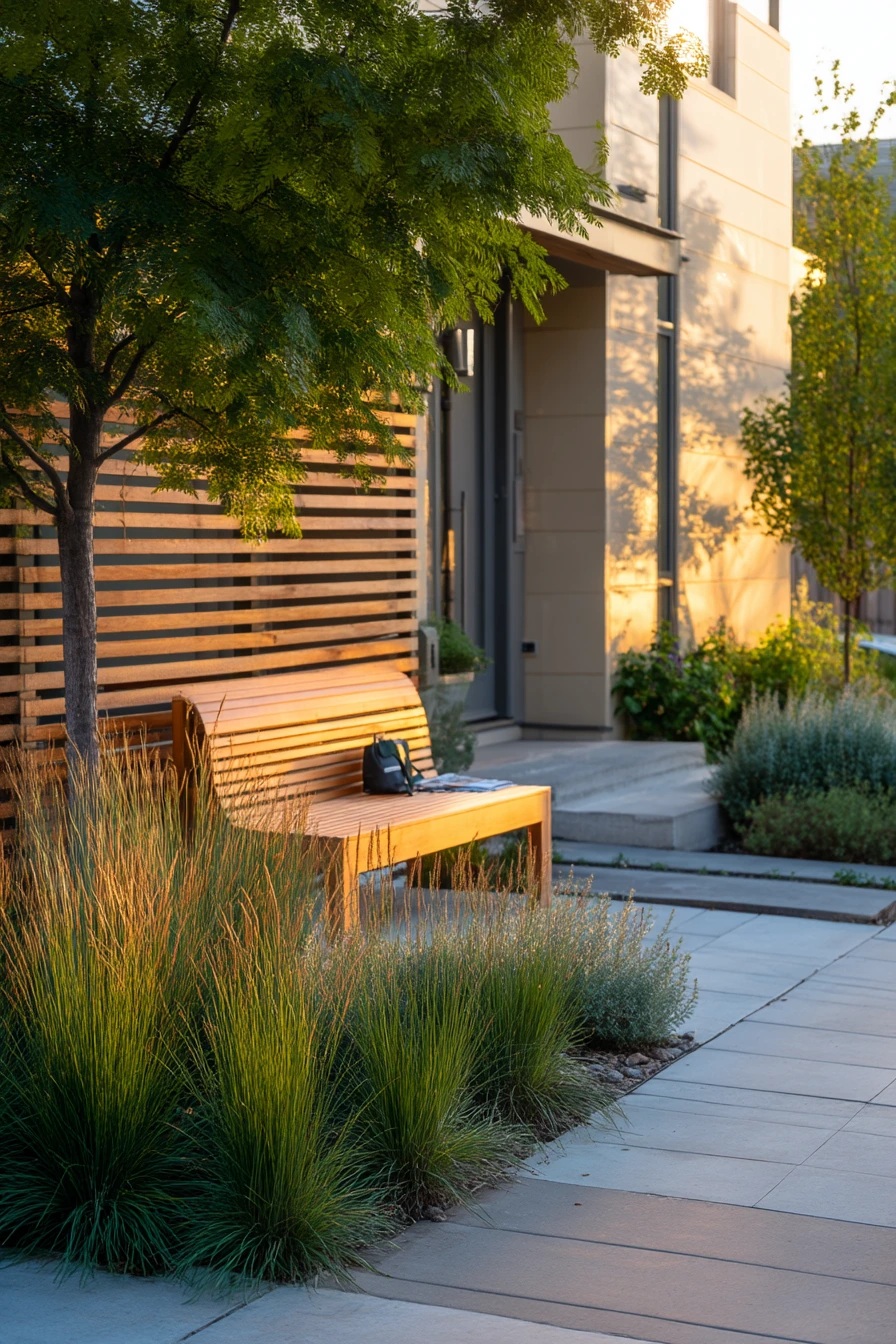
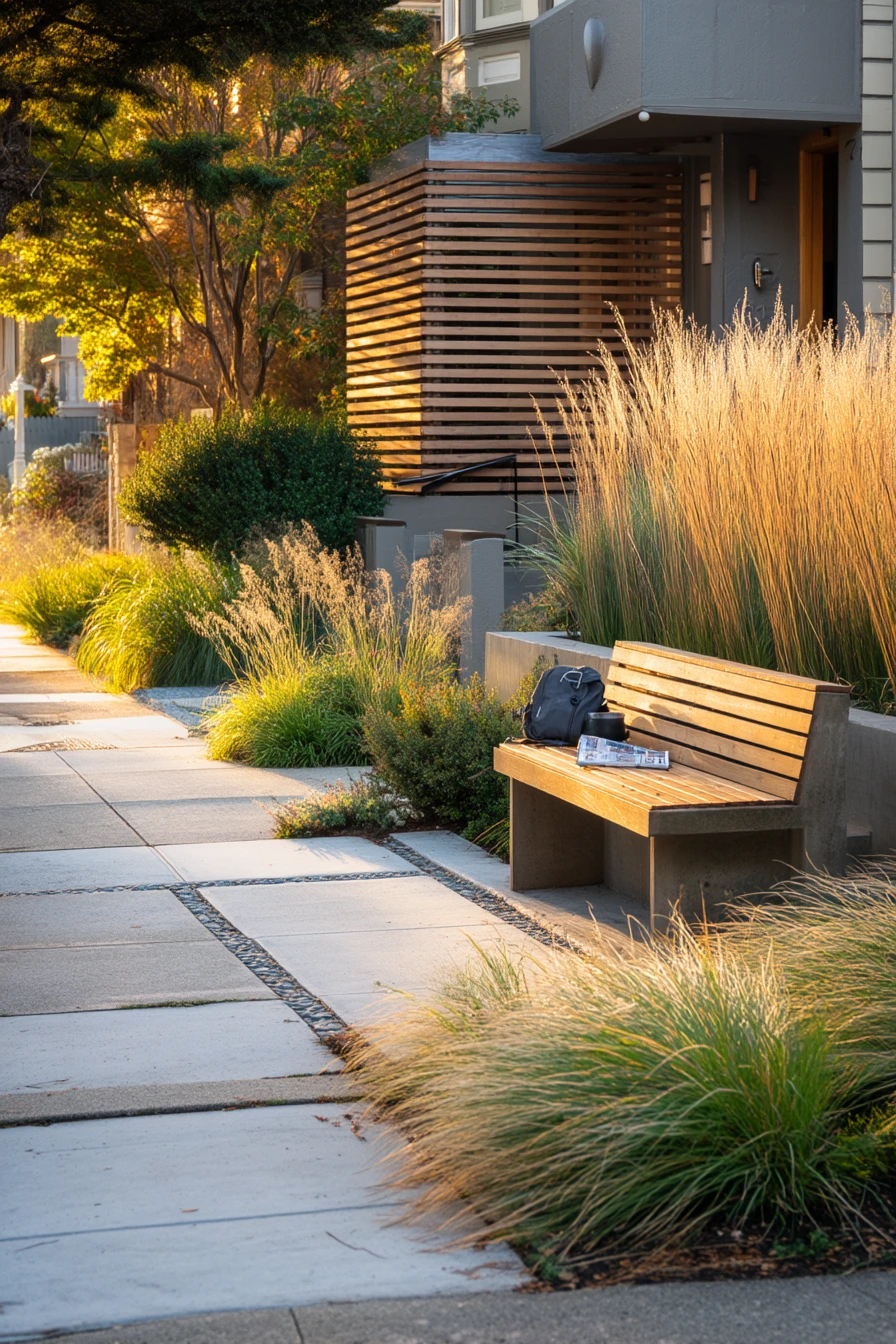
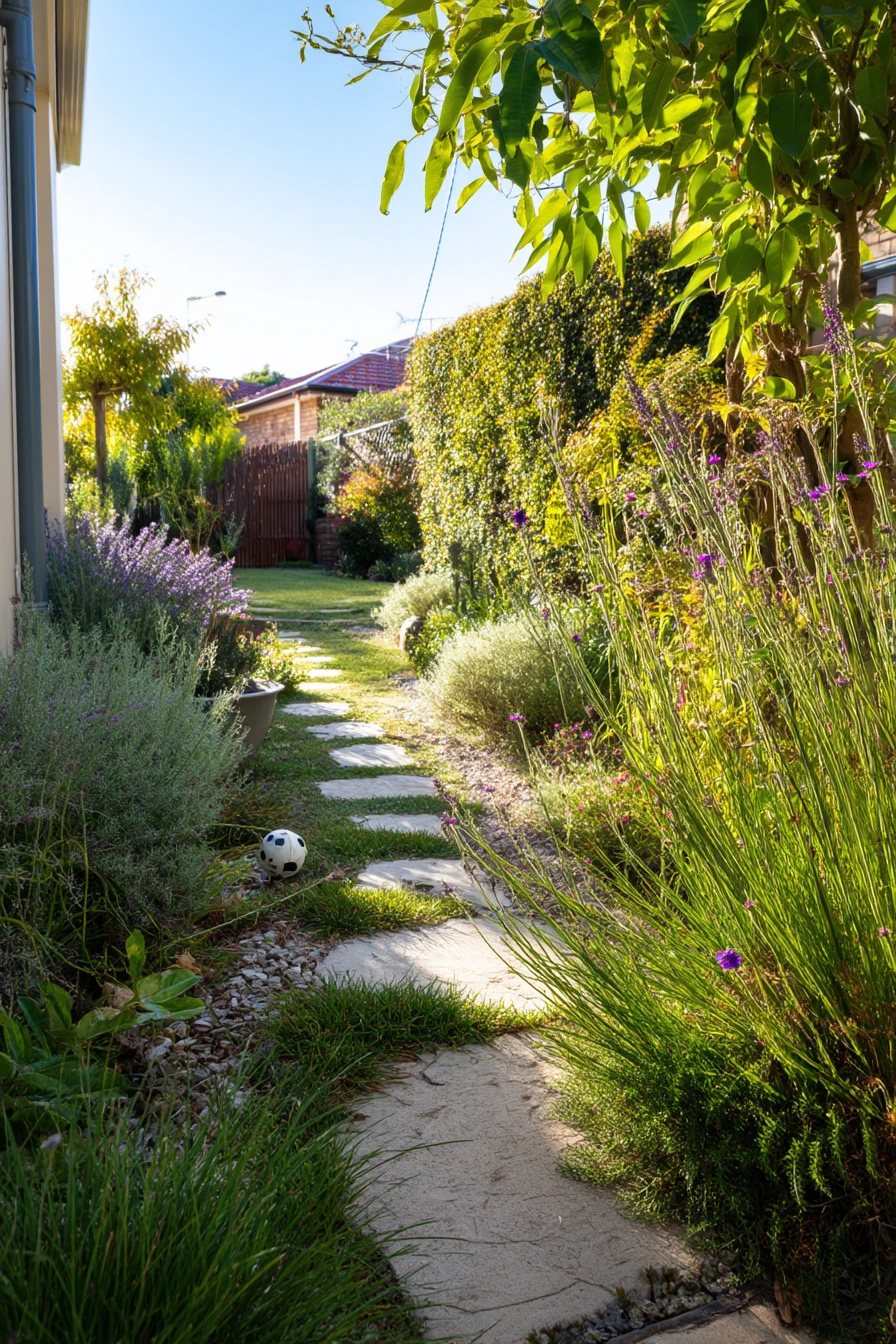
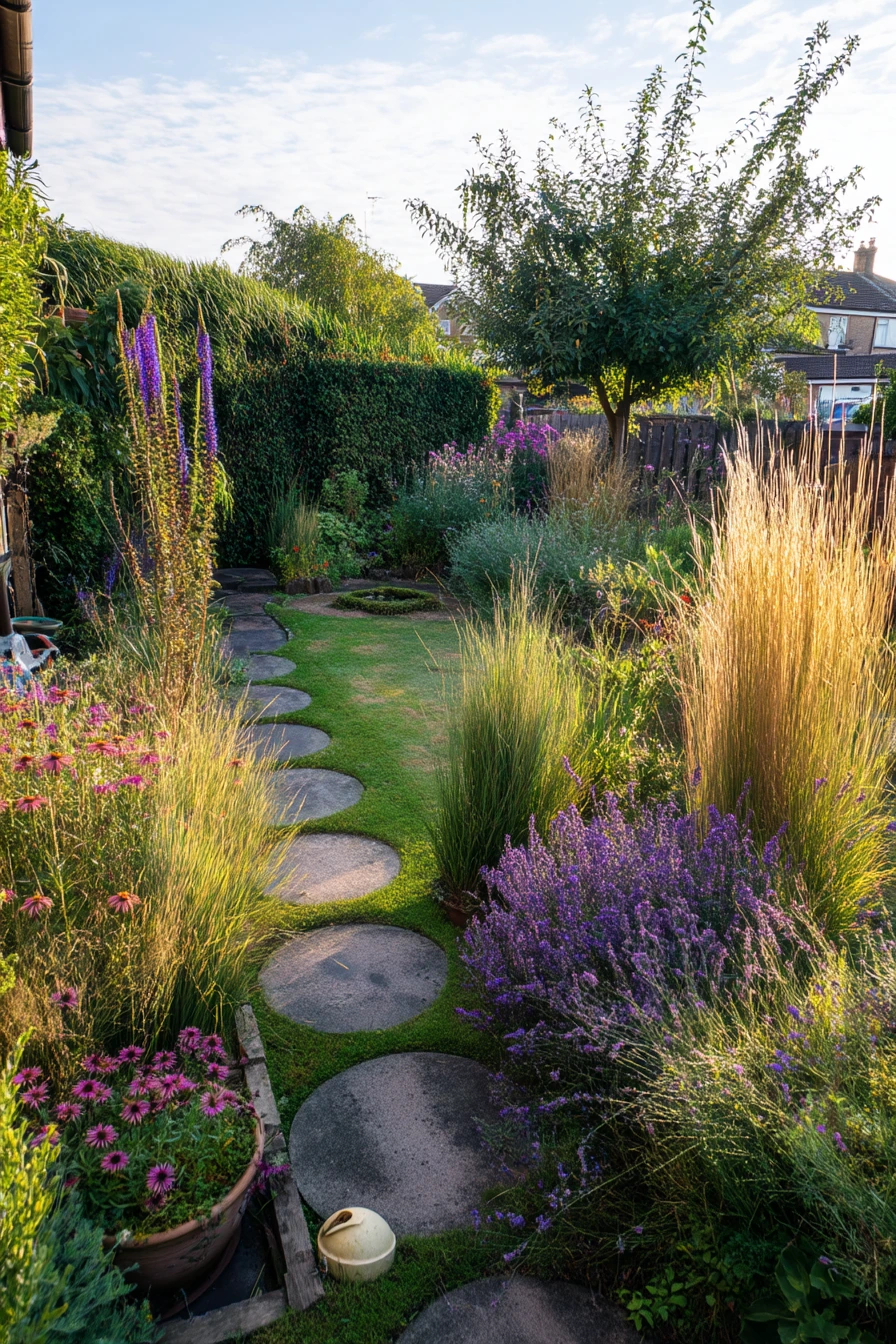
A modern front garden is a good fit for busy professionals because it can look sharp with little weekly work. Clean lines, stone mulch, and evergreen shrubs keep the entry calm and structured. Ornamental grasses add movement without needing constant deadheading like many flowers.
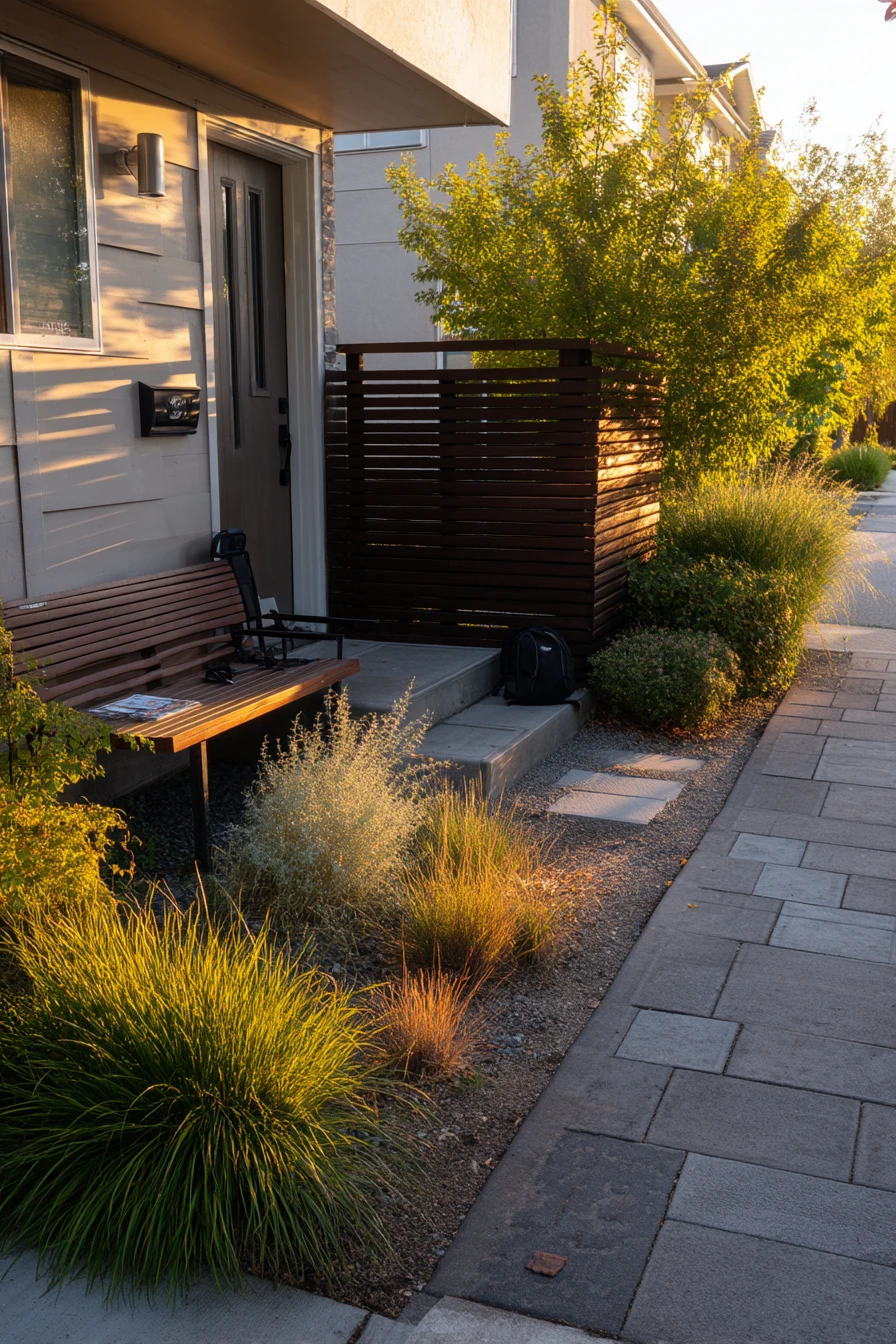
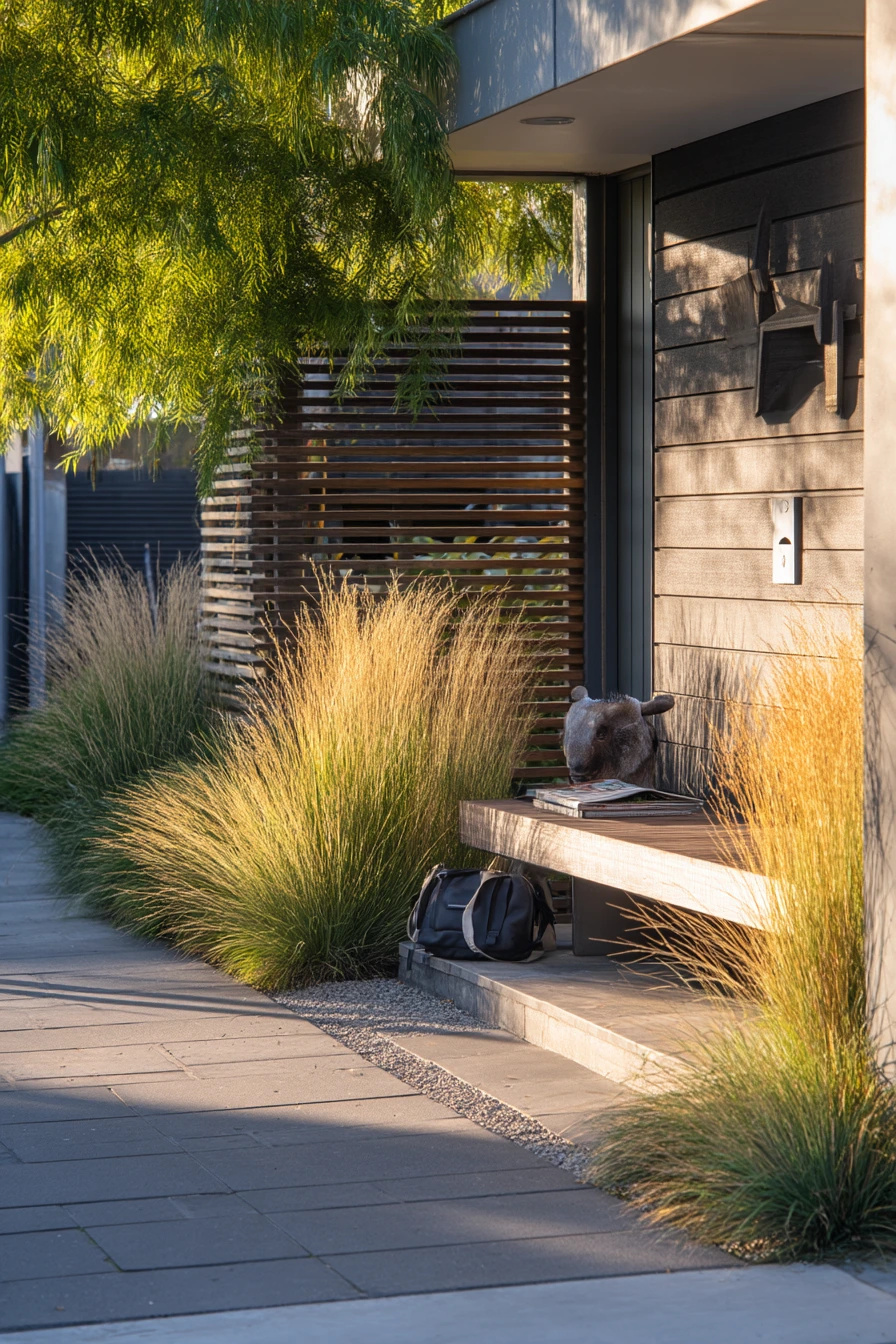
Start by defining the main shapes. Use a slatted timber screen to add privacy and hide bins or meters. Then lay stone mulch around shrubs to cut weeds and reduce watering. Keep plant choices simple, with two to three types repeated in blocks. When there is only one watering can on the step, the space reads as low-stress and easy to manage.
Add a small “pause” spot so the front does not feel like a walkway only. A bench with a half-read magazine can make the entry feel lived-in, but keep it neat. If a commuter bag and headphones are by the door, store them inside quickly so the outside stays clean. Golden hour light will highlight texture in grasses and timber, so lean into contrast: pale stone mulch with darker evergreens is an easy win.
- Repeat one evergreen shrub type for a clean look.
- Use stone mulch to reduce weeds and watering.
- Plant ornamental grasses for soft movement.
- Add a timber screen for privacy and structure.
- Keep furniture minimal, like one simple bench.
Pro Design Tip: Pick one line to follow across the whole design, such as the edge of the path, and keep plants clipped to that line for a modern finish.
Budget Considerations: Timber screens can be costly; a cheaper option is pre-made fence panels stained to match, or a simple batten strip on an existing fence.
6 Cottage-Style Blooming Entry
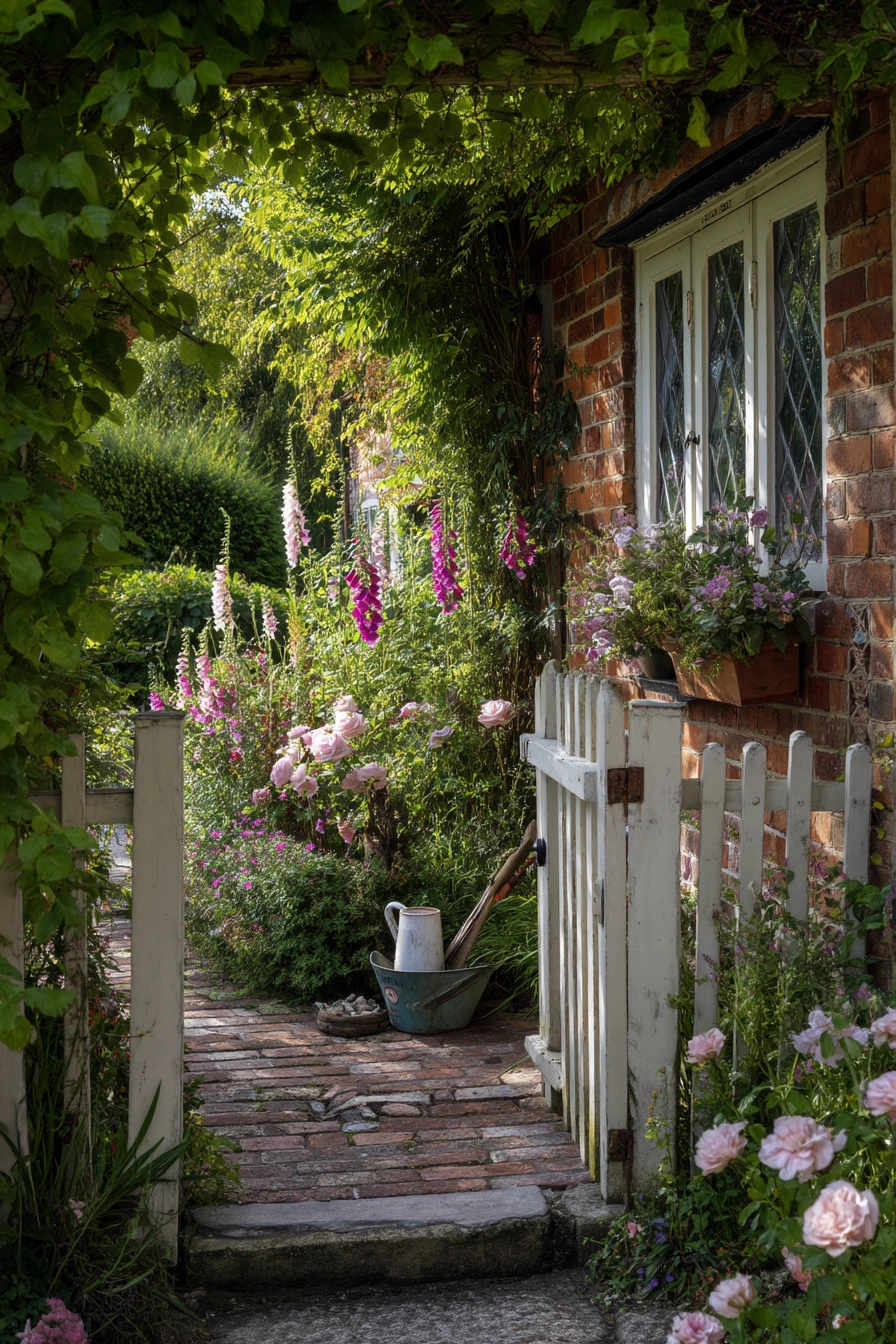
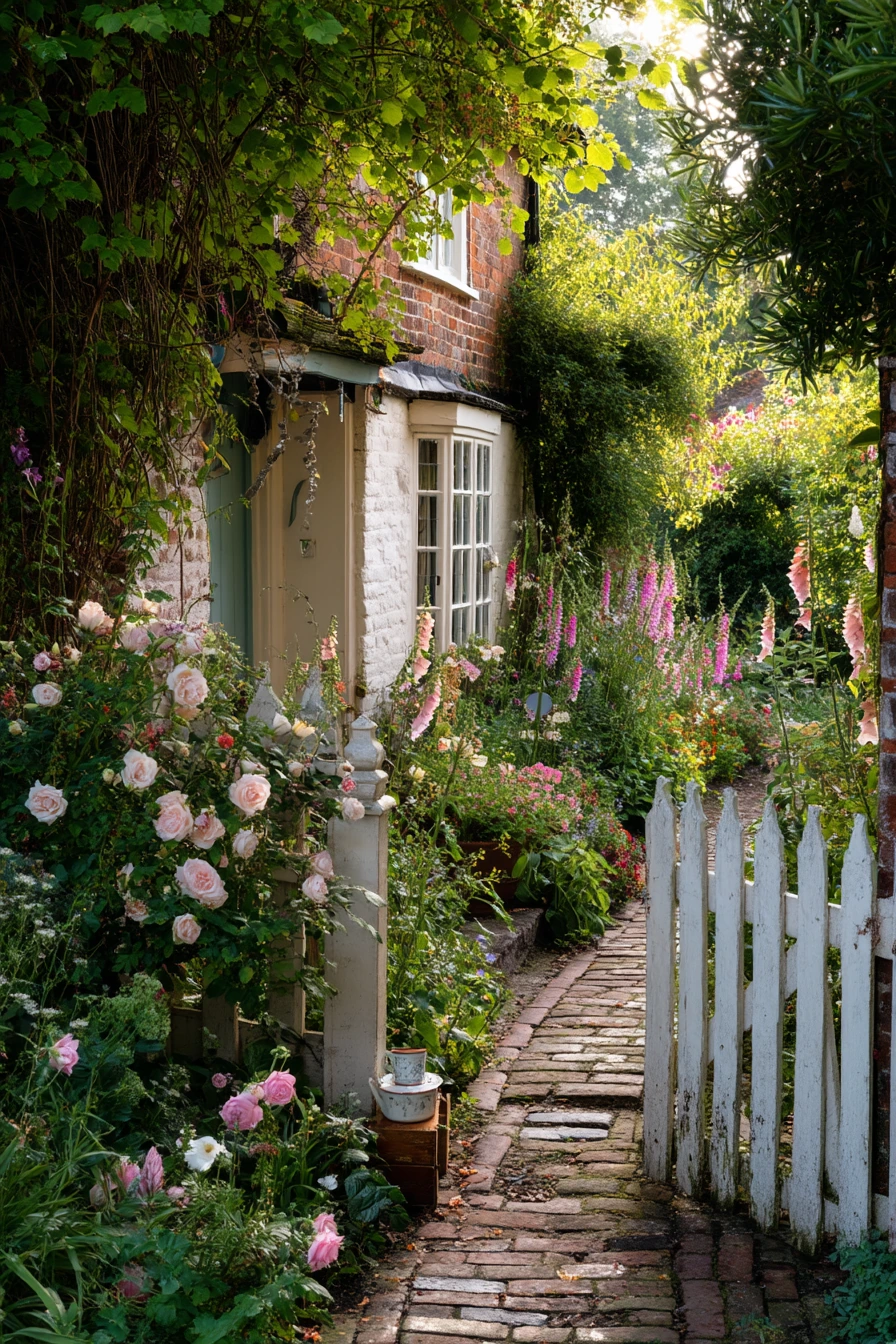
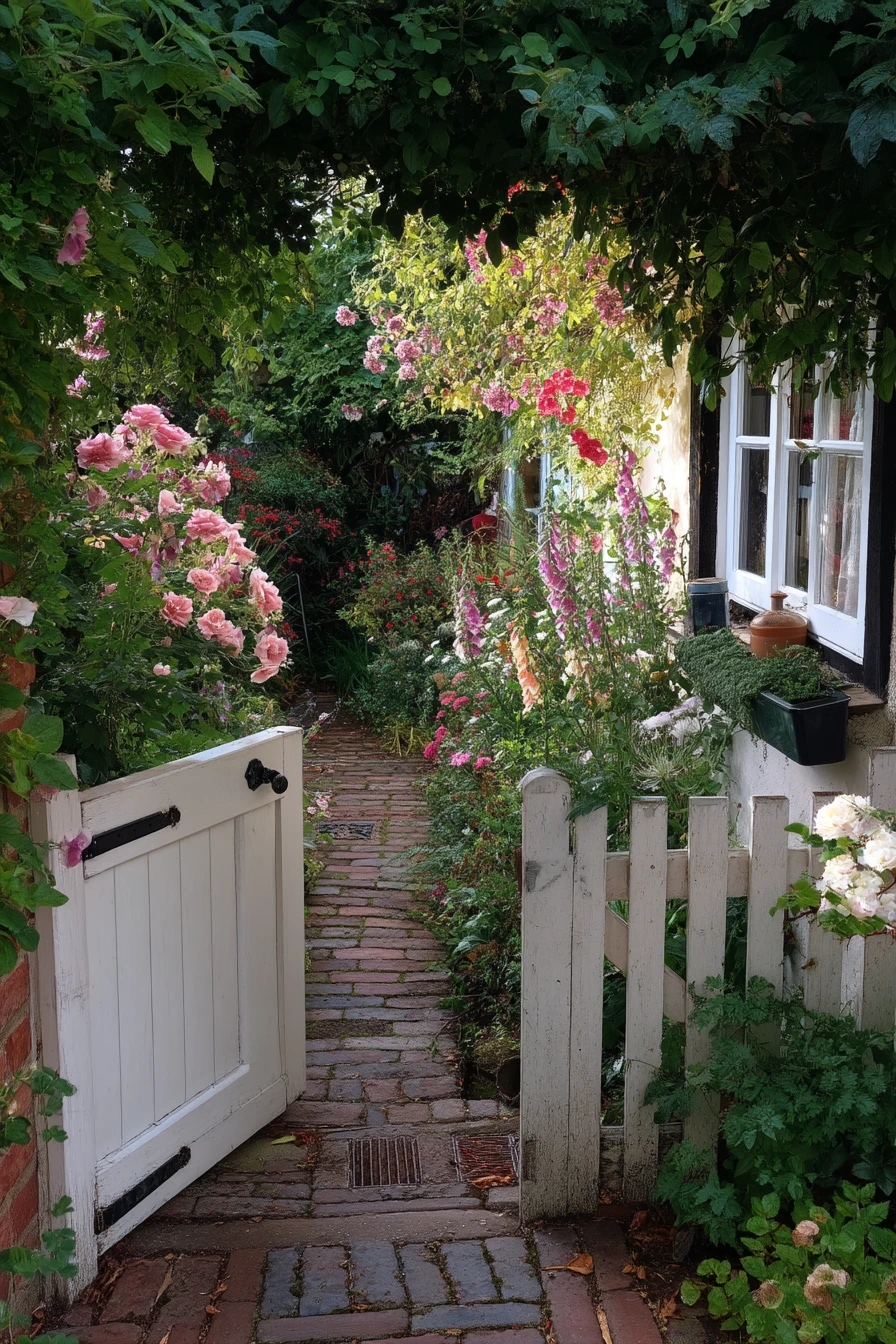
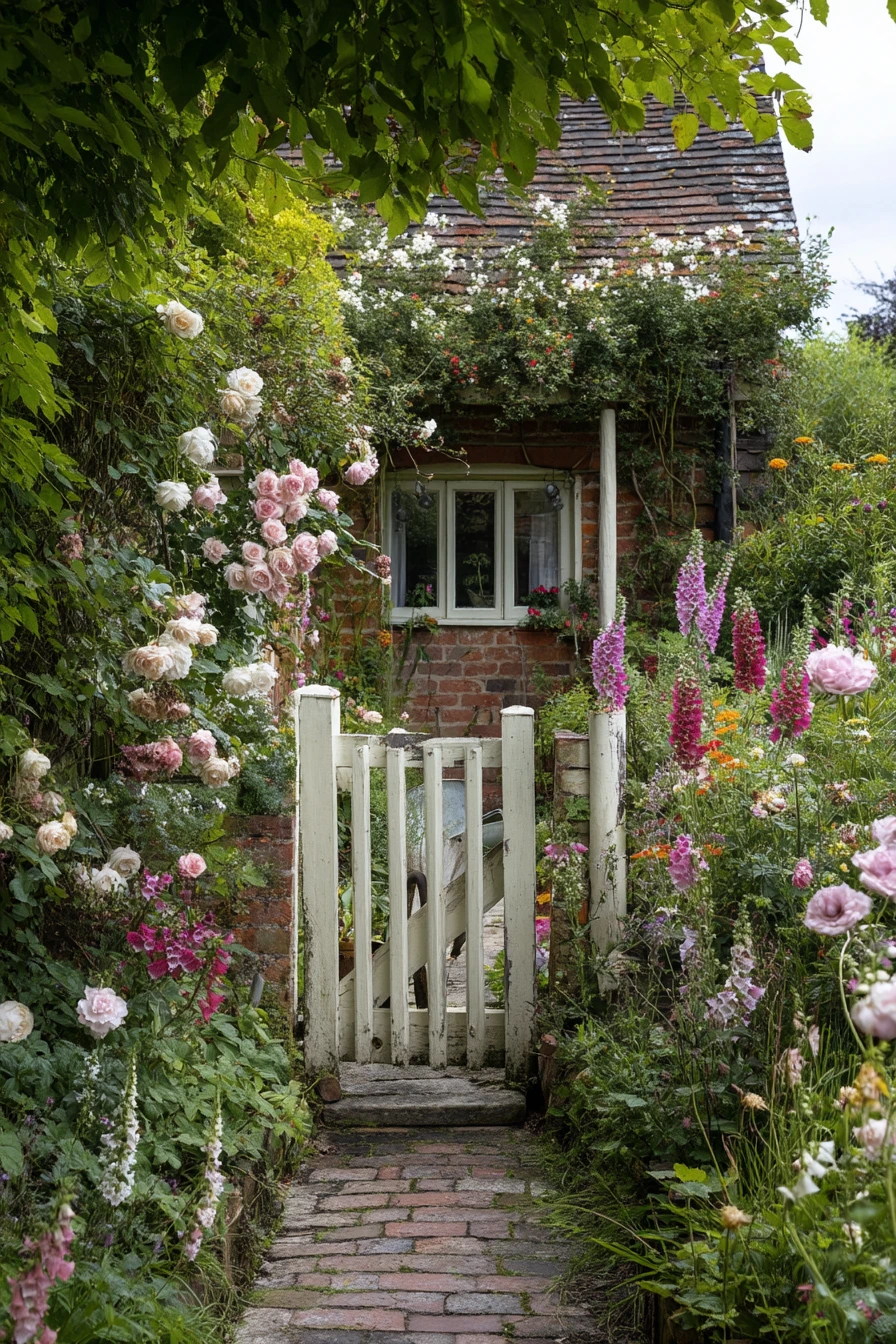
Old cottage front garden ideas often look best when they feel full and slightly wild, but the path stays clear. A narrow brick path gives you a strong spine through roses, foxgloves, and salvia. Even with overflowing flowers, the brick line makes the garden feel cared for from inside the gate.
Mix heights for a romantic look. Let roses climb or arch, then add tall foxgloves behind, with salvia in the middle for long blooms. Window boxes trailing nasturtiums can tie the house and garden together and add color near eye level. A chipped white gate fits the style, and you can lean into the charm by keeping hardware simple and painted.
Style with small, useful details. An enamel trug with cut stems is both practical and pretty when you are tidying. Gardening clogs by the threshold and a tea mug on a low wall make the space feel real, but keep them in one spot so it does not look messy. Morning light through leaves will soften colors, so choose a mix of pale pinks, whites, and deeper purples to avoid a flat look.
- Keep a clear brick path so the garden feels welcoming.
- Use roses as the main feature near the gate or door.
- Add foxgloves for height and cottage shape.
- Plant salvia for long-lasting color and bees.
- Hang a window box with trailing nasturtiums for extra charm.
Pro Design Tip: Limit the flower palette to two main colors plus green so a full cottage border looks rich, not chaotic.
Budget Considerations: Roses and perennials can add up; buy smaller starter plants, or swap cuttings with neighbors for salvia and nasturtiums.
7 Family Front Garden with Room to Play
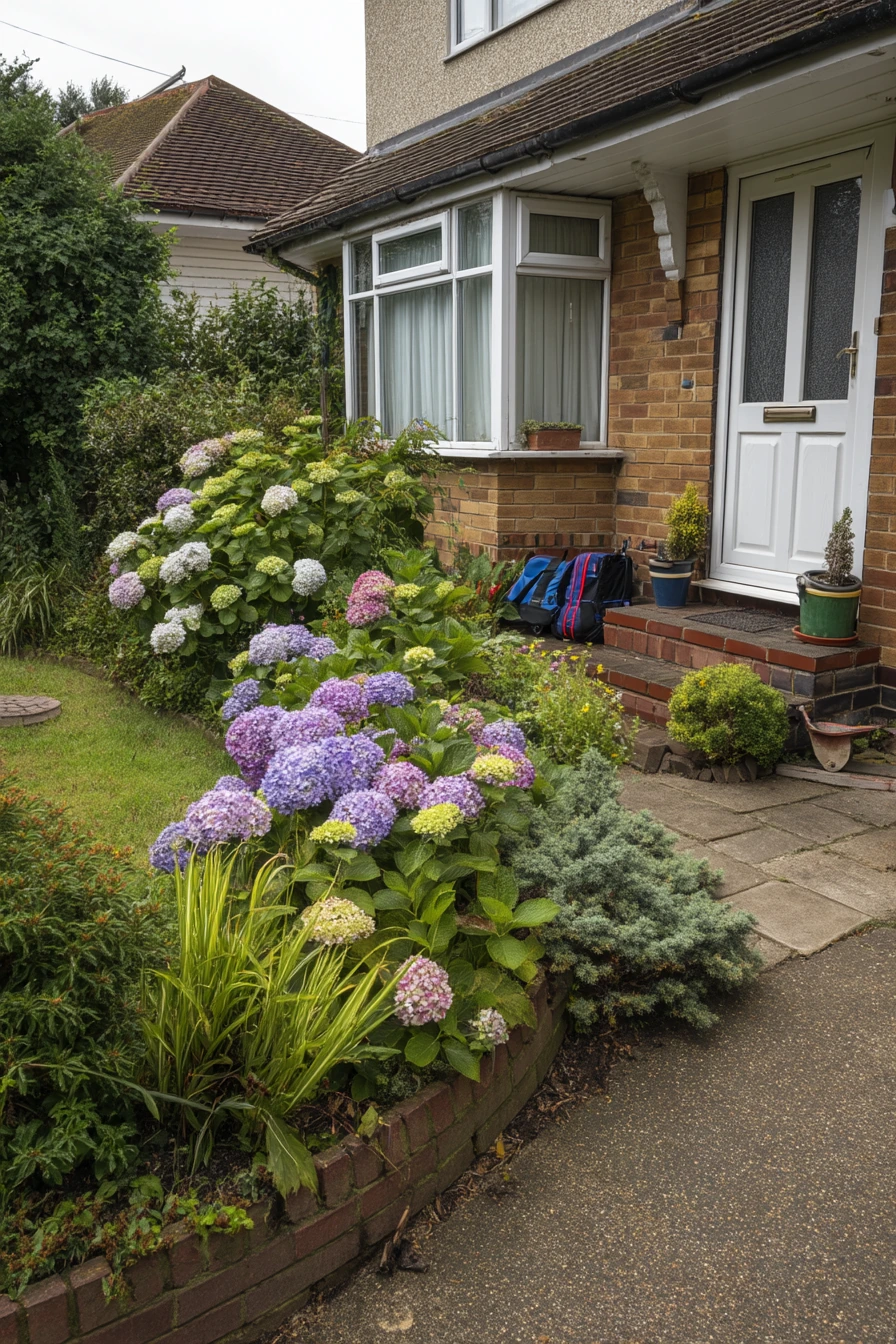
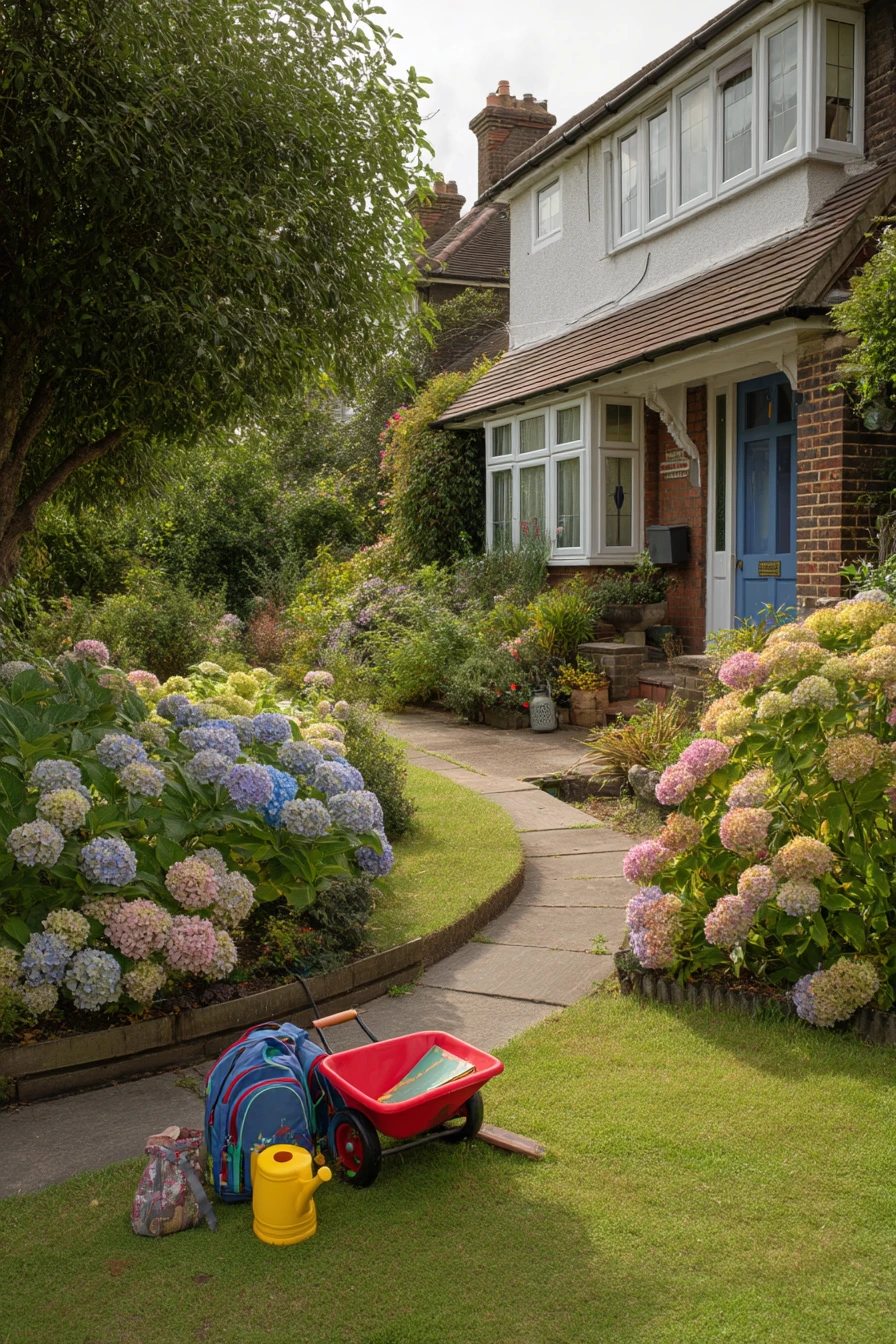
A suburban front garden for a family works best when it balances plants with a little open space. A curved border of hydrangeas and hardy shrubs softens the edges, while a small patch of grass gives kids a spot for chalk games. The key is to keep the layout simple so it still looks good when life is busy.
Start with the border line. A gentle curve from the driveway corner to the path can make the garden feel larger. Hydrangeas give big, friendly blooms and fill space fast, but they need regular water in hot weather, so place them where a hose reaches easily. Hardy shrubs add structure when hydrangeas are not flowering and help the front look good year-round.
Style for real use. A tiny wheelbarrow and plastic watering can are cute, but store them in one corner so they do not block the path. If a cap is forgotten on the step or school bags land by the door, add one simple hook rail or a basket inside to reduce clutter outside. In diffuse afternoon light, leaf shapes show well, so mix a few different textures: glossy shrubs, soft hydrangea leaves, and fine grass.
- Create a curved border to soften the front edge.
- Plant hydrangeas as the main flowering shrub.
- Add hardy shrubs for year-round structure.
- Leave a small grass patch for play and chalk.
- Keep toys in a “parking spot” near the hedge.
Pro Design Tip: Use the same edging style along the whole border so the garden still looks tidy, even when kids’ items appear.
Budget Considerations: Hydrangeas can be expensive in large sizes; buy smaller plants and space them correctly so they fill in over time.
8 Mediterranean-Inspired Front Courtyard Garden
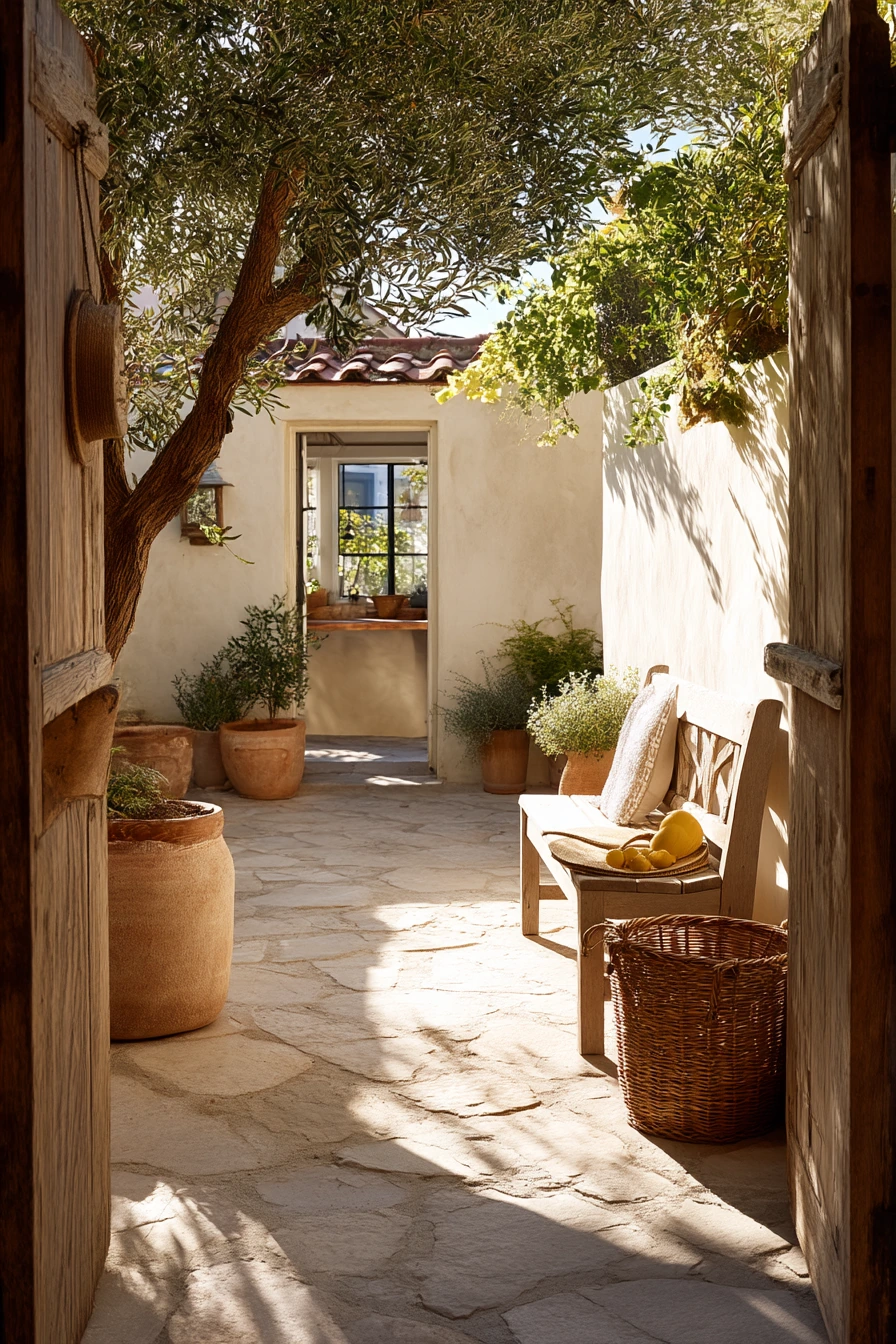

A sunny front courtyard garden can feel like an outdoor room when you use warm materials and a simple plant list. Terracotta pots, an olive tree, and rosemary give a clean Mediterranean feel. Pale stone paving and low stucco walls help reflect light, so the space looks brighter in late morning.
Begin with the main anchor. Place the olive tree in a large pot near the gate or near the bench so it frames the view. Add smaller terracotta pots around it with rosemary and other drought-tolerant herbs. Keep the paving mostly clear so plant shadows can fall across the path and create pattern without extra decor.
Style it like a place you actually use. A woven basket with lemons on the bench adds color and looks natural in a courtyard. A linen sunhat can sit on a hook or the bench, but keep it off the ground so it looks intentional. If an open kitchen window faces the courtyard, echo indoor tones outside with matching textiles, like a neutral seat pad. Water deeply but less often, and check pot drainage so the roots stay healthy.
- Use terracotta pots for warmth and a consistent look.
- Anchor the space with a potted olive tree.
- Plant rosemary for scent and easy care.
- Choose pale paving to brighten small courtyards.
- Add one bench to make it feel like a room.
Pro Design Tip: Group pots in odd numbers and vary height so the courtyard looks layered, not lined up like a store display.
Budget Considerations: Olive trees can be costly; start with a smaller one or use a similar tough option like bay laurel, then upgrade later.


9 Small Front Garden with Pollinator Planting


A front garden focused on bees and butterflies can still look neat from the curb. Use a compact border with verbena, echinacea, salvia, and catmint for a long season of flowers. These plants are known for nectar and they also hold their shape well when planted in small drifts.
Start by choosing a clear edge so the border does not look messy. Keep plants repeating, not random, and leave a narrow strip of mulch or gravel by the path. Add a shallow birdbath for water, and place it where you can see it from the door. A handmade sign can be small and simple, and it helps visitors understand the purpose of the planting.
Make it easy to maintain. Keep a gardening notebook on the step so you can track what blooms when and what needs cutting back. Store seed packets and watering gloves in a small box so the entry stays tidy. If a child’s bug net leans against the wall, add one hook to hang it up. This kind of garden looks best when it is lightly trimmed and deadheaded, so do a quick weekly check and cut spent blooms.
- Plant verbena for long bloom time and light texture.
- Add echinacea for sturdy flowers and seed heads.
- Use salvia to bring bees and add height.
- Include catmint for soft edges and scent.
- Set out a shallow birdbath as a water source.
Pro Design Tip: Plant in groups of three to five of the same plant so pollinators find it faster and the border looks more organized.
Budget Considerations: Perennials cost more up front but return each year; buy small pots and divide catmint later to fill gaps for free.


10 Winter Front Garden with Structure and Glow


A cold-season front garden can look inviting when you focus on structure and texture instead of flowers. Clipped evergreens hold their shape through winter, and bare branches add a graphic look. Frost-dusted gravel is practical and also looks crisp when the border edges are clean.
Start with the bones of the space. Keep evergreens in simple forms, like low mounds or small cones, and repeat them along the path. Add lanterns on the steps for warm light in blue winter daylight. A wreath on the door brings a seasonal touch without adding clutter, and it fits many home styles.
Style the entry so it feels warm and used. A wool scarf draped over a bench can work if the bench is under cover, but avoid leaving fabric out in wet weather. Boots drying by the entrance look fine when they are placed on a tray. A steaming mug on the sill is a nice detail, but keep the area around it clean. In winter, safety matters, so make sure gravel is level and steps are well lit.
- Use clipped evergreens for winter shape and order.
- Keep gravel tidy with strong edging.
- Add lanterns to bring warmth to dark afternoons.
- Use bare branches for height and simple drama.
- Finish with a wreath to mark the season.
Pro Design Tip: Place lighting at two heights, like step lanterns and a porch light, so the entry feels layered and safer at night.
Budget Considerations: Battery lanterns can be cheaper than wired lights; reuse a basic wreath base each year and change only the ribbon.


Good front garden ideas come from matching the design to your daily life, not copying a perfect photo. A narrow terrace may need gravel and boxwood, while a family space might need open grass and tough shrubs.
Use structure first, like edging, paths, and a clear layout, then add plants that fit your light and time. Small styling details, like pots, a bench, or a neat hose, help the entry look finished.
Try one section at a time, take a photo from the curb, and adjust until the front feels welcoming. Small upgrades add up fast when they are consistent.
FAQ
1) What are the easiest front garden plants for low maintenance? Evergreens, ornamental grasses, rosemary, lavender, and salvia are good choices because they keep shape and need less care once established.
2) How do I make a narrow front garden look bigger? Use a straight gravel path, repeat a few plants, and keep edges crisp with brick or metal edging.
3) What can I do for a rental front garden? Use large movable pots, a simple doormat, and a neat hose setup. Choose tough container plants like rosemary and small olives.
4) How do I keep a front garden tidy with kids? Create one parking spot for scooters and watering cans, keep the path clear, and use hardy shrubs that can handle bumps.
5) What is best for a dog-friendly front garden? Add stepping stones, a clear run to the gate, and durable plants set back from the main path. Keep a water bowl on a mat near the door.
6) How can I support bees and butterflies in a small front yard? Plant in groups of the same flower, choose nectar plants like catmint and echinacea, and add a shallow water source like a birdbath.
7) How do I make the front look good in winter? Use clipped evergreens, tidy gravel, and warm lighting like lanterns. Add a simple wreath for seasonal style.