

Farmhouse dining room ideas work best when they feel real. A good space can handle homework, quick lunches, and weekend guests without feeling messy or cold.
In this guide, you will see 10 farmhouse dining room looks based on everyday moments, like a reclaimed-wood table with mixed chairs, a compact breakfast nook, and a renter-friendly setup with removable details.
Each section includes simple styling steps you can copy, plus a pro design tip and a budget note. These ideas are meant for busy homes, small spaces, rentals, and family life.
Use the headings like a checklist. Pick one idea to try this week, then build the room slowly with warm neutrals, honest textures, and pieces that can take a little wear.
1 Sunlit Family Gatherer

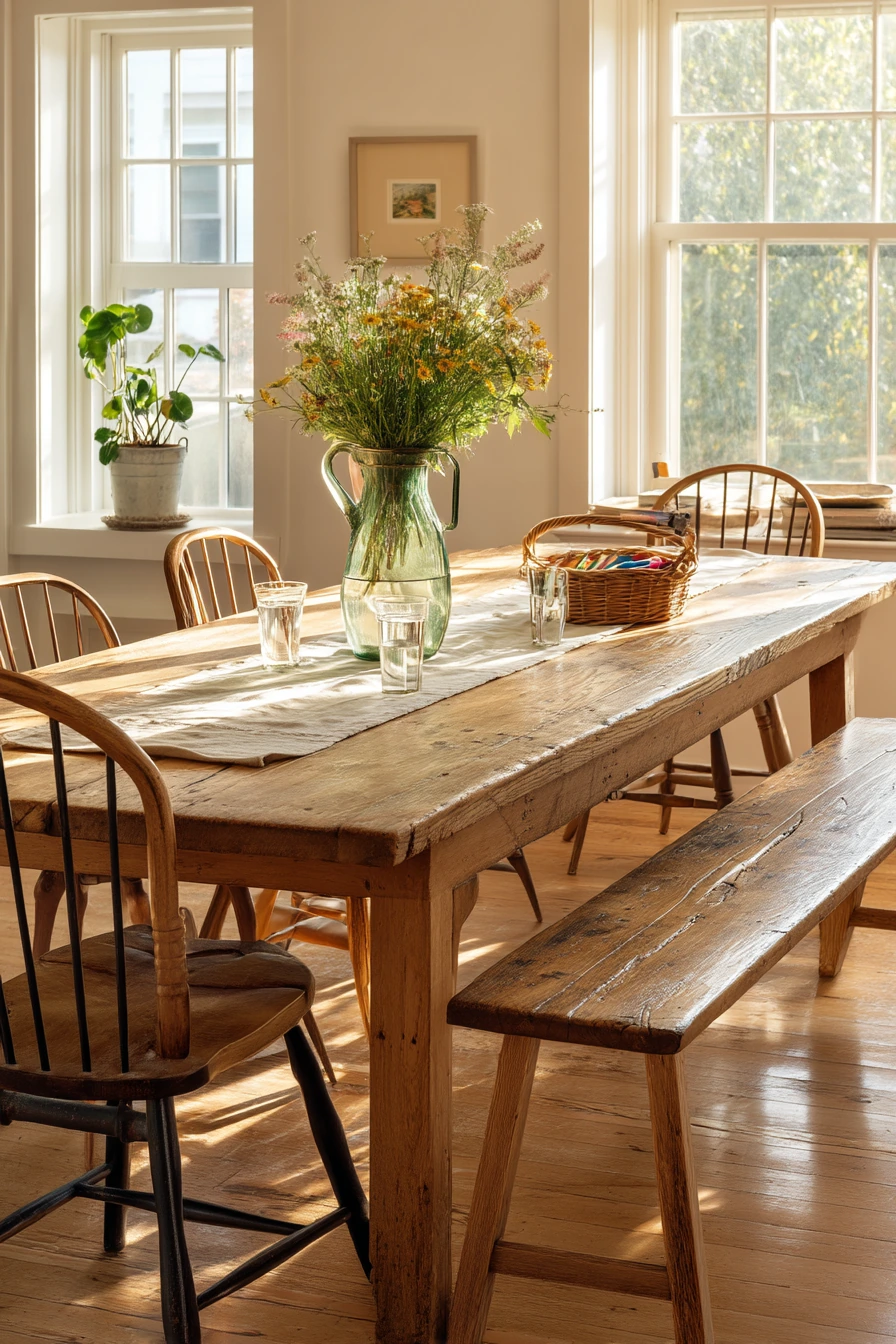
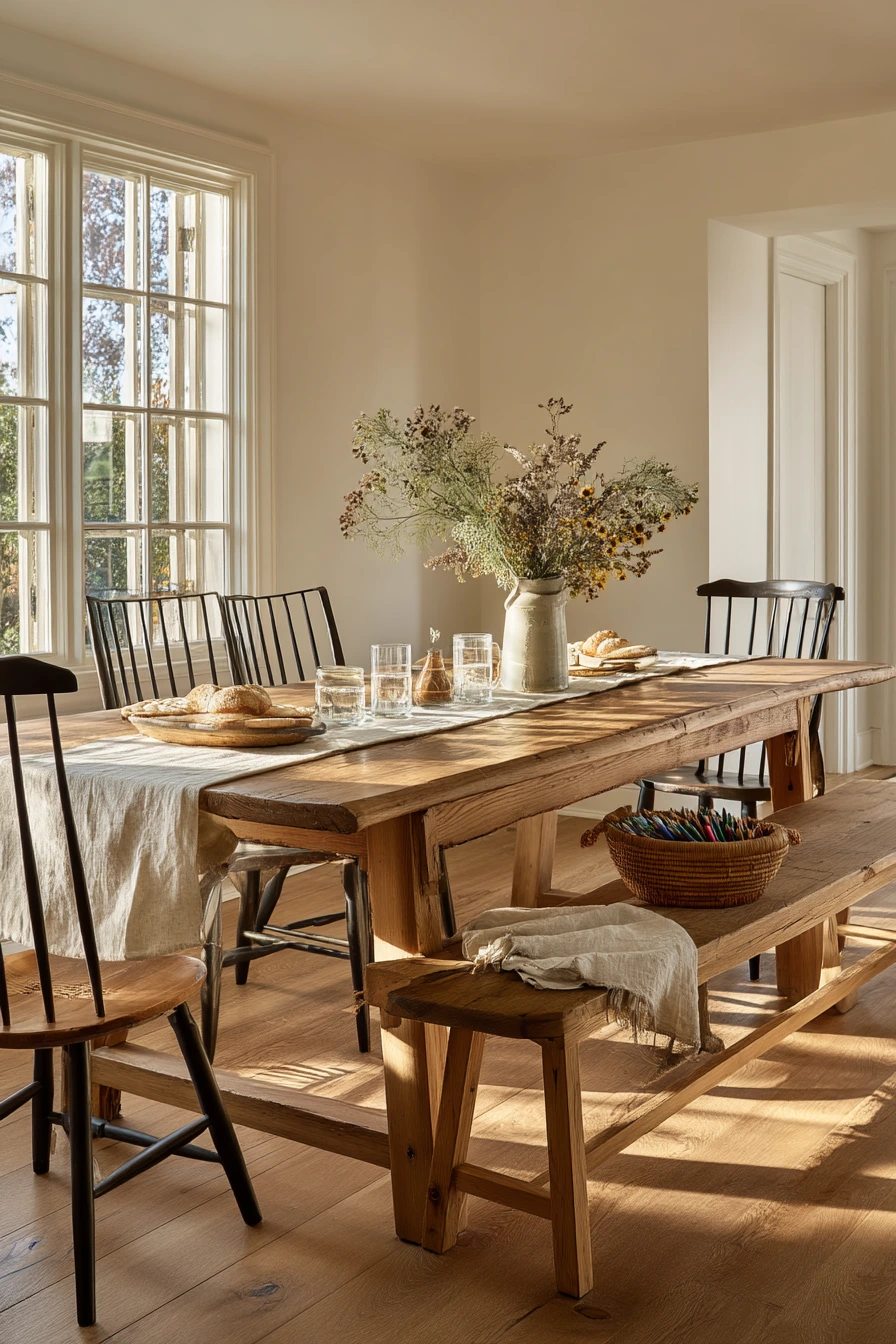
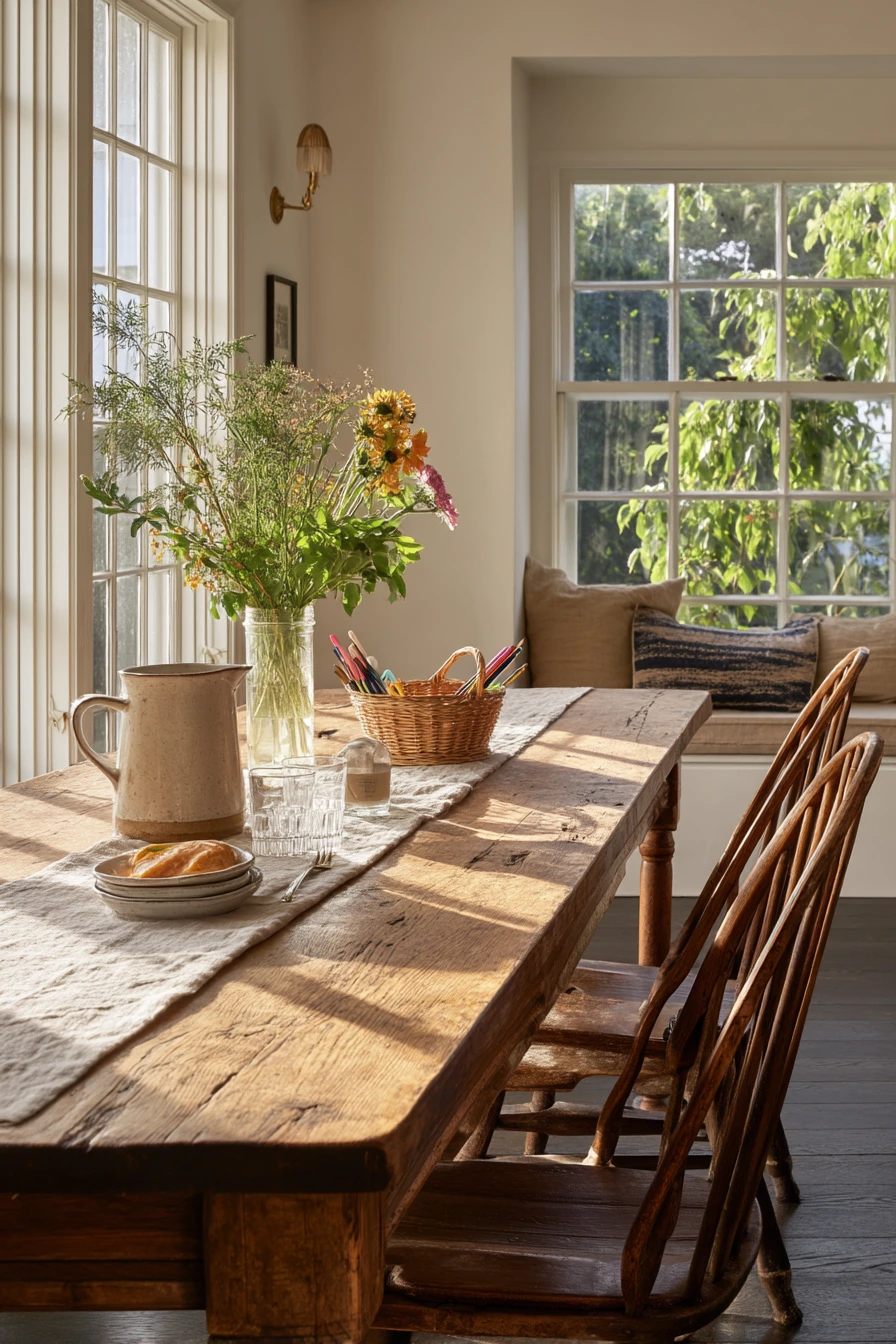
A lived-in farmhouse dining room feels warm because it shows daily life. Start with a long reclaimed-wood table and mixed Windsor chairs. The mix is the charm. A simple linen runner keeps the center calm, even when the rest of the room is busy.
Keep the styling light and useful. A ceramic pitcher, wildflowers in a mason jar, and two water glasses left from lunch look natural and welcoming. Add one small “family clue,” like a basket of crayons tucked under the bench. This makes the room feel sun-kissed and true, not staged.
To get that soft window light look, place the table so side light hits the wood grain. Let plant shadows fall across the floor. Choose a warm neutral palette, then add subtle patina with aged wood, matte ceramics, and worn chair spindles.
- Use a runner instead of a full tablecloth so the wood still shows.
- Mix chair styles, but keep one link, like similar wood tone or seat height.
- Keep the centerpiece low so you can talk across the table.
- Store kid supplies in a lidded basket under a bench or sideboard.
- Leave one chair slightly pulled back to make the room feel active.
Pro Design Tip: Repeat one shape in the room, like rounded Windsor backs echoed by a round vase or curved pitcher, to make mixed pieces feel planned.
Budget Considerations: Reclaimed wood tables can cost more; look for a solid used table and refinish it, or add a reclaimed wood top to a simple base.
2 Small-Space Breakfast Nook
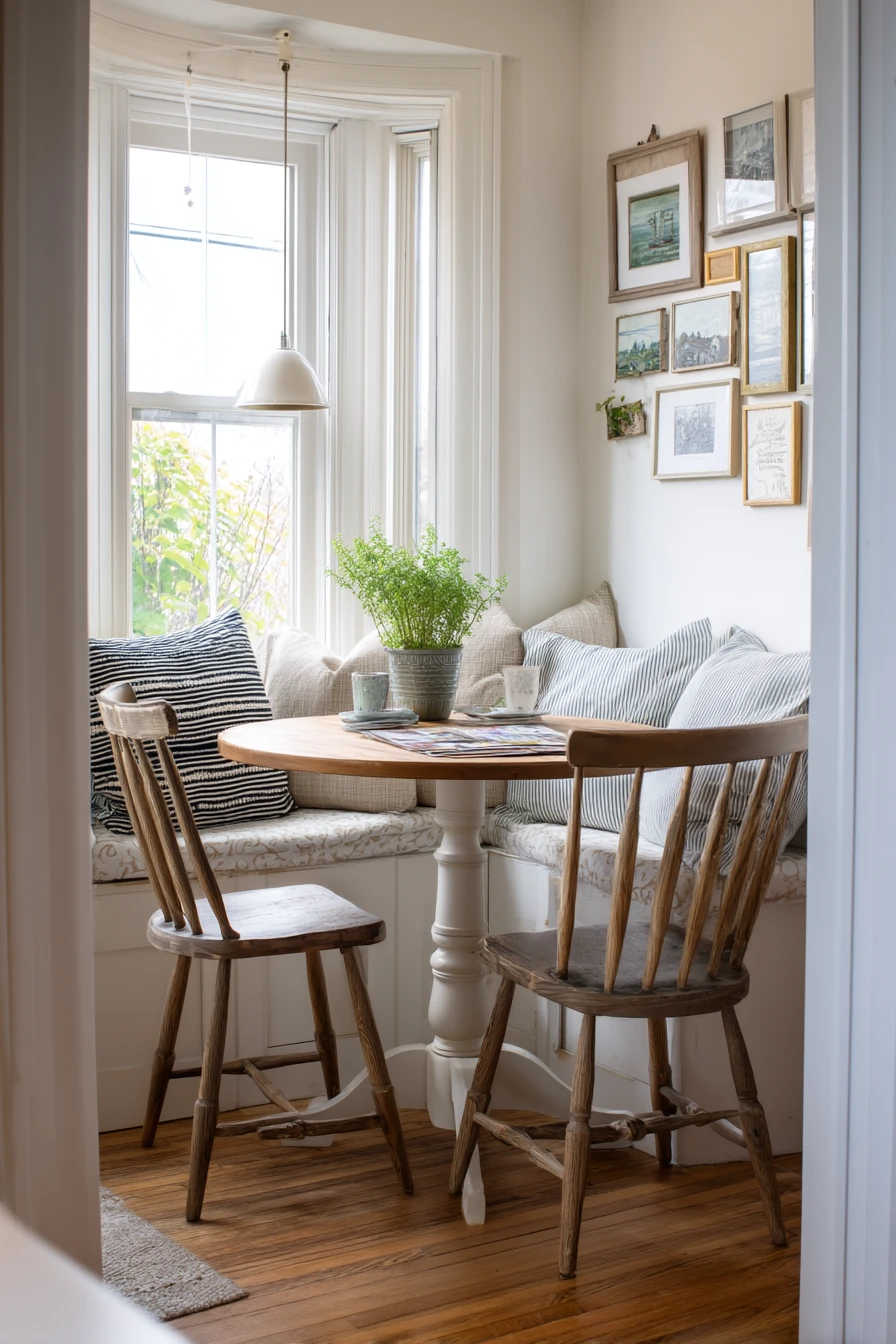

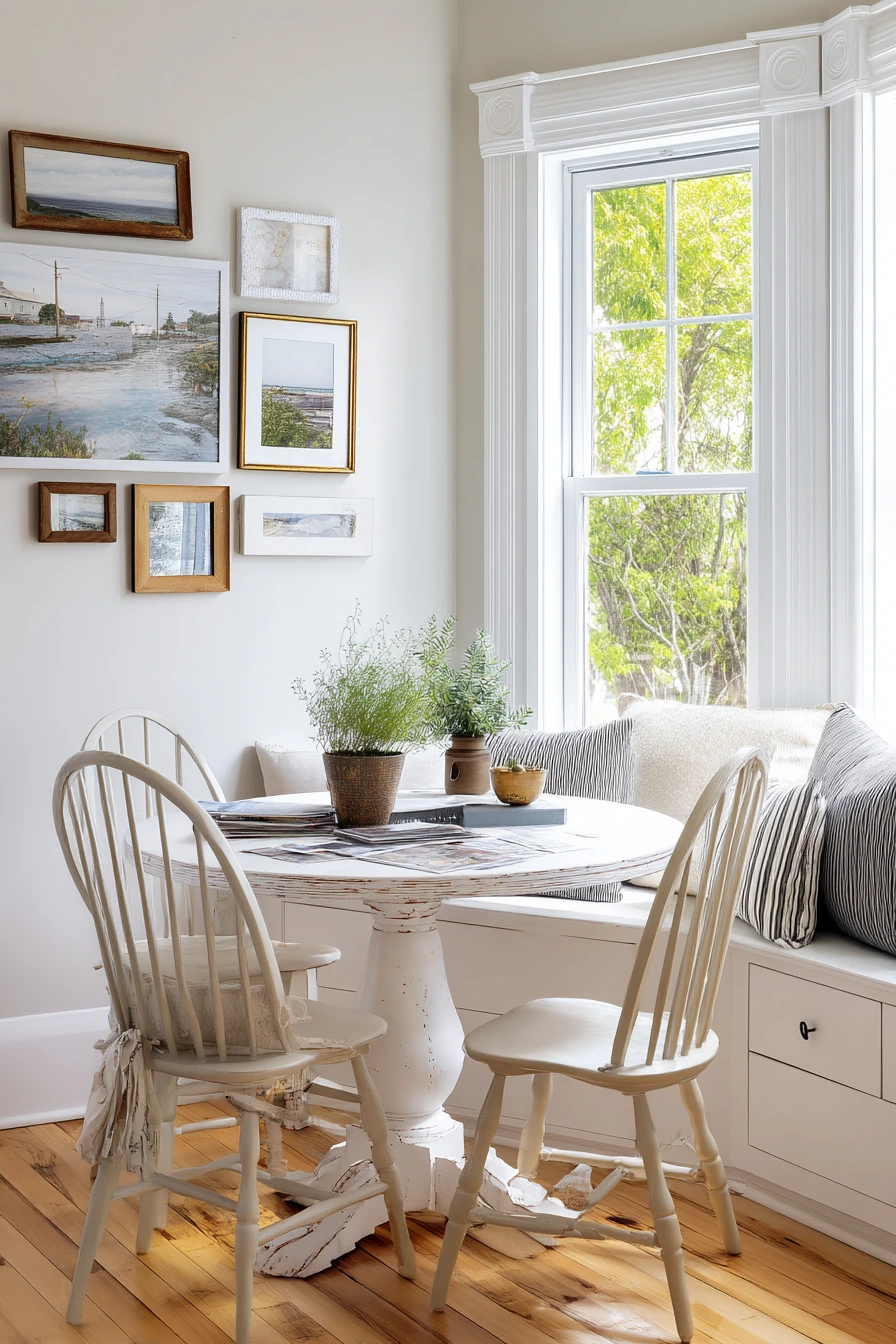
A compact farmhouse dining nook can still feel open. A round pedestal table is a smart pick because it takes less space and makes it easier to slide in and out. Add spindle-back chairs for that classic farmhouse look without heavy visual weight.
If you have a built-in bench, treat it like your comfort zone. Use striped cushions for a simple pattern that reads cozy but not loud. Keep the table “used but clean,” with a small herb pot by the window and a narrow stack of mail that you sort daily. A phone charging cable can live in a small tray so it looks tidy.
For walls, go with a narrow gallery wall that fits the tight footprint. Use matching frames or a consistent mat color to keep it uncluttered. Soft morning window light will make painted trim and wood tones feel airy, even in a starter home.
- Choose a pedestal base so knees have more room.
- Hang art in a tight grid to avoid busy walls in small spaces.
- Add one small plant for life, like thyme or rosemary in a pot.
- Use a bench cushion with ties so it stays in place.
- Keep a small catchall tray for keys, mail, and cords.
Pro Design Tip: In a nook, match the table height to the bench seat depth so you can sit for a full meal without leaning forward.
Budget Considerations: Built-in benches are costly; mimic the look with a small settee or two chairs on one side, plus a washable striped cushion cover.

3 Renter-Friendly Warmth
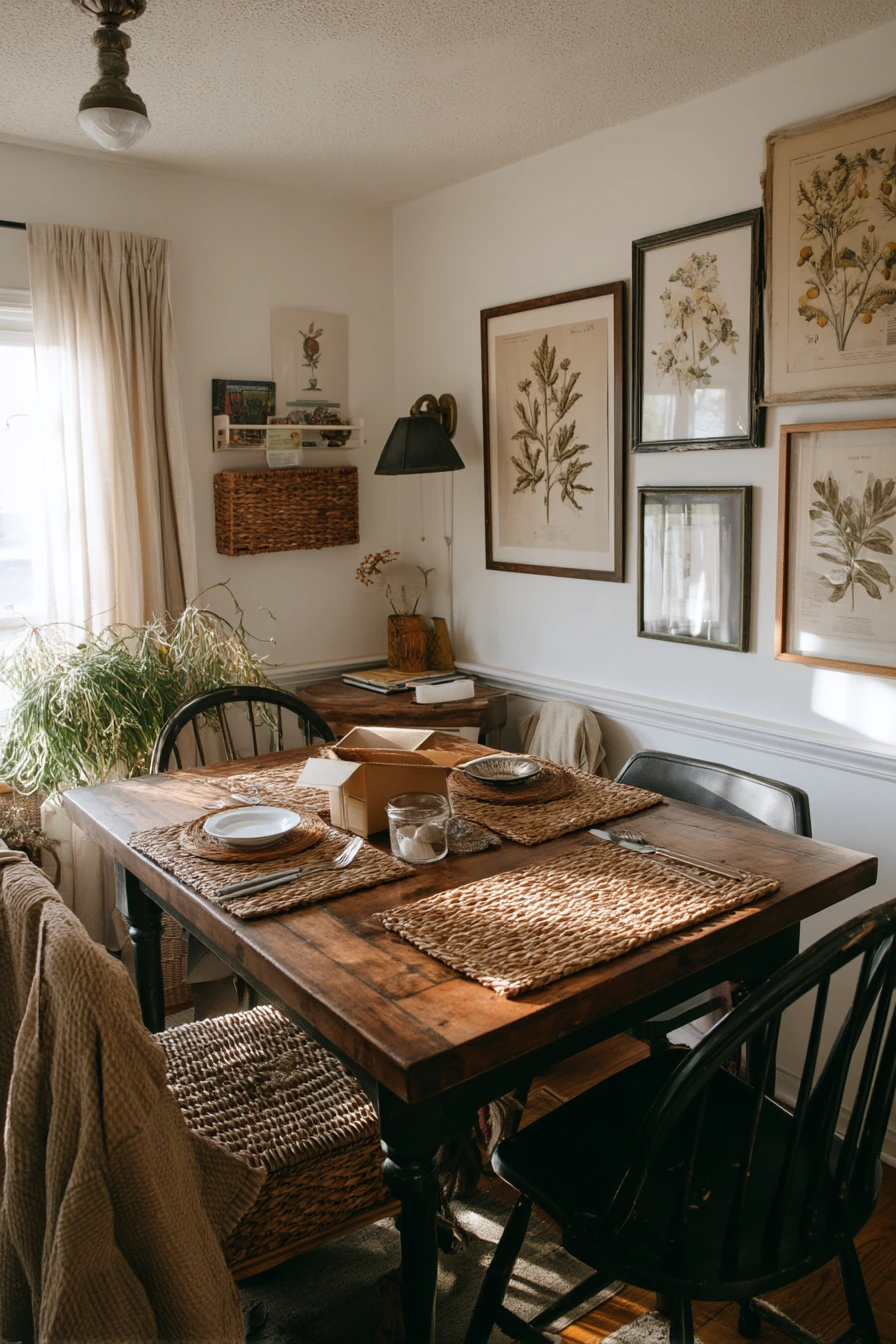
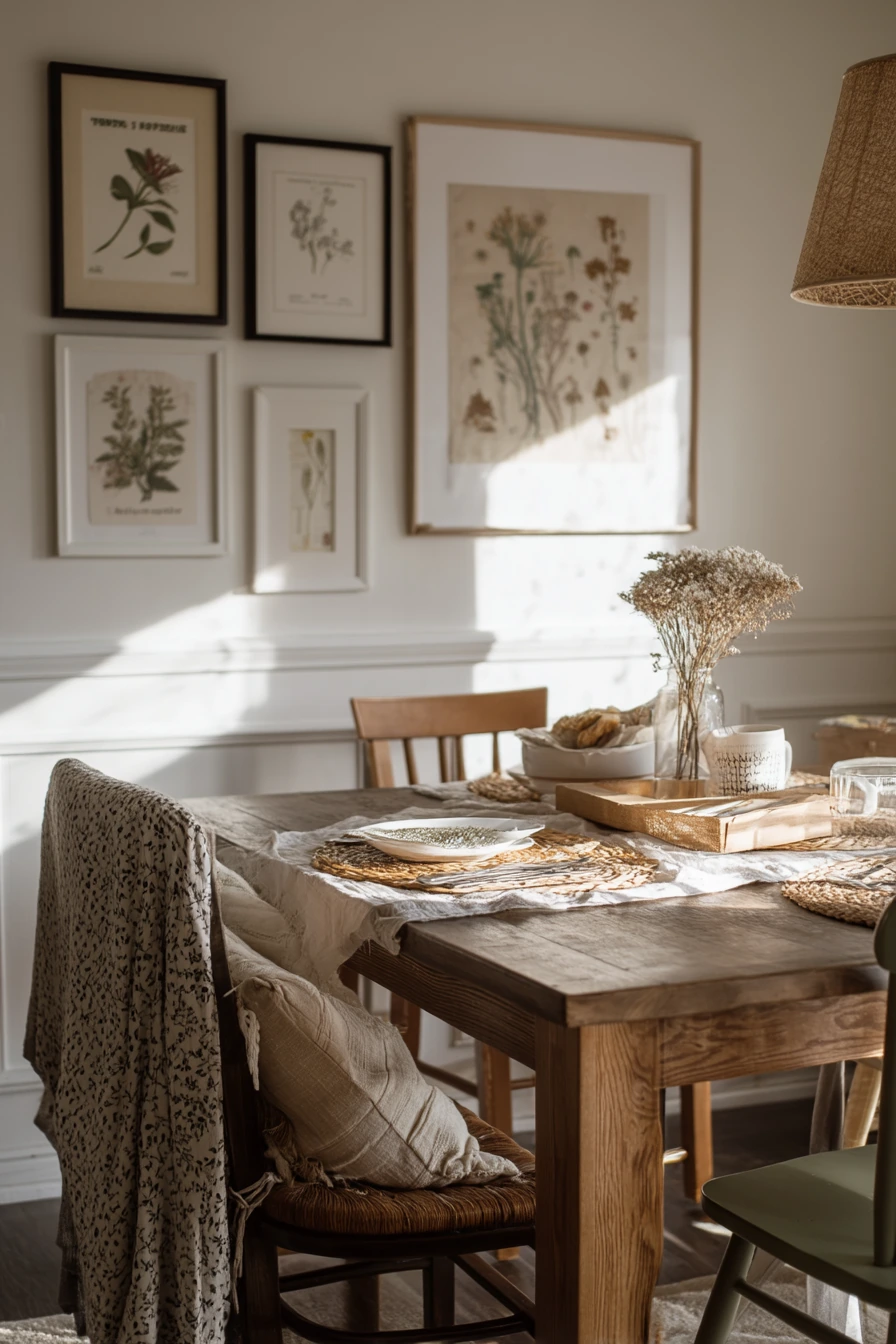
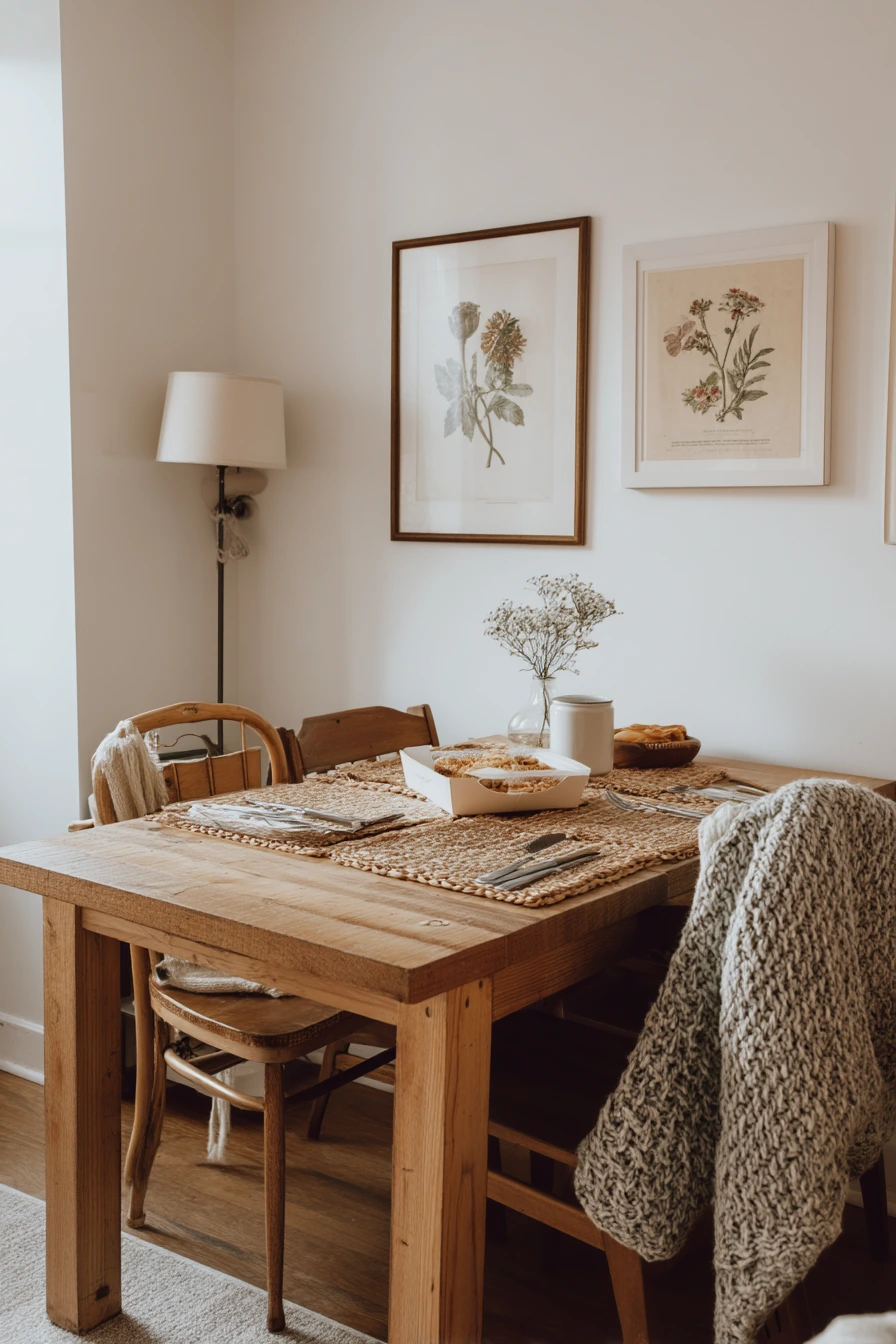
A farmhouse dining room in a rental can still have character. Start with a simple oak table and mismatched thrifted chairs. Look for chairs with solid frames, even if the finish is worn. That worn look reads cozy and textural.
For walls, use peel-and-stick beadboard look panels or temporary wallpaper to add cottage detail without damage. Lean framed vintage botanicals on a shelf or picture ledge instead of hanging many holes. Woven placemats bring in natural texture and help protect the table from daily use.
Keep the room honest by letting it show real life. A takeout carton and two forks after dinner, plus a folded blanket over a chair, makes the space feel easygoing. Use warm lamp light mixed with late-day window glow to soften hard edges and make the room feel calm at night.
- Use removable beadboard or wallpaper for quick wall texture.
- Mix thrifted chairs, but keep the seat height close for comfort.
- Layer woven placemats to add warmth without bulky decor.
- Lean art on a ledge for a no-drill gallery feel.
- Keep a blanket nearby for chilly evenings and soft texture.
Pro Design Tip: Unify mismatched chairs by repeating one detail, like black felt pads, similar cushion ties, or the same wood stain on chair legs.
Budget Considerations: Peel-and-stick panels and wallpaper add up; cover only one wall or the lower half for the beadboard look at a lower cost.

4 Seasonal Harvest Table

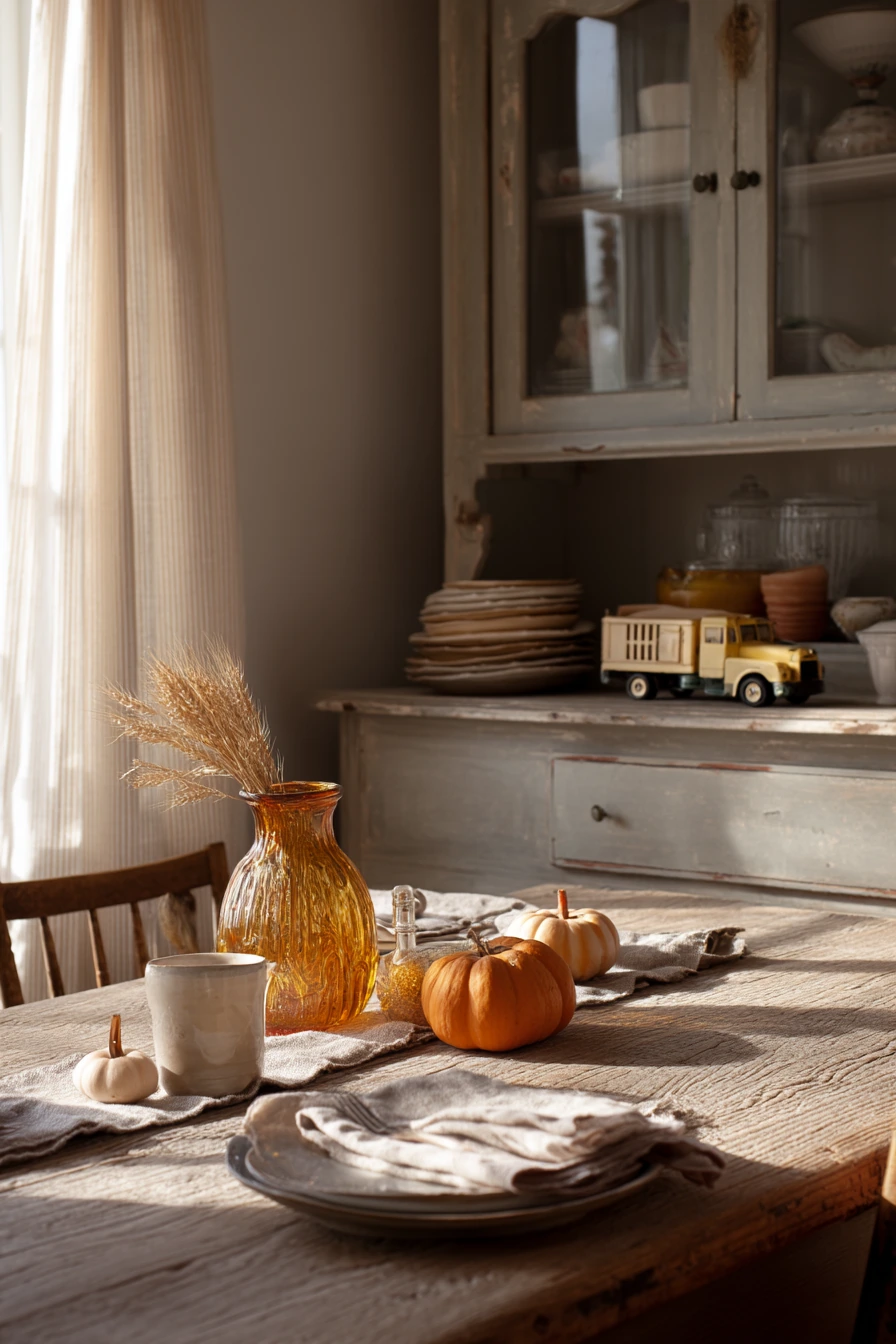
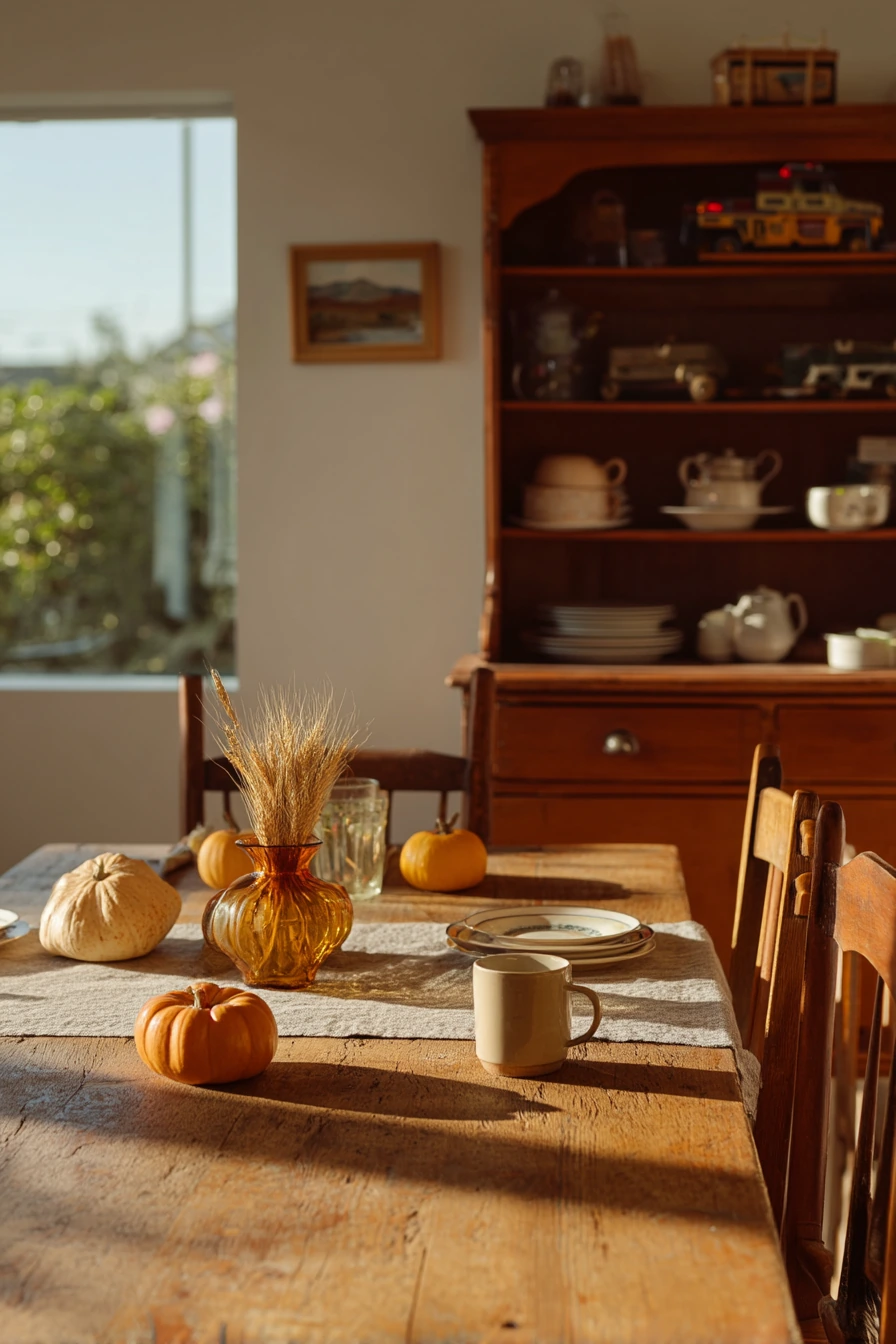
An early autumn farmhouse dining room feels grounded and warm. Use a sturdy table with linen napkins, then add small seasonal pieces that do not block the table. Petite pumpkins work well because they feel festive but still simple.
Bring in amber glass for a soft glow, like an amber vase with dried wheat. This adds harvest tone without needing bright orange everywhere. Keep crockery stacked near the sideboard or hutch so the room looks ready for real meals. A half-finished mug of tea can sit on a small coaster to keep the moment cozy, not messy.
Let the room show family life. A child’s toy truck partly visible under the table is normal in a lived-in home. The key is to keep the bigger surfaces calm. Soft afternoon window light with shallow shadows works best with warm neutrals, wood tones, and a few deeper browns.
- Use linen napkins in oat, rust, or soft brown for fall color.
- Group mini pumpkins in a low bowl for an easy centerpiece.
- Add dried wheat for height, but keep it off to one side.
- Stack everyday dishes on the sideboard for a practical look.
- Hide toys in a basket, but allow one small item to show for real life.
Pro Design Tip: Build fall color in layers, starting with textiles first, then add small seasonal items, so the room still works after the season ends.
Budget Considerations: Buy pumpkins and dried stems at the grocery store, and reuse the same amber vase year after year instead of buying new decor each season.

5 DIY Painted Hutch Moment

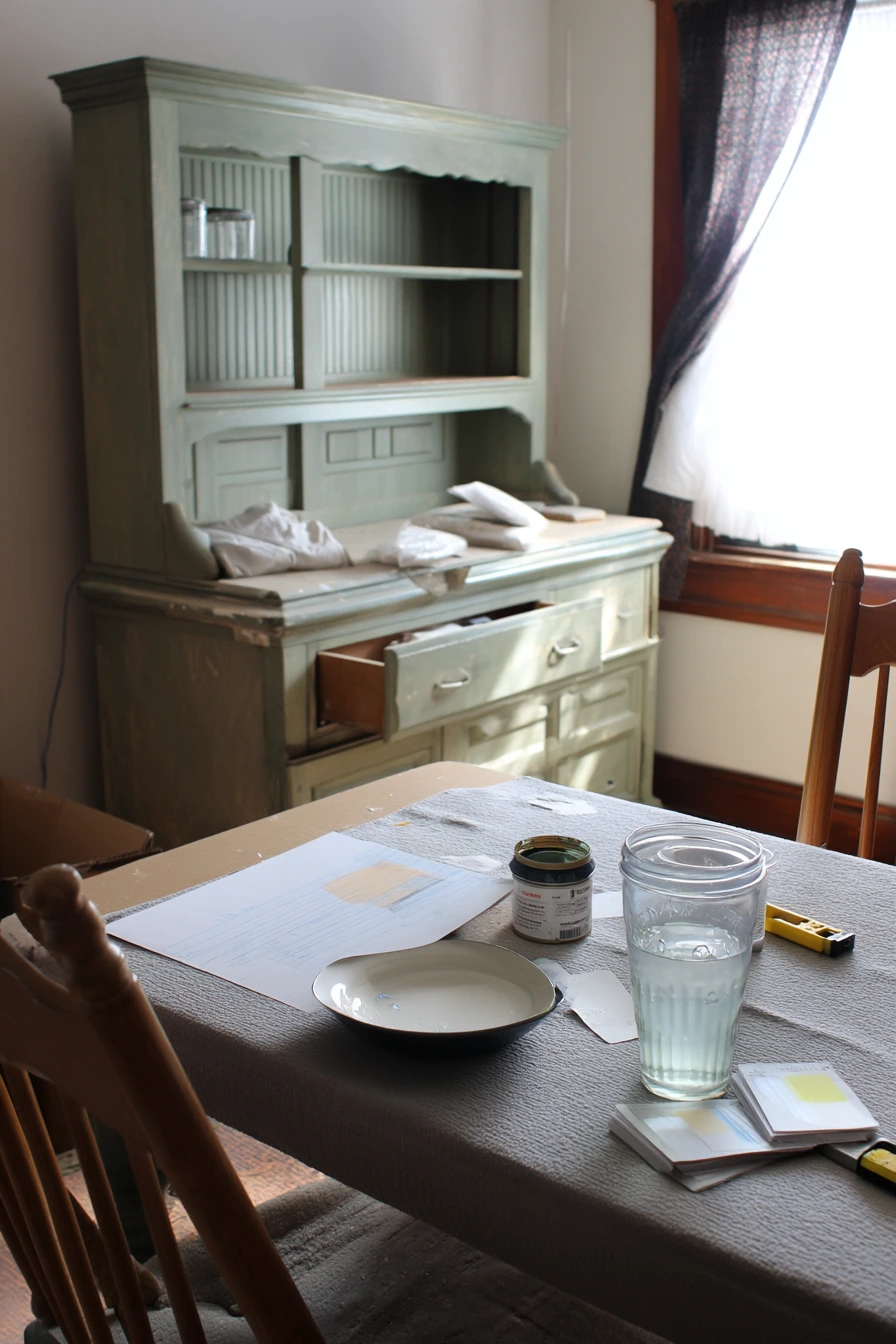
A farmhouse dining room makeover can feel calm even in the middle of the work. Painting a vintage hutch in dusty sage is a good way to add color without changing everything. Keep the look soft and earthy so it blends with wood tones and warm neutrals.
During the project, organization matters. Use a drop cloth and keep tools like a screwdriver and tape measure in one bin so the room stays safe. Open drawers with folded linens can double as “decor” while you decide where things go. An unfinished chair seat on the table reminds you the goal is a room that works, not a showroom.
When styling the finished hutch, use simple stacks. Fold table linens by color, place everyday plates within reach, and add one ceramic piece for texture. Leave a glass of iced water nearby while you work, and take photos in natural window light from the left to check how the color reads through the day.
- Choose a muted paint color like dusty sage for a classic farmhouse feel.
- Sort hutch items into keep, donate, and store before you paint.
- Use drawer organizers for napkins and placemats so they stay neat.
- Sand and seal chair seats to handle daily spills.
- Test paint samples in morning and afternoon light before committing.
Pro Design Tip: Paint the hutch the same sheen as your trim, often satin, so it looks built-in and not like a separate furniture piece.
Budget Considerations: A secondhand hutch plus paint is often cheaper than a new cabinet; borrow tools and use leftover paint for small touch-ups later.


6 Grandmillennial Farmhouse Mix


A collected farmhouse dining room is about stories, not matching sets. A round oak table creates a gentle flow in a multigenerational home. Cane-back chairs add lightness and texture, and they work well with floral curtains for a soft, layered look.
Use an antique sideboard for storage and warmth. Style it with framed family photos, stacked books, and one everyday item like a reading glasses case beside a tea cup. These small pieces make the room feel intimate and lived-in. Keep the light soft by using gauzy drapes so sunlight spreads instead of creating harsh glare.
To keep the space from feeling cluttered, group items in threes and give each group breathing room. Use warm shadows and a calm color range, like cream, honey wood, faded florals, and a little black in frames. The goal is a graceful mix of old and new that still functions for daily meals.
- Use a round table to make the room easier to walk through.
- Mix heirloom pieces with simple basics so it stays practical.
- Limit the sideboard styling to a few meaningful items.
- Use floral curtains in muted colors to avoid a dated look.
- Add one small lamp for warm evening light near the sideboard.
Pro Design Tip: Balance visual weight by placing the taller, darker pieces like the sideboard on one wall and keeping the opposite wall lighter with art or curtains.
Budget Considerations: Cane-back chairs and antiques can be pricey; check estate sales and marketplace listings, or use one vintage statement piece and fill in with simpler chairs.


7 Kitchen-to-Dining Flow


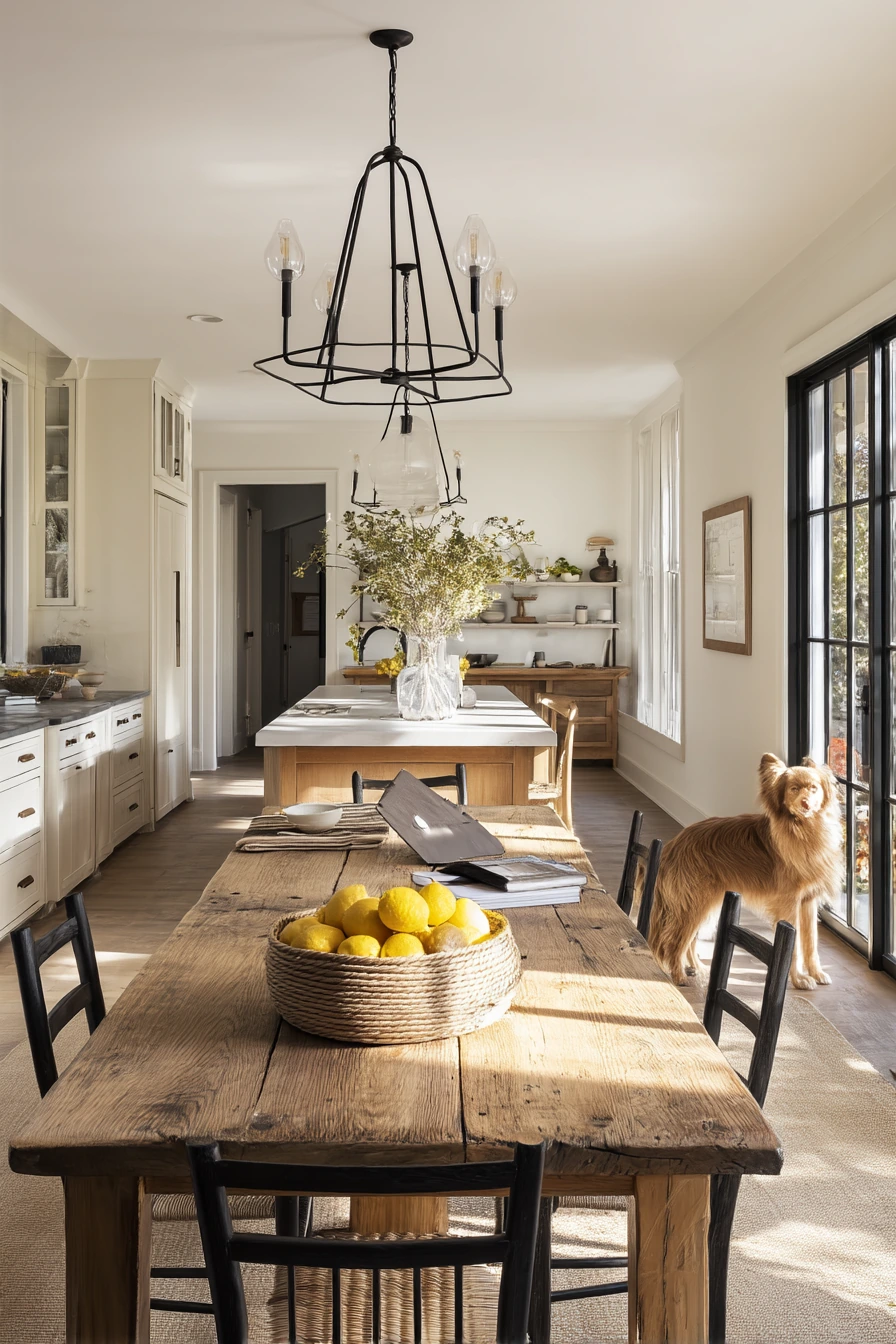
An open farmhouse dining area next to the kitchen needs good circulation. Place a long table beside the island so people can move between cooking and seating without squeezing. Butcher-block tones and warm wood finishes help the dining zone feel connected to the kitchen.
Keep the room functional and relaxed. A black metal chandelier gives structure overhead, while a woven bowl of lemons adds color that still feels natural. It is fine if breakfast plates are not fully cleared. A closed laptop near a notebook shows how the space supports real life, not just meals. Even a dog water bowl at the edge of the frame can fit in if it has a simple, clean look.
Use layered lighting for busy days. Soft midday window light plus warm under-cabinet glow keeps the space comfortable from morning to evening. Choose durable materials like wipeable placemats, a washable runner, and chairs that can handle daily use.
- Leave a clear walkway of about 36 inches around the table if possible.
- Use a chandelier that is centered over the table for a clean layout.
- Pick a simple fruit bowl as a quick, changeable centerpiece.
- Store work items in a basket so the table clears fast for dinner.
- Use matching dishes for daily meals to keep the open space calm.
Pro Design Tip: In an open plan, repeat one metal finish, like black, across the chandelier, cabinet hardware, and a frame or two for a pulled-together look.
Budget Considerations: A new chandelier can be expensive; try a basic black metal fixture and upgrade bulbs to warm white for a cozy glow.

8 Sunday Dinner Ready
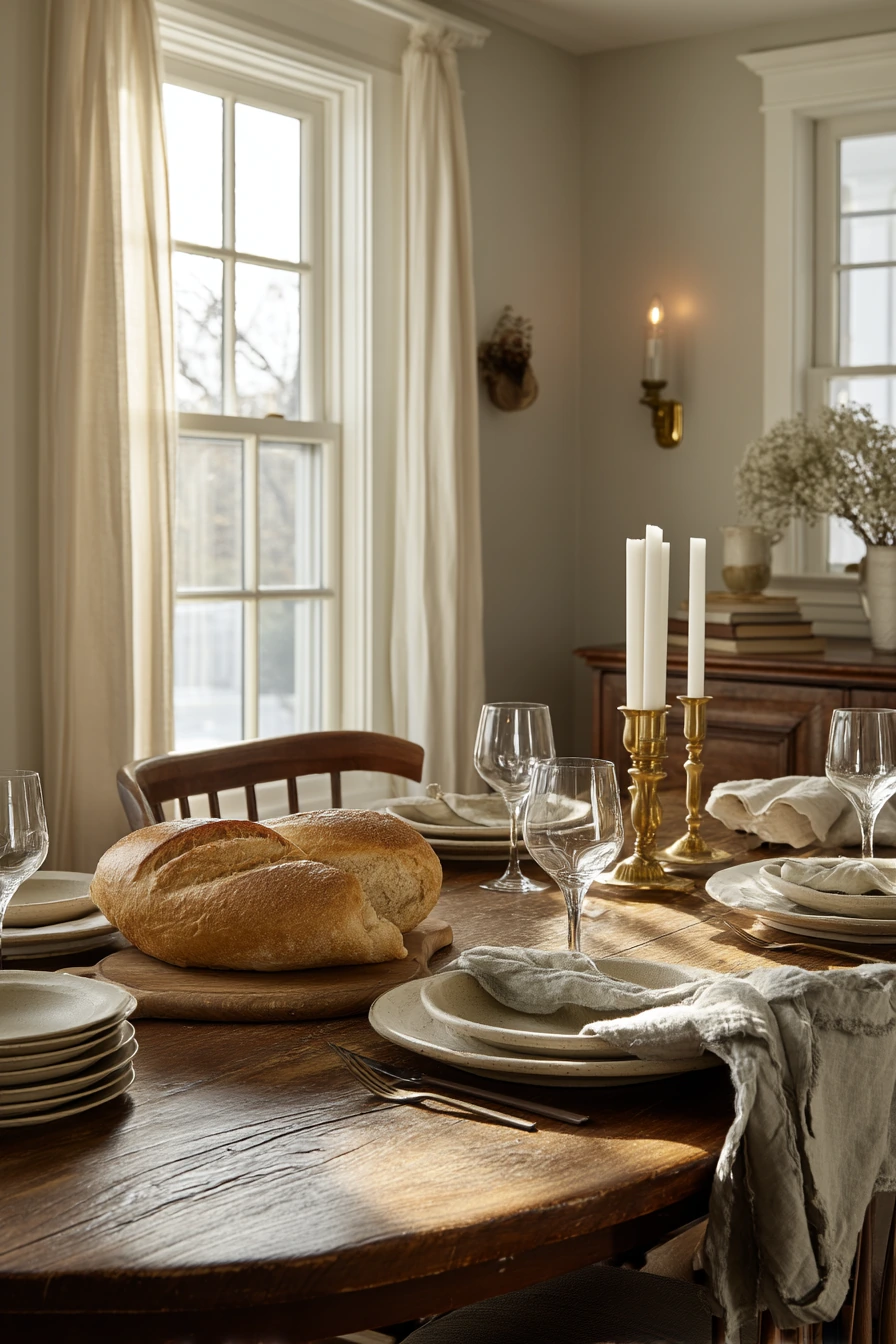

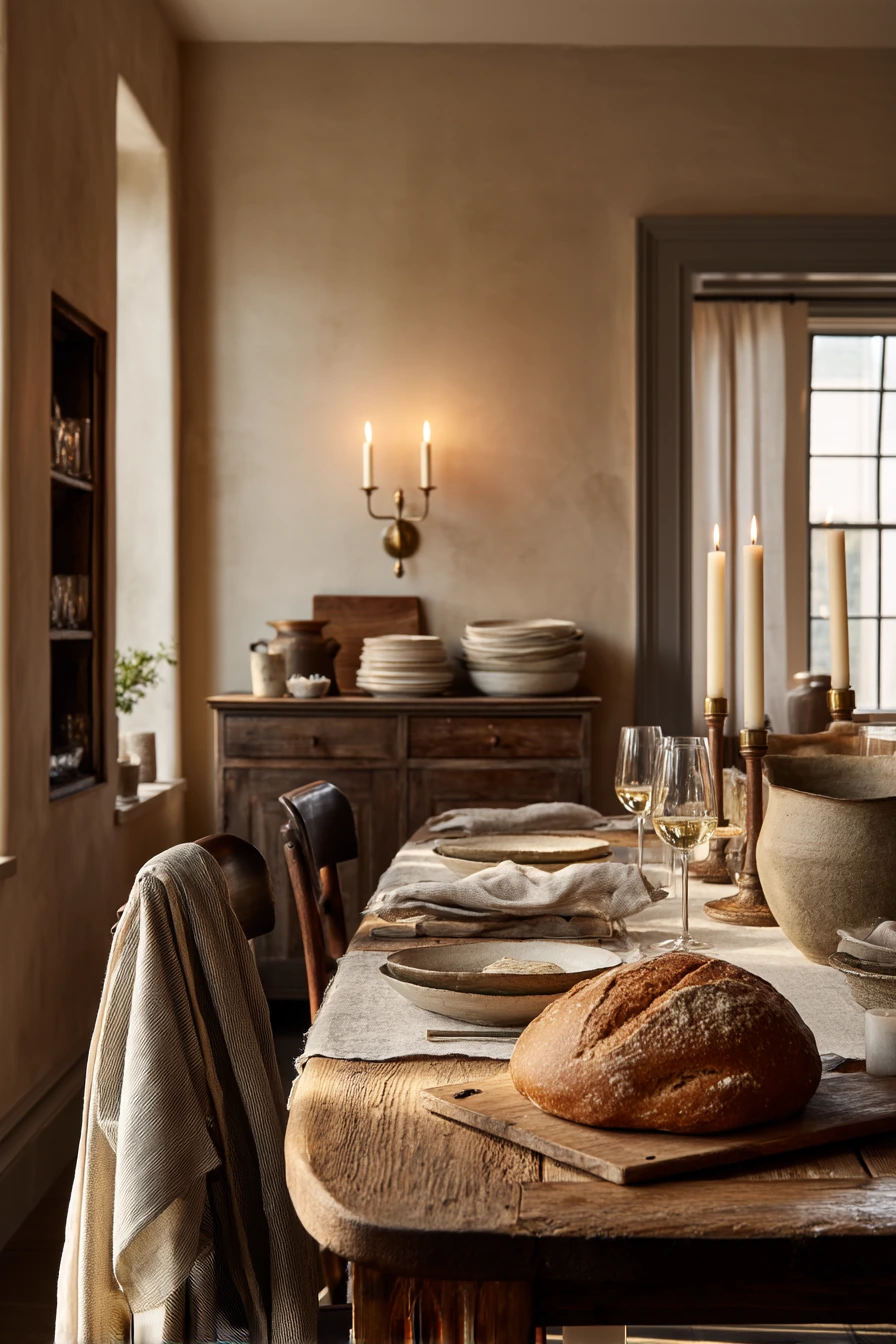
A farmhouse dining room set for guests can be elegant without feeling formal. Start with an oval table and simple stoneware. Linen napkins add softness, and candlesticks bring gentle height without clutter. A loaf of bread on a board looks welcoming and also gives people something to share.
Use the sideboard as your helper station. Stack serving dishes there so the table stays open. A coat draped over a chair and two wine glasses already poured can make the room feel like guests just arrived. The key is to keep the colors quiet, like warm neutrals, soft whites, and natural wood.
Lighting sets the mood. Soft golden window light plus warm sconce glow makes stoneware and linen look richer. Keep place settings consistent, then add one small natural touch, like herbs tied with string. This gives an inviting, calm entertaining moment that still feels real.
- Use matching stoneware for a clean, relaxed table setting.
- Fold linen napkins simply and add a small sprig of rosemary.
- Keep a bread board or small tray ready for easy hosting.
- Stage the sideboard with serving pieces so you can serve fast.
- Use candles in sturdy holders to add warmth without fuss.
Pro Design Tip: Set the table with fewer items than you think you need, then add only one focal piece, like bread and butter on a board, so the table feels generous, not crowded.
Budget Considerations: Linen can be costly; start with two linen napkins for the head chairs and use cotton for the rest, or buy secondhand sets.

9 Kid-Friendly Everyday Dining


A kid-friendly farmhouse dining room can look tidy without being precious. Choose a durable painted table that can handle bumps and art time. Bentwood chairs are a good fit because they are sturdy and easy to wipe down. Add a washable slipcovered bench for flexible seating.
Plan for storage that kids can use. A woven basket of toys under the sideboard keeps clutter contained and makes cleanup quick. It is normal to have finger-smudged glass on the table, placemats slightly shifted, crayons, and a half-eaten apple. The goal is to manage the mess, not pretend it is not there.
Keep the room cheerful yet restrained by using a simple color plan. Soft morning light through plain curtains looks best with warm white walls, light wood, and a few muted accents. Use placemats to protect the table, and choose a centerpiece that can be moved in seconds, like a small tray with a low vase.
- Pick washable slipcovers so spills are not stressful.
- Use placemats that can go in the sink or dishwasher.
- Add a toy basket near the dining zone for fast cleanup.
- Choose chairs that are stable and not too heavy for kids to move.
- Keep one small tray on the table so you can clear art supplies quickly.
Pro Design Tip: Use the same material in two places, like woven texture in a toy basket and placemats, to make kid items look like part of the decor.
Budget Considerations: Slipcovered benches and durable tables vary in price; consider a used table painted with a hard-wearing top coat and a basic bench with a washable cover.


10 Quiet Morning Coffee Corner

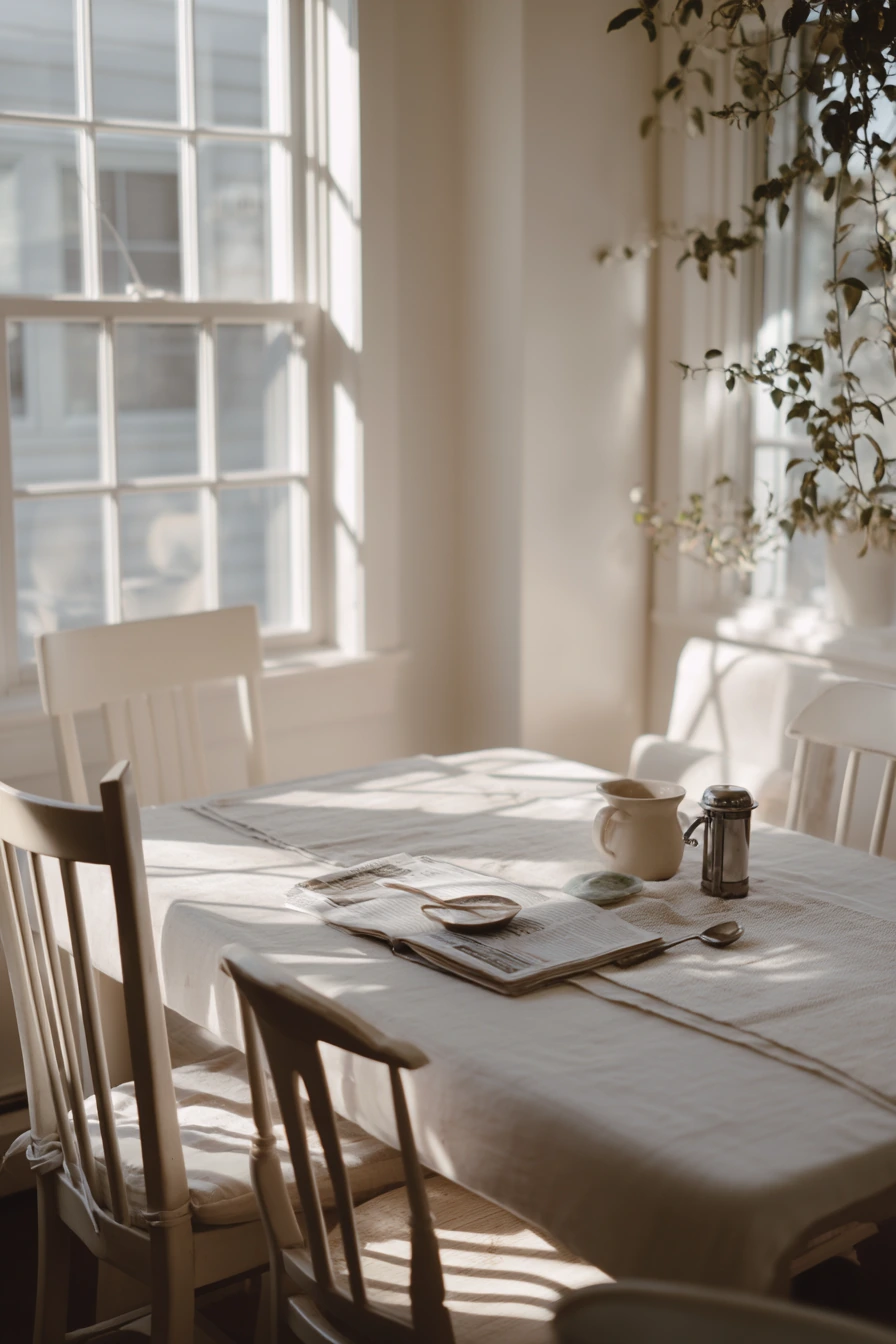
A serene farmhouse dining room can double as a morning coffee spot. A small rectangular table near tall windows keeps the vibe quiet and bright. Slipcovered chairs add comfort and soften the lines in the room, which helps it feel calm early in the day.
Style the table like you actually use it. A ceramic coffee press, an open cookbook, a reading journal, and one newspaper can sit out without looking messy if you keep them in a small grouping. Add a folded napkin and a single spoon on a saucer for a tidy finish. Plant leaves casting delicate shadows add life without needing more decor.
To keep the mood soft-focus and lived-in, avoid shiny items and pick matte finishes instead. Use a simple color palette, like cream, light wood, and soft gray. If the space is also used for meals later, store the coffee items on a tray so you can lift everything off in one move.
- Place the table near side light to highlight texture on wood and linen.
- Keep a tray for coffee items so the setup is easy to reset.
- Use a small plant for gentle shadows and a fresh feel.
- Choose slipcovers in light colors that can be washed often.
- Limit tabletop items to a few useful pieces for a calmer look.
Pro Design Tip: Make the morning spot feel intentional by keeping one “anchor” item in place, like a tray or a small vase, and rotating the book or journal as needed.
Budget Considerations: You can create this look with what you have; use a basic table, thrifted chairs with simple covers, and a secondhand tray instead of buying new decor.


Farmhouse dining room ideas work when they match your real routine. Focus on strong basics like a solid table, comfortable seating, and warm light, then add texture with linen, wood, and simple pottery.
Try one small change first, like switching to woven placemats, adding a bench cushion, or styling a sideboard with everyday dishes. Small updates are easier to keep up with, and they still make the room feel new.
FAQ
What colors work best in a farmhouse dining room? Warm whites, soft beige, muted greens like dusty sage, and natural wood tones are easy to live with and fit the farmhouse style.
How do I mix dining chairs and still make it look good? Keep one thing consistent, like seat height, wood tone, or cushion style. Limit the mix to two or three chair types.
What is the best table shape for a small farmhouse nook? A round pedestal table saves space and improves traffic flow, especially in tight corners.
How can renters add farmhouse style without damage? Use peel-and-stick beadboard or wallpaper, lean art on a ledge, and focus on removable items like textiles and lighting.
How do I make a farmhouse dining room kid-friendly? Choose wipeable surfaces, washable slipcovers, and add baskets for toys and art supplies so cleanup is fast.
What should I put on a farmhouse dining table every day? Keep it simple: a runner or placemats, a small vase or pitcher, and one tray for items you use often.
How do I decorate for fall without making it look cluttered? Add color with napkins first, then use small pumpkins and dried stems in low groupings so the table stays usable.
Pick the section that fits your home best, then build from there. A farmhouse dining room should feel steady, useful, and welcoming every day.