
English garden ideas are not about perfect lines or rare plants. They are about soft paths, layered flowers, useful corners, and small details that make a space feel lived in.
In this guide, you will see English cottage garden paths, tiny courtyard layouts, greenhouse work zones, family borders, and budget front gardens. Each section includes simple styling moves you can copy at home.
You will also get plant picks like roses, lavender, foxgloves, jasmine, and shade plants such as hostas and ferns. These choices help you build the look in sun or shade, big yard or balcony.
Use this post as a checklist. Pick one idea, start small, and add layers over time so your garden grows into its own story.
1 Cottage Border Path with Everyday Charm
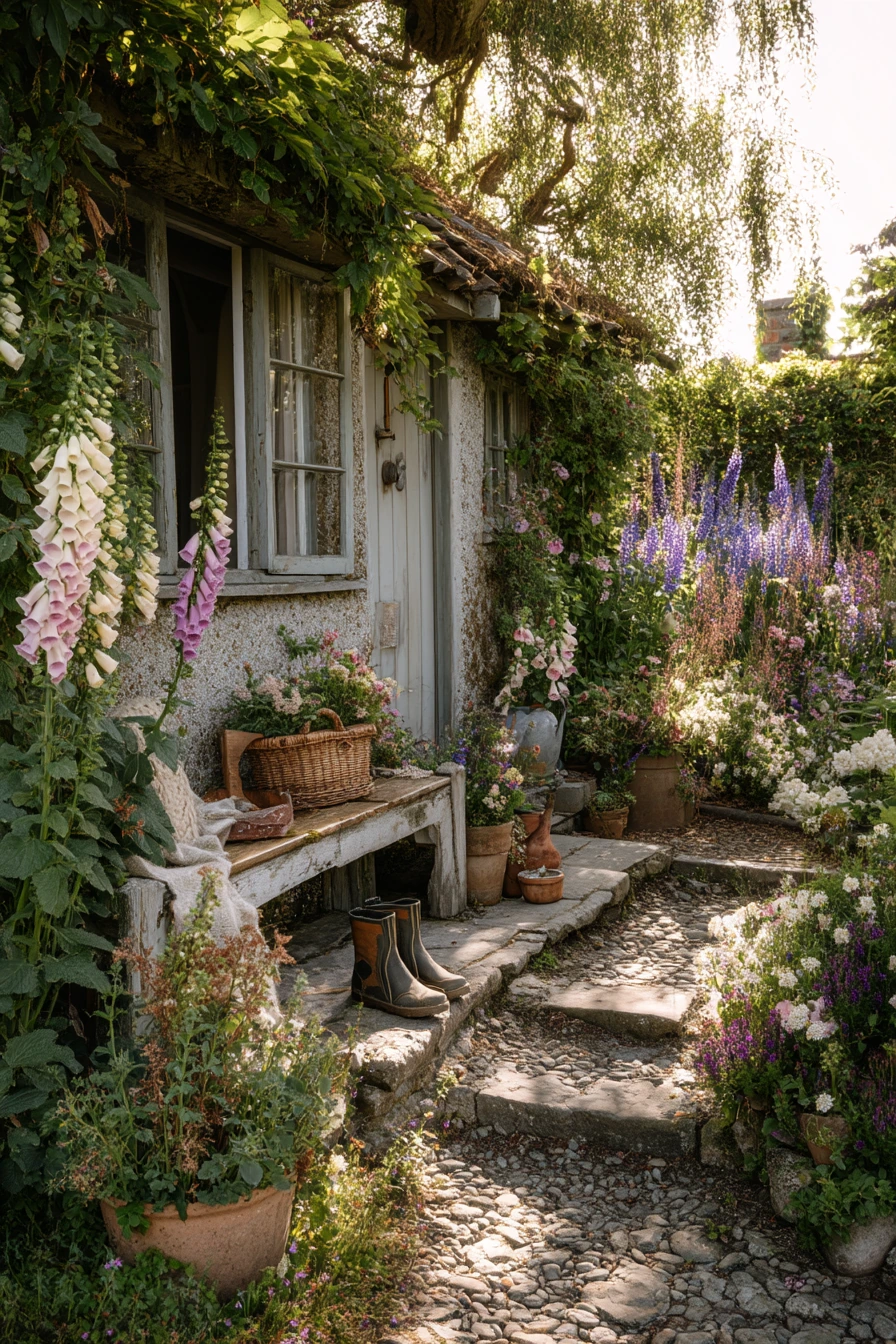
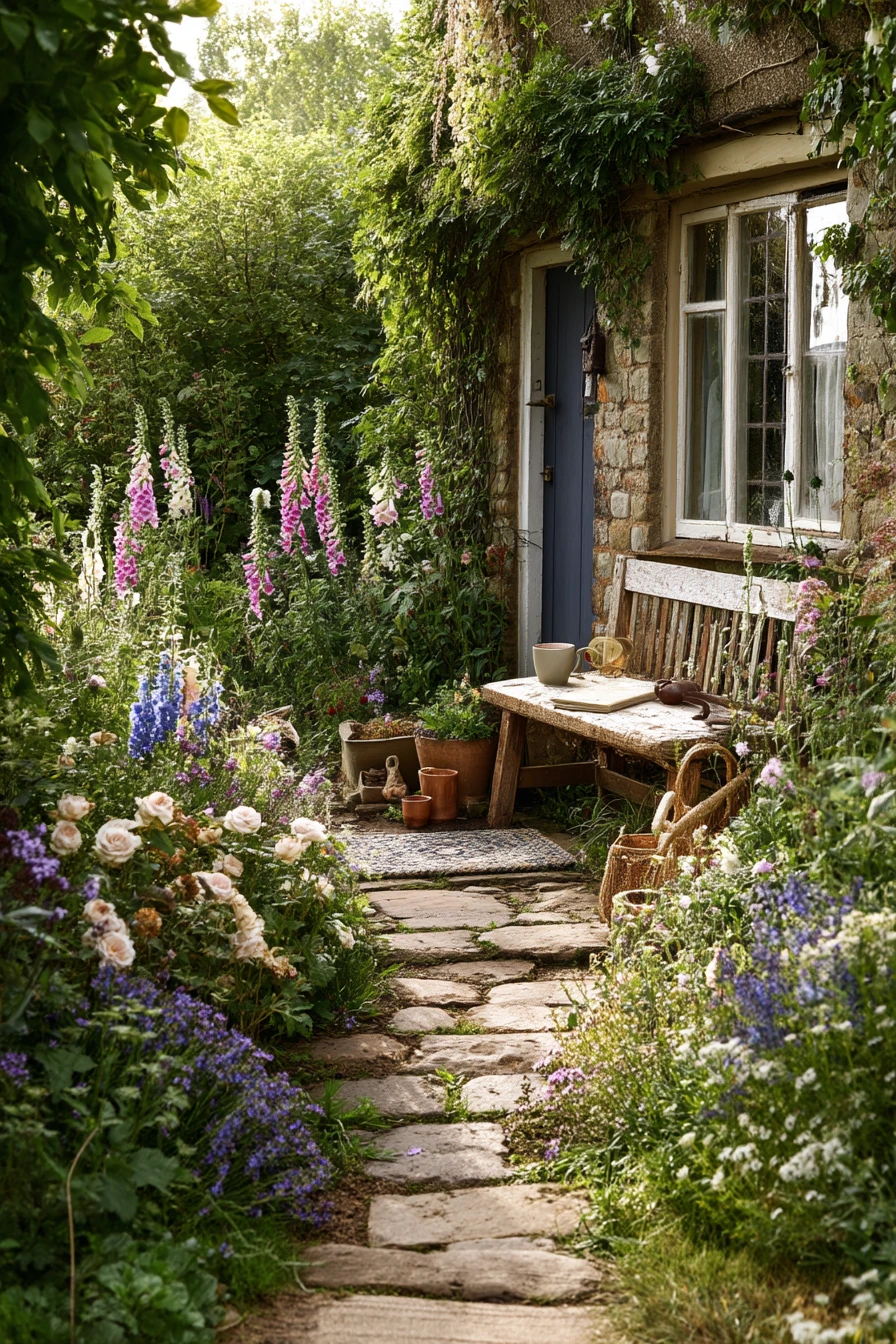
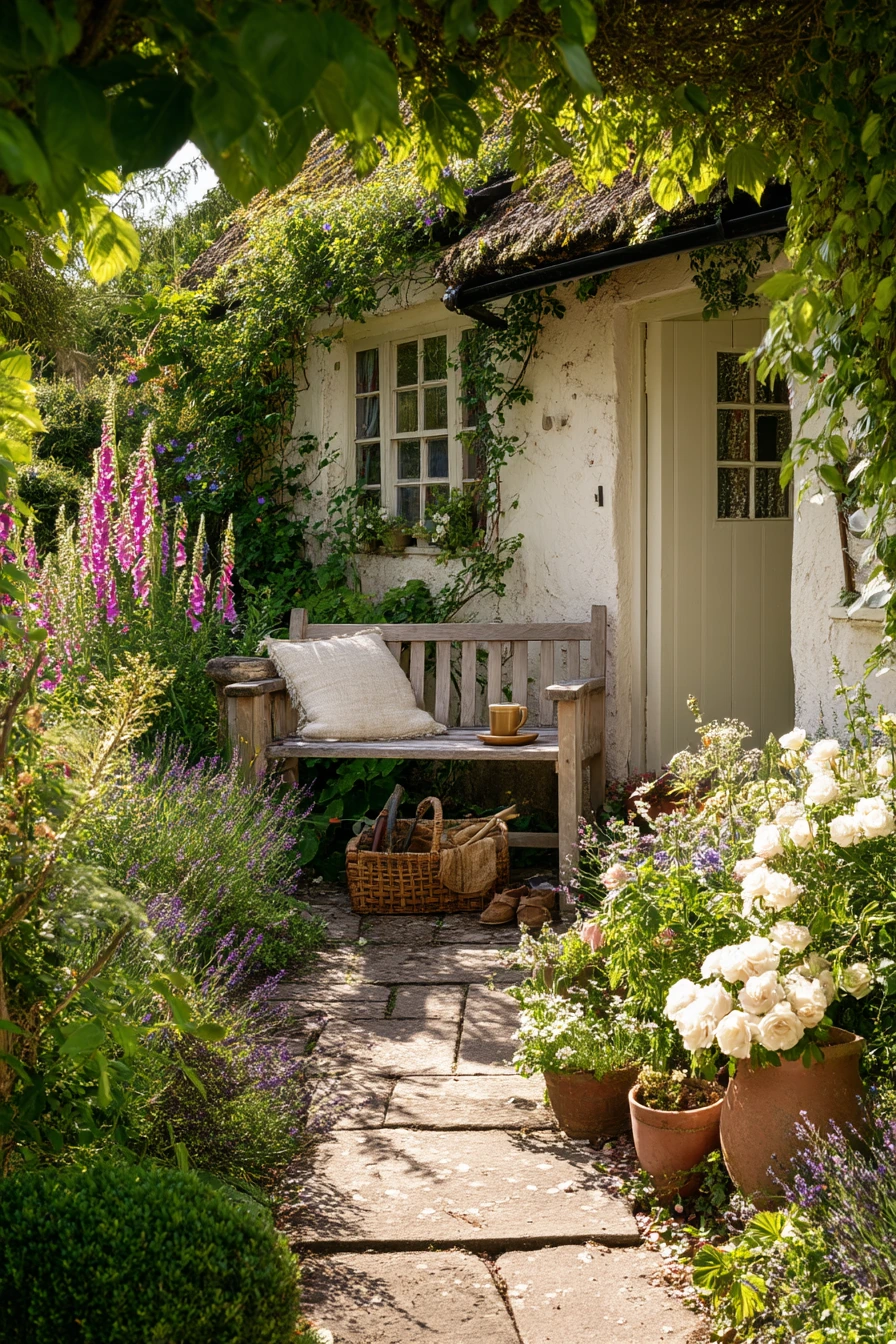
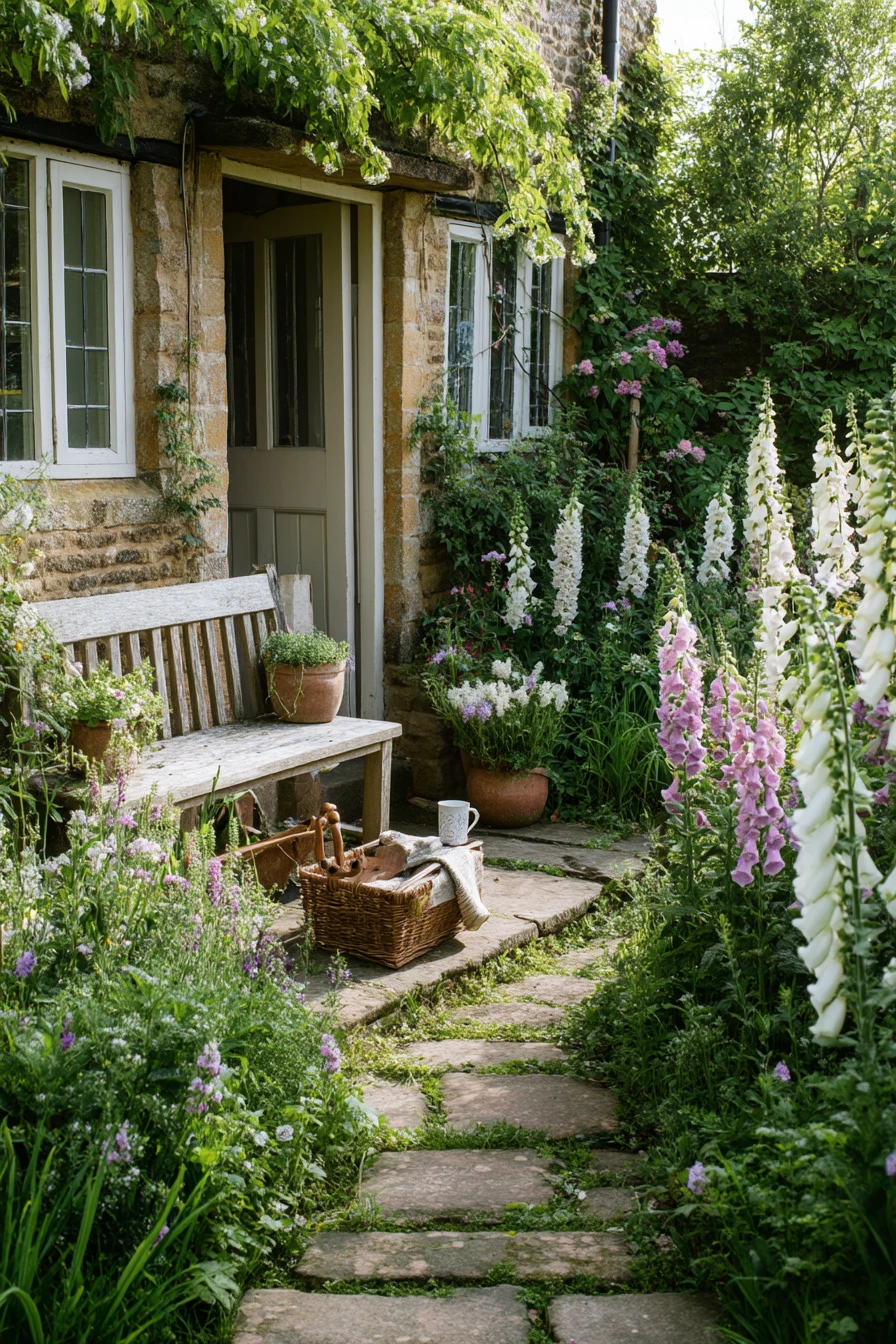
A cottage garden path is one of the easiest English garden ideas to copy because it gives you a clear plan. Start with a simple walkway beside the house, then pack the edges with tall and mid-height flowers. Foxgloves, roses, lavender, and delphiniums create that full, romantic look, while clipped boxwood adds shape so the border does not feel messy.
To make it feel real, add useful items that belong there. A weathered bench near the path invites a break, and terra-cotta pots let you tuck in extra color where the border has gaps. Keep a wicker trug near the door with pruning shears and twine so quick jobs are easy. A mug on the step and muddy boots by the back door are not decoration, they are proof the garden is used.
For planting, repeat a few plants instead of buying one of everything. Use lavender in small drifts for scent and a clean edge. Let roses climb or spill through, then soften the base with low flowers. Leave a little space at the path edge so plants can lean without blocking the walk.
- Lay a gravel or brick path wide enough for a wheelbarrow.
- Plant tall blooms at the back, medium in the middle, low at the front.
- Clip boxwood lightly twice a year to keep it neat.
- Group terra-cotta pots near the bench for easy watering.
- Add a simple linen throw to the bench for a soft, homey touch.
Pro Design Tip: Use one “spine” plant, like boxwood, along the whole path, then swap seasonal flowers around it so the border stays calm even when blooms change.
Budget Considerations: Grow foxgloves and cosmos from seed, and buy small lavender plants to space out over time. Use secondhand pots and a basic wooden bench with a light sanding.
2 Small Patio English Garden for a City Home
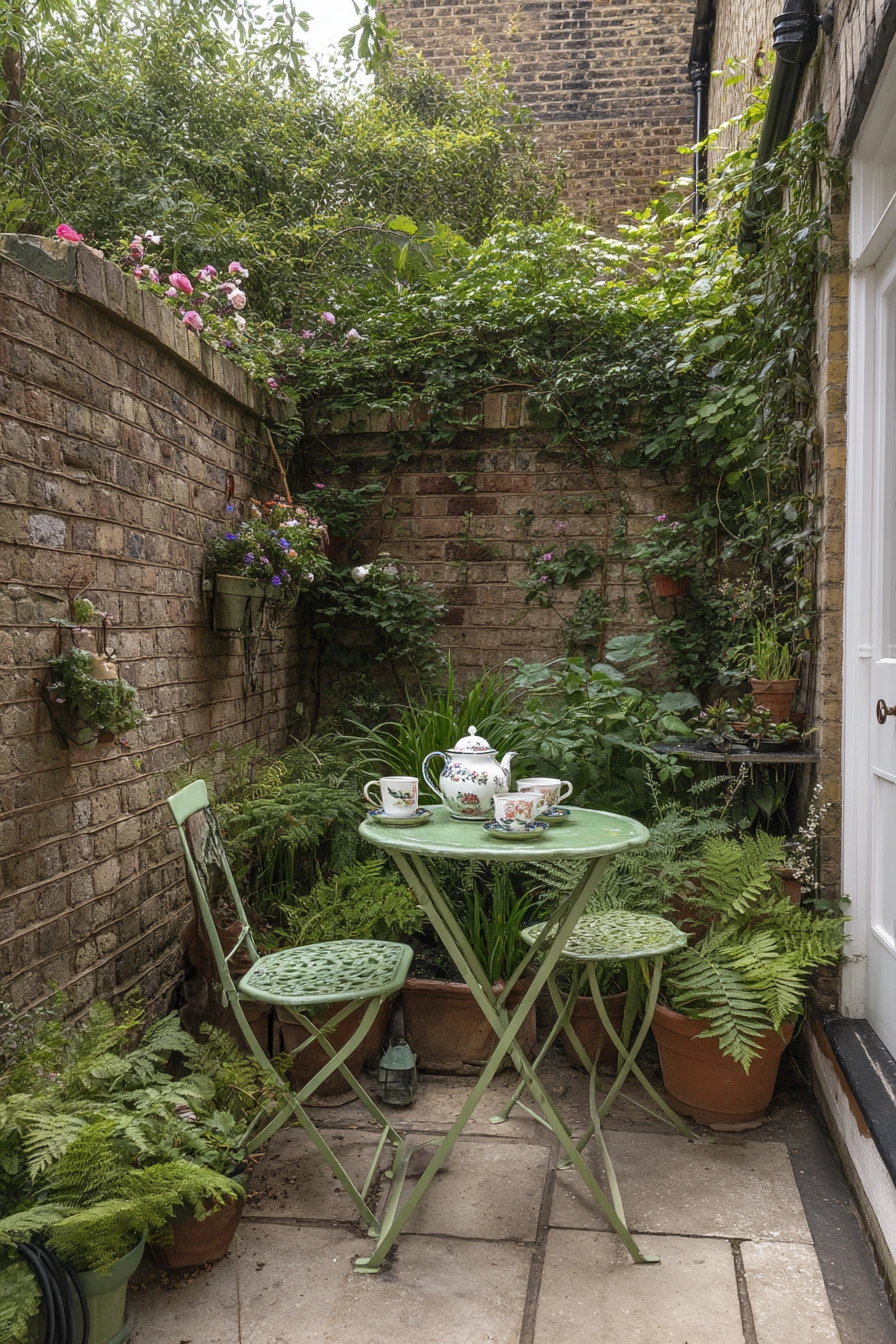
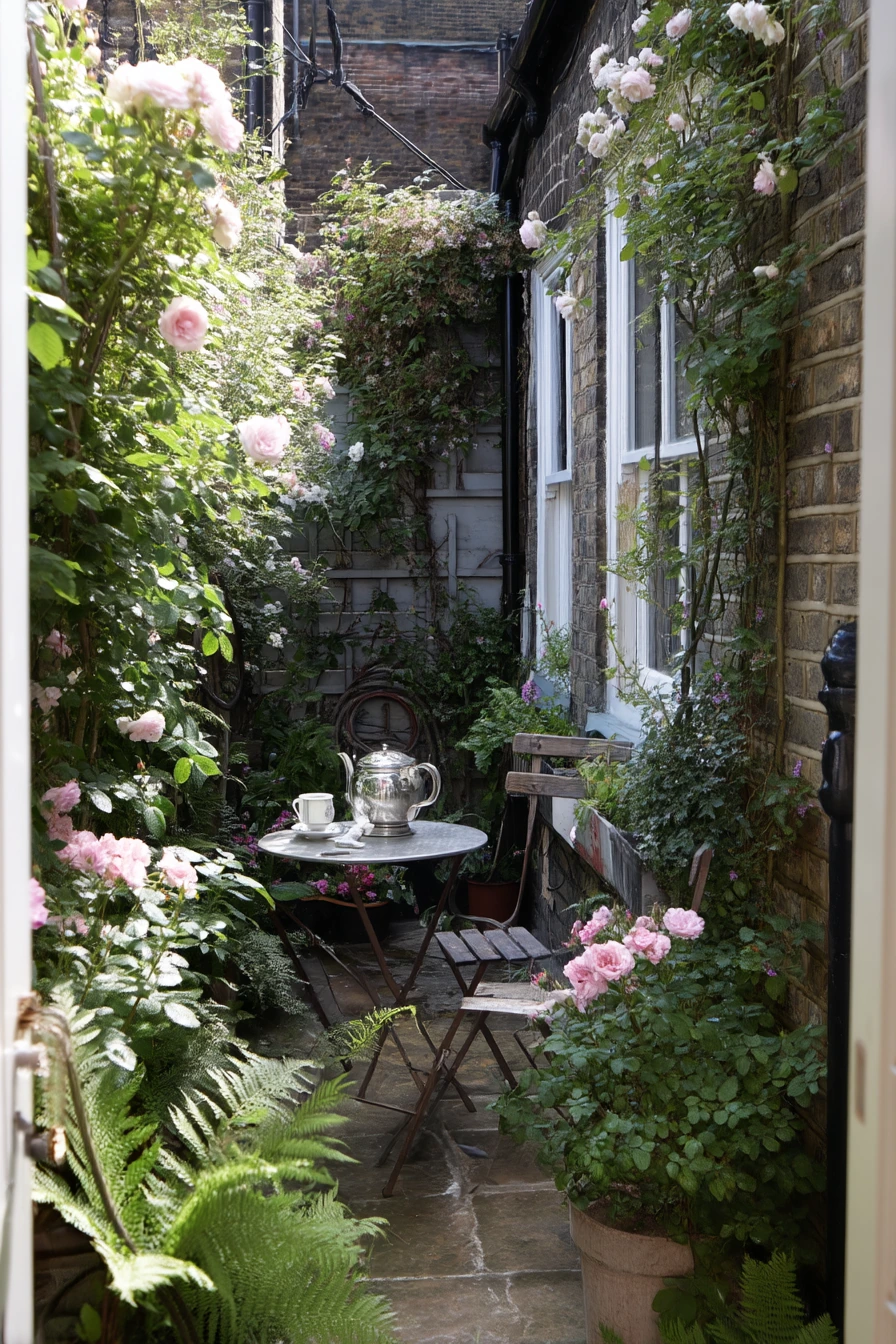
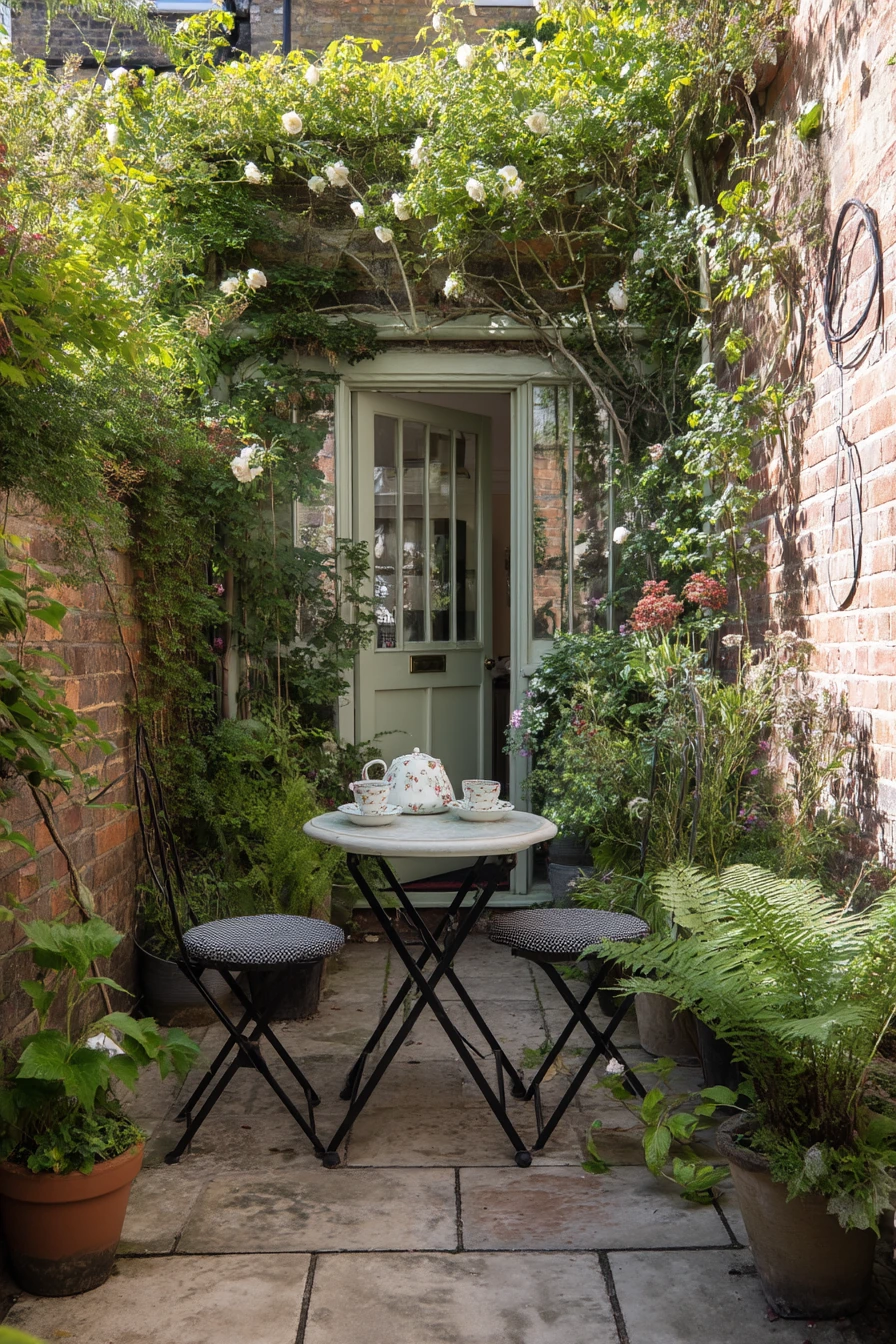
A compact courtyard can still feel like an English garden if you use vertical space and pots. Start with the wall. Climbing jasmine on brick adds scent and softens hard edges. Then layer pot-grown roses, geraniums, and ferns so you get height, color, and texture without digging up the ground.
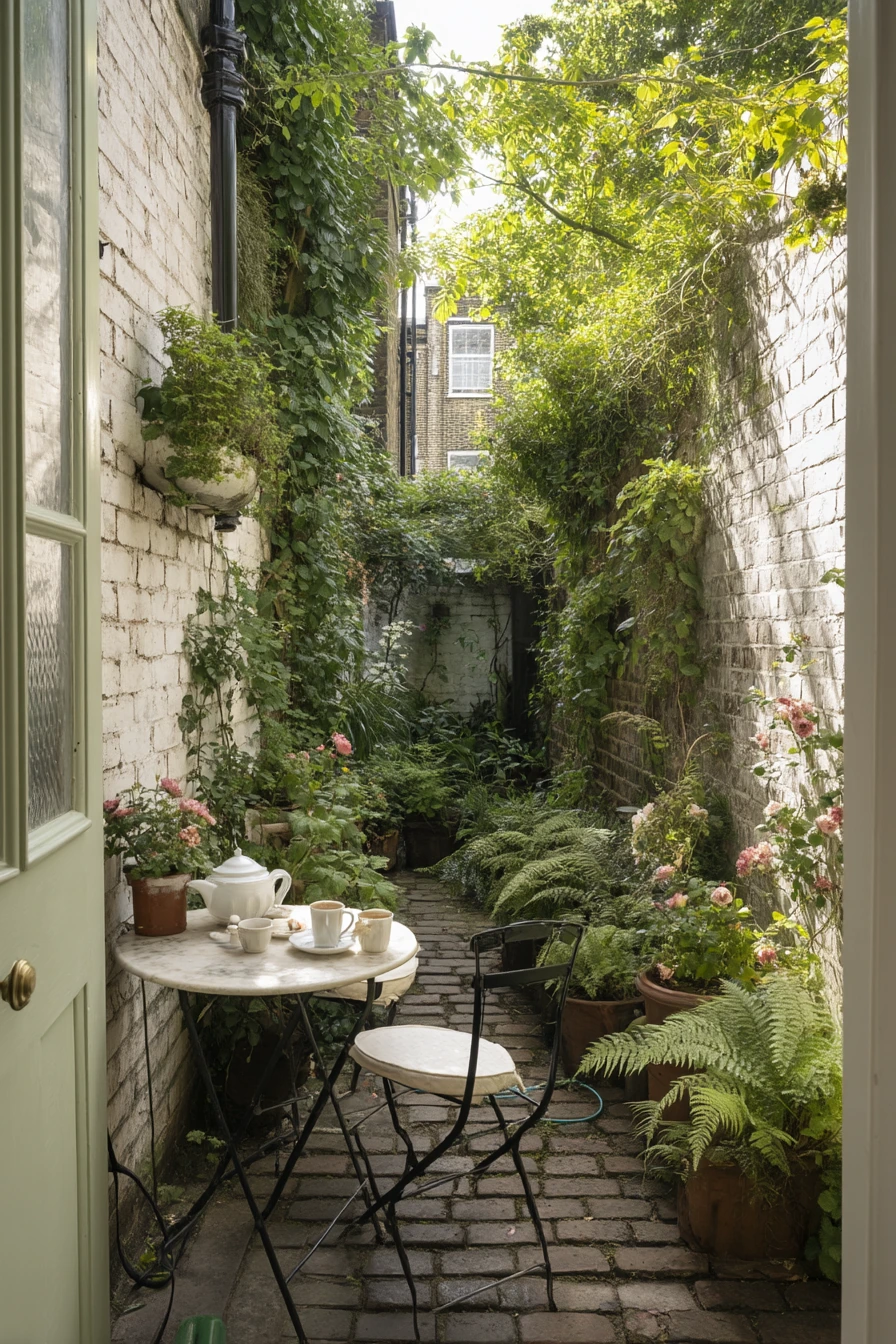
Keep the center open so it works for daily life. A narrow bistro table with a teapot and two mismatched cups makes the space feel welcoming. A coiled watering hose, a kid’s chalk stick, and even a charging cable by the back door are normal in a real home, so do not hide everything. Just group items into tidy zones so it looks calm.
For layout, place the tallest pots at the back corners and along the wall. Put trailing plants like ivy at the front so they soften the paving. Use a few repeats, like two geranium pots on each side of the door, to make a small space feel planned.
- Train jasmine on simple wire supports to cover more wall space.
- Choose one rose color to keep a tiny courtyard from looking busy.
- Add ferns in shade spots to fill gaps with green.
- Use pot risers or bricks to vary heights without buying stands.
- Style the table with one small tray for cups and a vase.
Pro Design Tip: Pick three main materials and repeat them, like terracotta, aged zinc, and wood, so many different plants still look like one style.
Budget Considerations: Start with smaller rose plants and size up later. Use cuttings for ivy and geraniums, and shop for the bistro set at resale stores or end-of-season sales.
3 Rainy Day Greenhouse Potting Corner
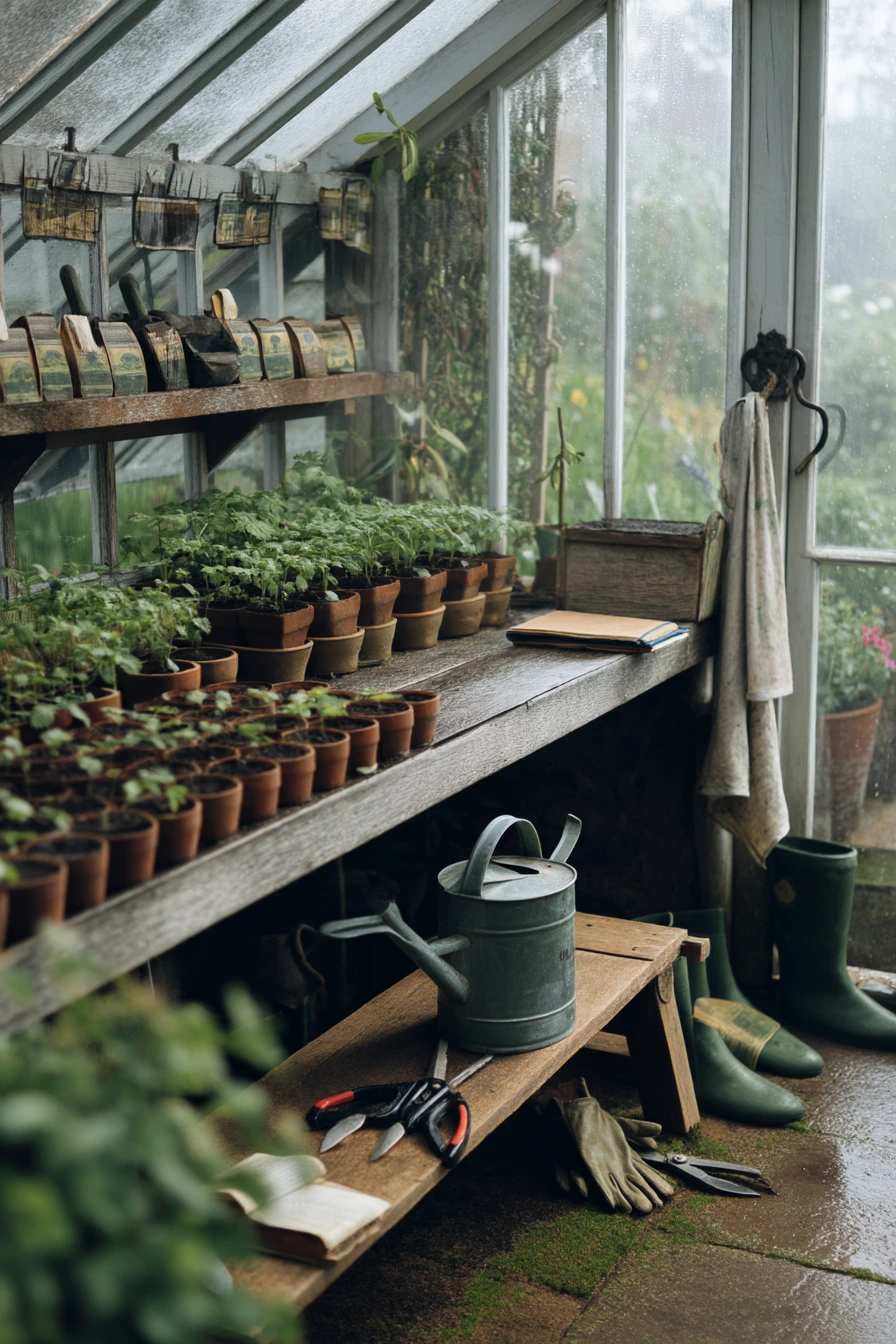
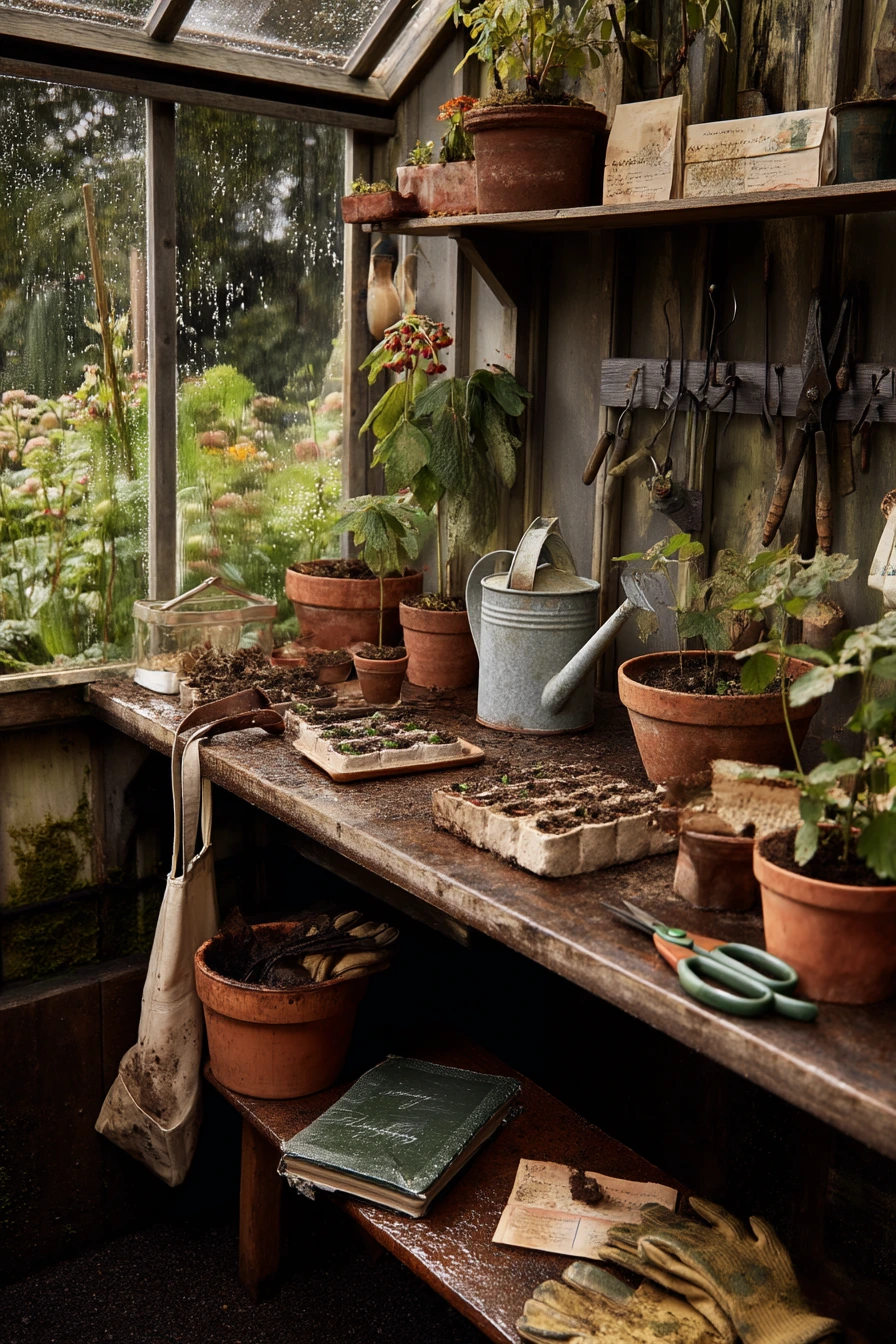
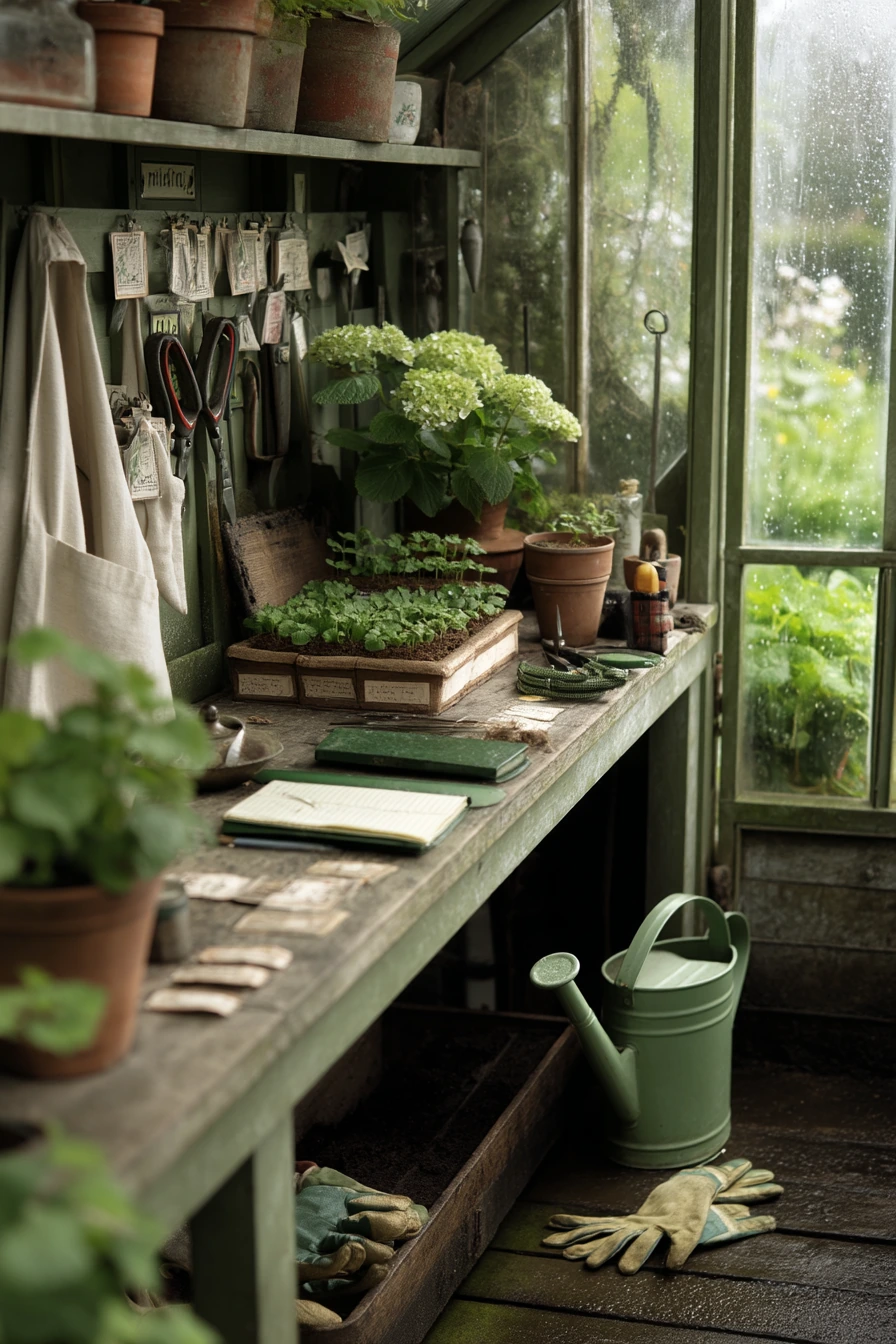
A greenhouse corner is the behind-the-scenes part of English garden ideas, and it matters because it keeps your garden going. Set up a timber bench or sturdy shelf, then organize seed trays, clay pots, and seed packets so you can plant fast when you have time. Keep secateurs close, and label everything to avoid guessing later.
Hydrangea cuttings and basil starts are perfect for this space because they show progress quickly. Rows of cuttings look tidy, and they make it easy to share plants with friends. Old enamel watering cans and a damp apron on a hook add that hardworking feel, but they are also useful. A notebook open to planting notes is not just a prop. Write down what you planted, the date, and what worked.
Make the corner easy to clean. Use a tray under seed pots to catch soil, and keep one small bin for empty packets and plant ties. If the weather is rainy and the light is low, add a simple shelf light so seedlings do not stretch.
- Store labels and a pencil in one jar so they do not get lost.
- Use a shallow tray to bottom-water seedlings.
- Root hydrangea cuttings in small pots and keep them evenly moist.
- Hang apron and gloves so they dry between uses.
- Keep twine and plant ties in a small basket on the bench.
Pro Design Tip: Divide the bench into three zones: sowing, potting, and hardening off, so each task has a home and the space stays orderly.
Budget Considerations: Reuse yogurt cups or food trays for starting seeds, and upgrade to clay pots slowly. A simple LED shop light is often cheaper than specialty grow lights.

4 Family Back Garden with Pollinator Beds
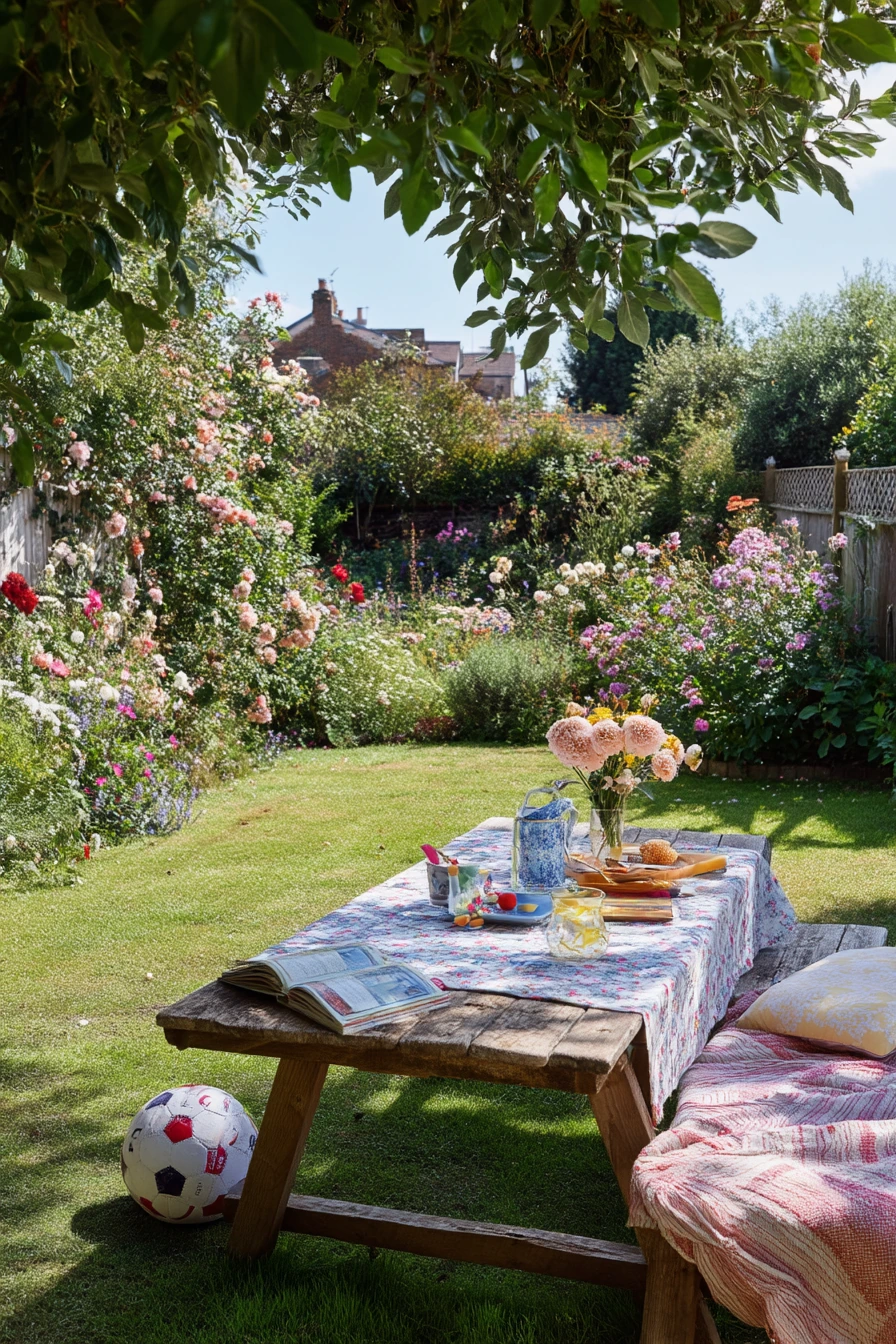
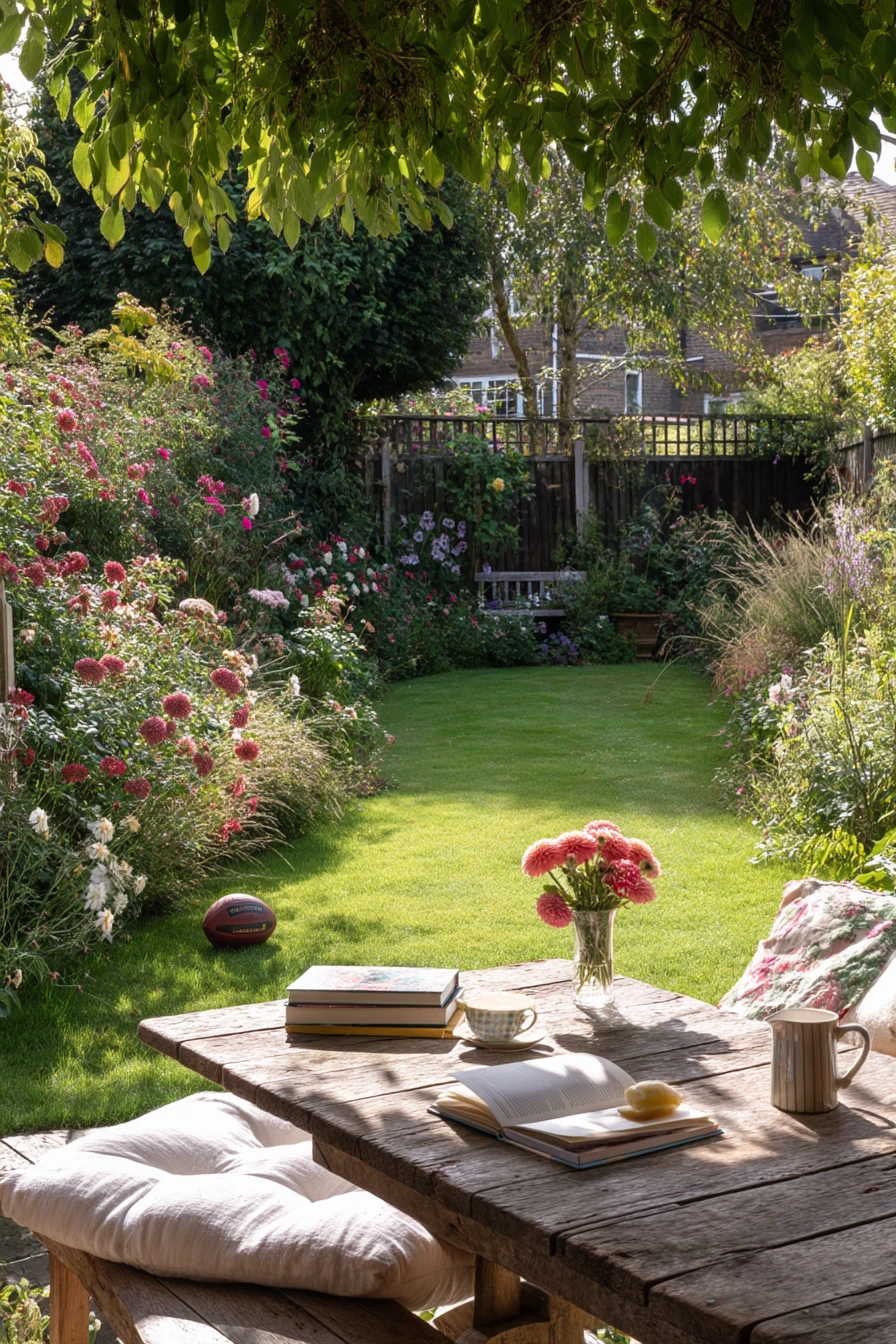
A family back garden can still look like an English garden when you plan for play and plants at the same time. Start with layered pollinator borders around the edges, then keep a small lawn in the center for running and games. Climbing roses on a fence add height and privacy, while bee-friendly perennials bring movement and color through the seasons.
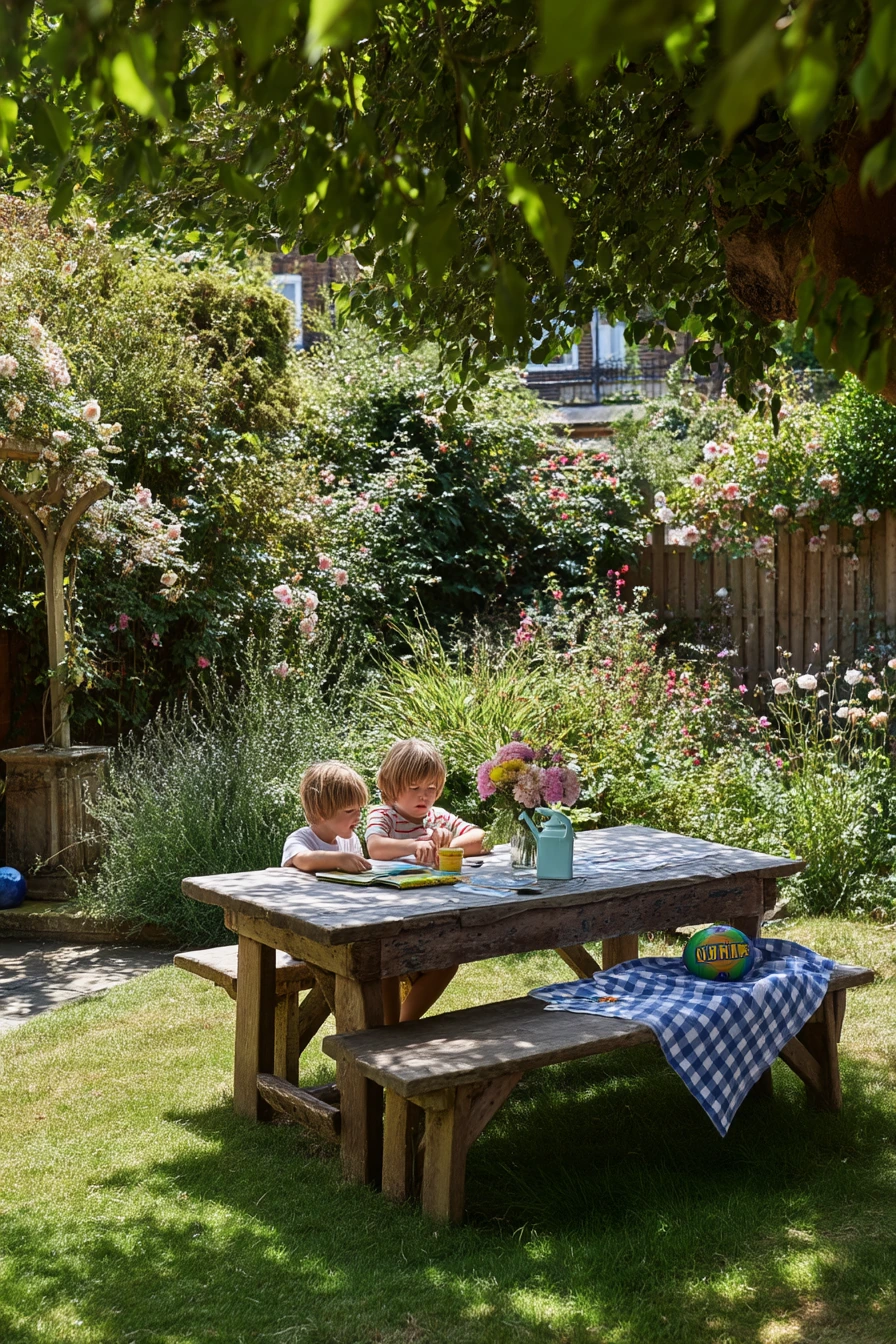
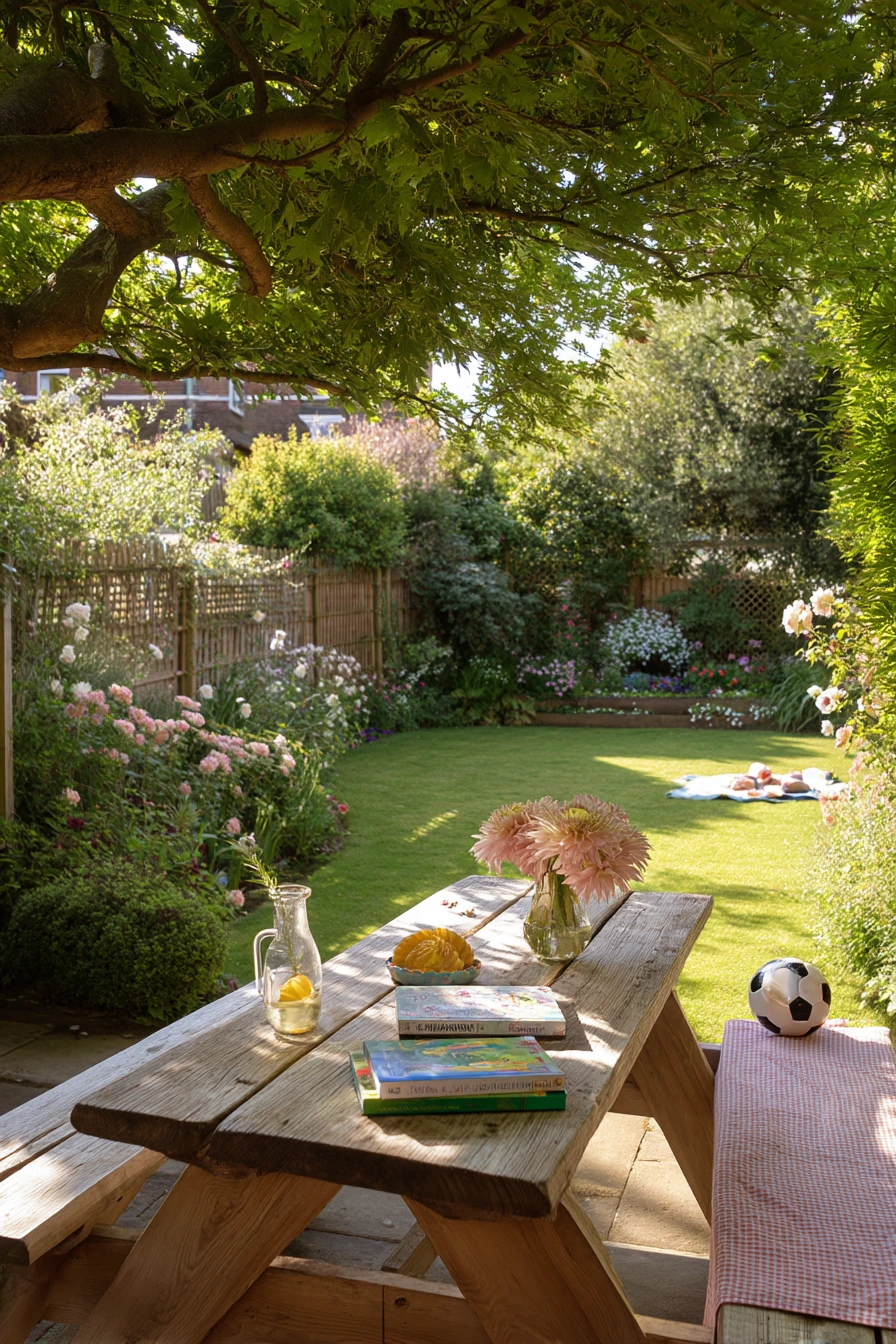
Make the garden feel like part of the home. A rough timber table with lemon water, picture books, and a vase of freshly cut dahlias shows how the space is used. A child’s watering can can live near the border so kids can help. A football and a folded picnic blanket can stay out, as long as there is a clear spot for them.
For easy care, choose plants that do not need constant staking. Use hardy perennials and repeat them in groups of three or five. Leave stepping gaps so you can reach in to weed without crushing plants. If you want more flowers for cutting, plant dahlias in one sunny strip where you can water and feed them often.
- Edge borders with a low plant like lavender or hardy geranium.
- Mix bloom times so something flowers from spring to fall.
- Keep a small path or stepping stones for quick access.
- Place a water source nearby to make watering simple.
- Use a basket on the table for books and small garden tools.
Pro Design Tip: Use “soft barriers” like low shrubs and repeated perennials to guide play away from delicate plants without making the yard feel fenced in.
Budget Considerations: Buy perennials as small plugs and let them fill in over two seasons. Ask neighbors for divided plants, and use a basic outdoor table you already own.
5 Budget-Friendly Front Garden Facelift
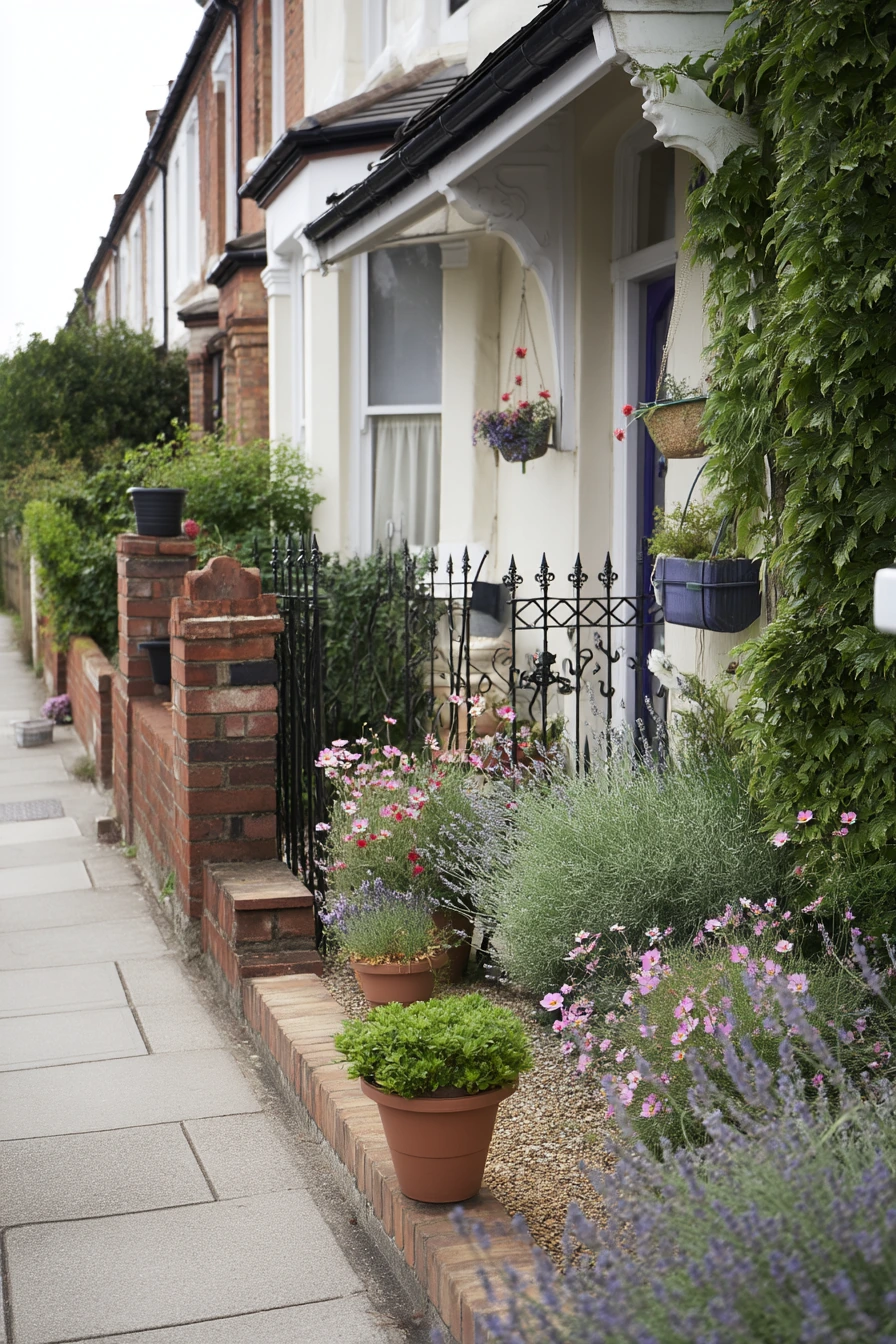
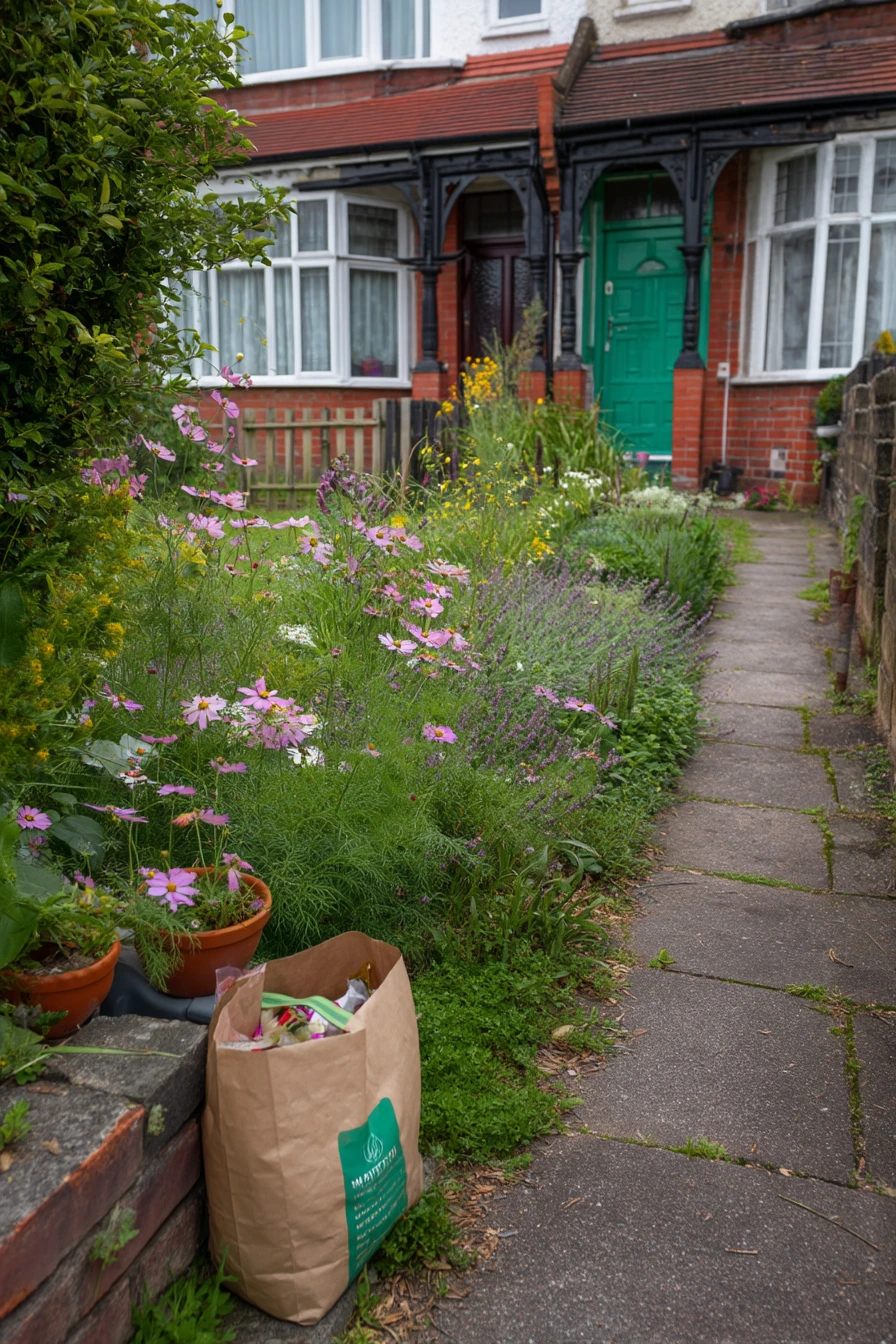
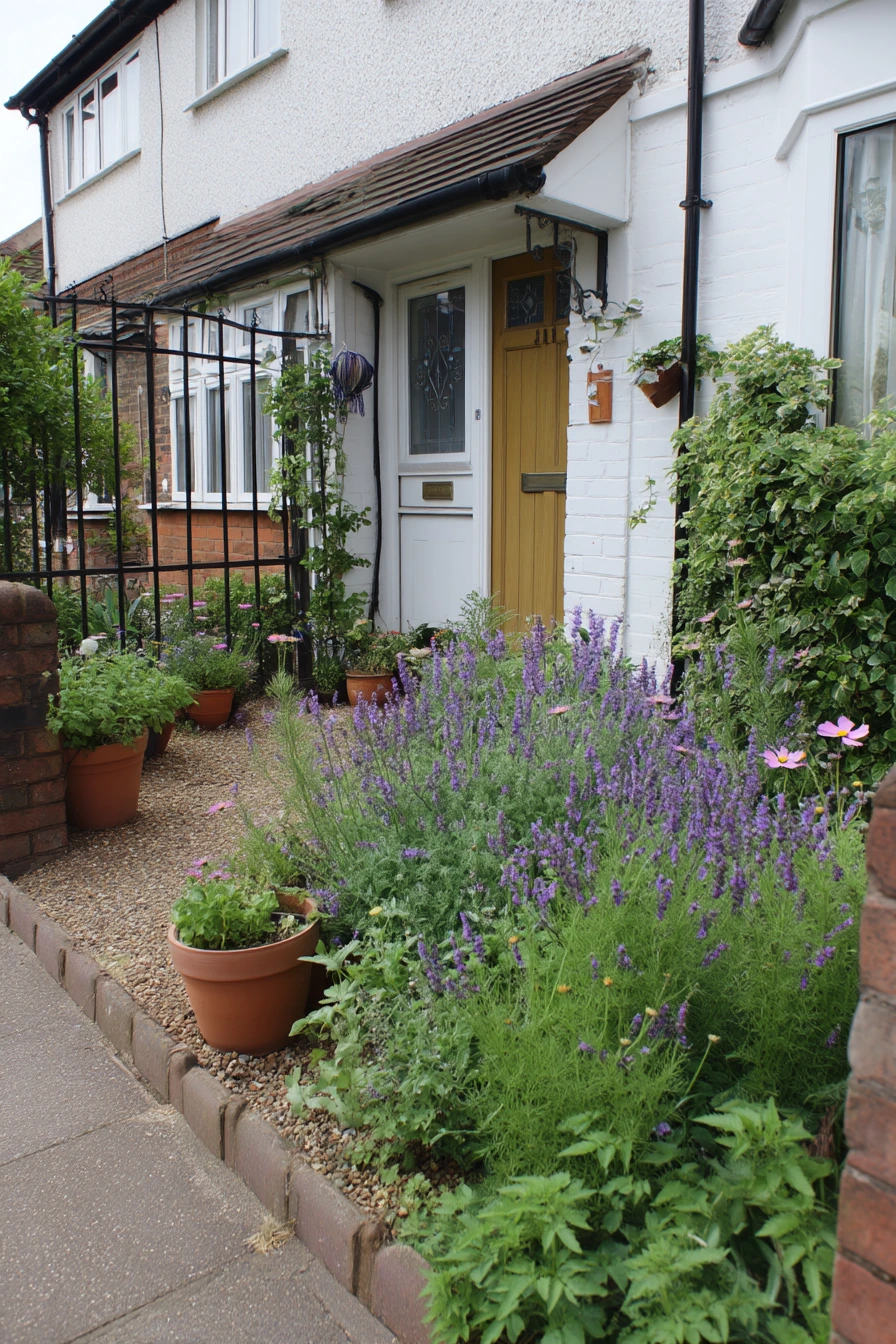
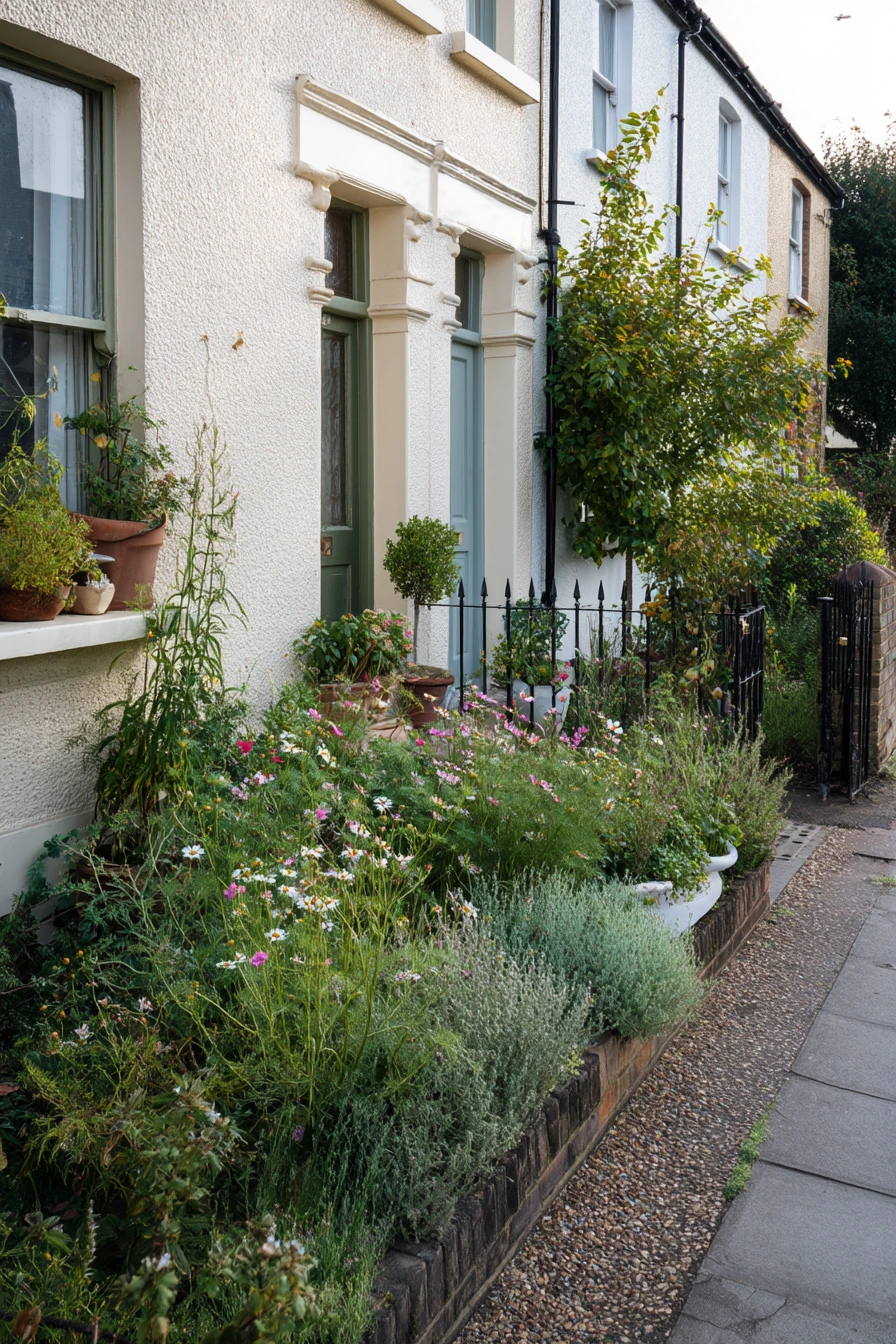
Front yards are often small, so affordable English garden ideas work well here. A simple gravel path instantly makes the space feel cared for and gives you a clean route to the door. Add lavender edging for scent and structure, then let self-seeded cosmos bring height and an easy, cottage feel.
Painted terracotta pots can refresh a tired entrance without big changes. Pick one soft color and repeat it, then cluster pots near the steps so they look intentional. A salvaged iron gate adds charm and can be found secondhand. Keep the look practical too. A supermarket flower bucket by the doorstep and gardening gloves on a wall hook are normal details in a real home.
Choose plants that handle sun and do not mind a bit of neglect. Lavender, hardy roses, and cosmos are good options. If your front garden is exposed, add one small shrub for wind protection and year-round shape. Keep plant height lower near the path so it does not spill into the walkway.
- Use gravel with a simple edging to stop it spreading.
- Plant lavender in a line to define the border.
- Scatter cosmos seeds in spring for easy summer color.
- Group pots in odd numbers for a natural look.
- Add one focal point, like an iron gate or a small arch.
Pro Design Tip: Limit your front garden to two main flower colors and one foliage color so it looks tidy from the street even when plants grow fast.
Budget Considerations: Gravel paths can be done in sections as you have time. Use leftover paint on terracotta pots, and buy seeds instead of full-grown plants for fillers like cosmos.
6 Renter-Friendly Balcony in English Garden Style
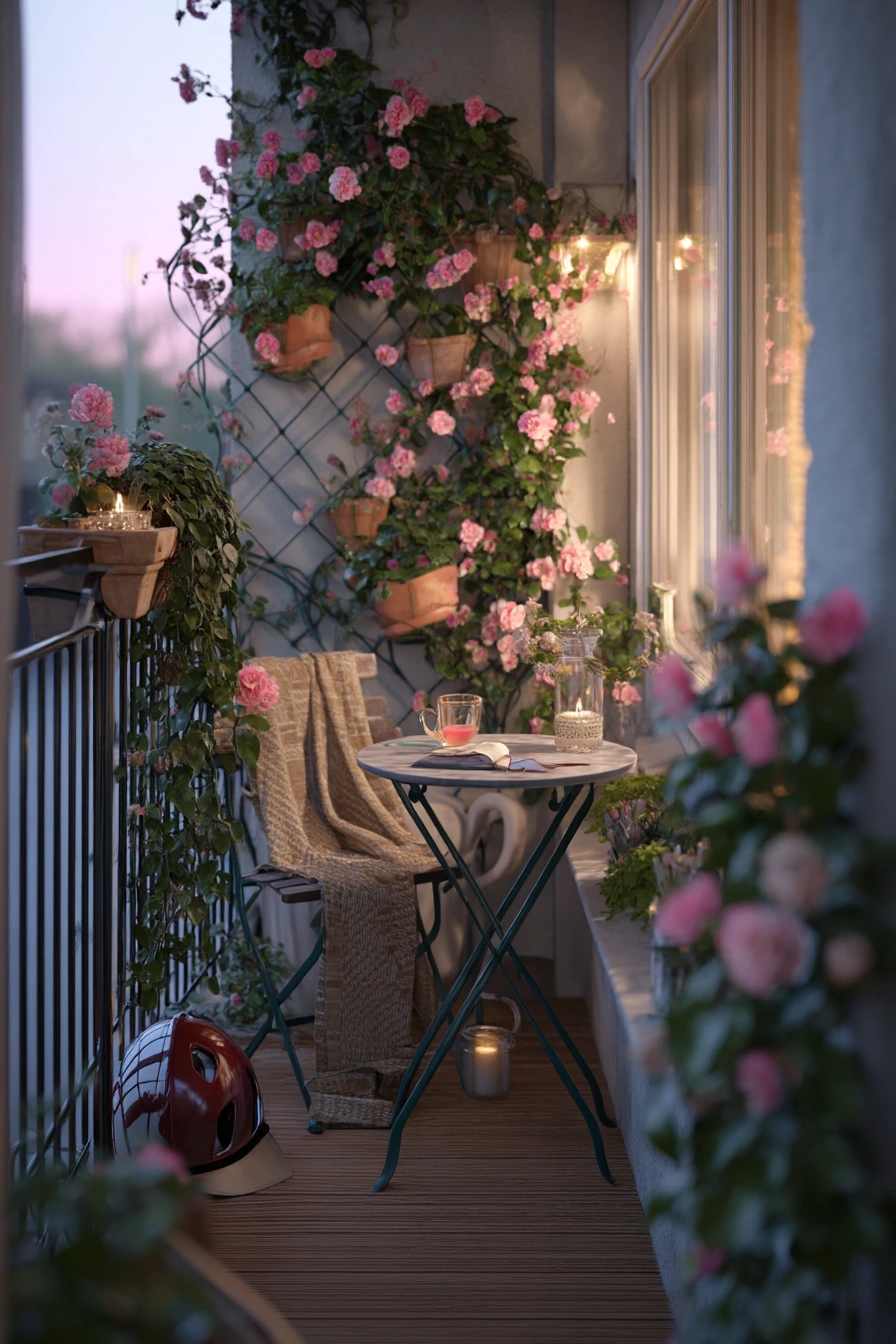
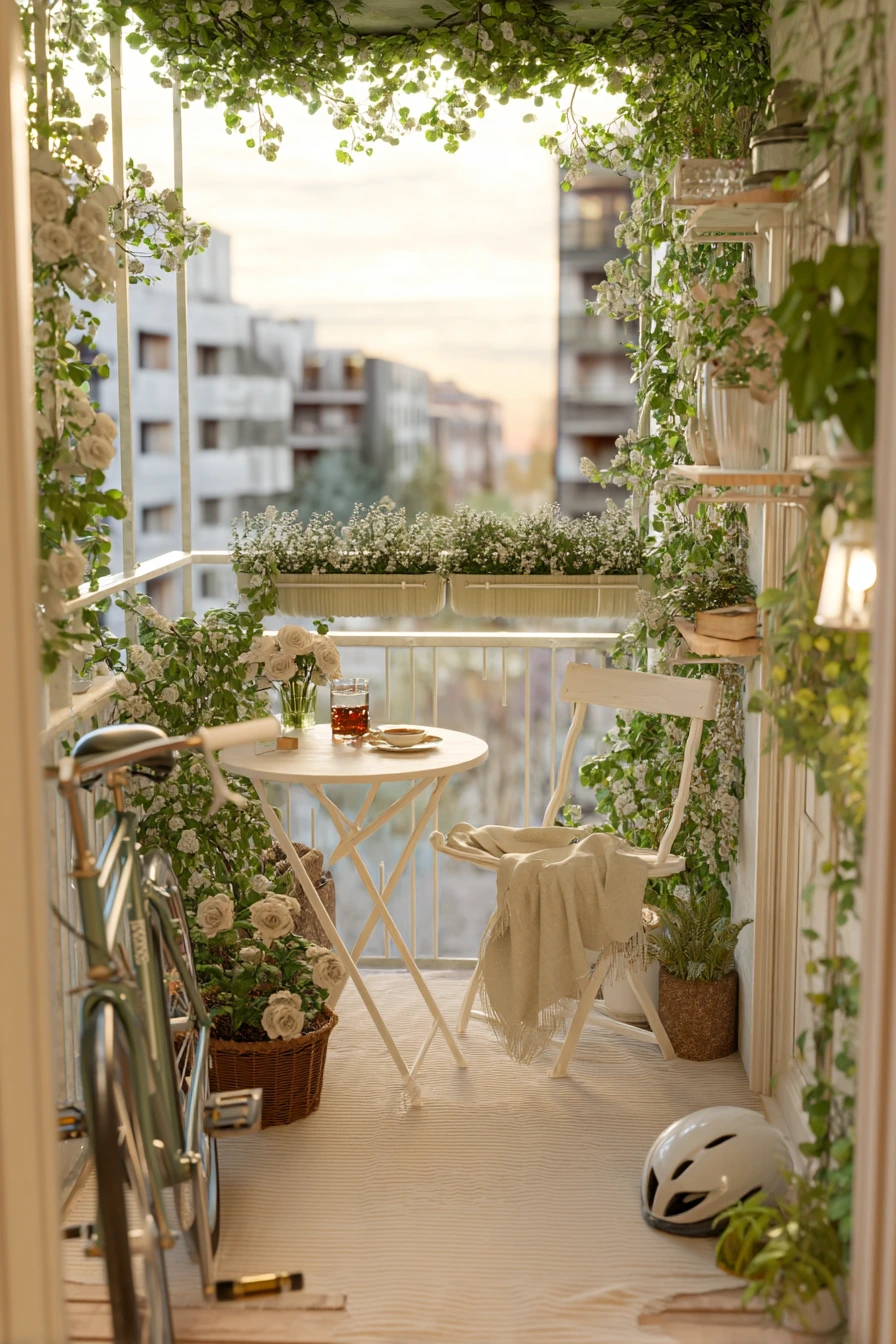
A balcony can feel like a miniature English garden when you focus on scent, layers, and soft seating. Use railing planters for sweet peas, rosemary, and trailing ivy, then add a few miniature roses in pots for a classic touch. Keep the floor clear so it stays safe and easy to sweep.
Make it comfortable, not staged. A small folding chair and a round cafe table are enough for morning coffee or a paperback in the evening. A blanket draped over the chair and a glass of iced tea look natural because they match how you really use the space. Store small items like a bike helmet near the door in a basket so it does not feel cluttered.
To protect a rental, keep everything in containers and use saucers to stop water marks. Choose lightweight potting mix and pots that are not too heavy when wet. Sweet peas need support, so add a slim trellis or tie string to the railing. If the balcony gets limited sun, focus more on herbs and leafy plants, and add flowers where you get the most light.
- Use railing planters to save floor space.
- Add one trellis for sweet peas to climb.
- Group pots by watering needs to make care easier.
- Include rosemary for scent and cooking.
- Style the table with one small tray to keep it neat.
Pro Design Tip: Create a “green backdrop” with ivy or a tall herb at the back, then place flowering pots in front so the balcony looks full even when blooms pause.
Budget Considerations: Start with herbs and ivy, which are often low cost and grow fast. Look for secondhand folding furniture, and use simple plastic pots inside nicer cachepots.
7 Formal Parterre with Relaxed Weekend Use
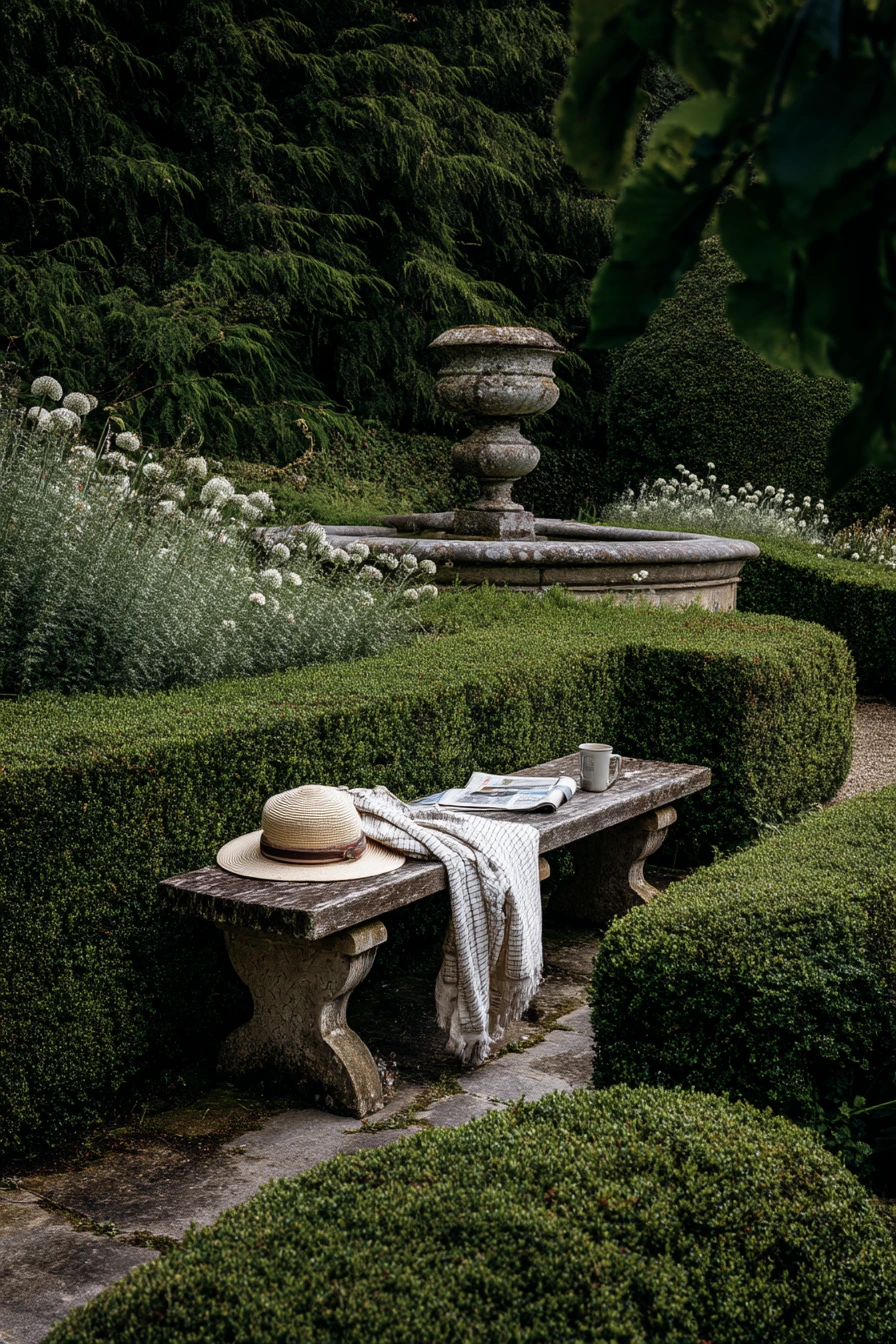
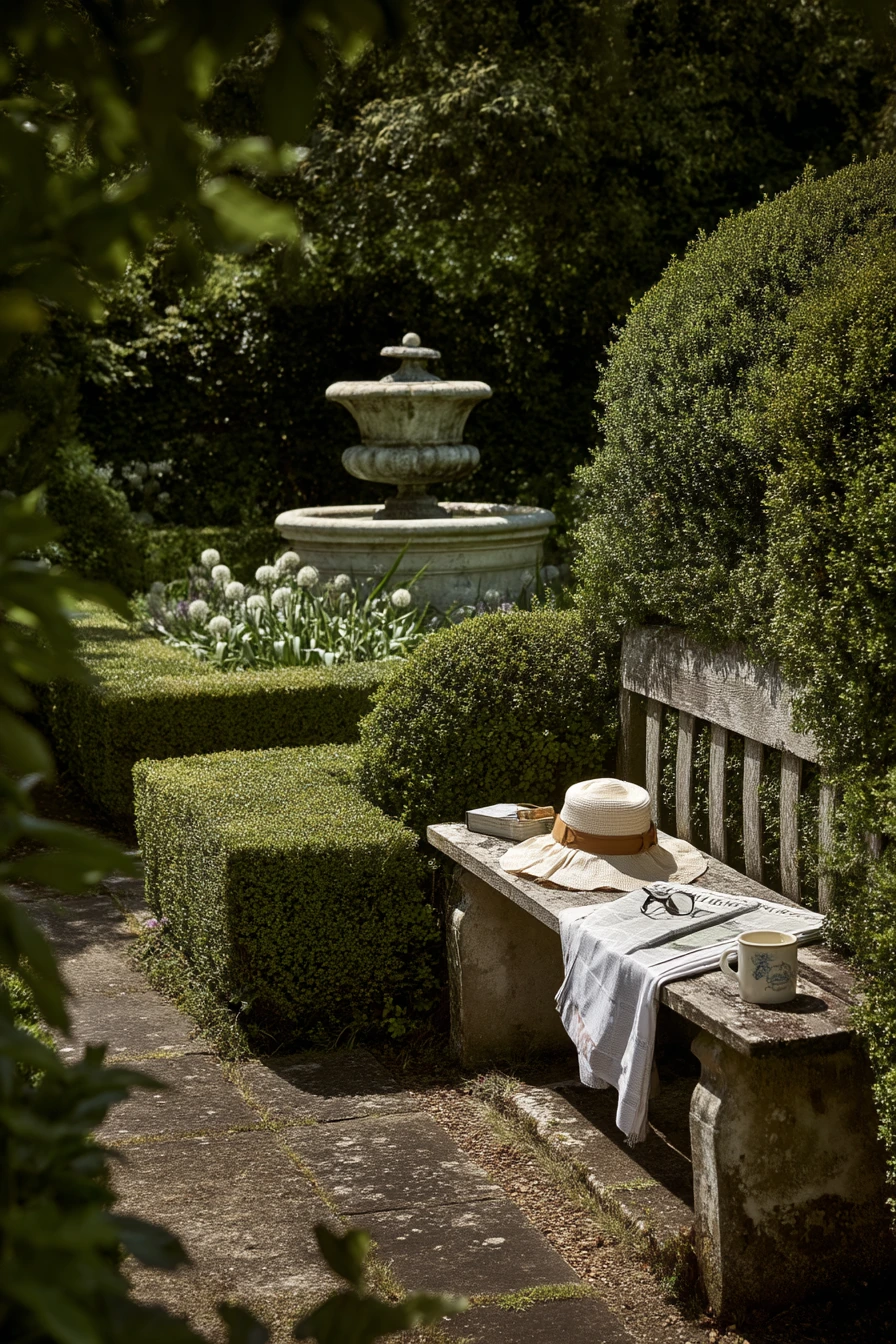
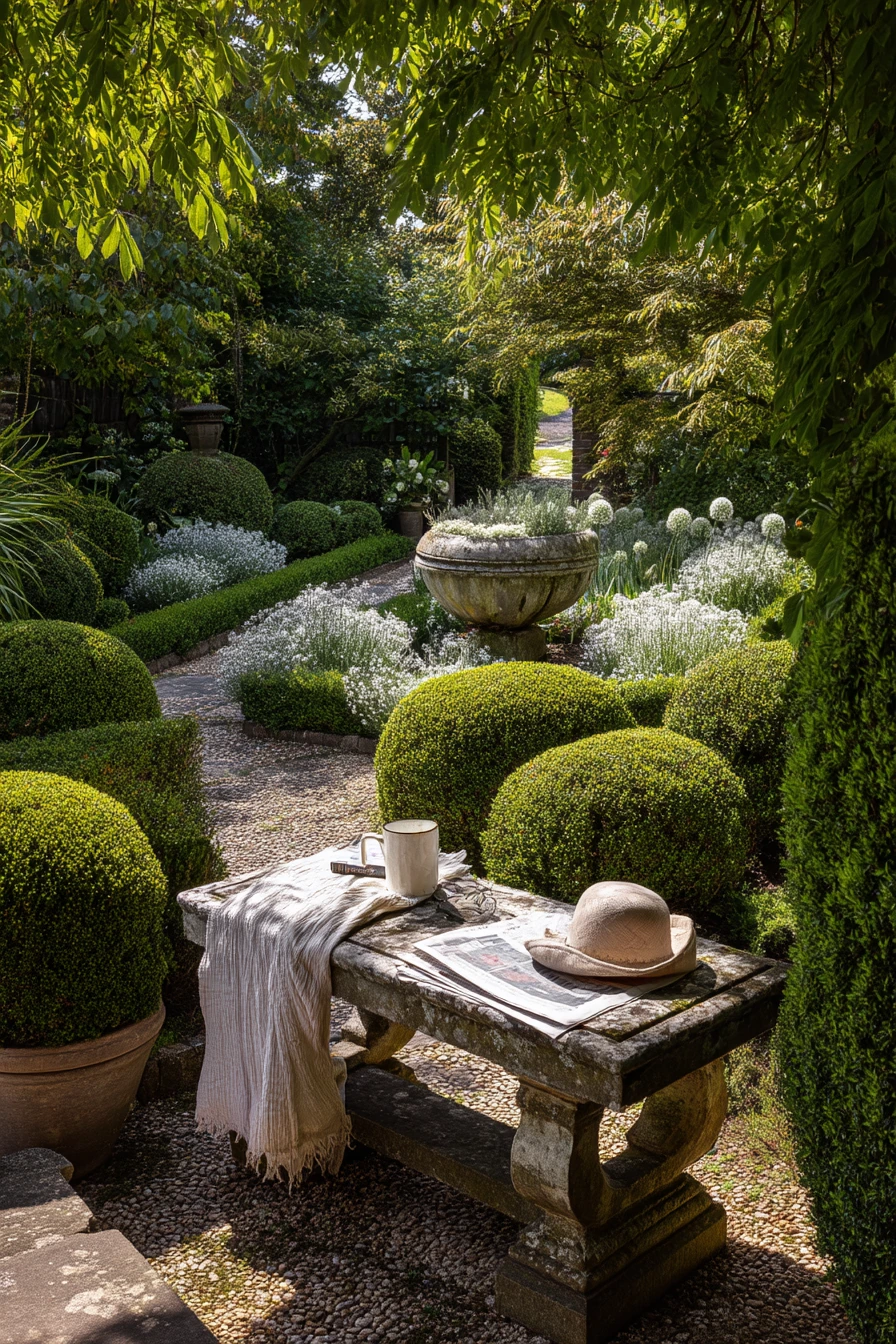
A parterre garden is a more structured version of English garden ideas, with clipped hedges and clear shapes. It can still feel warm if you add softer items and a few looser plants. Clipped box or similar hedging creates the pattern, lavender blocks fill it with scent, and white alliums add height without breaking the clean lines.
To keep it from feeling too formal, add signs of real life. A worn garden towel on a bench, a forgotten sun hat, and a mug on a low wall make the space feel used. A newspaper and reading glasses suggest a slow morning and help the garden feel like a place to rest, not just look at.
For care, trim hedges little and often instead of doing one hard cut. Keep edges sharp by using a string line when you first shape them. Plant lavender close enough to knit together, but leave airflow so it stays healthy. If you want extra softness, tuck a few seasonal bulbs or low flowers at the edges of the blocks.
- Choose a simple geometric layout you can maintain.
- Use lavender to soften hedge lines and add color.
- Plant alliums in small groups for a clean accent.
- Add a bench on a hard surface so it stays stable.
- Keep one “tea spot” with a mug or tray for daily use.
Pro Design Tip: Use repetition and symmetry for the bones, then add one or two casual items, like a hat and a towel, to balance the formal planting with human scale.
Budget Considerations: Parterres can be built slowly. Start with smaller hedging plants and space them correctly, then fill gaps with lavender while the hedge grows in.

8 Kitchen Door Herb Garden for Daily Cooking
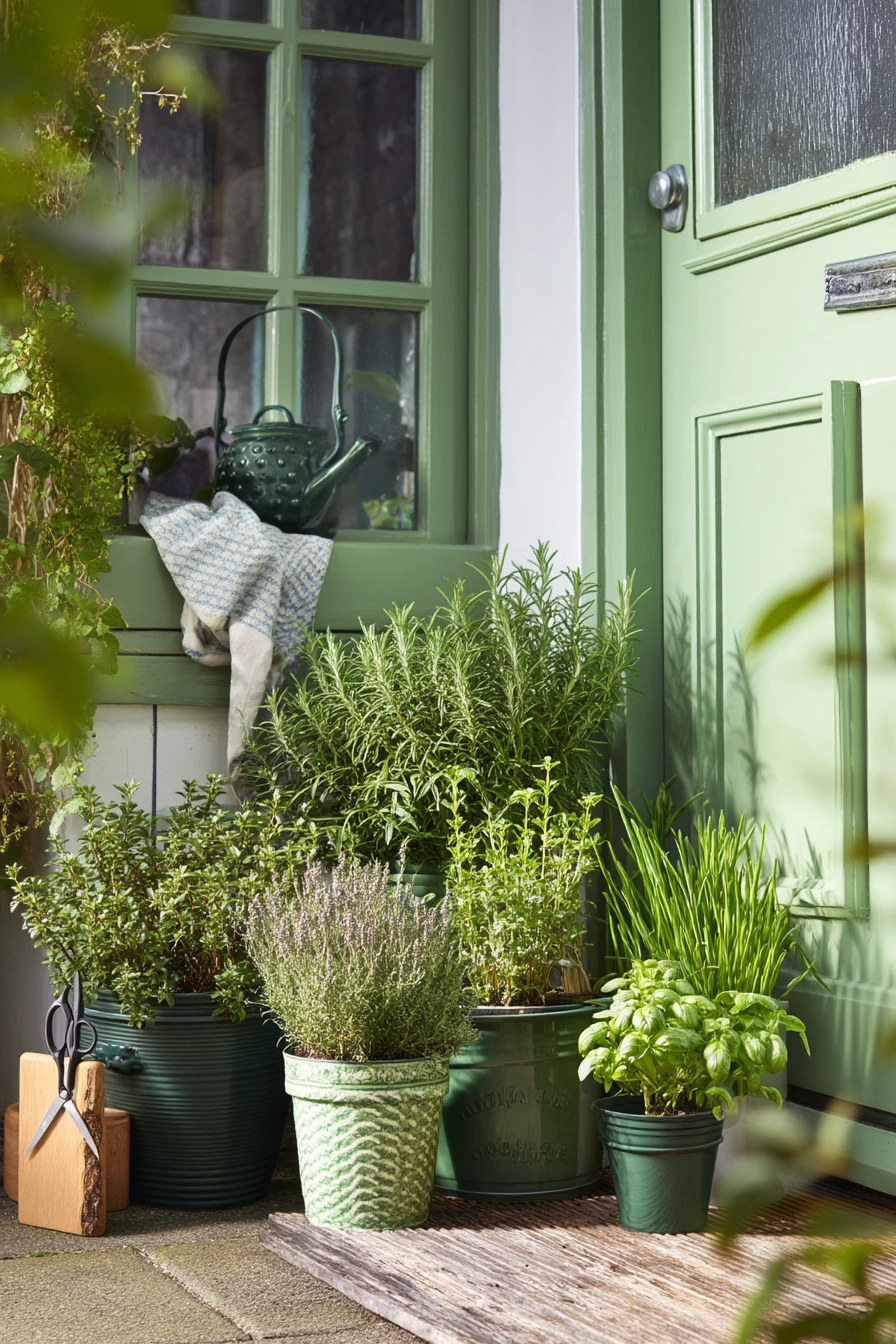
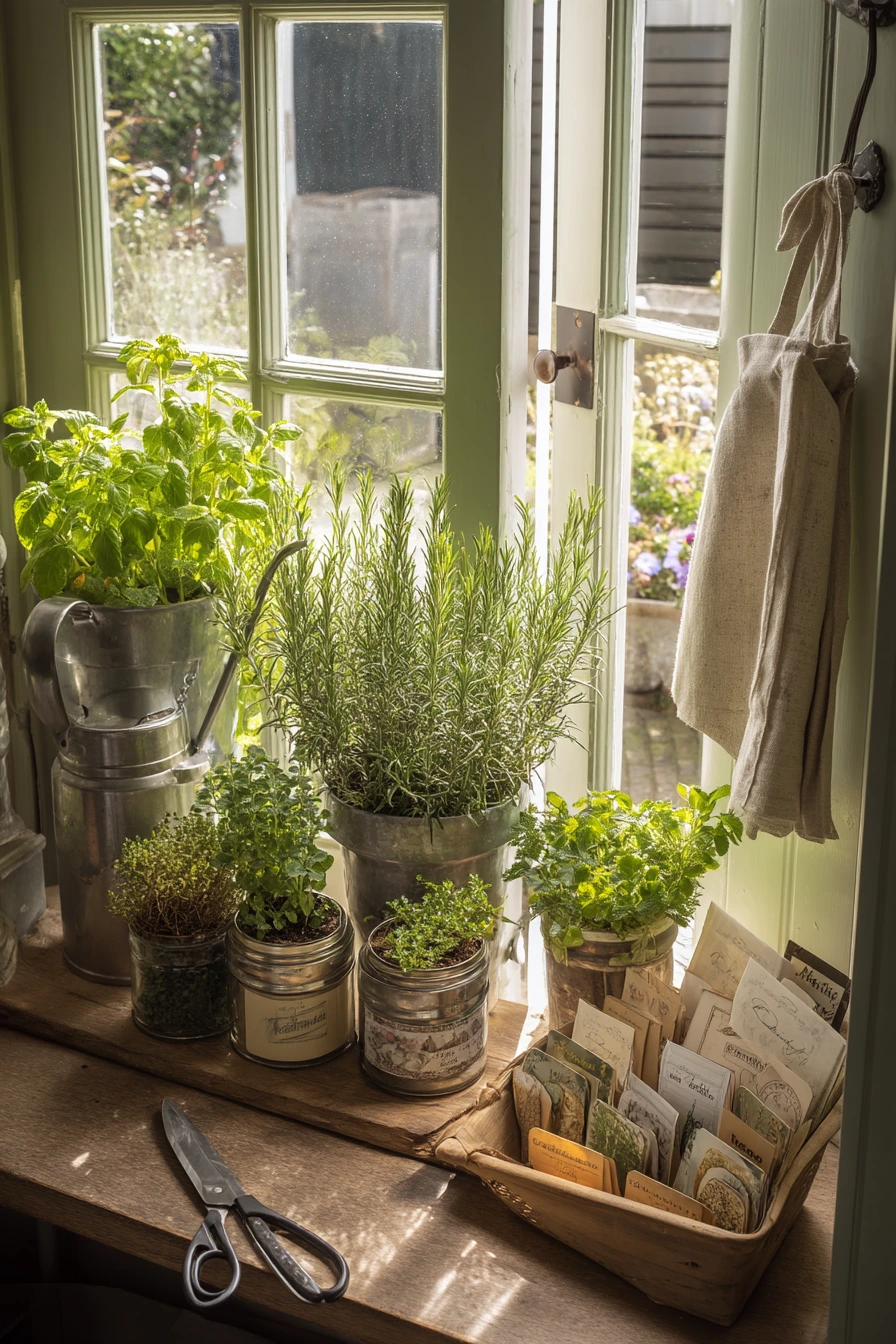
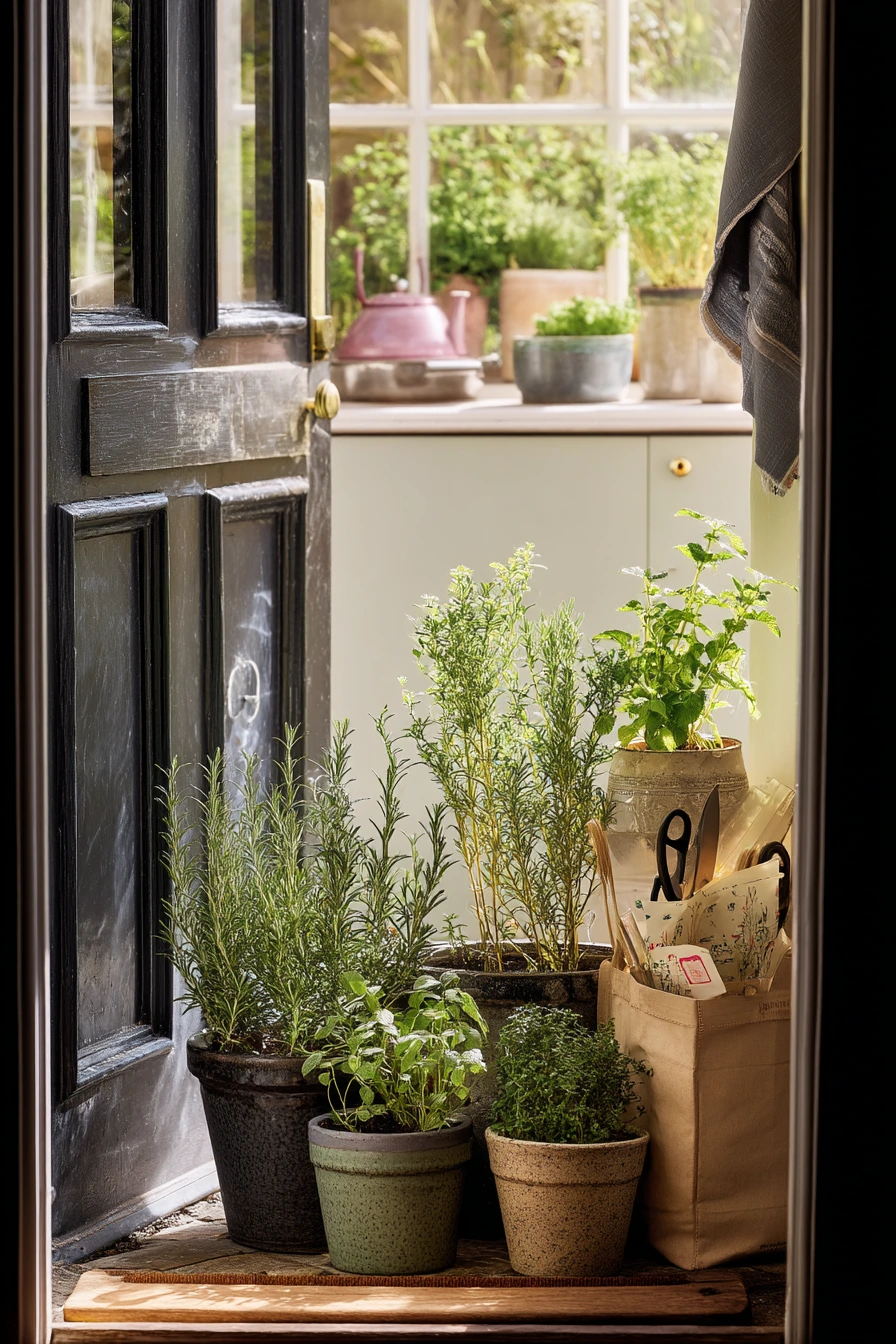
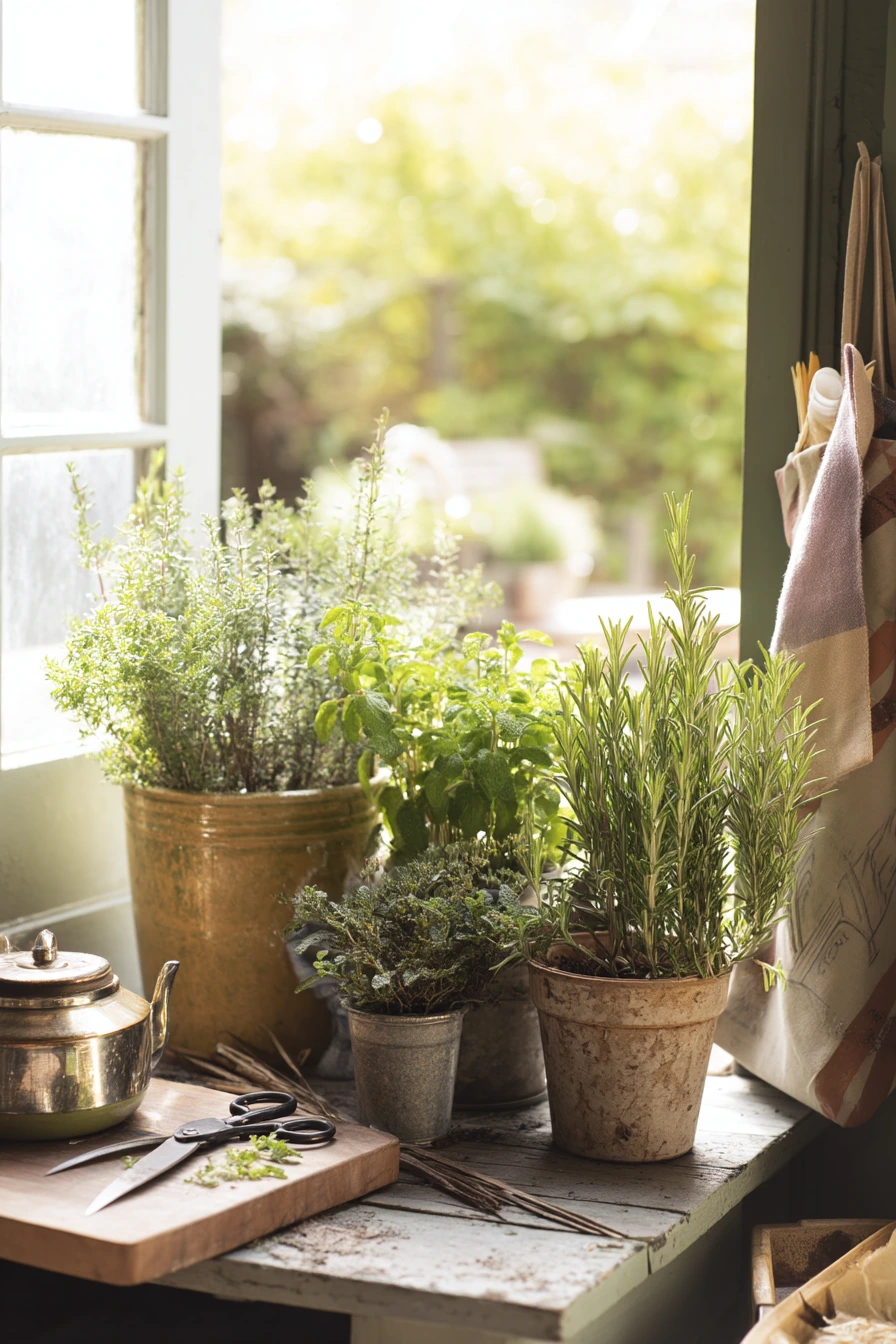
A kitchen-garden doorstep is one of the most useful English garden ideas because you will use it every day. Place mismatched pots of rosemary, thyme, sage, mint, and chives right by the back door so you can snip herbs while cooking. The mixed containers are part of the charm, as long as you repeat a few colors or materials.
Style it like a working space. Keep herb scissors and a small cutting board nearby, and let a dish towel dry on the handle if that is your normal routine. A grocery tote and recipe cards make the scene feel active and help you remember the purpose of the space. If you can see a kettle through the glass, even better, because it connects the garden to the kitchen.
For plant health, match the pot size to the herb. Rosemary and sage need more room and good drainage. Mint should be in its own pot so it does not take over. Water in the morning and avoid soaking the leaves late in the day. Refresh potting mix each spring and add a little compost on top.
- Place the most used herbs closest to the door.
- Use pots with drainage holes and saucers for clean steps.
- Keep mint separate to control spread.
- Label pots with simple tags for quick picking.
- Add one small stool or crate as a pot stand for height.
Pro Design Tip: Group herbs by taste and use, like “roast herbs” (rosemary, thyme, sage) on one side and “fresh herbs” (mint, chives) on the other for faster cooking.
Budget Considerations: Buy one herb plant at a time and propagate from cuttings where possible. Use thrifted pots and plain terracotta, then unify them with one simple paint color.
9 Seasonal Autumn Border with Gathering Basket

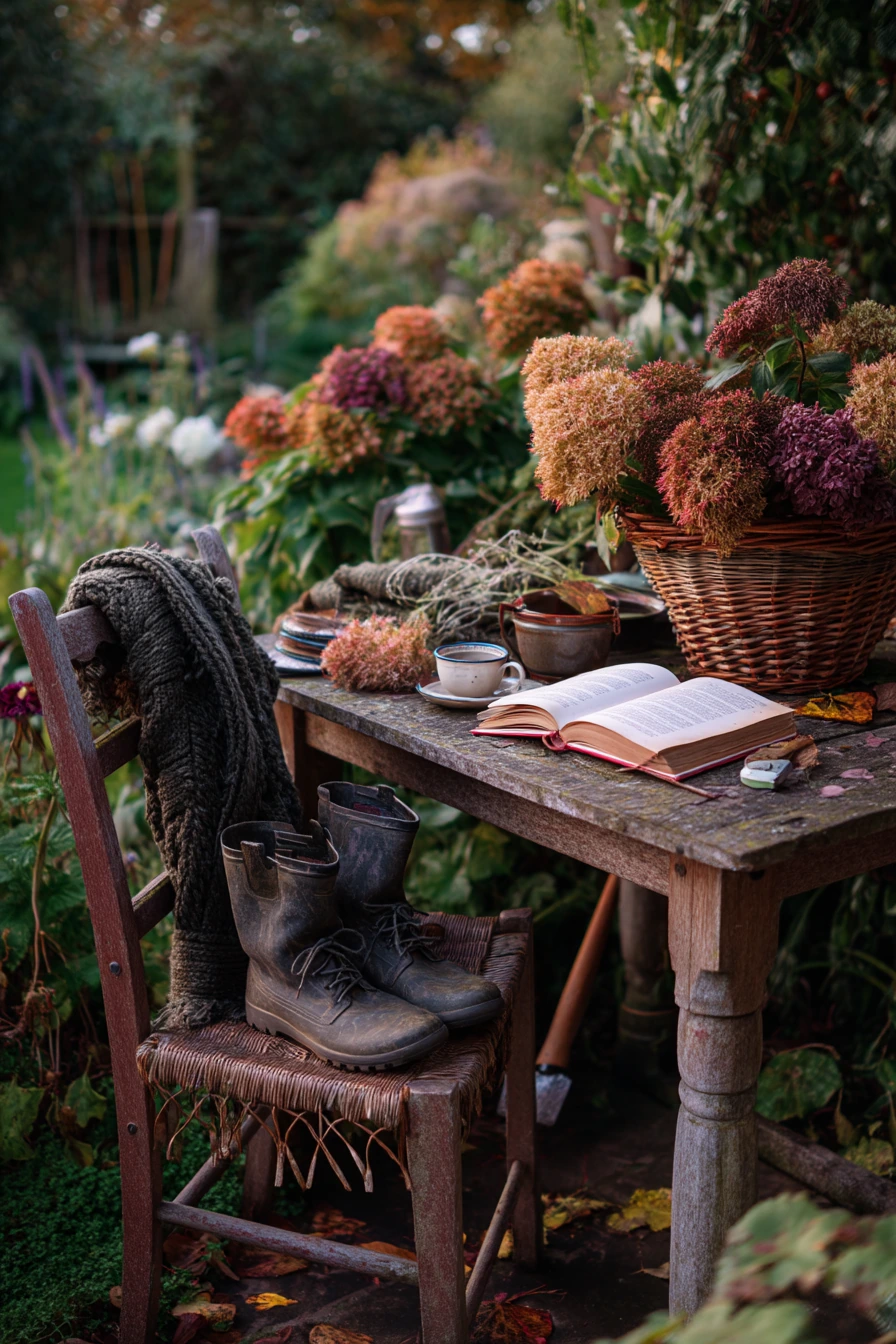
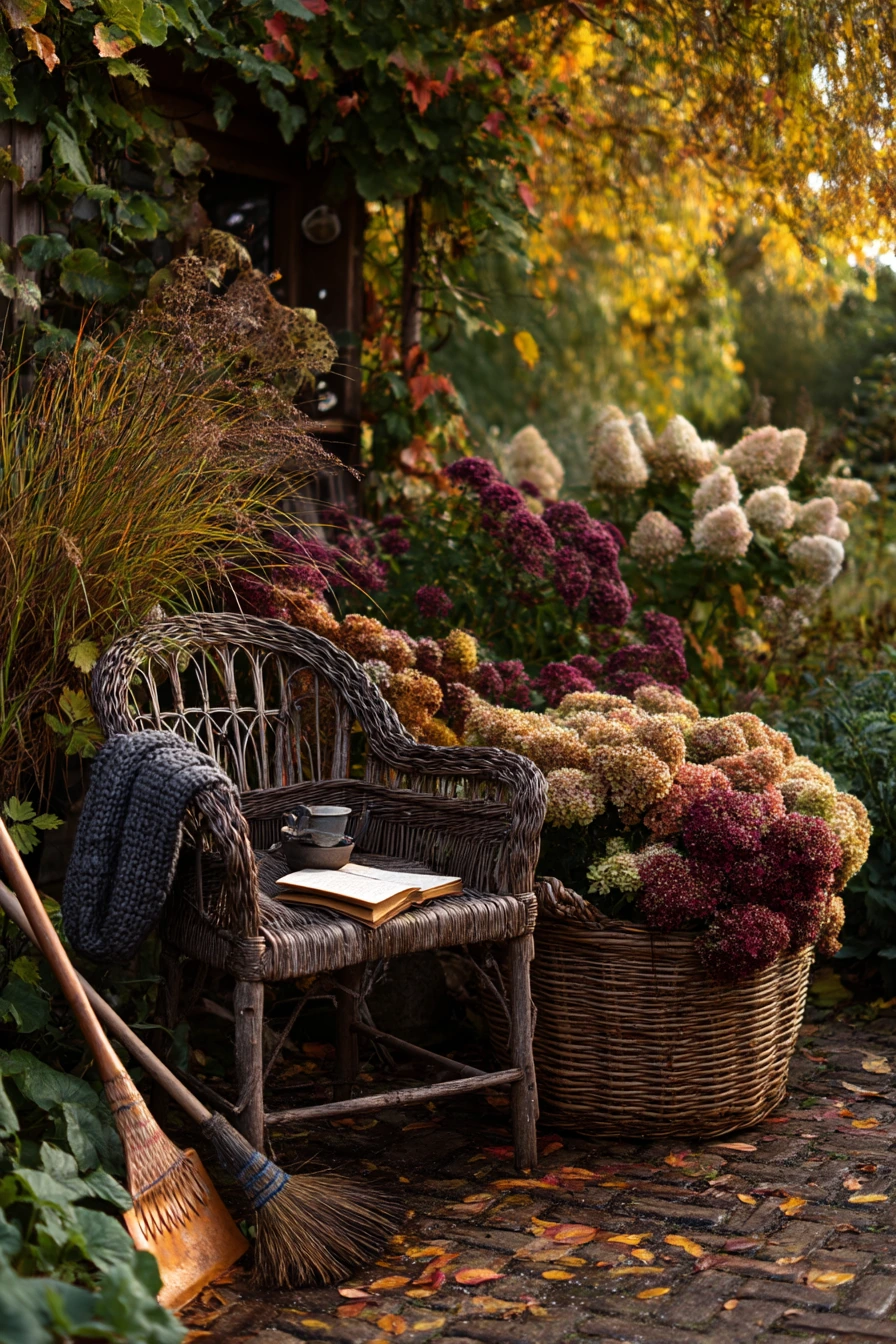
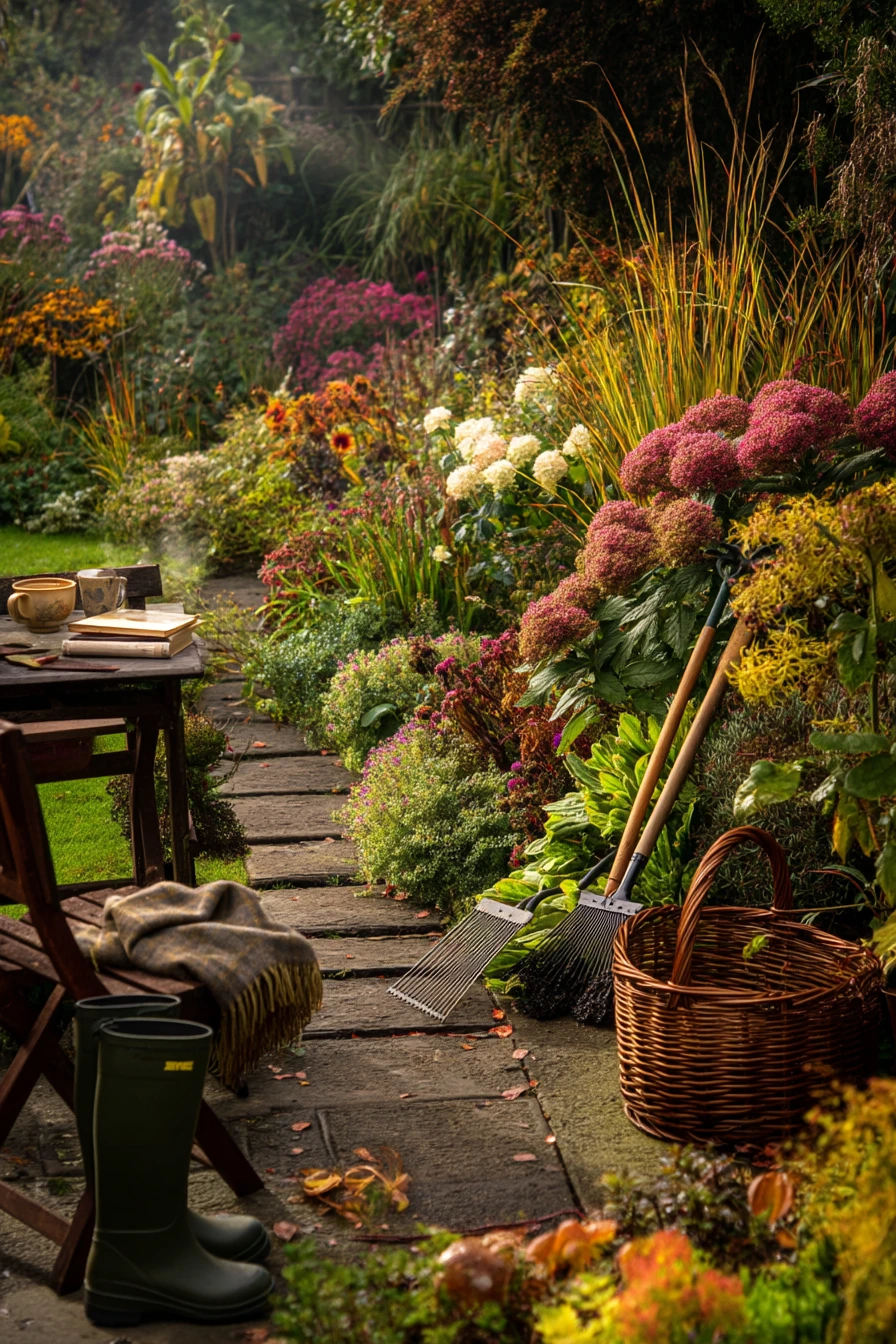
An autumn border proves that English garden ideas are not only about spring. Focus on texture and late color. Sedum, asters, ornamental grasses, rust-red roses, and late hydrangeas carry the garden when days get shorter. The mix looks rich because you have flowers, seed heads, and moving grass all at once.
Make the space feel cozy and lived in. A woven harvesting basket and a dropped leaf rake show the season’s work. Muddy wellies by the patio are normal in fall. Add comfort details too, like a wool scarf on a chair, tea steam on a table, and a gardening book open nearby. These touches help Pinterest readers picture themselves there.
To keep the border looking good into winter, do not cut everything down right away. Leave grasses and seed heads for shape, and tidy only what looks messy or diseased. Add a thin mulch layer after the first frost. If you want more late color next year, plant extra asters and sedum in spring, and consider a few bulbs for early season to balance the garden.
- Plant in layers: grasses at the back, perennials mid, edging plants front.
- Repeat sedum and asters to make color feel steady.
- Let hydrangea heads dry on the plant for winter interest.
- Store tools in one basket so the patio stays tidy.
- Add one outdoor throw or scarf for a warm seating spot.
Pro Design Tip: Use a limited fall palette, like dusty pink, rust, and straw, then add one dark accent, like burgundy roses, to give the border depth.
Budget Considerations: Ornamental grasses and sedum can be divided every few years for more plants. Shop end-of-season sales for perennials and use fallen leaves as free mulch.
10 Shady Woodland Corner for Quiet Retreat
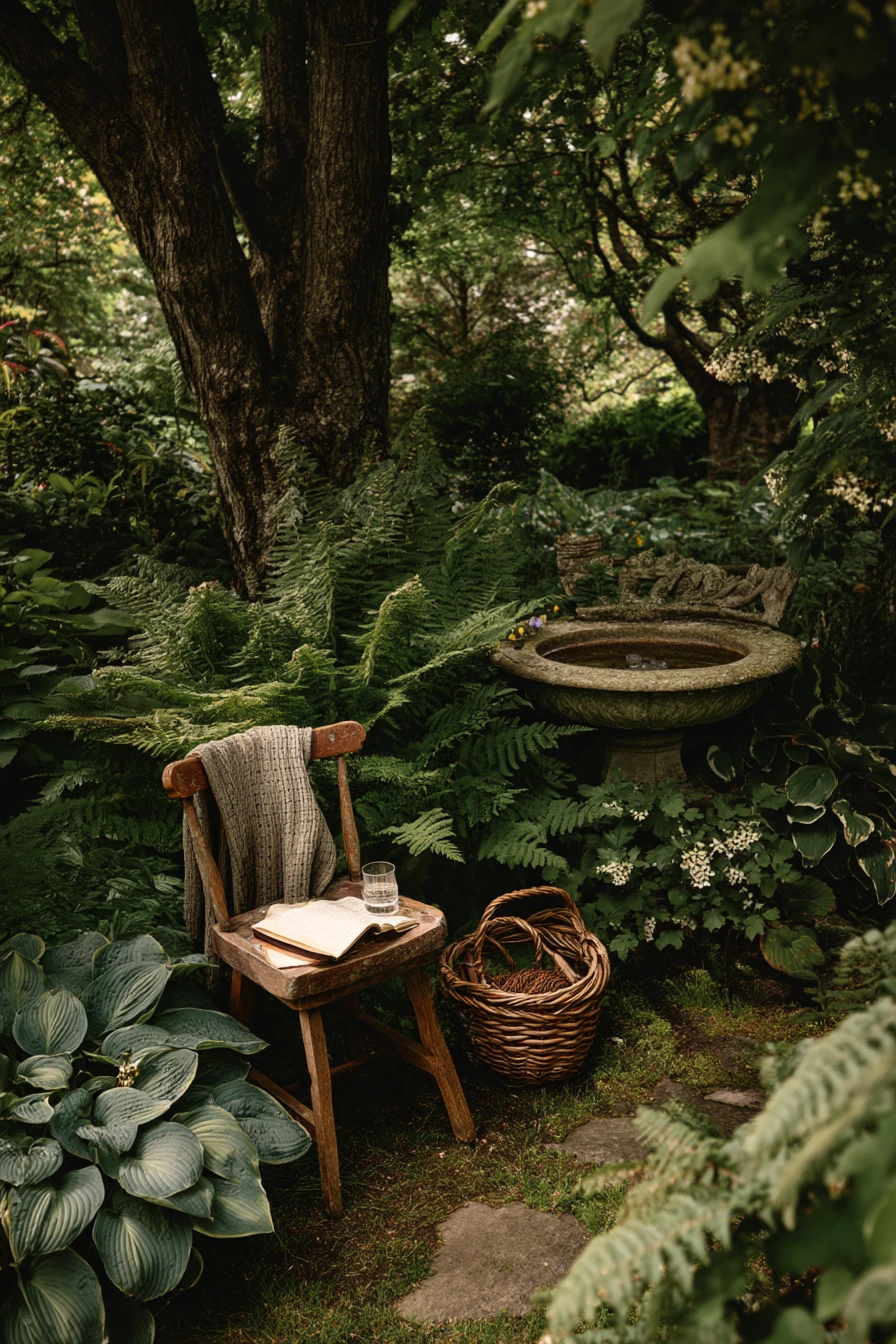
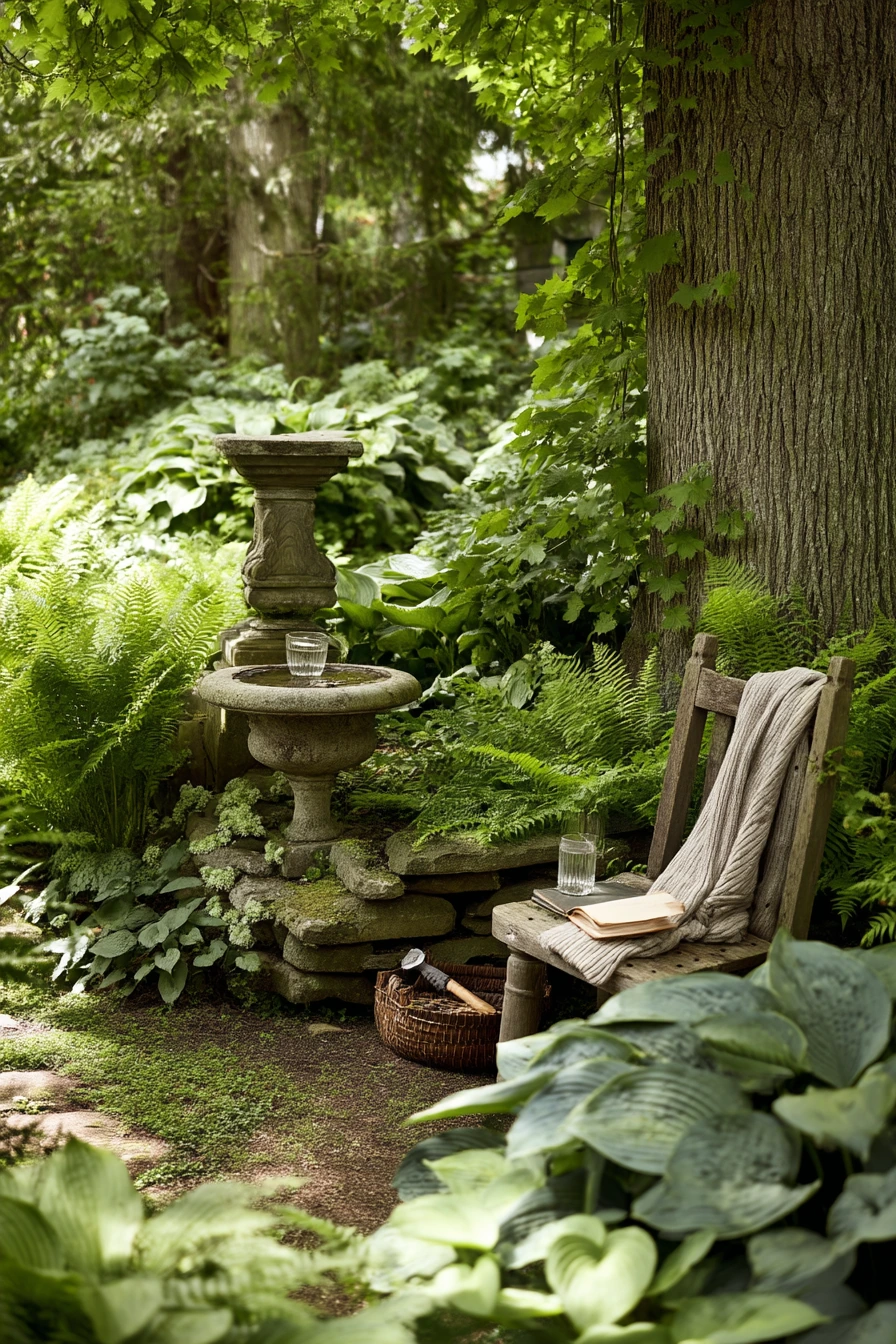
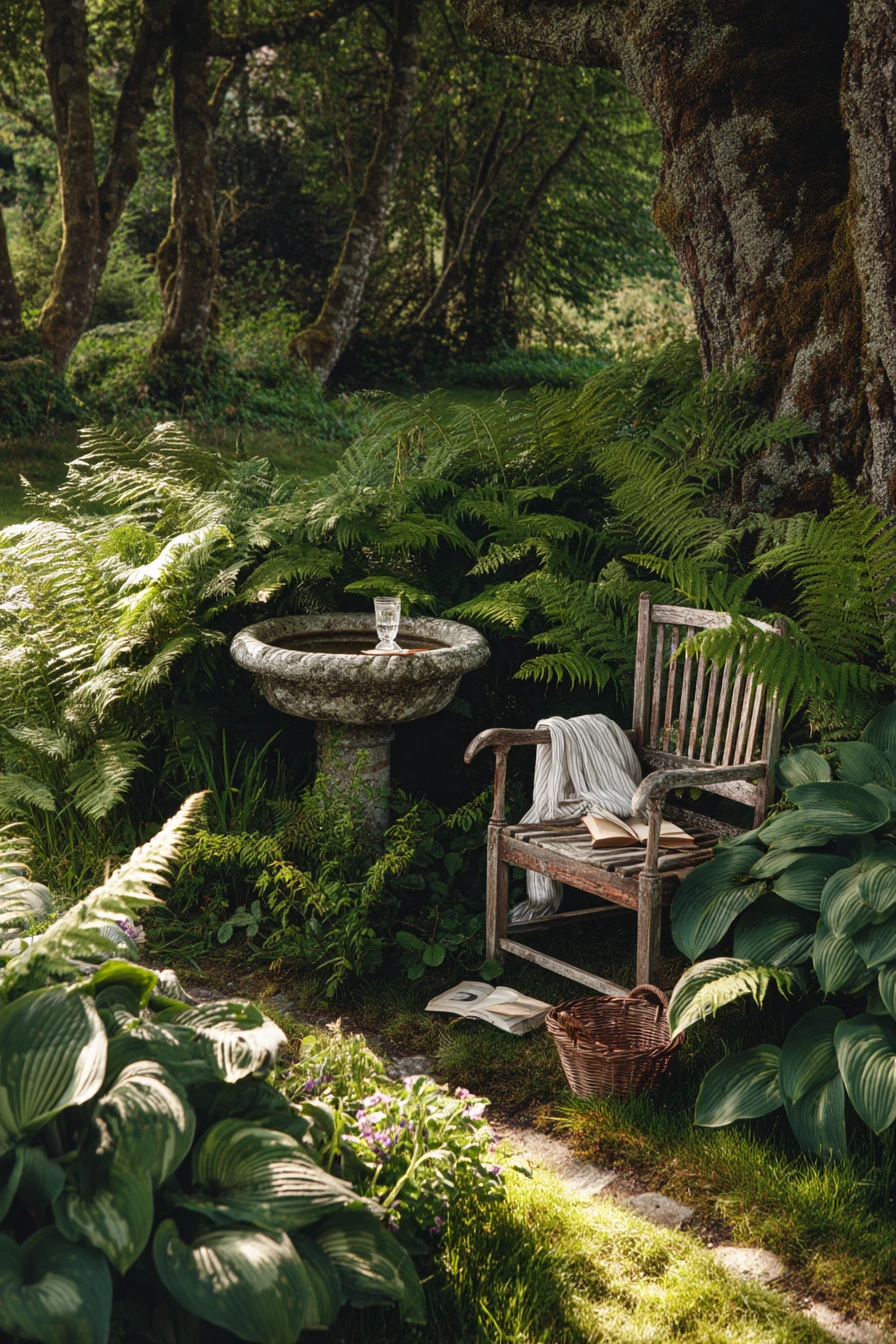
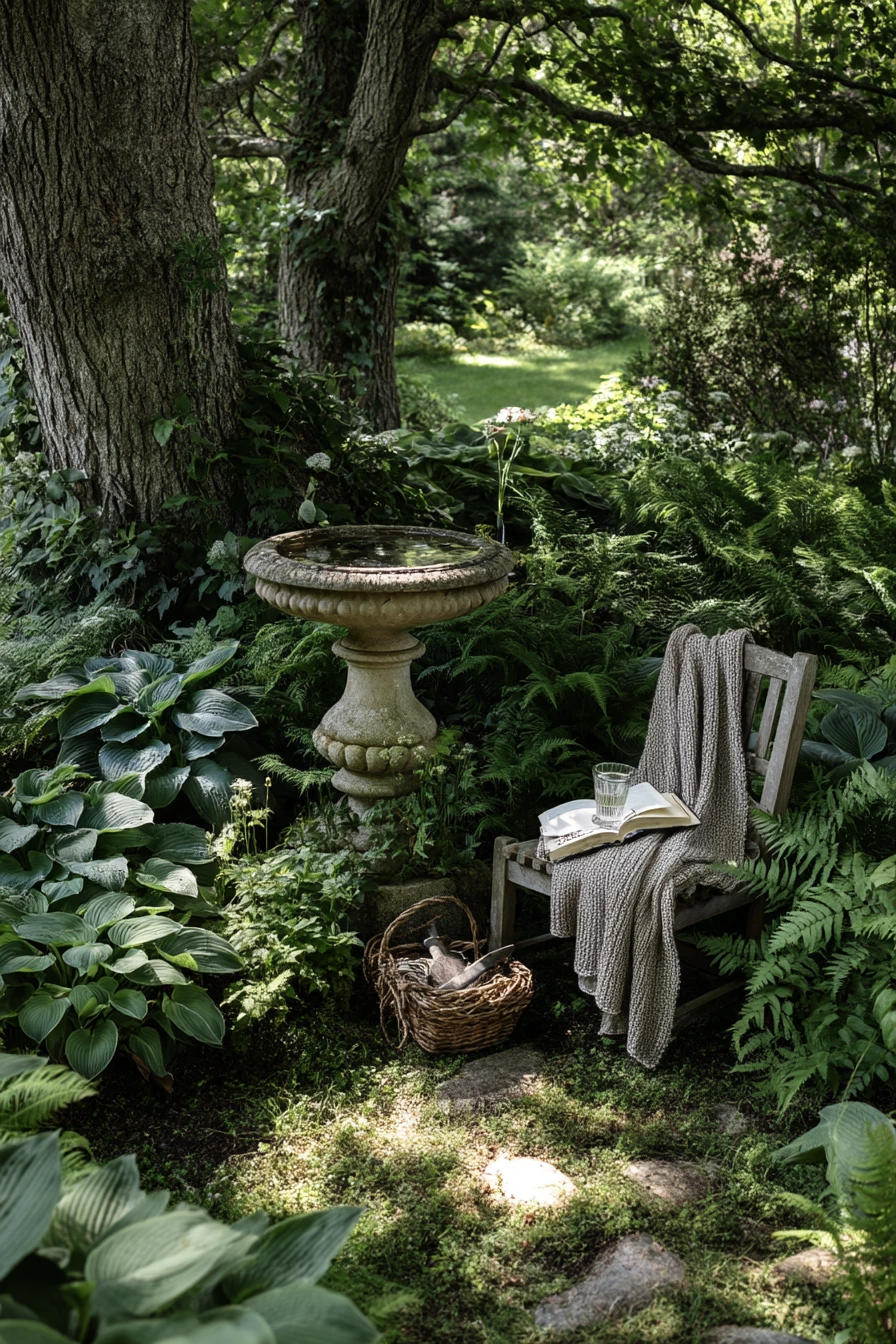
A shady retreat is a calming take on English garden ideas, and it works even when grass struggles. Under mature trees, build layers of hostas, ferns, and hellebores. These plants give you bold leaves, fine texture, and early flowers, all in lower light. Add an old stone birdbath as a focal point to draw the eye.
Make it a place to pause. A weathered teak chair with a folded cardigan, a half-read novel, and a water glass feels natural because it matches how people rest in shade. Keep a small basket of garden twine and secateurs nearby so you can do quick jobs, then sit down again. This balance of work and rest is very English in spirit.
For care, keep the soil healthy because trees compete for water. Add compost in spring and mulch to hold moisture. Water deeply once or twice a week during dry spells instead of little sips every day. If slugs are a problem, choose tougher hosta varieties and keep the area clear of soggy leaf piles near the plants.
- Layer plants by height for a full look in shade.
- Use ferns to fill gaps and soften edges.
- Add a birdbath or small stone feature as a center point.
- Place one chair where you can see the whole border.
- Mulch yearly to help shade plants stay lush.
Pro Design Tip: Mix leaf shapes, like wide hosta leaves with fine fern fronds, so the border looks rich even without many flowers.
Budget Considerations: Shade perennials are easy to divide, especially hostas and hellebores once established. Start with small plants, and use a simple concrete birdbath instead of carved stone.
English garden ideas work best when you mix beauty with daily life. A mug on a step, a basket of tools, and a chair placed in the right spot can make a garden feel real.
Start with one area, like a path, a pot group, or a small border. Build structure with repeats, then add seasonal layers over time.
FAQ
What plants are best for an English cottage garden look? Roses, lavender, foxgloves, delphiniums, hardy geraniums, and herbs are classic choices. Repeat them in groups for a full look.
How do I make a small courtyard feel like an English garden? Use climbers like jasmine on the wall, add layered pots, and keep one small seating area. Repeat materials so it feels planned.
Can I create an English garden on a balcony? Yes. Use railing planters, a trellis for sweet peas, and a few scented herbs. Keep everything in containers with saucers.
How do I keep an English garden from looking messy? Add structure with boxwood or other edging, repeat key plants, and keep paths clear. Light pruning and deadheading help a lot.
What is the easiest budget upgrade for an English-style front garden? Add a simple gravel path and a line of lavender. Use seeds like cosmos for low-cost height and color.
What works in shade if I want the English garden style? Hostas, ferns, and hellebores do well under trees. Add a focal point like a birdbath and mulch to hold moisture.
Save the ideas that match your space, then try one change this week. Small steps add up, and the garden will look better each season.