
DIY garden ideas can turn a plain patio, balcony, or side yard into a space you use every day. You do not need a big budget or a perfect yard. You just need a few smart choices that fit your home and your routine.
This guide covers simple projects like a cedar raised herb bed by the kitchen door, renter-friendly hanging planters, a garage potting station, and a small pollinator corner. Each idea comes with practical steps, styling tips, and ways to keep the setup easy to maintain.
You will also see how to use everyday items, like terracotta pots, crate shelves, bamboo screens, and upcycled pallet planters. These are the kinds of details that make a garden feel real, not staged.
If you are coming from Pinterest, you can use these sections like a checklist. Pick one small project, gather supplies, and build a garden that looks good and works well for your space.
1 Raised Bed Herb Patch by the Kitchen Door

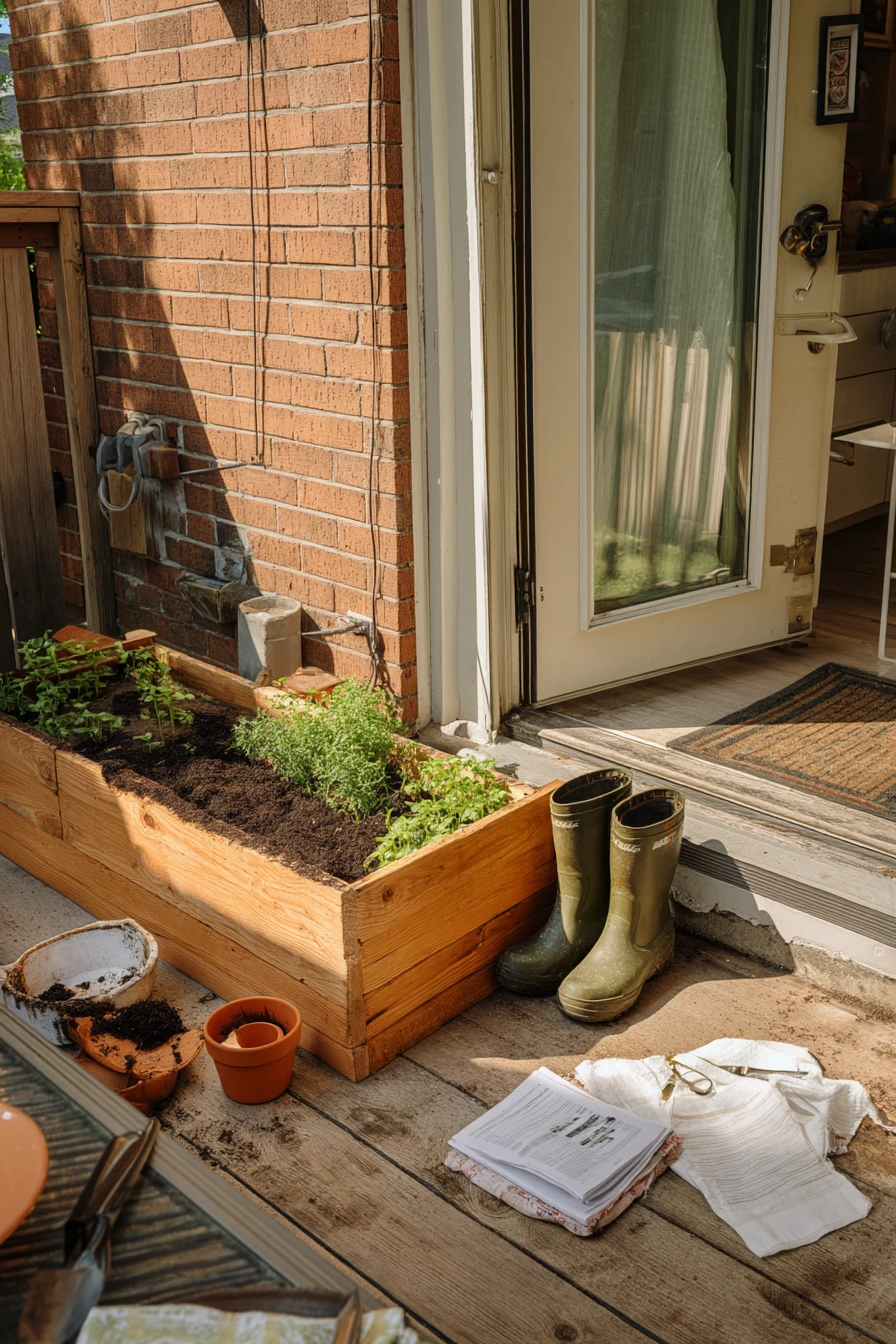
A cedar raised herb bed right by the kitchen door is one of the most useful diy garden ideas. When basil, thyme, and mint are close to the house, you will actually use them. Place the bed beside the step where you already walk each day. Keep a trowel and a folded tea towel nearby so you can work fast and head back inside without a mess.
Start with a simple rectangle raised bed, about 12 to 18 inches tall, so it drains well and is easy to reach. Fill it with fresh soil mixed with compost. Plant herbs in loose groups so you can harvest without crushing stems. Mint spreads, so tuck it into a terracotta pot and sink the pot into the bed to keep it contained.
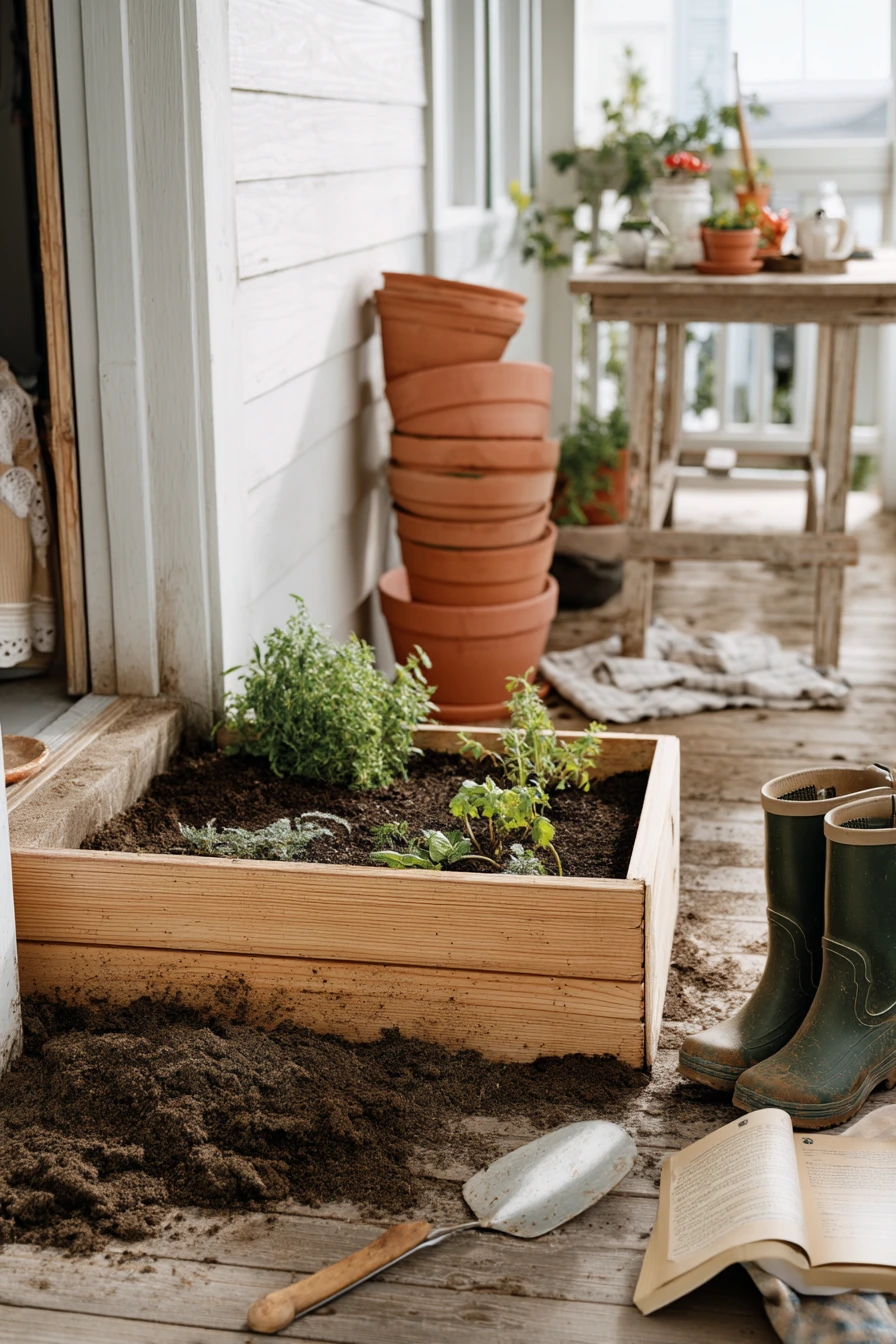
For styling, stack extra terracotta pots near the bed and keep a watering can close by. A small bistro table by the door can hold a cookbook and grocery list so the garden connects to your cooking. Soft window light from the kitchen makes this spot feel warm in the morning and calm in the evening.
- Set the bed where it gets at least 6 hours of sun.
- Use cedar or untreated wood to avoid chemical leaching.
- Label herbs with simple plant markers to save time.
- Water deeply, then let the top inch of soil dry out.
- Trim herbs often to keep them full and not woody.
Pro Design Tip: Repeat one material in small ways, like matching cedar bed boards with a cedar stool or small shelf, so the area looks planned without needing more decor.
Budget Considerations: Cedar costs more than pine; if you need to save money, use untreated pine and line the inside with a safe garden barrier, then plan to replace boards later.
2 Tiny Balcony Vertical Garden for Renters
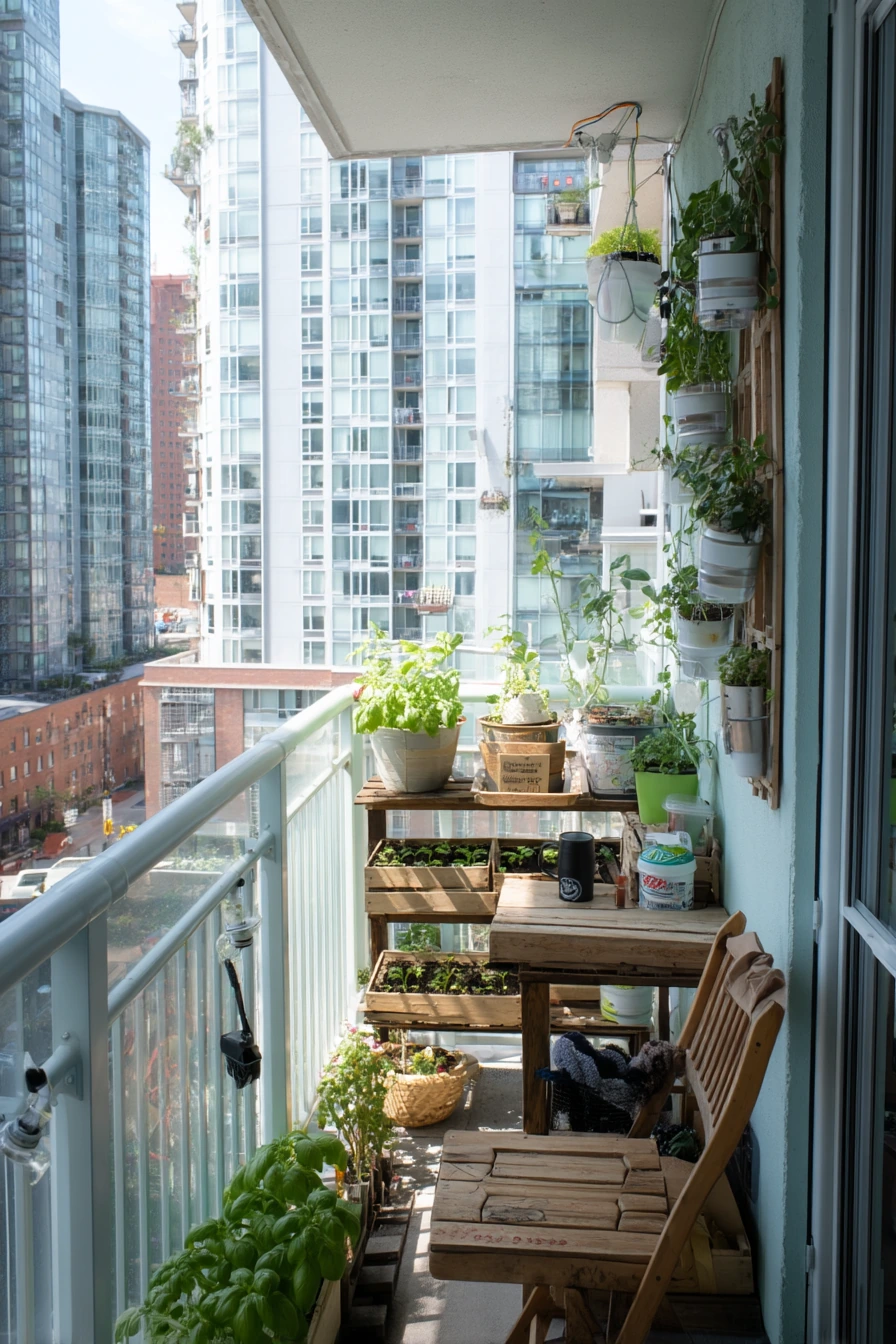
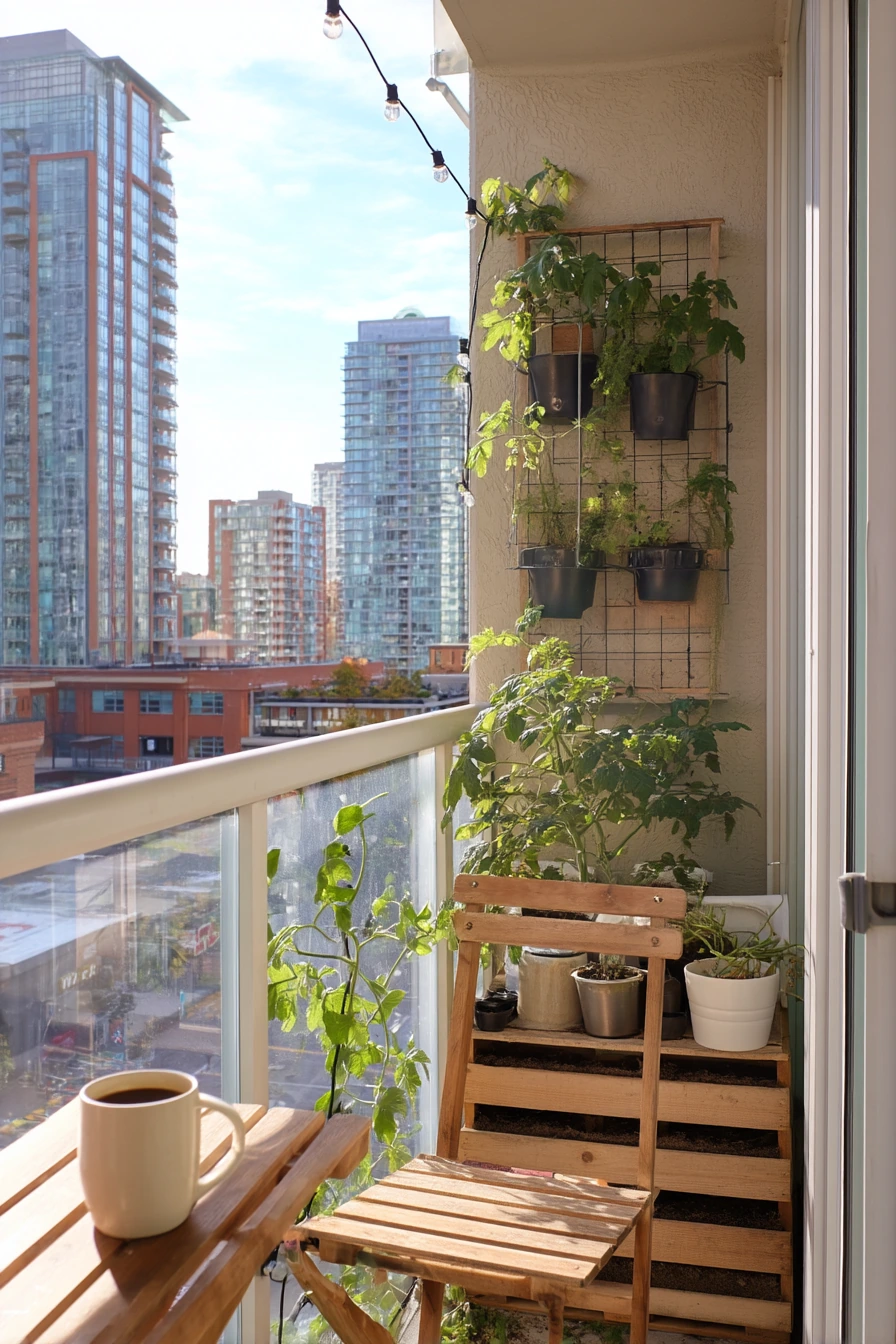
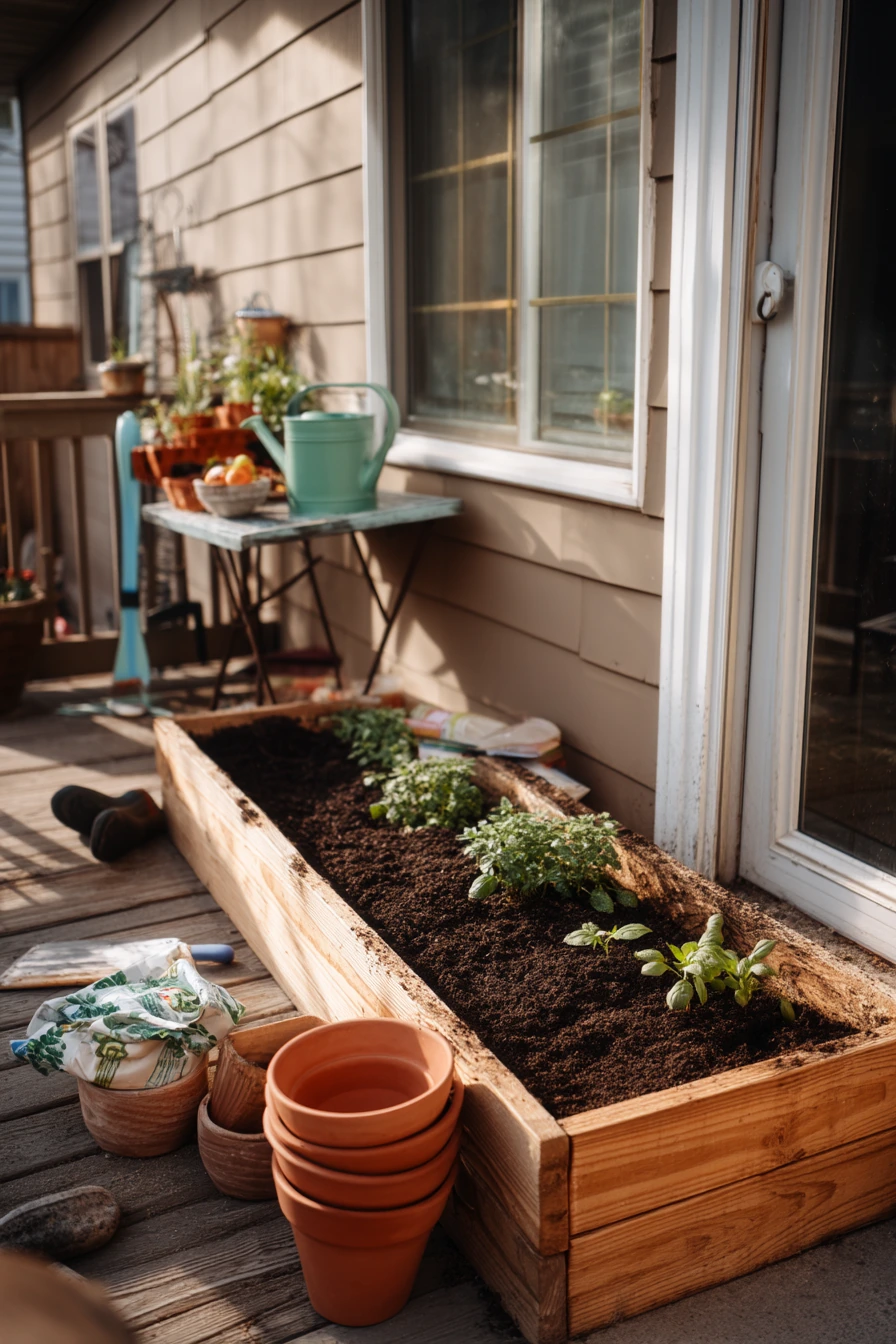
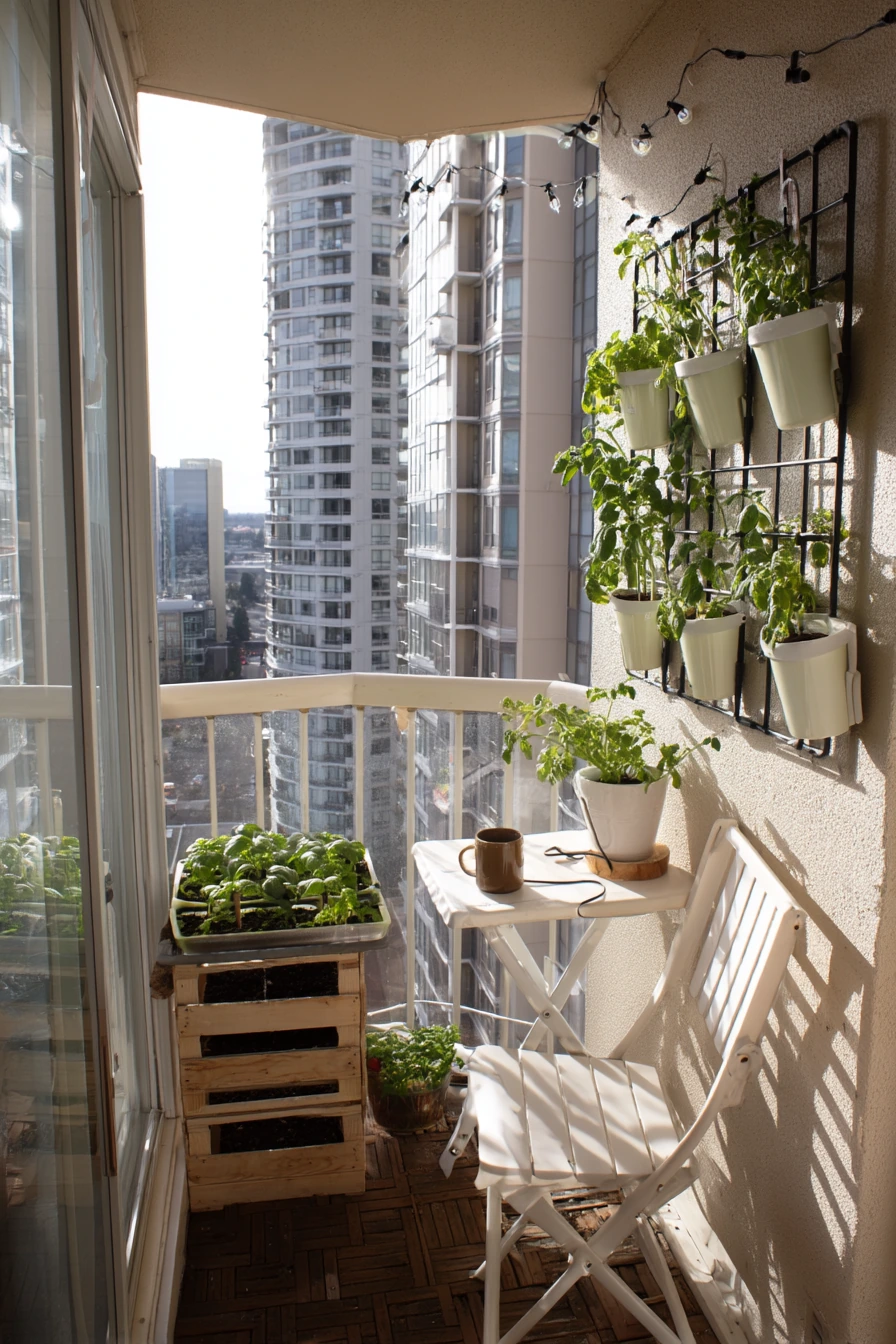
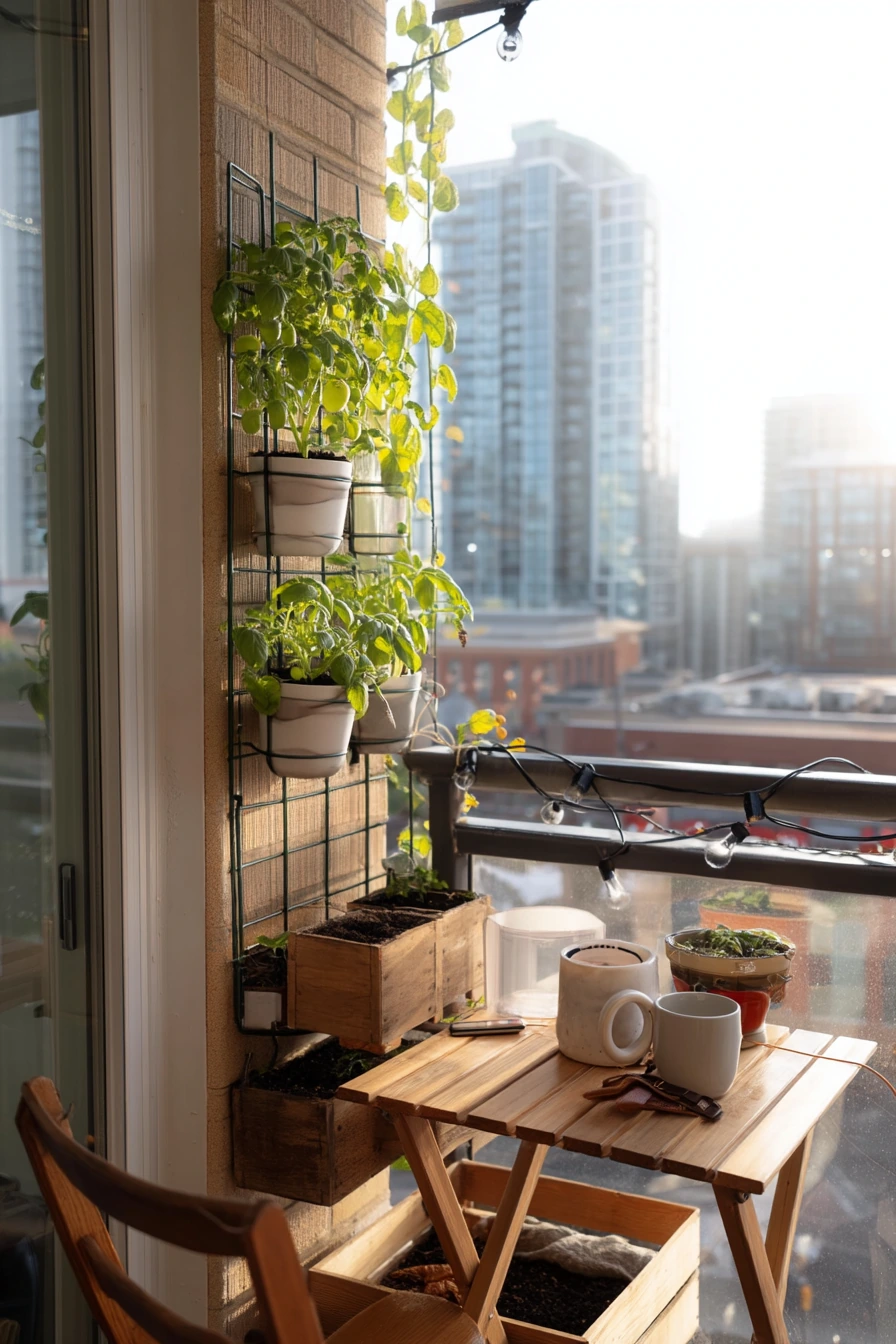
A compact apartment balcony can hold a real diy garden if you build upward. Hanging planters, a slim wall trellis for cherry tomatoes, and crate shelves for seedlings use space that would otherwise be empty. Keep the setup renter-friendly by using hooks that clamp to railings, tension rods, or freestanding racks instead of drilling.
Pick lightweight containers so you can move them for sun and wind. Use potting mix that drains well, and add saucers or a tray to protect the balcony floor. Train cherry tomatoes on a narrow trellis and tie stems with soft garden twine. Place seedlings on crate shelves so they get morning light but stay off the hot ground.
For styling, string lights can stay unplugged in daylight, but they still add texture in photos. A mug on the railing and one gardening glove draped over a pot makes the space feel lived-in. Keep a phone charger coiled by the chair so the balcony becomes a small daily break spot, not just a plant shelf.
- Choose 3 to 5 plant types so care stays simple.
- Grow compact edibles like cherry tomatoes, basil, and lettuce.
- Use self-watering planters if you forget to water.
- Group pots by sun needs, not by size.
- Secure tall plants so wind does not tip them over.
Pro Design Tip: Use one color family for planters, like black, terracotta, or white, and let the green leaves be the main contrast for a clean look in a small space.
Budget Considerations: Trellises and hanging hardware add up; start with one sturdy freestanding rack and add planters over time as you find deals and secondhand options.
3 Weekend Potting Bench in the Garage

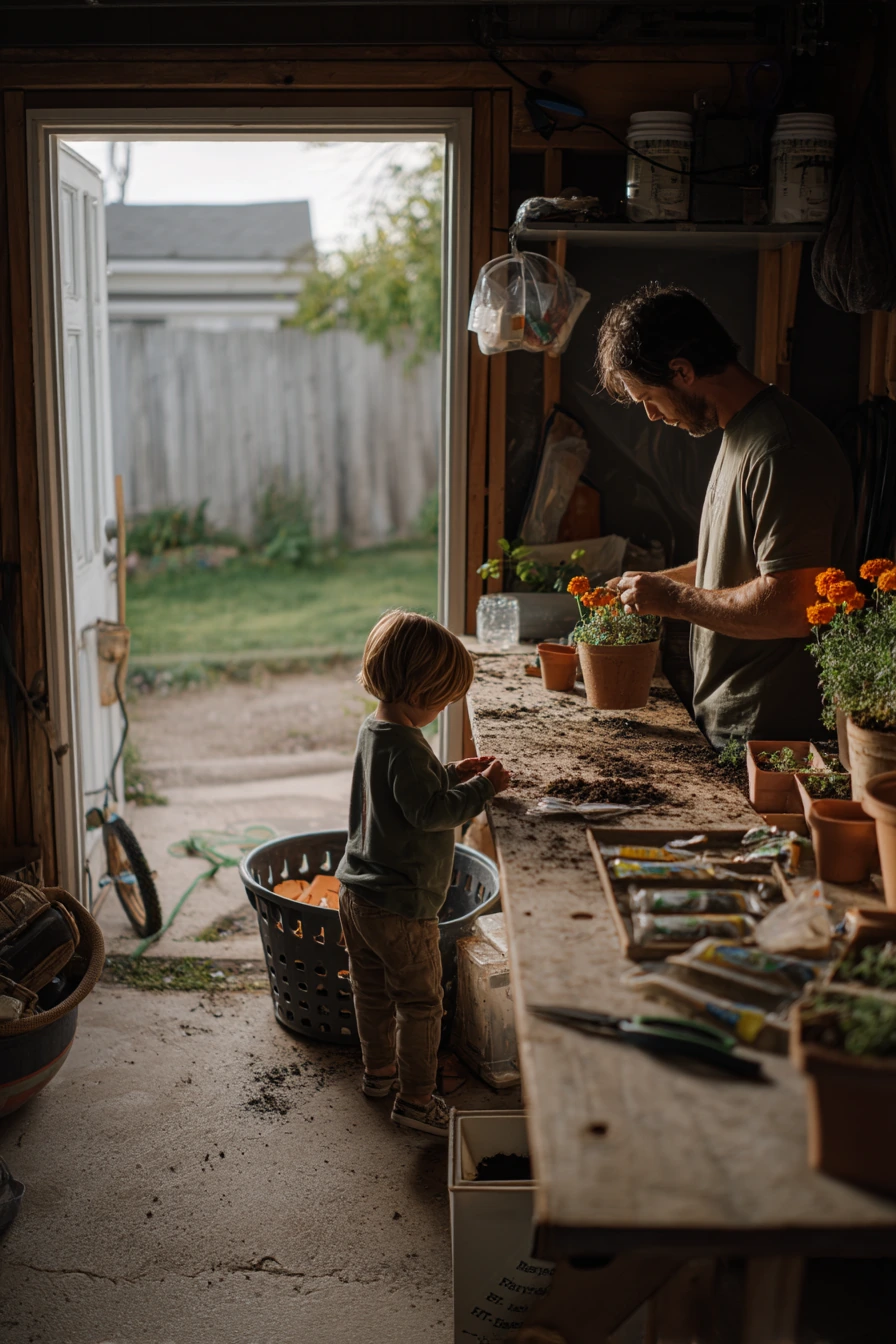
A lived-in garage potting station makes diy garden ideas easier to stick with, especially with kids. A worn workbench is perfect for repotting marigolds and starting small projects. Keep peat-free soil, seed packets, scissors, and clay pots in easy reach so you can work in short sessions and clean up fast.
Set up the station like a simple workflow. Store soil in a lidded bin to control dust and pests. Keep a small hand brush and a scoop next to it. Use a tray or an old baking sheet under pots to catch spills. If you garden with a child, create a low box with kid-safe tools and a small watering bottle so they can help without grabbing sharp items.
For styling, do not overdo it. The charm is in the real routine. A toy basket near the open door, a water glass half full beside a house key tray, and faint dirt marks on the floor make the space feel honest. Add one hook for aprons or gloves and one shelf for labeled jars of seeds so it still looks tidy.
- Hang tools on a pegboard to clear the bench surface.
- Use clay pots for airflow, or plastic for lighter weight.
- Keep plant labels and a marker in one cup.
- Place a small trash bin nearby for old soil and tags.
- Open the door for fresh air when mixing potting mix.
Pro Design Tip: Set up “zones” on the bench, like dry supplies on one side and wet work on the other, so your tools stay cleaner and the station stays usable.
Budget Considerations: A new workbench can be pricey; a solid secondhand table or an old desk works well, and you can add a cheap plastic mat under it to protect the floor.


4 Back Steps Pollinator Corner


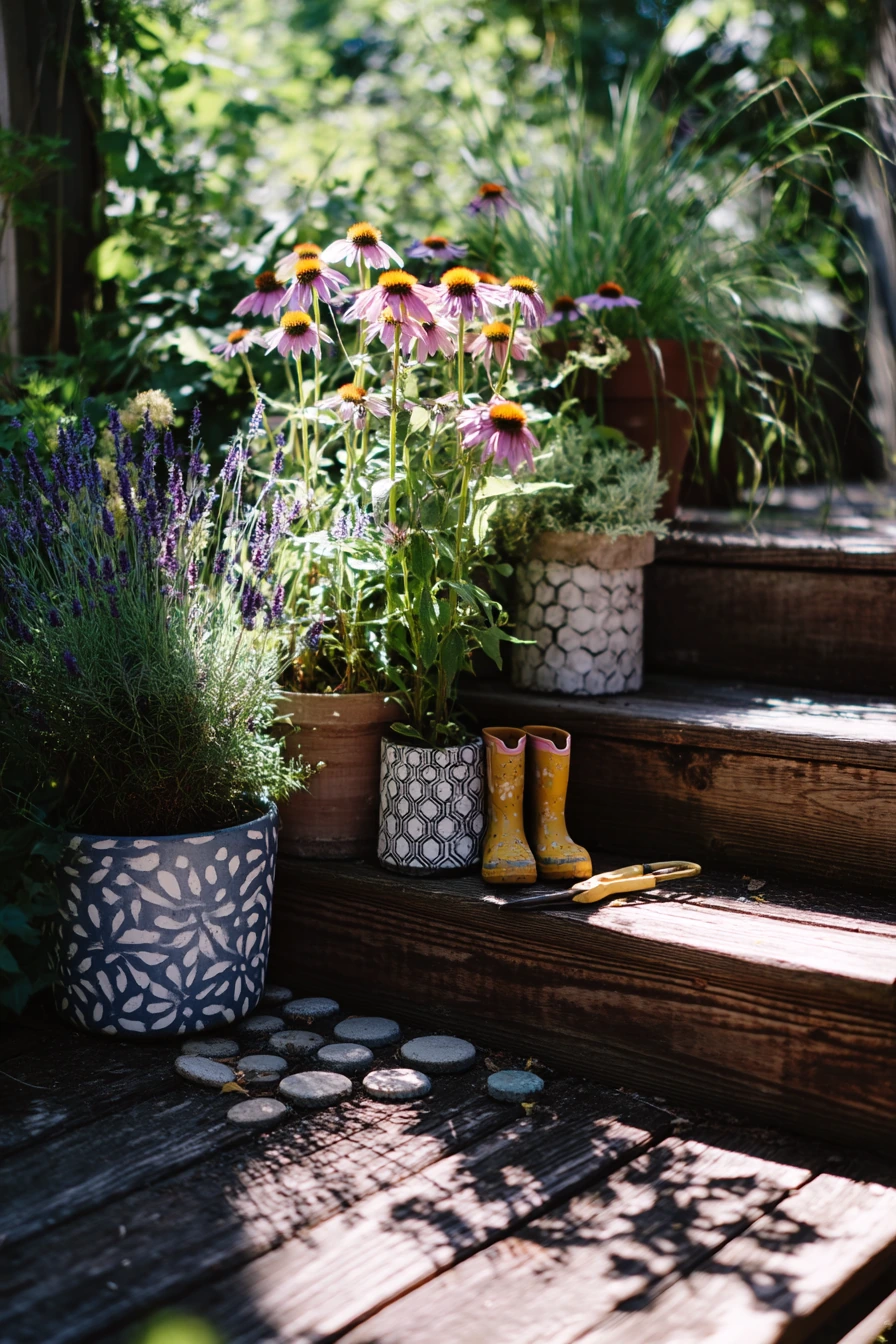
A small backyard corner can become a pollinator garden even if you do not want to dig up the lawn. Use mismatched containers filled with lavender, coneflowers, and bee balm, then connect them with a simple diy pebble path. This is a good weekend project that adds color and helps bees and butterflies.
Start by placing containers beside wooden steps or along weathered decking where you can see them. Choose pots with drainage holes and use a gritty potting mix so roots do not sit in water. Add a few taller plants at the back and shorter flowers in front to make the corner look full. Painted stone markers help you remember what you planted and make the garden feel personal.
For styling, use what you already have. Leave pruning shears resting on the step when you take photos, and keep a garden magazine with folded pages nearby for a cozy, real-life touch. The pebble path can be edged with scraps of wood or stones you find around the yard. Delicate plant shadows across the deck make the whole corner feel calm at noon light.
- Pick flowers that bloom at different times for longer color.
- Add a shallow water dish with stones for pollinators to land.
- Use containers of different heights for a layered look.
- Deadhead spent blooms to keep plants flowering.
- Skip pesticides so the garden stays pollinator-safe.
Pro Design Tip: Repeat the same pebble color in all path sections so the corner reads as one “room,” even when the pots do not match.
Budget Considerations: Nursery perennials can cost more upfront; buy smaller starter plants or swap divisions with neighbors, and use basic black nursery pots hidden inside larger containers.

5 Shaded Side Yard Salad Garden
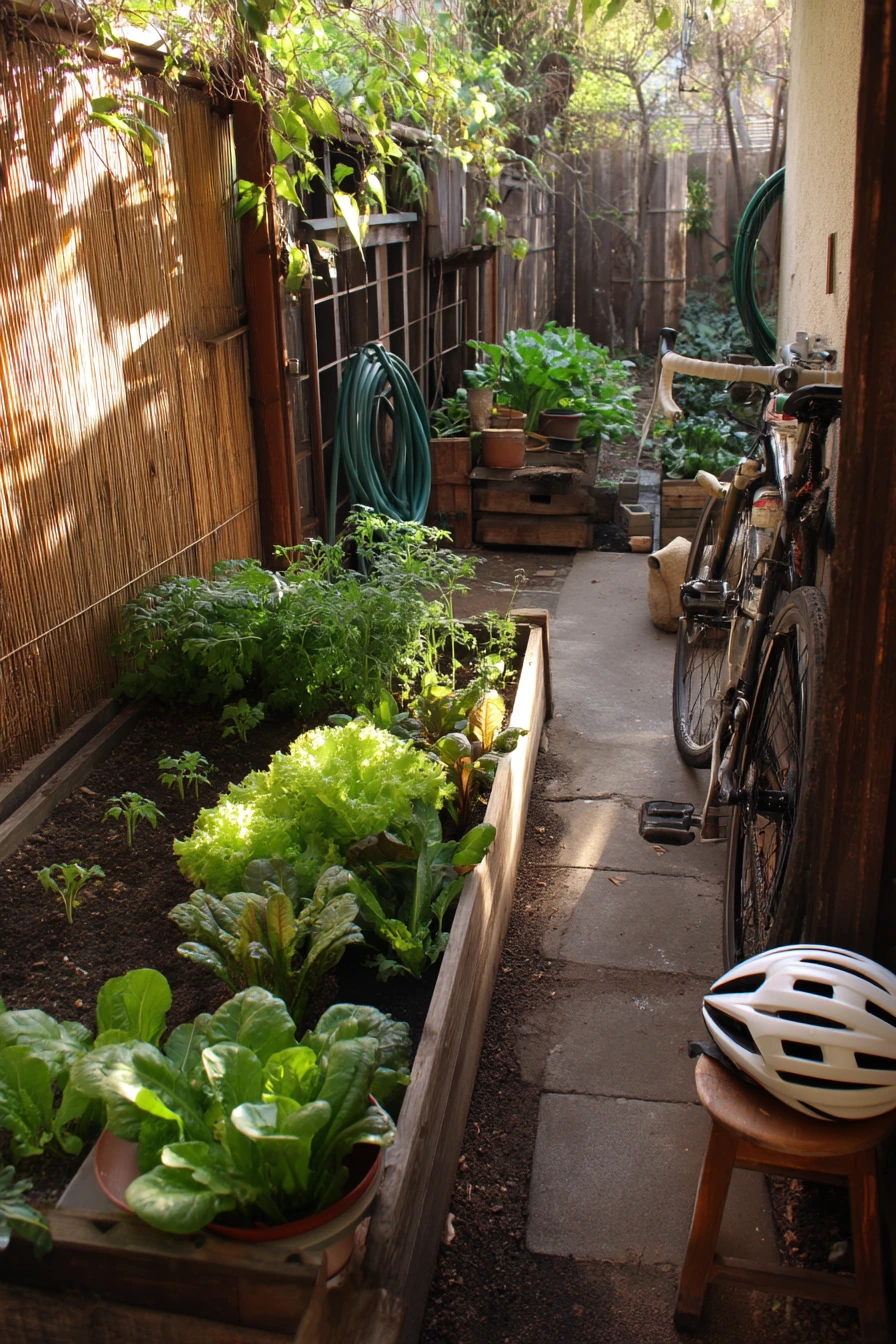
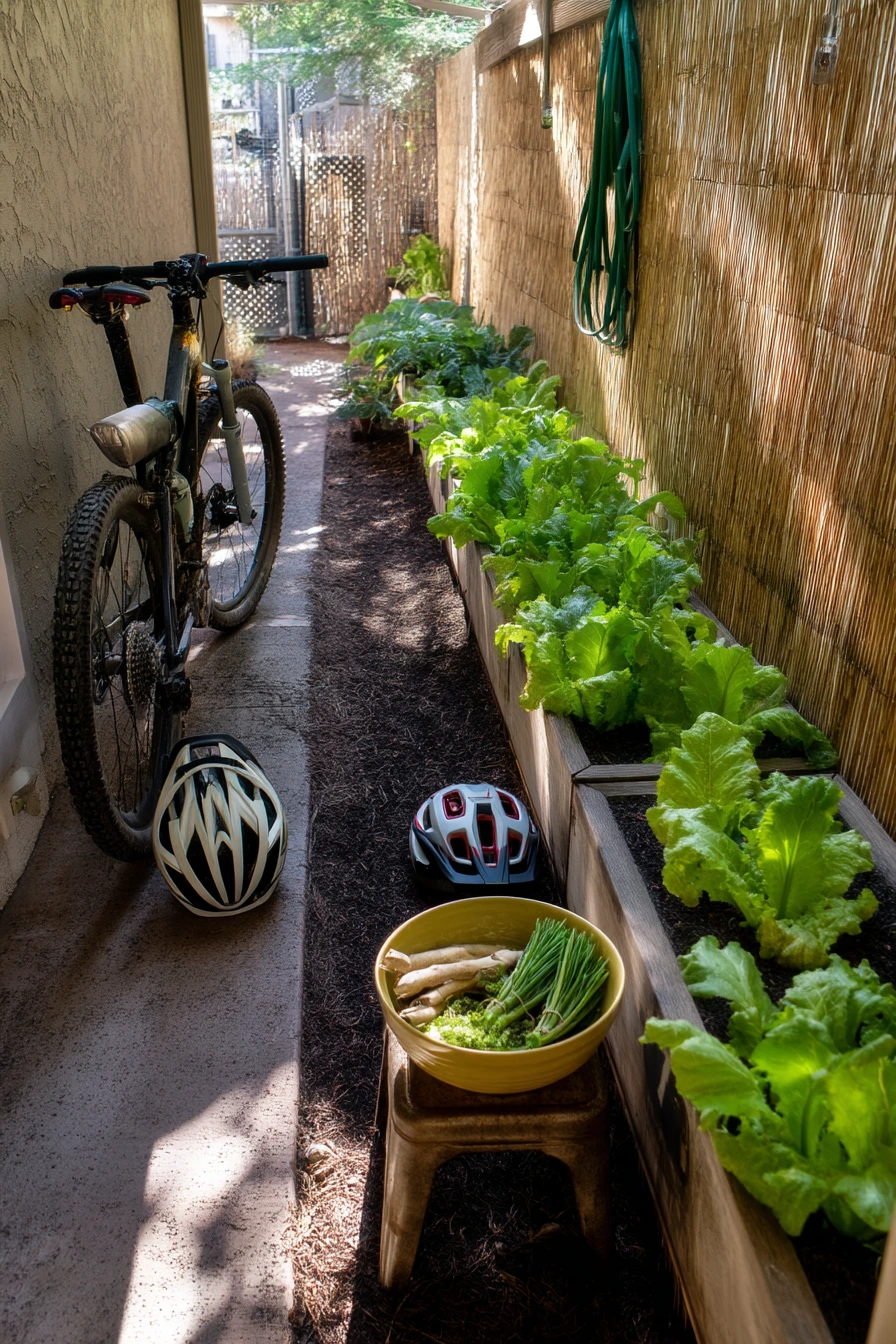
A narrow side yard can grow a lot of food with long planters and a simple bamboo screen. This is one of the most practical diy garden ideas for families who cook at home. Lettuce, chard, and scallions grow well in tight spaces and are easy to harvest a little at a time.
Set planters along the wall or fence where they get steady light. A bamboo screen gives privacy and soft shade, and it also helps the space feel finished. Use a hose coiled near the wall so watering is quick. If you have a gate, plan a clear walking path so you can carry a bowl of harvested greens without bumping into pots.
For styling, keep it simple and clean. A small stool can hold a bowl of fresh greens and doubles as a harvest station. Add one hook for a bicycle helmet or garden apron to make use of the wall. If you have pets, expect muddy paw prints near the gate and design for it with a washable mat or a strip of gravel.
- Choose long planters at least 10 to 12 inches deep.
- Plant in rows so harvesting is fast and neat.
- Stagger sowing lettuce every 2 weeks for steady salads.
- Mulch lightly to keep soil from drying out.
- Use a simple drip line if you travel often.
Pro Design Tip: Use the bamboo screen as a visual backdrop and keep planter colors neutral so the greens look brighter and the narrow space feels wider.
Budget Considerations: Custom planters can be expensive; use inexpensive trough planters or build simple boxes from fence pickets, then seal the outside for longer life.


6 DIY Fairy Light Pergola for Summer Nights
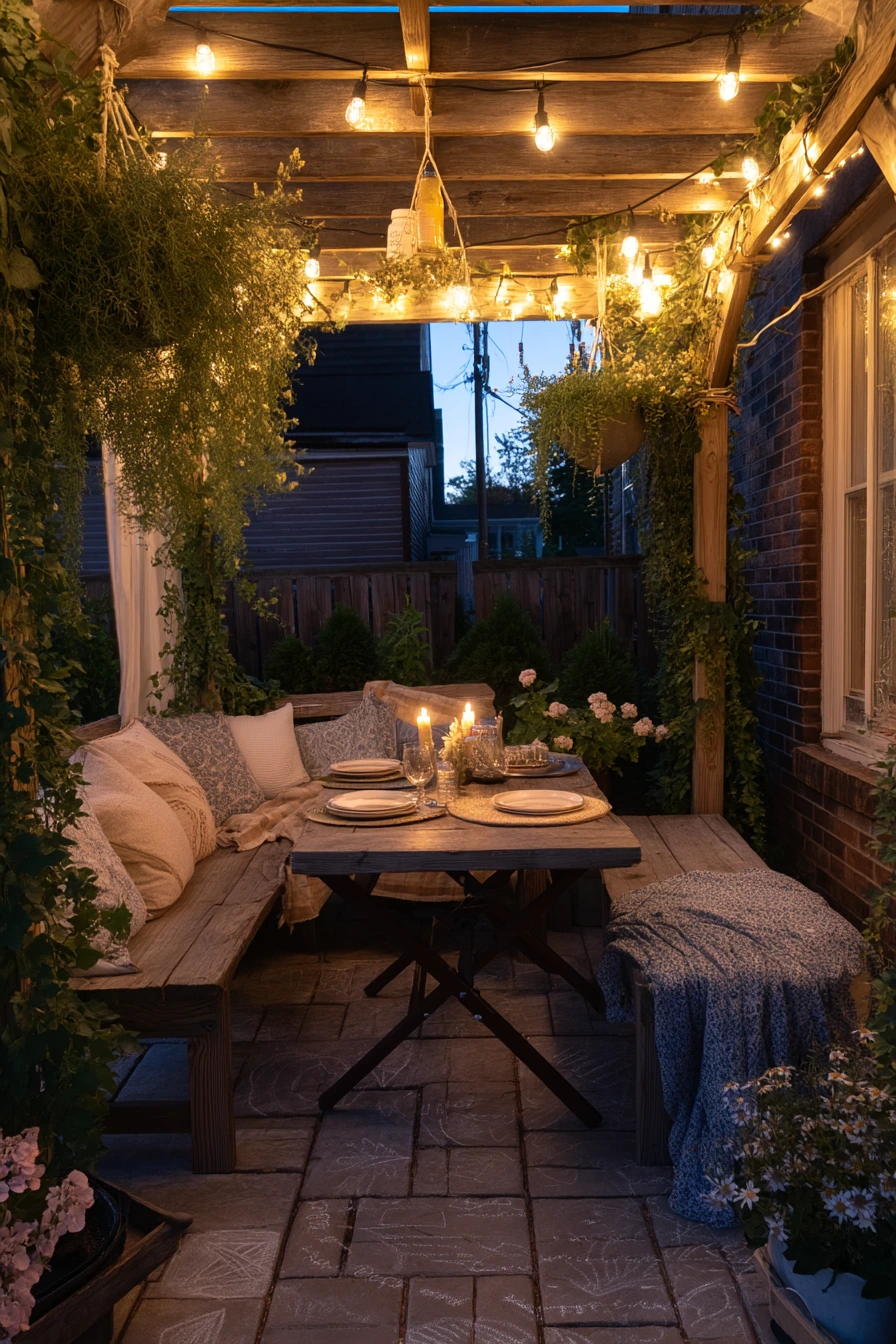

A modest backyard pergola can become a garden hangout with a few diy garden touches. Potted climbers soften the posts, and hanging mason-jar lights add gentle light when the sun goes down. This setup is about comfort, not perfection, so it works well for real family life.
Start with climbers in large pots so you can control growth and move them if needed. Train vines up the pergola with soft ties. Add a folding table that you can store away when you need space for kids. Use practical items like chipped enamel plates, a citronella candle, and a throw blanket on the bench so the area is ready for a simple evening outside.
For styling, let it look used. A paperback novel, two wine glasses, and kids’ chalk drawings on the pavers make the space feel warm and normal. Mix the warm light from the house with a few soft string lights so the pergola feels safe and easy to use after dinner. Keep one basket for blankets and outdoor games to reduce clutter.
- Pick one climbing plant that fits your sun level.
- Use outdoor-safe hooks for hanging jar lights.
- Add a small tray to carry plates and drinks outside.
- Keep bug control simple with citronella and fans.
- Choose washable cushion covers for the bench.
Pro Design Tip: Layer lighting at two heights, like a candle on the table and hanging lights above, so the pergola feels calm and not harsh at dusk.
Budget Considerations: Pergolas and outdoor lights can be costly; start with potted climbers and one affordable solar light set, then upgrade to better fixtures later.

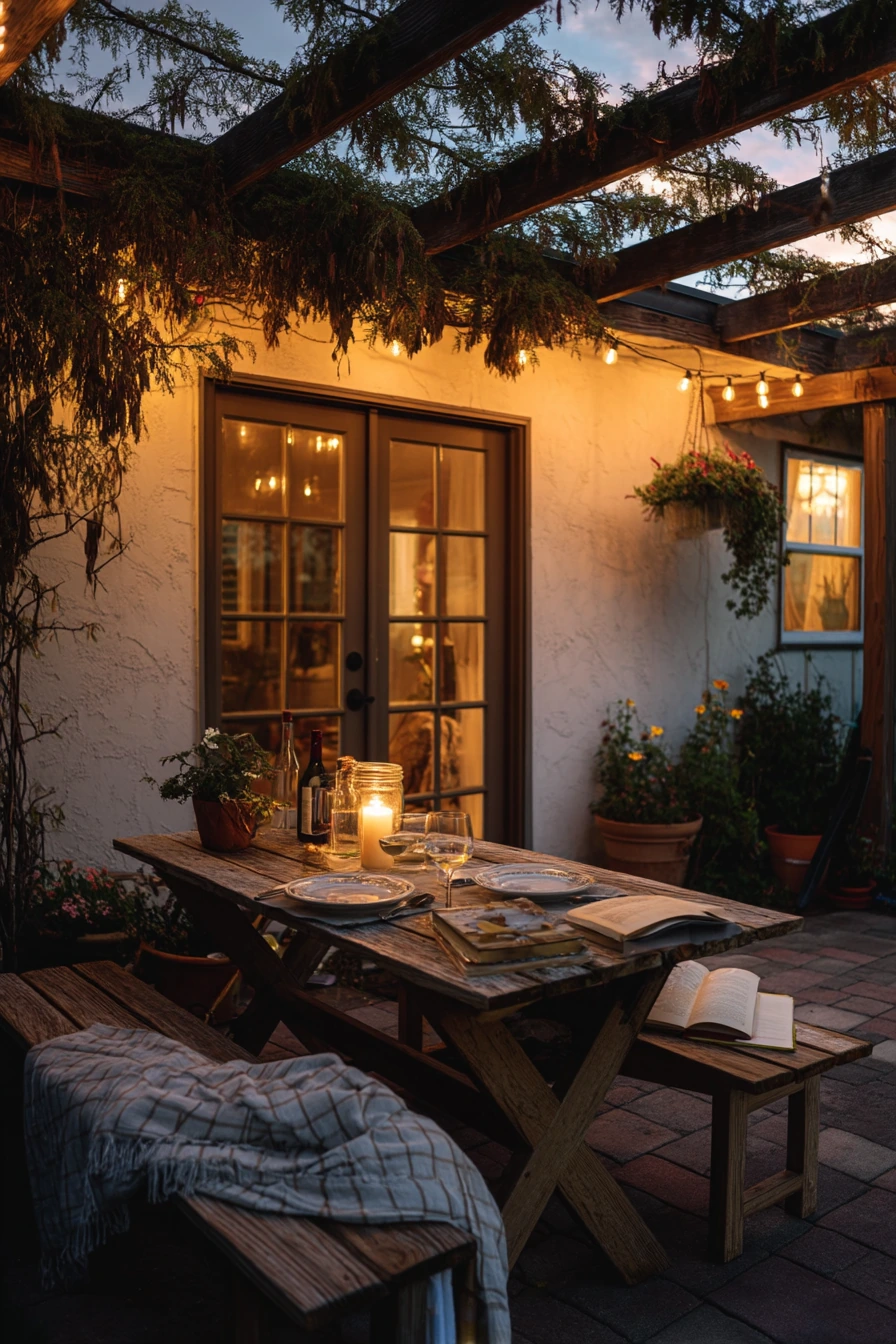
7 Windowsill Seedling Station in the Mudroom

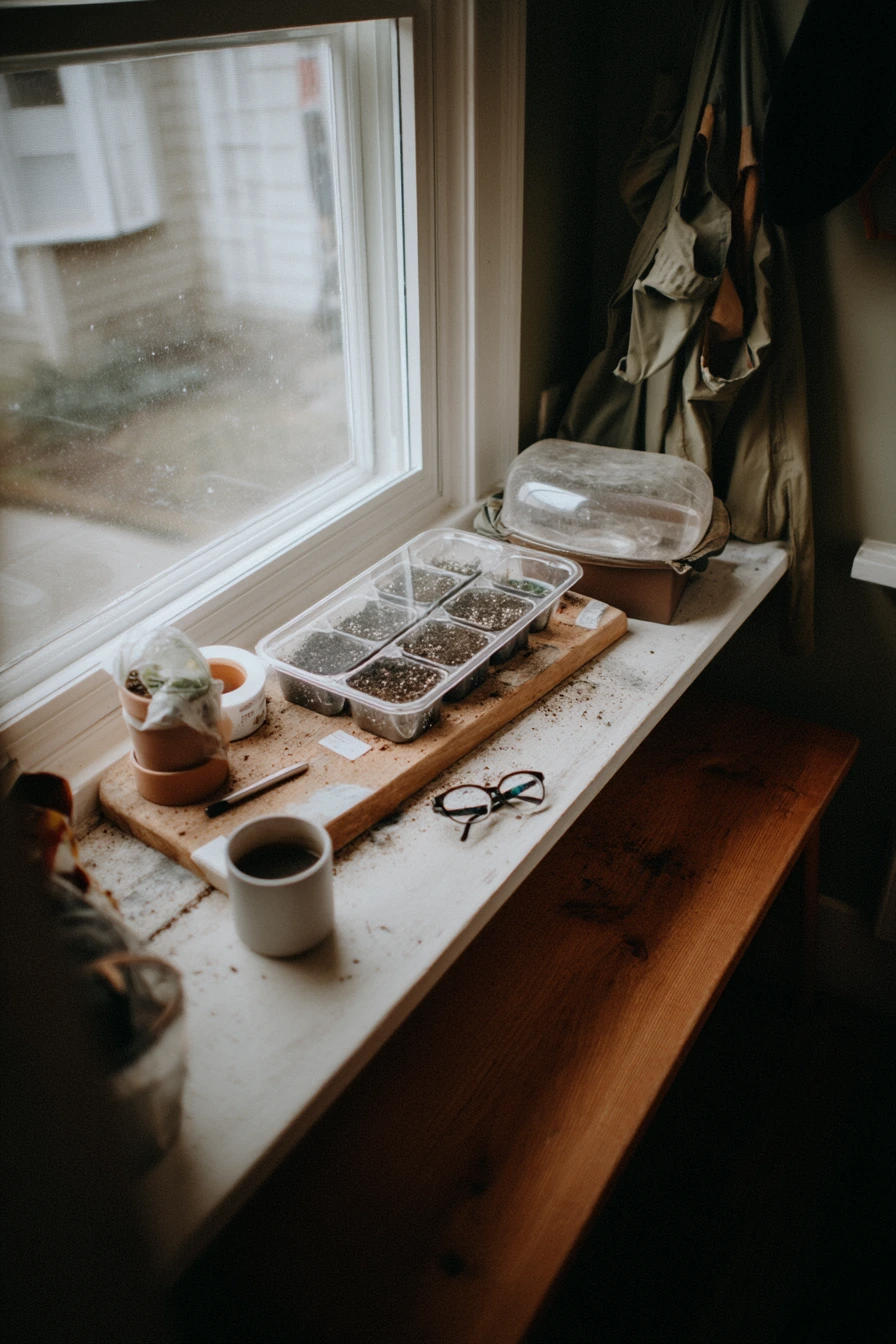
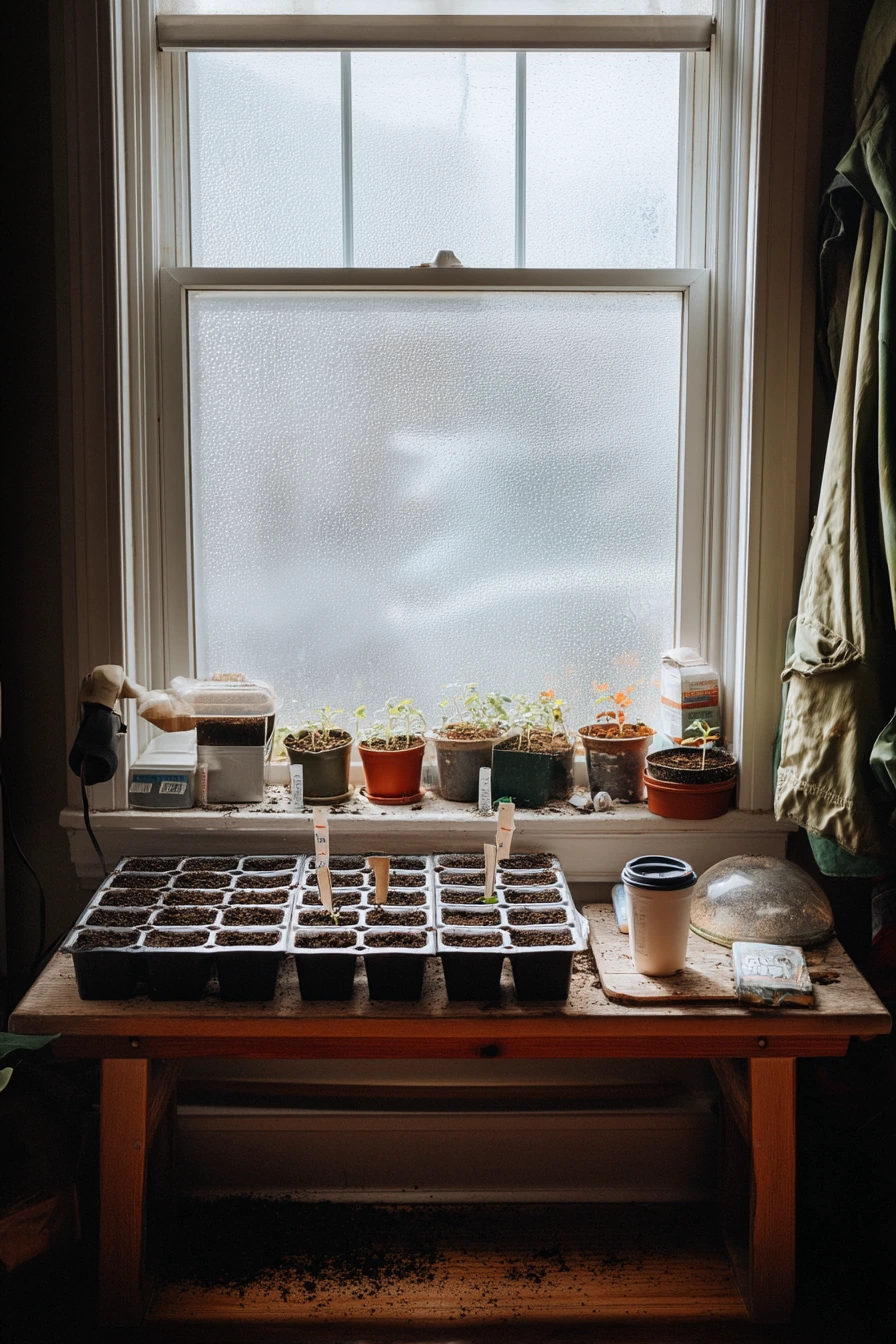
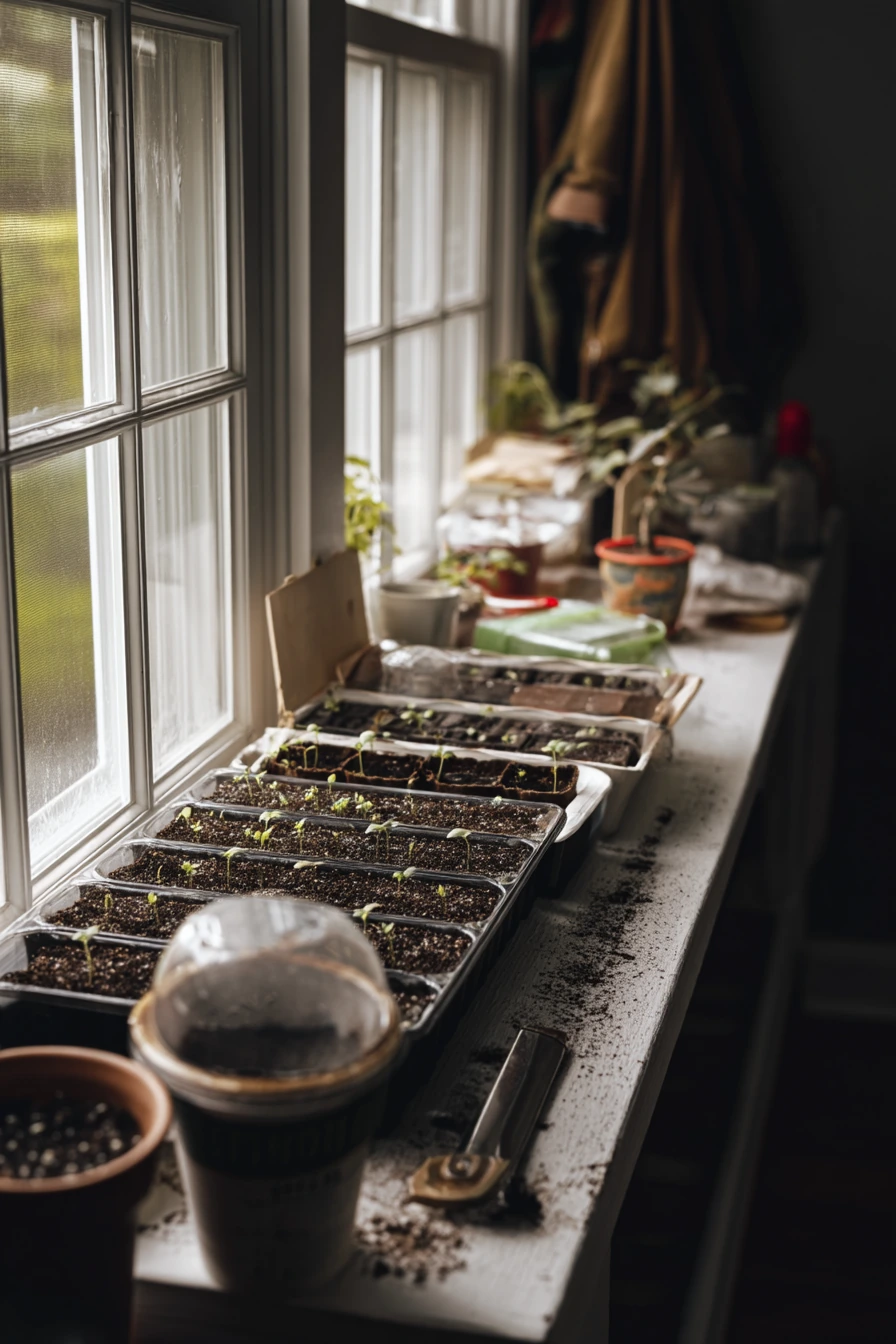
A narrow mudroom windowsill is a great place for a diy garden seed-starting setup. Trays of tomatoes and zinnias can grow indoors for weeks before you move them outside. This helps you get a head start on the season and saves money compared to buying large plants later.
Use seed trays with a humidity dome to keep moisture steady. Label each row with masking tape so you do not mix up varieties. Place a small lamp to the side if the window light is weak or overcast. Water from the bottom when you can, so seedlings stay strong and you avoid fungus on the surface of the soil.
For styling, keep the area neat but real. A raincoat hanging nearby, a reusable coffee cup, and reading glasses on the bench makes the space feel like part of daily life. Put a shallow tray under the setup to catch drips and keep potting mix dust off the floor. When seedlings get taller, rotate trays every few days so growth stays even.
- Use a sterile seed-starting mix for better germination.
- Keep the dome on until most seeds sprout, then vent it.
- Run a fan nearby for a short time to strengthen stems.
- Thin seedlings early so they do not crowd each other.
- Harden off plants slowly before moving them outdoors.
Pro Design Tip: Use matching trays and clean labels so the windowsill looks organized, which makes it easier to keep up with daily watering.
Budget Considerations: Grow lights can be expensive; start with a bright window and a basic clip-on LED, and reuse yogurt cups or deli containers for extra pots.
8 Budget Pallet Planter Along the Fence
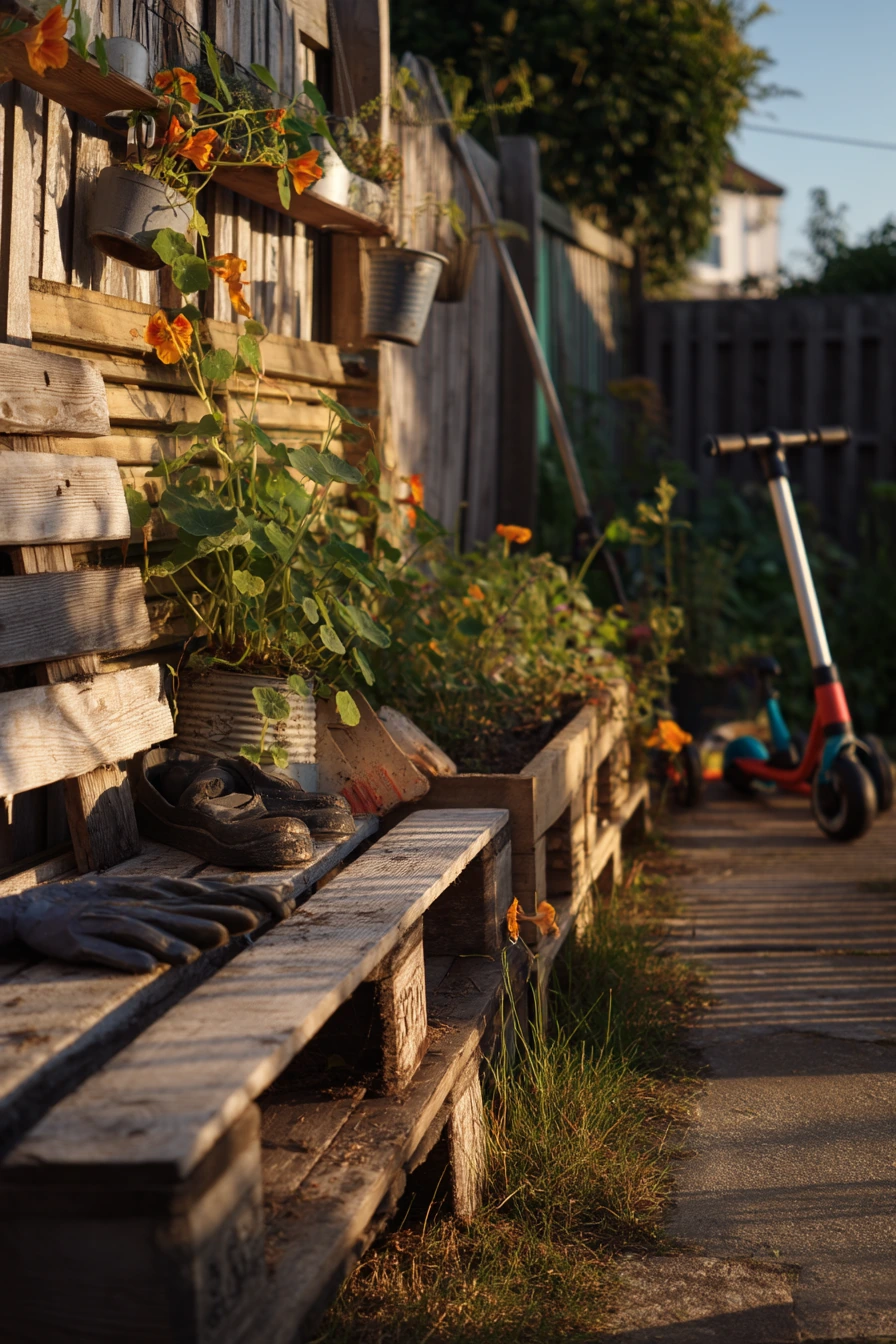

A budget diy garden along a weathered fence can look good and grow well when you use upcycled pallet planters. Pallets create vertical space for flowers and herbs, and they help a plain fence become a backdrop. Nasturtiums are a strong choice because they trail nicely, handle tough spots, and you can eat the leaves and flowers.
Start by checking pallets for safe stamps and avoid wood that looks treated or has spills. Sand rough spots and add landscape fabric inside the planting pockets. Fill with compost and potting mix, then plant nasturtiums to spill over the rough wood. Painted tin cans can hold small herbs, and a salvaged bench gives you a place to sit while you water and deadhead.
For styling, keep it rustic on purpose. Leave garden gloves on the bench, keep a half-open bag of compost nearby during the work day, and rest the hose nozzle in the grass. A children’s scooter parked close by fits the lived-in feel and reminds you the garden is part of family space. Use evening light for photos when long shadows add depth along the fence.
- Anchor pallets well so wind cannot tip them over.
- Choose trailing and shallow-root plants for vertical pockets.
- Water slowly so soil does not wash out of openings.
- Mix flowers and herbs for color and use.
- Add a simple drip bottle if you travel on weekends.
Pro Design Tip: Paint only a few tin cans in one repeated color and leave the pallet wood natural so the fence line feels calm, not busy.
Budget Considerations: Free pallets are common, but hardware adds cost; use leftover screws and scrap fabric, and start with one pallet panel before building a full wall.


9 Front Porch Container Garden with Curb Appeal


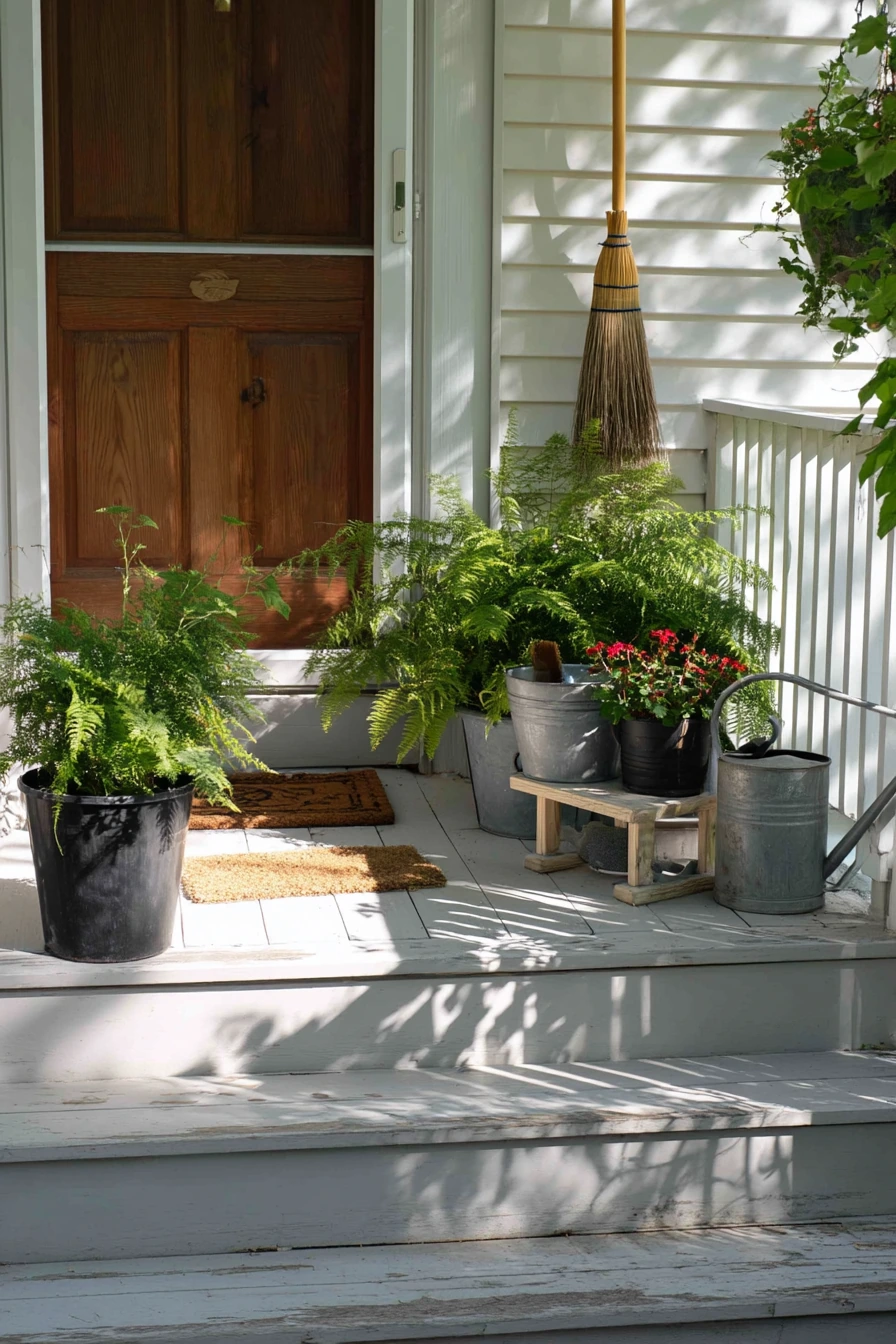
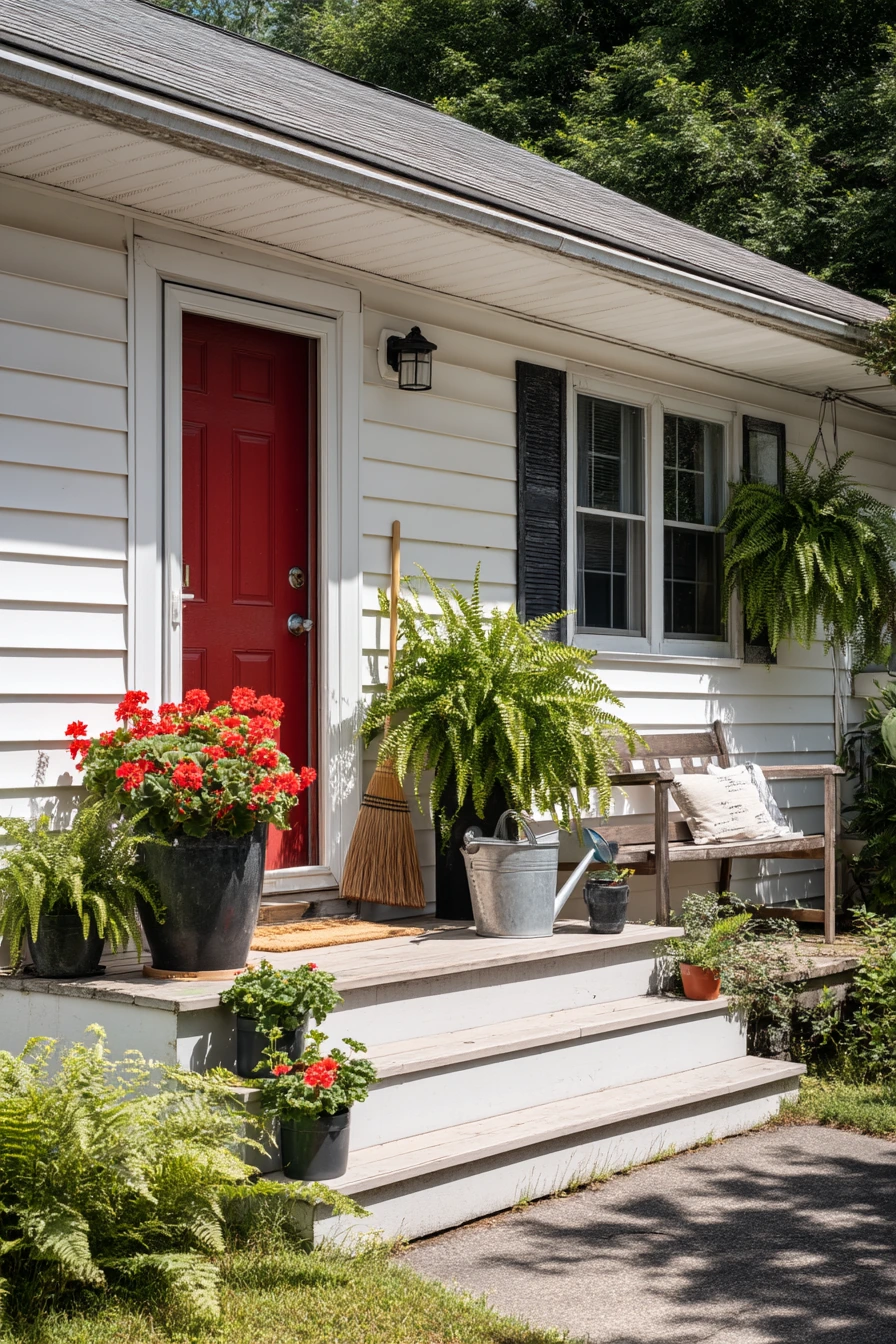
A front porch container garden is a fast diy garden idea that boosts curb appeal without changing the yard. Oversized containers with ferns, geraniums, and a few herbs can frame the door and make the entry feel cared for. It also gives you a spot to snip herbs when you walk inside.
Choose two main planters to flank the door, then add one or two smaller pots near the steps. Use a simple recipe: one tall plant, one full plant, and one trailing plant per container. Keep the watering can close to the steps so you do not forget daily care in hot weather. If your doormat shifts, straighten it often, because small details make the porch look cleaner in photos.
For styling, let it be polished but human. A broom leaning by the railing, mail and sunglasses on a small bench, and subtle leaf shadows across the siding look real and welcoming. Pick pot colors that match the house trim, and repeat one plant type on both sides of the door for balance.
- Use high-quality potting mix so containers stay light and drain well.
- Group shade lovers like ferns in covered areas.
- Pinch geraniums to encourage more blooms.
- Add a slow-release fertilizer to reduce upkeep.
- Use a tray or risers so pots do not stain the porch.
Pro Design Tip: Make the door the center and mirror the largest containers on both sides, then vary smaller pots to keep the look tidy but not stiff.
Budget Considerations: Large planters can be expensive; use lightweight resin pots that look like stone, or buy one statement pot and pair it with a cheaper matching color.
10 Companion Planting Bed After a Saturday Workday
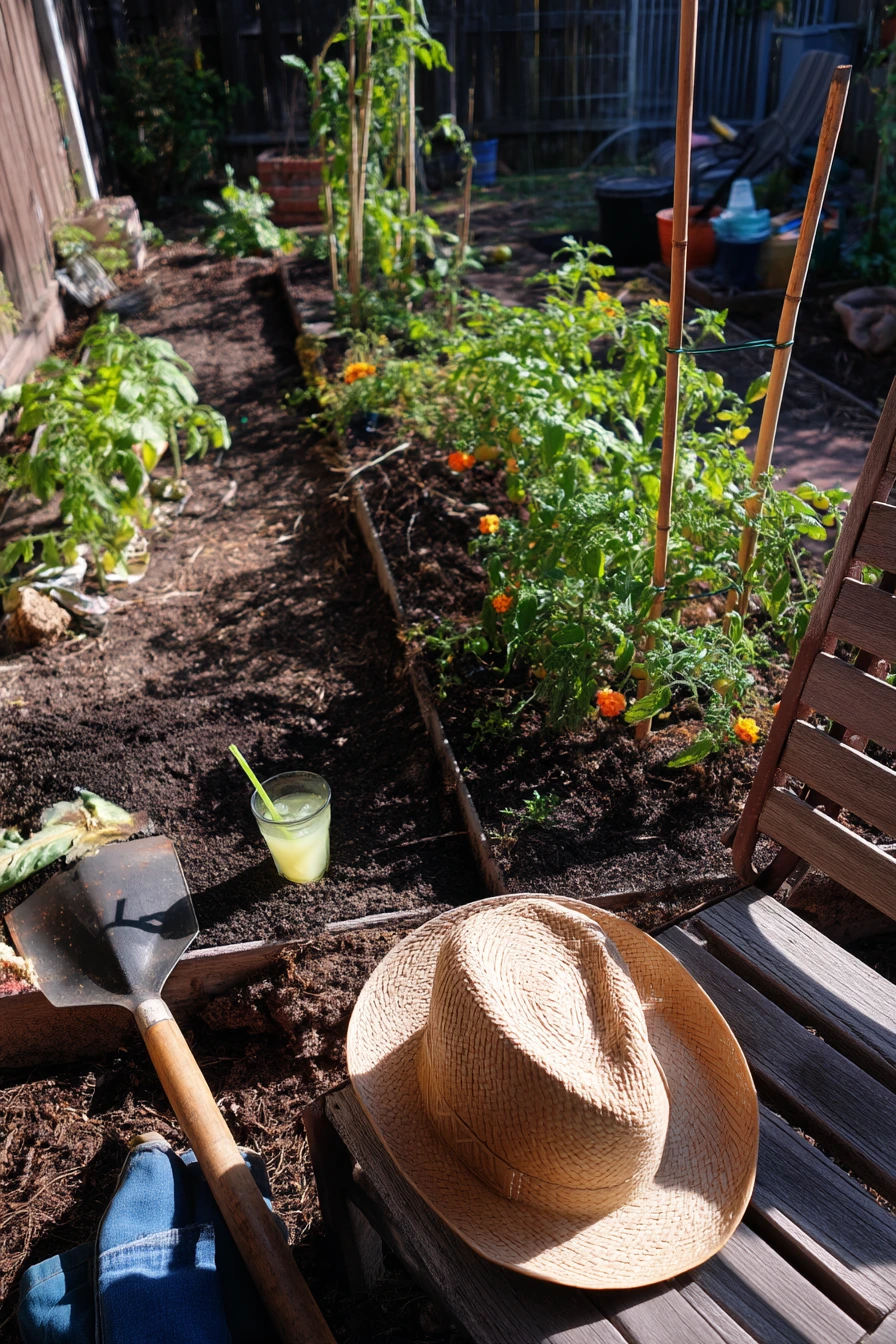
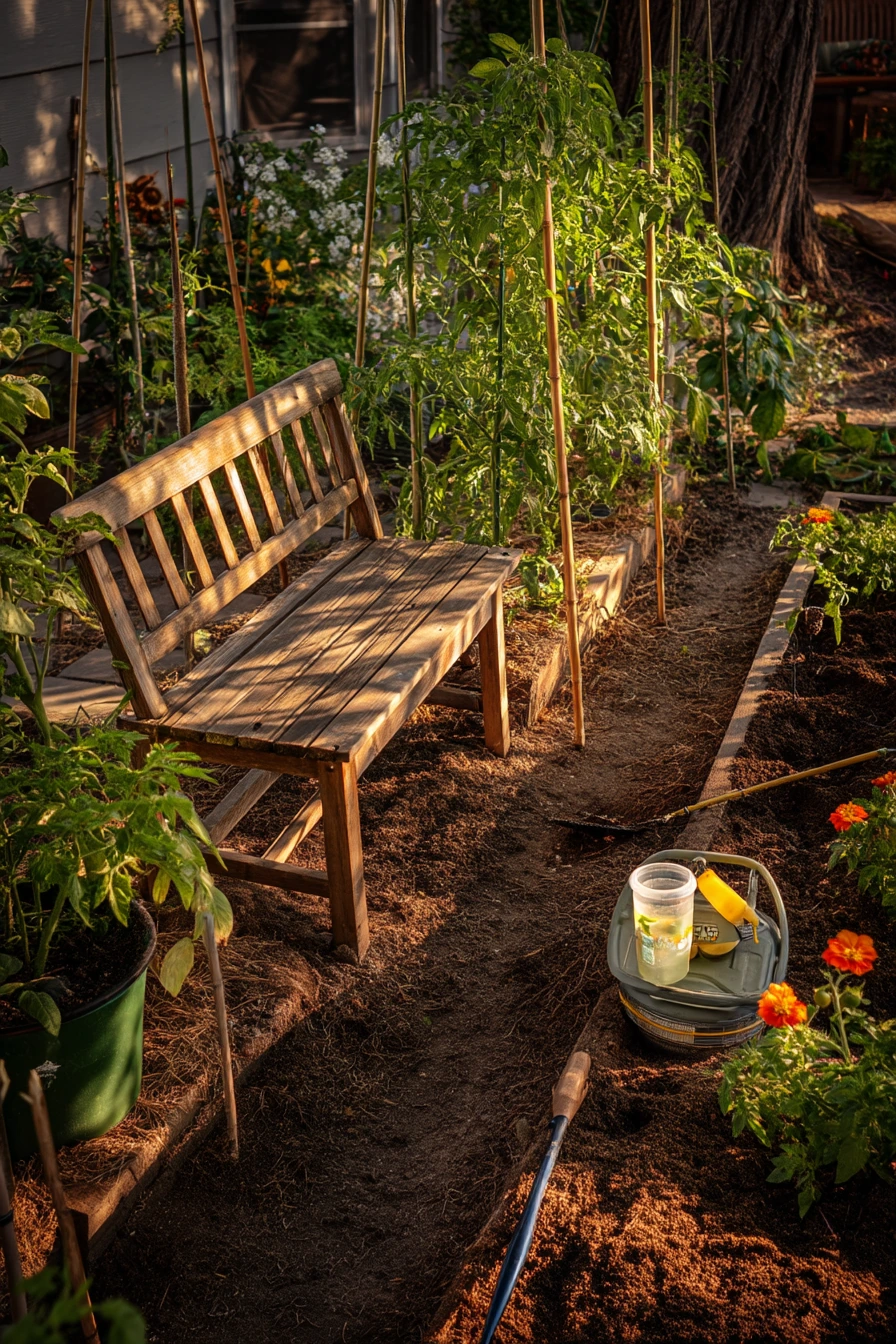
A small backyard vegetable bed can look orderly and still feel relaxed after a Saturday of diy gardening. Tomatoes staked with bamboo, basil nearby, and peppers in the same bed create a kitchen-ready mix. Tucking marigolds between rows is a simple companion planting move that adds color and may help with pests.
Set up tomatoes first, because they will take the most space. Push bamboo stakes deep and tie stems loosely so they can grow without damage. Keep a hand rake and kneeling pad nearby so you can weed and shape rows in quick sessions. Water at the base in the morning when possible, and mulch after seedlings settle in so the soil stays cooler.
For styling, do not clean up everything. Dirt-smudged jeans on the bench, a cold lemonade in a sweating glass, and a hat tossed on the patio chair show a real work day. Use consistent staking and straight planting lines to make the bed look neat, even when tools are still out. Add one small edge, like bricks or wood, to define the space.
- Plant basil close to tomatoes for easy harvesting.
- Prune tomato suckers if you want fewer, larger fruits.
- Mulch with straw or leaves to cut down weeds.
- Check ties weekly so stems do not get pinched.
- Harvest often to keep plants producing.
Pro Design Tip: Use the same type of stake and tie across the whole bed so it looks cohesive, even when different plants are growing at different speeds.
Budget Considerations: Buying many starts can cost more; grow tomatoes and flowers from seed and spend your money on better soil and mulch, which improves the whole bed.
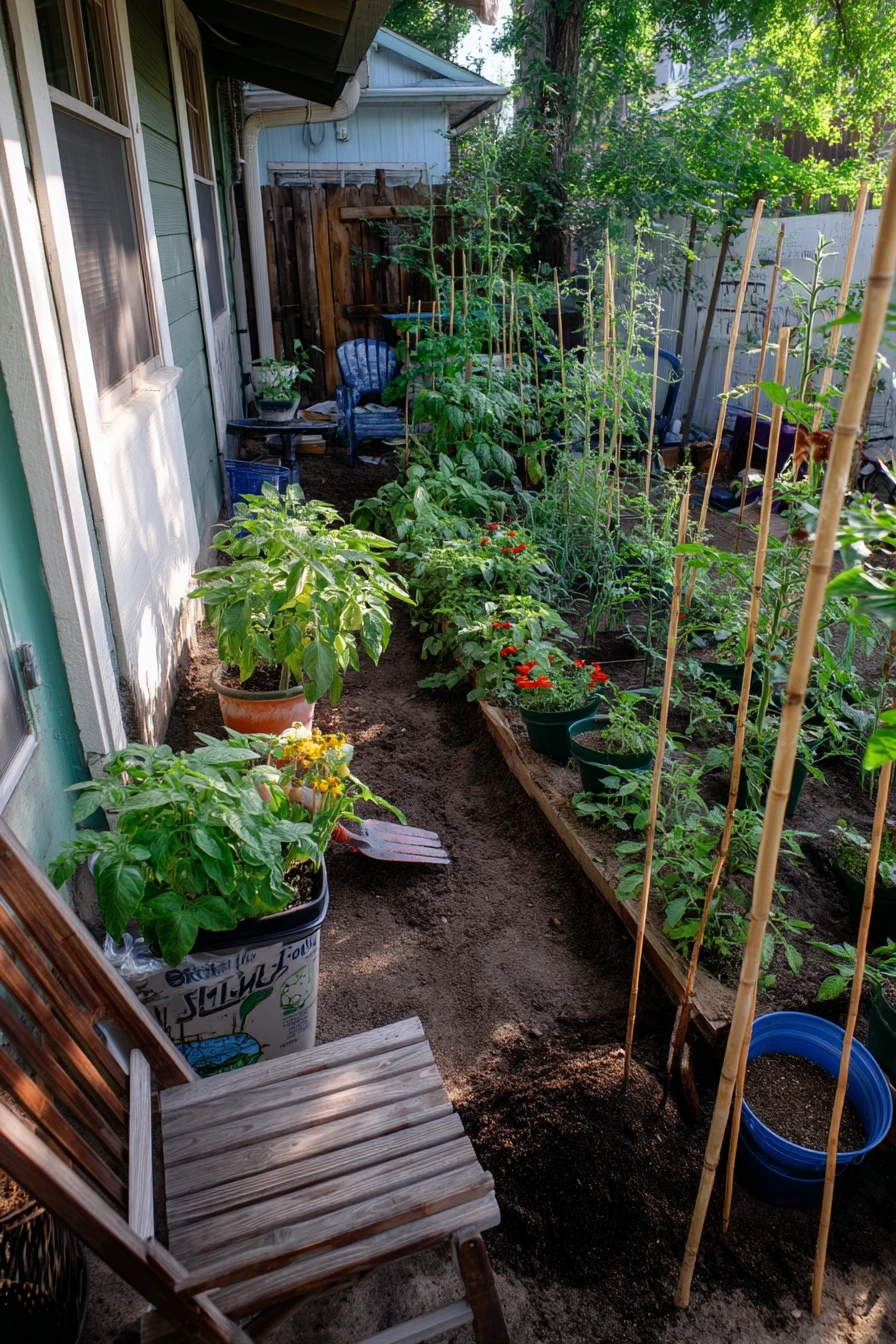

These diy garden ideas are meant to fit real homes, from a small balcony to a family side yard. Start with one project that makes daily life easier, like herbs by the kitchen door or a tidy potting spot in the garage.
As you build, keep your garden simple to water, easy to reach, and set up for the way you already live. Small upgrades, like labels, consistent pots, and good soil, make the biggest difference over time.
FAQ
What is the easiest DIY garden project for beginners? A container herb setup is the easiest. Start with basil and thyme in pots near a door so you remember to water and harvest.
How do I make a balcony garden renter-friendly? Use freestanding racks, railing planters, and clamp hooks. Avoid drilling and choose lightweight containers.
What herbs grow best near the kitchen? Basil, thyme, parsley, chives, and mint grow well. Keep mint in its own pot so it does not take over.
How can I start seeds indoors without expensive gear? Use a sunny window, seed trays, and labels. Add a basic clip-on LED if the light is weak and reuse containers you already have.
What plants work best for a pollinator container garden? Lavender, coneflowers, bee balm, salvia, and native wildflowers are good choices. Pick a mix of bloom times.
How do I make an upcycled pallet planter last longer? Keep it off wet ground, line pockets with fabric, and use a sealant on the outside only. Anchor it so it does not move in wind.
How do I keep a vegetable bed looking neat? Stake plants early, mulch paths and rows, and use one style of support like bamboo stakes. Harvest and trim often.