

Dining room curtains do more than cover a window. They shape the light on your table, add softness to hard surfaces, and help the room feel finished.
This guide shares dining room curtains ideas based on real, lived-in spaces, from relaxed linen layered over slim white sheers to deep velvet panels for evening dinners.
You will get styling notes you can copy, plus simple steps for choosing length, fabric, and hardware so the room works on busy weekdays and still feels nice when guests come.
Each section includes a pro design tip and a budget note to help you decide what to buy and how to hang it.
1 Layered Linen Curtains in a Family Dining Room
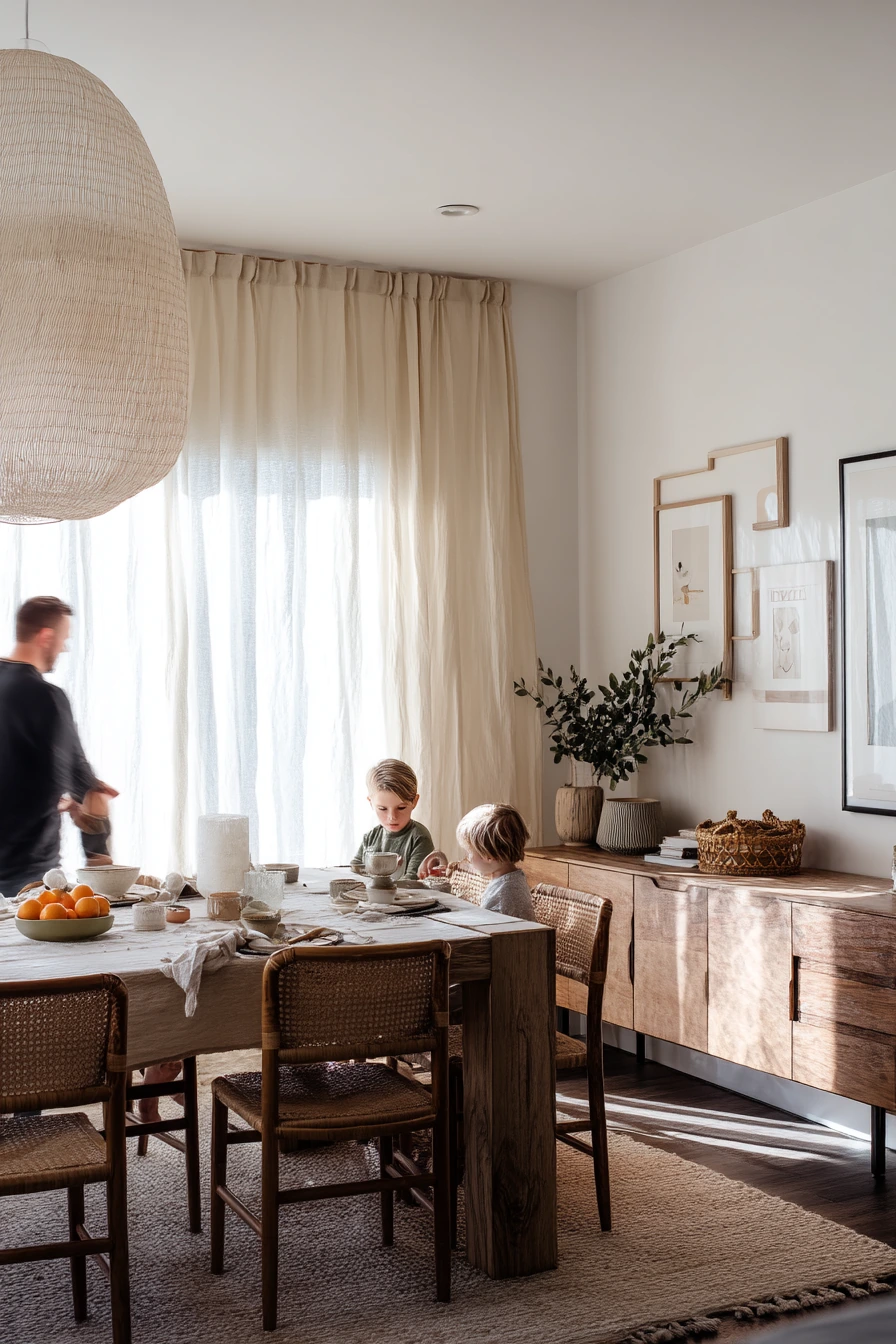
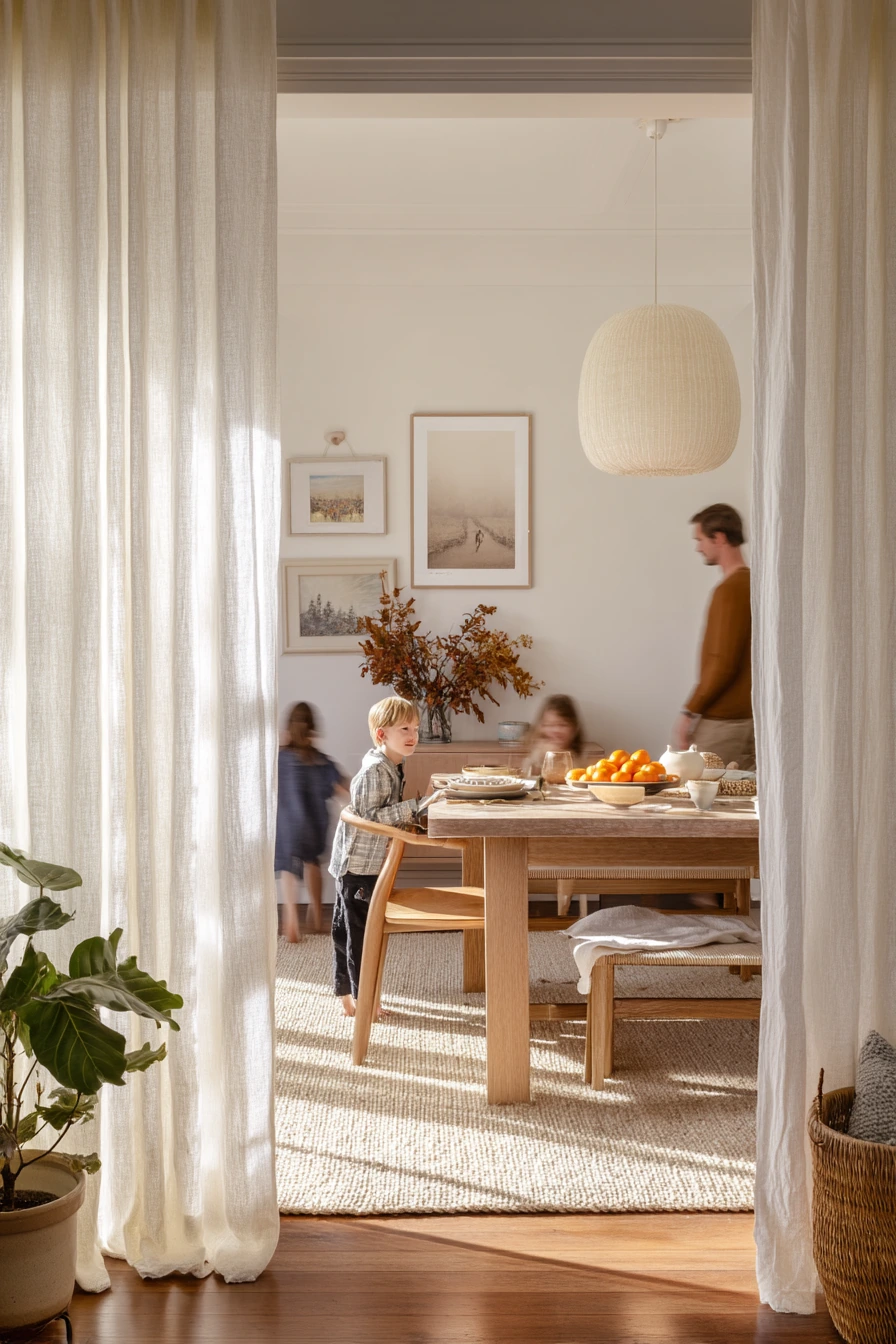
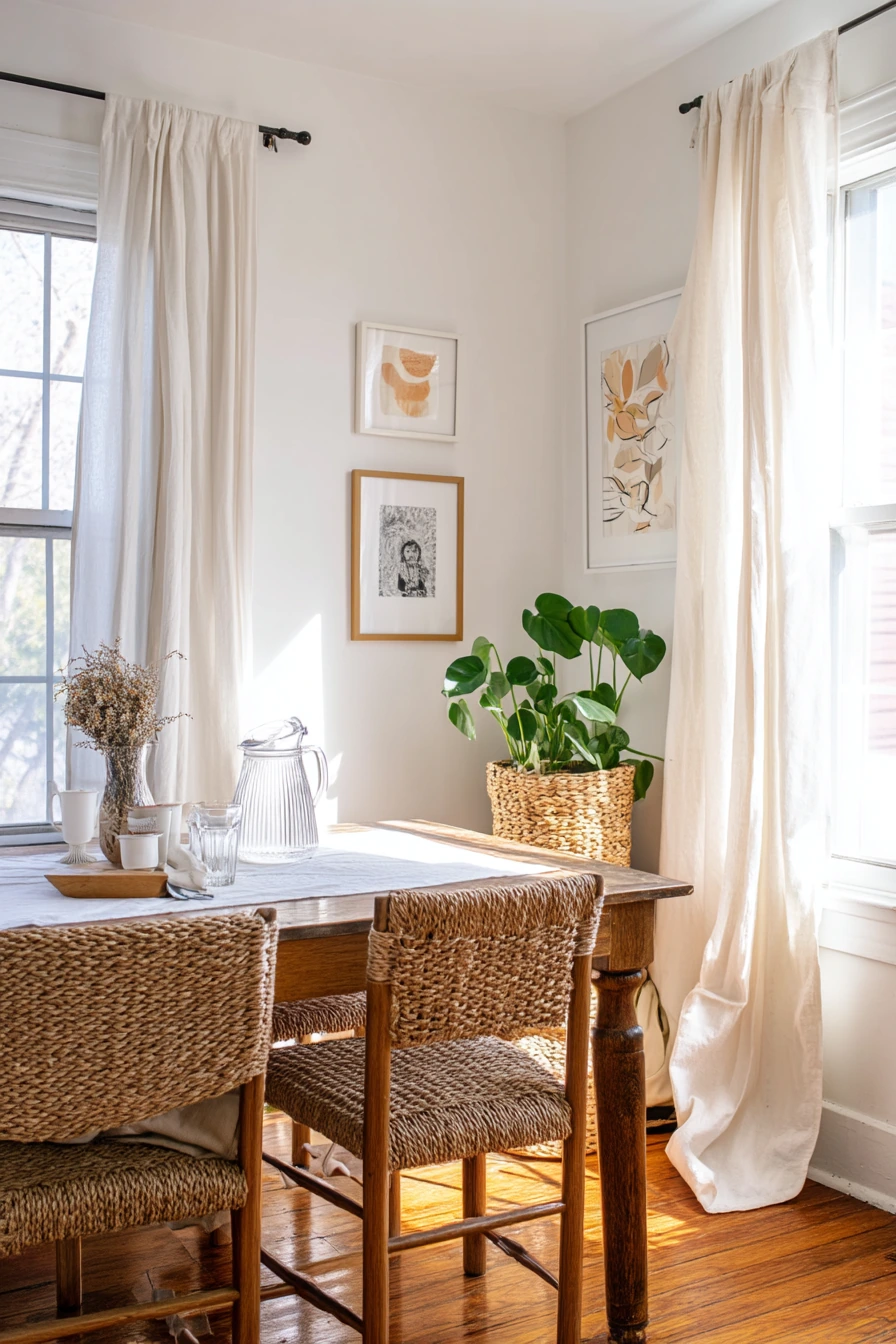
Relaxed linen curtains layered over slim white sheers are a strong choice for a family dining room. The sheers keep the space bright with natural window light, while the linen panels add texture and a softer frame around the window. This look fits a real home with a wooden table set for weeknight dinner, a soft oatmeal rug, and everyday details like slightly wrinkled napkins and a bowl of oranges.
To style it, hang the sheers closest to the glass and place the linen on a second rod, or use double brackets. Let the linen fall in gentle folds so the room feels tactile and lived-in. If you have a sideboard, keep the area calm with a kid toy basket tucked beside it, and repeat natural materials like a ceramic pendant and framed family art to match the relaxed fabric.
Keep the color palette quiet so the layers look intentional. Warm whites, flax, oatmeal, and light wood tones all work together. If plant shadows hit the wall in the afternoon, the sheers will make them look soft instead of harsh. For daily life, pull back the linen during meals for more light, and close it at night for privacy without making the room feel heavy.
- Choose off-white sheers to avoid a blue cast in daylight.
- Pick linen panels that are 2 to 3 times the window width for fuller folds.
- Hang rods wider than the window so glass stays clear when curtains are open.
- Use simple tiebacks for quick access during busy evenings.
- Steam lightly, but do not chase perfect wrinkles.
Pro Design Tip: Hang the linen so it just kisses the floor, then let the sheers stop 1 inch above the floor for a clean layered edge.
Budget Considerations: Linen can be pricey; a linen blend or cotton-linen look fabric gives a similar texture for less, especially in standard panel sizes.
2 Small Dining Nook with Sheer Privacy Curtains
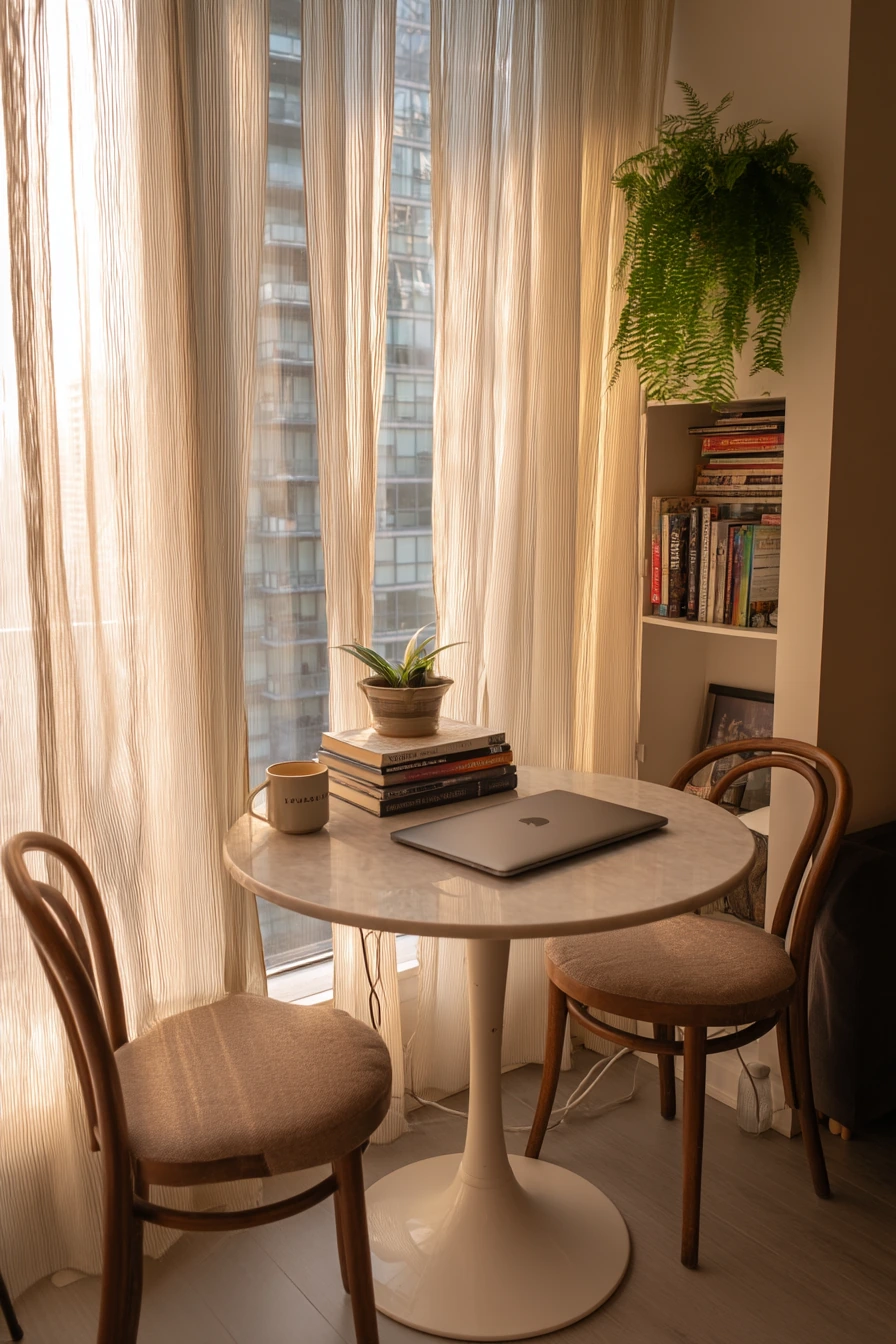
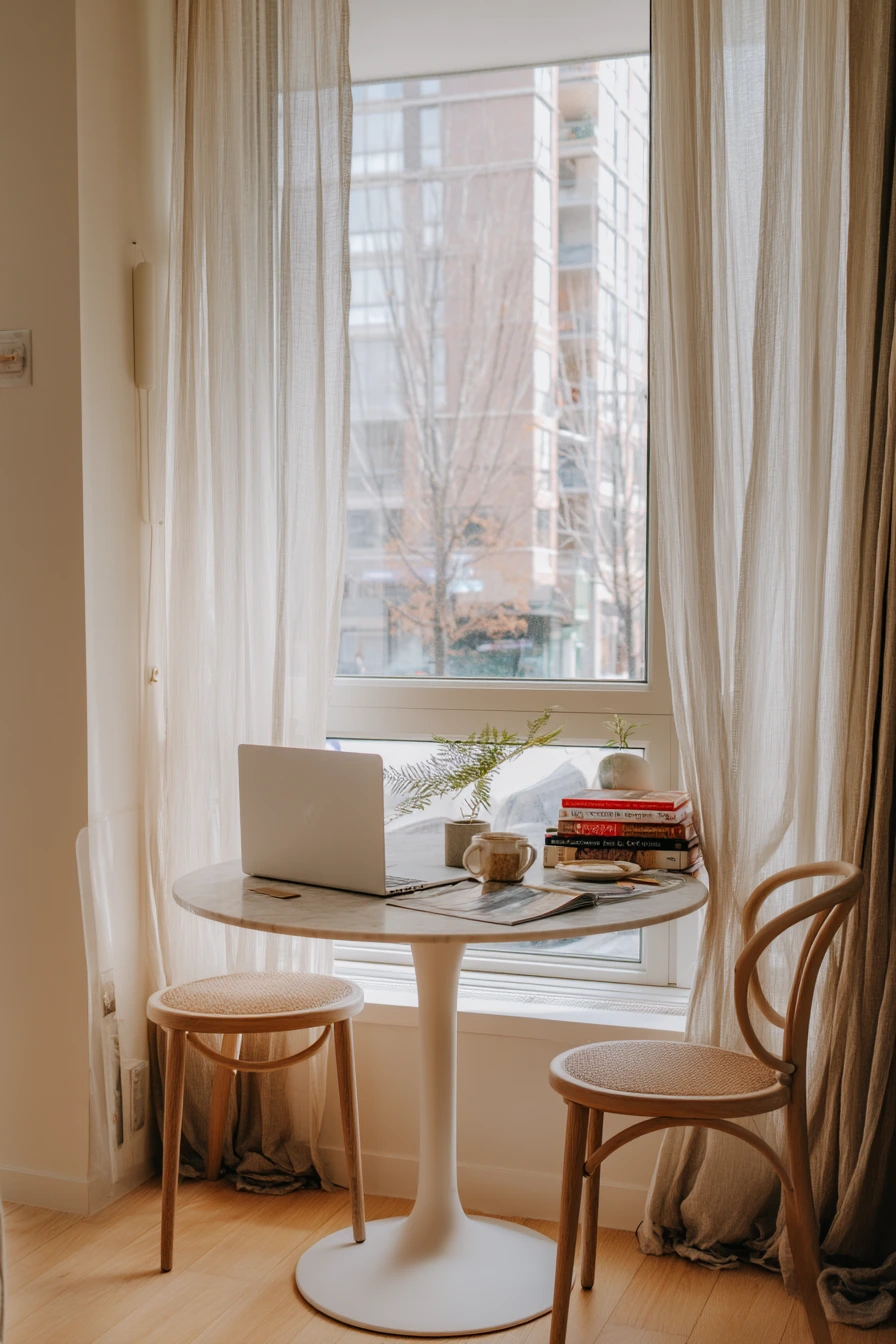
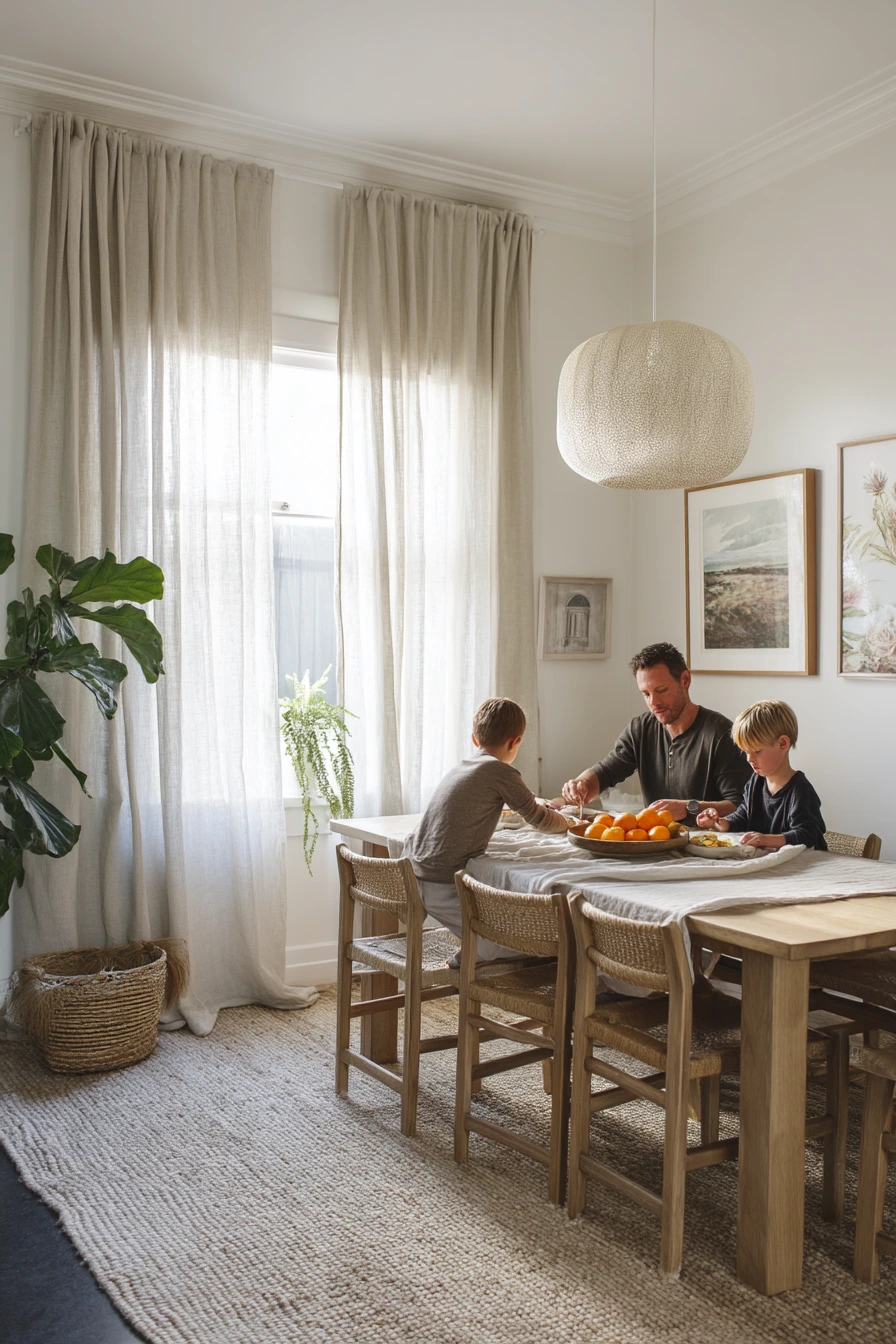
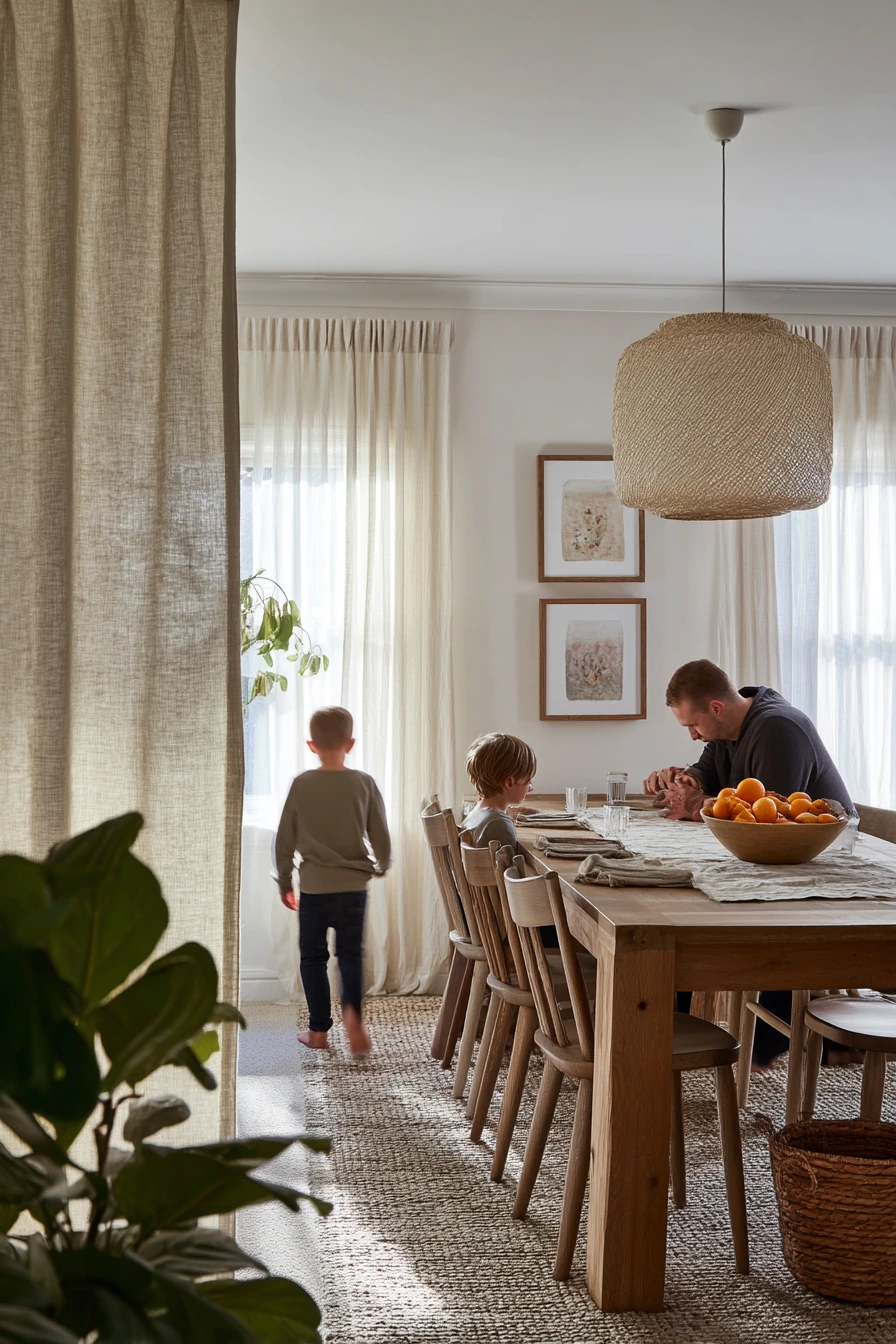
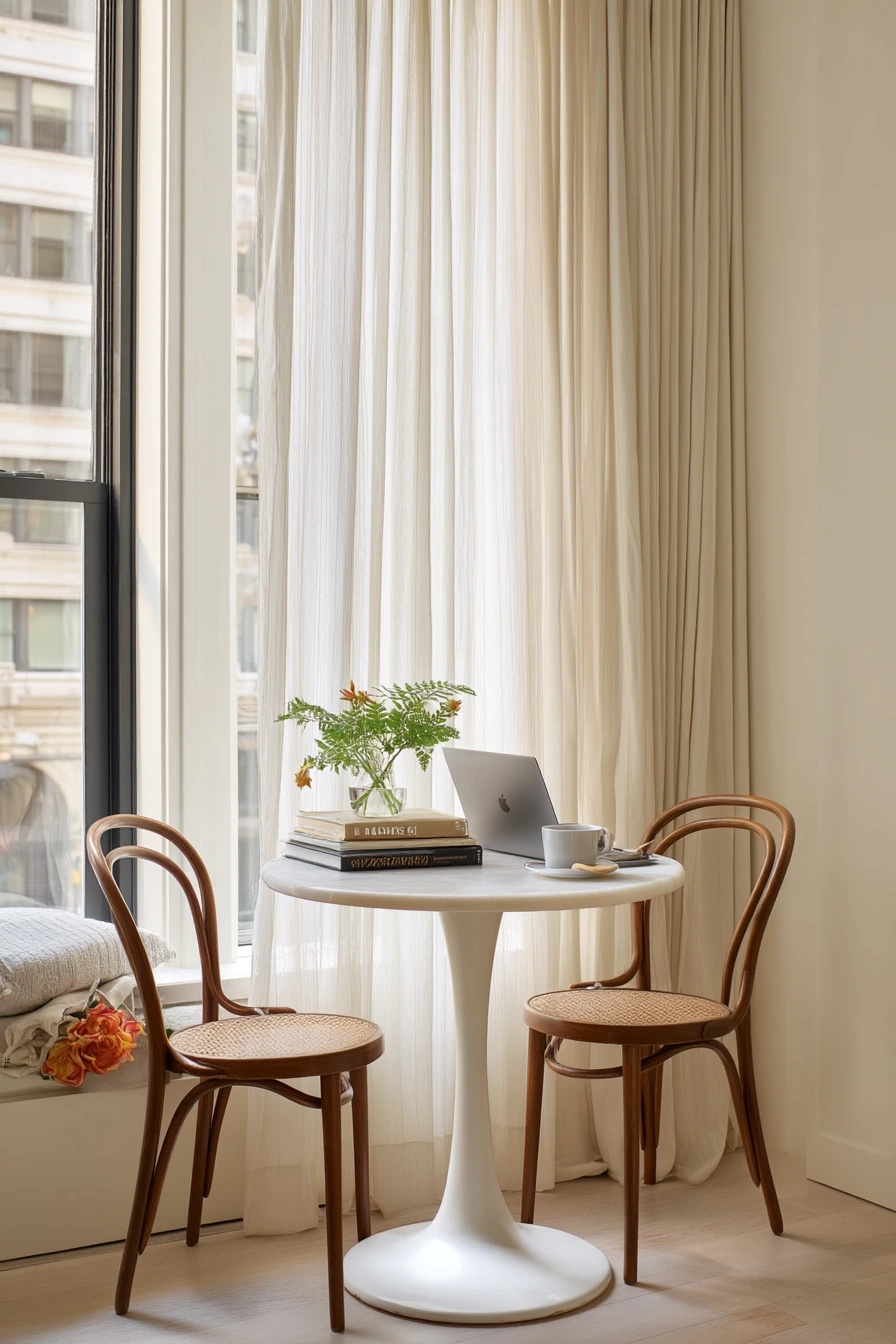
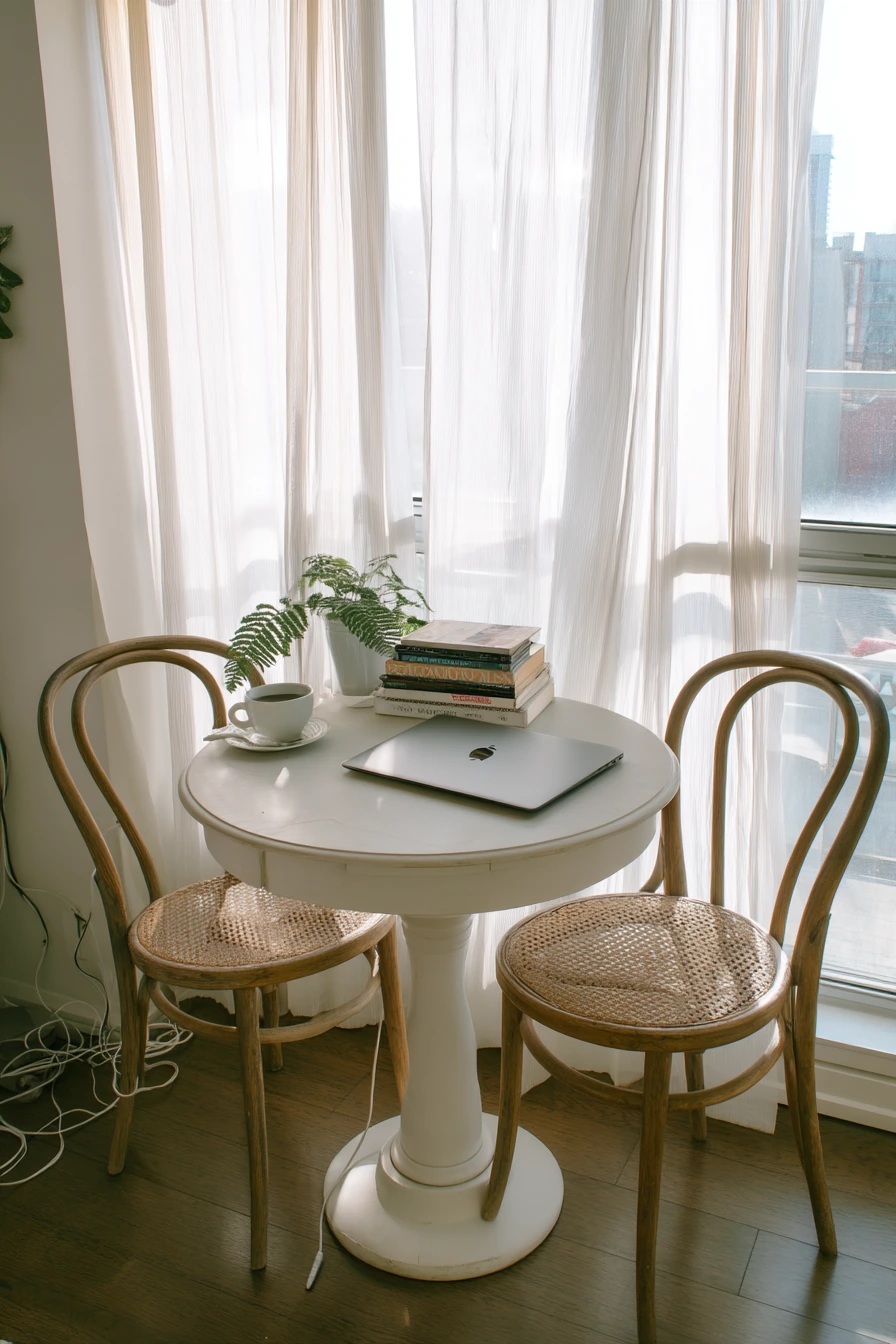
In a compact apartment dining nook, floor-to-ceiling sheer curtains can do most of the work without adding bulk. They soften a street-facing window, blur the view, and keep the space airy. This is ideal when the room is small and you want light to bounce around a round pedestal table and two bentwood chairs.
For a believable everyday look, treat the dining nook like part of real life. A closed laptop beside a coffee cup, stacked cookbooks, and even a charging cable near the baseboard can still look tidy if the curtains create a calm backdrop. Keep the palette muted neutrals so the sheer fabric reads soft and clean instead of busy. Add one small plant, like a fern catching the morning light, to bring color without clutter.
To style sheers well, focus on height and fullness. Hang the rod close to the ceiling to make the window feel taller, then use enough fabric so it drapes in gentle waves. If privacy is a big need, choose a slightly thicker voile or a privacy sheer. You can also add a simple roller shade behind it for night, while leaving the sheers for daytime softness.
- Mount the rod 3 to 6 inches below the ceiling to stretch the wall height.
- Use rings or a ripple-fold track for smoother movement.
- Pick washable fabric since city windows collect dust fast.
- Keep the hem just above the floor to avoid scuffs in tight spaces.
- Use a narrow tieback to open the window on bright mornings.
Pro Design Tip: If the window faces the street, layer a light-filtering shade behind the sheers so you can keep the soft look and still get nighttime privacy.
Budget Considerations: Sheer panels are often affordable; focus spending on a sturdy rod or ceiling track so the curtains glide easily and do not sag.
3 Cafe-Style Roman Shades for a Cozy Breakfast Dining Area
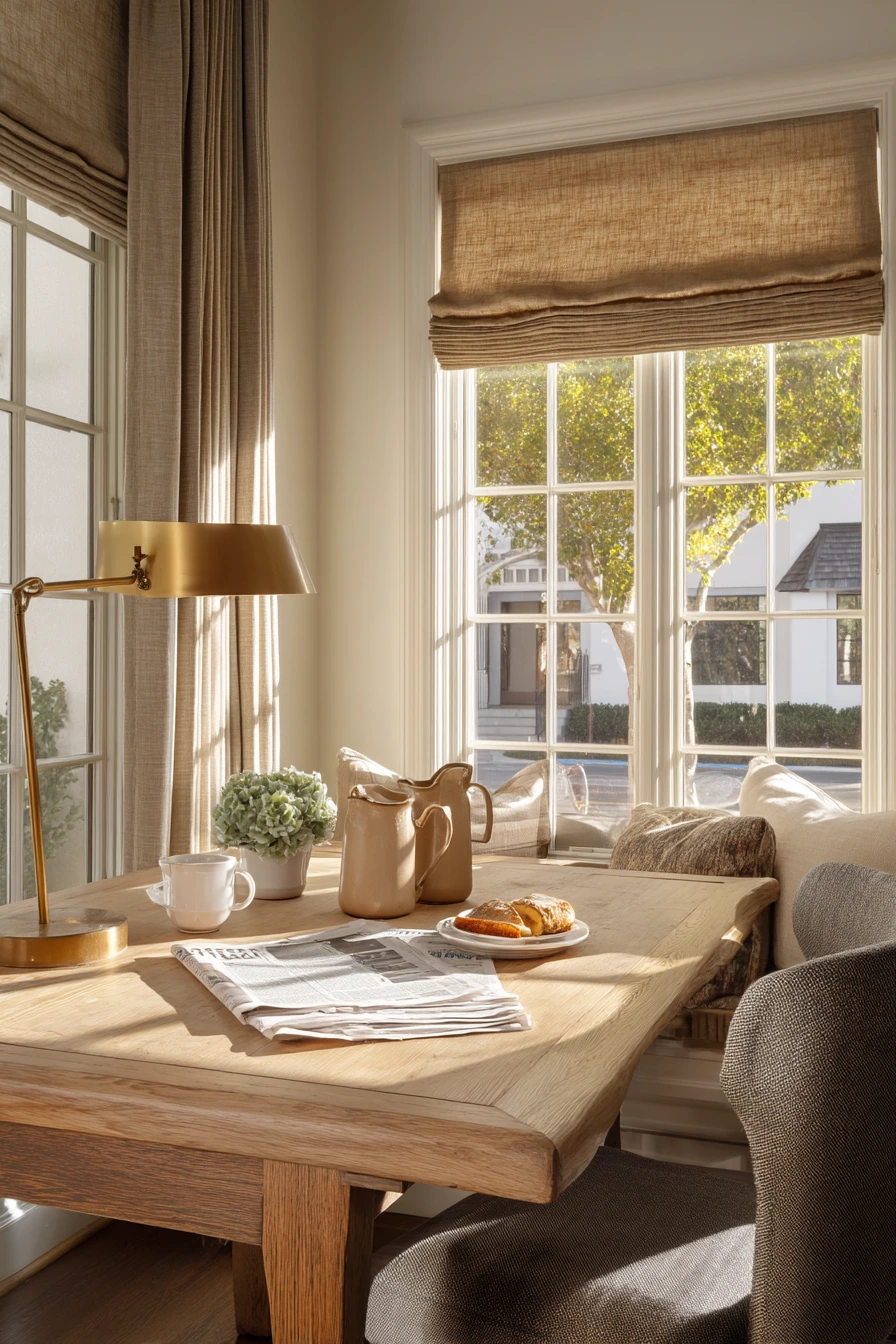
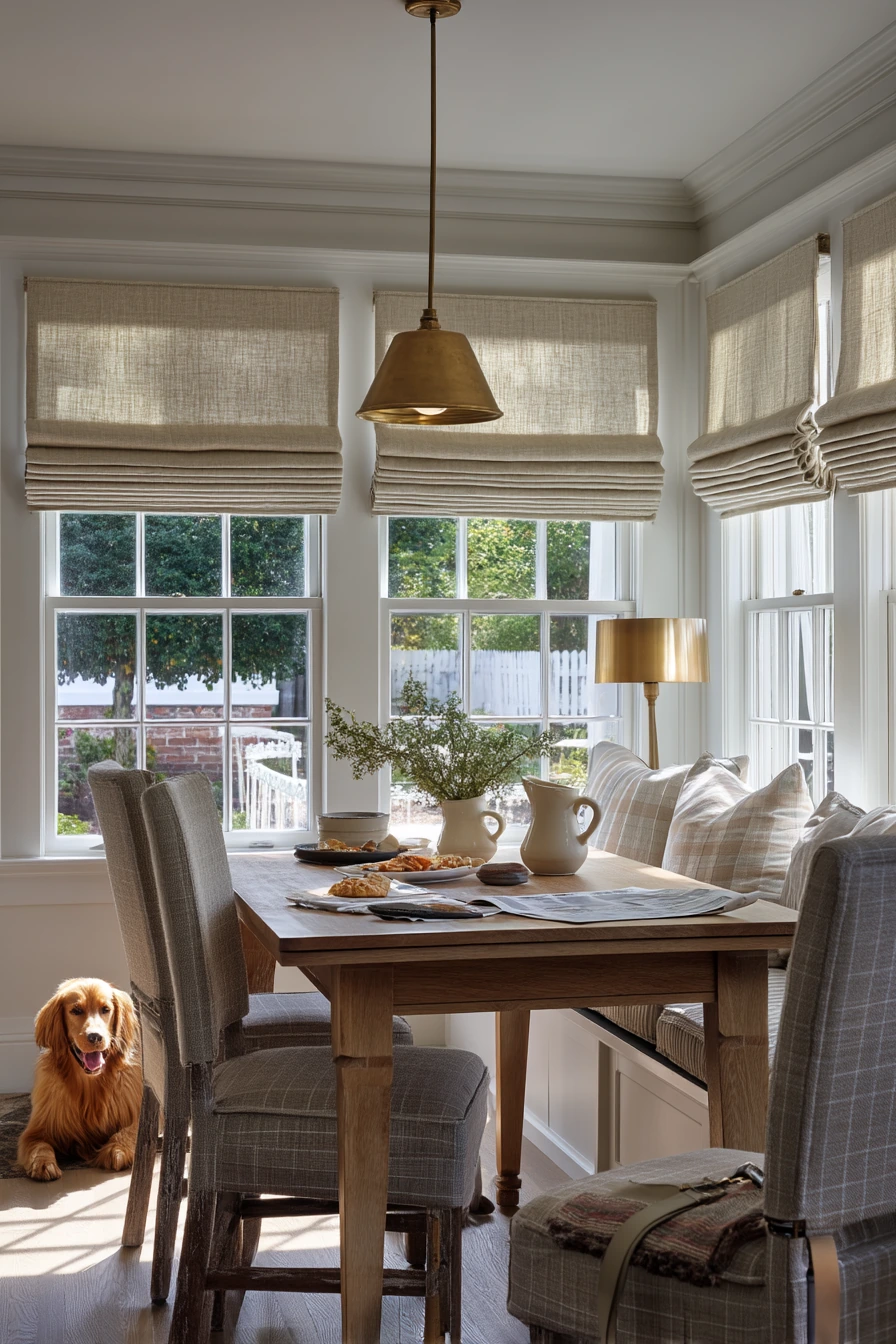
Roman shades are a smart alternative to heavy drapes in a sunlit breakfast dining area. They give clean lines, help control glare, and keep the room feeling calm and functional. In a space with a narrow oak table, mixed chairs, and soft shadows from window mullions, tailored shades look neat without feeling formal.
Roman shades work well when you want your window trim or mullions to show. They also keep fabric away from food, pets, and foot traffic, which is helpful if there is a dog leash by the door or kids moving in and out. To style the room, pair the shade fabric with simple table linens, folded cloth napkins, and a few ceramic pitchers for a warm, everyday look. A brass lamp in the corner adds a cozy glow on cloudy mornings.
Choose the right fabric weight for your light. A light-filtering weave keeps the room bright while cutting harsh sun. If the window gets intense, pick a lined shade to protect finishes and reduce heat. For a relaxed, real-life touch, keep the styling minimal: a half-finished toast plate, a newspaper, and a tidy tray for small items can make the room feel lived-in without looking messy.
- Use inside-mount shades for a tailored, built-in look.
- Pick a cordless lift for a clean line and easier daily use.
- Choose a subtle texture like basketweave for warmth.
- Add lining if the table sits in strong sun at breakfast time.
- Repeat the shade color in one small item, like napkins or a runner.
Pro Design Tip: Keep the roman shade stack height in mind; a flatter fold style blocks less glass when raised, which matters in small breakfast spaces.
Budget Considerations: Custom roman shades cost more; ready-made shades can look built-in if you hem to length and use a simple trim only on the bottom edge.
4 Budget-Friendly Curtain Panels in a Rental Dining Room

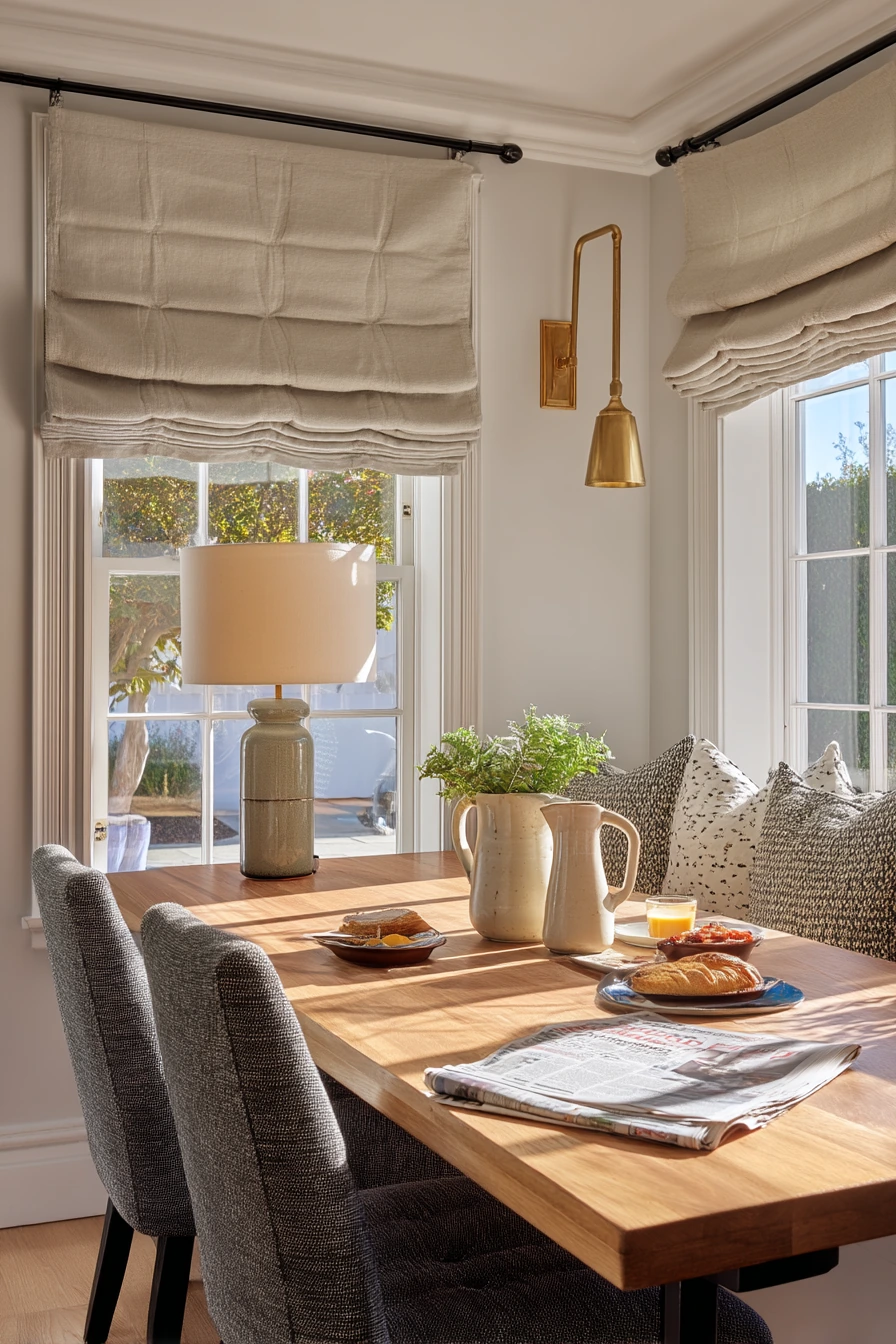
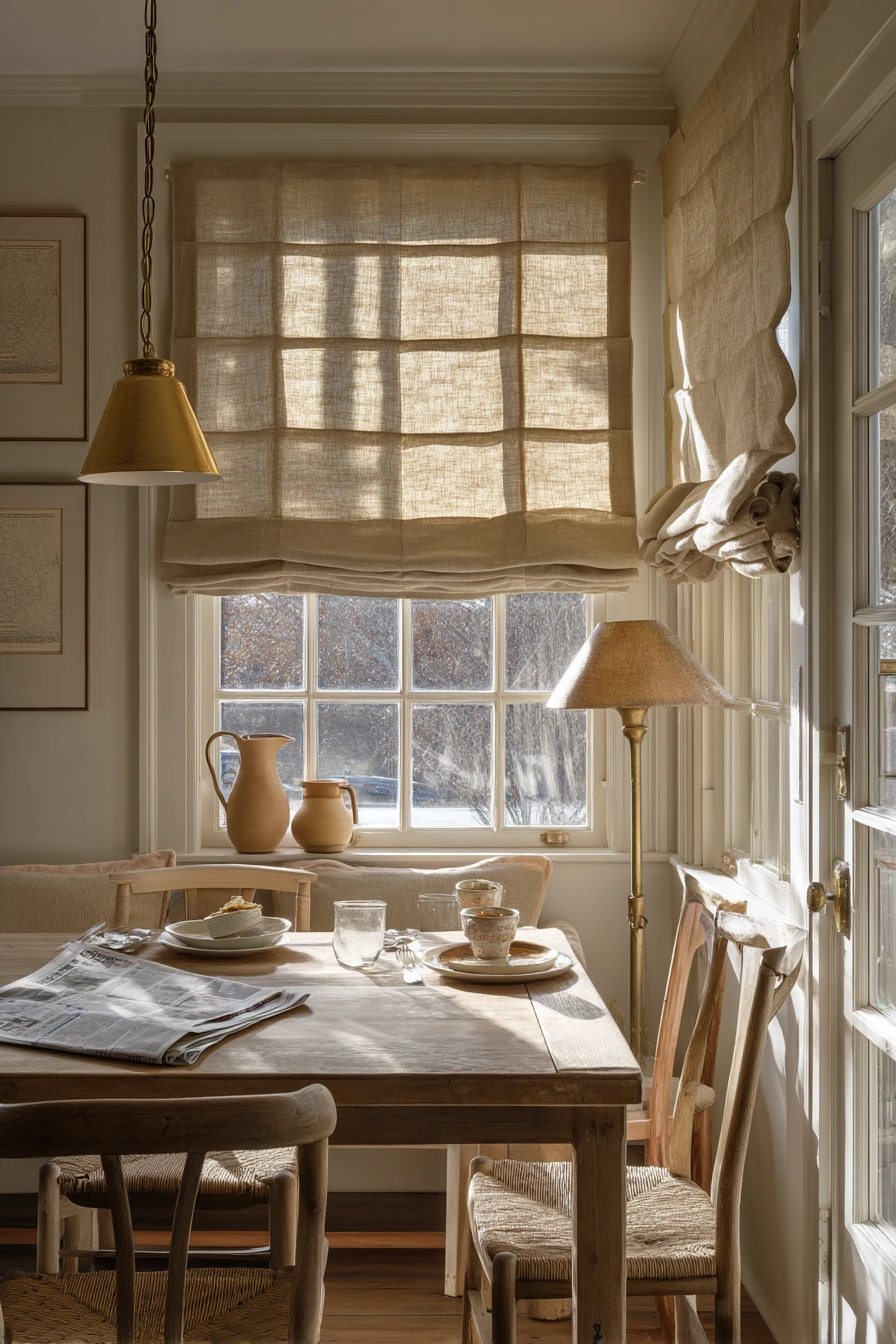
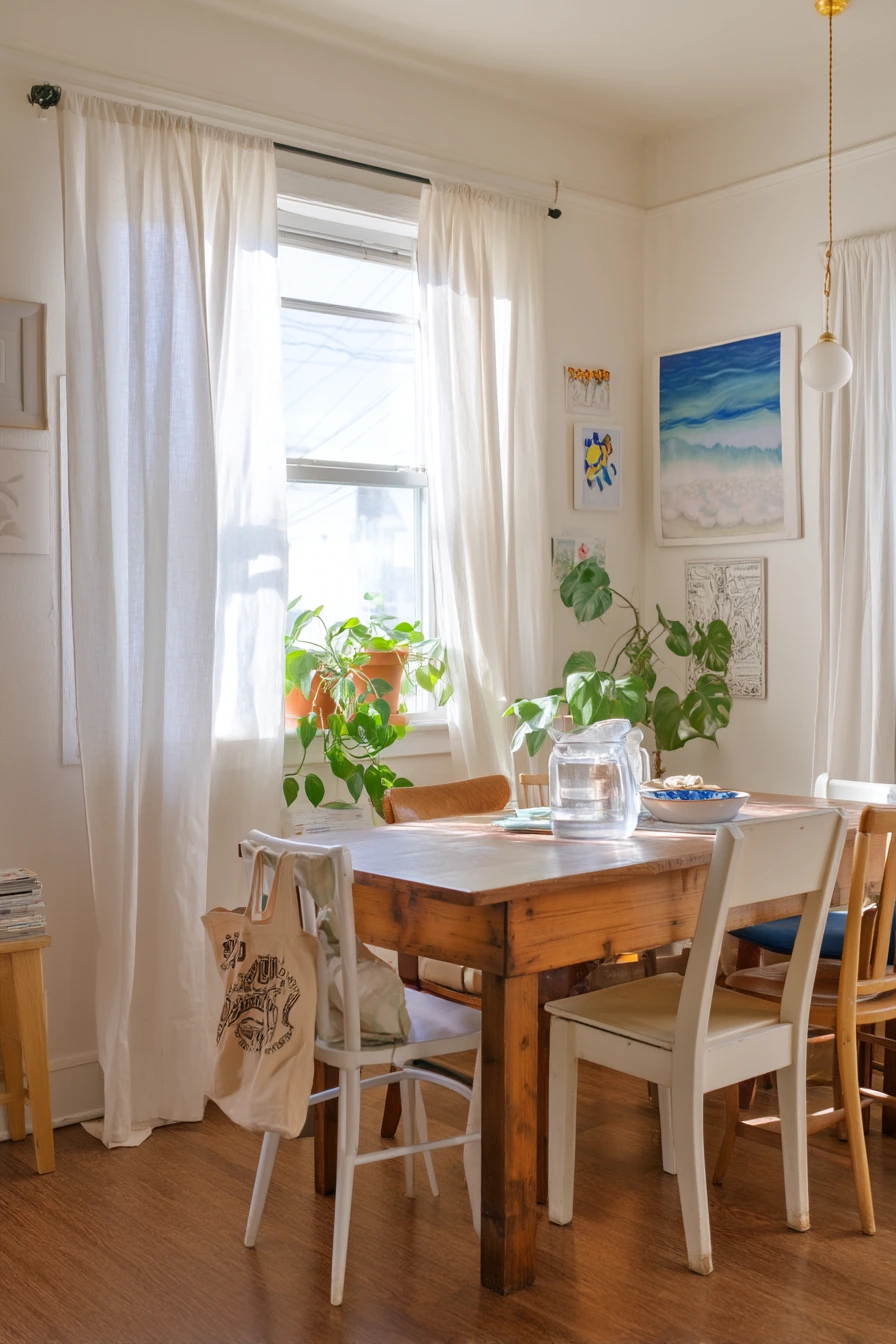
Renter-friendly dining room curtains can still look pulled together. Affordable cotton curtain panels clipped on simple rods are easy to install, easy to swap, and forgiving if the walls are painted white and the room has thrifted furniture. Clip rings also help panels hang straighter, even when the fabric has slightly imperfect folds.
To style this look, keep the curtains simple and let the rest of the room tell the story. Mismatched chairs, removable art prints, and a grocery tote on a chair can feel normal and warm when the window treatment is calm. Choose cotton in a soft white, cream, or light beige so the room stays bright and sun-warmed. Add a small pothos on the sill and a glass water pitcher on the table to keep it fresh and unfussy.
Fit matters more than price. Hang the rod wider than the window so you can pull panels fully open and get the most natural light. If the panels are too short, move the rod up, or choose longer sizes and hem with iron-on tape. If you cannot drill, look into tension rods for smaller windows or adhesive brackets rated for curtain weight. The goal is a clean frame around the window that makes even a thrifted table look intentional.
- Use clip rings to create even pleats without sewing.
- Pick machine-washable cotton for easy care.
- Hang rods 4 to 6 inches above the window to add height.
- Choose light colors to make a small dining room feel bigger.
- Hem with iron-on tape for a quick, neat finish.
Pro Design Tip: Clip rings look best when you space them evenly, about every 4 to 6 inches, so the folds fall the same from top to bottom.
Budget Considerations: Thrift stores and big-box stores often have low-cost cotton panels; spend a little extra on good clip rings since cheap ones can snag and tilt.
5 Moody Velvet Curtains for Evening Entertaining

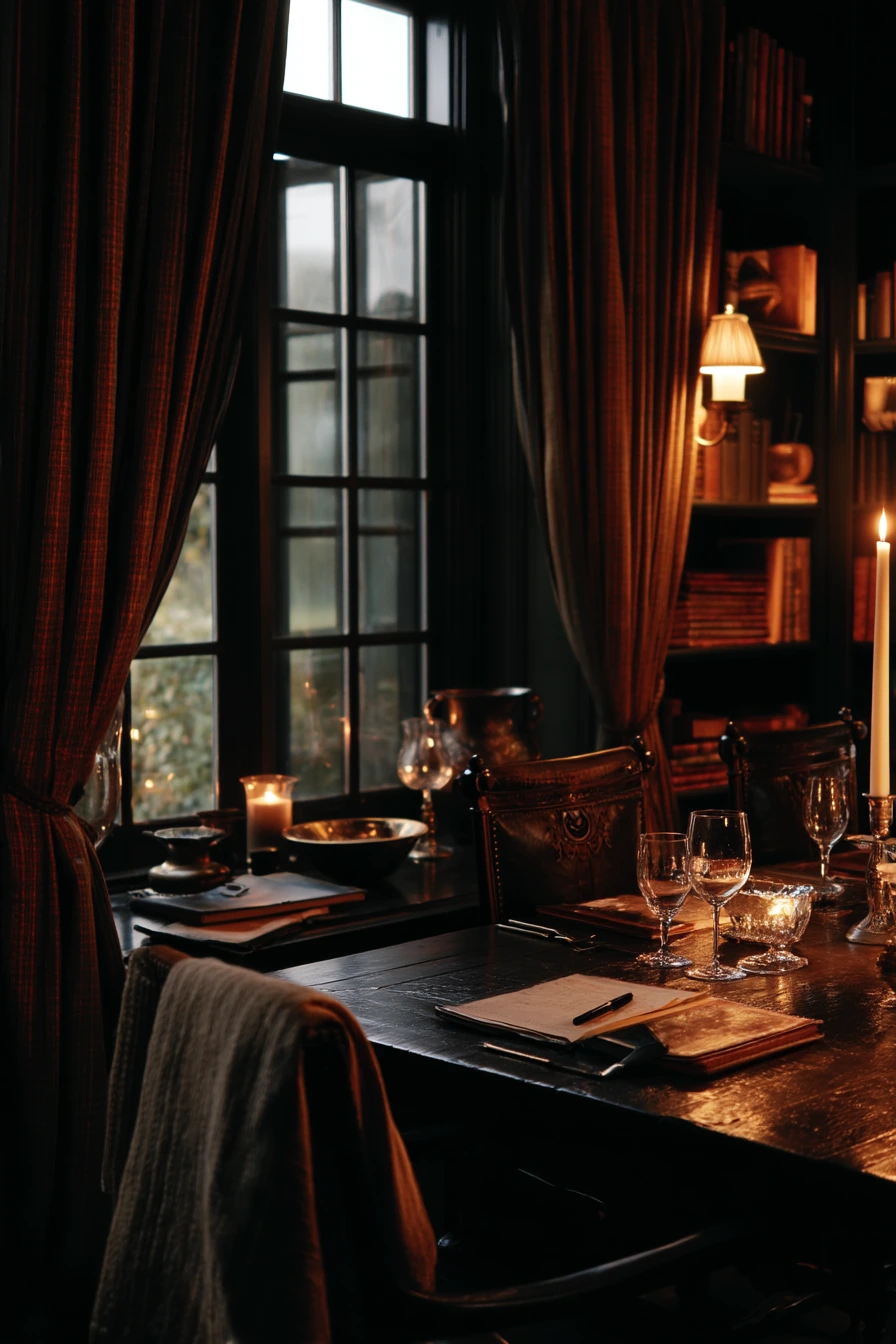
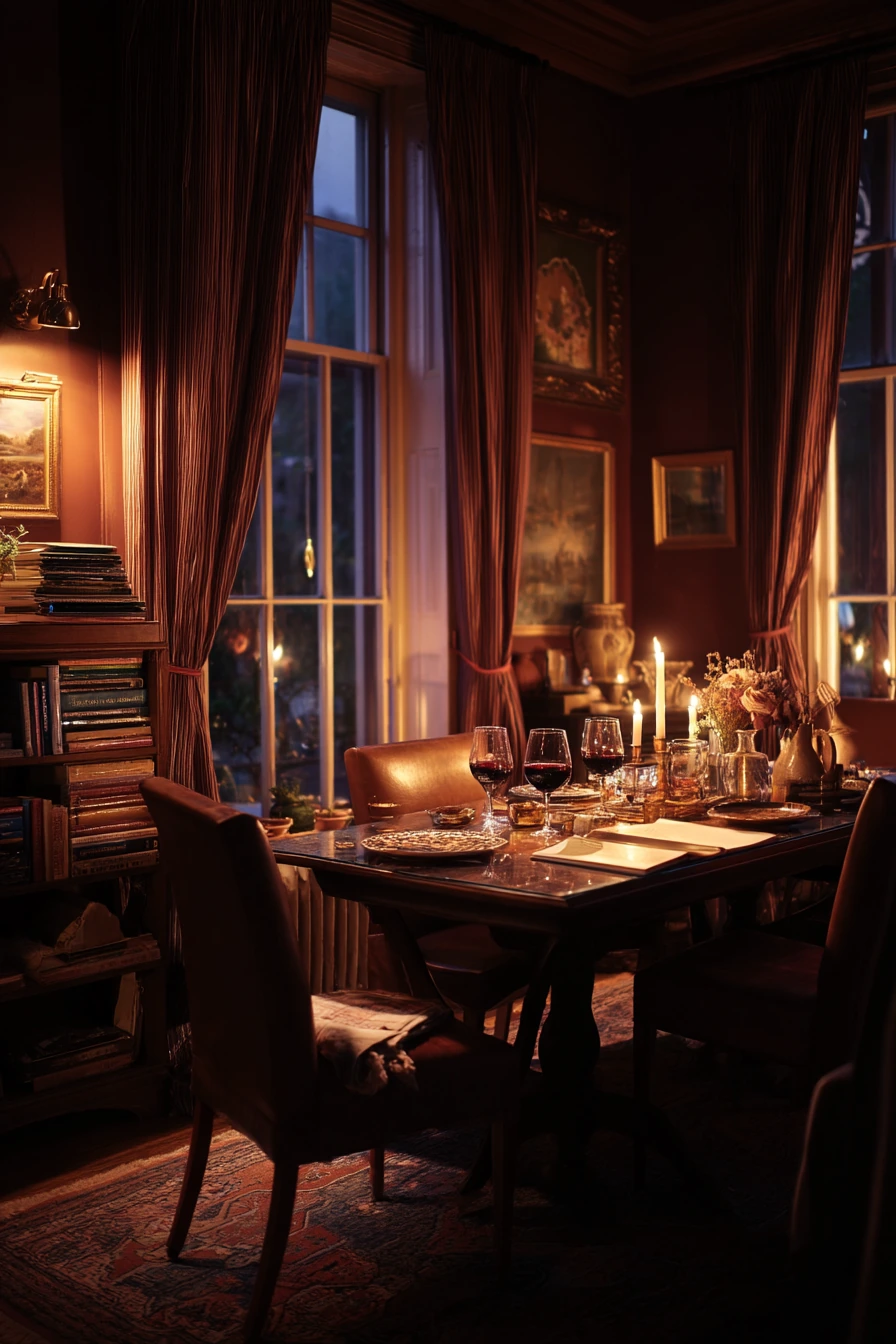
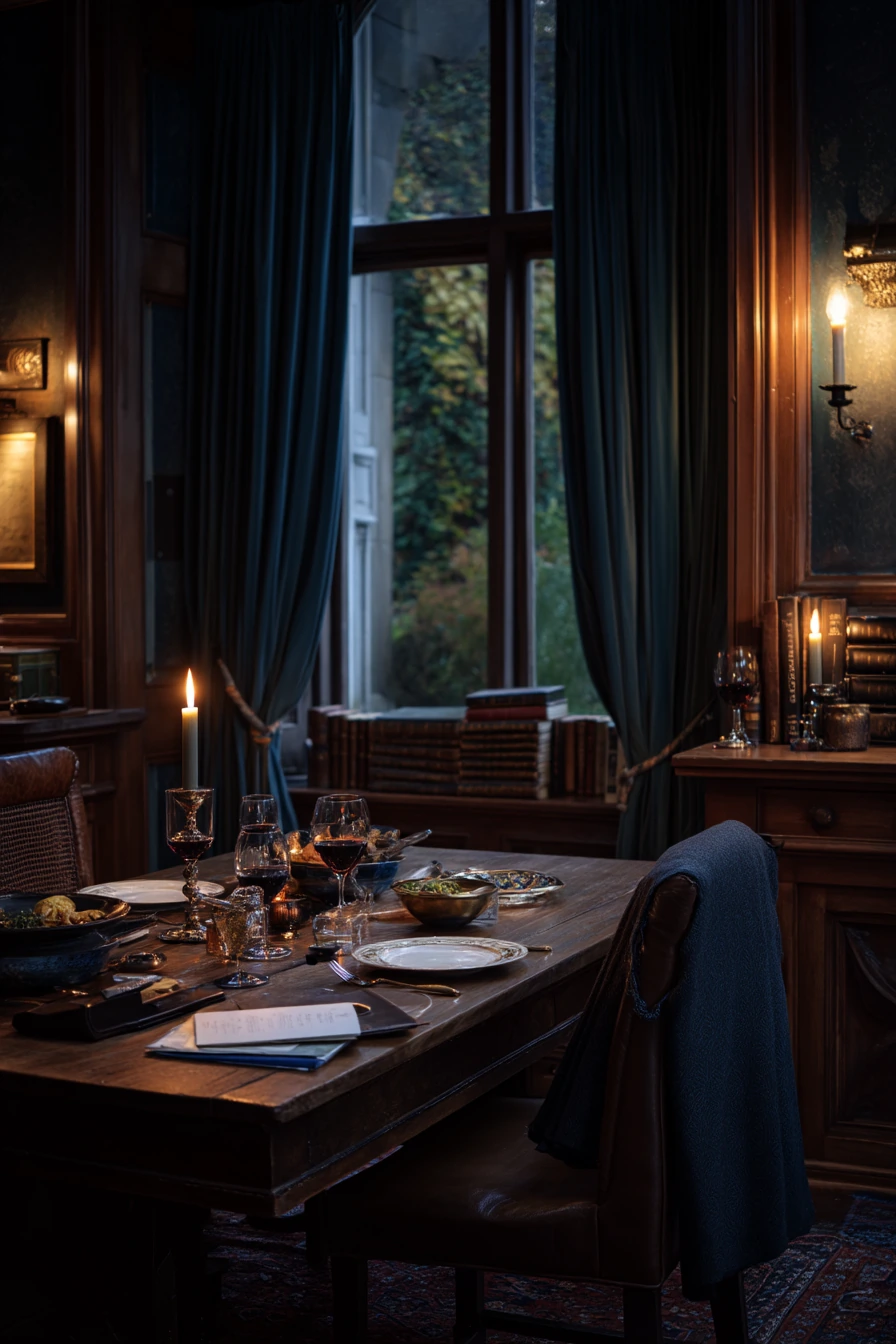
Deep velvet curtains are a classic choice for a dining room at dusk. They frame tall windows, add warmth, and create rich shadows that make the room feel intimate. This style fits a candlelit table set for guests, with wine glasses, a serving dish, and the kind of real details you see before a meal, like a jacket draped over a chair and books on a sideboard.
Velvet works best when the rest of the room is balanced. Pair it with warm lighting like practical sconces and candlelight so the fabric looks soft, not flat. Keep the table setting simple and let the curtains do the drama. A linen runner, neutral plates, and one or two serving pieces help the space feel inviting without being busy. If you keep a half-open notebook on the sideboard, tuck it into a tray so it reads organized.
Think about function, too. Velvet can block light and add privacy, which is helpful in the evening. If you want daytime brightness, keep panels pulled back with simple holdbacks. Choose a lining to protect the fabric and help it hang well. For tall windows, make sure you have enough width so the curtains look full when closed and still stack nicely when open.
- Use a sturdy rod since velvet is heavy.
- Choose a warm, deep color like olive, navy, or cocoa for a cozy mood.
- Add blackout or privacy lining to improve drape and light control.
- Keep hardware simple so the fabric stays the focus.
- Steam the hems so they fall straight near the floor.
Pro Design Tip: To avoid a stiff look, choose velvet with a soft pile and hang it with extra width so the folds stay rounded even when the curtains are closed.
Budget Considerations: Velvet panels vary a lot in price; look for polyester velvet for a similar look, and invest in good lining only if the windows get strong sun.
6 Soft Neutral Curtains in a Minimal Dining Space
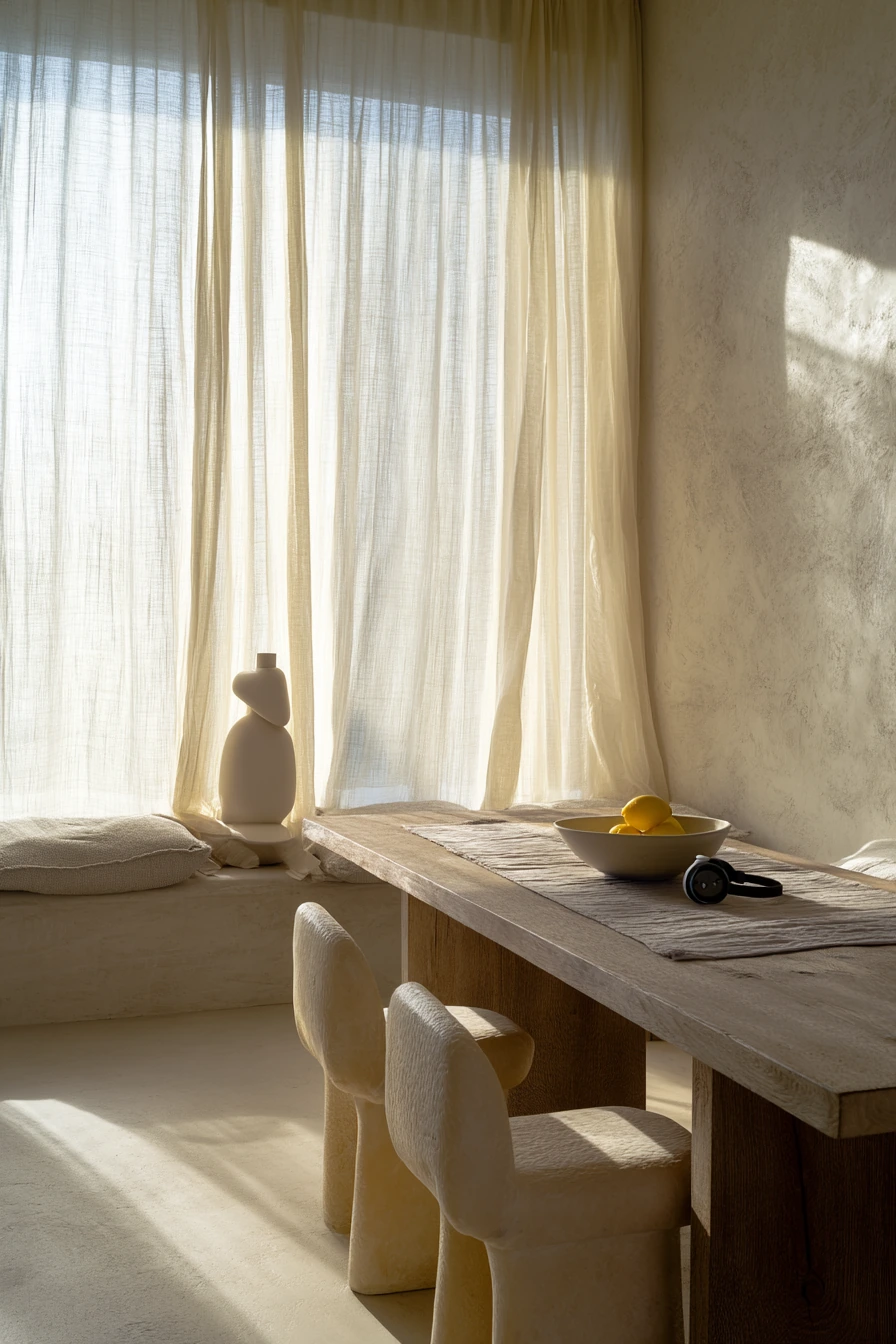
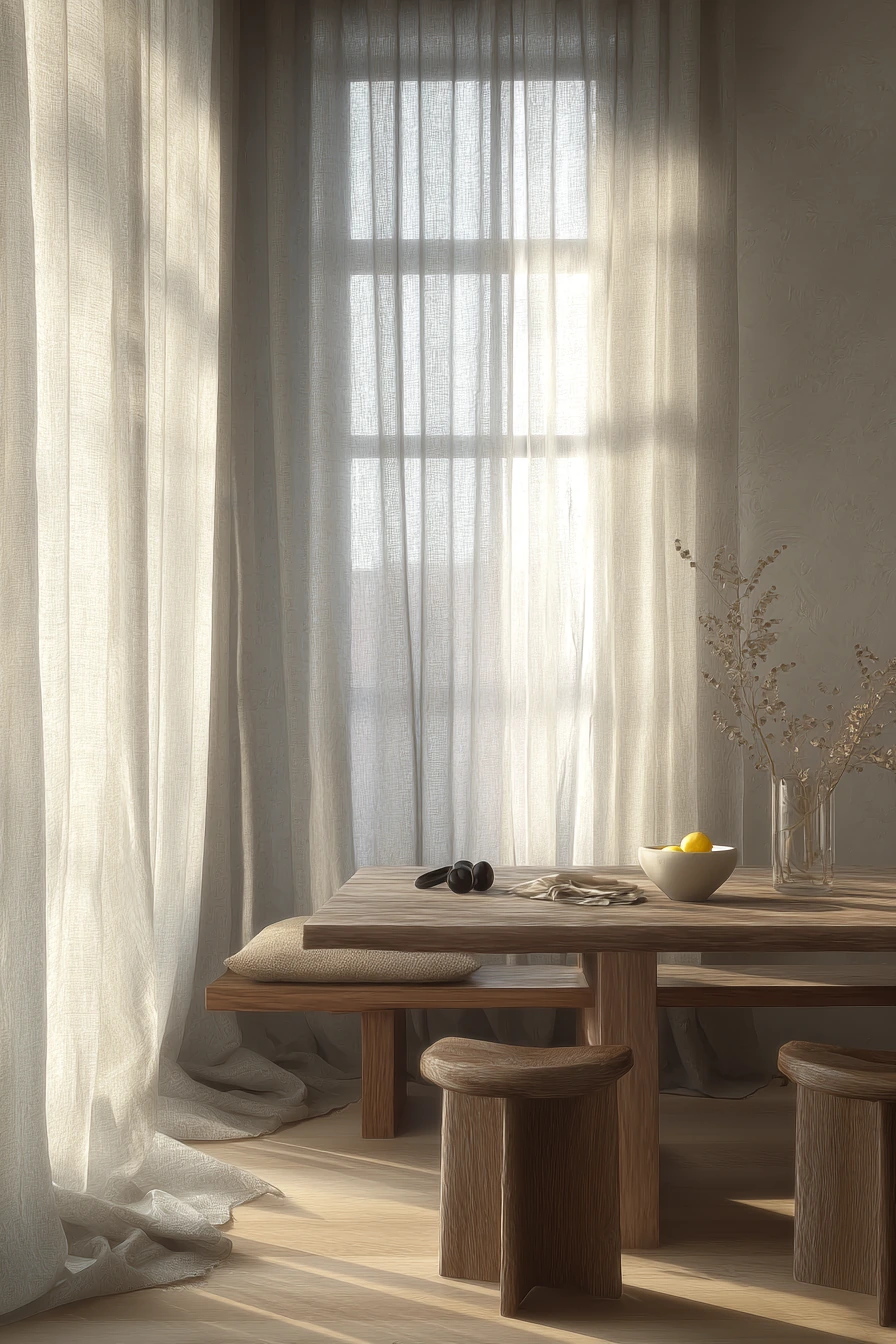
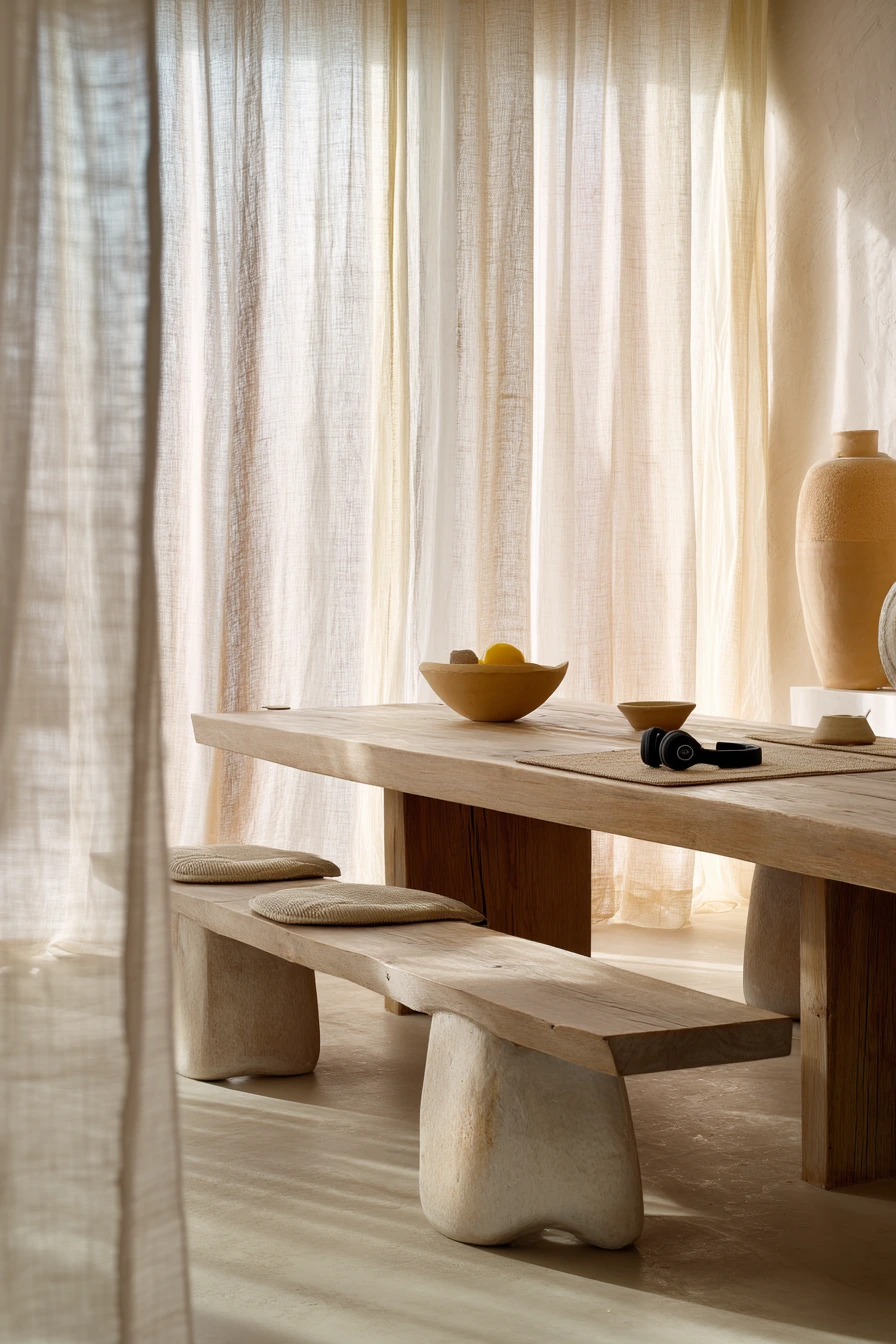
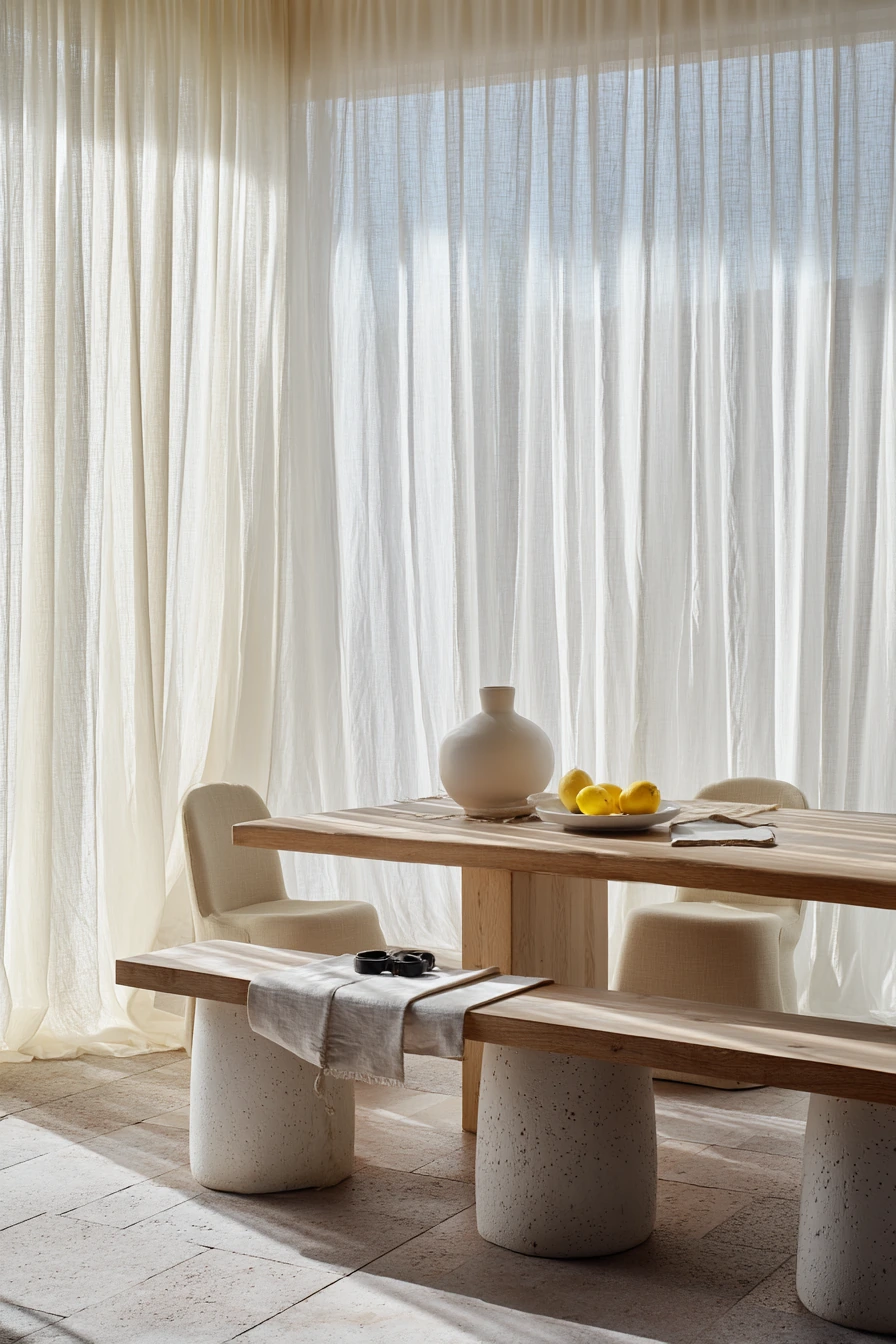
Stonewashed neutral curtains create a quiet, steady background in a pared-back dining room. When the fabric pools lightly at the floor, it adds softness without feeling fussy. This look pairs well with a simple oak table, sculptural chairs, and handmade ceramics, like a vase and a small lemon bowl.
To style it, keep the room uncluttered and let texture do the work. Gauze-like fabric diffuses sunlight, which helps the space feel serene in the morning. Stick to a tight color range: warm whites, sand, light gray, and natural wood. Small everyday items, like headphones on a bench or a folded placemat, can stay out as long as they match the calm palette and are grouped neatly.
Fit and fabric choice matter. A stonewashed finish hides wrinkles and makes the curtains look relaxed right away. If you want the pooling look, add 1 to 2 inches of extra length. If you have kids or pets, consider a slight break instead of a big puddle so it is easier to keep clean. Use simple rings or hidden tabs to keep the top edge neat and modern.
- Pick a textured weave to avoid a flat, plain wall of fabric.
- Use warm neutrals to match oak and natural ceramics.
- Choose light-filtering fabric for a soft glow without harsh glare.
- Keep curtain fullness moderate for a clean, minimal look.
- Style the table with one bowl or vase, not a lot of decor.
Pro Design Tip: If you want calm but not boring, mix two similar neutrals, like sand curtains with creamy walls, so the window reads layered even with one panel set.
Budget Considerations: “Stonewashed” often costs more; you can get a similar relaxed look by washing cotton panels and drying them on low, then hanging while slightly damp.
7 Patterned Curtains for a Vintage Dining Room Refresh


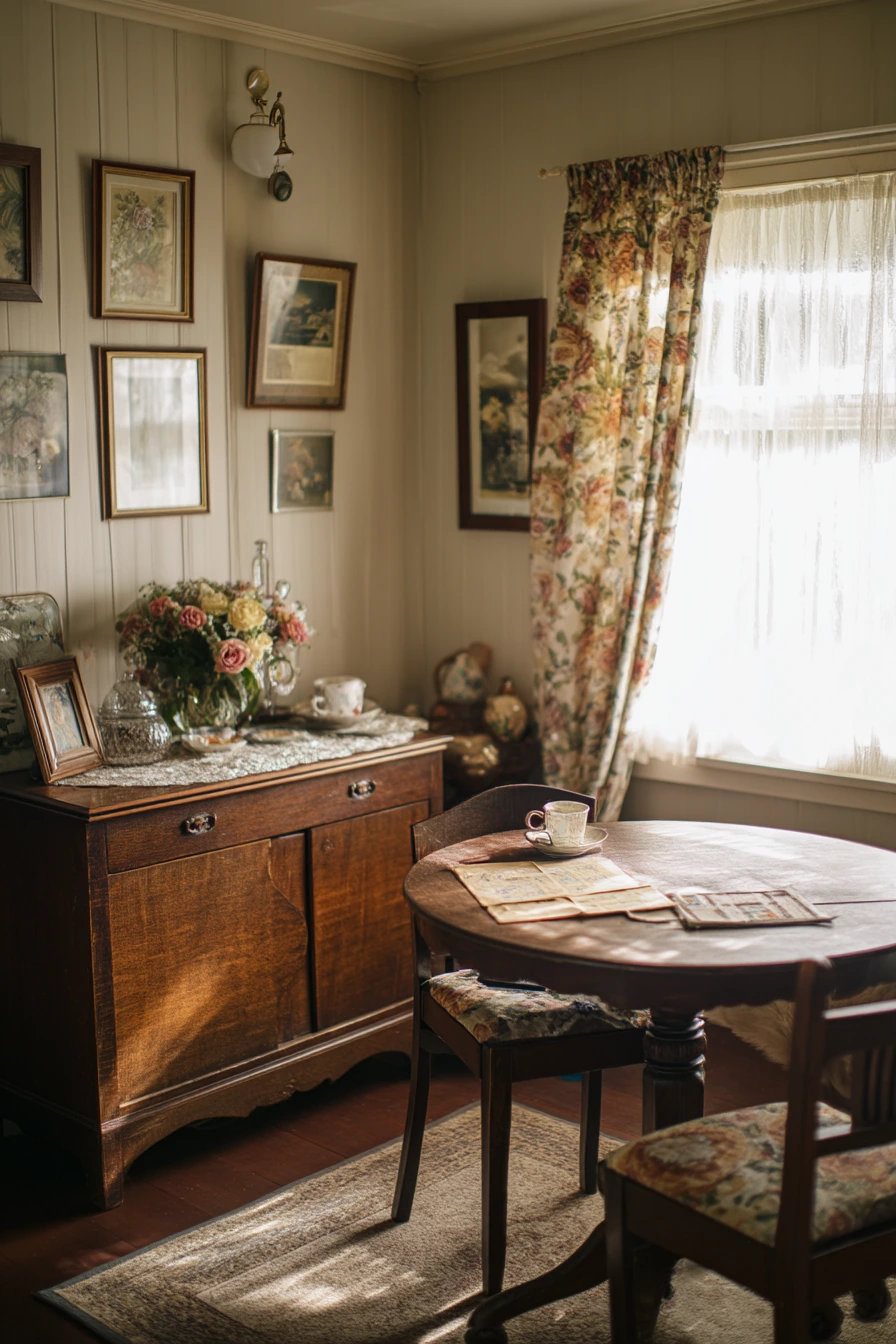
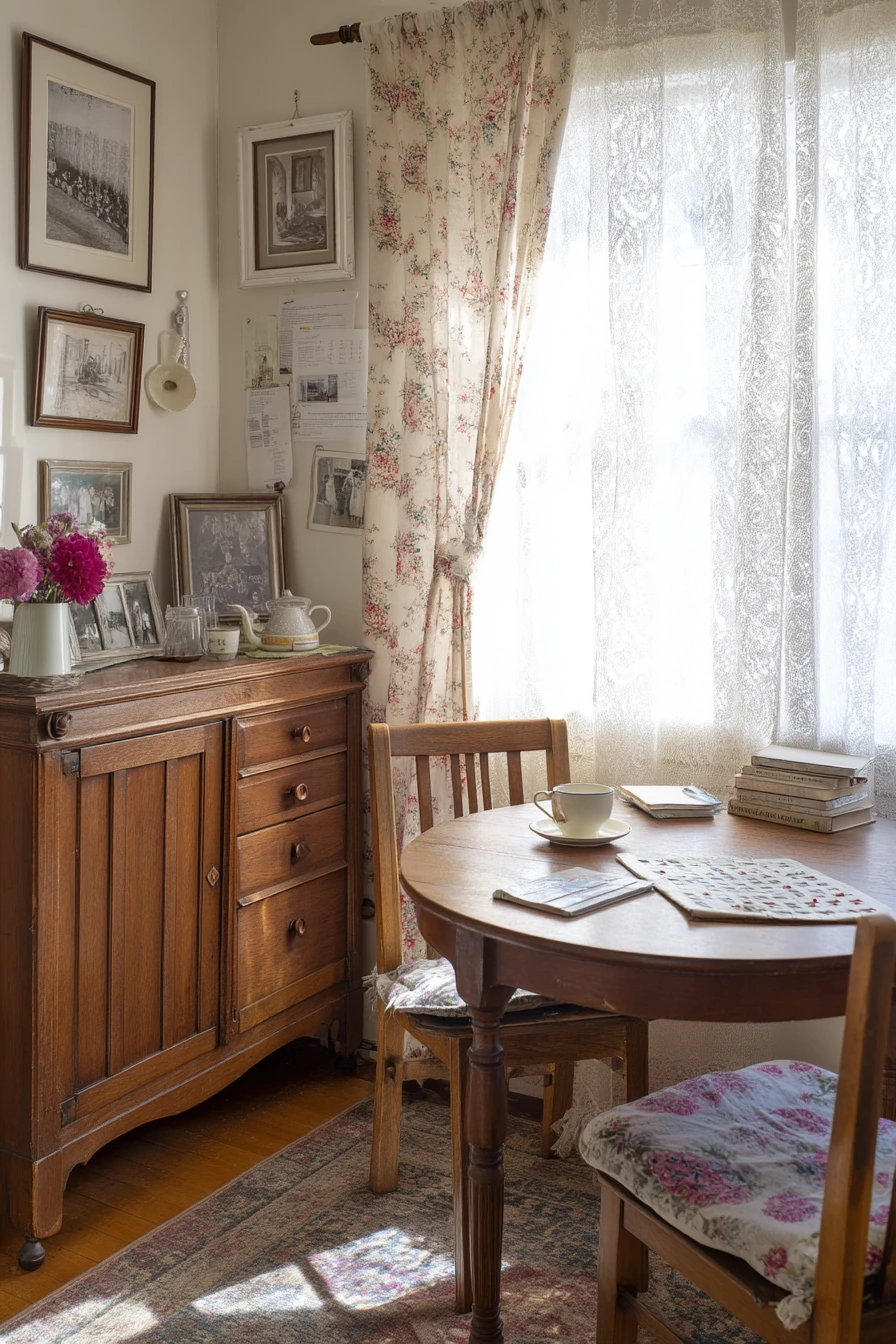
Patterned curtains add instant personality to a vintage dining room. They can tie together an heirloom sideboard, a round wooden table, and floral chair cushions without needing a lot of extra decor. In a collected space with old photo frames, a teacup, and a stack of recipe cards, pattern helps the room feel warm and intentional.
The key is choosing the right scale and colors. If the room already has many small items, go for a medium to large print so it does not feel busy. If your furniture is simple, a smaller pattern can add detail. Use the curtain colors to guide the rest of the choices, like picking one shade for napkins or a table runner. A slightly askew rug can still look charming if the curtain pattern anchors the wall.
Keep the window treatment classic. Hang the rod high to add height, and let panels skim the floor for a finished look. If the room gets dusty highlights in the sunlight, lined curtains help the colors stay true and protect fabric. For everyday use, pull them back to show the window light, and close them in the evening to make the dining room feel cozy for tea, puzzles, or a quiet dinner.
- Choose a pattern with 2 to 4 main colors for easy matching.
- Repeat one curtain color in a small accent, like cushions or napkins.
- Use simple hardware in brass or dark wood to suit vintage pieces.
- Keep other prints limited so the room feels balanced.
- Consider light lining to help patterned fabric hang better.
Pro Design Tip: Match the curtain pattern scale to the room size: smaller rooms usually look better with medium patterns, not tiny ones that can turn into visual noise.
Budget Considerations: Printed fabric can get expensive; look for ready-made panels and shorten them with a simple hem instead of ordering custom sizes.
8 Plant-Filled Dining Room with Breezy Curtains
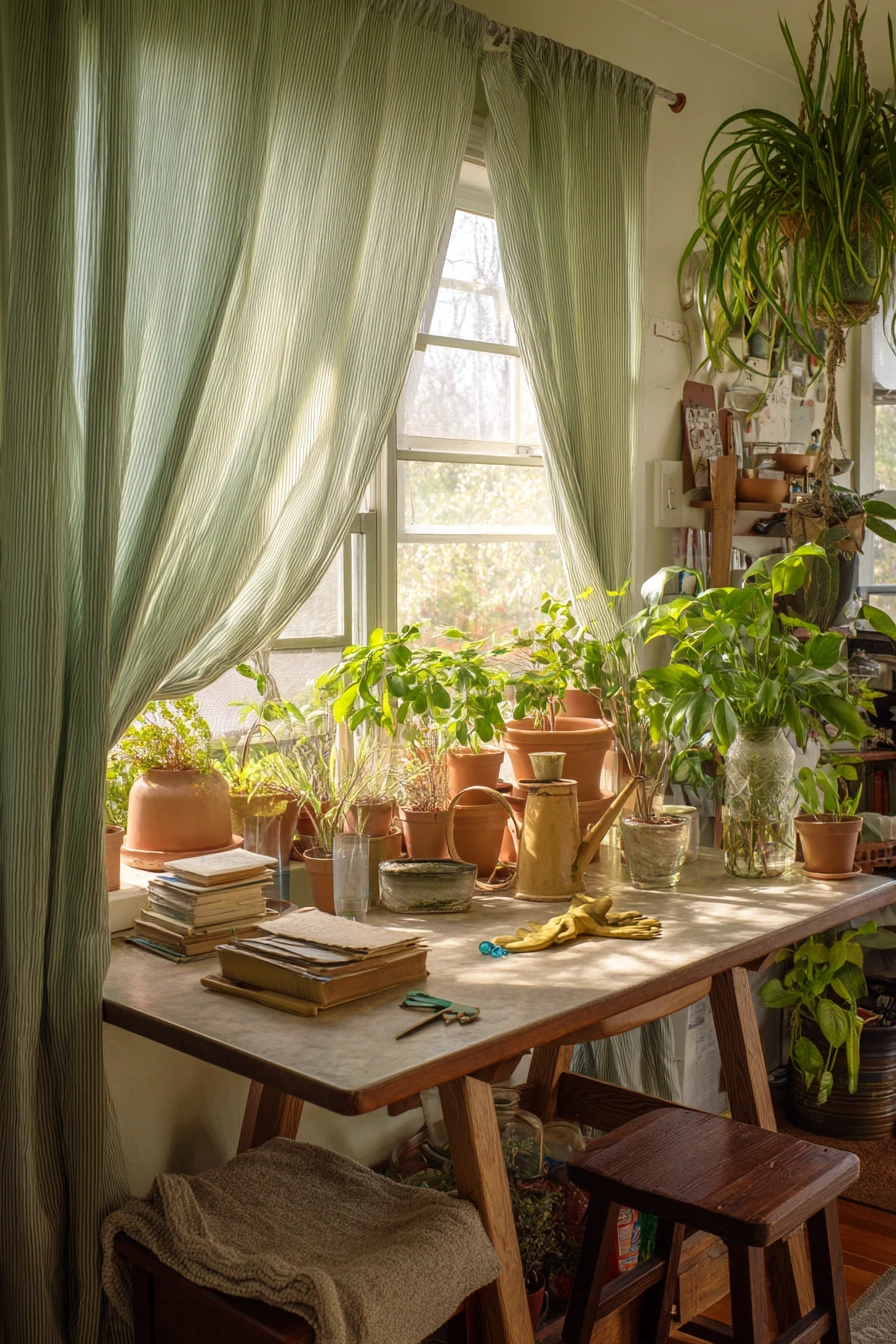
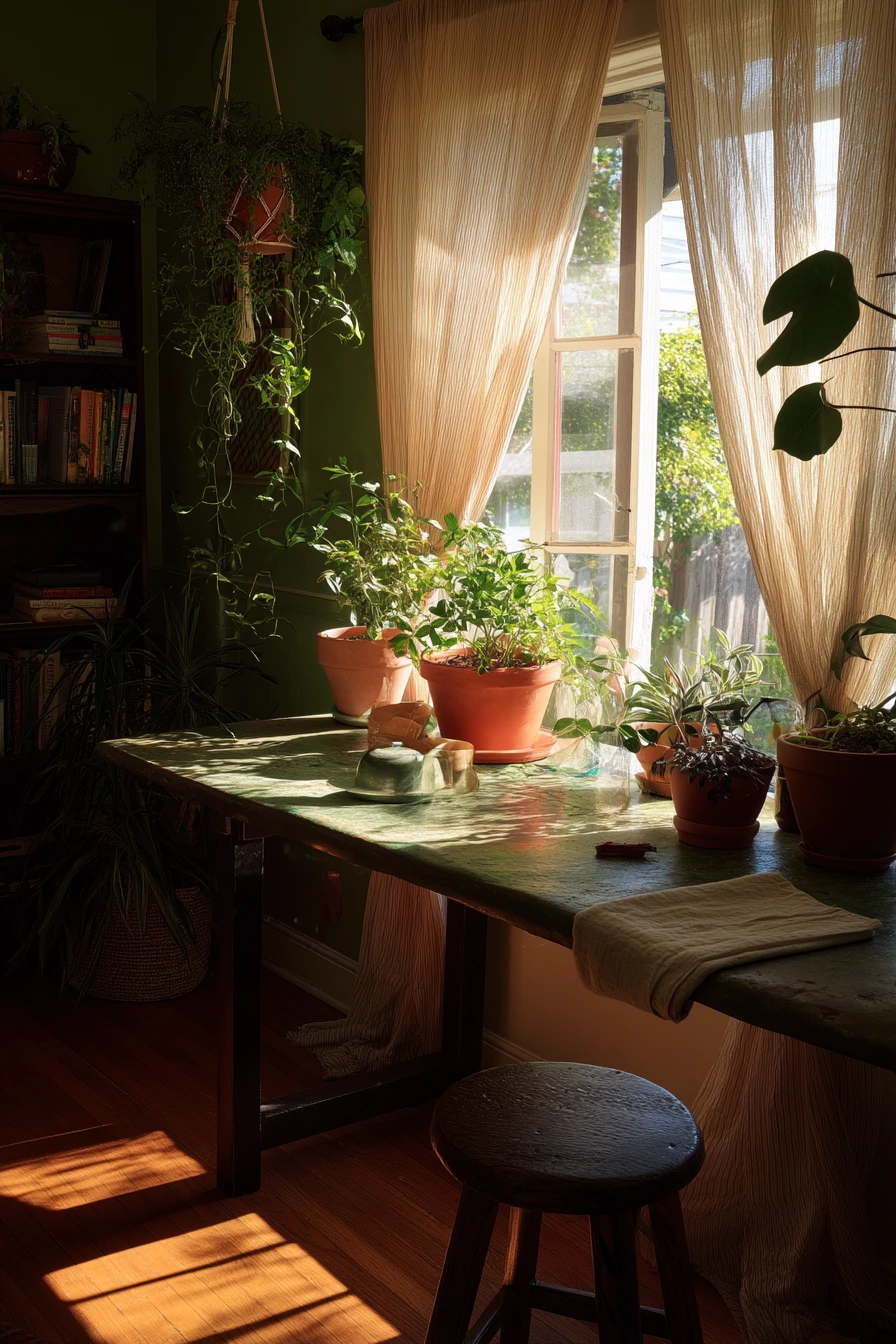
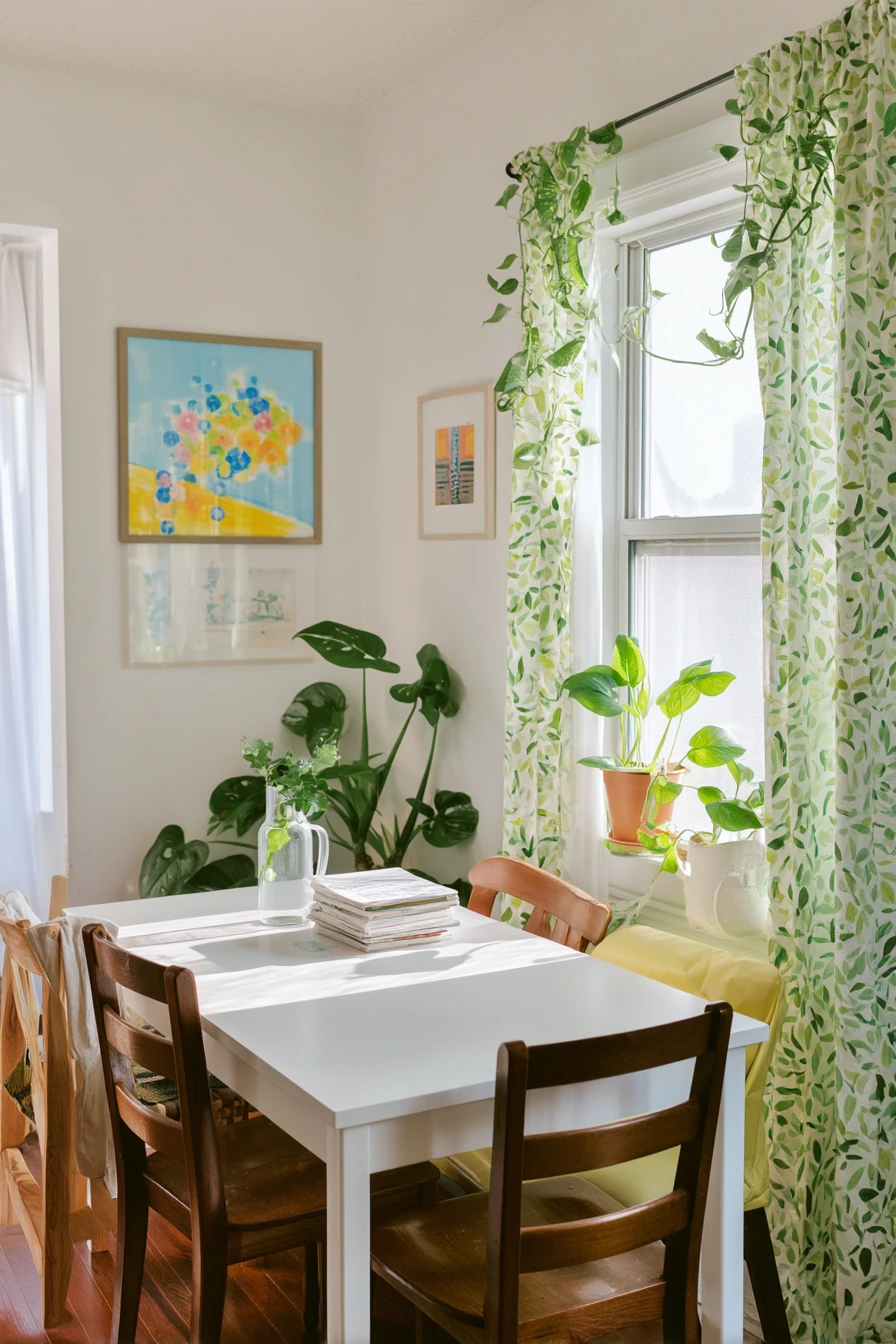
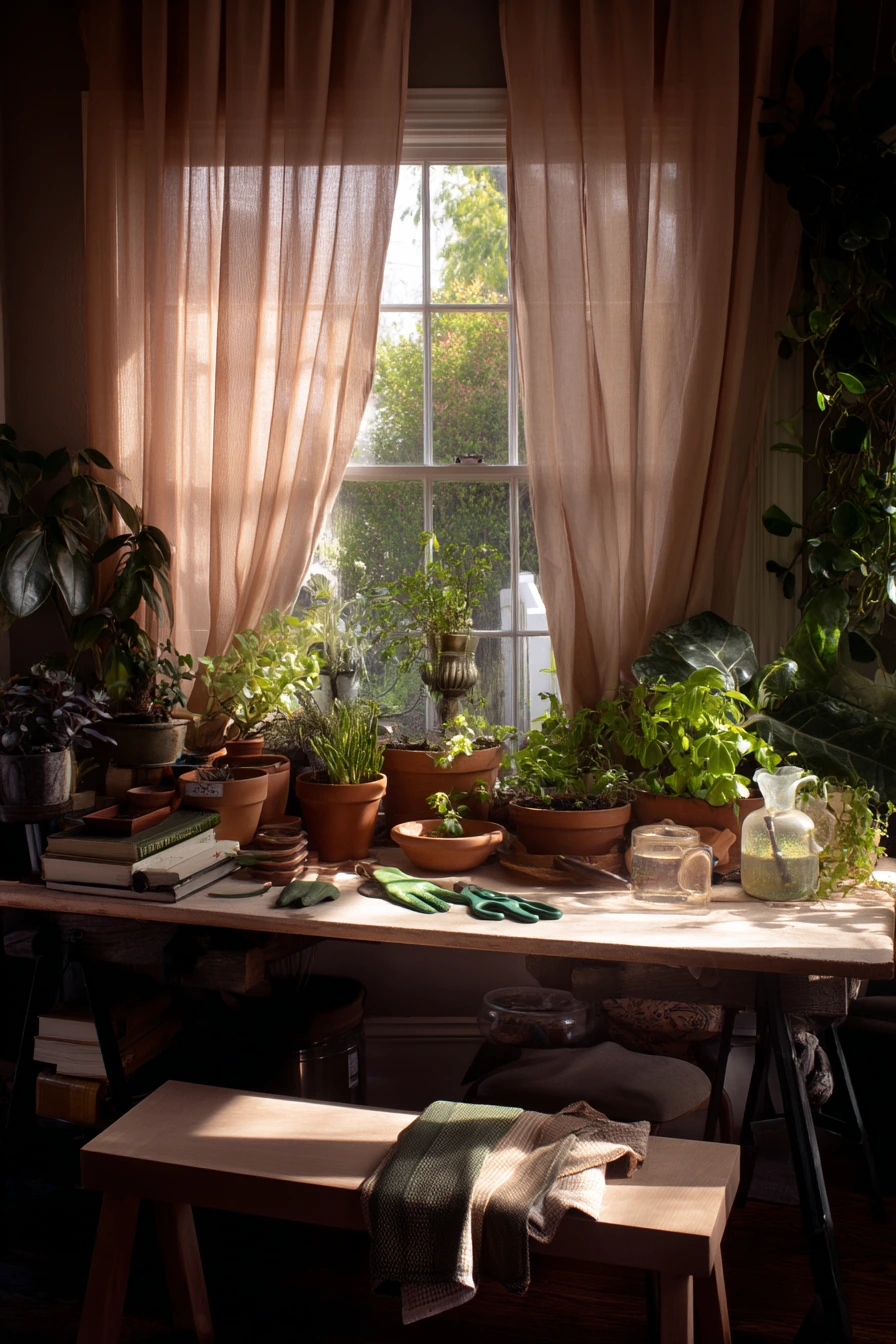
Breezy cotton curtains are a natural fit for a green, plant-filled dining room. When the window is open, the fabric can move gently, which makes the room feel fresh and relaxed. This style works well with a long table, terracotta pots, a watering can, and everyday items like gardening gloves and books about indoor plants.
To style it, keep the curtains light in color so they do not block the sun your plants need. White, cream, or pale flax keeps the room bright and helps leafy shadows show up on the wall and table. Place a glass vase and a few small pots near the window to connect the curtains to the plant theme. A stool with a folded throw adds a casual, usable touch without looking messy.
For function, think about airflow and sun protection. If the window is open often, choose a tighter weave cotton that does not fly around too much. If the room gets strong afternoon sun, consider adding a simple shade behind the curtains so you can protect leaves from scorch while still keeping the soft look. Washable fabric matters here, since soil and water splashes happen in real homes.
- Choose washable cotton so you can clean it often.
- Hang panels wider than the window for a fuller, softer frame.
- Keep the hem slightly off the floor to avoid dust and pet hair.
- Use simple tiebacks so you can open the window for air.
- Repeat terracotta tones in one small item, like a runner or bowl.
Pro Design Tip: Use a double rod: a light-filtering shade behind cotton curtains lets you control sun for plants while keeping the window soft and bright.
Budget Considerations: Basic cotton panels are usually low cost; spend extra only if you need UV protection or better lining for strong sun exposure.

9 Elegant Blackout Curtains for a South-Facing Dining Room
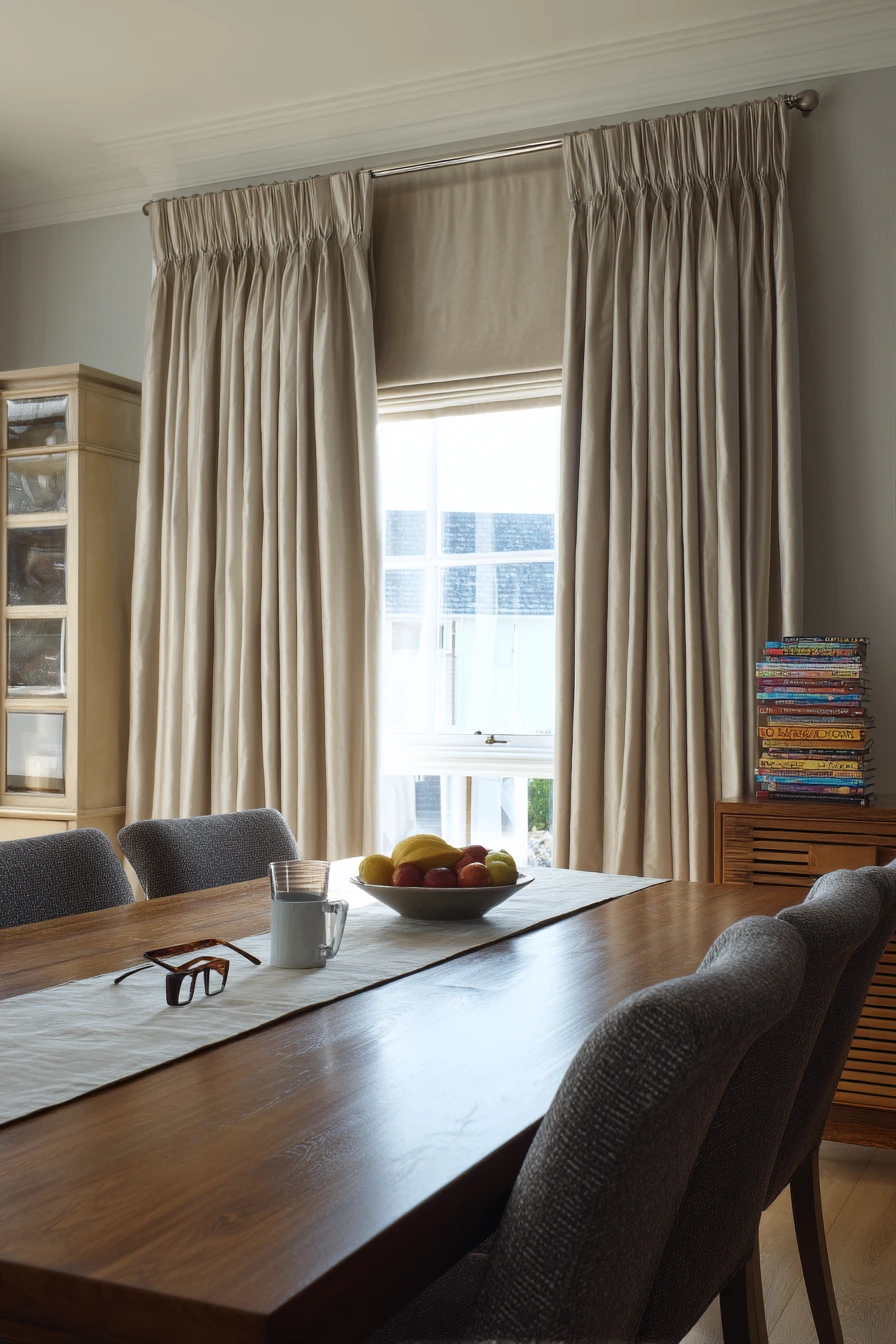
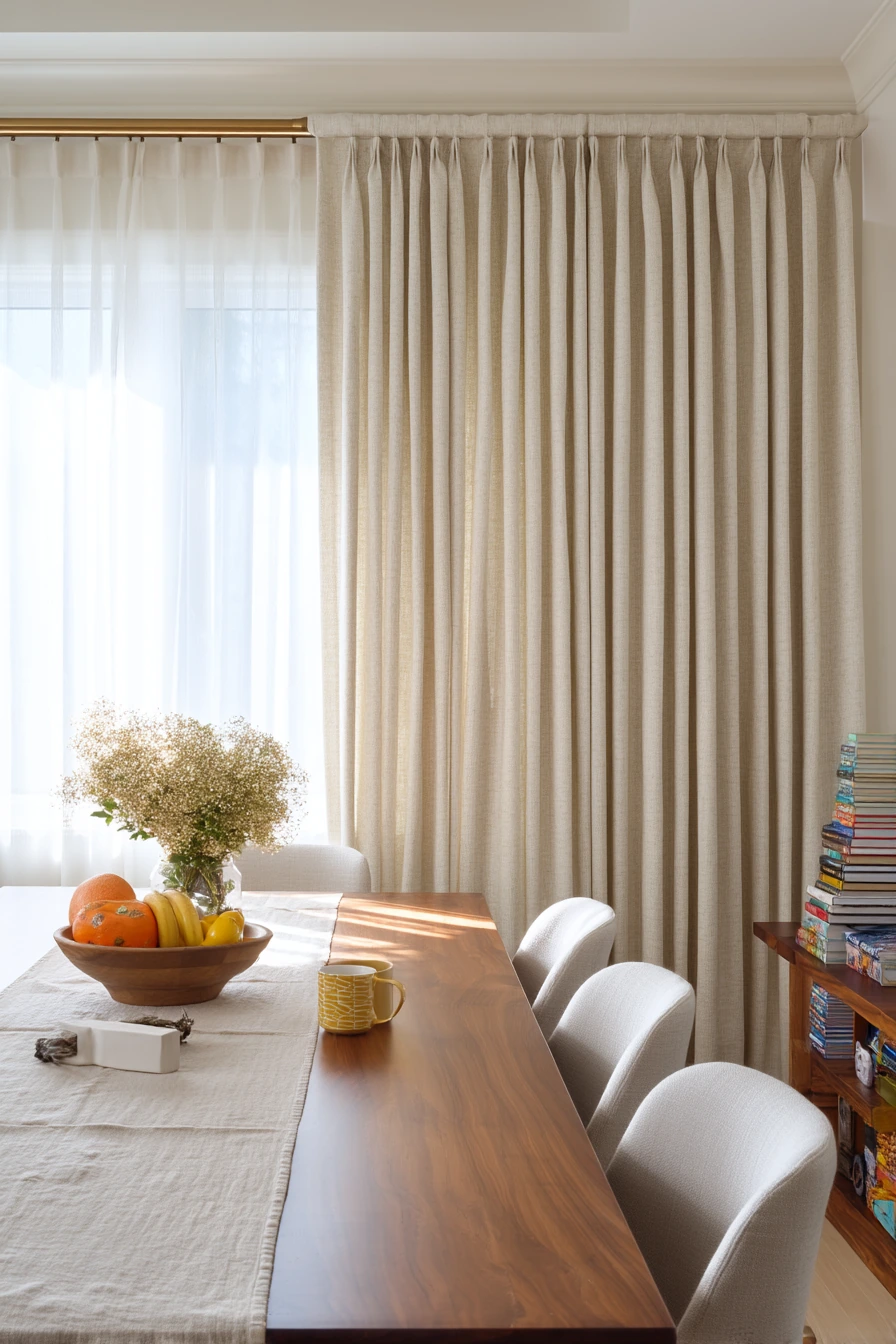
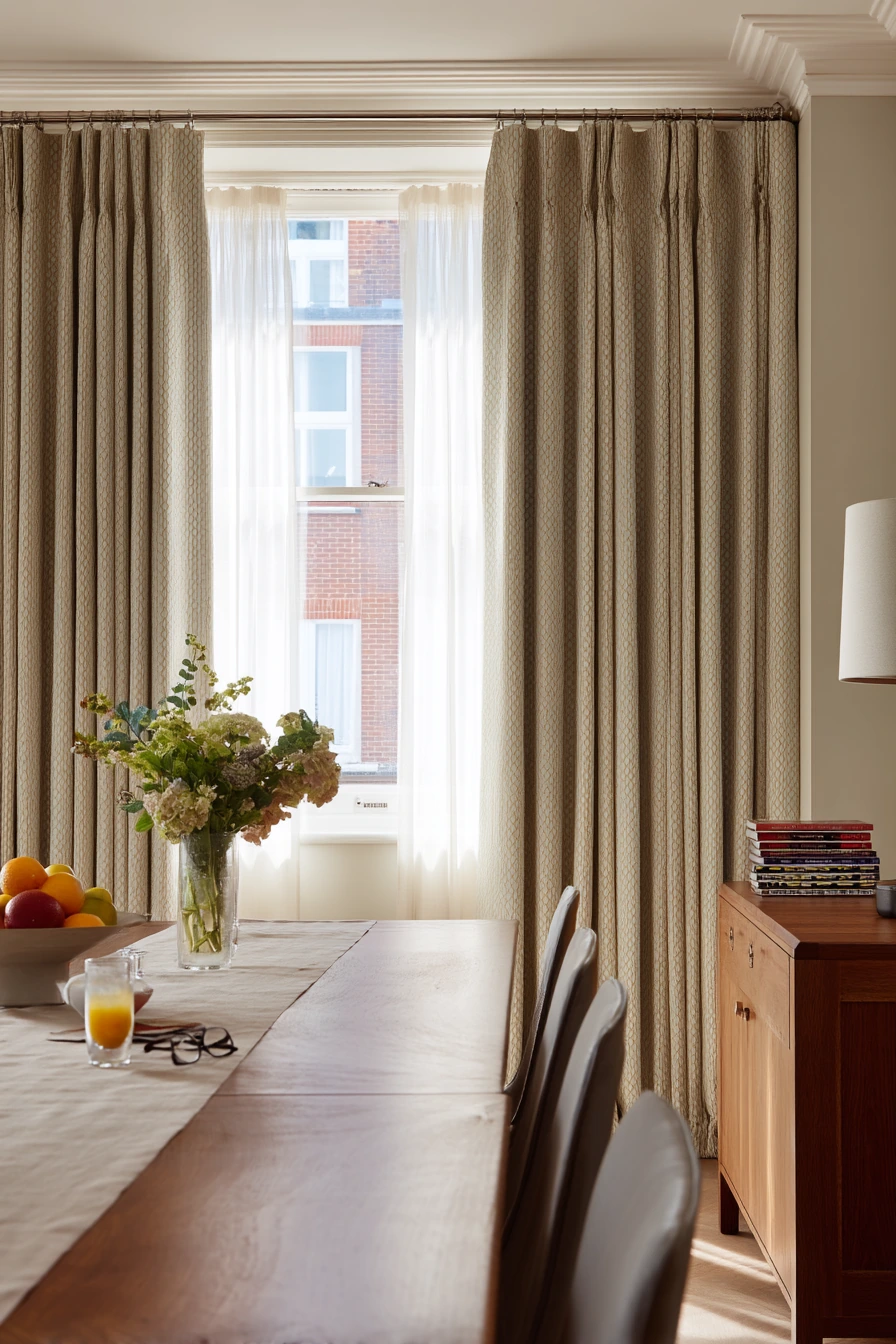
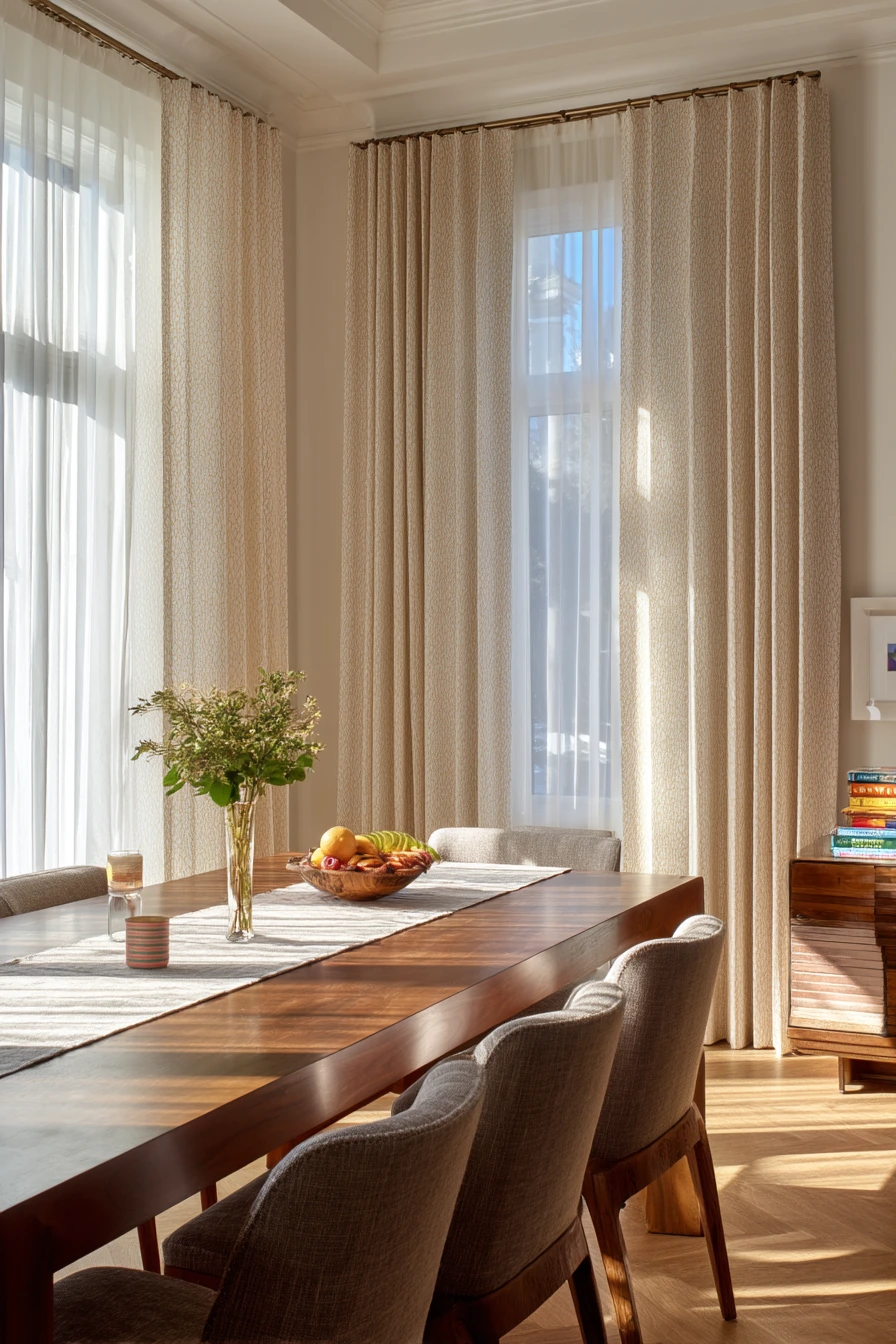
In a south-facing dining room, elegant blackout curtains in a soft matte fabric can protect your table and make the room easier to use all day. Harsh midday glare can fade a polished wood table and make it hard to see faces across the room. Blackout panels let you control the light while still looking polished and modern.
Style this look by keeping the fabric matte and the color gentle. Think soft greige, warm gray, or muted taupe instead of shiny black. Pair it with contemporary chairs and simple linens, like a linen runner and a fruit bowl. Real life happens here, so items like reading glasses, a toddler sippy cup, and stacked board games on the sideboard can stay out if the rest of the styling is clean and organized.
For the best result, hang blackout curtains high and wide to cover the window fully and reduce side light leaks. If you want more flexibility, choose a layered setup: sheer curtains for daytime plus blackout panels for peak sun and evenings. Make sure you have strong hardware, since blackout fabric can be heavy, especially in extra-long lengths.
- Choose matte blackout fabric for a softer, more high-end look.
- Hang panels wider than the window to reduce light gaps.
- Use tiebacks so you can open curtains during low-glare hours.
- Add a sheer layer if you want daylight without full exposure.
- Protect wood surfaces by closing curtains during peak sun.
Pro Design Tip: Mount the rod 6 to 10 inches above the window and extend it 8 to 12 inches past each side so blackout panels can clear the glass when open.
Budget Considerations: Blackout curtains cost more than basic panels; if you are saving, use blackout liners clipped to regular curtains instead of buying new sets.
10 Casual Curtains in a Shared Dining and Work Space
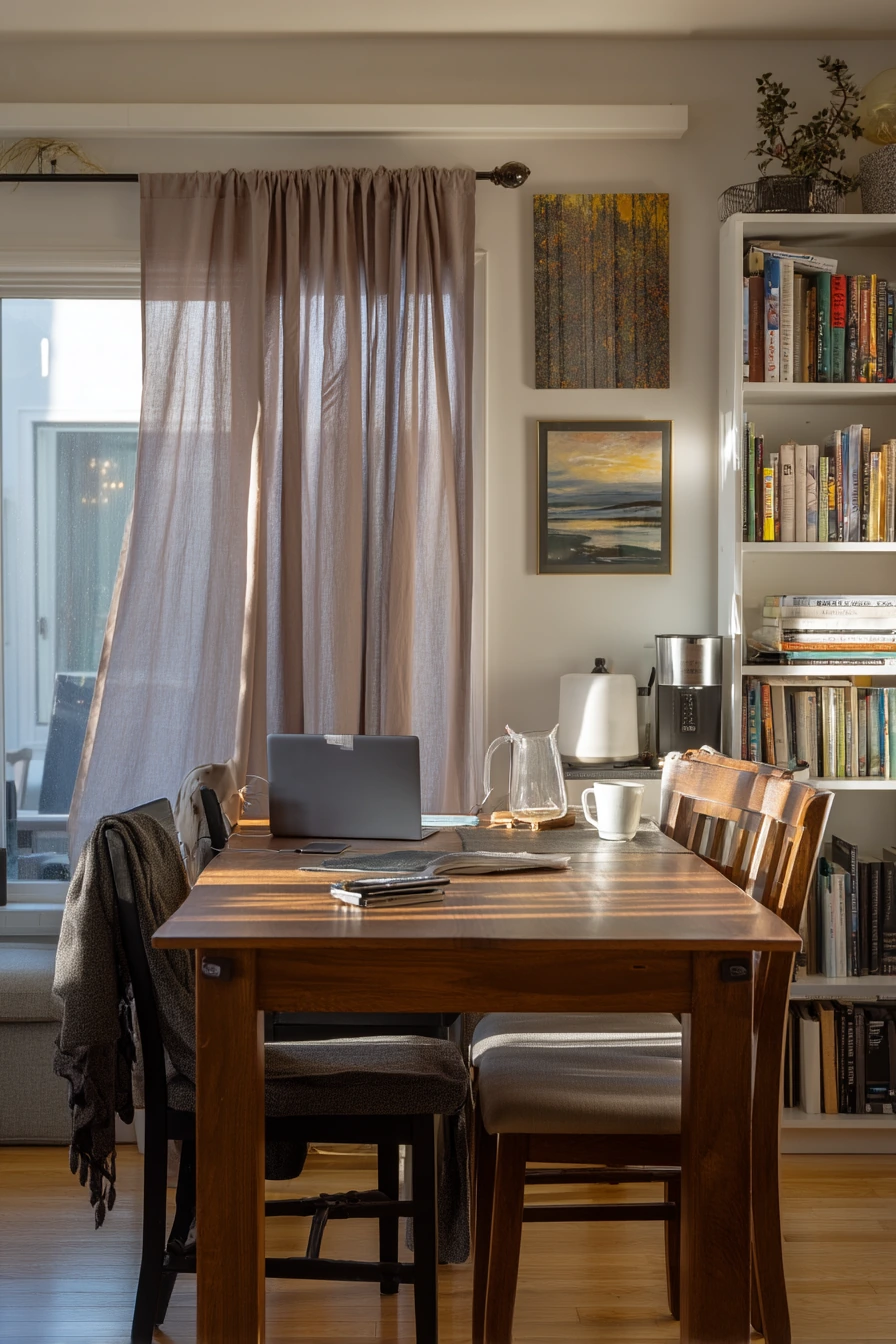
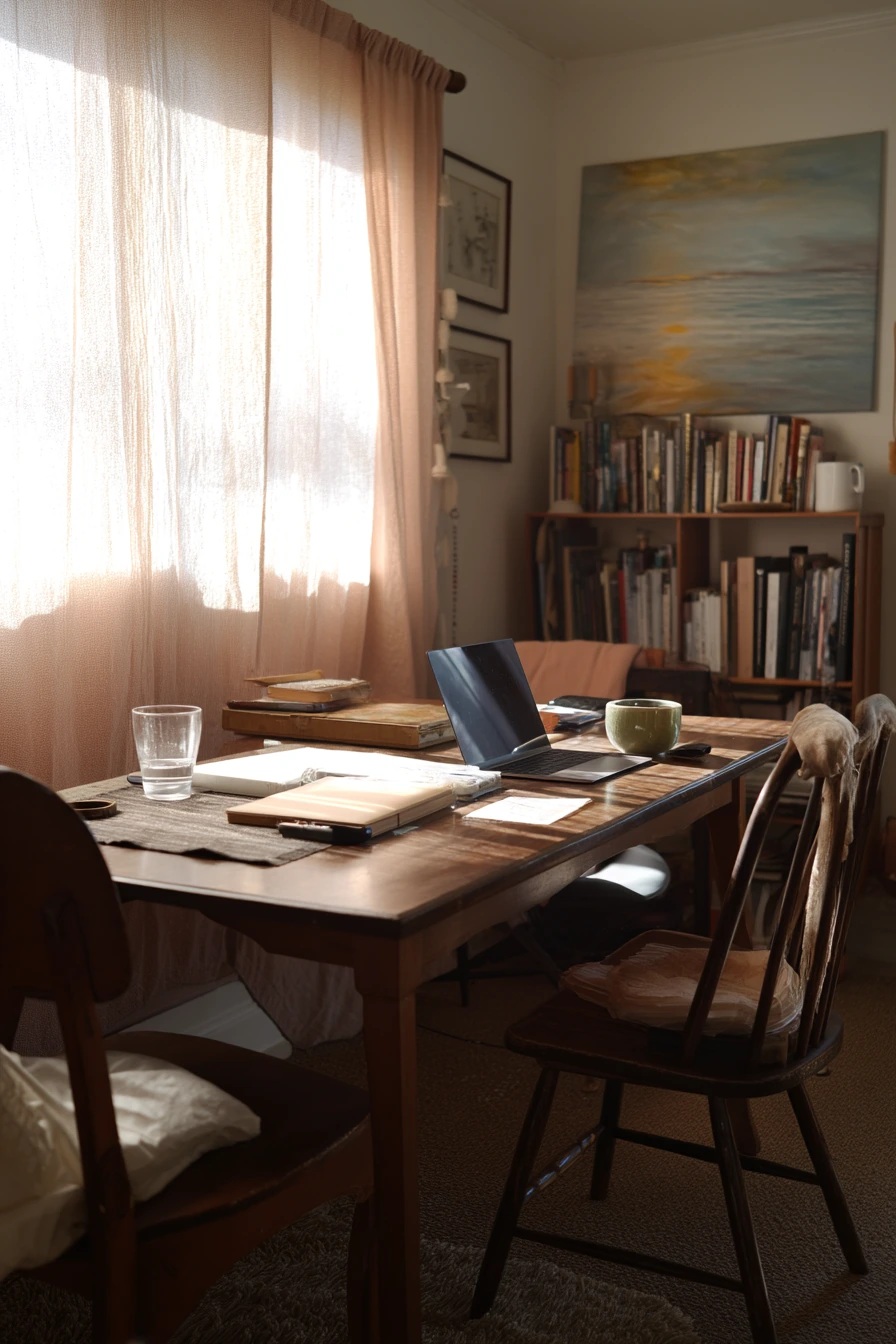
When your dining room also works as a home office, relaxed curtain panels help the space feel softer and more inviting. They reduce screen glare, add privacy for video calls, and make the room look finished even when the table holds an open notebook, a water glass, and a ceramic mug. This approach works well with an extendable table and a mix of dining chairs and one task chair.
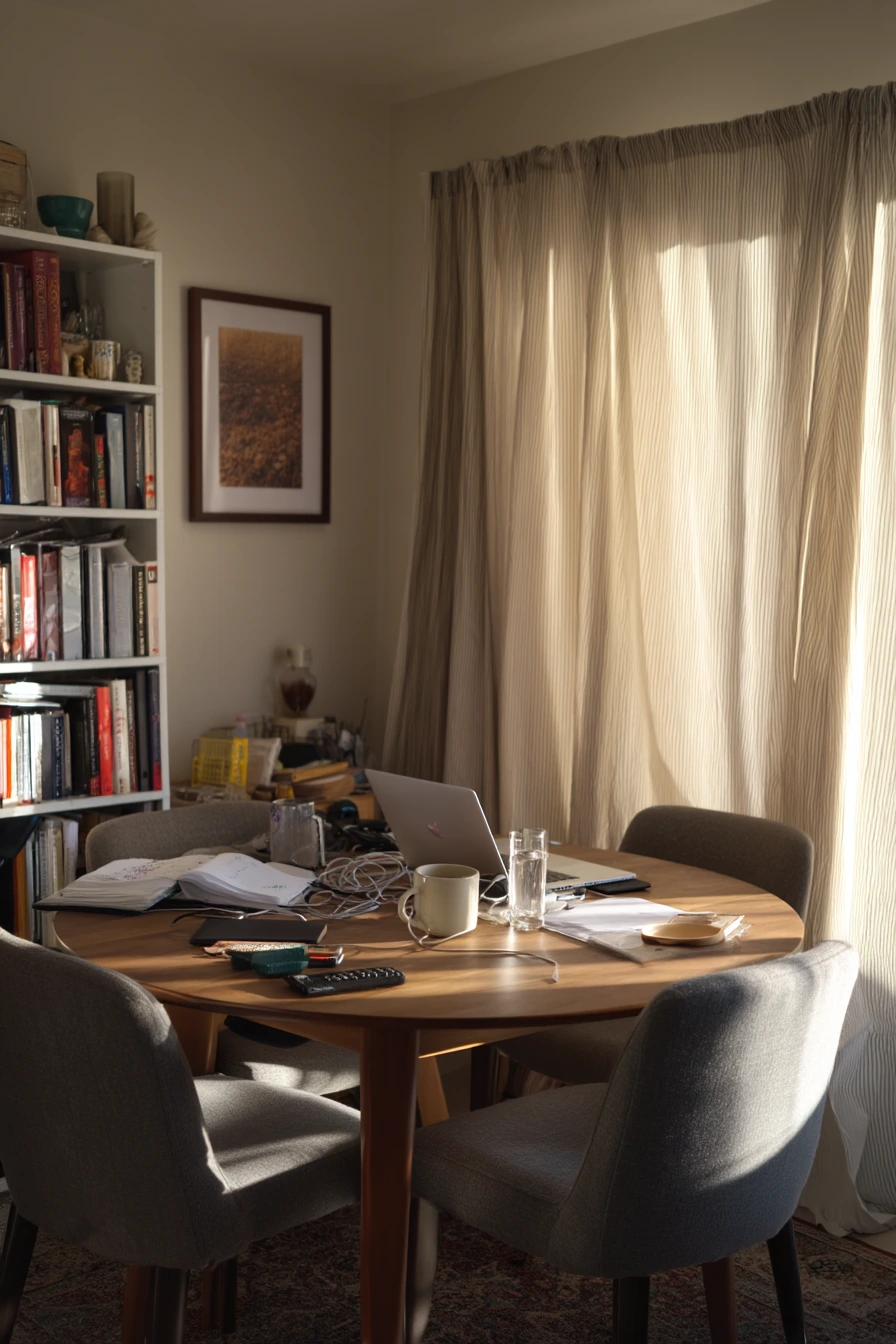
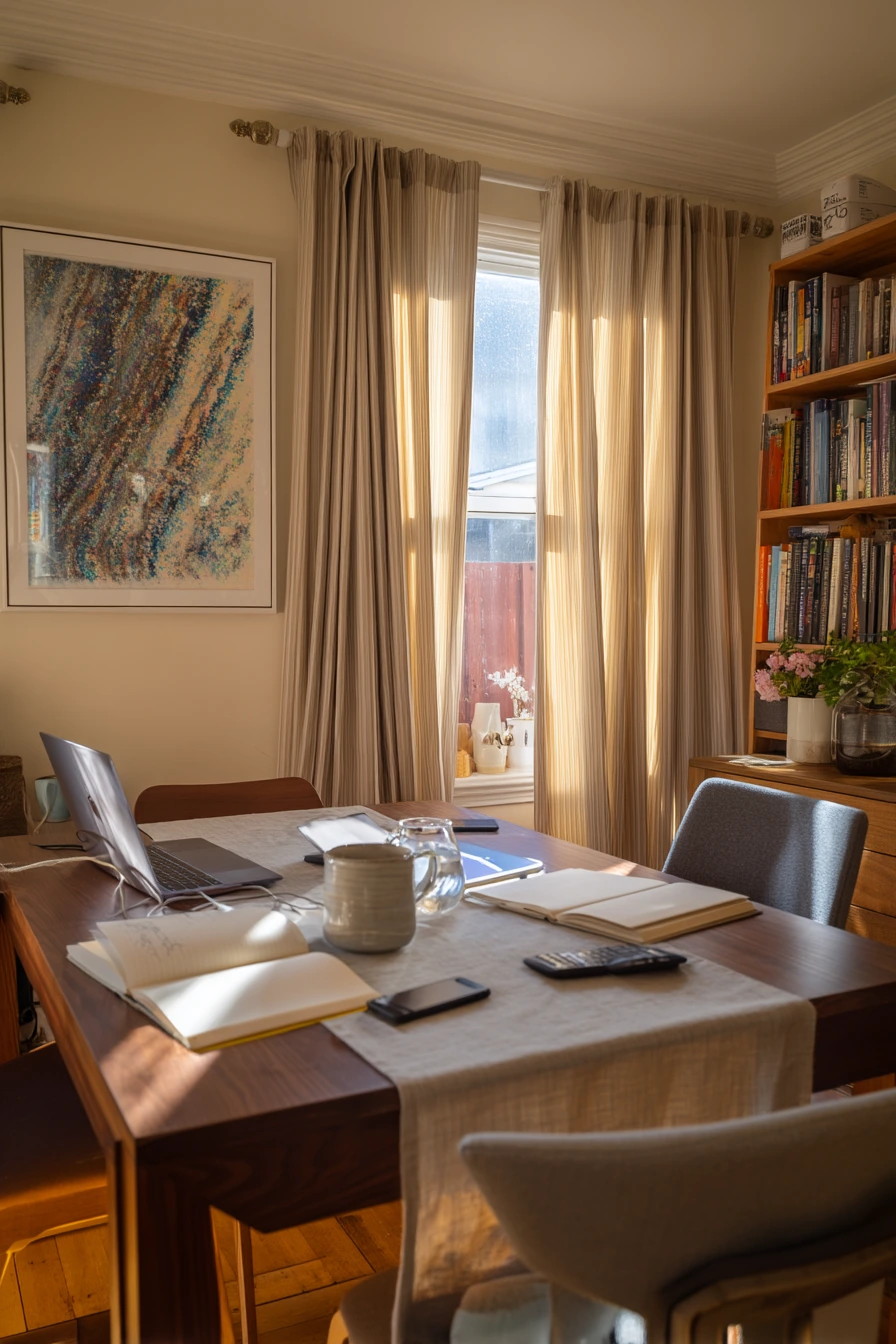
To style it, aim for orderly but lived-in. Choose a simple fabric like cotton, linen blend, or a textured neutral weave. Pull colors from your bookshelf and art print wall, but keep the curtains quiet so the background does not compete. Use the curtains to frame the window and create a consistent backdrop, even if there is a remote, a laptop charger, or a few work items on the tabletop.
Practical details matter most in a multi-use room. Pick panels that move easily so you can adjust light through the day. If the window faces the street, add a sheer layer or a light-filtering shade behind the curtains. Keep hems off the floor if your chair wheels roll nearby. A simple basket or tray on the sideboard can hold cables and notebooks so the dining area resets quickly for meals.
- Choose a neutral fabric that fits both work and dinner.
- Add a sheer or shade for daytime privacy without darkness.
- Keep curtains easy to open and close for changing light.
- Use a basket to store chargers and small desk items fast.
- Hang panels wide so the window stays clear when open.
Pro Design Tip: Set the curtain rod wide enough that open panels sit mostly on the wall, not over the glass, so you get more light during work hours.
Budget Considerations: If you already own panels, upgrade the look with better hardware and rings; it is cheaper than replacing curtains and makes daily use smoother.
Good dining room curtains balance light, privacy, and style, and the best choice depends on how you use the room each day.
If you want an easy start, decide first if you need sheers, blackout, or a shade like a roman, then pick a fabric that matches your lifestyle and cleaning needs.
Try one change at a time, like hanging the rod higher or adding a second layer, and your dining space can feel more comfortable without a full makeover.
FAQ
What length should dining room curtains be? Most dining rooms look best with panels that skim the floor. If you want a relaxed look, add 1 inch for a slight break, but avoid heavy pooling if you have pets or high traffic.
Are sheers enough for dining room privacy? In many homes, yes during daytime. At night, sheers often need a second layer like blackout panels, a light-filtering shade, or privacy lining.
How wide should curtains be compared to the window? Aim for total curtain width of about 2 times the window width for nice folds. For a fuller look, go closer to 2.5 to 3 times.
Can I mix roman shades and curtains? Yes. A roman shade controls light and glare, and side panels add softness and height. Keep colors and textures simple so it looks planned.
What is the best curtain fabric for a dining room? Linen and linen blends look relaxed, cotton is easy to wash, and velvet adds warmth for evenings. Choose based on light control, cleaning, and how formal you want the room to feel.
How do I hang curtains to make the room look taller? Mount the rod close to the ceiling and extend it wider than the window. Use long panels that reach the floor for the strongest effect.