
Cottage garden ideas are not about perfect lines. They are about plants that look relaxed, paths you actually use, and small details that make a home feel warm.
In this guide, you will see 10 real-life cottage garden scenes, from a front entry with a narrow brick path to a renter-friendly balcony with clay planters. Each section shares what to plant, how to place it, and how to keep it doable.
You will also get simple styling tips, plus a pro design tip and a budget note for each space. Use these ideas to plan a garden that looks full, supports pollinators, and fits your schedule.
If you came from Pinterest, save the sections that match your space, then copy the plant list and layout steps so you can start this weekend.
1 Front Path Cottage Garden Entry
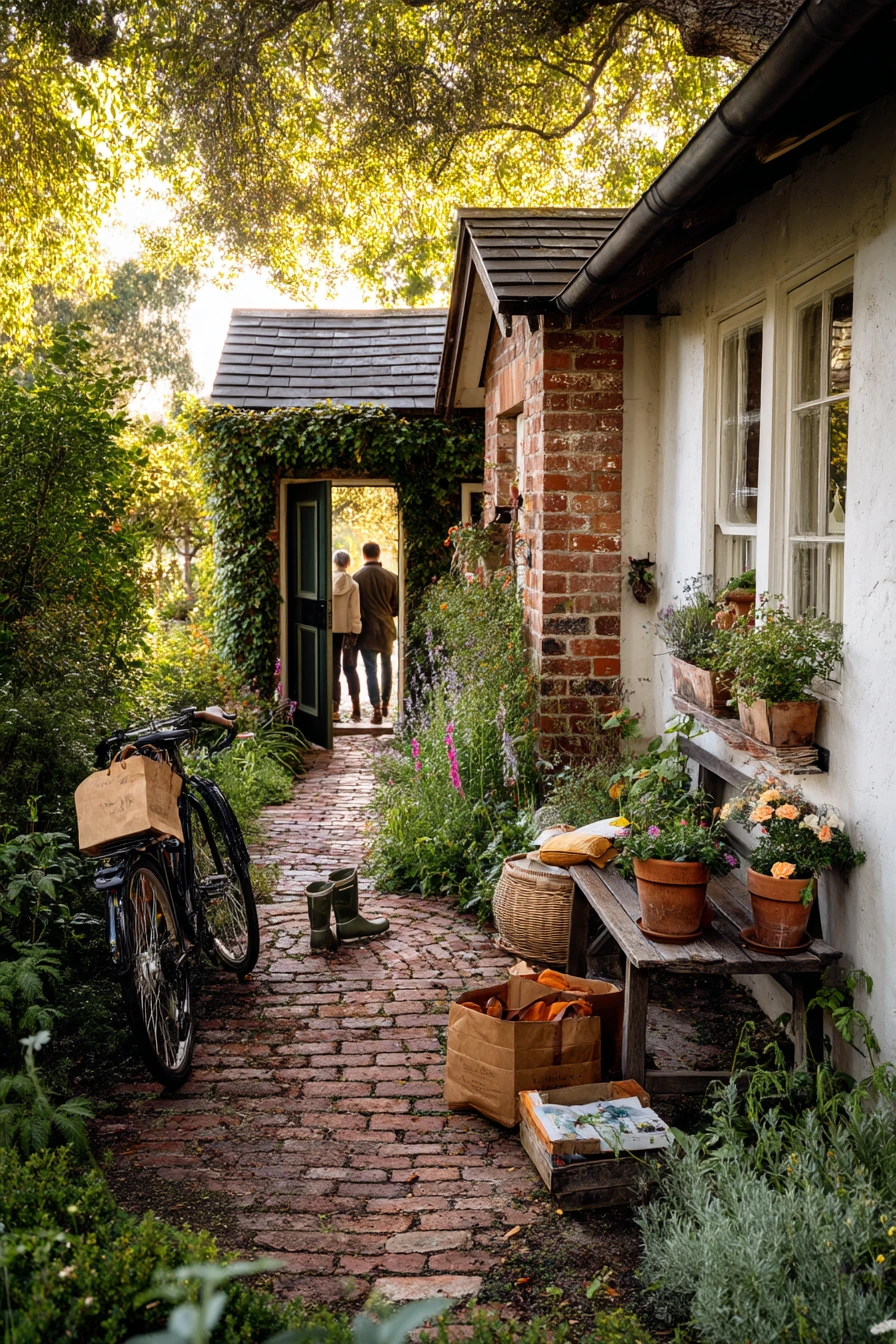
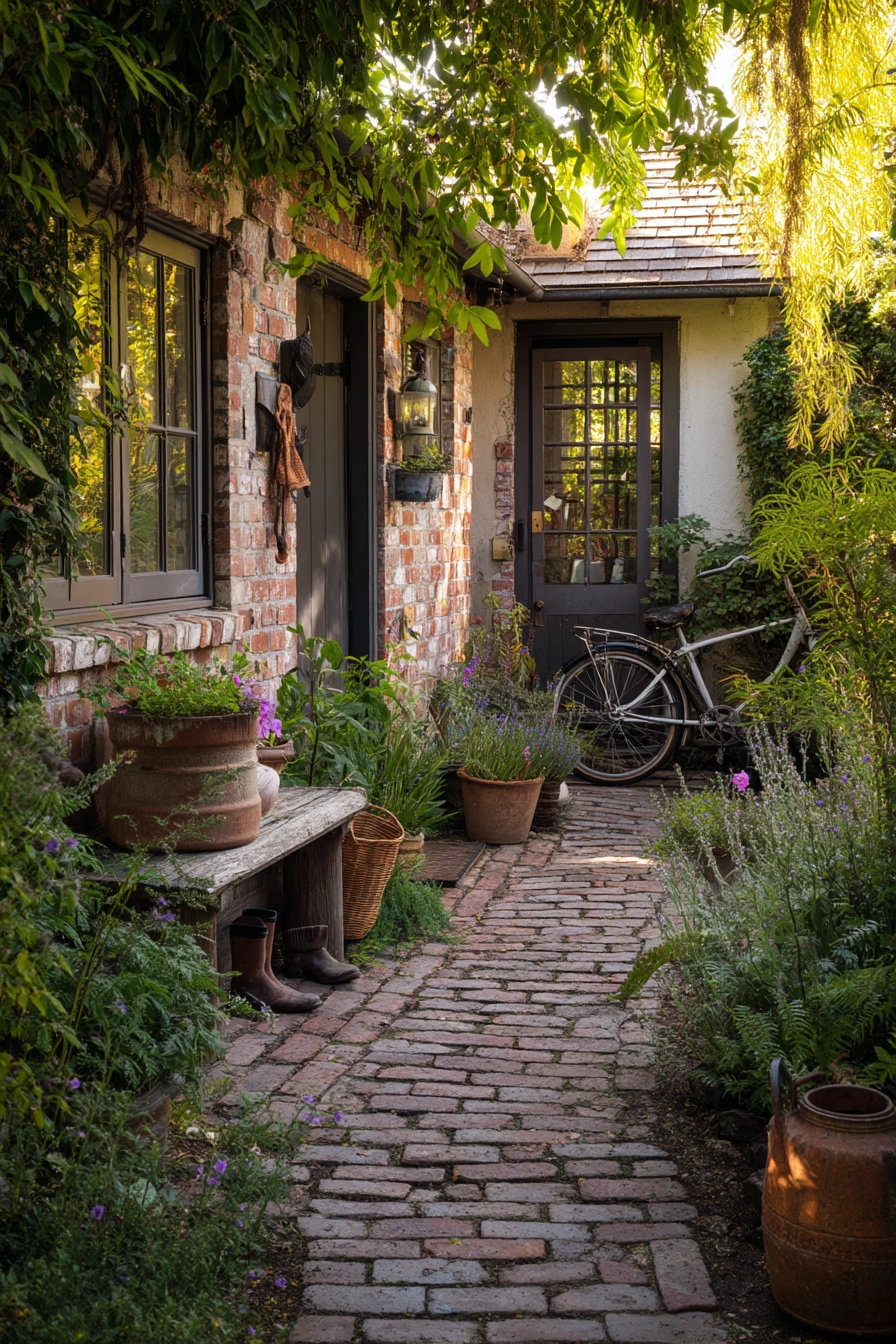
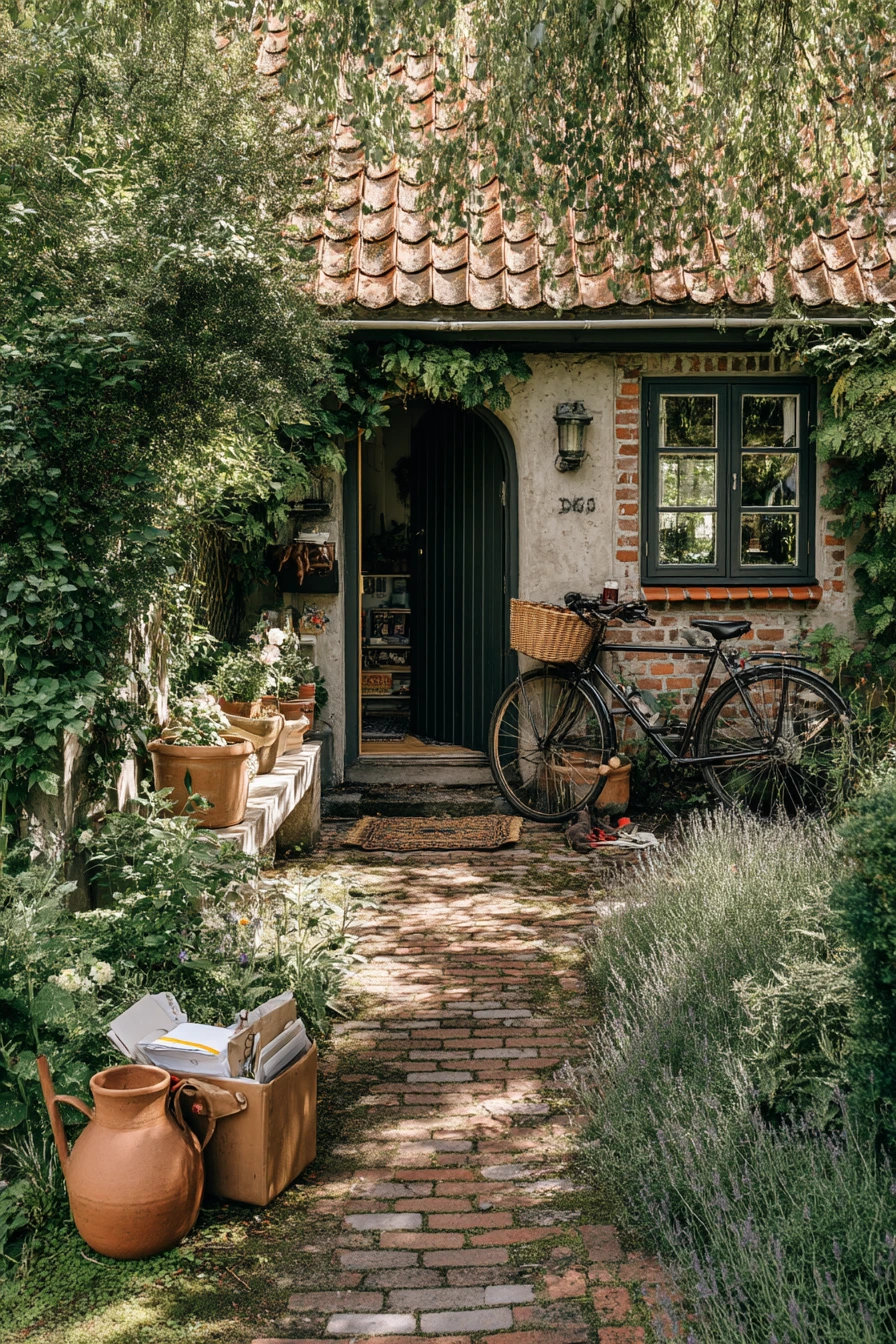
A lived-in cottage entry garden feels welcoming because it shows real use. Think of a narrow brick path leading to the door, with foxglove, lavender, climbing rose, and soft ferns leaning in a little. Weathered terracotta pots and a vintage watering can by the step make the space feel cared for, not staged.
To style this look, keep the path clear but let plants spill slightly over the edges. Group pots in odd numbers near the door, and mix heights using one tall terracotta pot and two smaller ones. Add a boot mat for muddy boots and a small bench for mail and grocery totes. A bicycle near the hedge adds that everyday cottage feel.
Choose plants that smell good as you walk in. Lavender and climbing roses are great near the entry, and foxglove adds height without taking much ground space. If your entry is shady, swap foxglove for digitalis in partial shade or add a fox fern in a pot where it stays cool. Water early in the day so the front door area stays tidy.
- Lay a simple brick path in a straight or gentle curve to guide the eye to the door.
- Plant taller blooms like foxglove at the back, and low growers like lavender at the edge.
- Train a climbing rose on a trellis or wire for vertical color in a small entry.
- Use terracotta pots to repeat one warm color and make the entry look pulled together.
- Add a bench or small table for mail, keys, and a watering can so it feels lived-in.
Pro Design Tip: Repeat one plant in three places, like lavender by the path, in a pot by the door, and near the hedge, so the entry looks calm even when the blooms are wild.
Budget Considerations: Bricks and terracotta can add up; use reclaimed brick or brick pavers, and mix thrifted pots with one new statement pot near the door.
2 Small Backyard Herb Border
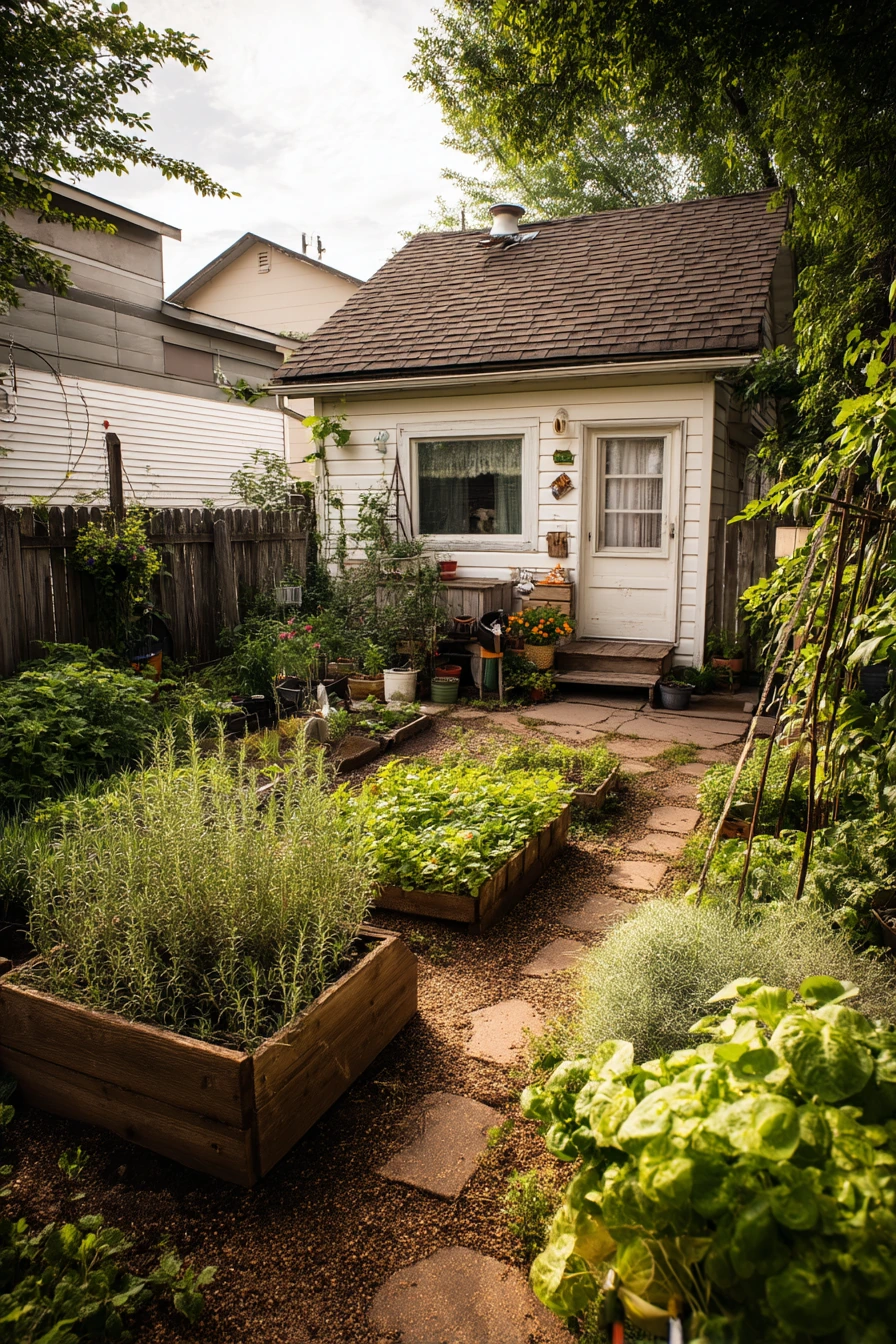
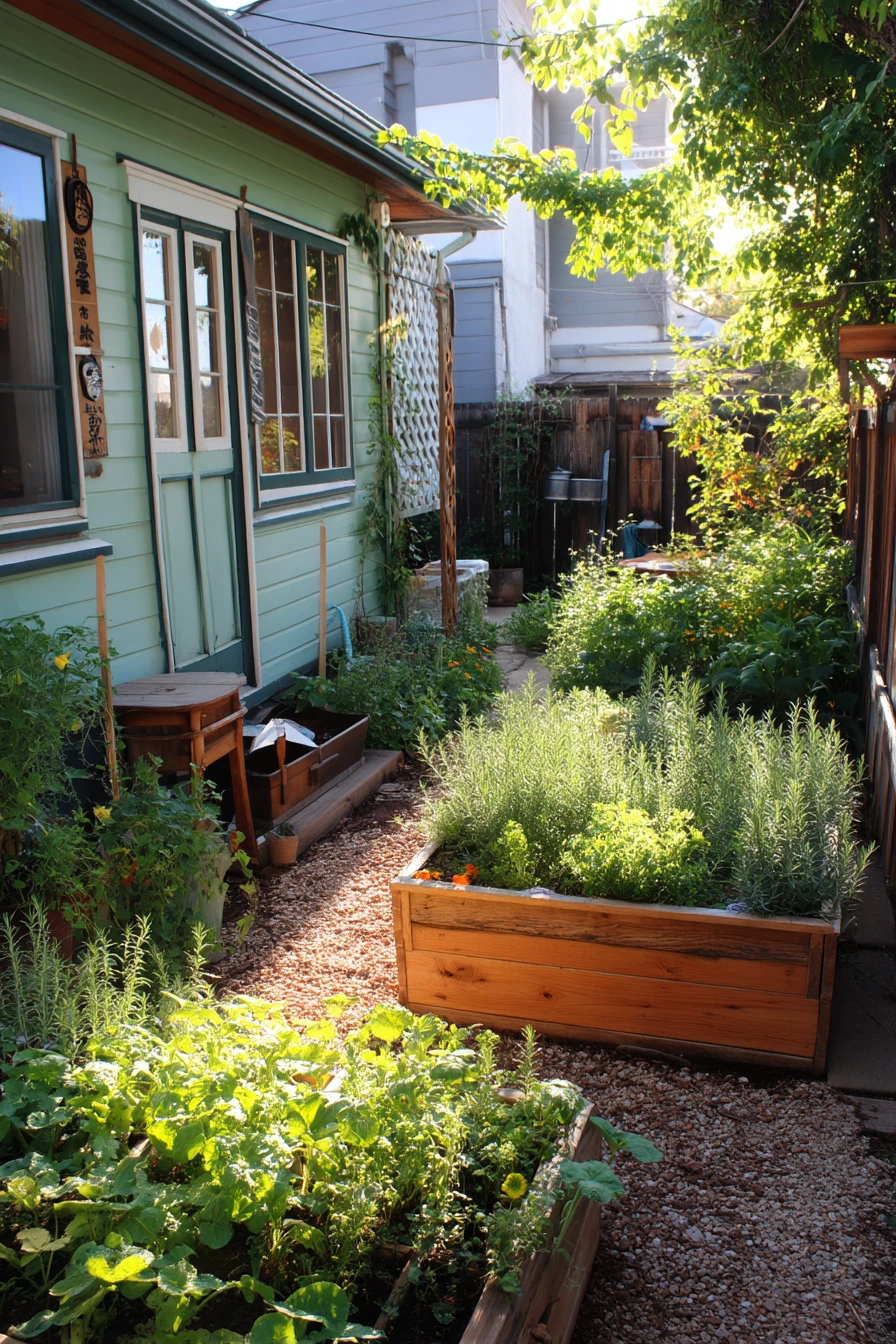
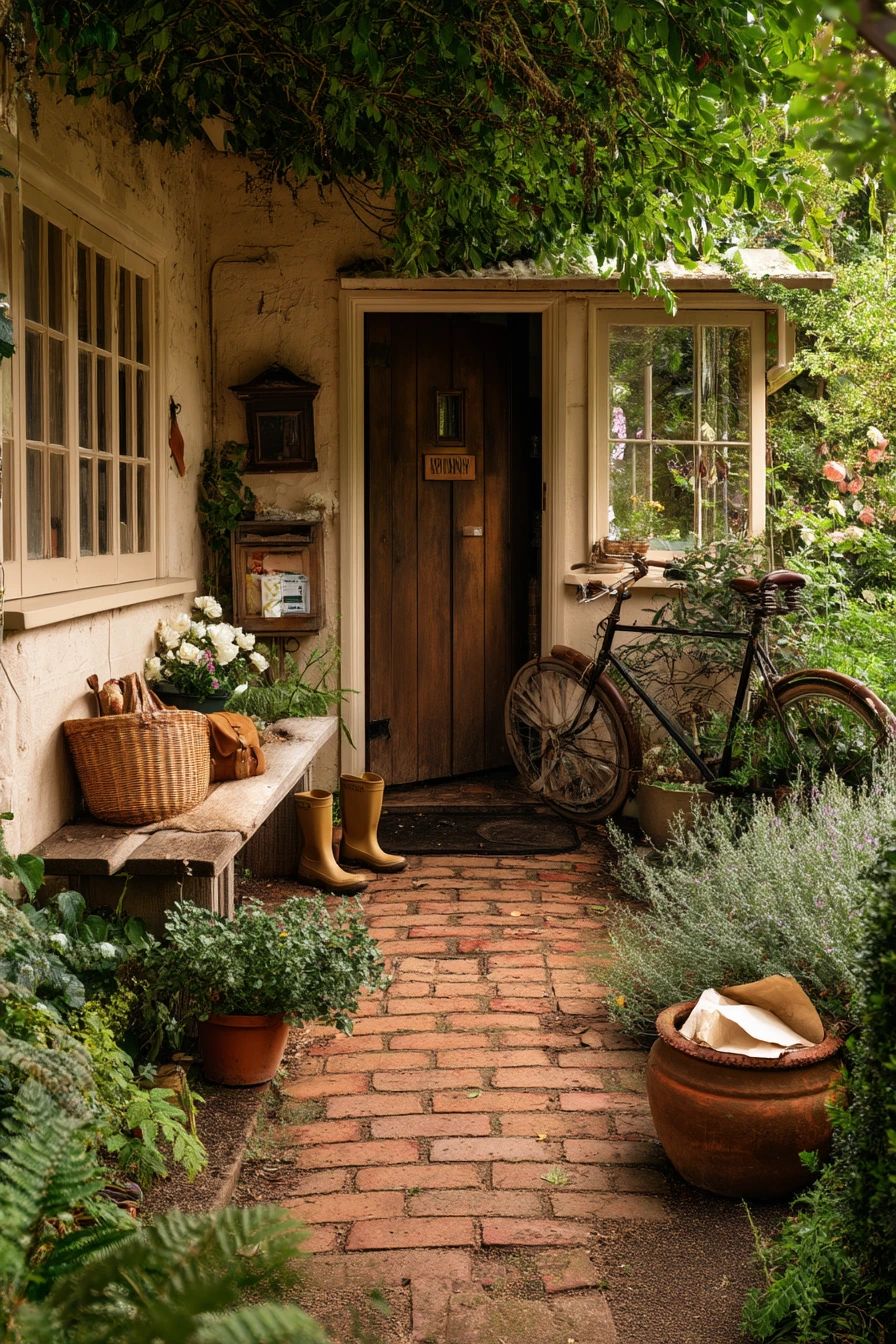
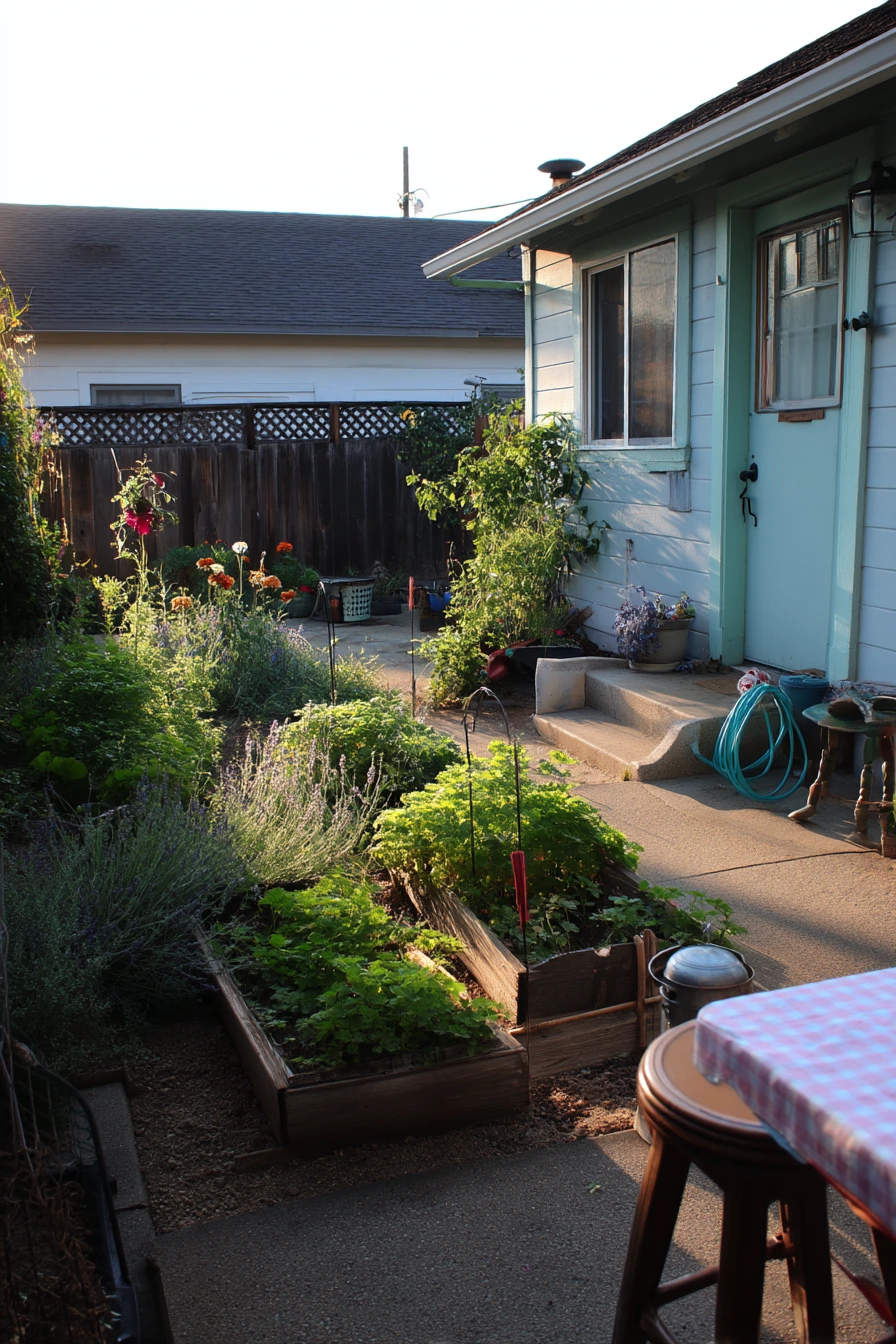
A small suburban backyard cottage garden can still feel full when you focus on herbs and a few easy flowers. Raised beds with rosemary, thyme, sage, chamomile, and trailing nasturtium look lush and are useful for cooking. Cedar edging keeps it neat, which helps when you are a busy parent.
Keep the layout simple: two or three raised beds close to the back steps, with a path you can walk on even when the ground is wet. Add enamel label stakes so you remember what is planted where. Leave room for real life, like a kid toy basket near the steps and a small patio spot for a half-finished tea.
To style it like a cottage garden, let the herbs mingle instead of planting in strict rows. Tuck nasturtium at the bed edges so it trails over the cedar. Chamomile can soften corners and bring small daisy blooms. Keep pruning shears on a stool so you can snip herbs fast for dinner. A loosely coiled watering hose makes it easy to water without dragging gear across the yard.
- Place raised beds near the kitchen door so you use the herbs often.
- Plant rosemary as a small shrub, then fill gaps with thyme and sage.
- Let nasturtiums spill over the sides for a relaxed cottage look.
- Add labels and a small tool spot so the garden stays easy to manage.
- Use mulch in the beds to cut watering time and reduce weeds.
Pro Design Tip: Make one bed your “cut-and-come-again” bed with thyme, sage, and chamomile so it always looks full even after you harvest.
Budget Considerations: Cedar raised beds cost more; on a budget, build smaller beds with untreated pine and plan to replace them later, or use large fabric grow bags for herbs.
3 Renter-Friendly Balcony Cottage Planters
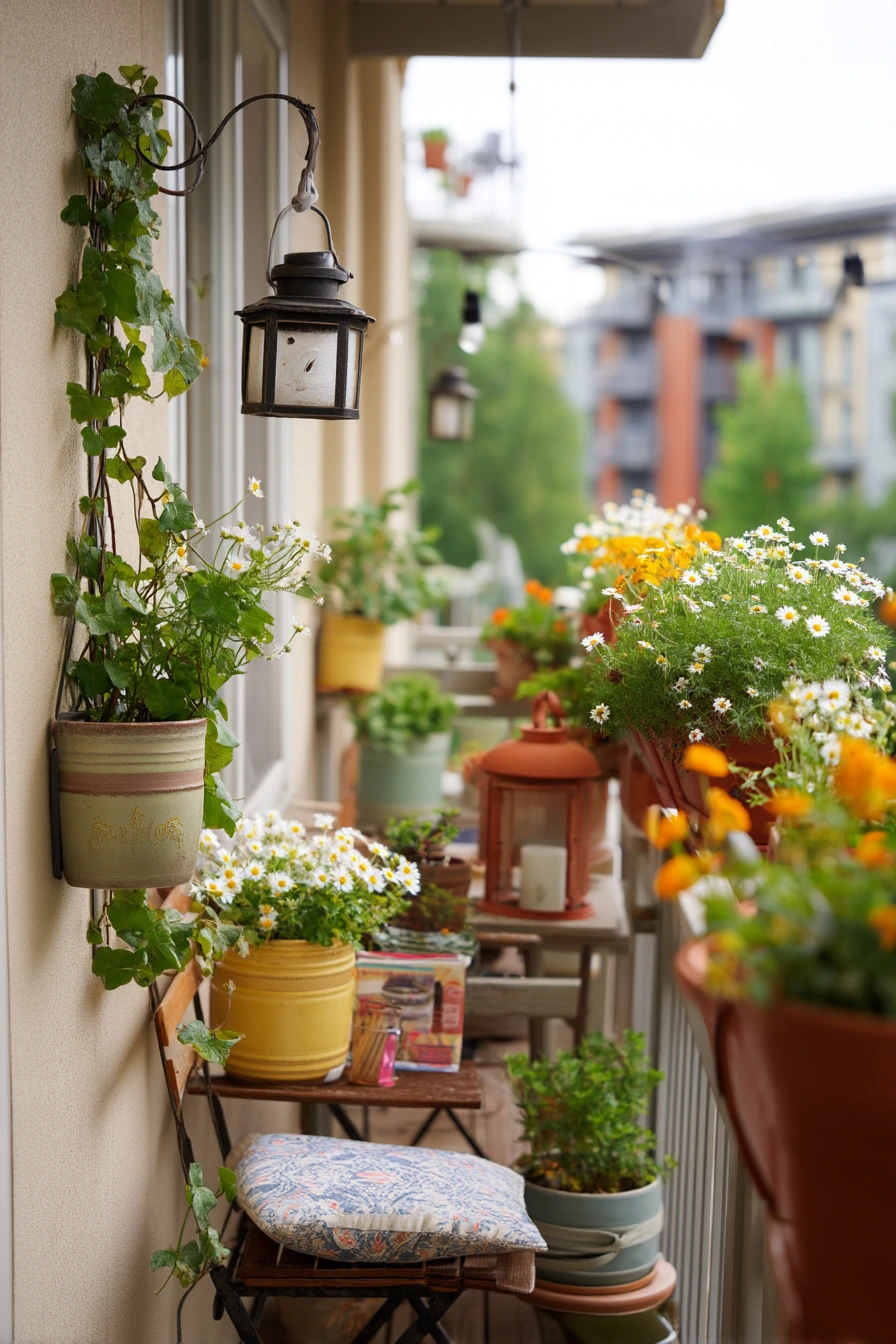
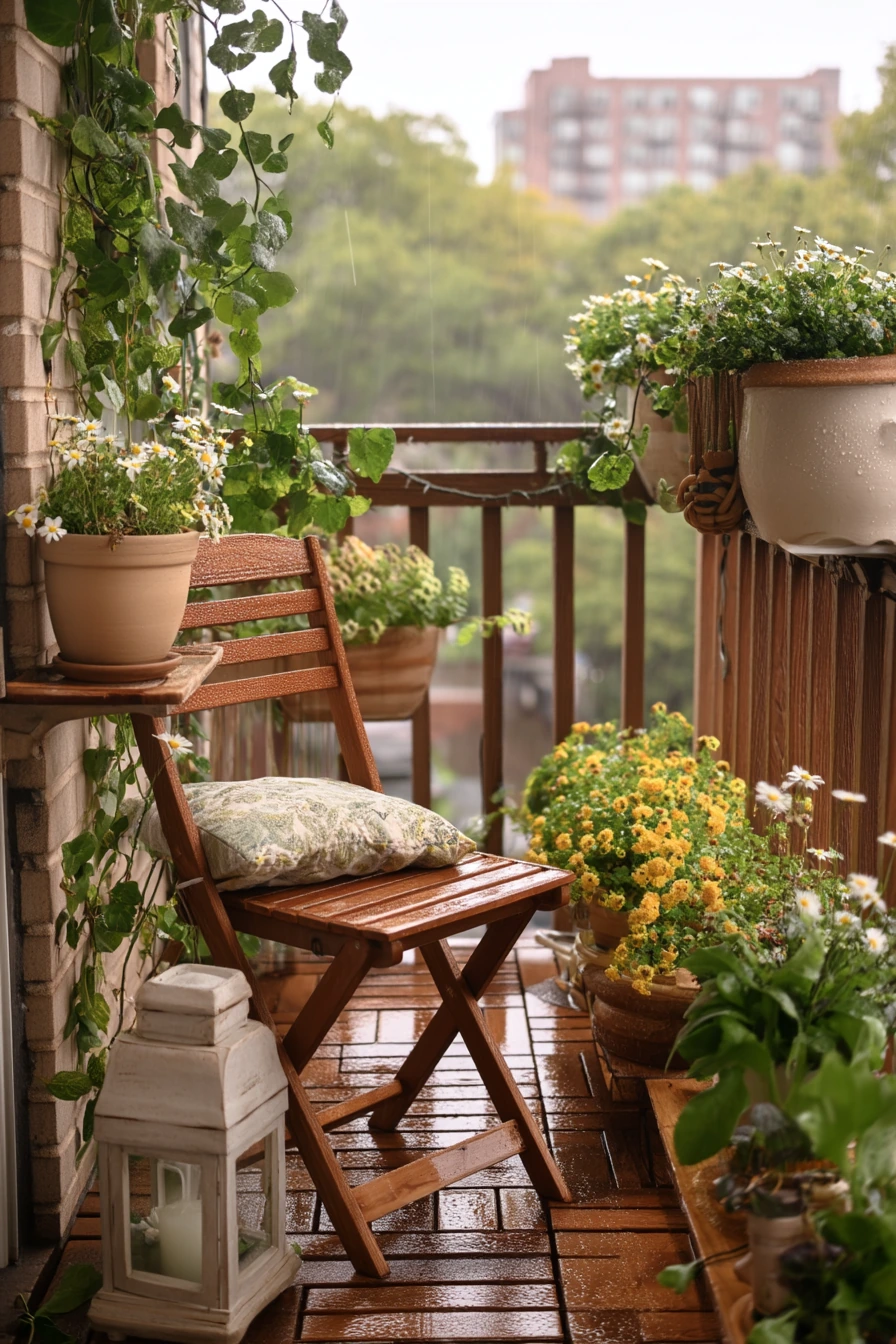
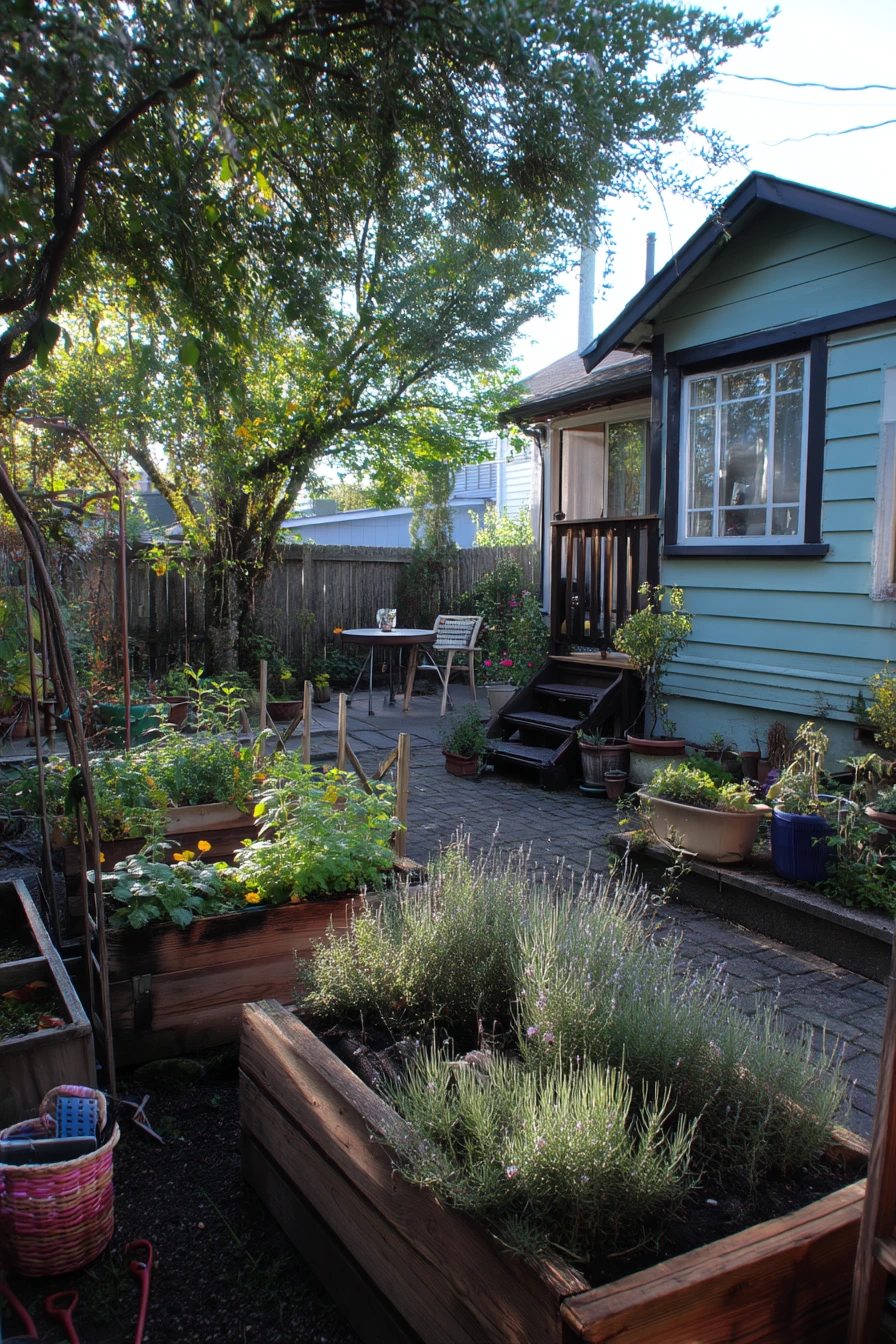
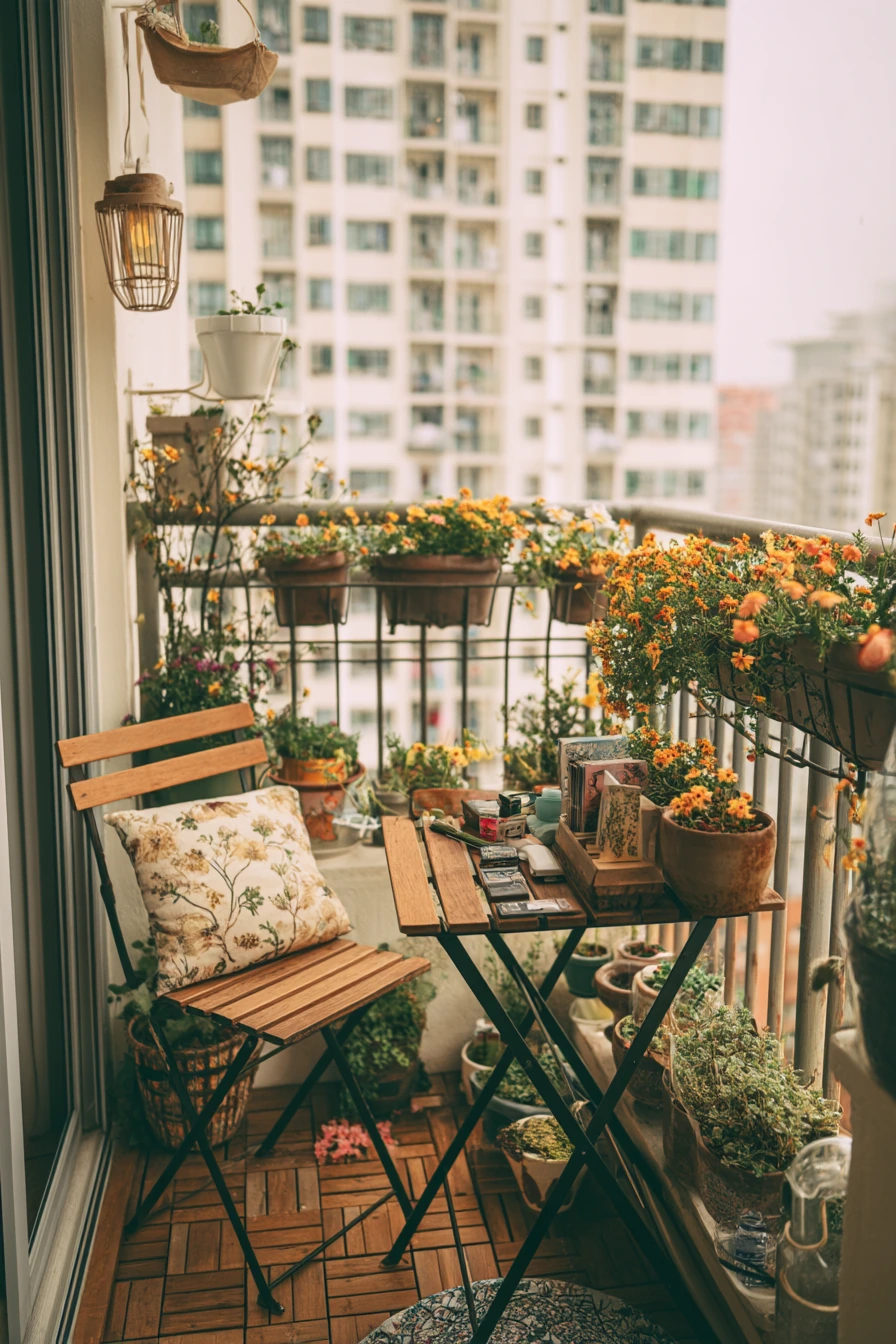
An apartment balcony can feel like a cottage garden when you layer plants and use cozy, mismatched pieces. Clay planters with daisies, trailing ivy, mini roses, and nasturtiums give you height, spill, and color in a compact space. A folding bistro chair turns it into a place you will actually sit.
Start with the rail and corners. Put your tallest pots in the back corners, then place medium pots in front, and finish with trailing plants at the edge. Ivy and nasturtiums work well to soften hard balcony lines. Add a thrifted lantern for evening glow, and keep seed packets in a small box so the space feels like a real garden station, not storage.
City life shows up, and that is okay. A laptop charger draped over the rail and a rain-specked cushion make the balcony feel honest and lived-in. Keep an herb clipping jar near the door for quick kitchen use. If your balcony gets strong sun, pick heat-tough varieties and water in the morning. Use saucers or a tray under pots to protect the floor and keep neighbors happy.
- Use clay planters in different sizes for a collected, cottage look.
- Mix one blooming plant, one trailing plant, and one evergreen-like plant per grouping.
- Add a small bistro chair and a side table to make the balcony feel like a room.
- Hang a lantern or use a small lamp inside for warm light at night.
- Store seed packets and snips in a box so you can garden in short bursts.
Pro Design Tip: Use one repeating “link” across the balcony, like terracotta pots or white daisy flowers, so the mix of plants still reads as one style.
Budget Considerations: Mini roses and large planters can be pricey; buy smaller starter plants, reuse food-safe buckets as cache pots, and grow nasturtiums from seed.
4 Garden Bench Tea Moment
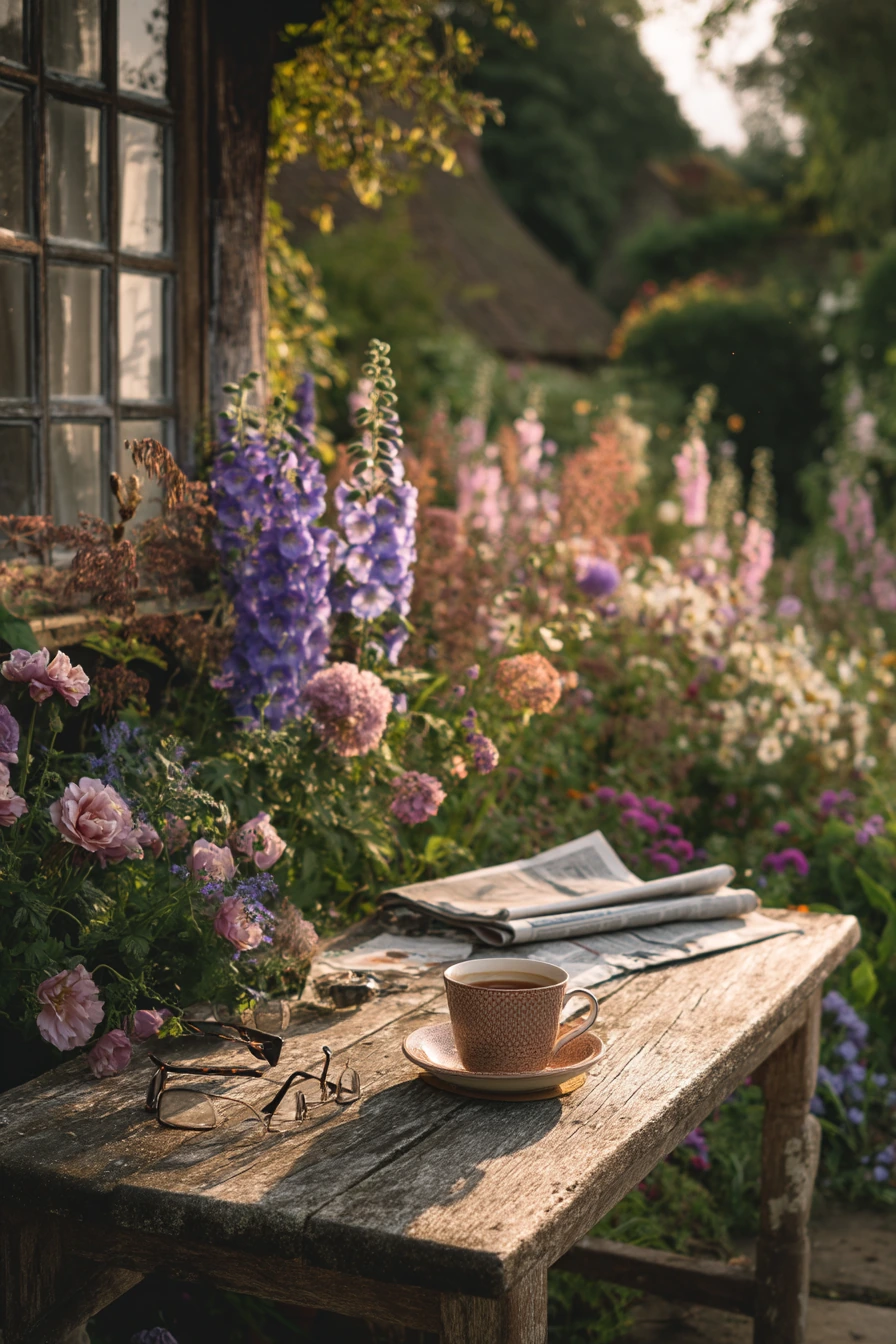
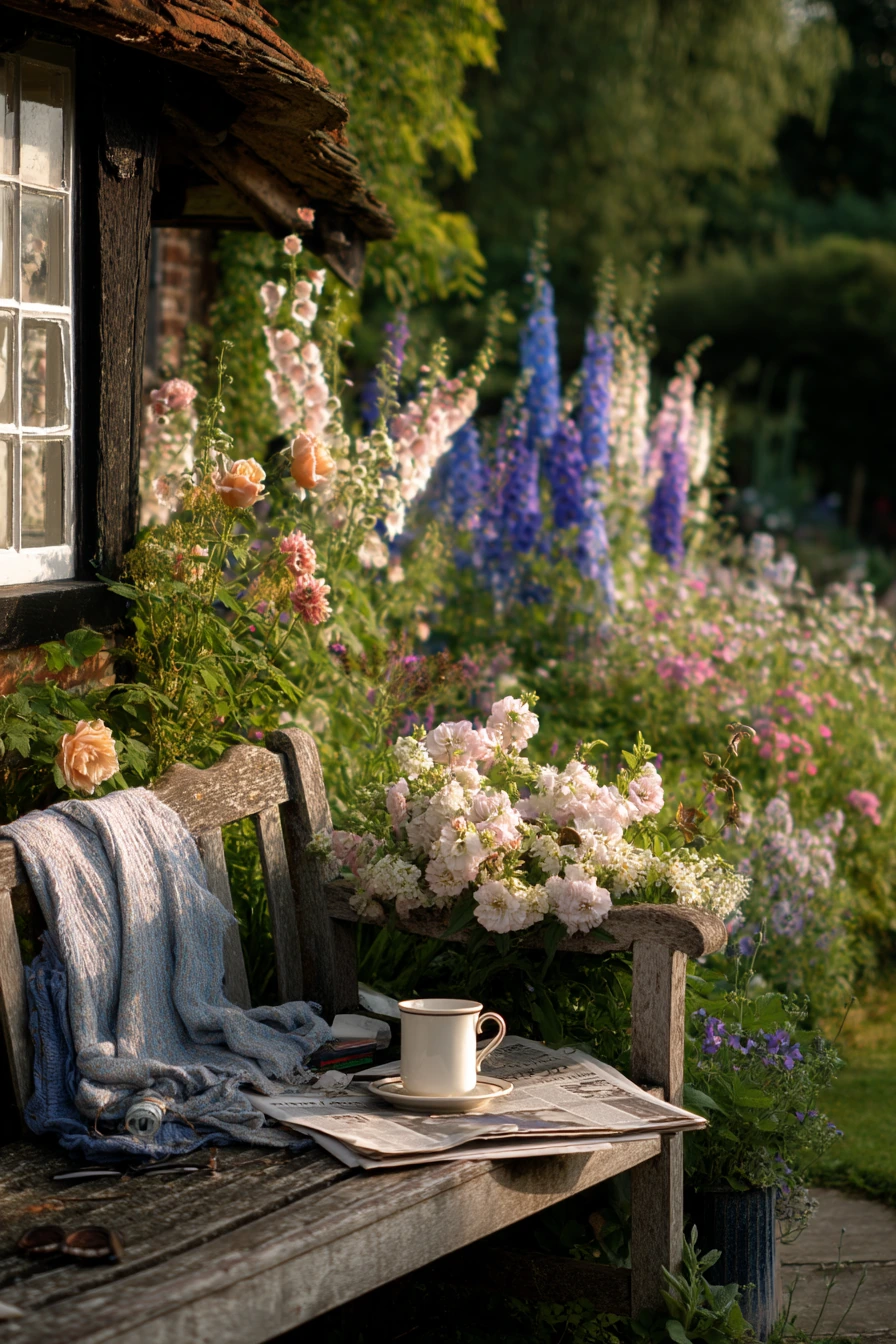
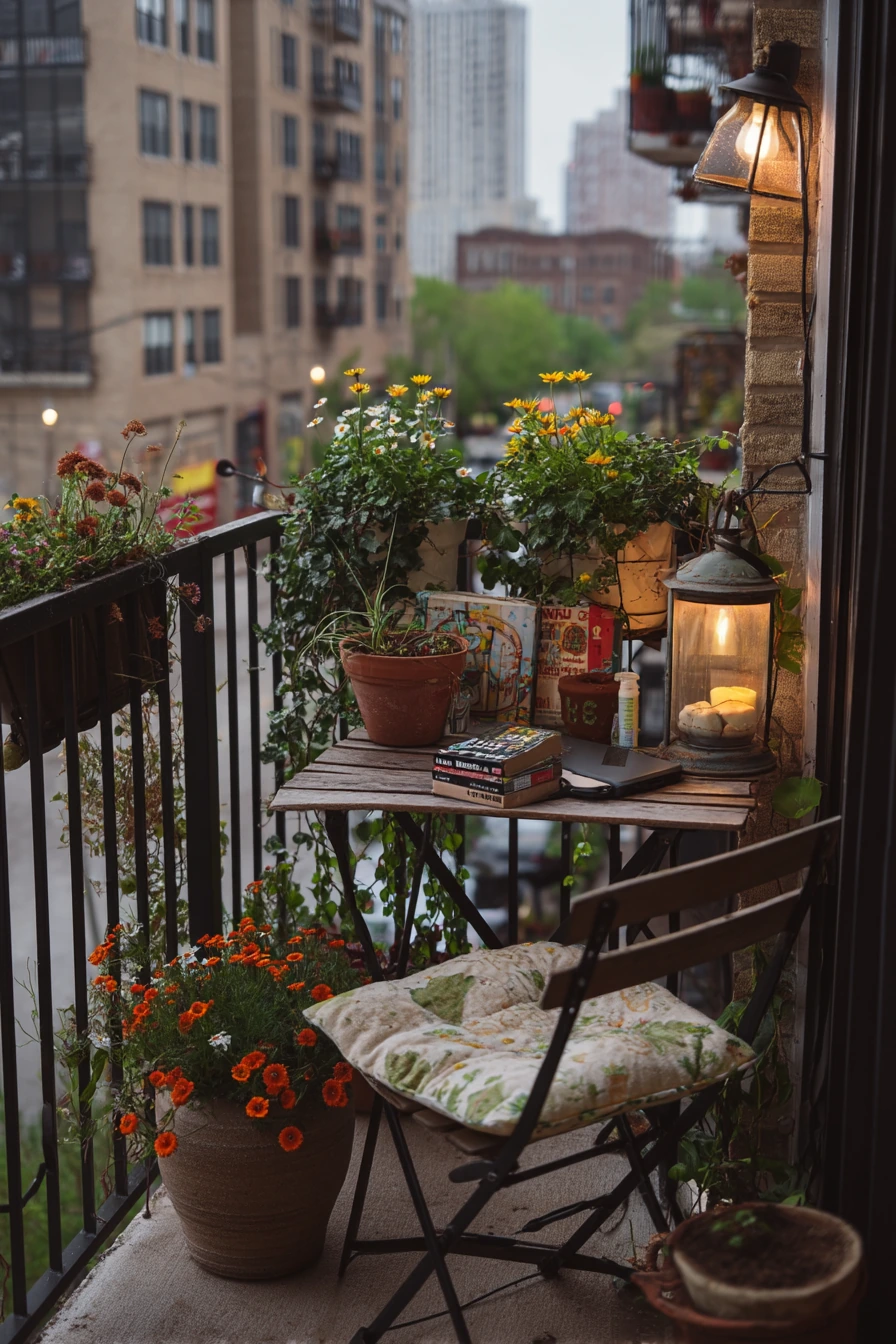
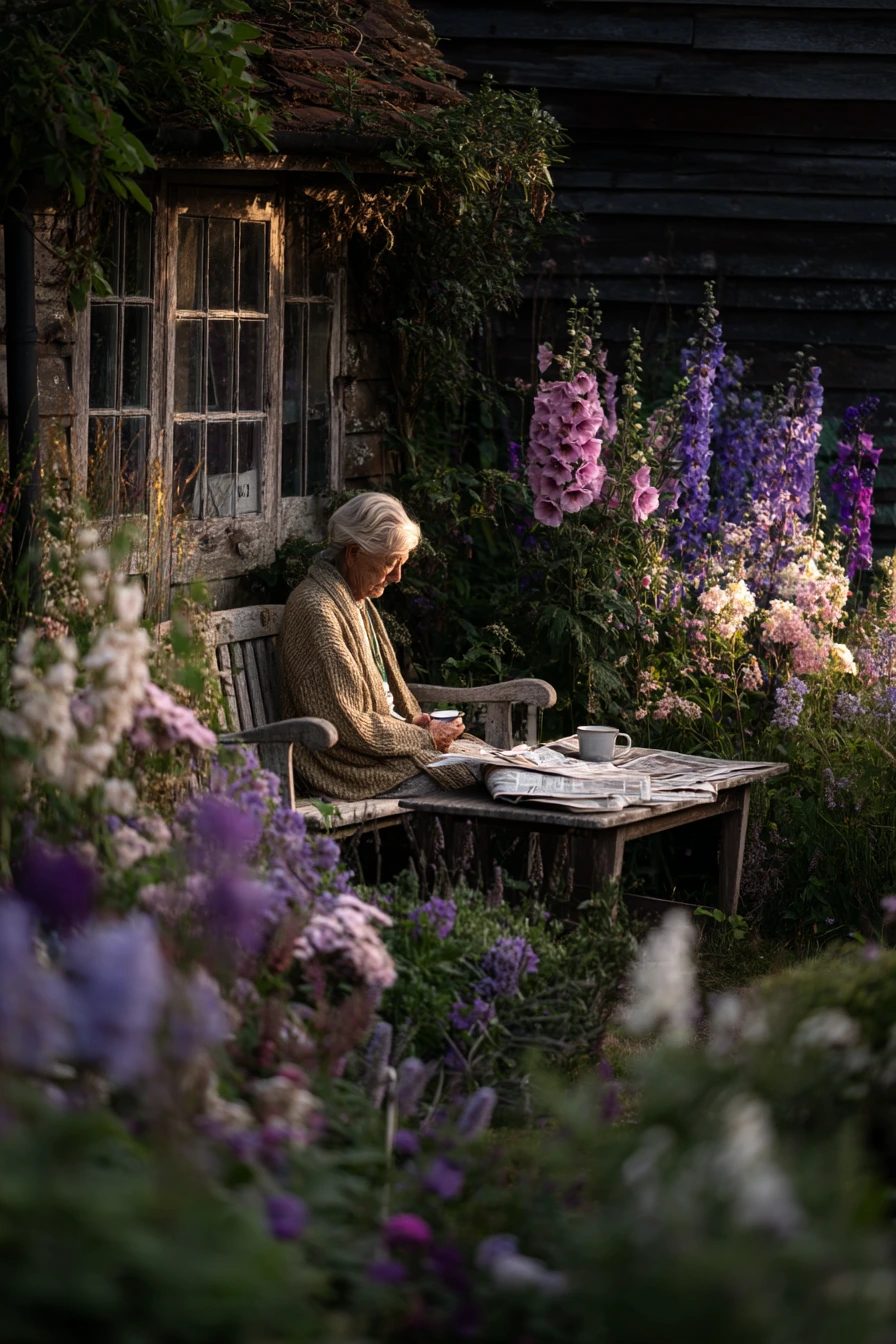
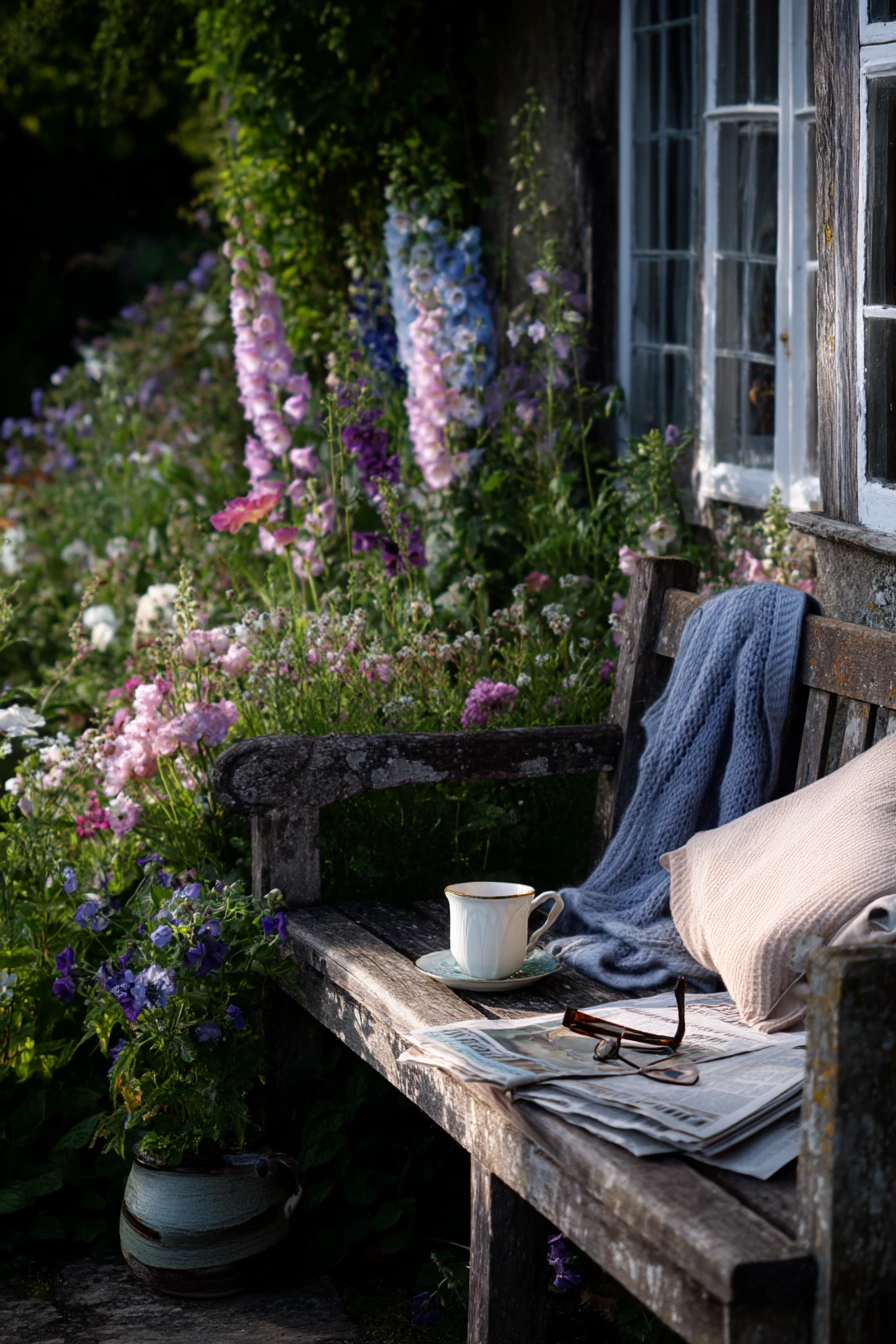
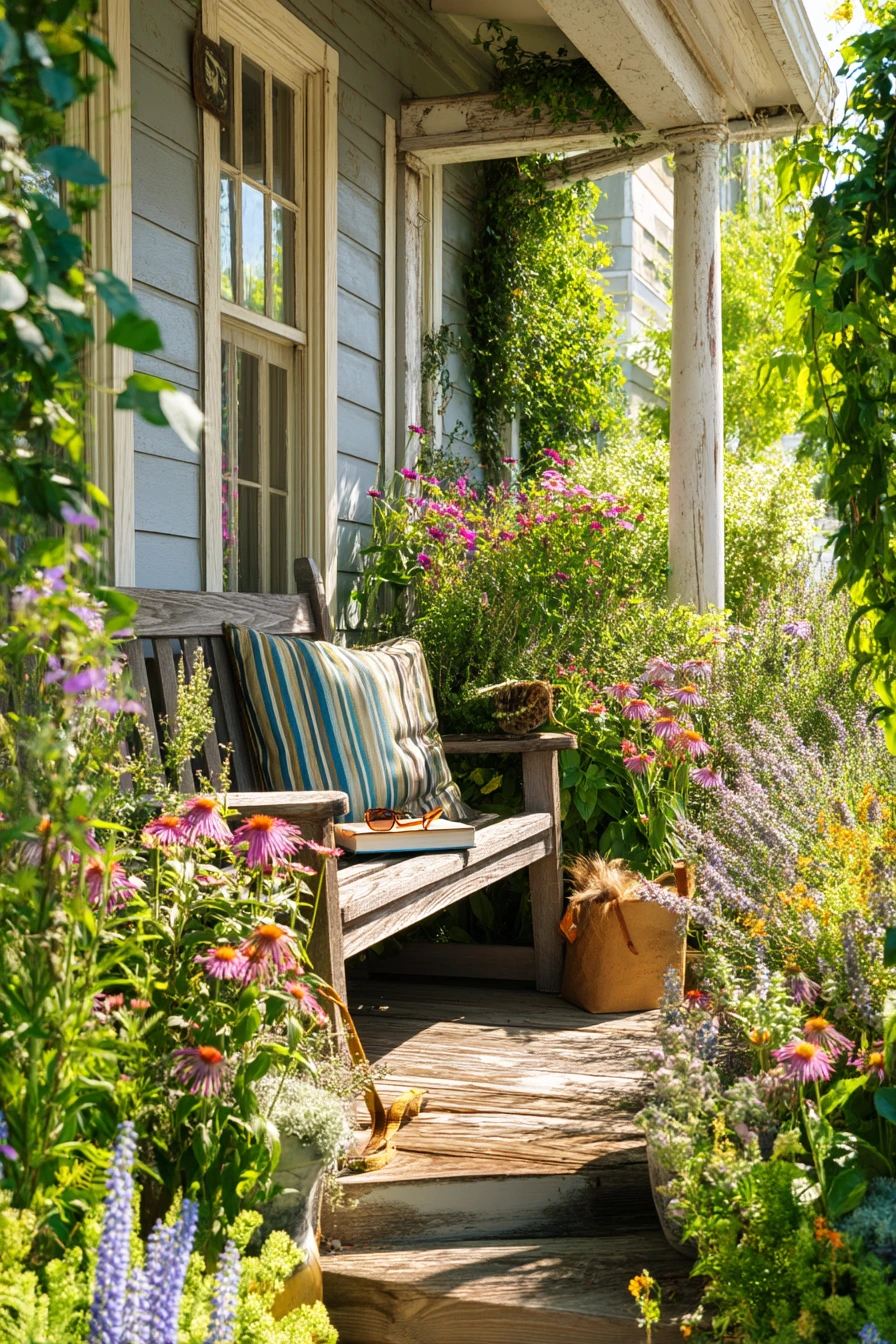
A simple timber bench in the garden creates a pause point, which is a key part of cottage style. Overflowing borders of delphinium, peonies, lavender, and sweet pea make the bench feel like it is wrapped in flowers. Small items like a ceramic mug on a saucer, reading glasses, and a folded newspaper add a quiet, daily rhythm.
To build this look, place the bench where you can see both the house and the garden. A view back to the cottage, with soft window light, makes the spot feel safe and calm. Plant taller flowers behind the bench so they frame it, then let mid-height blooms fill the sides. Sweet pea on a small support can add scent and gentle movement.
Keep comfort in mind. Add a slightly wrinkled throw that can stay outside in dry weather, and choose a bench that is easy to sit on for longer than five minutes. Bees hovering near blooms is a sign your planting mix is working, so include nectar plants like lavender and single-form flowers. Deadhead peonies after bloom and cut back delphinium to encourage a second flush in some climates.
- Set a bench on firm ground, like gravel or brick, so it stays level.
- Plant tall delphinium behind, and peonies to the side for full spring color.
- Add lavender near the front edge for scent and pollinator value.
- Grow sweet pea up a small trellis for soft height without blocking the view.
- Style with one mug, one throw, and one small side surface to keep it simple.
Pro Design Tip: Frame the bench with two “bookend” plants, like matching lavender mounds, so the seating spot looks intentional even when borders are messy.
Budget Considerations: Peonies and large perennials can cost more; start with smaller plants, add sweet peas from seed, and use divisions from friends to fill borders over time.
5 DIY Cutting Garden Shed Corner
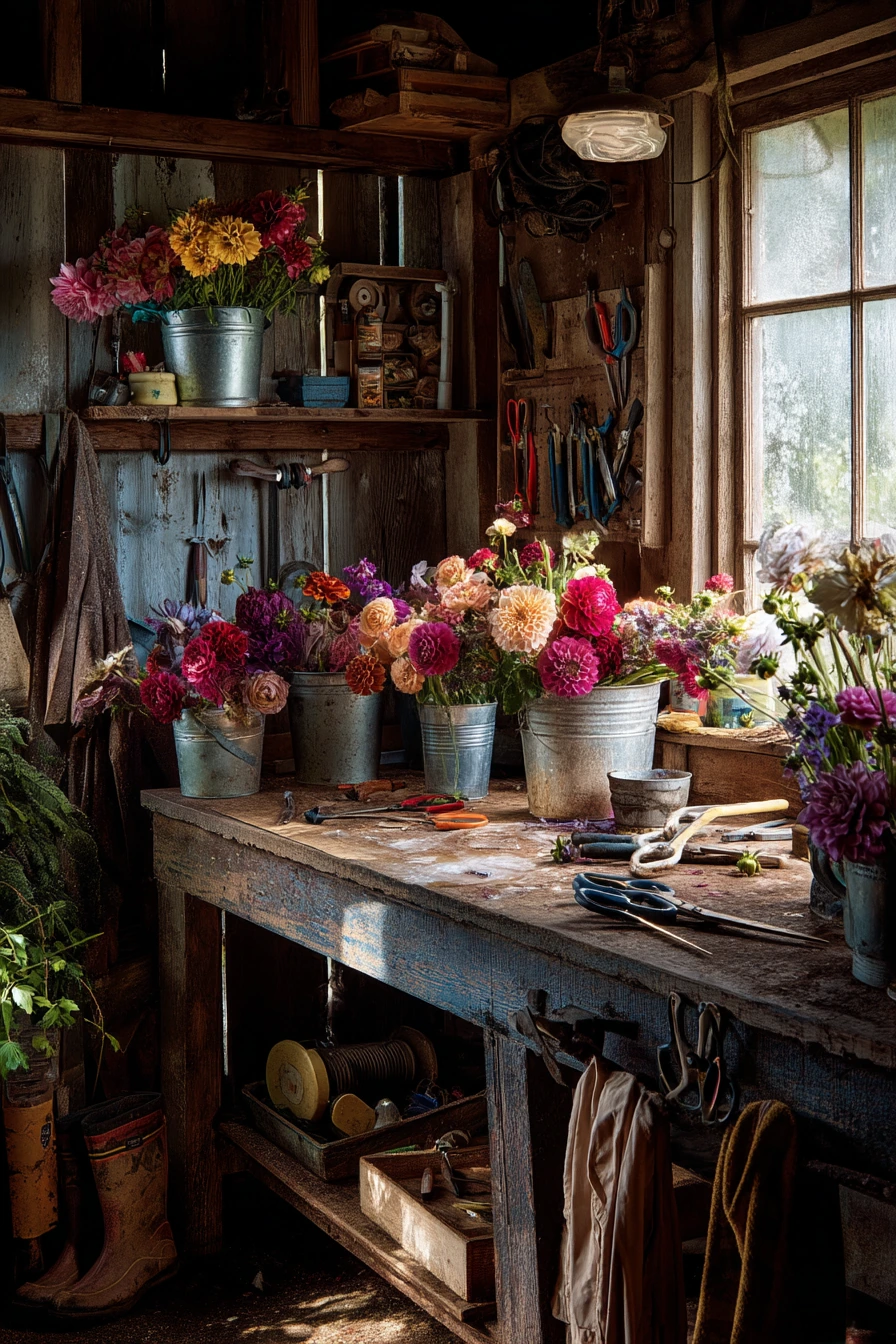
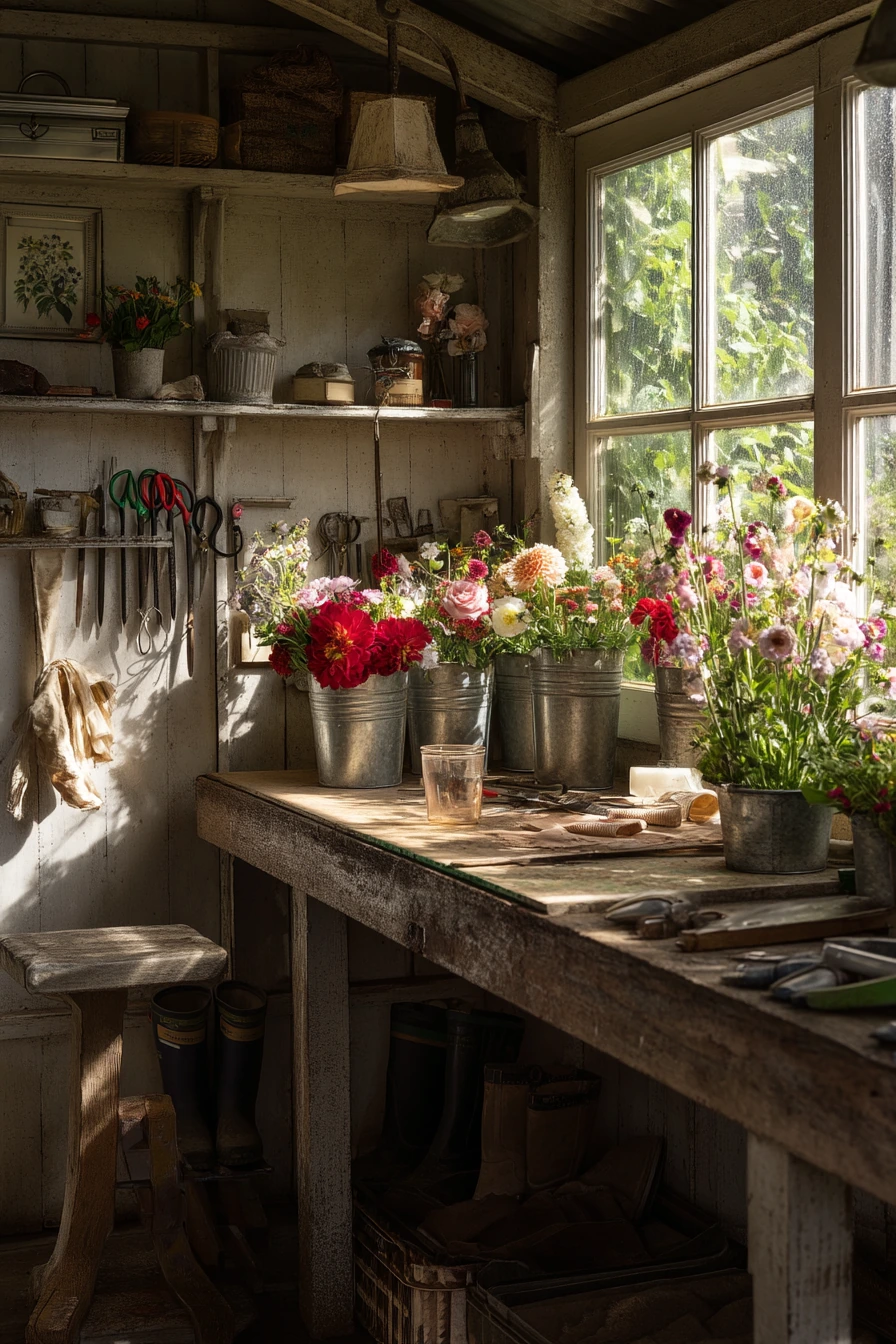
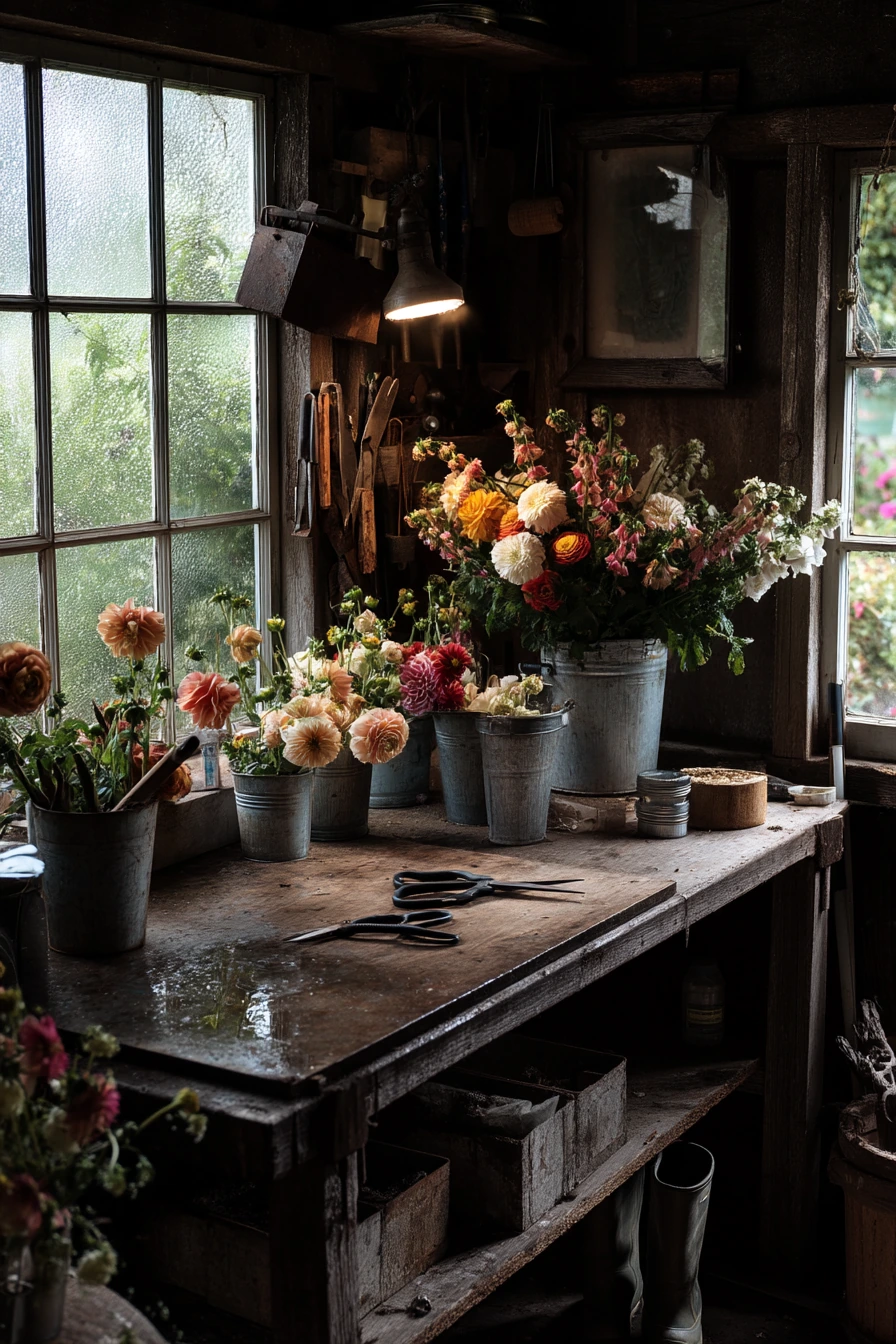
A cottage garden shed corner becomes more useful when it is set up for quick flower arranging. Galvanized buckets filled with snapdragons, dahlias, zinnias, and garden roses can sit near a worktable. Tools left out, like snips and a spool of string, make the space feel active and practical.
To style this corner, keep the surfaces clear enough to work, but not bare. Add paper-wrapped stems ready for gifting, and hang a smudged apron on a hook. Keep mud boots and seed trays near the door so you can move between garden and shed without hunting for things. A ceramic water glass with condensation is a small detail that makes the scene feel real.
Make the setup easy to clean. Use a simple wipeable table, and store extra vases and rubber bands in one crate. Warm lamp glow mixed with cool window light helps you see true flower color, which matters when you are pairing roses with bright zinnias. If you cut flowers often, grow “filler” plants too, like herbs, grasses, or foliage, so your bouquets look full without needing a lot of blooms.
- Keep two or three galvanized buckets for sorting stems by height and color.
- Grow reliable cutting flowers like zinnias and snapdragons for long vase life.
- Store snips, twine, and tape in one tray so you can work fast.
- Hang an apron and gloves on hooks to keep them dry and easy to grab.
- Use paper wraps and simple string for quick bouquets and gifts.
Pro Design Tip: Create one “standard bouquet recipe” (for example: 3 dahlias, 5 zinnias, 7 snapdragons, plus foliage) so arranging stays quick and consistent.
Budget Considerations: Dahlias can be expensive as tubers; start with zinnias and snapdragons from seed, and add a few rose stems from your yard for the focal flowers.
6 Front Porch Pollinator Border
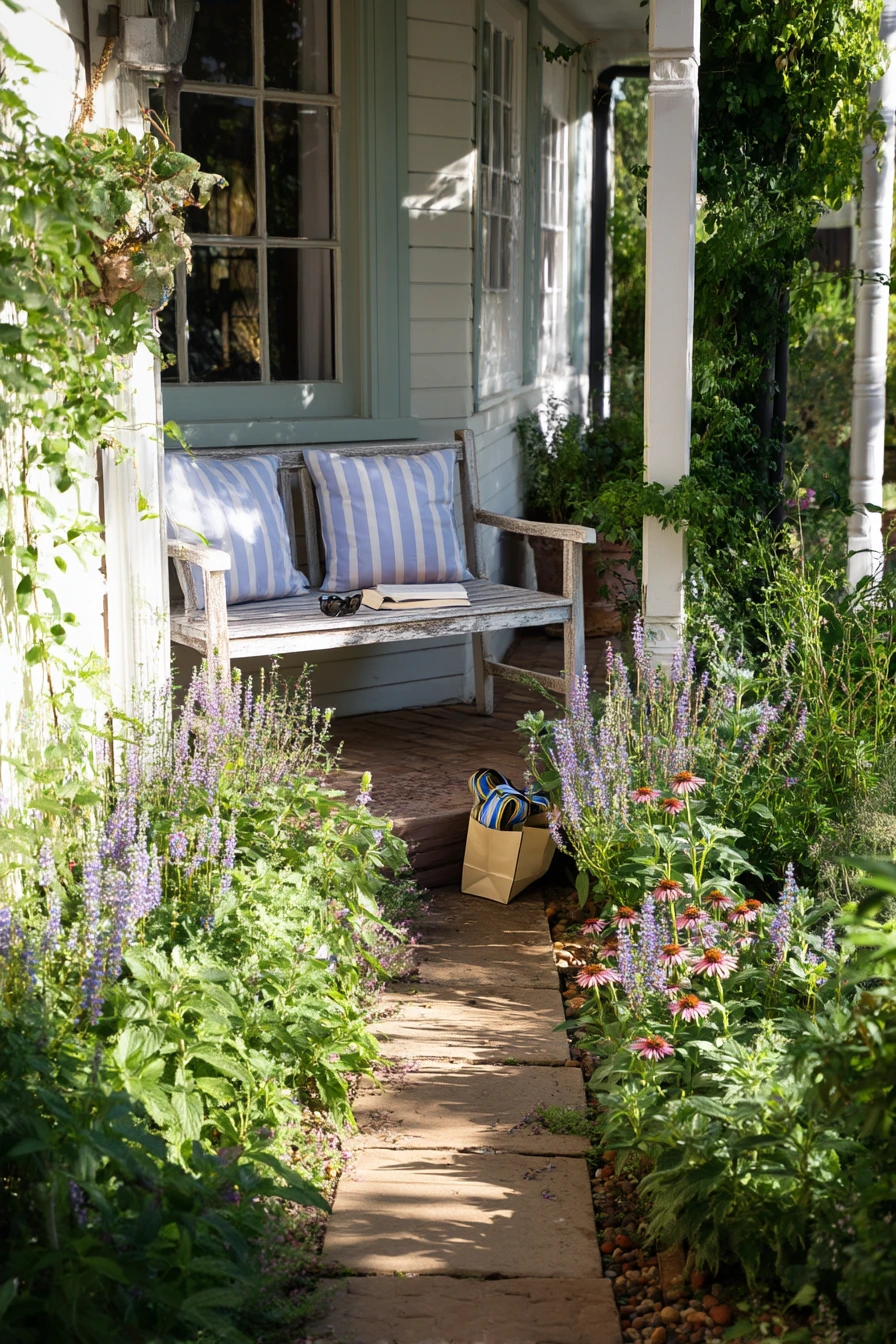
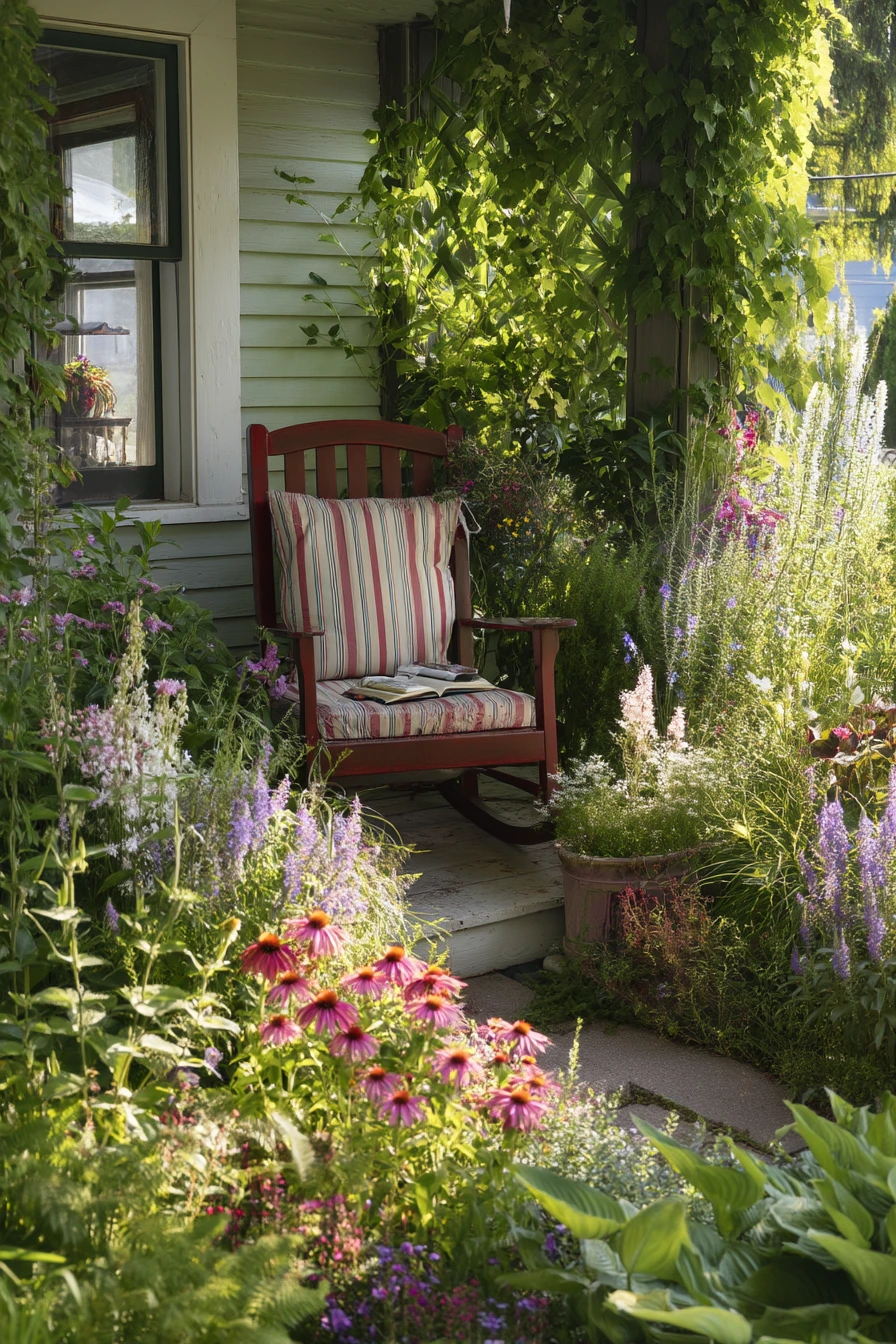
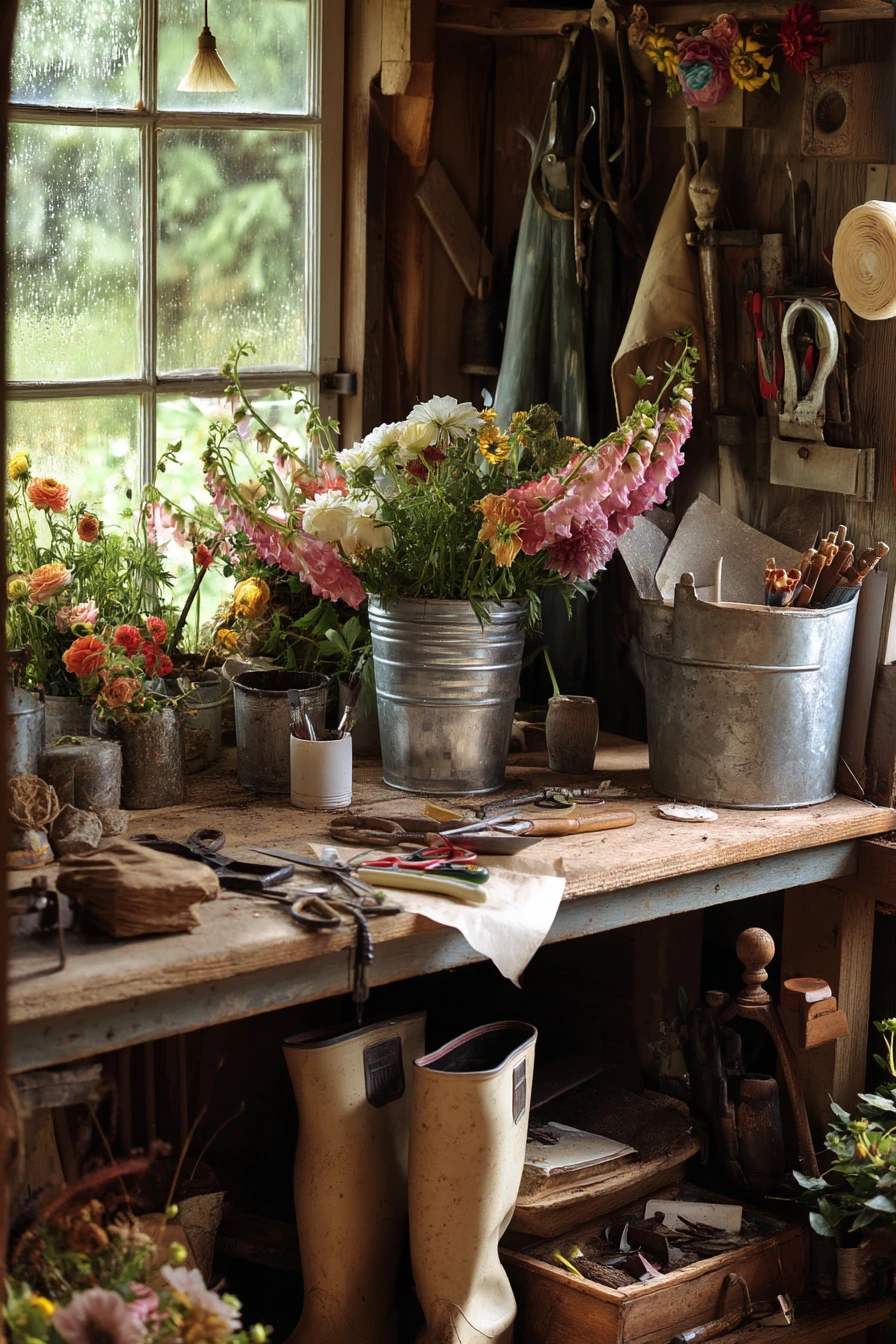
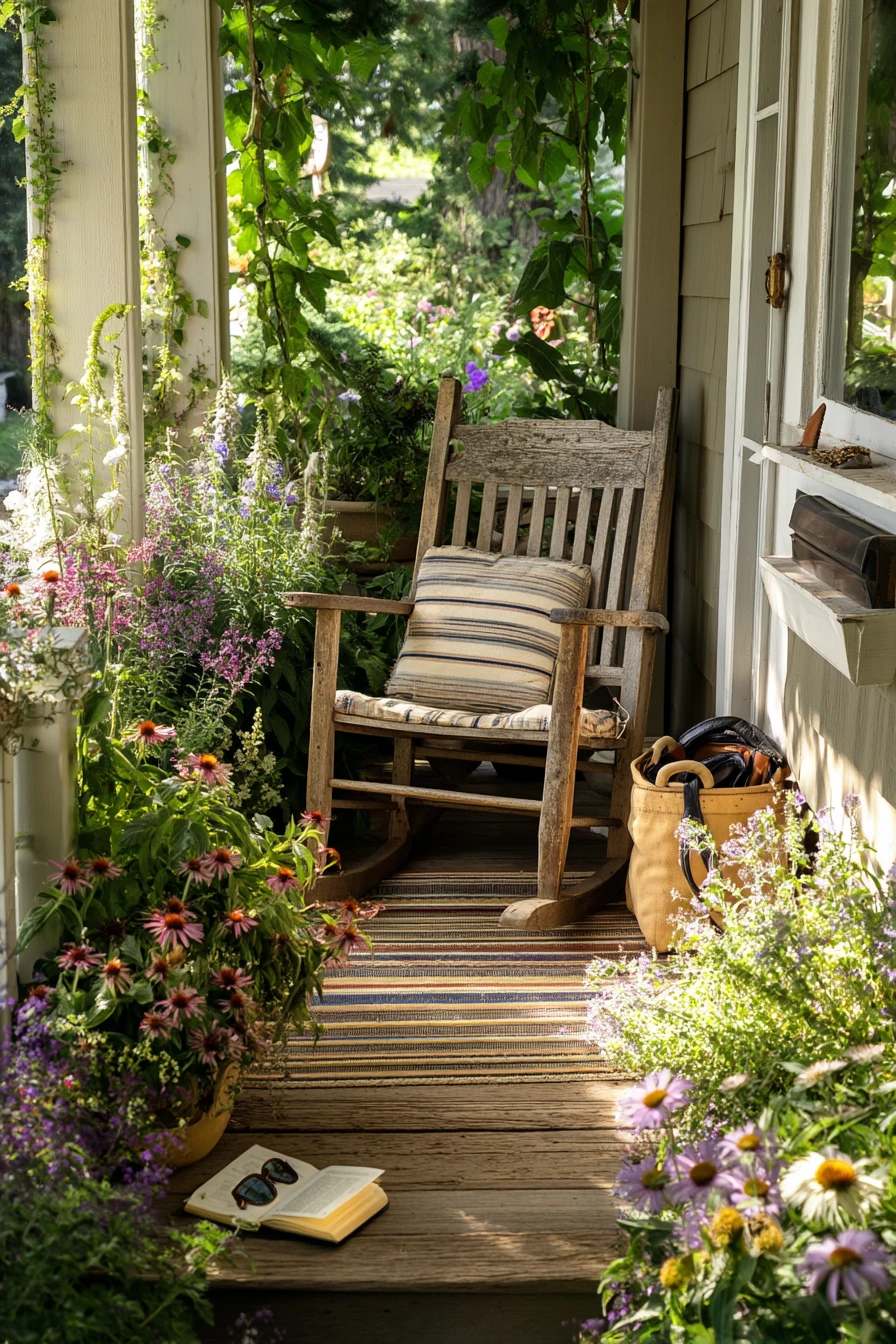
A front porch cottage garden designed for pollinators can be both pretty and useful. A narrow border bursting with bee balm, salvia, catmint, echinacea, and climbing jasmine will bring bees and butterflies close to the house. A distressed rocker with a striped cushion makes it feel like a porch you use, not just pass by.
To style it, keep the planting dense but the porch walkway clear. Put the tallest plants toward the house wall or at the far end of the border, then layer down to lower catmint near the edge. Place an open gardening book and sunglasses on the rocker for a casual look. Add a dog leash hook and tuck a potting soil bag beside the steps so the space stays real-life friendly.
Plant for a long season. Catmint and salvia start early, echinacea carries summer, and bee balm peaks when heat hits. Climbing jasmine adds scent and a vertical note, but keep it trained so it does not block the door. Avoid heavy pesticide use, since it hurts pollinators. Instead, water at the base, add compost, and cut back spent blooms to keep the border flowering longer.
- Choose nectar-rich plants like bee balm, salvia, and echinacea for steady pollinator visits.
- Layer plants by height so the narrow border looks full but not messy.
- Train jasmine on a trellis to add fragrance without taking ground space.
- Add one comfortable seat so you can watch the garden and notice problems early.
- Use mulch and compost to reduce watering and help plants stay healthy.
Pro Design Tip: Limit your palette to 5 to 7 plant types in a small border, then repeat them, so the porch garden looks abundant but still organized.
Budget Considerations: Perennials cost more up front; buy smaller pots, divide catmint after a year, and start salvia from plugs to fill space for less.
7 Rainy Day Window Garden View
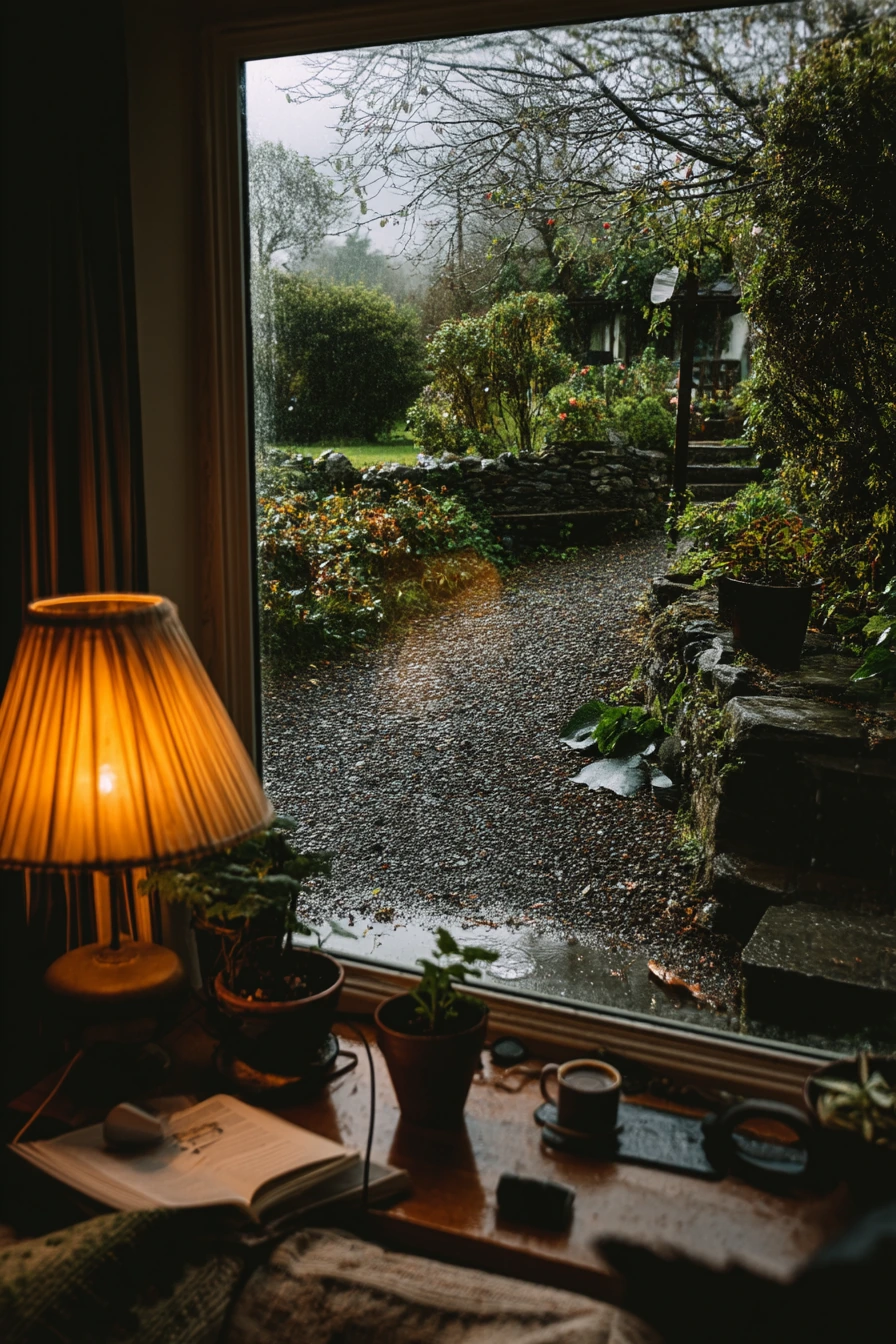
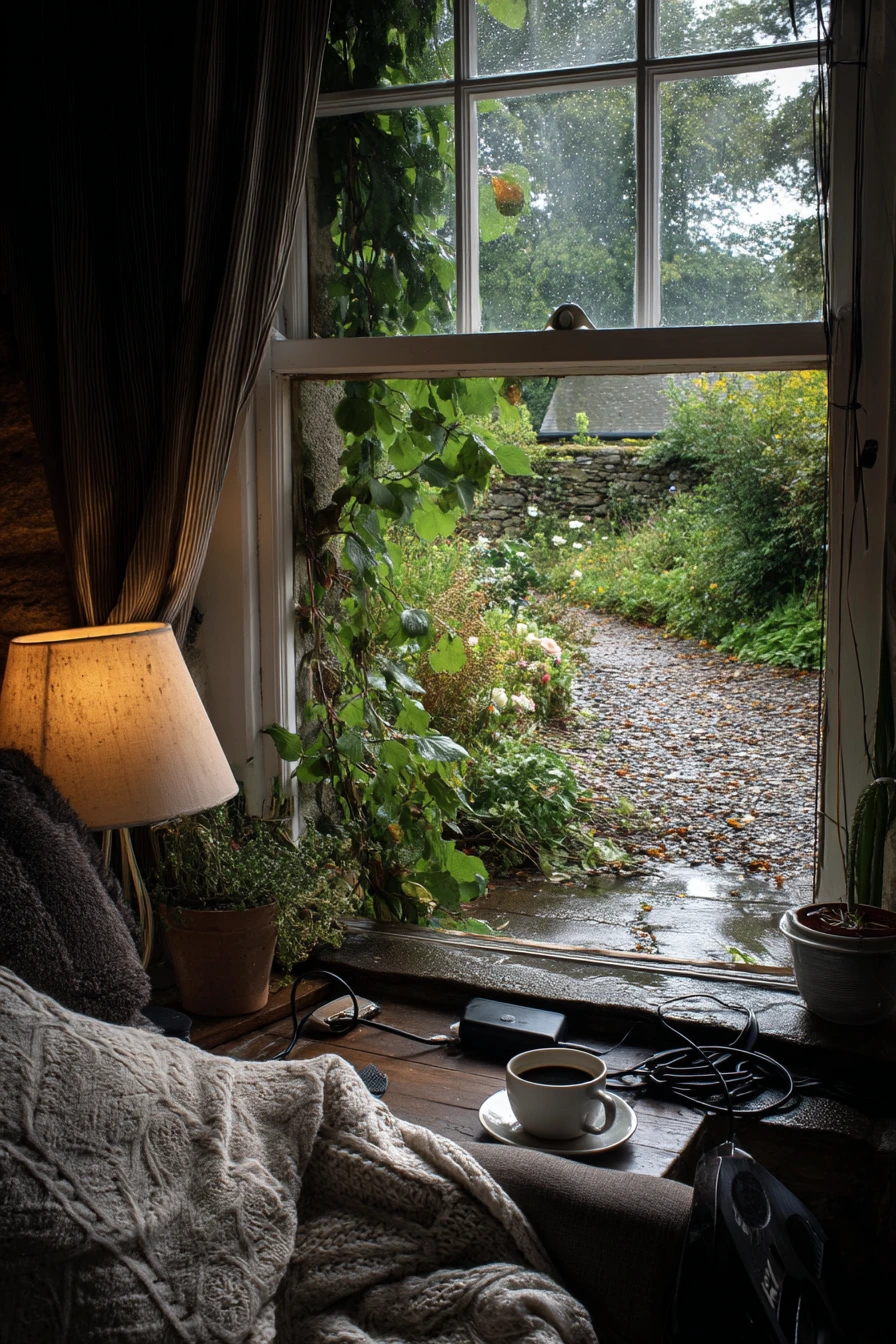
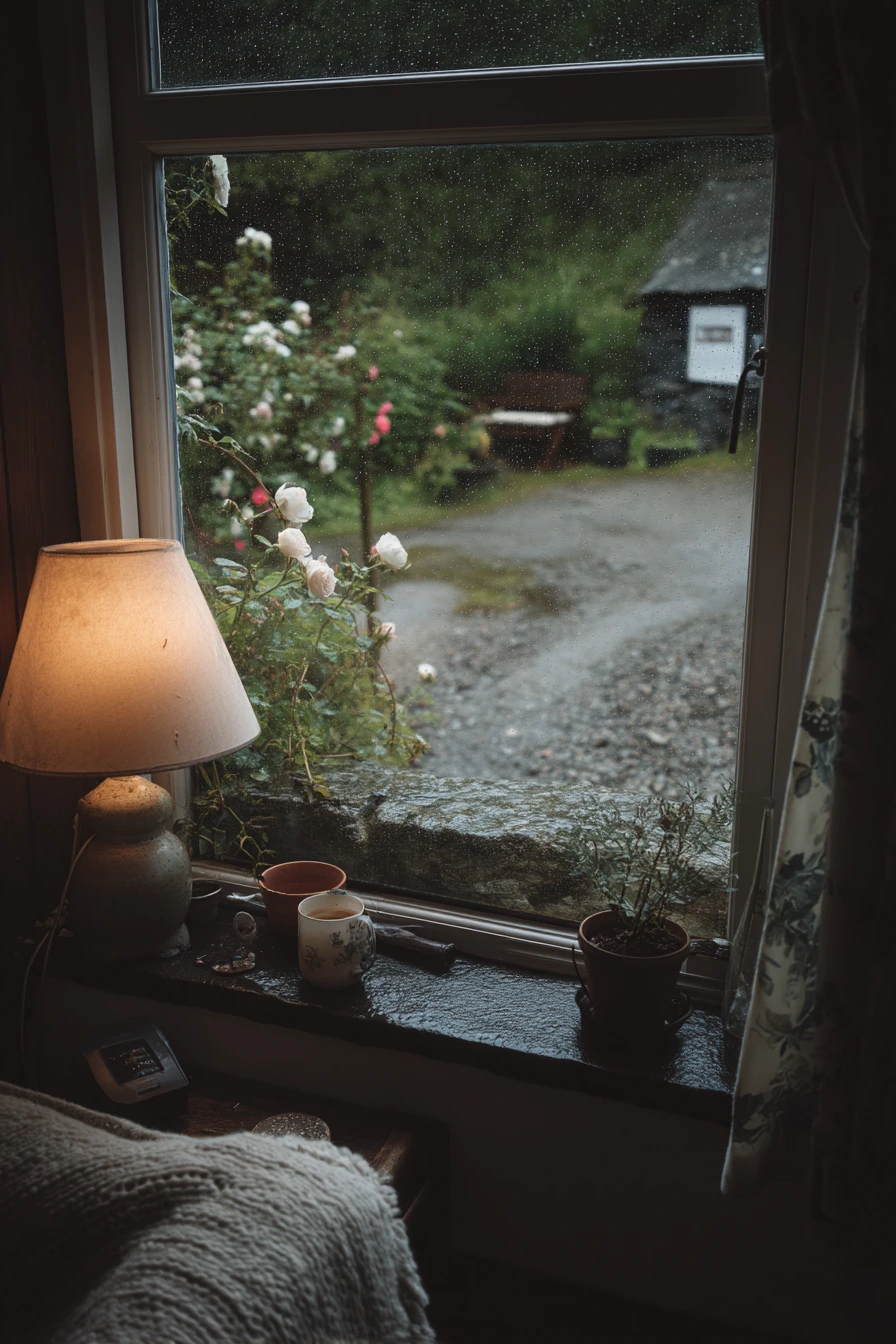
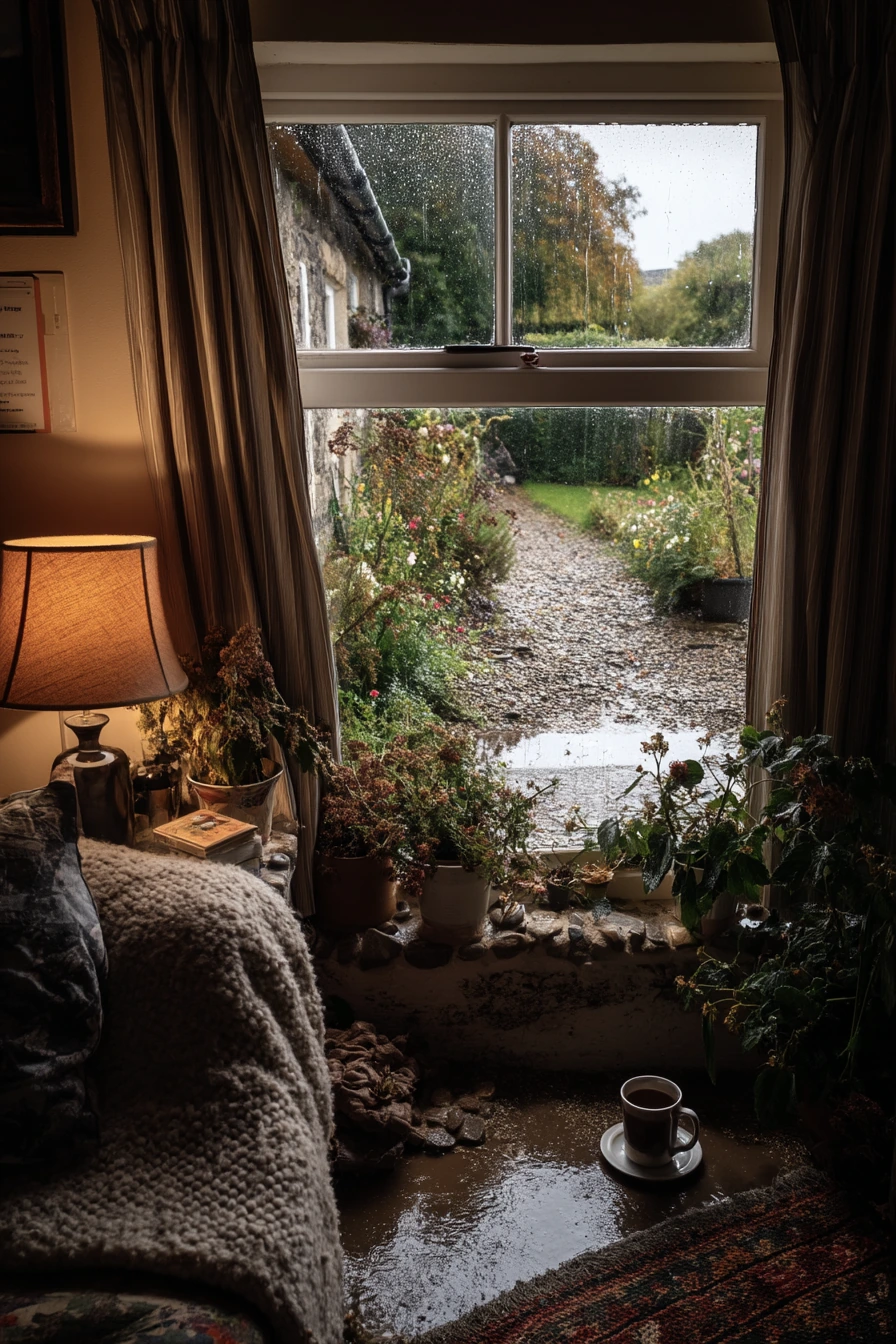
A cottage garden is not only for sunny days. Looking out during rain can be one of the best parts, especially when roses press against the window and a wet gravel path shines. Mossy stone edging and puddles reflecting greenery add texture and calm.
To create this mood, focus on what you see from inside. Choose a window view and build a simple scene: a gravel path, stone edging, and a few strong plants like roses or shrubs that hold shape in bad weather. Inside, keep the sill useful with houseplant cuttings in jars. A half-drunk coffee, a folded throw, and warm lamp light make the indoor-outdoor feeling stronger.
Rain also shows where your garden needs help. If puddles sit on the path, add more gravel or improve drainage with a slight slope. If soil splashes onto the stone edging, add a low groundcover or mulch. Roses near the window should have airflow to reduce disease, so prune lightly and avoid packing too many stems tight to the glass. This is a great place for scent too, since you will open the window on mild days.
- Plan one strong view from a sofa or chair so the garden feels close.
- Use gravel paths for good drainage and a classic cottage look.
- Add mossy stones or old edging for texture that looks better with age.
- Keep plant cuttings on the sill to connect the indoor space to the garden.
- Use warm indoor lighting to balance gray daylight and make the scene feel cozy.
Pro Design Tip: Design “window vignettes” by placing one standout plant, like a rose, within 3 to 6 feet of the glass so it becomes a focal point in every season.
Budget Considerations: Stone edging can be costly; use salvaged stones, broken concrete pieces placed neatly, or keep a simple metal edge and let moss and plants soften it over time.
8 Kitchen Garden Harvest Table
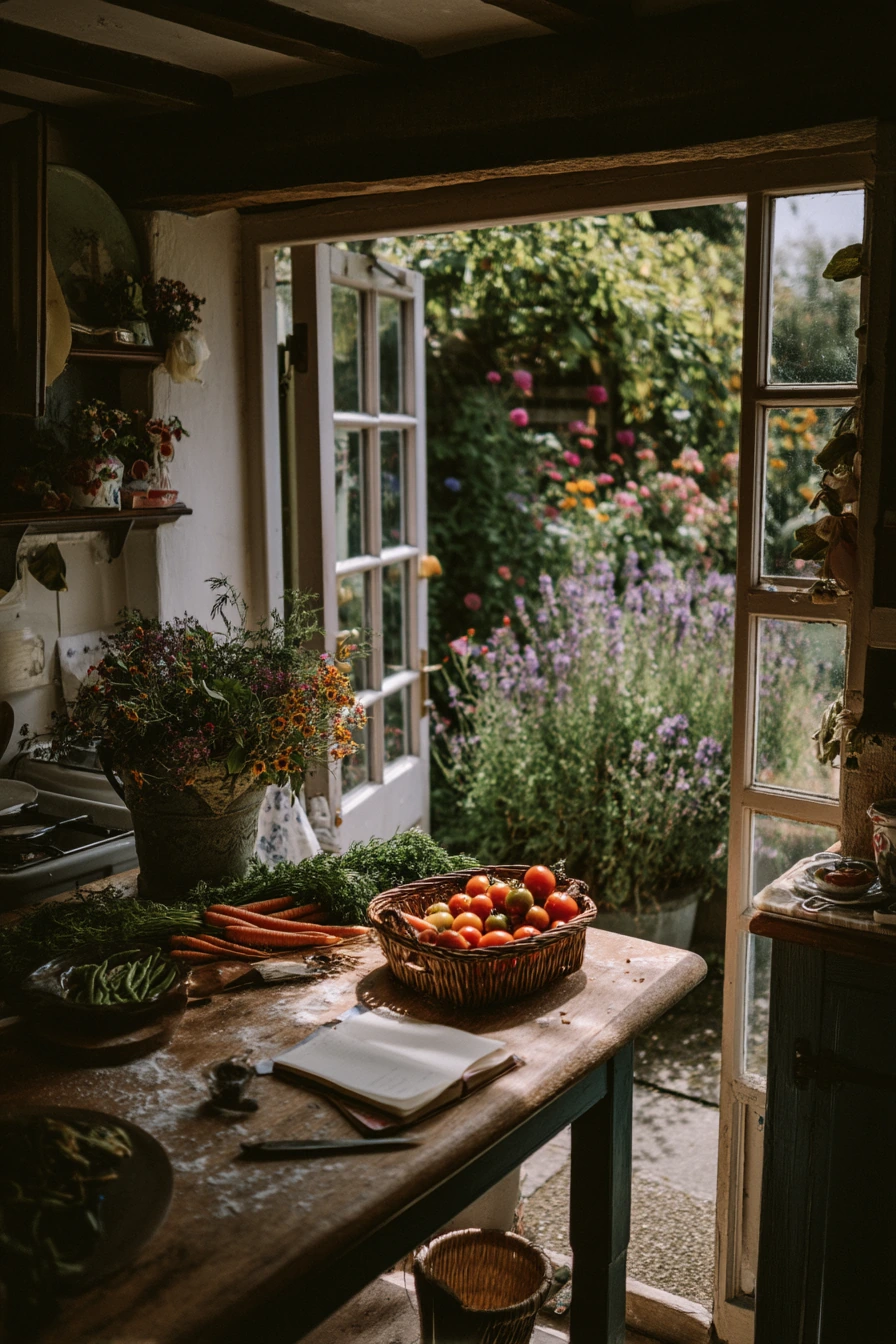
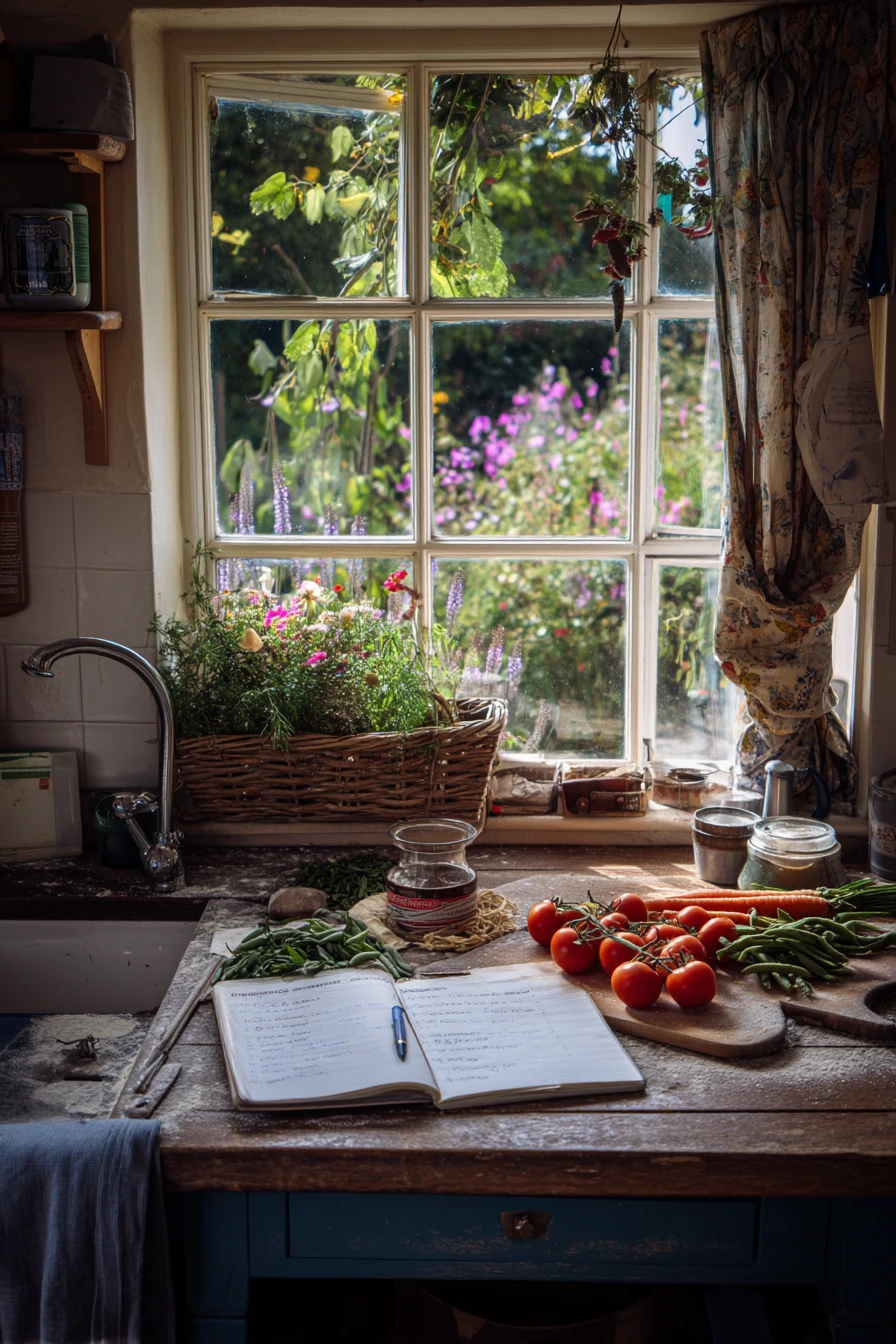
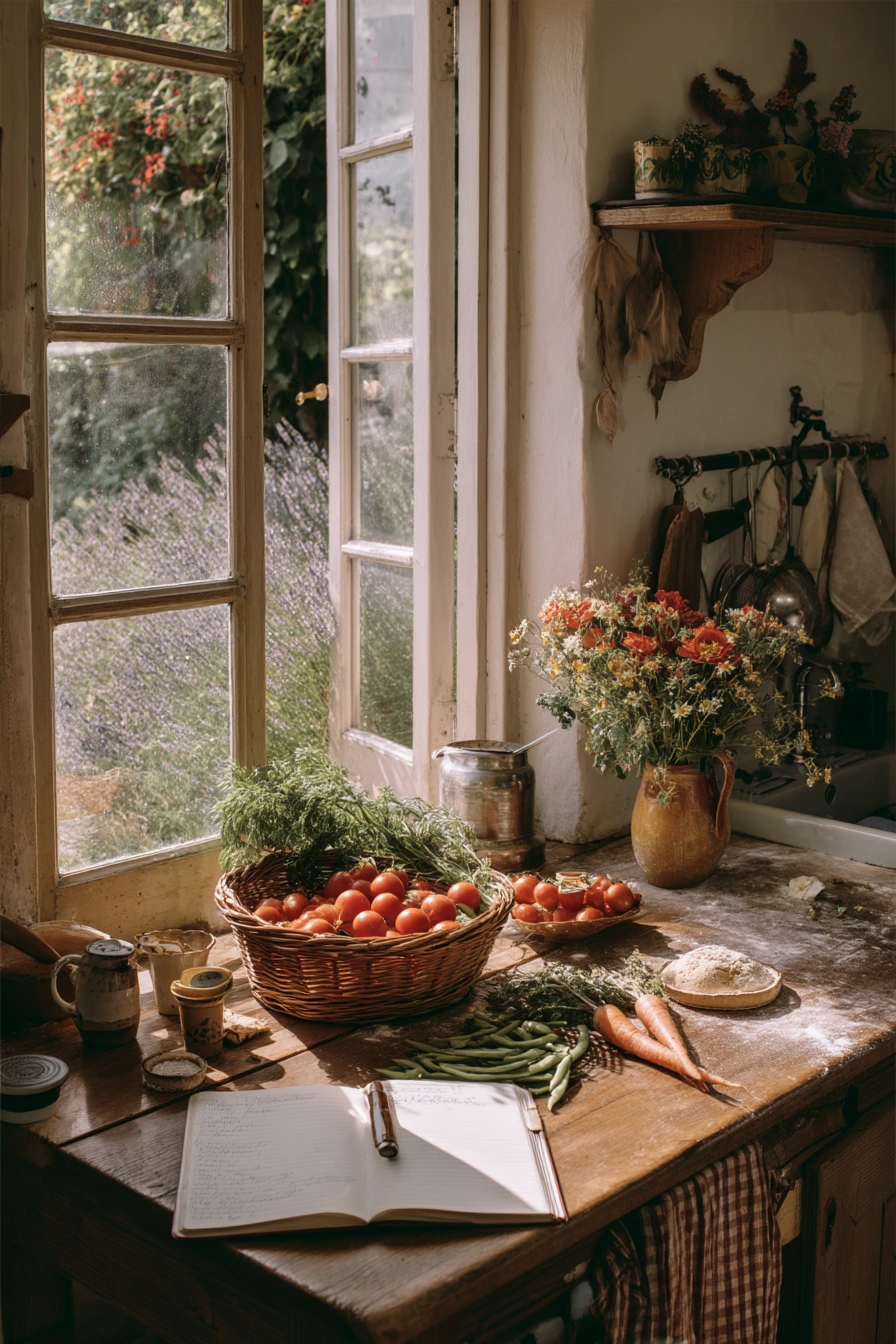
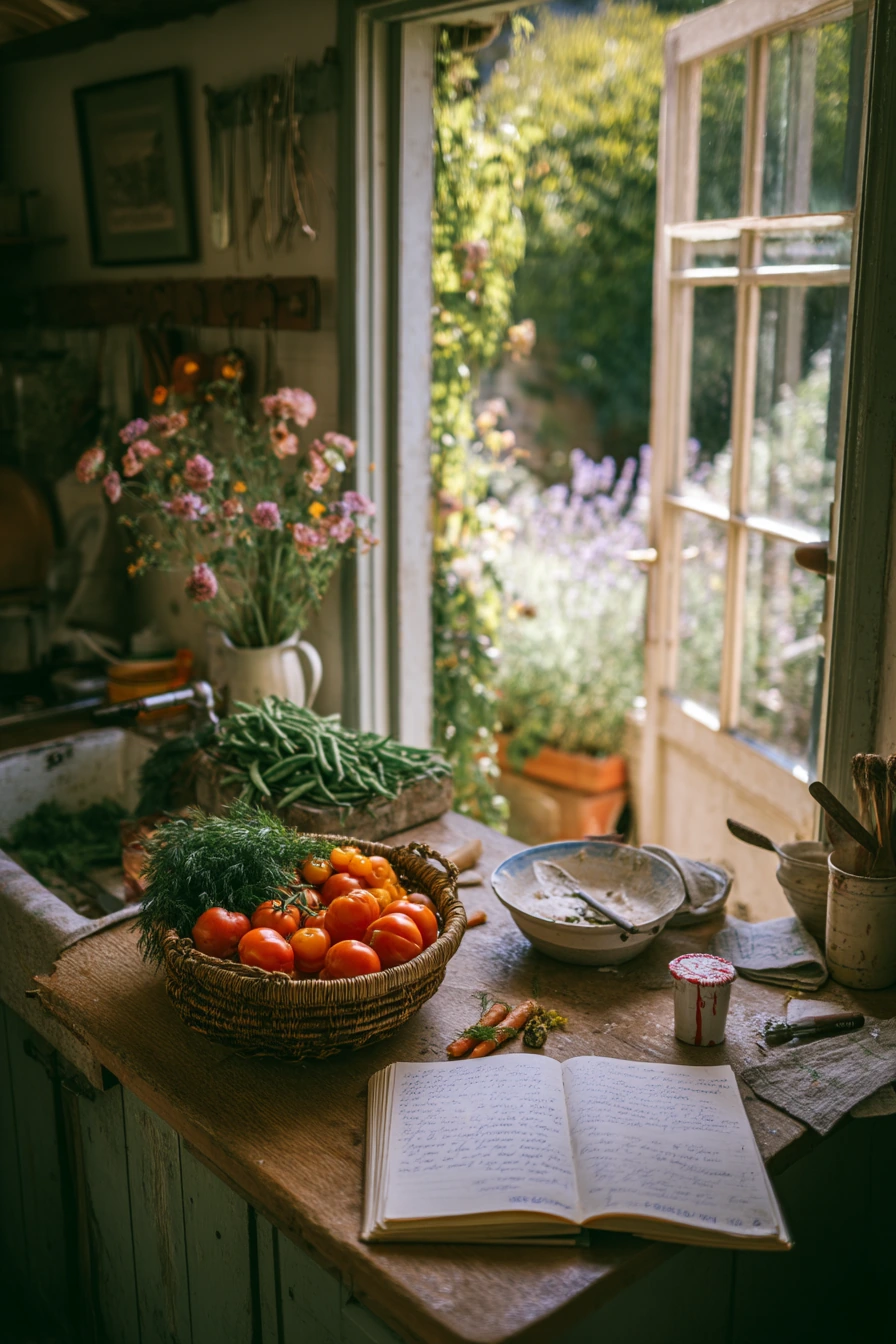
A family cottage kitchen after harvest shows what the garden is for. A basket of tomatoes, herbs, runner beans, and edible flowers on a pine table makes the whole home feel connected to the yard. A notebook with planting notes, a tea towel, and a kid’s snack cup keep it practical and lived-in.
To style this scene, keep the table clear except for one harvest basket and a few everyday items. Let the back door stay open if weather allows, so you can see the lavender border and climbing peas outside. This helps your garden feel like an extra room. If muddy carrots are by the sink, add a small tray or bowl so mess stays contained.
Make your cottage garden support the kitchen. Grow herbs you use weekly, like thyme, rosemary, and parsley. Runner beans and climbing peas save space and add height along a fence or trellis. Edible flowers like nasturtiums can go from garden to salad fast, and they bring bright color. Keep a simple system: harvest basket by the door, a spot to wash produce, and a place to write notes on what worked. That way your garden improves each season.
- Keep a harvest basket near the back door so picking becomes a habit.
- Grow climbers like peas and runner beans to add height in small spaces.
- Plant lavender near the path for scent and pollinators.
- Use edible flowers like nasturtium to add color to meals without extra work.
- Write quick notes on harvest dates and problems so you can plan next year.
Pro Design Tip: Plant in “kitchen groups,” like a herb cluster near the door and climbing vegetables along the fence, so the garden matches how you cook and move.
Budget Considerations: Raised trellises and baskets can cost more; use bamboo stakes and twine for climbers, and repurpose a sturdy tote or crate as your harvest basket.
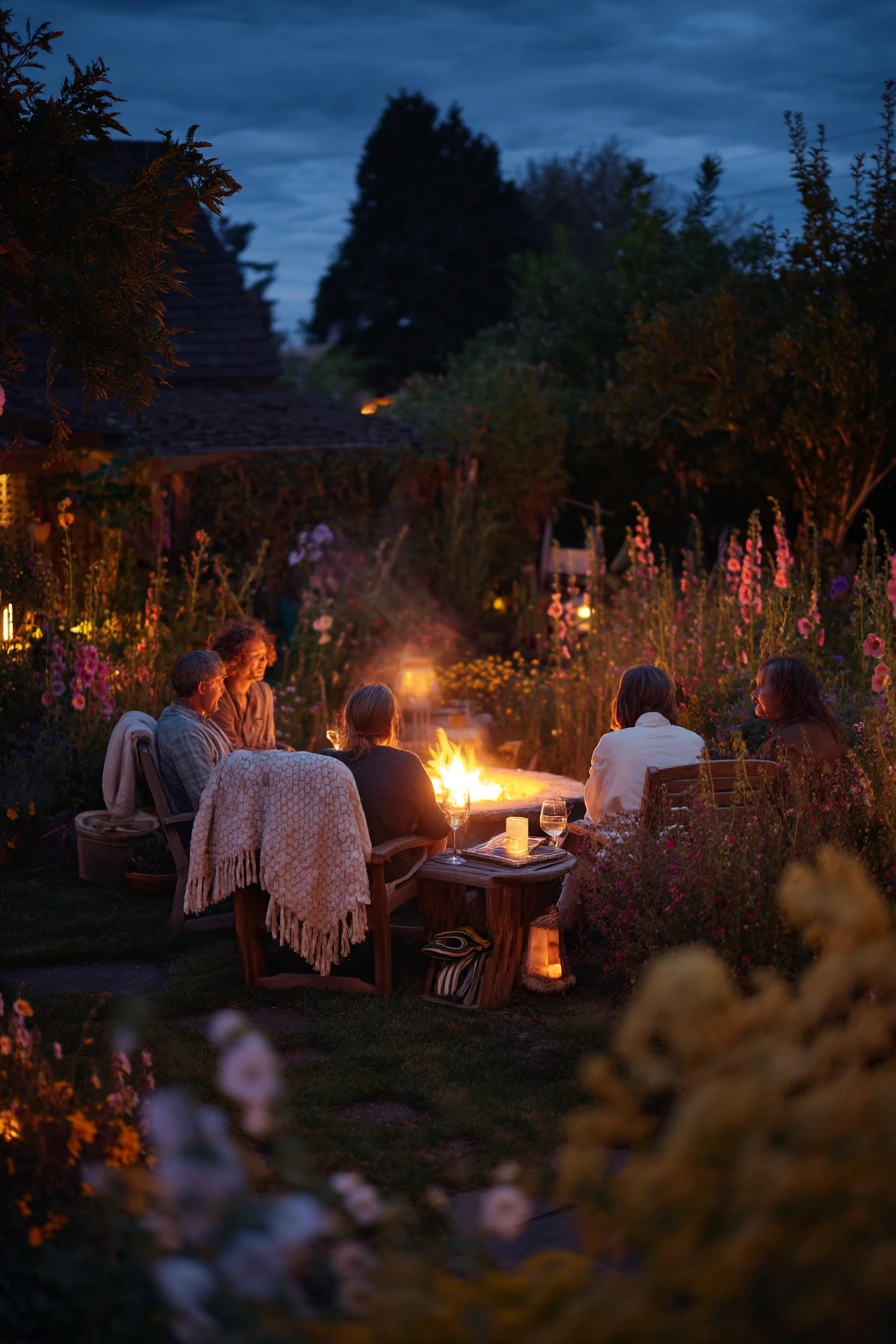
9 Cottage Garden Fire Pit Evening
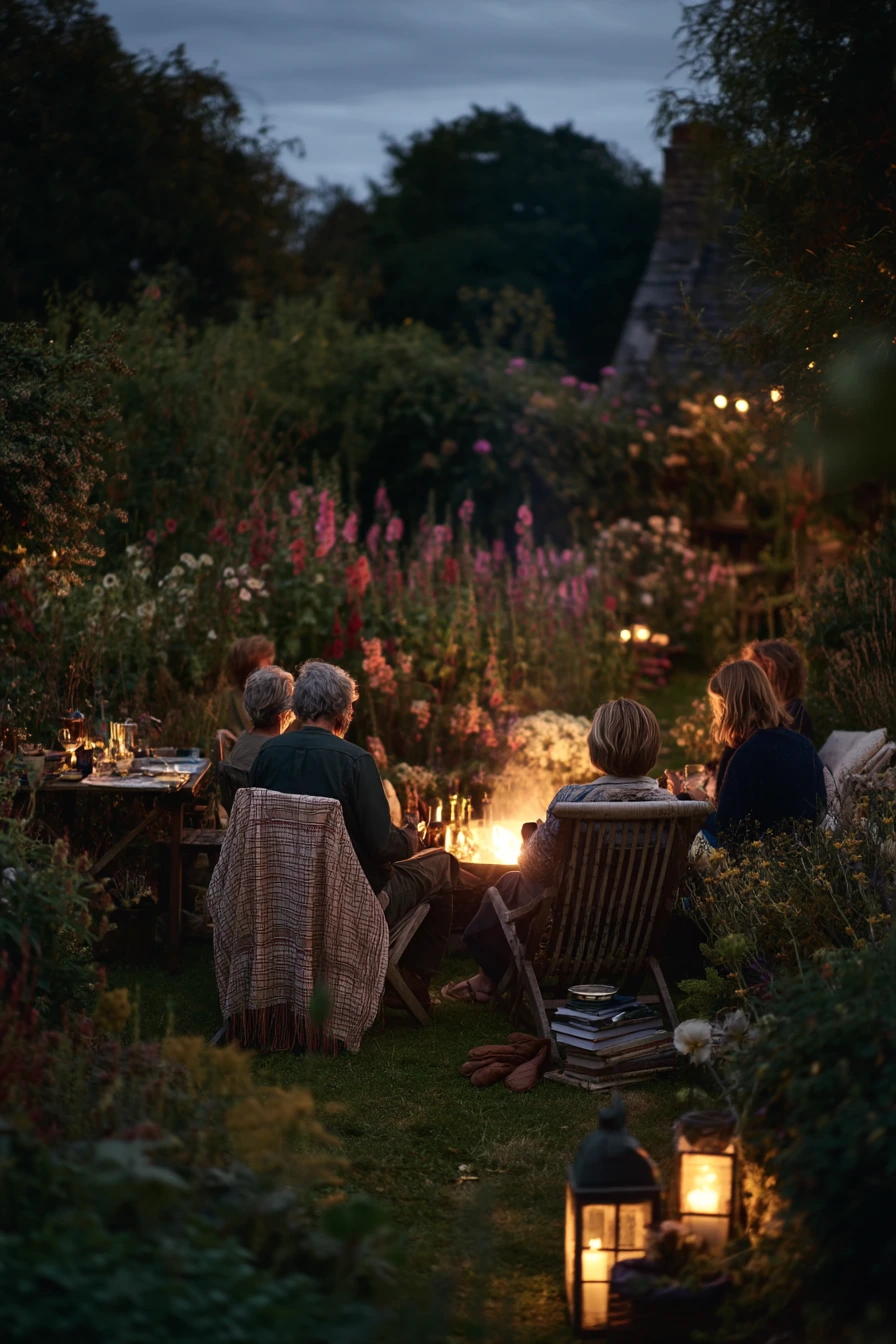
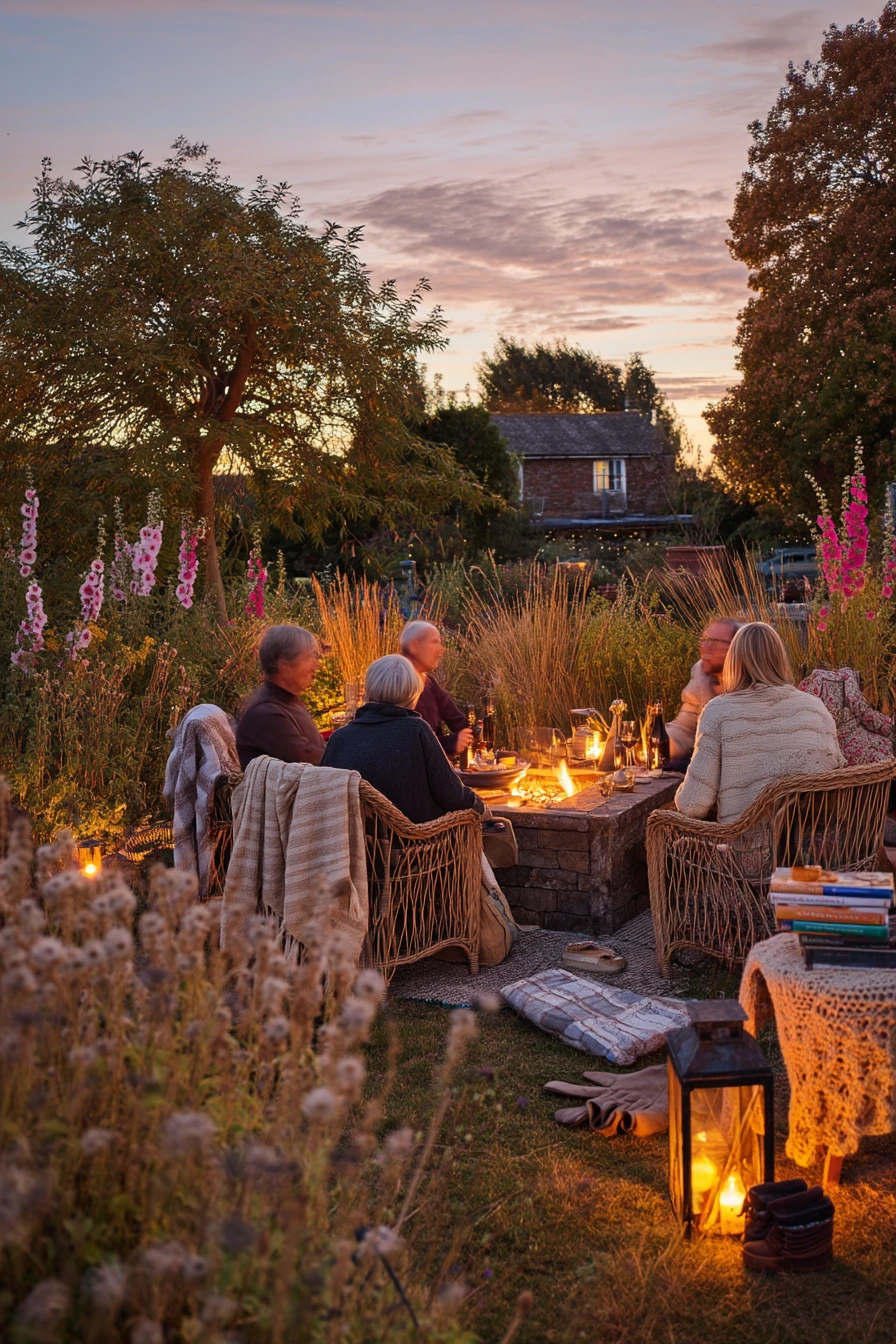
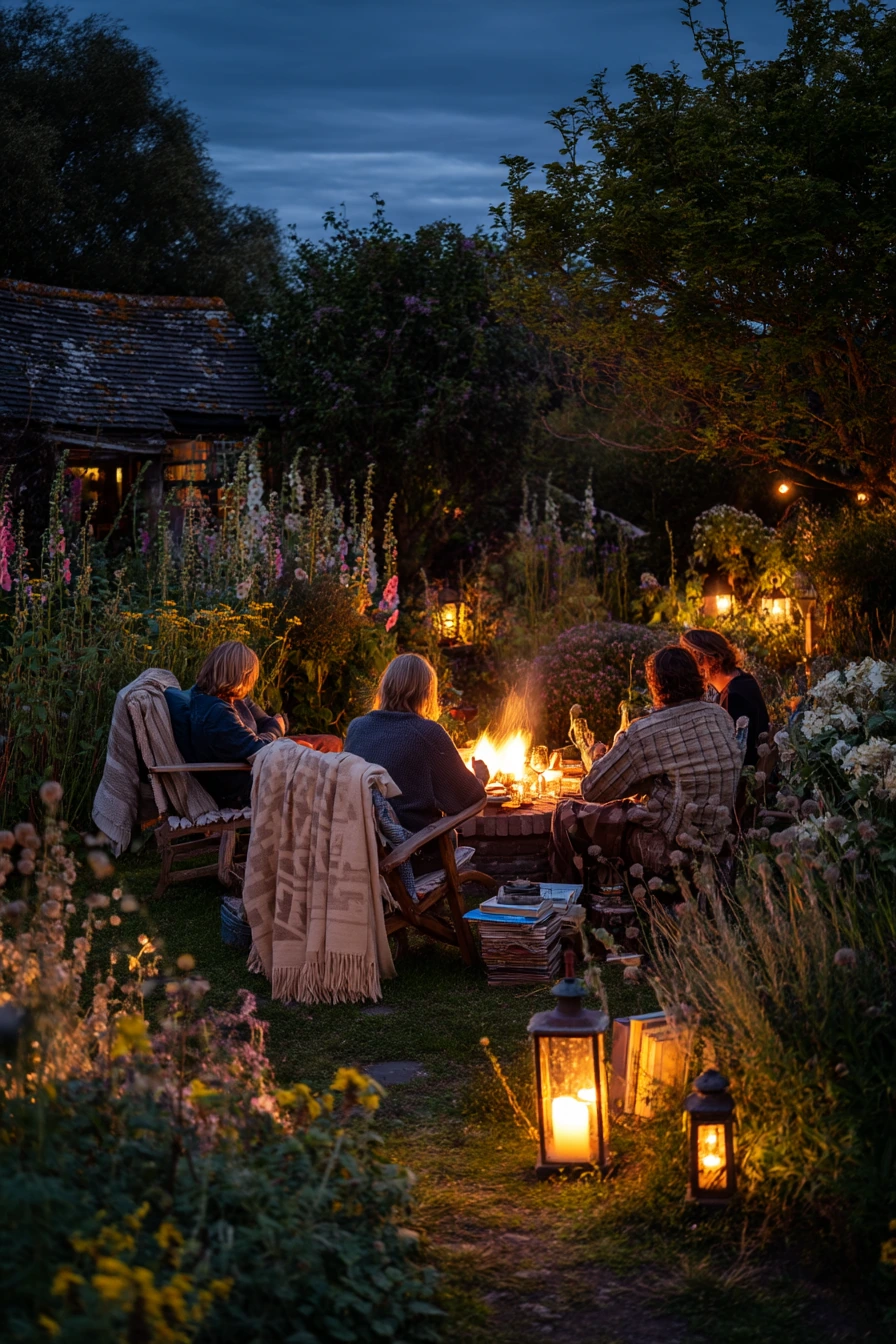
A cottage garden feels welcoming in the evening when light is soft and borders catch the last glow. Around a fire pit, hollyhock, ornamental grasses, roses, and allium can frame the space without needing a big yard. Woven chairs and a wool blanket make it comfortable as temperatures drop.
To style it, set the seating first. Arrange chairs so people can talk, then place lanterns where they light paths and faces, not just plants. Keep a small side table for empty wine glasses, a stack of books, and stray garden gloves. These small items help Pinterest visitors imagine real use, which is what makes them stay and read.
Planting around a social area should be sturdy. Grasses move in the breeze and look good even when not in bloom. Allium adds round shapes that stand out at dusk. Hollyhock brings tall height, but it can flop, so give it support and place it behind seating. Choose roses with strong scent if you want the area to feel special, but keep thorns away from tight walkways. Add a simple path, like gravel or stepping stones, so guests can move safely at night.
- Place chairs first, then plant borders around the seating area like a soft wall.
- Use lanterns for low, warm light and safer paths.
- Mix tall flowers like hollyhock with grasses for structure after dark.
- Add allium for round shapes that catch the last light.
- Keep a basket for blankets so evenings feel easy and planned.
Pro Design Tip: Use three layers around the fire pit area, with grasses for structure, mid-height flowers for color, and one tall plant for a backdrop, so the space feels like an outdoor room.
Budget Considerations: Fire pit kits and outdoor seating can be expensive; start with a simple metal fire bowl and thrifted chairs, then add cushions and lanterns over time.
10 Seasonal Bulb Planting Corner
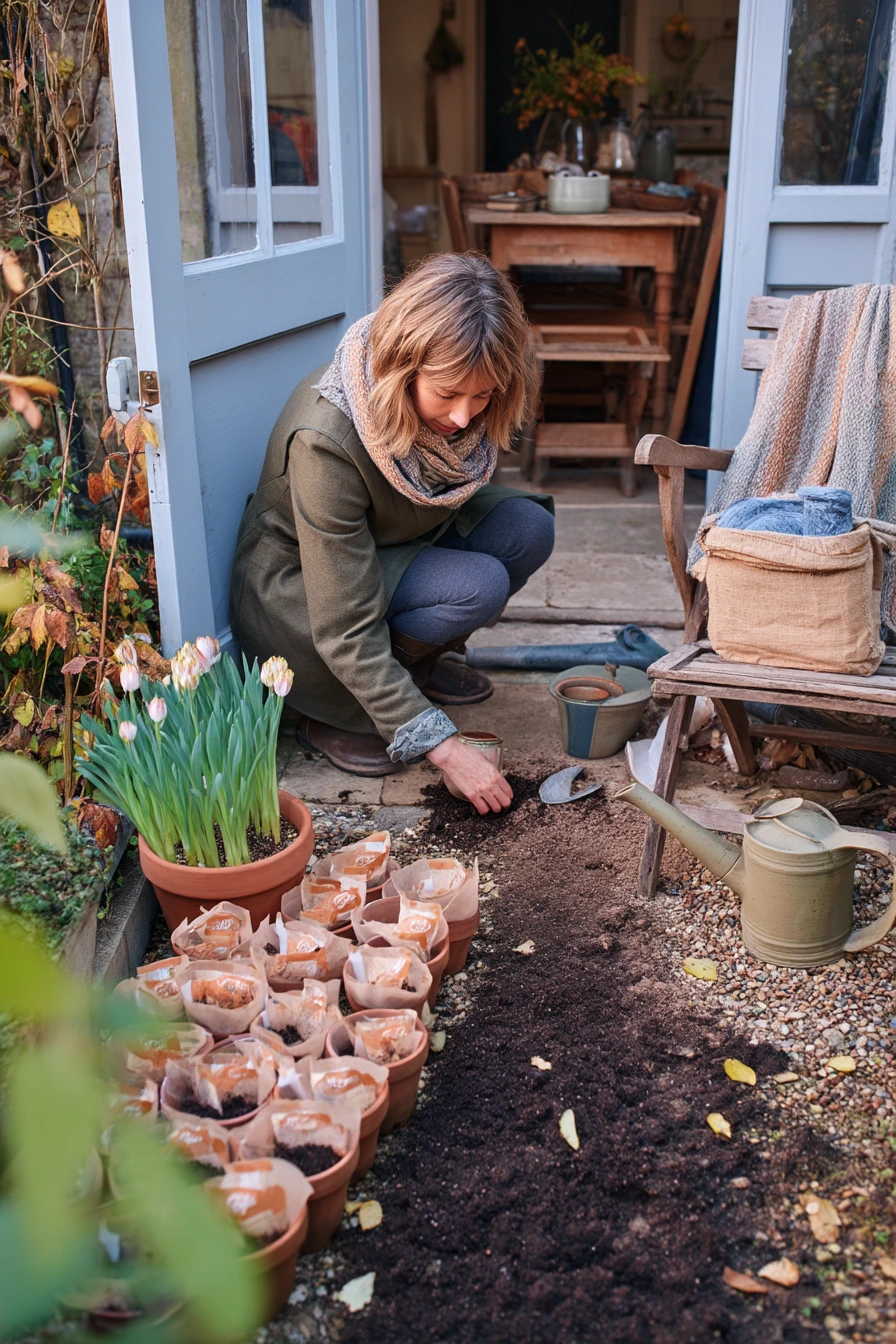
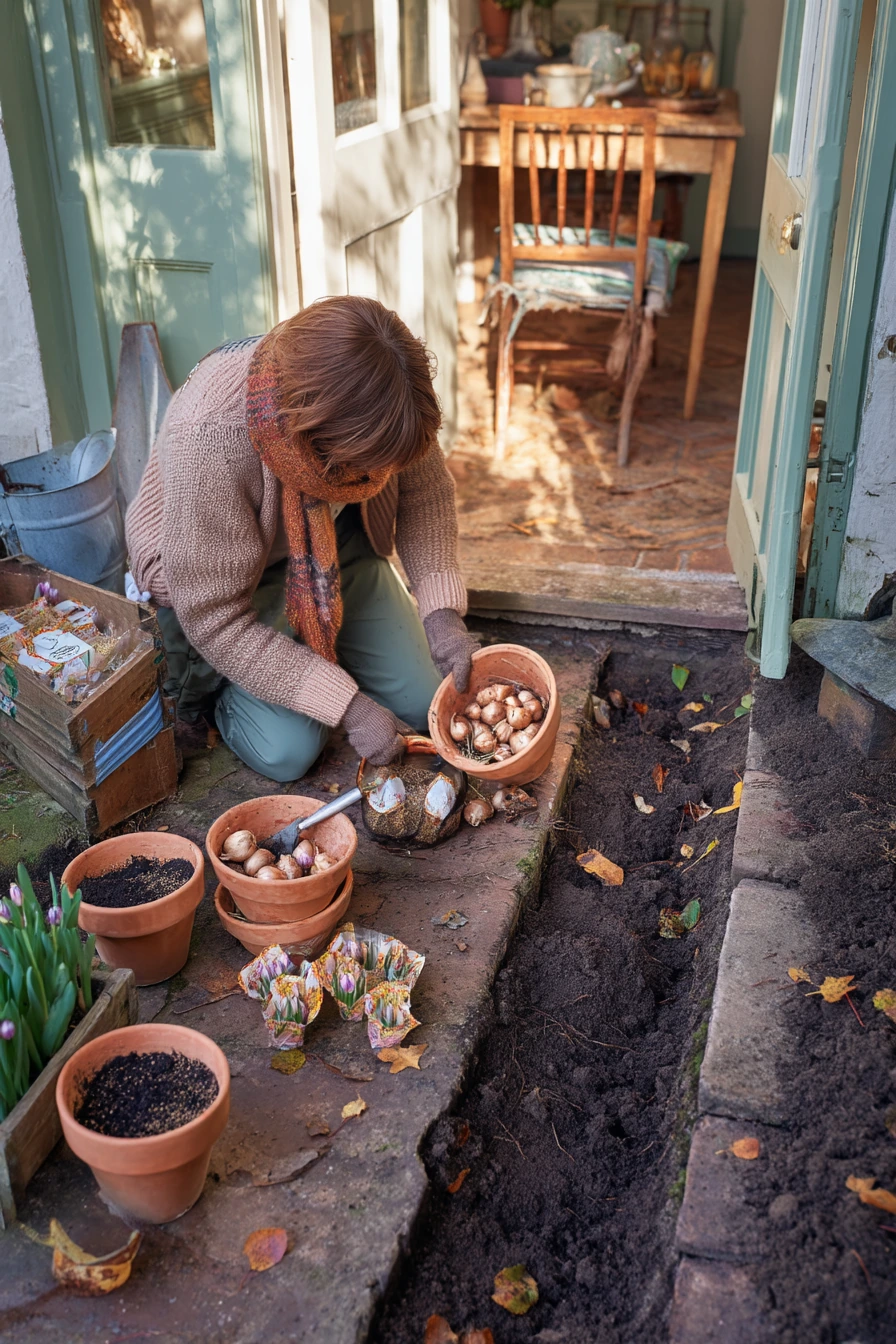
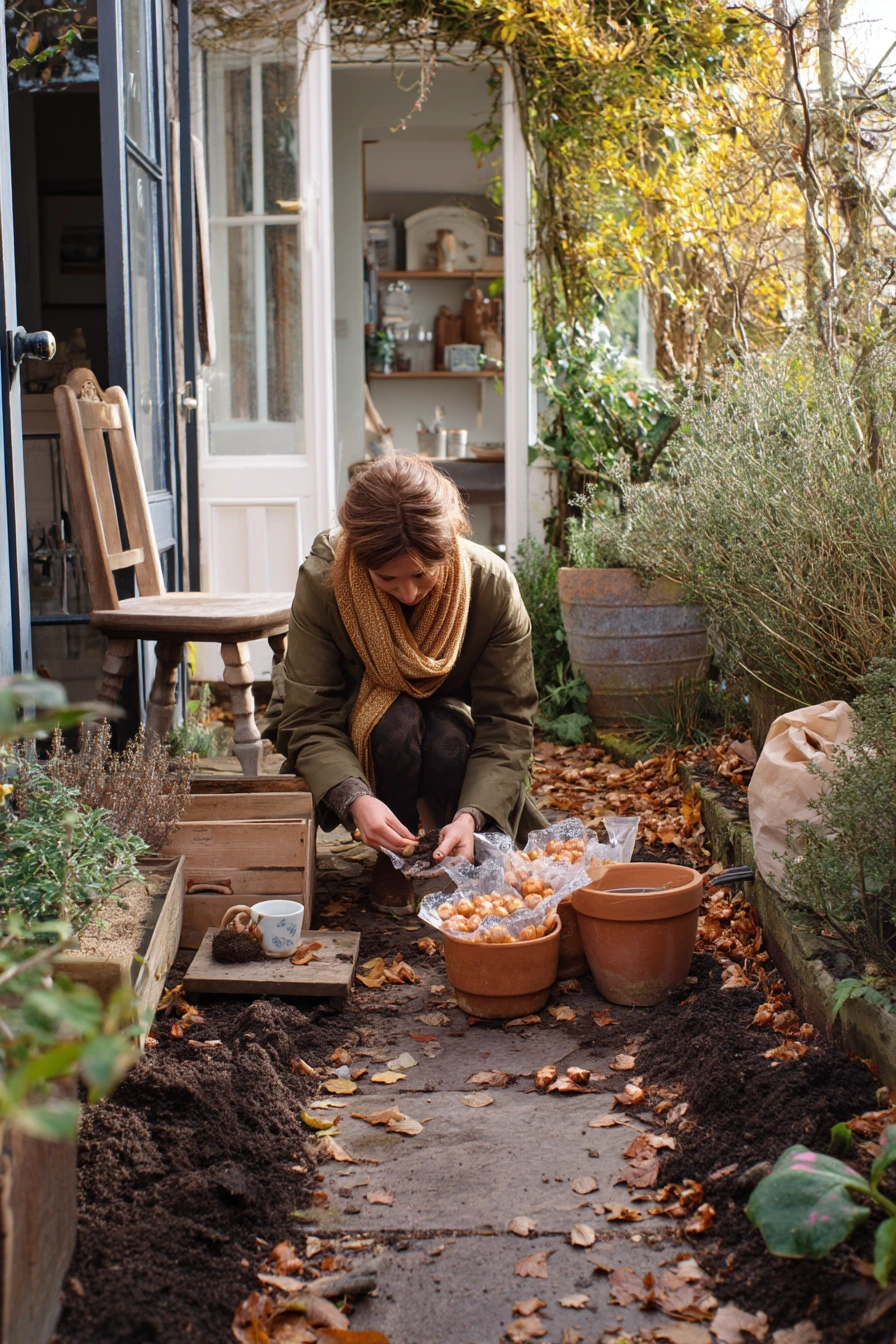
Autumn bulb planting is one of the easiest ways to get a cottage garden look in spring. In a compact space, a few paper packets of tulip and daffodil bulbs can turn bare beds into a full, cheerful border. Terracotta pots and freshly turned soil add that earthy, hands-on feel.
To style the work area, keep it simple and real. Set terracotta pots near the steps, place a compost crate close by, and keep a trowel within reach. A warm mug on the step and a scarf tossed over a chair are small touches that make the season feel cozy. Fallen leaves along the path can stay for a bit, but clear them from planting spots so bulbs do not rot.
For planting, think in clusters, not lines. Plant bulbs in groups of 7 to 15 so the blooms look natural. Mix early, mid, and late varieties for a longer season. In small gardens, use pots too. You can layer bulbs in one pot, with later-blooming bulbs deeper and early bulbs closer to the top. Water after planting, then let winter do the rest. Mark spots with small stakes so you do not dig into them later when adding compost or winter pansies.
- Plant bulbs in clusters for a natural cottage look instead of straight rows.
- Mix tulips and daffodils for different shapes and bloom times.
- Use terracotta pots for bulbs if your garden beds are full.
- Add compost to improve soil so spring blooms are stronger.
- Label or mark planted areas so you do not disturb bulbs later.
Pro Design Tip: Plan bulb placement from your main viewing point, like the kitchen window, so the best spring color shows up where you see it most.
Budget Considerations: Bulbs are cheaper in bulk; buy mixed bags after the first rush of fall shopping, and use pots you already own instead of buying new containers.
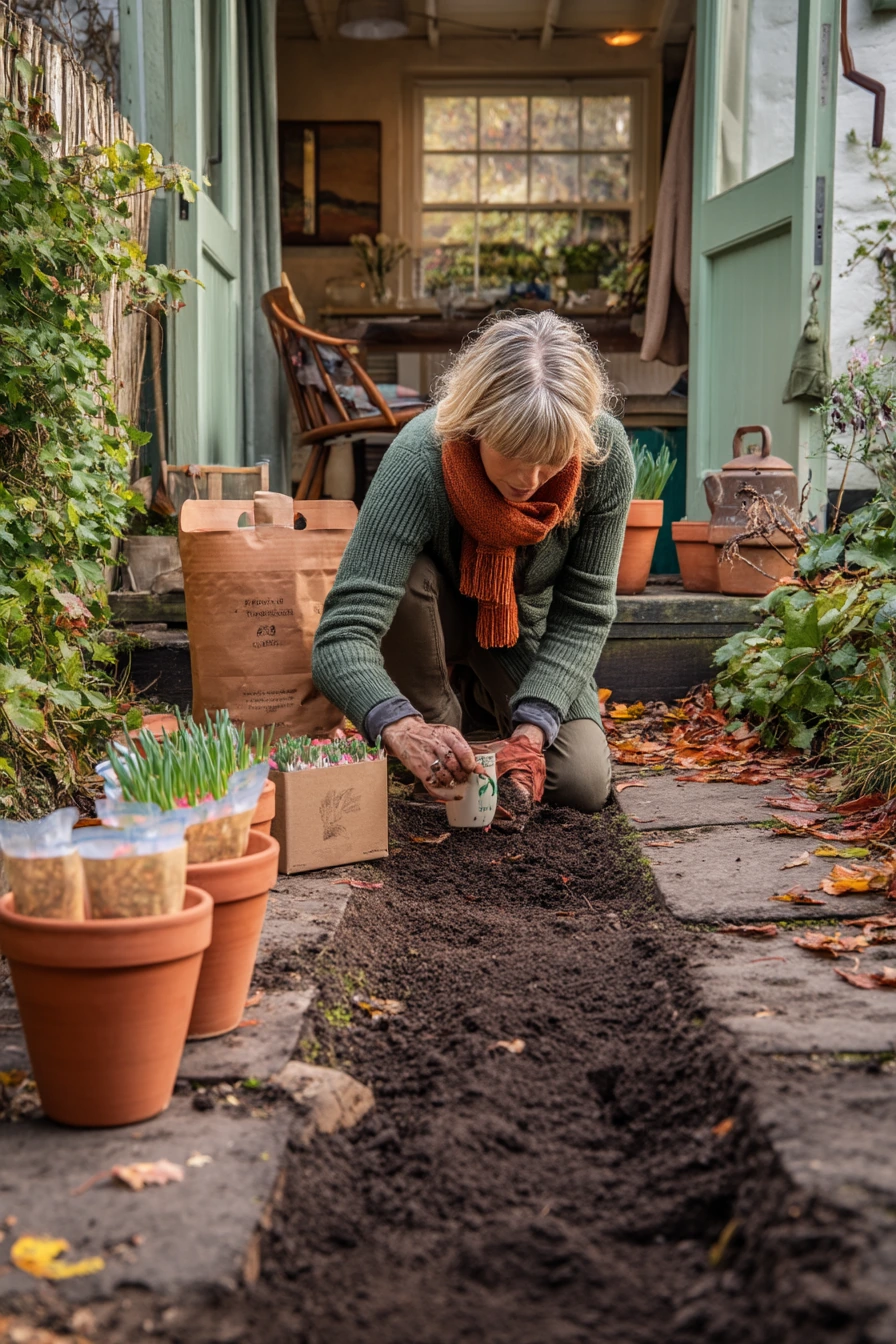
Cottage garden ideas work best when they match your real life. A brick entry path, a raised herb bed, or a balcony full of clay pots can all feel cottage-style when you layer plants and add a few useful details.
Use the section that fits your space, copy the plant mix, and start small. As the seasons change, keep notes, divide plants, and add one new feature at a time.
FAQ
What plants make a garden look like a cottage garden? Use a mix of soft, full plants like lavender, roses, foxglove, delphinium, peonies, and easy fillers like catmint and sweet pea.
How do I start a cottage garden in a small yard? Start with one border or one raised bed, plant in layers by height, and repeat a few plant types so it looks full without feeling messy.
Can I make a cottage garden with pots only? Yes. Use different pot sizes, include trailing plants like ivy or nasturtium, and add one vertical plant like a mini rose or a small trellis.
How do I keep a cottage garden from looking unkempt? Keep edges tidy, leave clear paths, deadhead spent blooms, and repeat plants in groups so the design feels planned.
What is the easiest low-maintenance cottage garden plan? Use mostly perennials like salvia, catmint, echinacea, and lavender, add mulch, and keep watering simple with a hose and a routine.
How can I make a cottage garden better for pollinators? Choose nectar plants, avoid pesticides, include long-blooming flowers, and add water like a small dish with stones for safe landing.
When should I plant bulbs for a cottage garden? Plant tulip and daffodil bulbs in fall, before the ground freezes, so they can root and bloom in spring.