

Blue bedroom ideas are popular because blue feels calm, clean, and easy to live with. It can look coastal, modern, classic, or cozy depending on the shade and the materials you pair with it.
This guide shows practical blue bedroom styles based on real rooms, from a lived-in primary suite with a navy accent wall to a compact city apartment with powder-blue walls. Each section includes small styling moves that make the space feel finished, not staged.
You will also get clear tips for renters, families, and anyone refreshing a room on a budget. Use these ideas to pick the right blue, layer bedding, and add storage without making the room feel crowded.
For every look, you will find a pro design tip and a budget note so you can copy the vibe in a way that works for your home.
1 Sunlit Navy Accent Bedroom


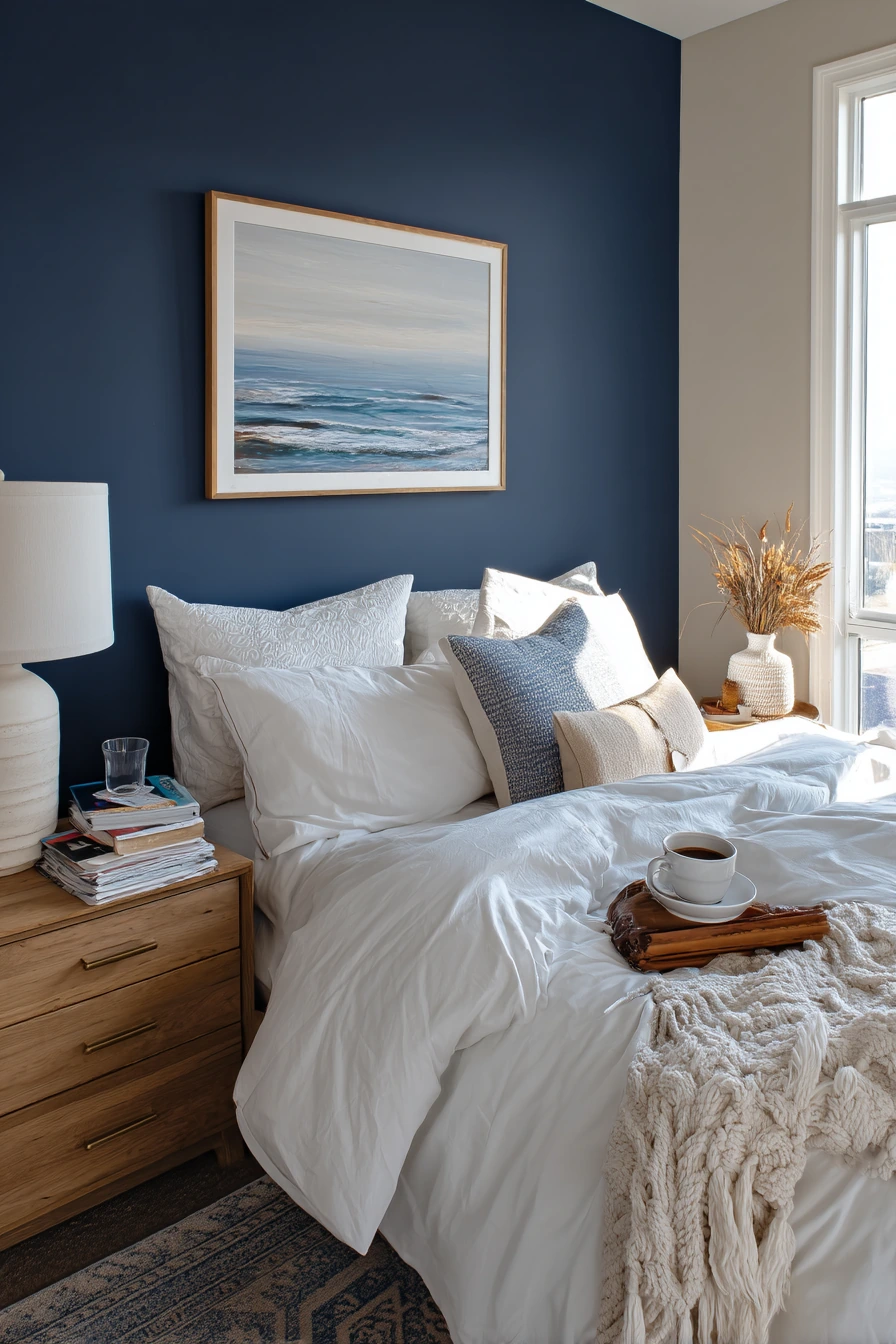
A navy accent wall is a strong choice for a lived-in primary suite because it adds depth without making the room feel busy. Pair it with crisp white bedding to keep the space bright, then warm it up with oak nightstands and a woven rug. This mix feels calm and real, not perfect.
To keep navy from feeling heavy, repeat lighter tones around the room. Framed coastal art is an easy way to add soft blues and sandy neutrals, and a ceramic lamp adds texture without extra clutter. The goal is a serene room that still shows daily life, like a water glass on the nightstand or a charging cable by the pillow.
Finish with one relaxed layer at the foot of the bed. A slightly rumpled throw and one open paperback tell the truth that the room gets used. Keep surfaces mostly clear, but not empty, so the space feels restful at the end of the day.
- Paint one wall navy and keep the other walls warm white or pale gray.
- Choose white bedding, then add one textured blue pillow to connect to the wall.
- Use oak or light wood nightstands to balance the dark paint.
- Add a woven rug for warmth and quiet texture underfoot.
- Hang coastal prints in simple frames to soften the navy.
Pro Design Tip: Use a matte or eggshell finish for the navy accent wall to reduce glare and make the color look richer in soft window light.
Budget Considerations: If new nightstands are pricey, look for secondhand oak pieces and sand them lightly, then seal with a clear finish for a clean, updated look.

2 Small Apartment Blue Bedroom
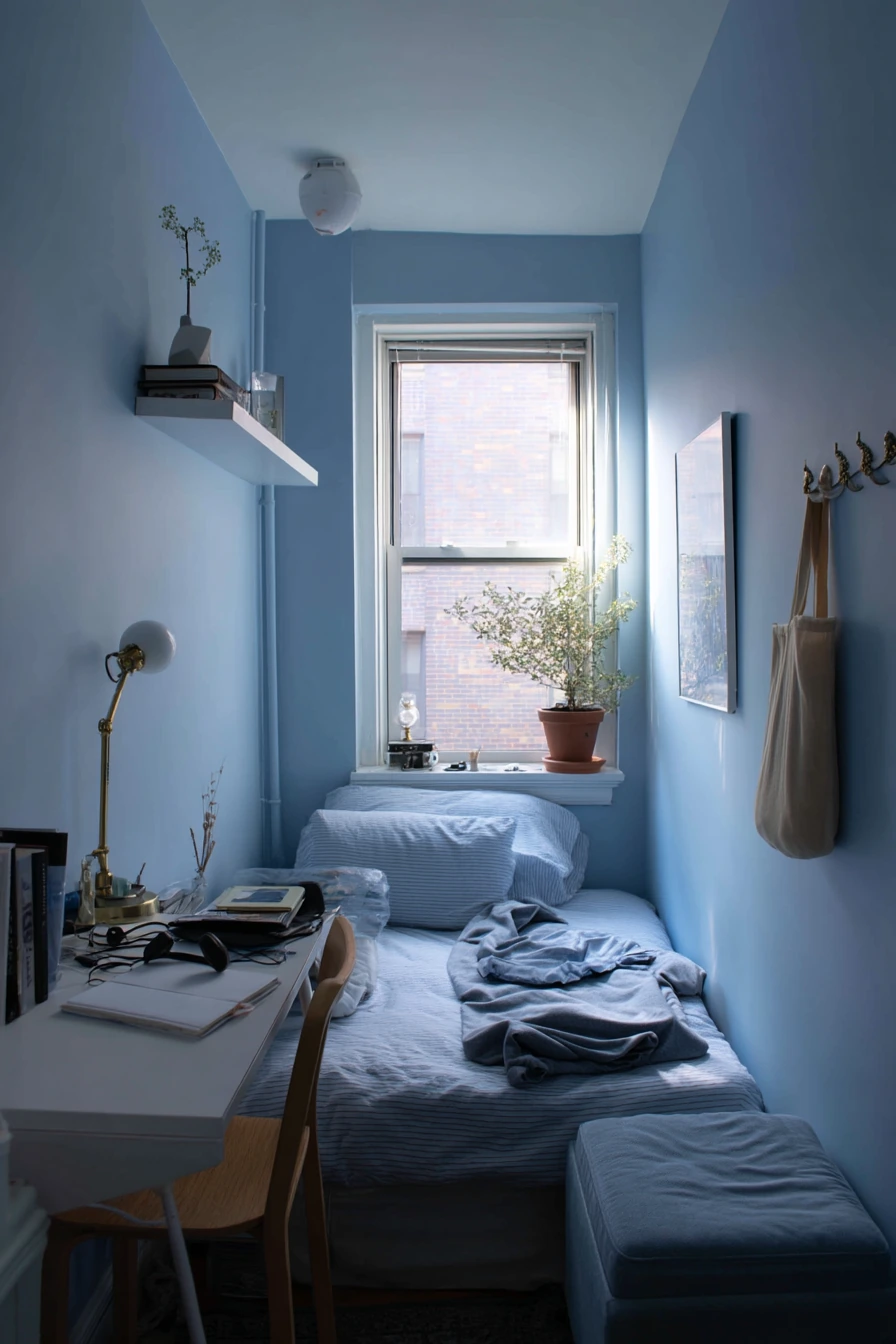
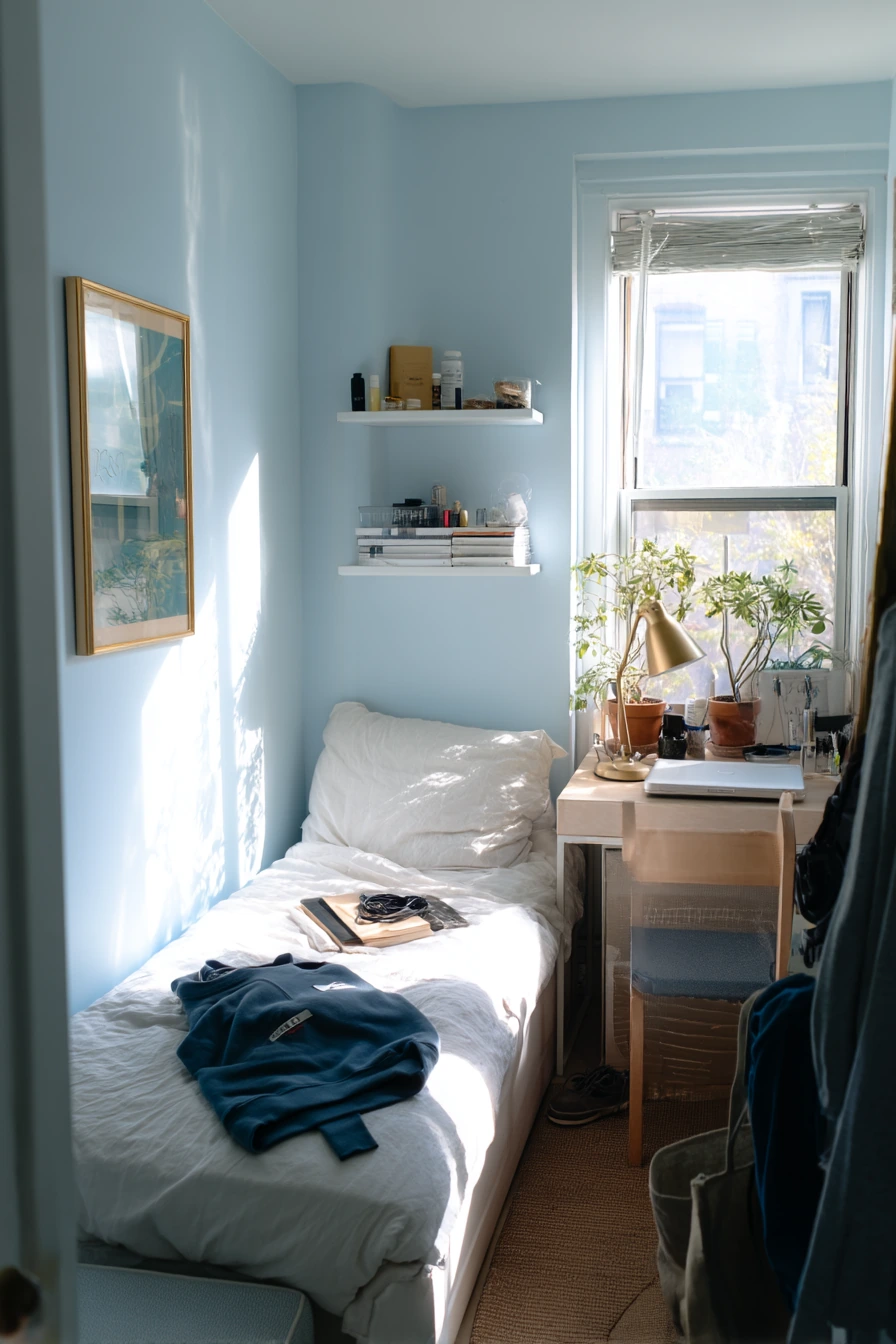
Powder-blue walls can make a compact city apartment bedroom feel bigger and calmer. In a small renter room, the key is low furniture and smart storage, so the floor looks open. A low bed keeps the sight line clear, and a storage ottoman does double duty as seating and a place to hide extra bedding.
Add a slim desk for work or getting ready, and keep the top simple. A thrifted brass lamp brings warmth to a cool wall color, and it looks good even if the rest of the room is basic. A floating shelf gives you storage without taking up floor space, which matters in a tight layout.
Keep the room feeling lived-in with a few honest cues. A tote bag on a chair, earbuds beside a notebook, and a plant on the sill make it feel practical. If your bed is also your lounge spot, fold a hoodie on the corner instead of leaving a pile, so it still looks tidy.
- Pick a powder blue that reads soft in morning light, not gray.
- Use a low bed frame to make the ceiling feel taller.
- Add a storage ottoman at the foot of the bed for hidden clutter control.
- Mount one floating shelf for books, a candle, and a small tray.
- Mix in brass or warm wood to keep the space from feeling cold.
Pro Design Tip: In small rooms, keep the largest items close in color value, like powder-blue walls with light bedding, so the room feels calm and less chopped up.
Budget Considerations: Try peel-and-stick hooks and a budget floating shelf instead of a full bookcase, which often costs more and eats up floor space.

3 Shared Teen Blue Retreat


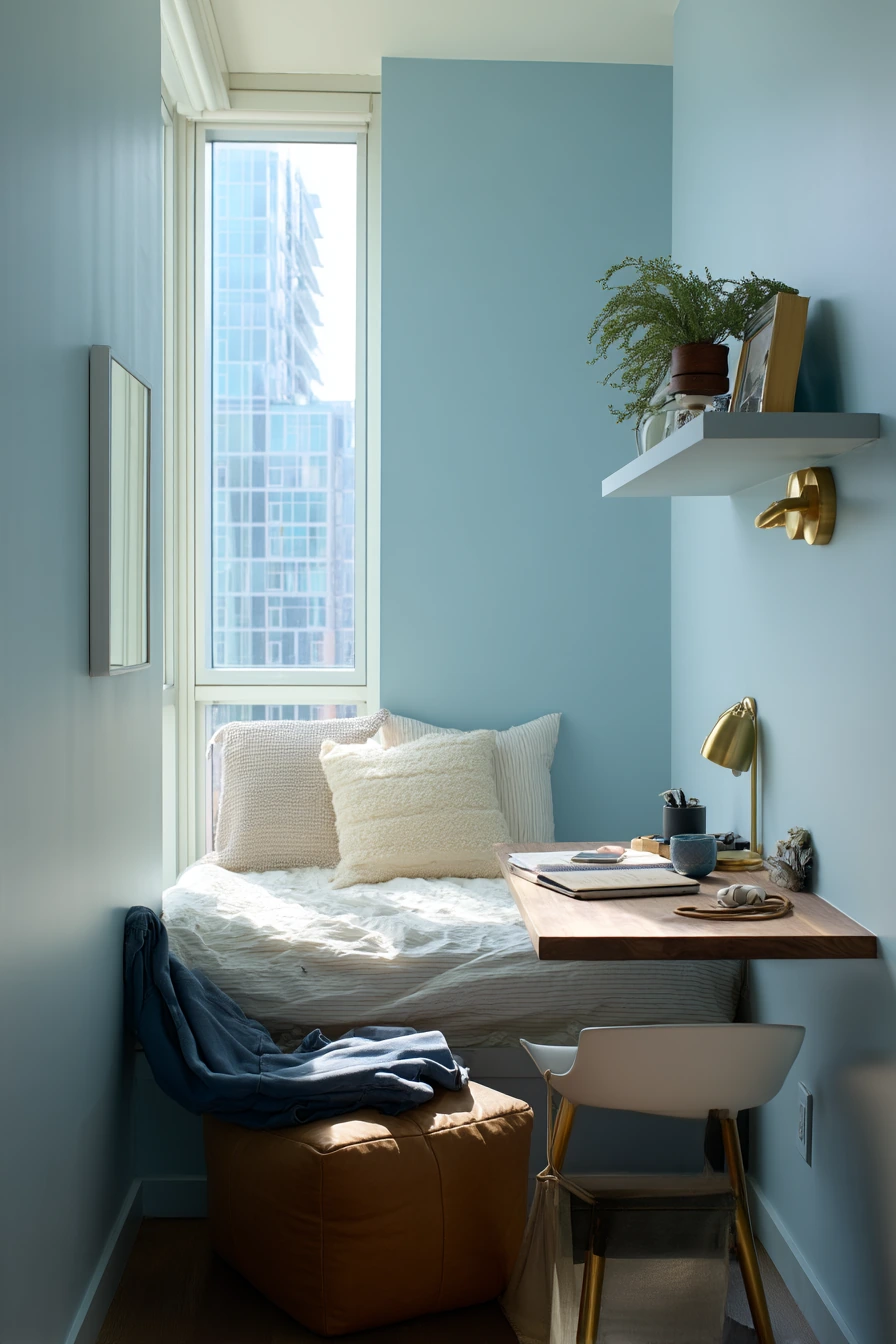
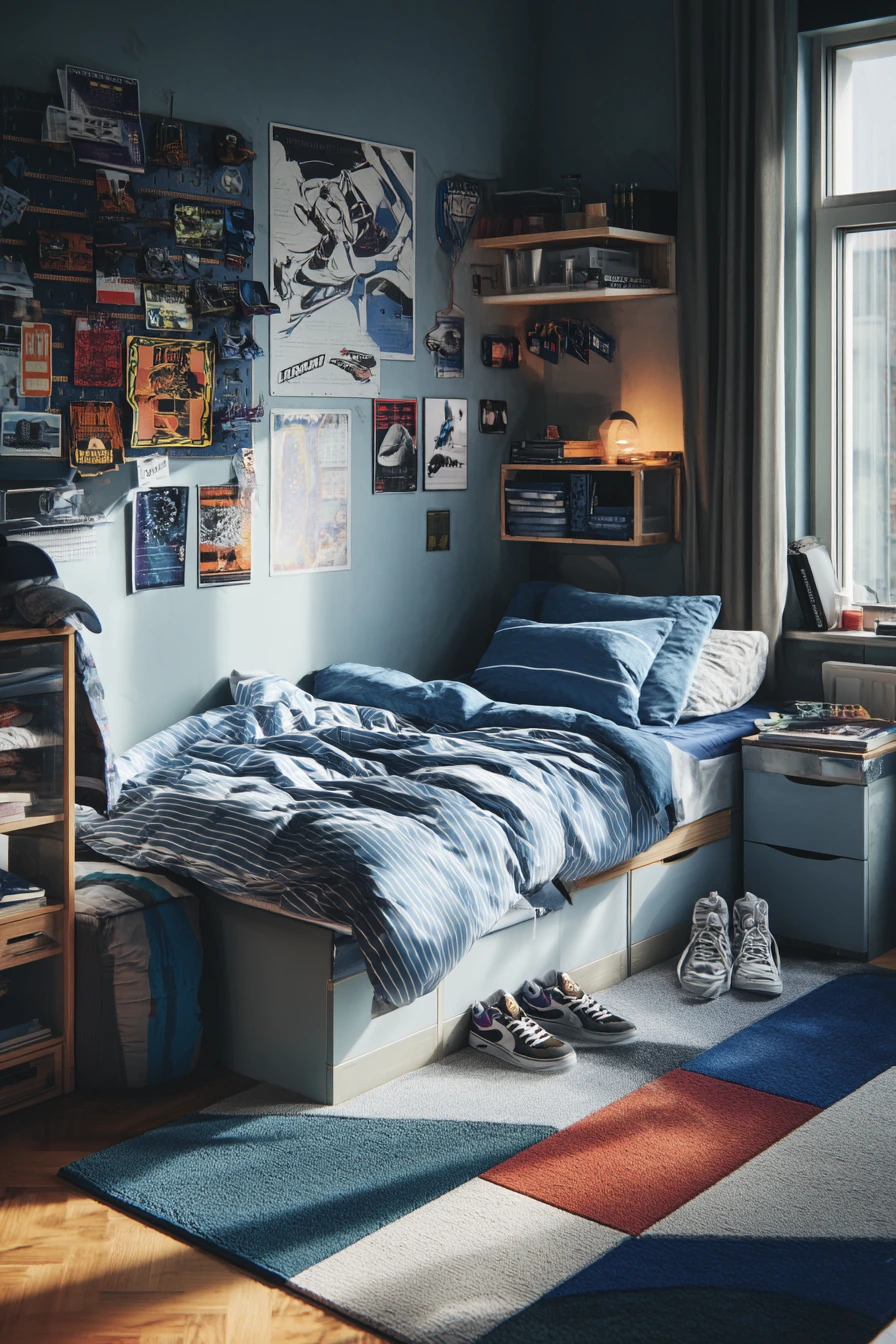
A teen bedroom works best when it looks good and handles real life. Muted denim walls are a great middle ground because they feel cool but not loud. They also hide scuffs better than white, which helps in a room that is used all day.
Start with a simple twin bed and blue-striped bedding with a sporty edge. Add a graphic rug to bring in pattern and energy, then anchor storage with modular drawers that can change as needs change. A pinboard is helpful for schedules, photos, and reminders, and it keeps papers off the floor.
Let the room look lived-in, but keep it easy to reset. Sneakers under the bed are fine if you add a low bin or a tray so they look placed, not messy. A half-finished sketchbook on the desk and posters slightly curling at the corners feel honest. Add a phone charging spot that keeps cords contained, like a small tray on the nightstand.
- Choose denim-blue paint with a soft finish so it feels relaxed.
- Use striped bedding and one solid throw to avoid too many patterns.
- Add modular drawers that can hold school items, hobbies, and clothes.
- Hang a pinboard above the desk for notes and art.
- Keep a charging station in one spot to reduce cable clutter.
Pro Design Tip: Use one bold pattern, like a graphic rug, and keep the rest simple so the room feels energetic but not chaotic.
Budget Considerations: Posters in inexpensive frames or poster rails look cleaner than tape, and you can swap them without repainting.

4 Nursery in Soft Blue


Cloud-blue walls are a gentle choice for a baby nursery because the color feels calm in both morning light and late-night lamp light. Keep the main pieces classic: a white crib, a pale wood dresser, and a simple changing tray. This makes the room flexible as the baby grows.
Comfort matters in a shared nursery. A rocking chair gives you a spot for feeding and soothing, and linen curtains soften the light without making the room dark. Add a small book ledge so you can display a few favorites without using a deep shelf that collects dust.
Small lived-in details make the room feel real and ready. A swaddle draped on the chair, a pacifier on the dresser, and a toy basket half full are normal and useful. Keep one mug on the windowsill or on a high shelf, not within reach, so you can set it down safely during long nights. Try to keep the changing top clear except for the basics.
- Paint walls cloud blue and keep trim bright white for contrast.
- Use a pale wood dresser to add warmth and storage.
- Choose linen curtains for a soft look and gentle light control.
- Add a slim book ledge and rotate books to keep it fresh.
- Keep a small basket near the chair for burp cloths and swaddles.
Pro Design Tip: Place a soft, warm bulb in the lamp and keep overhead lights off at night to support a calmer sleep routine.
Budget Considerations: If a new dresser is expensive, use a sturdy secondhand piece and add a secured changing tray on top.


5 Rental-Friendly Blue Bedroom


A renter-friendly makeover can still look polished when you use removable dusty-blue wallpaper behind the bed. This creates a clear focal point without painting the whole room. Pair it with cream bedding so the space stays bright and cozy, and add compact nightstands so the room feels balanced.
Keep wall decor light and easy to remove. Peel-and-stick art and a vintage-style mirror can make the room feel finished without nails or heavy hardware. If you use command hooks, it is okay if they are visible in use. It reads as real and practical, especially in an apartment.
To style it like a real home, keep a small book stack on one nightstand and manage tech items. A laptop charger looks better when it is wrapped with a cord tie and placed in a tray. Add a blanket folded loosely over a chair for a relaxed look. The goal is adaptable, so you can move pieces around without damaging walls.
- Apply removable wallpaper only on the wall behind the headboard.
- Choose cream bedding to keep the room airy next to dusty blue.
- Use peel-and-stick frames or lightweight art for easy updates.
- Add a mirror to bounce light and make the room feel larger.
- Hide cords with a small basket or a tray on the nightstand.
Pro Design Tip: Center the wallpaper panel on the bed and stop it just past the nightstands so it looks built-in, not like a small sticker patch.
Budget Considerations: Buy one wallpaper roll first to test color and removal, then add more only if you love it.


6 Coastal Blue Guest Room
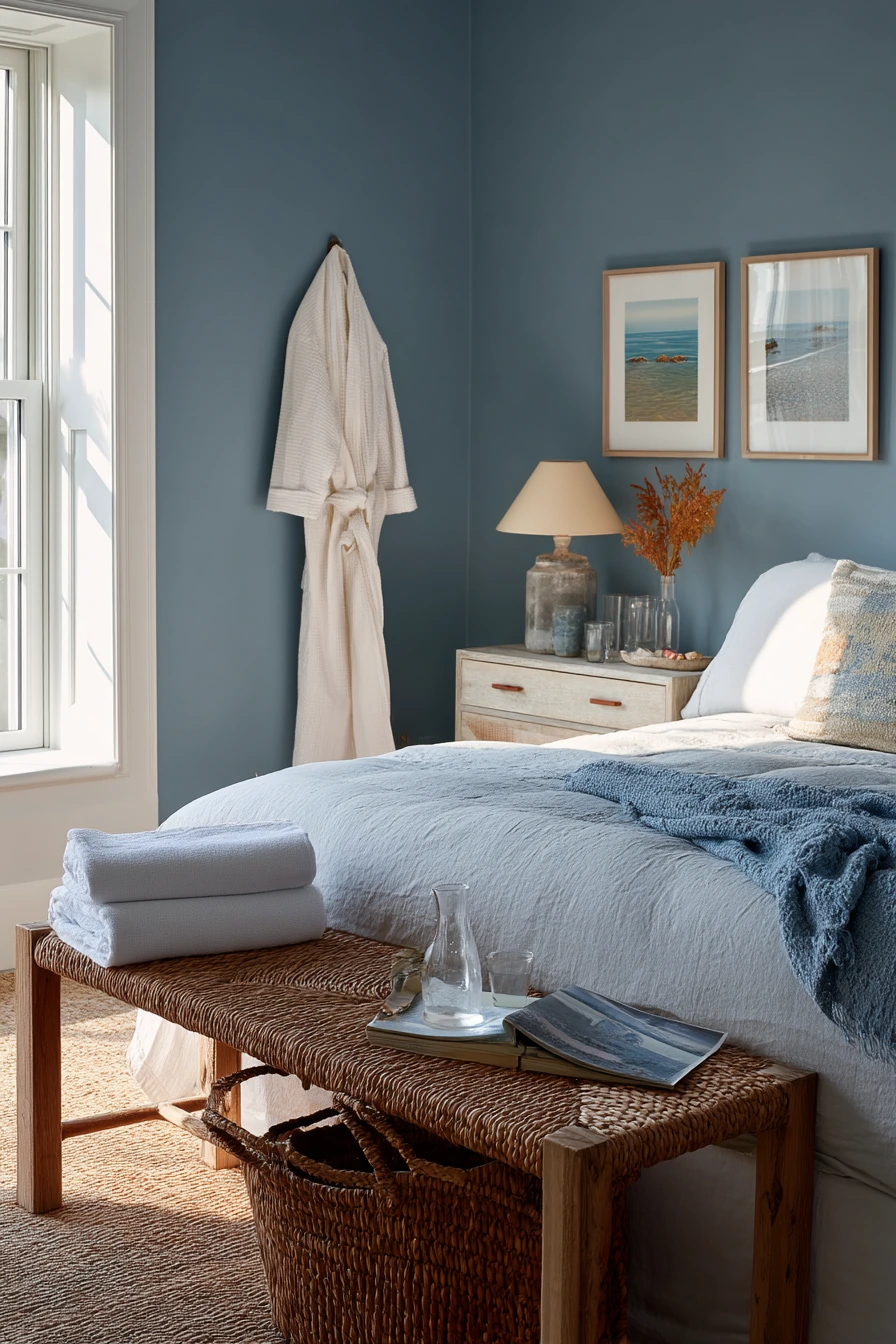
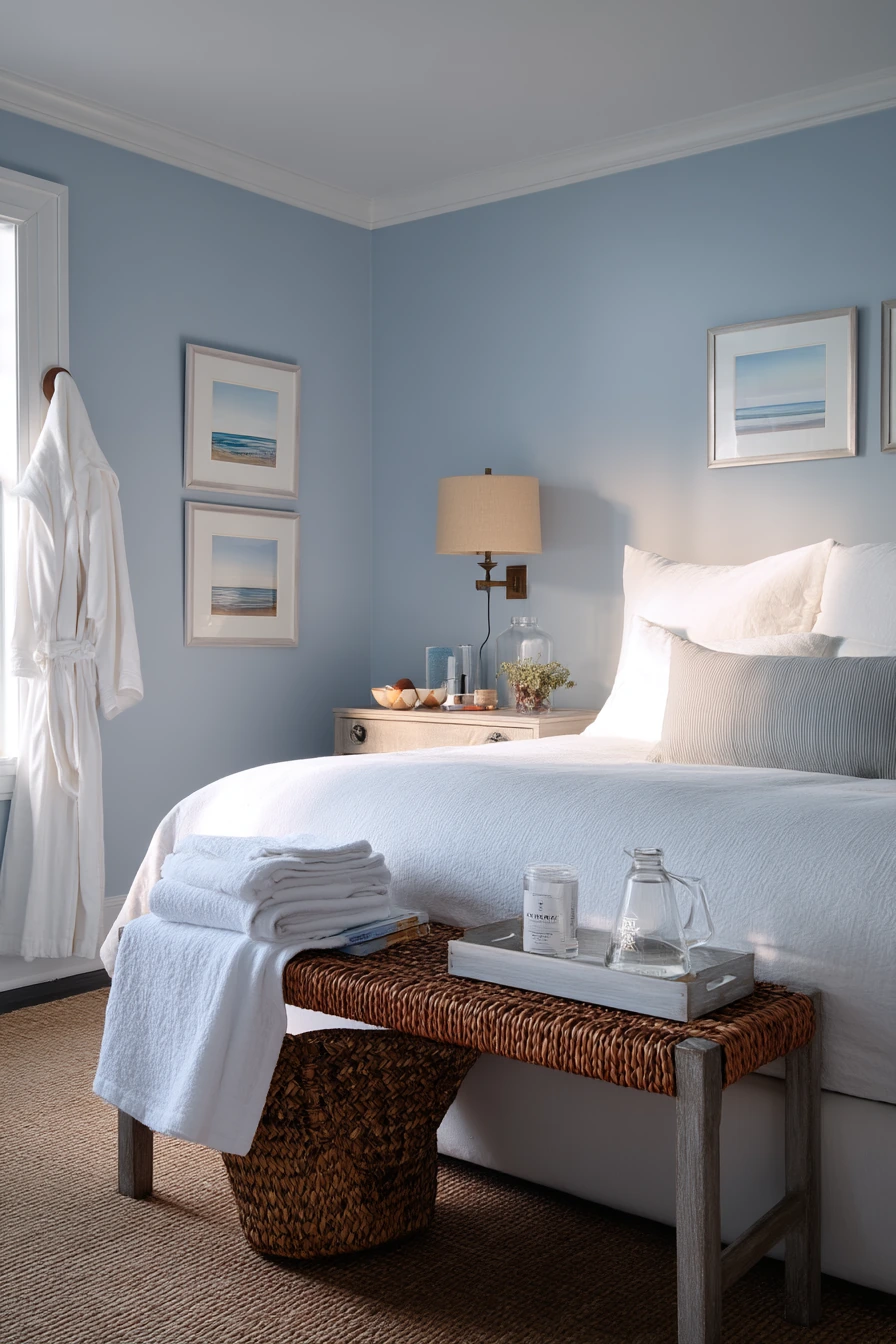
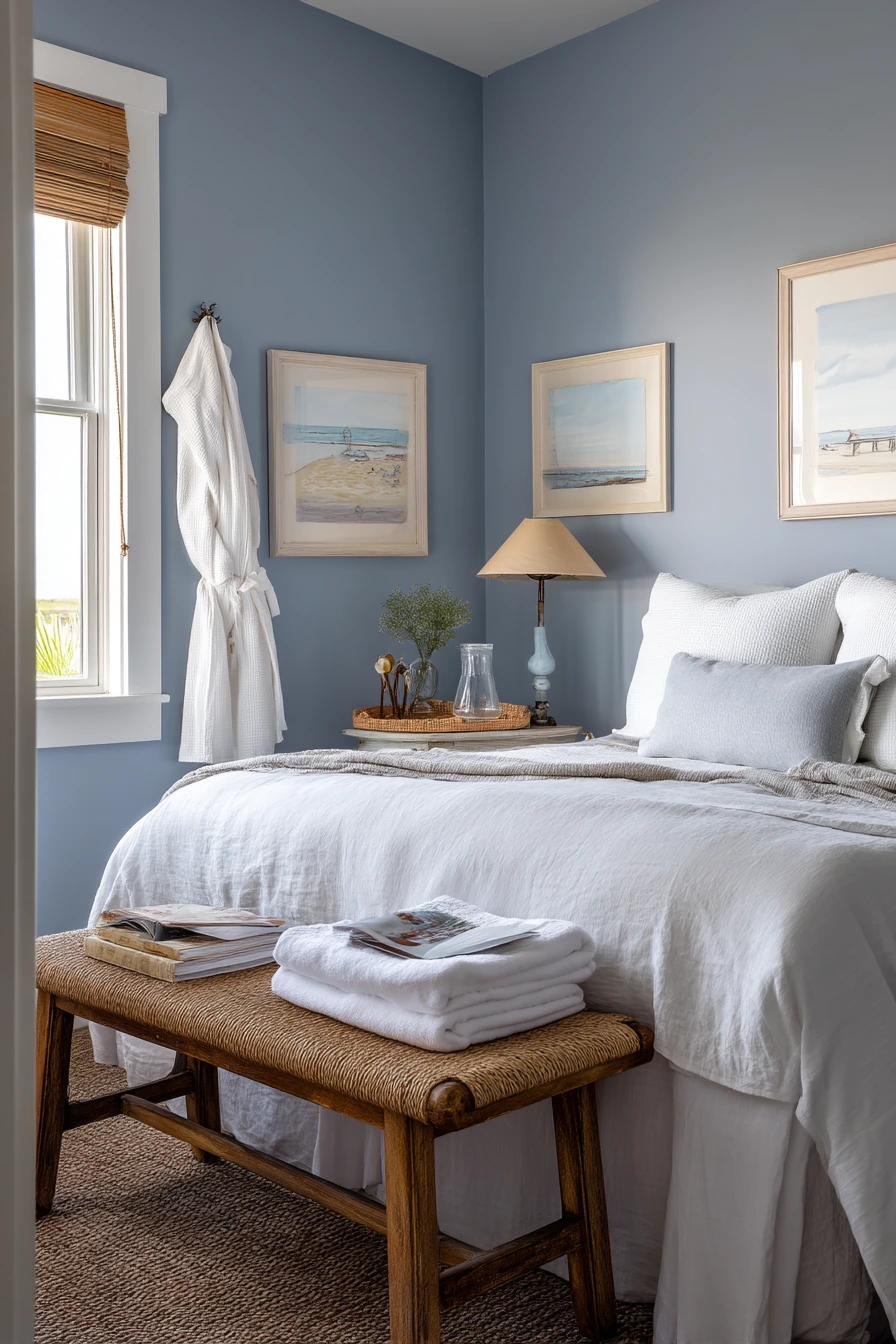
A guest room feels welcoming when it is simple, clean, and easy to use. Faded indigo walls create a quiet backdrop that feels cozy without being dark and heavy. A white slipcovered bed keeps the room fresh and is less stressful because it can be washed or replaced easily.
Coastal details can be subtle. Use a sea-glass lamp for soft color, and hang simple shoreline prints in matching frames. Add a woven bench at the foot of the bed so guests have a place to set a bag or fold clothes. These basics make the room feel like hospitality styling, not a storage space.
Include a few lived-in cues that help guests right away. Fresh towels at the foot of the bed are both decorative and useful. Set a carafe and glass on the dresser so guests do not need to search the kitchen at night. Leave a paperback open on the nightstand for a calm touch, and hang a folded robe on a hook so the room feels thought through.
- Paint the room a faded indigo and keep bedding bright white.
- Add a slipcover or washable layers for easy care between guests.
- Place a woven bench at the foot of the bed for luggage and seating.
- Style the dresser with a water carafe and a small tray.
- Keep wall art simple and calm, like shoreline prints.
Pro Design Tip: Use matching bedside lamps or matching shades so the room feels balanced, even if other furniture pieces are mixed.
Budget Considerations: Thrift a bench or use two small stools as a bench alternative, then add one long cushion to make it look intentional.
7 Blue Bedroom with Work Zone


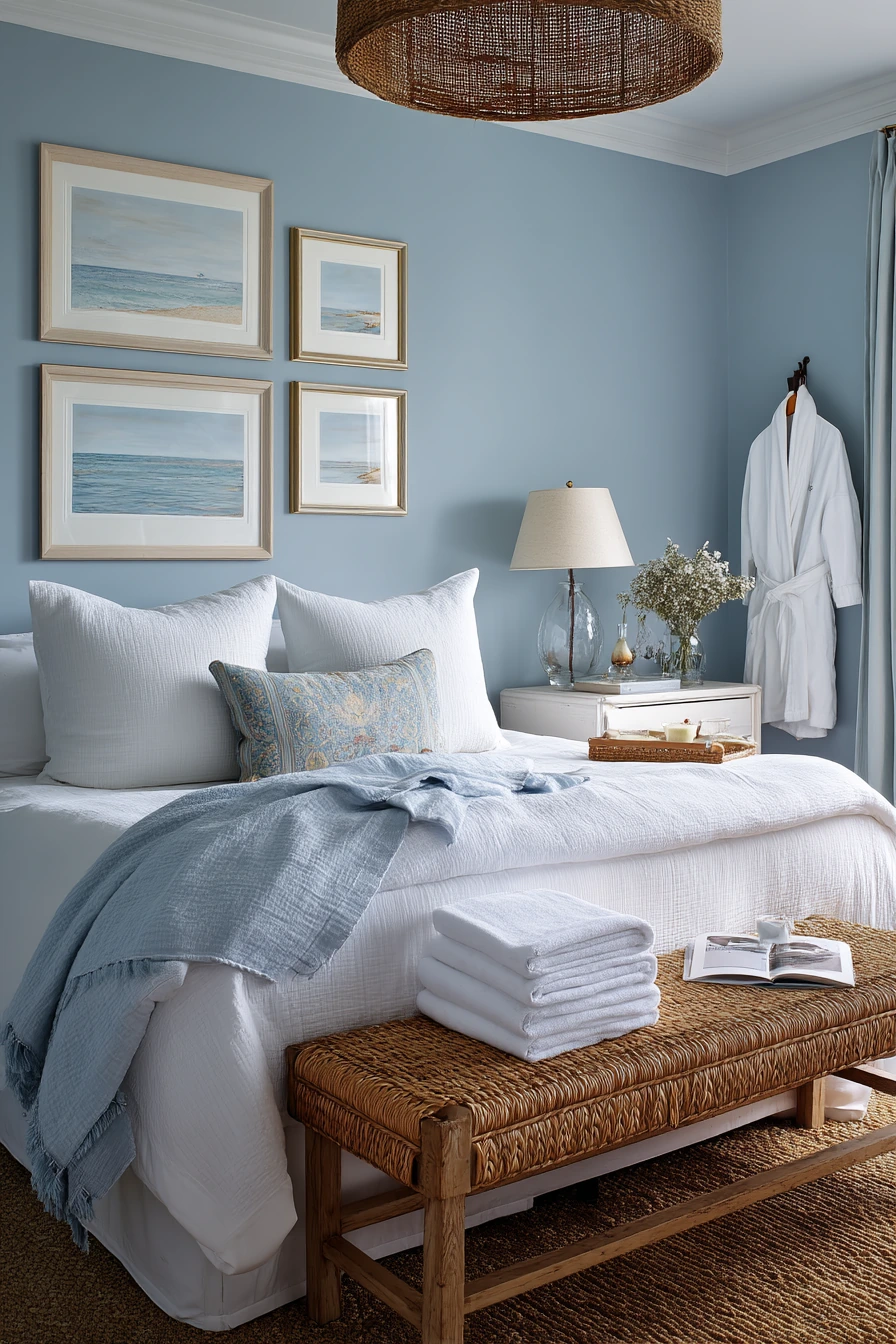
A slate-blue bedroom can support focus when you work from home, especially if your desk sits in the same space as your bed. Slate blue feels grounded and calm, and it pairs well with linen curtains and soft neutrals. Keep the layout clean so the room still feels like a place to rest.
Choose a narrow writing desk that fits the wall and does not block walking paths. An upholstered chair is more comfortable for longer sessions and looks warmer than a hard chair. A clean bedside shelf can replace a bulky nightstand and gives you just enough space for a lamp and a book.
Make it feel real and functional with small lived-in details, but keep them contained. Set a laptop and notebook on the desk, and add a coaster to avoid a mug ring. Reading glasses look neat in a small dish. If a sweater is draped over the chair back, it looks fine when the rest of the room is tidy. The key is to create zones: sleep zone at the bed, work zone at the desk.
- Paint the room slate blue and add light bedding for contrast.
- Use linen curtains to soften overcast light and reduce glare.
- Pick a narrow desk and mount a small task light above it.
- Add one catchall tray for cords, glasses, and pens.
- Keep the bedside area minimal so sleep still feels separate from work.
Pro Design Tip: Place the desk near the window but angle your screen to the side to reduce glare and help your eyes feel less tired.
Budget Considerations: A simple wall-mounted shelf can act as a desk surface in very tight rooms, and it often costs less than a full desk.


8 Budget Blue Bedroom Refresh


A budget refresh in a family home works best when you improve the room with a few high-impact changes. Start with a painted blue feature wall instead of painting the whole room. It adds color fast and helps the bed feel more anchored. Keep the rest simple with white bedding and a blue quilt for an easy layered look.
Use secondhand furniture where it matters most. A wood dresser adds warmth and storage, and it does not need to match everything. Affordable blackout curtains are a good upgrade for sleep, especially if street lights or early sun are a problem. A thrifted bedside lamp can make the room feel cozy in the evening.
Real homes show real life, and that is okay. A laundry basket peeking in the corner is normal, and a dog bed can be styled to look neat if you pick one in a neutral fabric. Place a book and remote on the dresser in a small tray so they look organized. If the coverlet is slightly wrinkled, smooth it with your hands and let it be lived-in, not perfect.
- Paint one wall blue and keep the other walls a light neutral.
- Add a blue quilt over white bedding for simple color layering.
- Shop secondhand for a solid wood dresser and update the knobs.
- Hang blackout curtains high and wide to make the window look larger.
- Use a tray to corral remotes, books, and small items on top of the dresser.
Pro Design Tip: Hang curtains a few inches below the ceiling and extend the rod past the window frame to make the room feel taller and brighter.
Budget Considerations: Focus spending on paint and curtains first, then thrift the lamp and dresser over time as you find good pieces.


9 Layered Blue Master Bedroom


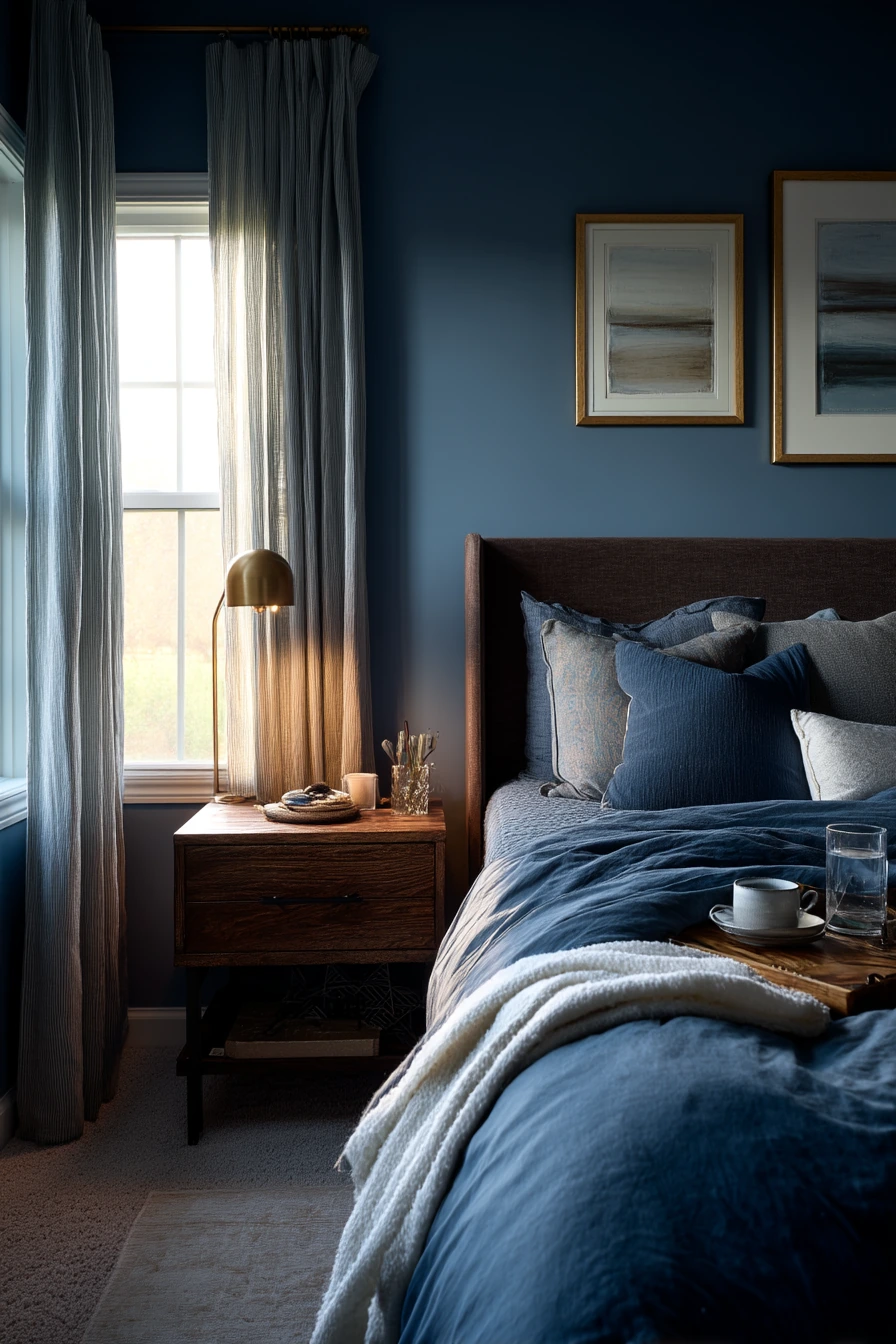
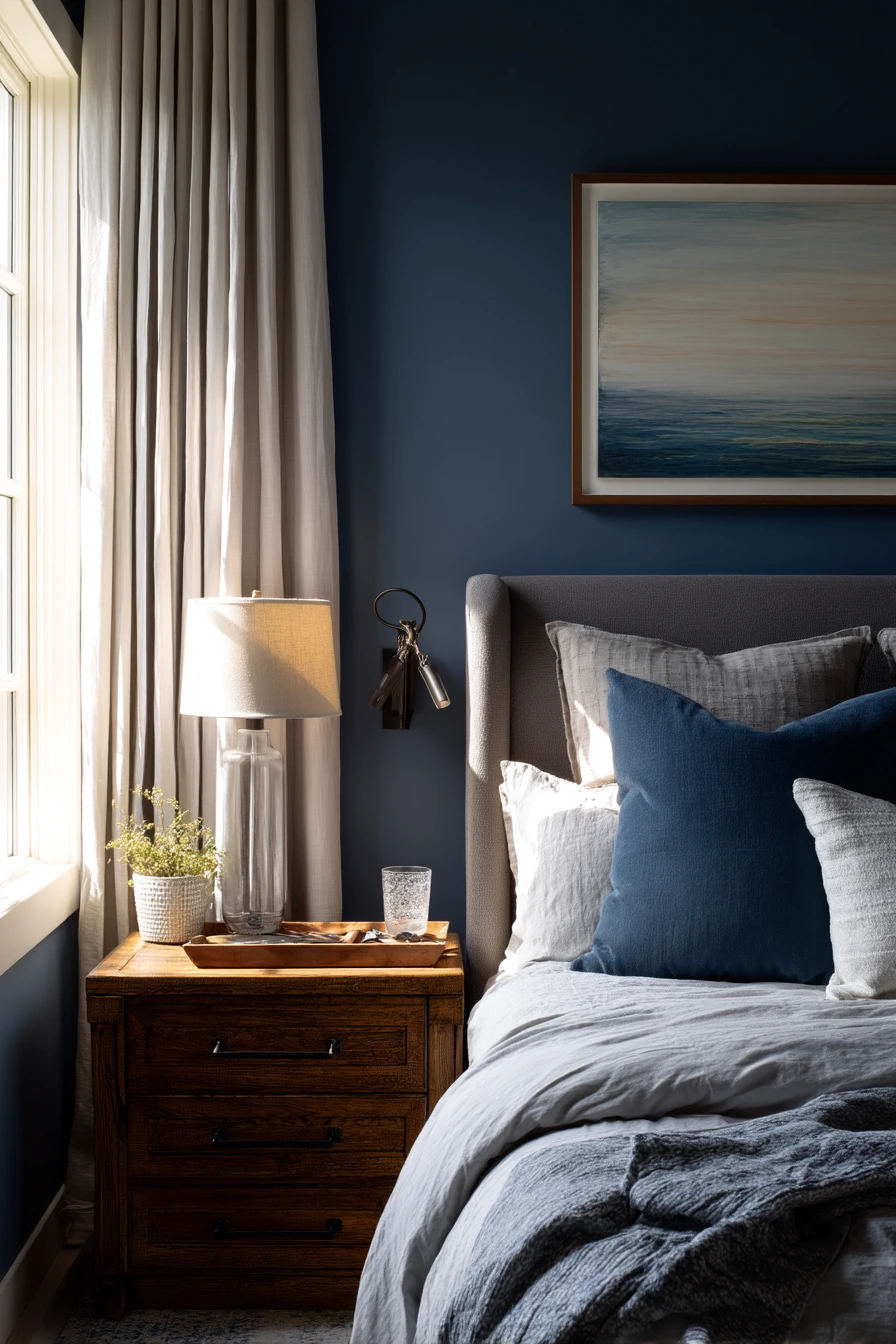
Deep blue walls make a primary bedroom feel restful when you balance them with soft texture. An upholstered headboard adds comfort and reduces the hard feel that dark paint can create. Pair it with walnut nightstands for warmth and a steady, classic look.
Layering is what makes this style work. Linen drapery adds a relaxed texture, and a textured throw at the foot of the bed brings in depth without extra color. Keep art subdued so the room stays calm. A reading lamp switched on in the evening gives the space a gentle glow and makes the room feel inviting.
Keep the styling believable with small daily items placed neatly. A water glass on the nightstand is normal, and a watch tray keeps jewelry and a watch from sliding around. If a throw pillow is slightly displaced from sleep, fluff it once and leave it. This look is about comfort, not perfection. Use soft dawn-like lighting in the morning by choosing light-filtering layers under heavier curtains if you need them.
- Choose deep blue paint and test it at night and in morning light.
- Add an upholstered headboard for softness and sound dampening.
- Use walnut or medium wood tones to warm up the dark walls.
- Layer linen drapes with a simple shade for better light control.
- Style nightstands with a lamp, water glass, and a small tray only.
Pro Design Tip: Repeat the deep blue in one small place, like a pillow or artwork detail, so the wall color feels connected to the rest of the room.
Budget Considerations: If a new upholstered headboard is costly, try an upholstered panel or a slipcovered headboard that attaches to a basic frame.
10 Kid-Friendly Blue Bedroom
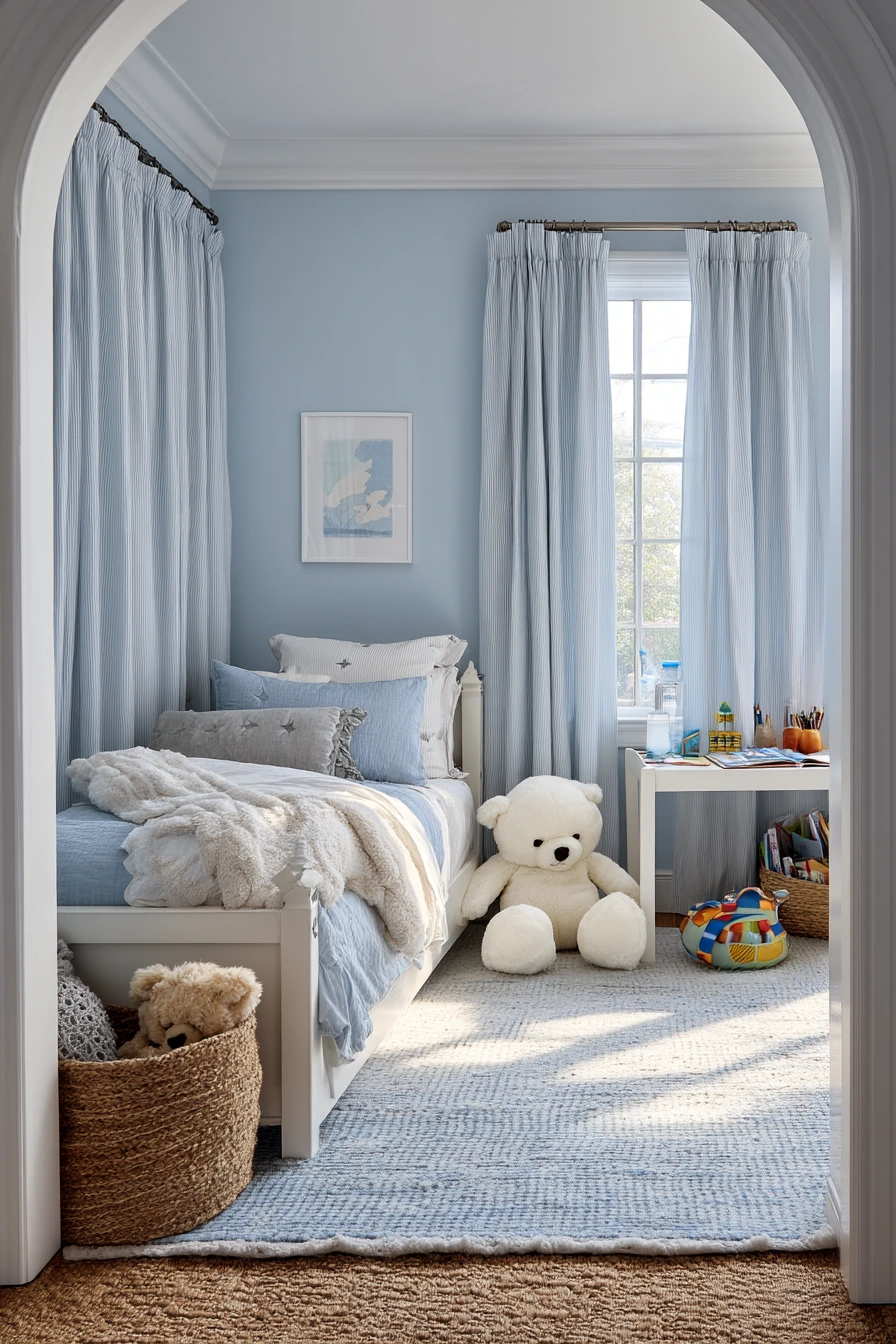
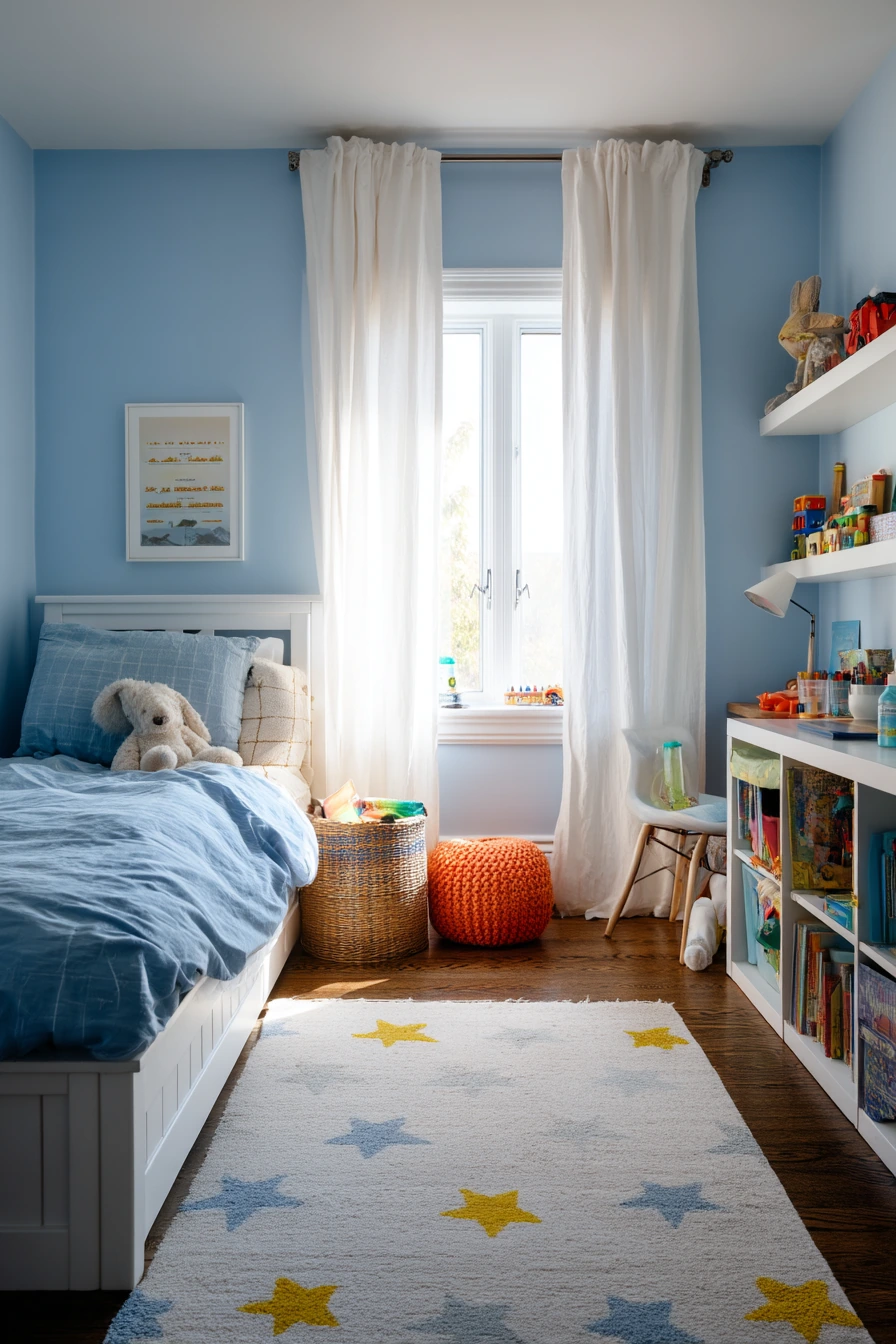
Pale blue walls are a smart choice for a child’s room because they feel cheerful but not babyish. This makes it easier for the room to grow with them. Start with a sturdy bed that will last, then build the rest with flexible pieces that can change as interests change.
Open toy storage keeps cleanup simple. Choose bins that slide in and out so a child can help. Add a playful rug for softness and sound control, then create a reading nook with a small chair or floor cushion. Star print curtains add fun without taking over the space, and they work with many themes.
Keep it lived-in and easy. A toy basket tipped slightly looks real, but you can keep it from feeling messy by using a basket with structure. A stuffed animal on the pillow adds warmth. Set up a small desk or table for art, and keep crayons in a cup or caddy. A water bottle by the bed is practical, and a small coaster or tray helps prevent spills.
- Paint walls pale blue and add white trim for a clean look.
- Pick a bed frame that can handle growth spurts and rough play.
- Use open storage with labeled bins for quick cleanup.
- Create a reading nook with a light, a basket of books, and a soft seat.
- Add simple curtains with a small pattern, like stars, for a playful touch.
Pro Design Tip: Use furniture that can switch roles later, like a small bookcase that becomes a nightstand or a toy shelf that becomes a study shelf.
Budget Considerations: Swap decor instead of furniture as your child grows, like changing curtains, bedding, and wall art while keeping the main pieces.


Blue bedroom ideas work best when you match the shade to the room’s job, like navy for a calm primary suite or powder blue for a small apartment. Add texture with rugs, linen, and wood tones so the space feels warm, not flat.
Use the styling lists to build one step at a time. Start with paint or wallpaper, then bedding, then lighting and storage. A few lived-in details are fine when the room stays easy to reset.
FAQ
1) What is the best blue paint color for a bedroom?
The best blue depends on light. Navy and deep blue feel cozy, while powder blue and cloud blue feel airy. Test swatches on the wall and check them in morning and evening light.
2) How do I keep a dark blue bedroom from feeling too small?
Use light bedding, warm wood furniture, and layered lighting. Keep the ceiling and trim white, and add a mirror to bounce light.
3) What colors go well with blue bedrooms?
White, cream, tan, warm wood tones, brass, and soft gray all pair well. For a sharper look, add small accents of black.
4) Can renters use blue in a bedroom without painting?
Yes. Use removable wallpaper behind the bed, blue bedding, curtains, and peel-and-stick art. Choose easy-to-remove hooks and lightweight frames.
5) How do I style nightstands in a blue bedroom?
Keep it simple: lamp, water glass, and one small tray for daily items. Add one book or a small plant if you have space.
6) What is an easy way to add blue to a child’s room?
Start with pale blue bedding or curtains, then add a rug or wall art. If you paint, choose a soft blue that can grow with them.
7) How can I make a guest room feel more welcoming?
Add clean towels, a carafe and glass, a reading light, and a place for a suitcase. Keep bedding white or cream for a fresh look.