

Basements can turn into the place where everything lands, from sports gear and board games to laundry baskets and seasonal bins. These basement organization ideas are meant for real homes, with kids, hobbies, and everyday clutter.
In this post, you will see ten simple zones you can copy: open shelving with labeled bins, a renter-friendly craft corner, a compact laundry setup, a tidy playroom, a small home gym, and more. Each section includes practical steps plus small styling ideas so the space looks calm, not like a storage unit.
You will also get clear shopping targets, like sturdy shelving, woven baskets, pegboard hooks, and low cabinets. The goal is to make your basement easier to use every day, so you can find what you need fast and put it back without stress.
Use the headings like a checklist. Pick one area to fix first, then build from there.
1 1. Small Basement Storage Wall for a Busy Family

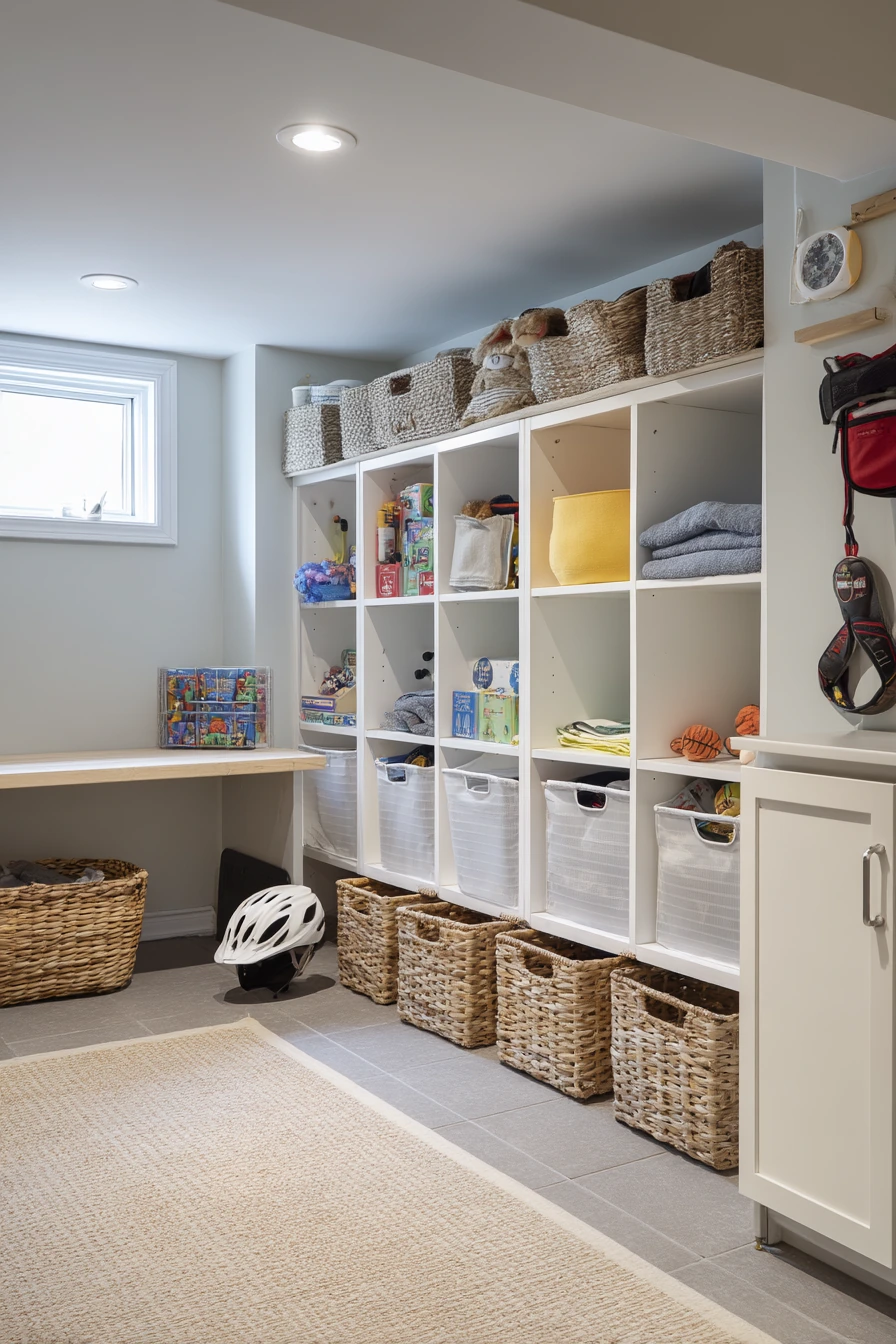
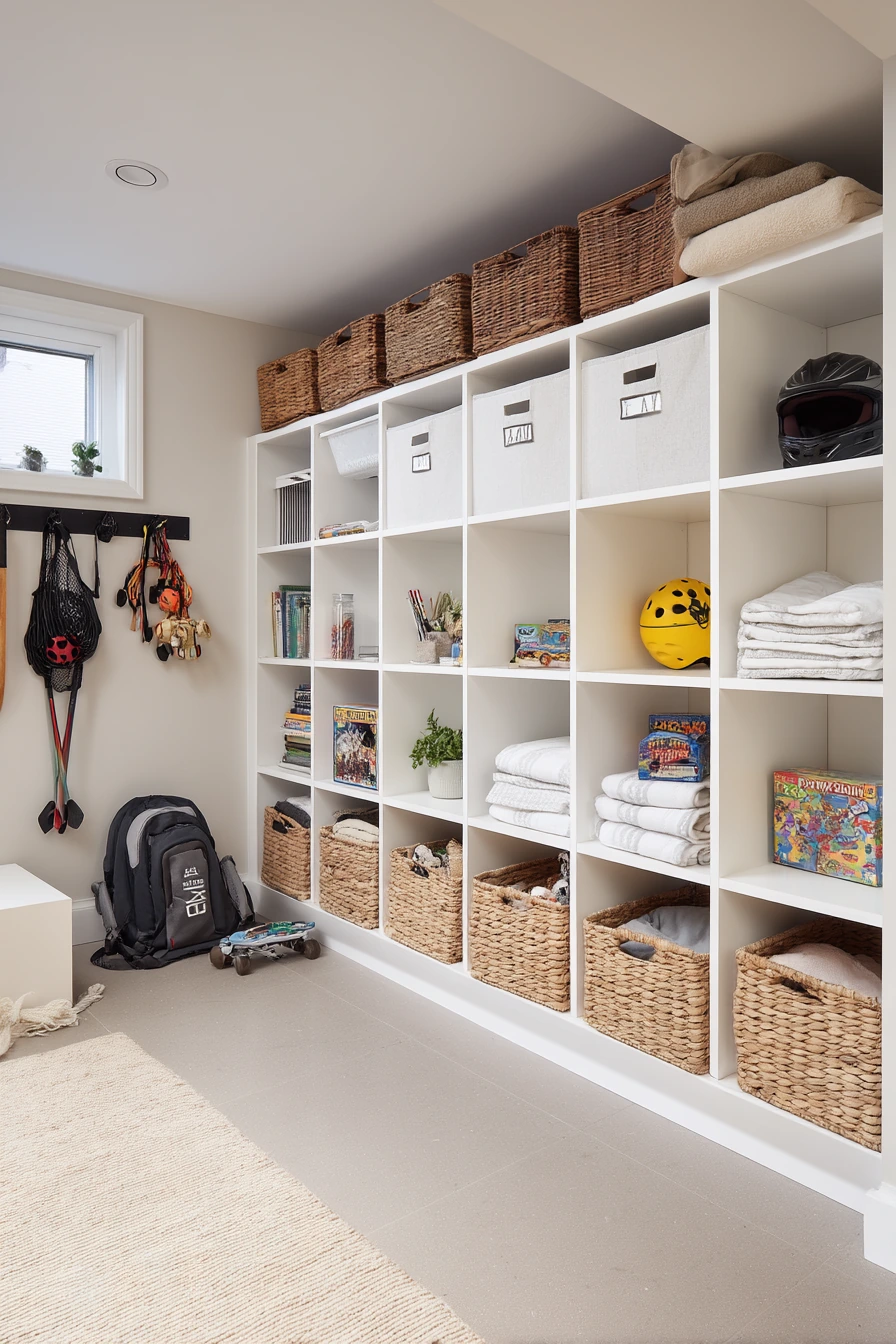
For a family of four, wall-to-wall open shelving is one of the fastest ways to stop the basement from becoming a mixed pile. Put the most used items at eye level and the heavy items on lower shelves. Use labeled bins so kids can help, even if they cannot read well yet. Picture labels can work for younger kids, and big text labels help everyone else.
Add low cabinets for sports gear so balls, shin guards, and extra shoes are not rolling around. Keep a slim folding table near the shelves for sorting laundry, folding towels, or staging donations. This kind of “work surface” keeps you from spreading items across the floor, which is where clutter tends to stick. If you have baskets of board games, place them on a middle shelf so game night is easy to grab and easy to put back.
Style it like a real room, not just storage. Stick to muted neutrals for bins and baskets, then let the colorful items live inside. A small basement egress window can give soft light, so keep the area near it clear. If you always see one charging cable draped from a shelf, add a small cable box or clip so it looks neat without being perfect.
- Group shelves by category: sports, laundry, games, towels, and extras.
- Use clear label holders so you can swap labels as needs change.
- Store helmets and shoes in an open tray at the bottom for quick drop-off.
- Keep one “to donate” bin on a lower shelf to prevent pileups.
- Use matching bins for visual calm, even if the contents change.
Pro Design Tip: Leave 10 to 15 percent of your shelf space empty so bins slide out easily and you have room for the next school season.
Budget Considerations: Start with one strong shelf unit and add more later; printed paper labels and clear tape work well until you want nicer label holders.

2 2. Renter-Friendly Basement Craft and Hobby Nook
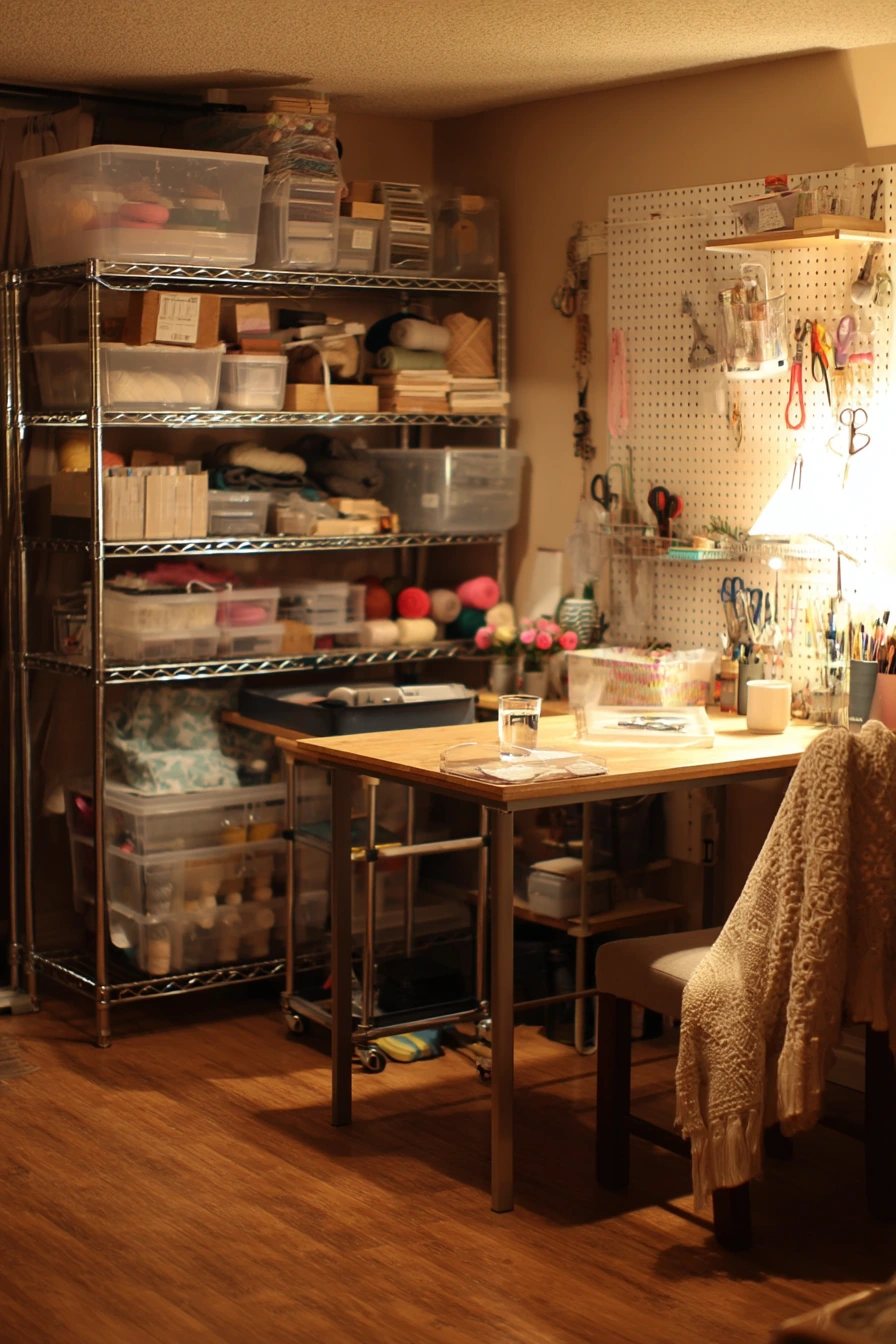
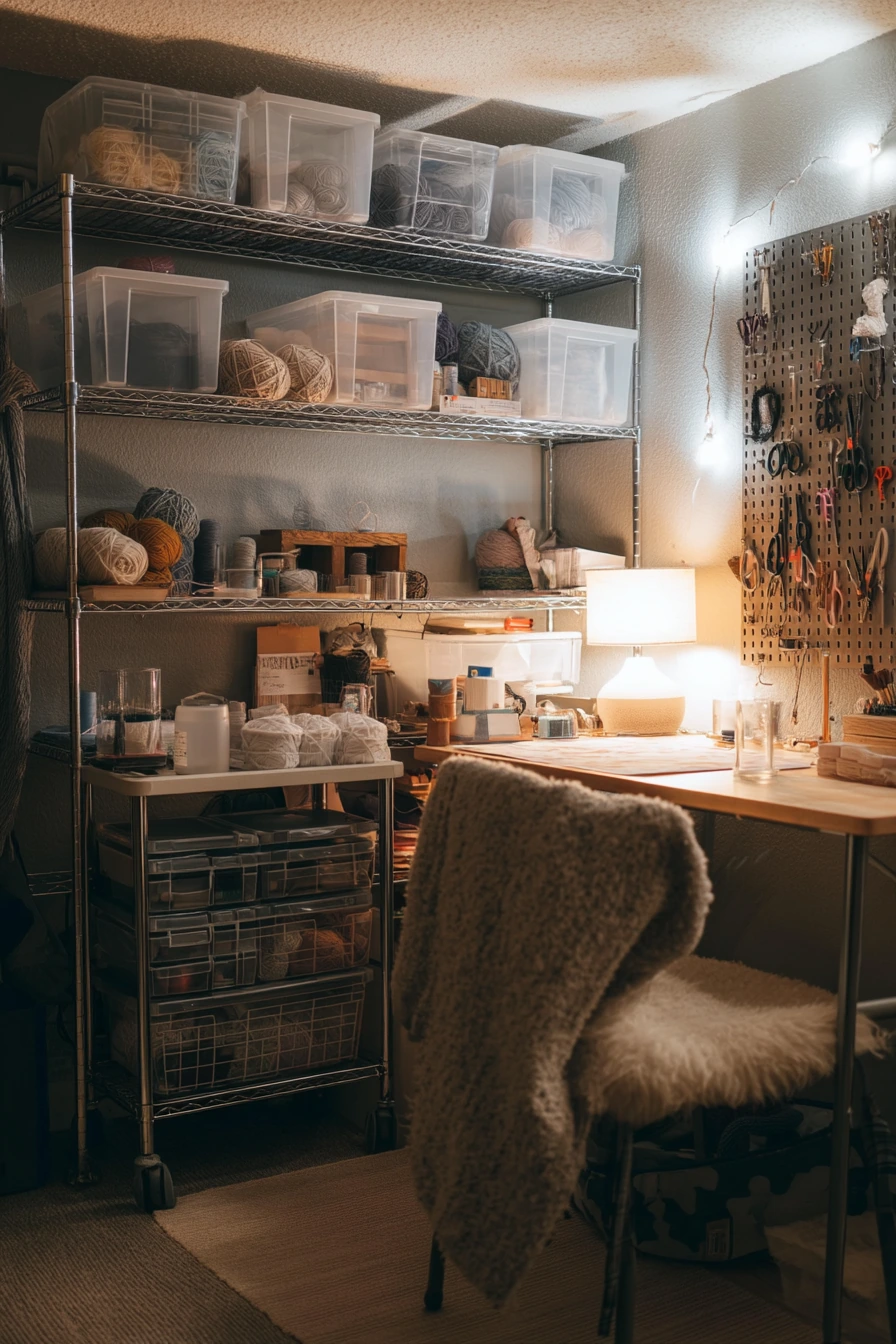
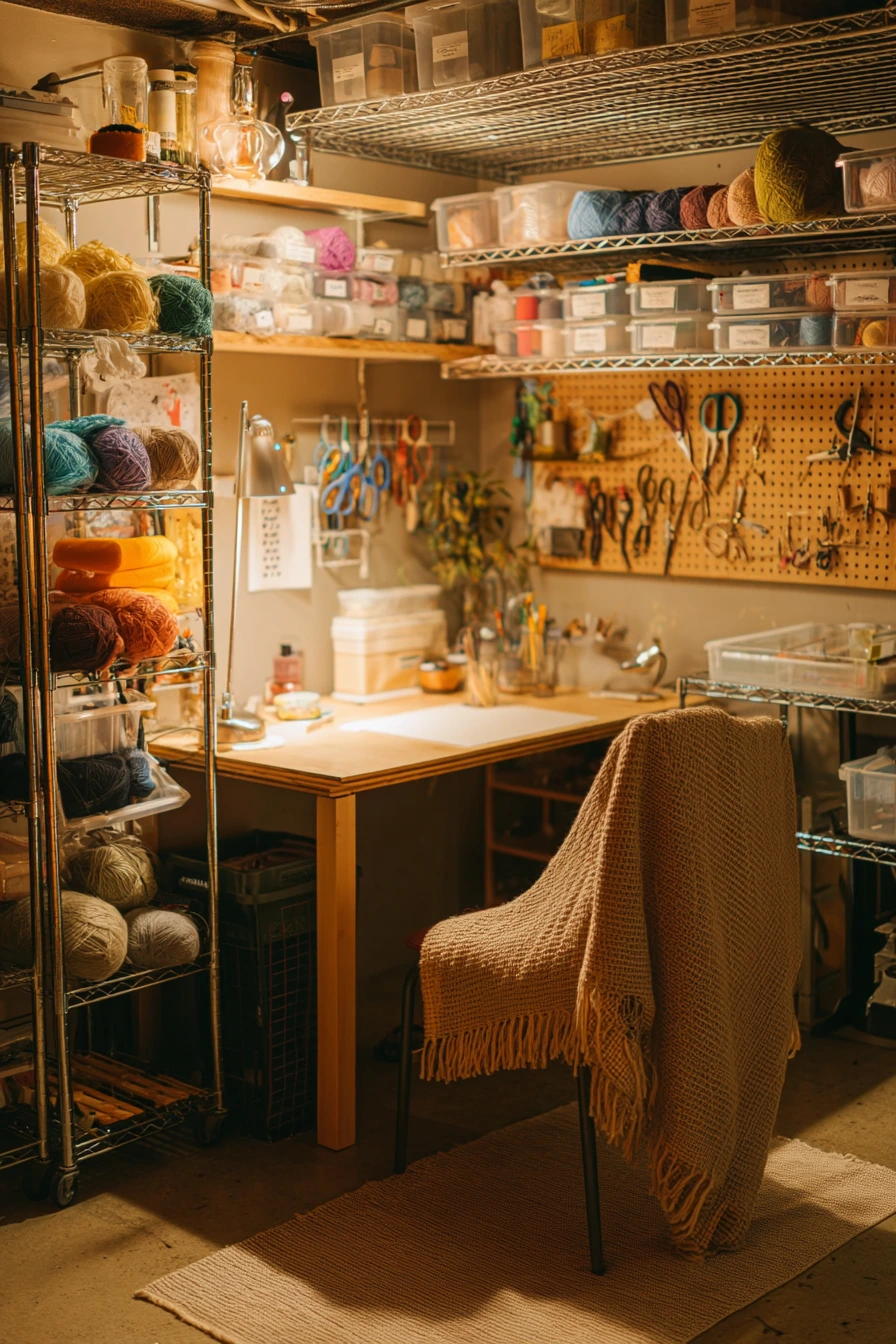
A hobby corner is easier to keep tidy when it is built around renter-friendly pieces. Freestanding metal shelves hold clear boxes of yarn, paint, or small tools without needing wall anchors in every spot. Use clear boxes so you can see what you have, and add simple labels so you stop buying duplicates. Keep heavier items like paint bottles on lower shelves for safety.
A pegboard with hooks is perfect for scissors, tape, and small rulers, and it keeps the worktable open. If you cannot drill, look for a freestanding pegboard panel or use removable mounting strips rated for the weight. Add a rolling cart beside the table for the supplies you use every day. That way, you can tuck it away when you are done and still keep a half-finished craft project safe.
To make the space feel cozy, use a warm lamp glow and a comfortable chair with a slightly wrinkled throw. Real-life details like a water glass happen, so plan for them by adding a small tray on the worktable to catch spills and keep cups away from paper. Keep one “project bin” for the current craft so you can pause and restart without spreading supplies everywhere.
- Sort supplies by type: yarn, fabric, paper, tools, and in-progress projects.
- Use shallow clear boxes so small items do not disappear at the bottom.
- Hang the most-used tools on the pegboard at hand height.
- Park a rolling cart under the table edge when not in use.
- Add a small trash can and a lidded jar for sharp scraps.
Pro Design Tip: Use one color of boxes and one style of labels so your shelves look calm even when your supplies are bright.
Budget Considerations: Metal shelves and a basic pegboard are often cheap secondhand; spend a little more on clear boxes with lids so they stack and stay dust-free.

3 3. Compact Basement Laundry and Utility Zone
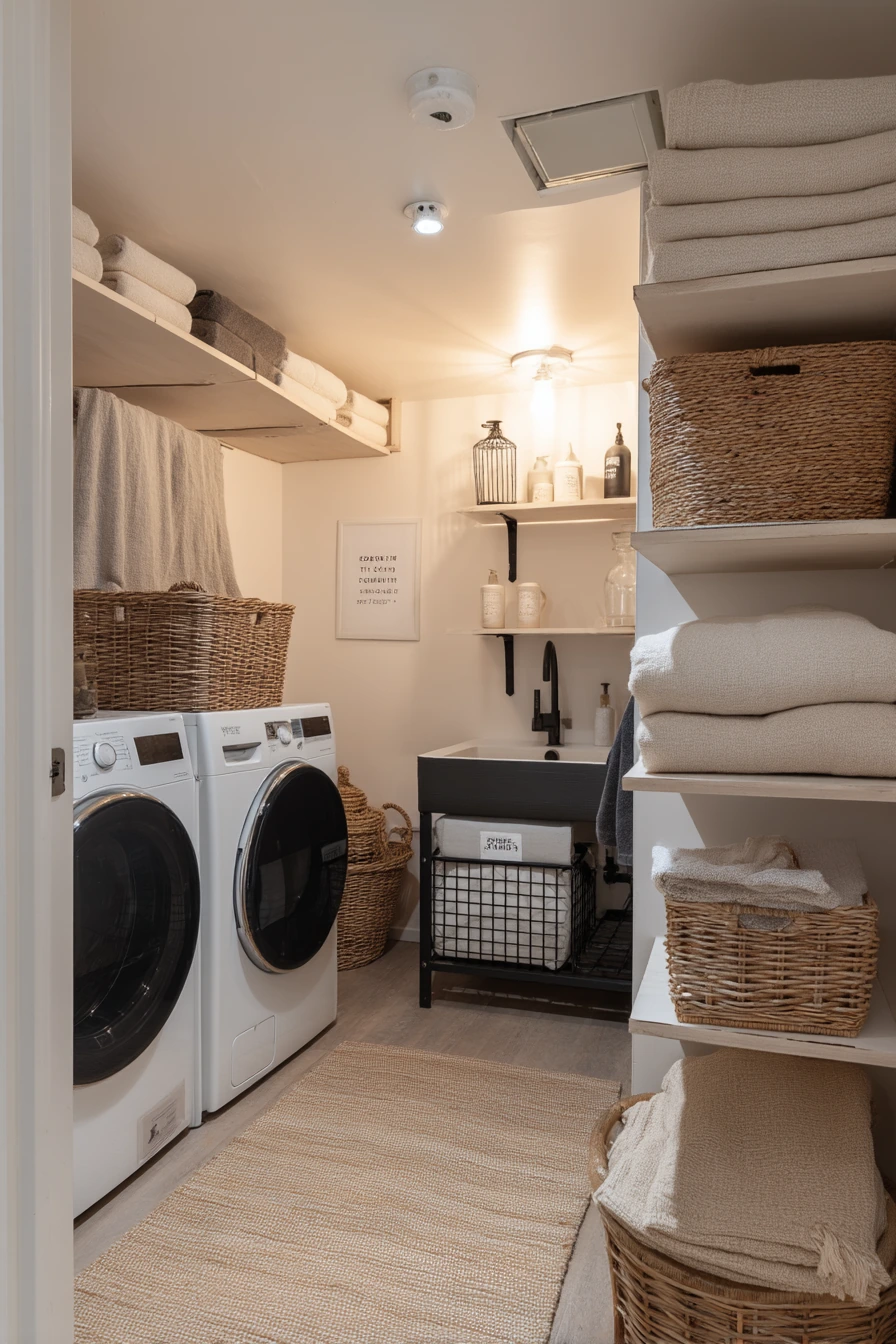

A compact laundry and utility area works best when every item has a job and a home. If you have a stacked washer dryer, use the wall space beside it for a wall-mounted drying rack. This keeps drips off the floor and clears space for walking. Place a detergent caddy on a shelf or on top of the machine so you can carry supplies to the utility sink without making extra trips.
Use woven hampers to sort laundry before it hits the machines. Even two hampers, like lights and darks, can save time. Add labeled bins for seasonal linens, extra towels, and cleaning rags on shelves above or beside the machines. It is normal to find a stray sock, so add a small “single socks” bin. When it fills up, match them in one quick session.
Style matters here too, because a calm laundry corner makes you more likely to keep it clean. Stick to two textures: woven baskets and smooth plastic bins, then keep labels consistent. Mix soft daylight with warm practical lamps so the area does not feel like a cave. A clean soap bottle by the utility sink and a simple hand towel make the space feel finished without adding clutter.
- Mount a drying rack where it can open without hitting doors or pipes.
- Keep a small bin for lost socks and pocket finds.
- Store detergent, stain spray, and brushes together in one caddy.
- Label linen bins by size: twin, queen, and guest.
- Use one shelf for backstock like paper towels and trash bags.
Pro Design Tip: Add a narrow shelf above the washer dryer for “today’s laundry” so you do not pile clean clothes on top of the machines.
Budget Considerations: A folding wall drying rack is cheaper than a full drying cabinet; if needed, start with a tension rod and hangers near the utility sink.


4 4. Kids’ Play and Toy Storage Basement Setup


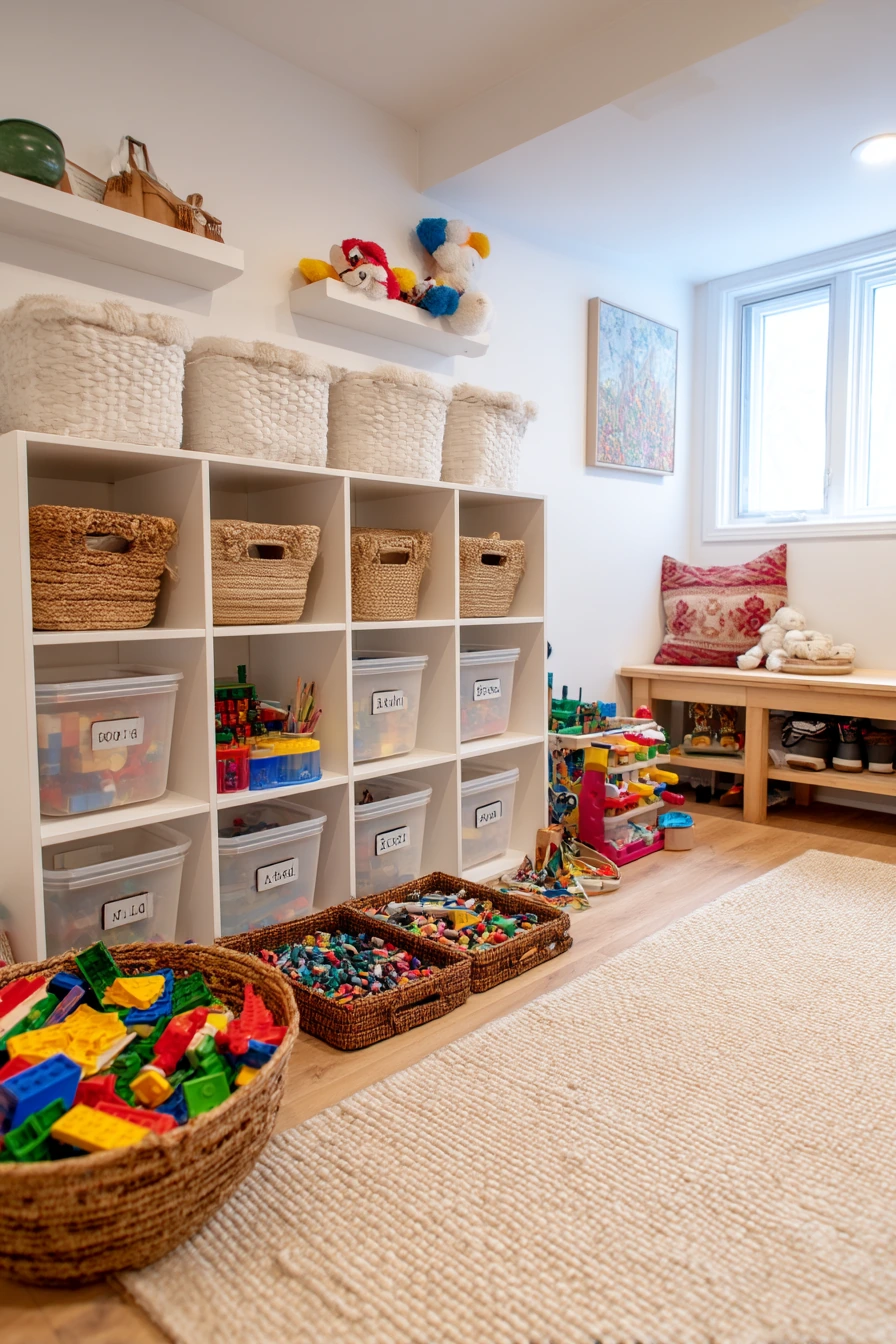
A basement playroom stays tidy when the storage fits kids, not adults. Use low cubbies with toy baskets so children can grab and return items without help. Picture labels on each basket make cleanup faster and reduce the “where does this go” question. Keep the biggest, most used toys in the easiest spots, like blocks and puzzles on the bottom row.
Build a simple reading corner with a plush rug and a small basket for books. This gives kids a calm place to land, and it keeps books from spreading across the room. Add a bench near the entrance so tiny shoes have a clear spot. Crayons and coloring pages should live in one lidded bin or a small drawer unit, with a small side table as the “art station.”
How to style it without making it precious: choose two or three basket colors and repeat them. Let toys be the bright colors. Keep a stuffed animal peeking out of one basket and a small display shelf for a few favorites, but do not display everything. With sun-dim window light, use one warm lamp to soften shadows. When the room looks welcoming, kids are more likely to use it and more likely to help reset it.
- Use cube bins for categories: blocks, dolls, puzzles, cars, and dress-up.
- Add picture labels at the child’s eye level on each bin.
- Keep a “toy rotation” bin in a closet to reduce overload.
- Store art supplies in one portable box that can move to the table.
- Place a small laundry basket for stuffed animals near the reading rug.
Pro Design Tip: Measure the cubby openings and buy baskets that fill the space, so they do not sag and look messy after a week.
Budget Considerations: Printable picture labels and basic fabric bins are inexpensive; upgrade later to sturdier baskets if the bins collapse or fray.

5 5. Home Gym Corner with Hidden Storage


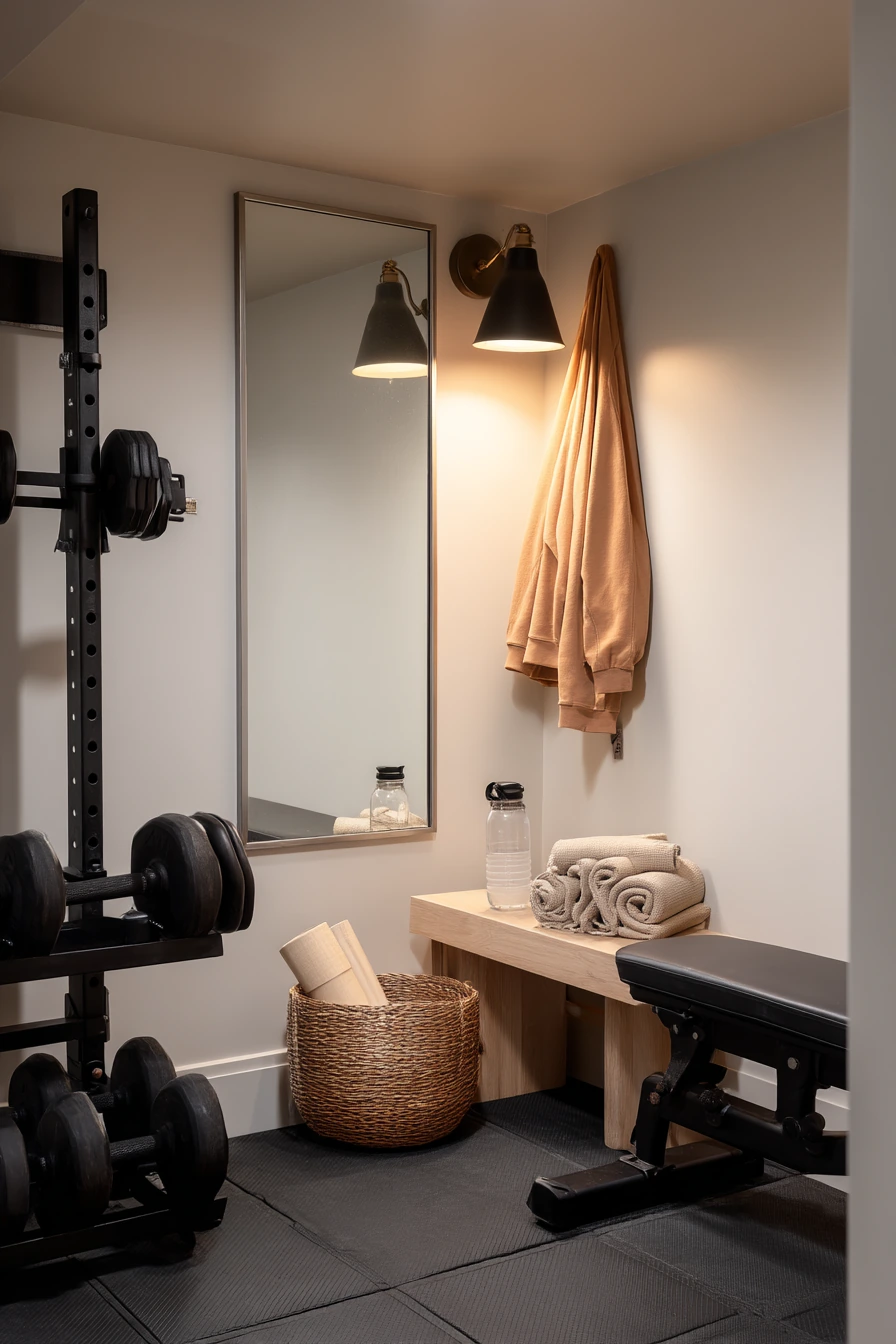
A small home gym feels bigger when equipment is stored off the floor. Start with rubber floor tiles to define the workout zone and to protect the basement floor. Add a wall mirror if you have the space, since it helps with form and makes the area feel more open. Keep weights on a compact weight rack so they are always in the same place.
For soft items, use a closed storage bench for towels, resistance bands, and small gear. A closed bench keeps visual clutter down, which is helpful in a basement with warm lamp light and soft shadows. Put foam rollers in a basket so they stand upright and do not roll away. Plan for the real-life stuff: a water bottle, earbuds on a shelf, and a light sweatshirt tossed over equipment. Add one hook nearby so the sweatshirt has a better landing spot.
How to style it: keep the color palette simple, like black, gray, and wood tones, then add one small accent, like a plant or a framed print. Use one tray on the bench top for small items like a timer and grip straps. This makes the gym look clean but still lived-in, so you will actually use it instead of avoiding it.
- Use a weight rack that fits your heaviest set and leaves room to add more.
- Store bands and jump ropes in a lidded bin to avoid tangles.
- Place a basket for foam rollers and yoga blocks beside the bench.
- Add one wall hook strip for towels and sweatshirts.
- Use a small shelf for earbuds, wipes, and a spare phone charger.
Pro Design Tip: Mount a narrow ledge shelf under the mirror for wipes and a water bottle so the floor stays clear.
Budget Considerations: Start with one adjustable dumbbell set and a used storage bench; many gyms sell rubber tiles secondhand when they remodel.

6 6. Seasonal Decor and Holiday Bin System
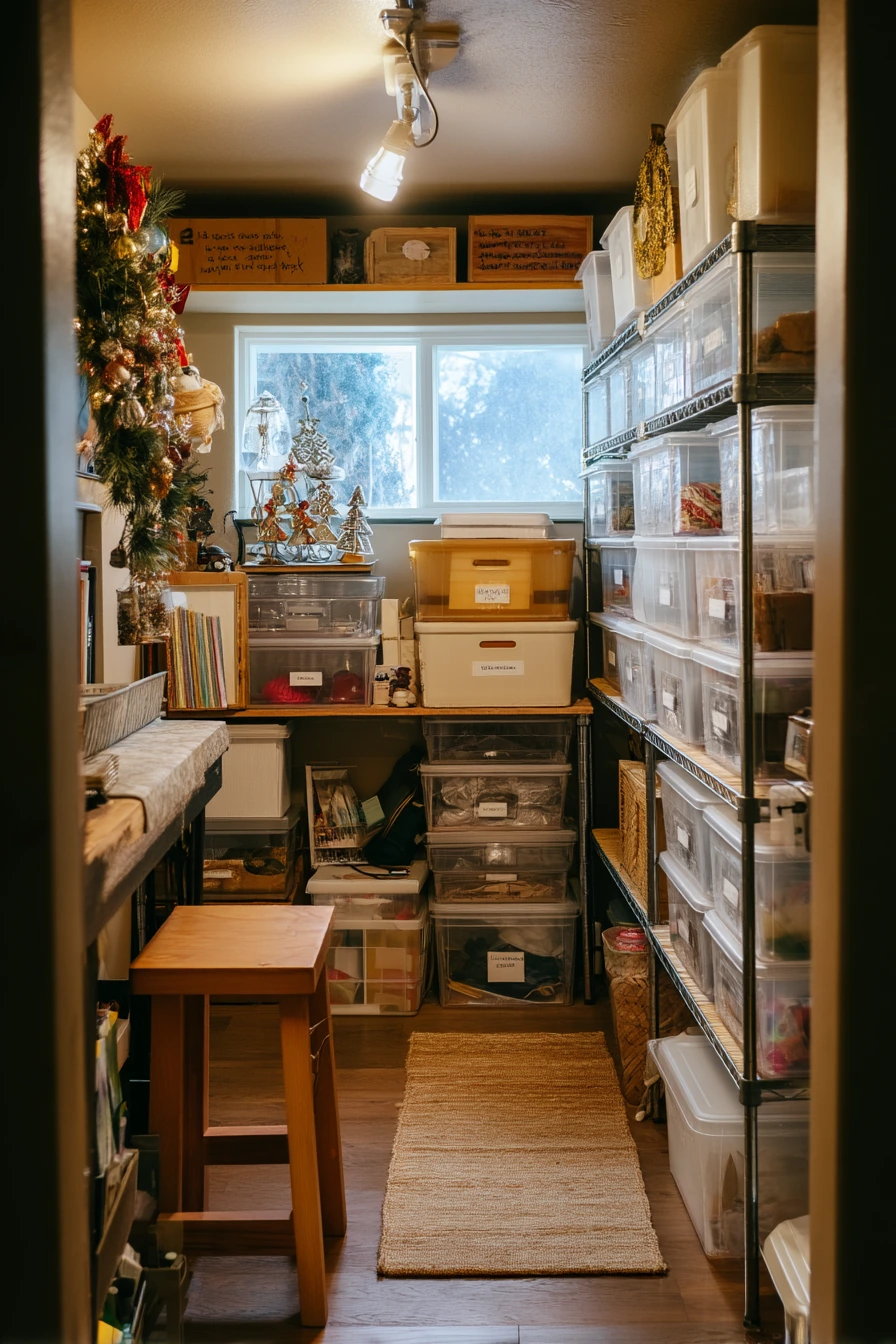
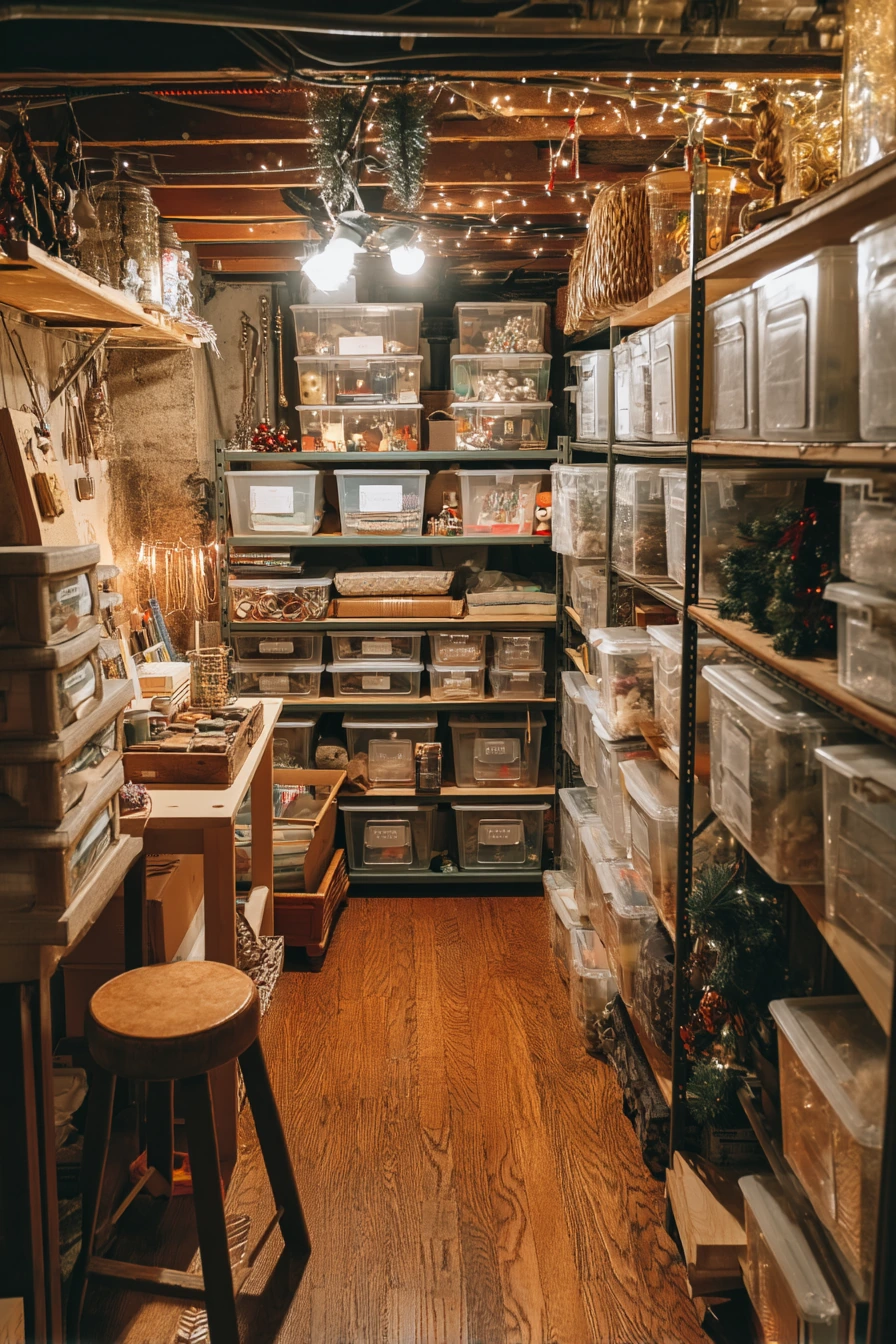
Seasonal storage is one of the easiest basement areas to organize because it is naturally grouped by holiday and weather. Use sturdy shelving and line it with clear labeled bins for winter decor, camping gear, and holiday lights. Clear bins help you spot what you need without opening everything. Labels still matter because cords, lights, and decor can look the same through plastic.
Create an easy packing station with a foldable ornaments tray, packing tape, and a ribbon spool stored together. Keep one “open box” rule: if a box is slightly open, finish it before you start another. This stops the aisle from filling up. A small stool or side table can be helpful, and a single ceramic mug nearby makes it feel like a space you can actually work in, not just a cramped storage row.
How to style it: keep the shelves visually even by using the same bin sizes on each shelf. Put the prettiest items, like a tidy ribbon box or neatly stacked ornament trays, at eye level. Use dusky window light and warm overhead practicals to your advantage by keeping the aisle wide and the floor clear. Add a simple printed inventory list on the end of the shelf so you can find items fast before guests arrive.
- Assign one shelf per season: winter, spring, summer, and fall.
- Use one bin for lights and add a smaller box inside for spare bulbs.
- Store camping gear in bins by activity: cooking, sleeping, and hiking.
- Keep a small tool kit here for scissors, zip ties, and hooks.
- Leave one empty bin labeled “donate” for decor you no longer use.
Pro Design Tip: Label bins on two sides so you can read them from the aisle no matter how the bin is turned.
Budget Considerations: Clear bins cost more than cardboard, so buy a few each season; reuse shipping boxes for light items until you can upgrade.


7 7. Finished Basement Storage Behind the Sofa


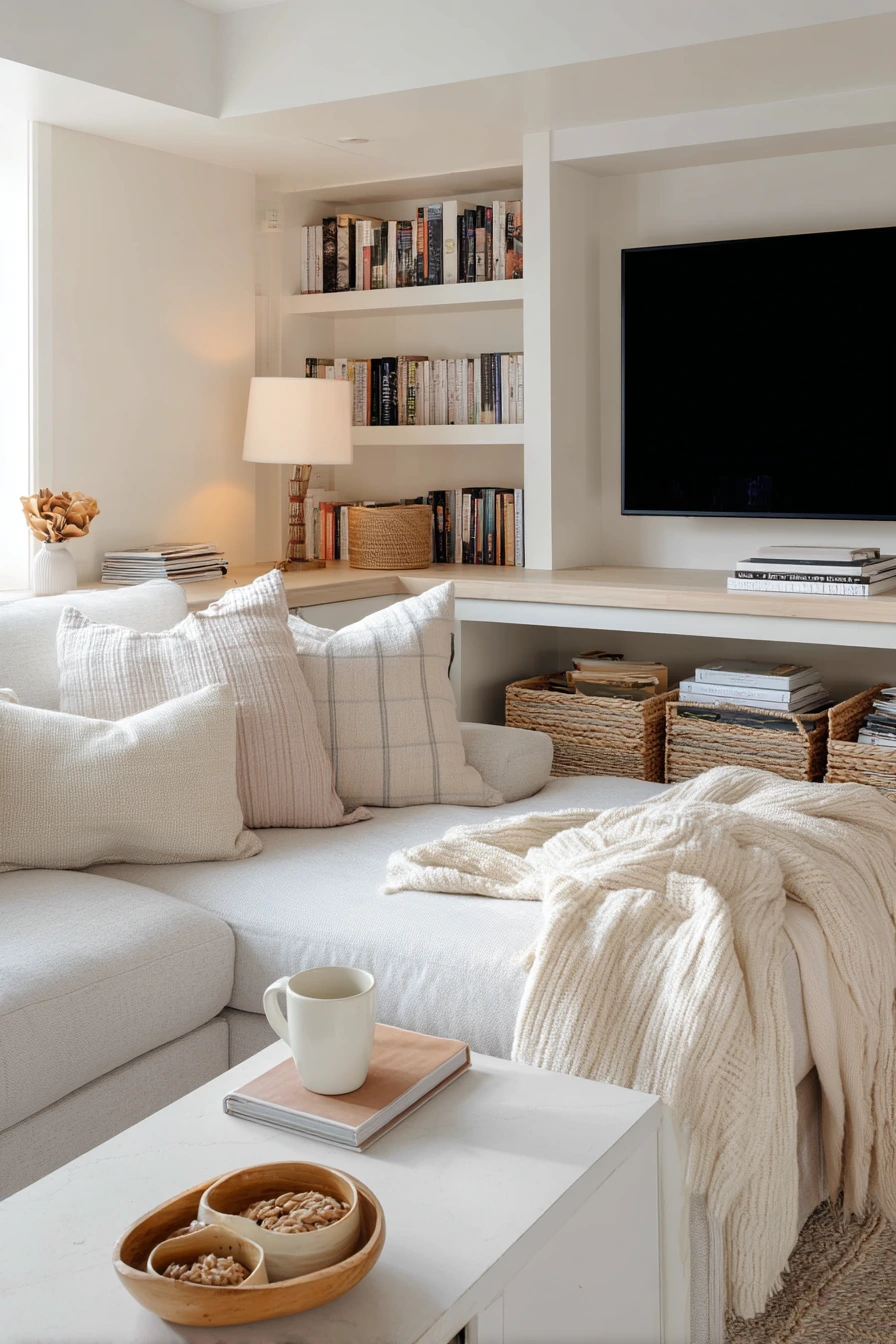
A finished family lounge can look clean without feeling stiff. The key is hidden storage that is easy to reach. Place low console storage behind the sofa to hold board games, extra pillows, or kids’ items that sneak in during movie night. Add hidden baskets for blankets and remotes so the room can reset in two minutes.
Books stacked neatly can double as decor, but keep them limited. If you have a TV cable tucked along the baseboard, add basic cable clips so it stays tight and does not turn into a messy line. Plan for lived-in details like a rumpled throw and a coffee mug on a side table by giving them “home bases,” like a basket for throws and a small tray for cups and snacks.
How to style it: use baskets that match the sofa color or the wall paint, so storage blends in. Keep one or two textures, like woven baskets and a soft knit throw. Use soft lamplight and faint window glow to create a calm feel, then avoid adding too many small items on surfaces. When the room is simple, it stays tidy longer and feels more relaxing.
- Use a long console table behind the sofa for baskets and books.
- Add a tray on the side table for remotes and coasters.
- Store extra blankets in two large baskets instead of many small ones.
- Use cable clips along the baseboard to keep cords out of sight.
- Keep a small lidded bin for game controllers and charging cords.
Pro Design Tip: Choose baskets with a firm shape so they slide in and out of the console shelf without collapsing.
Budget Considerations: If a console table is not in the budget, use two sturdy storage ottomans behind the sofa to get the same hidden storage.

8 8. Pantry-Style Basement Food and Bulk Storage


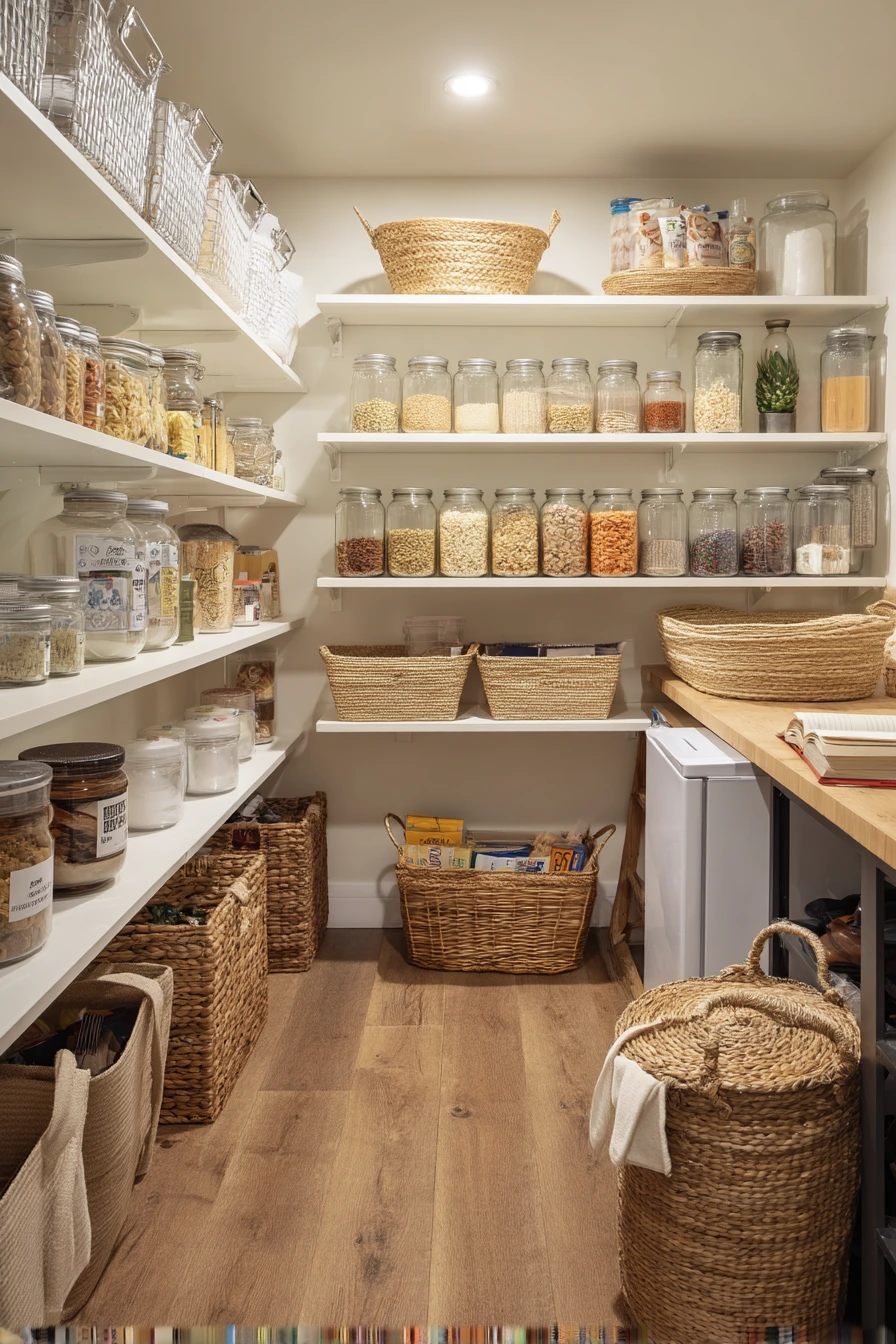
A basement overflow pantry can save money and time if it is organized like a small store. Use sturdy shelving for bulk food, paper goods, and backstock. Move dry goods into glass jars or clear containers so you can see levels at a glance. Add labeled bins for snacks, baking, and meal staples to keep similar items together.
If you have a compact freezer, keep a simple list on the side so items do not get forgotten. Woven baskets are useful for odd shapes, like chip bags or potatoes, and they soften the look of all the packaging. Real life happens here too, like a grocery tote on the floor and one open recipe book. Plan a landing zone by keeping a clear shelf or small counter space for unloading and meal planning.
How to style it: add warm under-shelf lighting if the basement is dim, and keep labels consistent in one font. Store the prettiest jars on the middle shelves and hide the messy items, like mixed paper goods, in bins. This makes the pantry feel homey and makes you more likely to keep it neat after a big shopping trip.
- Group shelves by use: breakfast, lunches, dinner staples, and snacks.
- Use a bin for paper goods so they do not topple over.
- Keep an “eat first” basket for items close to expiration.
- Store cereal boxes in a tall bin to prevent falling stacks.
- Add a small shelf spot for the current recipe book and shopping list.
Pro Design Tip: Use turntables for small jars and spices so nothing gets lost in the back of the shelf.
Budget Considerations: Start by decanting only the items you buy most, like rice and pasta; reuse clean jars from sauces and pickles before buying matching sets.

9 9. Workshop Storage for DIY and Repairs
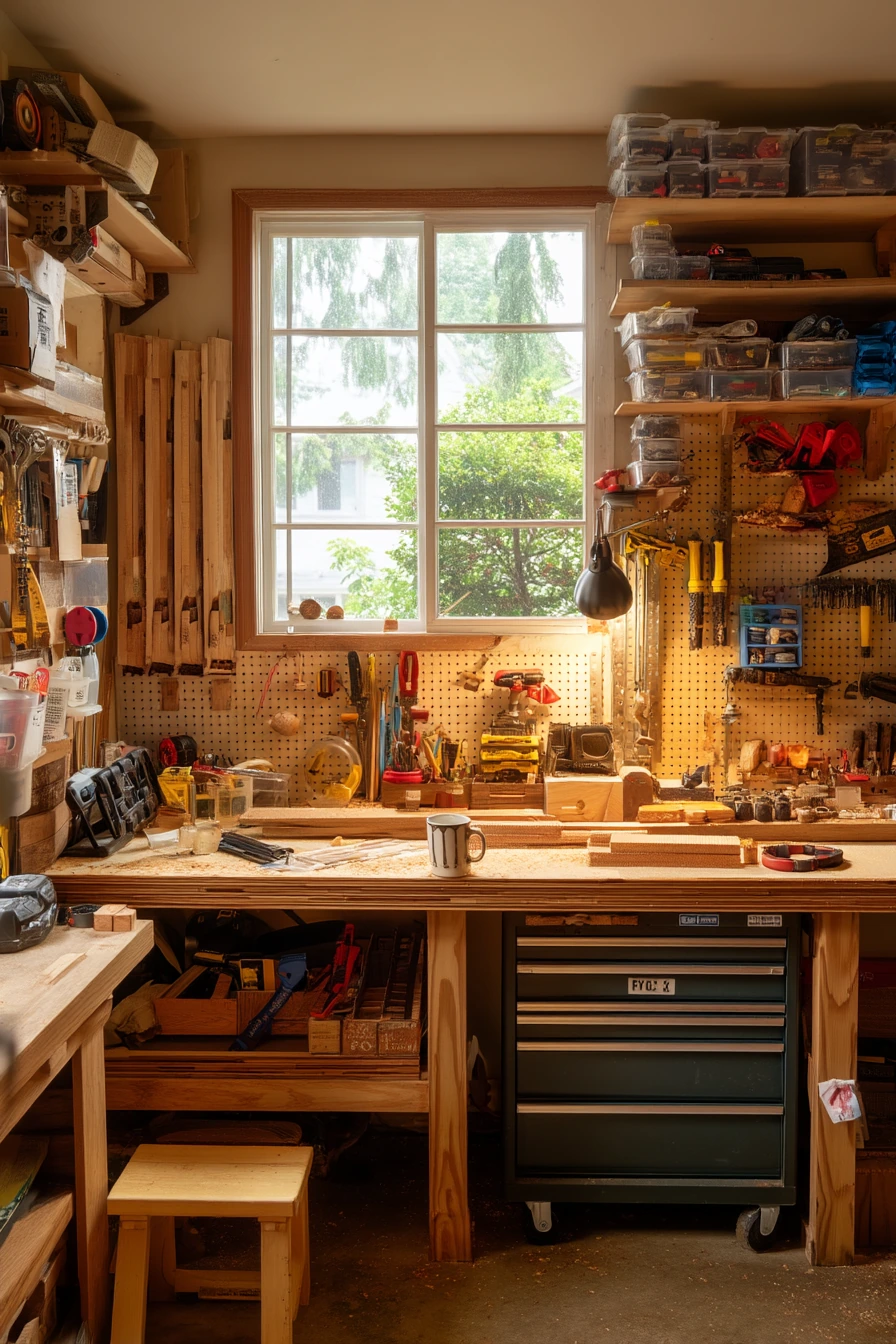

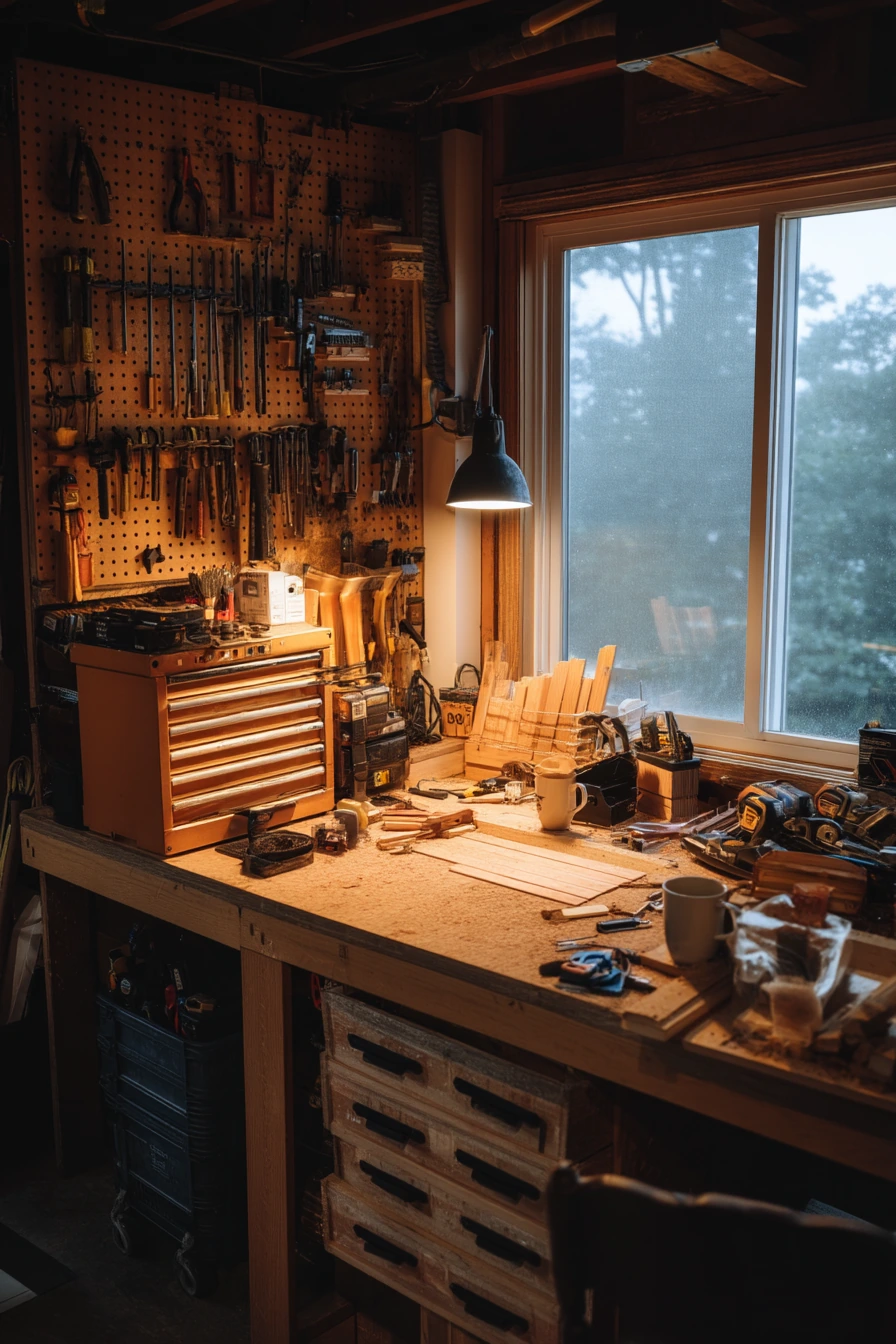
A homeowner’s repair workshop does not need to be spotless, but it should be easy to use. Start with a pegboard for hand tools so you can see what is missing and put it back fast. Keep heavier tools and messy items in a rolling tool chest. This lets you move the chest closer to the project, then tuck it away when you are done.
Lumber offcuts can turn into a dangerous pile if they are not stored. Stack them neatly on a shelf or in a vertical bin, sorted by length. Use small parts drawers for screws, anchors, and nails, and label each drawer. Add a power strip where you need it most, like near the workbench, so cords do not run across the floor.
How to style it while keeping it practical: choose one wall for tools and keep that wall clean. Let the workbench show a few everyday items like a pencil and tape measure, then use a small cup for pencils and a shallow tray for bits. A coffee mug is fine, but keep it on a defined corner away from sawdust. With soft window light and amber task lamps, the space can feel grounded and orderly without looking staged.
- Outline tool shapes on the pegboard so each tool has a clear home.
- Label parts drawers by size, like 1 inch screws or wall anchors.
- Store lumber offcuts by length to stop messy stacks.
- Use a tray on the bench for small items you are using today.
- Add a hook for safety glasses and ear protection near the door.
Pro Design Tip: Keep one empty bin labeled “to return” for tools that belong elsewhere, so they do not drift into the workshop forever.
Budget Considerations: Pegboard and hooks are low cost; if a tool chest is pricey, start with a used cabinet and add drawer organizers over time.

10 10. Multiuse Basement Office with Smart Storage

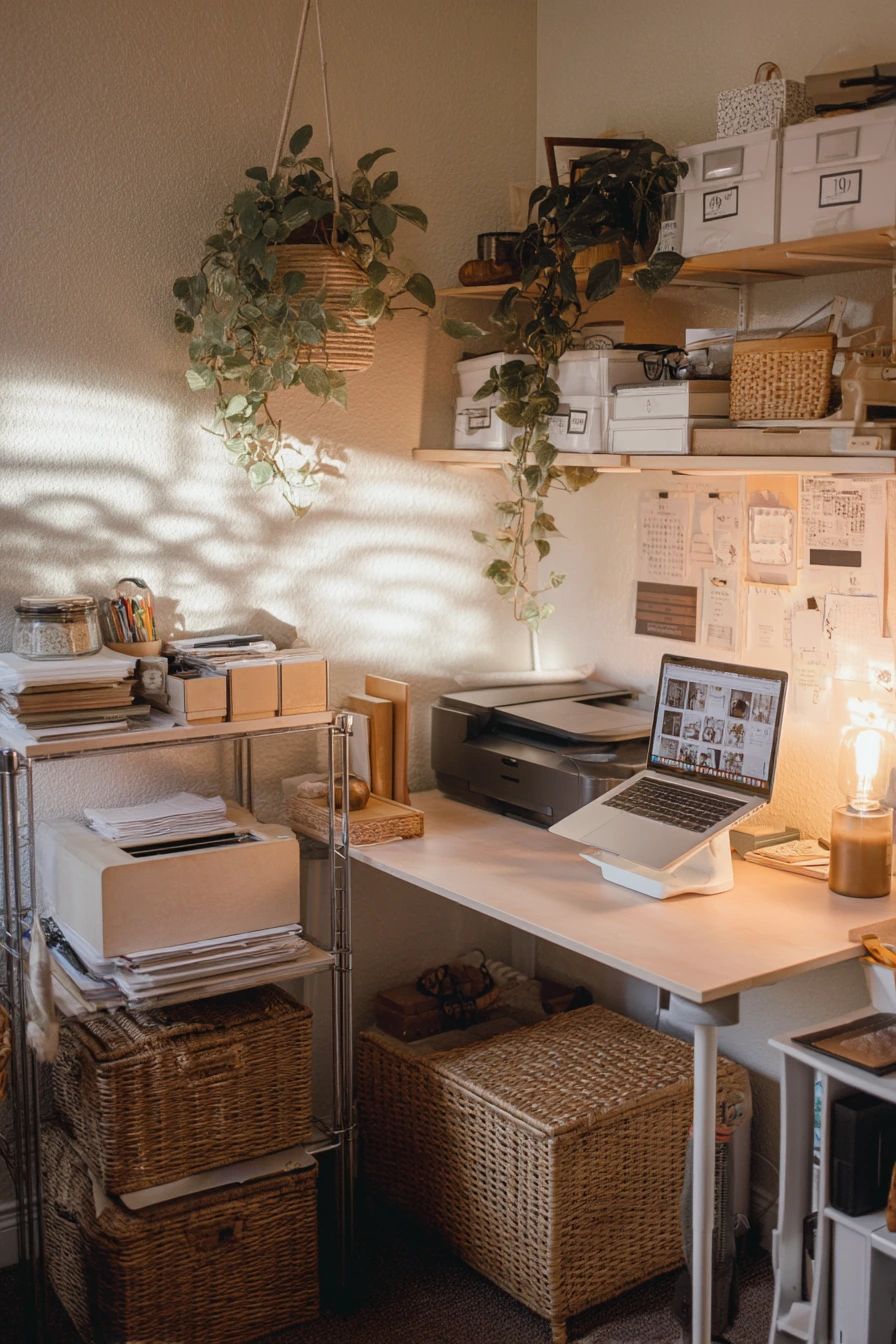
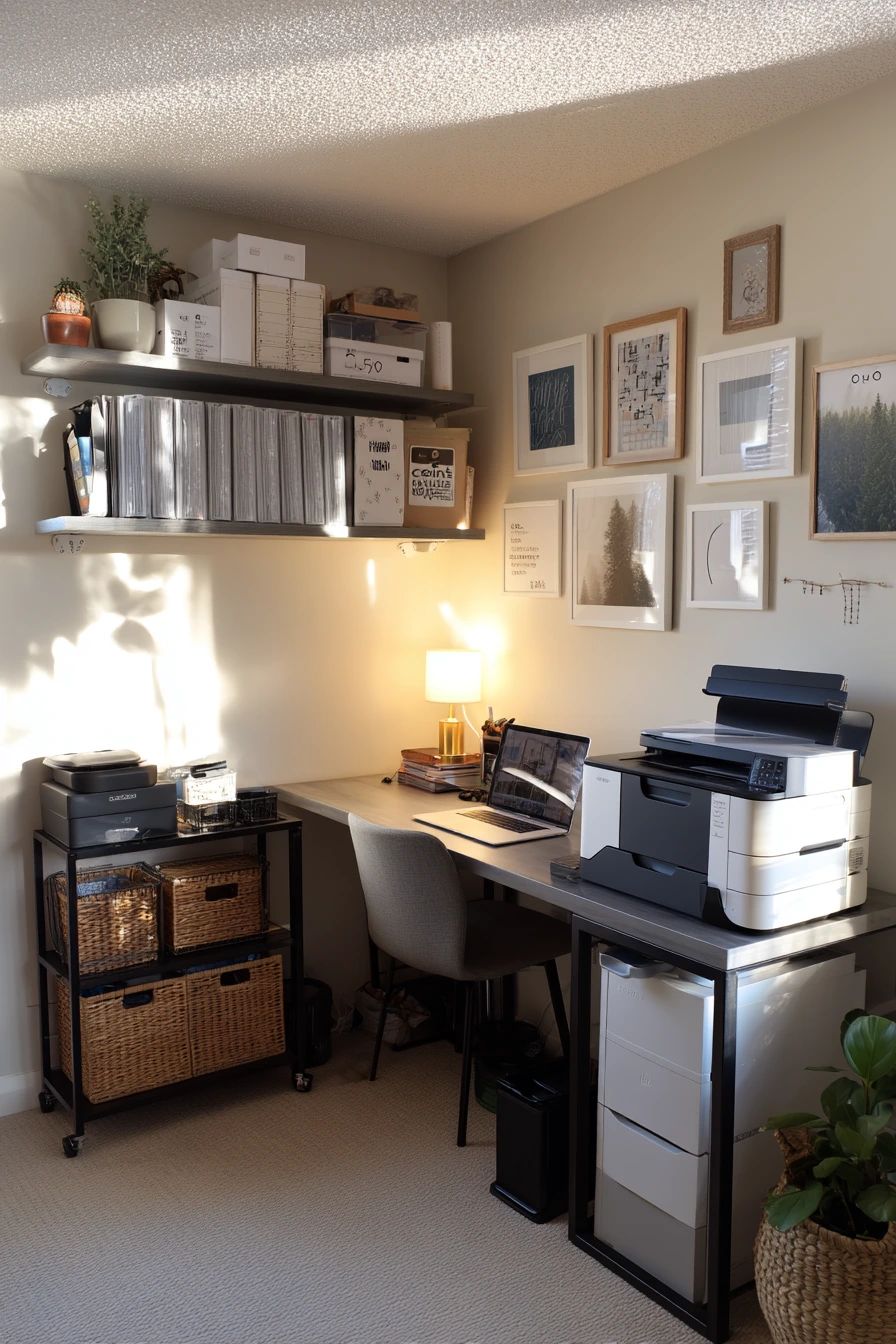
A basement office corner can work for bills, school papers, and light work if it has simple systems. Start with a compact desk that fits the space without blocking walkways. Add wall shelves with labeled boxes and files so paper does not pile up on the desk. Keep the items you touch every day within arm’s reach, and store the rest higher up.
A printer on a side cart is helpful because it can move when you need space. Use woven bins for cables and notebooks so cords do not turn into a tangled mess. It is normal to have a laptop charger and reading glasses out, so give them a small tray or a desk drawer. A plant that casts shadows on the wall can soften the look of the basement and make the corner feel more finished.
How to style it: keep the desktop mostly clear, with one lamp, one tray, and one notebook. Use soft daylight when you have it, then add a warm desk lamp glow for evenings. Allow a little real-home clutter, like a current mail stack, but contain it in one upright file holder. When the workspace is calm, you can sit down and start right away instead of cleaning first.
- Use labeled boxes for categories like taxes, school, manuals, and receipts.
- Store cables in one woven bin with smaller pouches inside.
- Keep a rolling printer cart with paper and ink on the bottom shelf.
- Add a wall hook for headphones and a bag.
- Use one inbox and one outbox tray to control paper flow.
Pro Design Tip: Run one cord channel down the wall to the outlet so your charger and lamp cords do not show across the floor.
Budget Considerations: File boxes and baskets can be thrifted; if wall shelves are not possible, use a tall bookcase and add stick-on labels.

The best basement organization ideas are the ones that match how your family actually lives. Build zones, use labels, and pick storage that is easy to grab and easy to put back.
If you want quick progress, start with one area like the laundry corner or seasonal bins, then move to the playroom or hobby space. Small changes, like a sorting table, a pegboard, or a few baskets, can make the whole basement feel lighter.
FAQ
1. How do I start organizing a basement when it feels overwhelming? Pick one zone, like sports gear or holiday decor. Remove everything from that zone, sort into keep and donate, then put back only what belongs there.
2. What storage works best in a basement that can feel damp? Use plastic bins with lids, metal shelving, and raised feet or pallets if needed. Avoid storing fabric and paper directly on the floor.
3. Should I use clear bins or opaque bins? Clear bins help you see what you have fast. Opaque bins look calmer. Many people use clear for seasonal storage and opaque baskets for living spaces.
4. How do I keep kids’ basement areas tidy? Use low cubbies, big baskets, and picture labels. Fewer categories works better than many tiny bins.
5. How can I make a basement laundry area more efficient? Add a drying rack, a detergent caddy, and labeled bins for linens. Keep a small bin for stray socks and pocket items.
6. What is the easiest way to manage cords in a basement lounge or office? Use cable clips along baseboards, a cord channel down the wall, and one bin for chargers. Keep only the cords you use weekly plugged in.
7. How do I organize seasonal decor so it is easy to pack and unpack? Label bins by holiday and room, store fragile items in trays, and keep tape, scissors, and hooks together in one small kit near the shelves.