

Looking for basement color ideas that make a lower level feel brighter, warmer, and more livable. The right paint color can help a basement look less flat, even when you have small windows or low ceilings.
This guide walks through 10 real-life basement spaces, from a family lounge to a guest room, office, teen hangout, playroom, media nook, workout room, bar corner, craft room, and den. Each section shares a paint color direction plus easy styling ideas that fit the way people actually use the room.
You will also get practical tips for lighting, rugs, storage, and art so the color feels finished. Each section includes a pro design tip and a budget note to help you plan.
Use these ideas as a starting point, then test paint samples in your basement at different times of day. Basements change a lot from morning to night, so the sample step matters.
1 Moody Family Hangout in Deep Olive
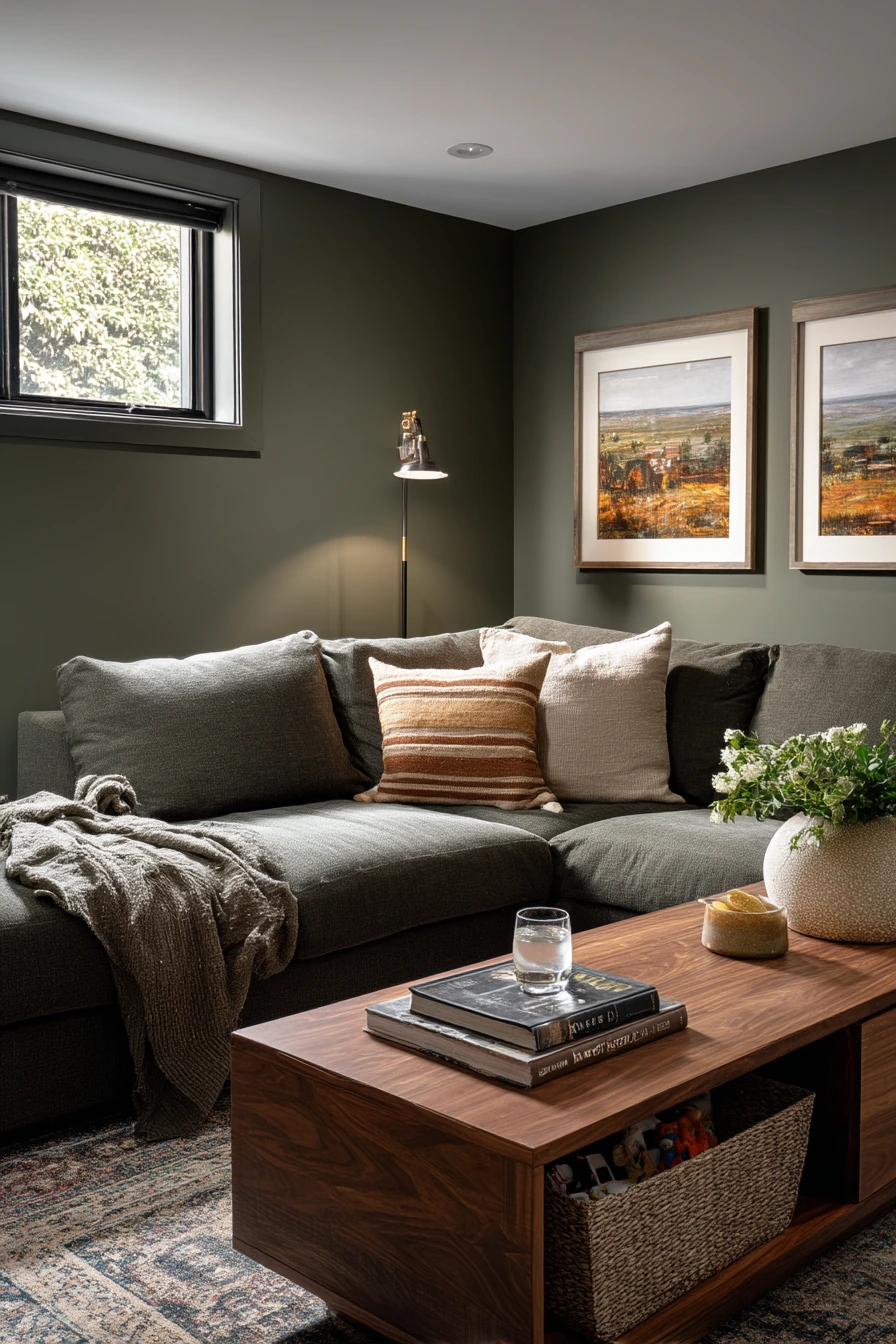

Deep olive walls are a strong choice for a finished basement family lounge because the color feels grounded and calm. It works well with soft window light from a high egress window and also looks good under a warm floor lamp. If your basement has a charcoal sectional, olive helps it feel cozy instead of heavy. Add a warm walnut media console to keep the room from looking too cool.
To keep olive from feeling dark, build contrast in the middle of the room. A vintage rug with light cream or muted rust tones breaks up the deep paint. Framed landscape art is an easy match, since greens and earth tones repeat what is on the walls. For real-life function, plan a toy basket that can tuck under the coffee table and choose a table surface that hides water rings and book stacks.
Styling is simple when the base is olive. Use one or two light throws, then add one textured pillow in camel or oatmeal. If you have mixed lighting, pick bulbs in the same warm range so the paint reads consistent. Keep trim and ceiling a clean warm white so the walls feel intentional, not closed in.
- Choose an olive with a soft undertone, not a bright yellow green.
- Pair with walnut or oak furniture for warmth.
- Use a vintage style rug to lighten the center of the room.
- Add black or bronze frames to tie in with charcoal seating.
- Layer lighting with a floor lamp plus a dimmable overhead.
Pro Design Tip: Paint the walls deep olive and keep the ceiling warm white, then add one large mirror or glass-front frame to bounce light back into the room.
Budget Considerations: If new wood furniture is pricey, look for a secondhand media console and refinish it in a warm walnut tone with stain and a clear top coat.


2 Airy Basement Guest Room in Soft Clay


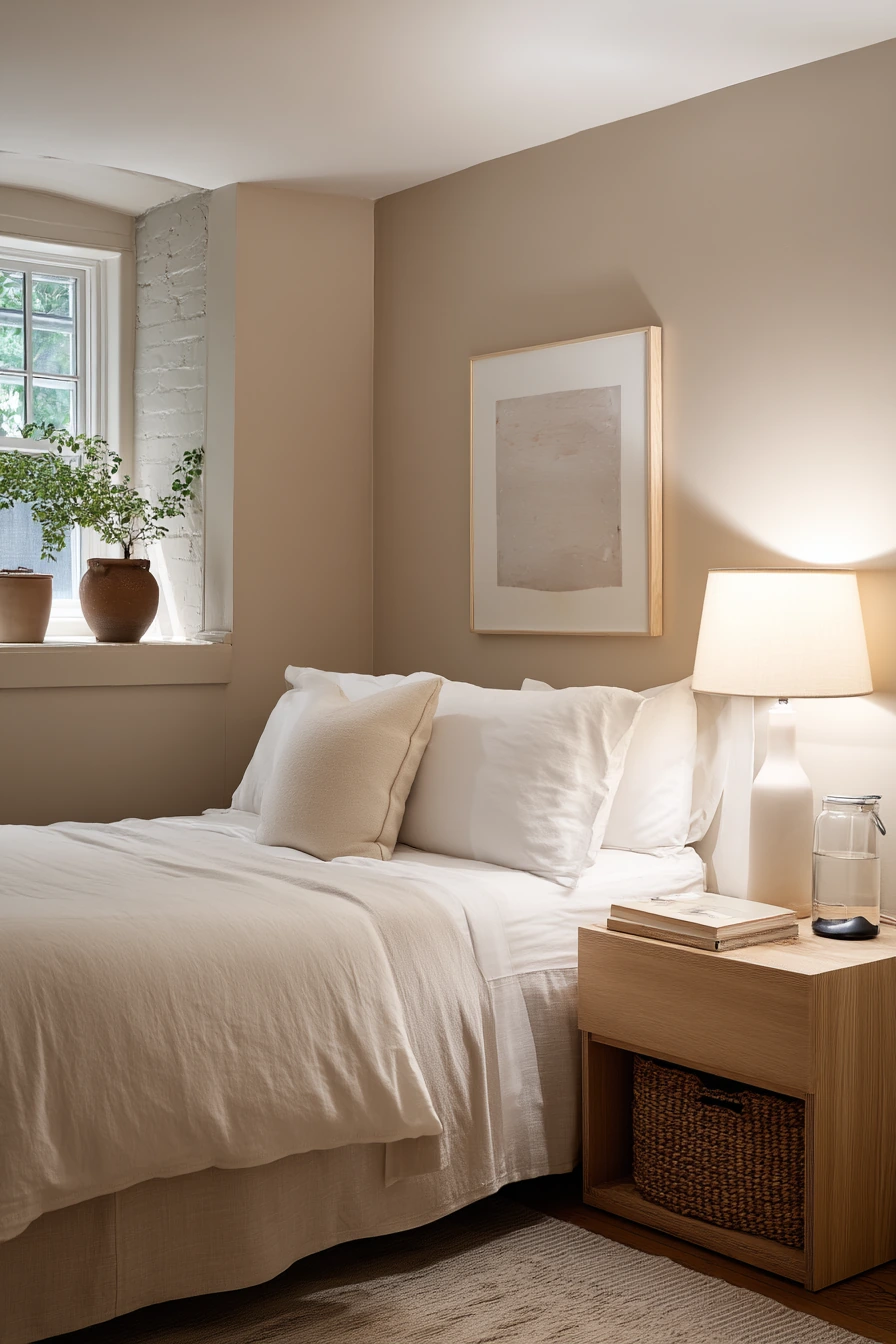
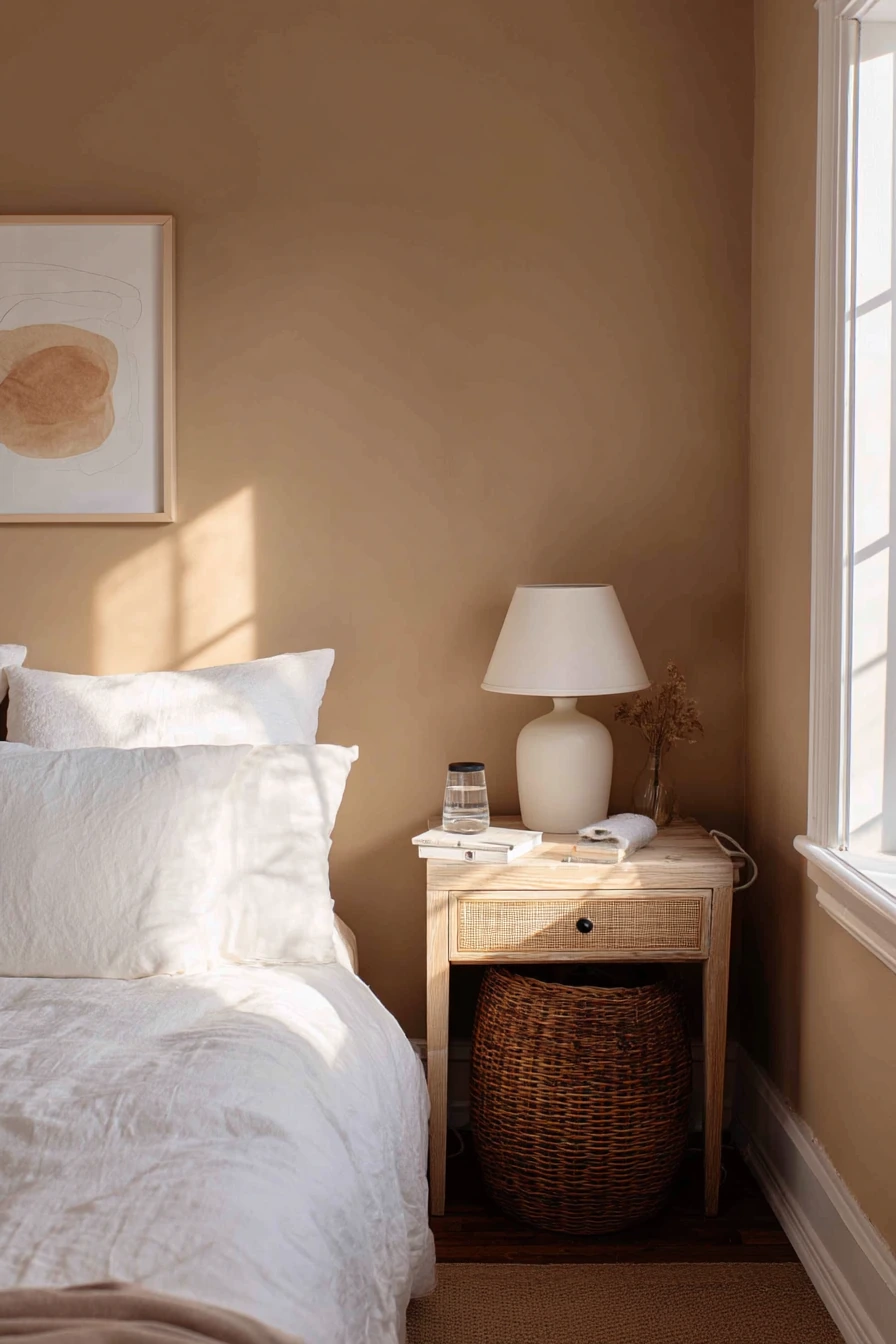
Soft clay walls are a smart basement guest room color because they add warmth without feeling dark. Clay looks calm with crisp white bedding, and it helps a small room feel more welcoming. In a townhouse basement, the sun-diffused window glow can be limited, so a warm bedside lamp is important to keep the paint from looking flat.
For a clean look, use pale oak for the nightstand and add woven basket storage to soften the edges. A small abstract print works well here because clay is a quiet background color. Keep the art simple so the room still feels restful. Real guest details matter too, like a place for an open carry-on, a charger cable, a half-read novel, and a water carafe that can catch the light.
To style it, stick to one main neutral plus one accent. White bedding and clay walls are the main set, then add a muted accent like dusty rose, warm gray, or soft olive in a pillow or throw. Choose curtains or shades in a light linen tone to avoid blocking the little daylight you have. If you want the room to feel bigger, use one large rug instead of several small ones.
- Pick a clay shade that leans warm, not orange.
- Use white bedding to keep the room bright.
- Add pale oak wood for a light, fresh contrast.
- Choose woven baskets for hidden storage near the bed.
- Use one warm bedside lamp for a cozy glow at night.
Pro Design Tip: Use a satin or eggshell finish on clay walls so the color stays soft but still reflects a little light in a basement.
Budget Considerations: Swap expensive nightstands for a simple stool or small table, then add a basket underneath for the same look with less cost.
3 Renter-Friendly Basement Office in Warm Greige
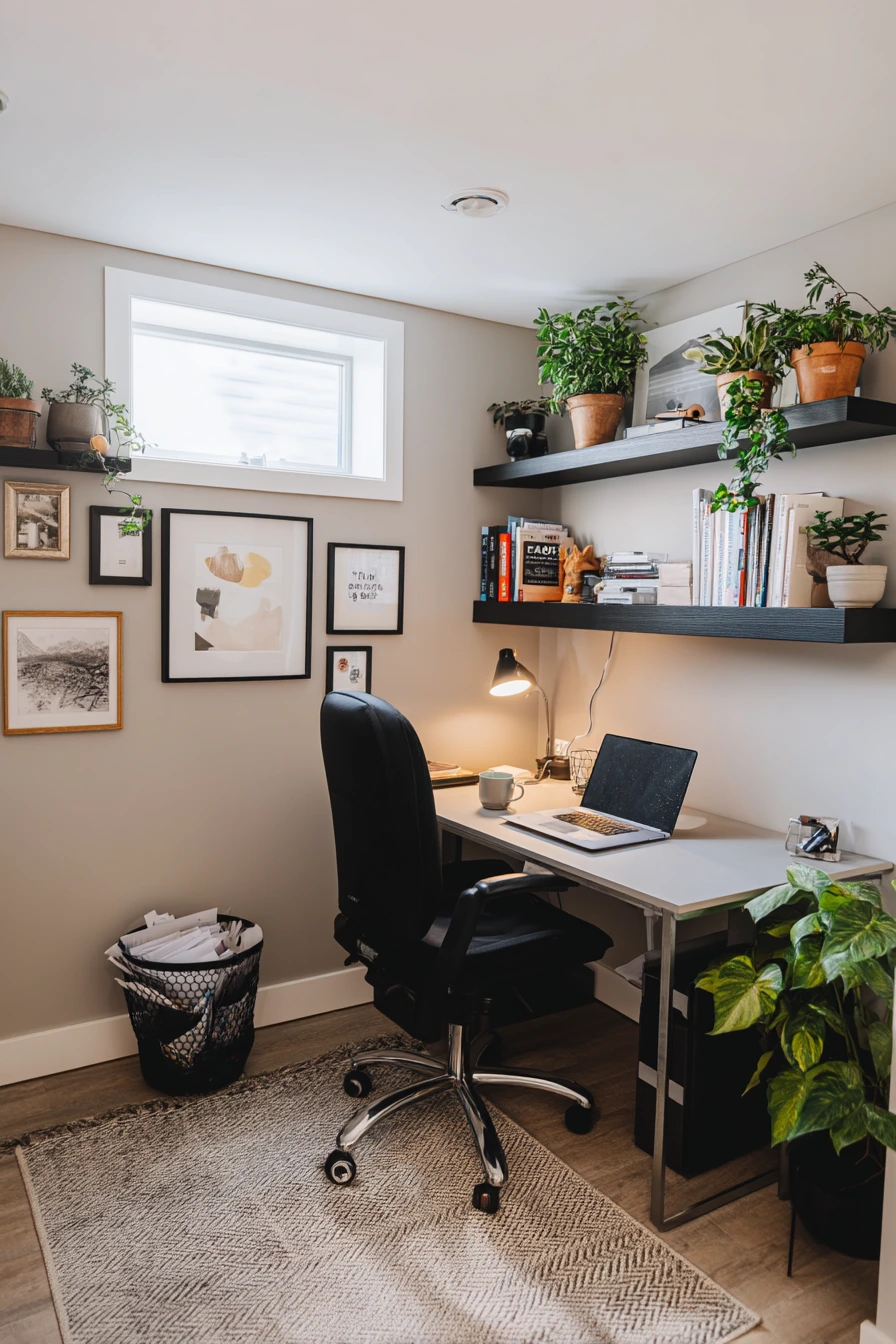
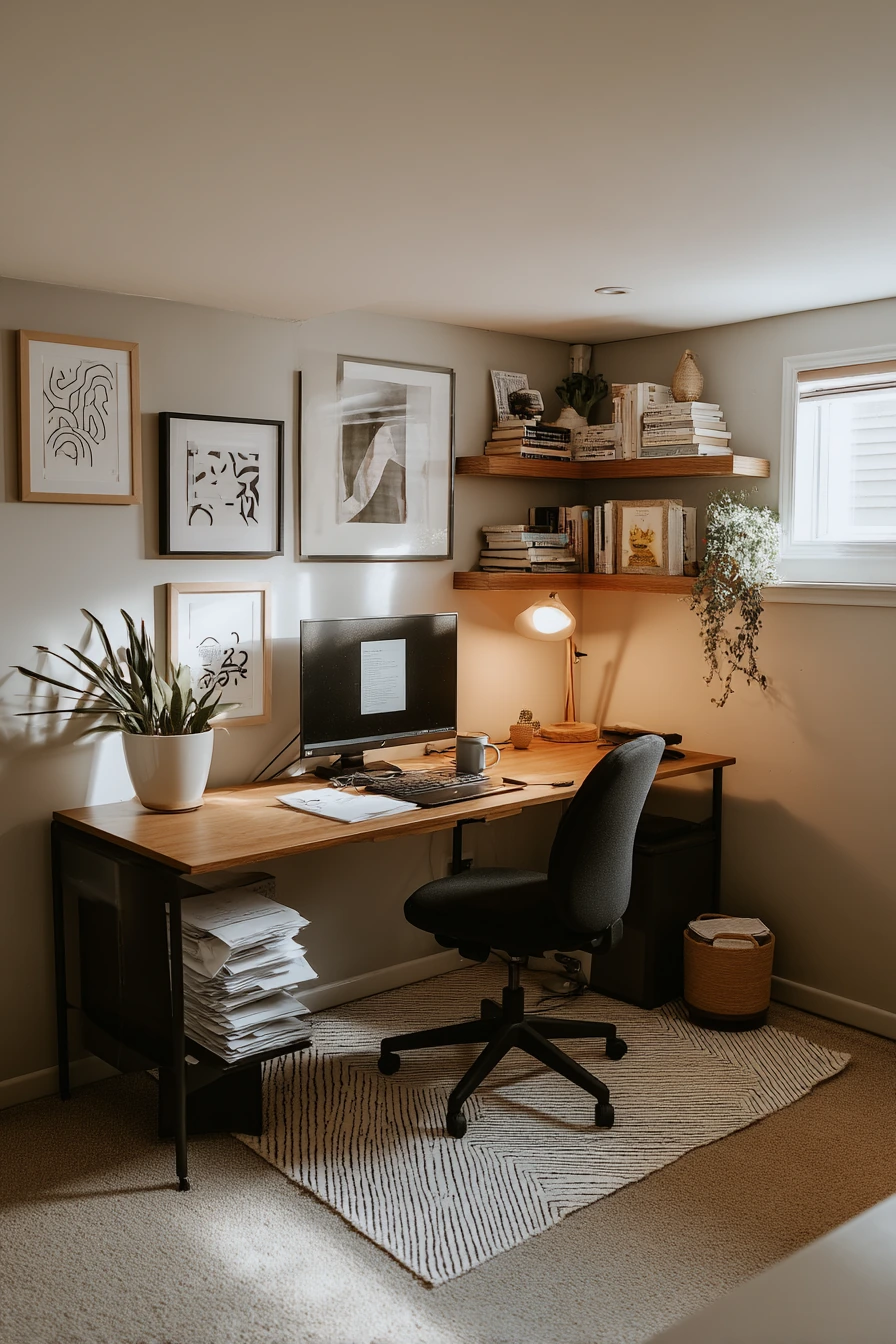
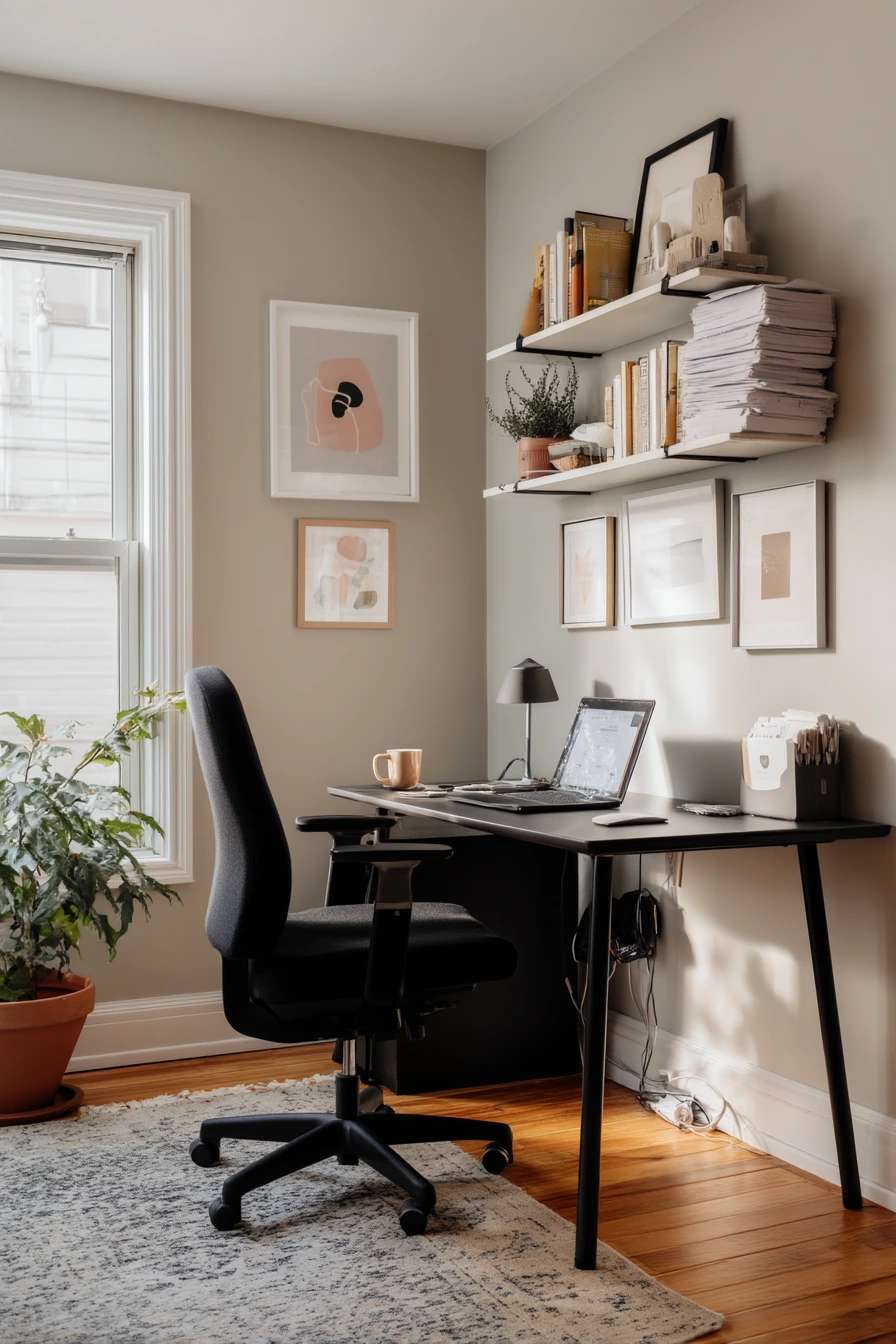
Warm greige is one of the easiest basement color ideas for a home office, especially in a rental. It is neutral, it hides scuffs, and it looks steady under soft window light plus a small desk lamp. Greige also works with black office pieces, like a task chair, without making the room feel cold.
In a compact basement office, the goal is simple and efficient. A small desk, a slim rug, and floating shelves keep the floor open. Use shelves for books and one plant to add life without clutter. Peel-and-stick artwork is a good choice for rentals and helps the office feel personal. Since real desks collect stuff, plan for the everyday items like stacked mail, a coffee mug ring, and a charging cable looping by the monitor.
To style this color, add texture in small ways. A rug with a low pile adds comfort and helps with sound. Choose storage that matches the wall tone, like warm white boxes or light wood trays. If you can paint, keep trim a clean white so the greige looks fresh. If you cannot paint, bring greige in with a large rug and a few soft accessories, then keep the rest simple.
- Choose a greige with a warm base to avoid a purple cast.
- Use floating shelves to save floor space.
- Add one plant for color without visual noise.
- Pick peel-and-stick art to fit rental rules.
- Use a slim rug to define the work zone.
Pro Design Tip: Match your light bulbs to one color temperature, then test greige samples under that exact lighting to prevent the walls from looking too cool at night.
Budget Considerations: If shelves are not possible, use a narrow bookcase and paint it the same color as the wall for a built-in look on a low budget.

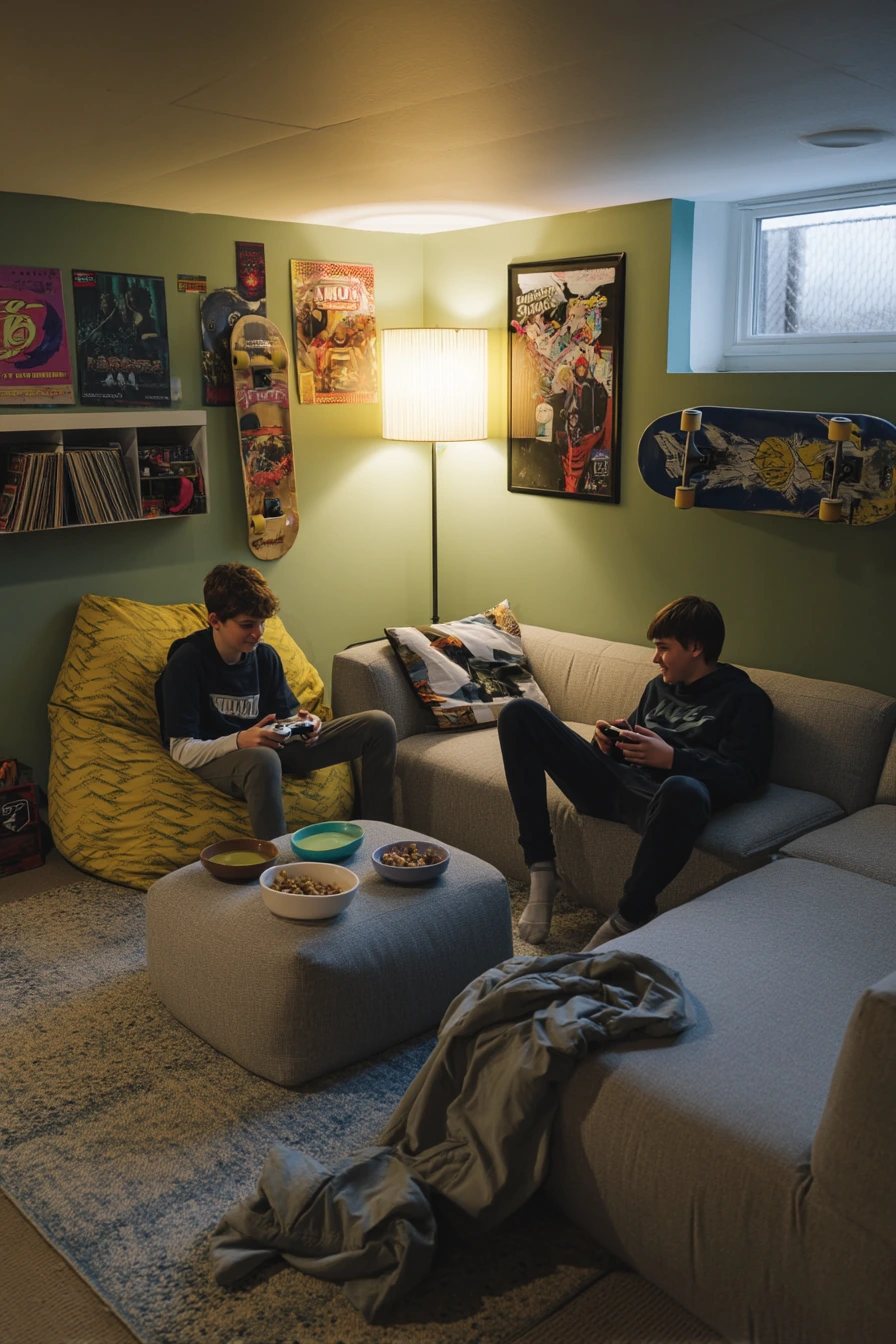
4 Teen Hangout with Sage Green Walls
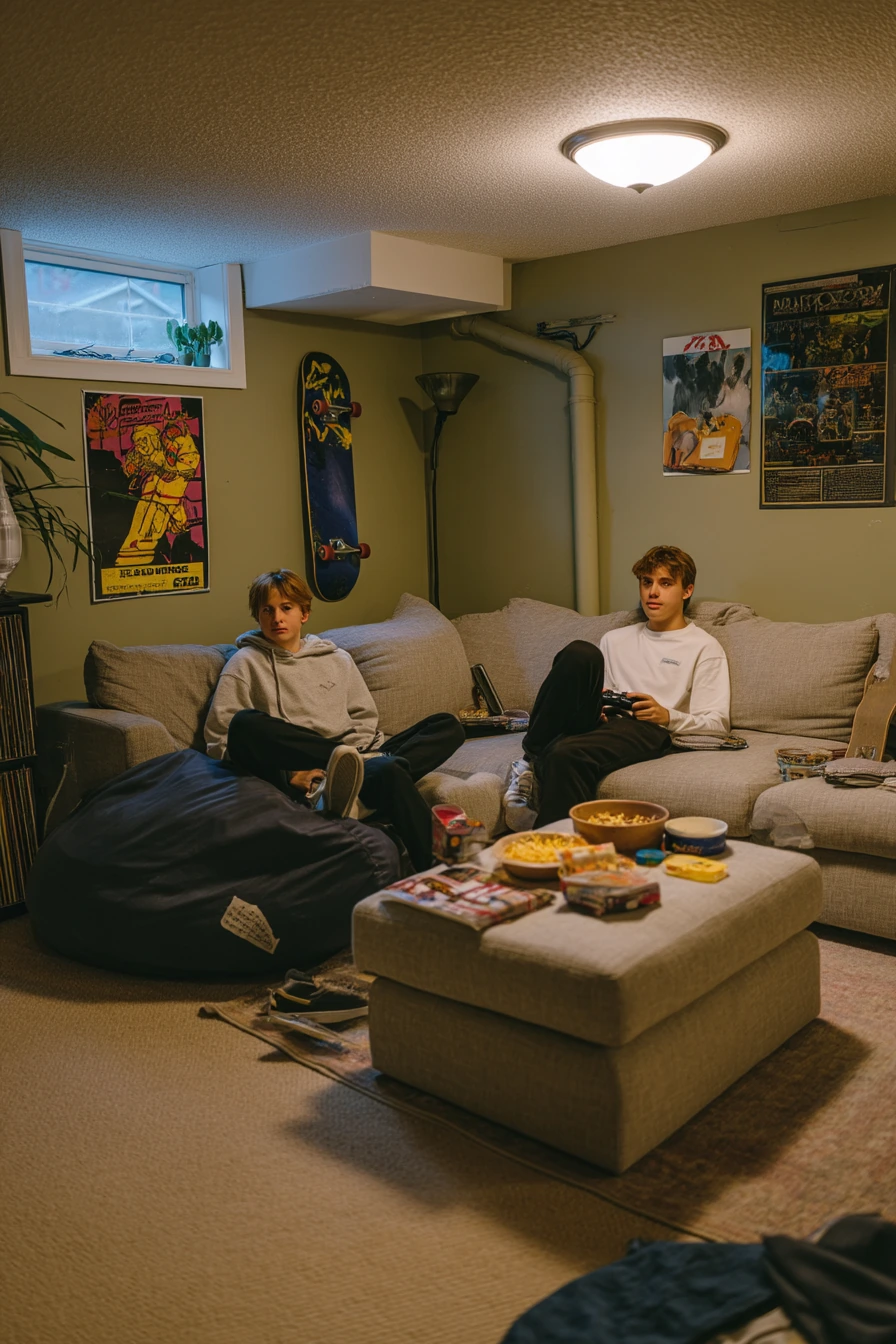

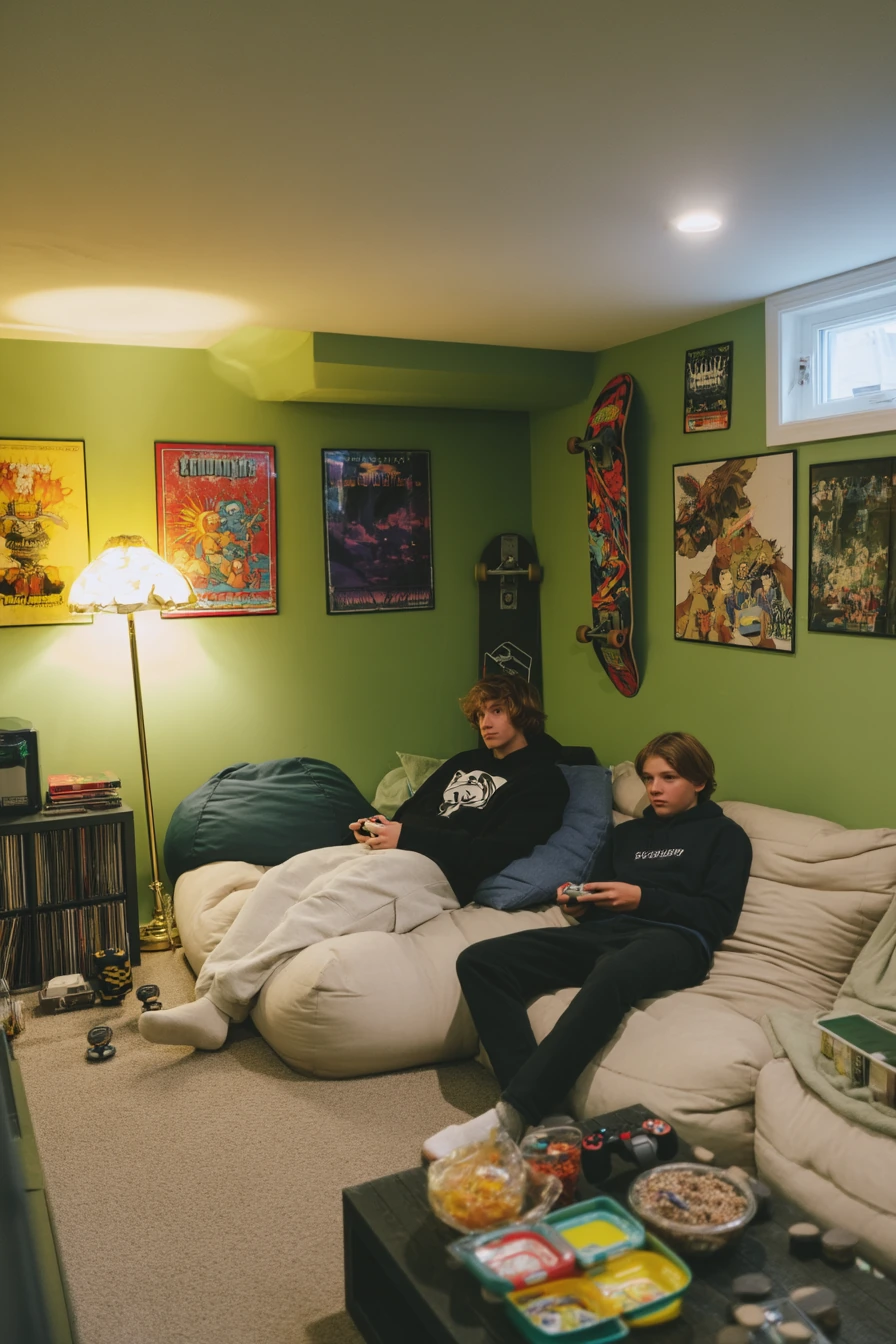
Sage green is a great basement paint color for a teen hangout because it feels cool and relaxed without being harsh. It pairs well with warm practical lamps and faint daylight from a small window. Sage also works with a mix of teen decor, like graphic posters, a record shelf, and a playful arcade-style lamp.
For furniture, a modular sofa makes sense because the room can change. Add a bean bag for extra seating and keep the floor open for gaming. Since this space will look lived-in, plan for the real mess that comes with it, like a hoodie on the sofa arm, snack bowls on the table, and a controller on the rug. A skateboard by the wall can even become part of the style if you keep the rest tidy.
To style sage, use a simple color set. Black, white, and warm wood are easy partners. If posters are bright, let the wall color be the calm background and use matching frames to make the display look more organized. Choose a rug that can handle spills, and add a basket for quick cleanup. A dimmer on lamps is helpful so the room can shift from homework to movie time.
- Use sage as a calm base for bold posters.
- Add warm lamp light so the green stays cozy.
- Choose modular seating to fit different hangout setups.
- Use baskets to hide gaming gear fast.
- Pick a stain-resistant rug for snacks and shoes.
Pro Design Tip: Keep the ceiling and trim lighter than the sage walls to lift the room, especially if your basement has low height.
Budget Considerations: Thrifted frames make posters look more polished, and you can spray paint mismatched frames one color for a cheap, clean wall display.
5 Budget Playroom in Soft Mustard
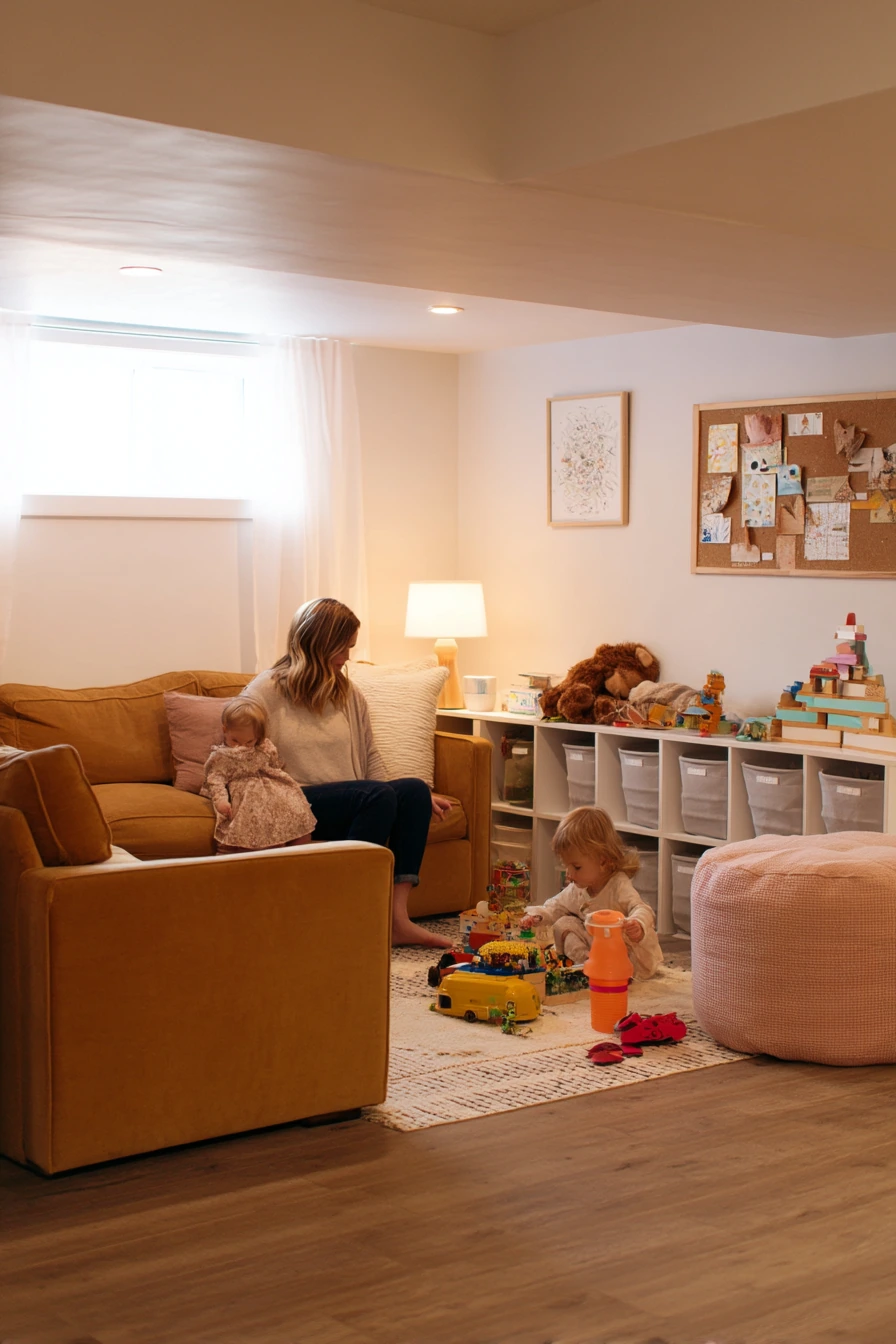

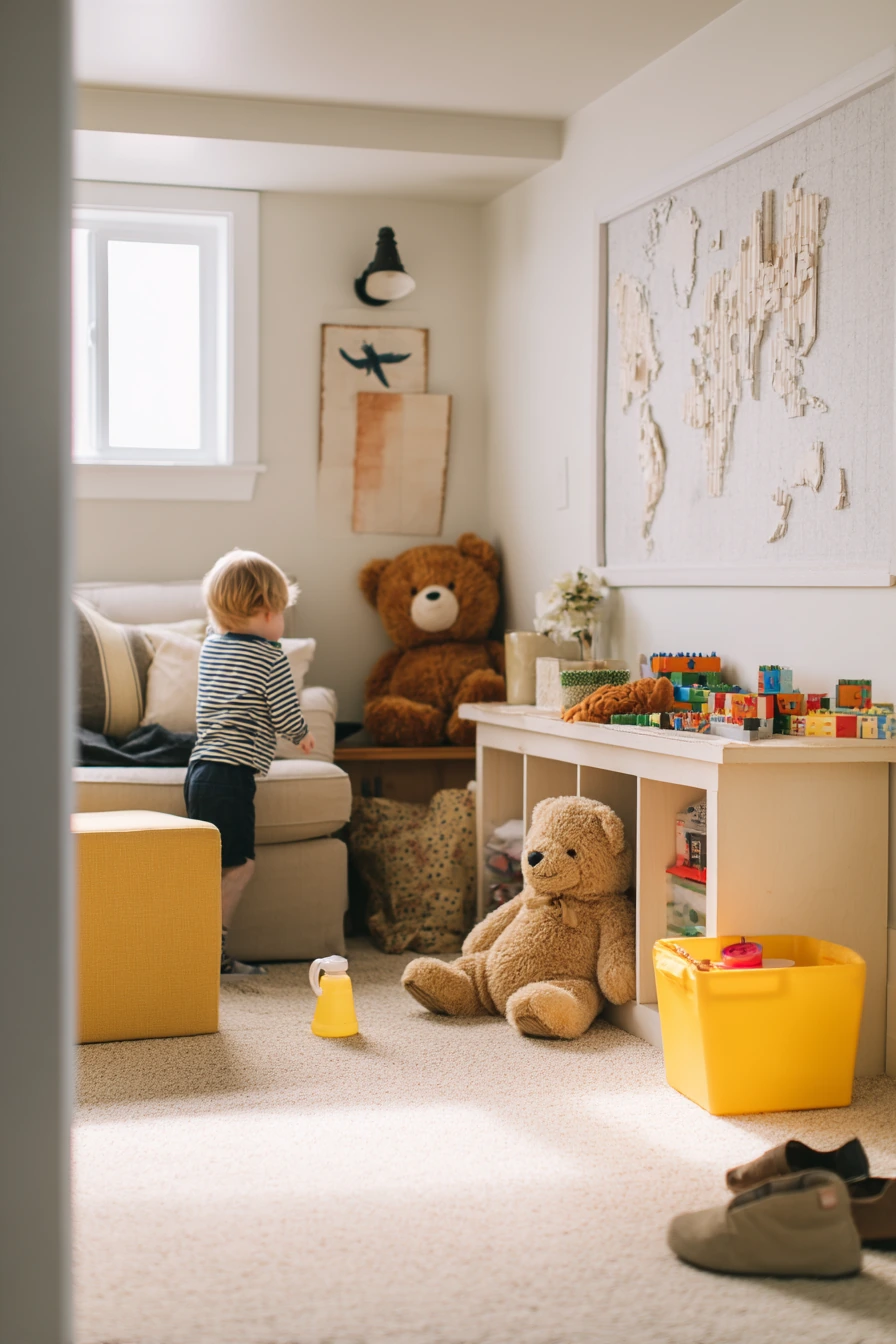
Soft mustard is a cheerful basement playroom color that still feels warm and grown-up. It works well with durable laminate flooring and bright storage bins because the wall color keeps the room from looking too stark. In a basement, mustard also helps the space feel sunny, even when the window light is gentle.
A playroom needs a plan for clutter. Open toy cubbies make it easy for kids to grab and put back items, especially if you label bins by type. A washable sectional is a smart anchor since spills happen. Add cork board art for kid drawings so the walls stay neat. Real-life details like plush animals, a block tower, one shoe near the sofa, and a sippy cup on the floor are normal, so choose finishes that can handle everyday life.
To style mustard without making it too loud, keep the big pieces neutral. Use white or light wood cubbies, then bring color through bins that match the wall or complement it, like teal, navy, or warm green. Add one simple rug for comfort and sound control. If the room feels too yellow at night, swap bulbs to a warmer tone and use a shaded lamp to soften the light.
- Choose a muted mustard, not a bright neon yellow.
- Keep storage units light wood or white for balance.
- Use washable covers on seating for easy cleanup.
- Add a cork board to display art without tape marks.
- Pick storage bins in 2 to 3 coordinated colors.
Pro Design Tip: Use the same mustard on one accent wall only if the room is small, then keep the other walls warm white to maintain a bright feel.
Budget Considerations: Instead of built-ins, use basic cube shelving and budget fabric bins, then upgrade labels and pulls later when kids are older.

6 Small Basement Media Nook in Smoky Blue


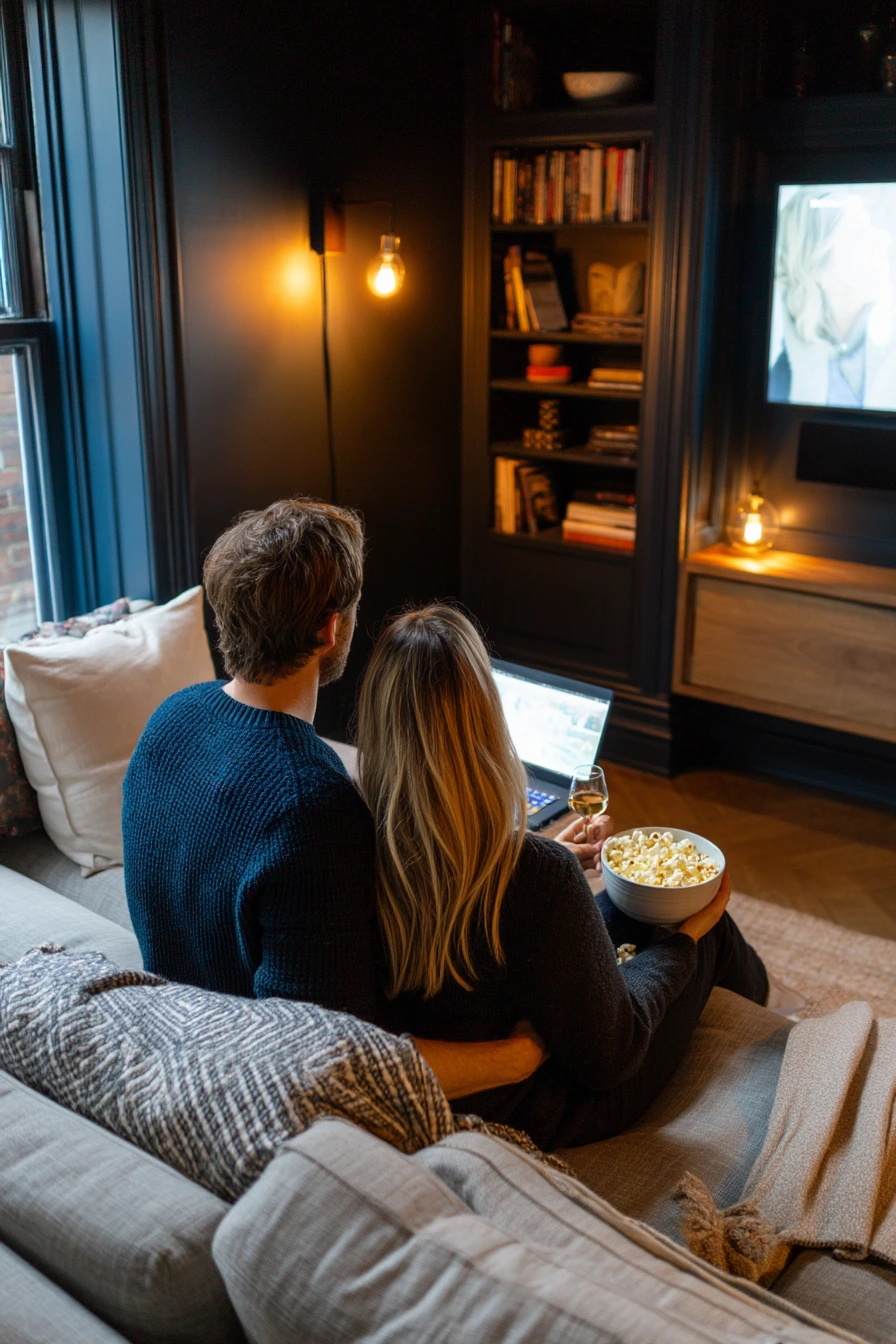
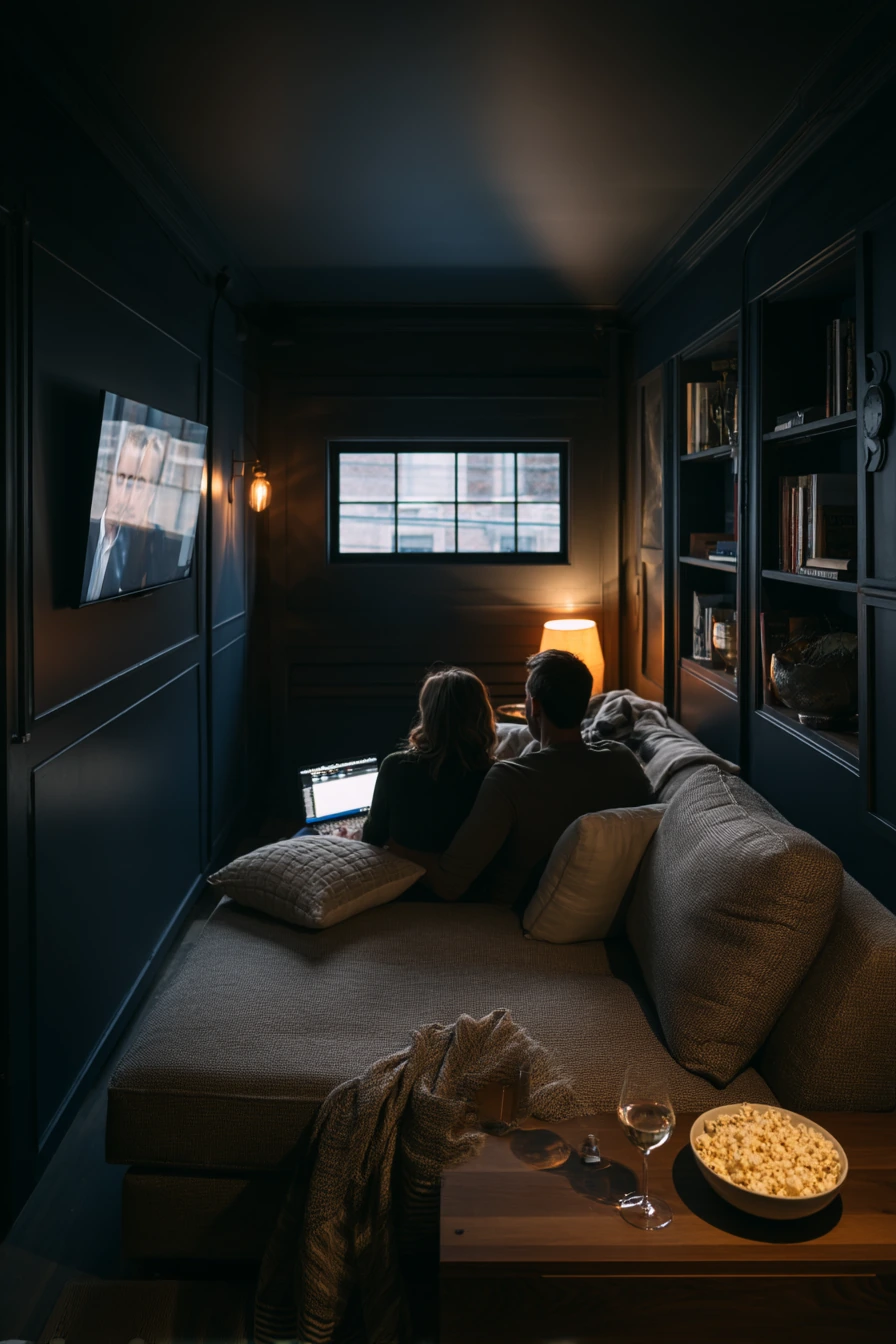
Smoky blue is a strong choice for a compact basement media nook because it feels snug and cinematic. It pairs well with matte black sconces and a low oak media unit. In a rowhouse basement, you may have limited natural light, so this color can lean into the cozy mood instead of trying to fight it.
To keep smoky blue from feeling too dark, use soft reflected window light and add amber lamp glow. A slim sectional helps the room feel open, and built-in shelves give storage without crowding the walkway. Since this is a real movie spot, plan surfaces for popcorn bowls, two wine glasses, and a folded knit throw. The more comfortable it is, the more the room gets used.
Styling ideas are simple. Keep the shelves organized with a mix of books, a few objects, and one plant with deep green leaves for contrast. Choose a rug that is medium tone, not pure black, so the floor does not disappear. If you want the nook to look tidy in photos, use one tray on the coffee table to corral small items. For screens, keep cords hidden with a slim cord cover that matches the wall color.
- Pick a smoky blue with a gray base for a softer look.
- Add black sconces for a clean, modern contrast.
- Use oak or walnut to warm up the blue walls.
- Choose a slim sectional to avoid a cramped feel.
- Use dimmable lighting for movie nights.
Pro Design Tip: Paint the wall behind the screen smoky blue and keep adjacent walls a lighter neutral if you want the media area to feel defined without darkening the whole basement.
Budget Considerations: Wall sconces can be pricey; use plug-in sconces or a pair of matching table lamps to get the same layered light for less.
7 Welcoming Basement Gym with Calm Taupe

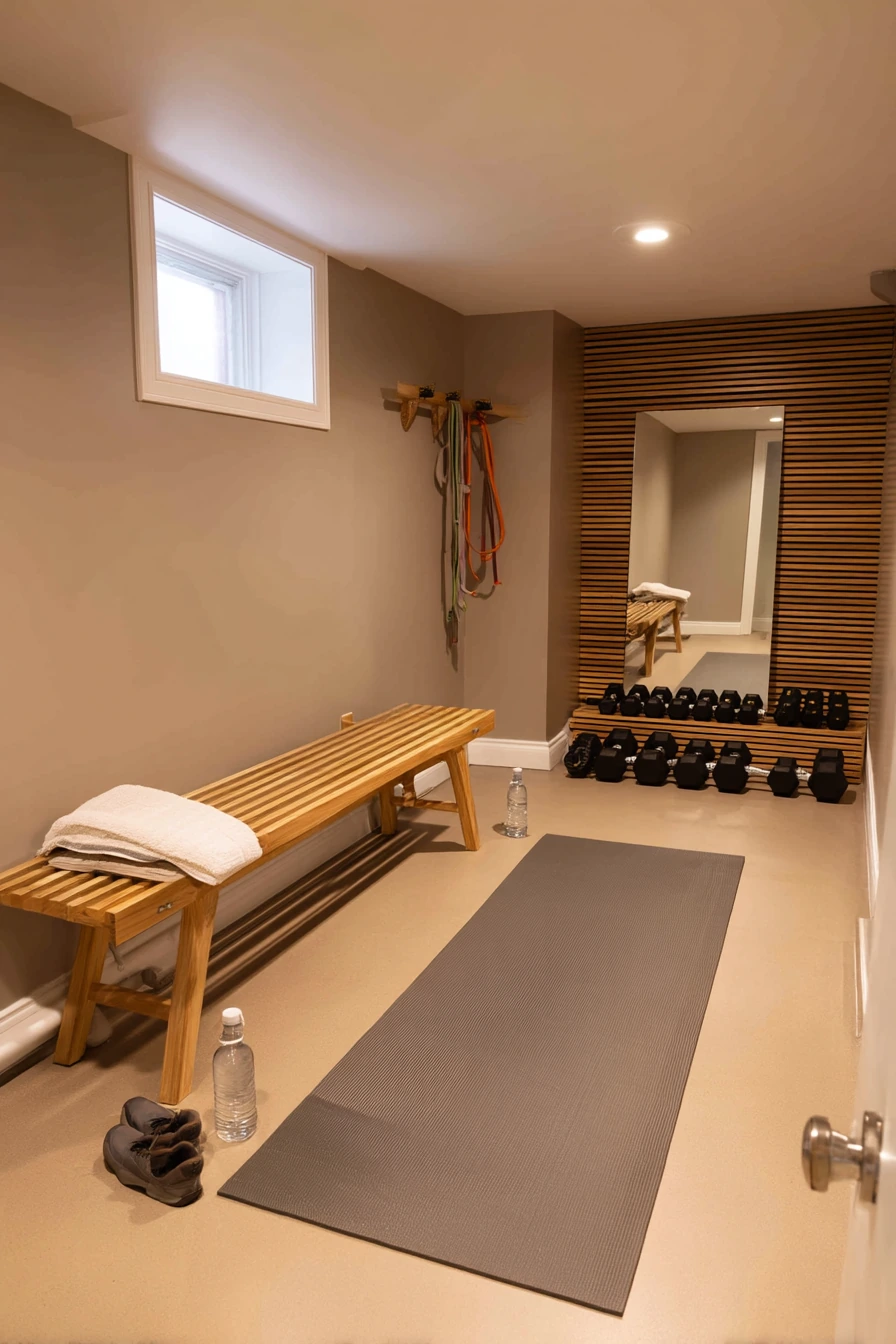
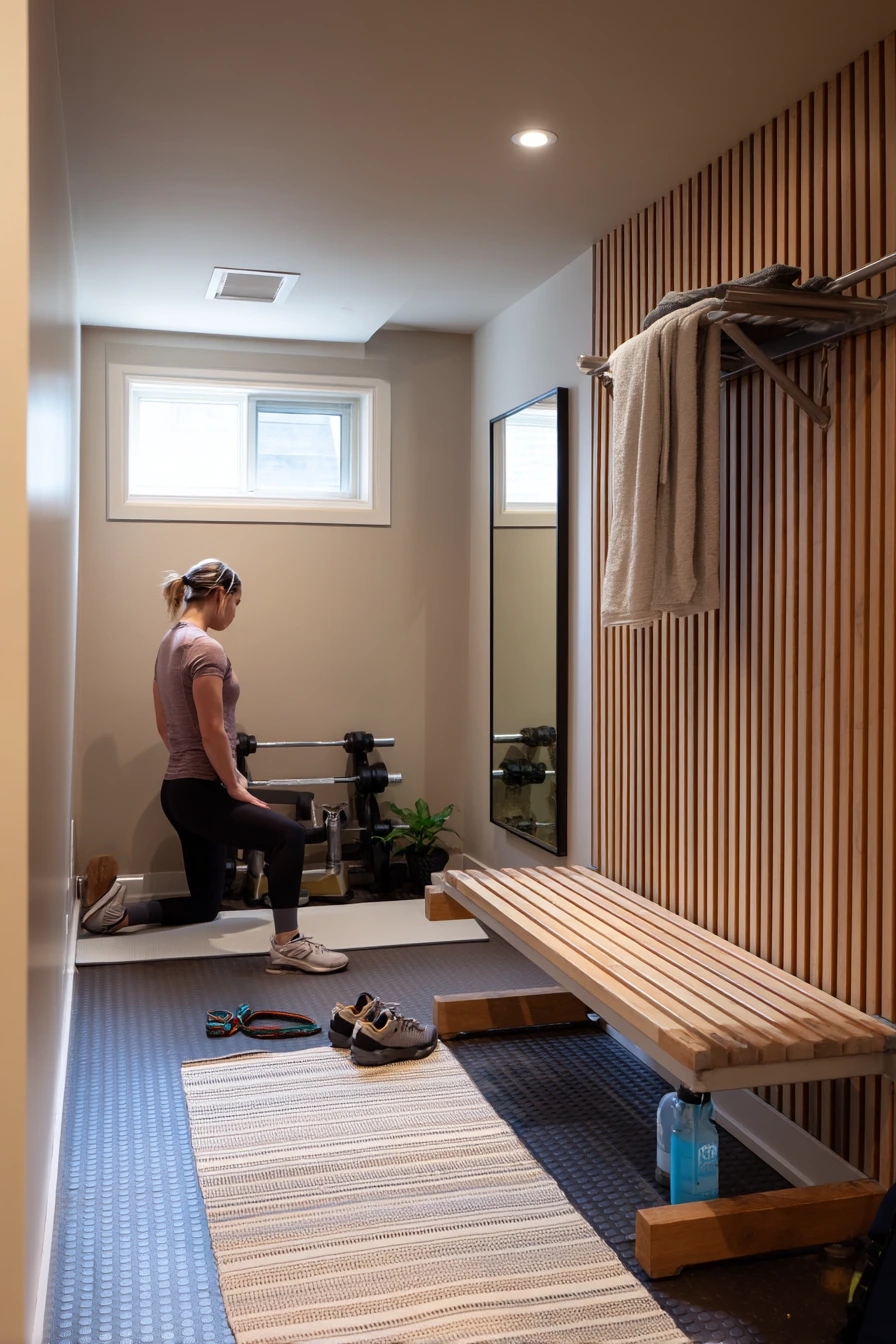
Calm taupe is a clean, steady basement color for a workout room. It feels quiet, which helps the space stay restorative instead of busy. Taupe also looks good with rubber flooring, a mirror panel, and a wood slat detail because it sits in the middle between warm and cool.
For function, keep the room open and easy to move through. A yoga mat, dumbbell rack, and a narrow bench cover most needs without taking over the space. Make a small zone for the everyday items, like sneakers by the mat, a towel on the bench, a water bottle, and a resistance band. Natural light from a small basement window helps, but you also need one warm ceiling practical or a bright overhead so the mirror does its job.
Styling a basement gym is about making it feel like part of the home. Choose one or two wood accents, like slats or a light bench, so the room does not feel like a garage. Add a small basket to hold bands and wipes. If you want it to feel fresh, bring in one plant that can handle low light, or use a simple art print with a calm landscape. Keep wall hooks near the door for quick towel storage.
- Use taupe to create a calm background for workouts.
- Pair with black rubber flooring for safety and sound control.
- Add a mirror panel to make the space feel larger.
- Use wood details to warm up the room.
- Keep storage narrow so you have floor space to move.
Pro Design Tip: Place the mirror where it reflects the window, not the ceiling light, so the room feels brighter and you avoid harsh glare during workouts.
Budget Considerations: If full rubber flooring is costly, start with interlocking tiles under the main workout zone and expand later.

8 Basement Bar Corner in Rich Terracotta
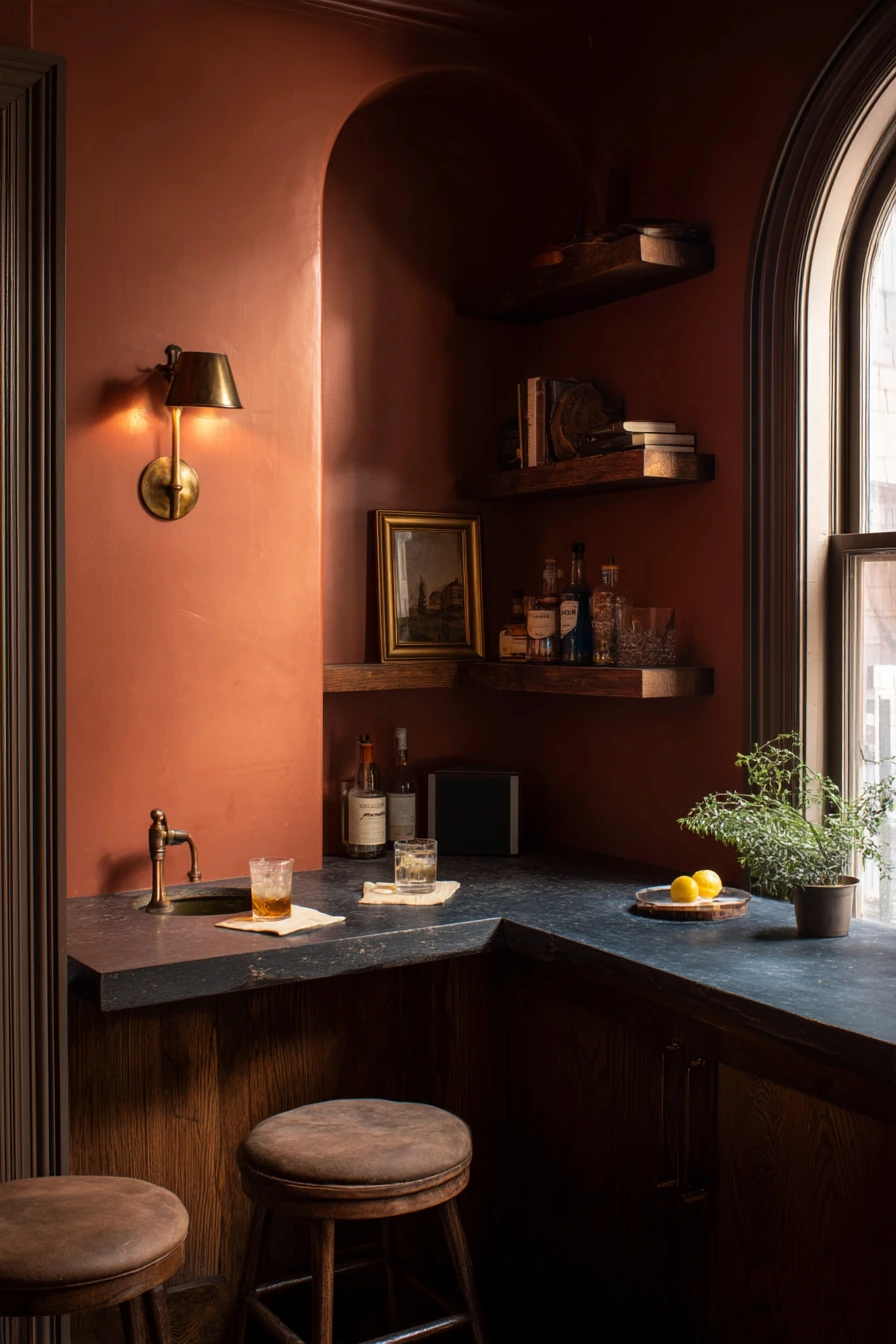
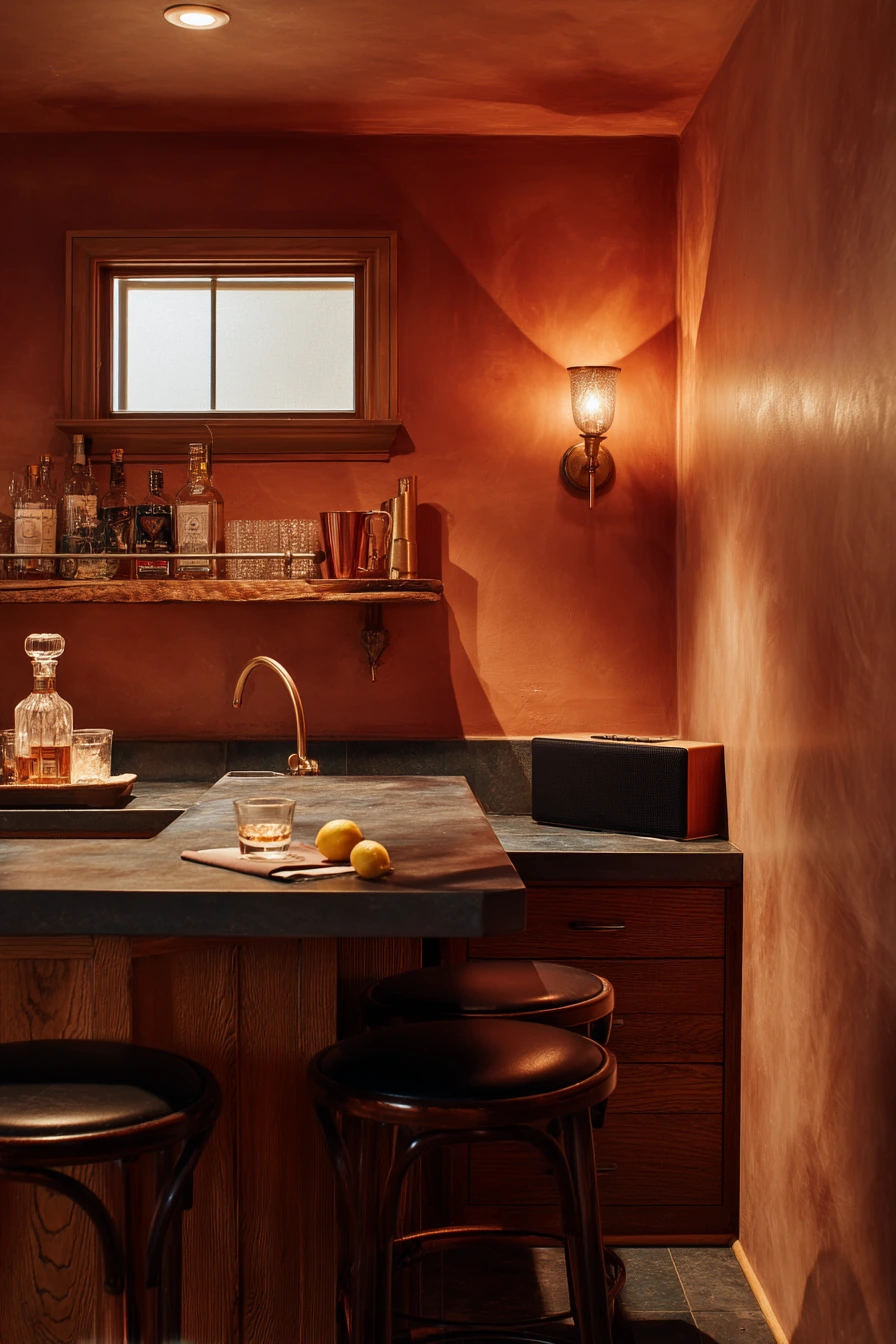
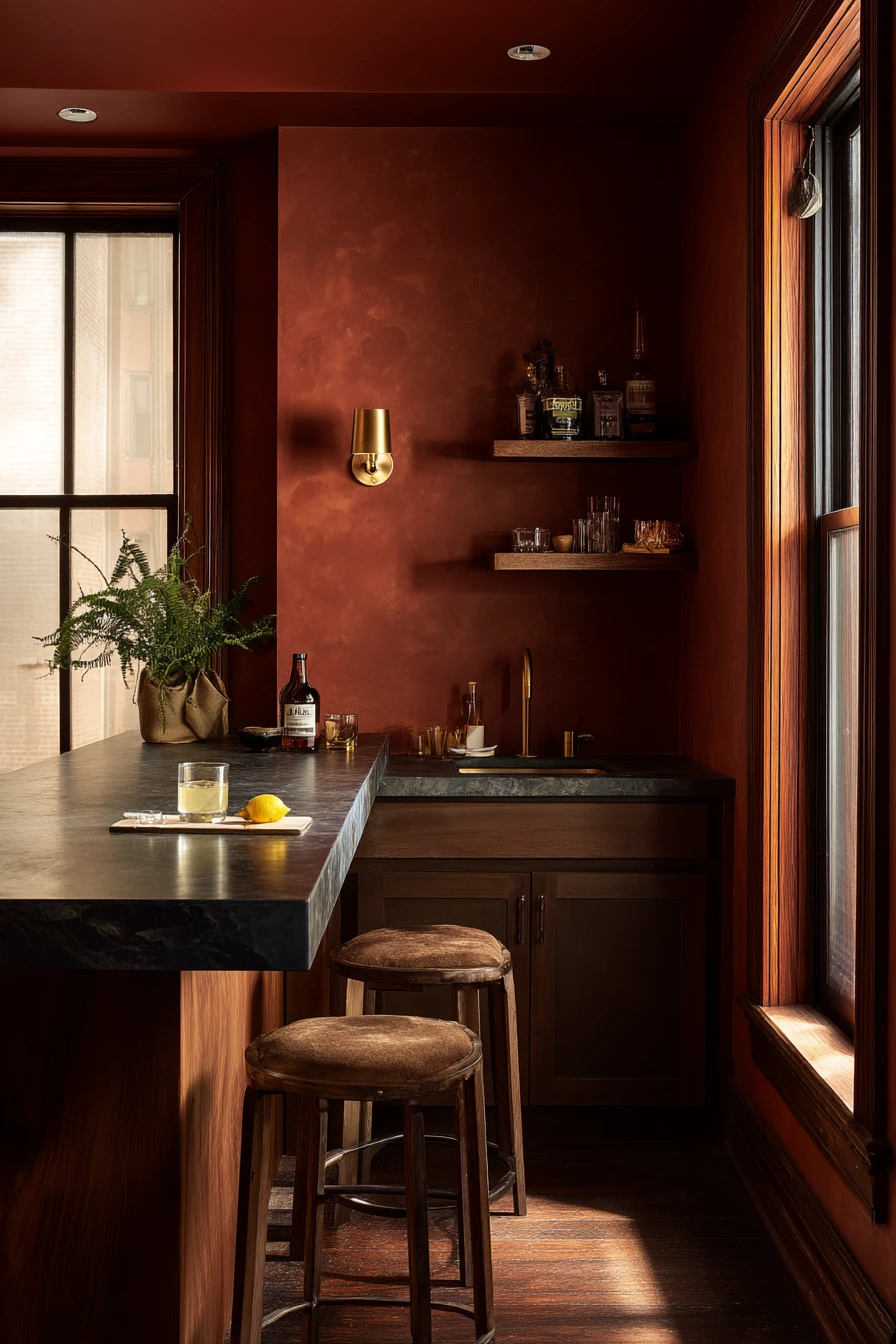
Rich terracotta is a bold basement color idea that works especially well in a bar corner. It feels warm, grounded, and social, which fits a space where friends gather before dinner. Terracotta pairs naturally with walnut shelves, brass lighting, and a dark stone counter. In a basement with soft window spill, warm sconce light helps the walls glow instead of looking dull.
To keep the bar area practical, choose materials that handle water and spills. A compact sink is useful, and bar stools should be easy to wipe down. Style the counter with a small tray for cocktail napkins, an open bottle, and a bowl for citrus, like a lemon peel. Since tech shows up everywhere, plan a neat spot for a charging cable near a speaker so it does not look messy.
Terracotta can feel heavy if everything else is dark, so add balance. Use lighter wood on a few items, or add a small piece of art with cream tones. If the bar is in a corner of a larger basement, repeat terracotta in one small accent, like a pillow or a framed print nearby, so the color feels connected. A runner rug in a flat weave adds comfort underfoot and protects flooring.
- Use terracotta for warmth and a cozy bar mood.
- Pair with walnut shelves for a classic look.
- Add brass sconces to make the color glow.
- Choose a dark counter for contrast and durability.
- Keep a tray on the counter to organize small bar items.
Pro Design Tip: Use terracotta on the bar wall and add a brass sconce on a dimmer, because the adjustable warm light makes the color look rich all evening.
Budget Considerations: Real stone counters can be expensive; consider a dark laminate or butcher block sealed well for a similar look at a lower cost.

9 Quiet Craft Room in Pale Lavender
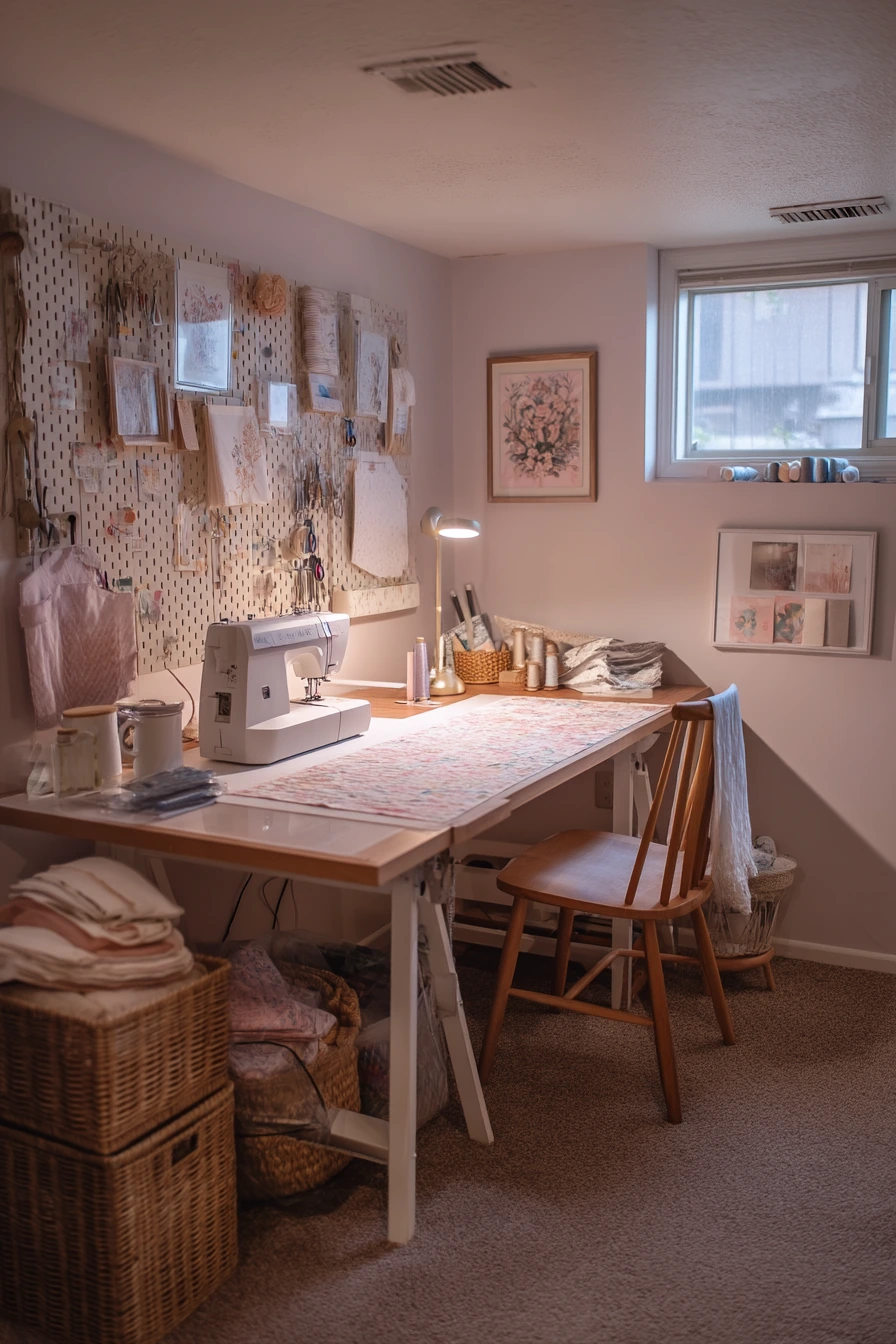
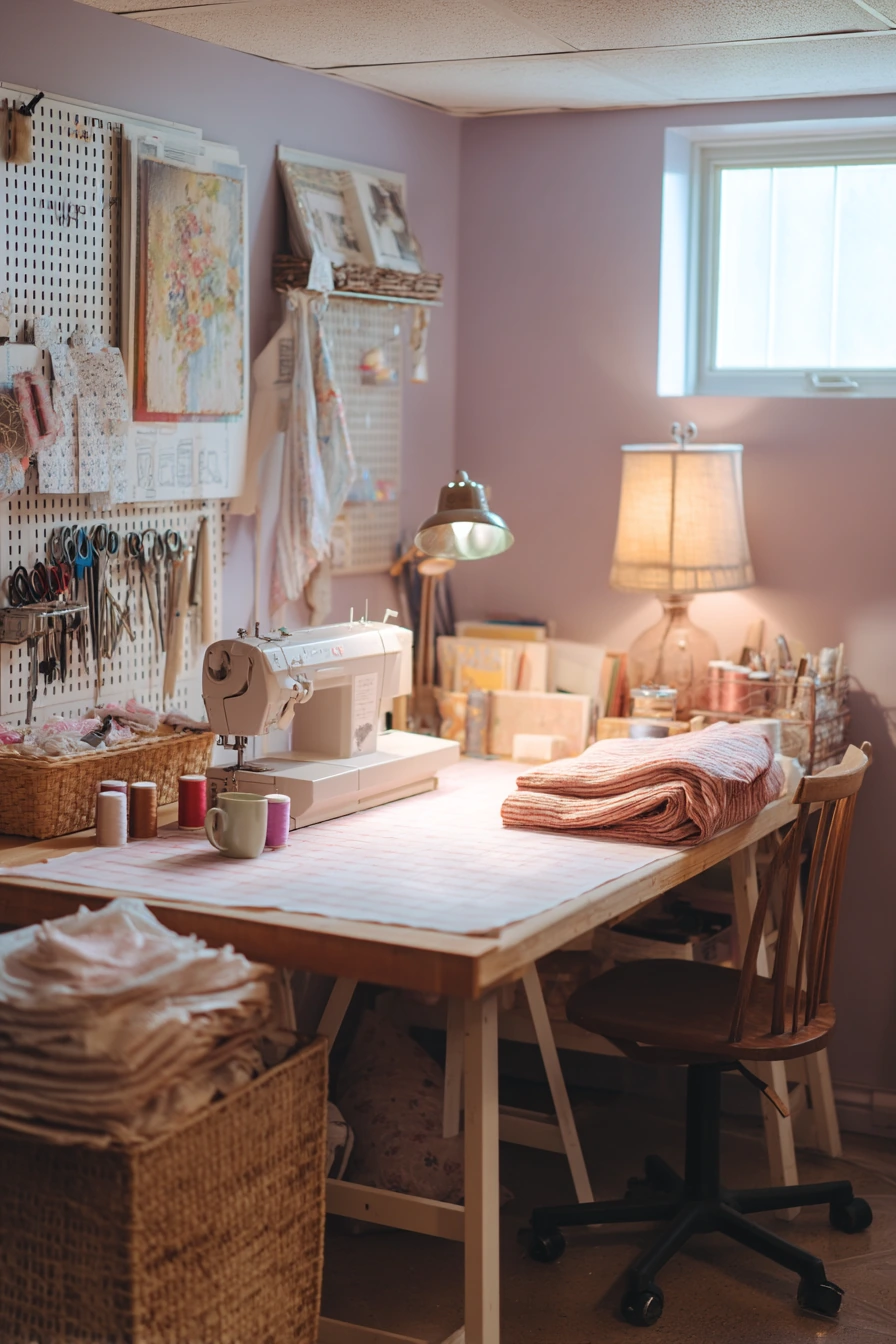
Pale lavender is a soft, clear paint choice for a basement craft room. It adds personality without making the room feel dark. Lavender also looks good in diffuse window light and stays pleasant when you switch on a warm desk lamp. If you sew, cut fabric, or scrapbook, this color keeps the room feeling calm during long projects.
For the layout, a sturdy worktable is the center. Add pegboard storage so tools stay visible and easy to reach. Woven baskets help hide extra supplies, and they add texture against the smooth wall paint. Make space for a sewing machine and the real items that show up during crafting, like thread spools, scissors, a mug of tea, and folded fabric waiting on a chair.
Styling ideas should support focus. Keep the tabletop mostly clear and use small containers for the tools you grab often. Choose a rug that is easy to vacuum because threads get everywhere. If you want the lavender to feel modern, pair it with crisp white trim and light wood. If you want it to feel cozy, add warm oak and a few brass or black accents. A pinboard or cork strip can hold patterns and notes without covering the walls in tape.
- Pick a lavender with a gray base for a grown-up look.
- Use pegboard to keep tools organized and visible.
- Add baskets to hide overflow supplies.
- Keep lighting layered with window light plus a desk lamp.
- Choose a durable, low pile rug for easy cleanup.
Pro Design Tip: Use the same finish on walls and trim only if you want a soft, blended look; otherwise, keep trim in a cleaner white to sharpen the lavender.
Budget Considerations: Pegboard is affordable and flexible; you can start with one panel and add hooks and cups over time as your supplies grow.


10 Basement Den with Warm White and Natural Wood


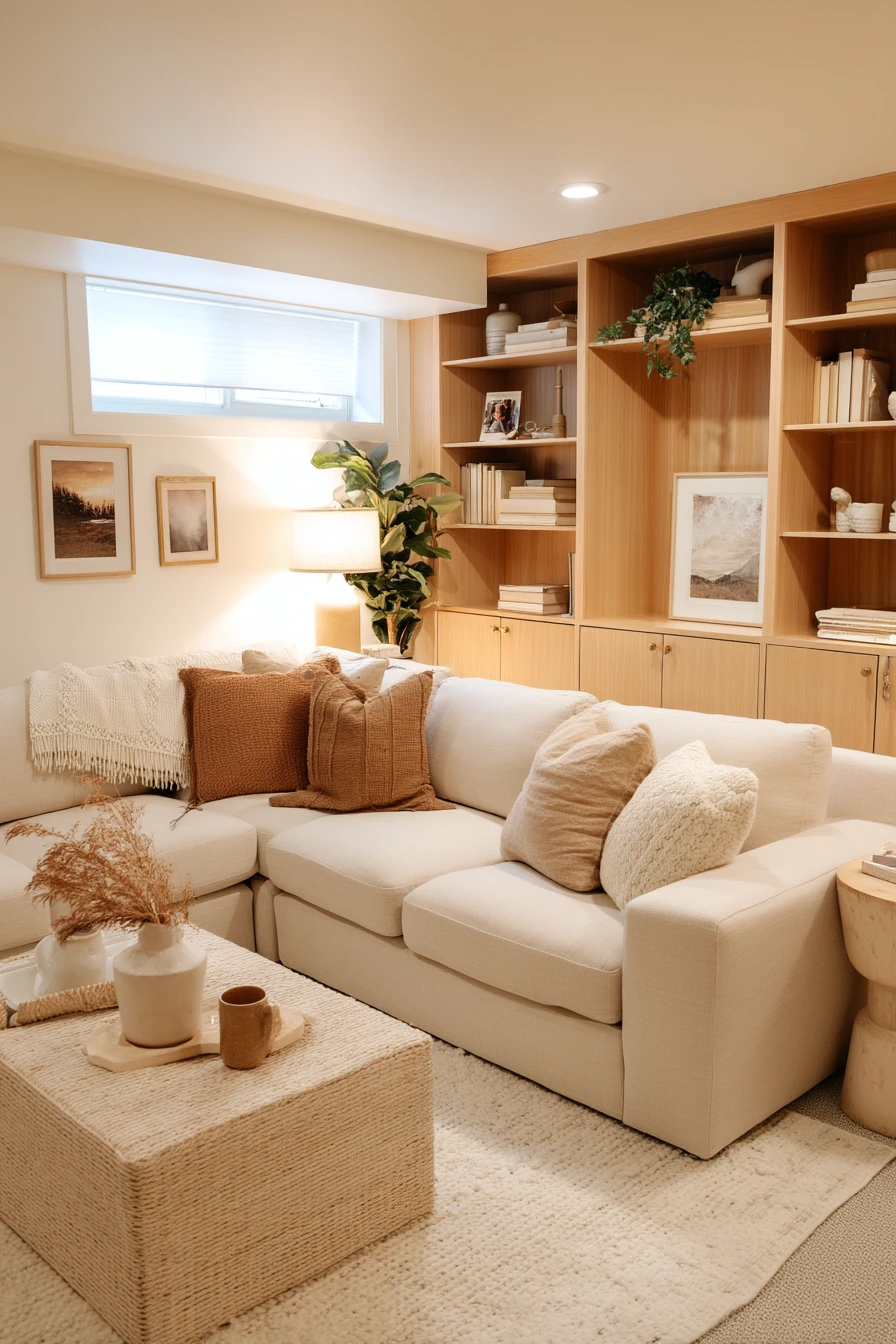
Warm white walls are a classic basement color idea for a finished den because they brighten the room without feeling stark. Warm white works well with natural wood built-ins, a cozy sectional, and a textured rug. It also makes framed family photos stand out, which helps the space feel personal and lived in.
In a basement den, light is usually mixed. Soft basement window light changes during the day, and a glowing table lamp makes evenings feel calm. Warm white holds up in both situations, so the walls do not swing too blue or too yellow. Real-life details matter here, like reading glasses on the side table, a half-finished tea, a slightly rumpled throw, and a plant casting soft shadows.
To style warm white, focus on texture. Add a rug with a nubby weave, a soft throw, and a few pillows in linen or cotton. Use wood tones to add depth, like oak shelves or a walnut side table. If the den feels flat, add contrast with black picture frames or a dark coffee table. Keep decor simple and repeat colors from the photos, like soft blues, greens, and warm browns.
- Choose a warm white that is not too creamy.
- Pair with natural wood built-ins for depth.
- Use a textured rug to add comfort and reduce echo.
- Layer light with a table lamp plus overhead lighting.
- Hang family photos in matching frames for a tidy look.
Pro Design Tip: Test warm white next to your built-in wood tone, because the wood can shift the wall color warmer or cooler depending on the stain.
Budget Considerations: If built-ins are out of reach, use simple bookcases and add matching trim or filler panels to mimic a built-in wall for less.

Your best basement color ideas depend on how the room is used and how much light you get. Deep olive and smoky blue lean cozy, while warm white and greige keep things bright and flexible.
Start with paint samples, then build the look with lighting, rugs, and storage that fit your daily life. Small choices like bulb color, basket storage, and one good rug can make a basement feel finished.
FAQ
What is the best paint color for a dark basement. Warm white, warm greige, and soft clay are safe choices because they brighten the space without looking cold.
Should I use the same color in the whole basement. If the basement is open, one main neutral can help it feel bigger. You can still use accent colors like terracotta or smoky blue in smaller zones.
What paint finish is best for basement walls. Eggshell is a common pick because it is easy to clean and reflects a little light. Matte can look nice but may mark more easily.
How do I keep deep colors like olive or navy from feeling too dark. Use lighter ceilings and trim, add layered warm lighting, and choose rugs and art with lighter tones.
Do basements need different paint than upstairs rooms. Basements often have less natural light, so warm undertones usually work better. Also check for moisture and use the right primer if needed.
How can I decorate a basement on a budget after painting. Use secondhand furniture, add baskets for storage, and focus on one large rug and a few frames to make the room feel complete.