

Basement apartment ideas can help you turn a low-light, compact space into a home that feels calm, clean, and easy to use. With the right layout, lighting, and storage, a basement studio or one-bedroom can feel bigger and brighter.
This post breaks down 10 realistic basement setups, from a remote worker studio to a family living corner, a renter-friendly kitchenette, and a small bathroom that stays organized. Each section includes simple styling moves you can copy right away.
You will learn how to create clear zones for sleep, work, and dining, how to use room dividers like linen curtains, and how to pick furniture that fits tight rooms. You will also get practical ideas for egress windows, window wells, and warm lamp glow that makes a basement feel welcoming.
Use these basement apartment ideas as a checklist. Save the ones that match your space, then start with one small upgrade this weekend.
1 Small Basement Studio with Zoned Living


A compact basement studio can feel orderly when each area has a clear job. Start with the biggest piece first, like a tactile neutral sofa bed, and place it so it does not block the small egress window. Keep the sleep zone closest to the quietest wall, then build the work zone with a slim oak desk that faces the best natural side light. A folded room divider can hide the bed during the day and make the studio feel like two rooms.
Layer softness to fight the “basement” feeling. Use soft rug layering to warm up the floor and reduce echo. Add a ceramic lamp for warm practical lamp glow at night, then lean a few art prints on the wall instead of making lots of holes. A slightly wrinkled throw and a water glass on the side table make the room feel lived-in, not staged.
Storage matters more than decor in a small studio. Use a hidden storage ottoman for chargers, a laptop charger, and extra linens. Choose closed storage where you can, then add one plant that catches window shadows to bring in life even with low light. Keep surfaces mostly clear so the space feels bigger.
- Place the sofa bed so it opens fully without hitting the desk or divider.
- Use a narrow desk chair that slides under the desk to save walking space.
- Layer two rugs (a flat weave plus a small plush one) to define zones.
- Store cords in a basket inside the ottoman for a cleaner look.
- Style the wall with 2 to 3 leaning prints and one simple lamp for balance.
Pro Design Tip: Use one “spine” layout: keep furniture aligned along one long wall so the center stays open, and the zones feel intentional instead of crowded.
Budget Considerations: A basic room divider and an ottoman with storage can cost less than built-ins. Shop secondhand for the desk and prints, then spend on one good lamp and rug pad.


2 Renter-Friendly Cozy Family Nook


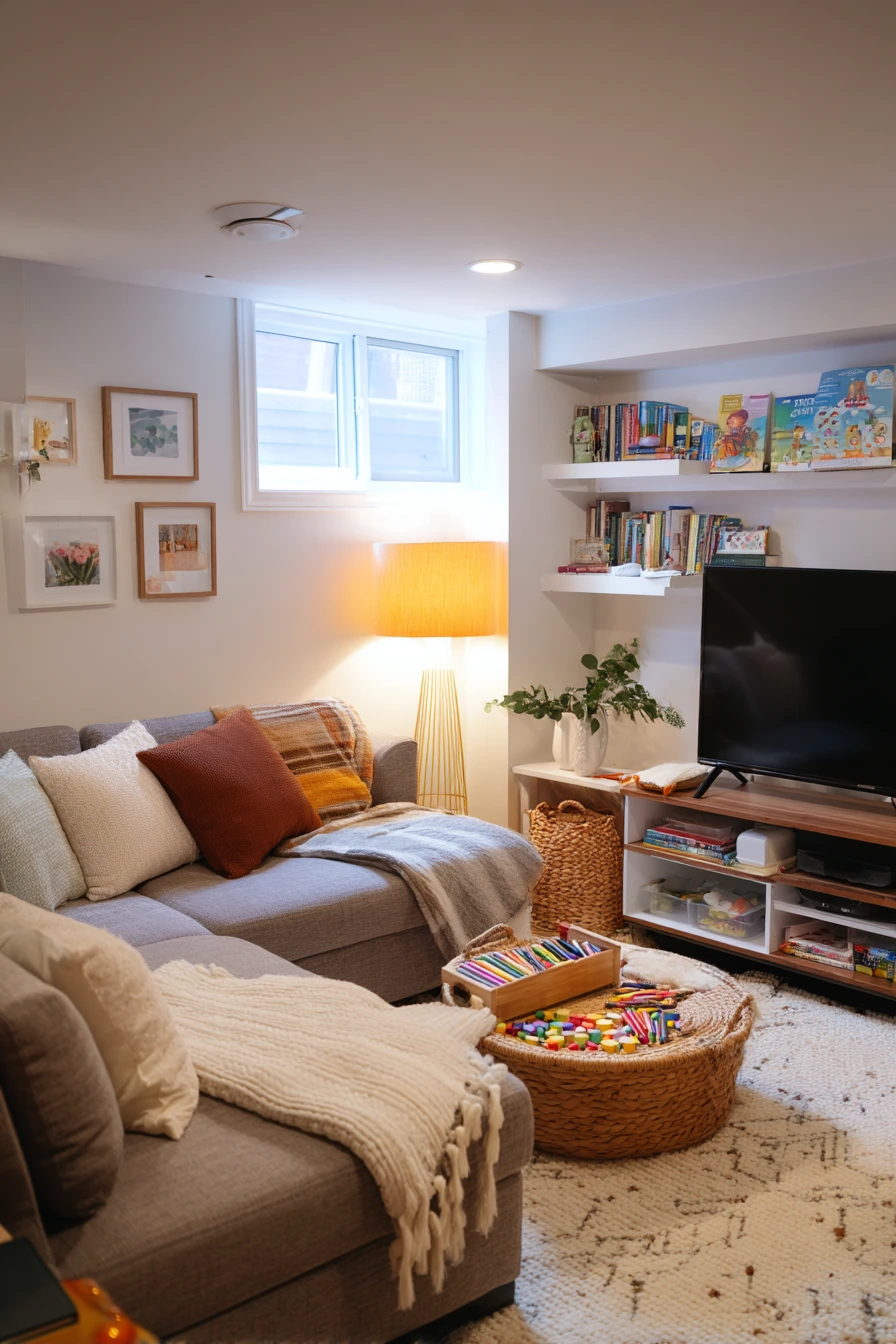
A small family of three can make a basement living room corner feel warm without big renovations. Start with renter-friendly updates like peel-and-stick warmth on one wall area, or removable wallpaper behind the TV console. It adds color and makes the corner look finished, even if the rest of the basement is plain.
Pick seating that adapts. A modular sectional can fit odd angles and gives a cozy spot for adults and a kid. Add a washable cream rug because basement floors get dusty, and spills happen. Keep a compact kid toy basket close to the coffee table so cleanup is fast. Real life shows up with crayons on the table and a half-finished snack plate, so plan for it with easy-clean surfaces.
Make the corner feel like a real home with personal layers. Use framed photos on shelves and books stacked near a TV console to add height and texture. Add an amber floor lamp for soft light when daylight filtering through a basement window is not enough. Finish with a blanket draped over the armrest for comfort and quick style.
- Use peel-and-stick on a small section so it feels doable and renter-safe.
- Choose a sectional with removable covers or wipeable fabric.
- Keep a lidded toy bin or basket to hide clutter fast.
- Style shelves with photos, a small plant, and a few books for balance.
- Use one warm floor lamp plus one small table lamp to reduce harsh overhead light.
Pro Design Tip: Anchor the whole corner with the rug front legs under the sectional, then center the coffee table on that rug to make the seating area feel larger and more “set.”
Budget Considerations: Washable rugs and modular pieces vary in price; if you are on a budget, buy a smaller washable rug and add a rug pad, then upgrade the sectional later.

3 Studio Bedroom Behind a Curtain Divider
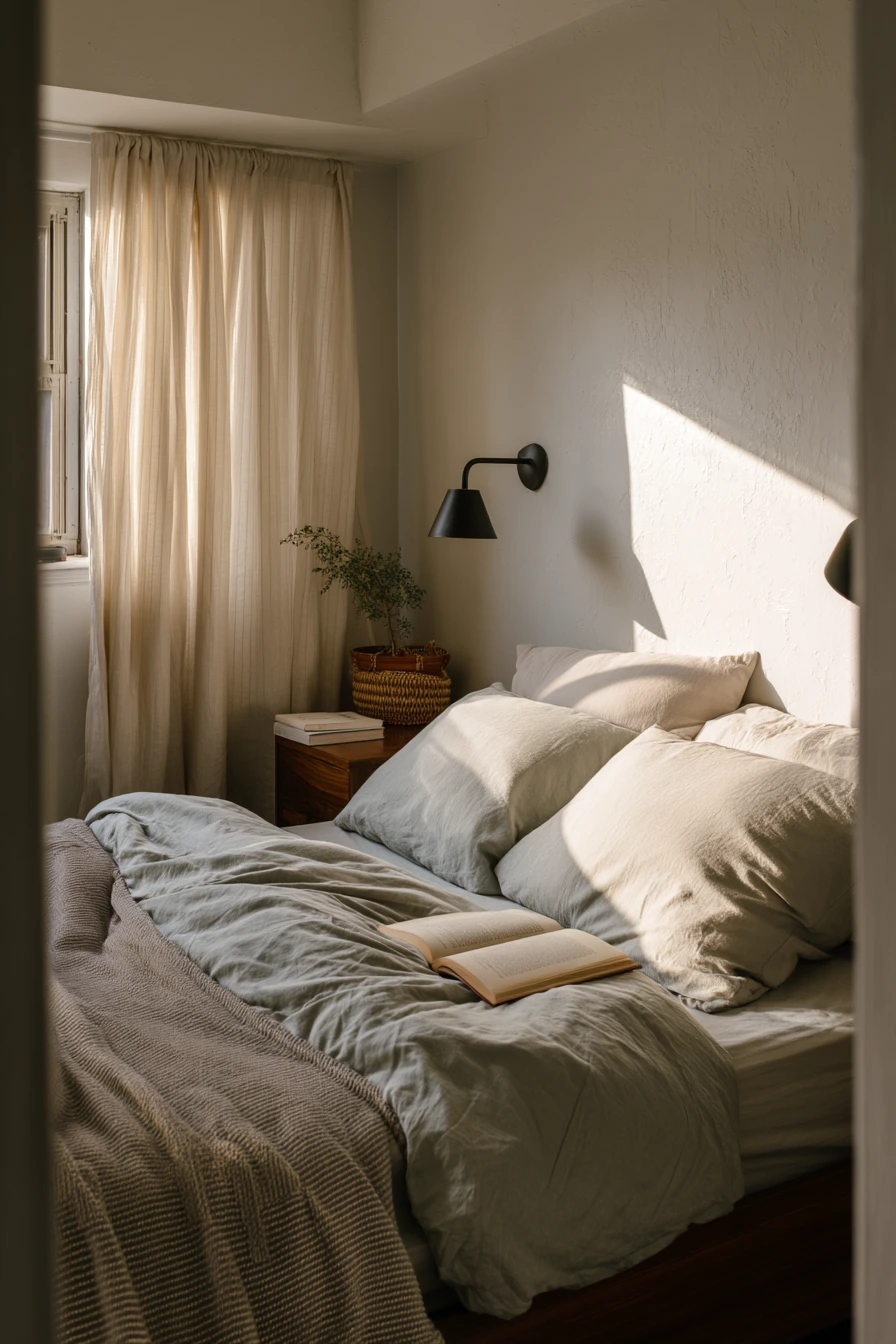
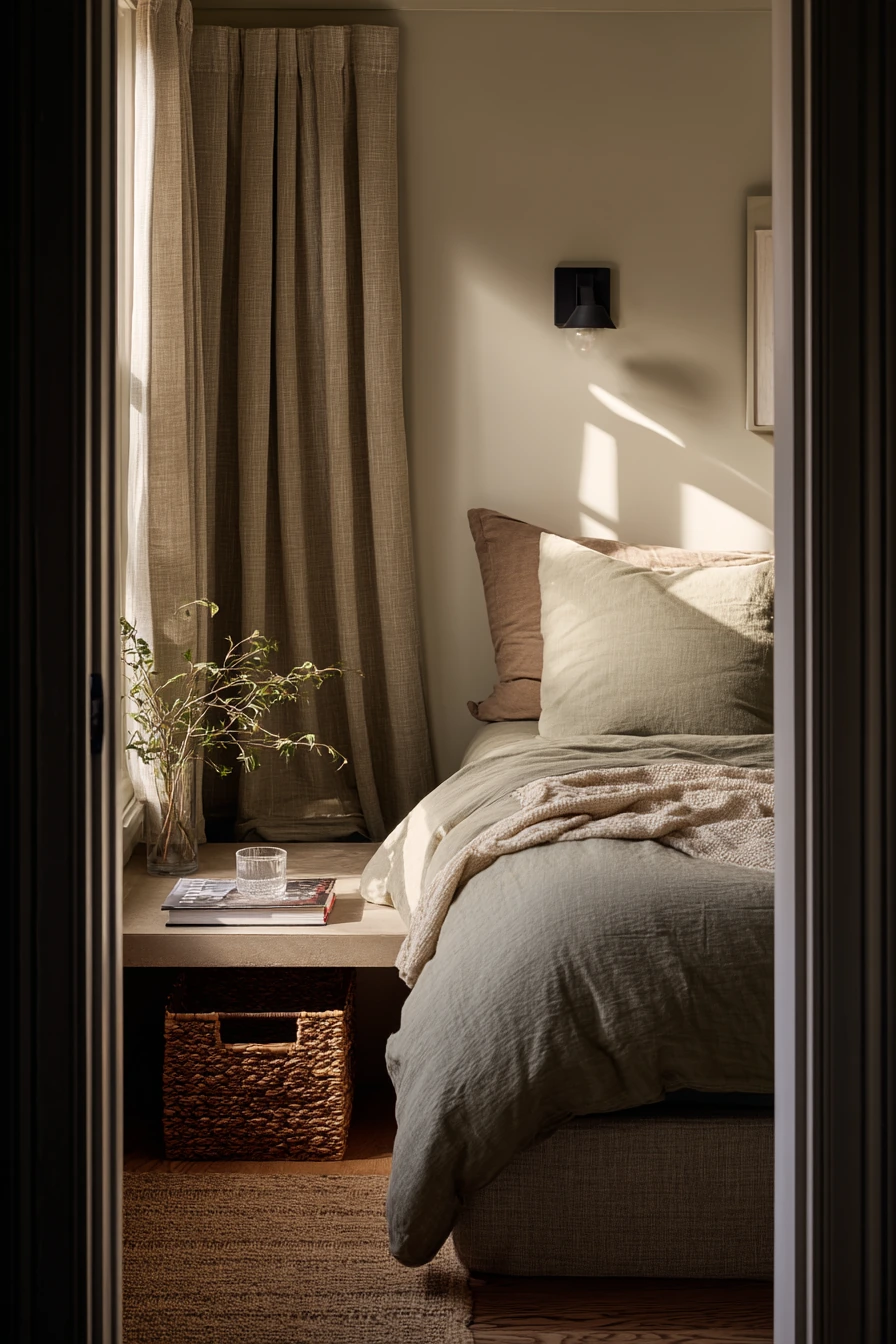
In a basement studio, a soft divider can create privacy without building walls. Linen curtains are ideal because they filter light and still feel airy. Hang them from a ceiling track so they glide smoothly, and place them so they hide the low platform bed from the main entry view. This makes the room feel calmer the moment you walk in.
Keep the bedroom zone simple and low. A low platform bed helps ceilings feel taller, and muted sage bedding adds color without making the space busy. Add matte black sconces on the wall to free up bedside space, then use a slim bedside table for only the basics like a paperback novel, a charging cable, and a water glass. A slightly rumpled duvet is fine, but keep extra items off the bed so it still looks restful.
Use texture to make the basement feel cozy. Add woven basket storage for extra blankets, and include one plant if you can keep it near the best window light. Even in low light, plant shadows drifting across the wall can make the room feel alive. Use a warm bedside lamp for evenings so the bedroom feels soft, not dim.
- Hang curtains wide so they stack neatly and do not block airflow.
- Pick linen or linen-look curtains in a light tone to brighten the area.
- Use sconces with warm bulbs to keep the corner relaxing.
- Keep a basket for extra pillows so the bed stays tidy during the day.
- Style the bedside with only three items for a clean look.
Pro Design Tip: Install the curtain track 2 to 4 inches away from the ceiling line so the fabric hangs straight and looks like a custom room divider.
Budget Considerations: Curtain tracks and linen panels can add up; save money by using two long panels and a simple ceiling-mounted conduit rod, then upgrade to a track later.


4 Basement Dining Spot That Doubles as Work Zone


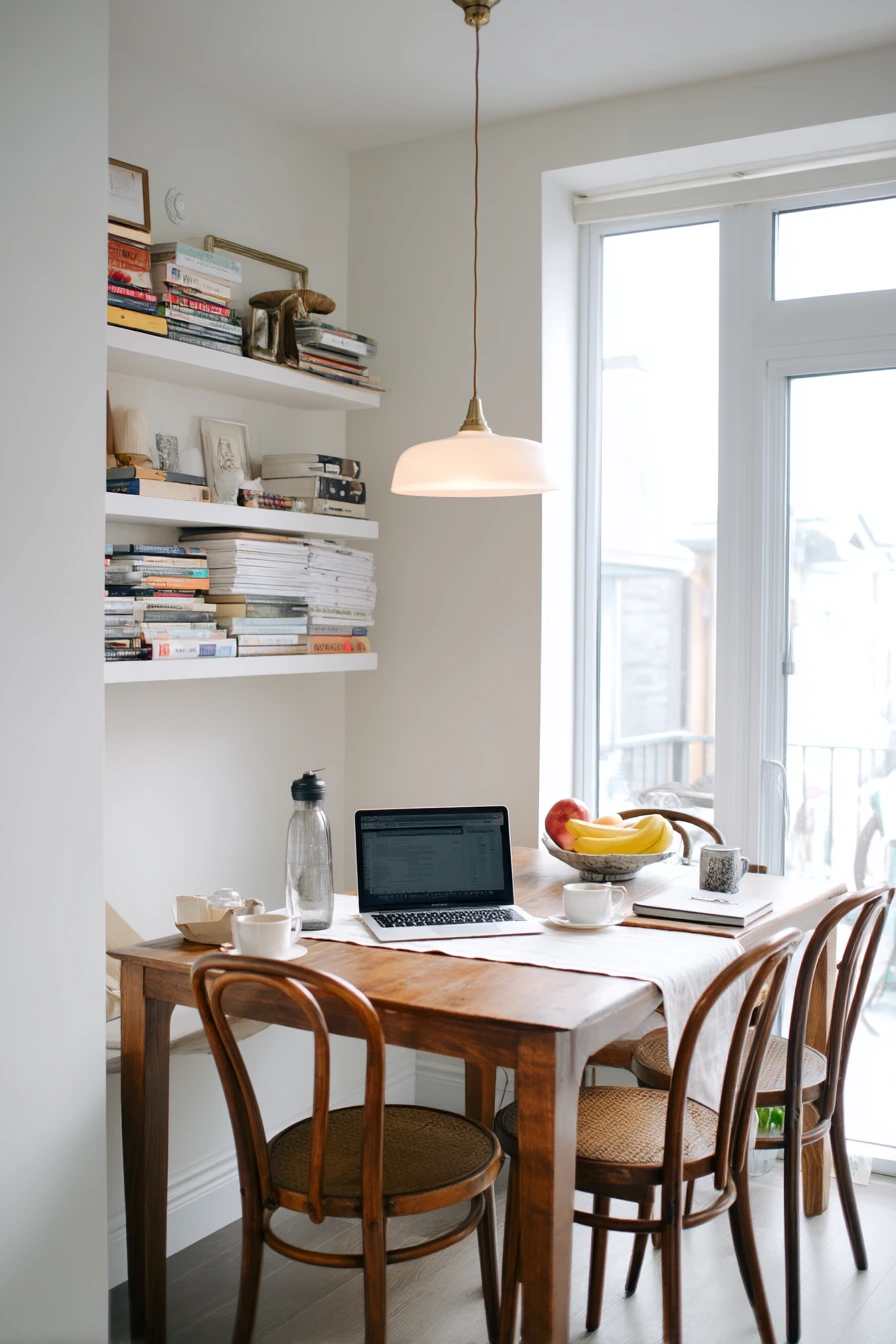
A basement dining nook can do double duty as a meal spot and a work zone when you keep it narrow and organized. Start with a narrow oak table that fits the wall length, then use bentwood chairs that tuck in easily. This keeps the walkway clear, which matters in a basement with tight paths.
Lighting is key for a shared table. A compact pendant lamp gives focused light for meals and laptop work. Add soft practical lamp fill nearby if the high basement windows do not bring in enough light. Use floating shelves for mugs and cookbooks so the table stays free for a notebook, laptop, and the daily mail stack. A linen runner can hide small scuffs and lived-in edges while adding texture.
Style it so it feels like a real home, not an office. Keep a fresh fruit bowl in the center, and add a reusable water bottle that can live there. Store chargers in a small box on the shelf. If you want a slightly eclectic look, mix one vintage mug, one modern jar, and one framed print, but keep the color palette tight so the nook feels calm.
- Pick a table that leaves at least 30 inches for walking space.
- Use chairs with curved backs for comfort in long work sessions.
- Put shelves at arm height so you can grab mugs without standing on chairs.
- Use one tray to hold mail, keys, and pens to stop table clutter.
- Style the runner with one bowl and one small vase to keep it simple.
Pro Design Tip: Choose a pendant with a diffuser or shade so the bulb is not visible when you sit, which reduces glare on screens and makes the nook feel softer.
Budget Considerations: Floating shelves and a pendant can be affordable if you use basic brackets and a plug-in pendant kit. Spend more on a sturdy chair if you work there daily.

5 Budget Basement Kitchen Refresh


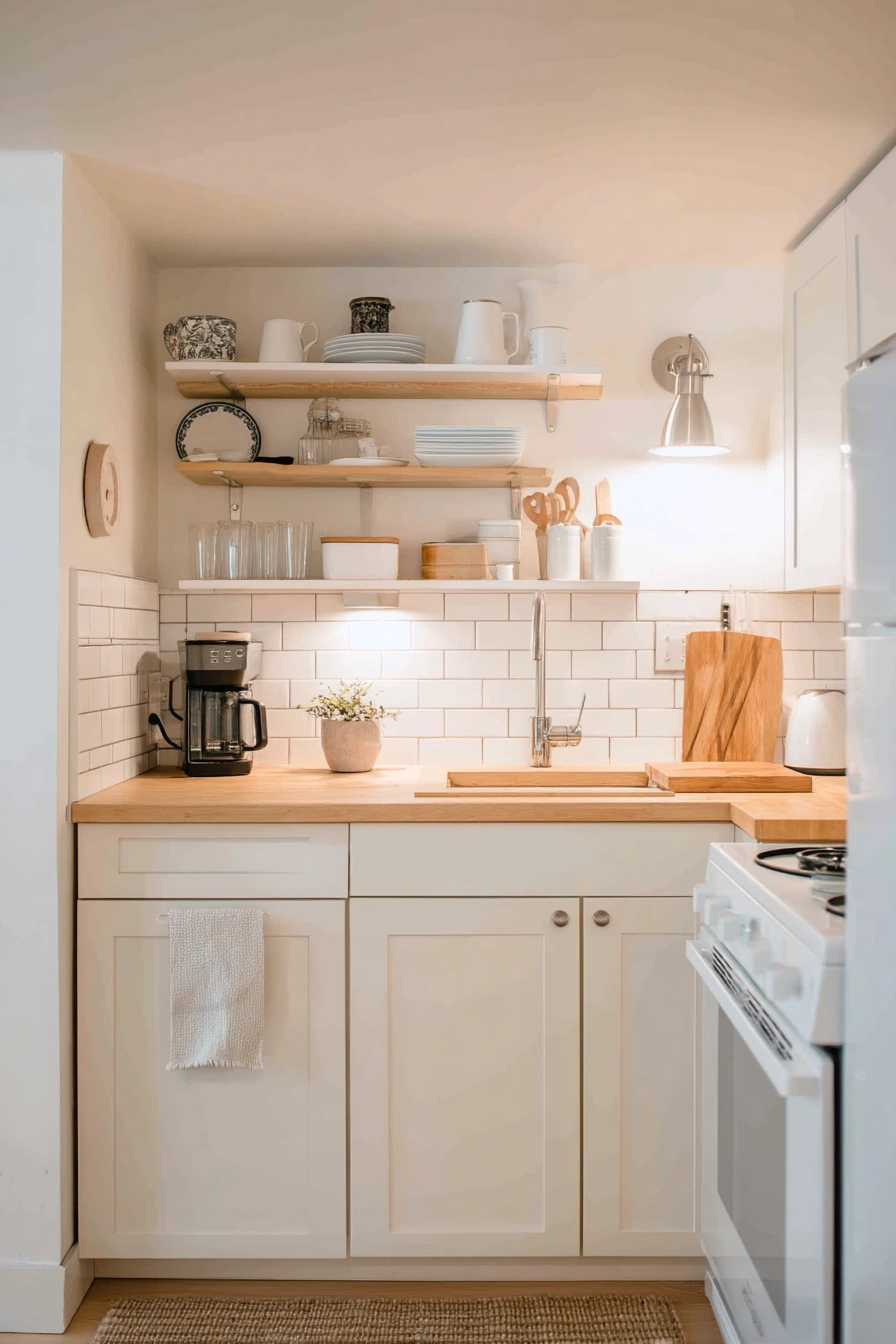
A basement kitchenette can look clean and updated without a full remodel. Painted cabinets are a strong first step because they cover wear and brighten the room. Pair them with simple subway tile for a classic look that works in small spaces. Add a butcher block counter for warmth, especially if the basement has cooler tones.
Open shelves help a kitchenette feel less boxed in, but they need a plan. Keep plates and jars in a tight color group so the shelves look tidy. Add a magnetic knife strip to free counter space, and hang a dish towel where it is easy to grab, even if it hangs a bit loose. Small signs of life like a coffee mug, a cutting board, and a grocery tote by the fridge make the room feel real and usable.
Because basements can be dim, use layered lighting. Gentle window light paired with under-cabinet glow makes food prep easier and helps the tile and counters look brighter. Keep the space tidy but not perfect. A little steam near the stove or a dish in the drying rack is normal. The goal is a kitchenette you want to use every day.
- Use a warm white paint on cabinets to reflect light.
- Choose subway tile with light grout for a cleaner look.
- Keep one clear zone on the counter for chopping and mixing.
- Add under-cabinet LED strips for task lighting.
- Style shelves with repeats: three jars, two stacks of plates, one plant.
Pro Design Tip: Keep the counter edge line as continuous as possible by storing appliances in a cabinet or on one tray, so the kitchenette reads as larger from the doorway.
Budget Considerations: Painting cabinets and adding a knife strip are low-cost upgrades. If butcher block is pricey, use a wood-look laminate counter and spend on good under-cabinet lights.

6 Teen Hangout in a Finished Basement Apartment
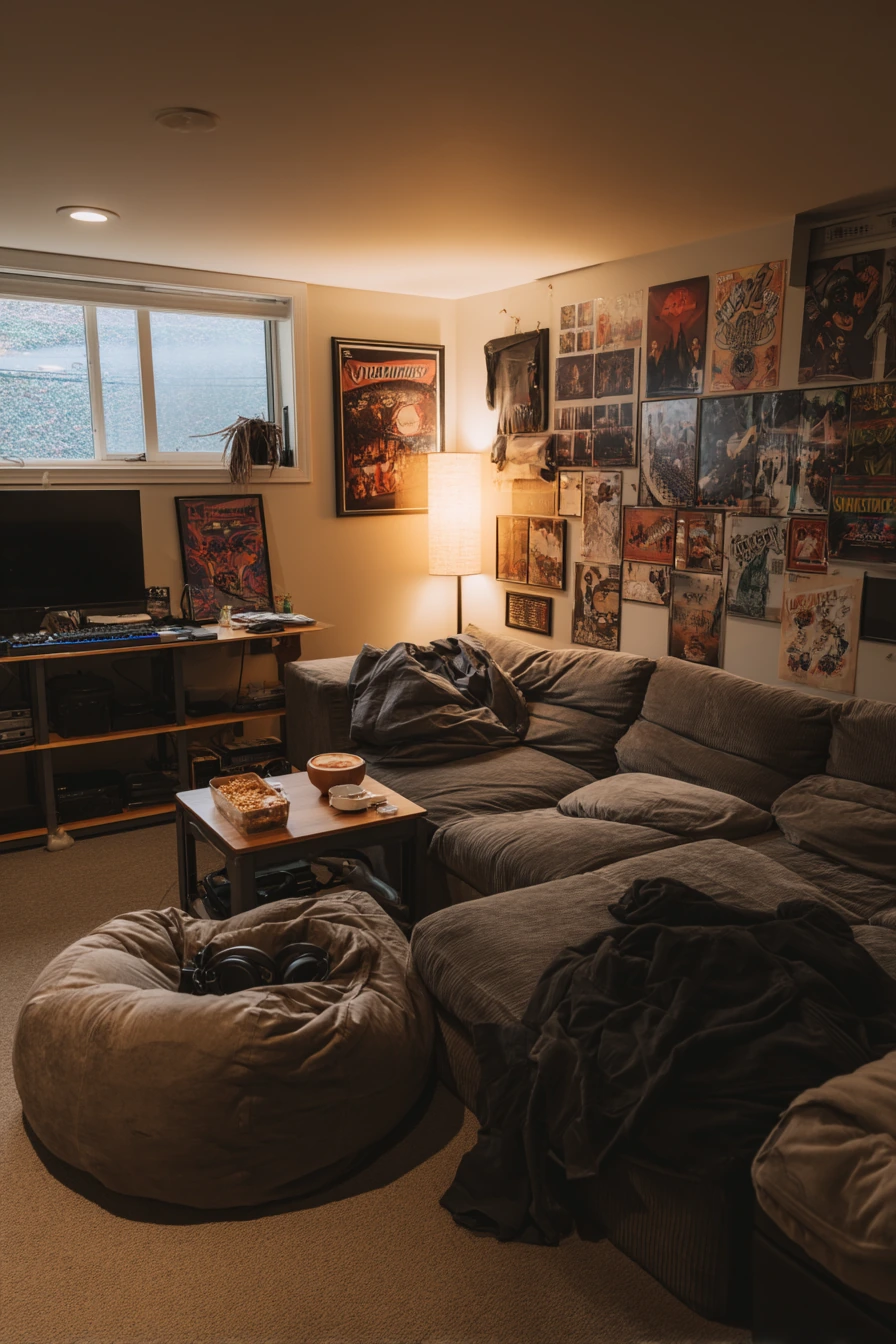

A shared basement lounge can feel relaxed and independent when it has clear zones and enough closed storage. Start with a deep sofa for movie nights and a beanbag chair that can move around. If the teen games in the space, keep the gaming console near the TV with a plan for cords, so the room stays safe and easy to clean.
Make it personal but not chaotic. A gallery wall of posters can look great when you keep the frames consistent or use the same color family. Add closed storage cubes for controllers, board games, and extra blankets. Real-life details like headphones on the table, a snack bowl, and charging cords are normal, so give them a home with a small tray or basket. A hoodie tossed over a chair will happen, so choose a chair that still looks fine with a throw on it.
Lighting sets the mood in a basement. Use soft window light when you can, then rely on one warm floor lamp to avoid harsh overhead lighting. Add one textured rug to reduce echo and make the lounge feel like a real living space, not a leftover room.
- Create a gaming zone with a cord box and labeled bins for accessories.
- Use storage cubes with doors to hide clutter fast.
- Hang posters in a grid so the wall looks intentional.
- Add a side table with a tray for snacks and headphones.
- Style the sofa with two pillows and one throw to keep it simple.
Pro Design Tip: Use a dimmable floor lamp with a warm bulb (2700K) so the room can switch from homework light to movie light without changing fixtures.
Budget Considerations: Storage cubes and a beanbag are usually affordable. If you cannot buy a new sofa, use a fitted cover and add one large rug to make the space feel upgraded.


7 Basement Apartment with Spa-Like Bathroom Corner


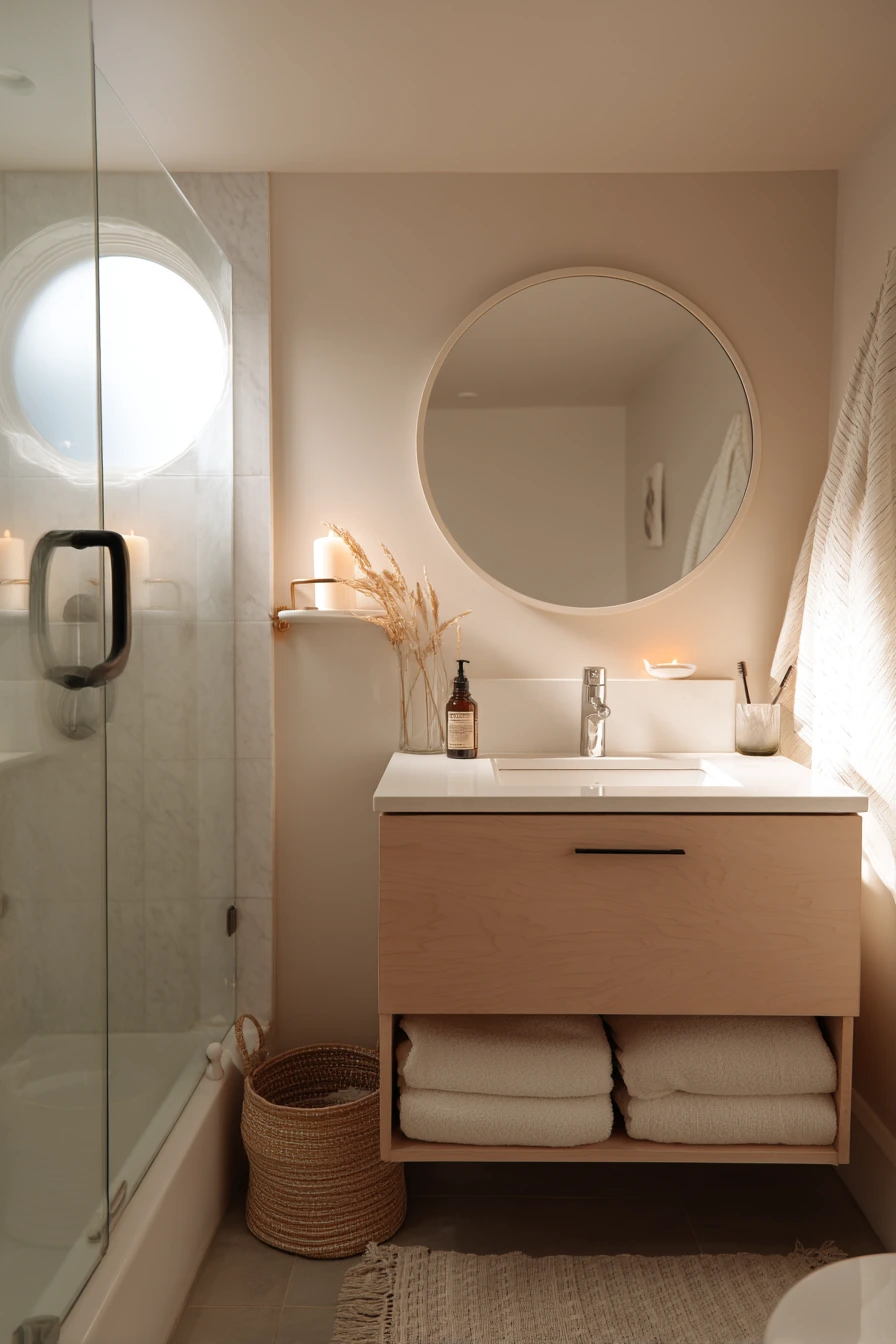
A small basement bathroom can feel serene when you focus on function first. Keep the vanity compact and choose a round mirror to soften the many straight lines in a small room. Matte fixtures look modern and hide water spots better than shiny finishes, which helps a basement bathroom stay looking clean.
Build a simple system for daily items. Use a toothbrush cup, one moisturizer, and a small tray so the counter does not get messy. Add a shower caddy to keep bottles off the floor and make cleaning easier. Stacked white towels can make the room feel fresh, while a candle adds a calm touch without taking much space. If the bath mat is slightly folded sometimes, it is still fine as long as it dries well.
Basement bathrooms often have limited daylight, so use both gentle daylight from a frosted window and a warm vanity light. A laundry basket peeking in is normal, but choose a slim basket with a lid so it looks neat. Keep colors mineral-soft, like whites, sand, and pale gray, to reflect light and make the room feel bigger.
- Use a round mirror to make the room feel less boxy.
- Choose a vanity with one drawer to hide small items.
- Keep a caddy in the shower so bottles stay organized.
- Use a lidded laundry basket to reduce visual clutter.
- Style the counter with one tray, one cup, and one candle.
Pro Design Tip: Install the vanity light slightly wider than the mirror so light spreads across the face evenly and reduces shadows in a low-light basement.
Budget Considerations: Swapping a mirror, light, and fixtures can change the look without retiling. If costs are tight, start with a better vanity bulb and matching towel set.

8 Pet-Friendly Basement Living Room
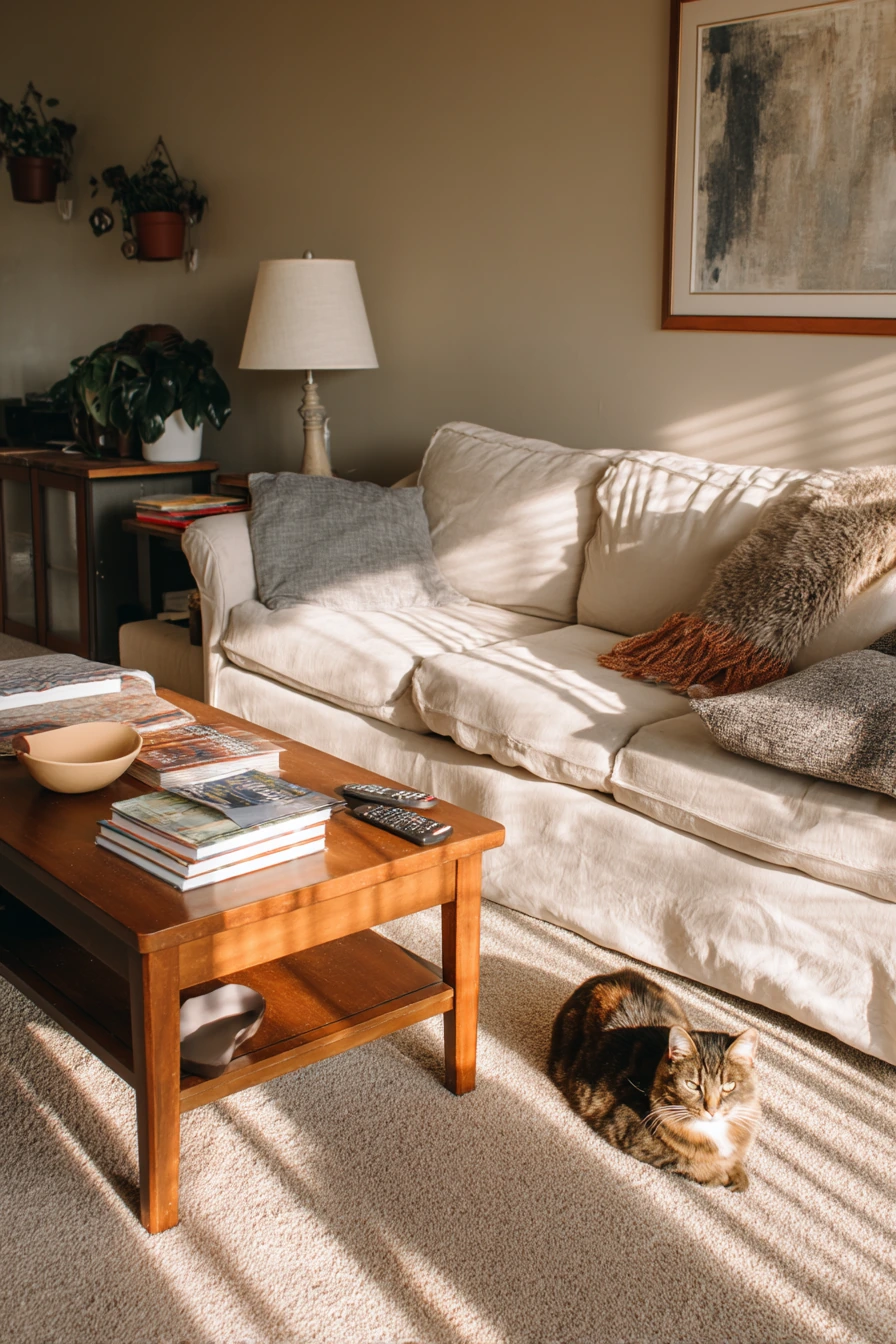
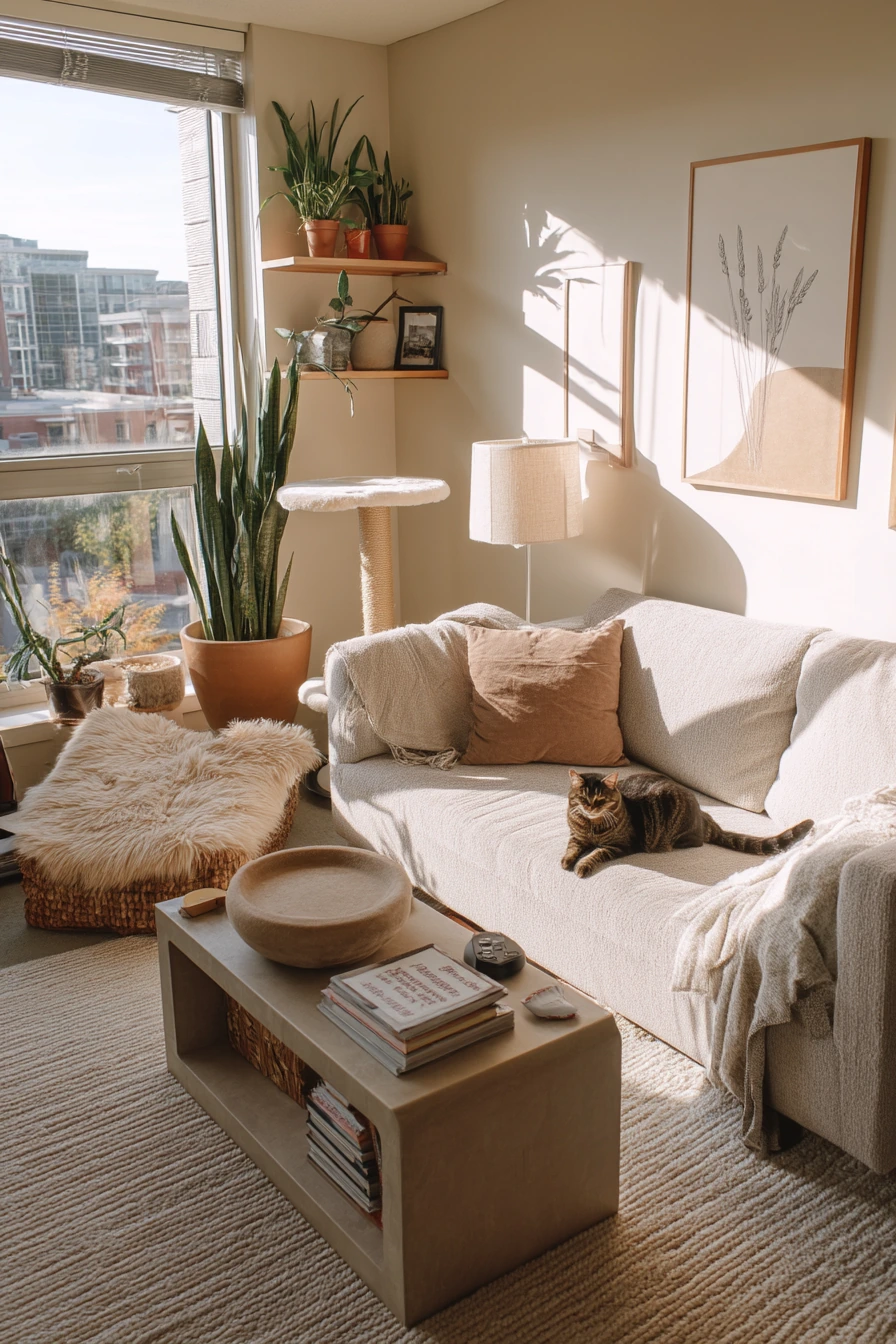
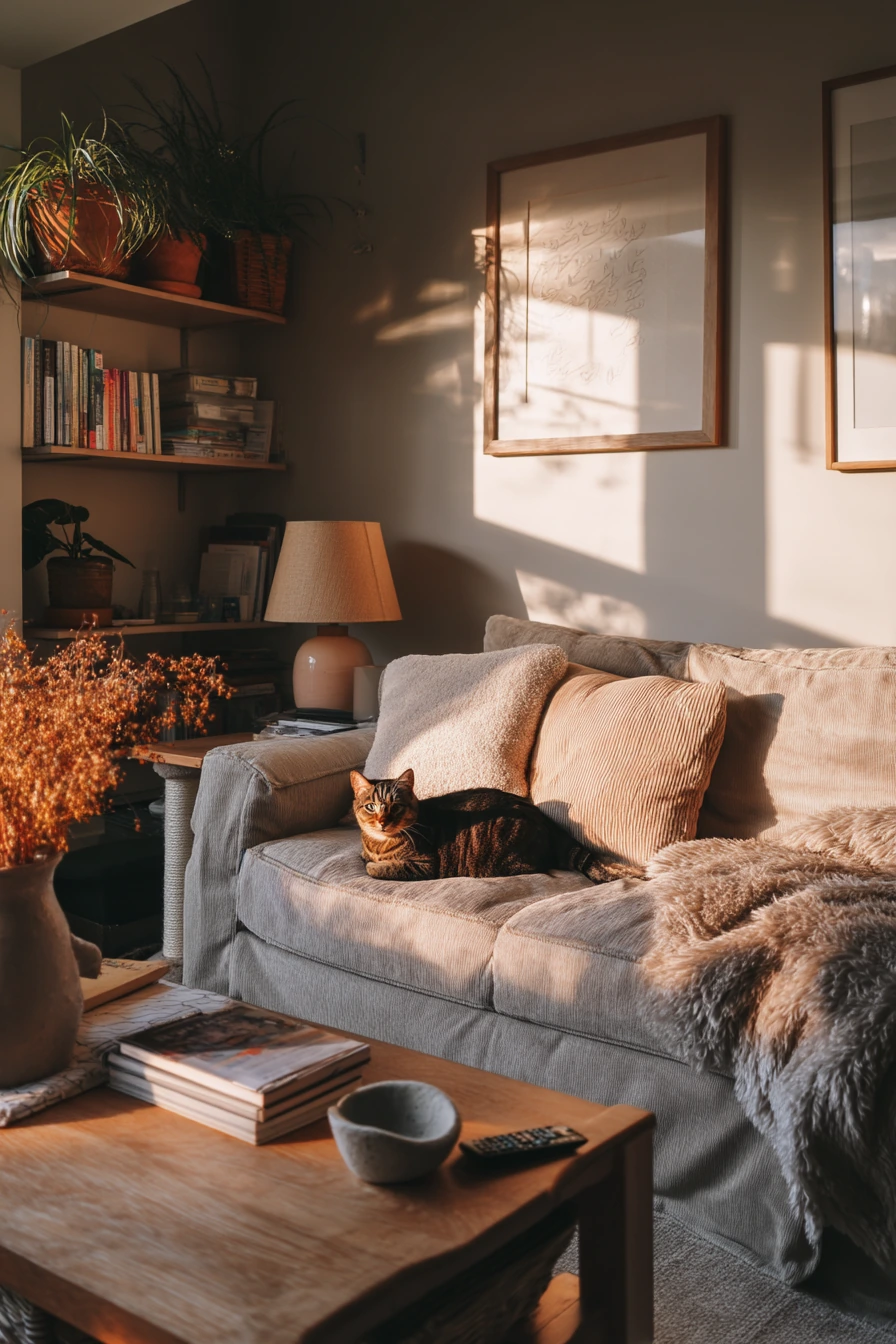
If you share your basement apartment with a cat, plan for fur, scratching, and easy cleanup. Start with a low sofa that has a washable slipcover. This keeps the room looking fresh even with daily use. Place a scratch post beside the sofa so the cat has an approved spot close to where people sit.
Add smart storage to reduce visual mess. A tucked storage bench can hold extra throws, pet supplies, or toys. Keep a ceramic water bowl on a small mat so spills do not soak into carpet. Accept the lived-in look, like a throw blanket with fur on it, a remote control on the cushion, and a pet toy under the coffee table. The goal is a space that works, not a perfect photo.
Use earthy decor to match the pet-friendly vibe. Books, a simple planter, and soft afternoon window light can make the room feel calm. Add a warm lamp in the corner to boost light when the window well is shaded. Choose fabrics that are durable, like tight weaves, and use darker mid-tone throws that hide fur between washes.
- Use a slipcover you can remove and wash weekly.
- Place the scratch post near the sofa to protect upholstery.
- Choose a coffee table with rounded edges for safer play.
- Store toys in a small basket inside the bench for quick cleanup.
- Style with two pillows and one throw so it stays easy to maintain.
Pro Design Tip: Match the cat’s main items to your room colors (scratch post, toy bin, mat) so they blend in and the space feels more designed.
Budget Considerations: A slipcover and scratch post can be low-cost compared to replacing furniture. If you cannot buy a bench, use sturdy baskets under a console table for hidden storage.

9 Creative Basement Apartment Corner for a Freelancer

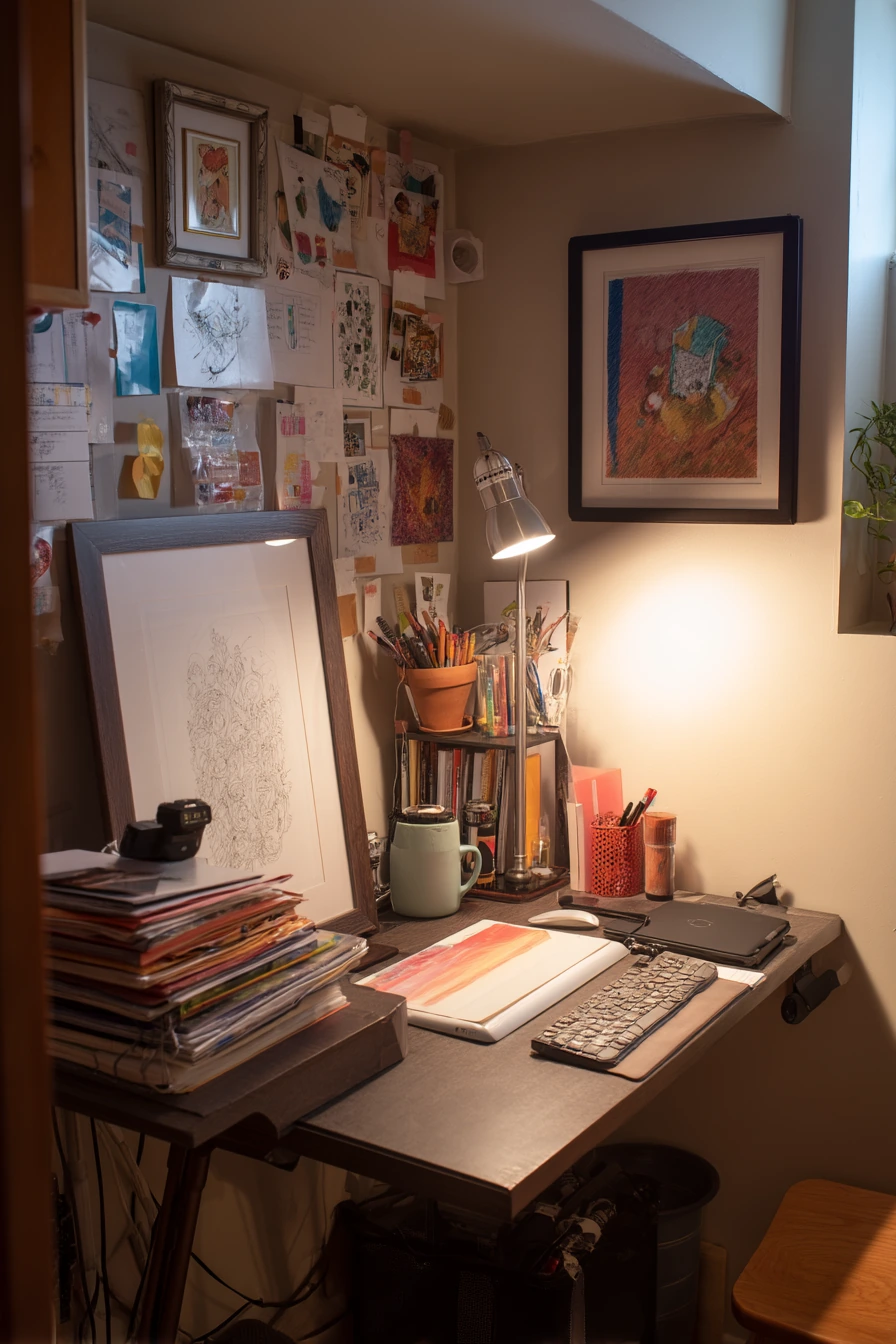
A basement creative corner can feel focused even with limited light. A standing desk is a good choice because it keeps your body moving and can fit in a tight area. Place it near the window well to catch faint sunlight, then add a strong desk lamp for warm practical lamp glow. This mix helps you work without eye strain.
Keep inspiration visible but controlled. Use a pinboard for notes, swatches, and small prints, and lean one framed print against the wall for easy style. Stacked sketchbooks and a camera bag can sit on a shelf or under the desk, but do not let piles take over. Cable clutter is common in real-life setups, so use clips, a cord box, and one power strip mounted under the desk to keep the floor clear.
Add one small plant, even if it is a low-light type, to soften the corner. Keep the mug, keyboard, and tools you use daily within reach, and store the rest in a bin. This creates a clean “start work” feeling each morning, even in a basement apartment.
- Place the desk close to the window well for the best available light.
- Use a lamp with an adjustable arm for task lighting.
- Mount a power strip under the desk to reduce cord mess.
- Keep one open shelf for daily tools and one bin for backups.
- Style the pinboard with space between items so it stays readable.
Pro Design Tip: Use two light sources at different heights (desk lamp plus a small floor lamp) to reduce harsh shadows and make the corner feel more professional.
Budget Considerations: A standing desk can be costly; you can start with a simple desk riser on a solid table. Use inexpensive cable clips and a basic pinboard for a clean setup.


10 Tiny Basement Bedroom with Smart Storage
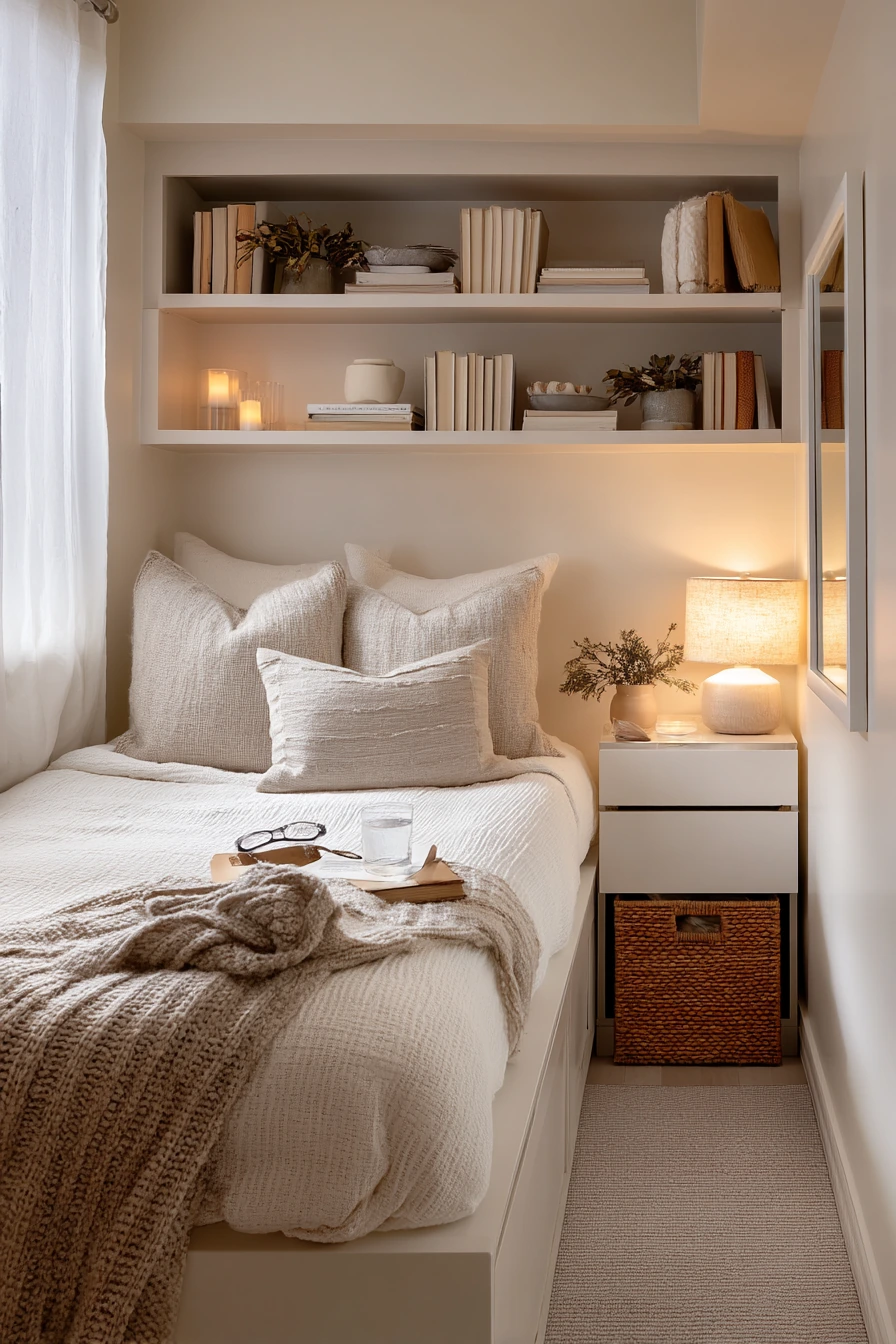
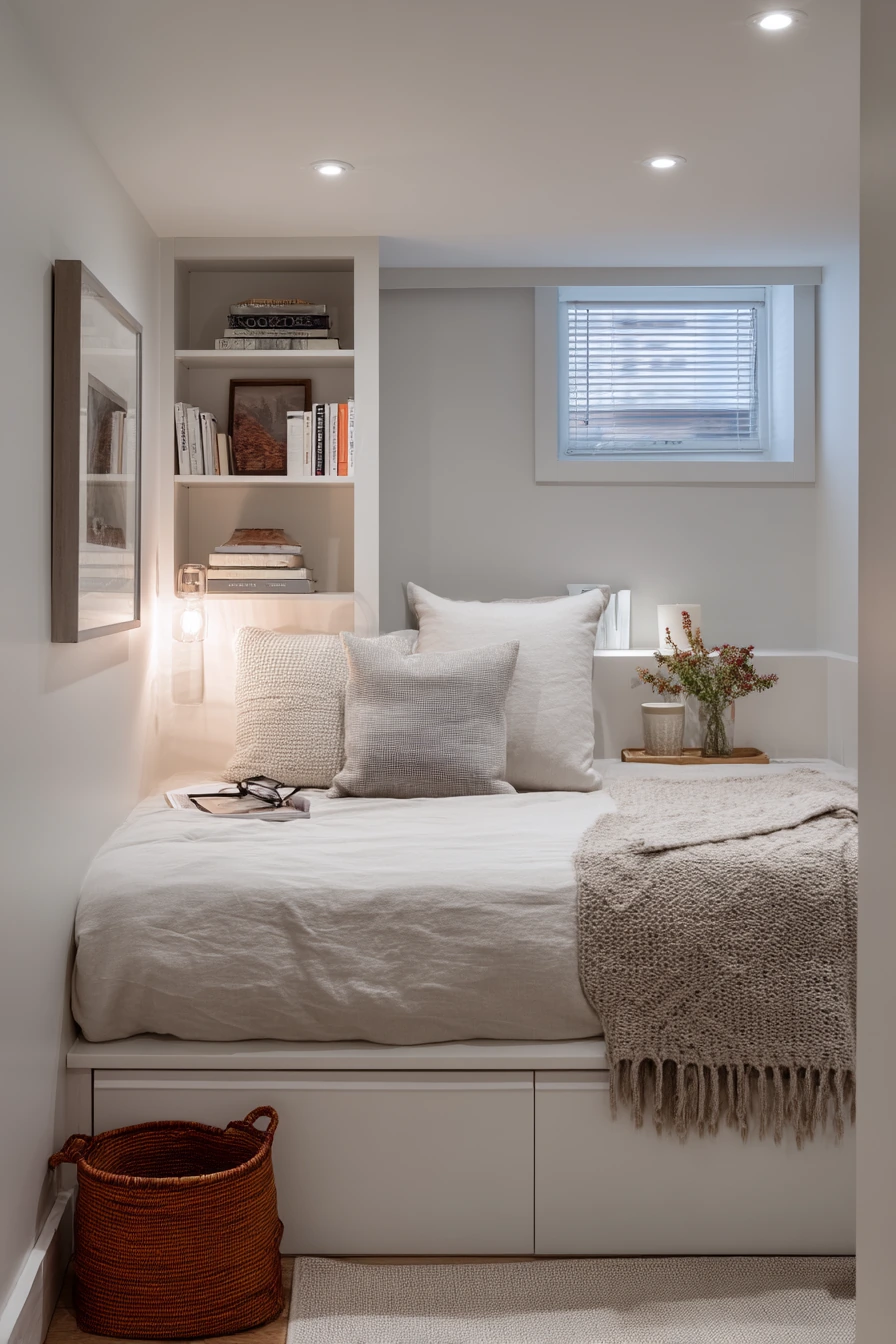
A tiny basement bedroom feels bigger when storage is built in, even if it is simple add-on pieces. Under-bed drawers are one of the best fixes because they use space you already have. Pair them with wall shelves for books and small decor, so you do not need a wide dresser. Keep the layout centered so the room feels balanced when you walk in.
Use light and reflection to fight the dark basement feel. A mirrored closet panel can bounce soft morning window light around the room and make it look deeper. Add a slim nightstand with only the basics, like reading glasses and a water glass. Keep the bed looking inviting with textured bedding and one folded sweater, then avoid too many extra pillows that eat space.
Create a simple routine for clutter. A laundry basket tucked beside the bed keeps clothes off the floor. Keep a half-open book on the nightstand if you read at night, but store the rest on the wall shelf. Use a warm bedside lamp so the room feels snug and calm at night, even if the window is small.
- Choose under-bed drawers that slide easily on low carpet or a rug.
- Install wall shelves above the nightstand to free floor space.
- Use a mirrored closet panel to reflect light and widen the room.
- Pick a slim nightstand with one shelf or drawer for small items.
- Style the bed with one textured blanket and two pillows for a clean look.
Pro Design Tip: Keep the tallest items on one wall only (closet, shelves) so the room has a clear “low” side, which makes the ceiling feel higher.
Budget Considerations: Under-bed bins are cheaper than custom drawers. If a mirrored panel is expensive, use a full-length mirror leaned safely against the wall to reflect light.

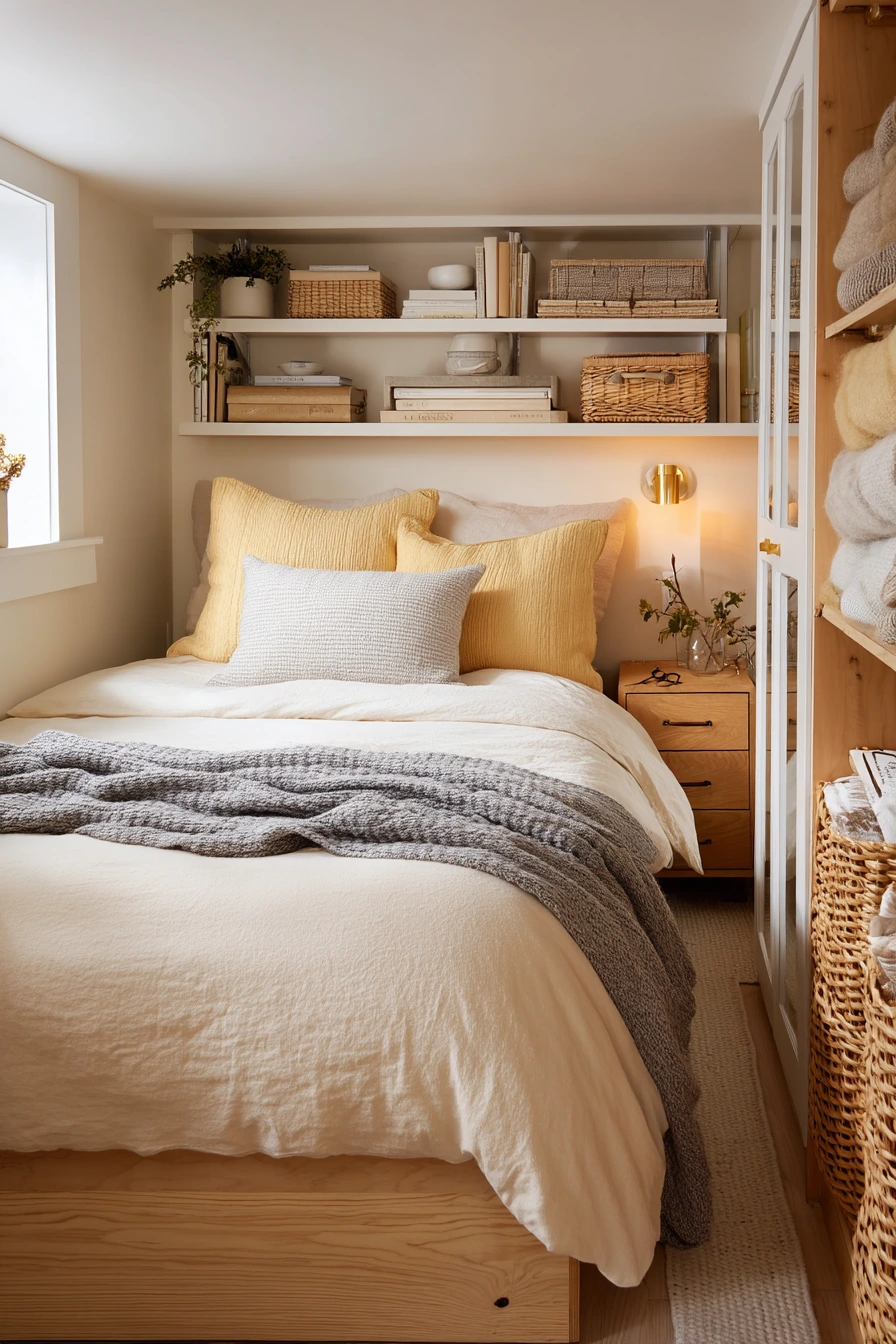
These basement apartment ideas focus on real living: clear zones, warm lighting, and storage that hides the everyday mess. Small changes like a room divider, washable rug, or under-cabinet lights can make a basement feel brighter and easier to use.
Pick one area to start, like the sleep zone or the kitchenette, and make it work better first. Once the basics feel right, styling becomes simple.
FAQ
How can I make a basement apartment feel brighter? Use layered lighting with warm lamps, light-colored rugs, and mirrors. Keep window areas clear so natural light from egress windows can spread.
What is the best way to divide a basement studio? Linen curtains, folding dividers, and open shelving can separate sleep and living areas without building walls. Place the divider so it blocks the bed from the entry view.
How do I reduce the “cold” feeling in a basement? Add rug layering, soft textiles, and warm bulbs. Wood tones like oak or butcher block also help balance cool concrete and drywall.
What furniture works best in a small basement living room? Modular sectionals, low sofas, and slim storage benches fit tight rooms and can be rearranged. Choose pieces with hidden storage to reduce clutter.
How do I keep a basement kitchenette organized? Use open shelves with a simple color plan, a magnetic knife strip, and a clear counter zone for prep. Add under-cabinet lighting so you can see and clean well.
How can I make a small basement bathroom feel more spa-like? Keep counters clear, use stacked towels, and choose matte fixtures. Add a warm vanity light and a round mirror for softer lines.
What are renter-friendly upgrades that make the biggest difference? Peel-and-stick wallpaper, plug-in pendant lights, washable rugs, and removable curtain dividers can change the look fast without permanent work.