

Attic bedroom ideas can turn an awkward upstairs space into a room you actually want to use. Sloped ceilings, low knee walls, and skylights make attic rooms feel special, but they can also make furniture placement tricky.
This guide shares practical attic bedroom layouts based on real-life needs like a compact guest room, a teen sleep-and-study setup, renter-friendly updates, and family spaces. You will see how to work with a steep roofline, fit storage under the eaves, and use warm lamp glow with soft window light.
Each section includes simple styling steps, what to place where, and small details that make the room feel lived-in. You will also get a pro design tip and a budget note so you can plan without guessing.
If you came from Pinterest, use this as a checklist. Pick one idea that matches your attic room size, then copy the layout first and the decor second.
1 Compact Guest Attic Retreat


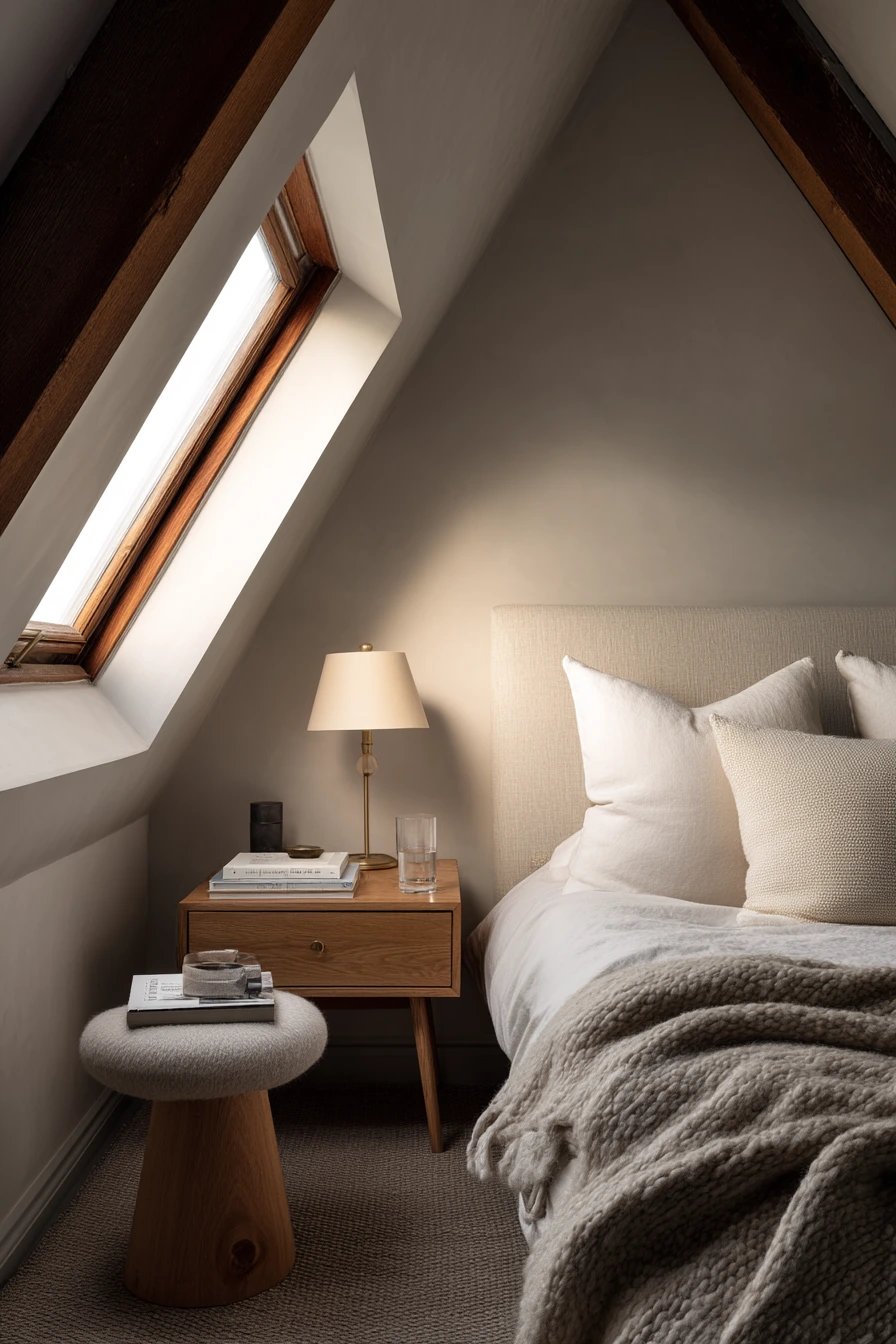
A compact guest room in the attic can feel welcoming when the layout is calm and low to the ground. Start with a low platform bed so the steep roofline does not feel like it is pressing down. A linen headboard adds softness and keeps the bed from looking too plain against the wall.
Use a pale oak nightstand for a light, warm look, and keep it narrow so you still have walking space. Tuck a slim reading chair into the eaves where standing height is limited. This makes a useful corner without wasting the tallest part of the room.
Make the space feel real with small, tidy items: a half-read paperback, a water glass, a neatly folded sweater, and a charging cable beside the lamp. If you have a skylight, let soft morning window light do most of the work. Add one warm lamp for evenings so the room feels steady and practical.
- Center the bed where you can sit up without hitting the slope.
- Choose one wall color that stays light in gentle shadows.
- Hang a small art print near the nightstand, not on the lowest ceiling area.
- Use one basket under the chair for an extra blanket.
- Keep bedding simple: two pillows, one quilt, one throw.
Pro Design Tip: Place the reading chair where the roof is lowest and save the tallest wall area for getting dressed and walking, so the room feels bigger.
Budget Considerations: A basic platform bed and linen-look headboard can cost less if you buy the frame secondhand and add a new slipcover or headboard cushion.

2 Teen Attic Study Bedroom
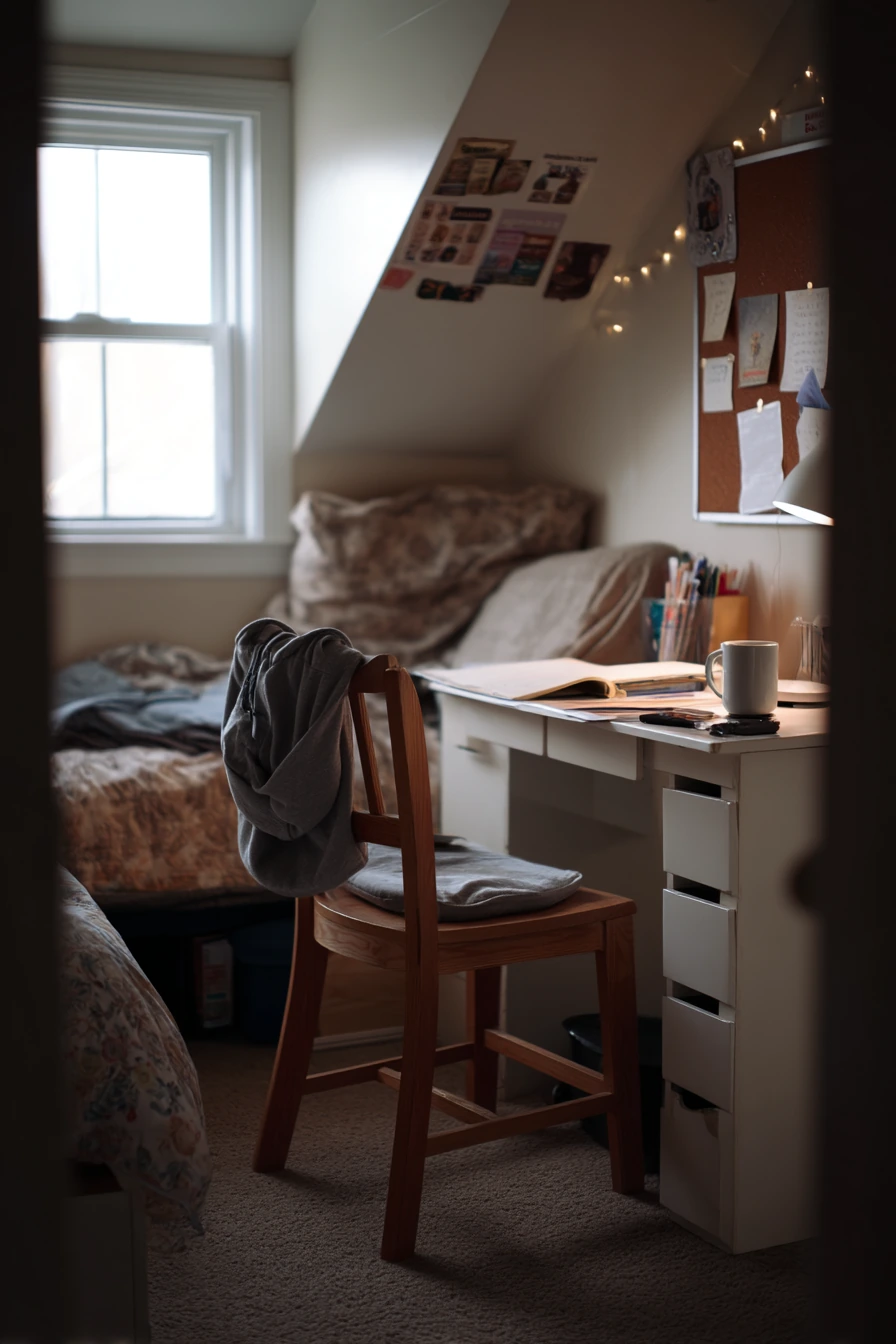
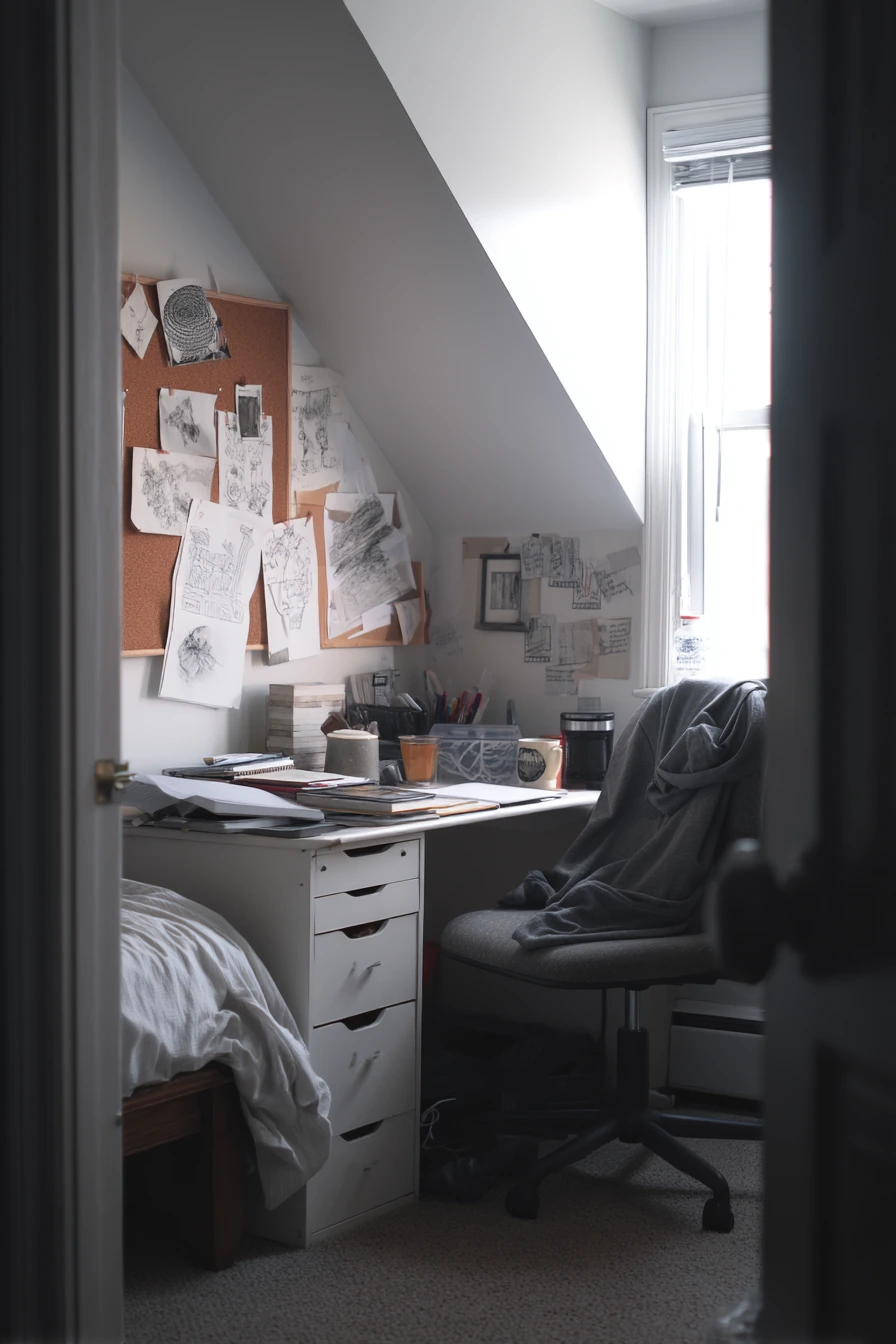
A teen attic bedroom works best when sleep and school have clear zones, even in one small upstairs room. Put the twin bed along the wall that allows the best head clearance. Then place a modular desk near natural light so homework feels easier in late afternoon window light.
Under the sloped wall, use stacked storage drawers for clothes, art supplies, and tech. This is the perfect spot because you do not need full standing height to open drawers. Add a cork pinboard above the desk for schedules, photos, and reminders without cluttering the tabletop.
Keep the room functional but mellow with a simple color plan and a few lived-in details. An open notebook, earbuds, a hoodie on the chair, a sketchbook, and a thrifted mug make it feel normal and calm. Choose soft, diffused light bulbs so the room does not feel harsh at night.
- Use a wall-mounted power strip by the desk to control cords.
- Add a small bedside caddy for phone, charger, and lip balm.
- Store extra bedding in a bin under the bed.
- Pick one task chair that tucks in fully to save floor space.
- Use a pinboard “top row” for must-do items and keep the rest flexible.
Pro Design Tip: Use a desk with closed storage or add one lidded box, so the work zone can look clean in under one minute.
Budget Considerations: Cork boards, drawer units, and desk lamps are easy to find used; spend more on a comfortable chair only if the teen studies daily.


3 Renter-Friendly Attic Makeover


Renter-friendly attic bedroom ideas focus on changeable finishes and lighting that does not require hardwiring. Peel-and-stick warm taupe walls can soften the room and help the slanted ceiling feel intentional. Keep the rest of the palette simple so it does not look busy in a small space.
A simple iron bed gives structure without adding visual weight. Add plug-in sconces on each side so you free up the nightstand and avoid wiring. A vintage dresser adds character and gives you real storage, which matters in an upstairs bedroom with limited closet space.
To make the slanted floor feel more comfortable, add a lightweight rug that you can roll up when you move. Real-life items like stacked delivery boxes, an alarm clock, a laundry basket, a phone charger, and a tiny plant on the sill keep the room grounded. Use soft window light and one warm lamp so the space feels intimate, not staged.
- Test peel-and-stick on a small patch first, especially on textured walls.
- Choose a rug pad to stop sliding on attic floors.
- Hide cords with paintable cord covers for a cleaner look.
- Use matching hangers and one hamper to reduce visual mess.
- Style the dresser top with one tray, one lamp, and one plant.
Pro Design Tip: Mount plug-in sconces slightly lower than usual in attic rooms, so the light lands on the bed, not the ceiling slope.
Budget Considerations: Peel-and-stick wallpaper adds up fast; do one accent wall or the knee wall only if you want the look for less.


4 Couple’s Cozy Attic Nest


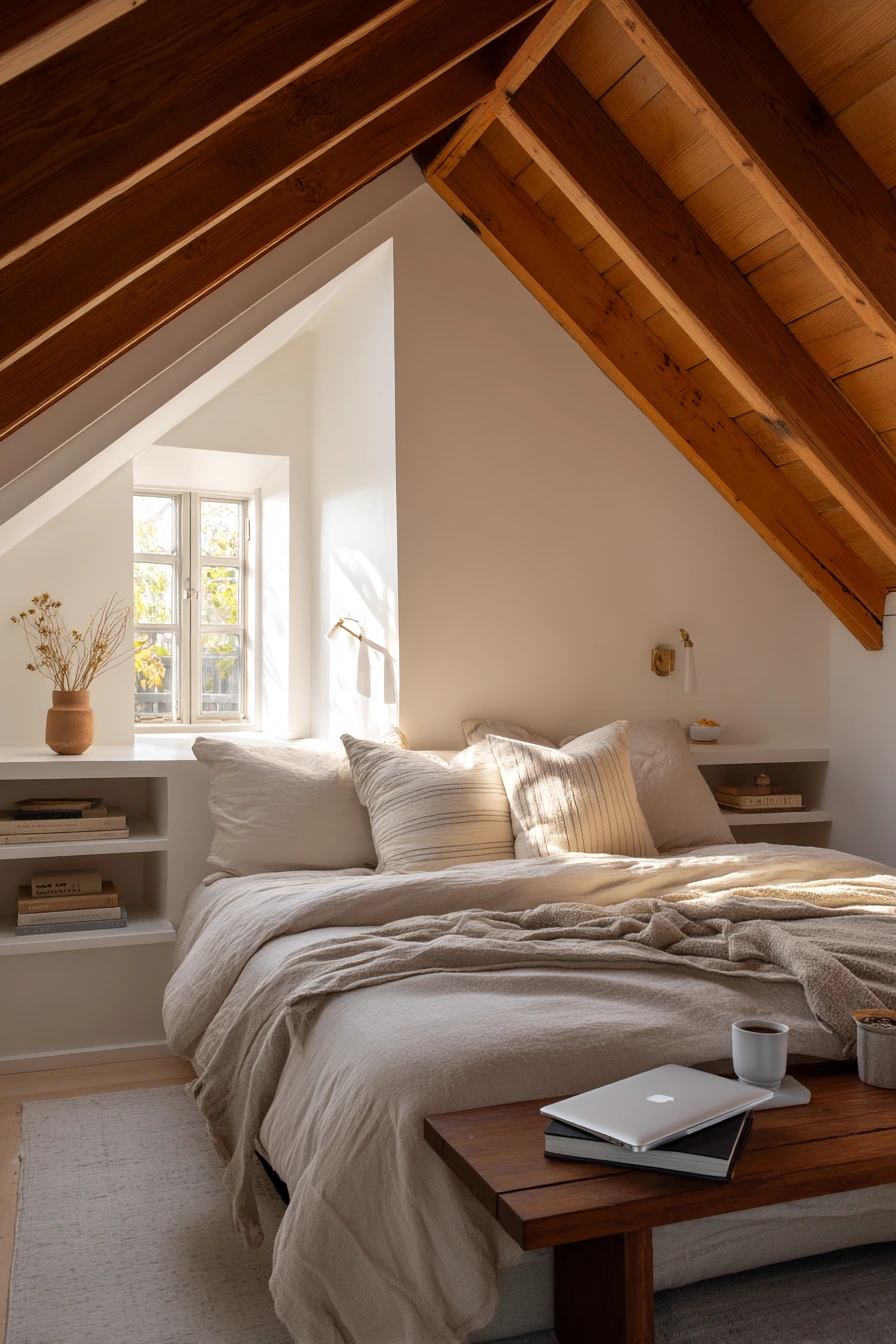
A couple’s attic bedroom can be both practical and romantic when it leans into warm textures. Exposed rafters already add character, so keep the big pieces simple. A queen bed with layered neutral bedding gives comfort without fighting the wood tones overhead.
Use two slim sconces to save space and make the nightstands feel less crowded. A walnut bench at the foot of the bed is useful for putting on shoes, setting down a tote, or laying out clothes. Built-in shelves along the knee wall are the secret weapon in attic rooms, because they turn low-height areas into storage that feels custom.
To keep it lived-in, leave a few honest details: one water glass, a folded throw that is slightly rumpled, a watch on the nightstand, an open novel, and a laptop charging nearby. Sunrise light from a dormer window will look best with matte finishes and soft linens, so avoid shiny bedding.
- Use matching baskets on the lower shelves for small items.
- Keep bedside tables slim and tall, not wide.
- Add one large neutral artwork to calm the rafters.
- Choose bedding in three tones: light, medium, and one darker accent.
- Place a small tray on the bench for daily items like keys or a book.
Pro Design Tip: Run the same wood tone (like walnut) in one or two places only, such as the bench and one frame, to make the room feel designed, not busy.
Budget Considerations: Built-ins can be pricey; for a lower cost, line the knee wall with ready-made bookcases cut to height or use low modular cubes with doors.

5 Small Attic Nursery Bedroom


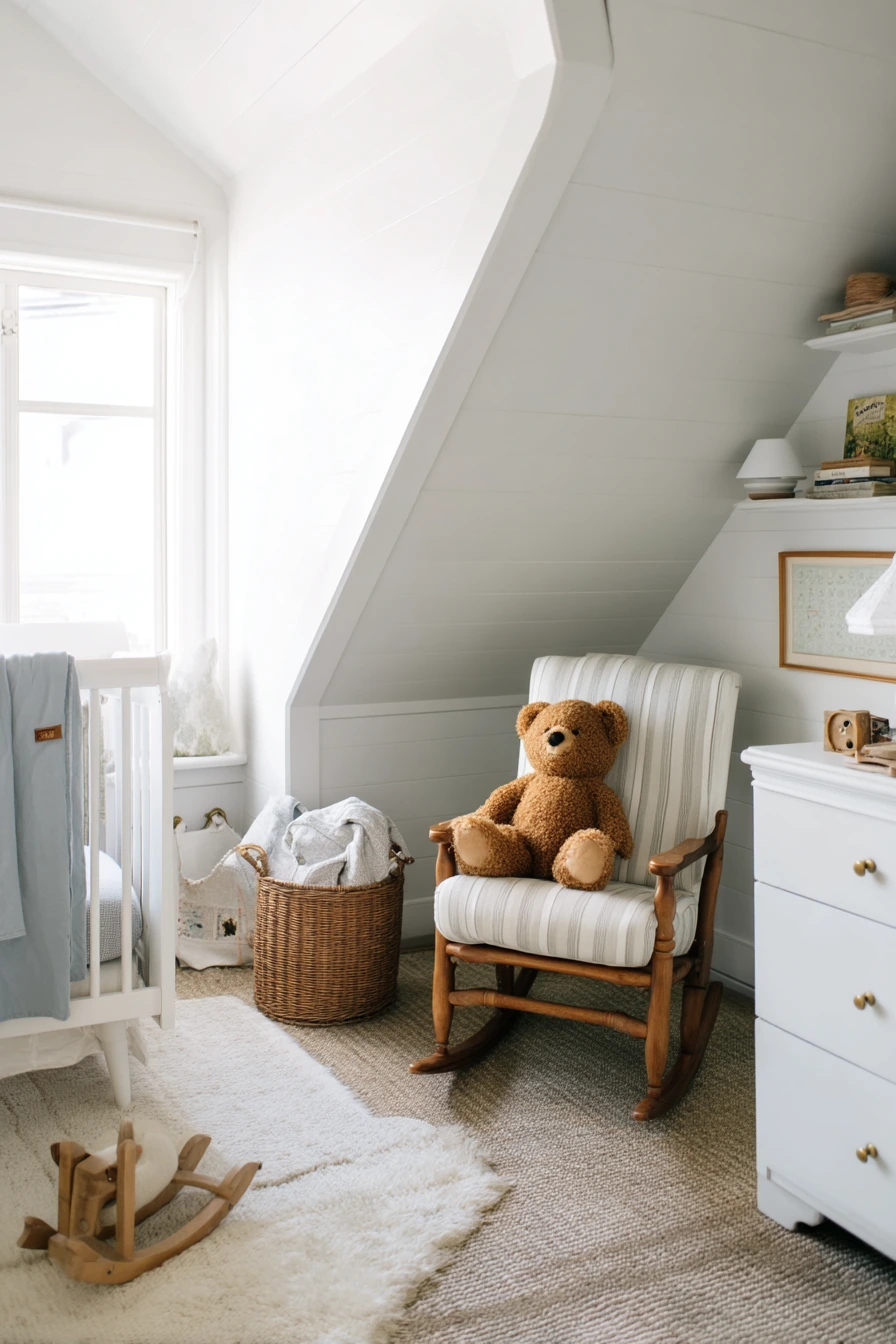
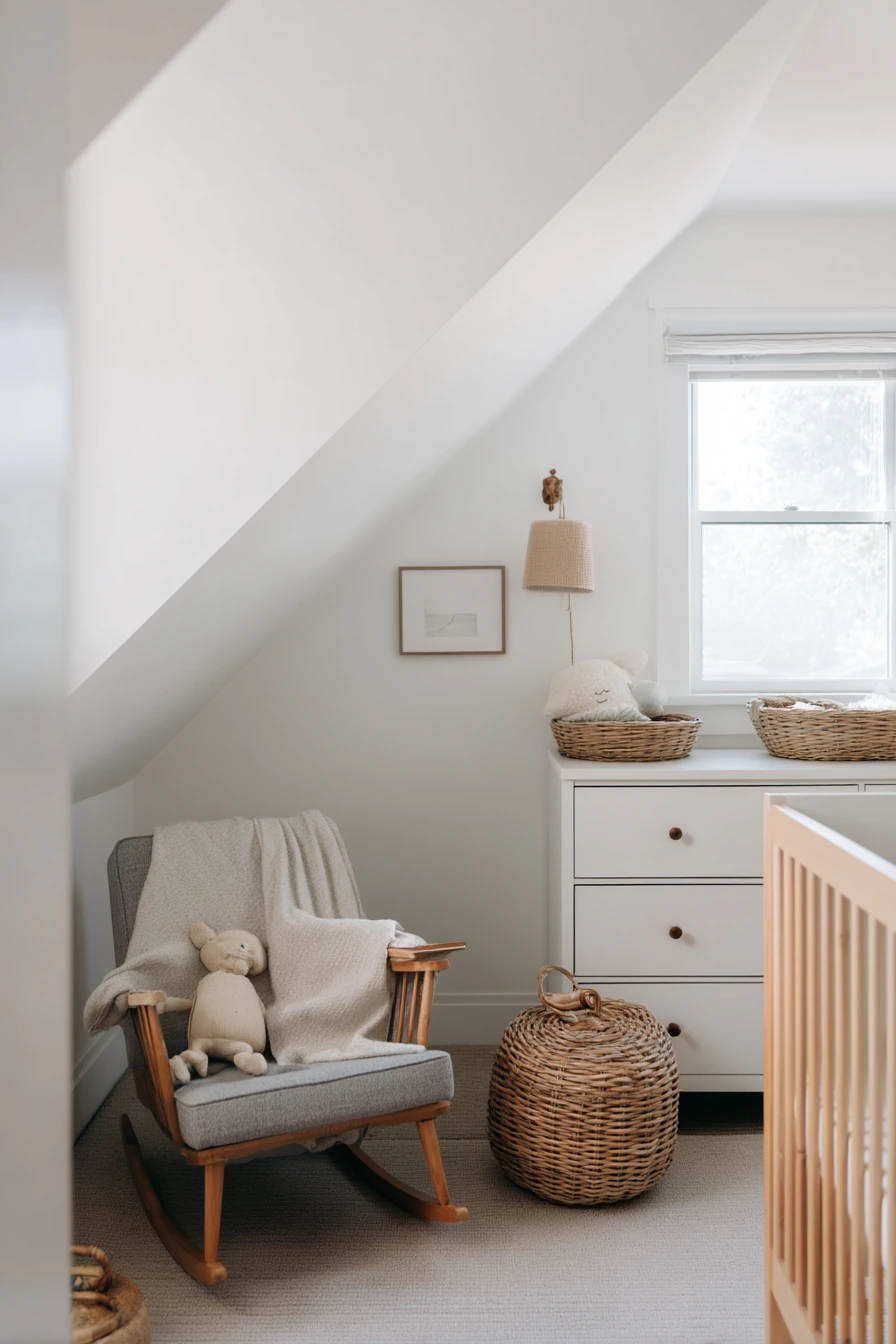
An attic nursery-bedroom combo needs a safe layout first, then comfort. Place a compact crib where the ceiling height is highest and where you can reach in without bending under the slope. Keep the narrow dresser beneath the sloped ceiling, since you can still use it while seated or slightly bent.
Add a rocking chair in the corner with the best light for feeding and reading. Woven baskets help you sort diapers, blankets, and toys without adding hard edges. Wall hooks are a simple way to keep jackets, baby carriers, and diaper bags off the floor in a small attic room.
Keep the mood gentle with pale colors and soft textures. Lived-in details like a stuffed toy basket, a burp cloth, a baby monitor, a folded onesie, and a soft book on the chair make it feel like a real family space. Use morning window light with warm lamp fill for calm evenings and early wake-ups.
- Anchor a changing pad on top of the dresser and keep supplies in one caddy.
- Use a small lidded bin for extra cords and chargers.
- Hang blackout shades if the skylight makes naps hard.
- Keep one basket just for clean swaddles and sleep sacks.
- Use a washable rug to soften the floor for tummy time.
Pro Design Tip: Choose one “adult” storage spot and one “baby” storage spot, so you do not mix items and lose time during night changes.
Budget Considerations: If you already own a dresser, add a new set of knobs and a changing topper instead of buying nursery furniture sets.
6 Creative Loft Attic Studio
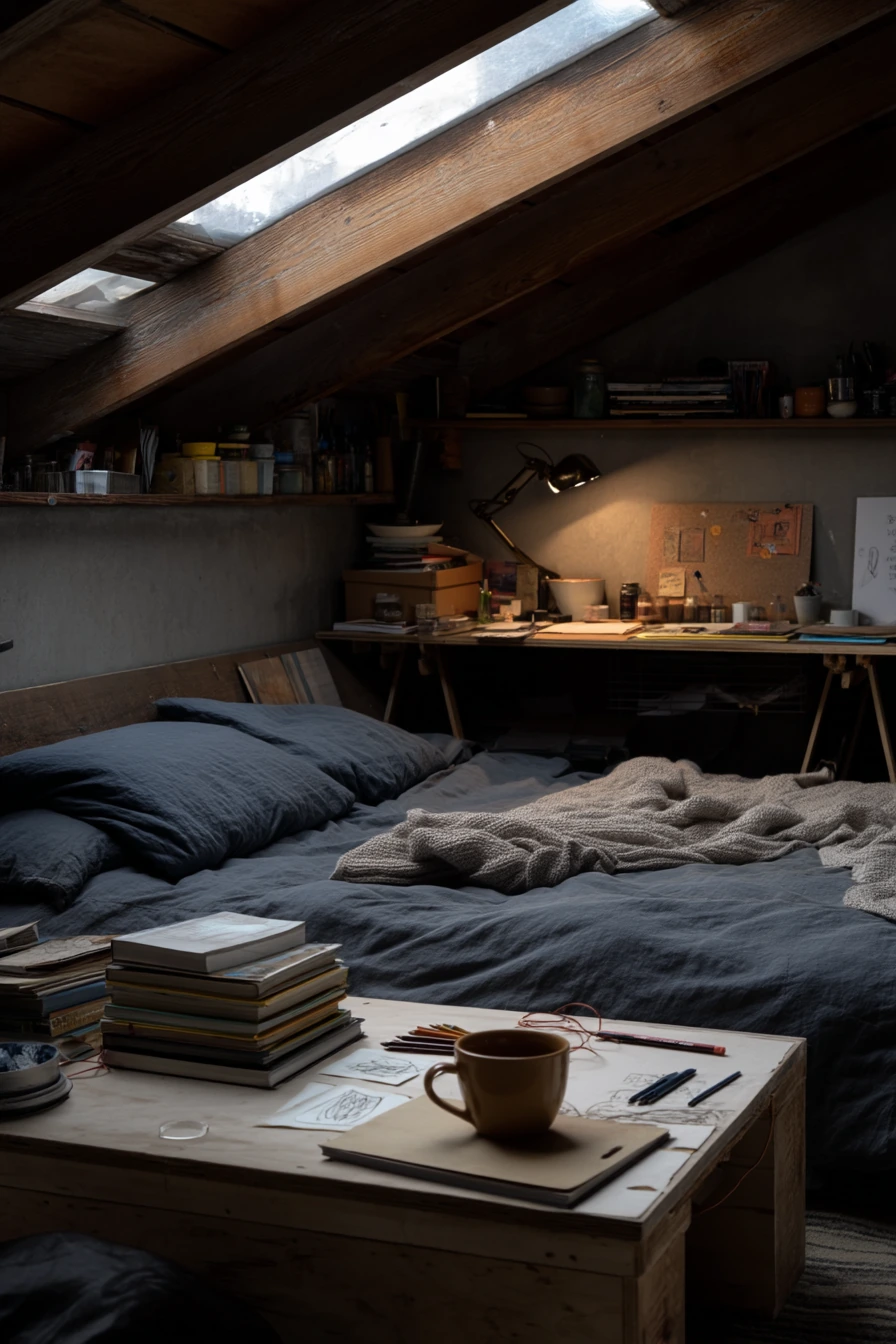

An artist attic bedroom has to handle sleep, sketching, and photo editing without turning into a mess. Start with a low bed to keep the room open under the eaves. Place a long worktable where you get the best skylight glow, since cool daylight helps with color and detail.
Use open shelving along the eaves for books, camera gear, and boxes of supplies. Keep the shelves consistent so the room feels steady, even with lots of items. Add a floor lamp for amber light at night, which helps the space feel moody but still functional.
Let the room show real use: charcoal pencils, a coffee cup, stacked zines, a charging cable, and a blanket tossed over the bed. To style it without hiding your tools, use a tray for small items and one pinboard for in-progress work. The mix of skylight and warm lamp light makes the room feel honest, not glossy.
- Store paper and prints in flat boxes to prevent curling.
- Use a rolling cart for daily tools and park it under the desk when done.
- Add one hook rail for headphones, camera strap, and tote.
- Choose a desk chair that is comfortable but not bulky.
- Keep one “reset rule”: clear the desk surface each night.
Pro Design Tip: Place the worktable perpendicular to the skylight if possible, so you reduce glare on screens and keep light even while editing.
Budget Considerations: Use simple shelf boards and brackets instead of custom shelving, and spend the saved money on a good task lamp or monitor stand.


7 Simple Scandinavian Attic Bedroom


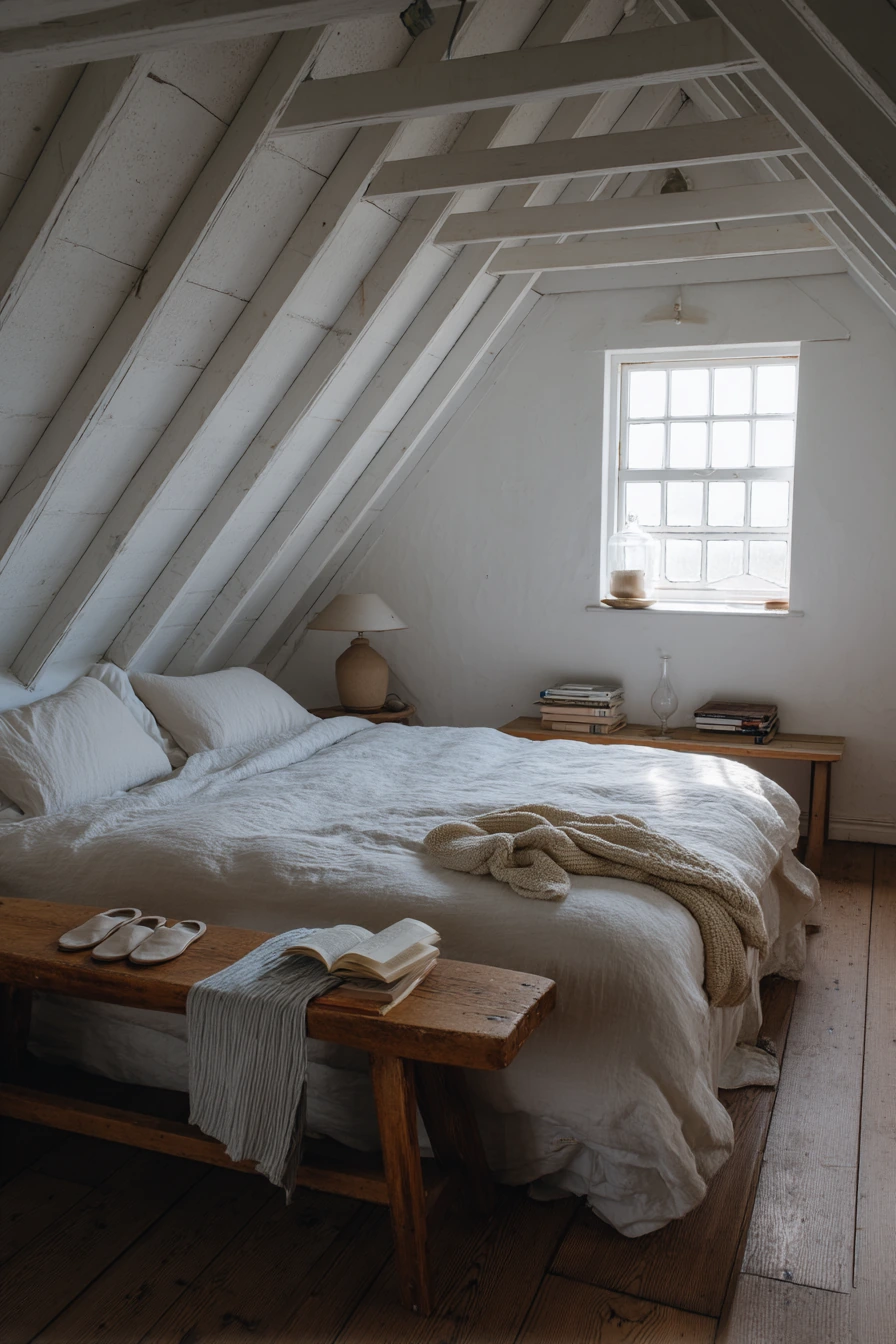
A calm minimalist attic bedroom works well in an older house because it lets the architecture speak. Whitewashed rafters brighten the ceiling and soften shadows, especially in overcast light. Pair that with a low oak bed to keep the room grounded and easy to move around.
Choose crisp linen bedding for a breathable look that still feels warm. Keep lighting simple with a single ceramic lamp, and add a small bench under the dormer for a quiet landing spot. This kind of room does not need much decor, but it does need good texture so it does not feel cold.
Lived-in restraint matters. Slippers by the bed, an open water carafe, a paperback on the bench, and a neatly draped knit blanket make it feel like someone actually sleeps here. Keep surfaces mostly clear and use hidden storage for extras so the room stays serene day to day.
- Use matching white or wood hangers for a calmer closet look.
- Add one large basket for extra pillows and blankets.
- Choose matte paint to avoid glare on slopes.
- Stick to two main materials: wood and linen.
- Keep art simple: one framed print or a small textile wall hanging.
Pro Design Tip: In minimalist rooms, repeat one shape, like a soft curve in the lamp and a rounded bench edge, to make the space feel intentional.
Budget Considerations: Whitewashing rafters can be low cost with diluted paint; test first and use a rag method to avoid heavy coverage.

8 Shared Sibling Attic Room

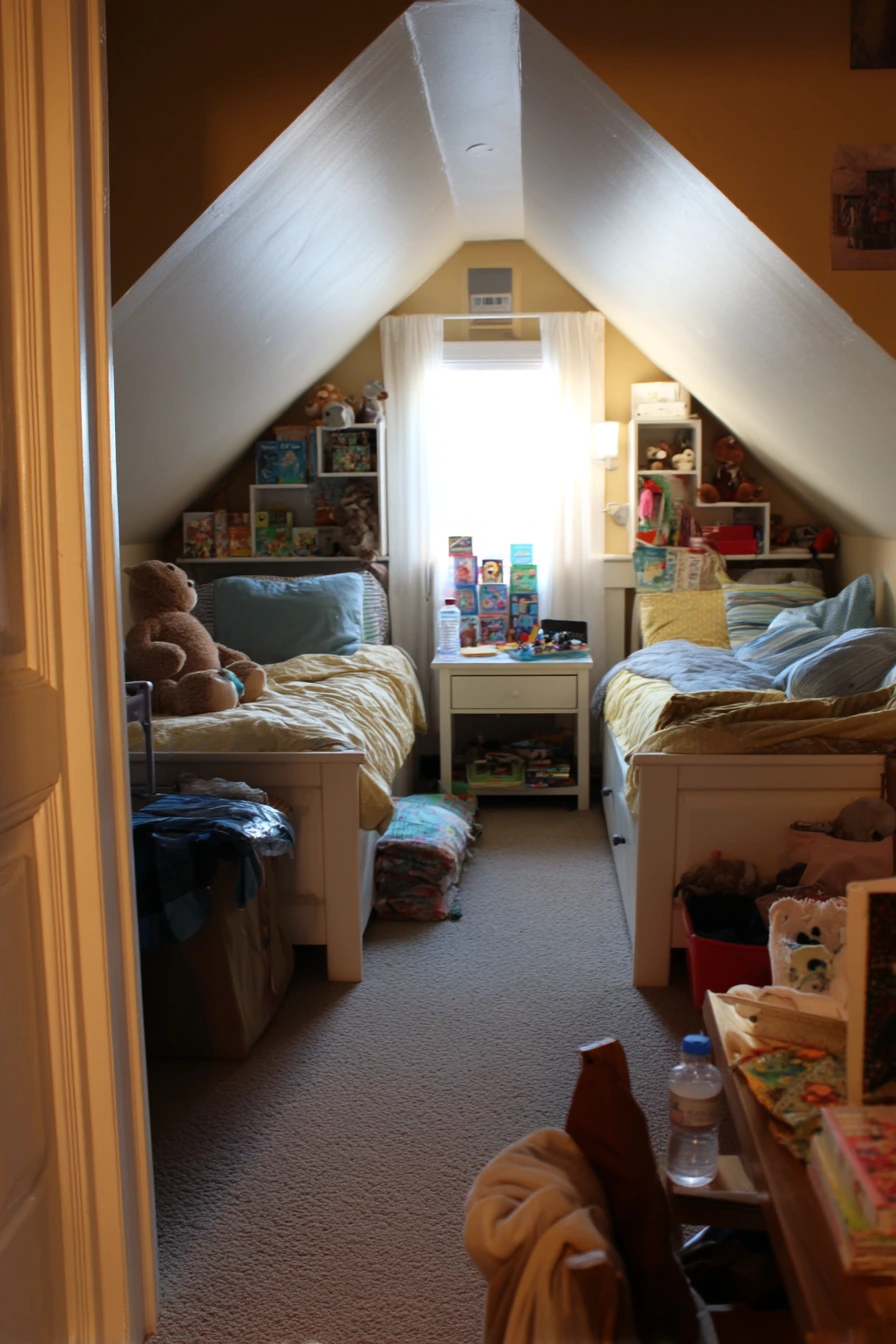
A shared attic bedroom for siblings needs clear personal zones and smart storage. Place twin beds on opposite sides of the sloped ceiling so each child gets their own side. Keep the center open for movement, and use a small reading nook between the beds to encourage quiet time.
Under-bed drawers are key in a narrow upstairs room, especially if closets are small. Add a shared toy shelf along the knee wall where height is limited. This turns an awkward area into a simple system: toys on the bottom, books higher, and a small bin for puzzles.
Make it playful but orderly with a tight color plan and labeled bins. Lived-in details like a stuffed animal, puzzle pieces, a storybook stack, a water bottle, and pajama pants on the chair will happen, so plan for it. Late afternoon sun through a dormer looks best with warm neutrals and a few soft colors, not too many bright prints.
- Give each child one drawer and one shelf that is only theirs.
- Use clip-on reading lights so bedtime can be different for each kid.
- Add a shared hamper to cut down on floor piles.
- Pick matching bedding in different accent colors for easy identity.
- Use a small rug in the nook to mark the “reading zone.”
Pro Design Tip: Create symmetry with matching beds and lights, then let personality show in small items like pillows and book bins.
Budget Considerations: Matching twin frames can be found secondhand; paint them the same color for a coordinated look without buying new.


9 Guest Attic With Vintage Touches


A nostalgic attic guest bedroom can feel special without looking overdone. A brass bed brings warmth and a little shine, which helps in rooms with gentle evening window light. Pair it with a simple stitched throw and bedding in calm, classic tones so the metal frame stays the focus.
Add an antique dresser for storage and character. Textured wallpaper can make a small attic room feel finished, especially on the wall behind the bed or on the knee wall. A small round mirror is useful for guests and helps bounce warm practical lamp glow around the room.
Keep the styling welcoming with real travel-ready details: a folded towel, a travel book, reading glasses, a half-packed toiletry bag, and a lamp left on. These touches suggest the room is ready, not perfect. If the ceiling slopes low near the bed, keep art and decor lower on the wall so it feels balanced.
- Place a small tray on the dresser for keys and jewelry.
- Use a luggage rack or a simple bench if space allows.
- Keep one extra phone charger in the nightstand drawer.
- Add two hooks for bags and towels, especially if there is no closet.
- Choose one scent item like a sachet, not a strong spray.
Pro Design Tip: Mix one “shiny” piece (brass bed) with mostly matte textures (linen, wallpaper, wood) to keep the room calm.
Budget Considerations: If a brass bed is out of reach, look for a metal frame in a similar shape and use brass-toned hardware and a warm lamp shade to get a close feel.


10 Warm Winter Attic Bedroom
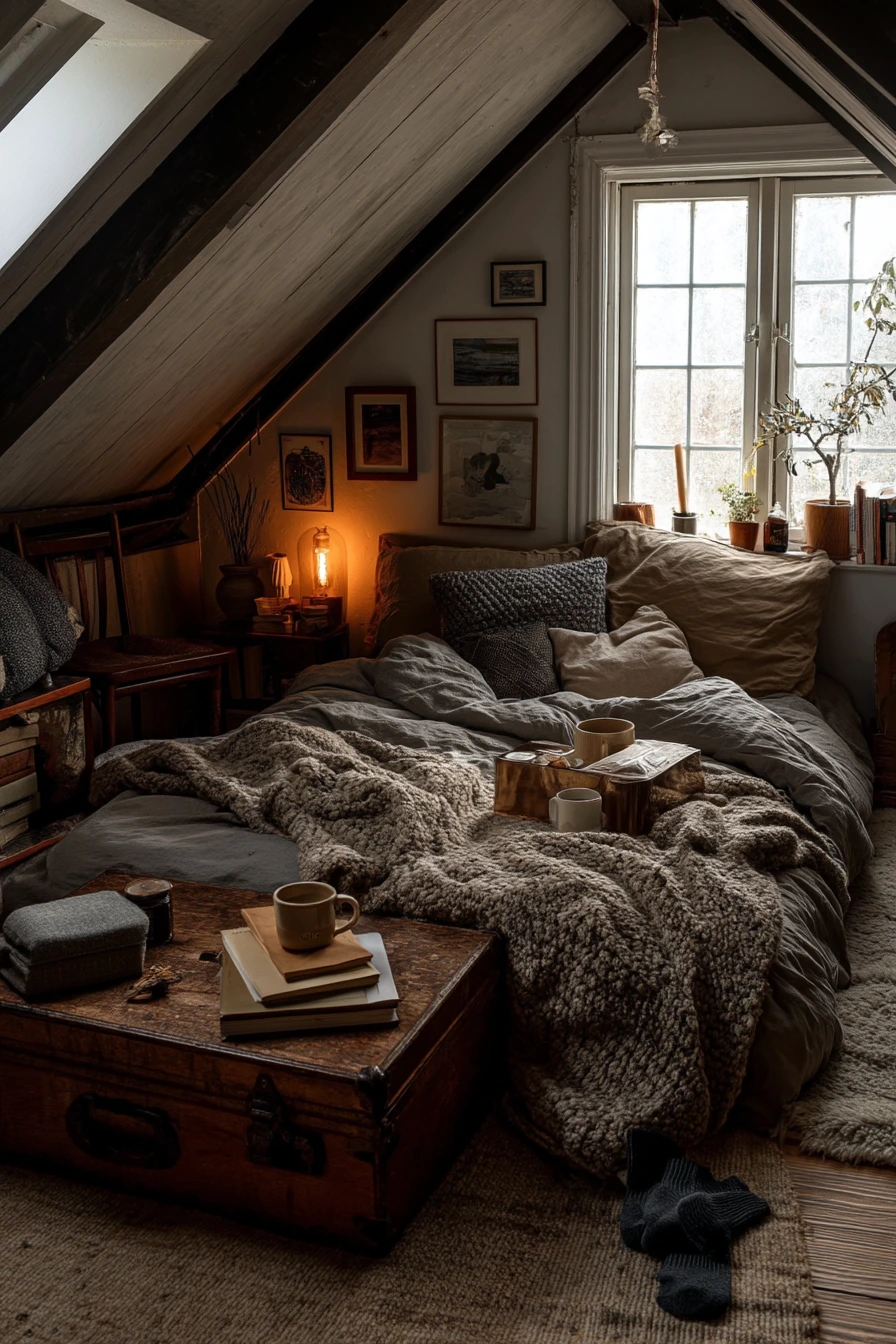

A winter-ready attic bedroom should feel snug without becoming heavy. Start with layered wool blankets and a thicker duvet, then add one textured throw at the foot of the bed. A plush rug underfoot helps a lot in cold months, especially in rooms over garages or unheated spaces.
Use a bedside lamp for amber lamplight that balances gray daylight from the dormer. Add a wooden trunk for extra blankets, off-season clothes, or spare pillows. A small chair near the window creates a spot for pulling on boots or setting down a sweater.
Keep it real with cozy, everyday items: knitted socks at the bed, a tea mug, a book stack, a phone on charge, and a plant casting soft shadows. For color, stick to warm neutrals like cream, camel, and soft brown. This keeps the room feeling calm even when it is dark outside early.
- Swap cotton sheets for flannel or brushed cotton in winter.
- Add draft stoppers if you feel cold air near the knee wall.
- Use layered lighting: one bedside lamp and one floor lamp.
- Store extra throws in the trunk so they are easy to grab.
- Choose curtains or shades that help with heat loss at night.
Pro Design Tip: Use at least three textures (wool, wood, and a soft rug) so the room feels warm even with a simple color palette.
Budget Considerations: Wool can be costly; use one real wool blanket as the top layer and fill in with affordable fleece or cotton throws underneath.


Attic bedrooms work best when you plan around the roofline, not against it. Use low beds, storage under the eaves, and lighting that fits tight spaces.
Pick the layout that matches your needs, then add small lived-in details so the room feels comfortable right away. With a few smart choices, even a narrow attic can become a guest room, teen retreat, or family space that gets used every day.
FAQ
How do I arrange furniture in an attic bedroom with sloped ceilings? Put the bed where you can sit up safely, then use the lowest areas for drawers, shelves, or a chair tucked into the eaves.
What bed works best for an attic room? Low platform beds and simple frames usually work best because they keep your head away from the ceiling slope and make the room feel taller.
How can I add storage without making the attic feel crowded? Use under-bed drawers, low shelves along the knee wall, and baskets with lids so items stay out of sight.
What lighting is best for attic bedrooms? Mix window light with warm lamps. Plug-in sconces and floor lamps are great when hardwiring is not possible.
Are peel-and-stick walls safe for renters? Many are renter-friendly, but test a small area first. Some paints or textured walls can make removal harder.
How do I make a shared attic bedroom work for siblings? Give each child their own bed zone and one personal storage spot, then add shared shelves and a reading nook in the middle.
How do I make an attic bedroom cozy in winter? Layer bedding, add a plush rug, seal drafts if needed, and use warm lighting to balance gray daylight.