

Apartment bedroom ideas can feel tricky when your space is small, your closet is tight, and you cannot drill into the walls. The good news is you can still make a calm, practical room that looks good in photos and feels good at night.
This guide covers real renter setups, from a compact one-bedroom to a studio sleeping nook. You will see simple layouts, easy upgrades, and small details like charging cables, a reading lamp, and soft linen bedding that make a room work day to day.
Each section includes quick “how to style it” steps, plus a pro design tip and a budget note. Use these ideas to plan your furniture, organize your stuff, and create a lived-in look that is still tidy.
Save the looks you like, then copy the parts that fit your room size and your lease rules. Even small changes like a slim nightstand, a neutral rug, or blackout curtains can make a big difference.
1 Compact One-Bedroom Layout


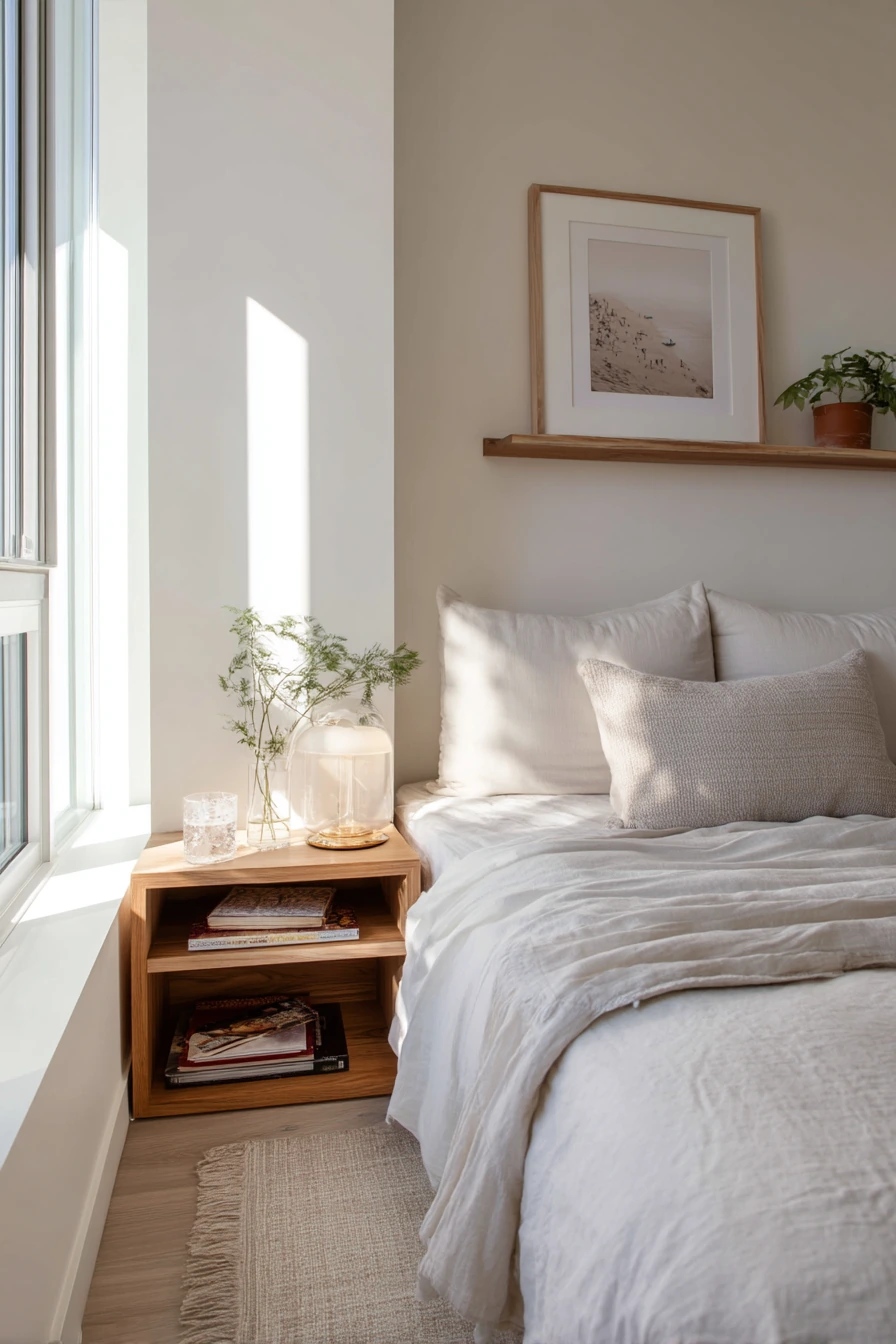
This compact one-bedroom setup is calm and practical for a young renter. A queen bed tucked against one wall opens up a clear walking path and keeps the room from feeling crowded. A slim oak nightstand gives you just enough surface for a water glass, a book stack, and a compact reading lamp.
The lived-in details matter here. A soft linen headboard makes the bed feel finished, even if the throw is slightly wrinkled. A small wall shelf holds daily items without taking floor space. A framed print leaning casually looks relaxed and renter-friendly, and the plant shadow on the wall adds depth without extra decor.
To style this look, keep your palette neutral, then add texture. Use a neutral rug to soften footsteps and reduce echo. Let the closet edge stay visible, but make it feel intentional by keeping hangers matching and the floor clear near the opening. Hide extra cords with a simple cable clip so the charging cable stays close but not messy.
- Place the queen bed against one long wall to save square footage.
- Choose a slim nightstand with a drawer to hide small items.
- Add one small wall shelf for books and a charger station.
- Use linen bedding in light tones for an airy, tactile feel.
- Lean one framed print instead of making wall holes.
Pro Design Tip: Keep the bed wall simple and repeat one wood tone (like oak) across the nightstand, shelf, and frame to make the room feel larger and more pulled together.
Budget Considerations: A linen-look headboard can be pricey; try a padded headboard slipcover or a secondhand headboard reupholstered with affordable linen blend fabric.

2 Studio Sleeping Nook


In a studio, a sleeping nook helps your bed feel separate from the rest of your life. A sheer curtain creates a soft boundary without blocking light, and low shelving adds storage while keeping the space open. This setup feels intimate and functional, with warm wood accents and a warm lamp glow mixed with window light.
The details tell the truth of a real room. A boucle pillow adds texture. A compact dresser handles daily clothes, while a pinboard holds reminders and small prints. Items like headphones on the corner, shoes by the bed, and a laptop charger draped loose are common in studio living, so plan spots for them instead of fighting them.
To style it, keep your divider light and tidy. Use baskets on the low shelf to hide small items and make the edge look clean. Put a bedside candle (or an LED candle) on a tray so it looks intentional. Keep the laundry basket half full, but choose one with a lid so it reads as decor, not clutter.
- Hang a sheer curtain on a tension rod for a no-drill divider.
- Use low shelving to separate zones and add storage.
- Style the bed with one textured pillow, like boucle, for depth.
- Create a small “drop zone” for headphones, keys, and chargers.
- Keep one pair of shoes visible; store the rest in a bin.
Pro Design Tip: Place the curtain so it hides the bed from your main entry view, then aim a warm lamp toward the curtain to create a soft glow that makes the nook feel calm.
Budget Considerations: Low shelving can be expensive; start with two basic cube units and add matching bins later as your budget allows.


3 Renter-Friendly Warm Minimal

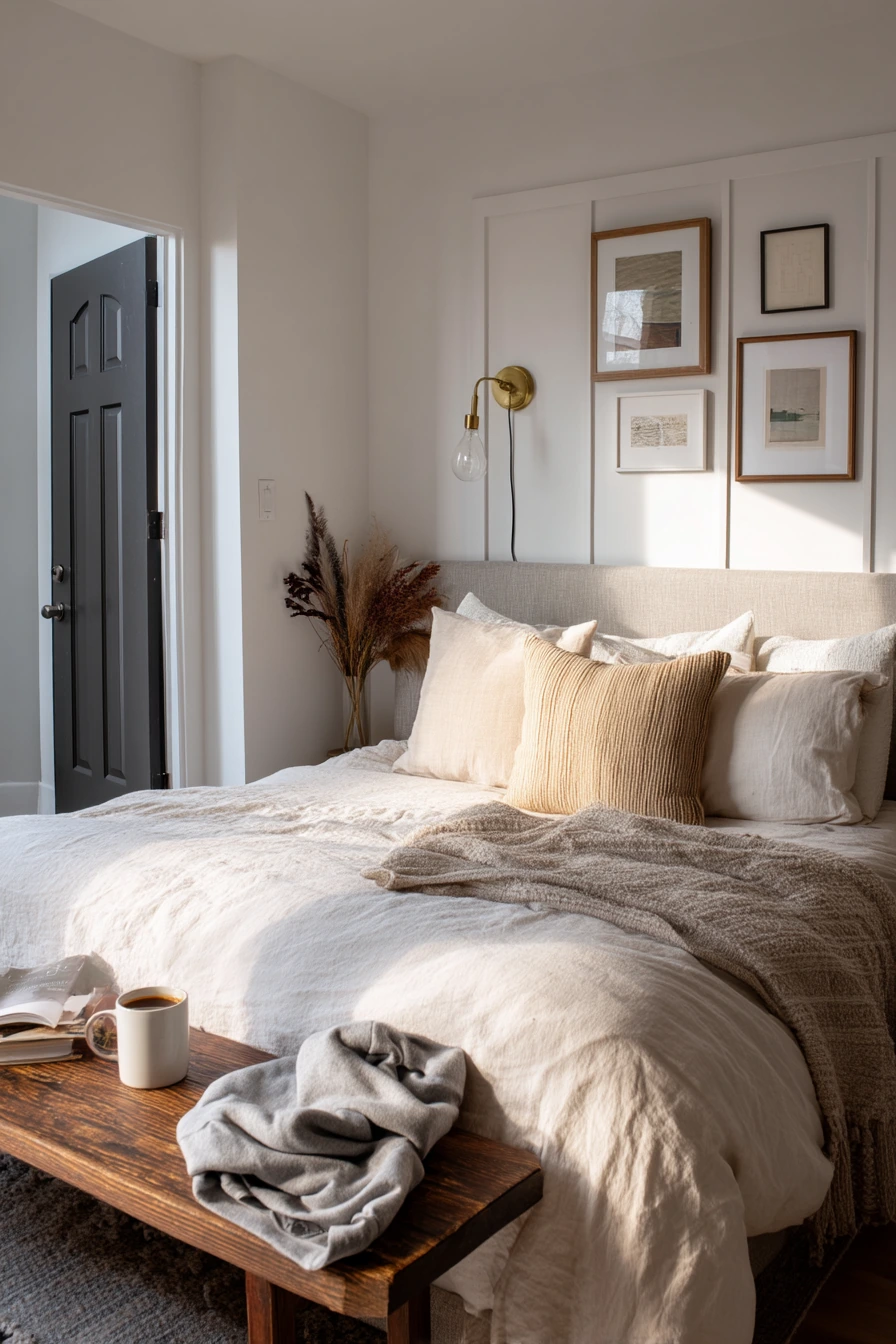
If you want easy upgrades that still look polished, focus on surfaces and lighting. A peel-and-stick headboard panel adds a “built-in” feel without drilling or permanent changes. Pair it with a simple platform bed and layered white and oatmeal bedding for a serene, unfussy base.
This kind of room works because every item is simple but intentional. A brass reading sconce can be a plug-in style, so you get better light than a table lamp. A narrow oak bench at the foot of the bed gives you a spot for a folded sweatshirt or a bag. A no-drill mirror propped beside the closet makes the room feel bigger and helps with getting ready.
To style it, keep your bedding smooth but not perfect. A paperback and a tea mug make the space feel lived-in, but limit the surfaces to a few items. Use thrifted art in simple frames, and stick to a tight color range so the upgrades feel cohesive. Let daylight show on the floor by keeping the path clear and using one small basket for loose items.
- Add a peel-and-stick headboard panel to anchor the bed wall.
- Choose plug-in brass reading sconces for focused light.
- Layer white and oatmeal bedding for a calm, warm look.
- Use a narrow bench as a landing spot for daily clothes.
- Prop a no-drill mirror near the closet to brighten the room.
Pro Design Tip: Match the metal finish (like brass) across the sconce, picture frames, and drawer pulls so the room feels designed, not random.
Budget Considerations: Peel-and-stick panels range in price; use one panel width behind the bed as an accent instead of covering the whole wall.


4 Small Bedroom With Desk


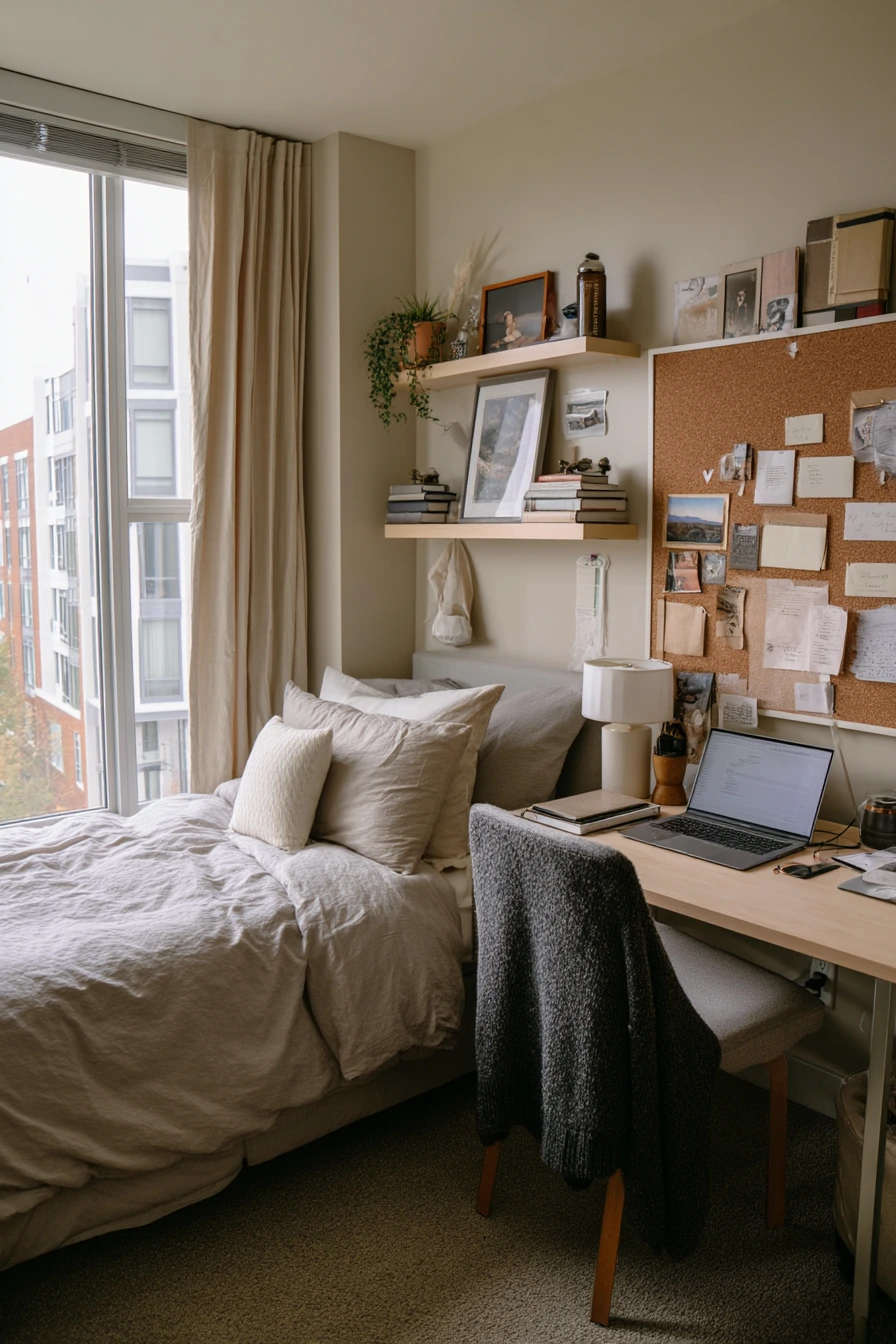
When a bedroom has to do double duty, the layout matters more than the decor. Put the bed on one side and a petite writing desk on the other so each area has its own lane. This keeps your sleep zone separate from your work zone, even if the room is small.
Use simple, homey pieces that do not add visual noise. A cork board above the desk holds notes without piles of paper. A compact task chair tucks in easily. A floating shelf with plants adds life without using desk space, and a framed family photo makes the work corner feel personal.
To style it, plan for cables and daily objects. Put the laptop, pen cup, and stacked notebooks in a neat row, then leave one clear spot for a water bottle. Linen curtains soften the light and reduce glare on your screen. If there is cable spill near the outlet, hide it with a cord box or a fabric basket so the area looks calm in photos and feels calm in real life.
- Split the room into two sides: sleep and work.
- Choose a small desk with drawers to reduce desktop clutter.
- Hang a cork board for reminders and a weekly plan.
- Add one ceramic lamp for warm light after sunset.
- Use a floating shelf for plants to free up the desk surface.
Pro Design Tip: Keep your desk chair and bedside textiles in the same tone family so the room reads as one space, not two mismatched corners.
Budget Considerations: If a new desk is out of reach, try a wall-mounted drop-leaf desk or a secondhand table, then upgrade the chair cushion for comfort.

5 Soft Color Apartment Bedroom
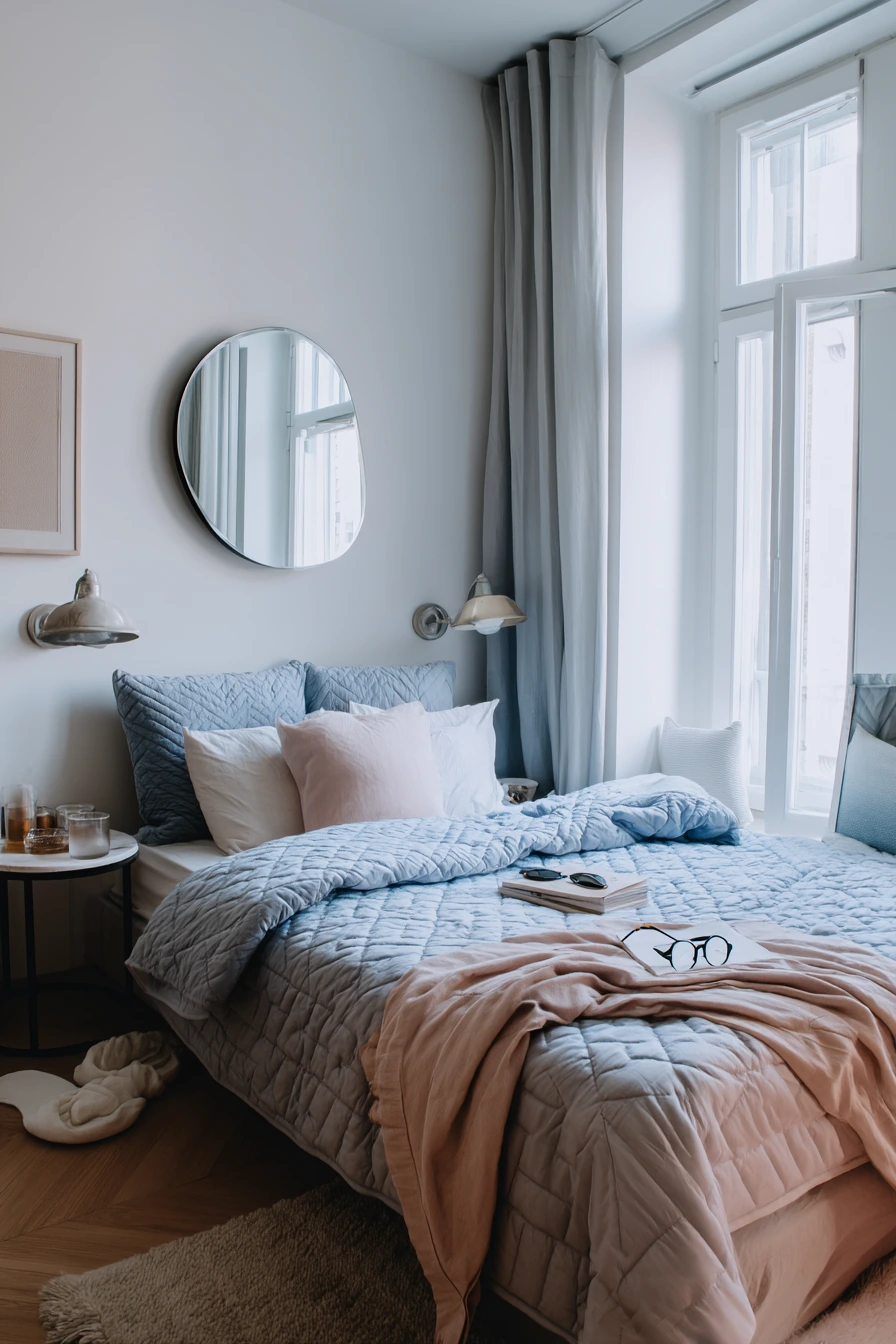

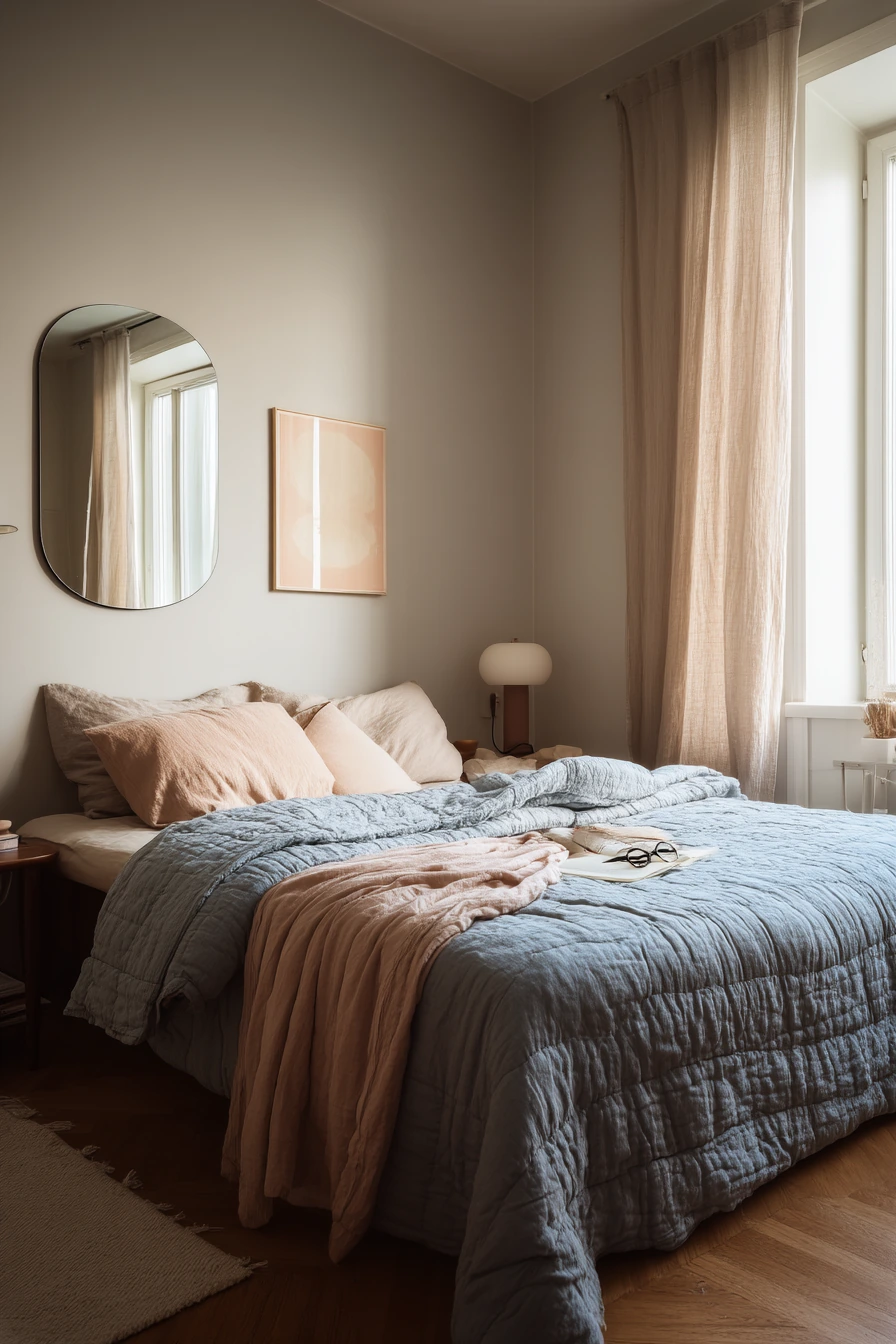
Soft color is a simple way to make a couple’s apartment bedroom feel restful. A dusty blue quilt sets a calm base, while a blush throw adds warmth without being loud. This mix looks cozy in late-afternoon light and still feels grown-up.
Keep the furniture petite so the room stays easy to move through. Small nightstands give each person a spot for essentials like eyeglasses, a novel on the duvet, and two water glasses. A rounded mirror softens hard angles and makes the room feel larger. Add a sculptural lamp for shape, and keep art simple so the bedding stays the main focus.
To style it, make the room feel real but not messy. Hide extra charging cords in a small tray and keep one charger near the pillow. If a sock ends up on the rug, add a lidded basket nearby so stray items have a quick home. Let curtain folds show; they add texture and make the room look finished without extra decor.
- Start with one main bedding color, like dusty blue.
- Add one soft accent, like a blush throw, for balance.
- Use matching petite nightstands to reduce visual clutter.
- Hang or lean a rounded mirror to reflect light.
- Keep a small tray for glasses, chargers, and water.
Pro Design Tip: Use a “three texture” rule: smooth cotton sheets, a quilted layer, and one nubby throw so the bed looks rich even with simple colors.
Budget Considerations: If matching nightstands cost too much, buy one and use a small stool or wall shelf on the other side to create balance.

6 Urban Plant-Filled Retreat


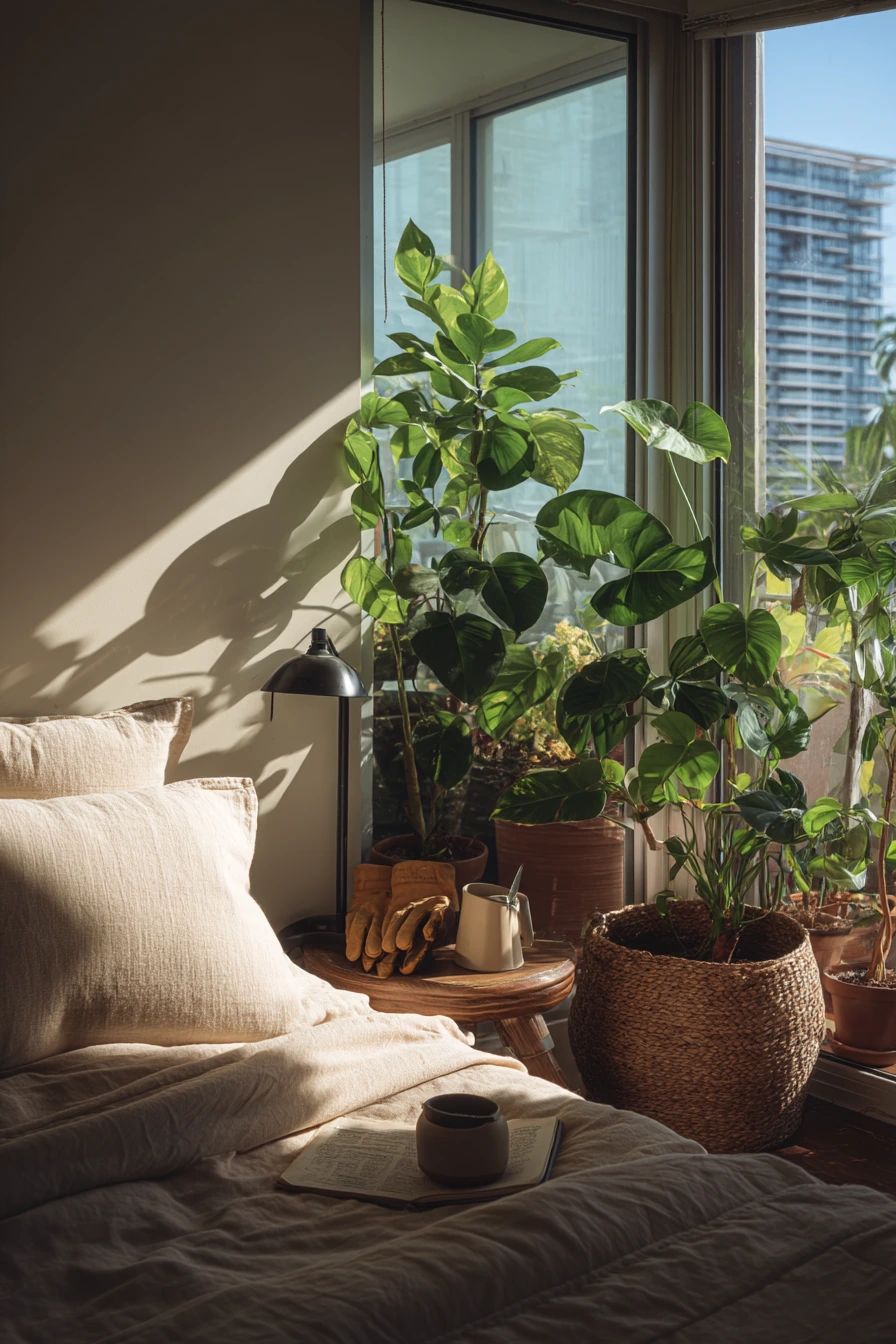
A plant-filled bedroom can feel lush and still realistic in a city apartment. Frame the bed with a few tall plants like pothos and a fiddle leaf fig, then fill in with smaller terracotta pots. Natural linen bedding keeps the look grounded and breathable, especially with soft morning light coming from an open window.
Because plants already bring a lot of visual texture, keep the rest simple. A slim black reading lamp adds contrast and clean lines. A woven basket can hold gardening gloves or extra pots. Small everyday items, like a watering can, a book, and a half-finished coffee, make the space feel lived-in instead of staged.
To style it, group plants in odd numbers and vary heights so the wall gets soft plant shadows instead of a flat line. Put saucers under terracotta pots to protect floors and window sills. If you have city building reflections faint beyond the glass, keep the window area uncluttered so the light stays open and bright. Rotate plants weekly so they grow evenly and the room stays balanced.
- Use one tall plant on each side of the bed to “frame” it.
- Mix terracotta pots with one woven basket for warmth.
- Keep bedding natural and light, like linen in sand tones.
- Add a slim reading lamp so leaves do not block your light.
- Store tools in a basket so the space stays calm.
Pro Design Tip: Repeat the same pot color (like terracotta) across the room so the greenery looks intentional, not scattered.
Budget Considerations: Large plants can be costly; start with pothos cuttings and smaller floor plants, then size up over time as you find deals locally.

7 Guest-Ready Spare Bedroom


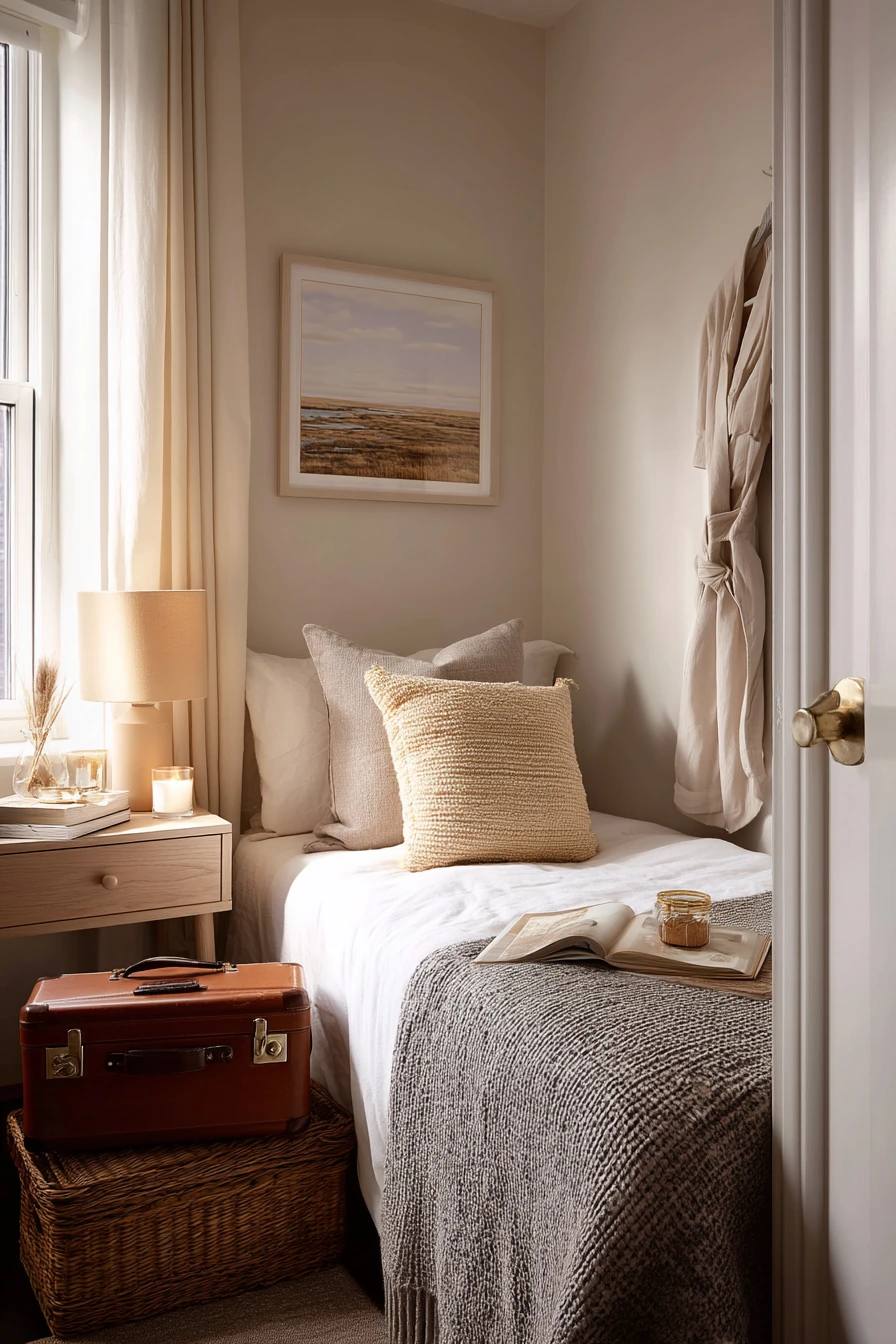
A spare room that doubles as guest space works best when it stays tidy and flexible. A daybed gives you seating during the day and a bed at night, which is perfect for apartment living. Layered pillows and a folded throw make it look inviting without taking up extra room.
Focus on guest-ready basics. A compact bedside table and small lamp give visitors a place for a phone and a book. Add a woven hamper so used towels and clothes do not end up on the floor. Details like an extra blanket at the foot, a suitcase partially open, and a robe hanging on the door feel realistic and welcoming.
To style it, create a simple “landing zone” on the dresser with a candle, a toothbrush cup, and a small tray. Keep curtains simple so light is soft and calm. If storage is tight, use under-bed bins for extra linens. Aim for a warm lamp light with faint window fill so the room feels cozy at night and clear in the morning.
- Choose a daybed with drawers or plan bins for under-bed storage.
- Layer pillows in two sizes to make the bed look full.
- Keep one extra blanket at the foot for easy access.
- Set up a small dresser tray for guest essentials.
- Add a hamper so the room stays neat during visits.
Pro Design Tip: Make the daybed like a sofa by using two larger back pillows and one lumbar pillow, then fold the throw neatly over one corner.
Budget Considerations: If a daybed is not in the budget, use a simple twin bed and add a long bolster pillow to fake the daybed look.

8 Budget Thrifted Bedroom
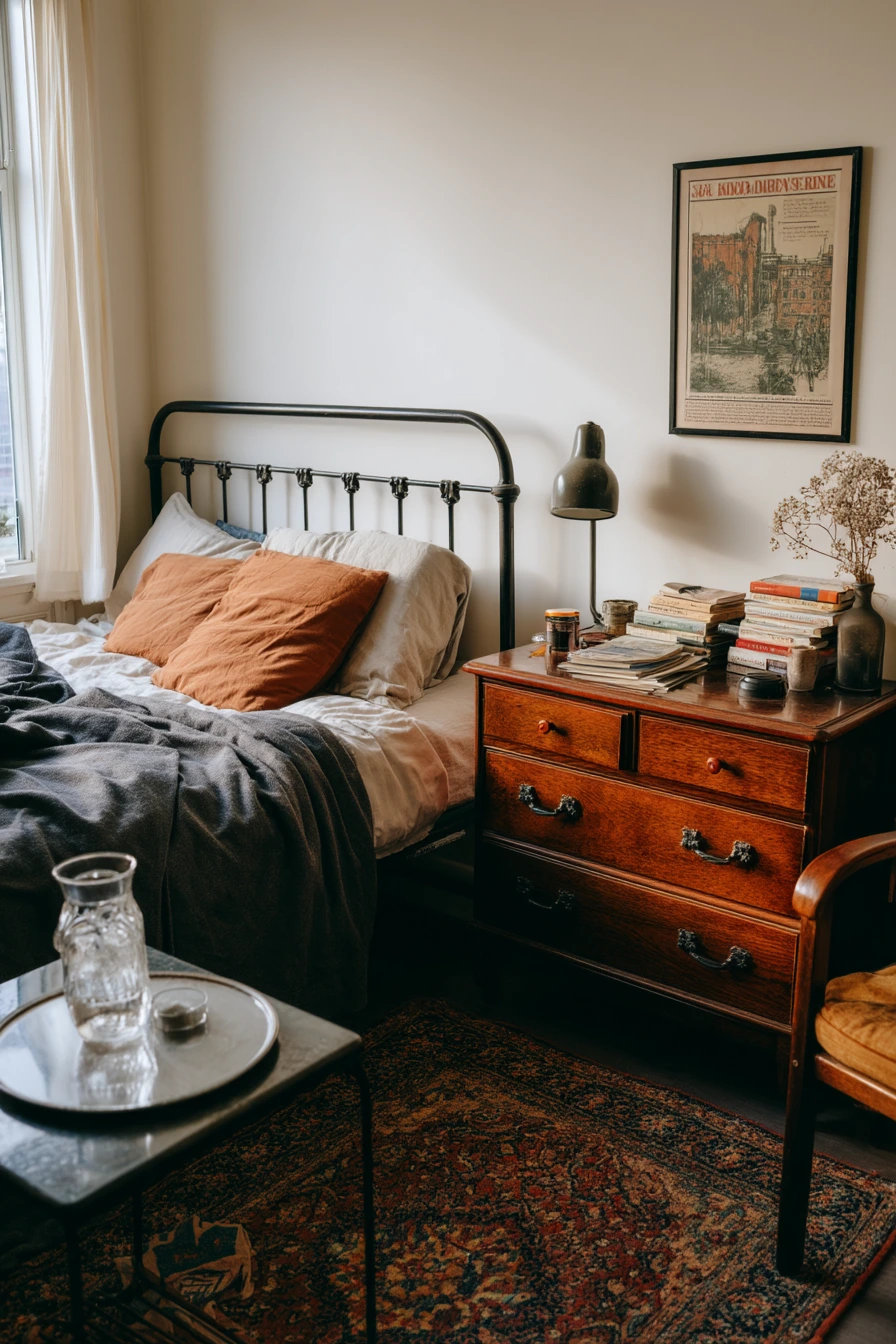
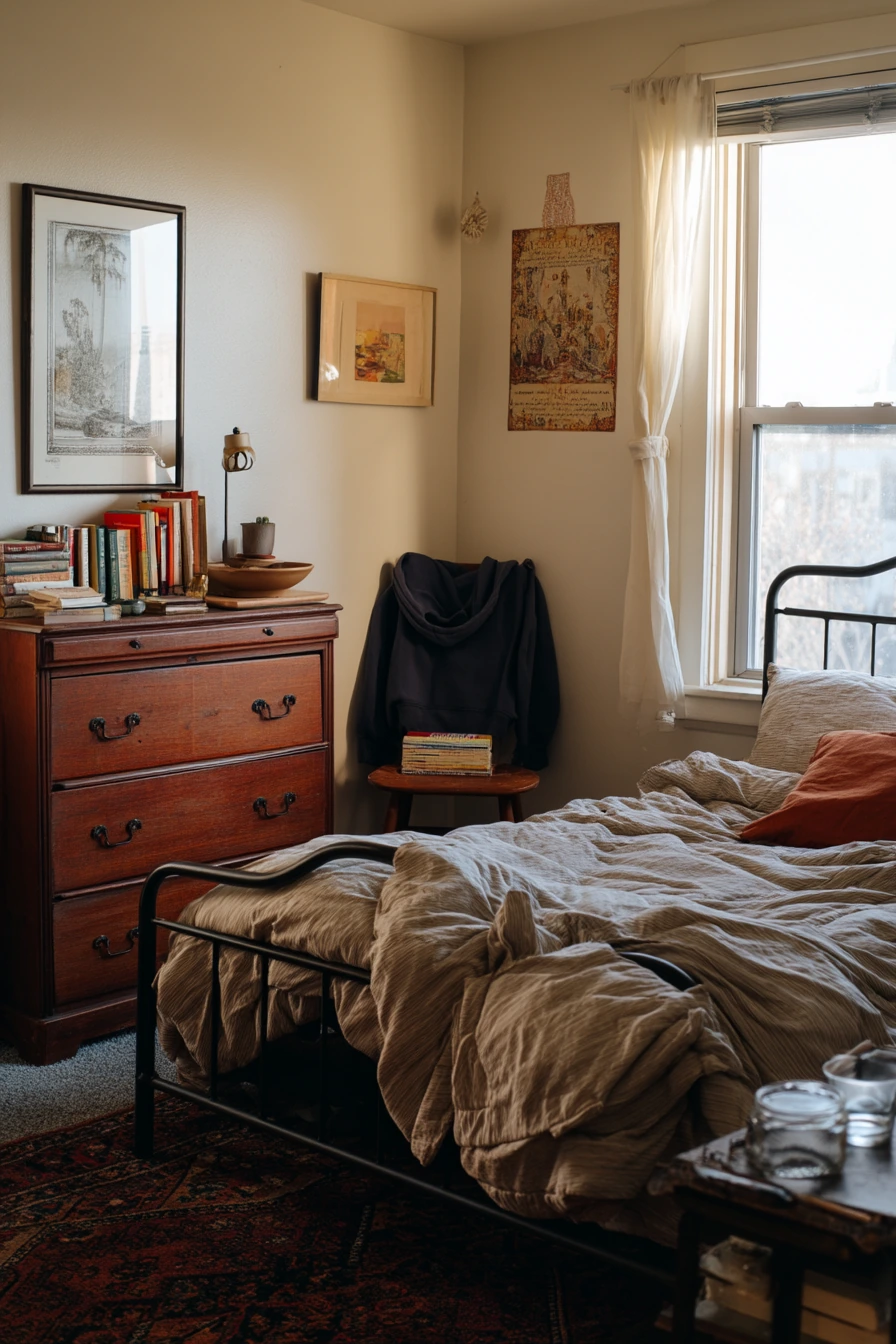
A budget-conscious bedroom can still look charming and warm when you lean into thrifted pieces. An iron bed frame adds structure, and a secondhand oak dresser brings in natural wood tone. A mismatched lamp is fine if the rest of the room has a steady color palette.
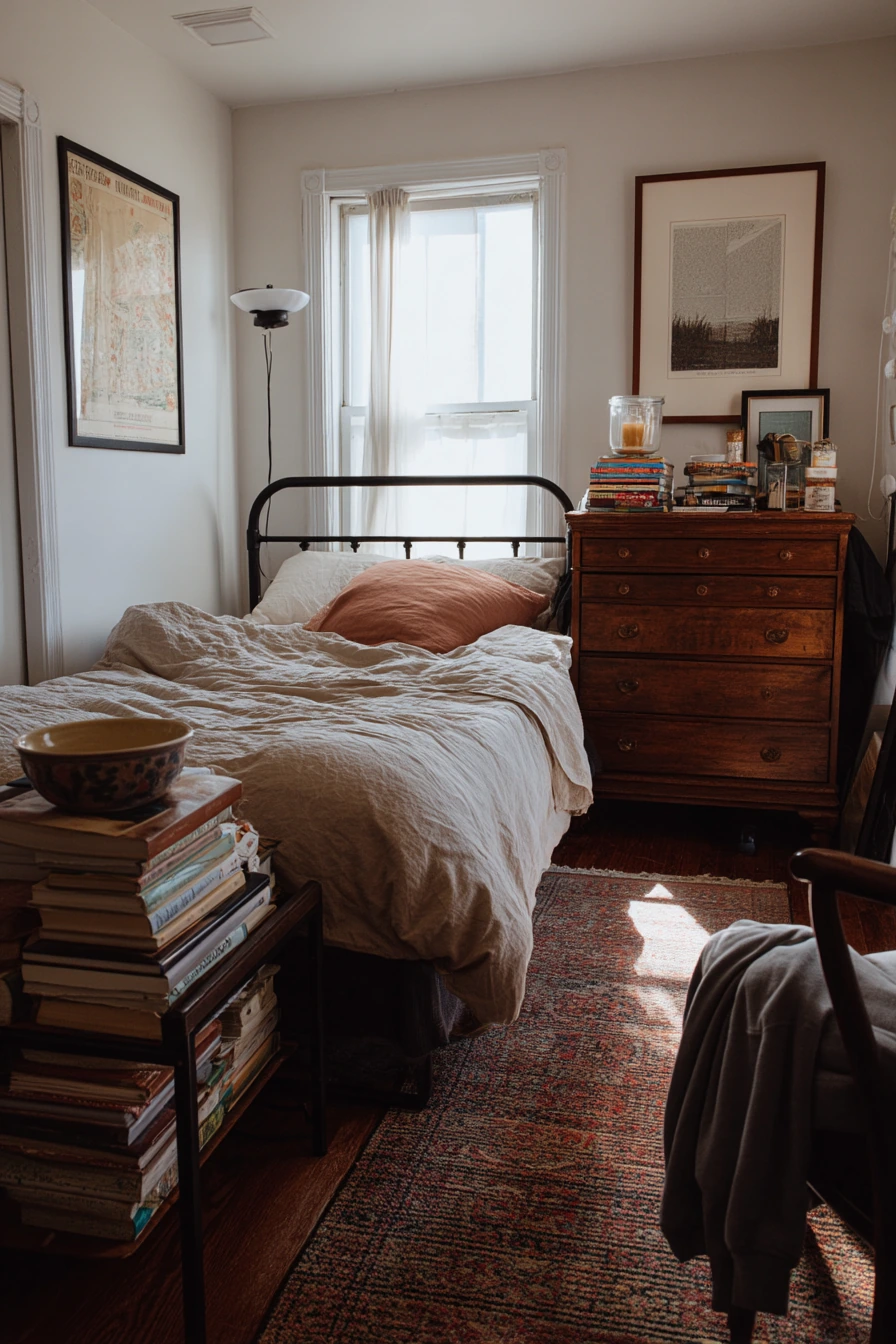
The key is to make “mixed” feel planned. A vintage rug with soft wear adds pattern and hides small stains better than a plain rug. A framed poster and a stack of paperbacks bring personality without high cost. Real-life items like a ceramic bowl for keys, a water glass, and slightly rumpled bedding keep the space honest and comfortable.
To style it, pick one unifying element and repeat it. That might be black metal (bed frame, picture frame), or warm wood (dresser, tray). Manage the not-so-pretty parts, like an extension cord along the baseboard, by using cord covers or running it behind the dresser. Keep one chair for clothes, but add a hook strip so the hoodie does not always end up there.
- Start with a sturdy iron bed frame from a resale shop.
- Choose a secondhand dresser and replace the knobs if needed.
- Use a vintage-style rug to add pattern and softness.
- Group books and small objects on a tray to look tidy.
- Hide extension cords with covers or furniture placement.
Pro Design Tip: When pieces do not match, match the “lines” instead: pair simple shapes together and avoid adding too many curvy or ornate items in one room.
Budget Considerations: Thrifted furniture can need repairs; set aside a small amount for sandpaper, paint, and new hardware to make old pieces feel fresh.

9 Calm Sleep-First Layout
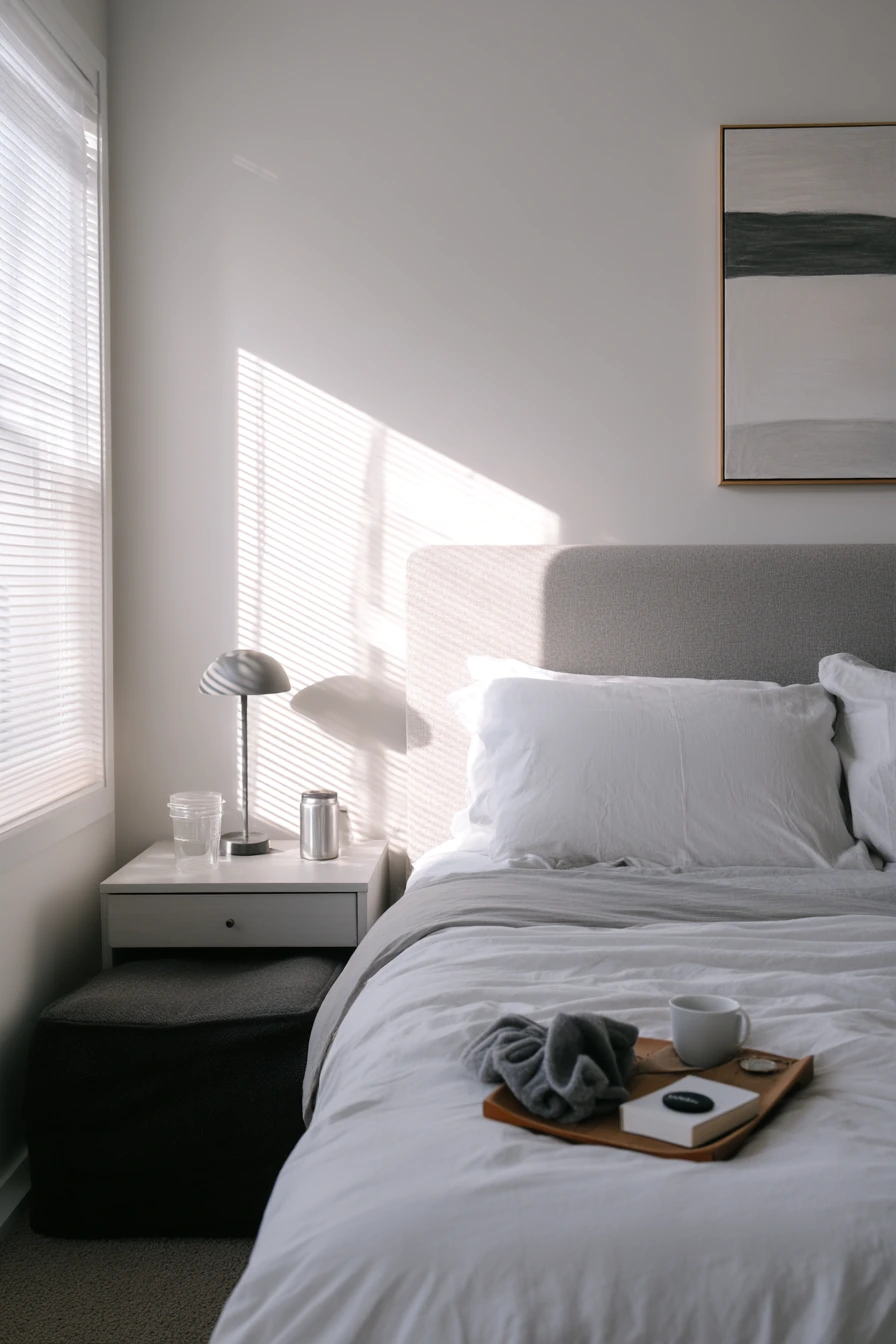

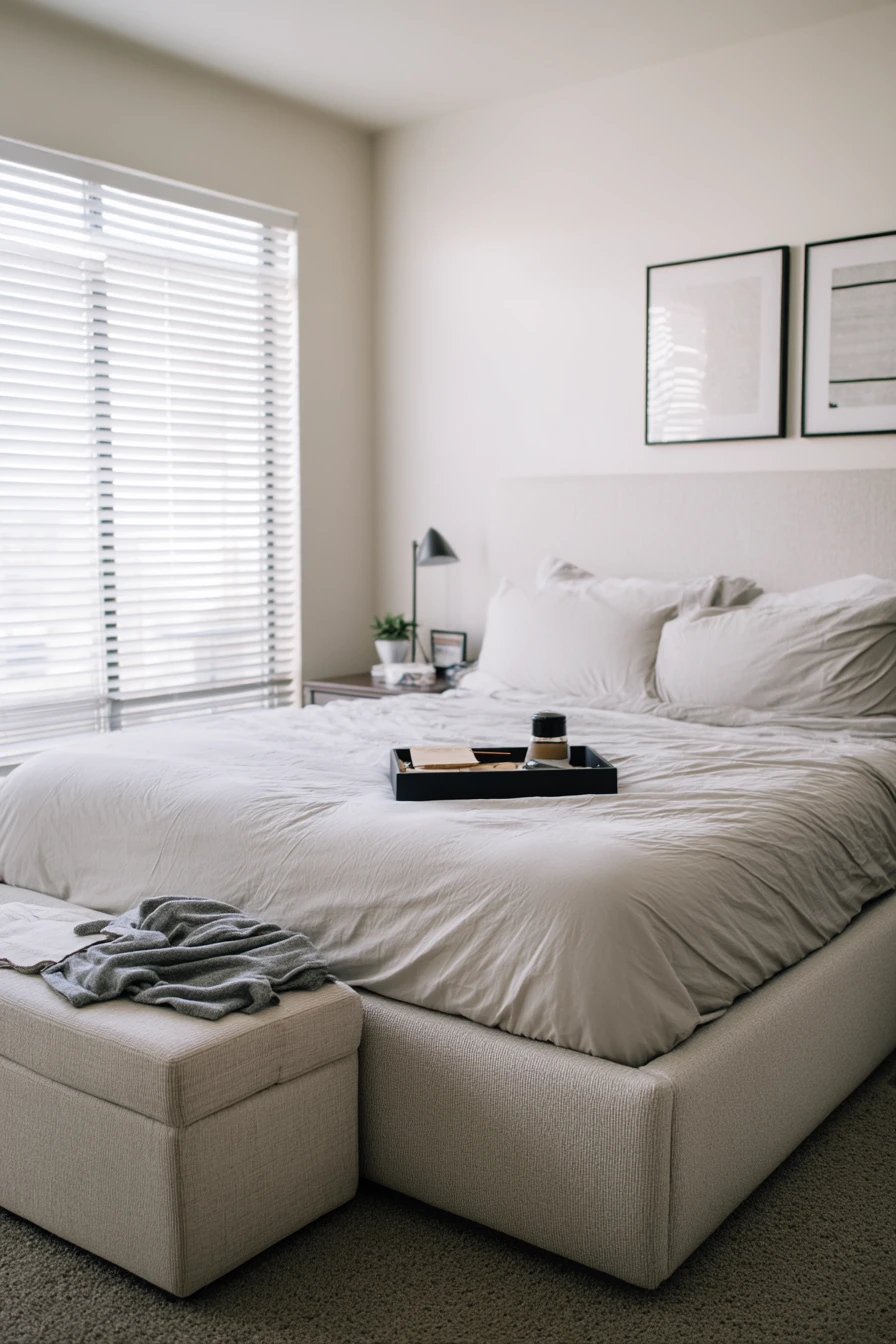
If you are a light sleeper, build your bedroom around rest first, then decorate second. Blackout curtains reduce early light and street glow. A low upholstered bed with soft gray linens creates a quiet, soothing base that feels velvety and calm in early dawn light.
Keep surfaces minimal to lower visual noise. Use a small nightstand with only the essentials: a reading lamp, an earplugs case, and a water carafe. Put your phone face down to reduce light and stress. Add hidden storage like an ottoman so extra blankets and off-season items do not spill into the room.
For sound, consider acoustic art panels that look like decor but help soften echo. Add a soft rug if your floors are hard, and keep the door gap sealed with a draft stopper to reduce hallway noise and light. Make a simple bedtime kit: sleep mask, book, and lip balm in one small tray so you are not searching at night.
- Hang blackout curtains to block streetlights and sunrise.
- Choose soft gray bedding for a calm, low-contrast look.
- Use one warm reading lamp instead of bright overhead light.
- Add an ottoman with storage to keep the room clear.
- Try acoustic art panels to reduce echo and noise.
Pro Design Tip: Use layered light control: blackout curtains plus a sheer curtain, so you can adjust brightness during the day without losing privacy.
Budget Considerations: Acoustic panels can be expensive; start with a thick rug, heavy curtains, and a fabric headboard to absorb sound at a lower cost.

10 Teen-to-Young-Adult Bedroom


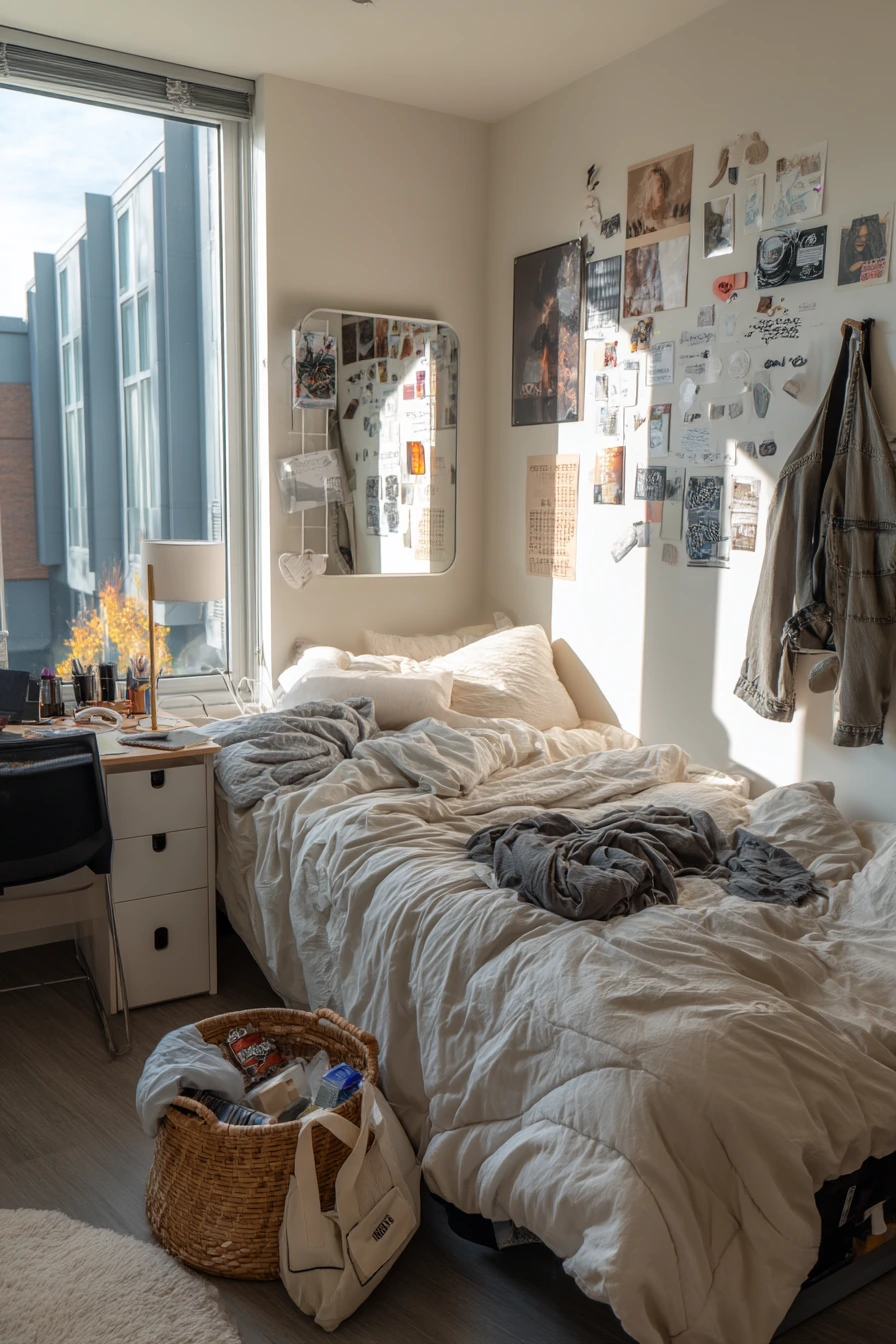
Your first place usually needs to do a lot at once, so flexibility matters. Start with a bed that feels cozy, using layered quilts and easy-to-wash bedding. Add a peg rail for a jacket and tote bag so your everyday items have a home and do not land on the floor.
This look is personal and real, not perfect. A poster collage shows your style, and modular cube storage adapts as you collect more things. A compact mirror and makeup bag can live on top of one cube, while a sketchbook and earbuds stay in a small bin. A desk chair can double as a catch-all, but it helps to give it a purpose, like a place to set tomorrow’s outfit.
To style it, keep the room playful but not chaotic. Use two or three main colors from your posters or quilts, then repeat them in a lamp shade, storage bins, or a small rug. Manage the small messes that show up in real life, like a snack wrapper or a charging cable, with one bedside basket. Use a soft lamp beside the bed so the room feels warm at night and still looks good in late-day window light.
- Layer quilts for a cozy bed that works in all seasons.
- Add a peg rail to hang daily bags and outerwear.
- Use cube storage with bins to keep small items sorted.
- Create a mini “get ready” spot with mirror and basics.
- Keep one basket near the bed for chargers and clutter.
Pro Design Tip: Make one wall your “story wall” with posters, then keep the rest of the room simple so the space feels styled, not busy.
Budget Considerations: Modular storage adds up; buy a small set now and expand later, and use matching bins to make budget pieces look more finished.

Good apartment bedroom ideas come from small, smart choices: a clear layout, soft light, and storage that fits your daily habits. You do not need a large room to make a space that feels calm and put together.
Pick one setup that matches your life right now, then copy the parts that will help most, like a curtain divider, a peel-and-stick headboard, or blackout curtains. Focus on comfort first, then add personal details.
FAQ
What is the best bed placement for a small apartment bedroom? Place the bed against one wall or in a corner to keep a wider walkway. This often creates space for a slim nightstand or a small desk.
How can I separate a bed in a studio without building a wall? Use a sheer curtain on a tension rod, a low shelf unit, or a tall open bookcase. Keep the divider light so the studio still feels bright.
What renter-friendly upgrades make the biggest difference? Try peel-and-stick wall panels, plug-in sconces, better curtains, and a large rug. These change the feel of the room without permanent work.
How do I make mismatched thrifted furniture look intentional? Repeat one element, like a wood tone or a metal finish, and keep your bedding and walls simple. Use trays and baskets to group small items.
What should I keep on my nightstand for a tidy look? Limit it to a lamp, a water glass or carafe, and one small tray for essentials. Store the rest in a drawer or a lidded box.
How can I improve sleep in a noisy apartment? Add blackout curtains, a thick rug, and soft textiles that absorb sound. Consider a door draft stopper and keep the room uncluttered.
How do I style a bedroom that also has a work desk? Separate sleep and work to opposite sides, hide cables, and keep the desk surface mostly clear. Use one pinboard or cork board for papers instead of stacks.
Use these ideas as a starting point, then adjust for your room size, your lease rules, and your budget. A calm bedroom is built one practical choice at a time.