

Good kitchen pantry ideas make daily life easier. When food is easy to see and reach, you waste less and shop less often.
This guide shows pantry layouts that fit real homes, from a slim pull-out pantry by the fridge to a deep walk-in pantry with zones for baking, snacks, and pet food. You will also see renter-friendly wire shelves, open-shelf apartment styling, and tiny condo tricks like door-mounted spice racks.
Each section gives simple steps to set up the space, plus small how to style it details like labeled jars, woven baskets, and clear bins. You will also get one pro design tip and a budget note for every pantry.
Use the ideas that match your kitchen, then copy the parts that solve your biggest problem, like kid snacks, breakfast clutter, or after-dinner reset.
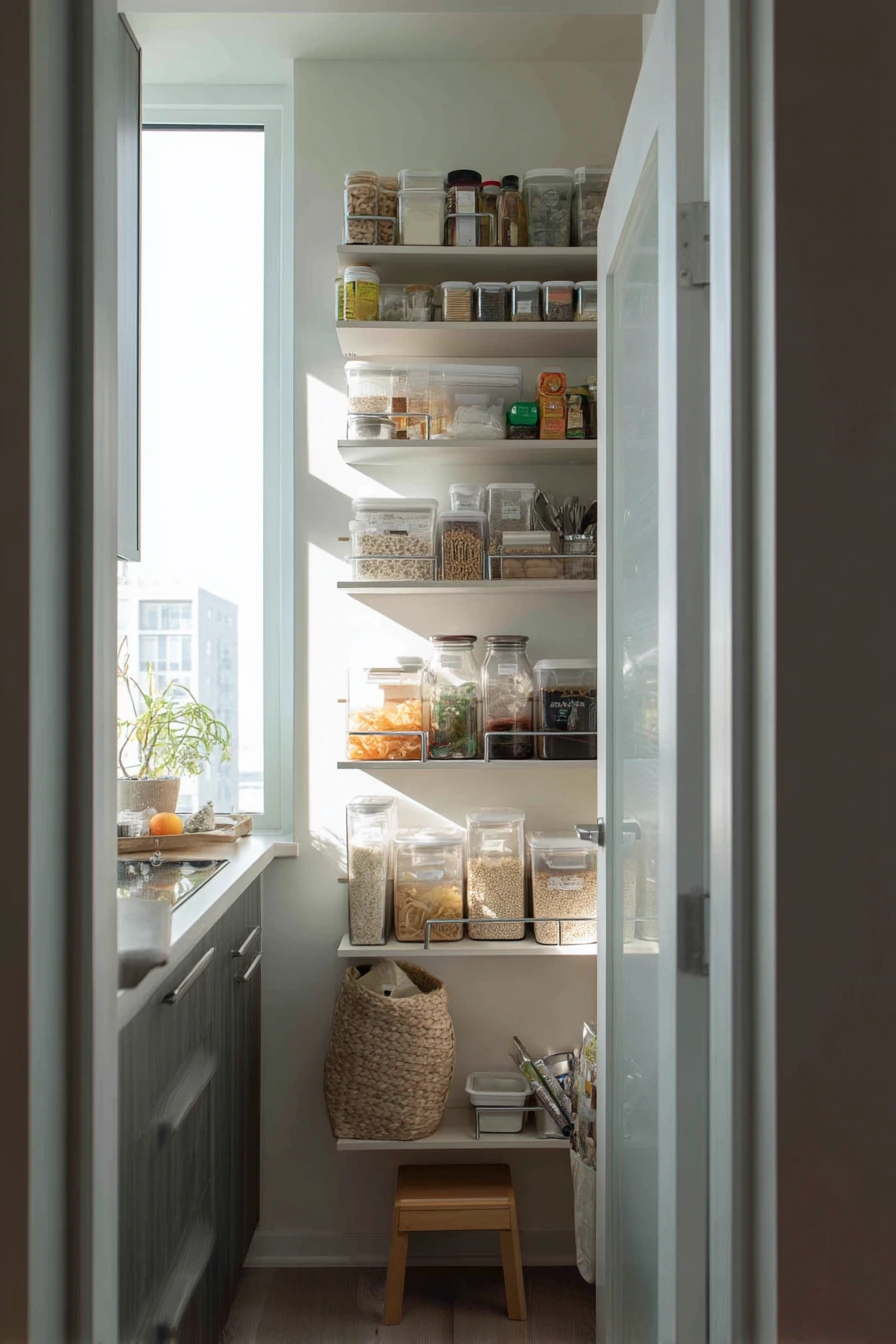
1 1. Small Pantry Pull-Out for Busy Weeknights
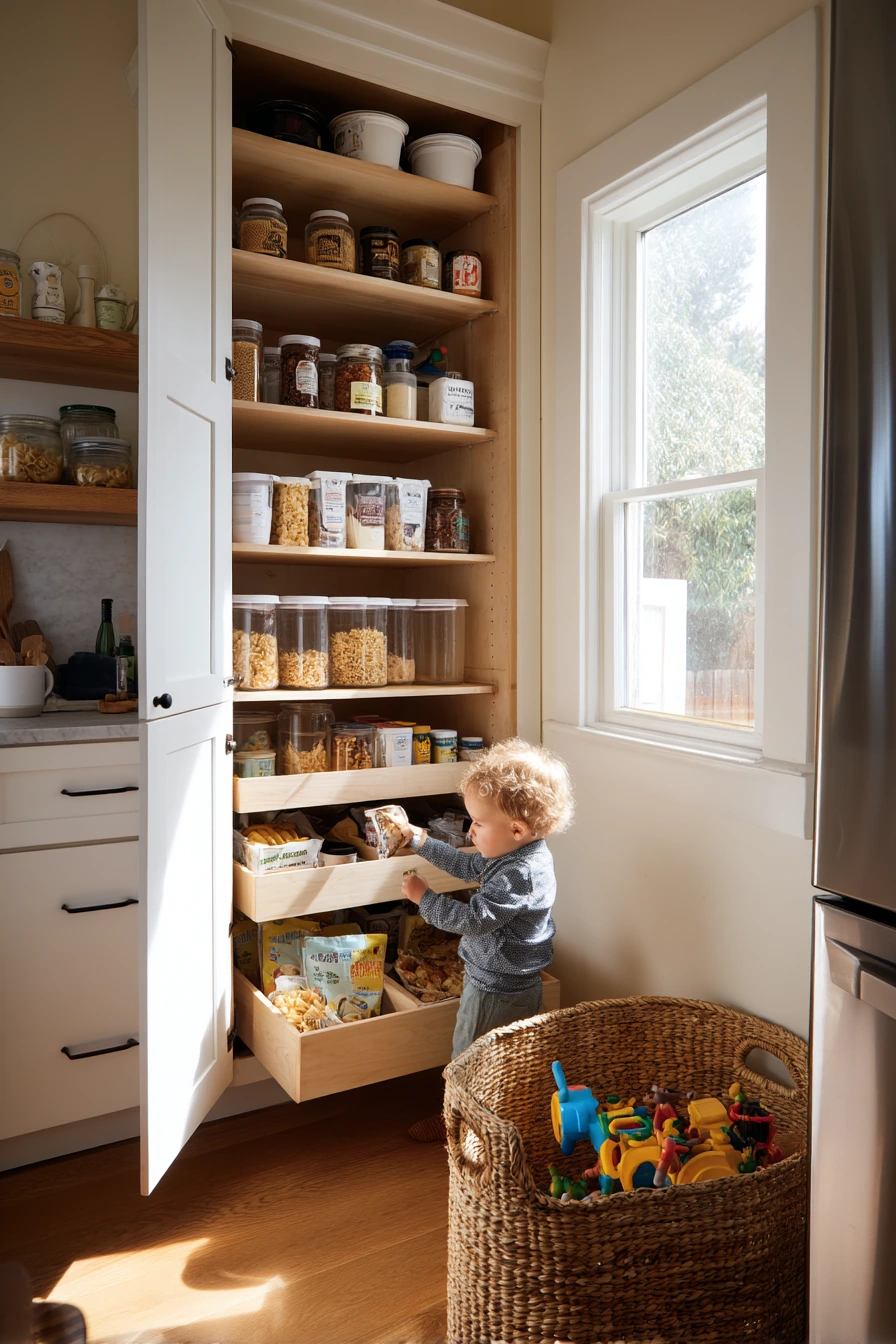
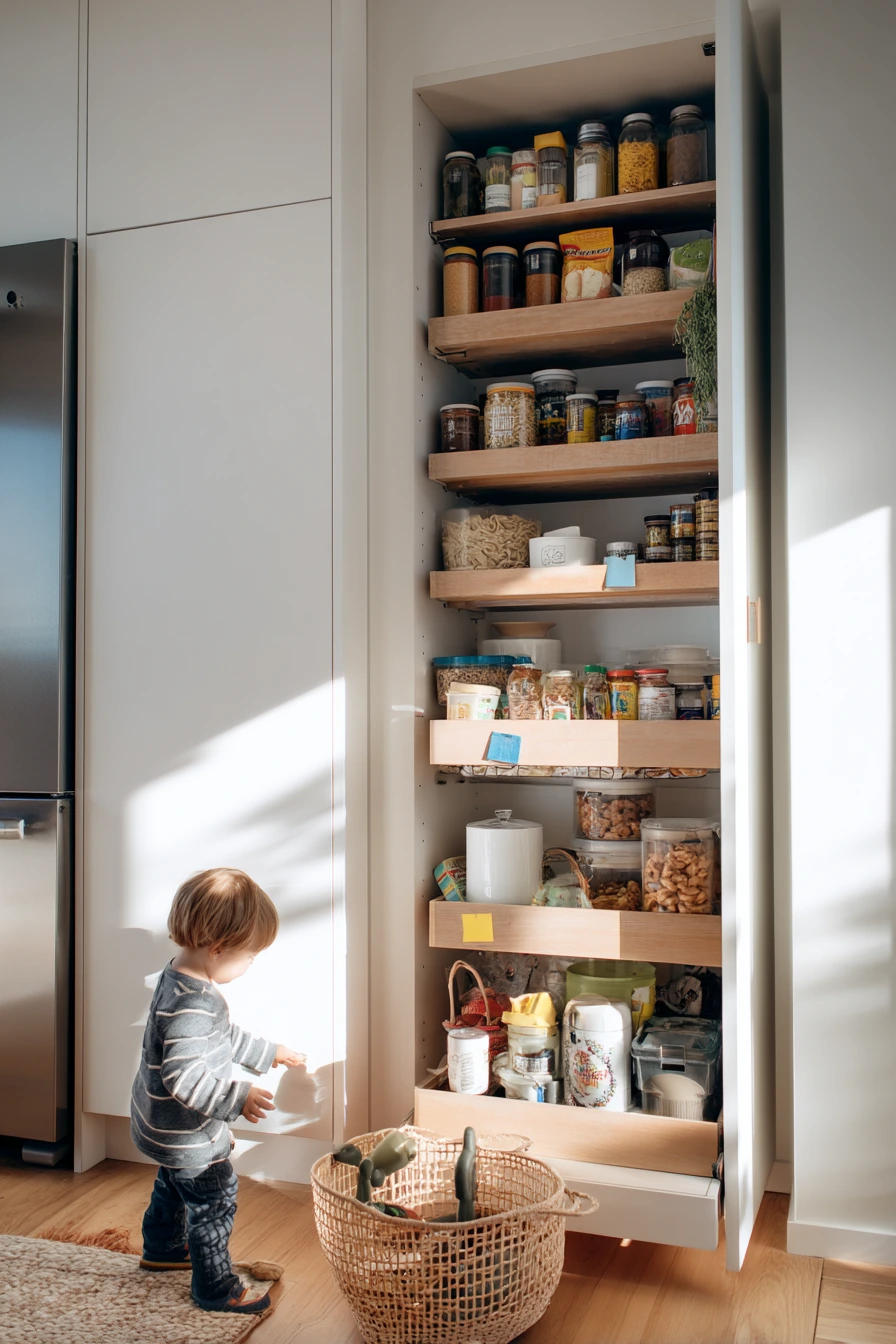
A slim pull-out pantry beside the fridge is one of the best kitchen pantry ideas for small-city homes where every inch matters. It keeps spices, pasta, cereal, and snack bins in a tight footprint, and it works well in a busy family kitchen. If you already have labeled jars, you are halfway there. The goal is to make the pull-out easy to scan, so you can grab cumin fast even with a toddler nearby.
Set up this pantry by putting the most-used items at adult hand level and the kid-safe items lower. Use clear, labeled jars for dry goods like rice and oats, then add a few sturdy bins for snacks. Leave one small open spot for the “today” items, like a grocery receipt held by a magnet or a single mug on the counter, so the rest stays orderly. Keep duplicates like extra pasta behind the first row so the front looks calm but still holds a lot.
To style it, choose labels that match your kitchen and keep them consistent. Mix one or two textures, like a wood lid on jars, but do not overdo it. Soft window light makes this setup feel lived-in, so keep the pantry door area clear of extra clutter. A small basket near the floor can hold a toddler’s toy basket items so they do not land in the pantry.
- Use narrow bins that slide out without tipping.
- Group spices by cooking type, like tacos, baking, and soups.
- Store tall cereal and pasta in back, shorter jars in front.
- Add a small “snack” zone with pre-portioned bags.
- Keep one hook nearby for reusable shopping bags.
Pro Design Tip: Put matching labels on the front edge of each bin and jar so you can read them even when the pull-out is only halfway open.
Budget Considerations: A pull-out unit can be pricey; for a lower-cost option, add narrow rolling carts with bins and attach simple stick-on labels.
2 2. Open Shelves with Everyday Glass Jars

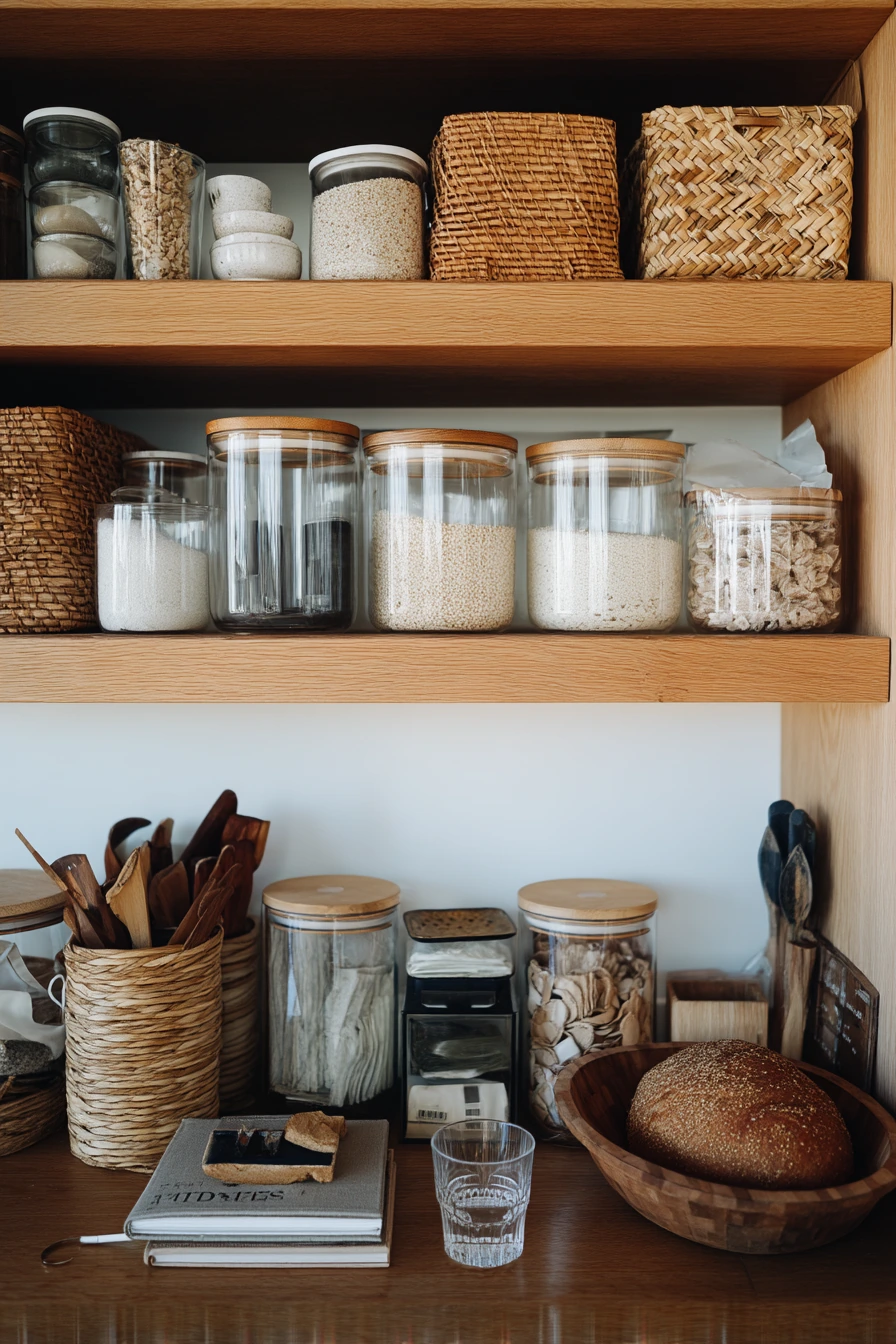
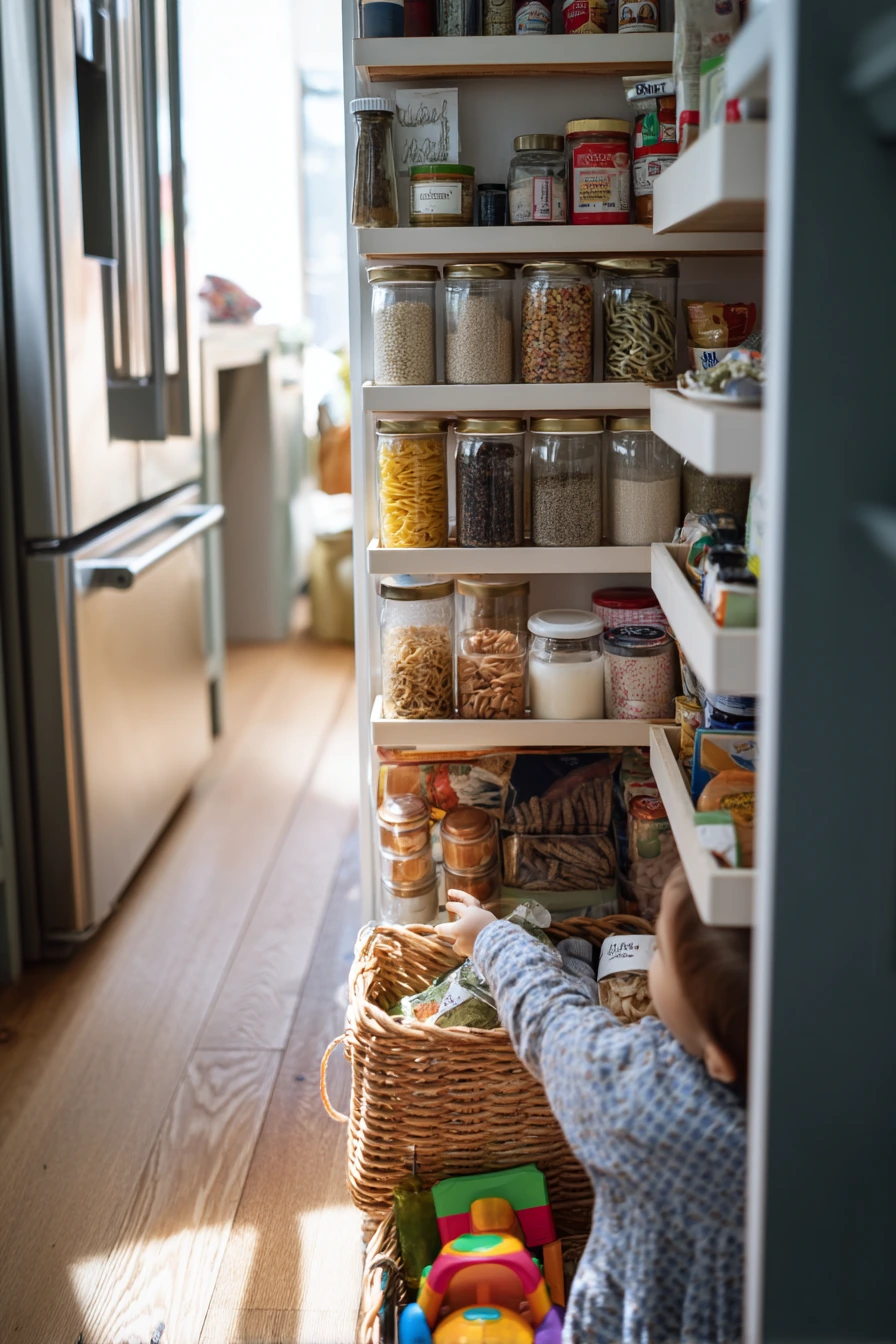
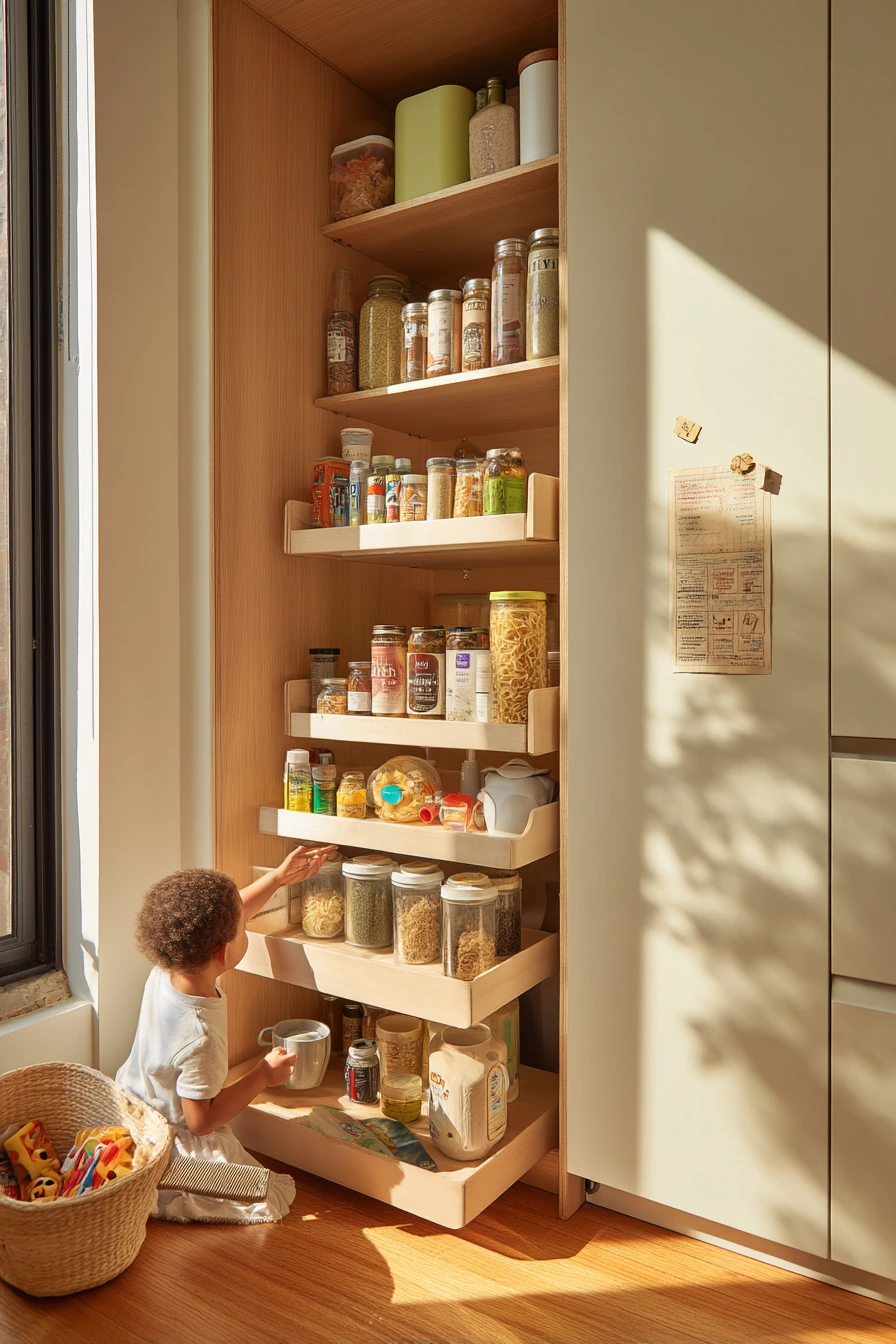
Open-shelf kitchen pantry ideas work well in apartments because they keep the space breathable and easy to change. Warm oak shelves look good with glass canisters, tea tins, rice bowls, paper bags, and woven baskets. Since everything is visible, the key is to edit what stays out and to keep packages neat. Small real-life items, like a water glass beading on the counter or a charging cable near a loaf of bread, are normal, but you want them contained so the pantry still feels calm.
Start by choosing a small set of containers you will use every day. Decant basics like rice, flour, and sugar into glass canisters and keep them on the middle shelves. Place tea tins and coffee items together so your morning routine is simple. Use woven baskets for items that look messy, like snack bars, baking chips, or extra napkins. If you keep paper bags, fold the tops down and line them up like files so they do not slump.
For styling, keep colors warm and simple: clear glass, neutral labels, and a few wood or metal accents. A cookbook propped open can look nice, but make it useful by keeping a short note inside, like a butter-stained reminder of a recipe you make often. Hide cords in a small tray or a basket so the shelf edge stays clean.
- Keep one shelf for everyday breakfast and coffee items.
- Use baskets to hide odd shapes like chips and crackers.
- Choose one label style and stick with it.
- Store heavy items on the lowest shelf for safety.
- Leave a little empty space so it does not feel crowded.
Pro Design Tip: Use a mix of clear canisters and closed baskets so the shelves look balanced and you still have hidden storage for clutter.
Budget Considerations: If new oak shelving is not in the budget, paint existing shelves a warm white and add a few wood-toned bins to get the same cozy look.

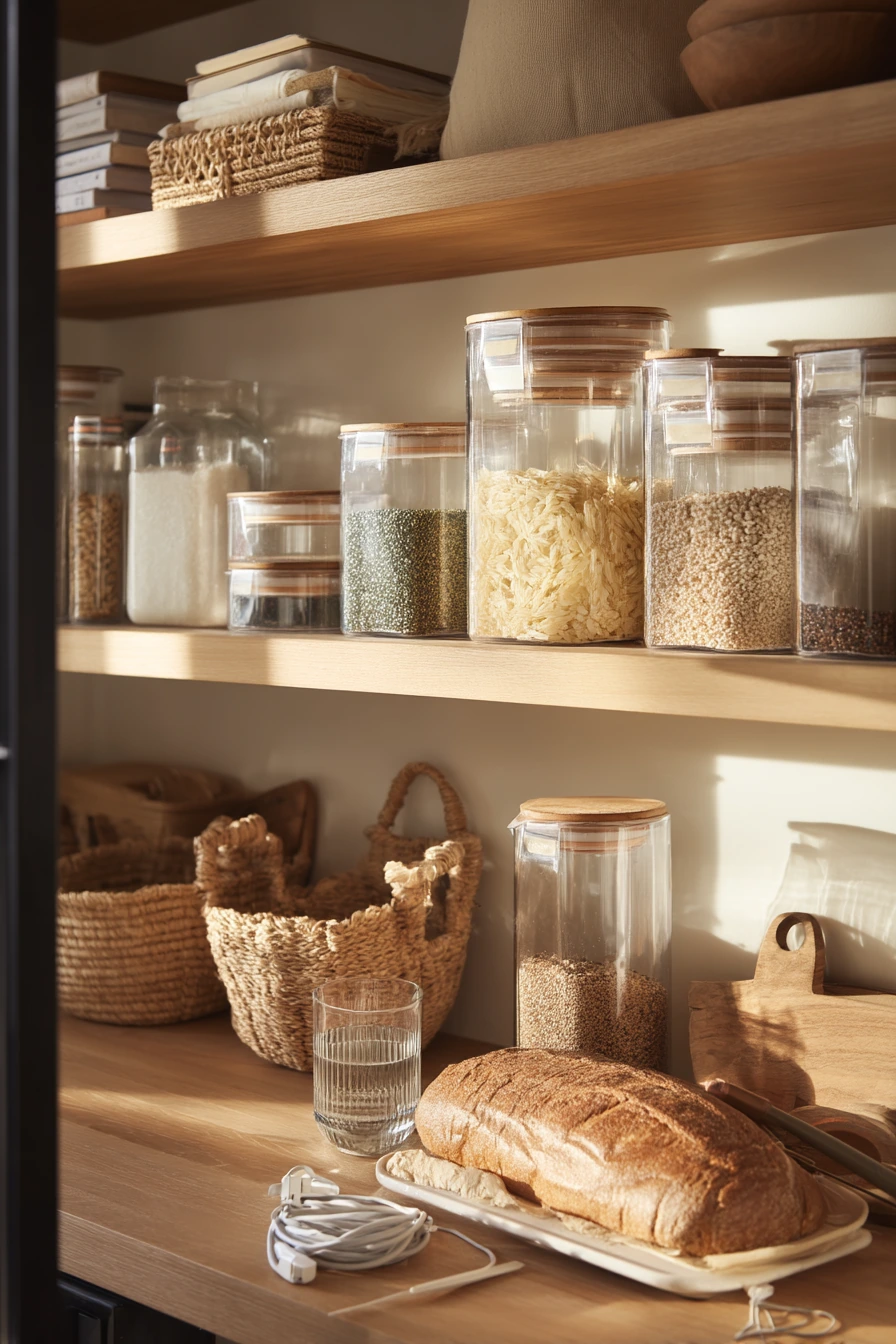
3 3. Deep Pantry with Mudroom Energy
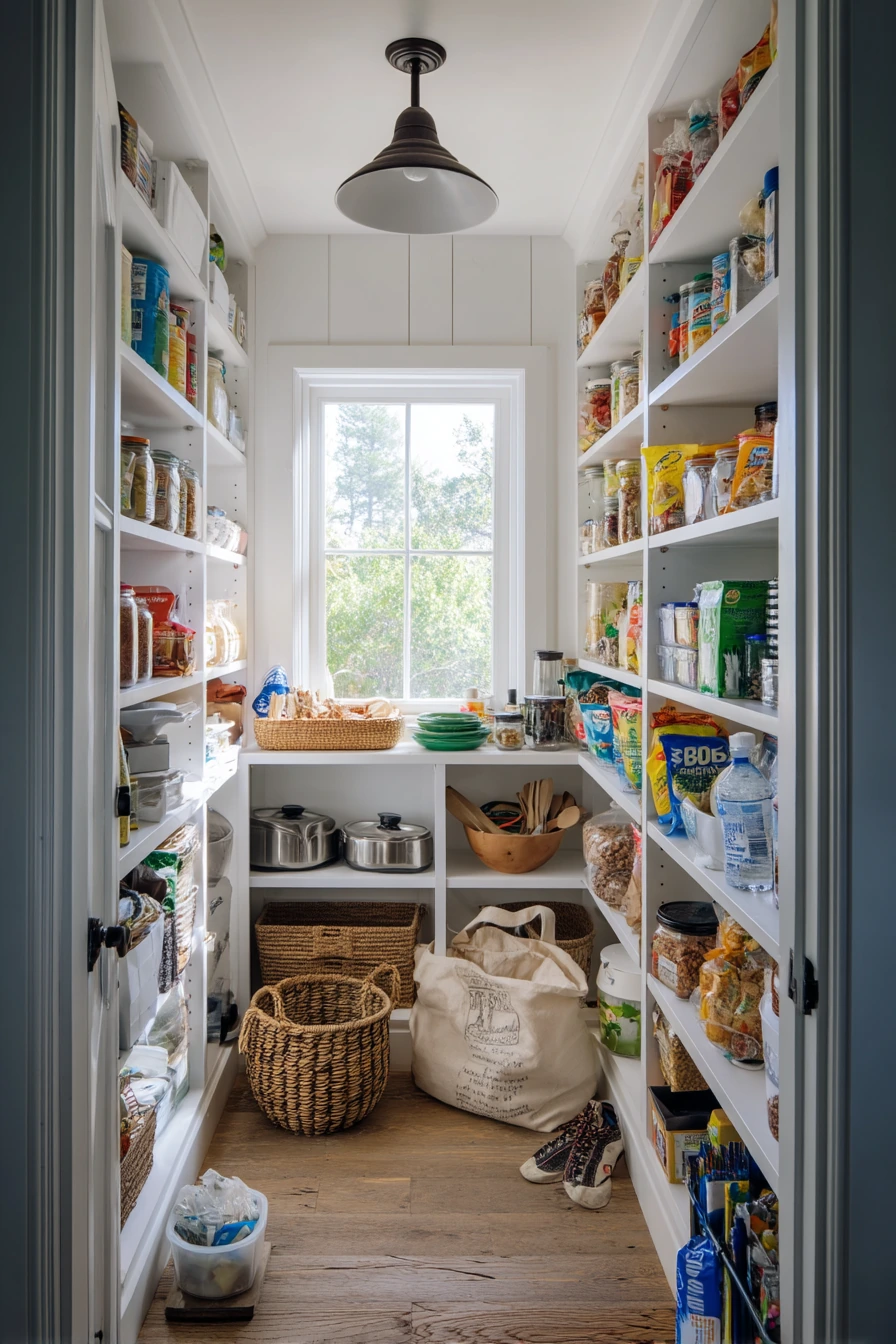
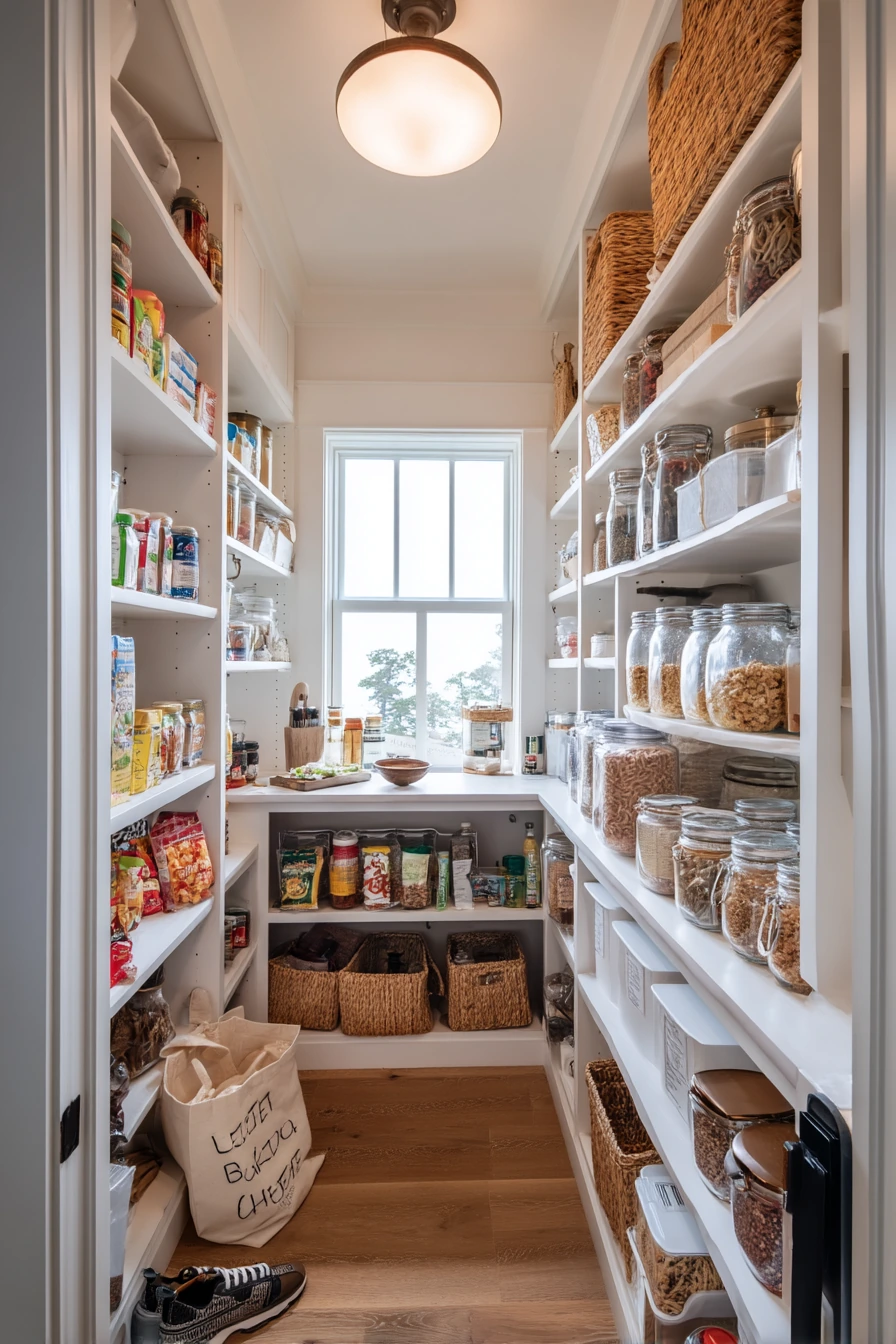
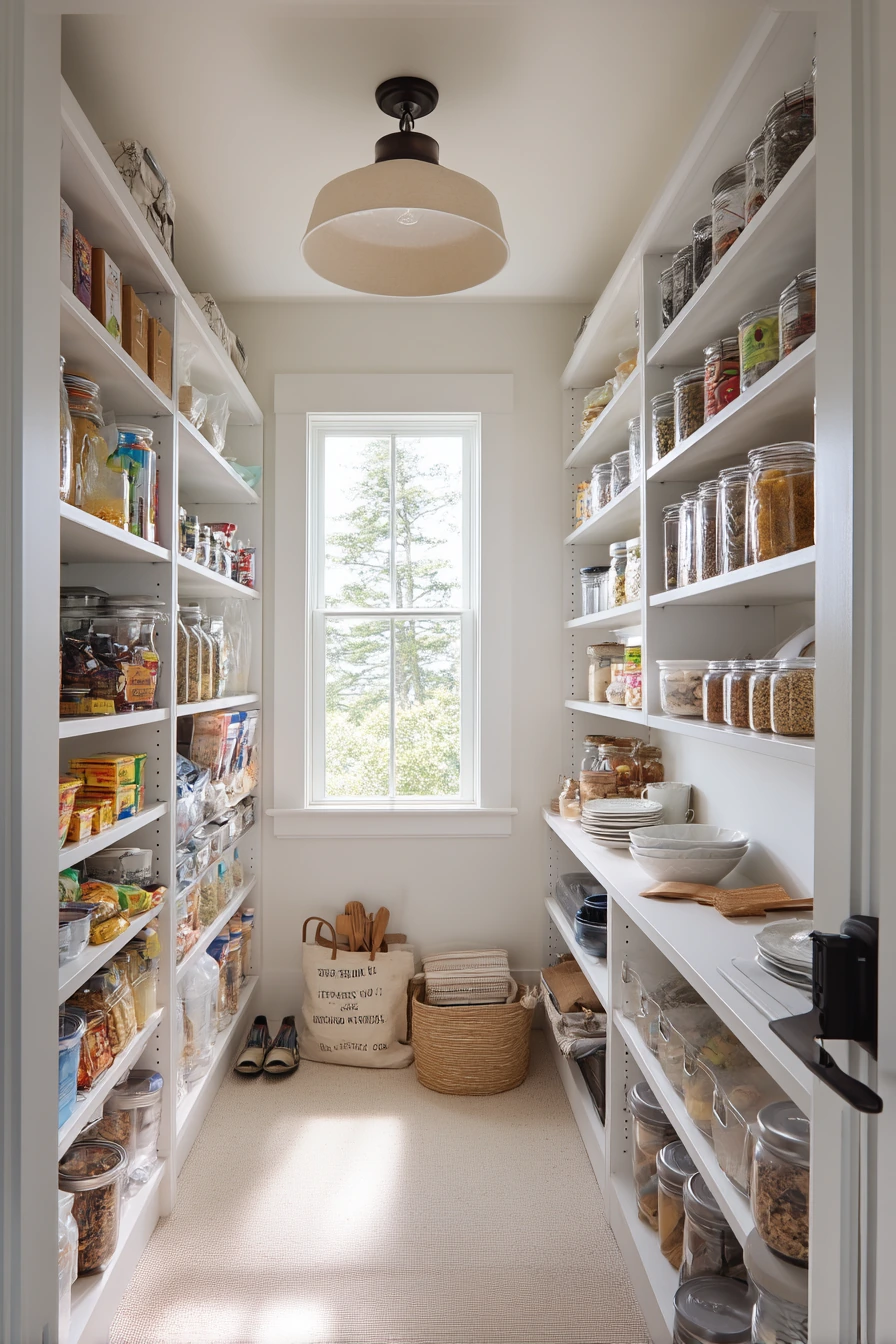
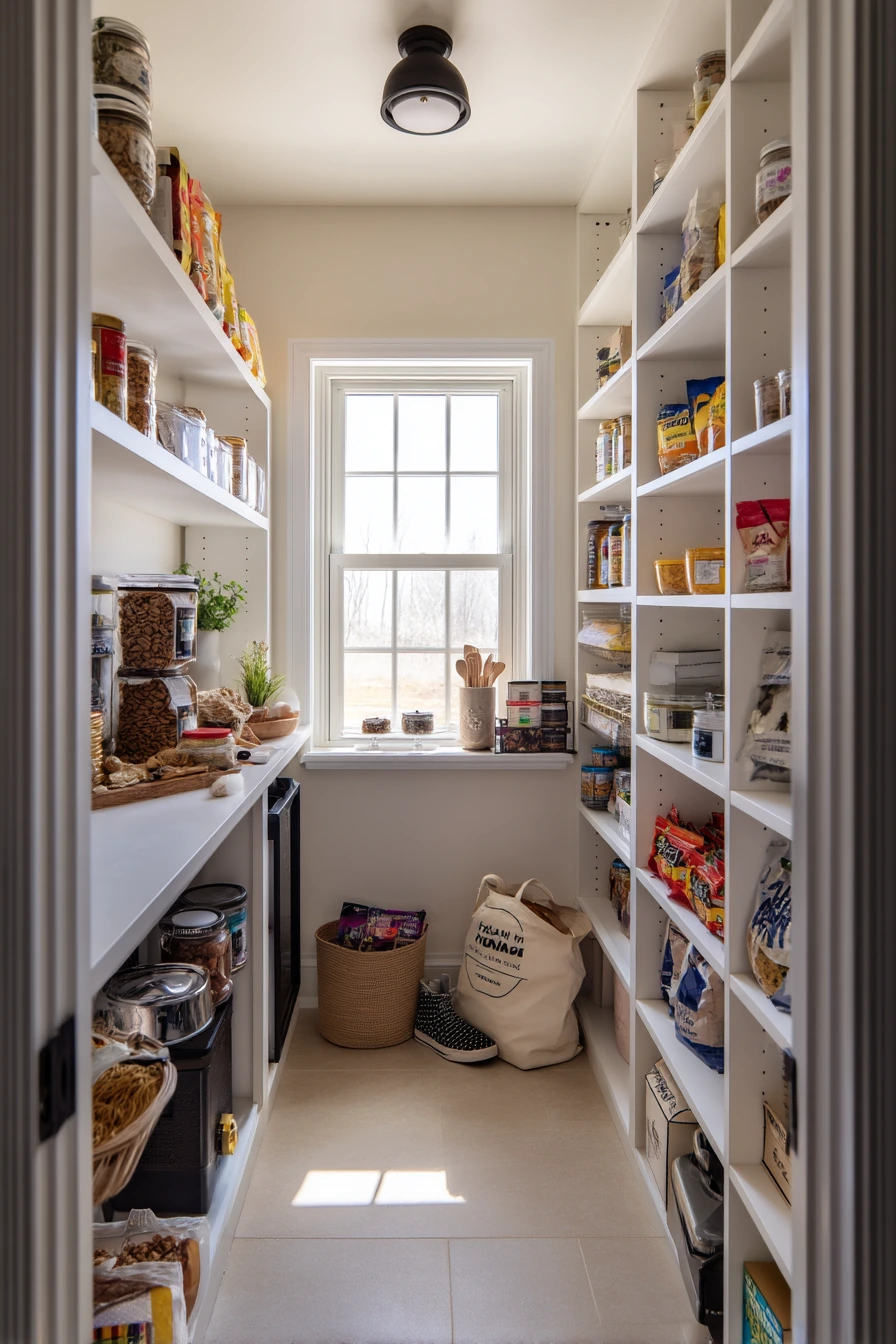
Deep walk-in kitchen pantry ideas need a plan, or the back of the shelves becomes a black hole. In an active household, you may store bulk snacks, mason jars, pet food, lunch boxes, and a baking zone all in one place. The goal is practical flow: you should be able to drop groceries fast, pack lunches quickly, and find baking supplies without moving five things. Small signs of real life, like a wrinkled tote bag on the floor, keys in a bowl, or a kid’s sneaker near the threshold, are a clue that this pantry must work hard.
Divide the pantry into zones based on routines. Put lunch boxes, snack bins, and drink mixes near the door so kids can help. Create a labeled baking zone with flour, sugar, chocolate chips, sprinkles, and baking powder in matching containers. Keep pet food in a sealed bin on the bottom shelf. Store backstock up high, but keep a simple list on the inside of the door so you know what you have.
To style it without losing function, use labels large enough to read from the doorway. Keep one neutral bin style for snacks and one jar style for baking. Add a small tray for keys and a hook for tote bags so they do not pile up. Use warm window light plus a soft ceiling lamp, then avoid dark corners by placing lighter bins on the deeper shelves.
- Use zones: snacks, baking, breakfast, dinners, and pets.
- Add a step stool that tucks into a corner.
- Keep a “first in, first out” row for older items.
- Use square containers to save shelf space.
- Store lunch supplies together to speed up mornings.
Pro Design Tip: Place the most-used zones on the shelves between waist and eye level, and keep deep shelves for backstock that you only need weekly.
Budget Considerations: Bulk containers and bins add up; buy a few at a time and start with the zones you use most, like snacks and baking.
4 4. Budget Renter-Friendly Wire Shelf Pantry
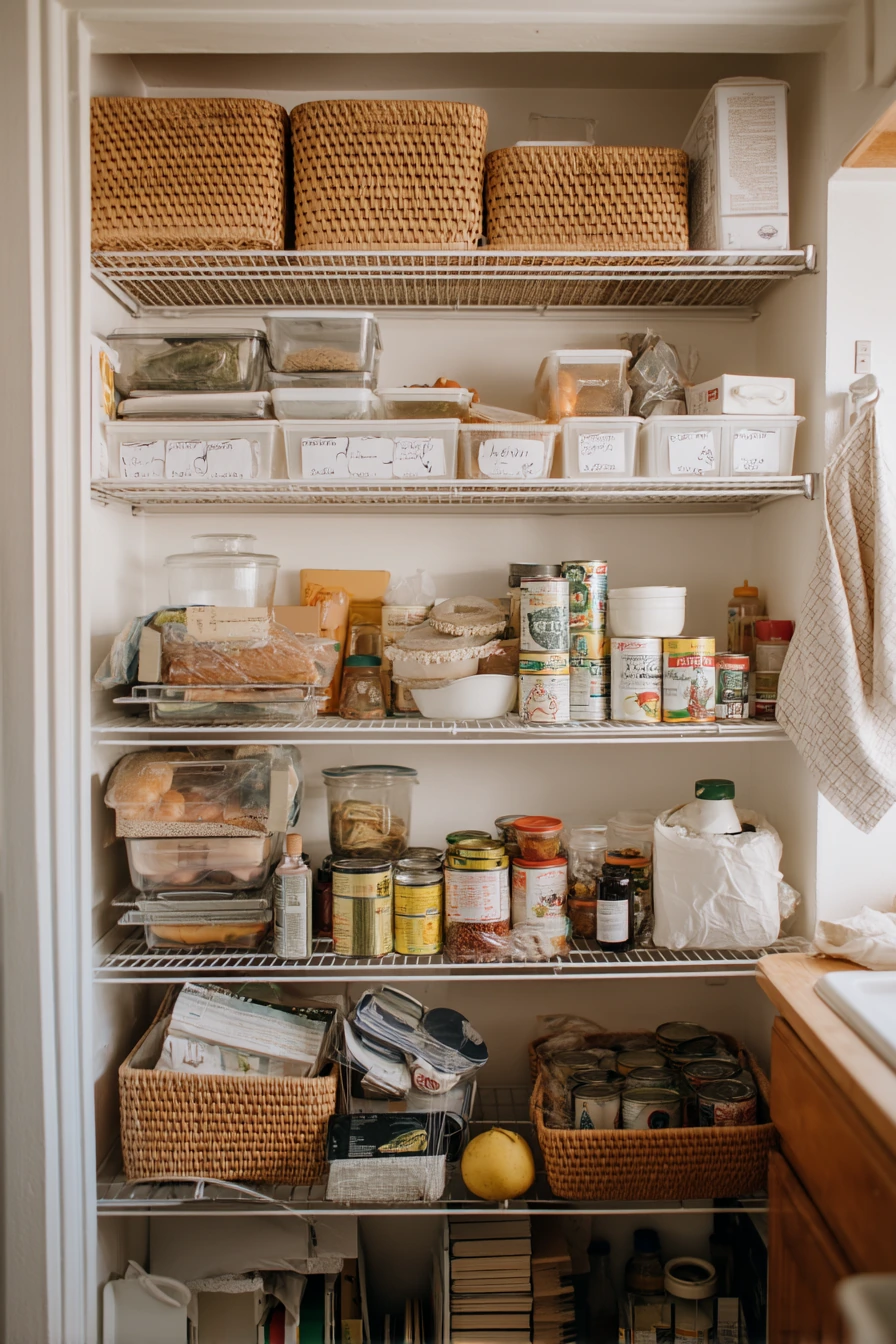
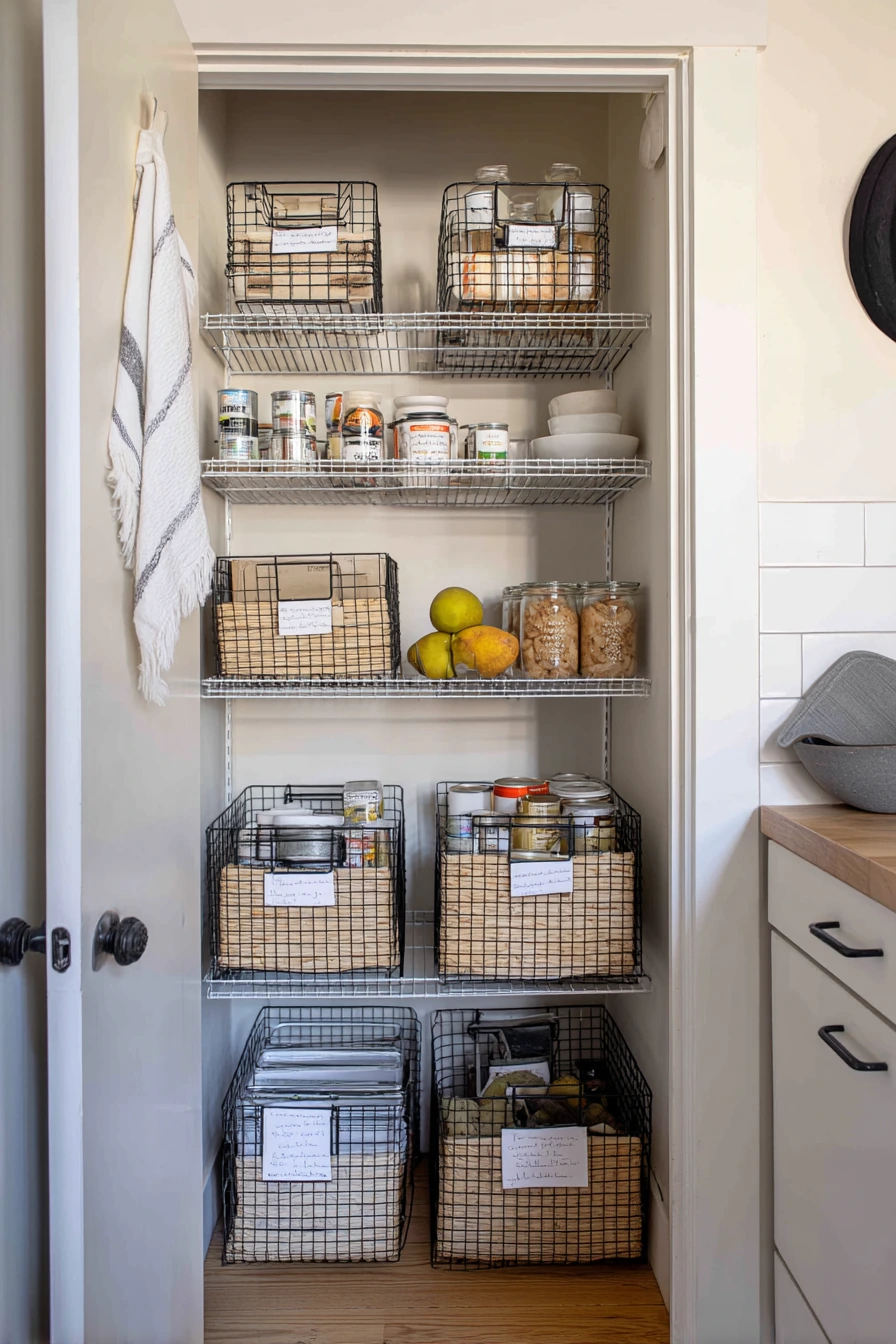
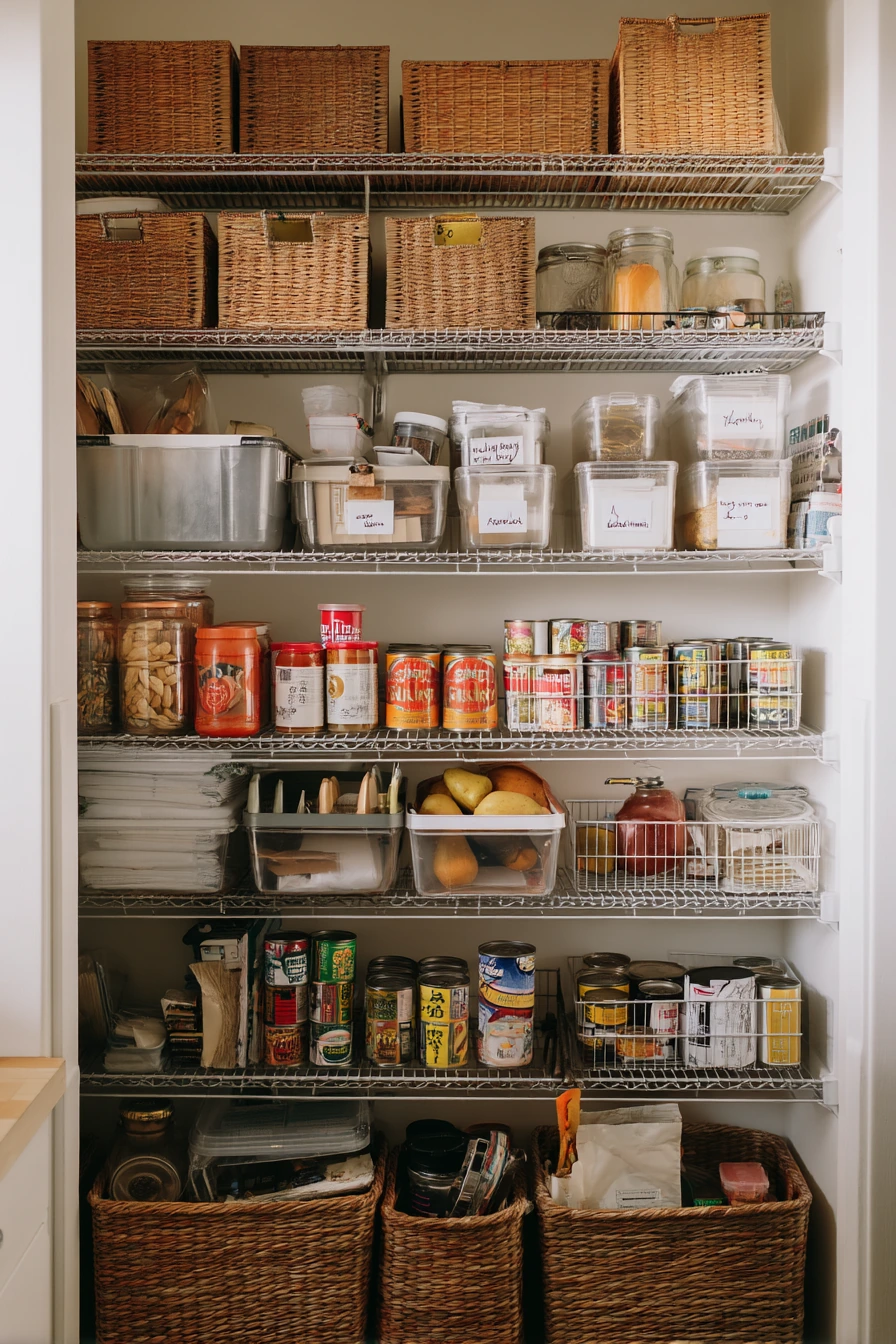
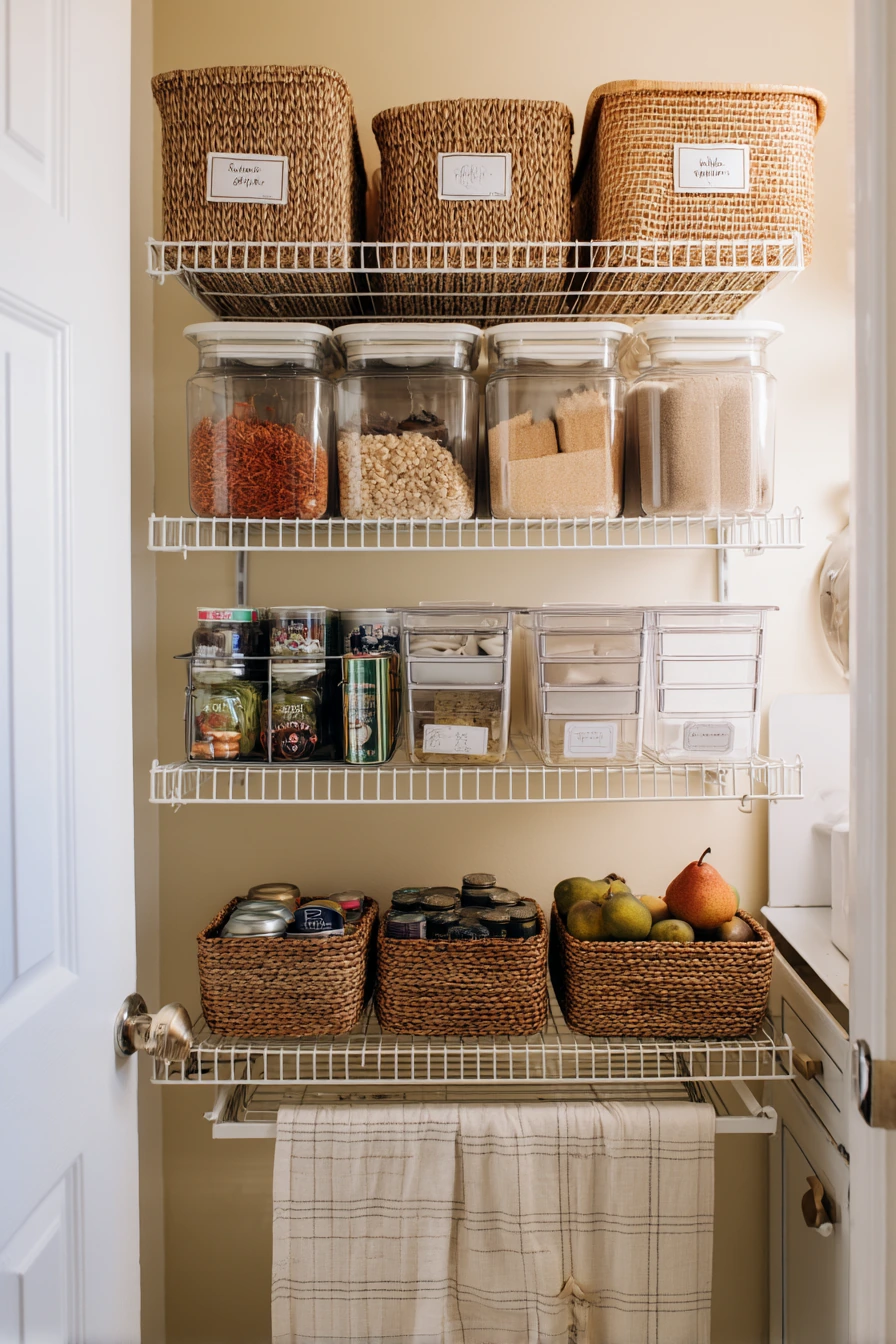
Renter-friendly kitchen pantry ideas should be simple, removable, and easy to maintain. Wire shelves are common in rentals, and they can work well when you upgrade them with matching bins, clip labels, stackable baskets, and canned goods in neat rows. This kind of pantry is about quick wins. Even if a dish towel hangs unevenly or takeout menus live in a drawer, you can still keep food storage clean and modest.
First, make wire shelves easier to use. Add shelf liners or thin boards so small items do not tip. Next, choose a small set of bin sizes that fit your shelves. Use one bin for pasta, one for snacks, one for breakfast, and one for baking. Clip labels are great because you can change them as your shopping changes. For canned goods, line them up by type and keep the newest in the back so older cans get used first.
To style a rental pantry, keep it light and consistent. White or clear bins make the space feel bigger. Add one natural texture, like a simple basket for bread or onions. Keep one pear or a small bowl of fruit on the counter nearby to tie the pantry to the rest of the kitchen. Do a quick 5-minute reset each week: toss expired packets, fold menus into one file, and wipe the shelf edges.
- Use shelf liners to stop wobble on wire racks.
- Pick two bin colors max to reduce visual mess.
- Stack baskets for chips, snacks, and lunch items.
- Group cans by category and face labels forward.
- Keep clip labels on the bin front for fast changes.
Pro Design Tip: Choose bins with straight sides so they fit snugly on wire shelves and do not waste space between containers.
Budget Considerations: Dollar stores often have stackable baskets and clip labels; spend more only on a few strong bins for heavy items like cans.
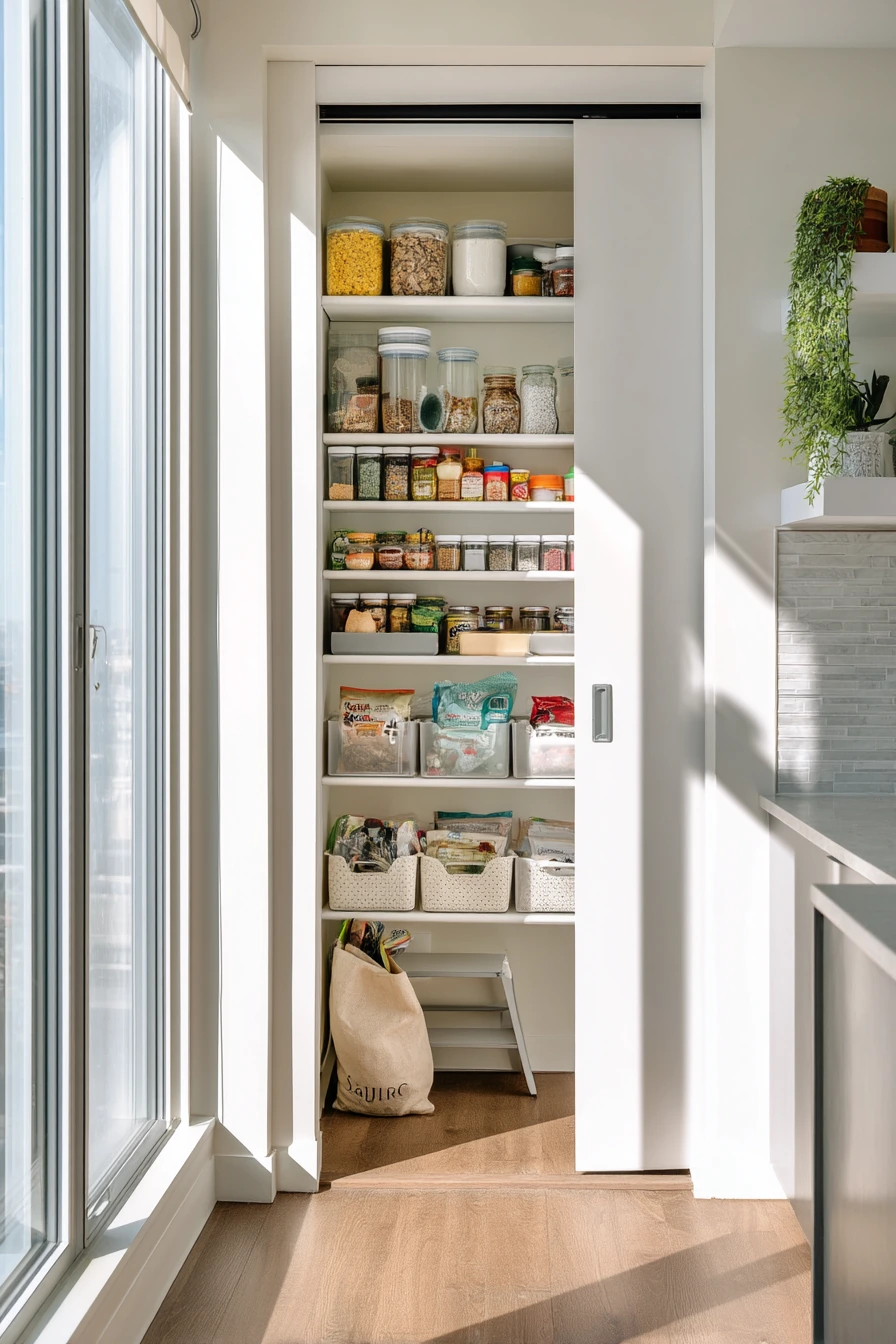
5 5. Tiny Pantry Closet Behind Sliding Door
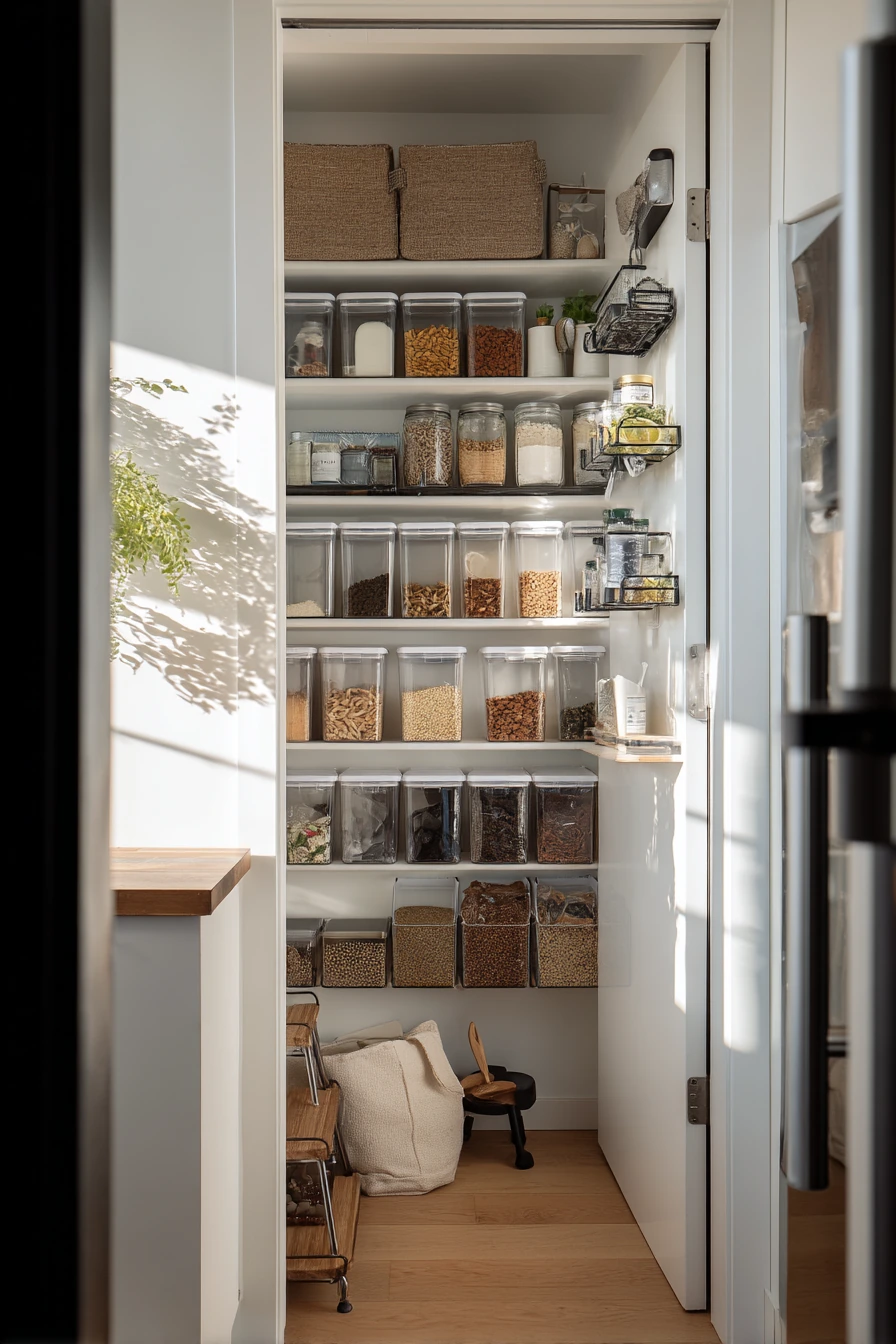
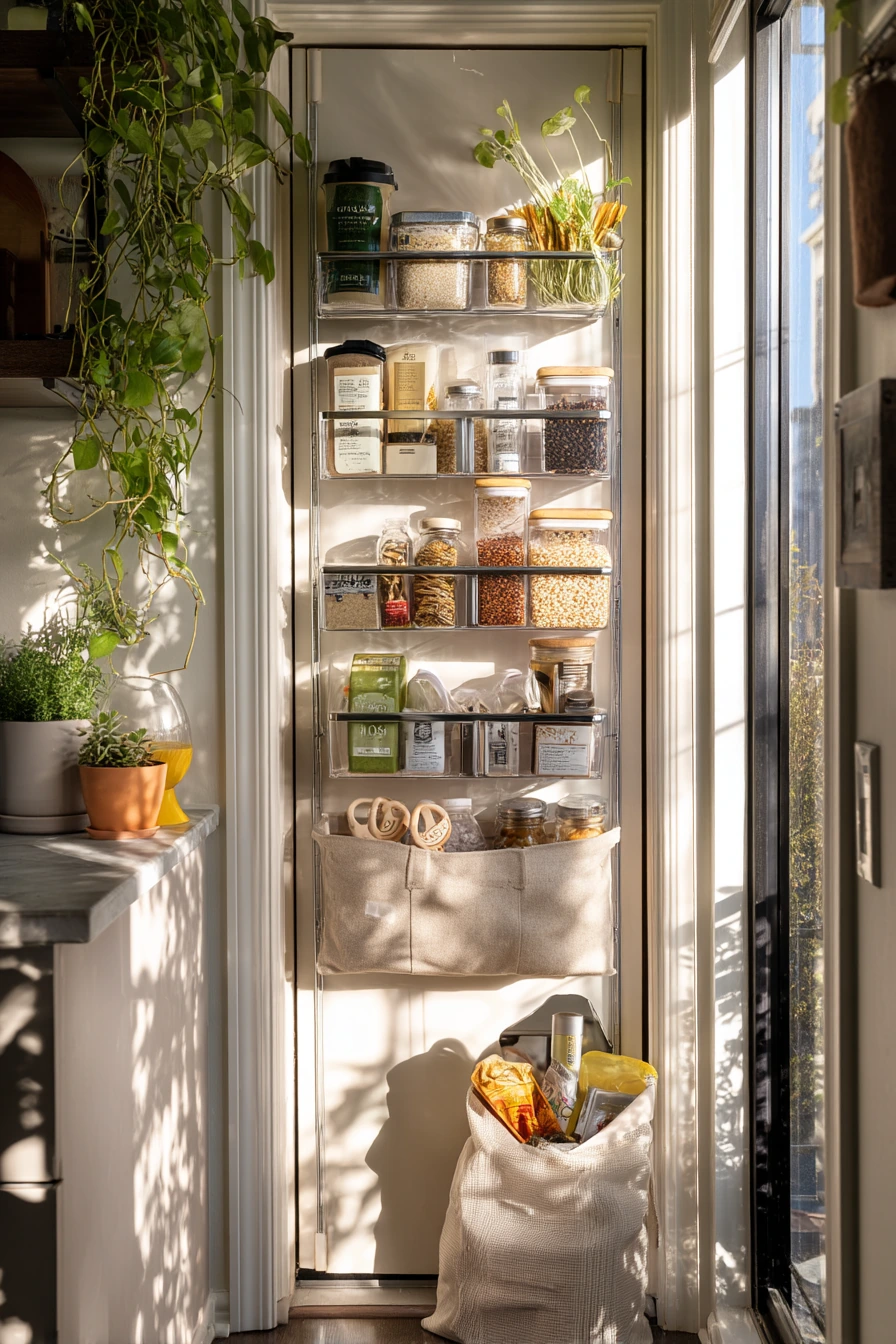
Tiny condo kitchen pantry ideas often start with a narrow pantry closet behind a sliding door. You do not have wide shelves, so you need smart layers: door-mounted spice racks, slim bins, cereal dispensers, and a foldable step stool. This setup is about using vertical space and keeping the floor clear. Small details, like a reusable grocery bag slumped on the floor or a spoon resting in a sugar jar, show what usually causes mess, so plan for those habits.
Begin with the door. Add slim spice racks or narrow pockets so spices are visible and easy to grab. Inside the closet, use clear slim bins for snacks, baking packets, and sauces. Put cereal in dispensers or tall containers so boxes do not crush and spill. Keep the step stool folded and stored on a hook or in a tight gap so you can reach the top shelf safely. If you keep a sugar jar, add a small spoon rest or tray so it stays clean.
To style it, keep the containers uniform and let one simple detail add warmth, like a small wood tray or a single label color. Since the space is tight, avoid extra decor that blocks access. A plant shadow from nearby window light can add a soft look in photos, but real function comes first. Do a quick “one in, one out” rule for snacks so bins never overflow.
- Use door racks for spices and small bottles.
- Pick slim bins that fit front to back with no gaps.
- Store heavy items low and light items up high.
- Use cereal dispensers to reduce box clutter.
- Hang a foldable step stool on a wall hook.
Pro Design Tip: Measure the closet depth and choose bins that use the full depth so you do not lose space behind short containers.
Budget Considerations: Door racks and dispensers can add cost; start with one inexpensive over-the-door organizer and reuse jars you already own.
6 6. Family Pantry with Kid Snack Zone

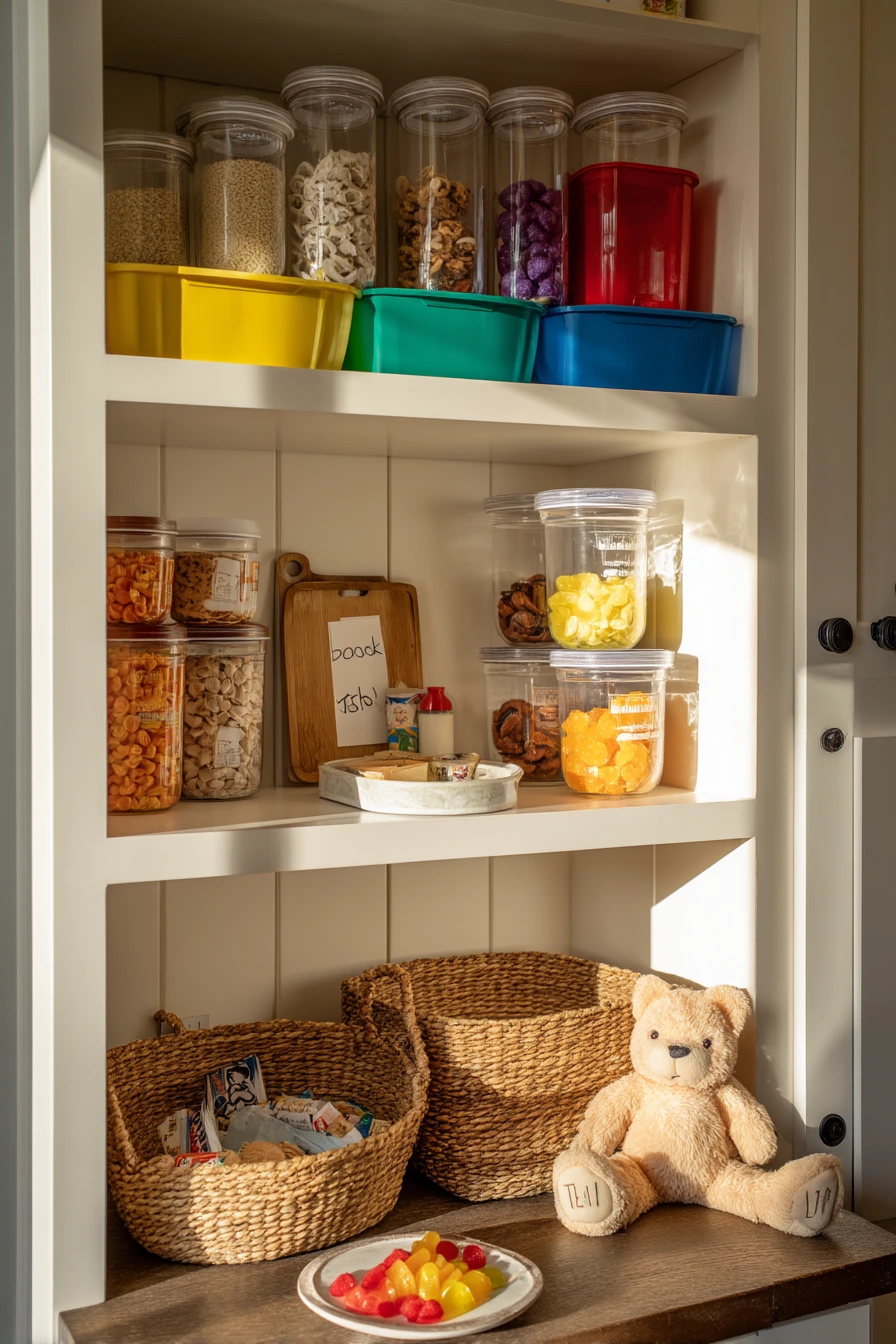
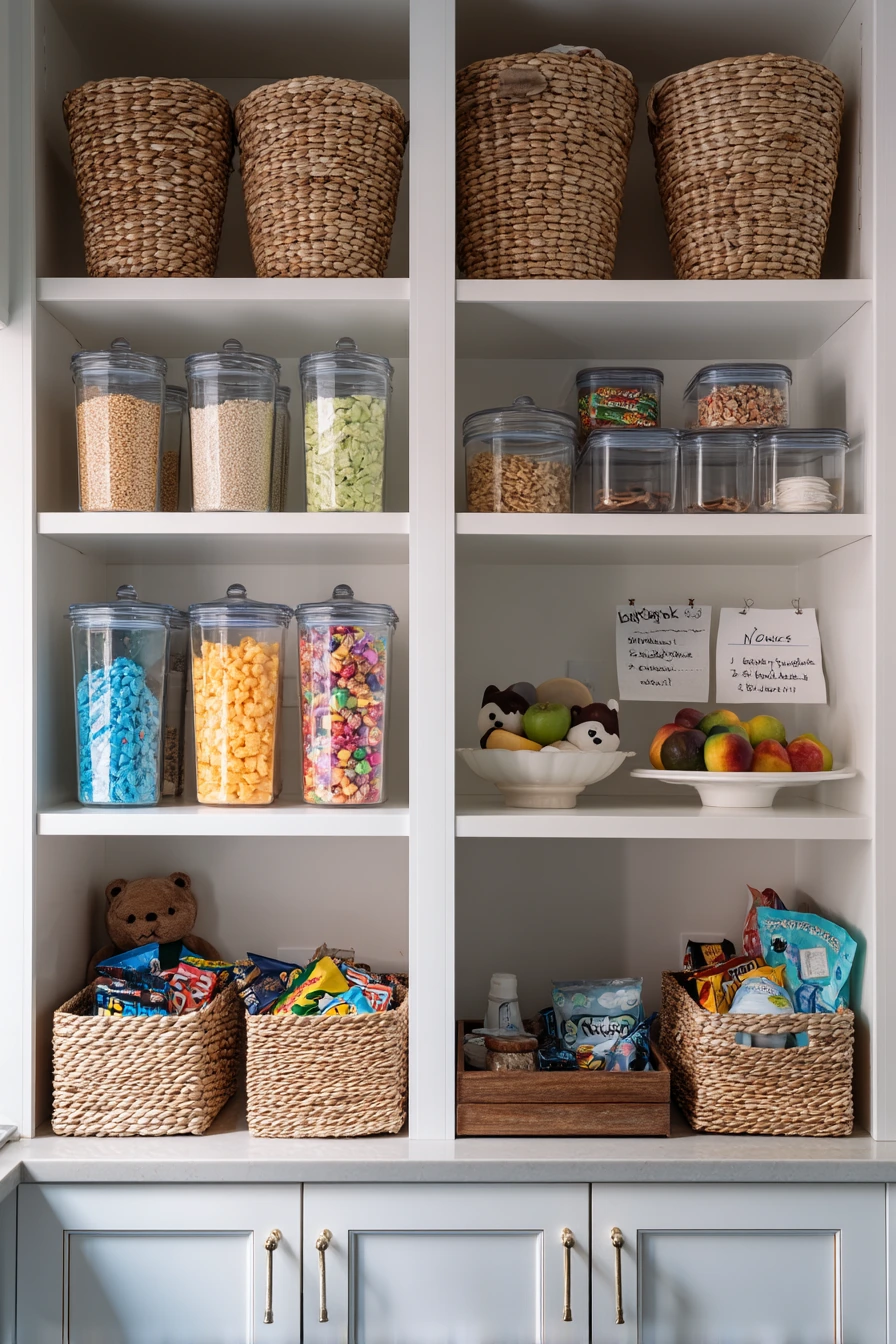
Family-friendly kitchen pantry ideas work best when kids can help without making a mess. A smart layout is lower shelves dedicated to kid snacks in colorful bins, with higher shelves holding staples in glass jars. Add a breakfast tray, lunchbox notes, and fruit on a plate so the pantry supports your morning routine. Small signs like a sticky fingerprint on the cabinet pull or a stuffed animal peeking from a basket are normal in a busy home, so the system needs to be forgiving.
Set up the lower shelves with clear rules. Create one bin for grab-and-go snacks, one for bars, one for crackers, one for fruit cups, and one for “ask first” treats. Keep lids simple so kids can open and close them. On higher shelves, store flour, rice, pasta, and cereal in glass jars with clear labels. Keep a small basket for lunchbox notes, napkins, and bag clips. If you have space, keep a tray for breakfast items like oatmeal packets and tea so mornings move faster.
To style it, use bins that match but allow color on labels or bin fronts so kids can read them. Keep fruit in a simple bowl or plate that is easy to wash. Wipe handles often and place a small cleaning cloth nearby. If you want a cozy look, add one fabric basket for soft items like extra lunch bags or a small stuffed animal, but keep it on the lowest shelf so it does not fall.
- Create a kid-level snack zone with clear limits.
- Use glass jars for staples so you can see levels.
- Keep lunch supplies in one basket near the door.
- Store fruit in a washable bowl or plate.
- Label with words and simple colors for kids.
Pro Design Tip: Give each kid one small snack bin per week; when it is empty, it gets refilled once, which cuts constant grazing and keeps the pantry neat.
Budget Considerations: Matching bins can be expensive; buy a set for the kid zone first, then slowly swap other containers as older ones wear out.
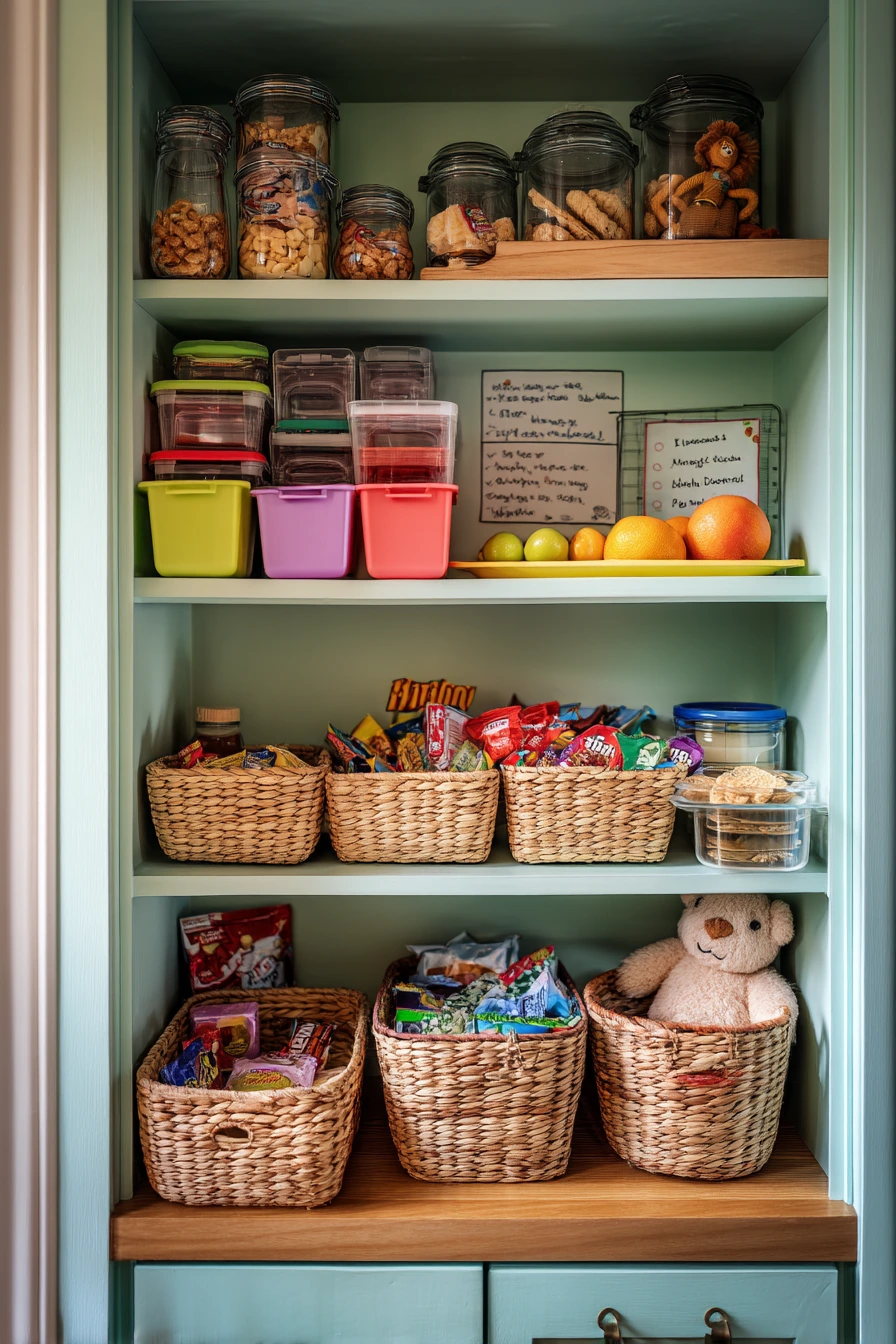
7 7. Minimal Pantry with Matching Containers
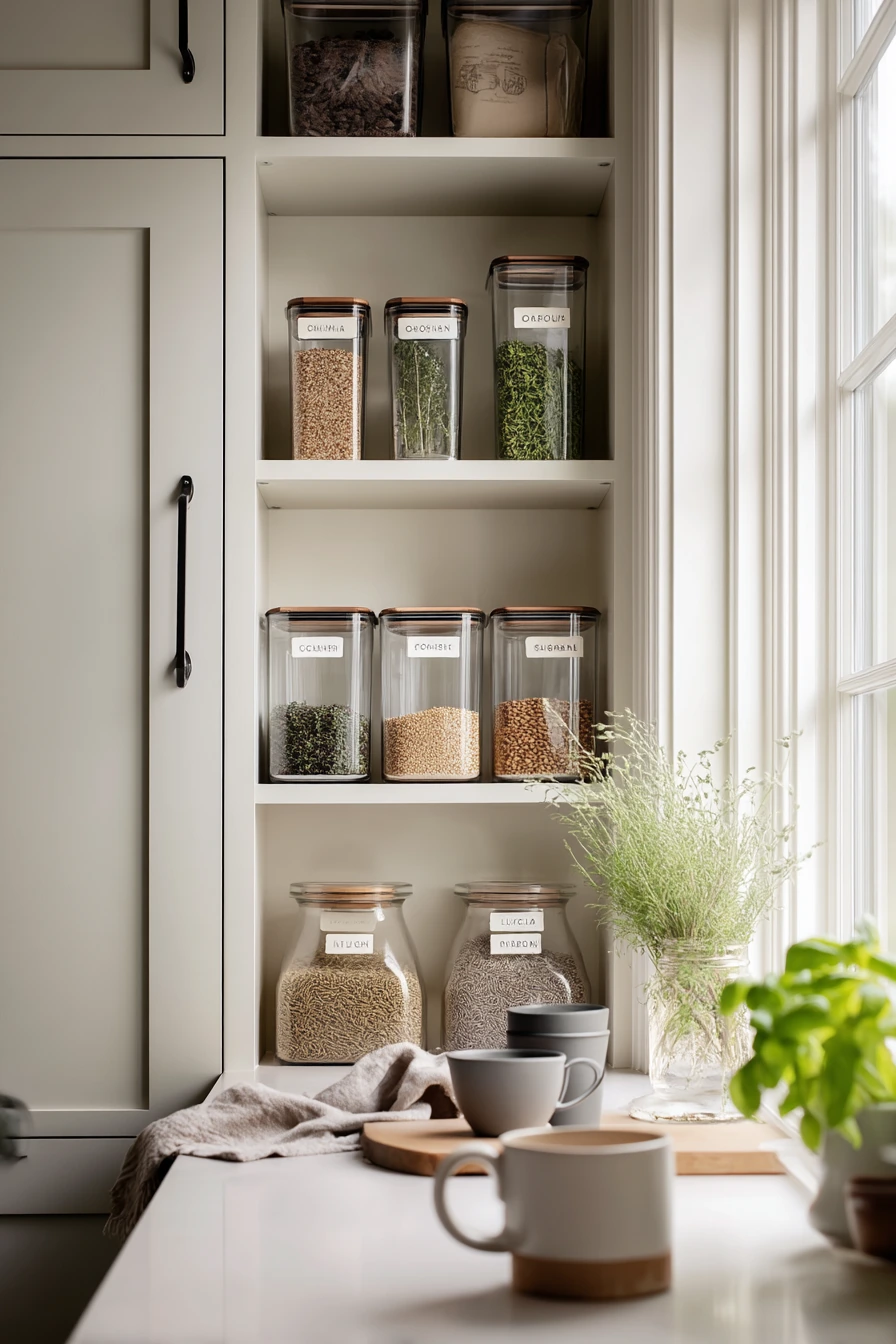
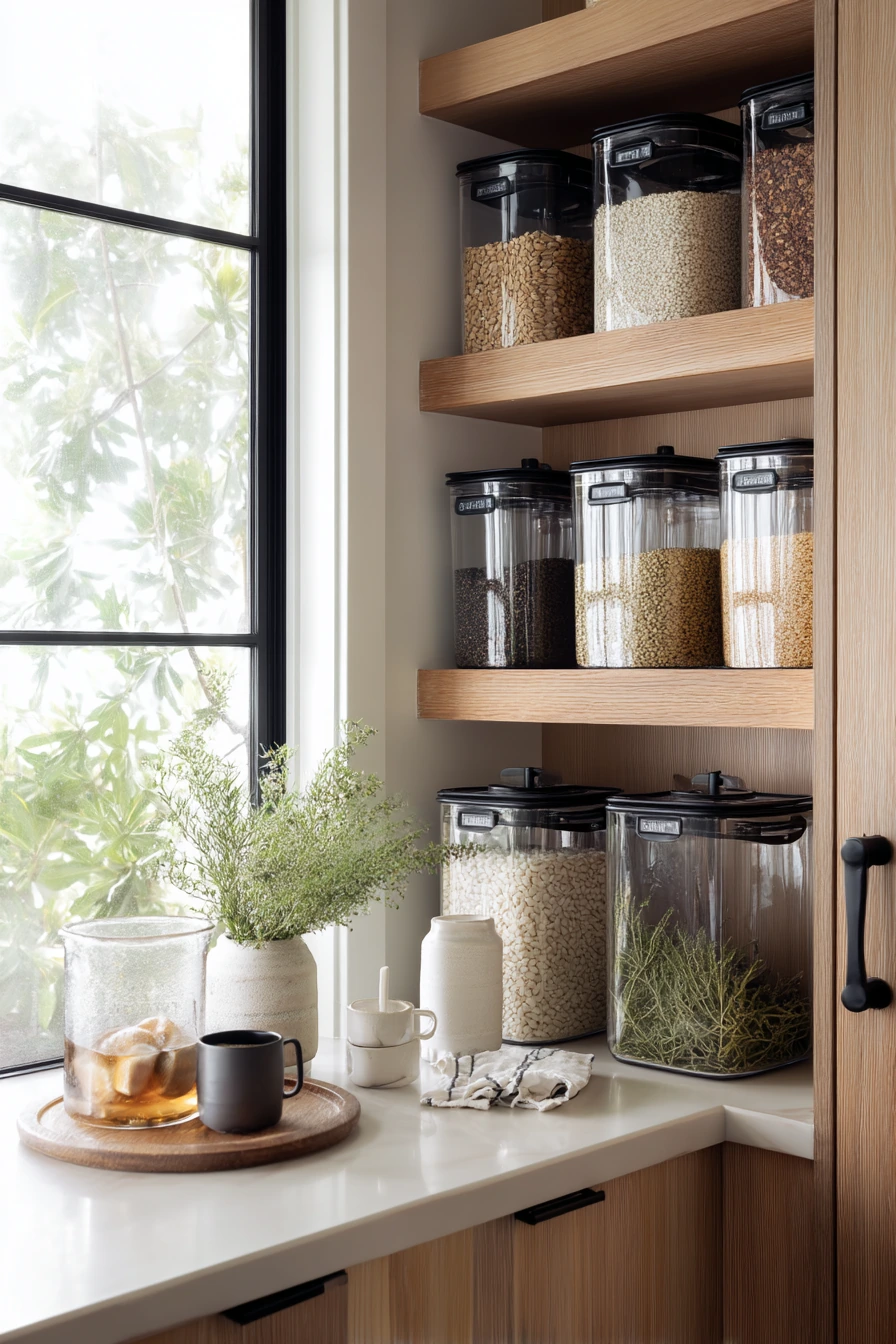
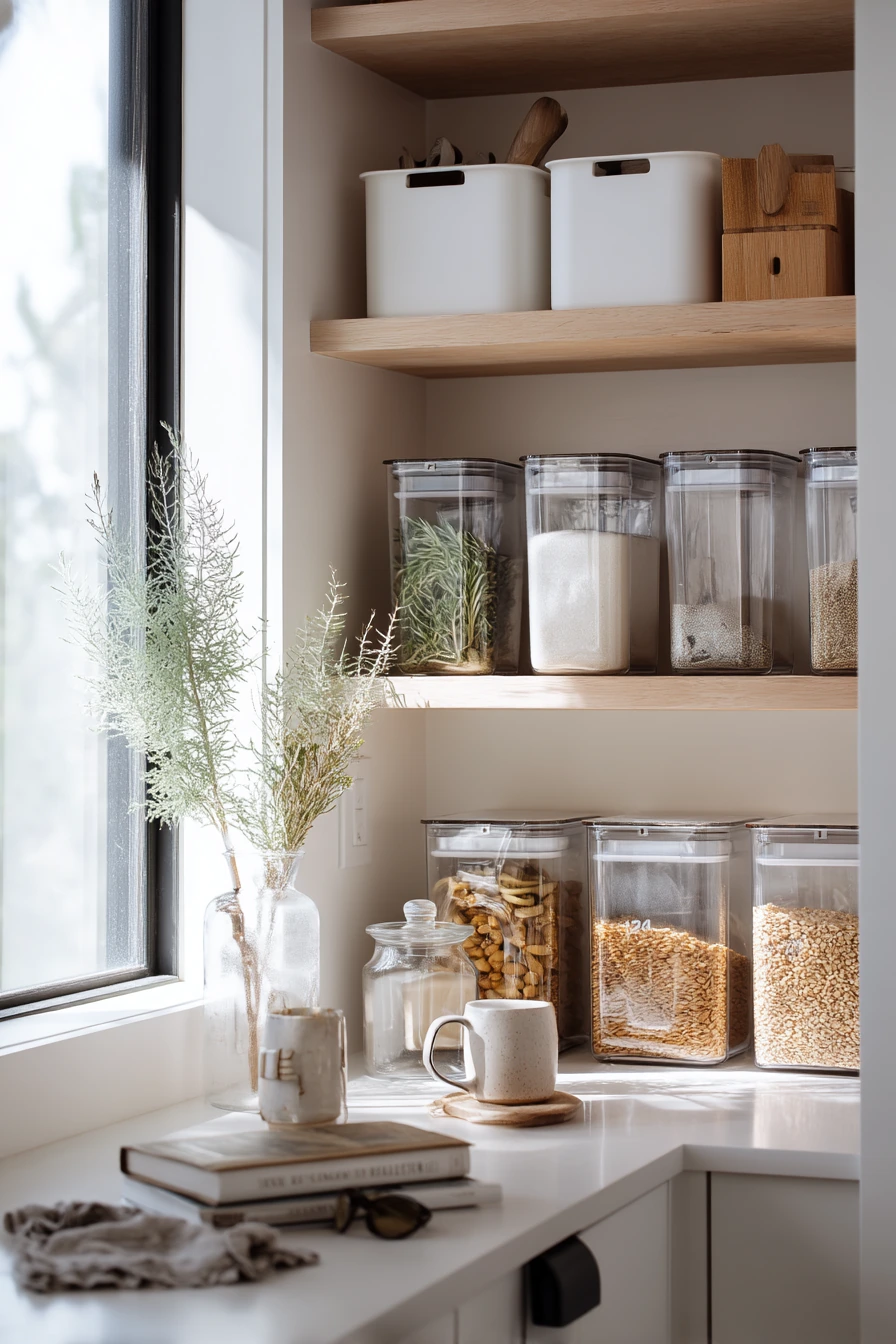
Modern kitchen pantry ideas often focus on a pantry wall with matching containers, clear bins, and labeled decanted staples. The look is clean, restrained, and easy on the eyes, especially with cedar accents and matte black hardware. This style works best when you keep the system simple and repeat the same container shapes. Small real-life touches, like a cookbook spine visible, a tea mug leaving a ring on the counter, or a slightly crumpled dishcloth, can stay as long as the pantry itself is tidy.
Start by deciding what you will decant. Move only the items you buy often, like flour, sugar, oats, rice, pasta, and cereal, into matching containers. Keep clear bins for snacks, baking add-ins, and packets. Use labels that are easy to read and place them in the same spot on each container. Add a small herb vase or a jar of fresh herbs for a natural touch that still feels useful.
To style it, keep the color palette tight: clear, white, black, and warm wood. Use one type of lid finish so it looks intentional. Keep one shelf with a little breathing room to avoid a crowded feel. Place a small tray near the pantry for mugs or tea gear so rings and drips stay contained. Fold the dishcloth and store it in a bin so the counter stays calm.
- Decant only the staples you use weekly.
- Choose containers with the same lid color.
- Use clear bins to group packets and snacks.
- Keep labels large and consistent for fast reads.
- Add one small herb vase for a soft, fresh detail.
Pro Design Tip: Use a label maker or printed labels with the same font and spacing, and align them with a simple measuring guide so every label sits at the same height.
Budget Considerations: Full sets of matching containers can cost a lot; start with just the top 5 staples and keep the rest in original packaging inside bins.
8 8. Walk-In Pantry with Coffee and Breakfast Station
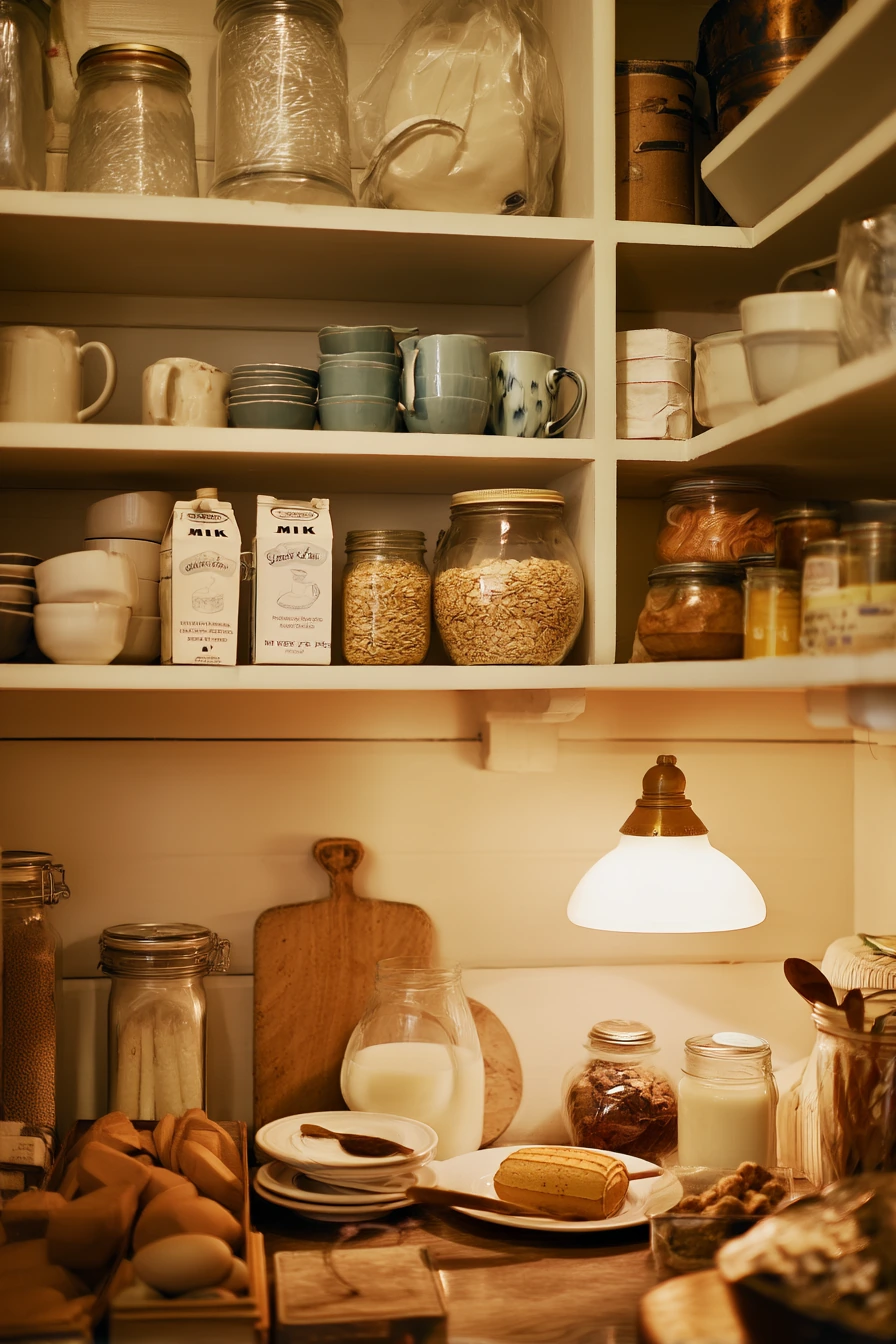
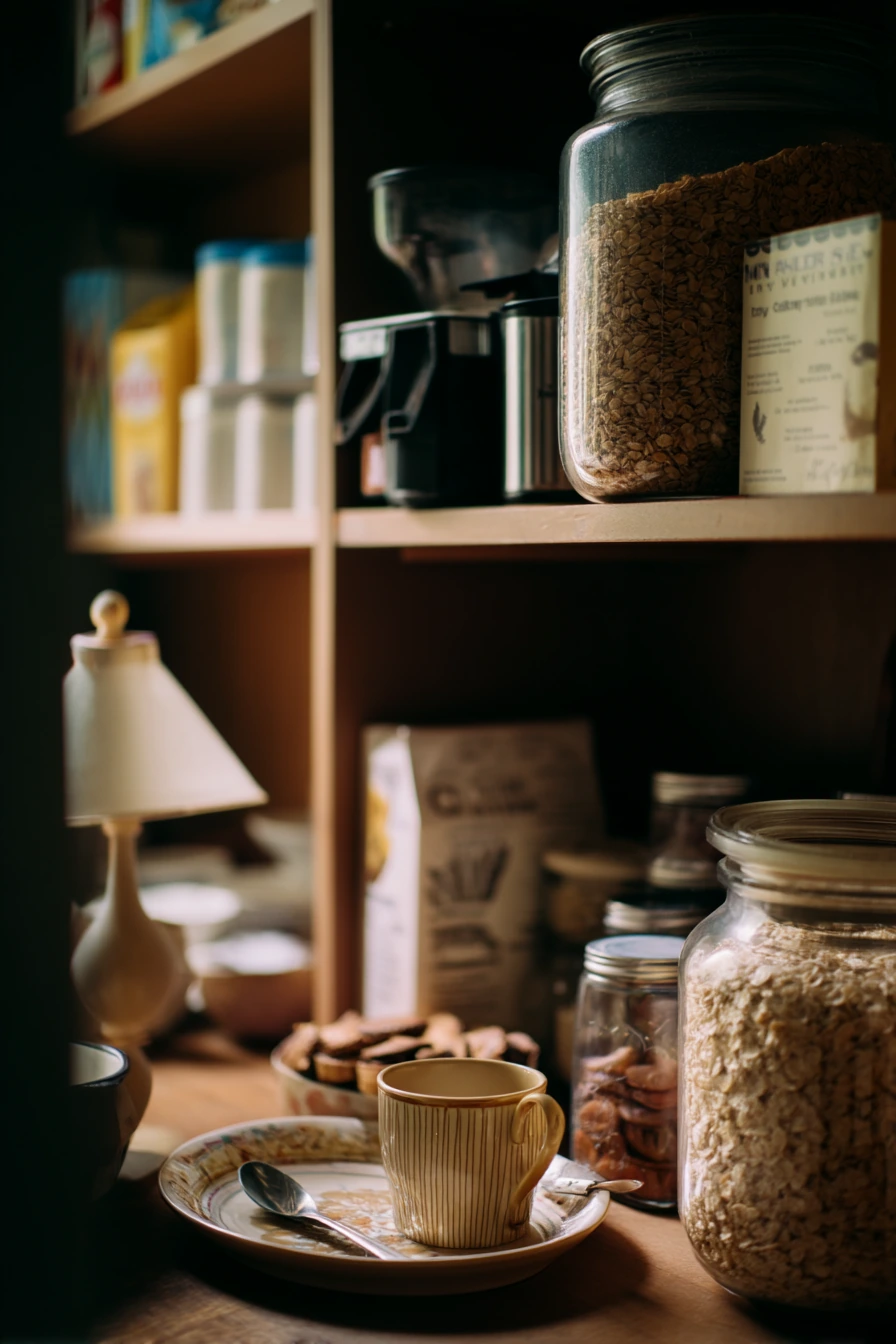
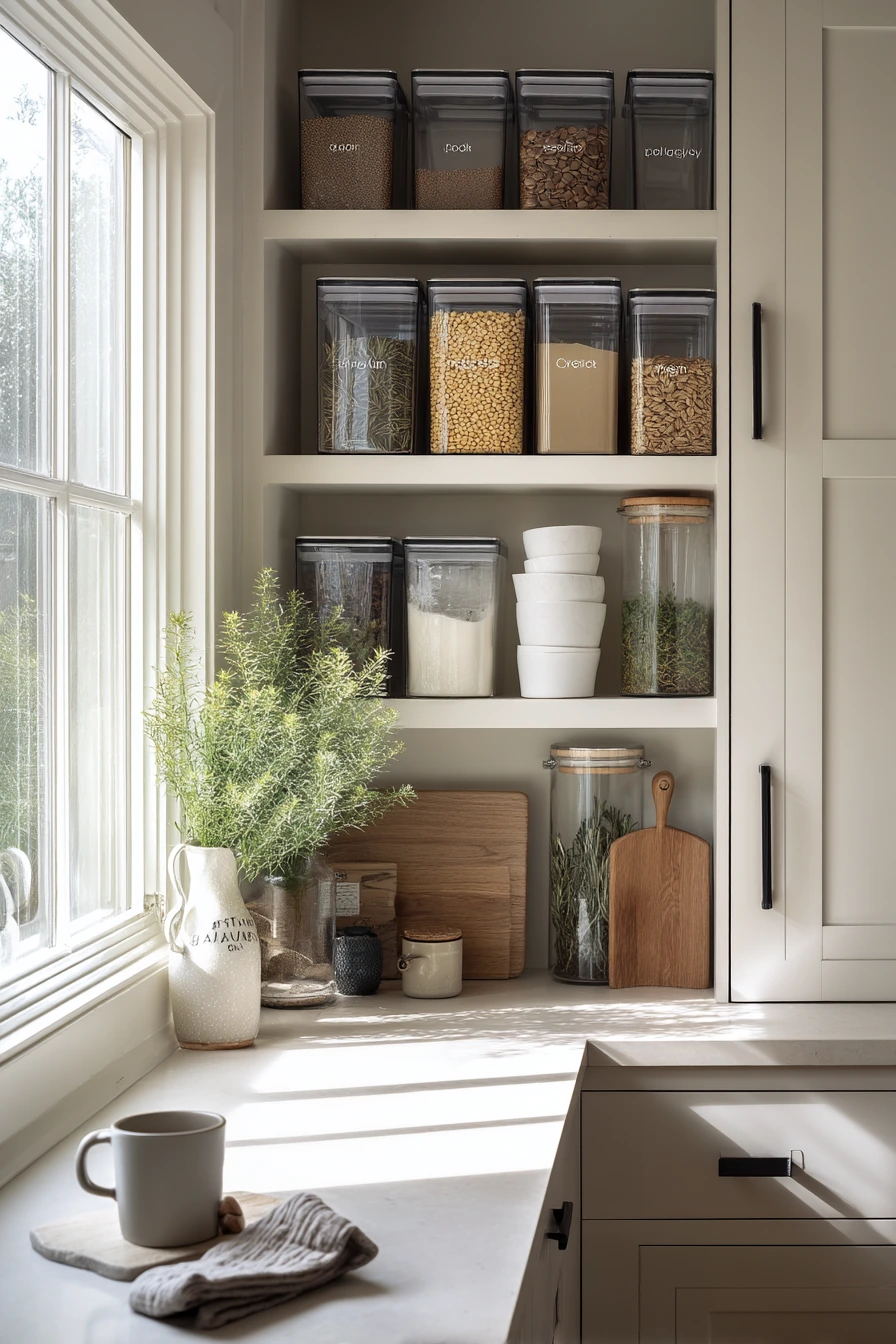
Walk-in kitchen pantry ideas get even better when you add a dedicated coffee and breakfast station. In a lived-in pantry, one side can hold coffee, mugs, oats, and breakfast pastries, while the other side holds pantry staples and baking supplies. This split makes mornings smoother because you are not digging past canned goods to find oatmeal. Details like a spoon resting on a saucer, a half-full milk carton, and a folded recipe card show how this pantry supports daily routines.
Set up the breakfast side like a mini cafe. Keep mugs together, then store coffee, tea, filters, and sweeteners in a small bin or tray. Place oats, granola, and cereal nearby in jars or canisters. If you keep pastries, use a closed container so they stay fresh and crumbs do not spread. On the staples side, group by meal type: pasta and sauces, soups, baking, and snacks. Put baking supplies in one labeled zone so you can grab flour, sugar, and chips without searching.
To style it, use a warm practical lamp if the pantry is dim, and choose containers that look good under warm light. Add one small framed card or keep a recipe card in a clear stand for a homey touch. Use a saucer or small tray for spoons so the shelf stays clean. Keep milk and other cold items out of the pantry, but you can store shelf-stable creamers here if you use them.
- Create a tray for coffee and tea supplies.
- Keep mugs on one shelf for easy grabbing.
- Store oats and cereal in sealed containers to stop crumbs.
- Label a baking zone and keep tools nearby.
- Add a small saucer or spoon rest to reduce mess.
Pro Design Tip: Place the breakfast station closest to the pantry door so you can build coffee and breakfast without stepping deeper into the space.
Budget Considerations: A new lamp and matching jars can add up; reuse mason jars and add a low-cost under-shelf light to brighten the corner.
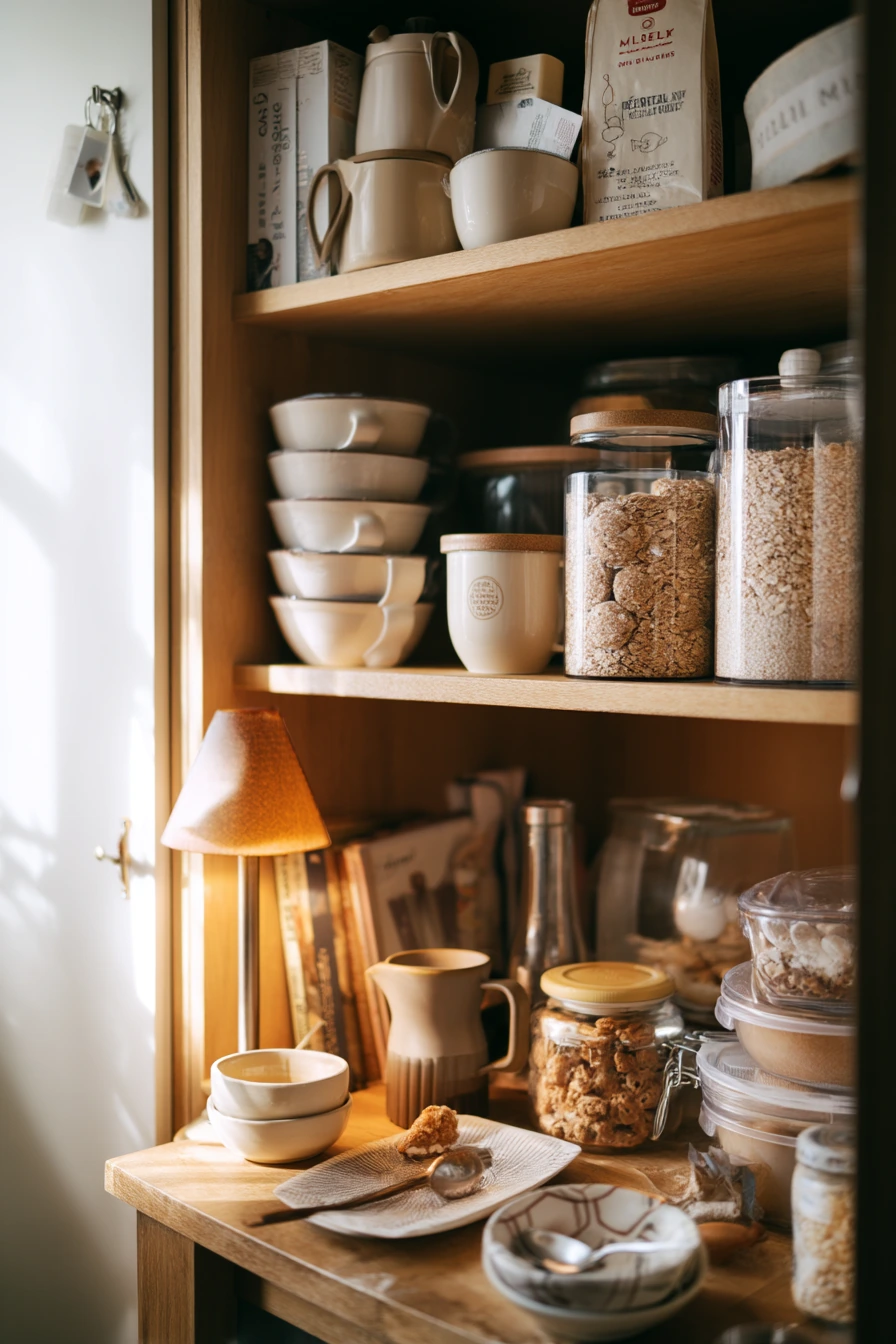
9 9. Farmhouse Pantry with Glass Door Display
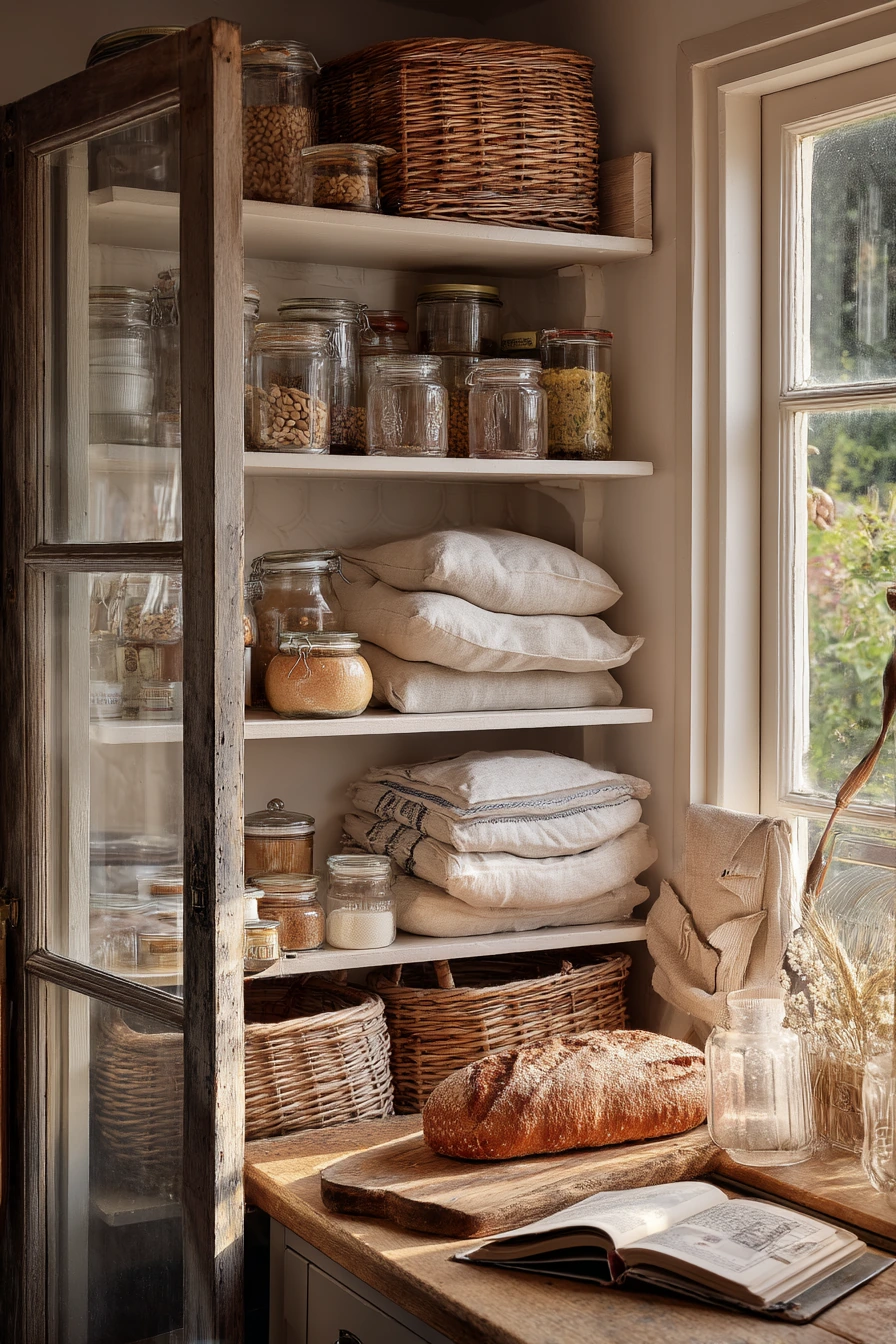
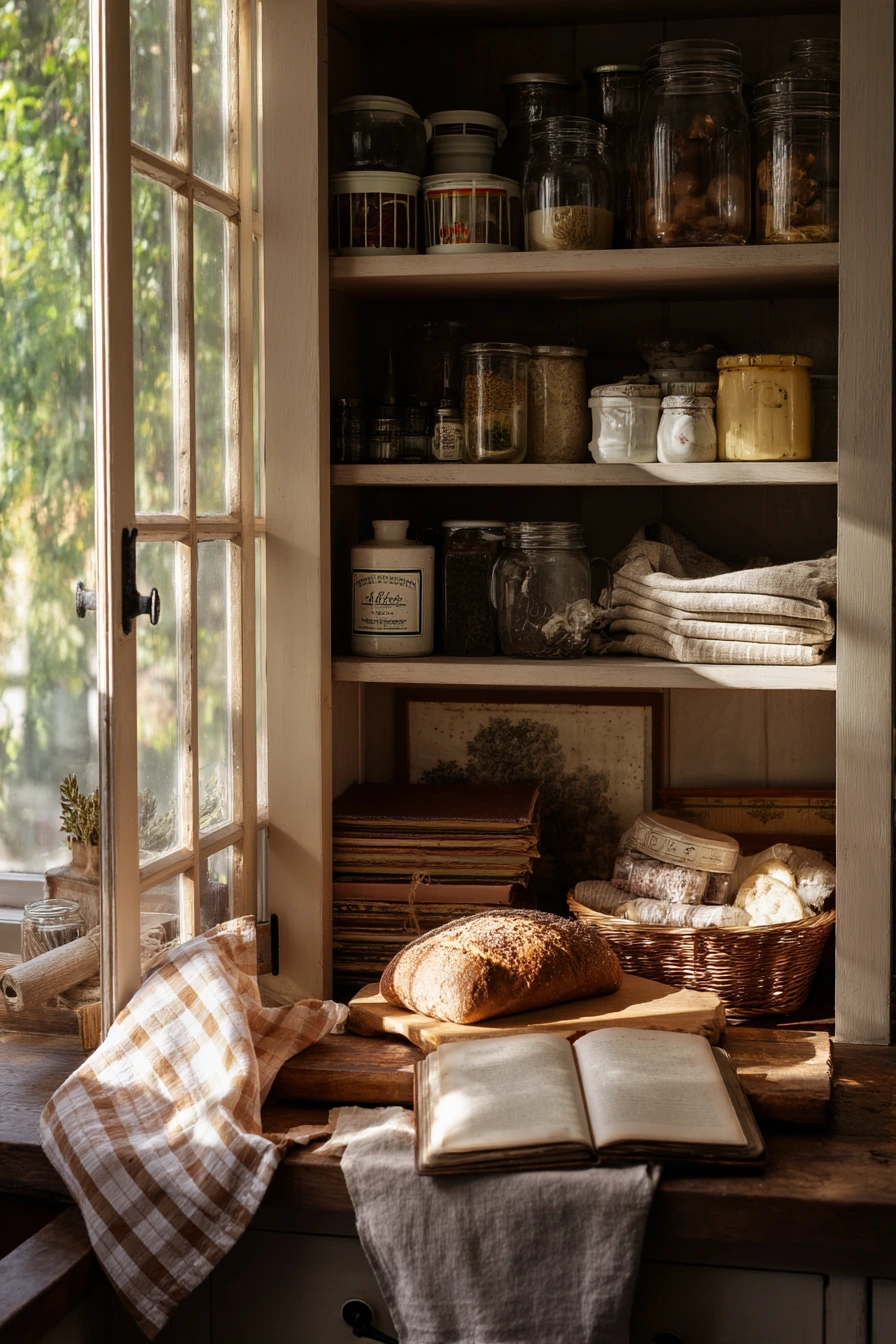
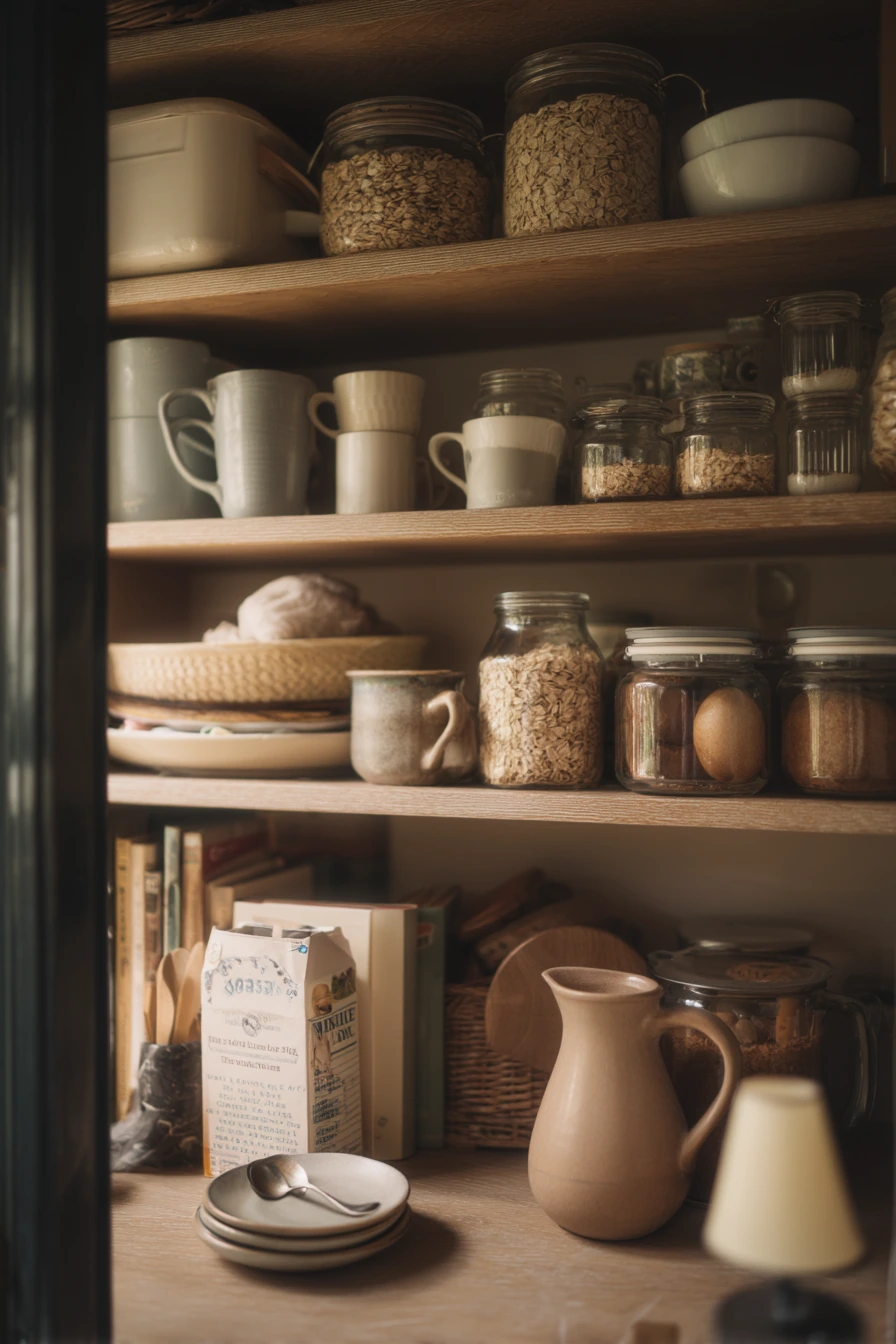
Farmhouse kitchen pantry ideas often use glass-door pantry cabinets so you can see stacked dishes, jam jars, flour tins, and linen-lined baskets. The look is cozy and nostalgic, especially with sun-dappled window light. Because the cabinets are see-through, the main rule is neat stacks and simple groupings. A loaf of bread on a cutting board and tea towels draped loosely can look natural, as long as the shelves stay organized.
Start by grouping items into three parts: serving dishes, pantry staples, and baking. Stack plates and bowls by size, and keep everyday items at the easiest height. Store jam jars and spreads together in a shallow basket so they do not get lost. Put flour, sugar, and grains into tins or jars that match the farmhouse style. Line baskets with simple linen to soften the look and to catch crumbs from bread or snacks.
To style it, keep a few items facing forward, like a pretty flour tin or a row of jam jars. Use one or two tea towels in soft colors and fold the rest away. Keep a cookbook open to a marked page on the counter when you are using it, then store it upright when done. Add a cutting board and bread box or basket so bread does not sit out in plastic.
- Use linen-lined baskets to hide small packages.
- Stack dishes in tidy piles and avoid mixed stacks.
- Group jams, spreads, and honey in one zone.
- Store flour and sugar in tins or jars with labels.
- Limit decor so the glass doors look calm, not busy.
Pro Design Tip: Keep the same spacing between stacks and baskets so the cabinet looks balanced through the glass, even when it is full.
Budget Considerations: Glass-door cabinets are a bigger upgrade; for a lower-cost look, use open shelves and add matching baskets and a few vintage-style tins.
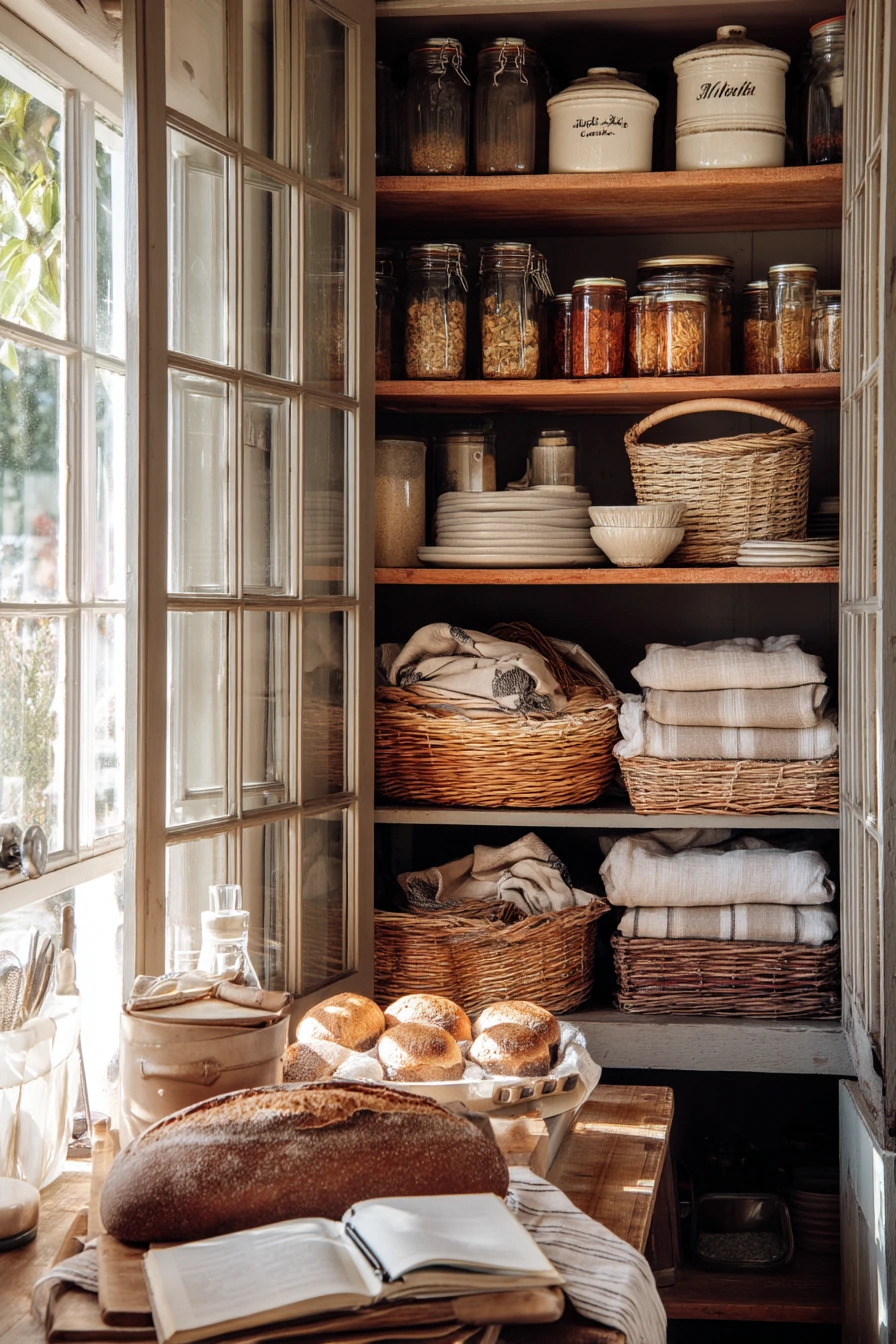

10 10. After-Meal Reset Pantry Organization Moment
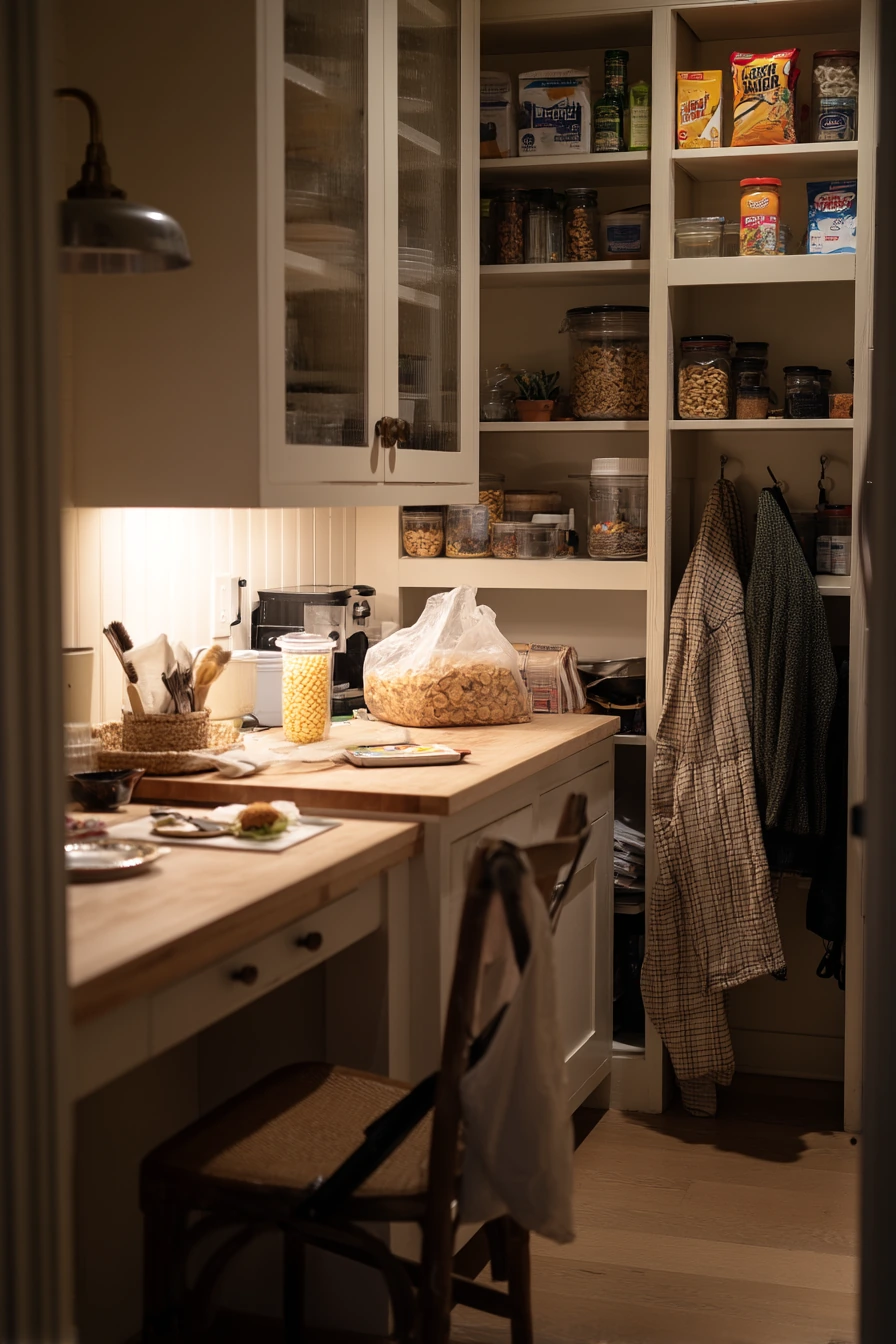

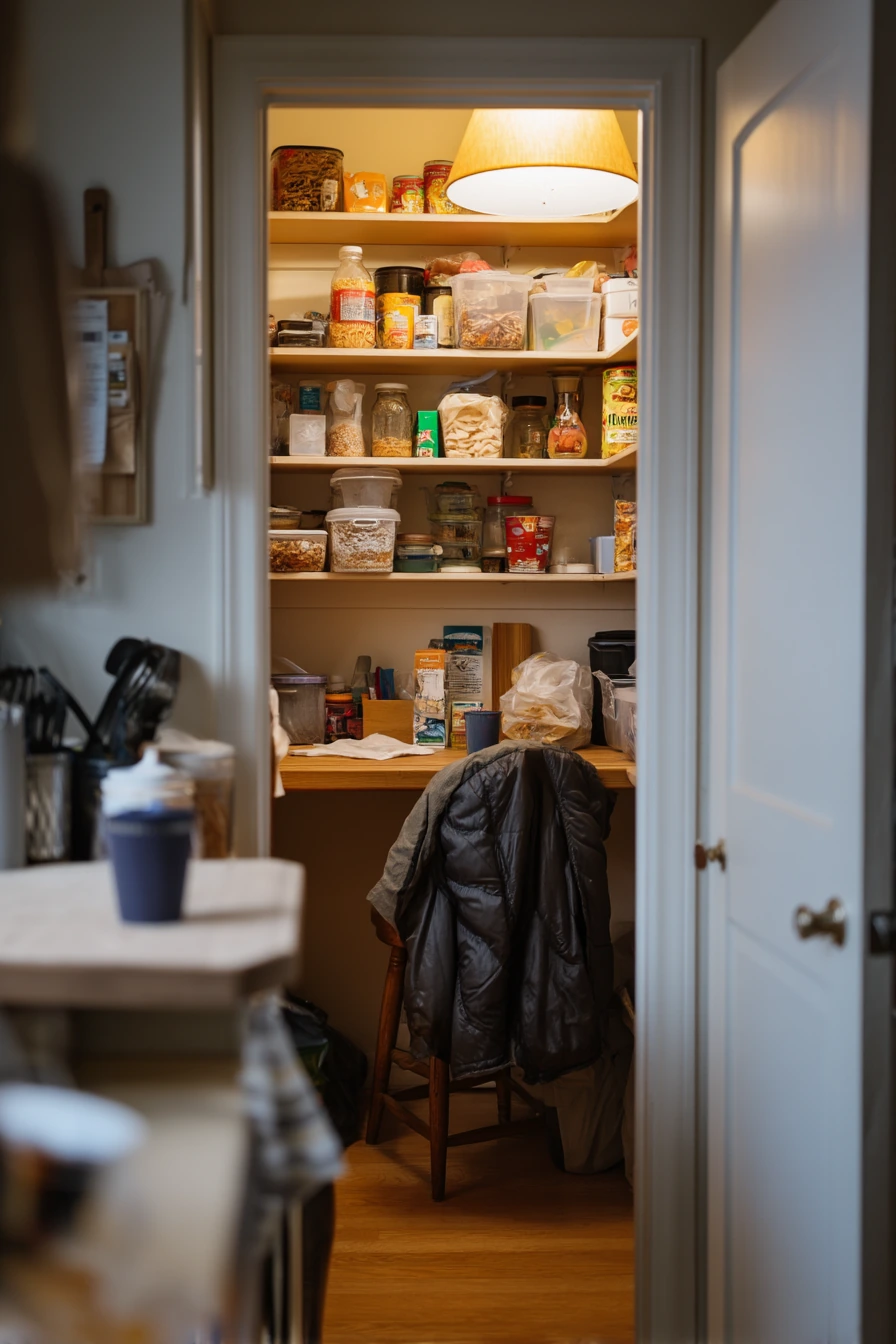
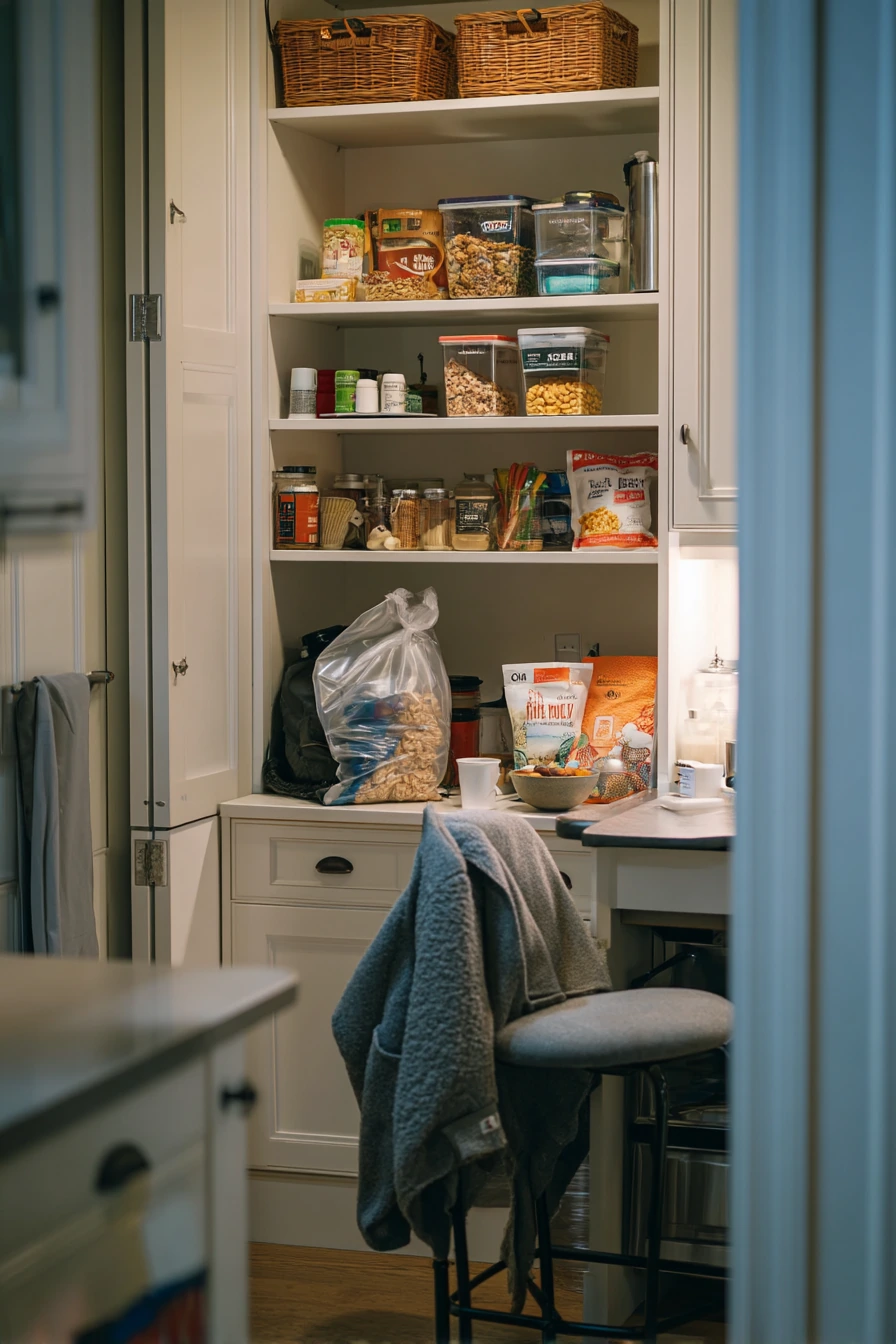
After-dinner kitchen pantry ideas focus on a simple reset that makes the next morning easier. A tidy pantry with a few open bins, snack refills, labeled jars, and a small trash bag ready for recycling helps you close the kitchen for the night. Real homes have real signs of the day, like one child’s cup on the counter, a dish brush near the sink edge, or a jacket sleeve hanging from a chair. The goal is not perfection. It is a quick routine that keeps mess from building.
Start with a 10-minute reset. Put away the snack refills and return jars to their spots. Check the open bins and refill only what you need for the next day. Gather empty boxes and cans and place them straight into a small recycling bag so they do not pile up. Wipe sticky spots on shelves and handles, then set out what you need for breakfast, like cereal or oatmeal, so mornings are calmer.
To style this routine, keep your labels clear and your bins simple so every item has a home. Use warm amber lamp light and soft shadows to make the pantry feel cozy at night, but make sure you have enough light to see expiration dates. Keep a small cleaning caddy with a cloth and spray nearby. Put the child’s cup by the sink and hang the dish brush so the counter stays clear.
- Do a 10-minute pantry reset after dinner.
- Refill snack bins only to a set level, not to the top.
- Keep a small recycling bag in the pantry area.
- Wipe shelf edges and handles to stop sticky buildup.
- Stage breakfast basics so mornings run smoother.
Pro Design Tip: Set a “close the kitchen” checklist on the inside of the pantry door so everyone knows the last steps, like refill, wipe, and recycle.
Budget Considerations: This reset costs almost nothing; a simple pack of labels and a small lidded trash can or bag holder is often enough.
Good kitchen pantry ideas are not one-size-fits-all. A slim pull-out, open shelves, a walk-in pantry, or a tiny closet can all work when the layout matches your routines.
Start with one problem to fix, like snacks, baking supplies, or breakfast clutter. Add zones, use labels you can read fast, and pick containers that fit your shelves.
When your pantry is easy to use, it stays tidy longer. A quick weekly reset and a simple after-dinner routine can keep it that way.
FAQ
1. What is the best way to organize a small pantry?
Use zones and slim bins, keep heavy items low, and label the front of each container so you can find food fast.
2. Should I decant everything into jars?
No. Decant the staples you use often. Keep the rest in original packaging inside labeled bins.
3. How do I organize kid snacks without constant mess?
Give kids a lower shelf with a few clear bins and simple rules. Refill on a schedule, not all day.
4. How can I make wire shelves work better in a rental?
Add shelf liners, use stackable baskets, and choose bins with flat bottoms so items do not tip.
5. What should I store on the pantry door?
Spices, small bottles, and light packets work well. Avoid heavy glass items that can fall when the door moves.
6. How do I keep a walk-in pantry from getting cluttered?
Use clear zones, keep a backstock shelf, and follow first in, first out so older items get used.
7. What is a quick nightly pantry reset?
Put items back in their bins, wipe sticky spots, and collect recycling right away so it does not pile up.