

Looking for kids bedroom ideas that work in real homes, not just perfect photos. This guide focuses on small rooms, shared spaces, and everyday routines like homework, reading, and bedtime.
You will see practical layout choices like built-in bunk beds, loft beds with a study nook, peel-and-stick wall decor, Montessori-style floor beds, and smart storage that fits in apartments.
Each section includes simple styling steps, a pro design tip, and a budget note. Use them to plan a room that feels calm, organized, and easy to maintain even with toys, books, and laundry.
These ideas are also Pinterest-friendly, so you can save what you like and then copy the setup with items you can actually buy and use.
1 Shared Sibling Room With Bunk Beds


A compact shared bedroom can feel calm when the layout does most of the work. Built-in bunk beds with pale wood rails save floor space and give each child a clear sleep zone. Soft striped bedding keeps the look simple, and wall hooks near the bunks help with daily clutter like hoodies and backpacks.
For storage, use a narrow bookshelf for bedtime books and a storage bench for extra blankets or bigger toys. The lived-in details matter too. A half-full water glass, a charging cable, and a toy basket that stays slightly open are normal in a family home. Plan for them so the room still looks tidy.
How to style it: keep the walls light, then add texture with a woven rug and layered bedding. Put a small rug where kids actually play, like near the toy cars, and leave a little open space in the middle so the room does not feel tight. Use matching baskets so the storage looks neat even when it is full.
- Choose built-in bunks or a bunk with drawers if you need more storage.
- Add wall hooks at kid height for hoodies, pajamas, and school bags.
- Use a narrow bookshelf to fit beside the bed without blocking walkways.
- Place a small play rug under the bunk edge to define the toy zone.
- Keep one lidded bin for quick cleanups at the end of the day.
Pro Design Tip: Use one shared “landing shelf” near the bunks for water, a small light, and chargers so nightstands are not required.
Budget Considerations: Built-in bunk beds can be pricey; a standard bunk with add-on rails and a simple bench can create the same feel for less.


2 Small Space Kids Room With Loft Bed
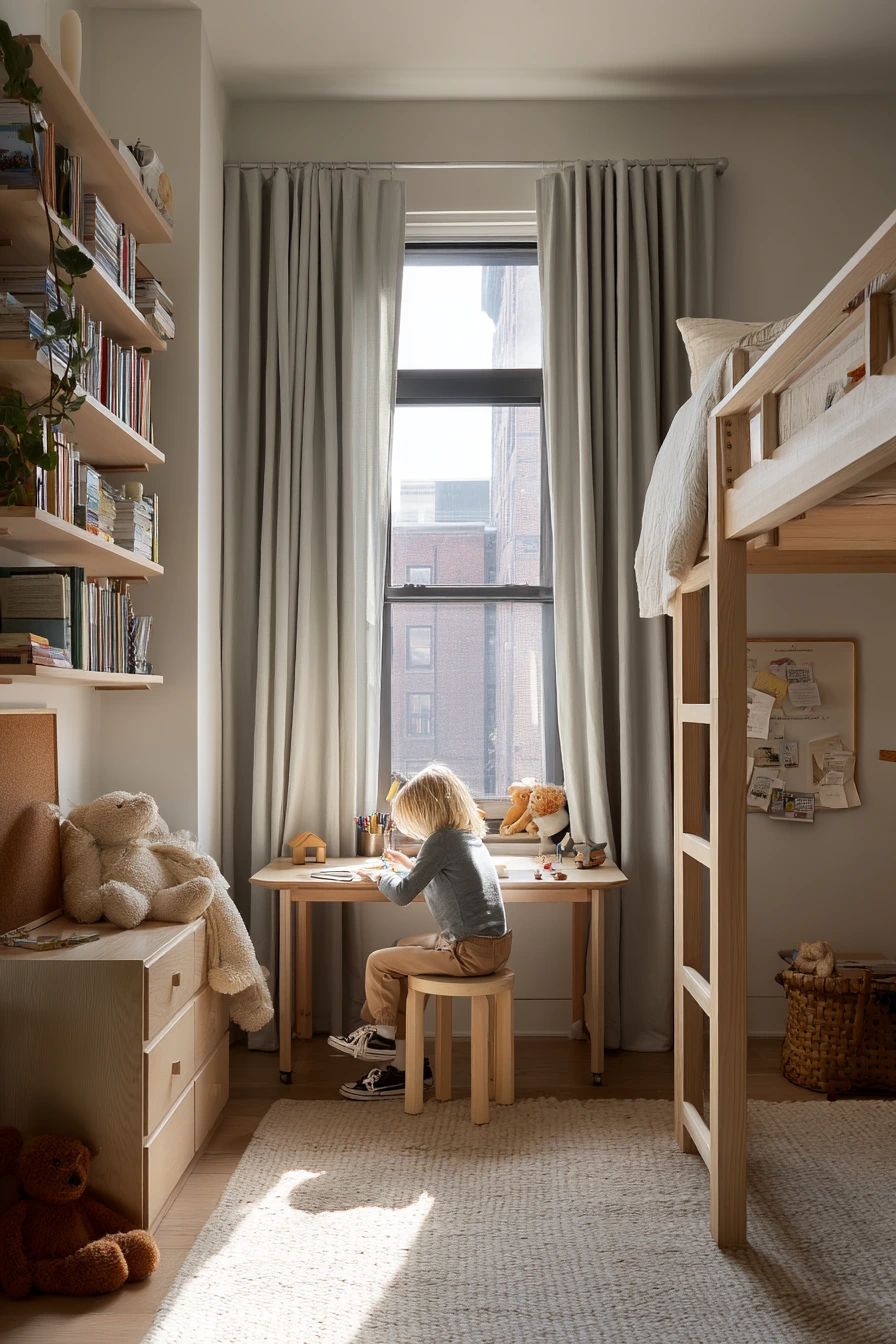
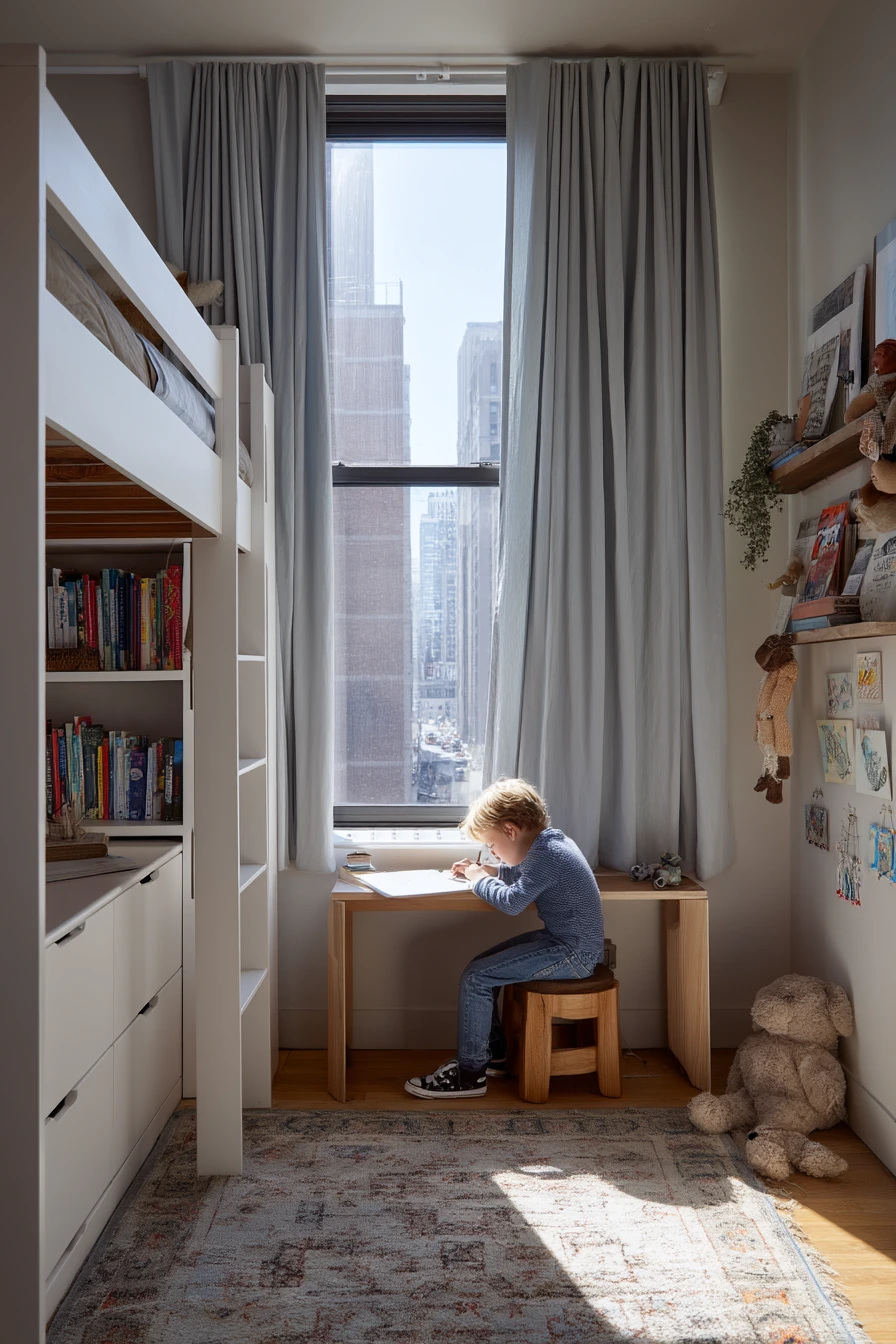
A loft bed is one of the best kids bedroom ideas for a petite city apartment because it turns vertical space into usable square footage. The sleep area stays up top, while a desk and shelves fit below for homework and drawing. Soft gray curtains keep the room airy and help control light for naps and early mornings.
To make the study nook work, think about daily habits. A cork pinboard holds school notes and art without taking up desk space. A compact dresser keeps clothes nearby, and a woven rug adds comfort for bare feet. Allow for real-life mess like pencil shavings, crumpled sketch paper, and a sneaker by the ladder by building in an easy reset routine.
How to style it: keep the main pieces simple, then add personality with a few favorite stuffed animals and a small stack of books. Use one container on the desk for markers and pencils, and one tray for paper. If plant shadows hit the wall in the afternoon, place the desk where the light feels warm but does not glare on the work surface.
- Pick a loft bed with solid guardrails and a stable ladder.
- Add a cork board above the desk to keep papers off the floor.
- Use a slim desk lamp or clip-on light for the study zone.
- Choose a small dresser with deep drawers to reduce extra bins.
- Keep one “paper recycle” basket for sketches and school pages.
Pro Design Tip: Leave at least one clear vertical panel under the loft for a calm look, then group shelves on one side so the nook does not feel crowded.
Budget Considerations: If a loft bed is out of reach, use a mid-height bed and a narrow desk under the window, then add wall shelves for the same function.


3 Budget-Friendly Renter Kids Bedroom
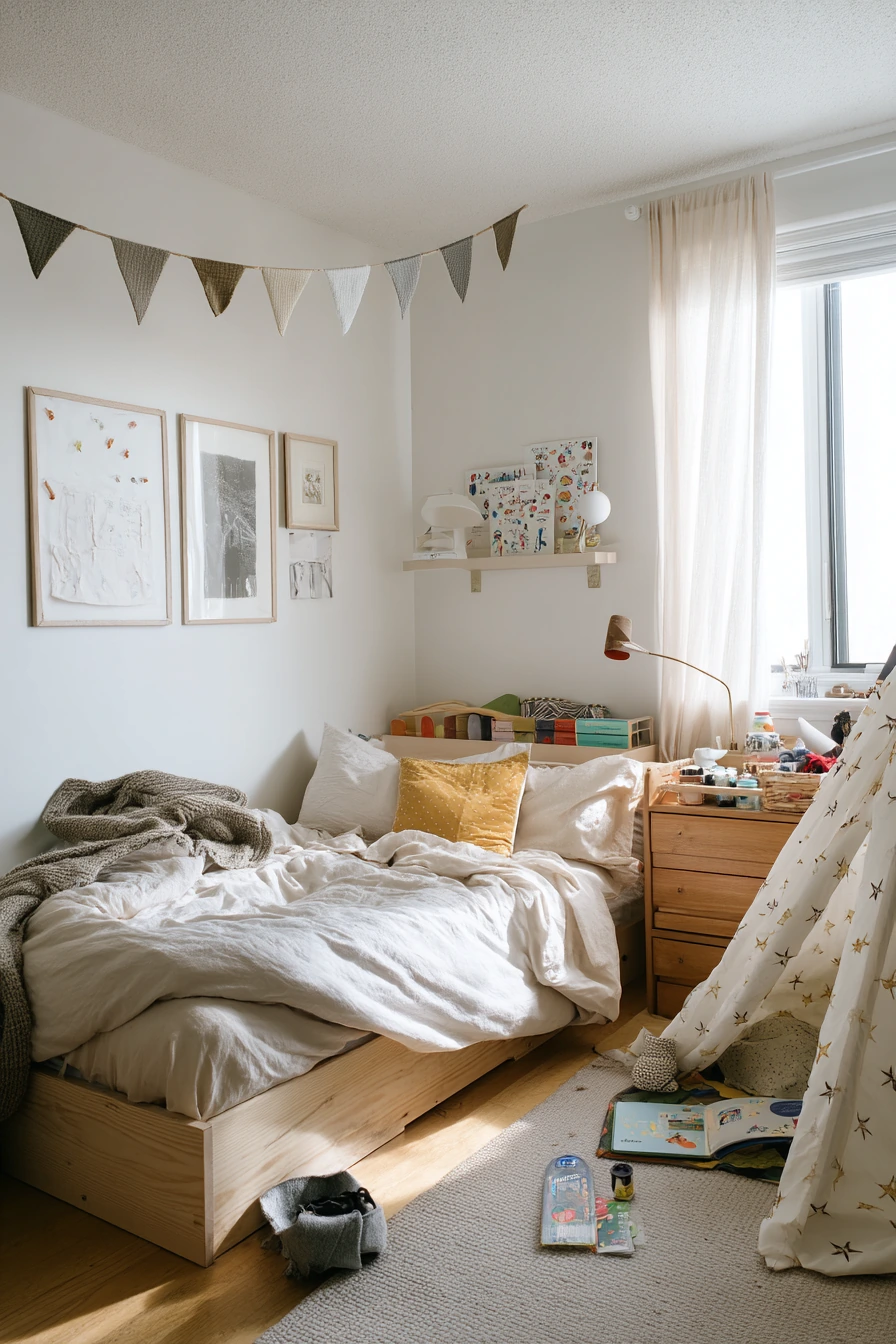

A renter-friendly kids bedroom can still look finished without paint or built-ins. Peel-and-stick stars add a playful ceiling or wall moment, and they are easy to remove later. Pair them with a simple pine bed and neutral linens so the room feels calm even when toys are out.
Lighting and storage matter in rentals where you may not want to drill much. Clip-on lamps are great for reading and can move with the bed. Modular cube storage works for toys, bins, and books, and it can be reconfigured as your child grows. Small lived-in cues like a picture book left open, a sticker sheet on the nightstand, or a water bottle by the bed are normal, so plan a “drop zone” for these items.
How to style it: add a short bunting string or a few framed prints leaning on a shelf for color without holes in the wall. Keep a small laundry basket tucked beside the dresser to catch socks and pajamas. If your child loves making forts, store extra blankets in one cube so it is easy to pull out and put back.
- Use peel-and-stick decals to add interest without damage.
- Choose a pine bed frame that works with many styles over time.
- Add clip-on lamps for flexible lighting without rewiring.
- Use cube storage with a mix of open bins and closed baskets.
- Place a small laundry basket where kids naturally drop clothes.
Pro Design Tip: Keep the bedding and rug neutral, then rotate small decor like bunting, decals, and throw pillows to refresh the room without big changes.
Budget Considerations: Peel-and-stick sets add up; use them on one accent area only, like above the bed, and leave the rest of the wall plain.


4 Montessori-Inspired Toddler Bedroom
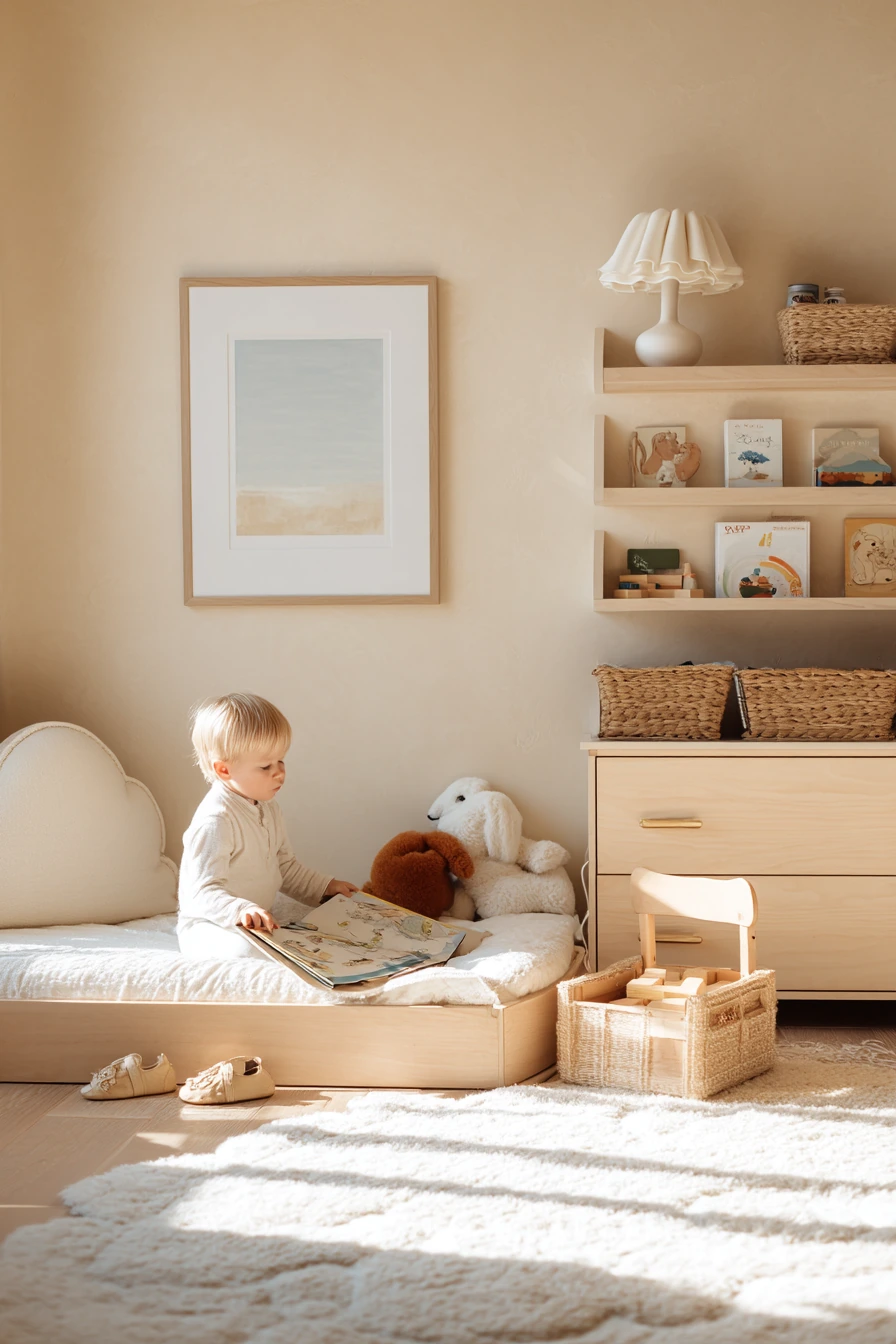
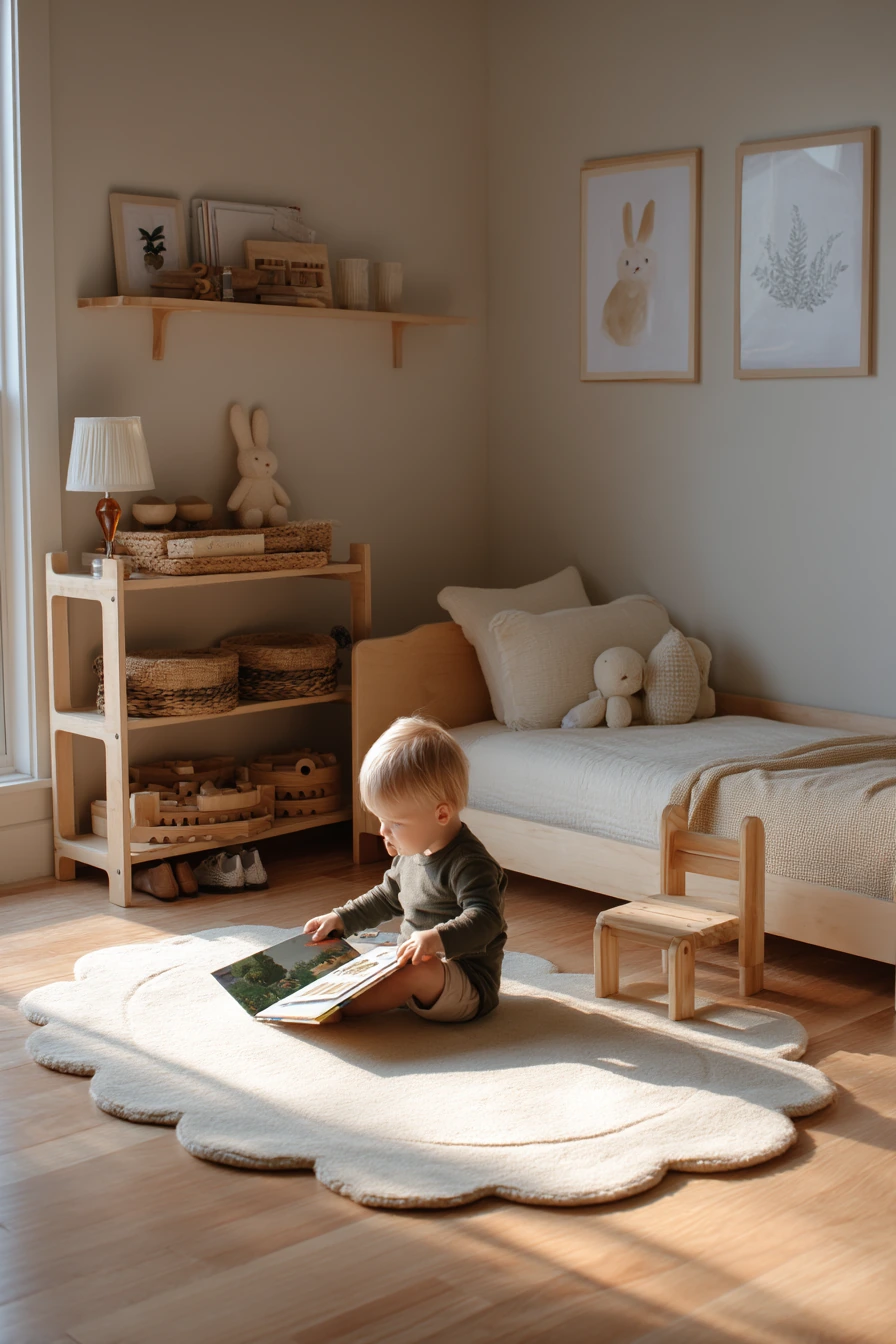
A Montessori-style toddler bedroom supports independence by putting everything within reach. A low floor bed makes it easier for a toddler to get in and out safely. Low open shelves and accessible toy baskets help kids choose what to play with and learn to put items back.
Keep the room gentle and simple. Beige walls, soft art prints, and a rounded rug create a quiet feel. A scalloped lampshade adds warmth without being too busy. Safety is part of style here, so anchor the dresser and keep heavy items low. Real-life details like a pacifier on the bed, a slightly wrinkled blanket, and tiny shoes by the door are normal, so design the room around easy routines.
How to style it: set up a tiny reading spot with a small wooden chair and a forward-facing book display so covers are visible. Use one felt basket for blocks and one for stuffed animals. Keep only a few toys out at a time. A smaller selection often means longer, calmer play, and less mess on the floor.
- Use a floor bed or very low bed frame with firm support.
- Choose open shelves that are stable and low enough for toddlers.
- Add two to three toy baskets so cleanup stays simple.
- Anchor the dresser and avoid tall, top-heavy storage.
- Place a soft rug near the bed for safe morning steps.
Pro Design Tip: Try a “toy rotation” shelf plan, with only 6 to 10 items visible, so the room stays calm and the toddler does not feel overwhelmed.
Budget Considerations: Montessori furniture can be expensive; use a crib mattress on a low platform and add affordable cube shelves turned sideways to keep everything accessible.


5 Bold Color Playroom Bedroom
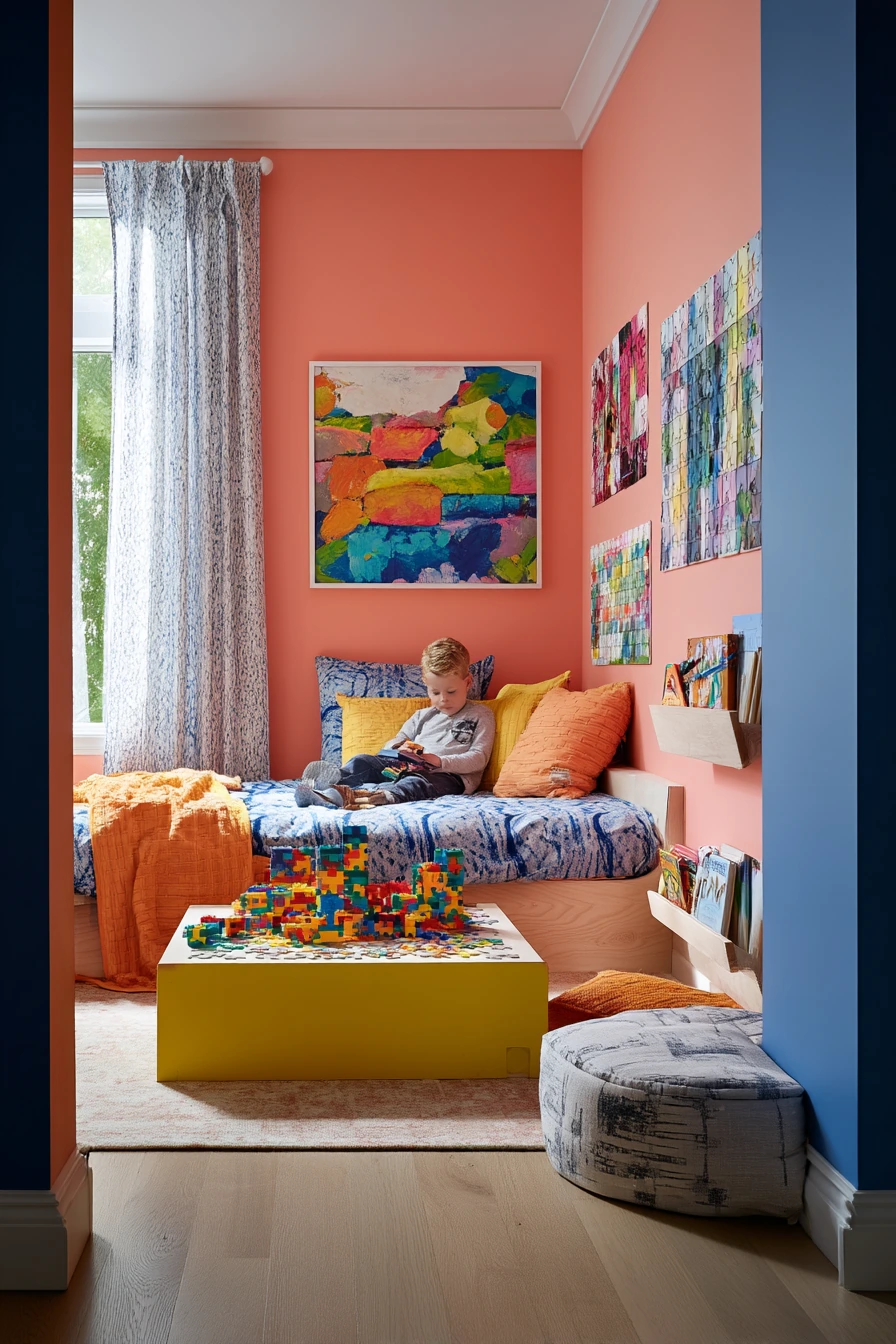

If your child loves bright color, you can still keep the room organized by separating the sleeping zone and the play corner. Painted half-walls in coral and blue bring energy without covering every surface. A bold rug and patterned curtains add personality, while toy shelves and a pinboard gallery keep the room functional.
The key is to give each activity a clear home. Use a low table for magnetic tiles so the play stays contained and easy to reset. Keep books on one shelf, puzzles in another, and art supplies in a small caddy. Lived-in moments like a tipped puzzle box, markers in a cup, and kids’ books stacked unevenly will happen, so plan a simple end-of-day reset that takes five minutes.
How to style it: repeat a few colors in small ways, like in pillow covers or storage bins, so the room feels intentional. Keep the bed area a little calmer with solid bedding, then let the play corner carry the patterns. If late-day light hits the wall, hang the most colorful art where it will glow.
- Use half-wall paint to add color without making the room feel smaller.
- Set a low table in the play zone for building toys and crafts.
- Hang a pinboard to display art and school papers neatly.
- Use open toy shelves with labeled bins for quick sorting.
- Keep one “catch-all” basket for fast cleanup before bedtime.
Pro Design Tip: Limit the palette to two main colors plus one neutral, then use the same bin style across shelves to reduce visual noise.
Budget Considerations: Paint is a low-cost makeover, but patterned curtains can be pricey; try solid curtains and add color through thrifted art prints instead.


6 Shared Boys Room With Study Zone


A shared boys bedroom works best when each child has a clear personal spot and there is a shared zone for homework. Two twin beds create balance, and matching desk lamps make the room feel put together. A long shared study table saves space compared to two desks and helps with after-school routines.
Use navy accents, oak furniture, and simple blackout curtains for a grounded look that lasts as kids grow. Sports mementos pinned above the headboards add personality without taking up floor space. Expect real-life clutter like a backpack on the floor, socks near the desk chair, and a half-finished snack plate, and design for quick cleanup with a few rules and the right bins.
How to style it: keep bedding mostly solid, then add one patterned pillow or throw for each child so their bed feels like theirs. Put a pencil cup and a small paper tray on the table so supplies do not spread. Add one sturdy rug that covers the walking path between beds and desk so the room feels warmer and quieter.
- Give each child a bed, a wall hook, and one drawer as “their zone.”
- Use a long shared table with two chairs to save floor space.
- Hang sports photos or jerseys in a neat grid above the beds.
- Choose blackout curtains if the room gets early morning light.
- Add a snack tray rule to keep food off beds and homework areas.
Pro Design Tip: Mount a narrow picture ledge above the shared table for trophies and frames so the desktop stays clear for homework.
Budget Considerations: A custom long desk costs more; use two matching simple tables placed side by side and finish with one continuous top strip if needed.


7 Soft Nursery-to-Kids Room Transition


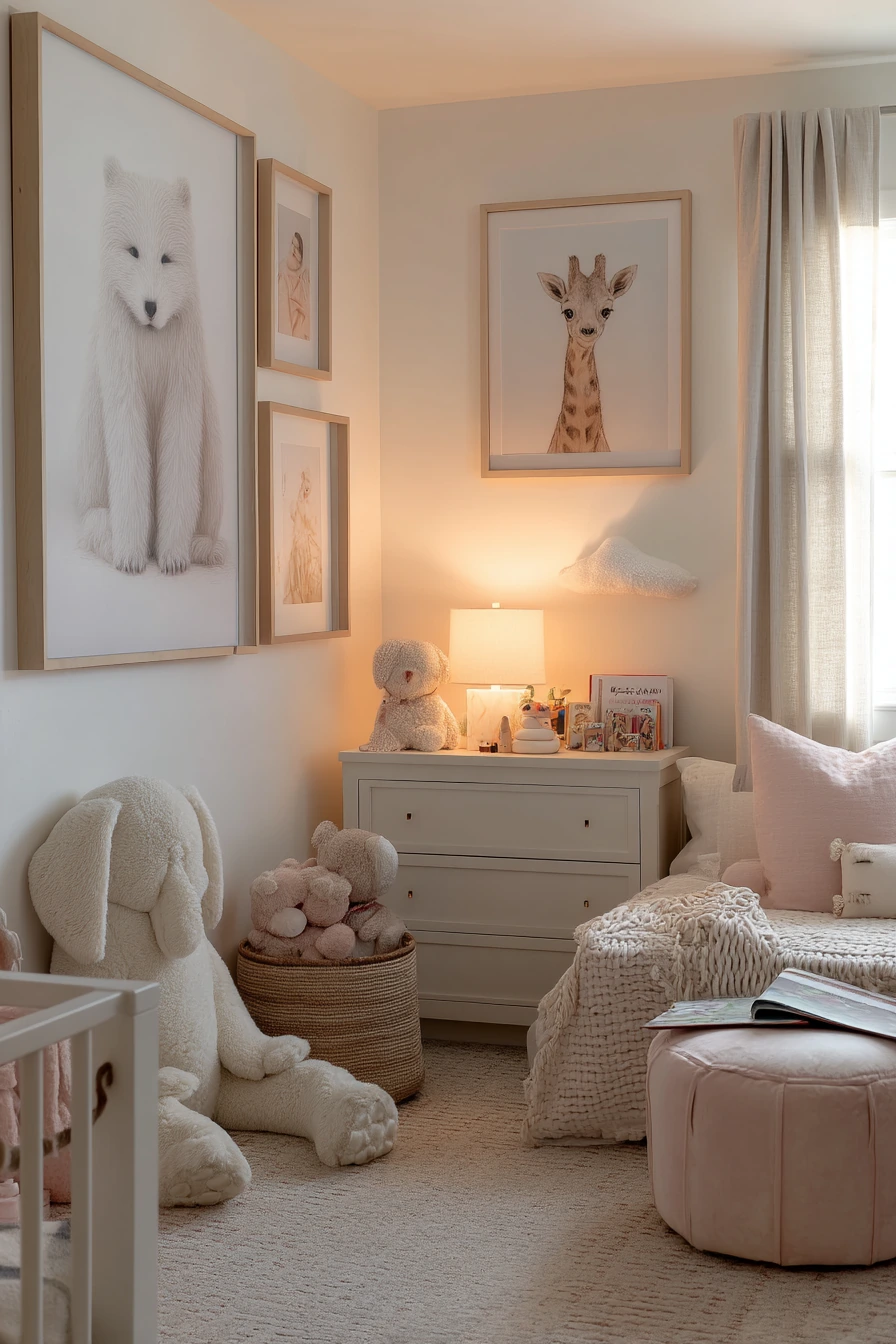
A transitional kids bedroom is helpful when your child is done with a crib but still wants nursery softness. A small bed with a rail supports safety and comfort. Cream knits, blush accents, and whimsical animal art keep the room sweet without feeling babyish.
To make the space work day to day, choose a dresser that also holds toys, and add a tiny reading nook for bedtime stories. A basket of plush toys keeps favorites close, and a retired mobile in the corner can feel like a memory instead of clutter. Lived-in items like a nightlight plug, a sippy cup on the dresser, and books stacked crookedly are common, so plan for them with one tray and one book bin.
How to style it: keep the main furniture neutral, then add soft layers through bedding and a rug. Use a wall shelf or ledge for a few framed prints and rotate them as your child grows. If one curtain always ends up pulled a bit askew, use tiebacks so it looks intentional and is easy for small hands.
- Pick a small bed with a removable rail for the transition stage.
- Use a dresser with divided drawers for clothes and small toys.
- Create a reading nook with two pillows and a small basket of books.
- Keep a bedside tray for a cup, a nightlight, and a favorite toy.
- Store plush toys in one basket to avoid piles on the floor.
Pro Design Tip: Use warm lamplight with a soft shade and keep overhead lights off at bedtime to make the room feel calm and support sleep cues.
Budget Considerations: If a new toddler bed is not in the budget, convert the crib to a toddler setup and spend on a better rug and lamp for a bigger impact.

8 Nature-Themed Bedroom With Reading Nook


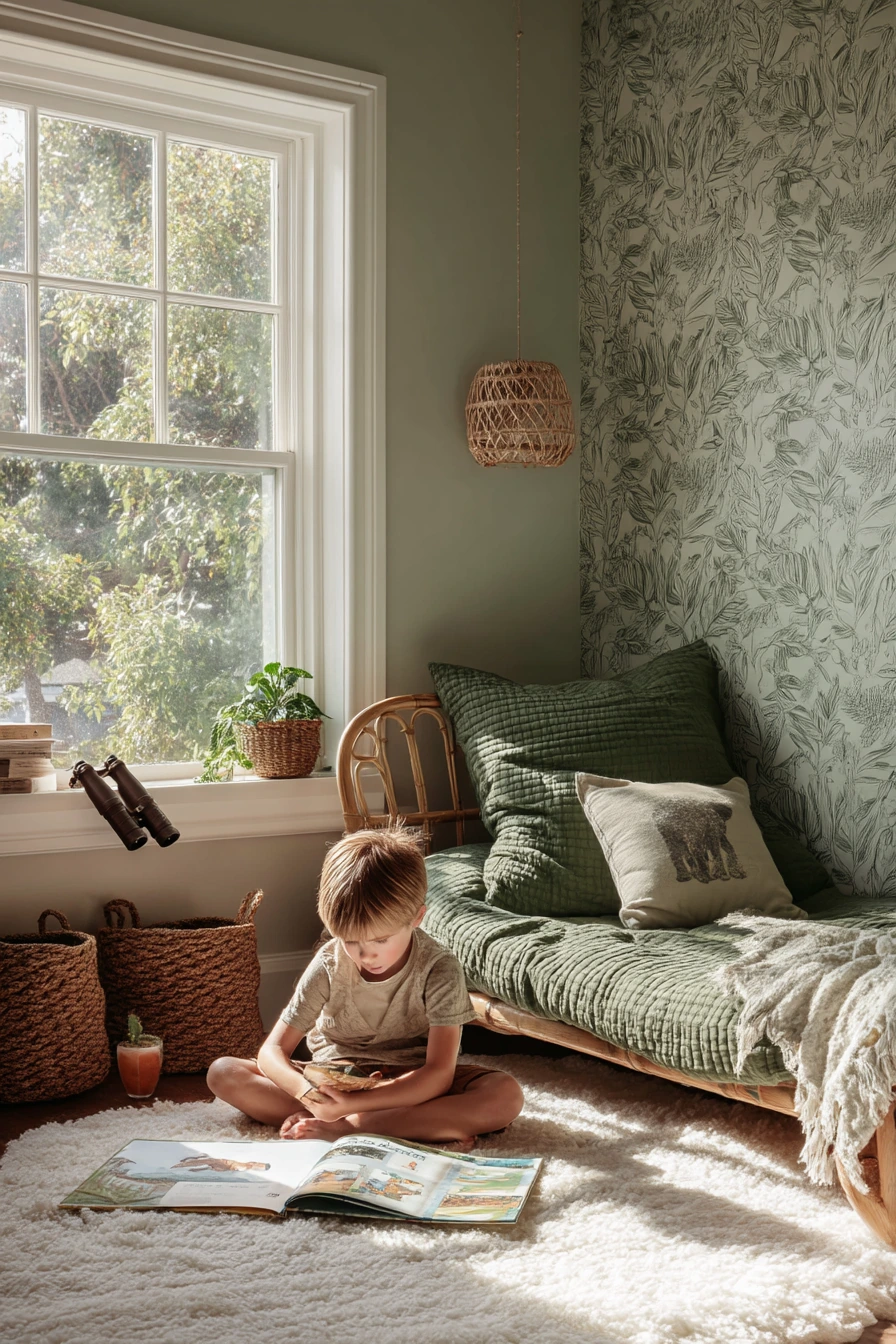
A nature-inspired kids bedroom feels restful and easy to live in. Leafy wallpaper adds interest, and a cozy window reading nook turns unused space into a favorite spot. A low bed dressed in mossy greens keeps the room grounded and works well with wood tones and woven textures.
Use rattan, baskets, and simple wood furniture to keep the look warm. A wooden bead lamp adds soft detail without being fragile. Add a small plant on the sill if your child is old enough to help care for it. Real-life items like binoculars on the windowsill, a juice glass, and a trail of picture books are part of the story, so create one basket near the nook for quick book pickup.
How to style it: keep the bedding mostly solid, then add one patterned pillow inspired by leaves or animals. Place an animal atlas or a few nature books face-out on a shelf so kids reach for them. If the morning light hits the rug, use that space for quiet reading or puzzles, and keep the toy storage slightly farther back so the room still feels calm.
- Use leafy wallpaper on one wall to avoid visual overload.
- Build a window nook with a cushion and two baskets underneath.
- Choose a low bed to keep the room open and safe for younger kids.
- Add woven baskets for toys so storage feels natural and soft.
- Keep a small “nature shelf” for binoculars, rocks, or keepsakes.
Pro Design Tip: Repeat the same wood tone across one to two key pieces, like the bed and a chair, so the room feels cohesive even with mixed baskets.
Budget Considerations: Wallpaper can be costly; try peel-and-stick wallpaper on a single panel behind the bed, or use framed botanical prints instead.

9 Tiny Apartment Kid Corner Bedroom
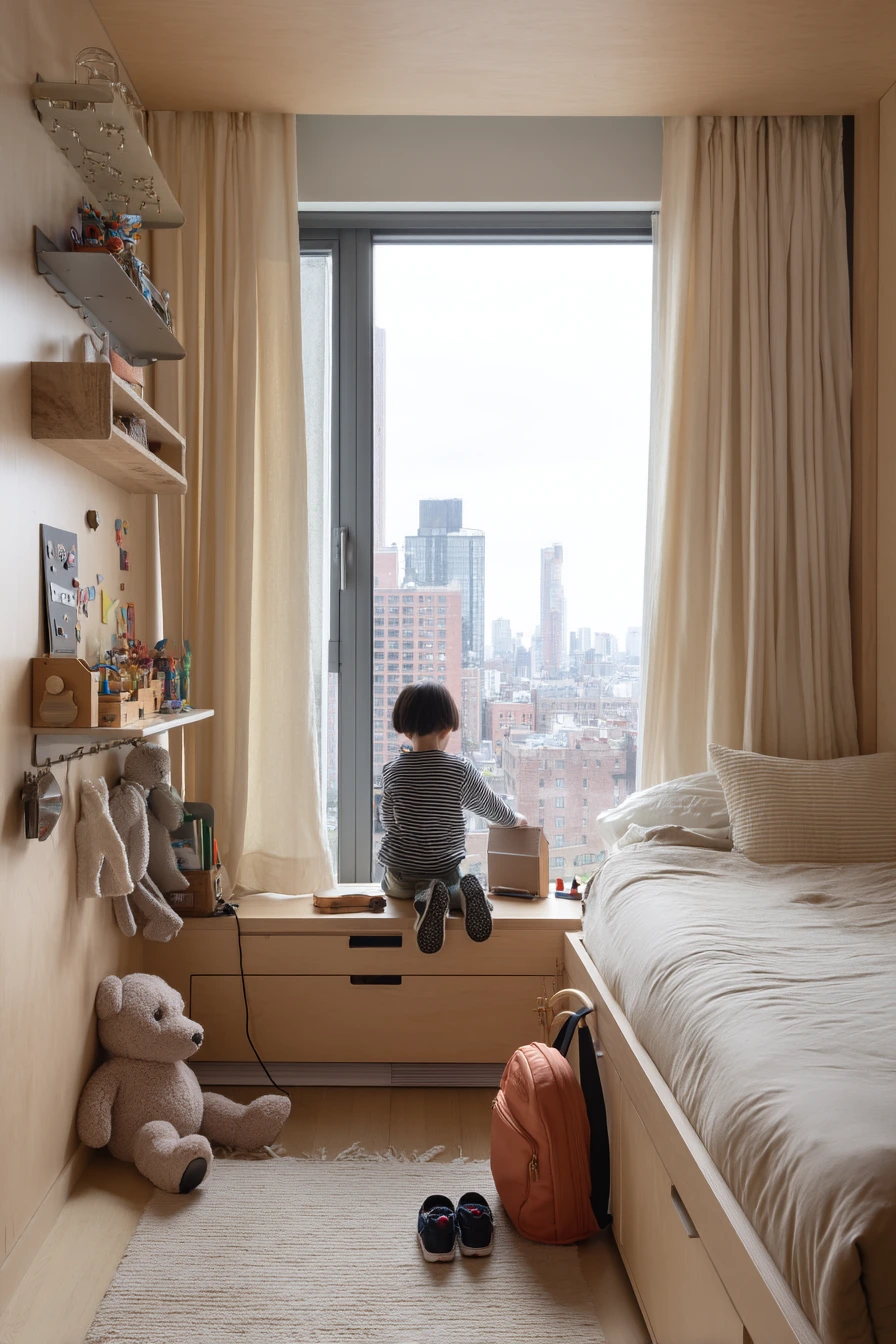

A small-space kids bedroom tucked into an apartment end can still feel like a real room with smart boundaries. Curtain dividers are an easy way to create privacy and hide the bed during the day. A Murphy-style bed or wall bed is a strong option when the space needs to serve more than one purpose.
Wall-mounted shelves keep the floor clear, and pale wood finishes help the area feel larger. Add magnetic wall art for display without lots of frames. A slim toy drawer under the window can hold daily favorites without taking over the room. Expect busy mornings, like a child zipping a backpack while a parent makes the bed, and set up the layout so two people can move around without bumping into furniture.
How to style it: choose one simple rug to define the bedroom zone, even if it is part of a larger space. Keep school items in one area, like shoes by the bed and a lunchbox on a chair hook, so mornings move faster. Add a stuffed animal in the pillow crease and one charging cable spot near the outlet, so comfort and function both fit.
- Use curtain dividers to create a bedroom feel in an open area.
- Consider a Murphy bed if you need the floor open during the day.
- Install wall shelves for books and bins instead of bulky units.
- Add one slim drawer under the window for toys and small items.
- Create a school-ready station with hooks for backpack and jacket.
Pro Design Tip: Keep the curtain color close to the wall color so the divider blends in and the small space feels less chopped up.
Budget Considerations: Murphy beds are expensive; try a daybed with drawers and a curtain track to get a similar “hideaway” effect for less.


10 Cozy Nighttime Kids Bedroom


A bedtime kids bedroom should support calm routines. Low light, drawn curtains, and a dim bedside lamp help signal that it is time to rest. A simple bookshelf near the bed makes it easy to keep a steady reading habit, and a soft rug helps the room feel warm for bare feet.
Design the space for real evening life. A cup of water on the nightstand, one book open face-down, pajamas on the chair, and a toy car under the bed are all normal. Instead of fighting these habits, give them a place. Use a small tray for water and lip balm, one chair or hook for pajamas, and a low bin for one to two bedtime toys.
How to style it: choose gentle wall art and keep decor limited near the bed. Layer the quilt with one extra blanket for cooler months. If you have two kids in one room, give each one a small “sleep kit” basket with a book and a comfort item so bedtime stays smooth and quiet.
- Use warm bulbs and one bedside lamp instead of bright overhead lighting.
- Keep a small nightstand tray for water and bedtime essentials.
- Add a low bookshelf so kids can pick a book on their own.
- Use a soft rug to reduce noise and add comfort.
- Store one small toy in a bin so the bed does not fill with clutter.
Pro Design Tip: Choose a lamp shade that blocks glare and points light downward, so the reader can see the page without lighting up the whole room.
Budget Considerations: A good lamp and warm bulb are low-cost upgrades; shop secondhand for a sturdy nightstand and paint it to match the room.


Good kids bedroom ideas start with a layout that fits your home and your child’s daily routine. When sleep, play, and storage each have a clear place, the room is easier to keep tidy.
Use the pro tips to make the space feel finished, then adjust with budget-friendly swaps like peel-and-stick decor, secondhand furniture, and simple bins.
FAQ
1. How do I organize a small kids bedroom?
Use vertical space with shelves, choose under-bed drawers, and keep only a few toy categories out at once. Add one catch-all basket for fast cleanup.
2. Are bunk beds safe for young kids?
Most bunk beds are recommended for older kids on the top bunk. Follow the manufacturer age guidance, use guardrails, and keep the ladder clear.
3. What is the best way to set up a study area in a kids room?
Place a desk near natural light, add a lamp for evenings, and keep supplies in one caddy. A cork board or wall shelf helps keep the desktop clear.
4. How can I make a renter-friendly kids room look custom?
Use peel-and-stick decals, framed prints leaning on shelves, clip-on lamps, and matching baskets. Focus on bedding, rugs, and lighting for big impact.
5. What should be in a Montessori toddler bedroom?
A low bed, low shelves, a few accessible toy baskets, and anchored furniture. Keep the toy selection small and rotate items to reduce clutter.
6. How do I split a shared kids bedroom fairly?
Give each child a personal zone, like one drawer, one hook, and one bedside basket. Use shared storage for toys and a shared table for homework.
7. What lighting is best for kids at bedtime?
Warm, dim lighting works best. Use a bedside lamp with a soft shade, and avoid bright overhead lights right before sleep.