

Good lighting can make a living room feel bigger, calmer, and more comfortable. The best living room lighting ideas use more than one light source, so you can switch from bright daytime tasks to a soft evening glow.
In this post, you will see simple ways to layer floor lamps, table lamps, candles, and subtle LEDs. Each idea is based on real-life rooms with everyday details like toy baskets, charging cables, art books, and a half-finished water glass.
You will also get quick “how to style it” steps, plus a Pro Design Tip and a Budget Consideration for every look. Use these ideas whether you own your home or rent a small apartment.
Save the looks you like, then pick one change you can do this week. Even swapping a bulb or moving a lamp can change the mood fast.
1 Sunlit Family Living Room with Layered Lamps
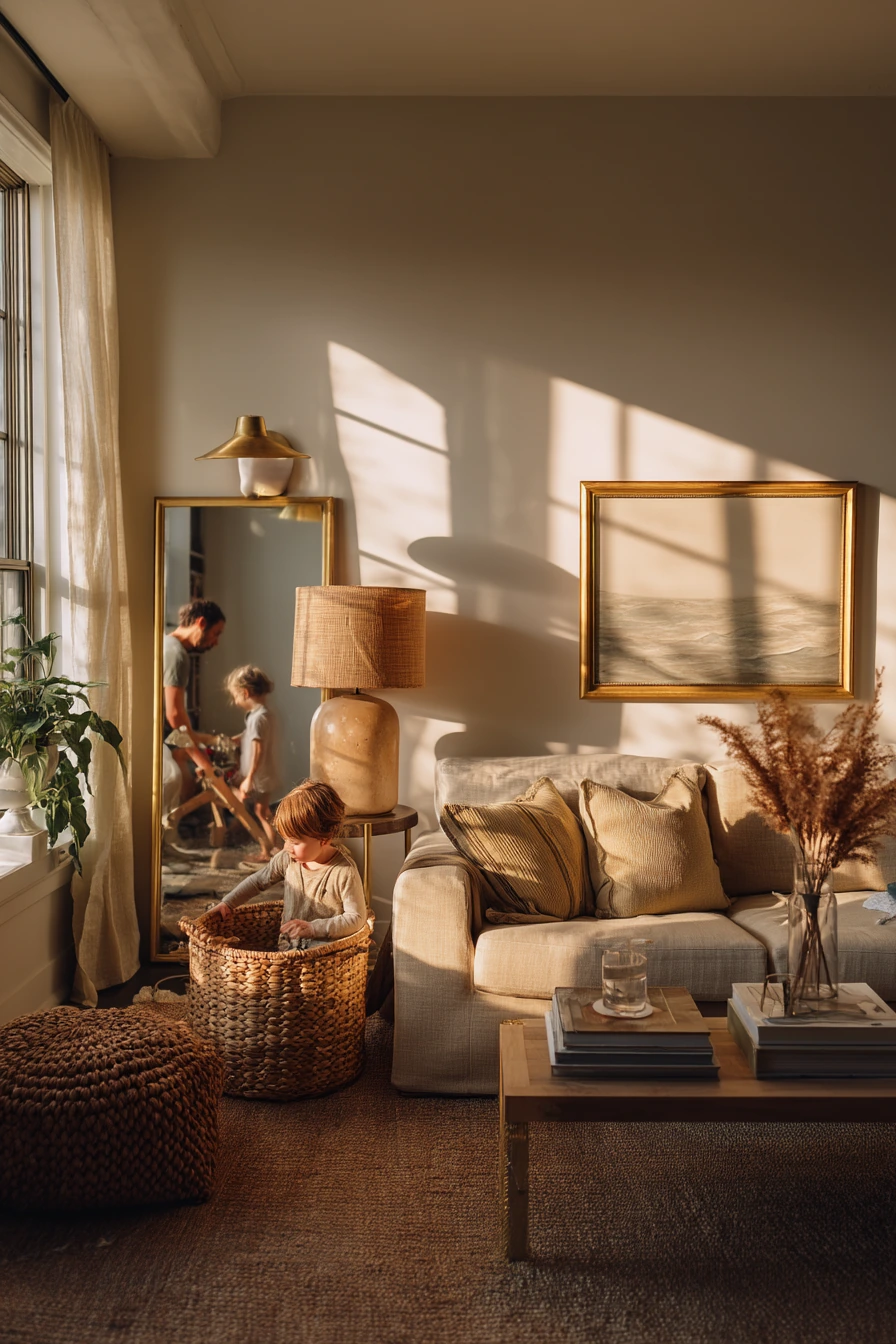
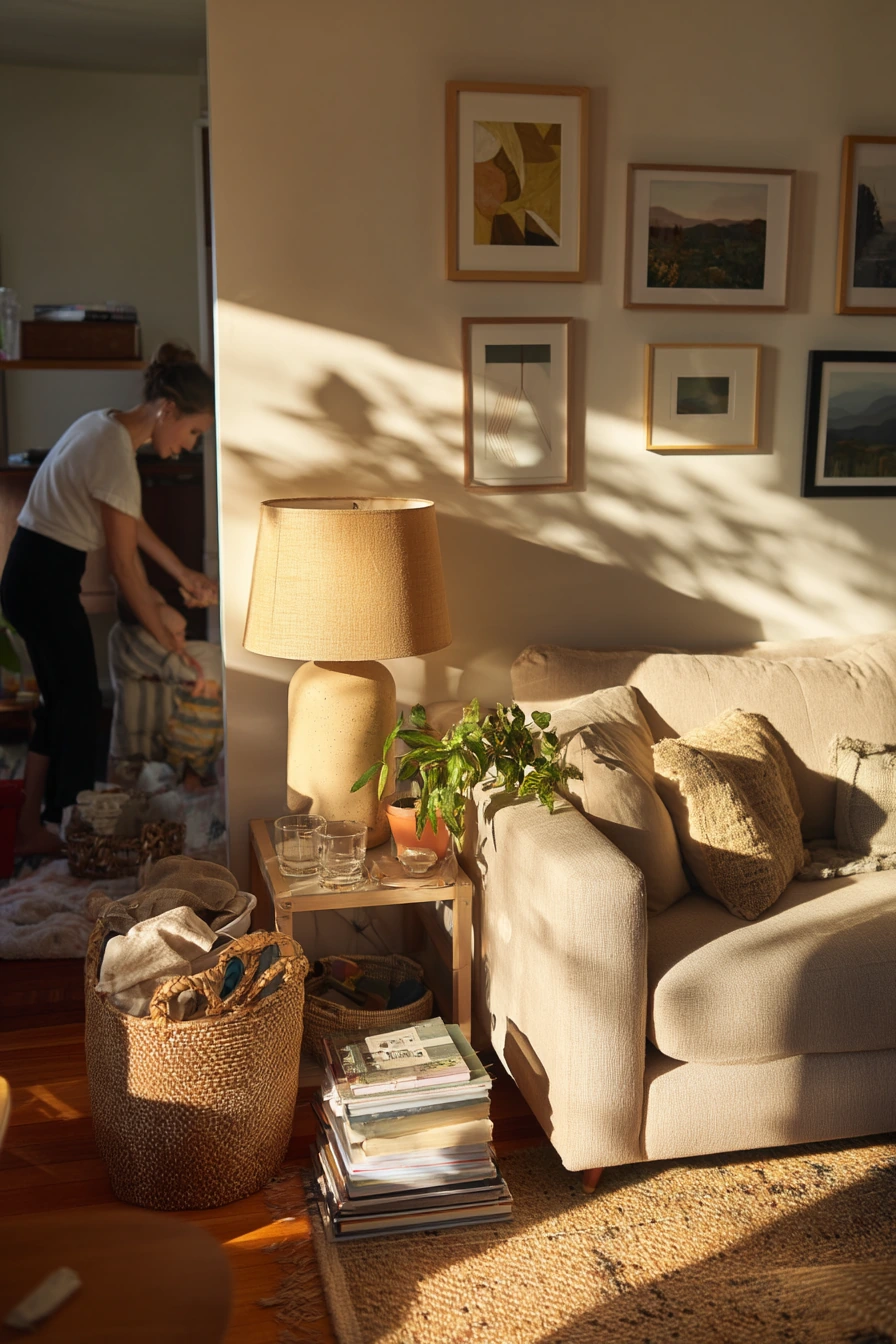
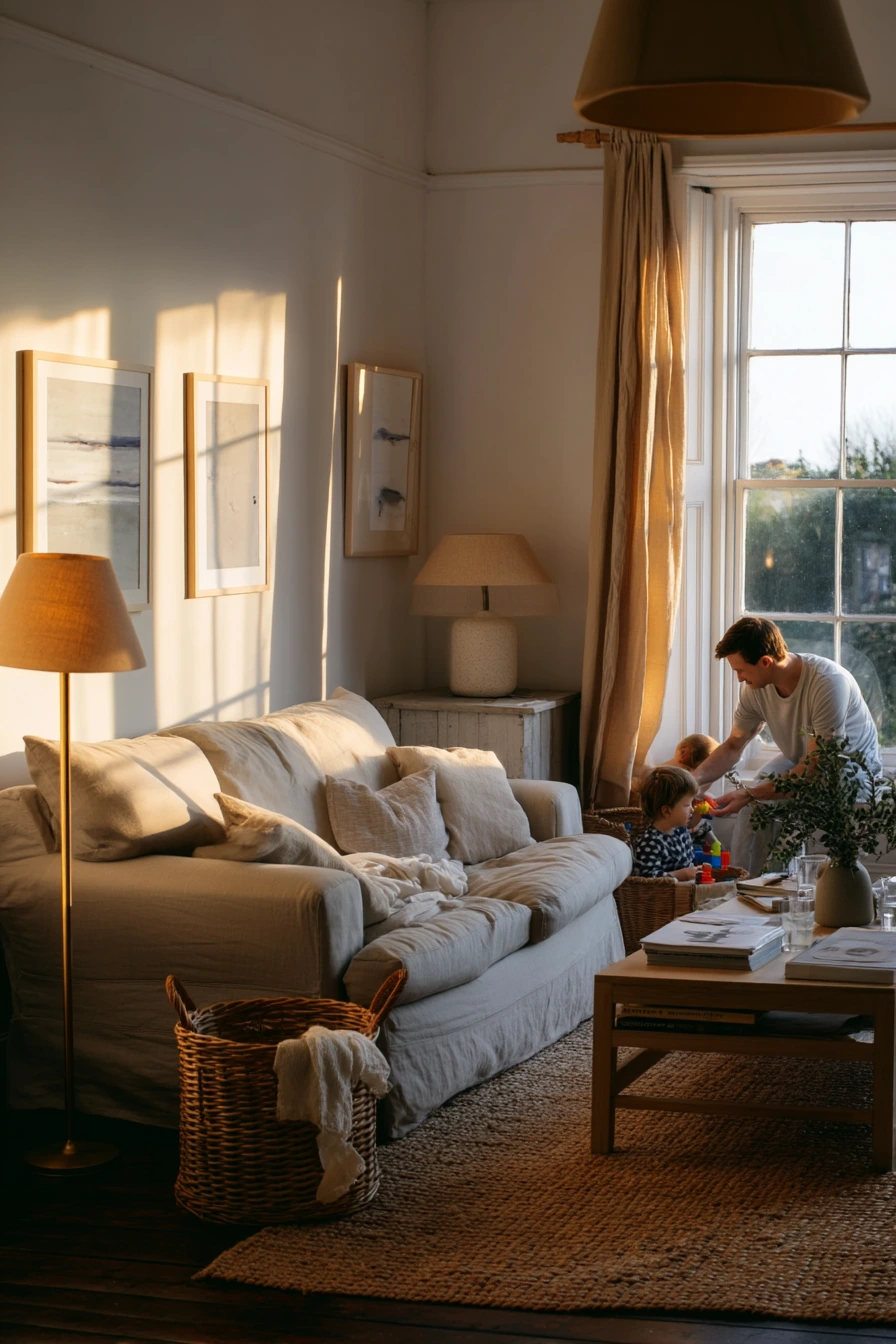
A real family living room needs lighting that works during the evening transition. Start with natural window light, then add warm practical lamps so the room still feels calm when the sun drops. In a lived-in space with a linen sofa, toy basket, woven rug, and a slightly wrinkled throw, soft layers hide clutter and make everything look more inviting.
Use a warm brass floor lamp as your main evening light. Then add two ceramic table lamps on opposite sides of the room. This creates a balanced glow and reduces harsh shadows. The goal is to light faces and seating areas, not the ceiling. If plant shadows drift across the wall at sunset, keep them. That movement adds texture and makes the room feel alive.
How to style it: keep stacked art books on the coffee table, but leave some breathing room. A half-finished water glass is fine if you place it on a tray. Choose lamp shades that are slightly warm, not bright white, so the light feels sun-washed instead of sharp.
- Put the floor lamp behind the sofa corner for a soft back glow.
- Use matching bulb color in every lamp (warm white) for an even mood.
- Pick ceramic lamp bases to add texture next to linen and wool.
- Add a dimmer plug so you can lower light after dinner.
- Keep one surface “clear” so the room still looks tidy.
Pro Design Tip: Use three light heights (floor, table, and low accent like a candle) so the room has depth, even when toys and daily items are out.
Budget Considerations: Thrift stores often have solid lamp bases. If the shade looks dated, replace only the shade and add a warm LED bulb for a fresh look.

2 Small Apartment Corner Lighting Solution


In a compact city apartment, lighting has to do double duty. It should support reading and relaxing, but also help the space feel expanded. When soft window light fades, an arched floor lamp can take over without adding visual clutter. A slim reading chair, wall-mounted shelf, and one trailing plant are enough when the lighting is right.
Use one statement lamp with an arched arm to push light over the seating area, like a gentle overhead. This frees up side tables and keeps walkways clear. Add one small plug-in table lamp or a small shade on the shelf for a second layer. If you have real-life details like a charging cable near the sofa, hide it with a cable cover that matches the wall, or route it behind the shelf so it reads as neat instead of messy.
How to style it: keep a paperback stack in a low tray and put a coaster under your mug to avoid rings on the side table. Choose light, simple shades so the room feels open. Aim the arched lamp toward the sofa back, not straight down, for softer bounce light.
- Choose a lamp base that fits under the sofa or behind a chair.
- Use a wall shelf lamp to save tabletop space.
- Pick one warm bulb temperature across all lights for a steady look.
- Add a small mirror near the lamp to spread light without extra fixtures.
- Keep cords tidy with clips along the table leg or baseboard.
Pro Design Tip: In small rooms, aim light across the room, not down at the floor. Side-to-side light makes walls feel farther away.
Budget Considerations: If an arched floor lamp is pricey, look for secondhand options or choose a simple torchiere lamp plus a clip-on reading light.


3 Budget-Friendly Living Room Lampside Glow

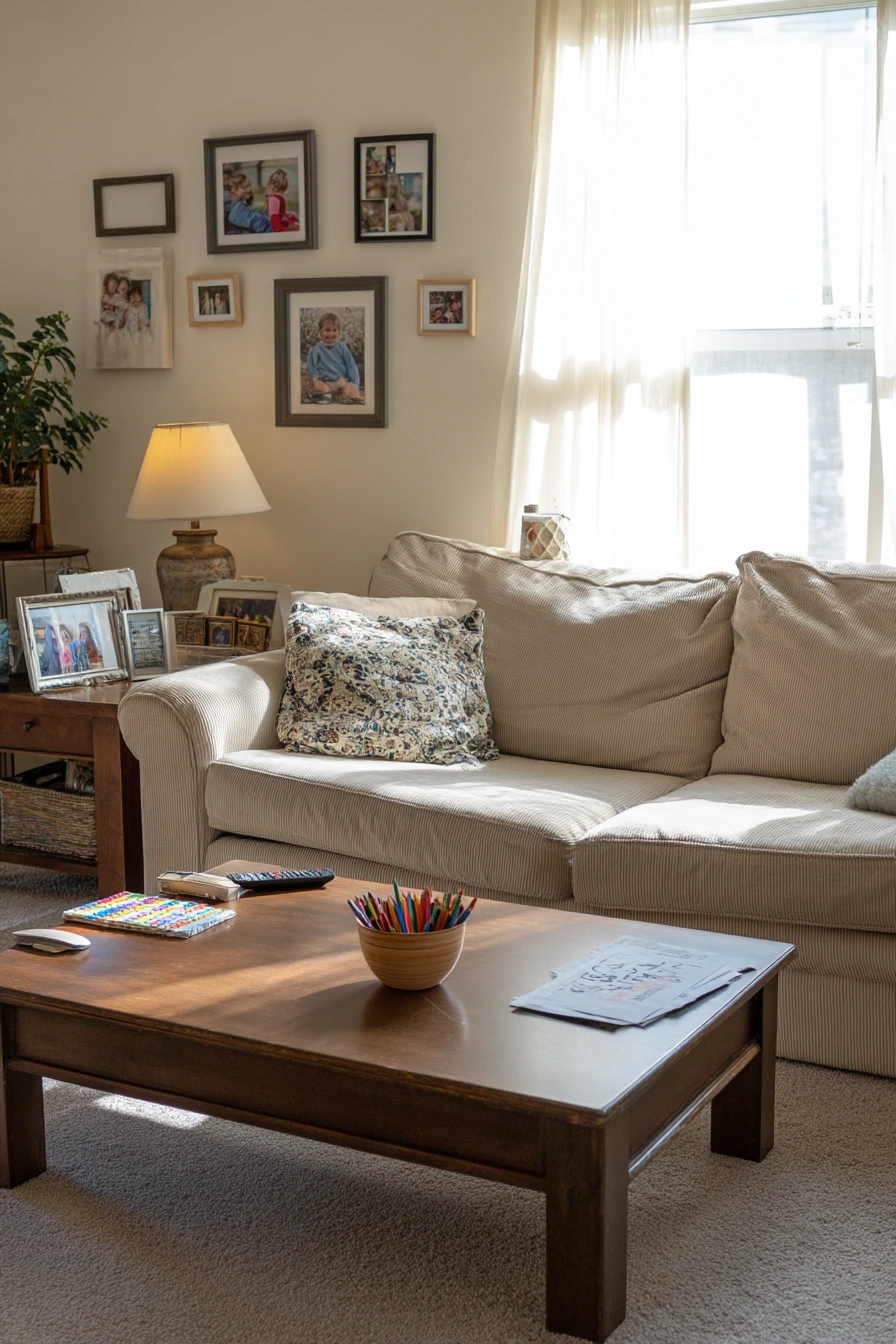
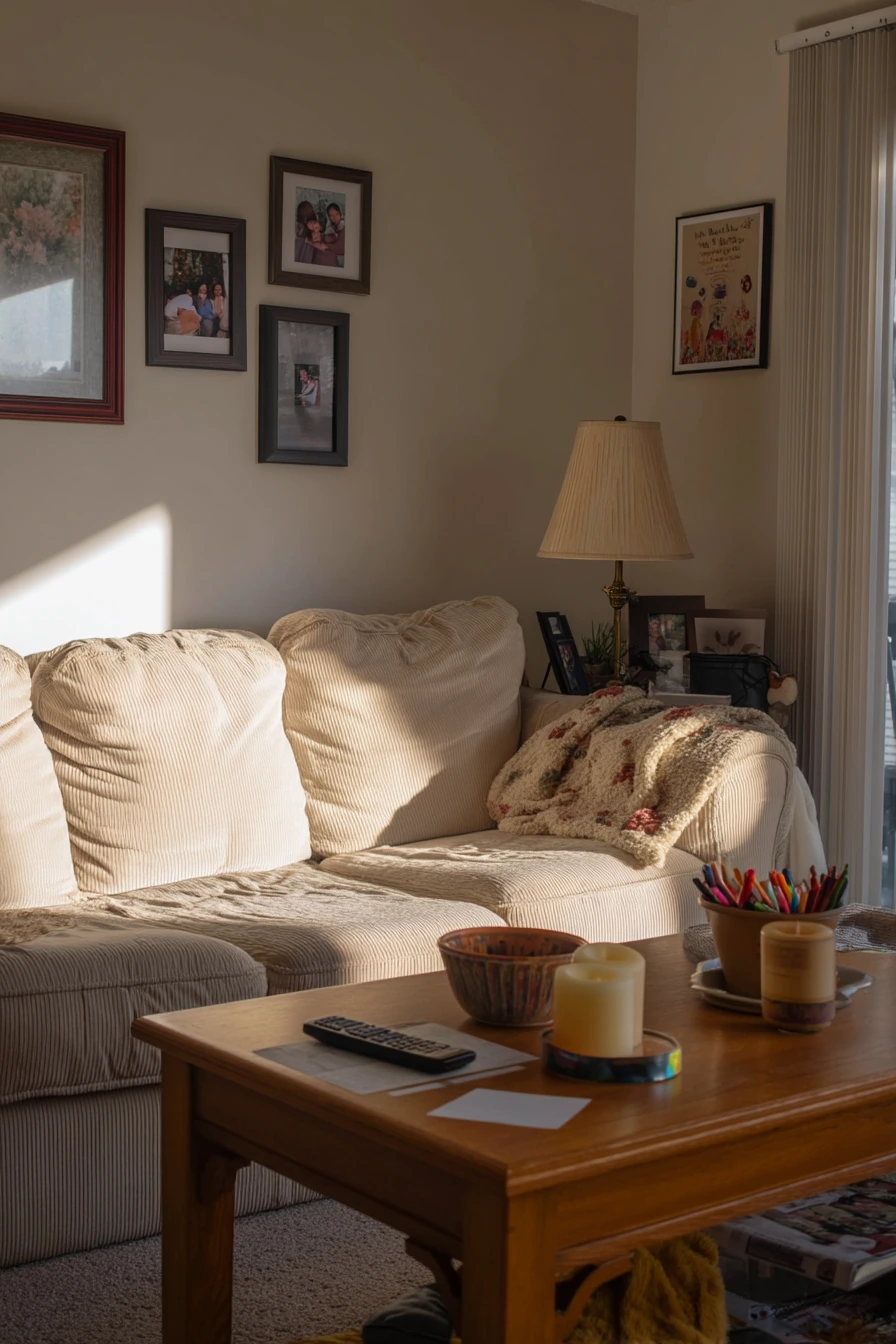
You do not need designer fixtures to get warm, cozy light. In a modest suburban living room, affordable lighting ideas can look honest and welcoming. A simple fabric sofa, framed family photos, and everyday items like a remote on the coffee table can still feel styled when the lighting is soft and amber.
Start with one thrifted table lamp. Choose a shade that spreads light out, not one that shoots light up. Add an LED candle cluster on a tray for a low glow that feels safe with kids around. This gives you two layers right away. Then use daylight from the window as your daytime layer. In the afternoon, the mix of soft window light and warm practicals creates gentle shadows and a relaxed mood.
How to style it: corral kids’ coloring pencils in a bowl and place it near the lamp so it feels intentional. Fold a throw and set it on the sofa arm for a tidy look that still feels lived-in. Keep family photos in similar frames so the wall reads calm instead of busy.
- Use warm LED bulbs (not cool white) for a more cozy feel.
- Place the table lamp near where you sit most often.
- Add LED candles in different heights for a soft, layered look.
- Use a tray to group remotes, coasters, and small items.
- Keep one lamp shade clean and lint-free so it glows evenly.
Pro Design Tip: If you only have money for one lamp, place it so the shade sits around eye level when seated. That height is the most flattering and relaxing.
Budget Considerations: LED candles and thrifted lamps are usually low cost. If a lamp works but looks dated, spray paint the base and swap in a new shade instead of buying new.

4 Renter-Friendly No-Install Lighting Setup
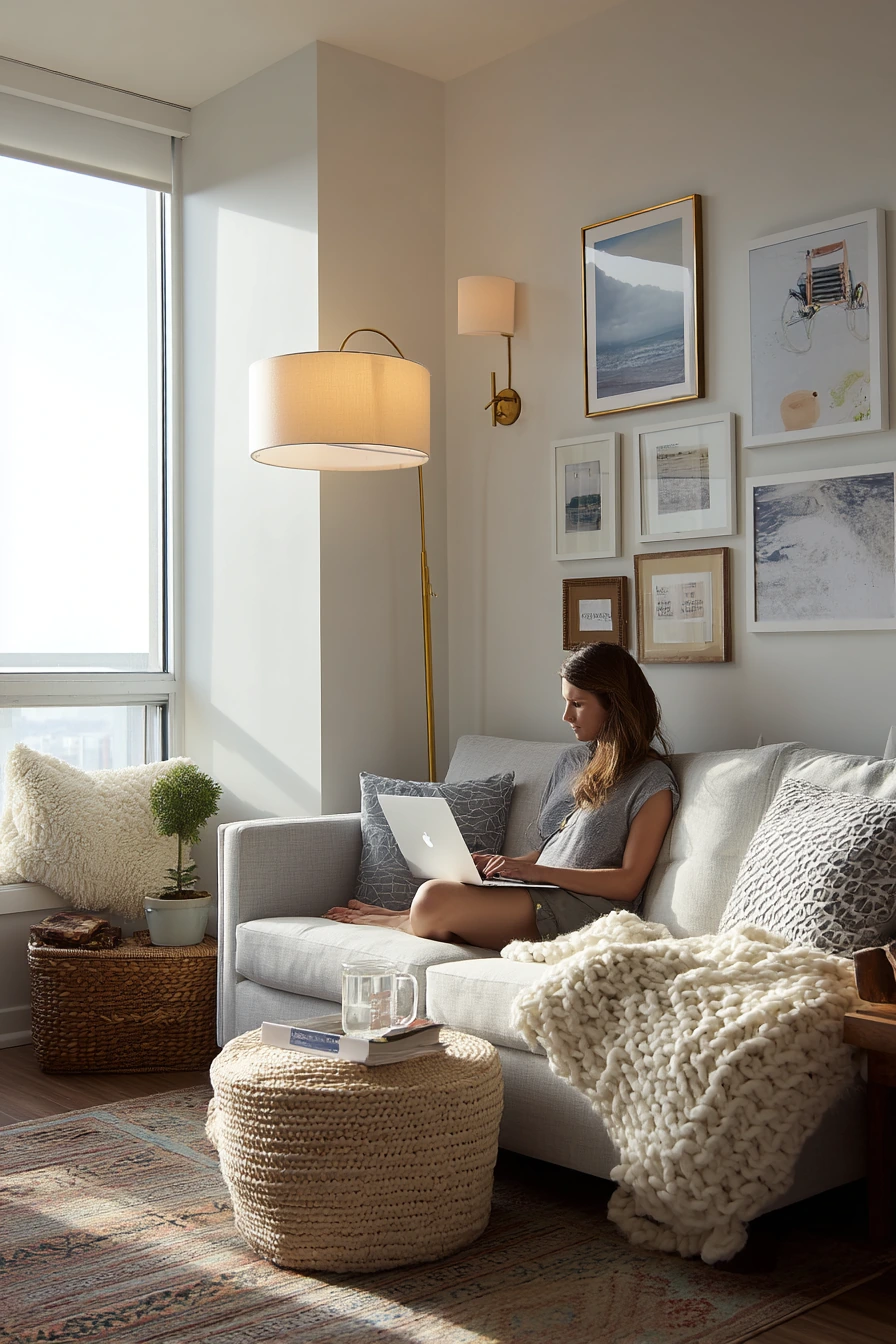
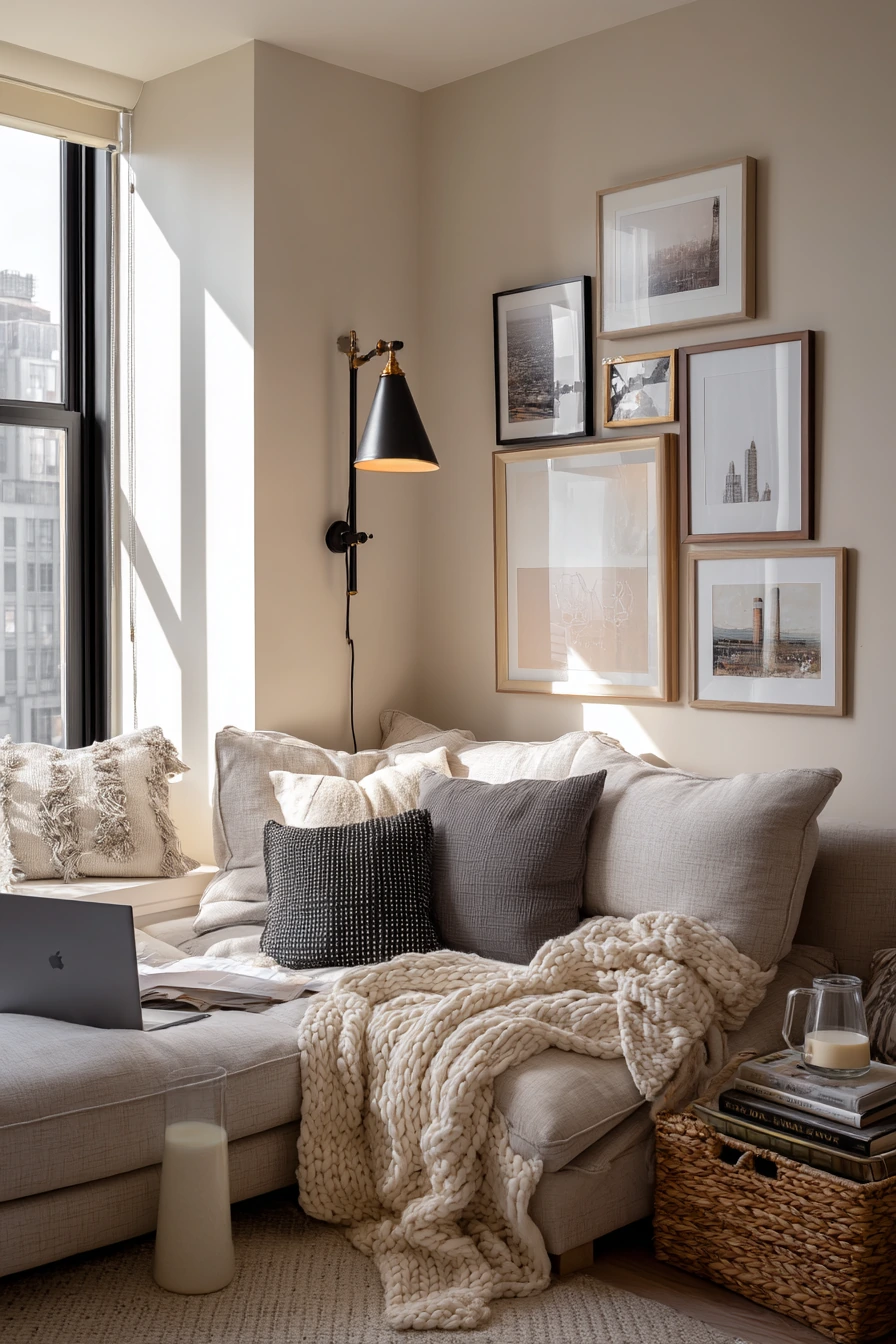
If you rent, you can still build great layers without changing wiring. Plug-in sconces clipped or mounted to the wall can add “built-in” style, while staying lease-friendly. In a relaxed corner with a low sofa, peel-and-stick art, a storage basket, and a knit throw, the lighting should feel flexible and easy to move.
Start with two plug-in sconces, one on each side of the sofa if possible. This gives you a soft wall wash and frees up side tables for real life, like an open laptop or a water glass. Add a slim floor lamp for a third layer and use it to fill in darker corners. Keep daylight from the tall window as your daytime layer, then switch to warm lamp pools at night.
How to style it: choose sconce shades that match your style, like simple linen for a soft modern look. Hide cords with paintable cord covers so the wall stays clean. Add peel-and-stick art above the sofa, but keep it slightly higher than the sconces so the wall looks balanced.
- Use command strips or renter-safe hooks for cord routing.
- Place sconces about 60 to 66 inches from the floor for good glow.
- Pick warm bulbs to avoid a harsh, office feel.
- Add a basket for chargers and small tech so surfaces look calm.
- Use a smart plug to turn lights on and off without getting up.
Pro Design Tip: Use symmetrical wall lights to make a rental living room look more finished, even if the furniture is simple.
Budget Considerations: Plug-in sconces range widely in price. If needed, start with one sconce on the reading side of the sofa and add the second later.

5 Cozy Reading Nook with One Perfect Lamp


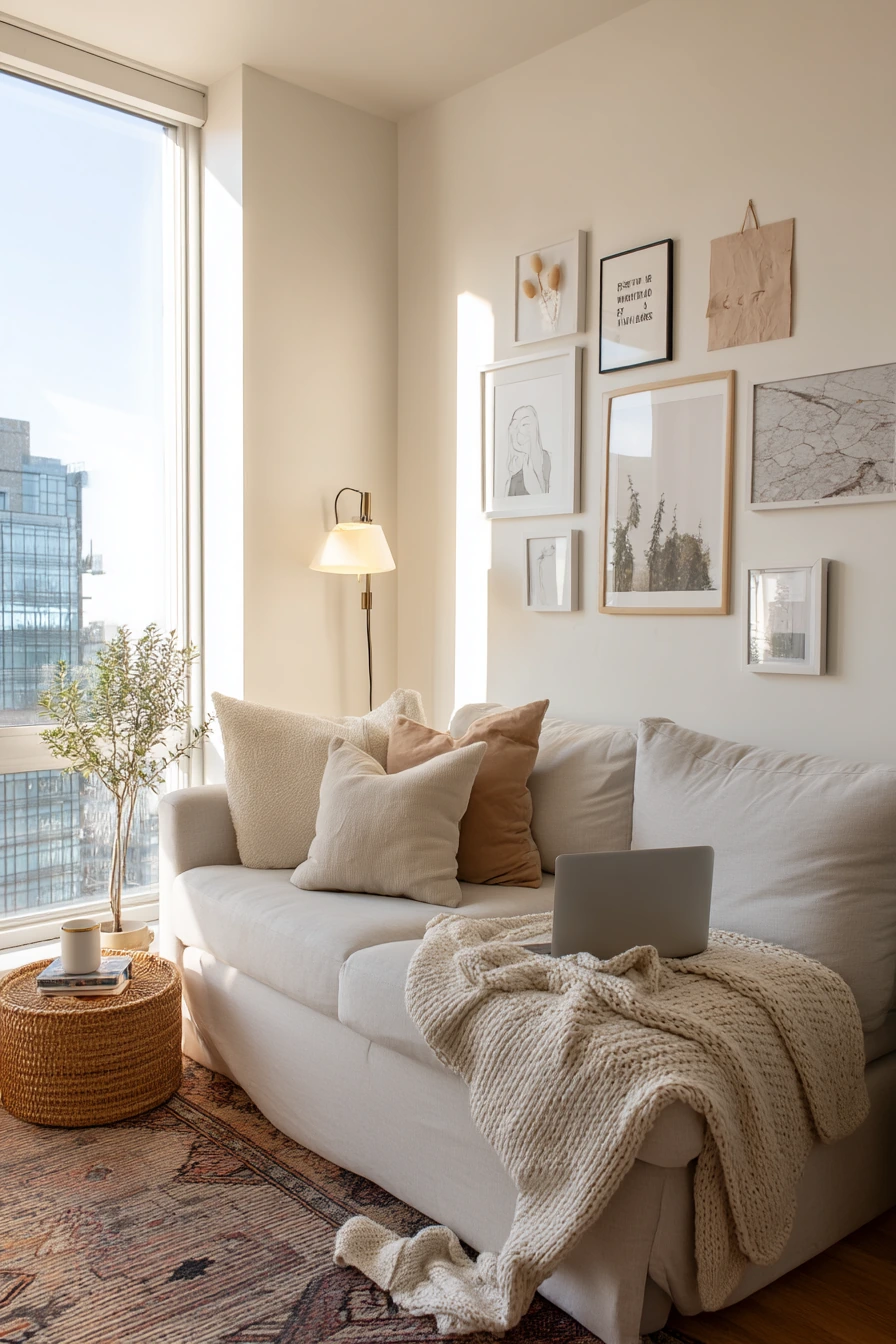
A reading nook should feel quiet and focused. The key is a strong, warm task light aimed at your book, plus a little background glow so the corner does not feel like a spotlight. In a nook with a leather lounge chair, stacked novels, a wool throw, and a tea cup on a small side table, lighting is part function and part comfort.
Choose an adjustable brass task lamp with a shade that directs light down and slightly forward. Set it beside the chair on the side-table edge, so it lights the pages without shining into your eyes. Keep the window light as your daytime layer, then rely on the lamp for late-day reading. Plant leaves casting delicate shadows nearby add softness, so let the plant sit close to the window instead of pushing it away.
How to style it: stack a few novels with the spines facing out, then add a small tray for the tea cup so rings do not mark the table. Drape the wool throw over the chair back, not the seat, so you can sit down without fuss. A warm bulb makes leather and wool look richer.
- Pick a lamp with a swivel head so you can aim light precisely.
- Use a shade that blocks glare at eye level.
- Add a second low light (small candle or tiny lamp) for background glow.
- Keep the side table simple: tray, tea, and one small object.
- Place the chair so you get window light from the side, not behind you.
Pro Design Tip: For comfortable reading, use a task light plus a softer ambient light. One bright lamp alone can cause eye strain in a dark corner.
Budget Considerations: If a brass task lamp is expensive, look for a used adjustable desk lamp. A warm bulb and a nice shade can make it look more high-end.

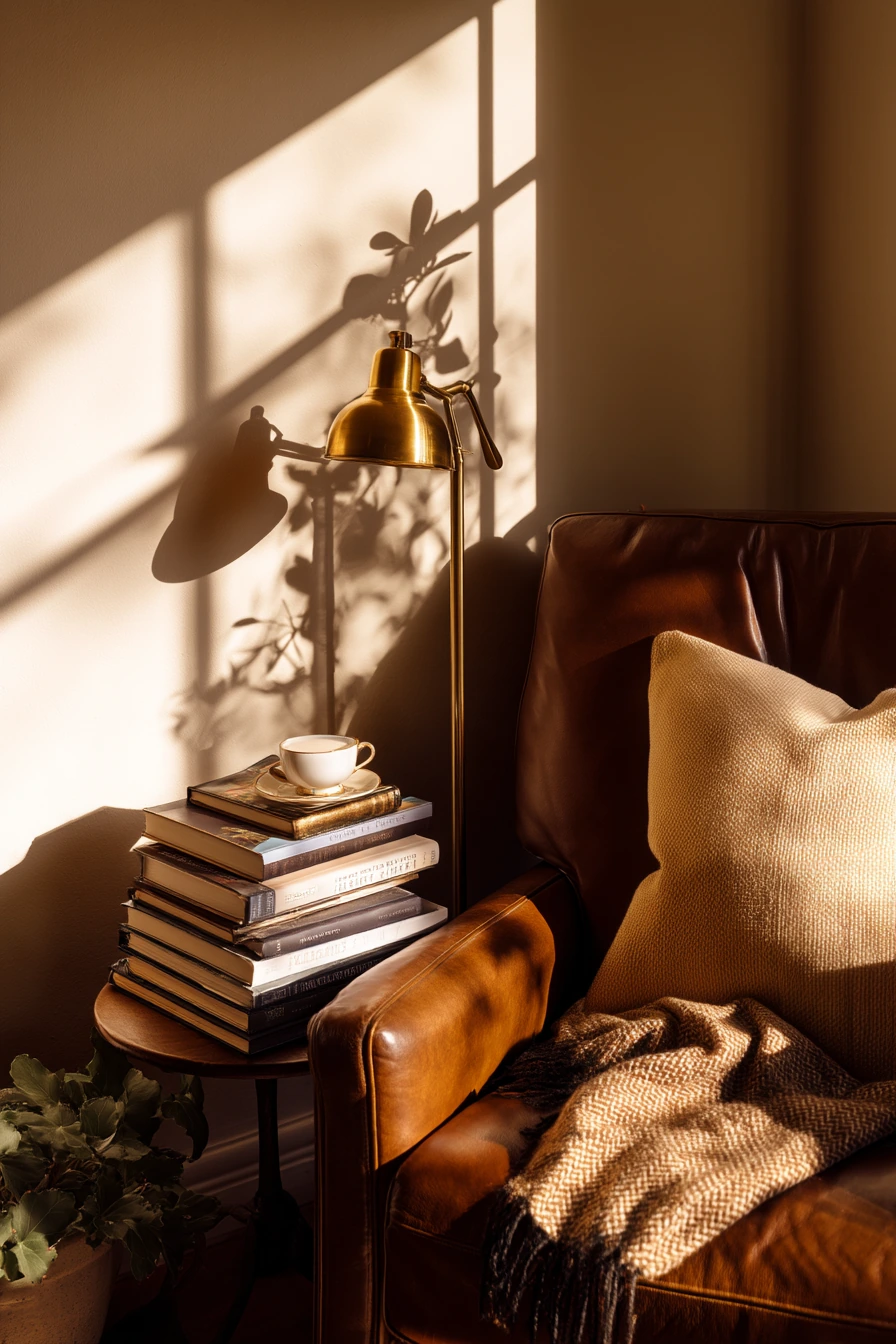
6 Open-Plan Living Room with Layered Evening Light
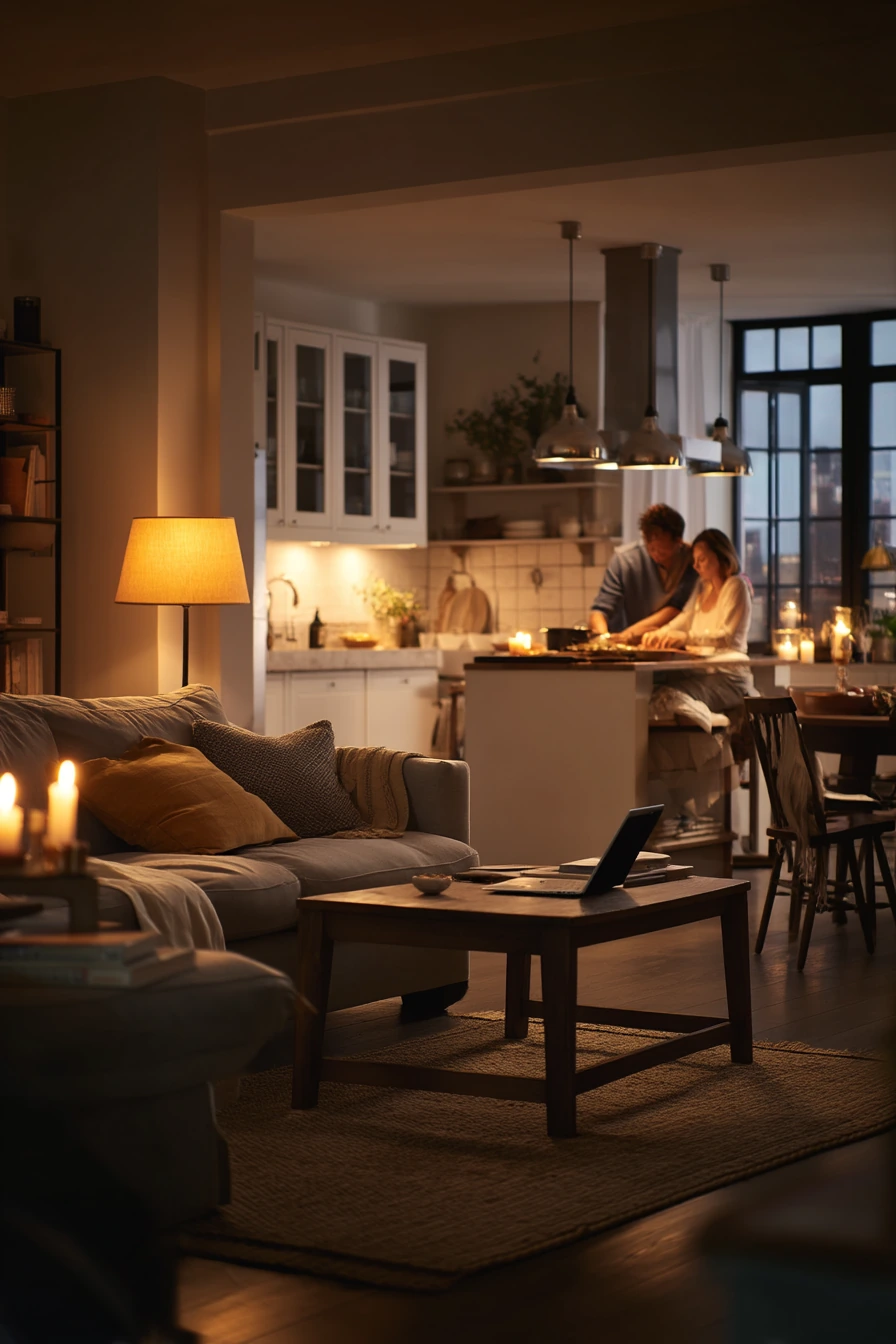

In an open-plan space, one ceiling light is not enough. You need lighting zones so the kitchen can stay functional while the living room feels relaxed. When a couple is cooking and the sofa area is in view, layered lighting helps the whole home feel balanced instead of bright in one spot and dark in another.
Start by treating the living room as its own zone. Use a floor lamp near the sofa to create a warm anchor. In the kitchen zone, keep the pendant light for tasks, but avoid running it too bright when you want a cozy evening. Add candles on the coffee table for a low accent glow. Real-life details like an open cookbook, dish towel on a chair, and a laptop charging on the side table will look less messy when the light is soft and spread out.
How to style it: use matching bulb warmth between kitchen and living area so the colors feel connected. Place the floor lamp behind the sofa corner to avoid glare. Keep candles in a sturdy holder and group them on a tray so they look intentional and are easy to move at dinner time.
- Create three zones: kitchen task, living ambient, and low accent light.
- Use dimmable bulbs or smart dimmers for quick mood changes.
- Keep light levels closer between zones to avoid harsh contrast.
- Place a lamp near the walkway to prevent dark paths.
- Use a tray to group candles and small items on the coffee table.
Pro Design Tip: When spaces connect, match the bulb color temperature across zones. Mixed light colors can make the room feel off, even if the decor is great.
Budget Considerations: If you cannot replace fixtures, start with plug-in lamps and dimmable bulbs. Smart bulbs can be cheaper than installing new dimmers.
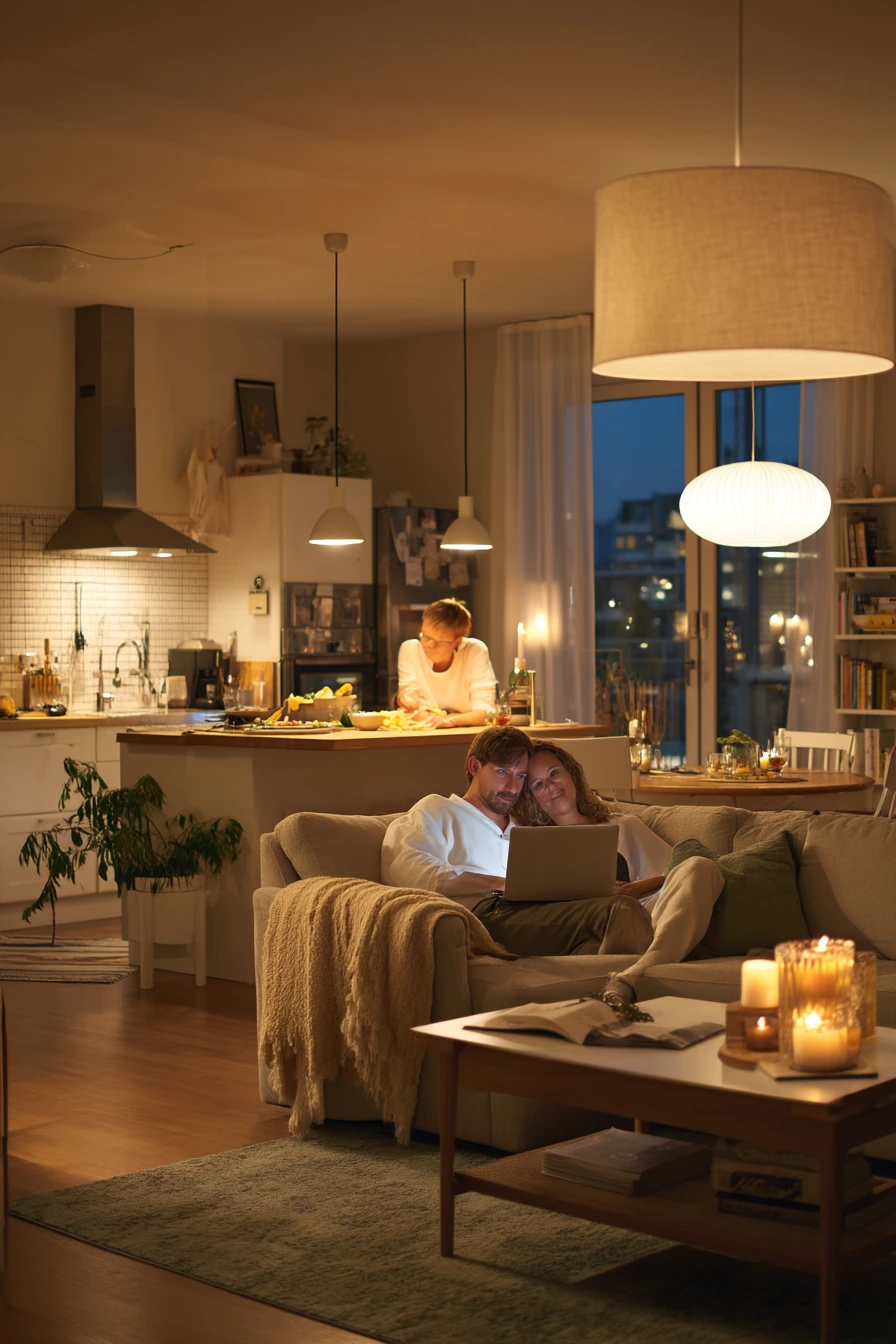

7 Winter Living Room Lamps and Candle Warmth

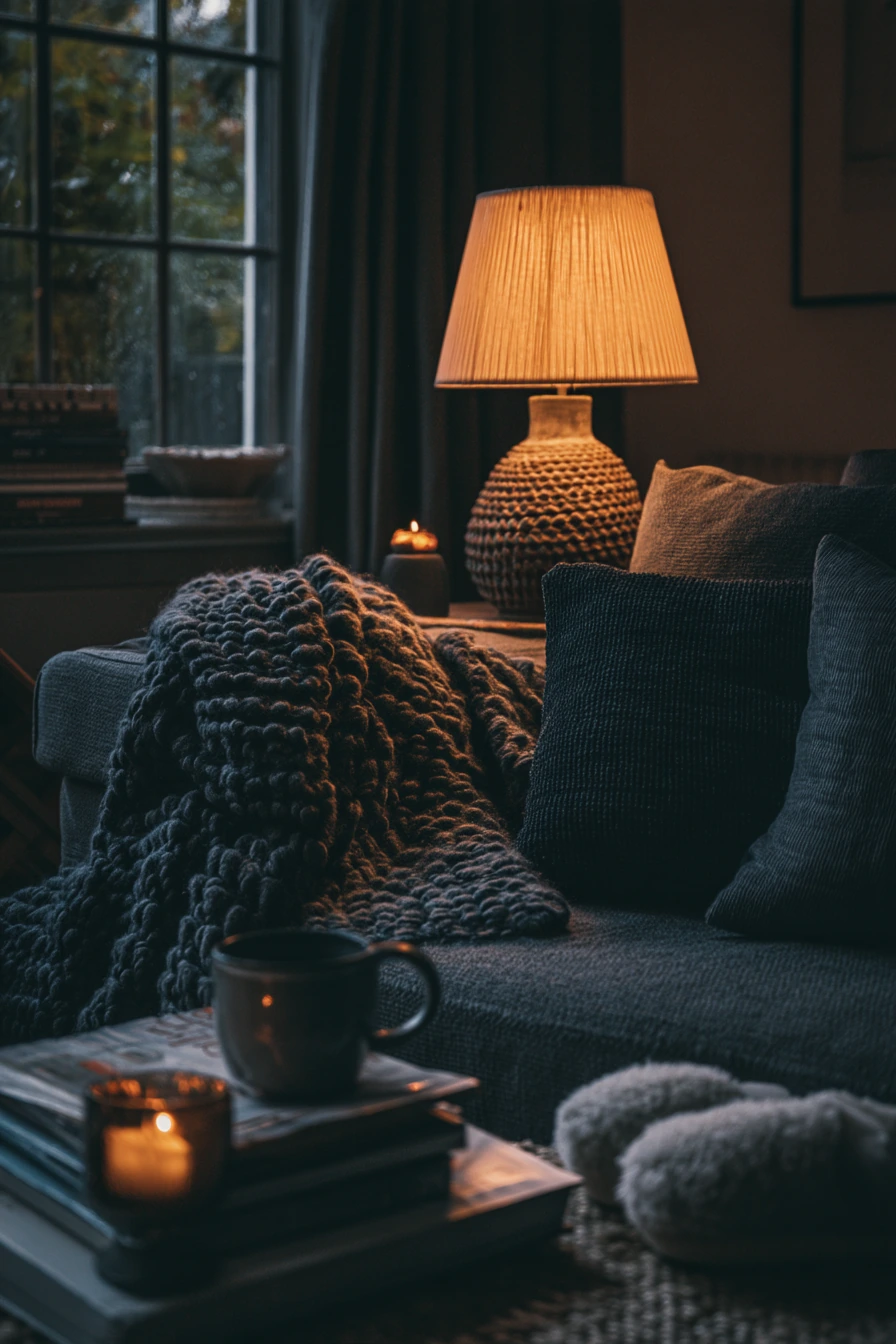
In winter, it gets dark early, and overhead lights can feel harsh. A cozy winter living room after dusk needs warm, low lighting that softens deep shadows. Details like a thick knit throw, wool slippers by the chair, stacked magazines, and steam from a mug already signal comfort. The lighting should support that quiet mood.
Use a ceramic table lamp with a shade that diffuses light. Place it near the sofa, but not right next to the TV if you watch at night. Add low candlelight on a stable surface for an ember-like glow. If there is faint frost on the window, keep the lamp light warm so the room feels inviting, not cold. Avoid bare bulbs and very bright LEDs, which can create glare on screens and shiny tables.
How to style it: keep a small stack of magazines in a basket so they do not look messy. Put a coaster near the mug spot and keep one throw neatly folded while the other stays draped for real use. Use darker lamp shades only if the bulb is strong enough, since dark shades can reduce usable light.
- Turn off overhead lights and rely on two to three warm lamps.
- Add candles in holders to avoid wax drips and improve safety.
- Choose shades that hide the bulb to reduce glare.
- Place a lamp behind seating to create soft backlight.
- Use dimmers so you can lower light as it gets later.
Pro Design Tip: For cozy winter light, aim for more sources at lower brightness instead of one bright lamp. This keeps shadows soft and faces flattering.
Budget Considerations: Battery candles and plug-in dimmers are low-cost ways to get that warm, layered glow without changing fixtures.


8 Modern Living Room with Hidden Indirect Glow
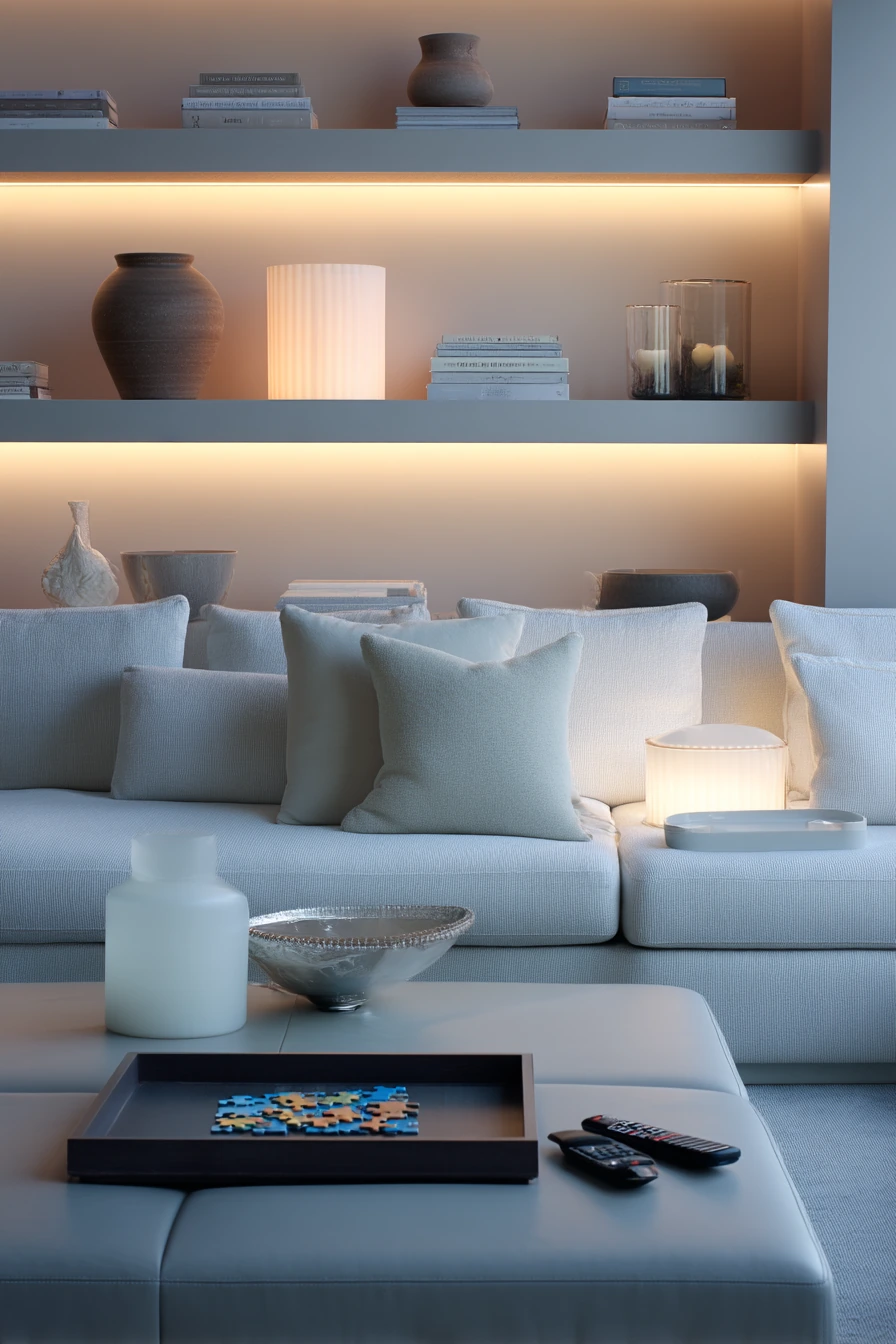

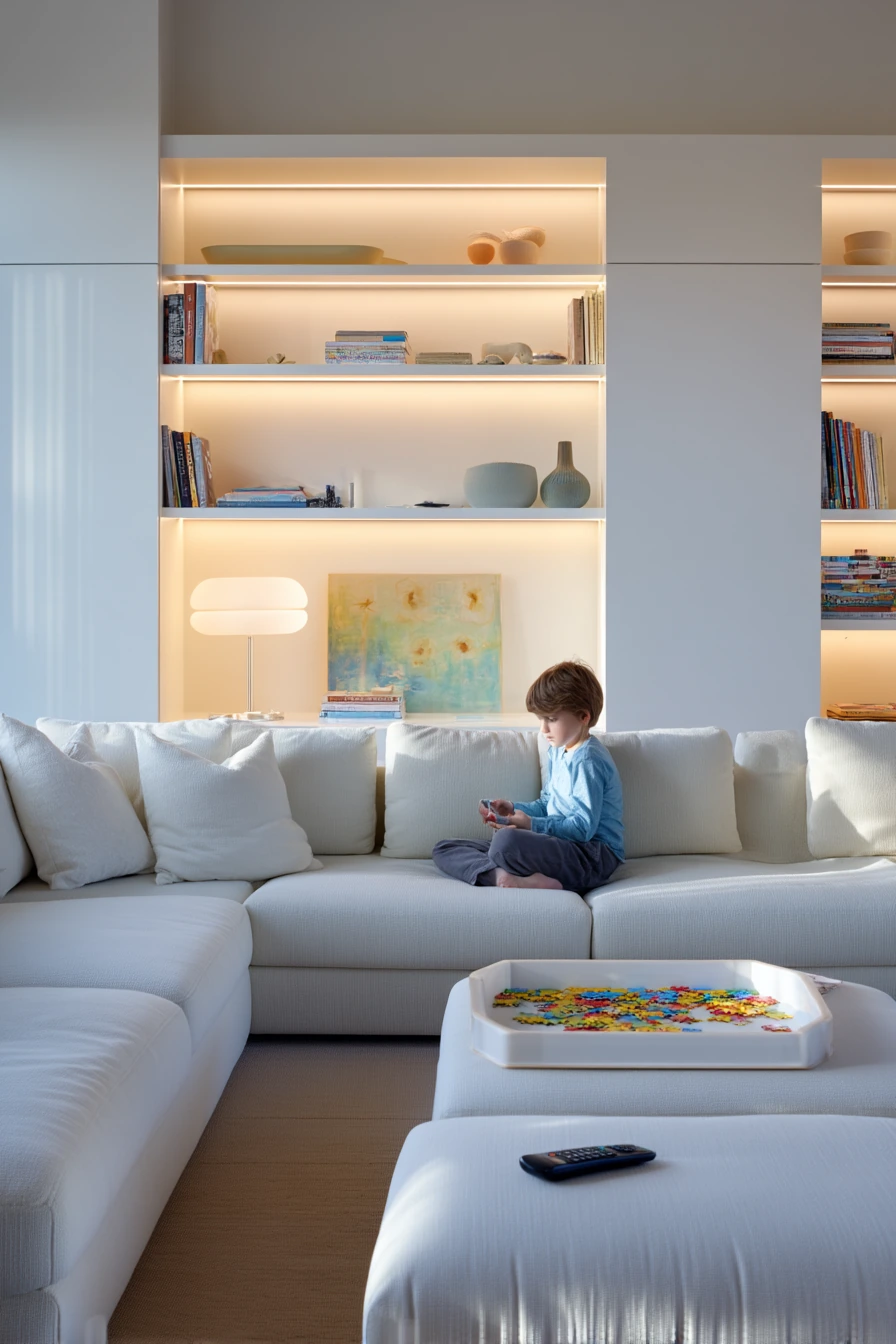
Indirect lighting can make a modern living room feel calm rather than flashy. A setup with an LED strip tucked behind shelving, a frosted table lamp, and a pale sectional creates depth without harsh brightness. It also works for family life, where you may see a remote on the ottoman and kids’ puzzle pieces in a tray.
Use LED strips as a background layer. Hide them behind shelves or along the back edge of a media unit so the light bounces off the wall. This reduces glare and adds a gentle outline that makes the room feel more finished. Pair that with a frosted table lamp for a soft, warm pool of light near seating. Keep daylight as the main daytime layer, and let the LEDs and lamp take over at night.
How to style it: keep decor simple, like ceramic vases in a small group. Use one tray for puzzle pieces so the room stays livable but not chaotic. If the room feels too “cool,” warm it up with a textured throw or a woven basket, and make sure the LED strip is warm white, not blue-white.
- Place LED strips where you cannot see the diode points.
- Use warm white LEDs for a softer, homey feel.
- Combine indirect light with one shaded lamp for balance.
- Keep surfaces matte to avoid shiny reflections.
- Put remotes and small items in a tray to reduce visual noise.
Pro Design Tip: Indirect light looks best when the wall behind it is clean and calm. Reduce clutter near the glow so the effect reads soft, not busy.
Budget Considerations: LED strips can be affordable. If you skip built-ins, use a plug-in strip kit and a basic diffuser channel to make the light look smoother.

9 Evening TV Room with Soft Ambient Layers


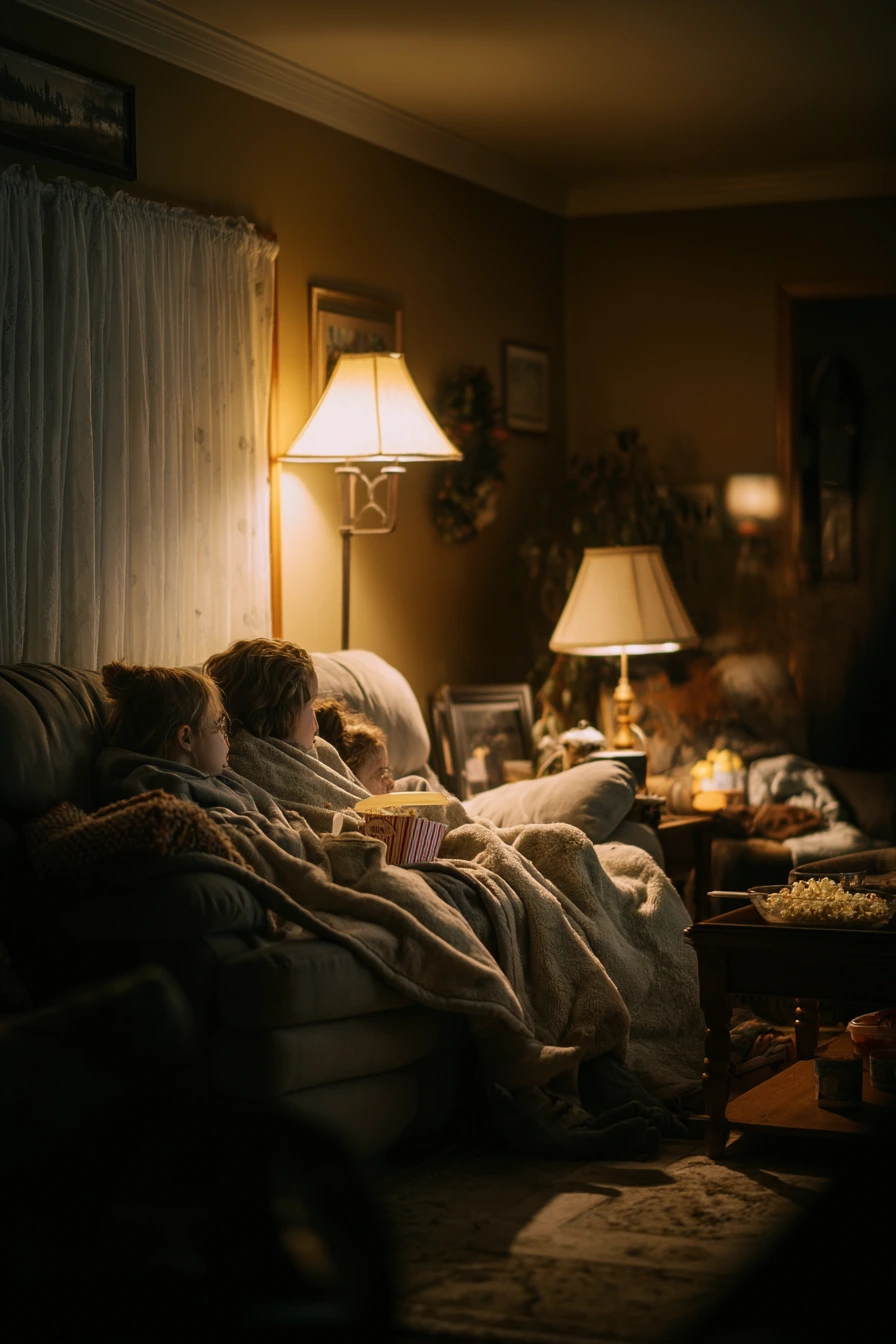
A lived-in TV living room at night needs light, but not the kind that washes out the screen. When the family is wrapped in blankets watching a film, the best setup uses dim, warm practical light that keeps snacks and walkways visible while protecting your eyes from glare. Details like a popcorn bowl, blanket folds, an open book on the armrest, and a charging cable along the side table are normal. Lighting should make it feel relaxed, not staged.
Use a dimmed floor lamp in the corner as your main ambient light. Add a shaded table lamp near the sofa, but place it slightly behind the seating line so the bulb is not in direct view. Avoid placing a lamp right next to the TV, since that often creates reflections on the screen. If you need more light for finding remotes or setting down drinks, add a small low lamp behind the sofa or a soft LED strip behind the TV for bias lighting.
How to style it: keep a basket for blankets so the room can reset fast. Use a small tray on the side table to hold the charging cable, remote, and a coaster. If you read while someone watches, choose a clip-on book light so you do not need to raise the room brightness.
- Dim lights to a low, warm level before you start the movie.
- Place lamps to the side or behind seating, not facing the TV.
- Use shaded lamps to hide the bulb and reduce glare.
- Add soft bias lighting behind the TV for eye comfort.
- Keep cords controlled with clips or a small cable box.
Pro Design Tip: Bias lighting behind the TV can make the screen feel easier to watch and helps the room look softly lit without brighter lamps.
Budget Considerations: A simple dimmer plug and a warm LED bulb cost less than new fixtures. For bias lighting, an inexpensive LED strip behind the TV can work well.

10 Plant-Filled Living Room with Shadow Play


A plant-filled living room looks best when you highlight natural light and add warm lamps at dusk. Sunlight filtered through sheer curtains makes leaves and textures stand out. A large monstera near the window, ceramic planters, art books, and a textured sofa already bring life to the room. Lighting should support that airy, sensorial feel without turning the room harsh at night.
During the day, keep window areas clear so plants get light and the room feels bright. Use sheer curtains to soften glare while still letting the sun in. As evening comes, switch on warm lamp accents. A woven floor lamp is a good choice because it adds texture and creates gentle patterns. Place one warm table lamp farther back in the room if you can, so the space does not feel bright only at the window wall.
How to style it: group ceramic planters in odd numbers and vary their heights. Keep a small scatter of leaves on the rug to a minimum by adding a simple catch tray under the plant. Put the coffee mug on a coaster and keep art books stacked with one small object on top, like a small bowl, to look tidy but not stiff.
- Use sheers to soften strong sun and reduce harsh shadows.
- Add a woven lamp to bring warmth and texture at dusk.
- Place one lamp deeper in the room for even coverage.
- Choose warm bulbs to make greens look rich, not dull.
- Rotate plants so they grow evenly toward the window.
Pro Design Tip: Light the room, not just the plants. A second lamp away from the window prevents the back of the room from feeling flat at night.
Budget Considerations: If you already have a basic floor lamp, upgrade the look with a woven shade. Sheer curtain panels are often low cost and make daylight feel softer right away.


Great living room lighting is not one perfect fixture. It is a mix of window light, warm lamps, and small accents that match how you live.
Pick one idea from these rooms and try it today, like adding a dimmer plug, moving a lamp behind seating, or using two light heights instead of one.
When your lighting feels soft and balanced, the whole room looks more welcoming, even with toys, books, and everyday clutter.
FAQ
What is the best color temperature for living room bulbs? Warm white is best for most living rooms. Look for a warm tone that feels cozy, especially at night.
How many lamps should a living room have? Many rooms feel best with two to four light sources. Aim for a mix of a floor lamp, one or two table lamps, and one low accent light.
How do I light a living room with no ceiling light? Use a floor lamp for general light, add table lamps for balance, and consider plug-in sconces for wall light. A dimmer plug can help you adjust brightness.
Where should I place a floor lamp in a living room? Place it near seating, often behind a sofa corner or next to a chair. Keep the shade out of direct eye line when seated.
How do I stop lamp glare on my TV? Keep lamps to the side or behind seating and use shades that hide the bulb. Add soft bias lighting behind the TV if needed.
Are LED strip lights good for living rooms? Yes, if they are hidden and warm white. Tucked behind shelves or a media unit, they create calm indirect light.
What is the cheapest way to improve living room lighting? Swap to warm LED bulbs, add a plug-in dimmer, and use one thrifted lamp. Small changes can make a big difference.